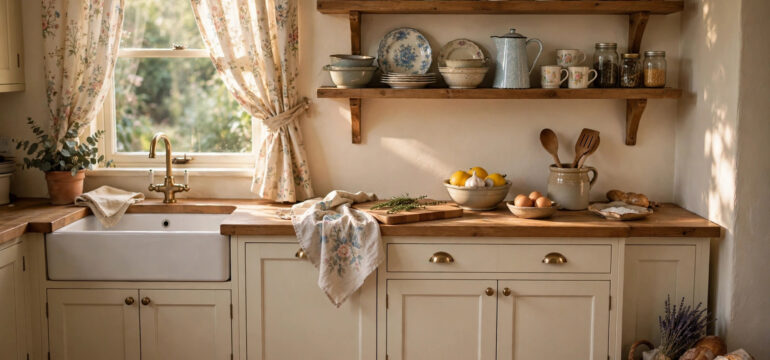
My love for cottagecore kitchens started in my grandmother’s farmhouse, where the kettle was always warm and the curtains smelled faintly of lavender. Nothing in that kitchen was new or expensive, yet everything felt precious. The chipped teapot had a story. The wooden spoons were worn smooth by decades of hands. I did not know the word cottagecore back then, but I knew how that kitchen made me feel, safe, unhurried, and completely at home. Years later, when I got my own kitchen, I knew exactly what I wanted it to feel like.
Cottagecore is not about buying a whole new kitchen or following strict rules. It is about layering warmth, the way my grandmother did, one small treasure at a time. A floral curtain here, a bunch of dried herbs there, a chipped mug you refuse to throw away because it was your mother’s. These 19 ideas are the ones that made the biggest difference in my own kitchen. None of them require a renovation. Most of them cost very little. All of them will make your kitchen feel like a story worth telling.
1. Floral Curtain Panels
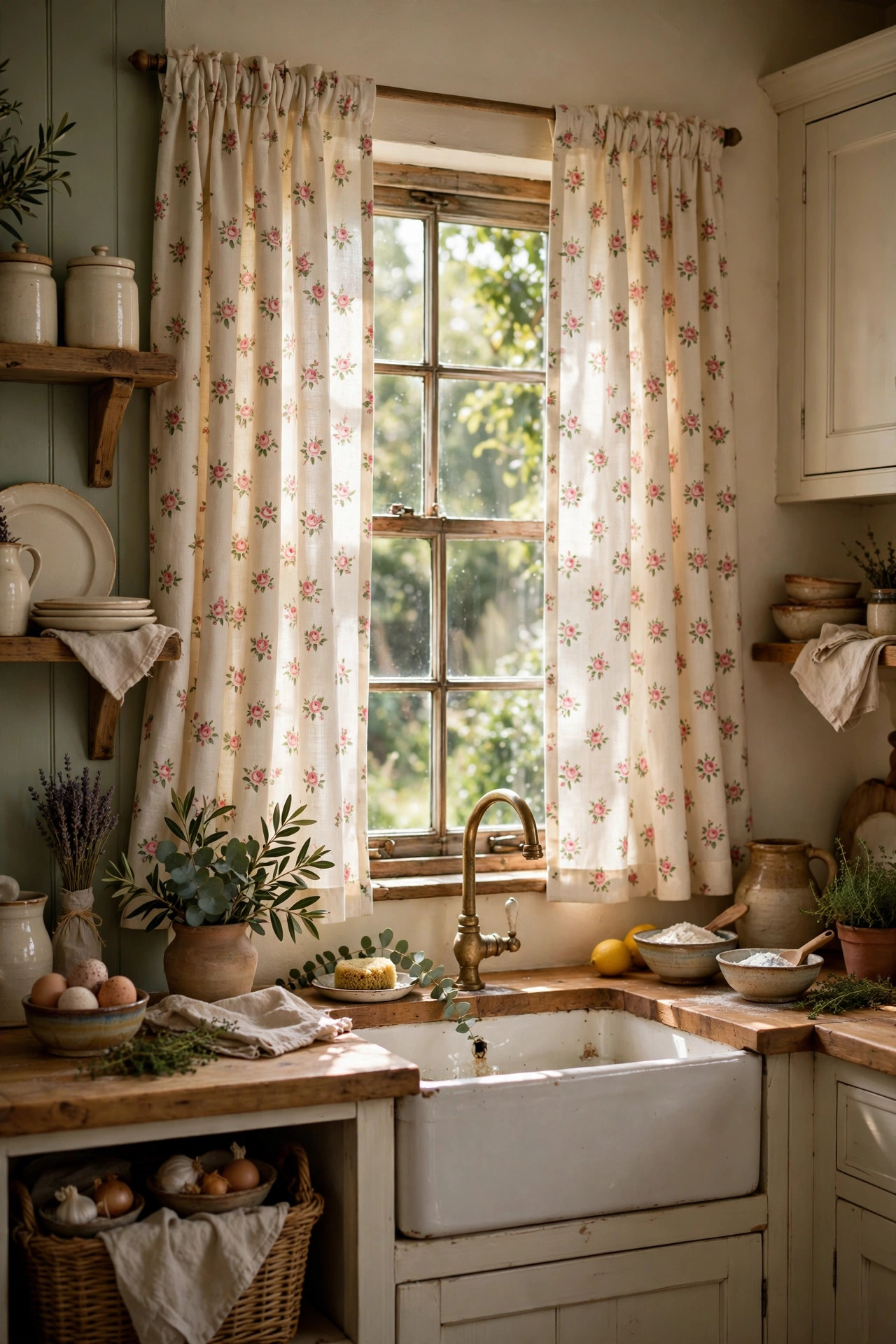
The first thing I changed in my kitchen was the curtains, and honestly it felt like the whole room exhaled. I found a pair of cream panels printed with tiny pink roses at a flea market, and the moment I hung them the harsh morning light turned soft and golden. My old blinds had made the kitchen feel like an office. The floral curtains made it feel like a cottage in the English countryside, even though my apartment overlooks a parking lot. When the breeze moves through them, the whole room smells faintly of the lavender sachet I tucked behind the rod. It is a small change, but curtains frame every window, and windows are where a kitchen gets its soul.
Choose a small scale floral print rather than big bold blooms, because tiny flowers read as vintage while large ones can feel modern. I wash mine twice a year and they still look perfect after three years. Hang them on a simple wooden rod, nothing fancy, and let them puddle just slightly on the sill or kiss the floor. If you cannot find vintage panels, new ones in a faded floral work just as well once they have been washed a few times. The slight fading is actually the secret, because cottagecore loves things that look gently worn. My curtains are the backdrop of every photo I take in my kitchen, and I never get tired of them.
2. Open Wooden Shelving
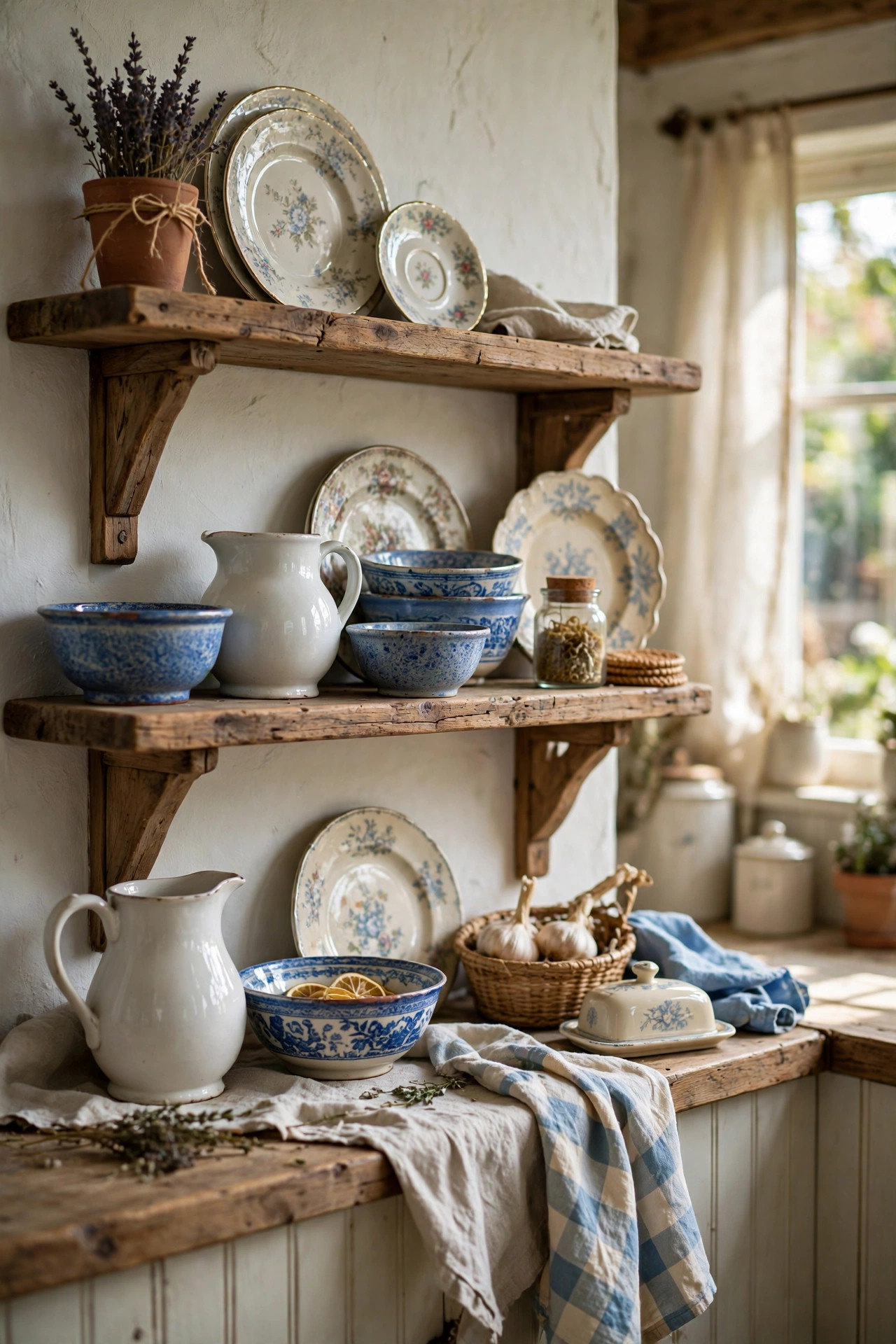
I tore the doors off two of my upper cabinets on a rainy Sunday, and my husband thought I had lost my mind. But underneath those dated doors were plain wooden shelves just begging to be seen, and once I painted the insides cream and styled them with my mismatched dishes, the kitchen felt twice as big and ten times more charming. Open shelving is the heart of a cottagecore kitchen because it turns everyday things into decoration. My chipped blue bowls, the jam jars I save, the little teapot with the wobbly lid, they all get to live where I can see them. Guests always ask about the shelves first, and I love telling them the doors are in the basement if I ever change my mind.
The trick to open shelves that look charming instead of cluttered is restraint and repetition. I keep only things I actually use, grouped by color, with breathing room between the groups. My white pitchers sit together, my blue bowls sit together, and a tiny trailing plant softens one end. Dust is the honest downside, so I wipe the shelves when I do my weekly kitchen reset, which takes five minutes. If removing cabinet doors feels too permanent, try it on just one cabinet first. That single open shelf convinced me within a week, and now I cannot imagine going back to closed doors.
3. Vintage Apron Sink
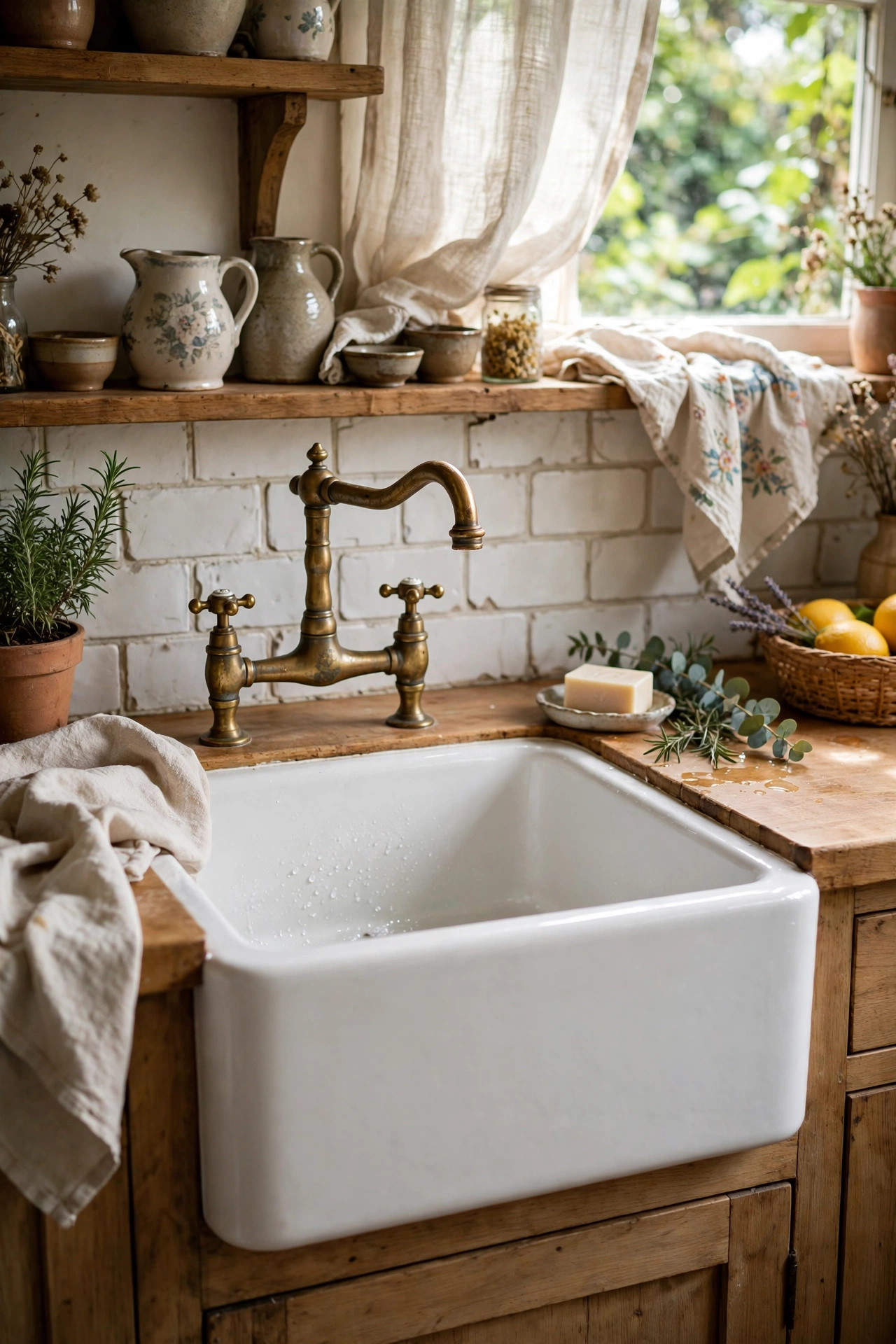
I will never forget the day I found my apron front sink at a salvage yard, sitting in the mud with a fifty dollar price tag and a century of stories in its porcelain. It took two strong friends and a full Saturday to install, but the moment water ran in that deep basin, my modern kitchen suddenly had a soul. An apron sink, the kind with the big farmhouse front, is pure cottagecore because it looks like it belongs in a farmhouse that has seen a hundred harvests. Dishes pile up in it beautifully. The wide front gives you a place to lean while you wash vegetables. Mine has one tiny chip on the corner that I touch like a worry stone whenever I am thinking.
If a full sink replacement is not in your budget, you can fake the feeling with what you have. A large wooden dish rack, a pretty soap dispenser in a vintage bottle, and a folded striped towel over the edge of your existing sink go a long way. But if you ever do renovate, put the apron sink at the top of your list. Choose white fireclay if you can, because it keeps its shine for decades and the weight of it feels permanent in the best way. Every time I fill mine to wash garden lettuce, I feel connected to every farm wife who stood at a sink just like it.
4. Gingham Tablecloth
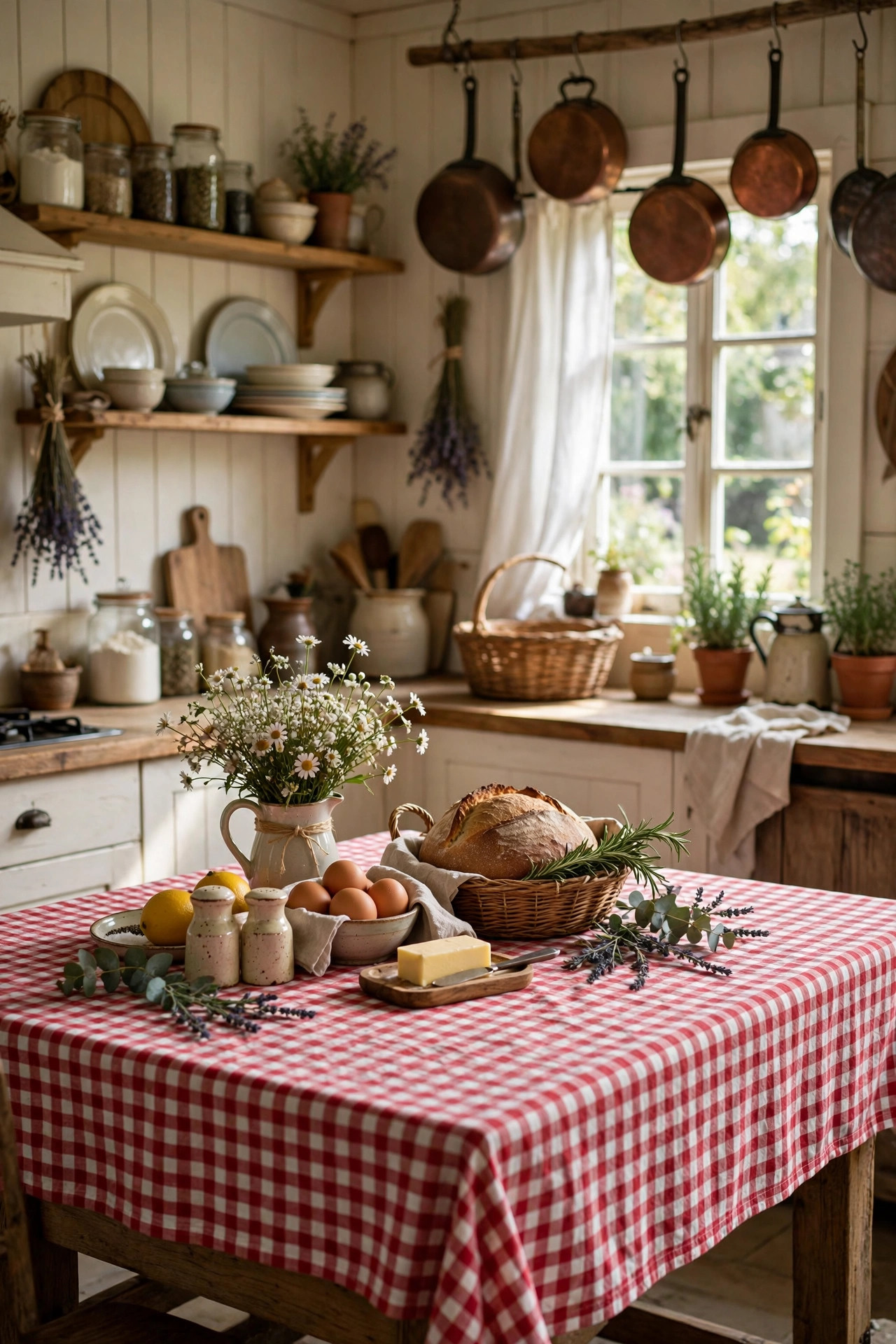
My kitchen table wears a red and white gingham cloth, and it might be the hardest working textile in my whole house. It hides the scratches on my secondhand table, it wipes clean after spaghetti night, and it makes even takeout pizza feel like a picnic. Gingham is cottagecore shorthand for simple country happiness. I bought mine for twelve dollars at a farm supply store, and it has survived three years of daily use, countless washings, and one memorable encounter with a whole pot of tomato sauce. The pattern is cheerful without being childish, and it pairs with absolutely everything I own.
I keep two tablecloths and swap them on laundry day so the table is never bare. In summer I use the red gingham, and in autumn I switch to a mustard and cream check that feels like harvest time. Layer a runner of plain linen down the middle for dinner parties, and suddenly the humble gingham looks intentional and styled. The secret to keeping it crisp is a quick shake outside before it goes in the wash, which keeps crumbs from grinding into the weave. My grandmother used gingham too, and every time I smooth it over the table, I feel her hands guiding mine.
5. Dried Herb Bunches
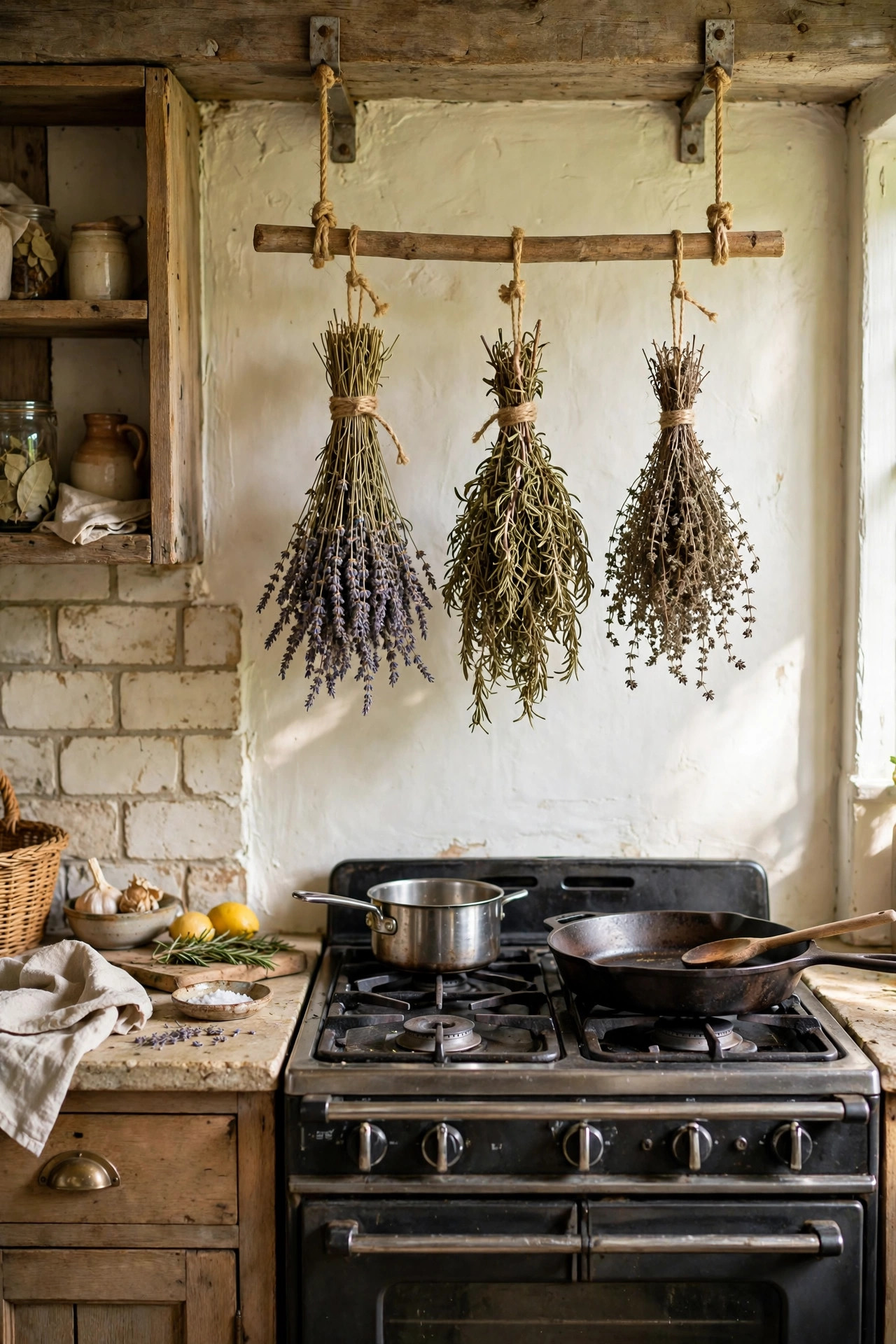
Above my stove hangs a wooden dowel strung with bunches of drying rosemary, thyme, and lavender, and it is my favorite thing to look at while the pasta water boils. I started the herb rail after a trip to a farmhouse in Vermont, where the kitchen smelled like a garden even in February. Dried herbs give you that same magic, they look beautiful, they smell wonderful, and you can actually cook with them. When I need rosemary for roast chicken, I just snip a sprig off the bunch. Nothing in my kitchen makes guests go quiet and breathe deeply the way that herb rail does.
Starting your own herb rail is wonderfully simple. Tie small bunches with twine, hang them upside down in a spot with good air flow but no direct sun, and wait two weeks. I grow most of my herbs in pots on the windowsill through summer, then harvest before the first frost. Lavender keeps its scent for months and makes the whole kitchen smell like Provence. Replace cooking herbs once they fade, usually after six months, and compost the old ones. My herb rail cost me nothing but seeds and patience, and it is the detail visitors photograph most.
6. Grandmother’s China Display
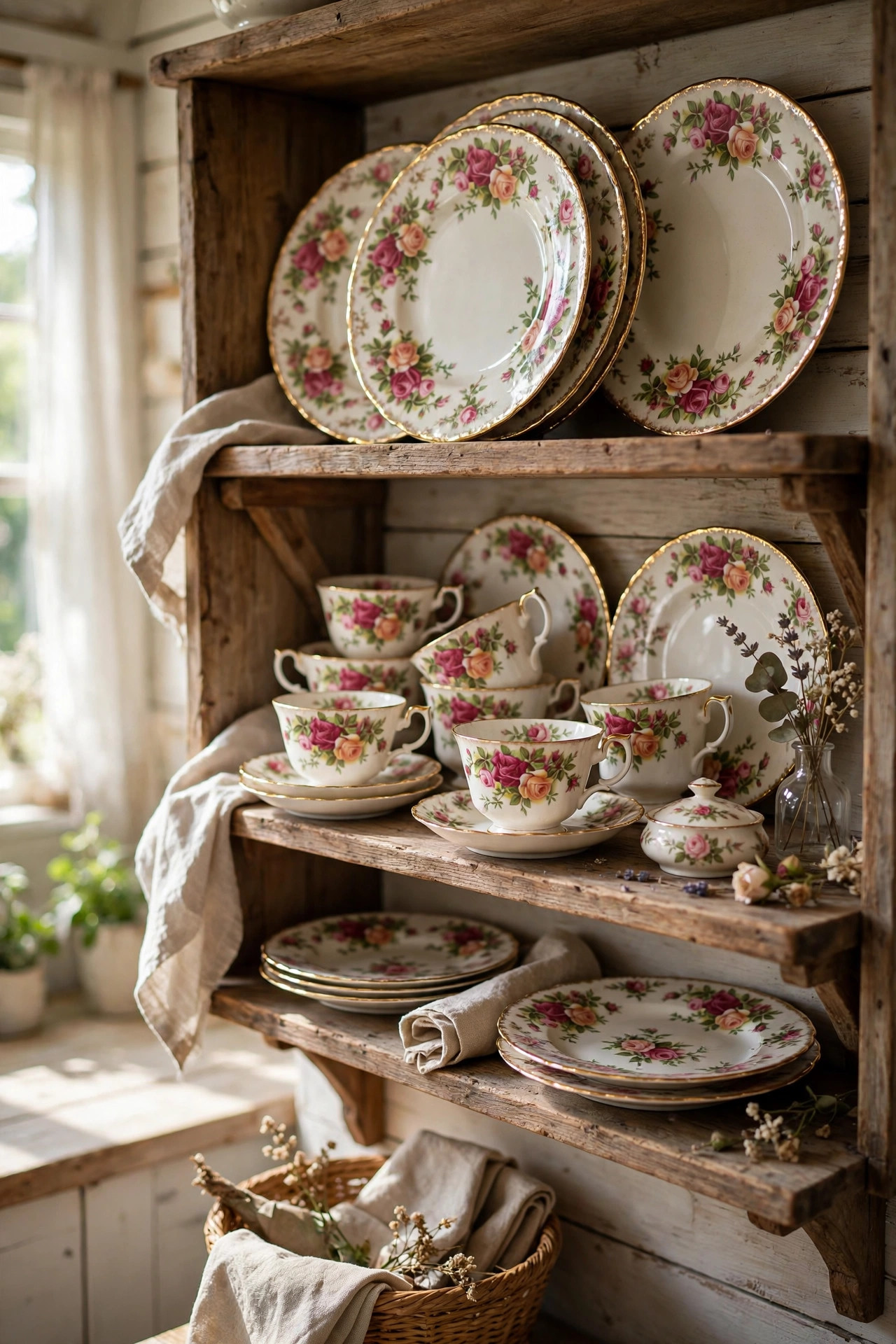
The top shelf of my open shelving holds my grandmother’s rose patterned china, and I will admit I was terrified to use it for the first year. Then one Sunday I decided that beautiful things deserve to be touched, and now we eat Sunday dinner off those roses every single week. Displaying family china is cottagecore at its most personal, because no store can sell you your own history. The mismatched pieces, the saucer with the hairline crack, the teacup missing its handle, each one carries a memory. My daughter knows which plate was her great grandmother’s favorite, and that knowledge feels like an heirloom in itself.
You do not need inherited china to get this feeling. Thrift stores are full of orphaned floral plates waiting for a second life, and a shelf of mixed vintage china looks even more charming than a matched set. I hang my prettiest plates on the wall with simple plate hangers, which turns a blank wall into a gallery for about twenty dollars. Wash vintage china by hand, since old glazes can be delicate, and never microwave pieces with metallic trim. The day I stopped saving my grandmother’s china for special occasions, every Sunday became a special occasion.
7. Butcher Block Counters
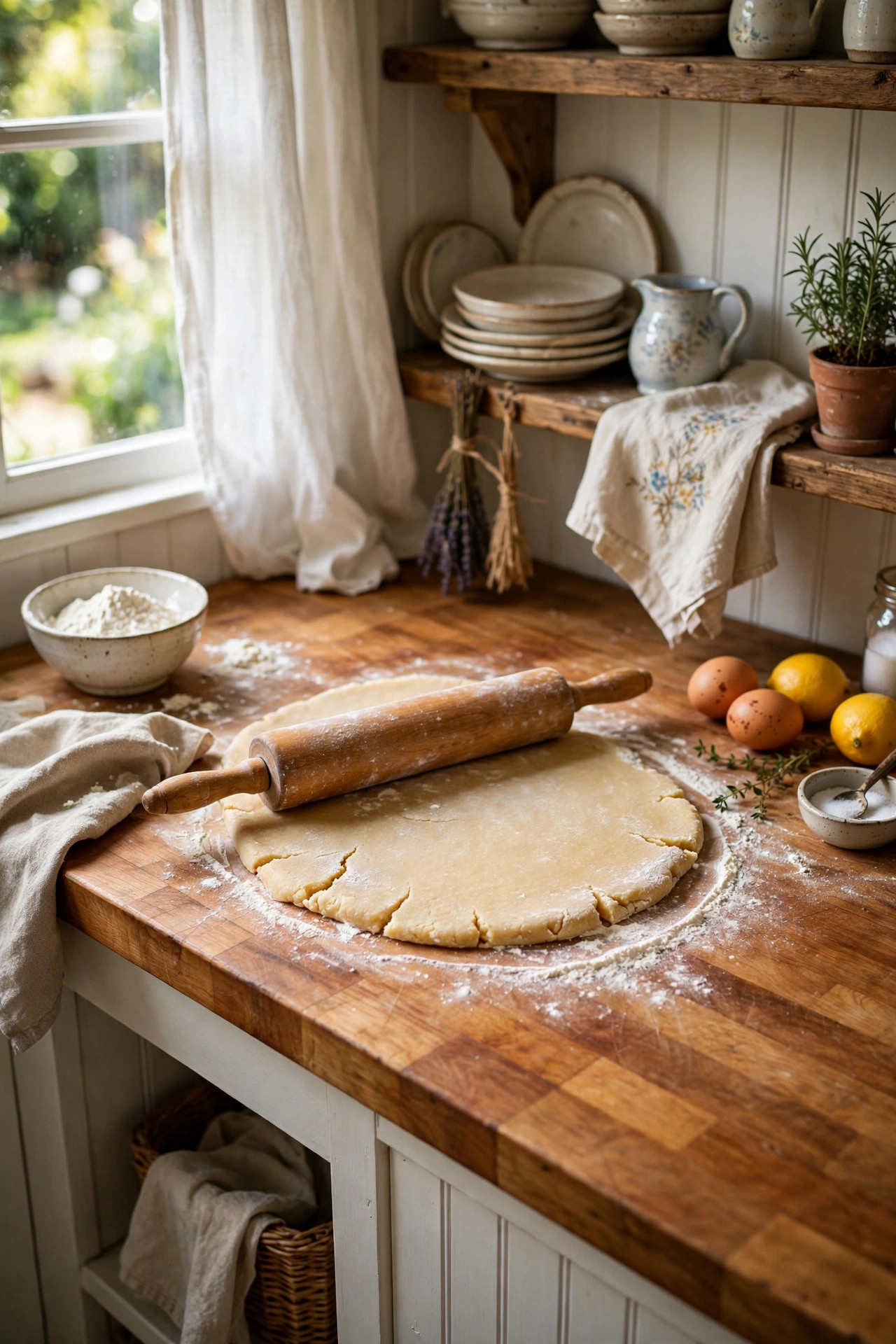
When my laminate counters started peeling, I priced out stone and nearly fainted. Then a carpenter friend suggested butcher block, and I have never looked back. Warm wood counters changed my kitchen more than any other single thing, because every surface I touch now feels alive and natural. I roll pie dough directly on the wood, I chop vegetables without a board when I am feeling rebellious, and the whole kitchen smells faintly of the mineral oil I rub in every few months. Butcher block is cottagecore because it is honest, a working surface that shows its history in every knife mark and water ring.
Caring for butcher block is simpler than people fear. I oil mine with food safe mineral oil four times a year, which takes twenty minutes and feels like a pleasant ritual. Water rings fade on their own if you let the wood dry, and a light sanding every couple of years erases the deeper marks. Keep a small tray under the dish rack to protect one zone, and embrace the rest of the patina as your kitchen’s diary. My counters tell the story of every holiday meal and birthday cake, written in tiny marks only I can read. Stone is beautiful, but wood forgives, and I need forgiveness in my kitchen.
8. Mason Jar Storage
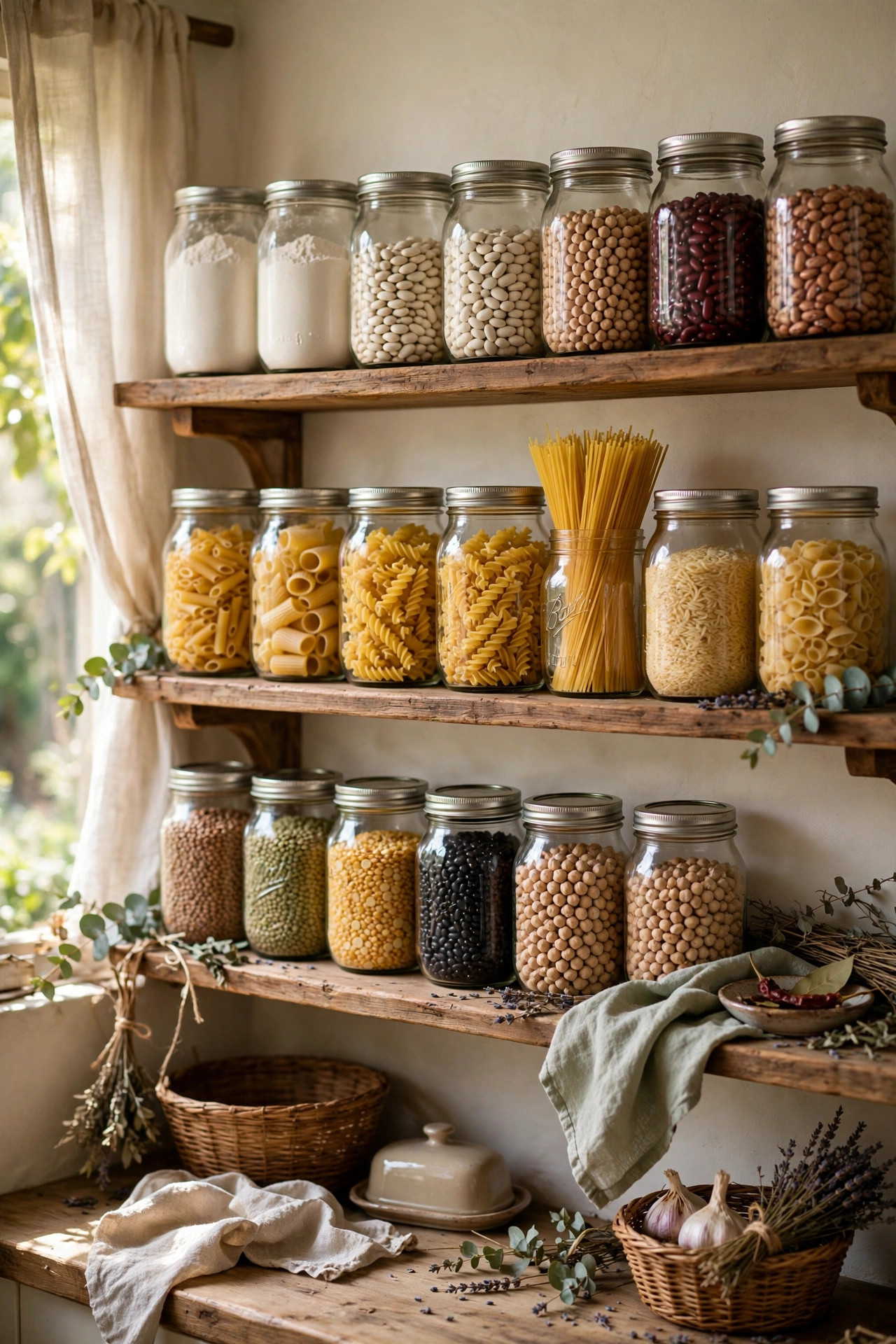
My pantry shelves are lined with mason jars full of flour, beans, pasta, and lentils, and I swear my dry goods taste better just for being beautiful. I started decanting after I found a box of weevils in a bag of flour, which is a very uncharming story with a charming ending. Glass jars keep everything fresh and visible, so I actually use what I buy instead of finding ancient bags in the back of the cabinet. The jars catch the afternoon light and turn my pantry into something I want to show people, which is a strange thing to say about a pantry. My neighbor copied the idea within a week of seeing it.
You do not need to buy fancy jars, because regular mason jars from the hardware store are perfect and cheap. I soak off the labels, or leave the vintage ones with pretty graphics because they add character. A strip of kraft paper and twine makes a sweet label, and I write the contents with a simple marker. Wide mouth jars are easiest for scooping flour and sugar. Start with just your five most used dry goods and see how it feels. Within a month I had jarred everything, and my pantry went from embarrassing to enchanting without spending more than thirty dollars.
9. Floral Wallpaper Accent
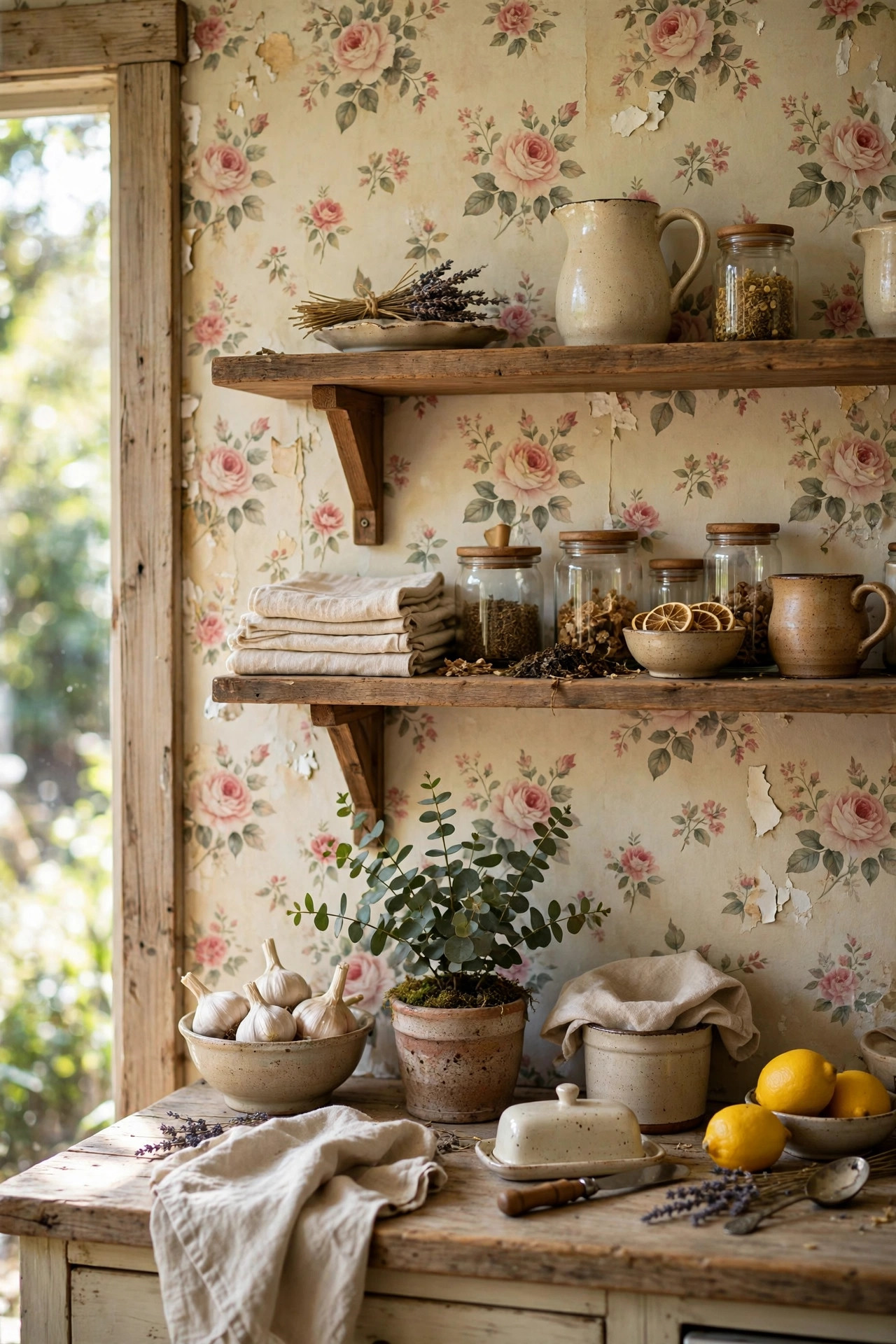
I papered the wall behind my open shelves in a faded rose print, and my kitchen finally felt finished. For years that wall was plain cream, perfectly fine and perfectly forgettable. The wallpaper, a peel and stick design I found online, added the pattern and romance the room was missing. Now the white dishes on my shelves pop against the roses behind them, and the whole corner looks like something from a cottage magazine. My mother gasped when she saw it, then immediately asked where I got it. Floral wallpaper is cottagecore’s love letter to the past, and one wall is all you need.
Peel and stick wallpaper made this a renter friendly project, though I own my place and would have pasted anyway. I measured twice, started at the top, and smoothed out bubbles with an old credit card, and the whole wall took one Saturday afternoon. Choose a pattern with a cream or soft white background so it brightens rather than darkens the room. Small repeating florals feel vintage, while oversized blooms can feel modern, so scale matters. Two years later my wallpaper still looks perfect, and wiping it with a damp cloth takes care of cooking splatter. It was the bravest thing I did in my kitchen, and the thing I would never undo.
10. Cast Iron Collection
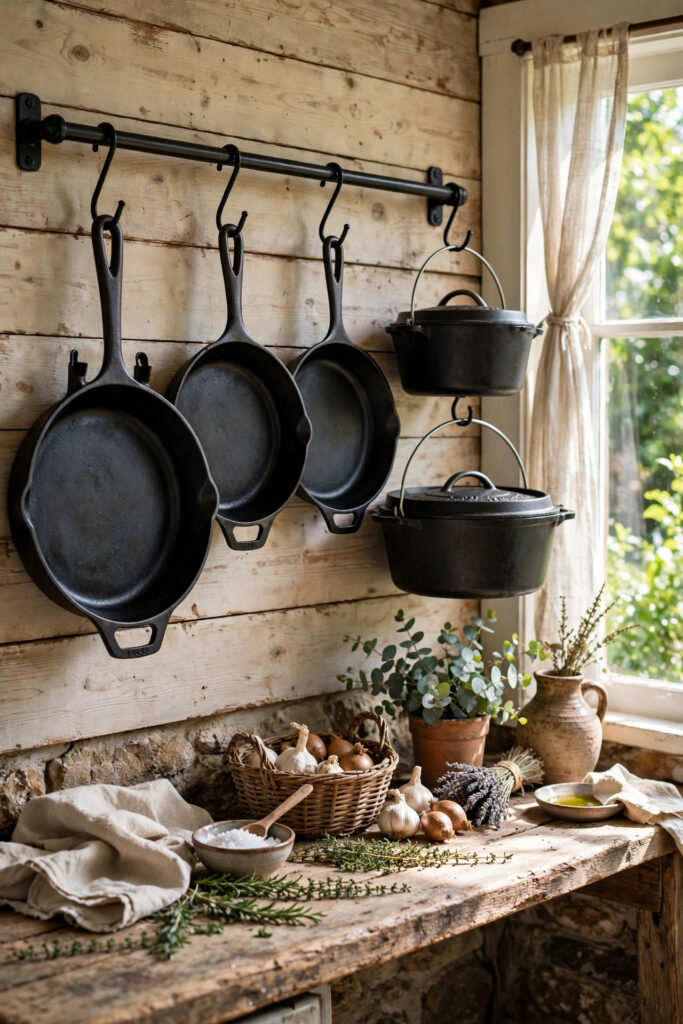
My cast iron skillet was my grandmother’s, and it came to me black with age and seasoned by sixty years of cornbread. I hung it on the wall beside my stove, and then somehow one skillet became five, because cast iron multiplies the way rabbits do. A wall of black skillets and Dutch ovens is deeply cottagecore, practical tools displayed like art. I cook with every single piece, which is the
11. Farmhouse Table Nook
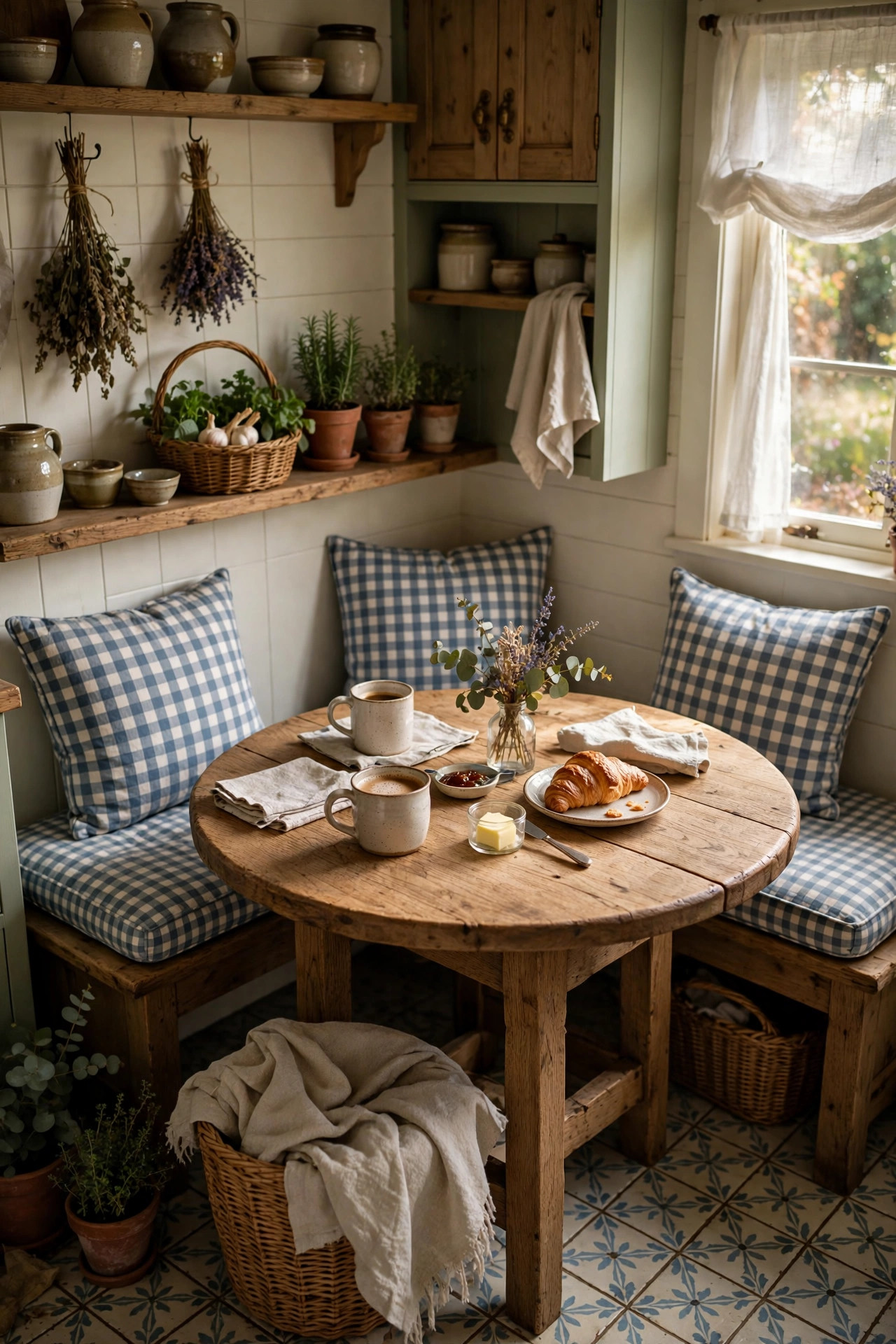
The corner of my kitchen holds a round oak table I found on the curb, and it is where my family actually lives. We eat breakfast there, the kids do homework there, and I drink my morning coffee there while the sun comes through the floral curtains. A farmhouse table nook turns an empty corner into the warmest spot in the house. Mine wobbles slightly and has a ring where a hot pot sat in 1987, and I would not trade it for a perfect table. Cottagecore is about furniture with a past, and my table’s past is written all over it.
You do not need a big kitchen for a nook, because a small round table tucks into corners beautifully. I added a simple bench on one side, which seats three kids where chairs would seat two, and the bench doubles as storage for table linens. A washable slipcover on the bench cushion handles spills gracefully. Hang a small pendant light above the table, something simple in linen or rattan, and the corner becomes a destination. Our nook has hosted birthday breakfasts, late night talks, and one memorable science fair project involving a volcano. Every home needs a corner like this.
12. Copper Pot Rail
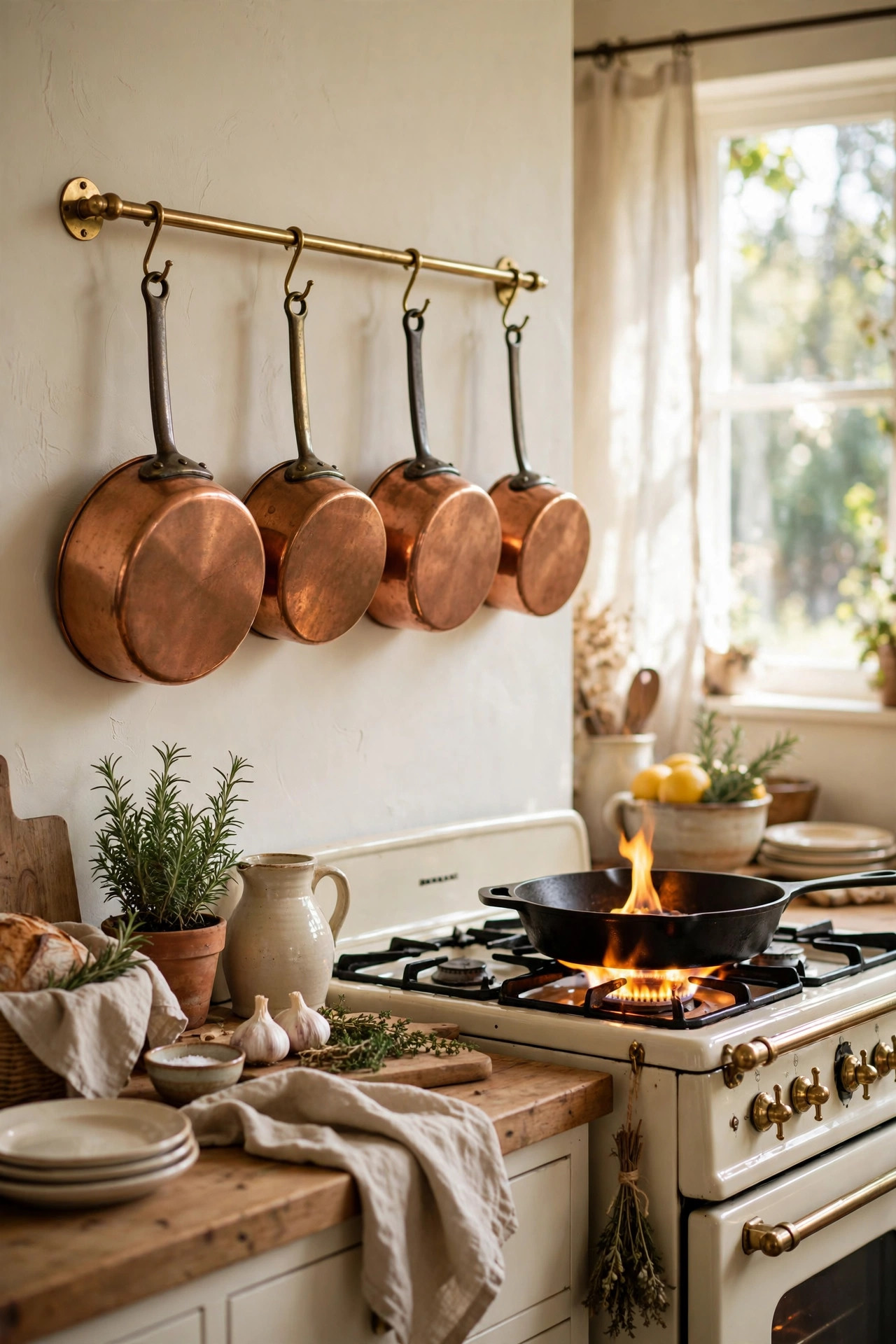
I mounted a brass rail on the wall beside my stove and hung my copper pots from it, and now I smile every time I walk into the kitchen. The copper glows in the afternoon light, all warm rose gold against my cream walls, and the whole wall looks like a painting. I bought the pots one at a time from flea markets, so each has its own dents and patina. Copper is cottagecore luxury, the kind that comes from use rather than money. My grandmother polished hers every Saturday. I polish mine twice a year and let the rest of the tarnish tell its story.
Hanging pots is also wildly practical, because everything is visible and reachable. I mounted my rail into wall studs, since copper is heavy, and used simple S hooks that cost pennies. Keep the rail near the stove so the pots you grab most are closest. A paste of lemon juice and salt shines copper beautifully when you want it bright, though I love the mellow brown of aged copper just as much. My rail holds five pots, a whisk, and a small colander, and it freed up an entire cabinet. Beautiful and useful is the cottagecore ideal, and this rail is both.
13. Patchwork Seat Cushions
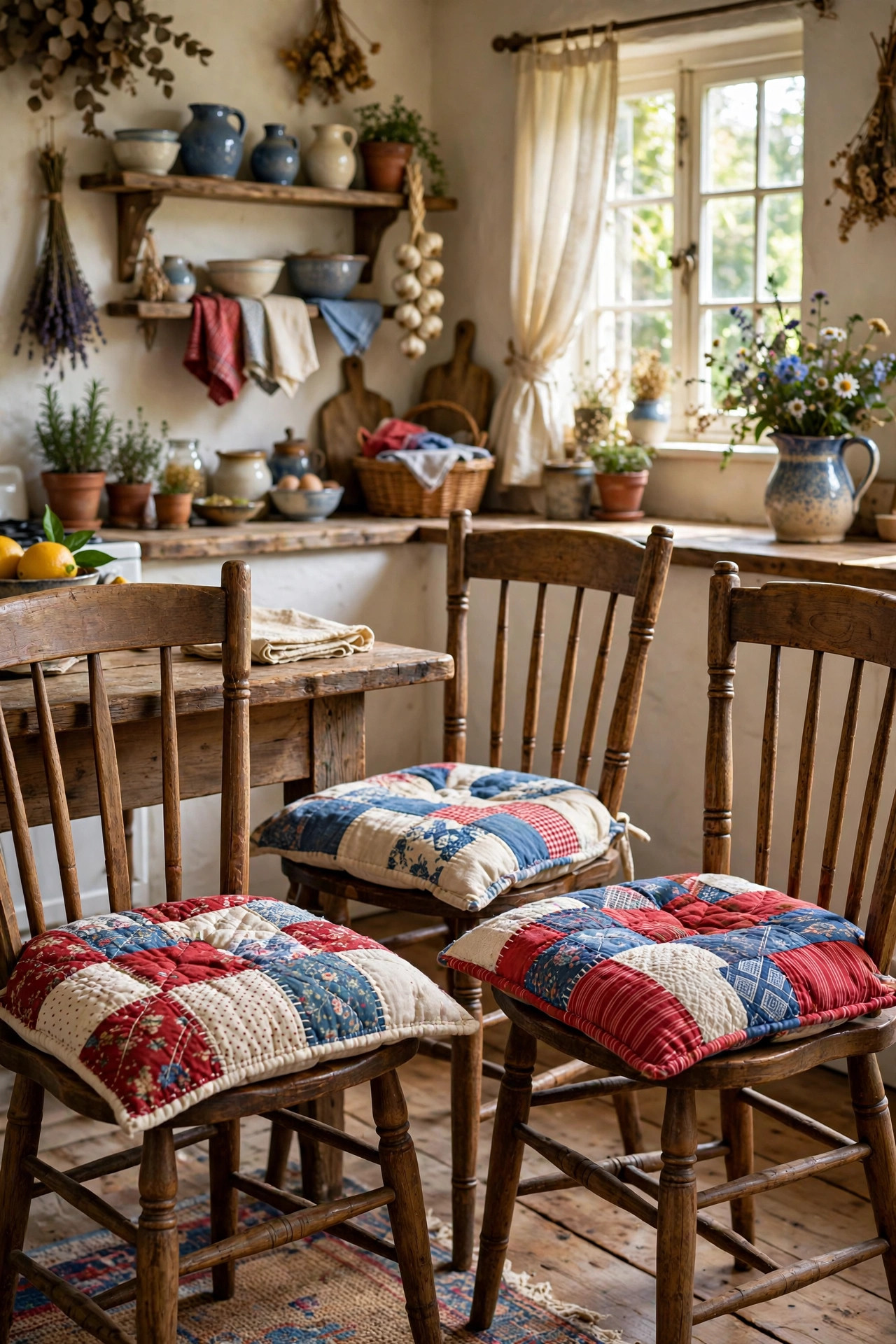
My kitchen chairs wear patchwork cushions I sewed from fabric scraps, and they are my favorite thing I have ever made. Each cushion is different, one has my daughter’s old dress fabric, another has a piece of my grandmother’s apron, and sitting down feels like being hugged by family history. Patchwork is cottagecore made visible, scraps and memories stitched into something useful. I am not a skilled sewist, and it does not matter, because slightly crooked seams just add to the charm. My cushions took one rainy weekend and a basket of scraps I was hoarding for no reason.
If sewing is not your thing, thrift stores often have quilted cushions for a few dollars, or you can tie simple fabric squares over plain foam pads with ribbon. The key is mixing patterns in the same color family so it looks collected rather than chaotic. Mine are all reds, creams, and faded blues. Washable covers are essential in a kitchen, so I made mine with envelope backs that slip off easily. Every guest who sits on my patchwork chairs asks about them, and I get to tell the story of each fabric. Furniture should hold memories, and mine literally does.
14. Ceramic Pitcher Collection
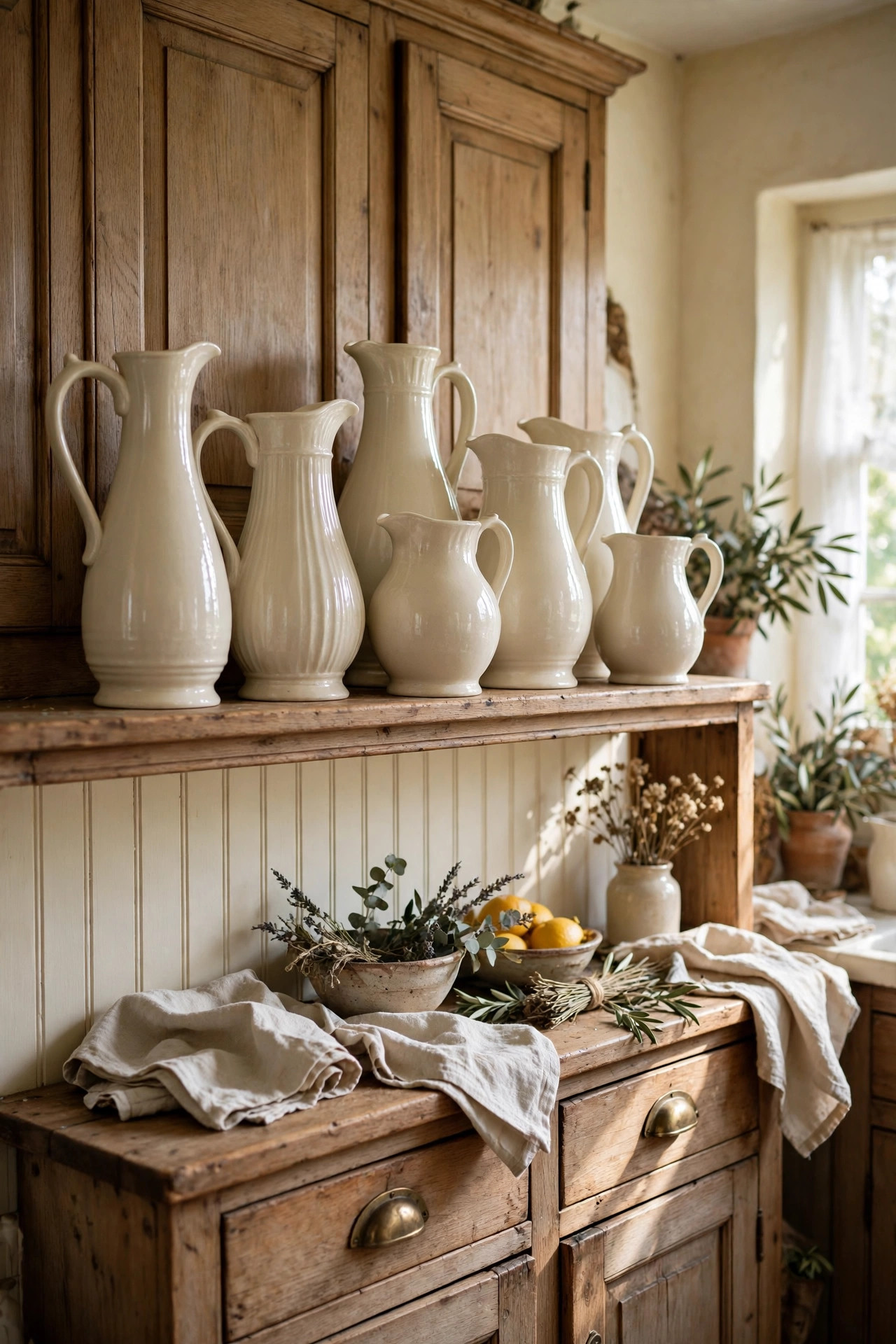
It started with one cream pitcher from a yard sale, and now I have eleven. They line the top of my cabinets, march along the windowsill, and one big one holds wooden spoons by the stove. Ceramic pitchers are my cottagecore weakness because each shape is a little sculpture, and together they look like a choir. I use them constantly, for water, for flowers, for gravy on Sundays. The best collections are the ones you live with, not the ones behind glass. Mine are chipped and crazed and absolutely perfect.
Building a pitcher collection costs almost nothing if you haunt thrift stores the way I do. I never pay more than five dollars, and my favorite one cost fifty cents. Look for interesting shapes rather than perfect condition, because a wonky handmade pitcher has more soul than a flawless factory one. Group them in odd numbers and vary the heights for the prettiest arrangement. Mine range from a tiny creamer to a jug that holds a whole bouquet. When friends visit, they always end up holding one, turning it in their hands. That is the test of a good collection, people want to touch it. Start yours this weekend and watch it grow.
15. Wood Stove Corner
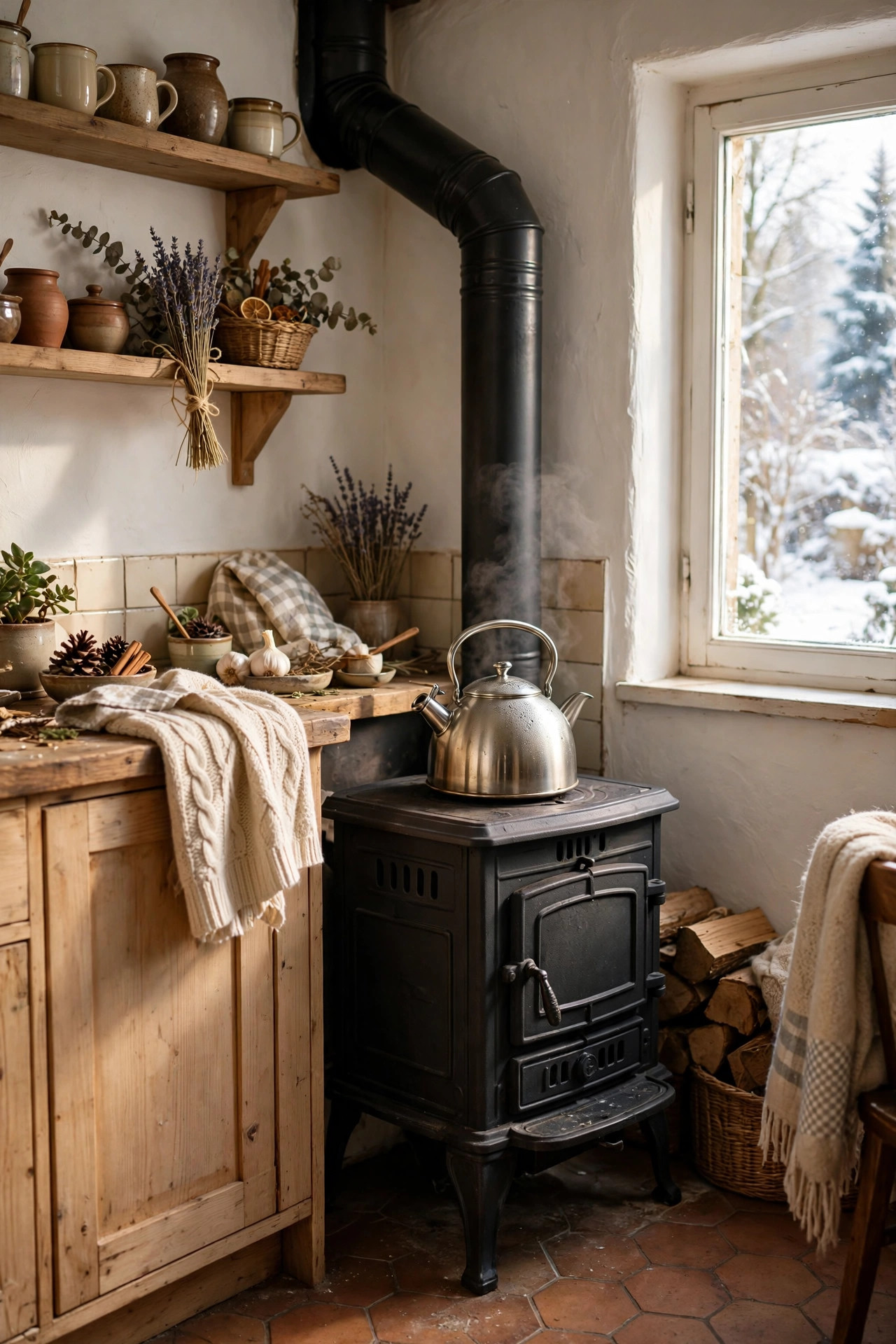
We installed a tiny wood burning stove in the corner of our kitchen last autumn, and it has changed how our whole family spends winter evenings. The stove itself is small and black and charmingly old fashioned, but the real magic is what happens around it. We pull chairs close, someone always ends up with a dog on their feet, and the kettle sings on top while the snow falls outside. A wood stove is cottagecore’s beating heart, real warmth you can feel in your bones. Our heating bill dropped, but that is not why we love it. We love it because winter finally feels like something to enjoy.
A real wood stove is a big commitment, so be honest about whether it suits your home. We had ours professionally installed with proper clearances and a lined chimney, because safety is not the place to cut corners. If a real stove is not possible, a good electric stove replica gives you the look and the cozy glow without the chimney. Keep a basket of wood or pinecones beside it, even a decorative one, because the styling is half the charm. I keep a cast iron kettle on mine all winter, and the gentle steam keeps the air from getting too dry. Some evenings we just sit and watch the flames, and nobody reaches for a phone.
16. Fresh Wildflower Bouquets
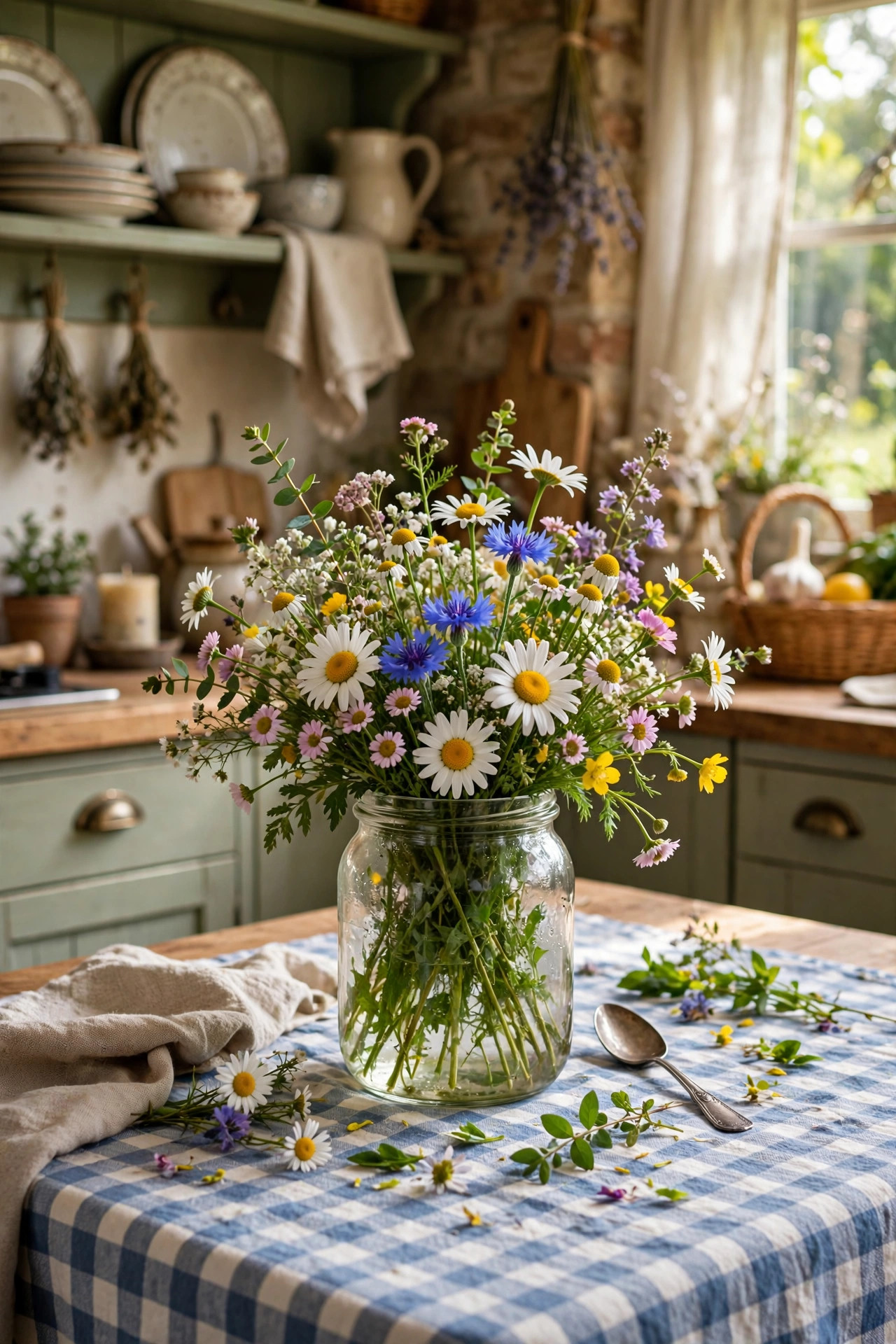
Every Friday I pick wildflowers, or grab a five dollar bunch from the farm stand, and put them in a jar on my kitchen table. It is the smallest ritual I have, and the one that makes the biggest difference. A jar of daisies and Queen Anne’s lace turns an ordinary Tuesday dinner into something worth noticing. Cottagecore is really just paying attention, and flowers force you to pay attention. They wilt, they drop petals on the gingham cloth, and for one week they are impossibly beautiful. My daughter picks the weeds she thinks are prettiest, and honestly her bouquets are my favorites.
You do not need a garden to do this, because roadside flowers, grocery store bunches, and even a single branch of blossoms all work. I keep a collection of jars and bottles specifically for flowers, nothing fancy, just interesting shapes. Change the water every two days and trim the stems, and even cheap flowers last a full week. In winter I switch to forced bulbs or simple greenery, because the ritual matters more than the blooms. A kitchen with fresh flowers in it feels alive in a way nothing else achieves. It is five dollars of pure joy, every single week.
17. Vintage Bread Box
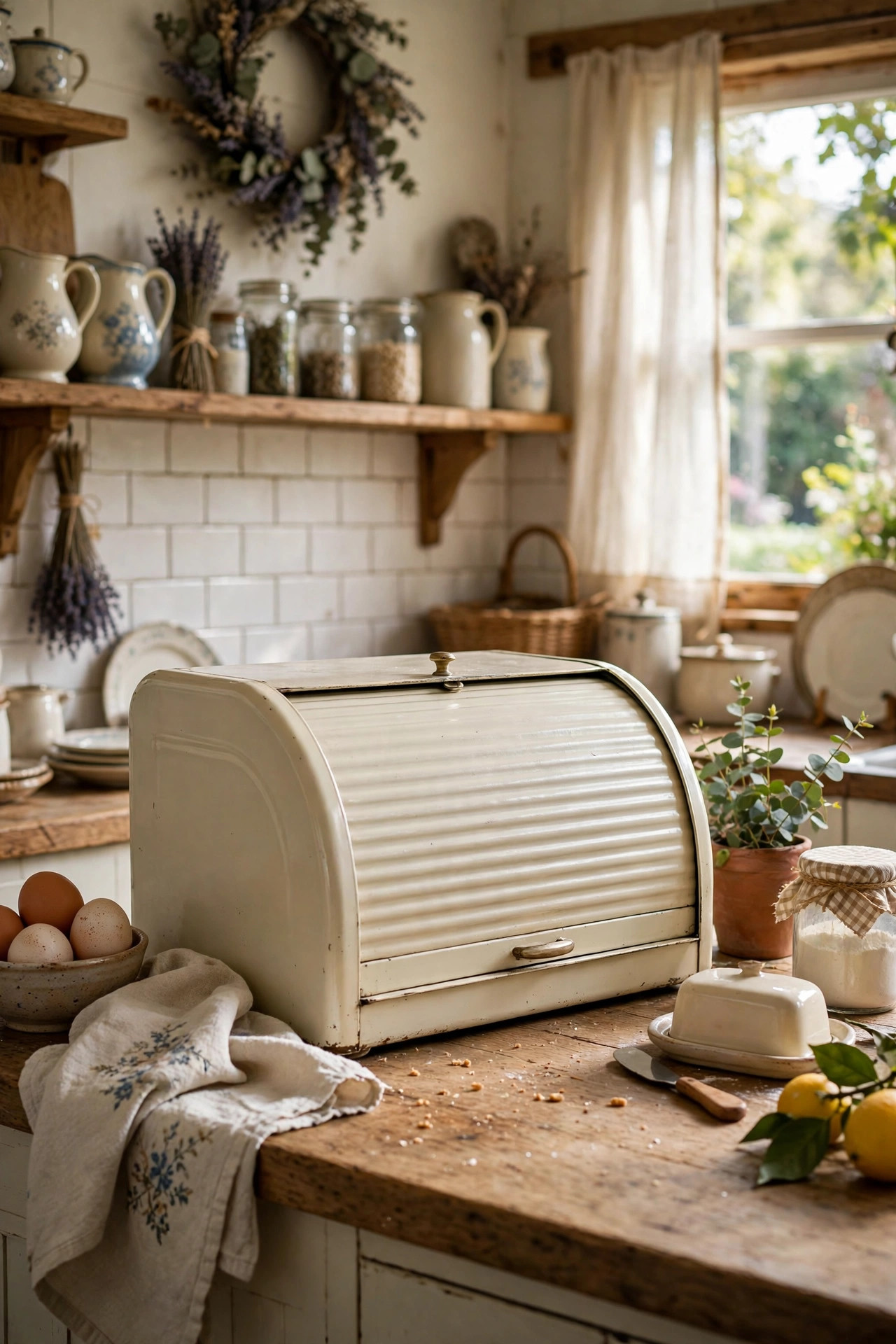
My bread box is cream metal with a roll top and a faded decal of wheat sheaves, and I found it at an estate sale for eight dollars. It sits on my counter holding our sourdough, and it makes me unreasonably happy every morning. A vintage bread box is small cottagecore perfection, useful, beautiful, and nostalgic all at once. Before I had it, my bread lived in a plastic bag that made the counter look sad. Now the counter has a centerpiece with a job. The roll top still glides smoothly after who knows how many decades, which feels like a small miracle.
Bread boxes are everywhere at thrift stores if you look, usually under fifteen dollars. Choose metal over plastic for the true vintage feel, and check that the door or lid opens smoothly. A quick wipe with warm soapy water is all the cleaning most need, since you are not storing anything messy. Mine holds two loaves plus a bag of rolls, which is plenty for our family. If you bake, a bread box keeps homemade loaves fresh for days without plastic. It is a tiny daily pleasure, lifting that roll top every morning, and tiny daily pleasures are what cottagecore is made of.
18. Lace Trimmed Shelves
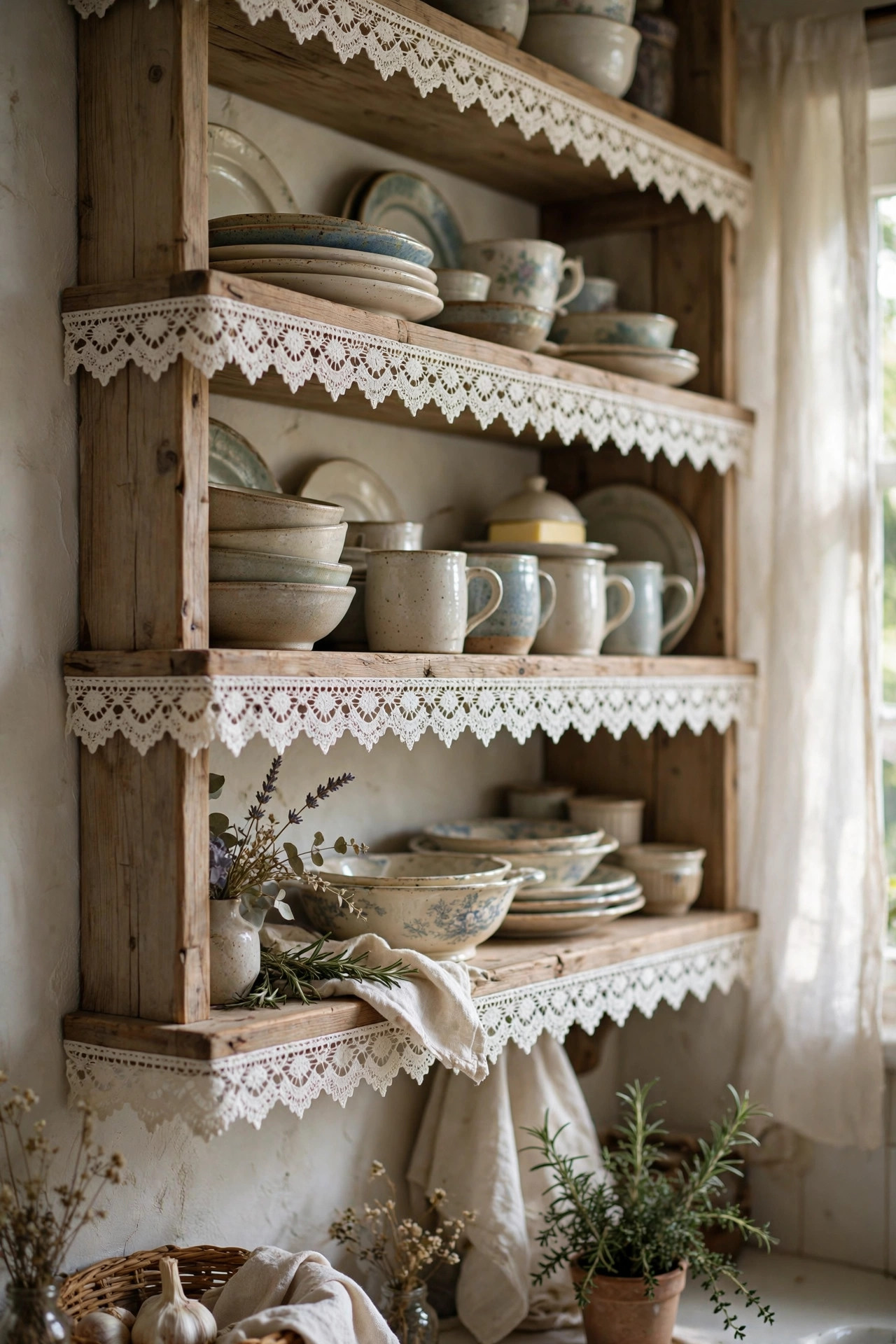
I edged my open kitchen shelves with strips of vintage lace, attached with tiny brass tacks, and the effect is pure storybook. The lace hangs about two inches below each shelf, softening the hard wood edge and making my everyday dishes look like they belong in a dollhouse. I found the idea in my grandmother’s kitchen, where every shelf wore a lace valance. It is such a small detail, but it transforms plain shelves into something romantic. When the afternoon light hits the lace, it casts the prettiest shadows on the wall behind. My shelves went from storage to poetry with one afternoon’s work.
You can find vintage lace at thrift stores and estate sales for almost nothing, or buy new cotton lace by the yard. I cut mine with pinking shears so the edge would not fray, and attached it with small upholstery tacks I tapped in gently with a hammer. Measure each shelf and add an inch for overlap at the corners. White or cream lace suits every kitchen, and it washes well if you take it down twice a year. If tacks feel too permanent, a strip of hook and loop tape works just as well. This is the kind of detail nobody can quite name but everybody feels, and that is the best kind of decorating.
19. Cozy Window Herb Garden
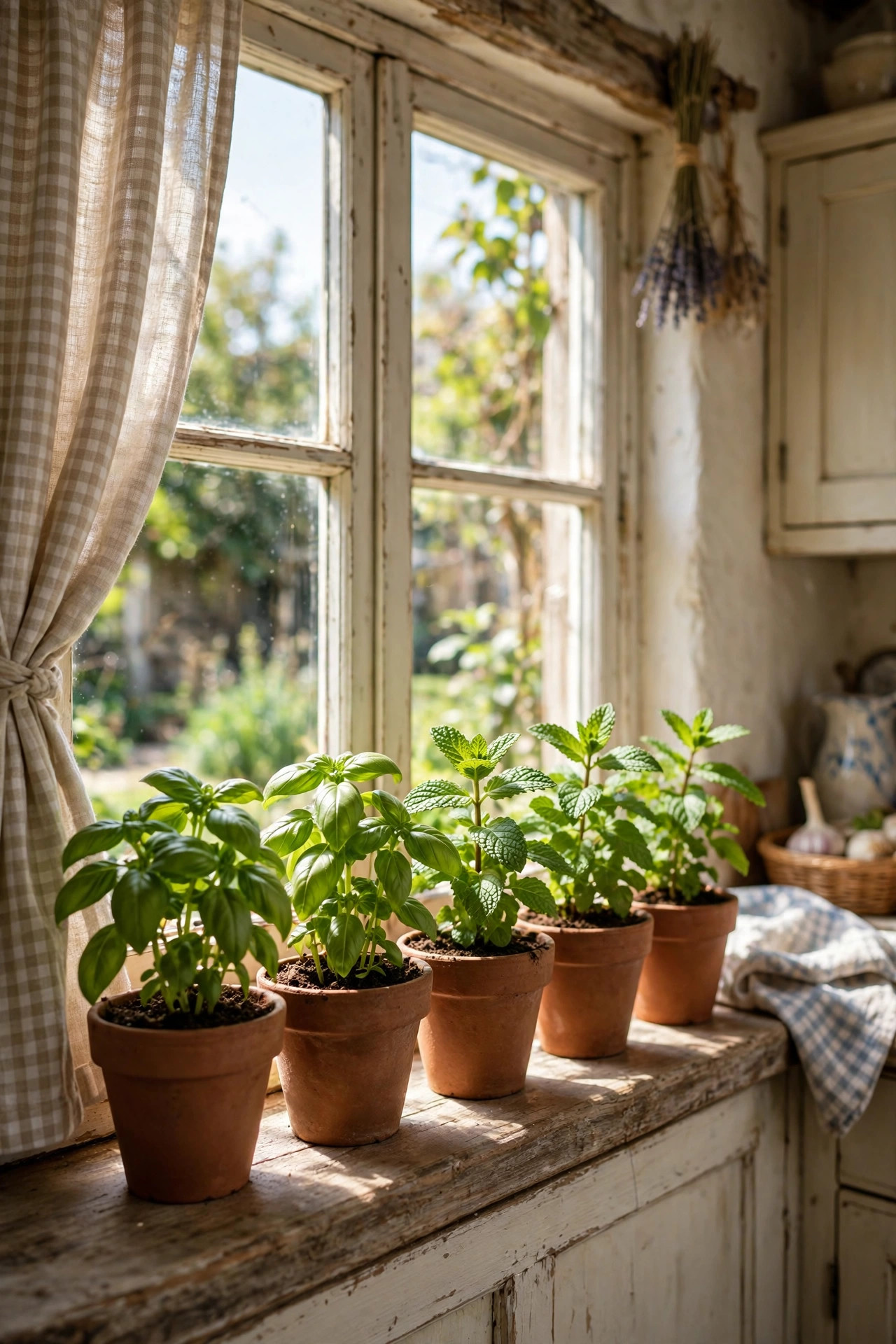
My kitchen windowsill holds a row of small potted herbs, basil, parsley, chives, and mint, and it is the most alive spot in my whole house. I started it with one sad basil plant from the grocery store, and now the sill is a tiny jungle that I tend every morning while the coffee brews. A window herb garden is cottagecore you can taste. I snip basil for pasta, parsley for salads, and mint for the tea I drink on the porch in summer. The green against my floral curtains makes the whole window look like a painting of simple abundance.
Growing herbs indoors is easier than most people think. Give them your sunniest window, water when the top inch of soil feels dry, and pinch the tops regularly so they grow bushy instead of leggy. I use plain terracotta pots, which look right in a cottage kitchen and cost very little. A small tray underneath catches drips and keeps the sill clean. In spring I start new plants from seed, which costs pennies and feels like a small miracle every time. My windowsill garden connects my kitchen to the seasons, green and hopeful in spring, lush in summer, and quietly patient through winter. It reminds me daily that good things grow slowly.
Conclusion
My cottagecore kitchen was not built in a weekend, and that is exactly the point. It grew the way gardens grow, one small planting at a time, with plenty of happy accidents along the way. The floral curtains led to the lace shelves, the lace shelves led to the china display, and now every corner holds something I love. You do not need all nineteen ideas. Start with the one that made your heart beat a little faster while you were reading, and let the rest find you over time.
The real secret of cottagecore is that it is not a style you buy, it is a way of paying attention. Notice the chipped mug, the afternoon light, the smell of rosemary. Keep the things that tell your story and let go of the things that do not. Your kitchen does not need to look like anyone else’s. It just needs to feel like home to the people who gather in it, and that is something no store can sell you.
FAQs
What is a cottagecore kitchen?
A cottagecore kitchen is a cozy, vintage inspired kitchen that celebrates simple country living. Think floral fabrics, open wooden shelves, worn wood, handmade details, and things with history. It is less about a strict style and more about a feeling of warmth, nostalgia, and slow living.
Do I need a farmhouse to have a cottagecore kitchen?
Not at all. My own kitchen is in a regular suburban house, and many cottagecore kitchens are in city apartments. The style is about layering vintage charm and natural materials, which works in any space. Start with textiles and small details, which need no renovation at all.
Is cottagecore expensive to achieve?
It is one of the cheapest styles to create, because it celebrates thrifted, handmade, and well worn things. Most of my favorite pieces cost under ten dollars at flea markets and thrift stores. The style actually looks better when things are not brand new, so a small budget is an advantage.
How do I keep a cottagecore kitchen from looking cluttered?
Group similar items together, leave breathing room on shelves, and choose a limited color palette of creams, soft florals, and warm woods. Display only things you love or use, and store the rest out of sight. Charming and cluttered are separated by editing, so step back and remove one thing from every shelf.
What colors work best in a cottagecore kitchen?
Creams, warm whites, soft sage, faded florals in pink and blue, natural wood tones, and touches of black from cast iron. Avoid harsh brights and cold grays, which fight the cozy feeling. When in doubt, choose the faded, sun washed version of any color.
Can cottagecore work with modern appliances?
Yes, and most of us mix old and new. My stainless dishwasher hides behind the gingham tablecloth’s charm, and nobody notices it. Tuck small appliances in cabinets, choose cream or retro colored ones when you replace them, and let the vintage details around them do the talking.