There is a reason designers keep coming back to white oak. It is warm without being orange, modern without being cold, and it works in almost every kitchen style you can name. The grain is subtle and calm, the tone is honeyed and light, and it makes a kitchen feel expensive in a quiet way. Below are 18 ways to bring white oak into your kitchen, each one a little visual moment worth saving.
1. Rift Sawn Cabinets
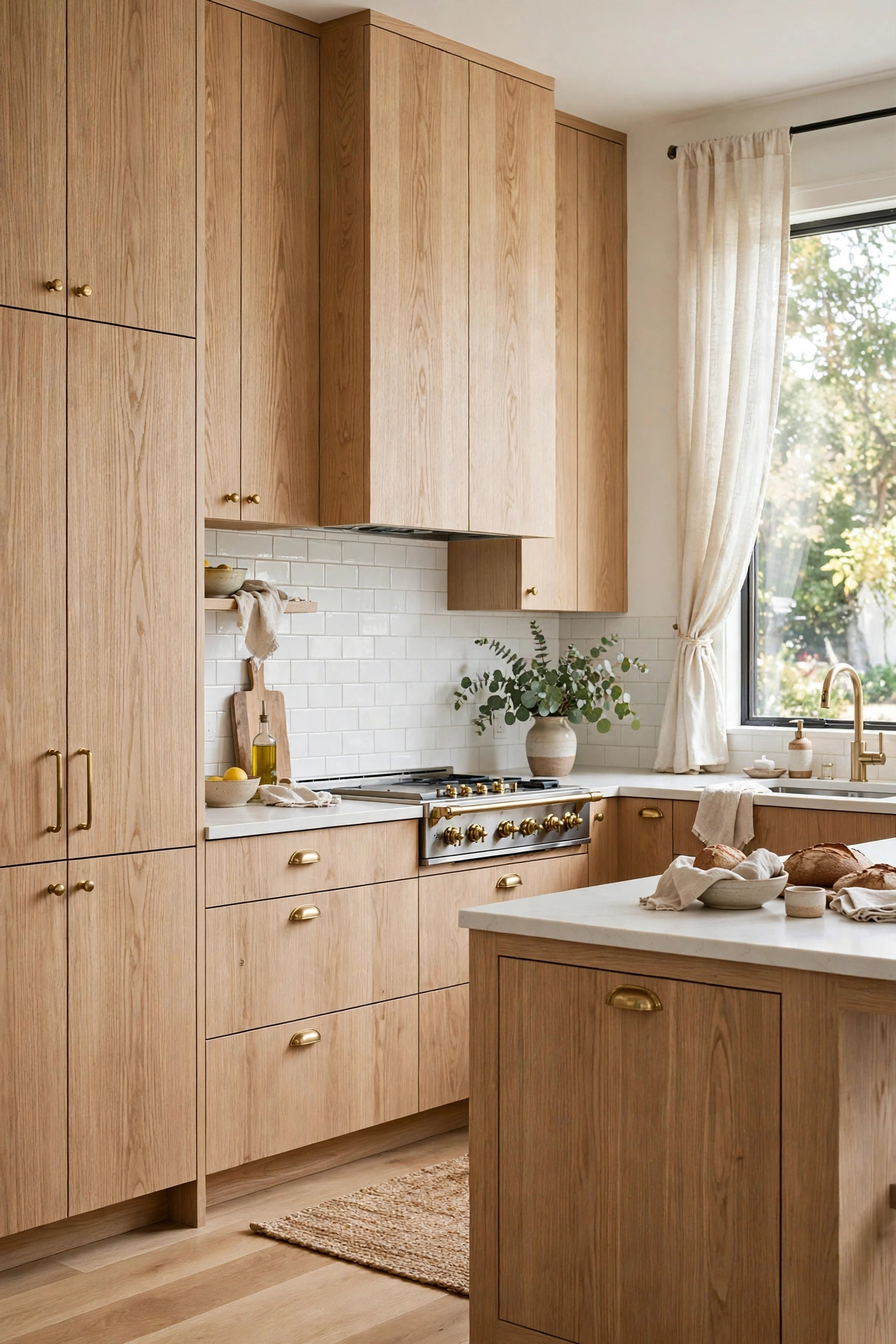
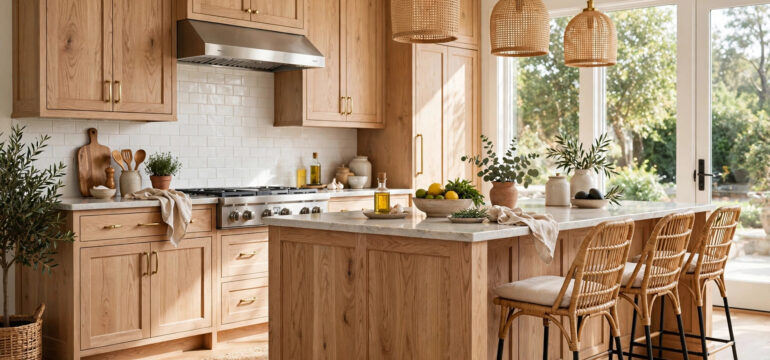
Rift sawn white oak cabinets are the gold standard for a reason. The straight, even grain looks calm and modern, with none of the busy cathedral patterns that can make a kitchen feel dated. Picture a wall of tall cabinets in a soft honey tone, the grain running in clean vertical lines, catching the morning light as it moves across the room. This cut of oak feels tailored, almost like a well made suit, and it gives the whole kitchen a sense of order and quiet confidence. Pair it with simple slab doors and you get a look that is both timeless and current, the kind of kitchen that looks good in photos today and will still look good in photos ten years from now. The color sits beautifully between pale and medium, so it warms up white walls without darkening the room, and it hides dust and fingerprints far better than dark stained wood. Designers love it because it photographs well from every angle and never fights with other materials.
What makes rift sawn oak so photogenic is its consistency. Every door looks like it belongs with the next one, which matters when you have a whole bank of cabinets in one view. Keep the finish natural or go with a light clear coat to let the wood speak for itself. Add slim black pulls for contrast, or brushed brass for softness, and watch how the hardware changes the mood of the same cabinets. Either way, the cabinets become the quiet star of the room. This is the cabinet choice you will still love in fifteen years, because it never shouts and never fades into the background either. It costs more than painted cabinets, but the warmth it brings is something paint simply cannot copy.
2. White Oak Island
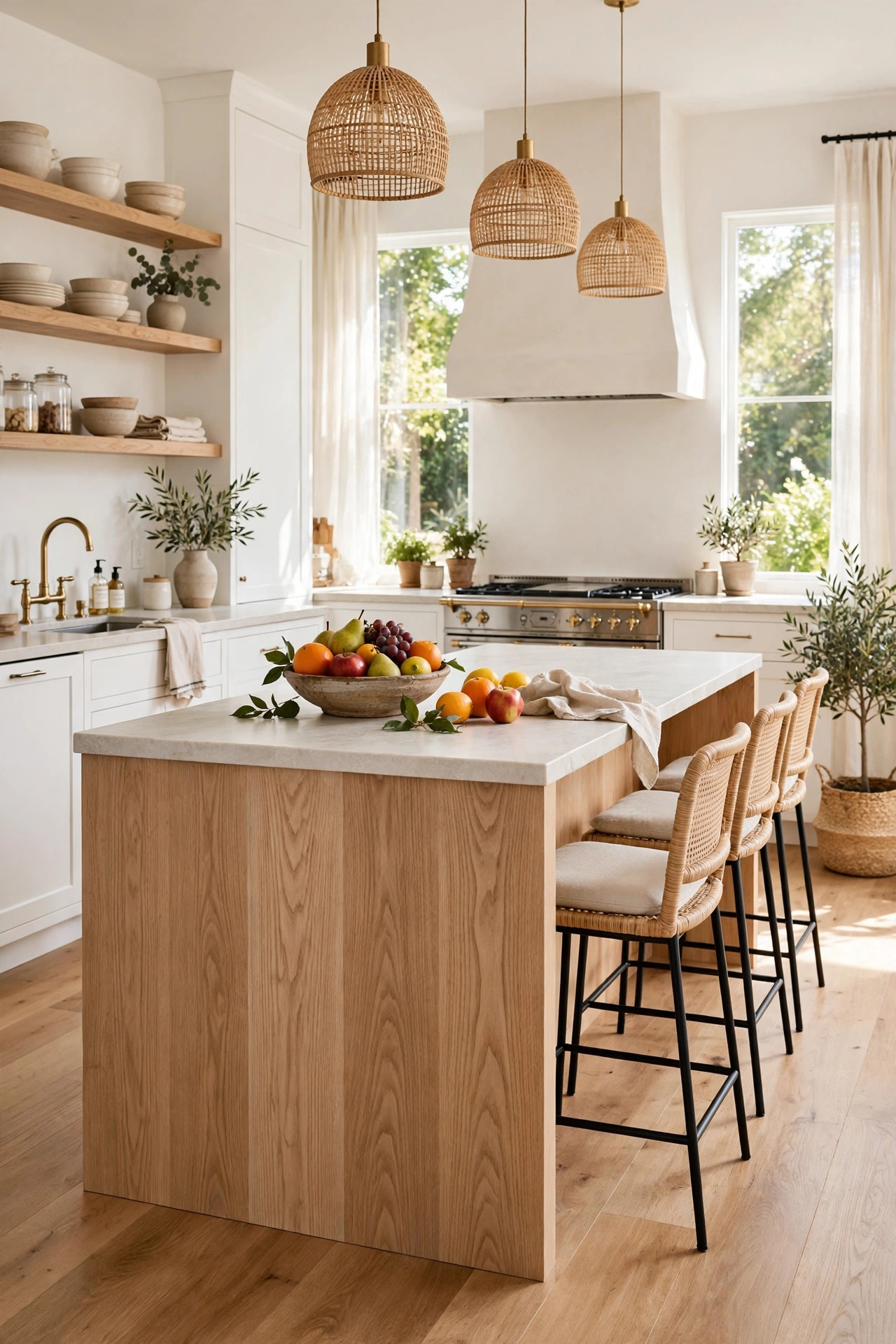
A white oak island is like the warm heart of the kitchen. Imagine a big island with a waterfall edge in white oak, the grain wrapping around the sides in one continuous flow that draws your eye around the whole piece. It grounds the room and gives everyone a natural place to gather, which is what islands are really for. The island can carry a different finish from the perimeter cabinets, which adds depth without clutter. Try white oak on the island with soft white cabinets around it, and the contrast feels intentional and calm rather than mismatched. The wood brings in nature, and the white keeps things bright and open. This combination works in small kitchens too, where the oak keeps the island from looking like a big white box.
Styling an oak island is half the fun. A couple of counter stools in black or cognac leather, a low bowl of fruit, a small vase with eucalyptus stems. The warm wood makes every object on top of it look better, like a good frame makes a painting look better. If your island is large, consider open shelving on one side for cookbooks or pretty dishes, which adds function and charm. The oak frames everything like a gallery. This is the spot where homework happens, coffee is poured, and guests lean while you cook. It deserves to be beautiful, because it is where your kitchen life actually happens.
3. Floating Oak Shelves
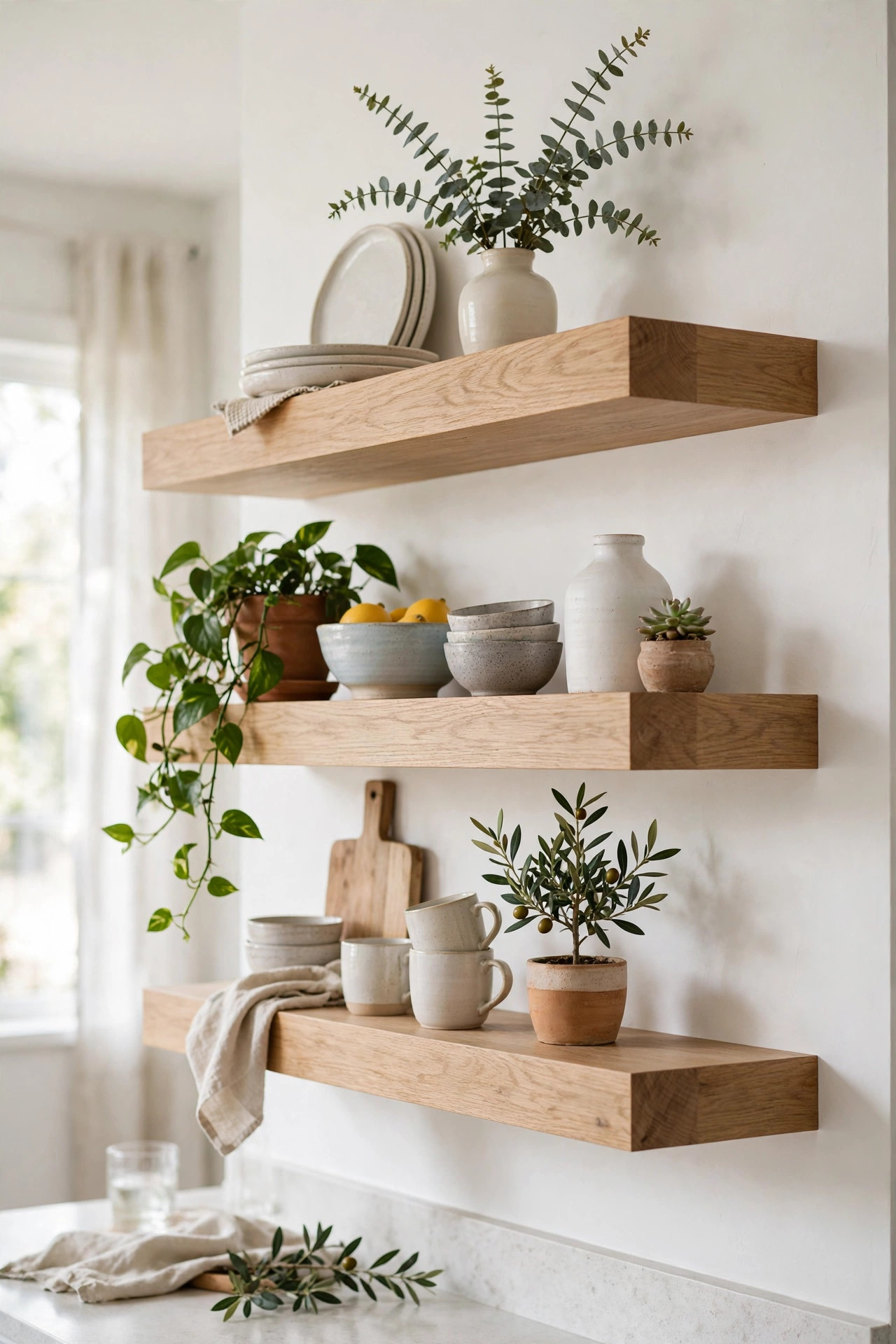
Floating white oak shelves turn storage into display. Two or three thick oak shelves on a plain wall become a stage for your prettiest dishes, glassware, and small plants. The wood adds warmth to an all white kitchen in seconds, like sunshine on a wall. Choose shelves with a chunky profile, at least two inches thick, so they look substantial and not flimsy. The brackets should be hidden, so the oak appears to float effortlessly. This is one of the simplest ways to add white oak without a full renovation, and it works in rentals too if your landlord allows a few screws. The visual impact is far bigger than the effort.
The styling matters as much as the shelves themselves. Mix everyday items with a few special pieces so it looks collected, not staged. Stack white bowls, lean a small cutting board, add a trailing plant that softens the straight lines. Leave some breathing room so it does not look crowded, because negative space is what makes shelves look expensive. The oak warms up everything it touches, and even plain white plates look better against it. These shelves are also practical, keeping daily dishes within easy reach. It is storage that doubles as art, and it costs far less than new cabinets.
4. Oak Range Hood
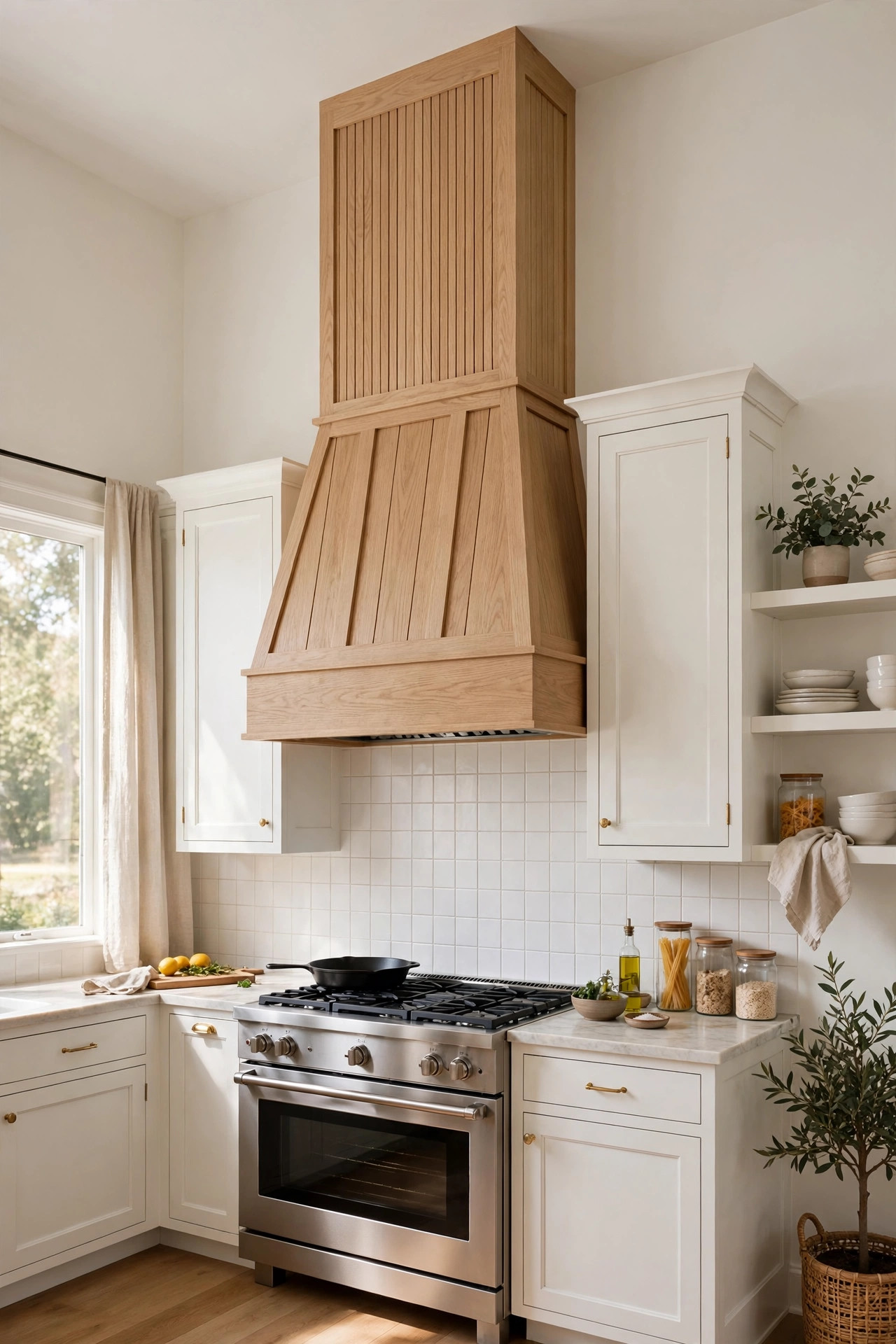
A white oak range hood is a true showstopper. Instead of a stainless steel box, imagine a custom hood wrapped in white oak, its clean lines rising all the way to the ceiling. It becomes the focal point of the whole kitchen, the first thing your eye finds. The wood softens the hardest working appliance in the room and makes it look like furniture instead of equipment. This works best with a simple shaker or slab design, letting the grain do the talking rather than fussy details. The scale should be generous, because a hood that is too small looks lost on the wall. Go a little bigger than you think you need.
Pair the oak hood with a simple tile backsplash so the two do not compete for attention. A handmade look white tile or a soft sage lets the wood shine. The hood draws the eye upward, making the ceiling feel higher and the room feel grander. If your kitchen is open to the living room, the oak hood ties the two spaces together beautifully. It is a custom detail that looks expensive but is really just smart carpentry. Guests will ask about it before anything else in the room.
5. Warm Wood Floors
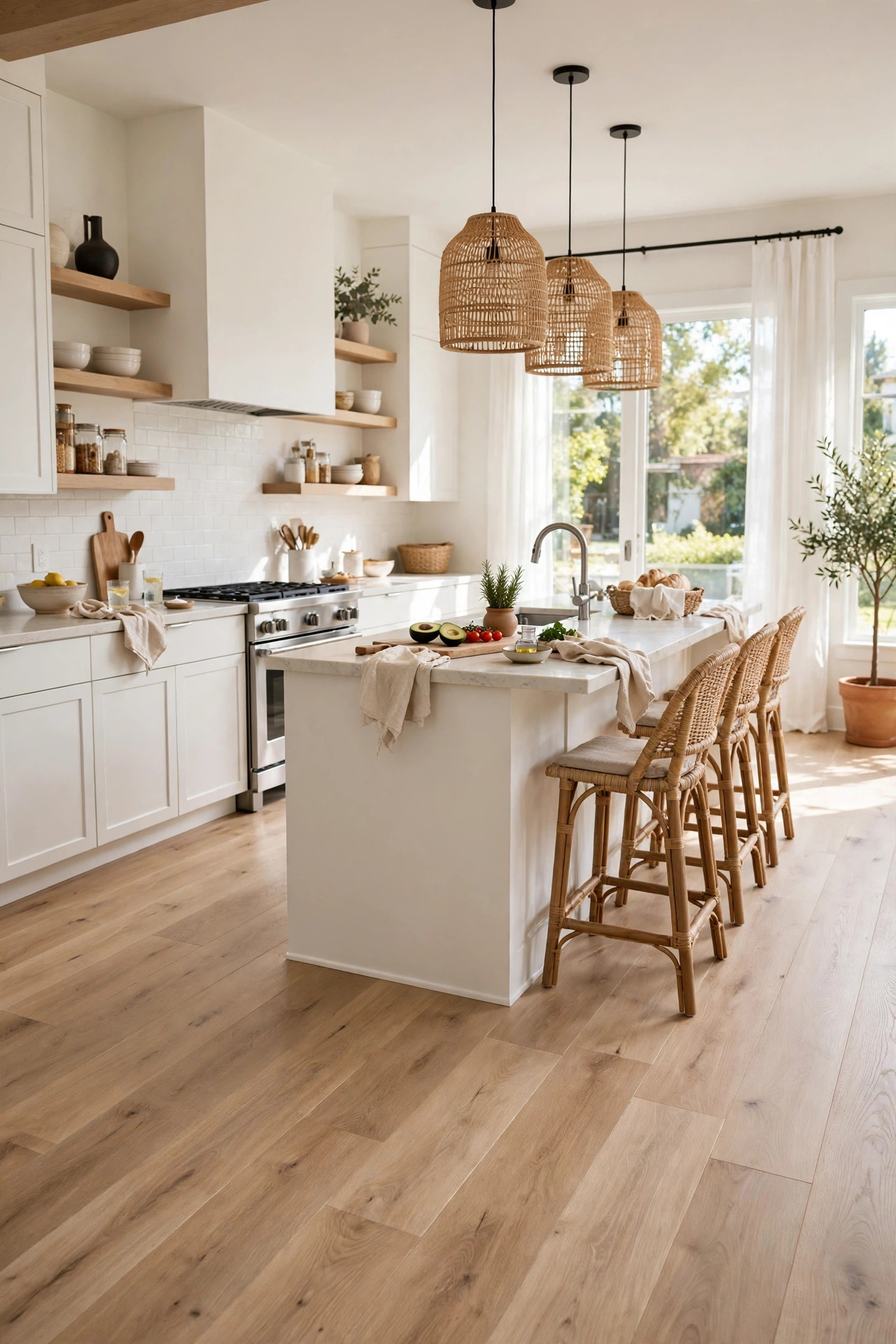
White oak floors are the foundation of a warm kitchen. Wide plank white oak in a natural finish feels soft underfoot and looks beautiful for decades, developing character as it ages. The light tone keeps the room bright, while the grain adds just enough pattern to feel alive and natural. Unlike dark floors that show every crumb and dust mote, white oak is forgiving, which matters in a room where you cook every day. It works with every cabinet color, from white to navy to green, so you will never feel locked in. This is the floor that makes the whole house feel connected.
Choose a matte or satin finish rather than high gloss, which can look plastic on wood and shows scratches more. A natural oil finish feels the most authentic and is easy to touch up when life happens. Wide planks, five inches or more, look more modern than narrow strips and make the room feel larger. Run the planks in the longest direction of the room to stretch the space visually. These floors age gracefully, developing a patina that only real wood gets. They are an investment, but they pay you back every single day in warmth.
6. Oak Open Pantry
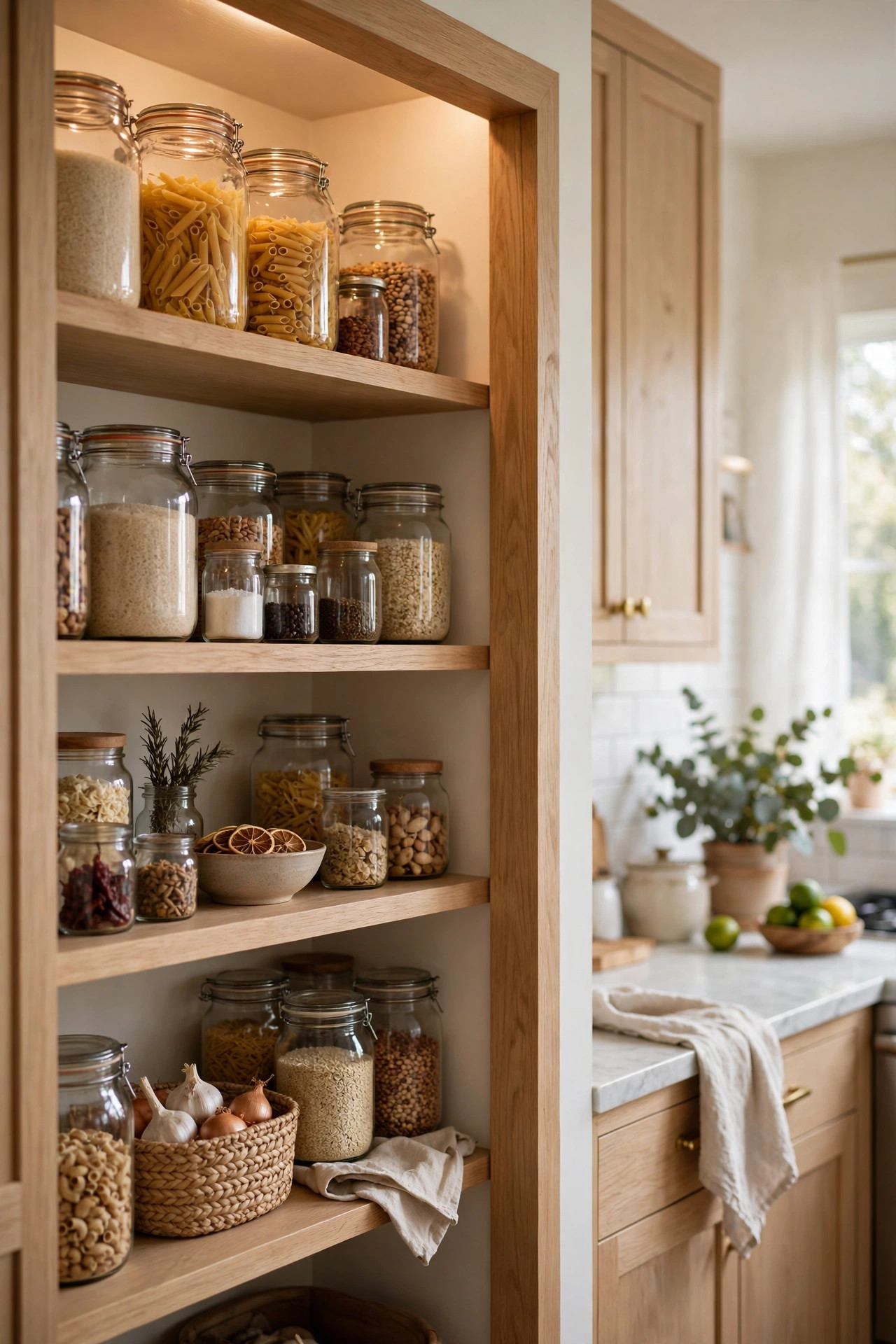
An open oak pantry feels like a little shop inside your kitchen. Tall white oak shelves holding glass jars of grains, oils, and spices look beautiful and make cooking easier, because you can see everything at a glance. The wood frames your ingredients like products on display in a beautiful store. This works in a walk in pantry or just a tall cabinet with the doors removed. Add warm lighting inside, and the oak glows softly in the evening. It turns the most practical corner of the kitchen into the prettiest one. Guests always peek inside, because it looks too pretty to be just storage.
Keep the styling simple and honest. Decant dry goods into matching glass jars with simple labels, which looks tidy and keeps food fresher. Group items by type, baking together, oils together, so the shelves read as organized. The oak shelves make even humble lentils look good. Leave the bottom shelf for heavier items like small appliances. This pantry invites you to cook, because everything is visible and reachable. It is the opposite of a dark cabinet where things go to be forgotten. Once you try open oak pantry shelving, you will wonder how you ever cooked from dark closed cabinets.
7. Butcher Block Accents
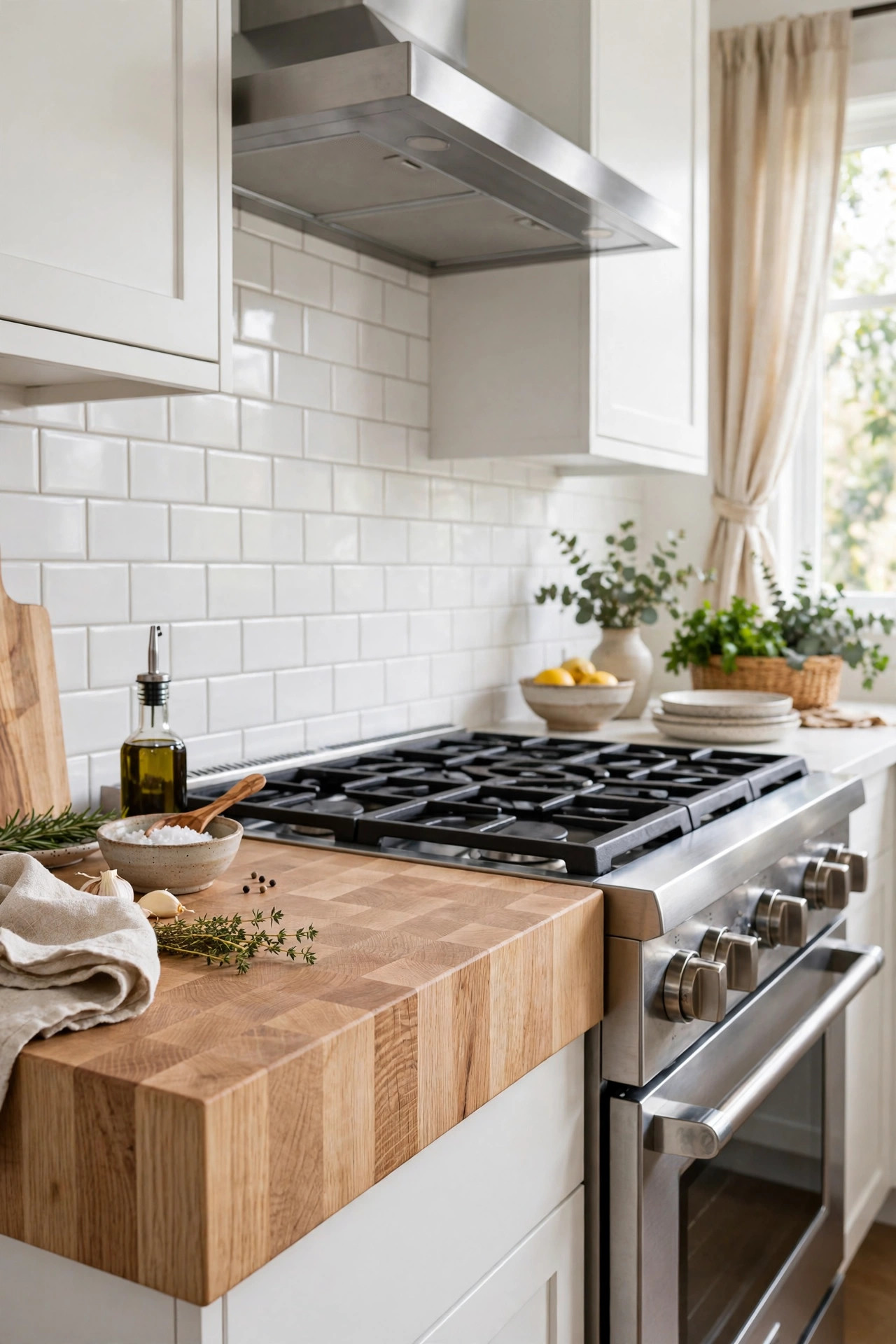
White oak butcher block brings warmth right to the work zones. A thick oak cutting board built into the counter, or a butcher block section beside the range, adds a natural surface that is made for real cooking. The end grain pattern is beautiful up close, like a topographic map of tiny lines. It softens all the hard stone and steel around it. This is the detail that tells guests you actually cook here, not just pose here. There is something honest about a work surface that shows its use. It is the hardest working surface in the kitchen, and the most beautiful one too.
Maintain it with mineral oil every few months, and it will last for years. Choose a section near the prep area so it gets used, not just admired from across the room. The wood develops character with use, small marks that tell the story of meals made. Pair it with a simple soapstone or honed marble counter for contrast. The mix of materials feels collected and personal. A butcher block island top in white oak is also stunning, warm, durable, and endlessly practical for a busy family kitchen. A well oiled oak block only gets richer with age, like a good leather bag.
8. Glass Front Oak Cabinets
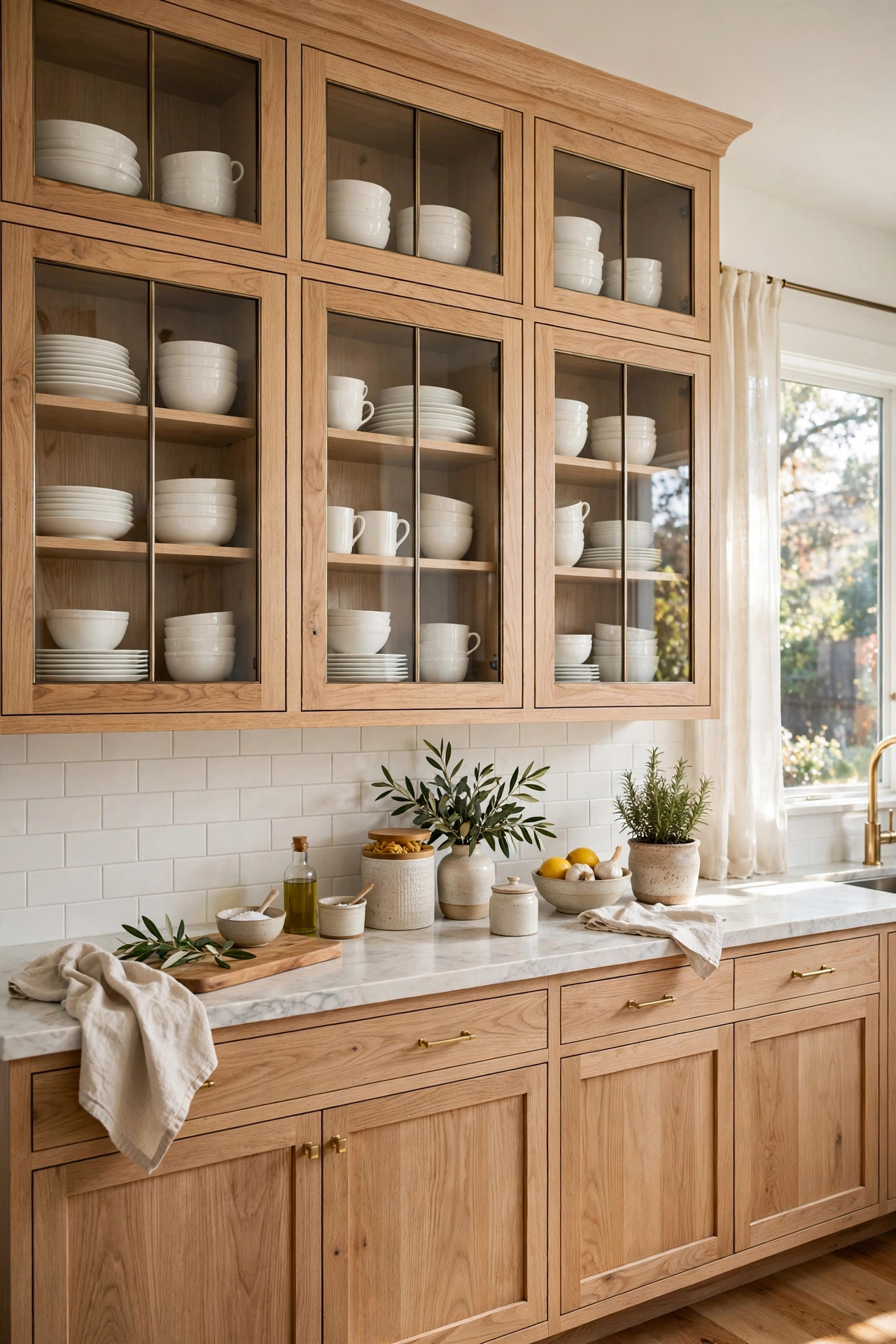
Glass front cabinets in white oak are made for displaying your best things. The wood frames the glass like a picture frame, and inside you can show off dishes, glassware, and ceramics. This breaks up a long run of solid cabinets and adds lightness to the wall. Use them for one or two uppers, or go for a full hutch style cabinet that feels like furniture. The oak keeps the look warm, while the glass keeps it airy. It is the best of both worlds, storage and display in one. The mix of solid wood and glass keeps the wall from feeling heavy or monotonous.
Style the insides with restraint for the best effect. White dishes, clear glasses, a few wooden bowls, and not much more. Too much color inside looks busy behind glass. Add small puck lights at the top of each cabinet so the contents glow softly in the evening. The oak frame catches that light beautifully. These cabinets make the kitchen feel curated, like a beautiful shop you want to browse. They also encourage a little tidiness, which is secretly a good thing for everyone. When the evening lights come on, these cabinets glow softly like a jewelry case.
9. Oak Beam Ceiling
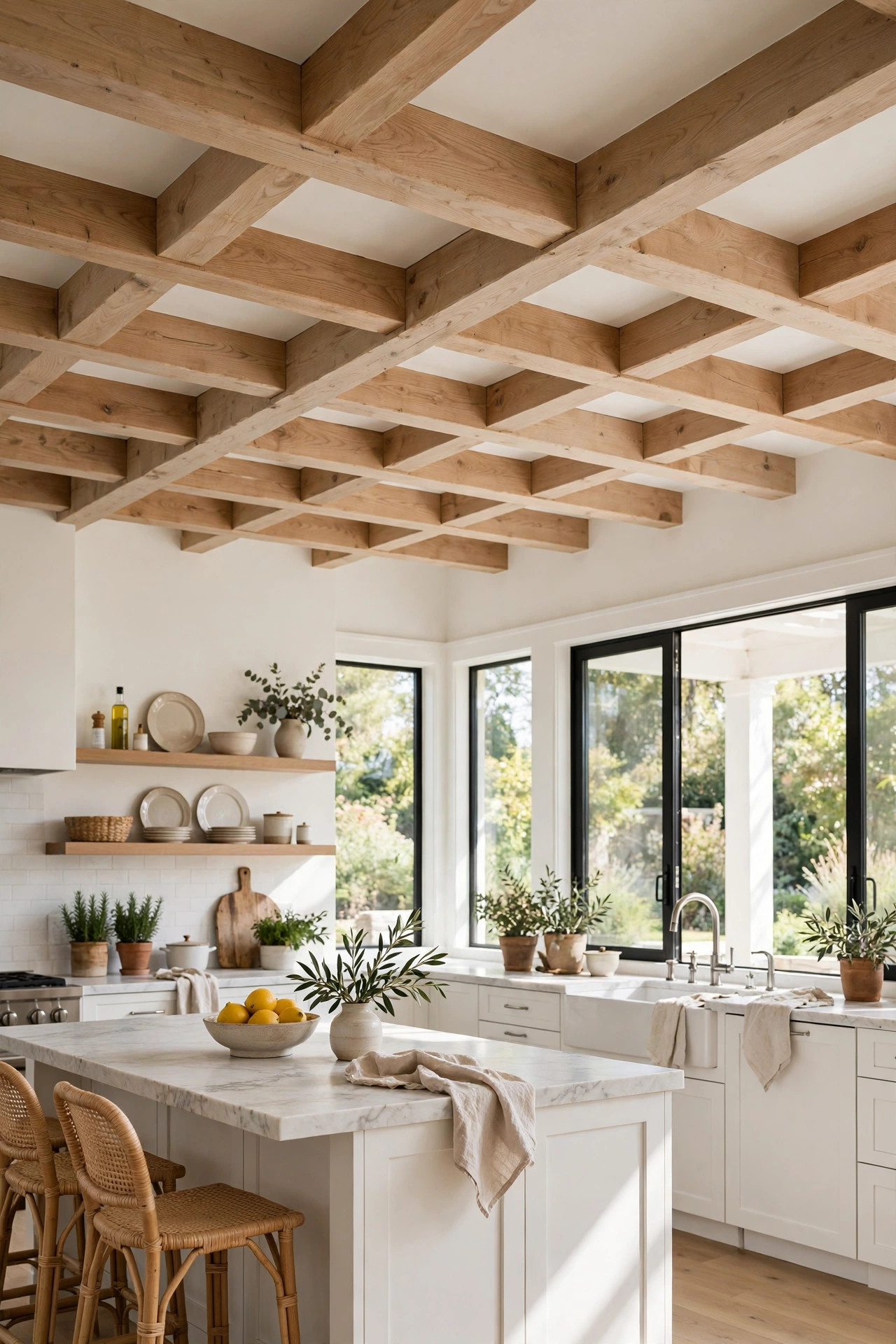
Exposed white oak beams turn a plain ceiling into architecture. Even two or three beams across a kitchen ceiling add rhythm and warmth that flat drywall never can. They draw the eye up and make the room feel crafted and intentional. This works in vaulted ceilings and standard eight foot ceilings alike, just scale the beam size to the room so they do not overwhelm it. The oak softens all the hard surfaces below. It is a structural detail that feels soulful and timeless. Even a plain builder grade kitchen feels custom once beams go up.
Keep the beams natural or lightly whitewashed so they do not darken the room. In a white kitchen, oak beams are the perfect contrast, crisp walls with warm wood overhead. They also help define the kitchen in an open plan, marking the space without walls. Pair with simple pendant lights hung between the beams for a layered look. The combination of wood and light is timeless. This is a bigger project, but the payoff is enormous and permanent. If solid beams are out of budget, hollow box beams wrapped in oak veneer give the same look for less. Either way, the beams become the soul of the room.
10. Oak Bar Seating
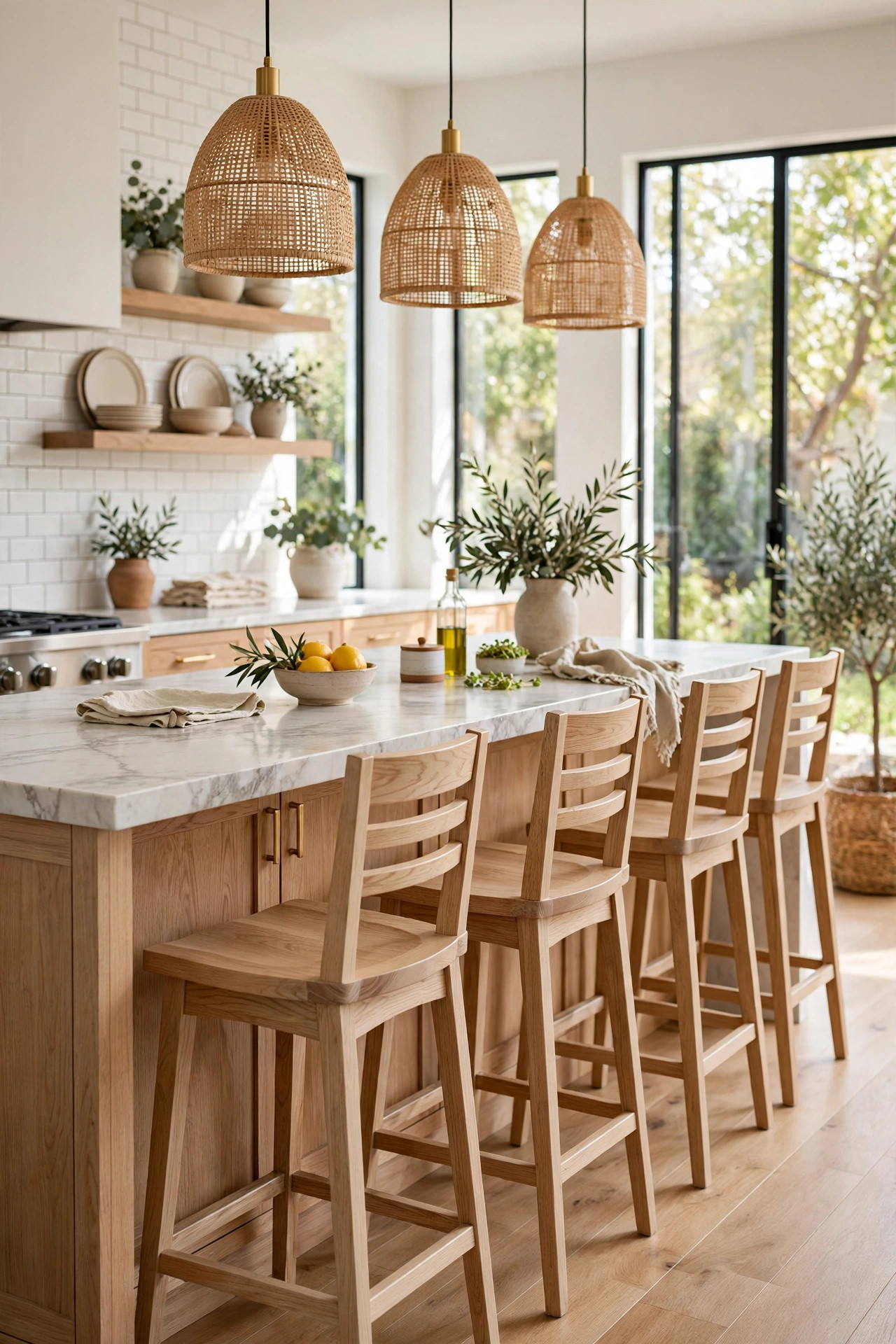
White oak bar stools are the jewelry of the island. Whether you choose backless oak stools or wishbone style chairs in oak, the warm wood makes the seating area feel inviting and finished. The stools get touched every day, and real wood feels good in the hand in a way plastic never does. Match the oak tone to your island or floors for a pulled together look. Four matching stools in a row look sharp and intentional, like they were always meant to be there. The natural variation in the wood means no two stools look exactly alike.
Comfort matters as much as looks in seating you use daily. Choose stools with a footrest and a seat that is easy to wipe clean. Oak takes daily use well and only gets better looking with age. If your island is white oak too, vary the tone slightly so it does not match too perfectly. A little contrast feels designed rather than default. These stools will be the most used seats in the house, so choose ones you love to look at and sit in. Good stools are worth the money, because cheap ones wobble and creak within a year. Your back will thank you too.
11. Oak Window Trim
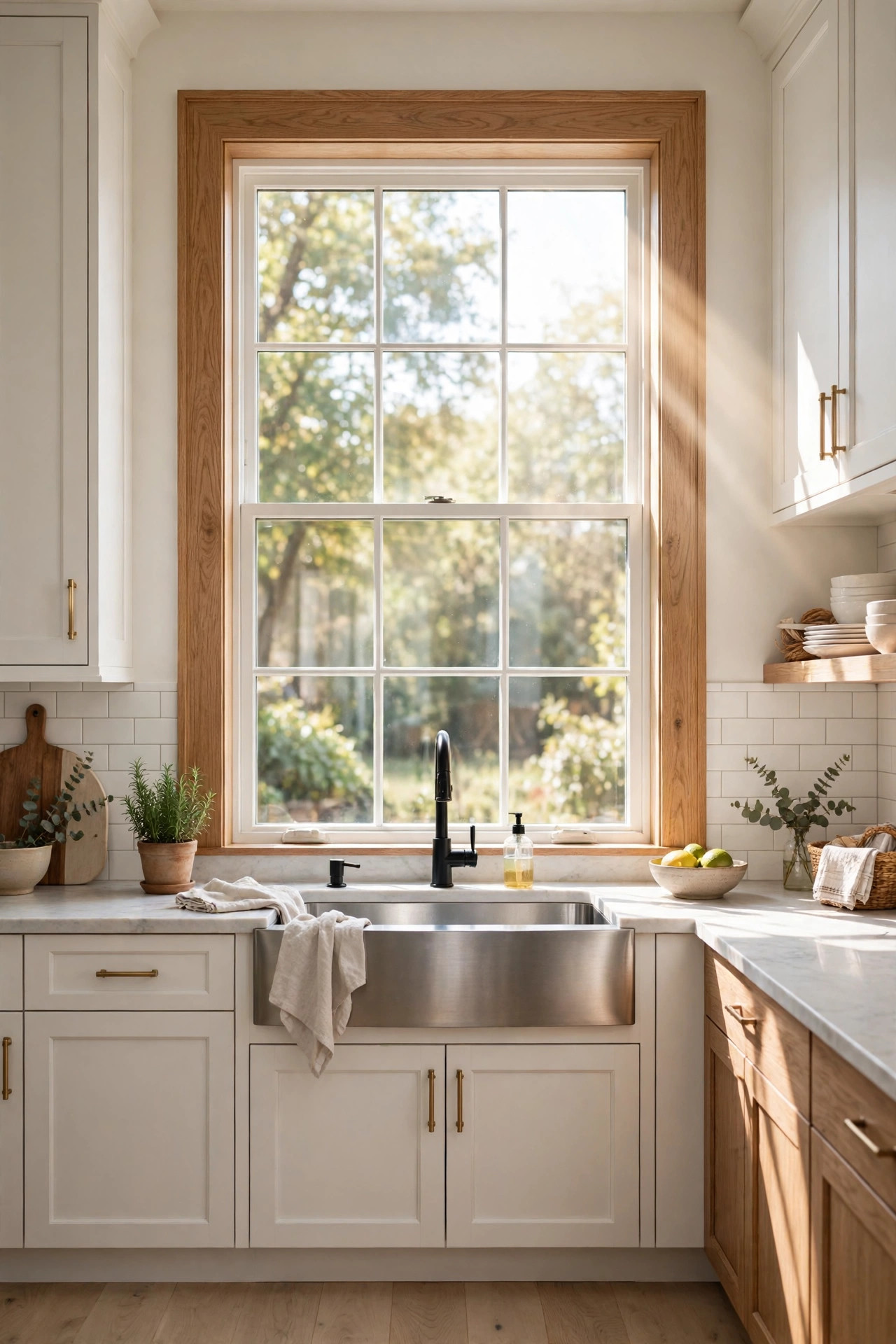
White oak window trim frames the view like art. Instead of painted white trim, imagine warm oak casing around a big kitchen window. It draws attention to the light and the outdoors beyond. This small detail has an outsized effect, because windows are natural focal points that your eye finds on its own. The oak trim connects the window to wood floors or cabinets elsewhere in the room. It makes the whole space feel considered and complete. Painted trim disappears into the wall, but oak trim gets noticed in the best possible way.
This works best when the window is generous, over the sink or beside the eating area where you look out often. Keep the trim profile simple, since a flat modern casing suits oak best. The wood should be finished to match or complement other oak in the room. Even one oak trimmed window changes the feel of the kitchen noticeably. It is a detail you notice in beautiful homes but cannot always name. Now you know the secret. It is a small carpentry job that delivers a custom home feeling far beyond its cost. It is the kind of upgrade that appraisers and buyers both notice. Worth every penny.
12. Oak Kitchen Nook
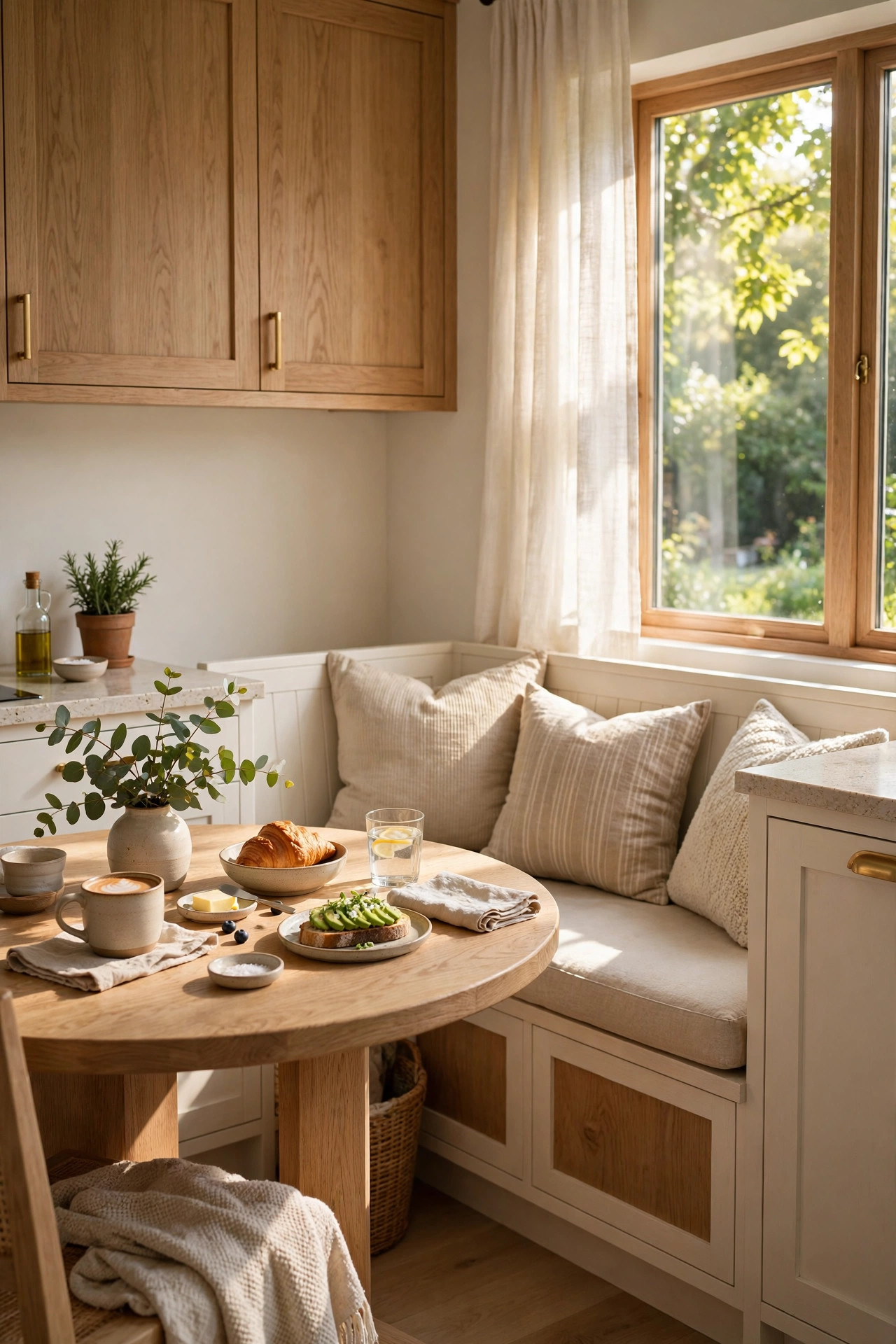
A breakfast nook wrapped in white oak feels like a hug. Picture a built in banquette with an oak base, an oak table, and morning sun streaming across both. The wood makes the small space feel cozy rather than cramped. This is where slow weekend breakfasts happen and where kids do homework after school. The oak banquette can include hidden storage under the seat, which is always welcome in a kitchen. Add cushions in a soft linen for comfort and a couple of throw pillows for charm. A soft rug under the table makes the nook feel like its own little room.
The table should be oak too, round if the space is tight. A round oak table with a pedestal base tucks into corners beautifully and lets everyone slide in easily. Hang a simple pendant above it, maybe rattan or linen for texture. The combination of oak, fabric, and light is endlessly appealing. This nook will become the most fought over seat in the house. It proves that the smallest corner can be the warmest spot in the home. This is the corner where birthday candles get blown out and big news gets shared. Every home needs one spot like this.
13. Oak Backsplash Shelf
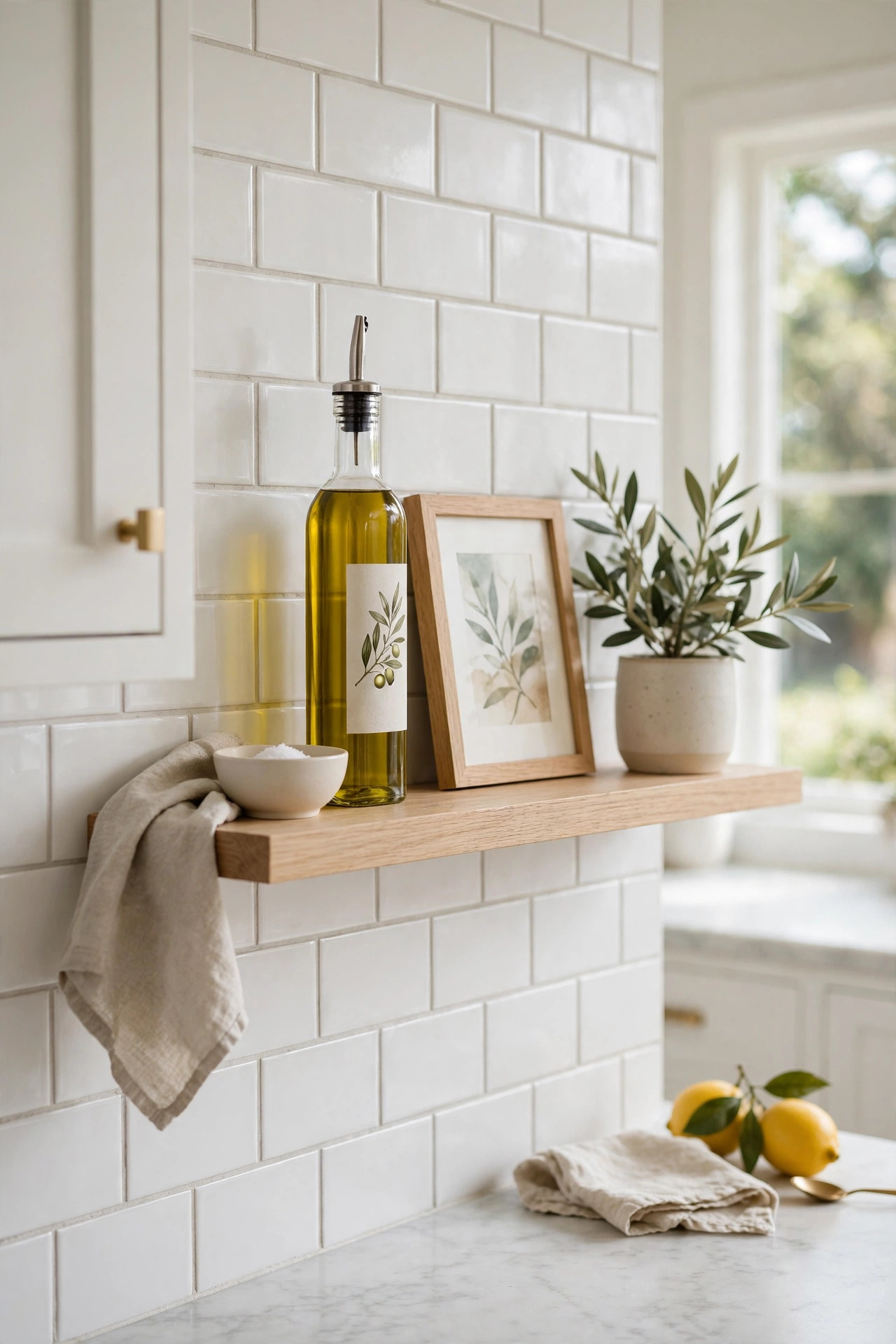
A slim oak shelf across the backsplash is both pretty and practical. Mount a narrow white oak ledge above the counter to hold small art, spice jars, or a tiny plant. It breaks up a full wall of tile and adds a warm horizontal line that the eye loves. The shelf should be just deep enough for small items, four to six inches is plenty. This is a renter friendly idea too, since it needs only a few screws and leaves the tile untouched. It is proof that the smallest additions can change how a whole wall feels.
Style it with things you reach for daily so it earns its place. Olive oil in a pretty bottle, salt in a small bowl, a framed print leaning against the tile. The oak warms up the whole backsplash area. It is a small change with a big visual payoff. The shelf also keeps the counter clearer, which makes the kitchen feel bigger and calmer. Simple, warm, and genuinely useful every day. Swap the styling with the seasons, and the shelf feels new again every few months. It is a tiny project you can finish in a single Saturday morning. You will love the result.
14. Oak Pantry Door
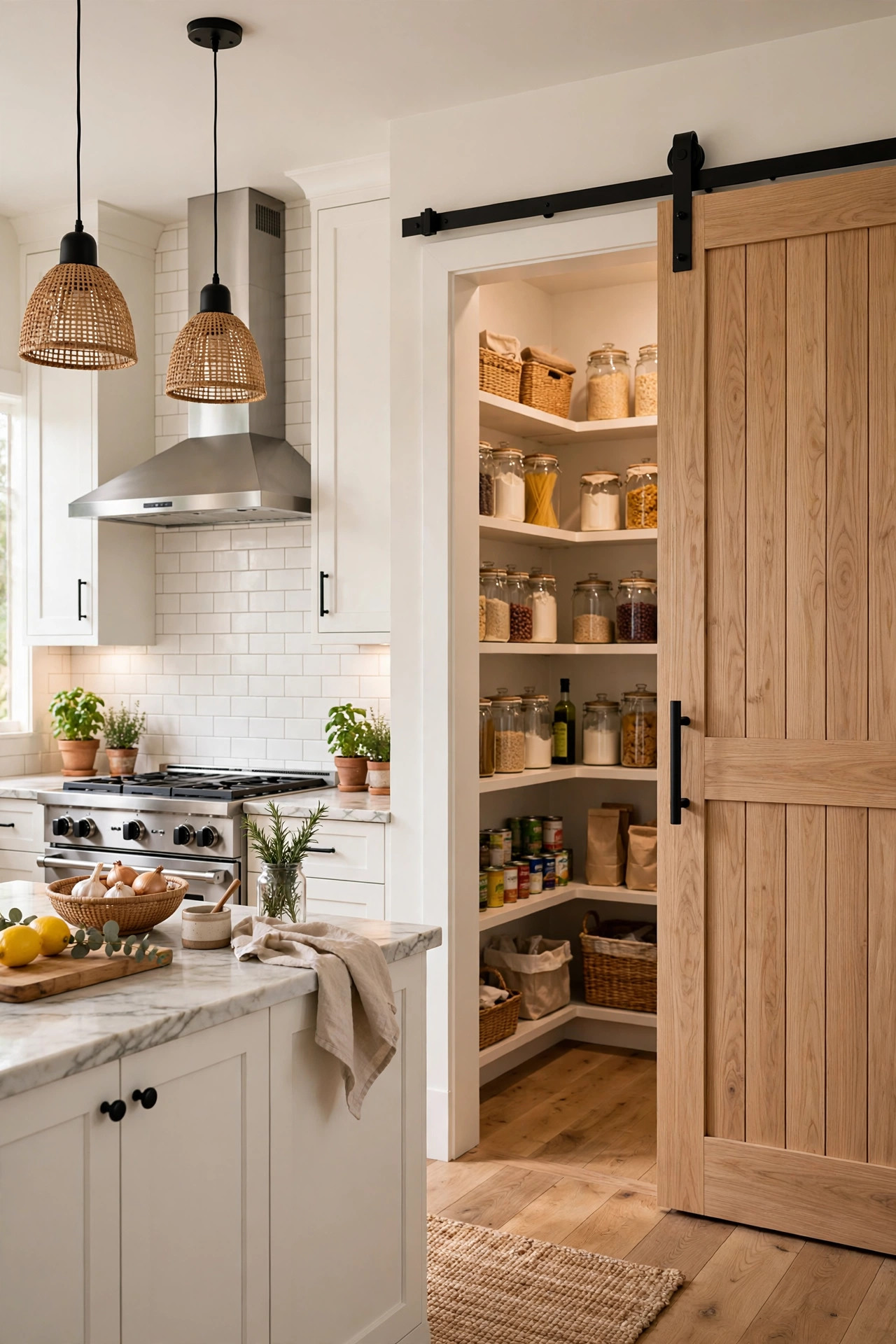
A white oak pantry door makes a real statement. Whether it is a sliding barn door or a classic hinged door, oak turns a plain doorway into a feature worth looking at. The wood adds weight and presence to the room. A sliding oak door on a black track is modern farmhouse done right. A shaker style oak door with simple hardware feels timeless and quiet. Either way, the door becomes part of the decor instead of just a way to close a room. It turns a boring necessity into something you actually enjoy looking at.
Match the oak tone to nearby cabinets or floors for harmony. The door gets opened many times a day, so choose sturdy hardware that feels good in the hand. A soft close mechanism is worth the small extra cost. If the pantry is open to the kitchen, the oak door ties the spaces together visually. This is a weekend project with custom looking results. It is the kind of detail that makes a kitchen feel designed rather than assembled. Choose a handle that feels good in your grip, since you will touch it a dozen times a day. Small details like this get used constantly.
15. Oak Drawer Interiors
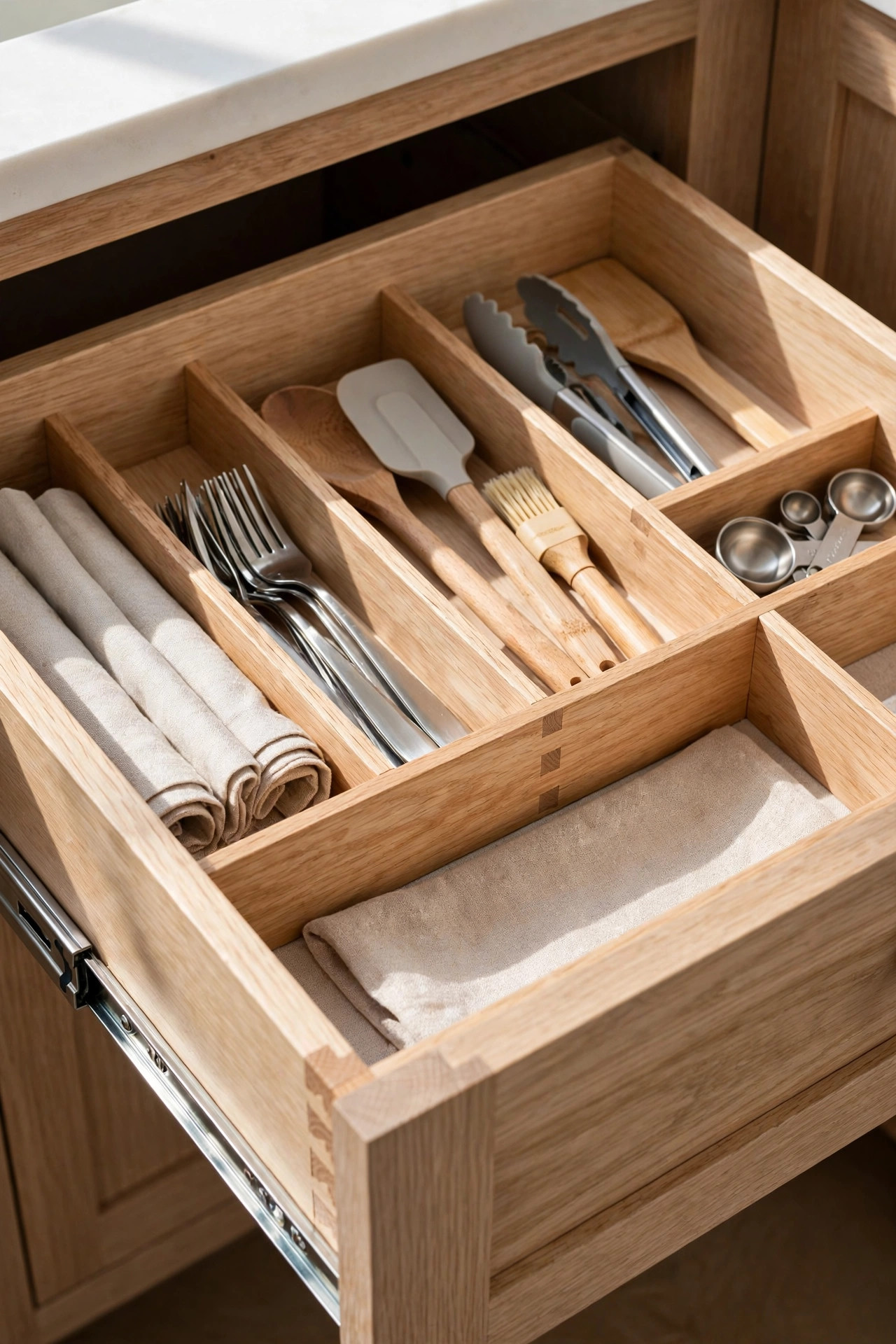
White oak drawer interiors are a hidden luxury. Open a drawer and find warm oak instead of white melamine, and the whole kitchen feels more crafted. This detail is invisible in photos but felt every single day when you reach for a spoon. Oak drawer boxes with dovetail joints are the mark of quality cabinetry. They slide smoothly and age beautifully. It is the kind of upgrade you appreciate more with time, not less. It is craftsmanship you interact with constantly, even if no guest ever sees it. These are the details that separate a good kitchen from a great one.
If new cabinets are not in the budget, add oak drawer organizers to existing drawers. A fitted oak cutlery tray or spice organizer brings the same warm feeling for a fraction of the cost. The wood makes even plastic containers look better. These small touches add up to a kitchen that feels thoughtful in every corner. True luxury is often just attention paid to the places nobody photographs. Start with the silverware drawer, since it is the one you open most, and notice how it makes you smile. Little upgrades like this make daily chores feel less like chores.
16. Oak Coffee Station
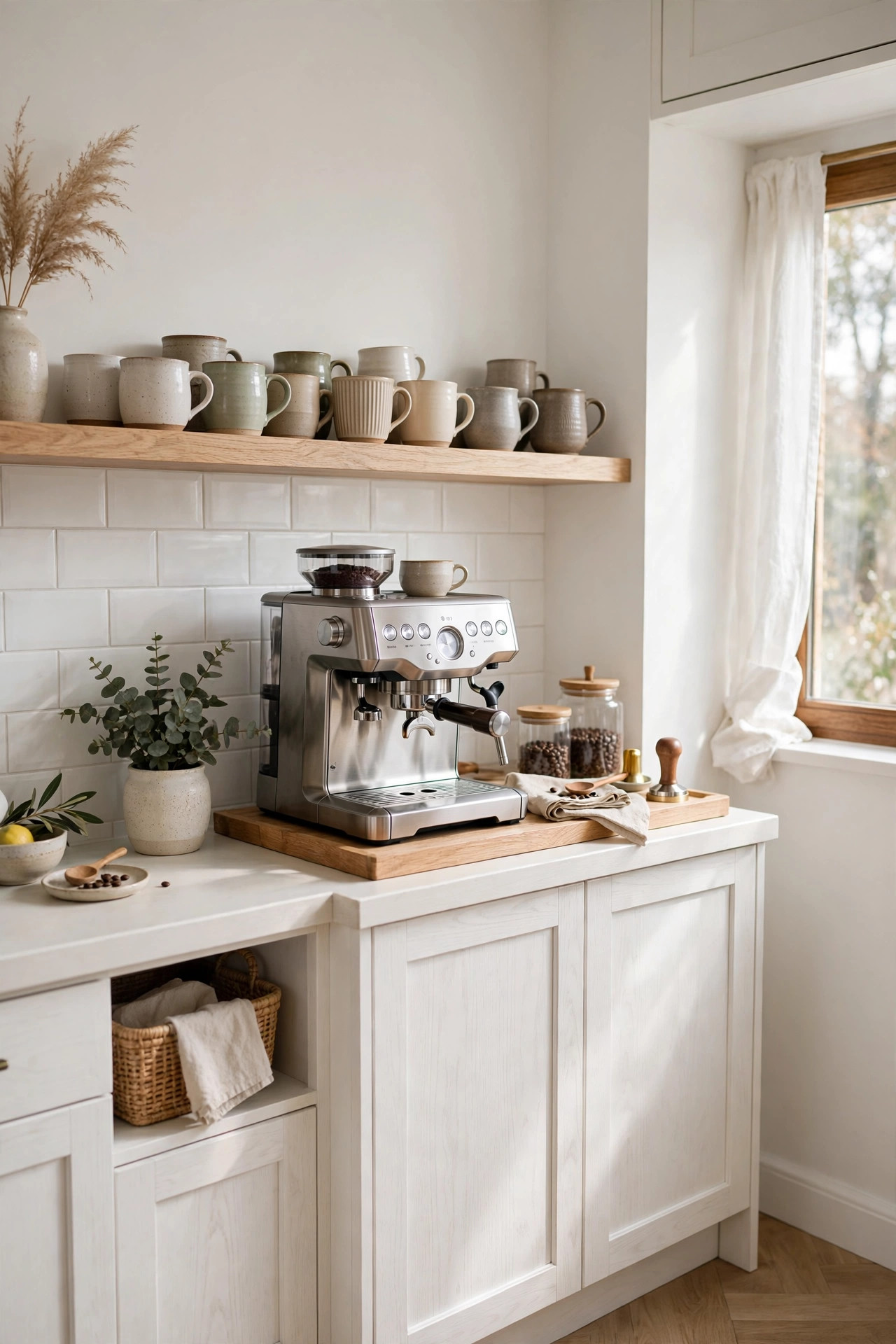
A white oak coffee station turns the morning ritual into a small ceremony. Dedicate a stretch of counter or a small cabinet to coffee, with an oak shelf above holding mugs and jars. The warm wood makes the corner feel special, separate from the busy work zones. Add a small oak tray to corral the machine, sugar, and spoons so everything has a home. Everything has a place, and it all looks good together. It carves out a moment of calm before the busy day begins. It turns a habit into a ritual worth slowing down for.
Hang mugs from hooks under the oak shelf for a cafe feel. Keep the palette simple, white mugs, glass jars, the oak doing the visual work. A small plant or framed print completes the vignette. This station gets used every single morning, so make it beautiful enough to deserve that. The oak makes even a basic coffee maker look intentional. Mornings feel better when they start in a beautiful corner. Even in a tiny kitchen, a twelve inch stretch of oak shelf is enough to build this ritual around. Keep it tidy, and it stays the prettiest corner of your kitchen. That is a promise.
17. Oak Ceiling Detail
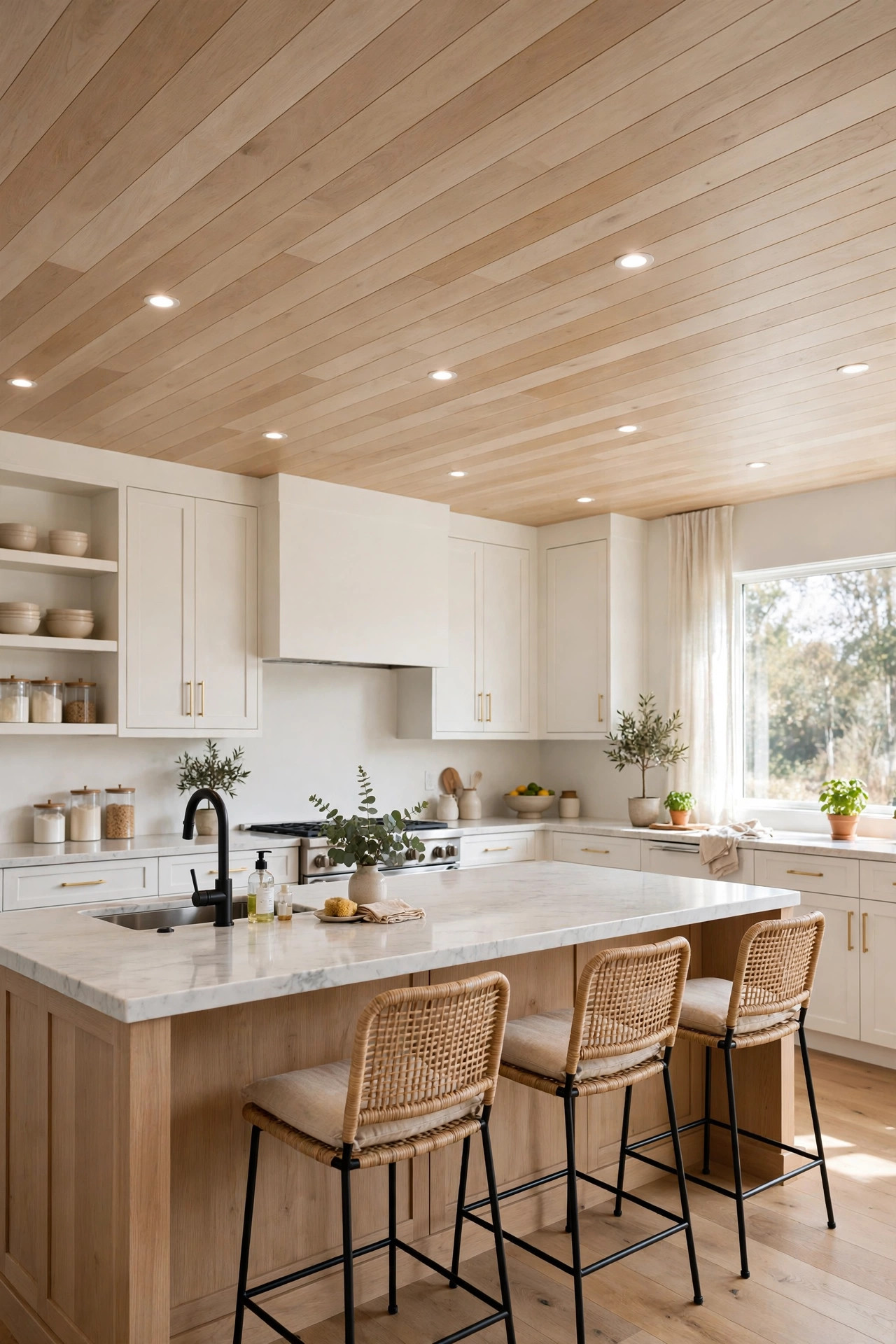
An oak planked ceiling brings unexpected warmth overhead. Covering the kitchen ceiling in white oak planks, or just a section over the island, adds texture you feel more than see. The wood overhead makes the room feel enveloped and cozy, like being inside something crafted. This works beautifully in kitchens with high ceilings that can feel cavernous and cold. The planks can run in any direction, though along the longest wall usually looks best and stretches the room. Most people never think about the ceiling, which is exactly why this detail stands out.
Keep the finish light so the ceiling does not feel heavy or dark. A clear matte coat preserves the natural tone of the wood. Pair with recessed lighting so the oak glows softly in the evening. This is a bold move, but in the right kitchen it is breathtaking. The ceiling becomes a fifth wall worth decorating. It is the detail that makes guests look up and say wow out loud. Pair it with a simple oak island below, and the room feels wrapped in warmth from top to bottom. It is a designer move that never fails to impress. Guests always look up and smile with delight.
18. Mixed Wood Tones
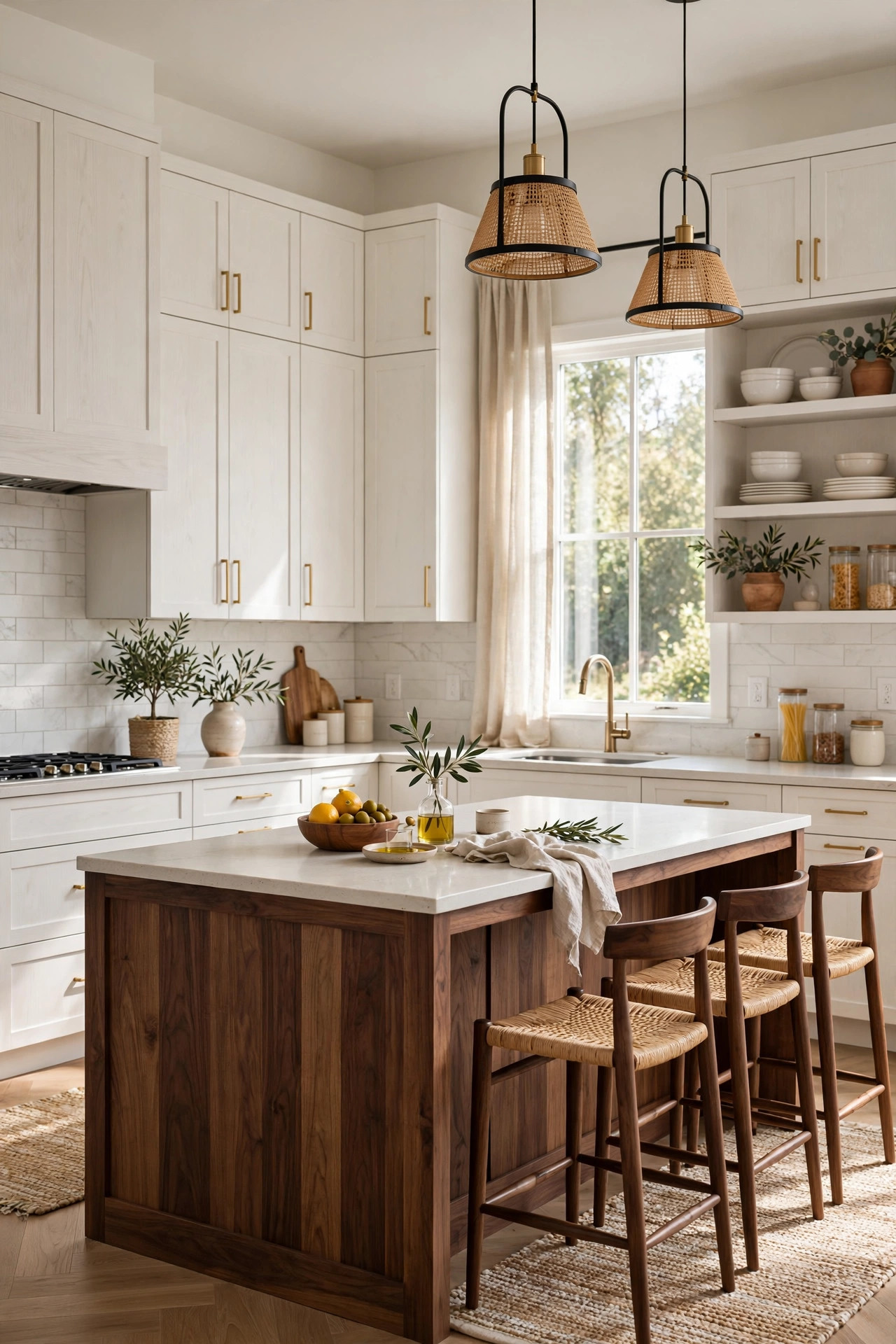
Mixing white oak with other wood tones adds richness and depth. White oak plays well with walnut, teak, and even painted finishes. Try white oak cabinets with a walnut island, or oak floors with darker stained beams overhead. The key is keeping one wood dominant and the other as an accent. Too many competing tones look busy, but two woods in balance look collected and confident. The combination feels curated over time, not bought all at once. This is how kitchens get that layered, designer feel you see in magazines.
Start with white oak as the main wood, since its neutral tone is the easiest to pair with others. Add the second wood in one clear place, the island, the hood, or the stools. Keep the tones distinct enough to look intentional, not like a mismatch from different eras. A good rule is one light wood and one dark wood. The contrast creates depth and interest. This approach makes a kitchen feel personal and curated, not like a showroom set. Trust your eye, because if the two woods look good together in the store, they will look good together in your kitchen. When in doubt, bring samples home and look at them in your own light.
Conclusion
White oak is the quiet luxury of kitchen design. It warms without overwhelming, and it works with every style from modern to farmhouse. Pick the ideas that fit your space and budget, and let the wood do what it does best, make your kitchen feel like home.
FAQs
Does white oak work in a small kitchen?
Yes, beautifully. White oak is light in tone, so it does not darken a small space the way walnut or cherry can. Use it on cabinets or floating shelves to add warmth without visual weight. Keep the finish natural and pair with white walls for the brightest effect.
Is white oak expensive?
Real white oak cabinetry costs more than painted MDF, but less than walnut. Rift sawn white oak is the priciest cut because of its clean grain. For a budget friendly version, use white oak veneer on cabinet fronts, which looks nearly identical at a lower price.
What colors go with white oak kitchens?
White oak pairs with almost everything. Crisp white keeps it fresh, soft black adds contrast, sage green feels calm, and navy brings drama. Warm whites and greiges are the safest wall colors. Avoid orange toned woods nearby, which can clash.
How do I maintain white oak cabinets?
Wipe with a damp cloth and mild soap, then dry. Avoid harsh chemicals and excess water. A clear matte finish protects the wood while keeping its natural look. Re-oil butcher block sections every few months with food safe mineral oil.
Is white oak better than red oak?
For kitchens, most designers prefer white oak. It has a subtler grain, a cooler undertone, and takes stain more evenly. Red oak can look pinkish or busy. White oak costs a bit more, but the refined look is worth it in a visible space like the kitchen.
Can I mix white oak with painted cabinets?
Absolutely, this is one of the most popular combinations. White oak island with white perimeter cabinets is a classic. The mix adds depth and keeps the kitchen from feeling flat. Just keep the undertones in harmony, warm oak with warm white works best.