
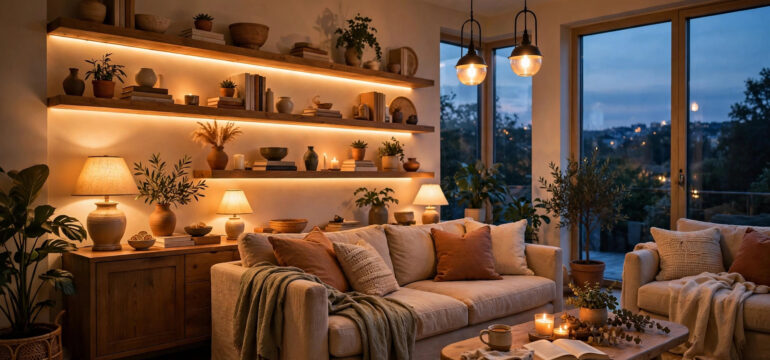
Picture this. It is seven in the evening, the sun has set, and you walk into a home that glows from every corner. A pendant shines over the kitchen island, a table lamp warms the reading chair, and a soft strip of light lines the bookshelf. Nothing is harsh, nothing is dark. That feeling is not an accident. It is layered lighting, the designer secret behind every room that photographs beautifully and feels even better in person.
Most homes have just one layer, a bright ceiling light that flattens everything. Designers think in three layers instead. Ambient light fills the room, task light helps you see what you are doing, and accent light shows off the pretty stuff. When all three work together, a room feels deep, warm, and alive. The good news is you do not need an electrician for most of these ideas. Lamps, bulbs, and dimmers do the heavy lifting.
Below are 15 layered lighting ideas interior designers swear by, collected like a visual mood board. Each one is a small scene you can picture, and most can be done in a weekend. Walk through them, save your favorites, and watch your home start to glow.
1. Ambient Overhead Glow
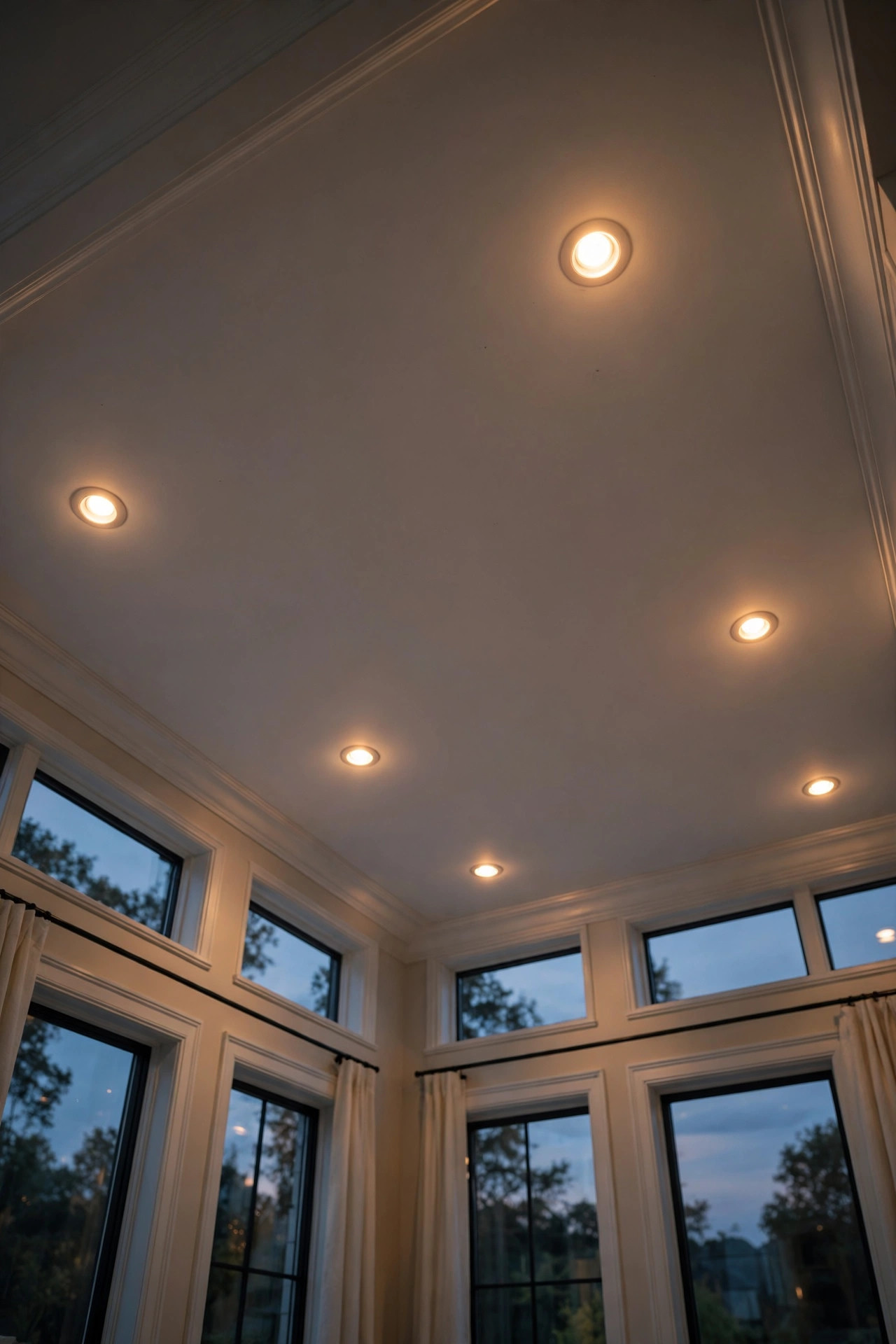
Start with the layer every designer builds first, the soft wash of ambient light that fills the whole room. Picture a living room at dusk where every corner glows gently, with no harsh shadows and no dark pockets. That is ambient light doing its job. Think of it as the canvas that everything else gets painted on. A flush mount ceiling fixture with a warm bulb, or recessed lights on a dimmer, spreads an even glow across the space. The trick is keeping it soft. Bright overhead light alone makes a room feel like an office, but warm ambient light at the right brightness makes it feel like a hug. Designers always start here, because without this base, every other lamp looks like a lonely island in the dark.
Getting this base right is simpler than you think. Swap any daylight bulbs, those harsh blue white ones, for warm white bulbs around 2700 kelvin. If you have recessed lights, put them on a dimmer so you can turn the whole room down in the evening. One dimmer switch costs very little and changes everything about how the room feels. The goal is light that fills the room without shouting for attention. Test it at night. Sit on your sofa and look around slowly. If every corner feels gently lit and nothing glares into your eyes, you nailed the base layer. Now every lamp you add on top will look intentional, like jewelry on an already pretty outfit.
2. Statement Pendant Clusters
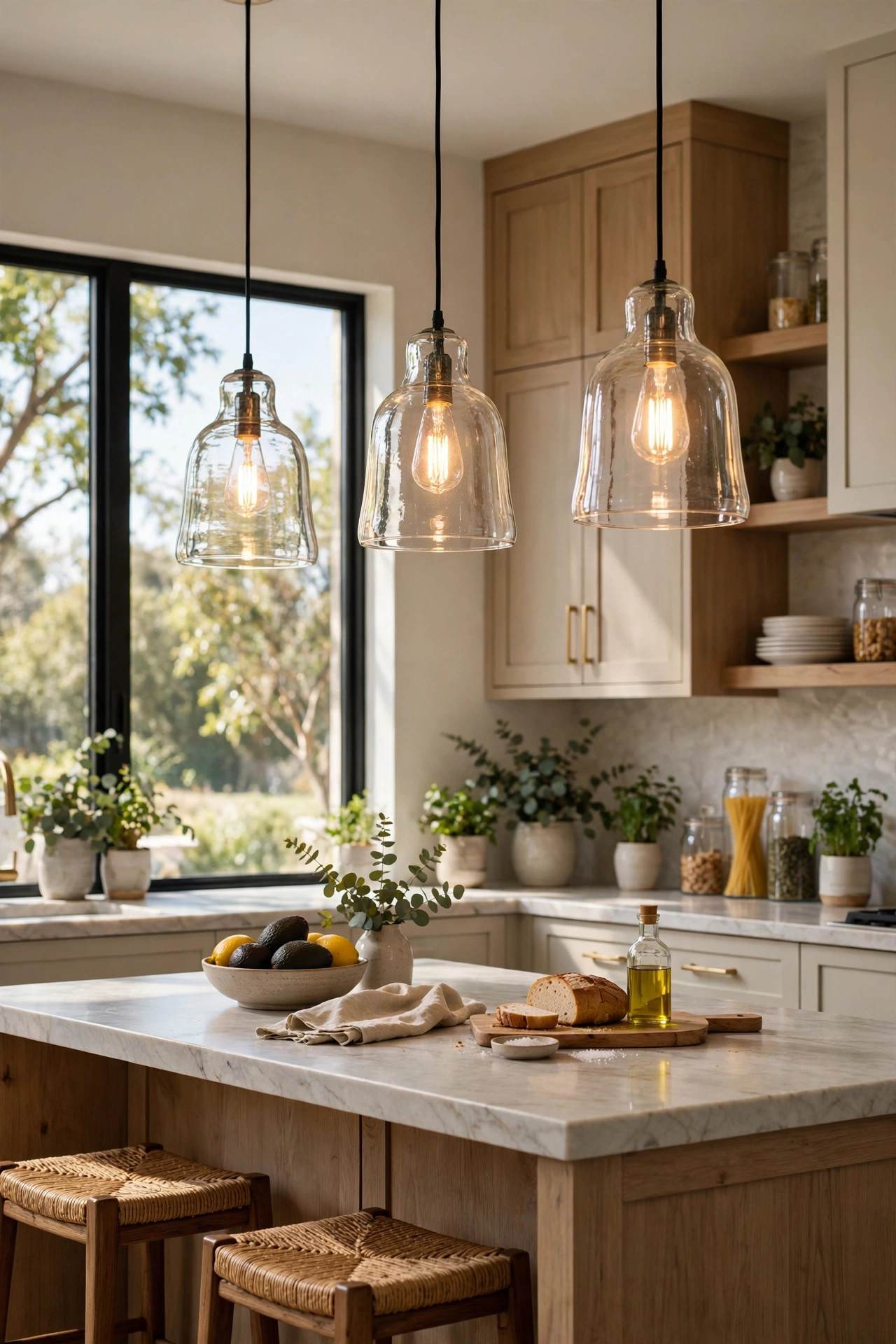
Look up over any beautiful kitchen island and you will see them, two or three pendants hanging in a row like jewelry. Pendant clusters are the task layer designers love most, because they put light exactly where you chop, pour, and gather. A single pendant can look lonely, but a cluster creates rhythm that your eye happily follows. Picture three glass pendants with warm bulbs glowing over a wood island, each one pooling light on the counter below. The repetition is what makes it feel designed rather than random. The whole kitchen feels pulled together, and the pendants become a focal point even when they are switched off during the day.
Hanging them well is easier than it looks. The bottom of each shade should sit about 30 to 36 inches above the counter, high enough to see under and low enough to feel intimate. Space them evenly, usually 24 to 30 inches apart, so the row looks balanced. Choose shades that match your style, woven rattan for warmth, clear glass for a modern feel, black metal for contrast. Put them on their own dimmer so dinner feels different from cooking time. Three pendants and one dimmer give your kitchen that magazine glow designers charge thousands for, and you get it for the price of a weekend project.
3. Warm Table Lamps Everywhere
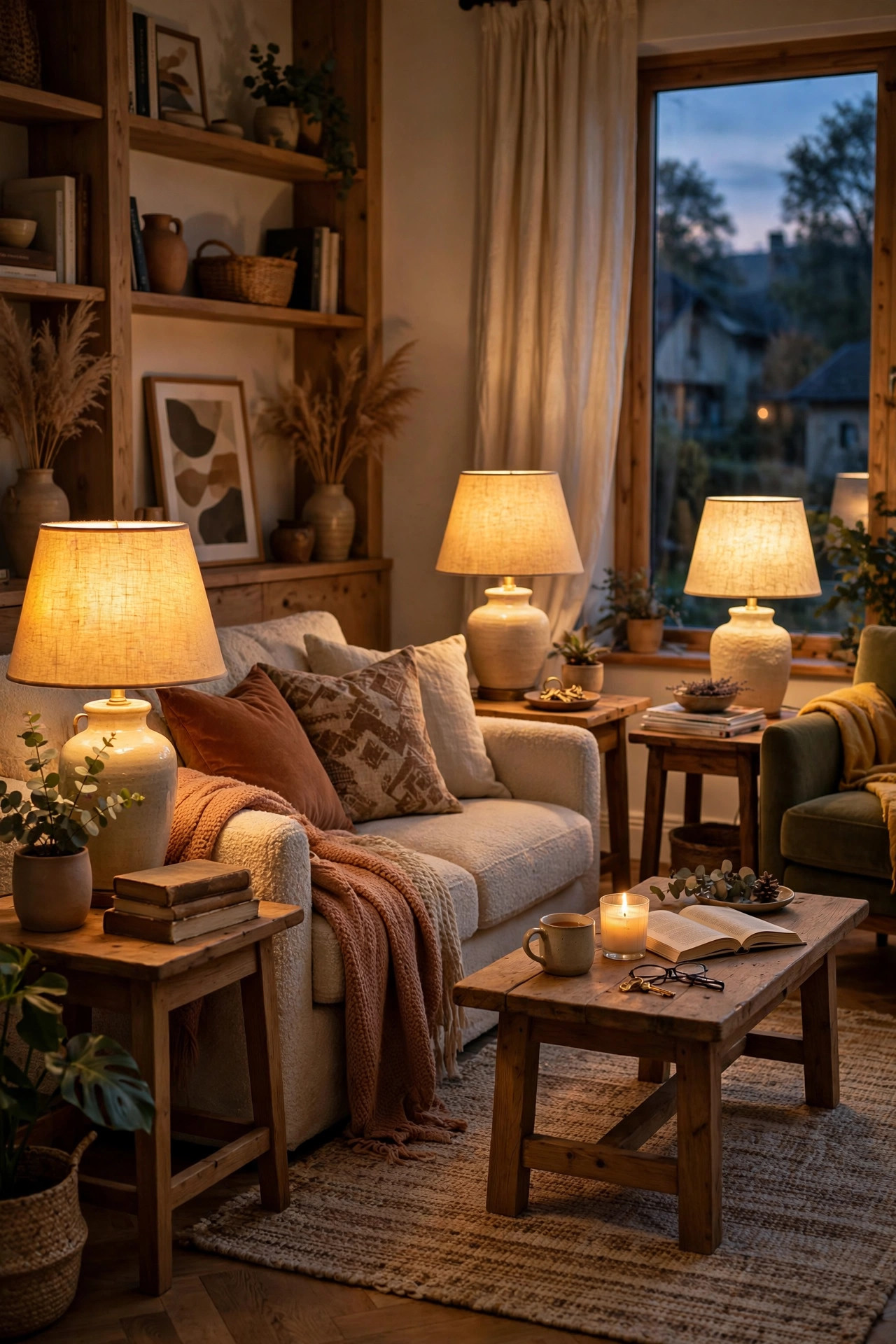
Here is a secret designers whisper to every client. Every room needs at least three sources of light at eye level or below, and table lamps are the easiest way to get there. Picture a living room at night with two table lamps glowing on side tables and one more on the console behind the sofa. The light sits low and warm, right where people gather and talk. It flatters faces, softens corners, and makes the whole room feel like evening, even in the afternoon. Overhead light comes from above and casts hard shadows downward. Table lamps come from the side and make everything glow softly.
You do not need matching lamps to pull this off. In fact, designers prefer a collected mix, a ceramic base here, a brass one there, united by warm shades in similar tones. Keep every bulb at 2700 kelvin or warmer so the glow matches from lamp to lamp. Place one lamp anywhere you sit after dark, beside the sofa, on the desk, on the dresser. The rule is simple. If you spend time there in the evening, it deserves a lamp. Start with the room you use most. Three lamps later, you will wonder how you ever lived with just the ceiling light.
4. Floor Lamp Reading Corners
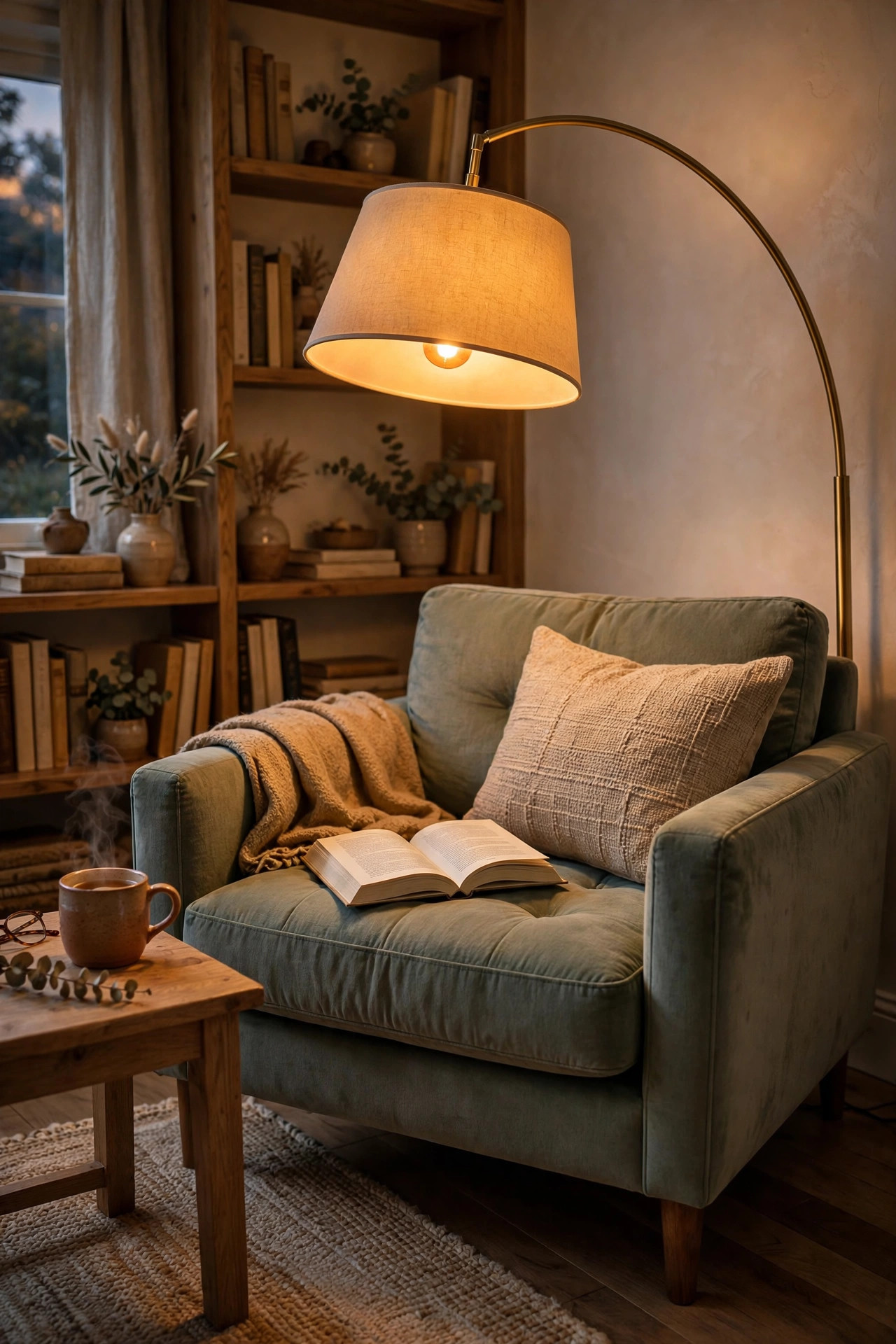
Every home has that one dark corner where nothing happens. Designers look at it and see a reading nook waiting to happen. A floor lamp with a warm shade turns dead space into the coziest seat in the house. Picture an armchair tucked by the window, a floor lamp arcing over it like a streetlight in a Paris cafe, its glow pooling on the pages of your book. The arc shape is magic because the light comes from above and slightly behind, exactly where readers need it most. No glare in your eyes, no shadows on the page, just perfect reading light.
Arc lamps make the biggest statement, but a simple pharmacy lamp with an adjustable head works just as well and costs much less. Place the lamp behind or beside the chair, never in front where it shines in your face. Pair it with a small side table for tea and the corner is complete. This is task lighting at its most inviting, light with a clear job that also looks beautiful. It gives one chair a purpose, and suddenly the whole room feels bigger because every corner earns its keep. One lamp, one chair, and you have a destination you will use every single day.
5. Under Cabinet Kitchen Glow
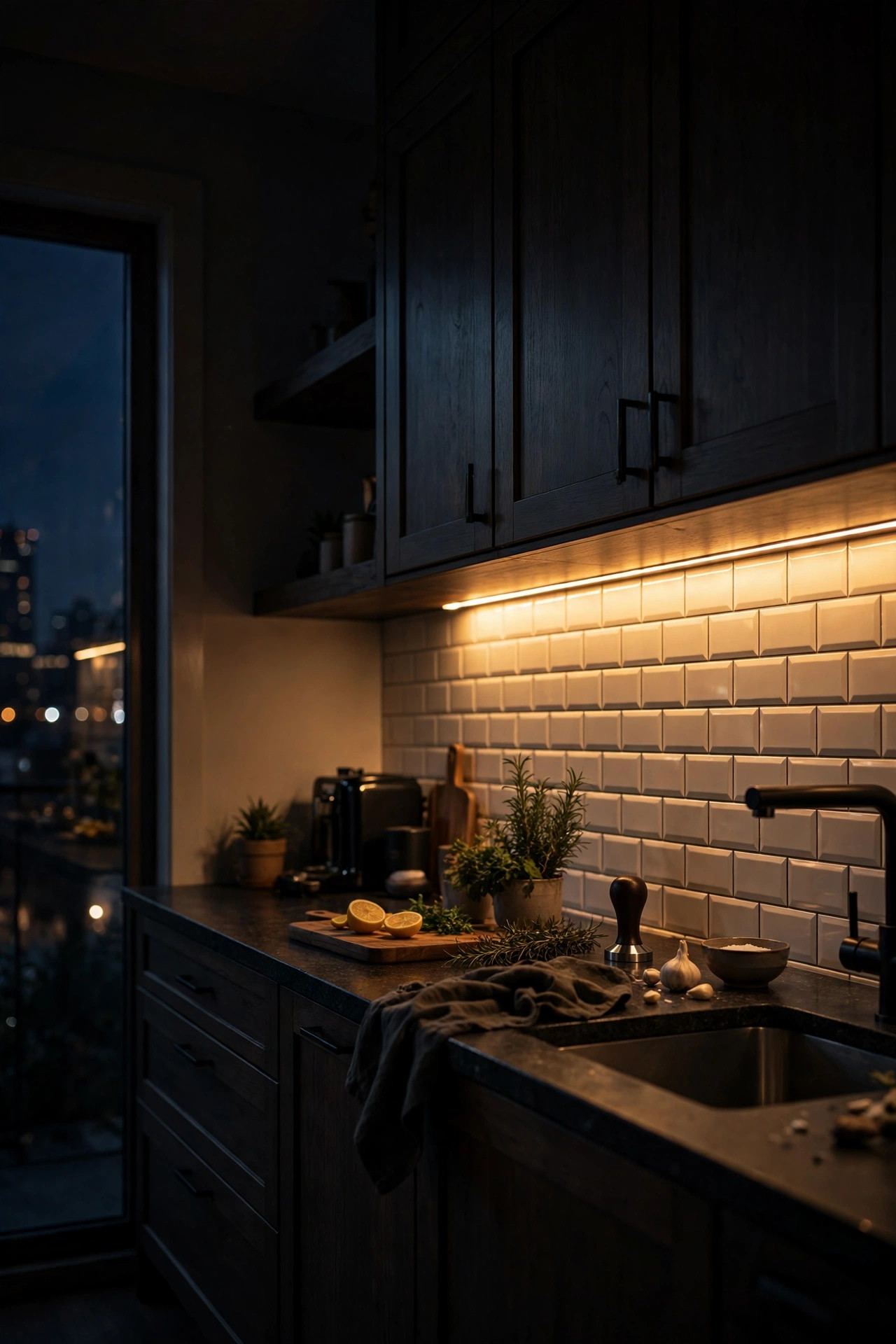
Close your eyes and picture a kitchen at night. The ceiling lights are off, but the counters glow softly, as if the kitchen is lit from within. That is under cabinet lighting, and designers call it the hardest working accent layer in the house. Thin LED strips tucked under the upper cabinets wash the backsplash and counter in warm light. It makes chopping safer after dark, makes the backsplash tile shimmer, and turns the kitchen into a gentle nightlight for the whole main floor. Guests always notice it, because it looks custom and expensive.
The best part is how simple this project has become. Peel and stick LED strips cost very little, plug into a regular outlet, and install in an afternoon with no electrician needed. Choose warm white, never cool blue, and mount the strip toward the front edge of the cabinet so you see glow, not bare bulbs. Put them on a timer or smart plug so they greet you every evening without a thought. This one detail makes the kitchen feel finished in a way nothing else does. It looks like a luxury upgrade, feels like a warm welcome, and might be the easiest project on this entire list.
6. Wall Sconce Drama
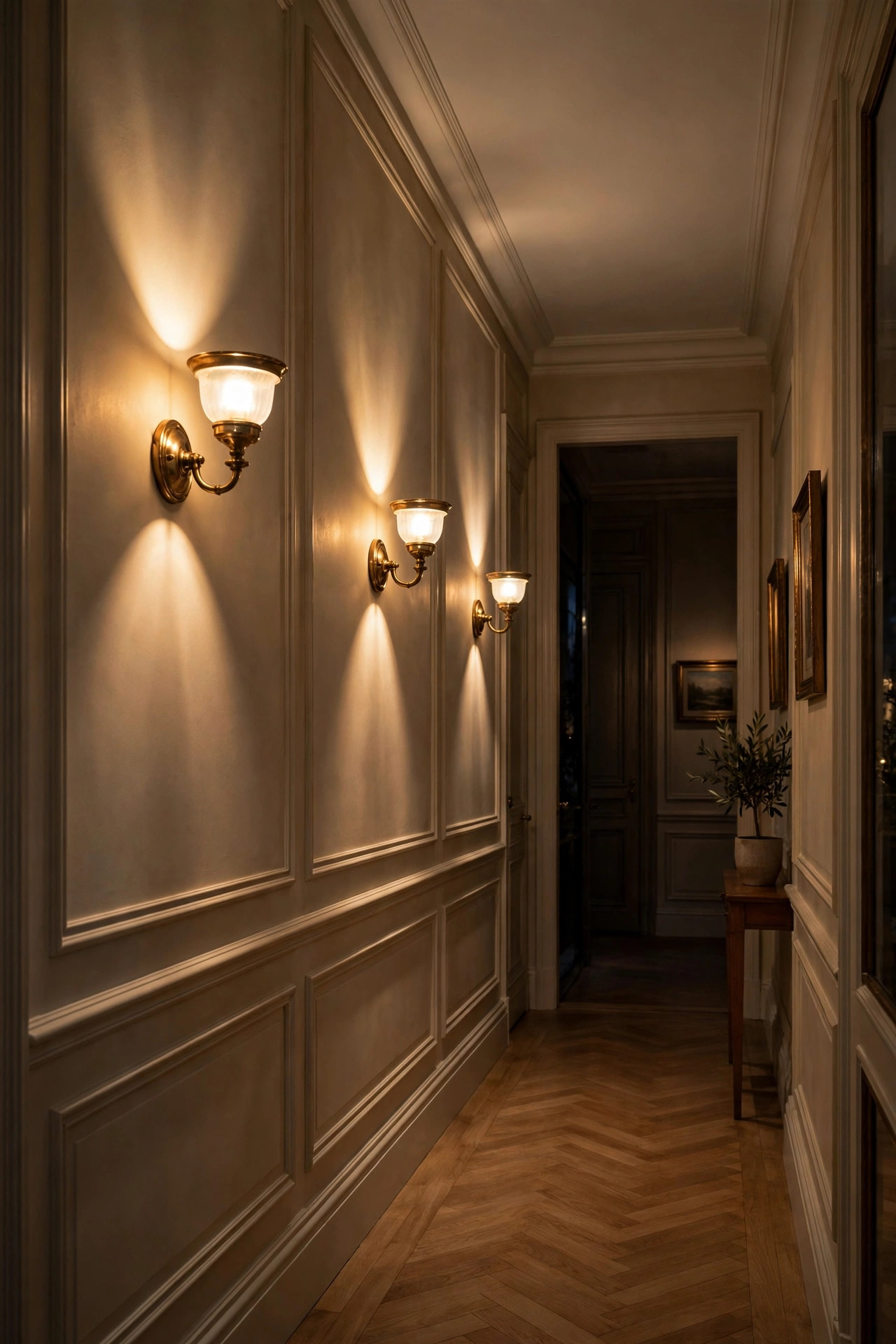
Sconces are the jewelry of lighting design. Mounted on the wall at eye level, they cast light upward and downward in soft fans, creating the kind of glow that makes hallways and bedrooms feel expensive. Picture a hallway with three brass sconces in a row, each one painting a warm arc on the wall above and below it. The pattern of light and shadow adds texture that flat ceiling light never can. Designers reach for sconces wherever a table lamp will not fit, flanking mirrors, beds, fireplaces, and art. They add architecture to plain walls with light alone. Even a narrow passage feels like a designed gallery when sconces line the walls.
Plug in sconces opened new doors for renters and anyone avoiding an electrician. They mount with two screws and plug into the nearest outlet, the cord hidden behind furniture or run neatly down the wall in a cord cover. Hardwired versions look cleaner if you are already renovating. Either way, hang them at about 60 inches from the floor to the center of the shade, roughly eye level for most people. Flank anything symmetrical, a bed, a mirror, a piece of art, and the wall instantly looks designed. Two sconces, one wall, and endless evening drama. It is a small change with a big payoff, and most pairs install in under an hour.
7. Picture Light Art Moments
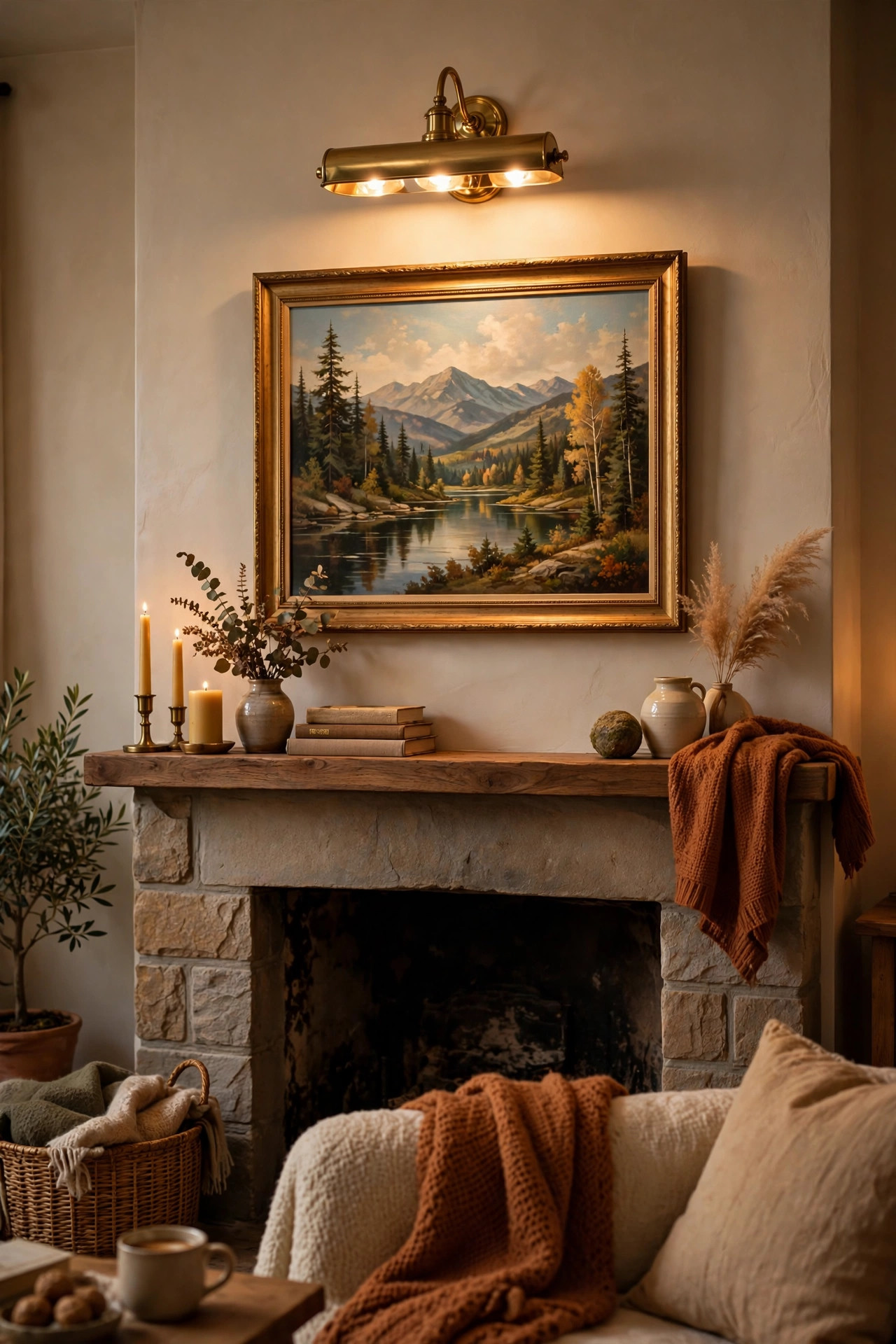
Walk into any gallery and notice what makes the art glow. It is the picture light, a slim bar mounted above the frame that washes the artwork in warm light. Designers steal this trick for homes, because lit art becomes a focal point after dark instead of disappearing into shadow. Picture a moody landscape hanging over the mantel, a brass picture light above it casting a soft cone downward. The painting seems to float off the wall, and the whole room orients around it. One lit piece of art can anchor an entire sitting area. Visitors always ask about the glow, because lit art looks far more expensive than it is.
Battery powered picture lights mean no wiring at all. They mount with a small bracket or even strong adhesive strips, and one set of batteries lasts for months on a built in timer. Size the light to about half the width of the frame for the best spread. Use warm light only, since cool light makes art look flat and lifeless. This is pure accent lighting, light with no job except beauty. Try it on one piece you truly love. When the sun goes down and your art lights up on its own, you will understand why designers never skip this layer. Start tonight with the frame you love most and let it shine.
8. LED Strip Hidden Lines
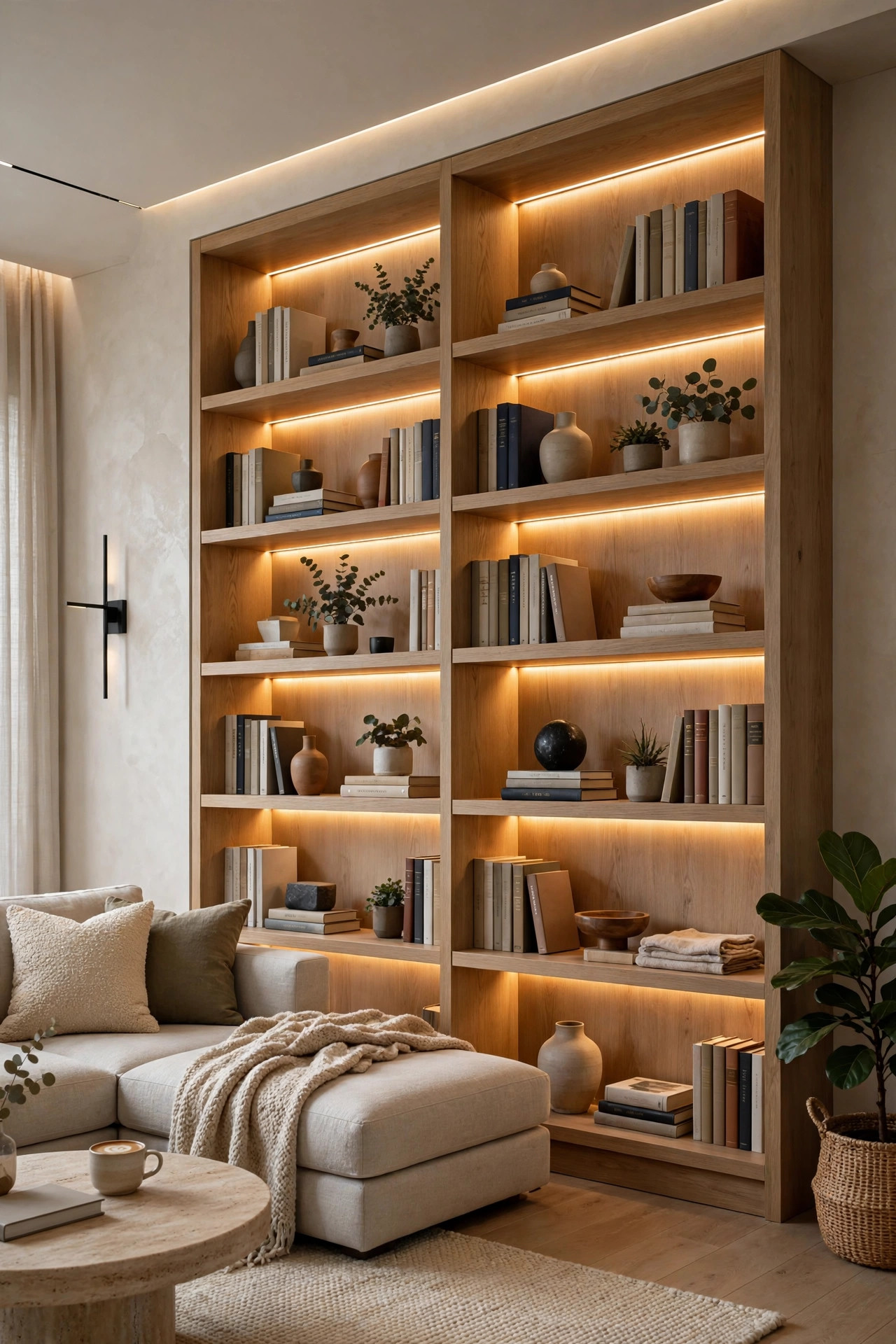
The most modern lighting trick is the one you cannot see. LED strips hidden behind furniture, under floating shelves, or along the tops of cabinets create lines of glow with no visible source. Picture a living room where the bookshelf seems to float, lit from beneath by a ribbon of warm light. Or a bedroom where the headboard glows softly from behind, like the wall itself is luminous. The light feels architectural, as if the room was built around it. Designers love hidden strips because they add depth and drama without adding a single object to dust. Once you try one hidden strip, you will start seeing candidates in every room.
Installation is a true weekend project. Clean the surface, stick the strip in place, plug it in, and step back. The magic is all in placement, and anywhere two surfaces meet at a right angle is a candidate. Try under a floating vanity in the bathroom, behind the TV console, or along stair treads for safety and style. Always choose warm white, and add a dimmer or smart control so the glow can shift from subtle to statement. When guests ask how you did it, just smile. The best lighting design looks effortless precisely because the source stays hidden from view. That quiet glow is what separates a nice room from a memorable one.
9. Candlelight Layers
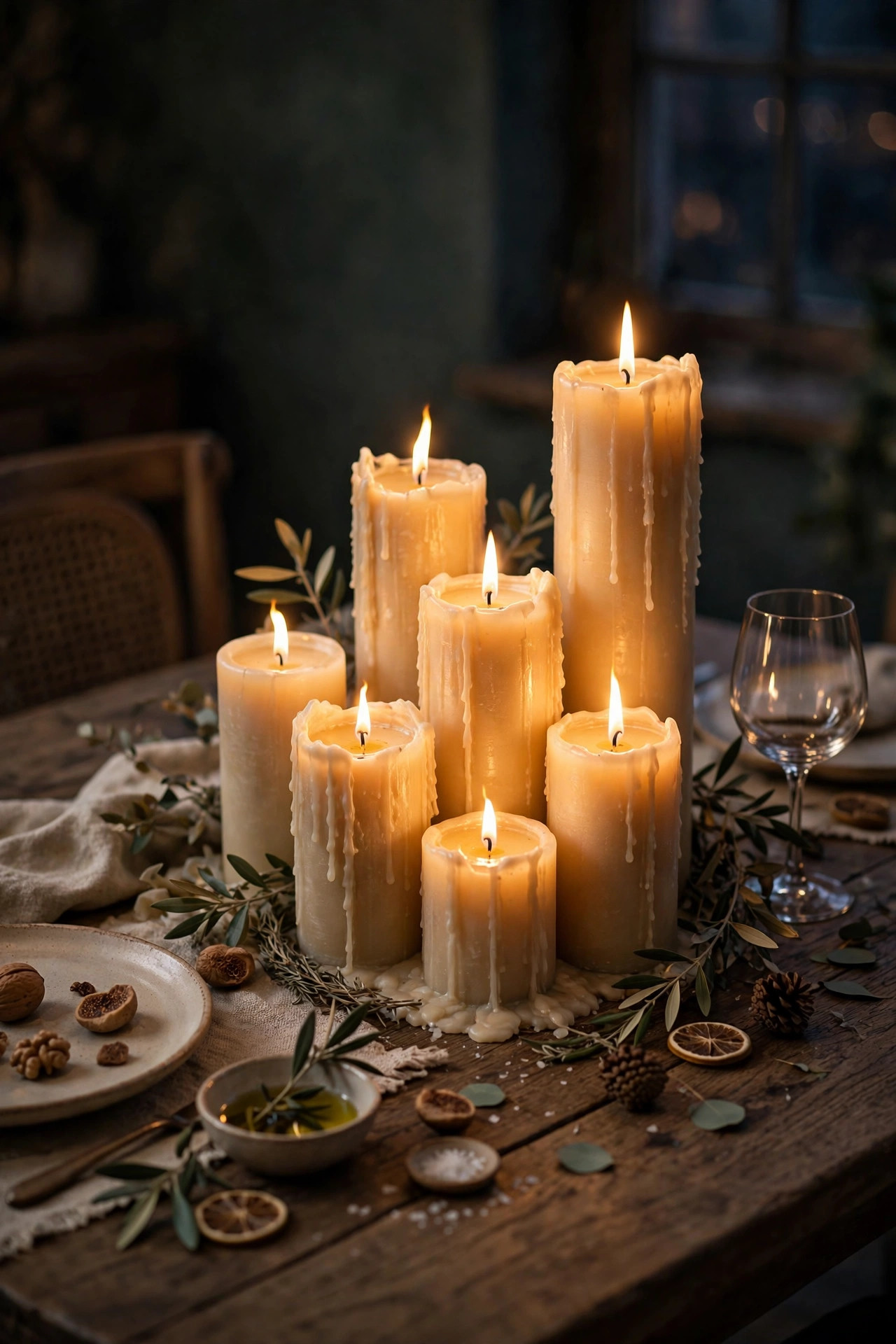
Long before electric light existed, designers had candles, and they still swear by them today. No bulb on earth matches the flicker of a real flame. Picture a dining table with a cluster of pillar candles at different heights, their flames dancing and throwing soft moving shadows on the wall behind. The light is warm, alive, and impossible to fake with wiring. Designers layer candles together with electric light, not instead of it. The lamps do the practical work, and the candles do the feeling. Together they create evenings that feel special without any occasion at all. No other layer of light feels this personal or this timeless.
Group your candles in odd numbers, three or five, mixing heights for a natural collected look. Set them on trays to protect your surfaces and corral any drips. Use unscented pillars near food so fragrance never fights the meal, and save the scented ones for the living room and bath. For worry free glow, good LED flameless candles now flicker so realistically that guests cannot tell the difference, and you can leave them on a timer every night. Either way the rule holds. When the electric lights dim low and the candles take over, the whole evening turns golden. Keep a few spare pillars in a drawer so the glow never runs out.
10. Dimmer Switch Magic
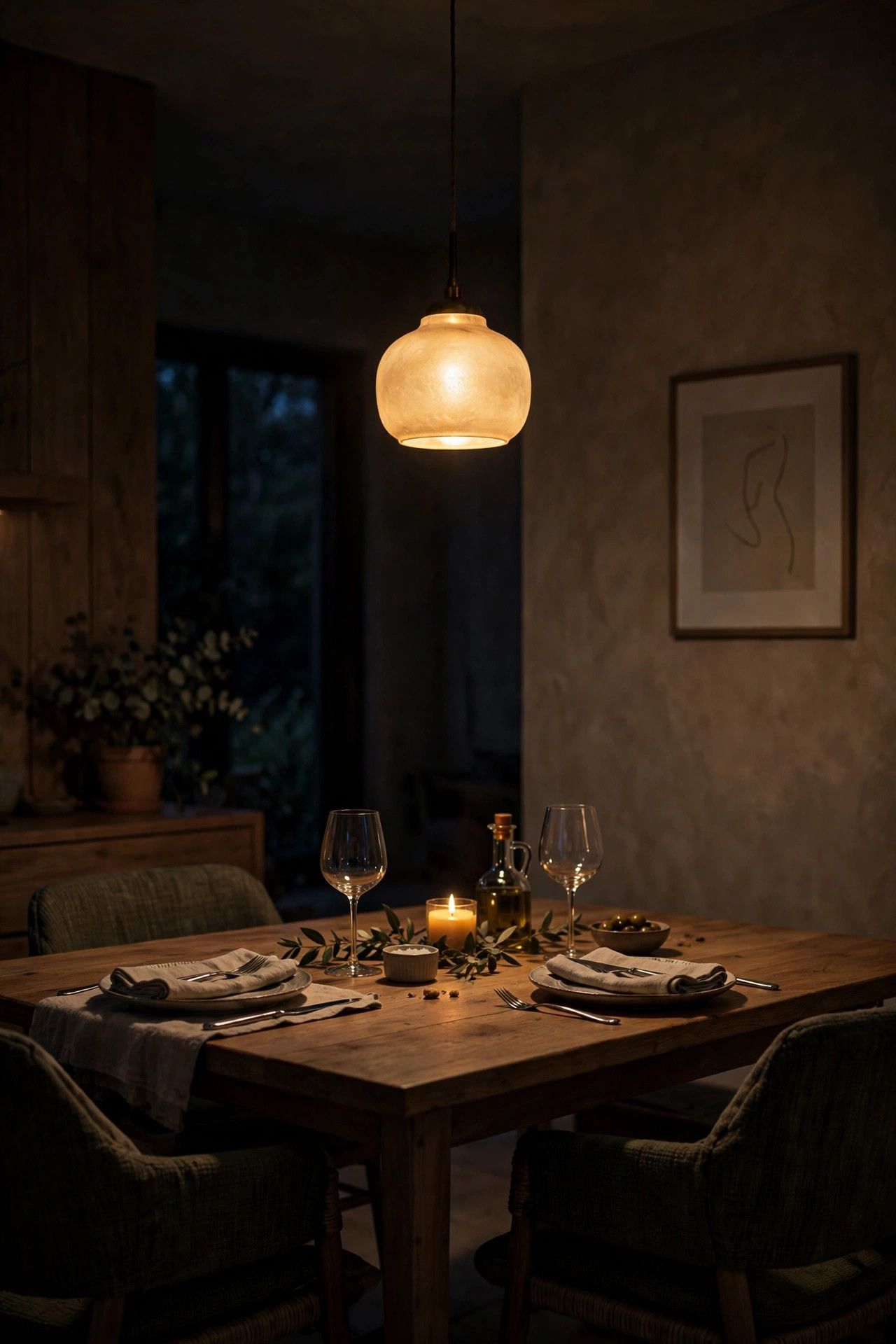
If designers could keep only one lighting trick, most would choose the dimmer. A dimmer turns a single light into infinite lights. Picture your dining room at full brightness for homework hour, then dialed down to a whisper for a late dinner. Same fixture, two completely different rooms, one small switch. Designers put dimmers on nearly everything, overheads, pendants, sconces, because light should match the moment you are in. Bright light wakes you up and keeps you sharp. Low light winds you down and invites conversation. A dimmer lets one room do both jobs beautifully. Guests feel the difference instantly, even if they never notice the switch itself.
Swapping a standard switch for a dimmer takes about fifteen minutes and a screwdriver, just remember to turn off the breaker first for safety. Make sure your bulbs are marked dimmable, the package will say so clearly, and match the dimmer type to LED bulbs to avoid any flicker or buzz. Start with the rooms where mood matters most, the dining room, the living room, the bedroom. Slide the light down each evening and feel the day release its grip on your shoulders. It is the cheapest upgrade with the biggest emotional return. One switch gives your home a volume knob for light. Do the dining room first, since that is where mood matters most.
11. Bathroom Vanity Glow
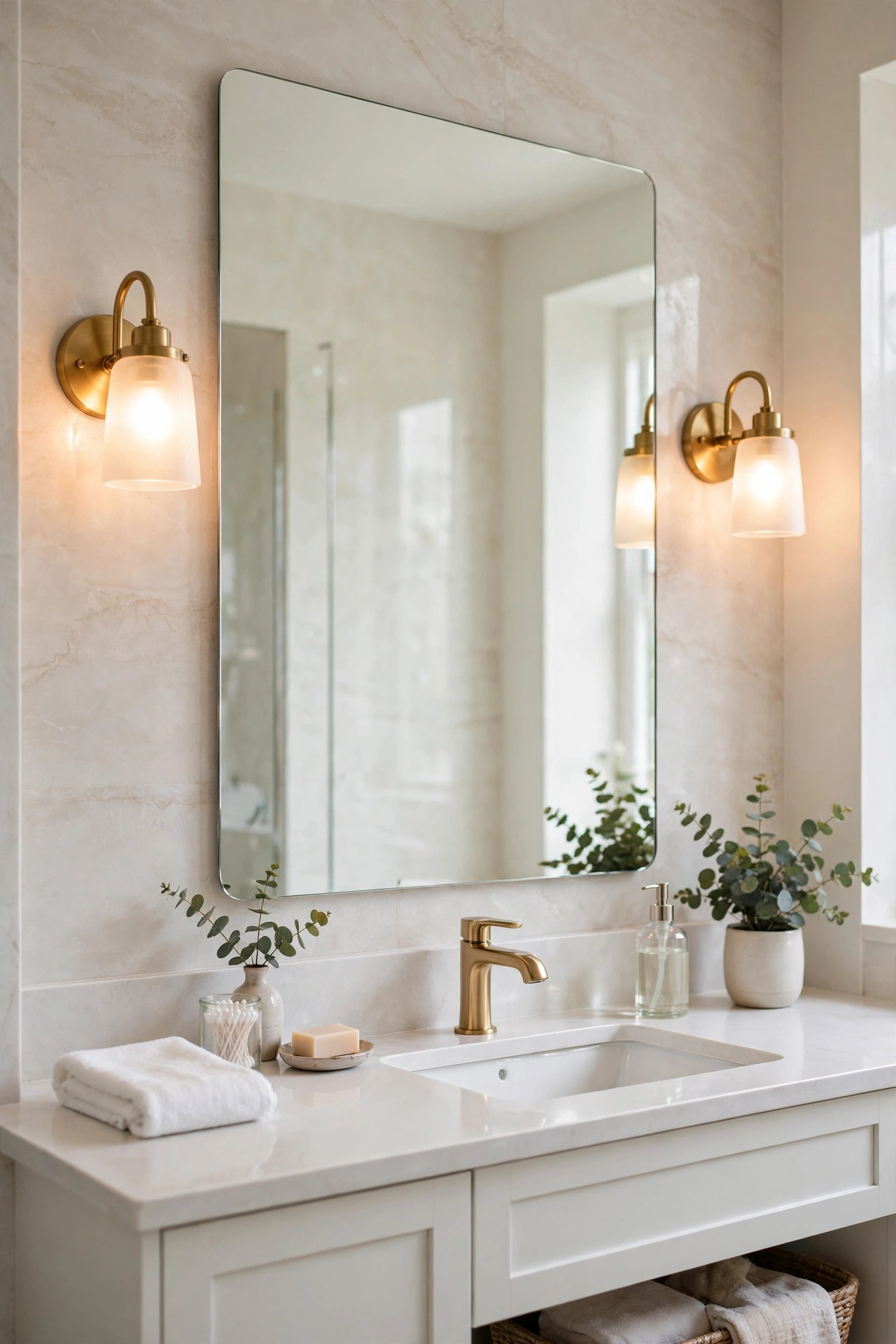
Bathroom lighting is where most homes fail the hardest. A single bright bar above the mirror casts shadows downward across your face, which is why designers insist on sconces at eye level on both sides of the mirror. Picture yourself getting ready in the morning with soft light washing your face evenly from both sides, no shadows under the eyes and no glare. It is the difference between a bathroom that fights you and one that flatters you. Good vanity light saves time, improves your mood, and makes the whole room feel like a proper dressing area. It is a small upgrade that pays you back every single morning.
Mount two sconces at about eye level, roughly 60 to 65 inches from the floor, one on each side of the mirror. If space is tight, one wide sconce above the mirror still beats a harsh bar, but side light remains the gold standard. Choose frosted shades that diffuse the glow and flatter skin tones. Warm white bulbs around 2700 to 3000 kelvin look the most natural and kind. Add a dimmer if you can, bright for detailed tasks, low for a relaxing bath. Your mornings get easier and your evenings get softer. The mirror finally tells the truth, kindly and clearly. You will wonder why you waited so long to fix it.
12. Bedroom Bedside Layers
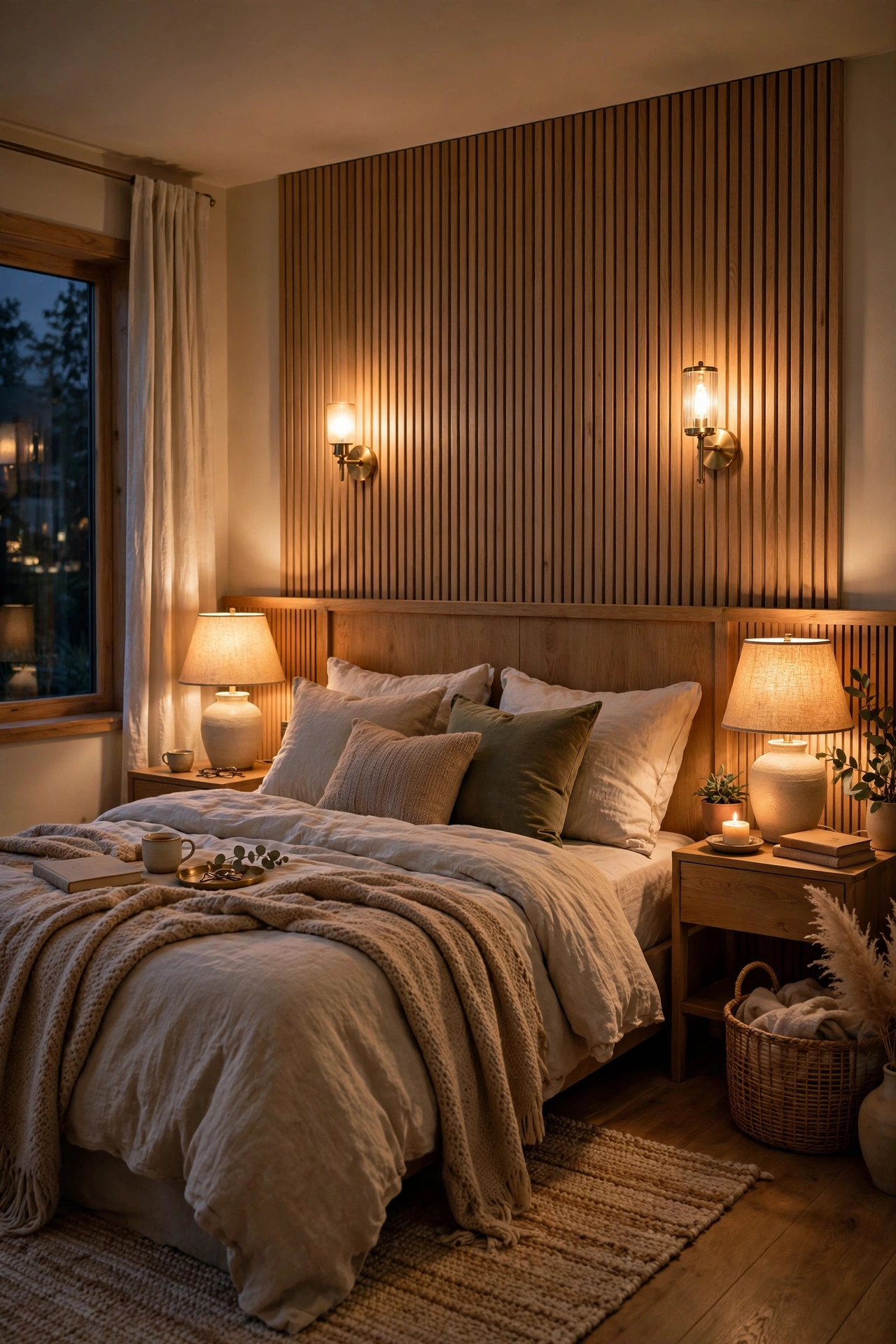
The bedroom deserves the softest light in the house, and designers build it in gentle layers around the bed. Picture this. Two matching table lamps on the nightstands cast warm pools of light for reading, while a pair of small sconces above adds a soft wash across the wall behind. The overhead light stays off completely. The room glows at mattress level, exactly where you wind down each night. Nothing shines directly in your eyes. It feels as if the day itself is tucking you in, and sleep comes easier in that kind of glow. That soft cocoon of light is worth more than any expensive headboard.
If your nightstands are small, wall mounted sconces or pendant lights hung low on each side free up the surface and look incredibly chic. Hang pendants so the bottom of the shade sits just above the nightstand, about 24 inches above it. Put bedside lights on separate switches, or use smart bulbs, so each person controls their own side of the bed. Keep every bulb warm and dimmable, with no cool white anywhere in the room. The bedroom is for rest, and rest needs low, warm, layered light. Build these layers once and every night feels like a boutique hotel stay. Sweet dreams start with the right glow.
13. Hallway Runner Lights
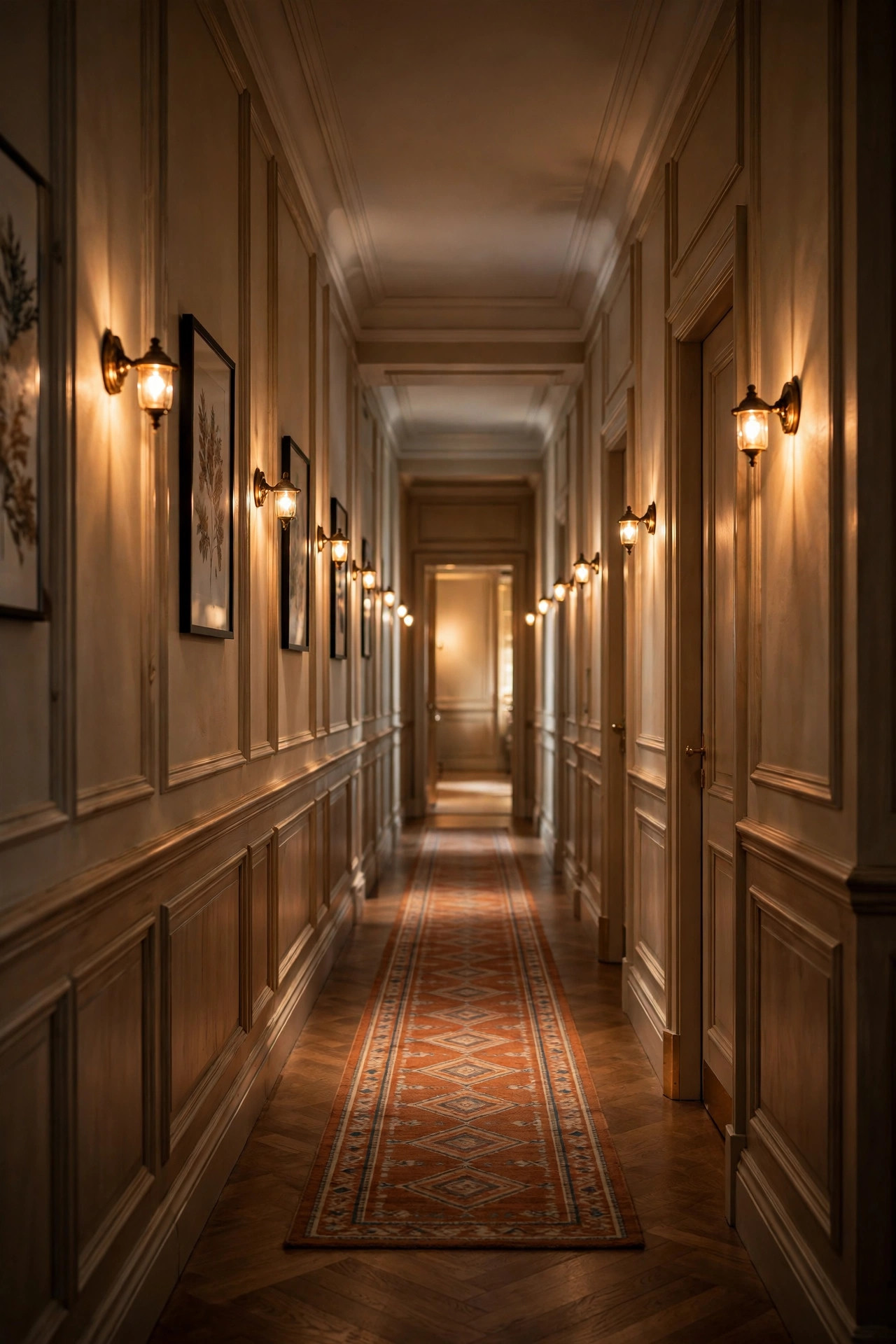
Hallways are the forgotten rooms of lighting design, usually stuck with one sad ceiling fixture doing all the work. Designers treat them as galleries instead. Picture a long hallway with small sconces marching down the walls in rhythm, or a runner of recessed lights washing warm pools across the floor. The repetition draws you forward and gives the eye something to follow. What was once a dark tunnel becomes a passage worth walking through. Light turns plain circulation space into a genuine experience, and guests feel it even if they never name it. A little light goes a long way in these forgotten spaces.
In a hallway, spacing matters more than brightness. Sconces every six to eight feet create a pleasing rhythm without glare or hot spots. If you cannot wire sconces, plug in versions work beautifully, or even a row of small table lamps lined up on a console table. Hang art between the lights and suddenly the hallway becomes a gallery wall with its own illumination. Put everything on one dimmer, or add a motion sensor for safe nighttime trips to the kitchen. Guests notice hallways more than you think, because everyone walks through them. Light yours like you mean it. Your hallway works hard, so give it light that works just as hard.
14. Outdoor String Light Layers
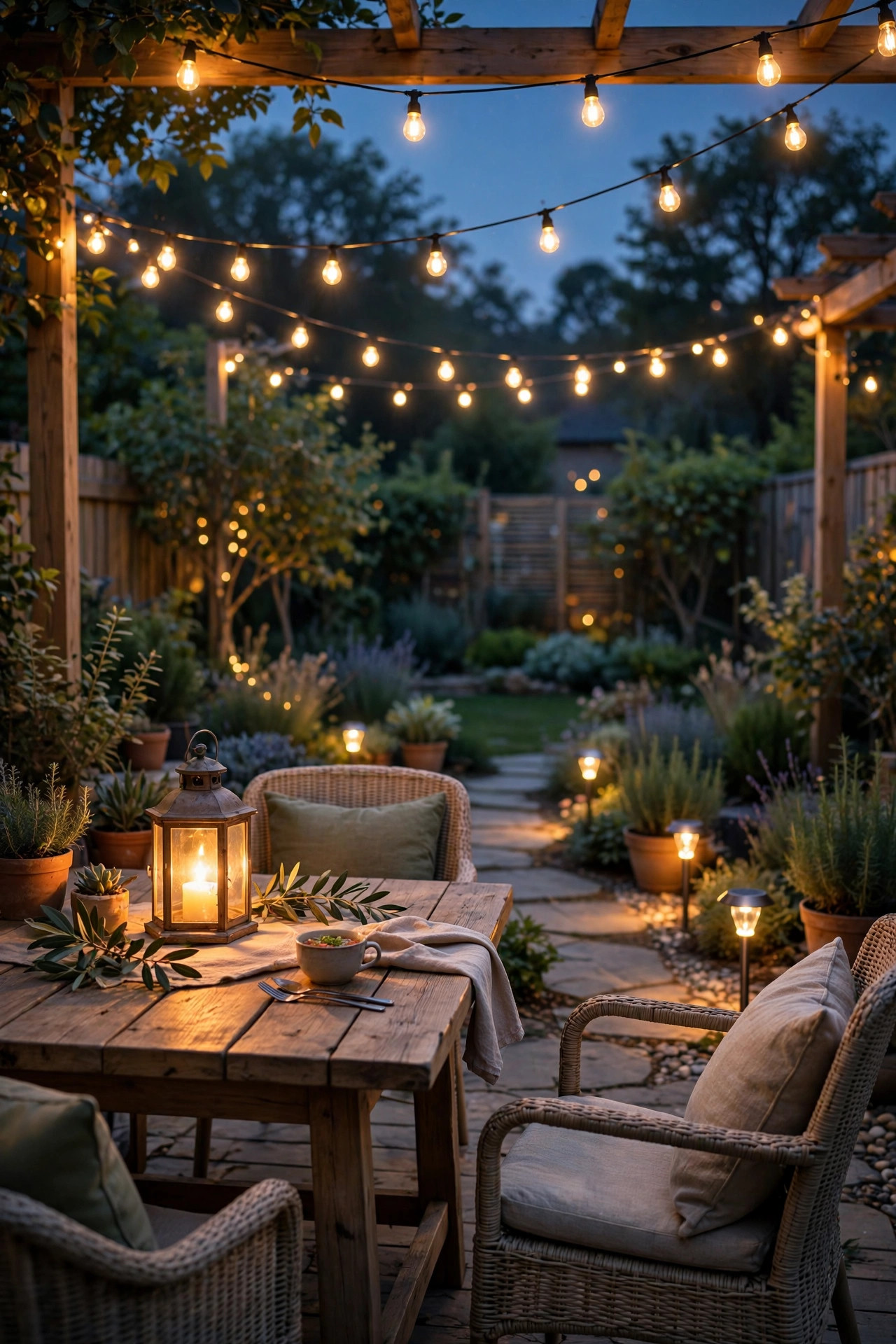
Step outside after dark and the same layering rules apply. Designers swear by string lights for patios because they do outdoors what candles do indoors, they make everything glow. Picture a backyard strung with warm white lights overhead, a lantern glowing on the table below, and a few solar path lights marking the steps. Three layers, just like inside the house. The patio stops being a dark slab and becomes a true outdoor room. Summer nights stretch longer and feel warmer when the light itself is this inviting. One warm evening under string lights will convince you this layer matters.
Hang commercial grade string lights with shatterproof bulbs, swagged loosely between posts or trees at least eight feet high. Add a lantern or two at table level for the middle layer, real flame or realistic LED, whichever suits your style. Stake solar path lights along walkways for safety and that finished, thoughtful look. Put the strings on a timer or smart plug so they greet you at dusk automatically every evening. The combination of overhead sparkle, table level glow, and path markers is pure magic. Your backyard becomes the room everyone gravitates toward after dinner. Start with a single strand this weekend and watch the whole yard change.
15. Smart Bulb Color Temperature
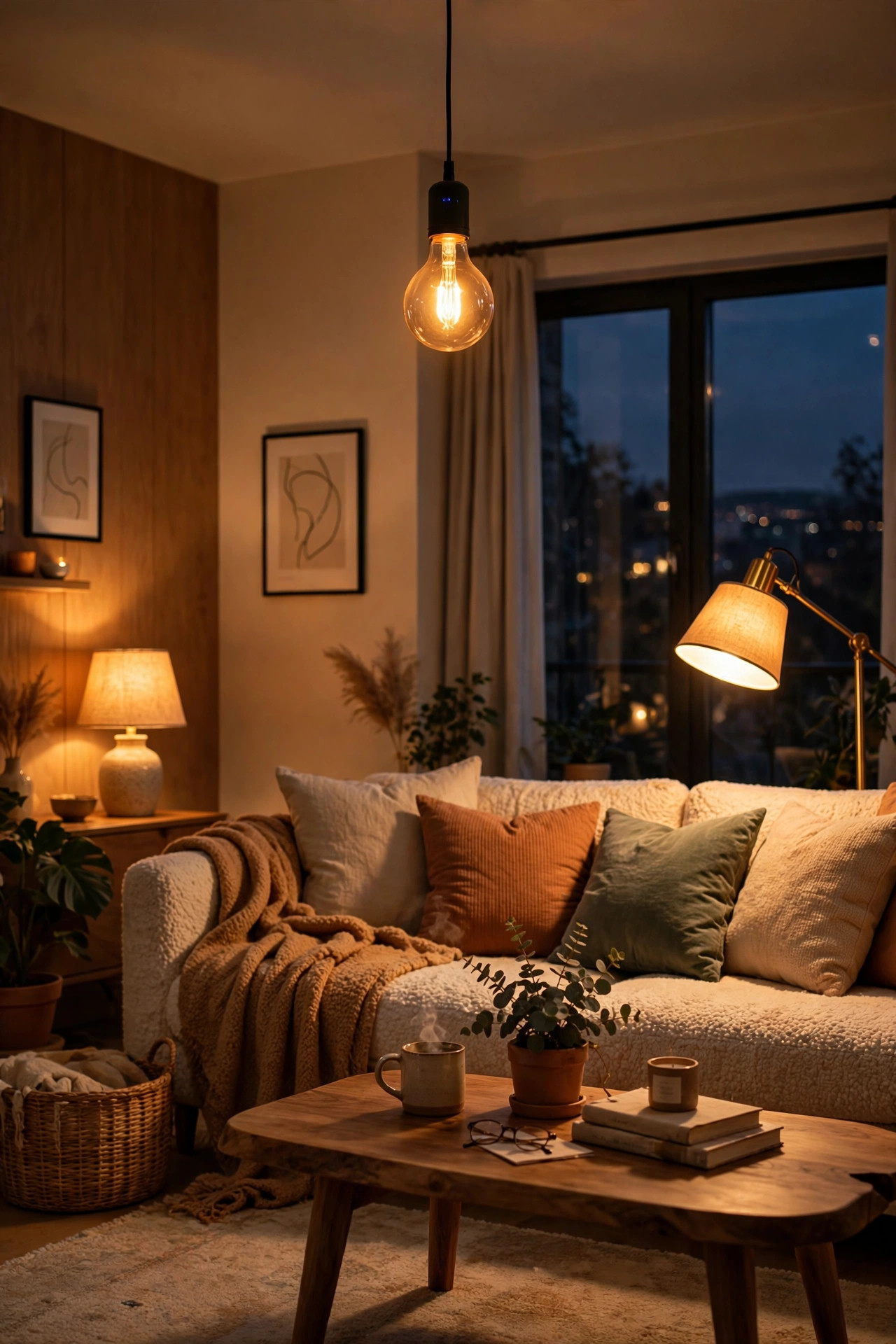
The final layer is not a fixture at all, it is the bulb itself. Designers obsess over color temperature because it decides whether light feels like golden sunshine or a cold hospital corridor. Picture the same living room at noon with crisp bright bulbs that make cleaning easy, then at eight in the evening with every bulb shifted to warm amber. Smart bulbs let one room change its whole personality with a single tap. Warm light relaxes the body, cooler light energizes the mind. The best lit homes match their light to the hour of the day. Match the bulb to the moment and the room always feels right.
You do not need a full smart home to enjoy this. Start with the bulbs in the rooms you use most, and choose ones that shift from 2700 to 5000 kelvin. Set simple schedules, bright and cool in the morning, warm and dim after dinner. Your body will thank you, because light cues your sleep just as much as it shapes your mood. This is the invisible layer, the one guests feel but cannot quite name. Fifteen ideas later, this might be the simplest of all. Screw in better bulbs, and the whole house starts to glow smarter. It is the easiest upgrade in this whole collection.
Conclusion
Layered lighting is not about buying more lamps. It is about giving every room three kinds of light, ambient to fill the space, task to help you see, and accent to show off the pretty details. Start with just one room, add one layer at a time, and watch the whole house change its mood. Designers swear by these ideas because they work in every home and at every budget. Your glow up starts with a single bulb.
FAQs
What are the three layers of lighting?
The three layers are ambient, task, and accent light. Ambient light fills the whole room, like ceiling fixtures or recessed lights. Task light helps you see what you are doing, like pendants over a counter or a reading lamp. Accent light shows off pretty details, like picture lights or LED strips. Designers use all three together so a room feels deep and warm instead of flat.
What color temperature is best for home lighting?
Warm white around 2700 kelvin is the safest choice for living spaces, bedrooms, and dining rooms. It feels cozy and flattering, like late afternoon sun. Kitchens and bathrooms can go slightly cooler, around 3000 kelvin, for clearer task light. Avoid bulbs above 4000 kelvin in living areas, since they look blue and harsh. When in doubt, go warmer.
How many light sources does a room need?
Designers aim for at least three sources of light per room, spread across the three layers. A living room might have recessed lights for ambient, a floor lamp for task, and a picture light for accent. Small rooms can do it with a ceiling fixture, one table lamp, and one accent like candles. More sources at lower brightness always beat one bright overhead.
Are dimmers worth it with LED bulbs?
Yes, as long as you use dimmable LED bulbs and a dimmer rated for LEDs. Old dimmers can make LEDs flicker or buzz, so check the packaging for compatibility. A dimmer lets one fixture serve many moods, bright for tasks and low for relaxing. It is one of the cheapest upgrades with the biggest impact on how a room feels.
Can I layer lighting in a rental?
Absolutely, and most of these ideas need no wiring at all. Use plug in wall sconces, table and floor lamps, peel and stick LED strips, and battery powered picture lights. Swap the existing bulbs for warm dimmable ones, since you can take them with you. Smart plugs add timers without touching any switches. When you move out, it all comes with you.
What is the biggest lighting mistake people make?
Relying on a single bright overhead light, often called the big light. One ceiling fixture flattens the room, casts harsh shadows, and kills any cozy mood. The second biggest mistake is using cool daylight bulbs in living spaces, which makes everything feel cold and stark. Fix those two things with lamps and warm bulbs, and the room improves instantly.