

Something lovely is happening in home design right now. After years of bare shelves and rooms styled to look empty, readers are bringing books back into the spotlight. Home libraries and reading corners are trending everywhere, from tiny apartment nooks to full spare room libraries. Interior designers say one request keeps coming up more than any other: a quiet place to sit with a book and shut out the noise. It makes perfect sense. A room full of books feels warm, personal, and lived in, in a way no bare showroom wall ever could.
The best part is that a home library does not need a mansion or a big budget. Some of the most charming reading spaces are just one wall, one chair, and good light. What makes a library feel like a library is not the square footage. It is the feeling that the room was built around reading. Tall shelves that draw your eye upward. A chair that invites you to stay a while. Warm light that flatters both the books and the reader. When those pieces come together, even a small corner starts to feel like a private retreat.
Below are seventeen home library ideas for book lovers, each one a design concept you can picture in your own home. Some are grand, like floor to ceiling shelves with a rolling ladder. Some are small, like a floating shelf above a reading bench. All of them share the same goal: to make your books visible, your reading time comfortable, and your space beautiful. Pick the ones that fit your home, mix and match freely, and enjoy building the room every reader dreams about.
1. Floor-to-Ceiling Bookshelves
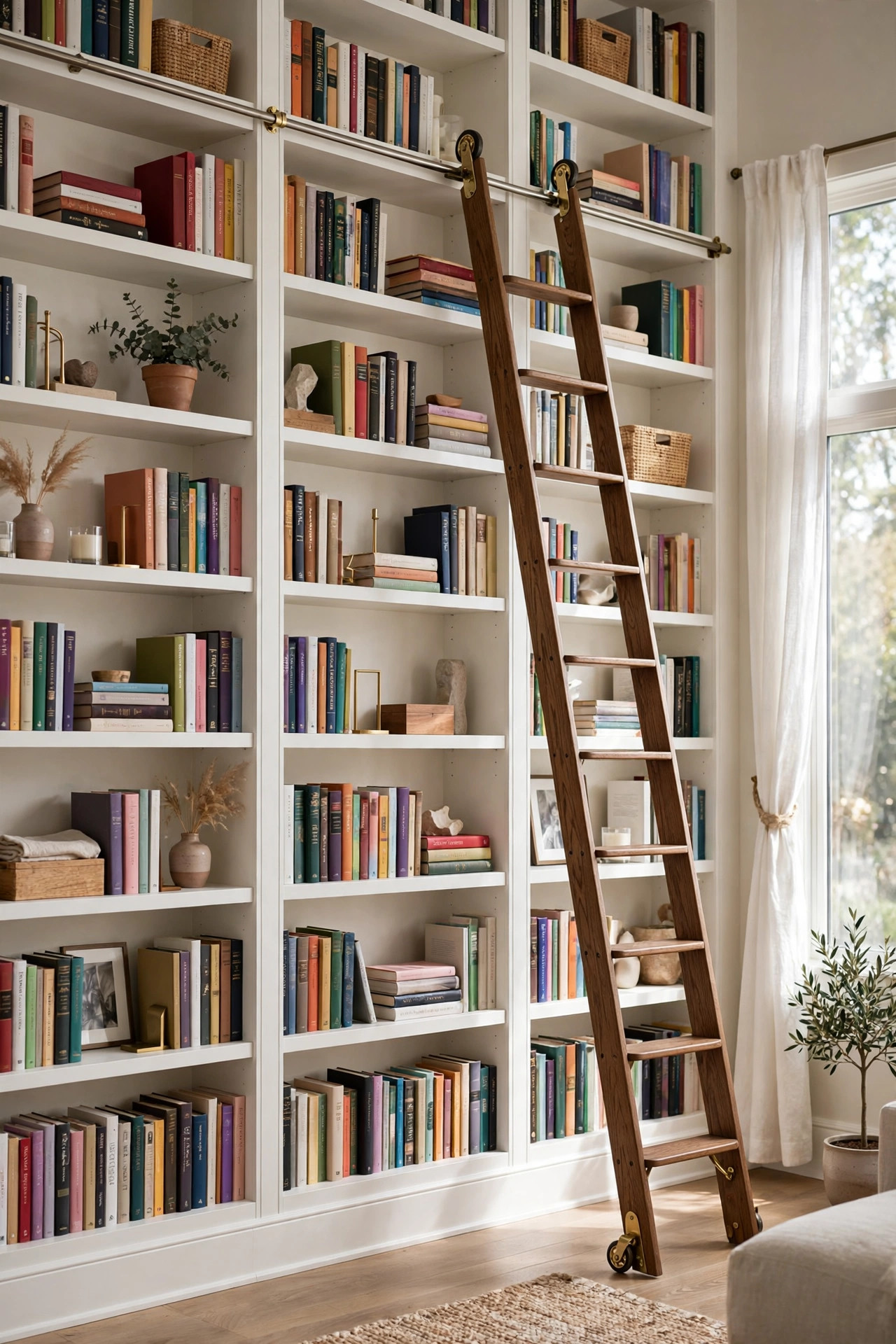
Nothing says home library like shelves that run from the floor all the way to the ceiling, and there is a clear visual reason this classic look never goes out of style. Tall shelves draw the eye upward in one long, satisfying movement, which makes the whole room feel grander and more important than its actual square footage suggests. A full wall of books becomes the natural focal point of the space, so you barely need any other decoration to make the room feel finished and intentional. The spines themselves become the art, with their mix of colors, heights, widths, and textures creating a rich, layered pattern that no wallpaper or paint color could ever match. Designers love this move because it gives a room instant character, depth, and a sense of history in a single gesture. Even in a plain white rental, a wall of books adds warmth and personality that feels collected over many years. The strong vertical lines of the shelving also trick the eye into reading the ceiling as higher than it is, which is a classic designer trick that works in rooms of every size and shape. When guests walk in, their gaze travels up the shelves and the room feels impressive before they have even noticed the furniture.
Building this look is simpler than it appears, and you do not need custom carpentry to get there. Tall bookcases placed side by side, with small gaps hidden by trim or simply pushed tight together, read as one built in wall to anyone walking into the room. Paint the bookcases the same color as the wall behind them so they blend into the architecture instead of looking like separate pieces of furniture lined up in a row. Anchor the top with a simple strip of crown molding if you want a finished, built in feel that looks original to the house. Leave a few shelves partly empty or styled with a trailing plant, a framed family photo, or a small stack of books laid flat, because this breathing room keeps the tall wall from feeling heavy or overwhelming. Fill the shelves slowly with books you actually love rather than buying decorative sets, since real reading history is what gives the wall its soul. Start with one wall, add books over the months, and watch the whole room change around it. For extra polish, run a thin strip of warm LED lighting along the top of the bookcases, which makes the whole wall glow softly each evening and highlights the books beautifully. Keep heavier art books on the lower shelves where they are easy to lift safely, and save the highest shelves for lighter paperbacks and decorative objects you rarely move. Step back across the room every so often as you fill the shelves, because balance and breathing room matter far more than speed when you are building a wall this grand.
2. Rolling Library Ladder
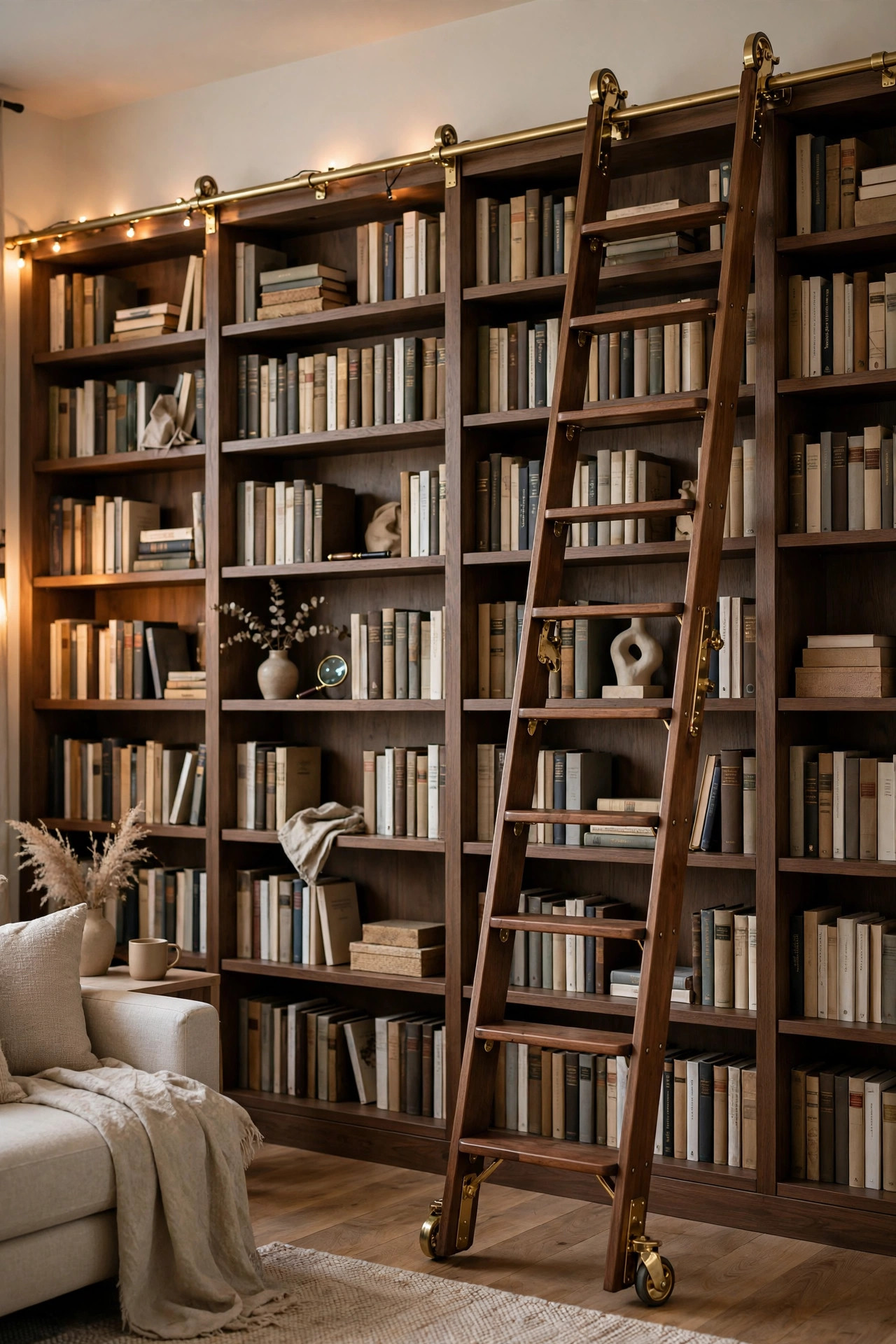
A rolling ladder is the detail that turns a simple book wall into a true library, and its visual power is hard to overstate. It adds a strong horizontal line across all that vertical shelving, and that single contrast balances the entire composition of the wall in a way nothing else can. The brass or wood rail it slides on catches the light and adds a jewelry like accent that draws the eye along the full length of the shelves. Designers call this kind of piece a statement moment, one bold object that tells the eye exactly where to look first. It also signals that the shelves are meant to be used and climbed, not just looked at, which makes the room feel alive and welcoming instead of stiff. Even when the ladder sits parked quietly in the corner, it reads as beautiful and intentional, like a piece of sculpture that happens to have a job. Children find it magical, guests find it charming, and every reader finds it deeply practical for reaching the top shelves. The ladder also adds a sense of gentle movement and life to a wall that could otherwise feel static and flat. When friends visit, it becomes an instant conversation piece that makes your whole library feel special and storied. Even the simple act of rolling it along the rail to grab a book turns an ordinary moment into a small daily pleasure worth savoring.
You can add this look without a full renovation, though it does need careful planning. A real rolling ladder needs a sturdy rail mounted firmly into wall studs, so this is one project where measuring twice truly matters for both safety and looks. Many companies now sell library ladder kits with the rail, rollers, and ladder together, which takes most of the guesswork out of the build for a confident do it yourself homeowner. If your shelves are not tall enough to truly need a ladder for reaching, you can still mount a decorative rail and lean a beautiful wooden ladder against it for the classic look. Keep the ladder wood tone warm, like oak or walnut, so it softens all the straight lines of the shelving around it. Make sure the bottom wheels roll smoothly and lock in place, because a ladder that drifts is both annoying and unsafe. One ladder, one rail, and your book wall suddenly feels like it belongs in a grand old house. If a full rolling system stretches beyond your budget, a beautiful leaning ladder from a home store delivers much of the same charm for far less money. You can paint the ladder to match your shelves for a seamless built in look, or stain it dark for striking and dramatic contrast. Whatever route you choose, always test the ladder’s stability on your particular floor type before trusting it with your full weight. A small rug placed underneath can protect wood floors and keep the ladder feet from sliding.
3. Window Seat Reading Nook
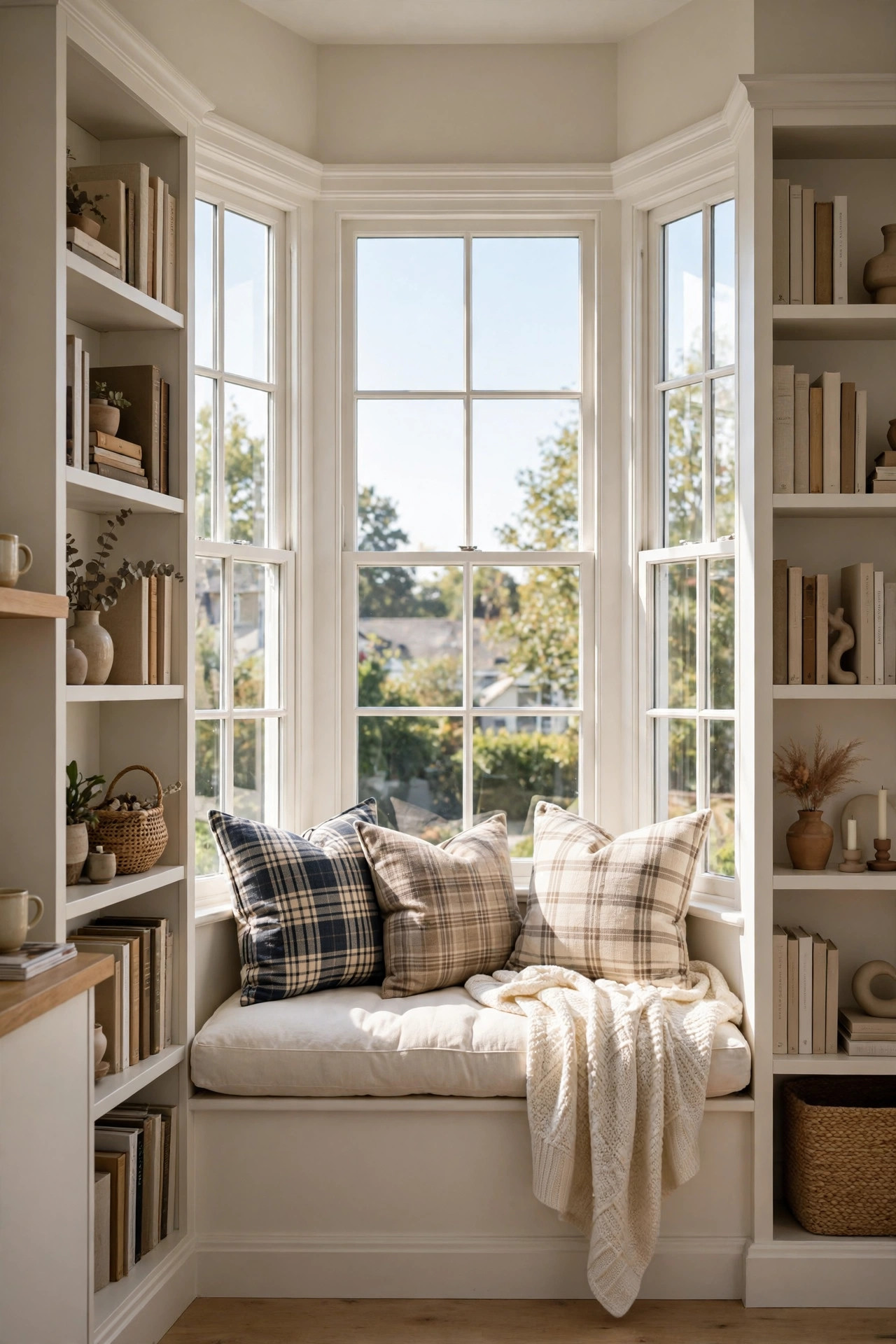
A window seat might be the single most loved reading spot in all of home design, and the reason comes down to comfort plus light working together. Natural daylight is the kindest light for reading eyes, and a seat built right into the window puts you directly inside that soft glow. Visually, a window nook creates a cozy frame within the larger room: the window trim outlines the space, plump cushions soften it, and suddenly you have a room within a room. Designers love these tucked away moments because they add layers to a space, giving the eye a journey from the open room to the sheltered seat. That little journey makes the whole room feel bigger and more interesting than its measurements suggest. A nook also photographs beautifully in morning light, which is why it shows up in so many design magazines and style blogs. There is something deeply satisfying about a seat with a view, a cushion, and a stack of books waiting. Designers often call the window seat the heart of a reading room, because it connects you to the outdoors while keeping you wrapped in softness. The ever changing light through the glass keeps the nook feeling fresh and new from early morning to late night. It is the rare design feature that looks beautiful, feels wonderful, and costs very little to create. Once you have one, you will wonder how you ever read anywhere else.
You do not need a bay window to build one, which is good news for most homes. Any window with a reasonably deep sill can become a nook with a custom cushion cut to fit the exact measurements. Measure the sill carefully, twice if needed, and order a thick foam cushion in a washable fabric, because this seat will get daily use and occasional spills. Add pillows in different sizes and shapes, drape a soft throw over one end, and place a small side table or floating shelf nearby for tea and your current book. If the window gets strong afternoon sun, add a light filtering shade so glare never hits your pages or heats the cushion. When the sill allows it, build the seat with a hinged top so the space underneath becomes hidden storage for extra books and blankets. Morning readers get the sunrise, evening readers get the sunset, and everyone gets the best seat in the house. For chilly or drafty windows, add a heavy curtain you can draw on cold nights without losing any of the cozy charm. A small woven basket beside the seat can hold extra throws and the stack of books you are working through this month. Keep the cushion covers washable and easy to remove, because a well loved nook earns its fair share of crumbs, spills, and pet hair. A quick shake of the pillows each morning keeps the whole nook looking fresh and inviting.
4. Moody Dark Green Walls
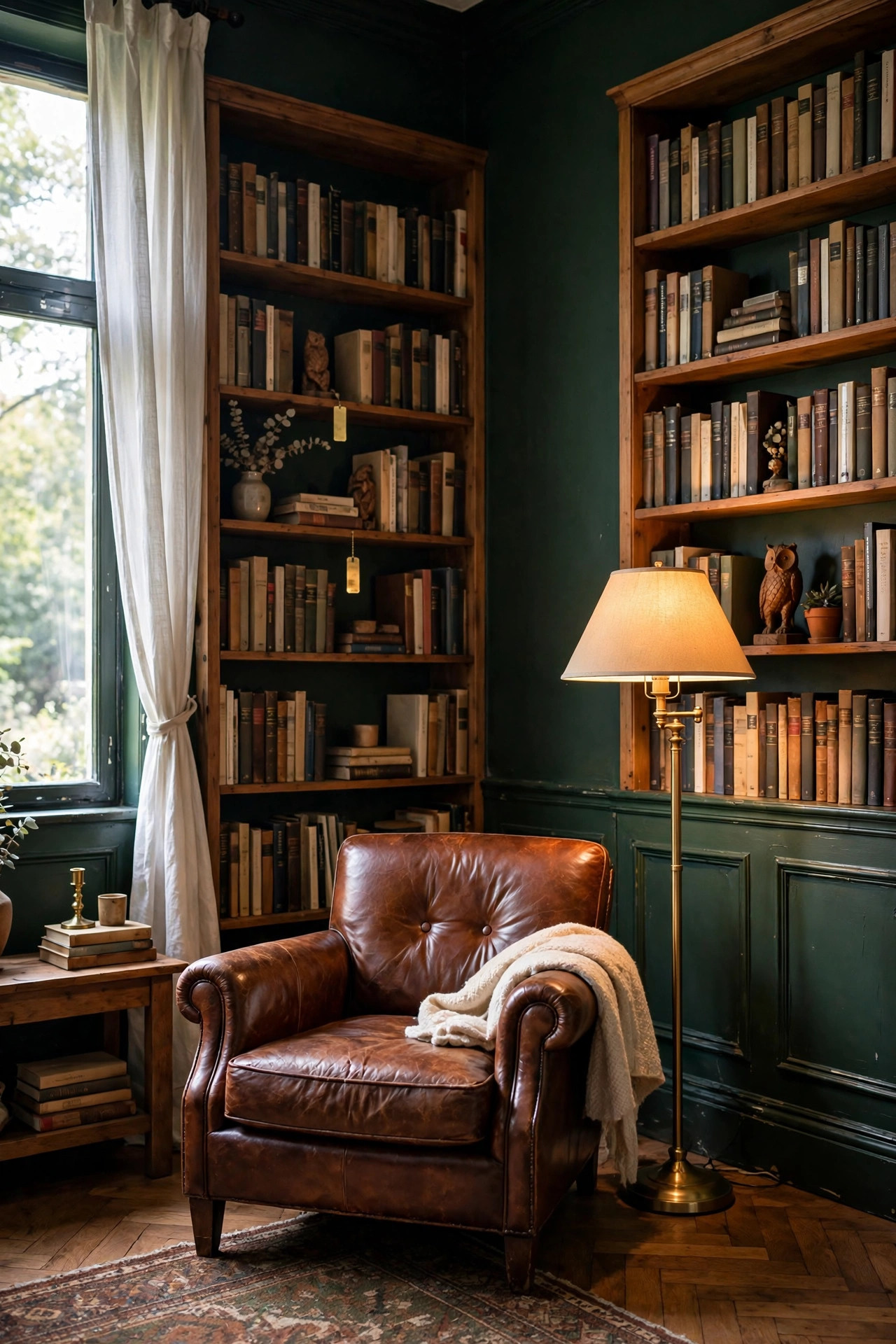
Dark green walls are having a major moment in library design, and the visual logic behind the trend is easy to see once you try it. Deep green wraps a room in intimacy, making it feel sheltered and calm like the inside of a leather bound book. Book spines pop against dark walls in a way they never do on plain white, because the strong contrast lets every color on the shelf stand out clearly. Designers choose dark paint for reading rooms on purpose: it lowers the visual noise of the space so tired eyes can truly relax, which is exactly the feeling you want when you sit down with a novel. The dark color also swallows the shadows between shelves, making the whole book wall look deeper, richer, and more expensive. It is a bold choice that somehow makes a room feel calmer rather than louder, and that surprise is part of its magic. Against green, brass lamps glow warmer and wood tones look deeper, so every other element in the room gets a lift too. Dark green also photographs beautifully, which matters if you love sharing your reading space with friends online. The color hides dust and small scuffs far better than white ever could, a practical bonus in a well used room. Most importantly, it makes the space feel like evening all day long, which is exactly the mood that serious reading deserves.
Picking the right green matters more than most people expect, so take your time with samples. Look for deep, muted greens with gray or brown undertones, like forest, hunter, or olive shades, and stay away from anything bright, neon, or yellow based. Paint a large test swatch on the wall and study it in both bright daylight and warm lamplight before you commit, because dark colors can shift dramatically between the two. If painting the entire room feels scary, start with just the wall behind the shelves as a single accent and live with it for a week. Keep the ceiling and trim a warm white so the room never feels like a cave, and let the dark walls do their cozy work. Pair the green with brass lighting, cognac leather, and warm wood tones, which all glow beautifully against it. One weekend of painting can give your reading space the soul of an old English library. If you feel nervous about such a bold commitment, paint just the insides of your bookshelves dark green while keeping the walls light and bright. This clever compromise gives you rich contrast and depth without enveloping the entire room in darkness. You can also test the color on a large foam board first and move it around the room at different times of day. Once you see how beautifully the green glows in warm lamplight, you may never want white walls again.
5. Reading Chair and Lamp Corner
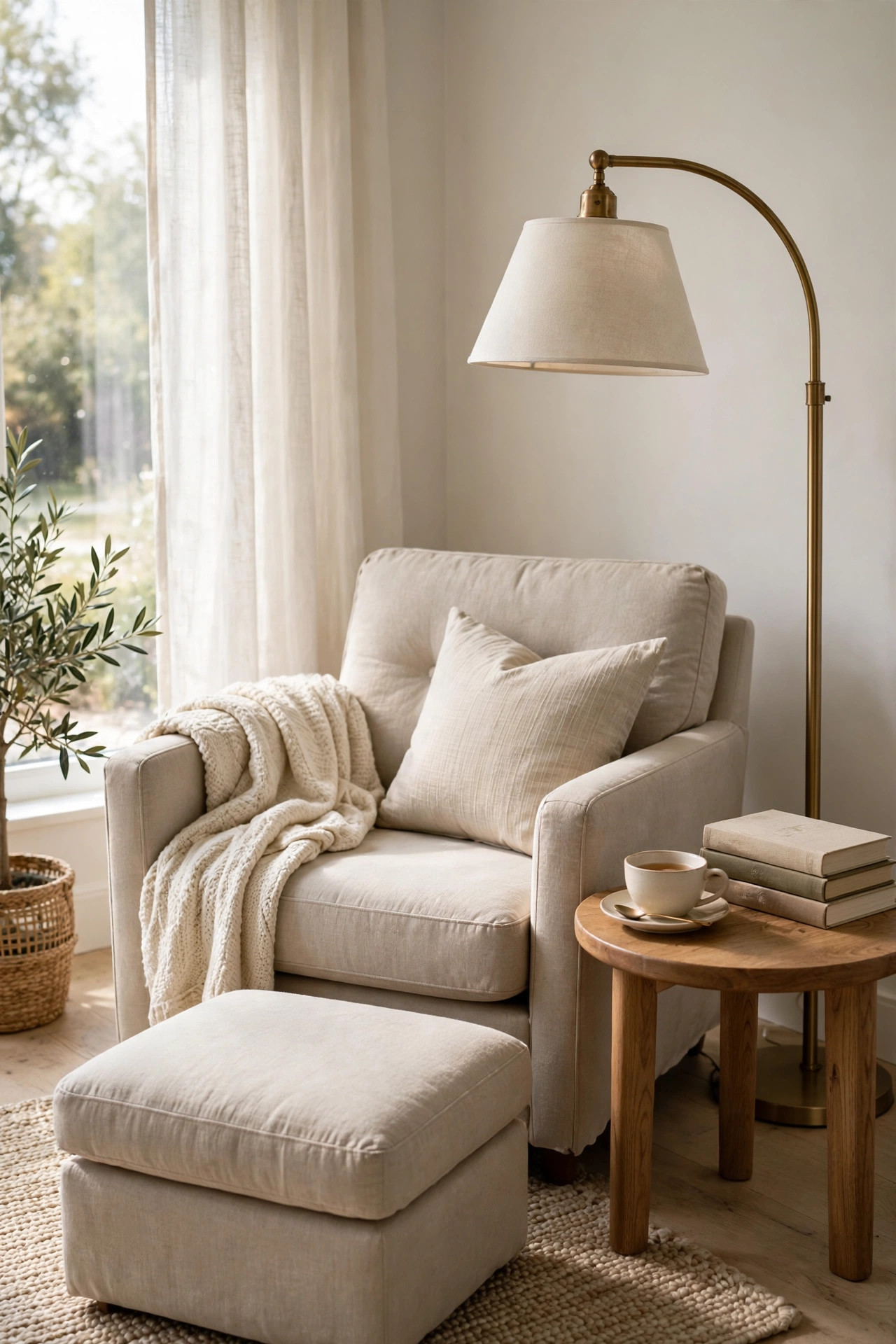
Every great library has one perfect chair, and there is real design thinking behind that simple truth. A reading corner creates a clear destination in the room: the chair says sit here, the lamp says stay a while, and the small table says put your tea down and relax. This little grouping gives the room a human scale that shelves alone cannot provide. Without it, a wall of books can feel like a museum display. With it, the room feels like a home where someone actually lives and reads. Designers always anchor a seating moment with three pieces, a seat, a light, and a surface, because the triangle those three form is visually satisfying from every angle you view it. The chair also adds soft curves and fabric texture, which balances all the hard straight lines of shelving and keeps the room feeling gentle. It is the piece that turns looking at books into the act of reading them. The chair you choose also sets the style tone for the entire room, from classic brown leather to soft modern boucle. A well chosen chair can make even the simplest shelves look deliberate, designed, and pulled together. Think of it as the room’s way of saying that your comfort matters just as much as the books themselves. After all, a library is meant to be lived in, not just looked at.
Choose the chair for comfort first and looks second, because a beautiful chair that hurts your back will sit empty within a week. A classic armchair with a high back and good lumbar support invites long reading sessions, and a matching ottoman lets you stretch out fully. Place a floor lamp behind and slightly to the side of the chair, so the light falls over your shoulder onto the page without shining directly into your eyes. A small round side table within easy arm’s reach holds your drink, your reading glasses, and the next book in your stack. Add a soft throw folded over one arm and a lumbar pillow for extra support during long chapters. Angle the whole grouping slightly toward the room instead of pushing it flat against the wall, which looks more inviting and natural to the eye. This corner will quickly become the most fought over seat in the entire house. To keep the corner inviting through every season, swap the throw and pillow as the weather changes, choosing light linen for summer and chunky knit for winter. A small rug placed under the chair helps define the corner as its own zone and keeps your feet warm on hard floors. Add a tiny lidded basket beside the table for finished books, so the corner never slowly collects clutter. These small habits keep your favorite seat feeling fresh all year long.
6. Built-In Writing Desk
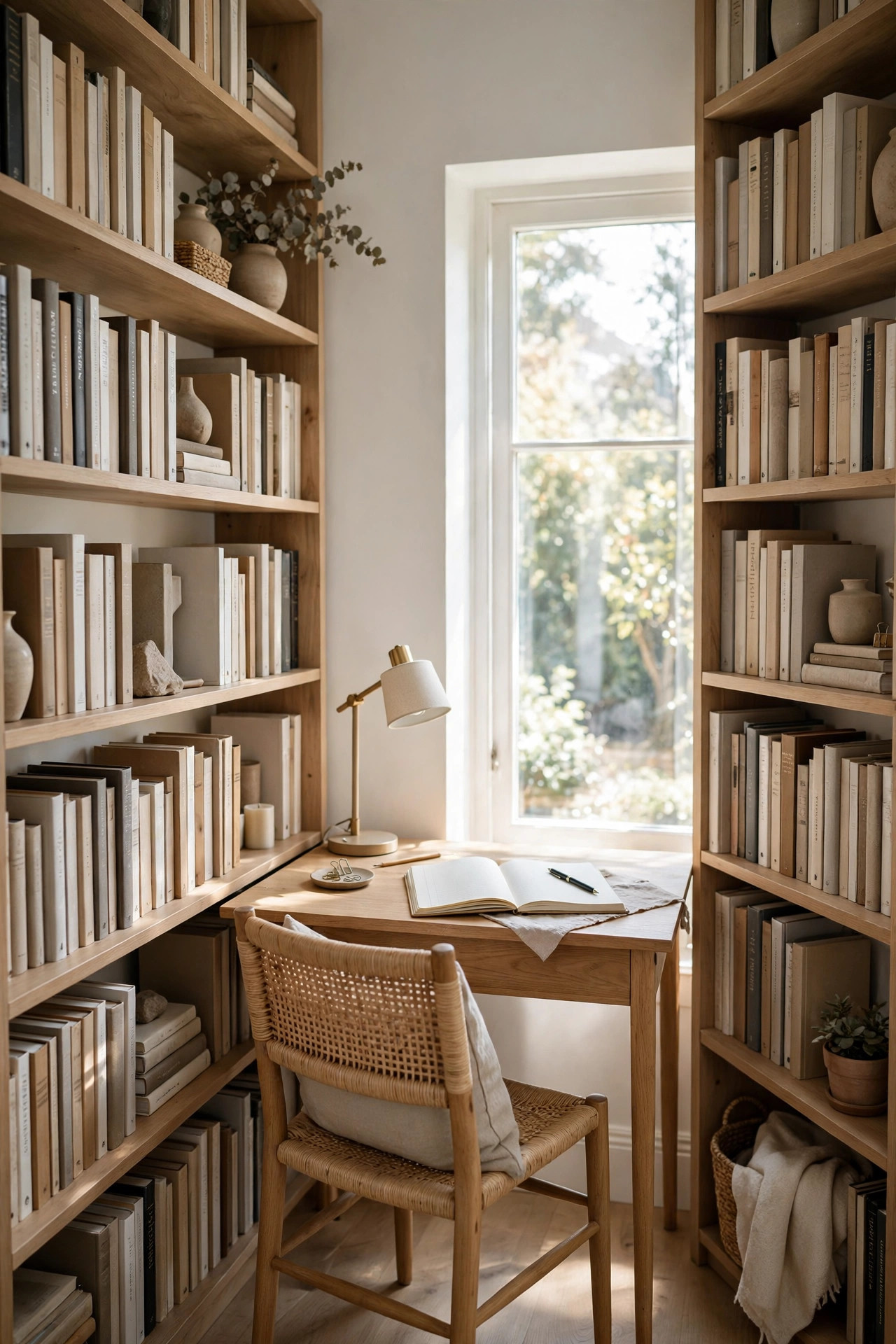
A small writing desk tucked into the library adds a whole second purpose to the room, and designers love spaces that work twice as hard without looking busy. Visually, a desk breaks up the steady rhythm of the shelving with a clean horizontal surface, which keeps a long book wall from feeling repetitive or monotonous. It also adds a personal, human touch that shelves alone cannot give: a few notebooks, a good pen, a small lamp, and suddenly the room tells a story about the person who uses it every day. The desk becomes a secondary focal point that the eye notices after traveling across the rows of books. In design terms, it adds real function without adding visual clutter, which is the mark of a genuinely well planned room. A library with a desk feels like a thinking room, not just a storage room, and that difference matters. A desk also gives the room a sense of daily life and quiet purpose beyond the reading hours. Seeing a journal and a favorite pen waiting can inspire you to write a little each morning before the house wakes. It is a gentle daily reminder that a library exists for making ideas, not just storing them. Even ten minutes of morning writing can change how the whole day feels.
You do not need a big office setup to make this work beautifully. A simple wall mounted desk shelf, about as deep as your forearms, gives you enough room for a laptop, a journal, or a stack of letters. Tuck it between two bookcases or under a window where natural light makes writing a pleasure. Choose a chair that slides fully underneath when you are done, so the area stays tidy and the walkway stays clear. Keep the desktop styled simply with a small lamp, a pen cup, and one stack of books or a trailing plant, because a clear surface invites use while a messy one repels it. Hide chargers and cables with a simple cord cover so the clean look survives real daily life. This little workstation turns quiet corners into productive ones, giving you a dedicated spot for morning pages, letters, lists, and slow coffee before the day begins. If floor space is very tight, a fold down wall desk gives you a sturdy work surface that simply disappears when you are done for the day. Keep a small desk organizer for pens, paper, and sticky notes so the surface stays clear and welcoming. Good lighting matters enormously here too, so add a compact task lamp if the window light does not quite reach the desk. A clear, well lit desk invites daily use, while a dark cluttered one quietly repels it.
7. Picture Lights Over Shelves
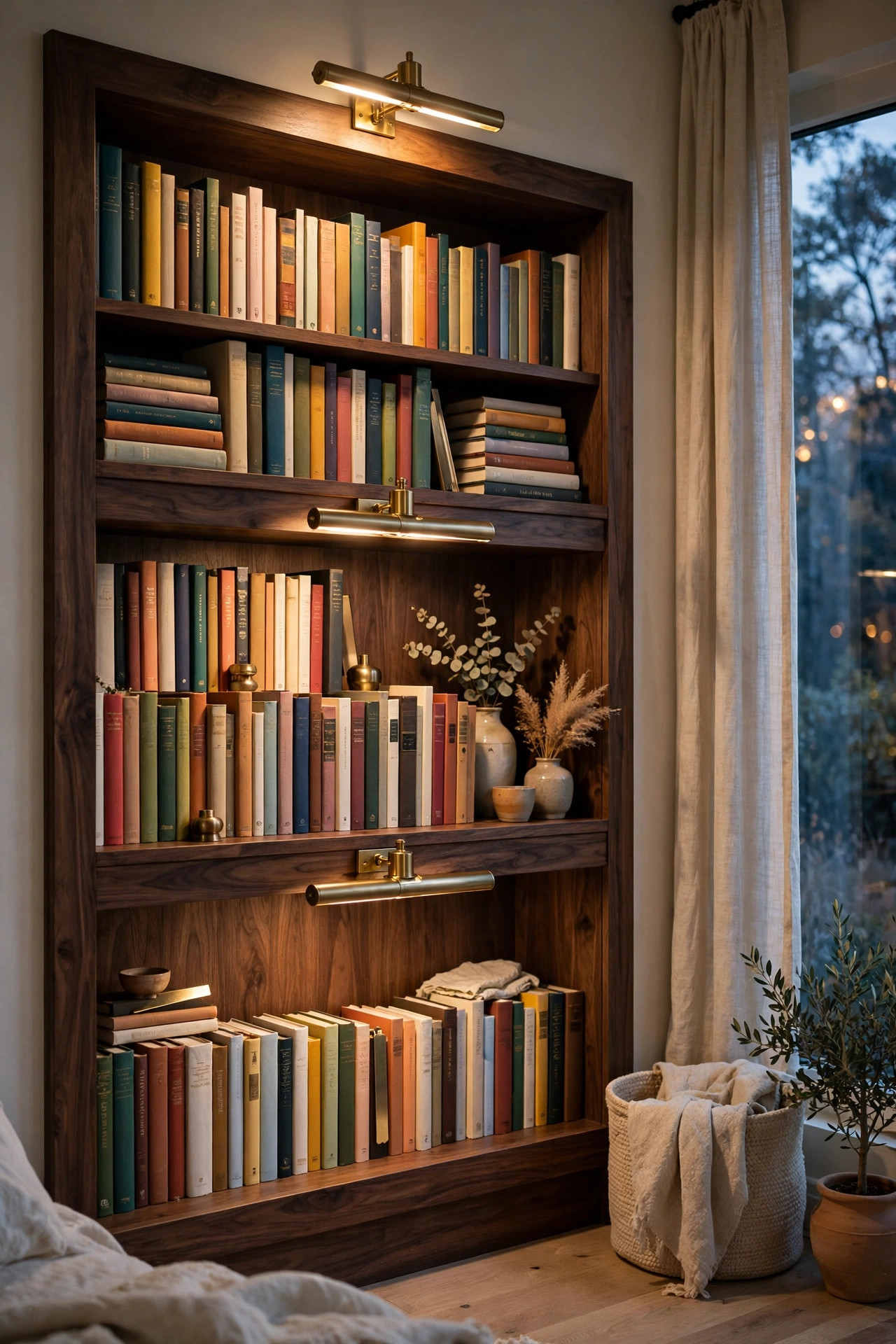
Picture lights mounted above your bookshelves are a trick borrowed straight from art galleries, and the effect they have on books is nothing short of stunning. A slim brass bar washing warm light down across the spines makes the whole shelf glow like a museum display case. Visually, this does two powerful things at the same time. First, it creates a clear horizontal band of light that organizes a tall wall into calm, readable sections, so the eye moves smoothly instead of darting around in confusion. Second, it makes the books look precious and chosen, which changes how the entire room feels to anyone who enters. Designers use accent lighting exactly this way, to quietly tell you what matters most in a room, and glowing shelves say these books are treasured. At night, when the rest of the room goes dim and quiet, the lit shelves become pure magic, turning an ordinary wall into the warm heart of the home. Guests always pause at glowing shelves, because light makes everything it touches feel important. This gallery style lighting also makes a modest book collection look far more impressive than its actual size suggests. The warm pools of light create a gentle rhythm that leads visitors naturally along the wall. It is one of those small upgrades that makes guests ask who designed your beautiful room.
Battery powered picture lights have made this project easy and affordable for everyone, with no electrician required. They mount with a small bracket or strong adhesive strips, so installation takes minutes and leaves no damage behind, which renters will appreciate. Size each light to about half the width of the shelf section below it, because that proportion gives the most even and flattering wash of light. Choose warm white light only, since cool white makes book pages look gray and lifeless and kills the cozy mood completely. Many battery lights now come with built in timers, so your shelves can glow every single evening automatically without you lifting a finger. Space the lights evenly across the wall for a calm, orderly rhythm, or light just one special section to create a single dramatic glowing moment. Either way, your books stop being mere storage and start being the star of the room. For renters, adhesive mounted lights leave no marks behind and move with you to your next home. Check the batteries every few months so the warm glow never fades unexpectedly in the middle of a reading week. You can also aim these lights at a single shelf of special editions or signed copies to create a tiny museum moment. A little focused light tells everyone which books matter most to you.
8. Color-Grouped Book Display
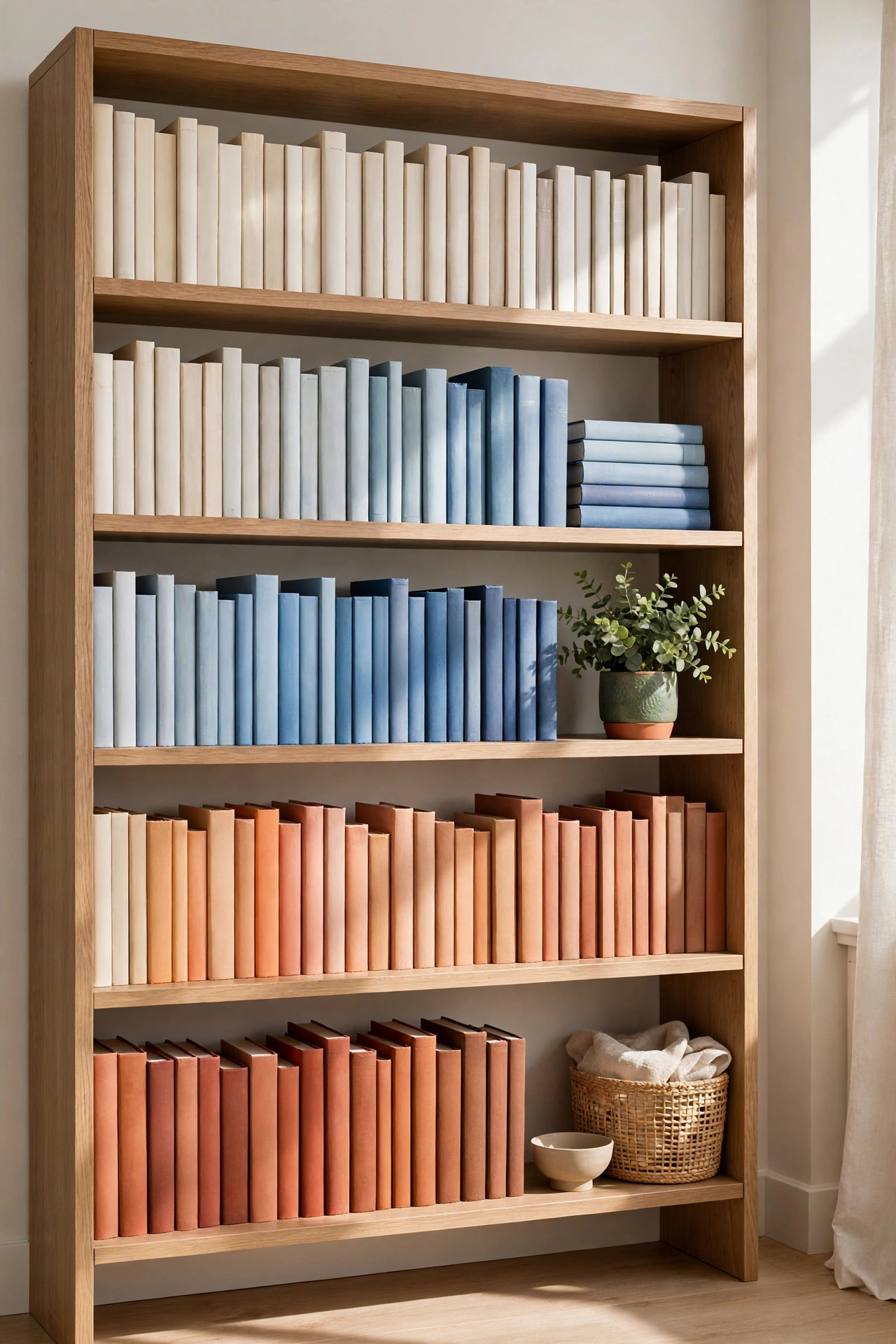
Grouping books by spine color is one of the most talked about shelf styling ideas right now, and it earns the attention because of how naturally our eyes read color. A shelf arranged in a gentle rainbow, or in calm blocks of cream, sage green, and terracotta, reads as one large piece of art when viewed from across the room. The color rhythm gives the wall a clear, soothing pattern, which feels restful even when hundreds of books are packed onto the shelves. Designers reach for this trick when they want shelves to feel styled and intentional rather than simply stuffed full. It is the visible difference between a storage wall and a true design feature. The books themselves have not changed at all, but the way your eye travels across them has completely transformed, and that shift changes everything about how the room feels. Photographers love color grouped shelves because they create instant visual harmony that needs no other decoration around them. The technique works especially well in rooms with neutral walls, where the books themselves provide all the color the space needs. It is also a wonderful way to give odd lone books a home when they never fit neatly into genre groups. From the doorway, the entire wall reads as intentional art rather than random storage. Visitors will assume you hired a stylist, and you can just smile.
This styling takes one free afternoon and costs absolutely nothing, which is a big part of its charm. Pull all the books off one section at a time and sort them into loose color families on the floor before you reshelve. You do not need perfect matches, just group similar tones together and let them flow gently into one another across the shelf. Whites and creams together, then soft blues, greens, warm reds, and finally the darks, creating an ombre effect that pleases the eye. Step back across the room often to check the overall balance, because shelves read very differently from a distance than they do up close. Leave a few shelves in natural mixed order if a full rainbow feels too precious or fussy for your taste. Purists sometimes object that color grouping makes individual books harder to find, so keep your most reached for titles together on one easy access shelf. Style is allowed to be a little impractical when the result looks this beautiful. Take a quick photo of each shelf before you begin, so you can always restore things if you change your mind halfway through. Work in small sections to avoid ending up with a mountain of unsorted books covering your floor. Once you finish the whole wall, live with the new arrangement for a full week before deciding whether to tweak anything. Sometimes the best styling reveals itself slowly.
9. Vintage Card Catalog Cabinet
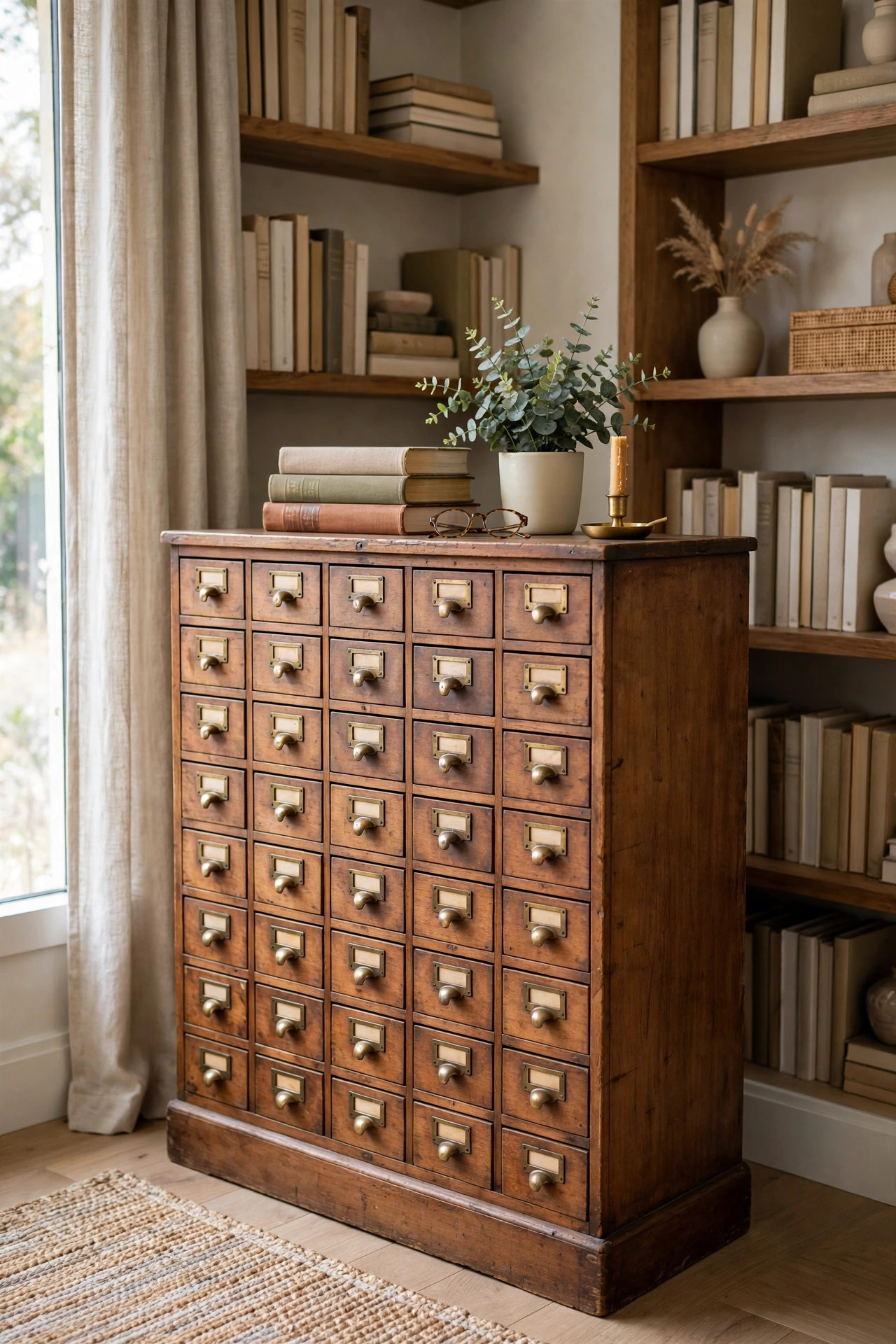
A vintage card catalog cabinet is the kind of piece designers hunt for at flea markets and estate sales, because it brings instant history and character to any room it enters. Those rows of small drawers with their little brass pulls and label holders add a fine, detailed texture that big flat bookcases simply cannot provide. Visually, the cabinet works as a beautiful contrast to tall shelving: where the shelves are high and open, the catalog is low and closed, and that mix of open and closed storage is exactly what makes a room feel layered, collected, and interesting. The small scale of the drawers also gives the eye a welcome place to rest among all the busy book spines. It whispers old library in the most charming possible way, and guests can never resist pulling open a drawer or two to peek inside. That touchable quality makes the whole room feel warmer and more alive. The cabinet’s small drawers also break up the visual weight of a room that might otherwise feel dominated by large furniture. Each little brass pull catches a tiny glint of light that adds to the room’s overall warm glow. It is functional sculpture, beautiful to look at and genuinely useful every single day. Pieces like this are why vintage hunting is so addictive for design lovers.
Real card catalogs are getting harder to find as libraries digitize, but good reproductions and similar apothecary cabinets are widely available at reasonable prices. Use the many drawers for the small things that always clutter a reading room: bookmarks, reading glasses, chargers, notebooks, pens, and sticky notes. Label a few drawers with pretty handwritten tags for extra vintage charm that makes people smile. Style the top surface with a small stack of art books, a candle in a glass holder, and one trailing green plant to soften all that beautiful wood. Place the cabinet where it can be touched and used every day, near the reading chair or under a window, never trapped behind other furniture. If the wood looks tired, a light sanding followed by a coat of furniture oil brings back the glow without hiding the age. Every scratch and worn edge tells a story, which is exactly right for a library. If you find a catalog with a few missing drawers, use the empty slots to display tiny plants, rolled maps, or small framed photos. You can also paint the cabinet body a deep dramatic color while leaving the drawer fronts in natural wood for a custom designer look. These pieces only grow more charming as they age and wear. Buy the best condition you can afford, but do not fear a little patina.
10. Cozy Layered Rug Floor
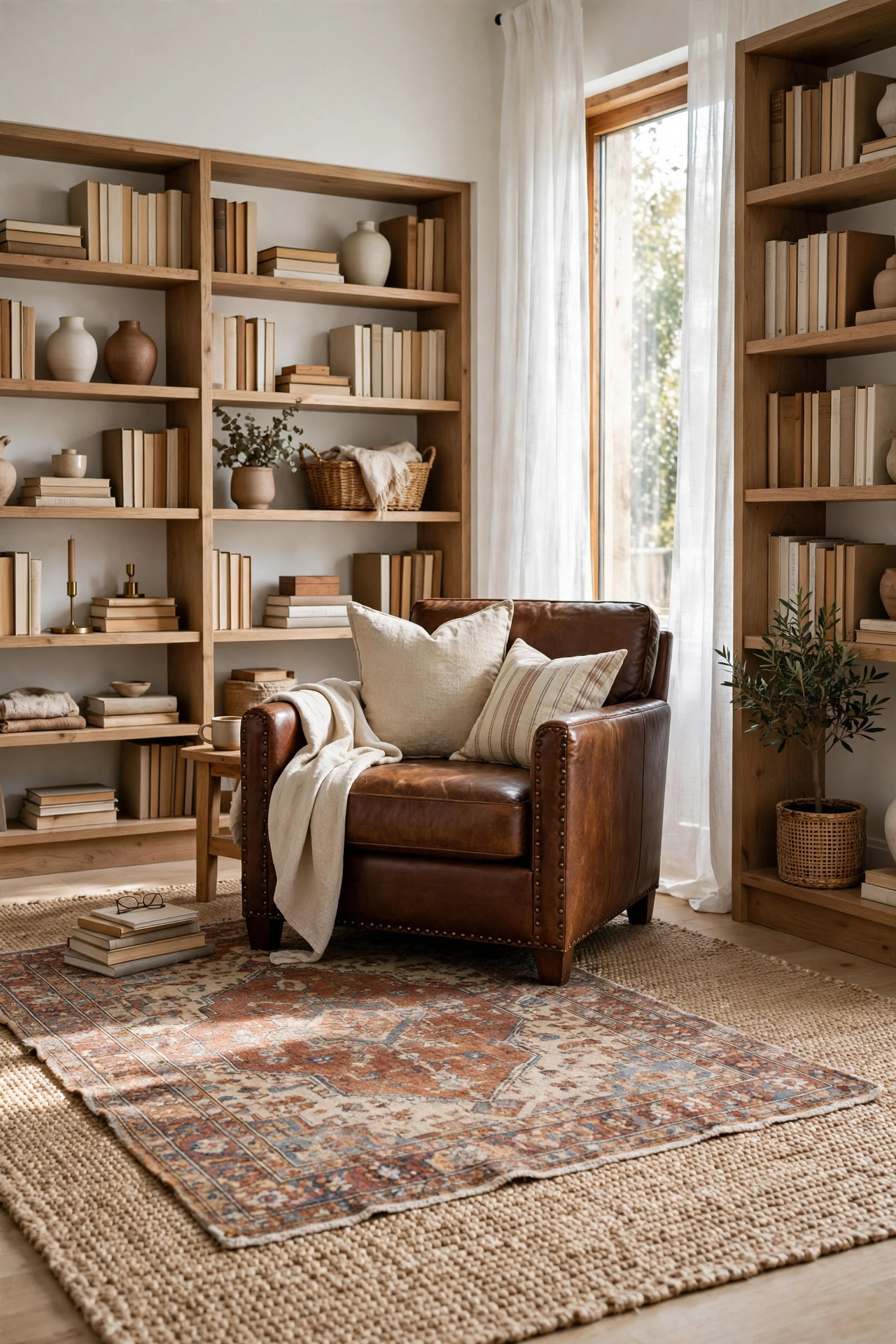
A library should feel soft and welcoming underfoot, and layered rugs are exactly how designers create that sink in feeling. One large rug anchors the seating area and defines the reading zone, while a smaller rug on top adds pattern, color, and an extra layer of cushion. Visually, layering does something very clever: it breaks a big open floor into comfortable zones, so the reading corner feels like its own little world tucked inside the larger room. The mix of textures, perhaps a flat natural weave under a plush vintage style rug, adds the kind of richness that makes a room feel expensive and lovingly cared for. Designers layer rugs when they want a space to feel gathered slowly over time rather than bought all at once from a single store. In a library, that collected, storied feeling is the entire point, and the floor is where it begins. Layered rugs also help enormously with sound, softening echoes in rooms with tall ceilings and hard floors. That acoustic softness makes the library feel quieter, calmer, and more peaceful overall. Your reading voice, your background music, and your footsteps all become gentler on layered textiles. It is a comfort upgrade you feel even more than you see.
Start with a large neutral rug that fits comfortably under your chair and side table with generous room to spare on every side. Then layer a smaller patterned rug on top at a slight angle, which looks relaxed and intentional rather than stiff and formal. Choose patterns and colors that echo your book spines or wall paint so the layers feel connected to the rest of the room. A low pile rug on the bottom layer keeps doors swinging freely, while the plusher rug goes on top exactly where your feet actually rest. If you have hardwood floors, add a thick rug pad underneath for genuine softness and to keep everything from sliding around. Vacuum the layered rugs one at a time to keep them fresh and flat. Your feet will thank you every single time you curl up with a book. Rotate the top rug every few months so wear stays even and the pattern keeps looking fresh. If you share your home with pets, choose darker busier patterns on top that hide fur between cleanings. A quick shake outside every few weeks keeps both layers feeling crisp and clean. For extra plushness, double up the rug pad underneath the bottom layer. Your feet deserve that small luxury during long reading marathons.
11. Fireplace Reading Wall
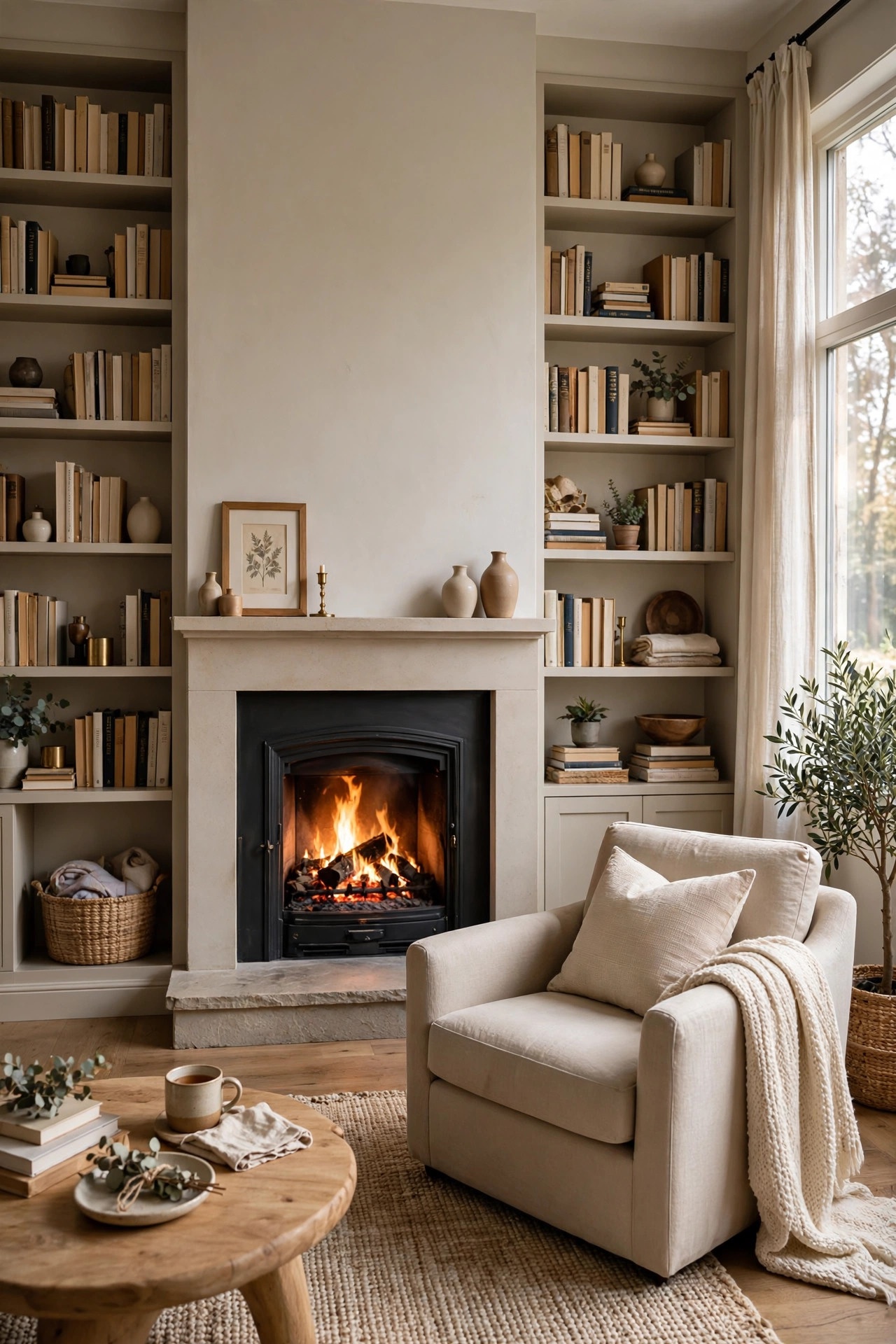
If your library has a fireplace, you already own the coziest reading spot imaginable, and thoughtful styling makes it the undeniable heart of the room. Firelight does what no lamp can ever do: it moves, it flickers, and it makes everyone nearby feel calm and pleasantly drowsy in the best possible way. Visually, a fireplace gives the room a natural gathering point, a strong and steady center that organizes all the furniture placement around it. Designers always work with a focal point like this instead of fighting against it, because rooms feel settled when everything relates to one anchor. Bookshelves flanking both sides of the fireplace create lovely symmetry, which the human eye finds deeply satisfying and restful. The whole wall reads as one grand composition: dancing fire in the middle, beloved stories on both sides, and it never fails to impress. The flickering light also makes book spines look richer and more colorful than steady lamplight ever could. It is a living, breathing focal point that changes subtly every single minute. No television or framed artwork can compete with real flames for holding a room’s gentle attention. Even the soft crackling sound adds to the sense of deep comfort. It is no wonder fireplaces have anchored gathering rooms for centuries.
Style the mantel with a light hand so the fire itself stays the star of the show. A small stack of books laid flat, one simple candle, and a single framed print are plenty of decoration. Keep a comfortable chair angled so it faces both the fire and the shelves, letting you watch the flames or reach for a new book without ever getting up. A woven basket of firewood or a neat stack of logs beside the hearth adds rustic texture and visual interest even on days when no fire is lit. If you do not have a real fireplace, an electric insert or even a row of chunky pillar candles arranged in the firebox gives a surprisingly similar warm glow. Always keep a proper screen or a safe distance between open flames and your books. On cold evenings, there is simply no better place on earth than a deep chair by a fire with a good book. Keep a cozy throw folded within reach of your fireside chair for the moment the evening turns chilly. A small sturdy side table for tea and biscuits completes the scene without cluttering the hearth. Always let the fire burn fully out, or close the damper properly, before heading off to bed. Safety habits like these let you relax completely into the warmth.
12. Rolling Book Cart
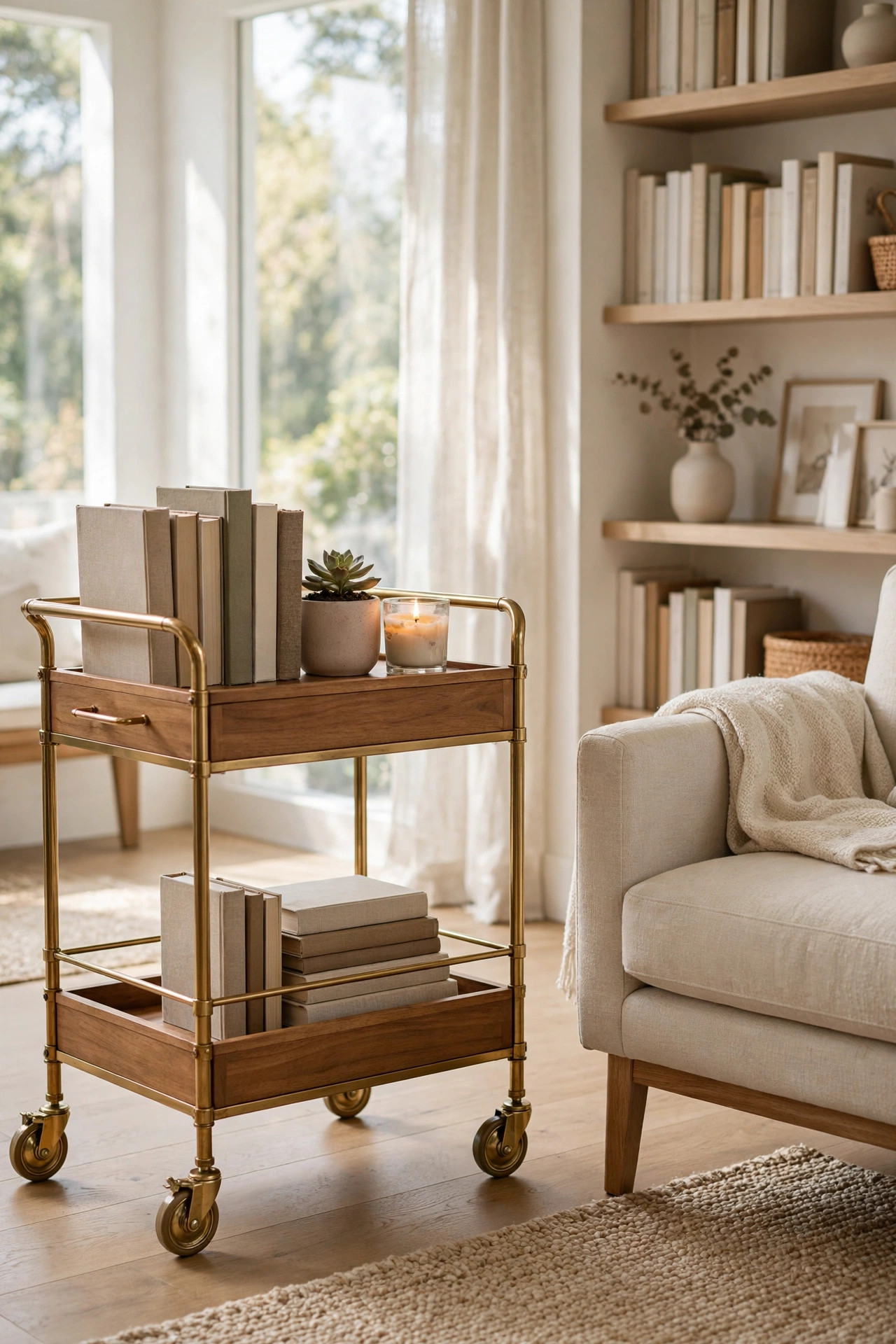
A rolling book cart is the hardest working little piece of furniture in a home library, and designers genuinely love pieces that can move and adapt. Visually, a cart adds a low, horizontal shape among all the tall vertical shelving, which keeps the room from feeling top heavy or severe. Because it rolls freely, it also keeps the room feeling flexible and alive rather than fixed and overly formal. Style it like a tiny curated shelf and it becomes a little still life on wheels: current reads standing upright on top, a small plant, perhaps a candle in a sturdy holder. The cart becomes a charming vignette you can push wherever you need it most. It is practical, pretty, and just a little bit playful, which keeps a serious book room from ever feeling stuffy or pretentious. Guests always comment on it, because it is unexpected and delightful. The cart’s easy mobility also makes it perfect for smaller homes where every single piece must earn its floor space daily. Roll it out of the way when you need the room for guests, then roll it back for your evening reading hour. That kind of flexibility is worth more than any heavy fixed piece of furniture. It adapts to your life instead of asking your life to adapt to it.
Use the cart for whatever your reading life needs most in the moment. Keep your current stack, your reading journal, and your glasses on it right beside your favorite chair. Wheel it into the kitchen when you want to read over slow morning coffee, or into the bedroom for cozy nighttime chapters. Bar carts, kitchen carts, and vintage library carts all work beautifully, so shop your own home before you spend any money. Style the shelves with books standing upright and a few lying in flat stacks, always leaving some empty space so it never looks crammed or messy. A small tray on the top surface corrals your mug, glasses, and pen so nothing wobbles off when you roll across the room. When book loving guests visit, wheel in a few extra titles on topics they enjoy. It is hospitality on wheels, and it never fails to charm. Keep the cart’s wheels clean and free of hair so it rolls quietly across your floors without leaving marks. A quick polish of the brass or wood keeps it looking sharp and cared for through the years. It may be the smallest piece of furniture in your library, but it will quietly work the hardest. Good design often comes in the most unassuming packages.
13. Gallery Wall of Literary Art
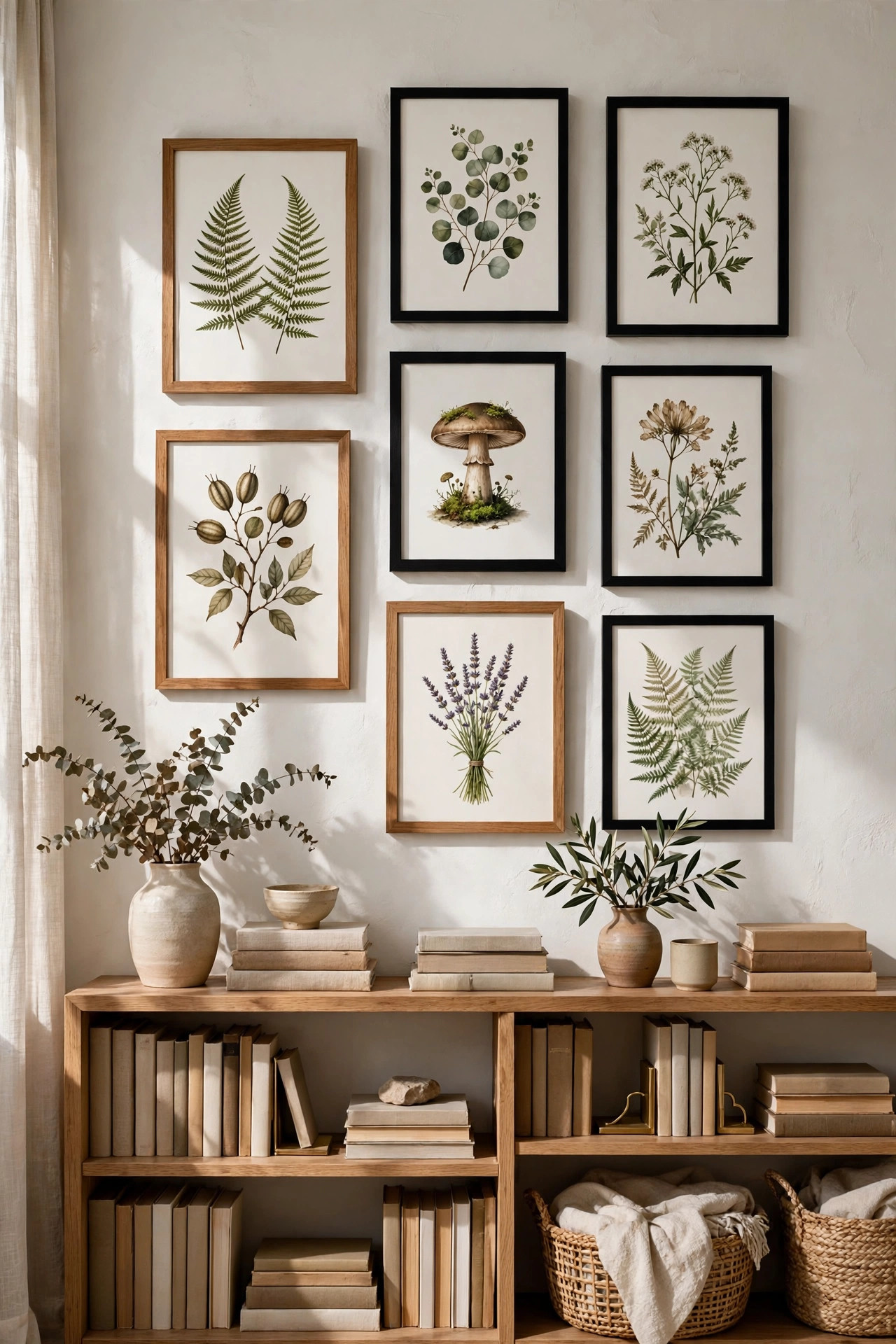
A gallery wall of bookish art gives your library a personal, cultured layer that shelves full of books alone cannot provide. Think framed vintage book covers, soft botanical prints, portraits of favorite authors, and meaningful quotes set in beautiful lettering. Visually, a gallery wall fills the blank spaces between and above the shelves with pattern, color, and personality. The mix of frame sizes and art styles creates a collected, gallery like rhythm that makes the entire room feel curated rather than simply furnished. Designers love gallery walls in libraries because books and art speak the same visual language: both are about stories, ideas, and beauty gathered in one place. Together they make the room feel intelligent in the warmest possible way, never cold or showy. A well built gallery wall also gives visitors something to explore, tiny details and titles to lean in close and admire. A gallery wall also lets you honor the books that shaped who you are, with art that references beloved stories and favorite authors. It turns your personal reading history into visible, beautiful decor that guests can explore. Every single frame becomes a small window into your inner life and imagination. That kind of personal storytelling is what separates a house from a true home.
Building a good gallery wall is about careful planning, not about spending a lot of money. Lay all your frames out on the floor first and shuffle them around until the grouping feels balanced and pleasing, then snap a photo to use as your hanging map. Mix frame finishes like black, warm wood, and brass, but keep one finish dominant so the whole wall feels pulled together instead of chaotic. Tuck a few small floating shelves into the arrangement for tiny plants, candles, or special bookends, which adds lovely depth and shadow. Hang the center of the grouping at eye level, about 57 inches from the floor, which is the museum standard that always looks right. Printable art keeps costs wonderfully low while looking genuinely expensive in good frames. Leave a little empty space to grow, because a gallery wall should collect new pieces over the years, exactly the way a library collects new books. Use removable hanging strips if you rent, so the entire gallery can move with you to the next place damage free. Keep a small level in your art hanging kit for perfectly straight frames every time. Step back after every three frames to check the overall balance before you continue hanging. Patience at this stage pays off in a wall that looks professionally arranged.
14. Reading Bench With Hidden Storage
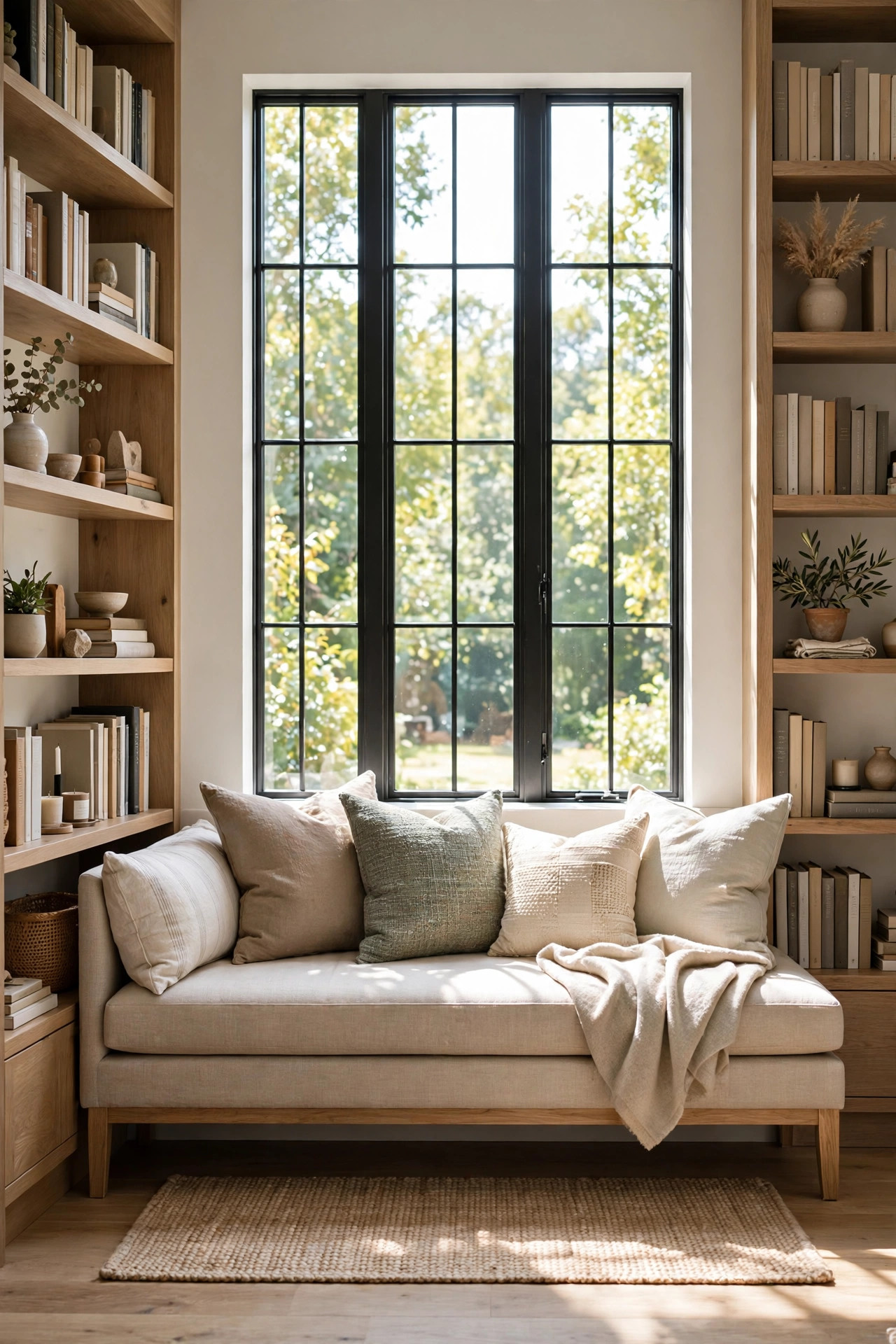
A reading bench with hidden storage solves two library problems at the same time, and designers adore furniture that does double duty without looking bulky. The bench gives you a long, low seat that is perfect for stretching out with a thick novel, while the hidden compartment quietly swallows the clutter that ruins a calm room. Visually, a bench adds a strong horizontal line low in the space, which balances tall shelves rising above it in a deeply satisfying way. It also softens everything around it: upholstered fabric against all that wood and paper is exactly the texture contrast that makes rooms feel finished and thoughtful. Tucked under a bright window or along the base of a book wall, a bench looks built in and intentional, as if the room was designed around reading from the very start. It invites sprawling, napping, and long lazy chapters in a way upright chairs never quite do. A bench also works beautifully at the foot of a bed or along a hallway wall, so it can move with you if your library ever relocates. The long low shape makes even narrow rooms feel wider, calmer, and more relaxed. It is honestly one of the most versatile seats you can own in any home. Buy quality once, and it will serve you in room after room for years.
Choose a bench with a hinged top or deep smooth drawers, and size it carefully to fit your space without blocking any walkways. Top it with a thick, comfortable cushion in a durable, washable fabric and a row of pillows for proper back support during long reads. Inside the hidden compartment, store the things that always pile up in reading rooms: extra throws, magazines, notebooks, chargers, and the books you have finished but not yet shelved. If you are handy with tools, a simple plywood bench with a foam cushion can be built in a single weekend and painted to match your shelves exactly. Add small felt pads under the legs to protect wood floors from scratches. Style the top with one neatly folded throw and two pillows, no more, so it always looks ready for someone to sit down immediately. It will quickly become the most used seat in the entire library. Choose a performance fabric for the cushion if kids or pets will inevitably claim the bench too. A quick vacuum with an upholstery attachment keeps it fresh between deeper seasonal cleans. The hidden storage compartment will quietly swallow an amazing amount of everyday clutter. Out of sight really does mean out of mind in a reading room.
15. Small-Space Floating Shelves
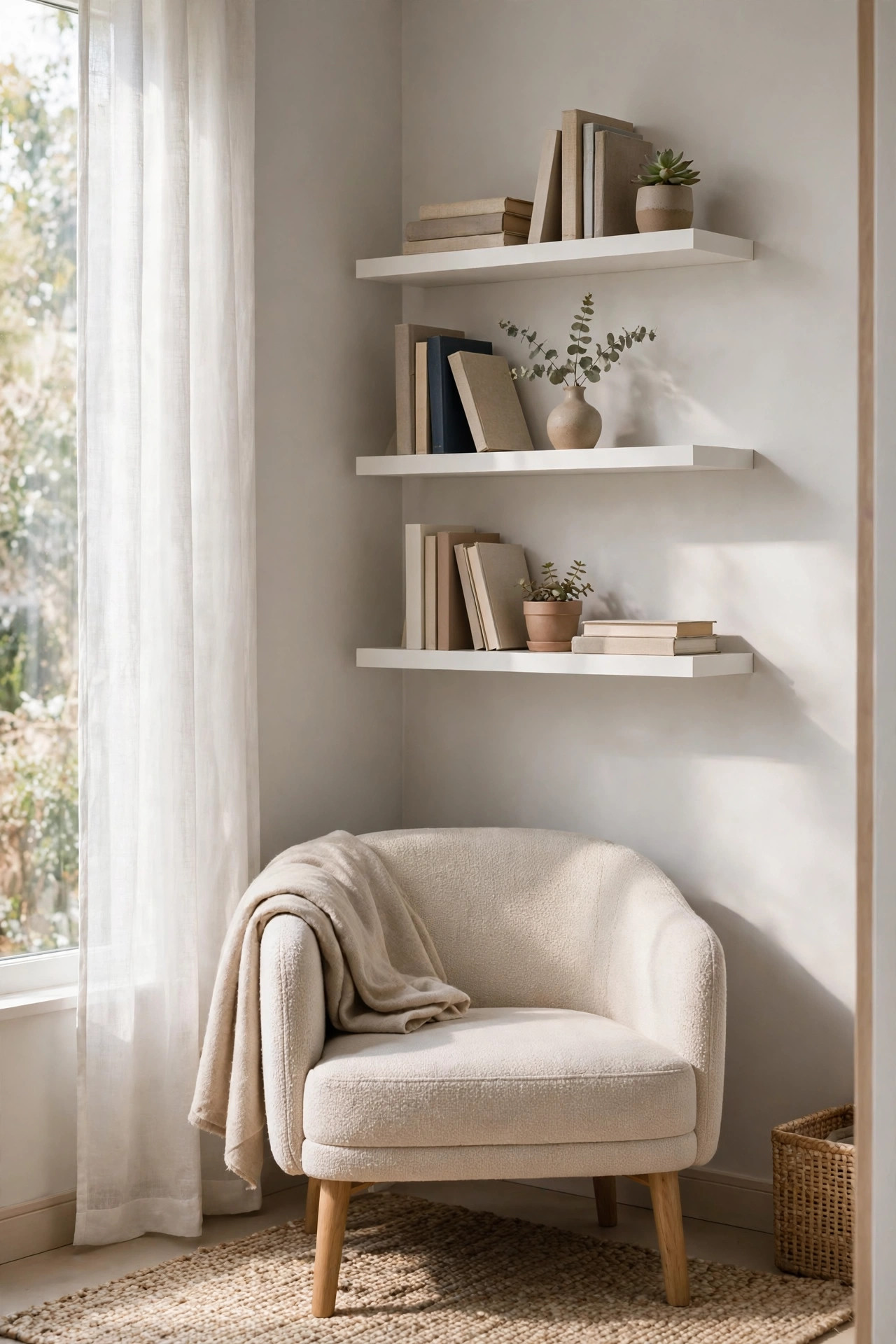
You do not need a whole spare room to have a real library, and floating shelves are the proof. A few well placed floating shelves can turn any blank wall, hallway, or bedroom corner into a proper little library that feels intentional and complete. Visually, floating shelves feel light and modern because there are no bulky sides or backs breaking up the wall behind them. Books appear to hover in midair, which looks almost magical and keeps even the smallest space feeling open and airy. Designers reach for floating shelves in tight rooms because they deliver the book display without the furniture footprint that crowds a floor plan. A short run of just three shelves can hold dozens of books while barely projecting from the wall. Small does not have to mean sad, and these shelves prove it beautifully. Floating shelves also work wonderfully in unexpected spots, like above a desk for reference books or beside a bathroom mirror for bath time reading. Their clean simple lines suit modern apartments especially well, where visual lightness matters. Three well styled shelves can genuinely change how a small room feels and functions. Do not overlook the backs of doors or the wall above a doorway, both make clever bonus shelf spots. Every blank wall is a library waiting to happen.
Installation is the whole game with floating shelves, so take that part very seriously. Use sturdy metal brackets rated for the weight of books, which are far heavier than most decor, and always anchor directly into wall studs, never just into drywall alone. Keep each shelf under three feet wide so it cannot sag in the middle under a full load of hardcovers. Style the shelves with books plus a little breathing room around them: a small trailing plant, a framed photo, a candle in a safe holder. Leave the top shelf for pretty display and keep the lower ones for the books you grab most often. In a bedroom, run shelves above the headboard for a library you can admire right from your pillow. In a hallway, one long shelf at eye level turns dead space into a reading gallery guests will love. Measure twice, drill once, and enjoy your tiny but mighty library. If drilling is not allowed in your rental, look for heavy duty adhesive shelf systems rated for real book weight, and test them with lighter paperbacks first. Keep a small folding step stool nearby so every shelf stays within comfortable, safe reach. Even two modest shelves can hold a deeply satisfying little collection. Start small, and let your library grow shelf by shelf.
16. Vintage Brass Library Details
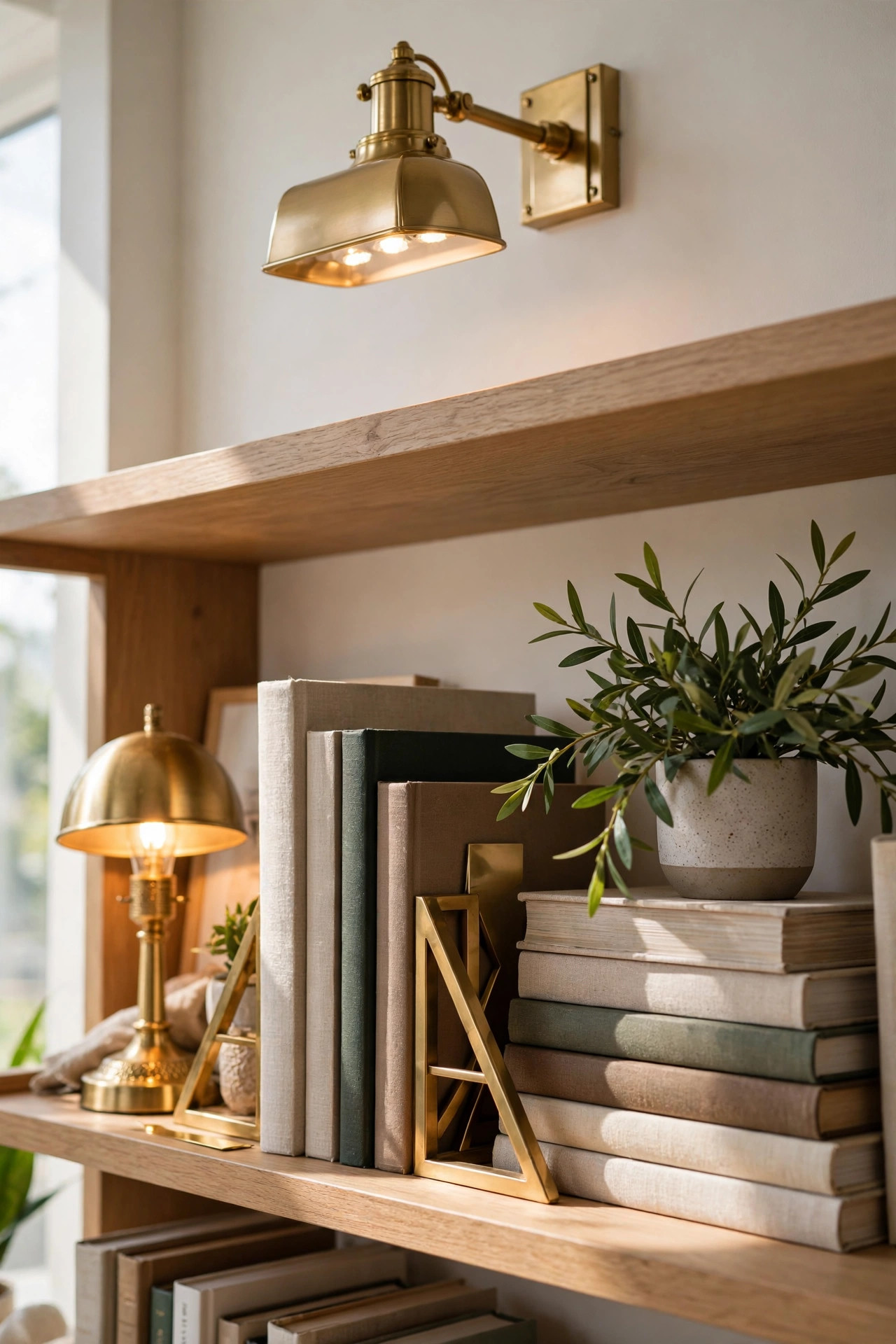
Small brass details are the jewelry of a home library, and they are trending hard in interior design right now for good reason. Think brass picture lights, solid brass bookends, a small brass reading lamp, and little brass pulls on nearby drawers and cabinets. Visually, brass does something wonderful in a book room: its warm golden tone glows softly against wood and deep paint colors, scattering little points of light all around the space. Designers use metallic accents exactly like this to keep a room full of matte paper and wood from feeling flat or dull. The gentle shine draws the eye on a path from shelf to shelf, creating movement through the room that feels natural and pleasing. It is a genuinely small investment with an outsized effect on how rich, warm, and finished the room feels. Even a single brass lamp can change the whole mood after dark. Brass also pairs beautifully with the deep greens and rich navys that are so popular in libraries right now. The warm metal keeps dark painted rooms from ever feeling cold or flat and lifeless. It is a timeless finish that never truly goes out of style, no matter what trends come and go. A few well placed pieces will look just as good in ten years.
You do not need to replace anything big or expensive to capture this look. Start with bookends, which are affordable, instantly visible, and come in beautiful vintage shapes at flea markets. Add one brass picture light or a small brass table lamp so you get actual warm glow, not just reflected shine. Swap plain knobs on nearby cabinets or drawers for brass pulls, a ten minute job with nothing but a screwdriver. Mix aged brass with a few polished pieces so the look feels collected over time rather than bought brand new in one trip. Keep brass away from harsh chemical cleaners, which strip the finish; a soft dry cloth is all it needs. A little natural tarnish is actually beautiful and adds to the vintage character. These golden touches can make an ordinary book wall feel like a gentleman’s library from another century. Start small with just one or two brass pieces and live with them for a while before adding more, since restraint keeps the look elegant rather than flashy. Check thrift stores and flea markets regularly, because genuine brass treasures appear often and cost very little. A gentle polish once or twice a year is all the maintenance these pieces ever ask. Avoid lacquered brass if you love the aged look, since it never develops that beautiful patina. Let time do the decorating for you.
17. Tea Station for Reading Breaks
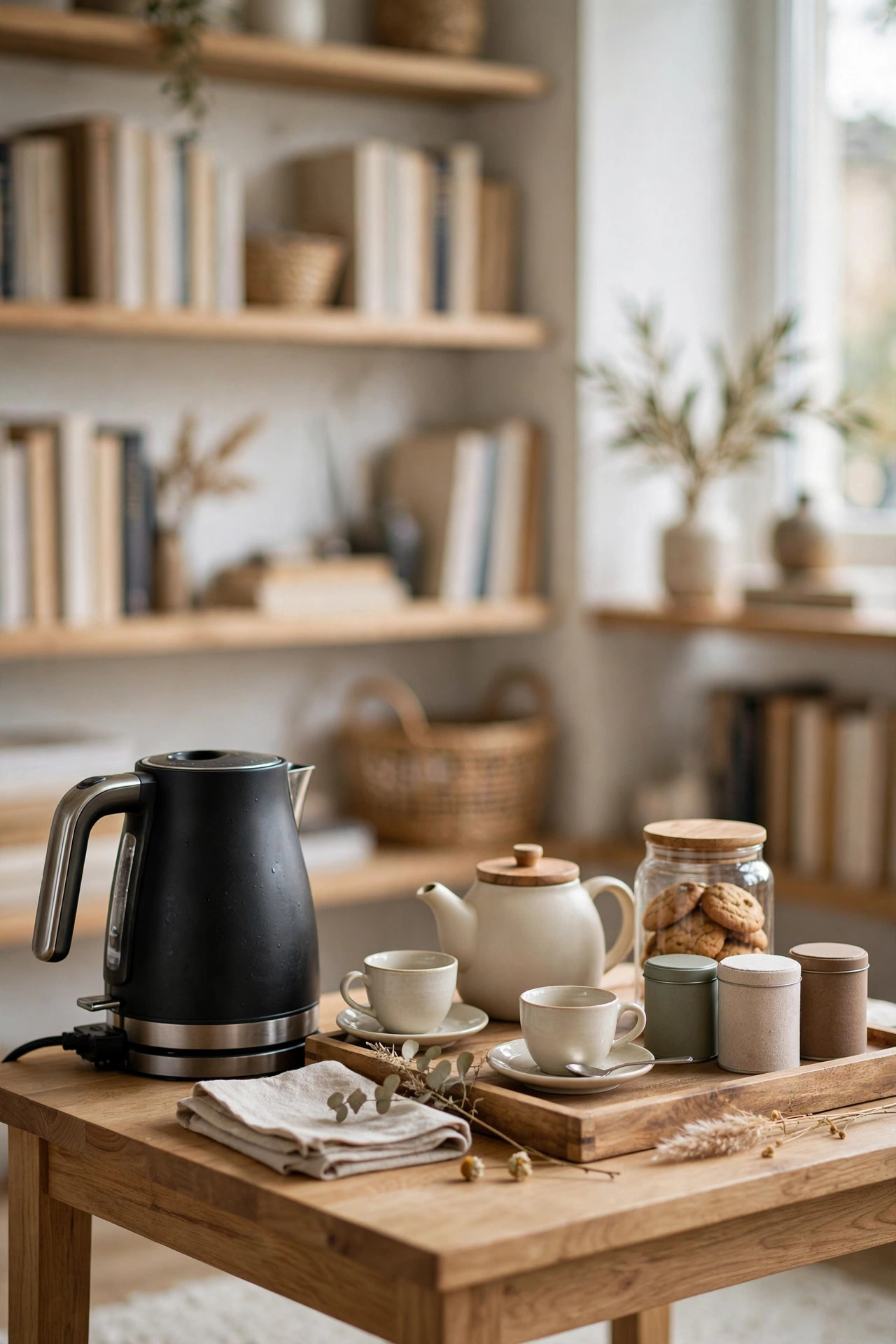
A tiny tea station turns your library into a true personal retreat, because great reading always deserves great breaks. Visually, a tea setup adds a warm lifestyle moment to the room: a pretty wooden tray, a teapot, mismatched cups, and a glass jar of something sweet. It tells a gentle story about slow afternoons and makes the room feel cared for in a deeply personal way. Designers love these little ritual corners because they make a space feel genuinely lived in rather than stiffly staged for photos. The tea station becomes a secondary focal point that softens all the straight lines of shelving with curves of ceramic and glass. It is also deeply practical in daily life. No more choosing between finishing your chapter and getting up for a fresh cup, because everything waits within arm’s reach. The gentle ritual of making tea also gives your eyes a healthy and welcome break from the page every hour or so. That little pause often makes the next chapter even better, because rested eyes read faster and happier. It turns reading from a simple hobby into a cherished daily ceremony worth protecting. Over time, the smell of your favorite tea will become linked in your mind with your favorite stories. That is the quiet magic of a well loved ritual.
You only need a small surface to build this ritual: a bar cart, a sturdy side table, or even one wide shelf cleared for the purpose. An electric kettle is the hardworking heart of the station, so choose one handsome enough to leave sitting out all day. Add a wooden tray to corral cups, a small teapot, sugar bowl, and a jar of honey or homemade cookies. Keep a nice variety of teas in pretty labeled tins so family and guests can choose their own favorites. A small bowl for used tea bags and a cloth napkin keep the area tidy with almost no effort. If you love the ritual, hang a tiny framed quote about books and tea on the wall above the station. Refill the water and restock the cups each morning so the station is always ready when you are. Your reading sessions just got a whole lot cozier. Wipe down the tray and rinse the cups each evening so the station always starts the next day fresh and inviting. Keep a small notebook nearby for jotting down thoughts and quotes that surface while you sip and read. Before long, visiting friends will ask what is on the tea menu when they come over. A good ritual has a way of spreading joy beyond just yourself.
Conclusion
The home library is more than a passing trend, it is a quiet rebellion against rooms that look perfect but feel like nothing. As design keeps moving toward spaces with real soul, the book filled room is only going to matter more in the years ahead. Whether you start with one floating shelf or a full wall of built ins, you are building something no catalog can sell you: a room that knows exactly who you are. So pull your favorite books off the boxes they have been sitting in, give them a wall, a chair, and some warm light, and let your library grow one beloved book at a time.
FAQs
How many books do I need to start a home library?
You do not need hundreds of books to begin. Even twenty well loved books on a single shelf create the feeling of a library. Start with what you own, style the shelves nicely, and let the collection grow naturally over time. A small, cared for shelf always looks better than a big, dusty one.
What is the best lighting for a home library?
Warm layered light works best. Use a ceiling fixture or recessed lights for general glow, a reading lamp beside your chair for task light, and picture lights or LED strips to make the shelves shine. Keep bulbs around 2700 kelvin for a cozy feel, and avoid harsh cool white bulbs that make the room feel cold.
How do I organize books in a home library?
Organize in whatever way helps you find books fastest. Many readers sort by genre, then by author, which is practical and looks tidy. Others group by color for a styled look, or by size for a calm rhythm. There is no wrong answer. Pick the system you will actually maintain and enjoy looking at every day.
Can I make a home library in a small apartment?
Absolutely. A single wall of floating shelves, a reading chair in the corner, and a floor lamp make a complete little library. Use vertical space with tall narrow bookcases, and choose furniture that does double duty, like a storage bench. Even renters can build a lovely library with freestanding shelves and plug in lighting.
How do I keep a home library from looking cluttered?
Leave breathing room on every shelf. Not every inch needs a book. Mix in a few plants, framed photos, and empty space so the eye can rest. Group similar items together, keep a consistent color palette for accessories, and dust regularly. A library looks rich when it is curated, not when it is crammed.
What paint color works best for a home library?
Deep, cozy colors work beautifully: dark green, navy, warm charcoal, or rich brown. Dark walls make book spines pop and create an intimate reading mood. If dark feels too bold, warm white or soft greige keeps things bright while still feeling calm. Always test a large swatch in your own light before committing.