

Imagine walking into a home where every corner tells a story. You step through the front door and your hand brushes across a wooden console table that has stood for fifty years, its surface smooth from decades of use. The living room glows warm in the late afternoon light, and you sink into a leather armchair that has softened into the perfect shape, the kind of comfort money cannot buy new. Nothing matches perfectly, yet everything belongs. A brass lamp catches your eye, then a faded rug under your feet, then a wall of old paintings in mismatched frames. You can feel the history in the room, and somehow it all looks rich, layered, and completely intentional, like the home of someone who has traveled the world and collected beautiful things along the way.
Now imagine learning that almost everything you just admired came from thrift stores, flea markets, and estate sales. That is the quiet magic of thrifted home decor. Vintage pieces carry a weight and character that new furniture simply cannot fake. The wood is real, the brass has aged into a deep golden patina, and the fabrics have softened over years of real life. When you mix these finds with what you already own, your home stops looking like a showroom and starts looking like you. It looks collected over time, which is exactly what expensive interior design tries so hard to imitate.
The best part is that this look costs a fraction of what people assume. A vintage dresser that sells for thousands in a boutique can sit in a thrift store for forty dollars, waiting for someone with vision. You do not need a trained eye to start, either. You only need to know what to look for and how to place it once it comes home. So come along on this little tour. We will walk through the house room by room, from the entryway to the final finishing touches, and I will show you sixteen vintage and thrifted finds that make any home look far more expensive than it really is.
1. A Vintage Console Table in the Entryway
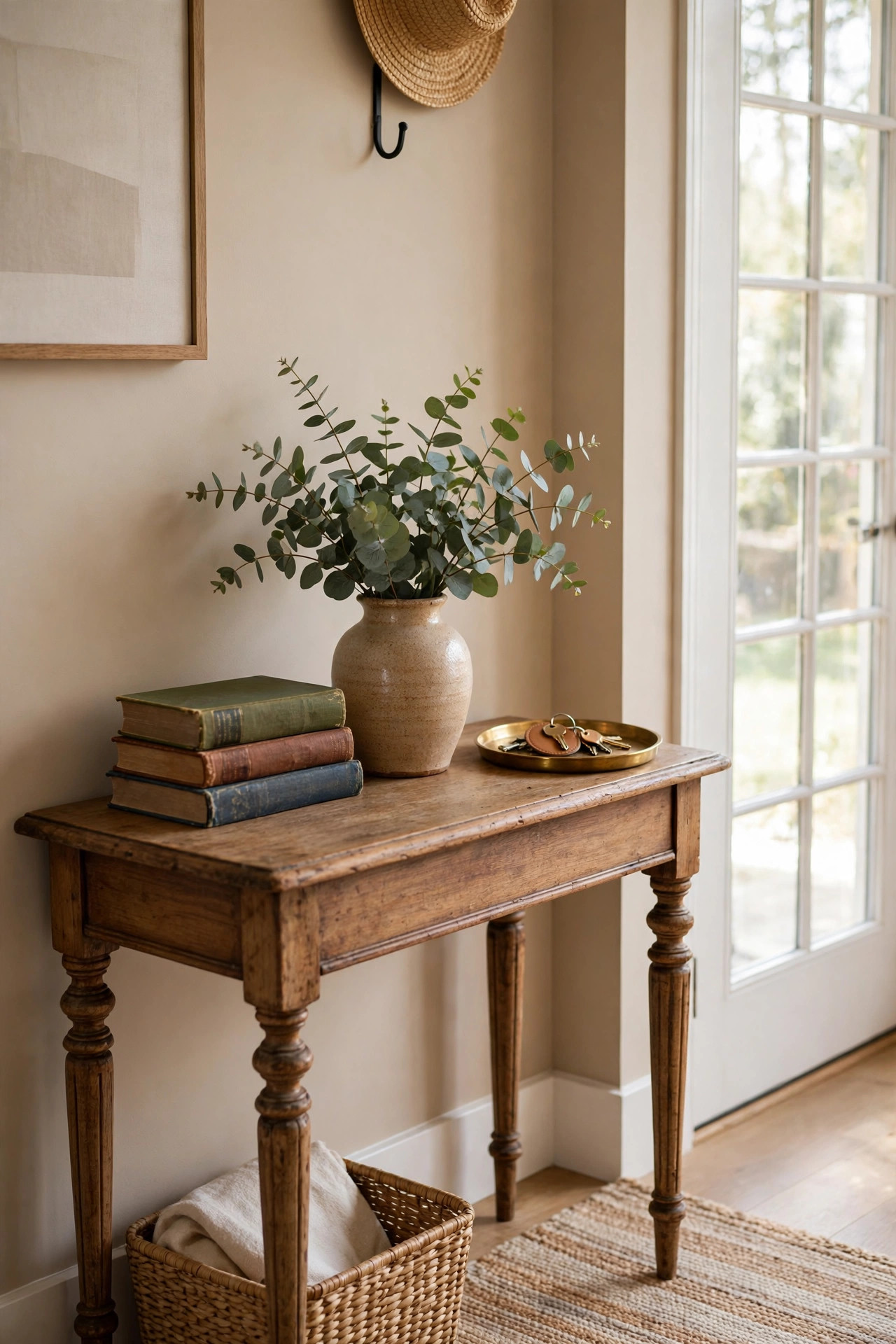
Every good home tour starts at the front door, and yours should start with a piece that sets the tone before a guest takes three steps inside. A vintage console table in the entryway does exactly that. Look for one made of solid wood with turned legs, a lower shelf, or little drawers that still slide smoothly. The finish does not need to be perfect. In fact, a few scratches and worn edges are what make it look authentic and expensive, like something passed down rather than picked up last weekend. Run your hand across the top and feel how solid it is compared to the lightweight tables sold today. That weight is the first thing people notice, even if they cannot name it. Style it simply when you get home. A small stack of old books, a thrifted ceramic vase with fresh branches, and a little brass tray for keys are all you need. The table becomes the handshake of your home, warm and confident, telling every visitor that beautiful things live here. You can also use the lower shelf for a woven basket that hides shoes or mail, which keeps the entryway tidy without adding more furniture. A small mirror hung above the table is another classic move, since it bounces light around the space and gives you one last check before you head out the door for the day.
Finding the right one takes a little patience, but the hunt is half the fun and the savings are enormous. Console tables are among the most common finds at thrift stores because people donate them during moves, and solid wood versions often sell for less than the cost of a pizza. Check that the legs are sturdy and the table does not wobble, since wobble is the one flaw worth walking away from. Surface scratches can be softened with a little wood oil or furniture wax, which costs almost nothing and takes ten minutes. If the finish is truly rough, a light sanding and a coat of dark stain can make it look like a different piece entirely. Measure your entryway before you shop so you know the table will fit without blocking the door swing. Once it is home, keep the styling simple and let the wood do the talking. A vintage console table that cost you twenty dollars will greet your guests like it cost two thousand, and nobody will ever guess the difference. If you love the look but cannot find the right size, keep checking back, because thrift store stock turns over every few days. Bring a tape measure and a photo of your entryway on your phone so you can judge the scale on the spot. The right table is worth waiting for, and the hunt becomes part of the story you will tell about it.
2. A Worn Leather Armchair in the Living Room
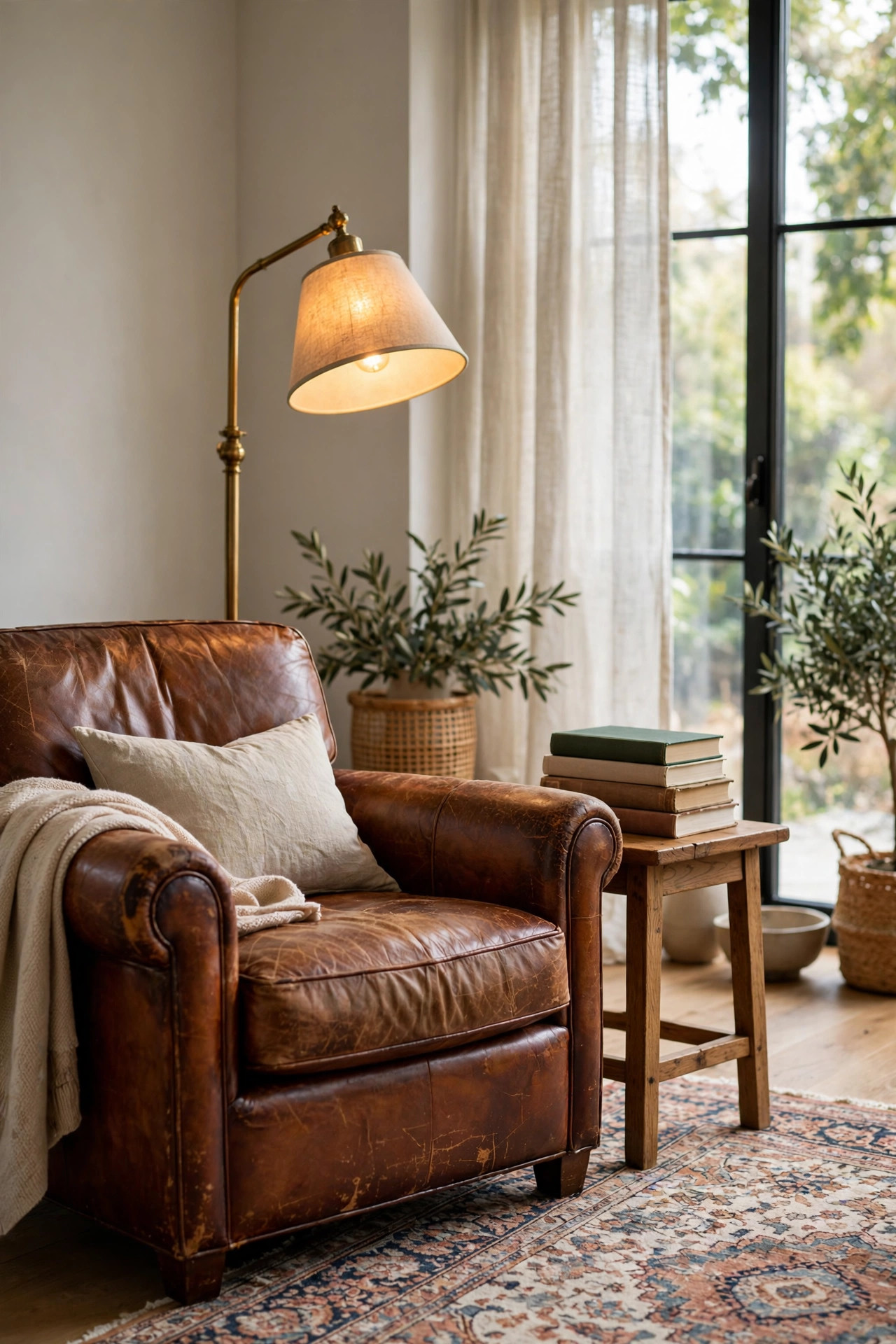
Step into the living room and head straight for the corner that needs the most love, because that is where a worn leather armchair belongs. There is no faster way to make a sitting area look expensive than a single piece of aged leather. New leather looks stiff and shiny, but vintage leather has relaxed into deep creases and a soft sheen that only years of use can create. Sit down and feel how it holds you, the seat dipping exactly where it should, the arms polished smooth by countless hands. The color has usually deepened into rich cognac, warm brown, or even a dark oxblood that glows in lamplight. Designers pay thousands for this exact look, calling it patina, and you can find it at a thrift store for the price of a dinner out. Place it near a window or beside the fireplace where the light can show off the texture, and suddenly your whole living room feels layered and grown up. Drape a soft throw over one arm to make it even more inviting, choosing a color that picks up something else in the room. A small round side table beside the chair holds coffee, books, and reading glasses within easy reach. In the evening, the mix of worn leather and warm lamplight creates the coziest corner in the entire house.
When you shop for one, use your eyes, your hands, and even your nose before you decide. The leather should feel supple, not dry or cracked, and it should smell faintly of age rather than mildew. Small scuffs and scratches are fine and even desirable, since they add to the character, but pass on anything with torn seams or deep cracks that go through the surface. Sit in it the way you would at home, lean back, put your feet up, and make sure the frame feels solid with no wobbling. A good leather conditioner applied once or twice a year will keep it supple for decades more, and it takes less time than dusting the shelves. Pair the chair with a simple throw pillow and a small side table, and resist the urge to surround it with matching new furniture. One honest vintage chair among your everyday pieces is what creates that collected, expensive feeling that no catalog can reproduce. If the leather looks dry when you find it, do not panic, since a good conditioner can bring back suppleness in one or two applications. Work it in with a soft cloth using small circles, then let the chair rest overnight before you sit in it. Avoid parking the chair in harsh direct sun all day, which dries leather faster than anything else.
3. A Brass Floor Lamp with a Story
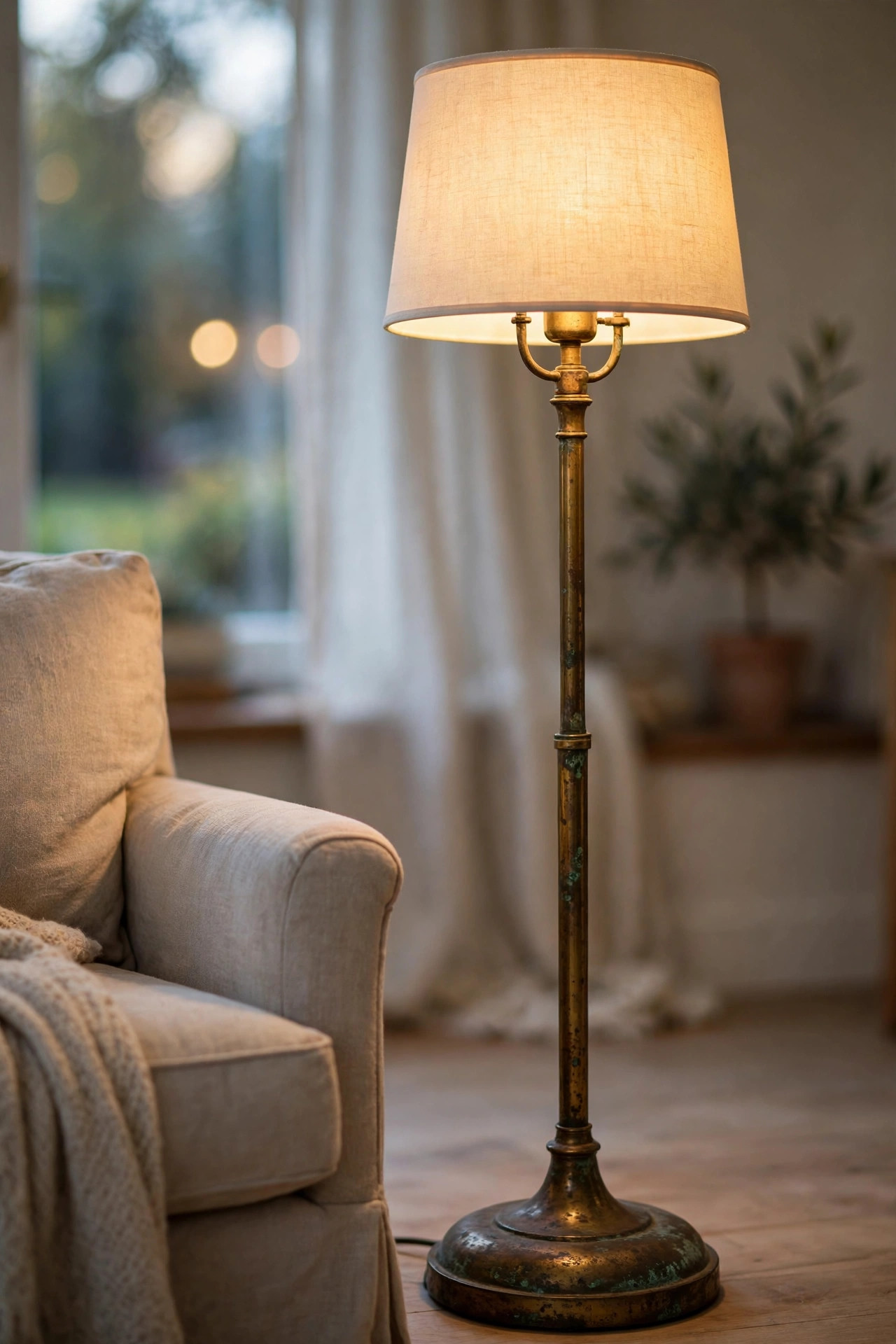
Stay in the living room and look up, because the next find quite literally elevates the space. A vintage brass floor lamp brings a warm golden glow that modern chrome or black metal lamps cannot match. The brass on older lamps was solid, not plated, so it has aged into a deep, mellow tone with tiny variations that catch the light beautifully. Turn it on in the evening and watch how the whole corner softens. The light feels warmer, the shadows fall more gently, and the room takes on the kind of glow you see in old movies. Floor lamps also solve a practical problem, since they add light exactly where you read or talk without any wiring or installation. Tuck one behind your leather armchair or beside the sofa, and you have created a reading corner that looks like it was styled by a professional. The height of a floor lamp also draws the eye upward, which makes ceilings feel taller and rooms feel larger. Choose a spot where the lamp will not block foot traffic, since a beautiful lamp becomes annoying if you keep bumping into it. Behind an armchair or at the end of a sofa are the classic positions designers return to again and again.
Before you buy, always check the wiring, because old lamps sometimes need a little care to be safe. Plug it in at the store if you can, and look for frayed cords or loose sockets, which are easy for an electrician or a handy friend to replace for very little money. In fact, many thrift stores sell lamps cheaply precisely because of a ten dollar cord problem, which means the biggest bargains go to shoppers who are not afraid of a simple fix. A new shade can completely change the look, so do not reject a lamp just because the old shade is dated. Choose a simple linen or cream shade and let the brass base be the star. Clean the brass gently with a soft cloth, and skip harsh polishes that strip away the aged finish you actually want to keep. A solid brass floor lamp that cost fifteen dollars will light your evenings like a piece from an antique shop, and its warm glow will make everything around it look richer too. Use a warm white bulb around 2700 kelvin to get that golden glow, since cool daylight bulbs fight the cozy mood that brass creates. A simple inline dimmer on the cord lets you adjust the brightness for reading or relaxing. With the right bulb, your fifteen dollar lamp will outshine fixtures costing twenty times more.
4. A Secondhand Persian Rug Underfoot
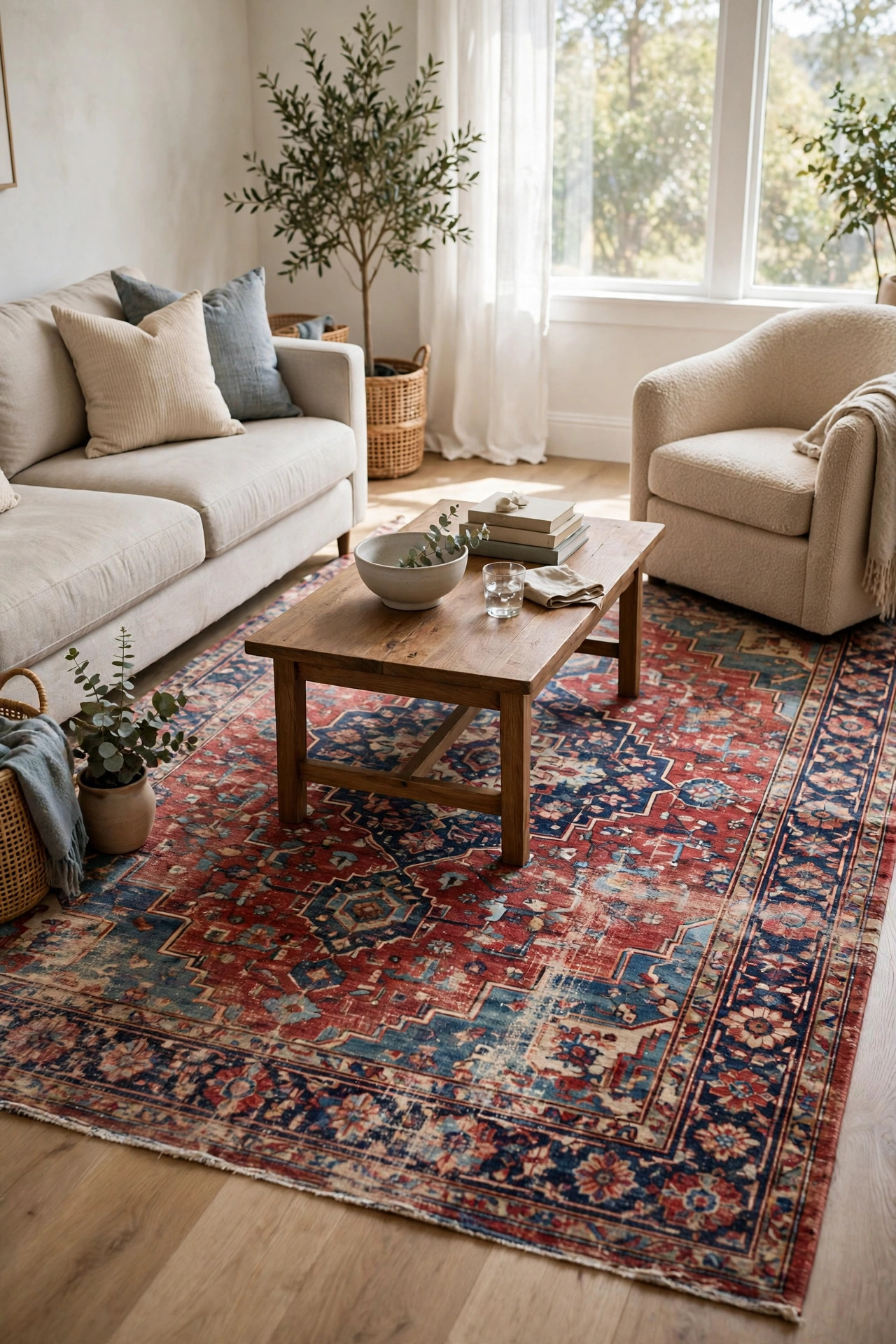
Now look down, because the floor is doing more work than you think. A secondhand Persian or Oriental rug is one of the single most powerful thrifted finds for making a home look expensive. The deep reds, warm blues, and intricate patterns of a real hand knotted rug bring a richness that no new machine made rug can copy. Walk across it in bare feet and feel the difference. The wool is dense and springy, worn soft in the middle where life has happened, and the colors have mellowed into each other like a watercolor painting. Even a rug with faded spots looks intentional and storied, the way old stone looks better than new concrete. Lay one under your coffee table or in the center of the living room, and watch how it pulls every piece of furniture together into one confident, collected arrangement. If your room is small, let the front legs of the sofa and chairs sit on the rug while the back legs rest on the floor, which is exactly how designers place rugs in expensive homes. The rug then defines the seating area like a frame around a picture. Even a modest sized vintage rug can anchor a whole room when it is positioned with real intention.
Rugs are surprisingly common at estate sales and thrift stores because they are heavy and hard to move, which keeps prices low for patient shoppers. Unroll any rug you are considering and look at the back, since a true hand knotted rug shows the pattern clearly on the reverse side, almost like a mirror image. That is your sign of real quality. Check for thin worn patches by holding it up to the light, and give it a good sniff for musty smells that might not come out. A professional cleaning costs less than you would think and can revive even a dusty find beautifully. If the rug is slightly too big, let it run under the sofa rather than cutting it, since furniture sitting on the rug is exactly how designers style expensive rooms. One real Persian rug, even a small one, grounds your living room with an authenticity that makes every other thrifted piece around it look even better. Rotate the rug once or twice a year so it wears evenly, especially if one side gets more sun through the windows. A simple rug pad underneath adds cushion, keeps the rug from slipping, and protects both the rug and your floors. With basic care, a thrifted Persian rug will outlast almost everything else you own.
5. A Gallery Wall of Thrifted Art
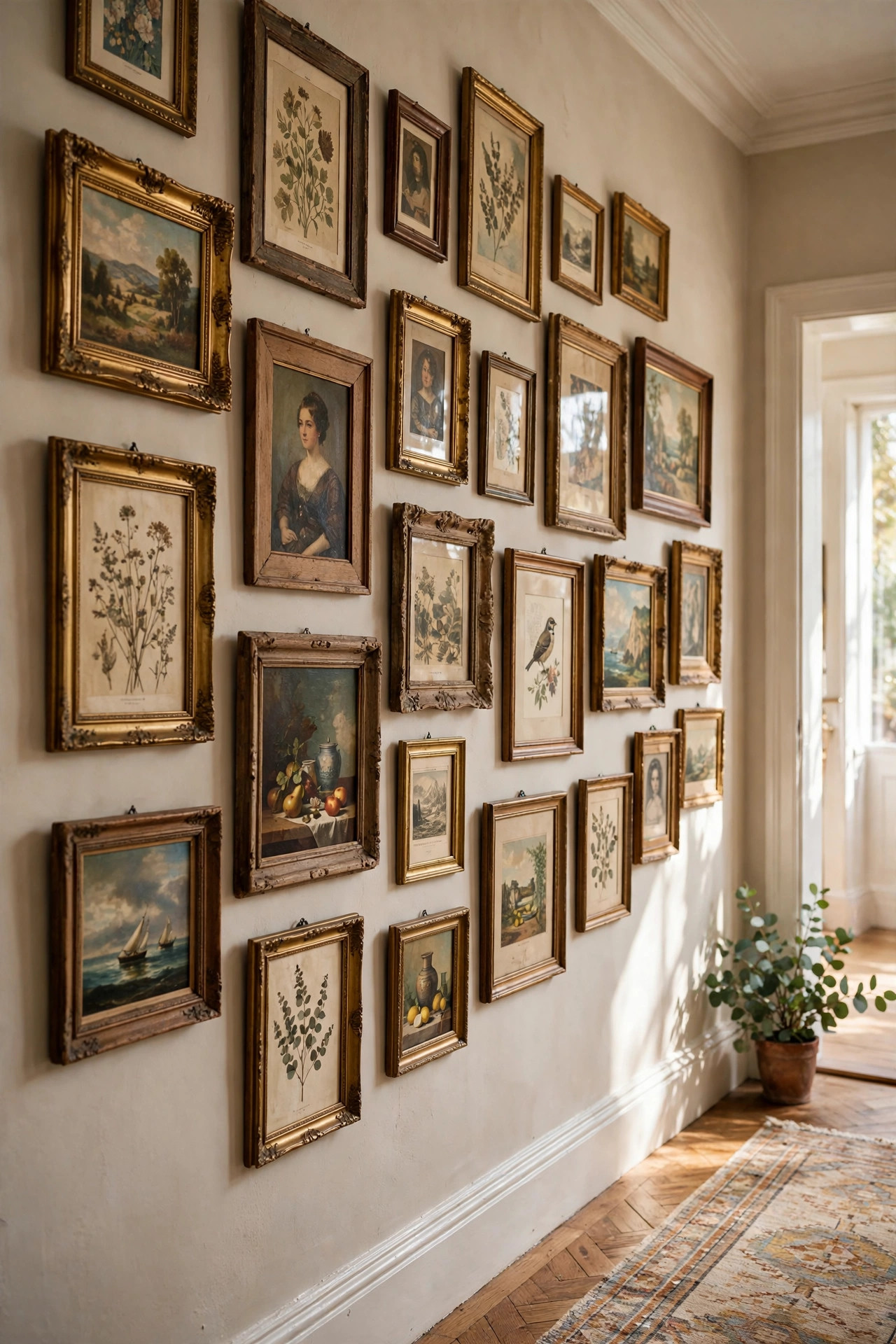
Walk down the hallway or glance at that big empty living room wall, because it is begging for a gallery wall made entirely of thrifted art. This is where vintage finds truly shine, since old paintings, prints, and frames have a depth that new wall decor cannot touch. Imagine a wall covered in landscapes, portraits, and little sketches, each in a different frame, brass here, dark wood there, a little gold frame that catches the light. Step close and study the brushstrokes on an oil painting someone made decades ago, or the faded colors of a print that hung in another home for years. From across the room, the whole arrangement reads as curated and expensive, like the art collection of someone who has spent a lifetime gathering pieces they love. The mismatched frames are the secret. They tell the eye that this wall grew over time, which is precisely what makes it look valuable. Start with the largest piece in the center and build outward, which keeps the arrangement from drifting lopsided as you add frames. Leave two to three inches between frames so each piece has room to breathe. Step back across the room every few frames to check the balance, since gallery walls always look different from a distance than they do up close.
Building one is easier and cheaper than most people expect, since thrift stores are overflowing with framed art for just a few dollars each. Look for real texture, actual paint on canvas or interesting old prints, rather than flat modern posters. The subject matter matters less than you would think, because a wall of small landscapes and quiet still life paintings always looks sophisticated. Lay your frames on the floor first and play with the arrangement until it feels balanced, mixing large and small pieces with a few inches between them. Hang the center of the arrangement at eye level and work outward, which keeps the whole thing feeling intentional rather than random. If a frame is ugly, a quick coat of black or gold spray paint makes it look brand new for almost no money. A full gallery wall of thrifted art might cost you thirty dollars total, yet it will be the first thing guests ask about, and it will look like you hired someone to curate it. Paper templates cut to the size of each frame make hanging much easier, since you can tape them to the wall and adjust before making a single hole. A small level keeps rows from tilting, though a slightly relaxed hang suits vintage art just fine. Once it is up, live with it for a few days before you decide anything needs moving.
6. A Vintage Hutch in the Dining Room
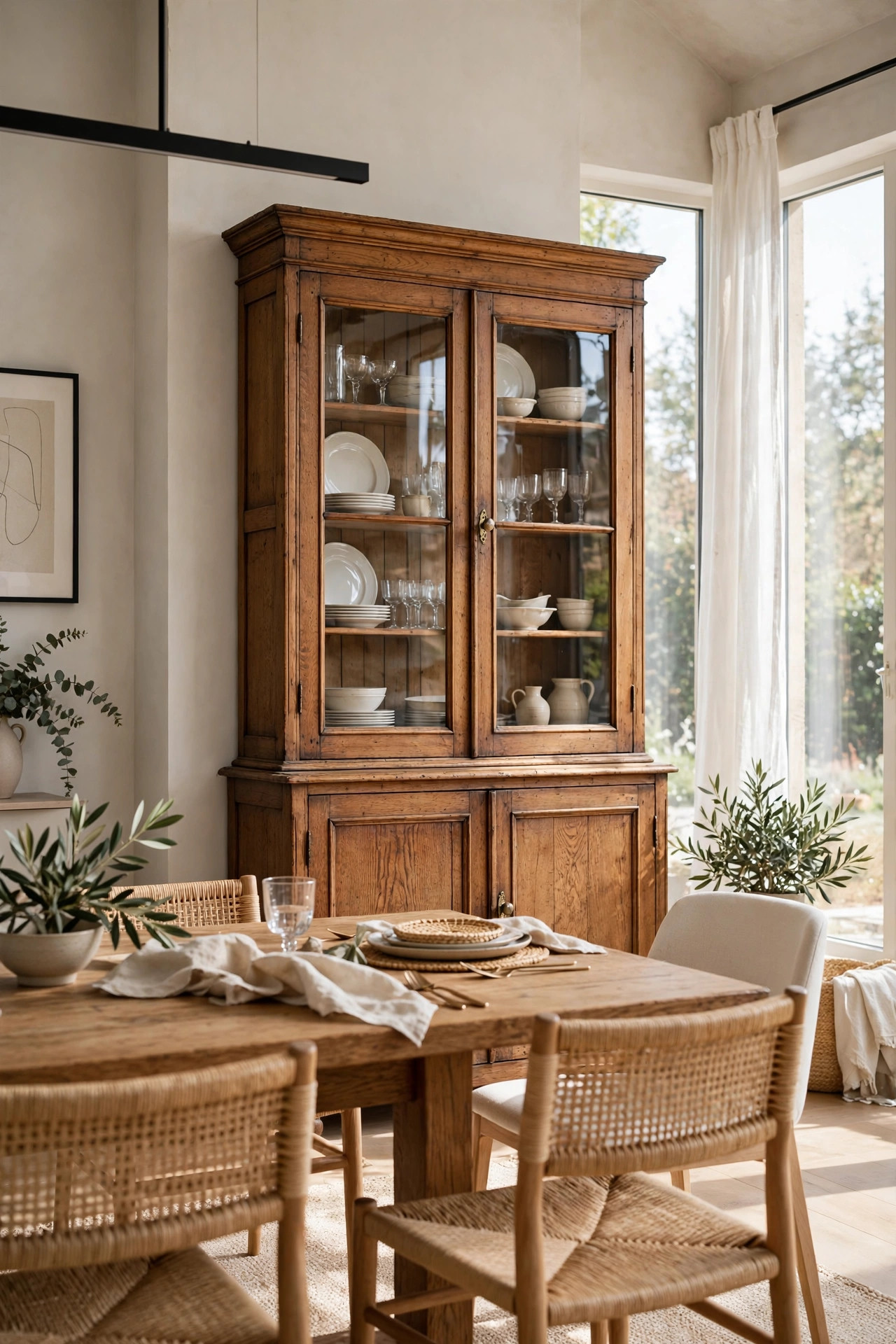
Continue the tour into the dining room, where one large piece can do the work of ten small ones. A vintage hutch or china cabinet instantly makes a dining room look established and expensive, like the room has been loved for generations. Open the glass doors and run your fingers along the wooden shelves inside, feeling the solid construction that modern flat pack furniture cannot offer. The wood is usually real oak, cherry, or mahogany, with a depth of color that comes from age rather than stain. Fill the shelves and the whole room changes. Your everyday dishes suddenly look like a collection, and the hutch itself becomes the backdrop for every meal you serve. Even empty, it gives the dining room an anchor, a sense of permanence that makes the space feel finished and important. If the hutch feels too tall or dark for your room, try styling the top with a trailing plant or a piece of art leaned against the wall above it. This softens the silhouette and connects the furniture to the rest of the room. A hutch that breathes with the space around it never feels like a heavy hand-me-down. A hutch styled this way becomes the quiet star of the dining room.
Hutches are some of the best bargains in thrifting because they are big and heavy, which scares off casual shoppers and keeps prices wonderfully low. You will often find solid wood pieces for less than a hundred dollars at estate sales, especially on the last day when sellers just want the big items gone. Bring a friend and a truck, or ask the store about delivery, since moving it is the hardest part of the whole project. Check that the doors close properly and the shelves sit level, and do not worry about a dated finish, since a gentle cleaning with wood soap revives most surfaces beautifully. Style the shelves with breathing room between items, mixing dishes, glassware, and a few decorative pieces rather than cramming every inch full. A vintage hutch styled with restraint looks like the dining room of a historic home, and your guests will assume it has been in your family for years. Line the shelves with simple shelf paper if the wood inside is stained, which gives you a clean backdrop for your dishes. Choose a pattern that peeks out subtly rather than shouting for attention. This tiny step makes even a well worn interior look fresh and cared for.
7. Collected Crystal Glassware on Display
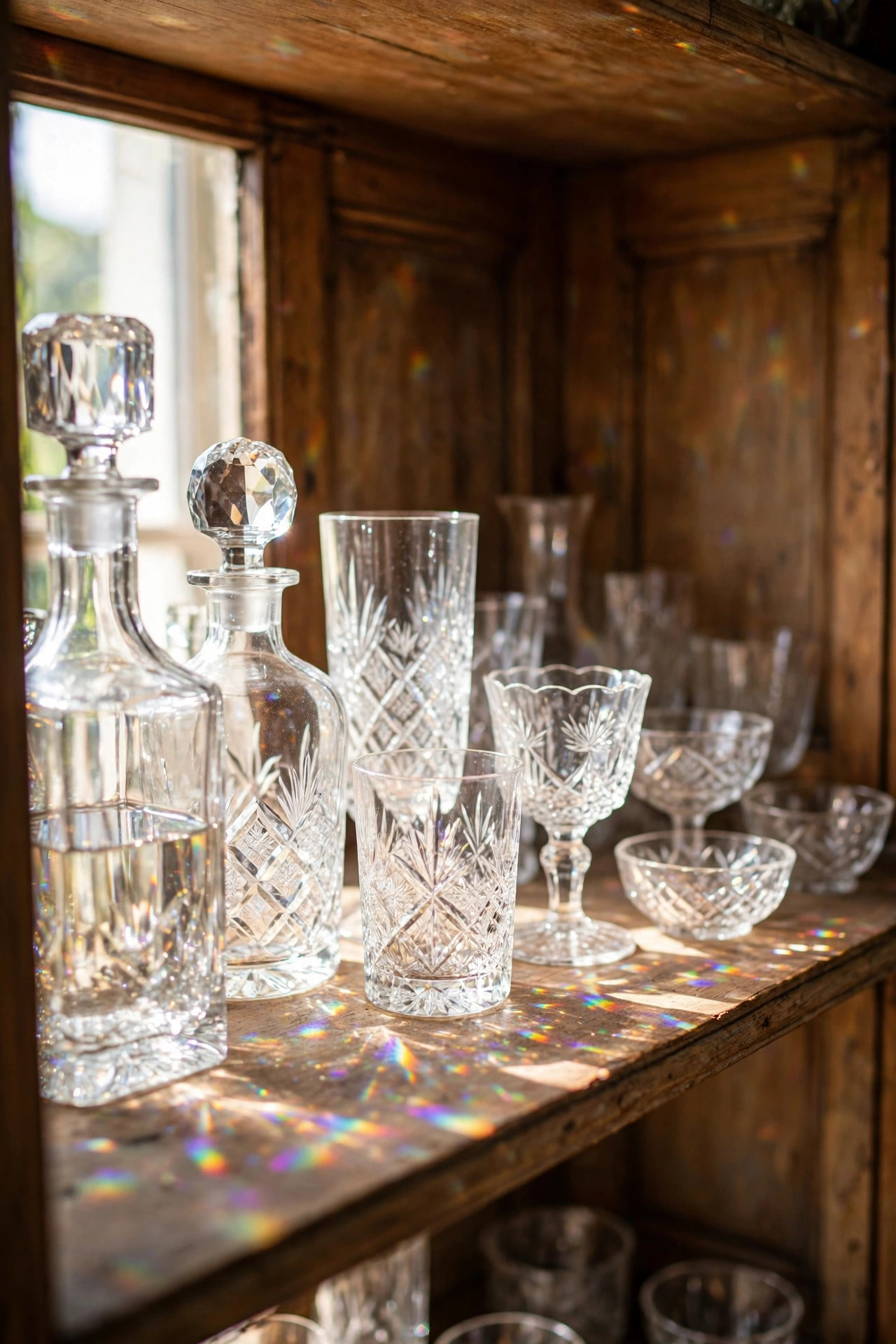
Open that hutch and look at what goes inside, because thrifted crystal glassware is one of the most luxurious looking finds for the least money. Hold a vintage crystal glass up to the window and watch how it throws little rainbows across the table. That sparkle comes from real weight and real cutting, the kind of craftsmanship that makes even water look elegant. Line a shelf with mismatched crystal glasses, decanters, and little bowls, and the whole hutch starts to glow. At dinner, serve drinks in these glasses and watch your guests notice. There is something about drinking from a glass with history that makes an ordinary Tuesday dinner feel like an occasion. The best part is that no two pieces need to match. A collected shelf of different cuts and shapes looks far more expensive than a brand new matching set, because it suggests a lifetime of finding beautiful things. At parties, set out a sparkling drink in these glasses and watch how the cut crystal catches the light with every pour. Guests always comment, and you get to smile knowing the whole shelf cost less than a single new decanter. Beautiful glassware turns ordinary hosting into something memorable.
Crystal is practically given away at thrift stores, where a whole shelf of cut glass pieces might cost less than one new wine glass at a department store. To tell real crystal from plain glass, hold the piece up and tap it gently. Crystal rings with a clear, bell like tone that lasts a second or two, while regular glass gives a dull clunk. You can also check the weight, since crystal feels noticeably heavier in your hand than the same sized glass piece. Look for interesting cuts, starbursts, crosshatches, and scalloped edges, and do not worry if the set is incomplete. A shelf of twelve different beautiful glasses is more interesting than twelve identical ones. Wash them by hand with warm soapy water and dry them right away to keep them sparkling, since dishwashers can cloud old crystal over time. Display them where the light hits, and your dining room will glitter like a much more expensive home. Store crystal glasses upright rather than hanging them by the rim, since old glass can be more delicate than modern pieces. If you are short on shelf space, a mirrored tray on the sideboard makes a lovely overflow display. The reflections double the sparkle and make the collection look twice as grand.
8. Copper Pots and Enamelware in the Kitchen
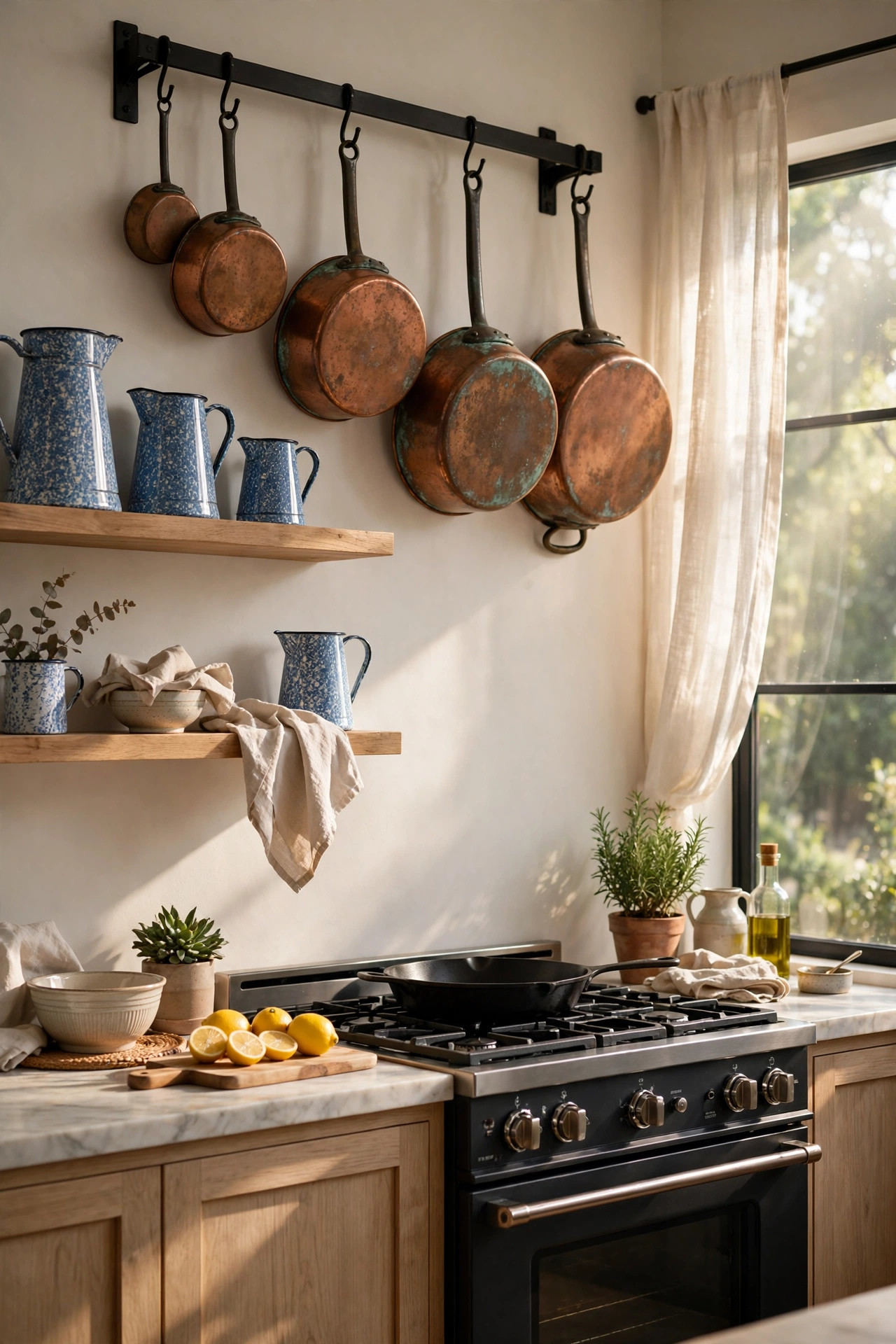
Step into the kitchen, where the most beautiful thrifted finds are also the most useful. Vintage copper pots hanging from a rack turn a plain kitchen into something that looks like a French country home. Pick one up and feel the satisfying weight of real copper, so much heavier than the thin pans sold today. Over time, copper develops a warm, rosy glow with darker spots that only make it more beautiful, like a tan on metal. You do not even need to cook with them to enjoy the look. A row of copper pots catching the morning light above the stove is pure decoration that happens to be functional. Mix in some vintage enamelware too, those speckled white and blue pots and pitchers from decades past. They bring a cheerful, farmhouse charm that makes the kitchen feel welcoming and well loved, the kind of kitchen where someone actually cooks. A simple wooden spoon rest and a folded linen towel nearby complete the picture, making the kitchen look ready for real cooking. Keep the display focused on one wall or shelf so it reads as intentional rather than cluttered. When every piece earns its spot, even a small kitchen feels rich and purposeful.
Copper and enamelware show up constantly at thrift stores and flea markets because kitchens get remodeled and whole sets get donated at once. For copper, look for pieces that feel heavy and have a smooth cooking surface inside, since pitting or flaking lining means the pot is for display only. A little tarnish is perfectly fine and even desirable, so do not pay extra for pieces that have been polished to a mirror shine. Enamelware should be checked for chips, since small chips on the rim are fine for decoration but large chips that expose lots of metal are best avoided for food use. Hang copper pots from a simple wall rack or an old ladder mounted horizontally, which costs almost nothing and looks wonderful. A kitchen dressed with vintage copper and enamelware feels rich and storied, like the heart of a home that has fed generations, and it will make your morning coffee taste just a little bit better. Dry copper and enamelware thoroughly after washing, since sitting water spots the finish and dulls the shine. A soft paste of lemon and salt removes stubborn tarnish from copper without harsh chemicals. With gentle care, these hardworking pieces will serve your kitchen beautifully for many more decades.
9. An Antique Wooden Dresser in the Bedroom
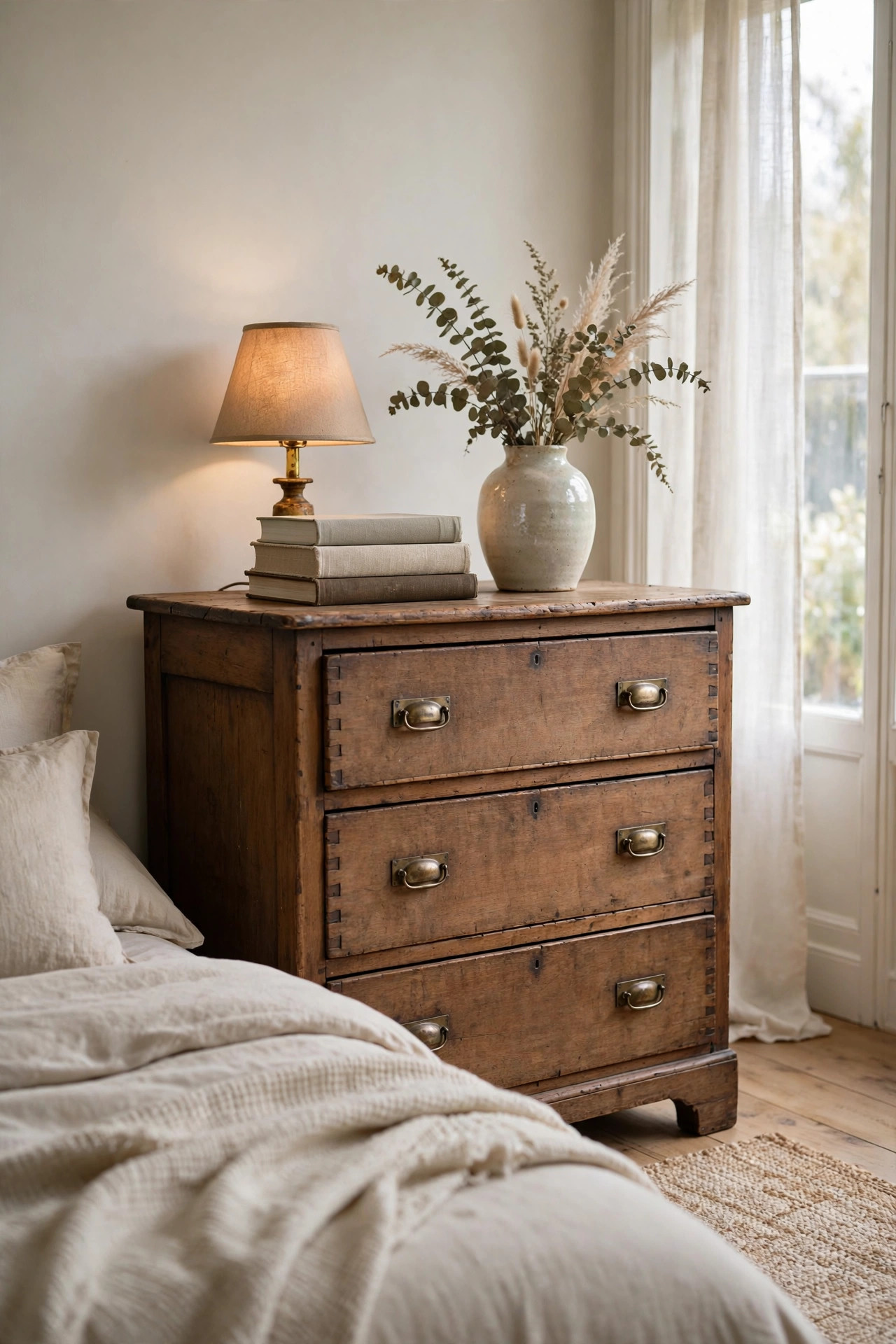
Climb the stairs to the bedroom, where a single antique wooden dresser can make the whole room feel like a boutique hotel. Modern dressers are often made of pressed boards that wobble after a year, but a vintage dresser was built from real wood to last a century, and it shows. Open a drawer and feel how it glides on wooden runners, solid and smooth, with that faint smell of old wood and polish. The top is deep enough for a lamp, a stack of books, and a little vase, and the wood grain has a richness that no printed laminate can imitate. Dovetail joints on the drawer corners, little brass pulls, maybe a curved front or carved details, these are the marks of real craftsmanship. A bedroom anchored by a piece like this feels calm and permanent, the opposite of disposable furniture, and it quietly tells everyone that you value things made to last. A small dish on top corals the everyday items like watches and keys, keeping the surface looking tidy. If the dresser has a mirror attached, even better, since it bounces light around the bedroom. Every detail of a well made vintage dresser works hard to make your room feel calm and complete.
Estate sales are the best hunting ground for antique dressers, since whole bedrooms get sold at once and the big pieces go for surprisingly little. Look past ugly finishes, because a dresser painted an unfortunate color in the seventies might be gorgeous wood underneath, waiting for someone willing to strip or repaint it. Check every drawer, make sure the backs are intact, and rock the piece gently to confirm it stands steady. Replacing the hardware is the easiest upgrade in all of thrifting. A set of new brass pulls costs very little and can make a tired dresser look custom and intentional. If you repaint, choose a deep, moody color like charcoal, navy, or forest green, and leave the top in natural wood for contrast. That two tone look is exactly what high end furniture stores charge a fortune for. Your thrifted dresser will hold your clothes for decades while looking like it belongs in a design magazine. When repainting, take the drawers out and remove the hardware first, which gives you a much cleaner result. Two thin coats of paint always look better than one thick coat, so be patient between layers. A little extra care at this stage is what separates a professional looking finish from a rushed one.
10. A Handmade Vintage Quilt on the Bed
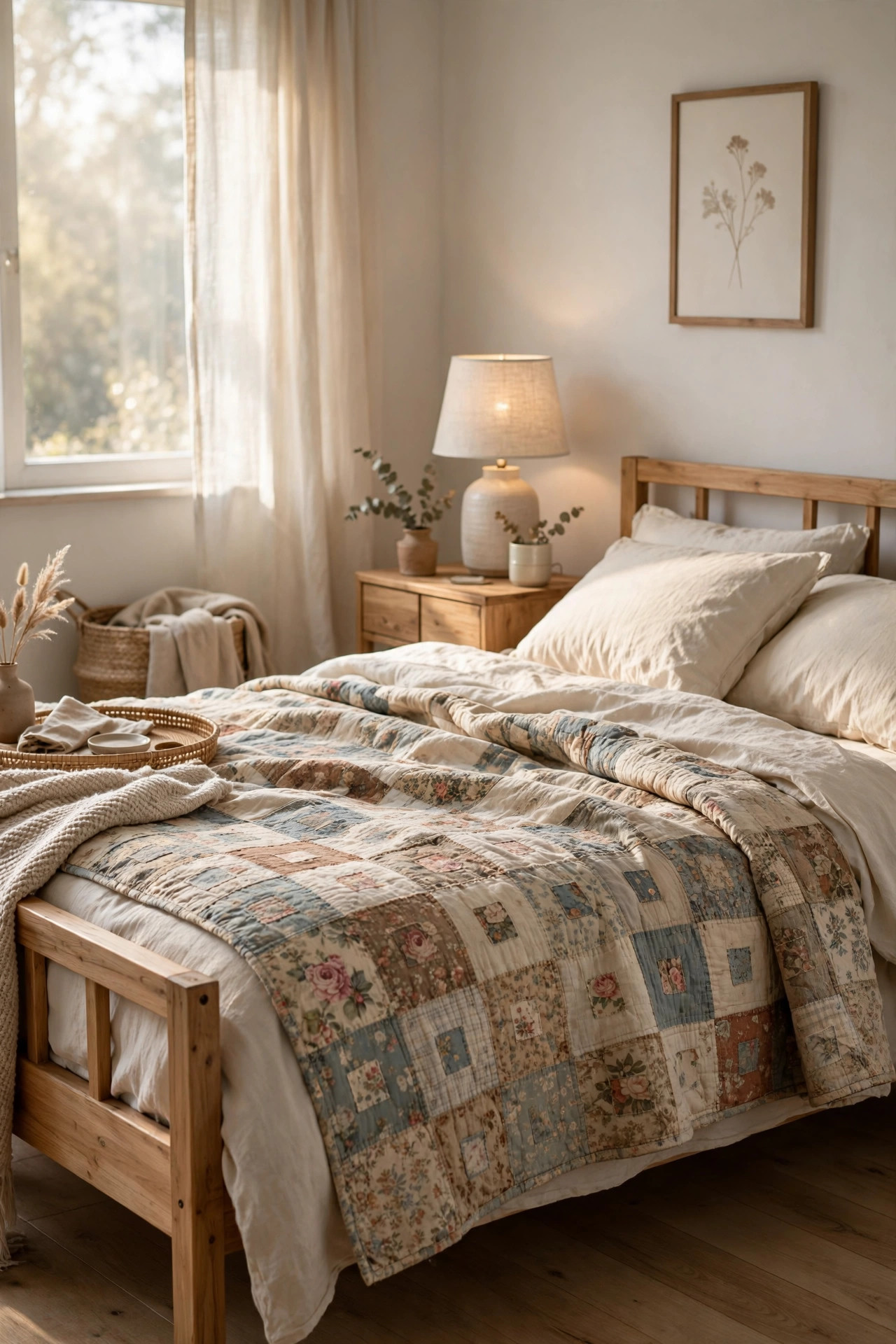
Look at the bed itself, because nothing says collected comfort like a handmade vintage quilt. Spread one across your bed and step back. The patches of faded florals, tiny calicos, and soft solids come together in a pattern that no factory can reproduce, because every quilt was cut and stitched by hand. Run your fingers over the stitching and feel the slight unevenness that proves a real person made this, maybe decades ago, maybe for someone they loved. The colors have softened with washing into gentle versions of themselves, which is why vintage quilts blend so beautifully with modern bedding. Fold one across the foot of the bed or let it be the whole bedspread, and the bedroom instantly feels warmer, more personal, and far more expensive than a matching bedding set from a big box store ever could. In summer, fold the quilt at the foot of the bed over lighter blankets so you still see the pattern without overheating. The softness only improves with age, which means the quilt gets better every single year you own it. Few things in a home reward patience the way a vintage quilt does. It is the kind of comfort that makes a bedroom feel truly restful.
Vintage quilts are treasures at flea markets and estate sales, where they often sell for a fraction of what a new handmade quilt would cost. Hold any quilt up to the light before you buy, since thin spots or small tears are common and usually fine, but large areas of shredded fabric mean the quilt is better as a wall hanging than bedding. Give it a gentle wash with mild soap and line dry it, which freshens the cotton without stressing the old stitching. If you find one with a few worn patches, consider it character rather than damage, since perfect quilts look new and slightly worn ones look loved. Layer the quilt over simple white or cream sheets and let the pattern be the star of the bed. A handmade quilt carries a sense of care and history into your bedroom every single night, and that feeling of being wrapped in someone’s handiwork is a luxury no new purchase can match. Store spare quilts rolled rather than folded to avoid permanent creases along the fold lines. A breathable cotton bag keeps dust away while letting the fabric breathe. Treated with this kind of gentle respect, a handmade quilt can be enjoyed by your grandchildren too.
11. A Pair of Mismatched Bedside Lamps
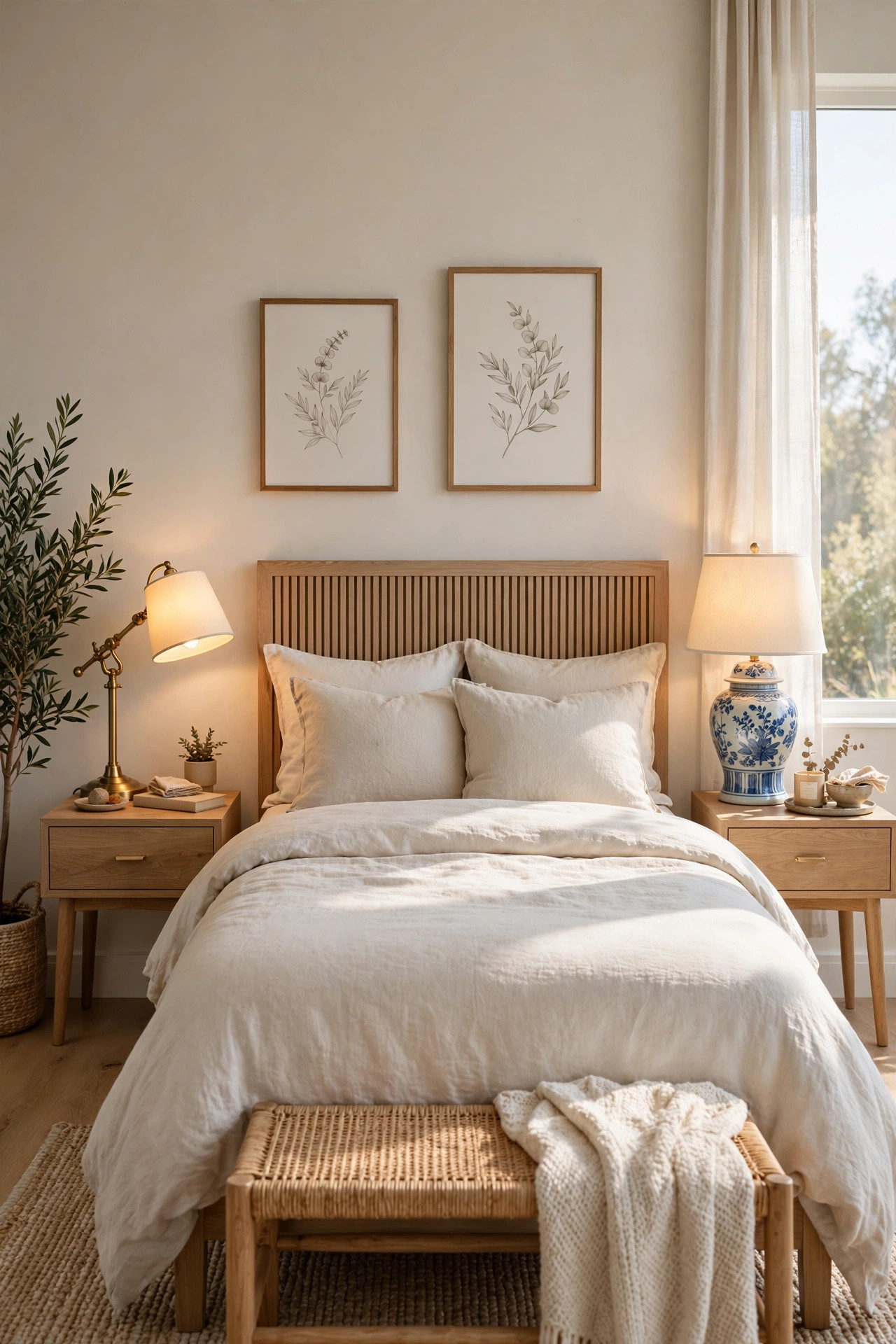
Glance at the nightstands, because the lamps sitting there are a perfect example of thrifted style done right. A pair of mismatched bedside lamps, similar in height but different in shape or material, looks far more interesting than a matching set from a store. Maybe one is a brass pharmacy lamp and the other is a ceramic ginger jar lamp in deep blue. Together they frame the bed with personality, like bookends that do not quite match but clearly belong together. Turn them on at night and notice how each casts a slightly different pool of warm light, making the bedroom feel layered instead of flat. This is the collected look that expensive designers work so hard to create, two pieces with their own stories that happen to get along beautifully. Your bedroom stops looking decorated and starts looking lived in, in the very best way. A small stack of books under the shorter lamp can even out the heights if one side sits a little low. The goal is balance, not symmetry, so trust your eye over a tape measure. When it feels right from the doorway, it is right. That gentle asymmetry is exactly what gives the room its charm.
The trick is finding two lamps that share something, a similar height, a common color, or the same warm glow, while differing in enough ways to stay interesting. Thrift stores are full of single lamps waiting for a partner, which is why they sell for just a few dollars each. Test every lamp before you buy, check the socket, the switch, and the cord, and remember that rewiring is a cheap fix that opens up the best bargains. Put matching or coordinating shades on both lamps, since similar shades are what visually ties a mismatched pair together. Cream linen shades work with almost everything and keep the focus on the interesting bases. Place one on each nightstand and step back to check the balance from the doorway. Two characterful thrifted lamps will make your bedroom look styled by someone with real confidence, and the whole pair will likely cost less than one new lamp of far lower quality. Label the plugs or use a small power strip with a switch so both lamps turn on together with one click. This tiny convenience makes the pair feel like a planned set every evening. Thoughtful details like this are what make a bedroom feel truly finished.
12. An Ornate Vintage Mirror in the Bathroom
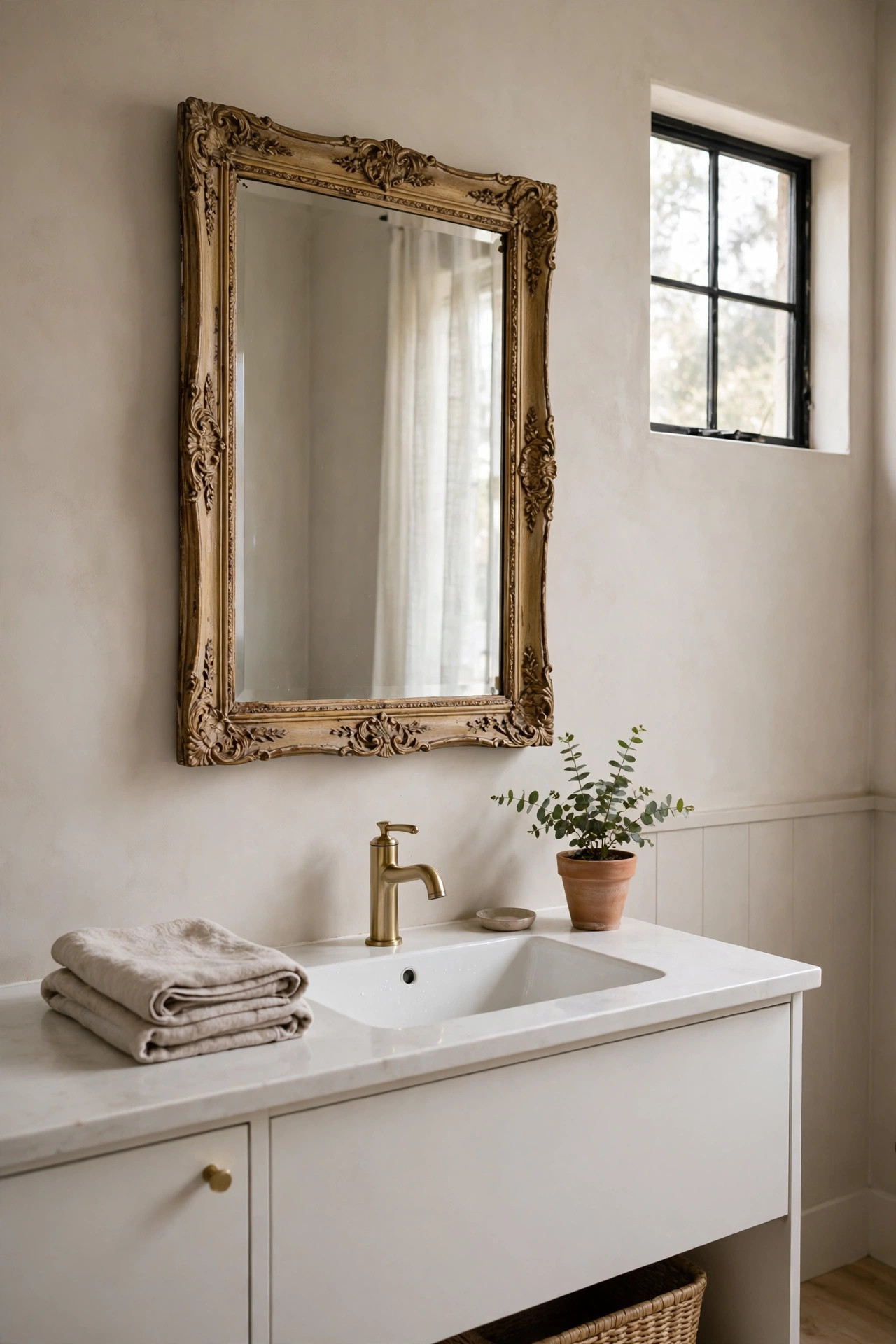
Step into the bathroom, a room most people forget to decorate, and hang an ornate vintage mirror where a plain one used to be. The difference is immediate and almost shocking. An old mirror with a carved wooden frame, a little gold leaf, or an interesting arched shape turns the most ordinary bathroom into something that feels like a European hotel. Look into it and notice how the glass itself is part of the charm. Old mirrors sometimes have the faintest foxing, those little cloudy spots around the edges, which softens your reflection in the most flattering way. The frame is the real star, though. Carved details, aged gold, or dark wood with years of patina catch the bathroom light and draw the eye the moment you walk in. A beautiful mirror makes even a small, simple bathroom feel considered and luxurious. Flank the mirror with simple sconces or candles to double the warm glow in the room. The combination of aged glass and flickering light is incredibly flattering. Your bathroom will feel less like a utility room and more like a small retreat. Even guests who never notice decor will feel the difference the moment they walk through the door and see the warm glow.
Vintage mirrors are everywhere once you start looking, leaning against walls at flea markets and hanging in thrift stores for a fraction of antique shop prices. Check that the glass is firmly seated in the frame and the hanging wire or brackets on the back are strong, since bathroom mirrors need to hang securely. A little foxing is charming, but avoid mirrors with large black spots in the center where you actually look. If the frame is the right shape but the finish is tired, a careful coat of gold or bronze paint can revive it in an afternoon. Hang it at a height where everyone in the household can use it comfortably, and make sure it is anchored into a stud or uses proper wall anchors. One ornate vintage mirror will make your bathroom feel like the most expensive small room in the house, and you will smile every time you catch your reflection in glass that has been reflecting faces for decades. If the mirror is very heavy, use two wall anchors spread wide rather than a single hook in the middle. This keeps it level and secure for years. A well hung mirror never wobbles or tilts, which matters every time you look into it.
13. Stacks of Old Books as Decor
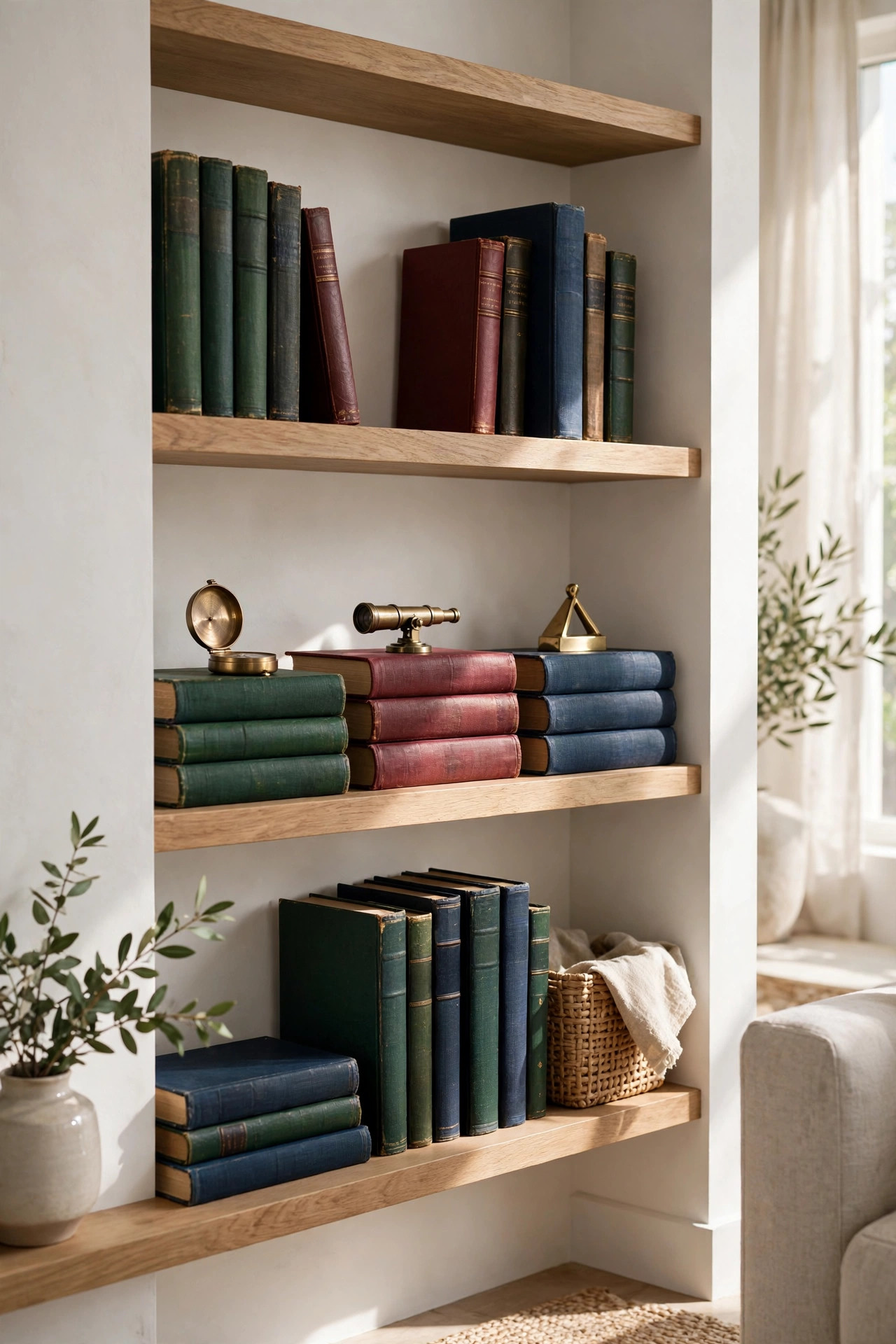
Wander back to the living room and look at the shelves with fresh eyes, because old books might be the most underrated thrifted decor of all. A stack of vintage hardcovers with worn cloth covers in deep green, burgundy, and navy looks like pure luxury when styled with intention. Pick one up and feel the weight of real binding, the slightly rough texture of aged cloth, the gold lettering on the spine worn soft by years of handling. Stack three or four horizontally on a coffee table or shelf, largest on the bottom, and top the pile with a small brass object or a candle. The effect is instant old library charm. Books suggest a home full of curious minds, and a shelf of beautiful old volumes looks far more expensive than any decorative object you could buy new. A pair of bookends, even simple brass ones from the same thrift trip, keeps vertical rows from toppling. Tuck a small framed photo or a tiny plant between stacks for variety. These little interruptions keep the eye moving and make shelves feel styled rather than stored. The result is a shelf that looks thoughtful and curated, the kind guests always admire and ask about.
Thrift stores practically beg you to take old books home, since hardcovers often sell for a dollar or less, especially when you buy a whole armload. Shop by color as much as by title, because a row of books in harmonious tones looks intentional and calm. Do not be afraid to remove dust jackets to reveal the pretty cloth binding underneath, which is usually far more attractive. Check for musty smells before you commit, since a faint old book smell is fine but strong mildew is not worth bringing home. If you find a truly beautiful set, like old encyclopedias or classic novels in matching bindings, keep them together as a collection. Arrange some vertically and some in horizontal stacks to keep shelves from looking monotonous. A home styled with old books feels intelligent, warm, and quietly wealthy, as if the owners have been reading and collecting for a lifetime. Dust book spines with a dry soft brush every few months to keep them looking fresh. If a cover is torn, clear archival tape on the inside of the spine makes an invisible repair. Small acts of care keep a beloved book collection looking beautiful for decades. Every shelf tells a story worth keeping.
14. A Collection of Thrifted Ceramic Vases
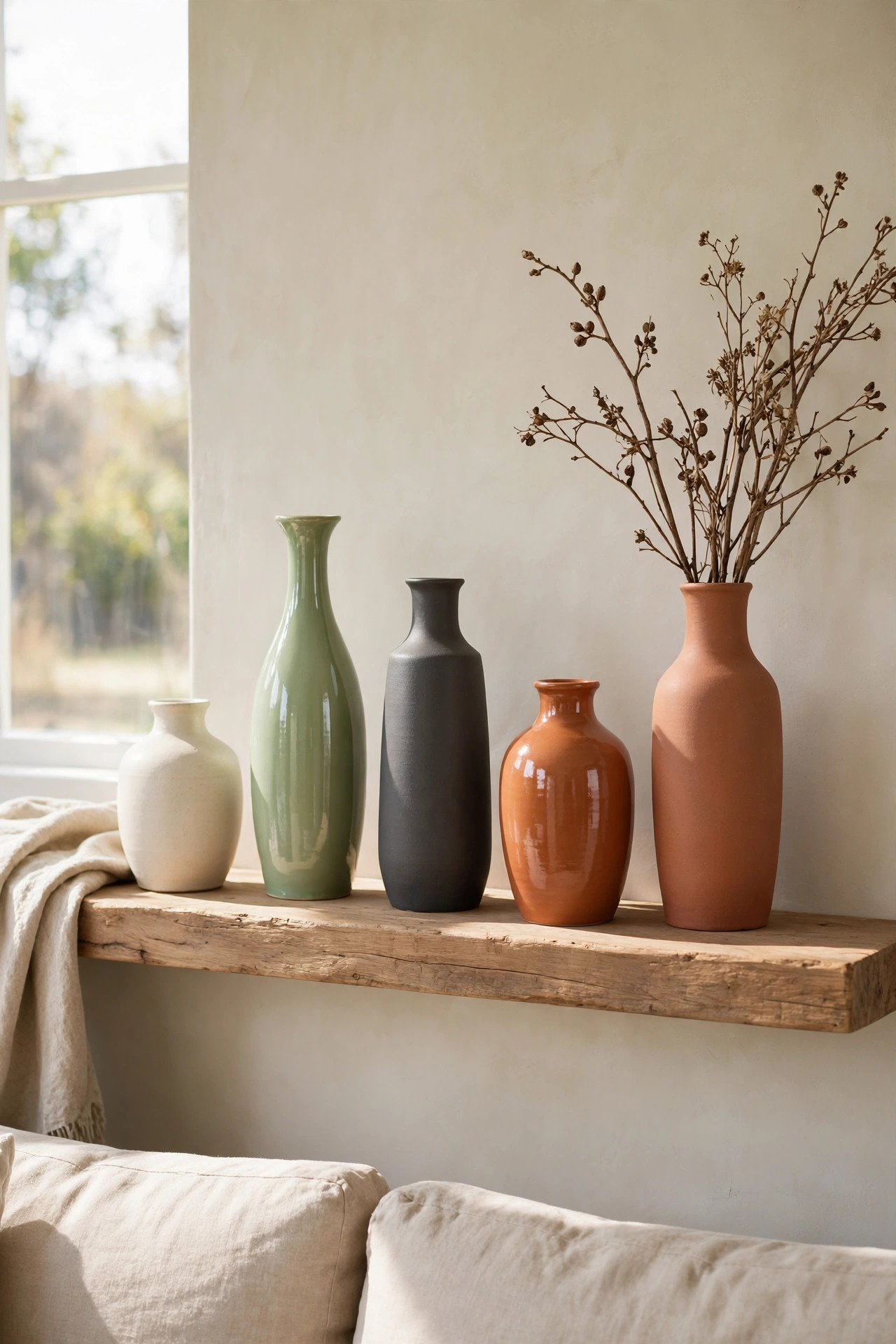
Look at the mantel, the console table, and that empty corner of the shelf, because they are all waiting for the same thing. A collection of thrifted ceramic vases grouped together looks like a curated art installation, even though each piece probably cost less than a cup of coffee. Pick up a few and notice how different they feel, the cool smoothness of glazed stoneware, the rough texture of handmade pottery, the satisfying heft of a well made piece. Group them in odd numbers, three or five, mixing tall and short, matte and glossy, neutral and one soft color. From across the room, the grouping reads as one confident statement rather than a bunch of random objects. That is the whole trick of collecting. Together, humble pieces become something greater, and your shelves start to look like the styled corners in expensive home magazines. Vary the heights so the group has a pleasing rhythm, with the tallest piece slightly off center. This asymmetry is what makes a collection look artful instead of lined up. Your eye will travel across the group the way it travels across a good painting. That sense of movement is what makes the whole collection feel alive and artful.
Ceramic vases are among the easiest thrifted finds because they are donated constantly and priced to move. Turn each piece over and check the bottom for chips or cracks, since a damaged base can scratch your furniture. Look for interesting shapes and glazes rather than brand names, because a beautiful silhouette matters far more than a label. A mix of cream, sage, charcoal, and one warm terracotta almost always works together, giving you a palette that feels calm and collected. You do not need flowers in every vase. In fact, empty vases grouped as sculpture often look more modern and intentional than filled ones. If one vase has fresh flowers, let the others stand empty beside it for contrast. A thoughtful cluster of thrifted ceramics brings an artisanal, gallery like quality to your home, and the whole collection might cost less than a single new vase from a fancy store. If you love a vase with a hairline crack, use it for dried stems only and keep water out of it. Dried eucalyptus or pampas grass lasts for months and suits vintage ceramics perfectly. This way even imperfect pieces earn their place in your home. Your shelves will thank you for the variety.
15. Brass Candlesticks for Warmth
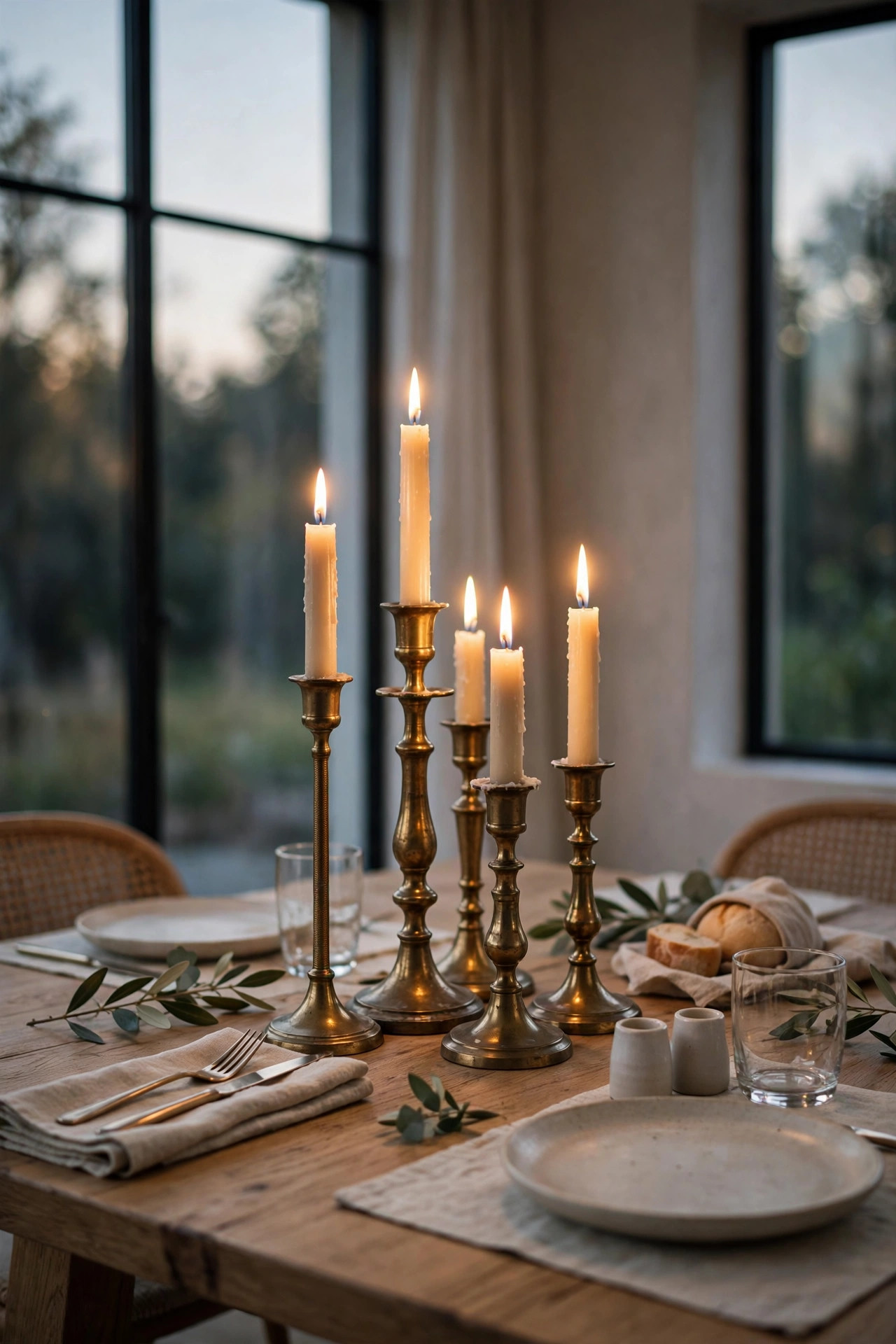
As the afternoon light fades, it is time to think about candlelight, and few thrifted finds do more for atmosphere than brass candlesticks. Gather a few pairs in different heights and set them on the dining table, the mantel, or a windowsill. Solid brass has a warm golden glow that seems to hold light even before the candles are lit. Run your thumb over the surface and feel the tiny dents and variations that prove these were made and used long before they found you. When evening comes and you light the candles, the whole room changes. Faces look softer, the walls take on a honeyed warmth, and dinner feels like an occasion even when it is just soup on a Tuesday. Designers use candlelight to make expensive rooms feel intimate, and a row of vintage brass candlesticks does exactly that for almost no money at all. Mix candlestick heights with a few low tea lights in glass holders for a fuller glow. The different flame levels create depth that a single row of matching candles cannot. Your table will look like it was set by someone who truly loves lingering dinners. It is a simple recipe for unforgettable evenings at home.
Brass candlesticks are thrift store staples, often sold for a dollar or two each, because they were wedding gifts and household basics for generations. Check that each one stands flat without wobbling, and look inside the cup where the candle sits to make sure it is not cracked. A gentle wash with warm soapy water is usually all the cleaning they need, since you want to keep the aged patina rather than polish it away. Stick to ivory or beeswax colored candles, which look timeless and let the brass be the star. Group them in clusters of three or five at different heights for the most natural, collected look. Keep a small tray or runner underneath to catch any drips and protect your surfaces. A home lit by vintage brass candlesticks feels warm, welcoming, and quietly luxurious, like a place where evenings are savored rather than rushed. To remove old wax, place the candlesticks in the freezer for an hour, then gently pop the hardened wax out. A soft cloth restores the shine without scratching the brass. Clean holders make every candle you light look twice as elegant. A little regular care keeps every candlestick glowing beautifully for many more years to come.
16. An Antique Clock as the Final Touch
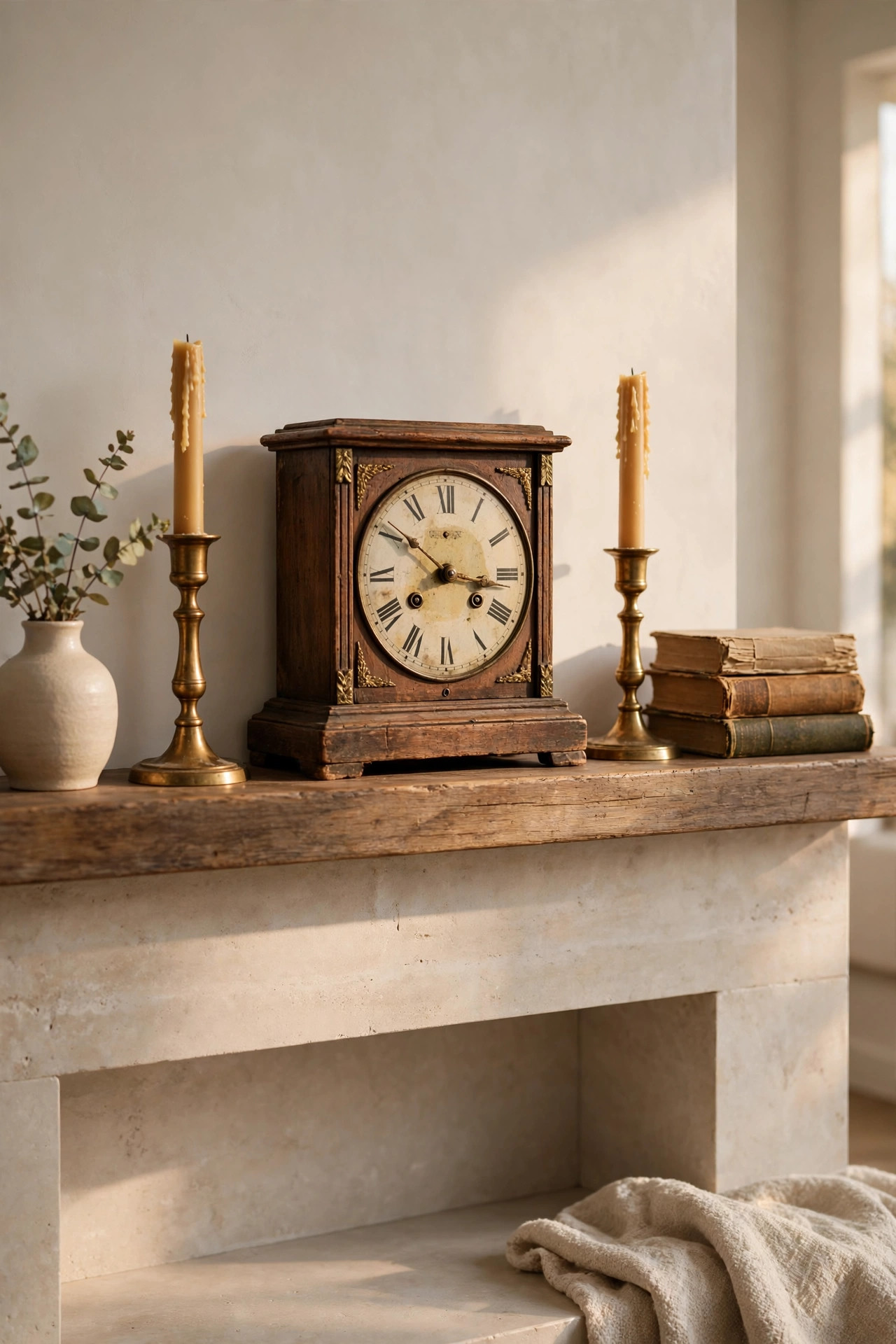
Every tour needs a finale, and yours ends with the piece that quite literally stands the test of time. An antique clock, whether a mantel clock with a gentle tick or a small wall clock with a faded face, gives a home a sense of permanence that nothing else can. Listen for a moment in a room with a ticking clock and notice how the sound makes the space feel alive and settled, like a heartbeat for the house. The case is usually real wood with a warm, aged finish, and the face often has beautiful old numerals and a gentle patina that new clocks imitate but never quite capture. Place it on the mantel where everyone can see it, or hang it in the hallway as the last thing guests notice on their way out. It is the period at the end of the sentence your home has been writing, a final note that says this is a home with history. Pair the clock with a small framed print or a trailing plant to soften its formality. The mix of ticking time and living green feels wonderfully balanced. A mantel styled this way draws the eye without demanding attention.
Old clocks are common at estate sales, where they sell for a small fraction of antique shop prices, especially if they are not currently running. Do not let a silent clock scare you off, since many only need a cleaning or a simple adjustment by a clock repair shop, which costs far less than the price difference. Check that the case is solid and the face is readable, and wind it gently if it is a wind up model to see if it wants to run. Even a clock that never ticks again works beautifully as pure decoration, since the case and face carry all the visual charm. Dust it regularly with a soft cloth and keep it out of direct sun, which can fade the face over the years. An antique clock is the perfect final touch for a thrifted home, a daily reminder that the best things are built to last, and it will mark the hours of your beautiful, collected life for years to come. Wind a mechanical clock gently and never force the key when it resists. Regular winding becomes a small pleasant ritual, a moment of care for something built to last. In a world of disposable things, that ritual feels like its own quiet luxury.
Conclusion
Now step back to the front door and look at the whole home one more time, the way a guest sees it on their very first visit. The vintage console table greets you, the leather chair waits in its corner of lamplight, the rug glows underfoot, and the gallery wall tells its quiet stories. The dining room hutch stands proud, the kitchen gleams with copper, and upstairs the quilt waits on the bed. Everywhere you look, brass catches the light, old books lean on shelves, and the clock keeps its steady time. Nothing matches perfectly, yet everything belongs together in a way that feels deeply personal. This is what a collected home feels like, warm, storied, and completely yours.
The most wonderful part is that you built this look one treasure hunt at a time, spending less than most people spend on a single new sofa. Thrifted home decor is not about settling for less. It is about choosing better, choosing real wood over pressed board, real brass over plated plastic, and real history over mass production. Start with one room, or even one corner, and let your collection grow the way all the best things grow, slowly and with love. Your home will thank you every single day, and so will your wallet.
FAQs
What is thrifted home decor?
Thrifted home decor means decorating your home with secondhand and vintage pieces found at thrift stores, flea markets, estate sales, and antique shops. Instead of buying everything new, you hunt for pre loved furniture, art, lamps, rugs, and accessories that have character and history. The result is a collected look that feels personal and often looks far more expensive than it really is.
How do I make thrifted decor look expensive instead of cheap?
Stick to quality materials like solid wood, real brass, wool, and leather, and avoid anything made of thin plastic or pressed board. Choose a calm color palette so different pieces work together, and give every item breathing room instead of crowding shelves. Clean and repair your finds, and mix them with a few simple modern pieces so the room feels curated rather than cluttered.
What should I look for first when thrifting for home decor?
Start with the big pieces that are hardest to fake, like solid wood furniture, real Persian style rugs, brass lamps, and original art. These are the items where vintage quality beats new every time. Then fill in with smaller finds like vases, candlesticks, books, and mirrors. Always check sturdiness, smell, and working parts before you buy.
Is it safe to buy used furniture and decor?
Yes, with a little common sense. Choose solid wood and metal pieces that you can clean thoroughly, and wash or air out fabrics before bringing them inside. Check lamps and electronics for safe wiring, and have anything questionable rewired, which is usually cheap. Avoid upholstered pieces with stains or odors you cannot remove, and skip anything with signs of pests.
How do I mix thrifted pieces with my modern furniture?
Let the vintage pieces be the stars and keep modern items simple and quiet. A good rule is to repeat one color or material, like warm wood or brass, across both old and new items so everything connects. Avoid matching sets of anything, since the collected mix is what makes thrifted style look expensive. Step back often and remove one thing if a shelf starts to feel crowded.
Where are the best places to find vintage home decor?
Estate sales are best for furniture and large pieces, especially on the last day when prices drop. Thrift stores are great for small decor, art, books, and lamps if you visit often. Flea markets offer variety and room to bargain. Online marketplaces work well too, but always see big items in person before you pay.