
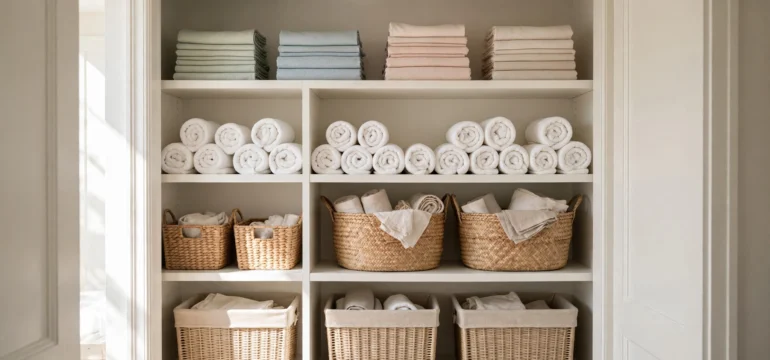
I used to open my linen closet and brace myself. Sheets tumbled out in a sad pile, pillowcases hid in corners, and I could never find the matching set. If your closet looks like that too, you are not alone.
Most of us stuff things in and hope the door closes fast enough. The good news is that a tidy linen closet does not need a big budget or a full weekend. It needs a few small habits and the right spots for everything.
In this post I am sharing 18 simple ideas that actually work in real homes. Each one is easy to try today, even if your closet is tiny or shared with cleaning supplies. Pick one or two ideas, start there, and enjoy opening that door again.
1. Folded Sheet Sets
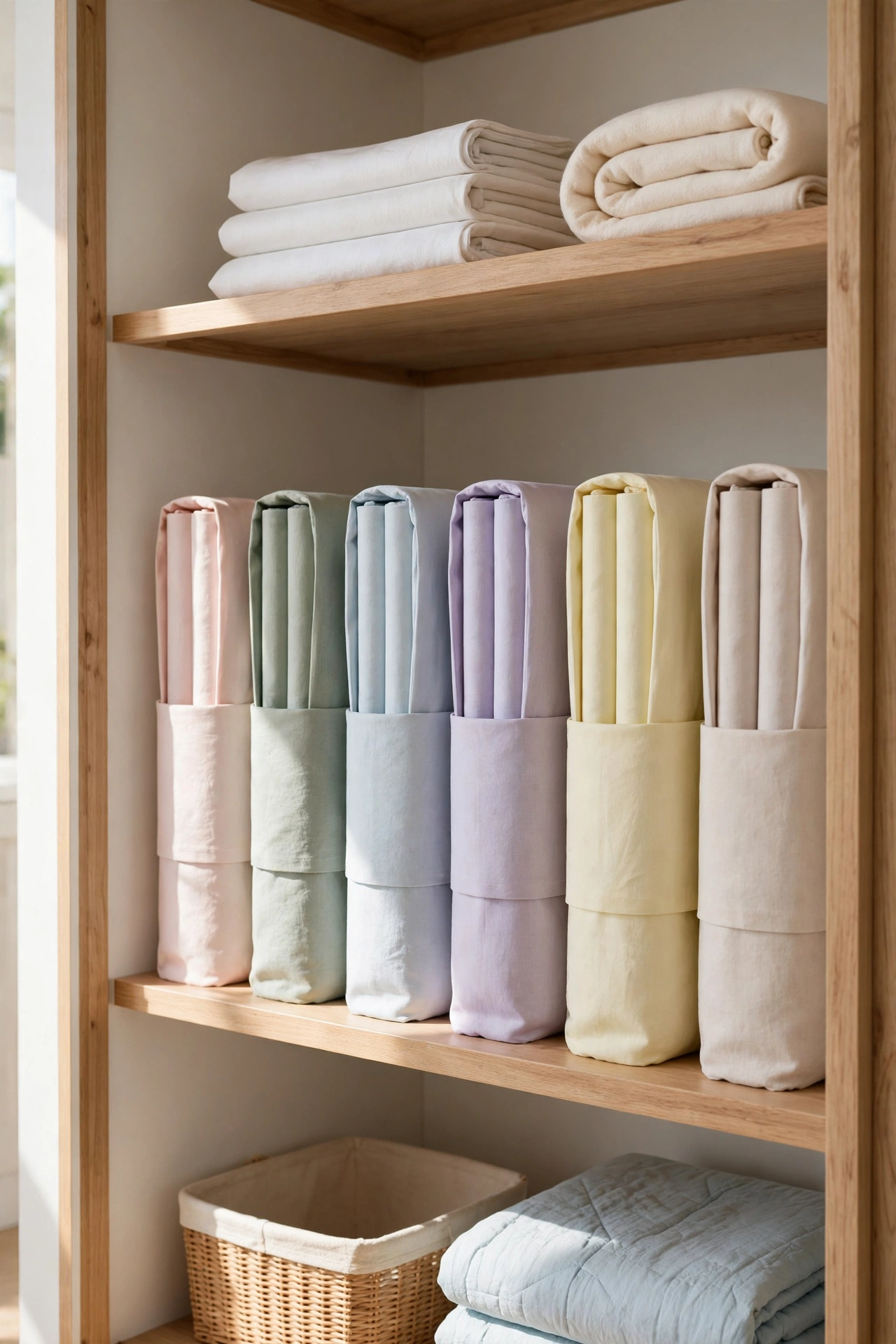
Keeping each sheet set together is the fastest way to calm a messy closet. Instead of stacking fitted sheets in one pile and pillowcases in another, fold the whole set and tuck it inside one of its own pillowcases. You get a neat little bundle, and you never dig around for a missing piece again. Keep these bundles on the middle shelf at eye level, since you reach for them most often. You can stand them upright like files so you can see each set, or stack them flat in piles of three. To fold a fitted sheet without a struggle, lay it flat on your bed, tuck the four corners into each other, and smooth it into a rough rectangle. Then fold it down until it fits inside the pillowcase. It takes about two minutes once you practice it twice. This trick costs nothing and works today, and it makes the whole shelf look calm the moment you finish.
2. Labeled Storage Bins
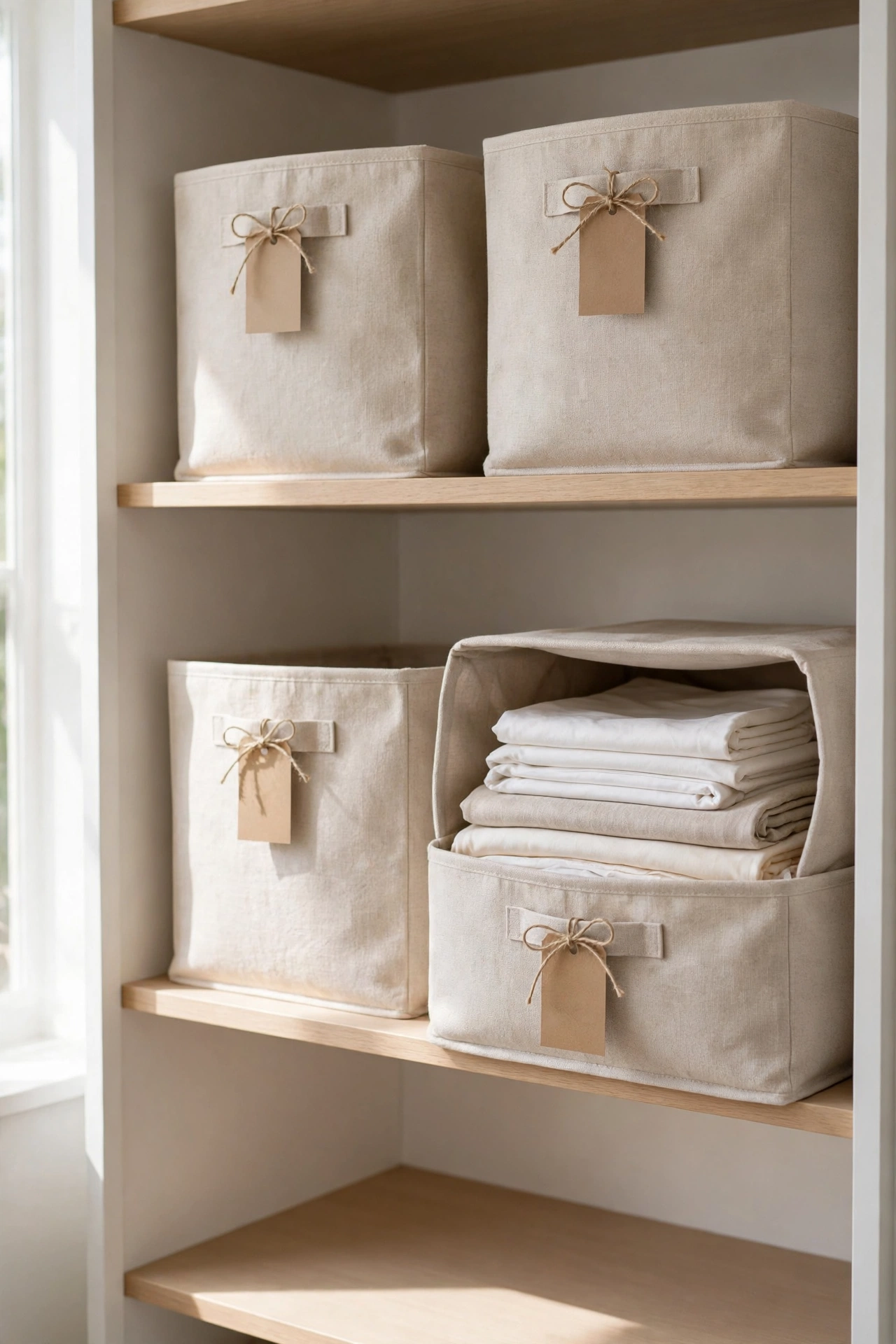
Labels turn a closet from guesswork into a system the whole family can follow. Pick up a few matching bins, the fabric or plastic kind with straight sides, and give every category its own home. One bin for king sheets, one for queen, one for guest room sets, one for tablecloths. Use the top shelf for bins you open less often, and keep daily items lower. A simple label maker works well, or you can tie a small kraft tag to each bin handle with twine for a softer look. Write clear words like Queen Sheets or Bath Towels so nobody has to guess. The real win comes on laundry day. When sheets come out of the dryer, everyone knows exactly where each set belongs. Measure your shelf depth before you buy bins so they slide in without sticking out. This one afternoon project keeps the closet neat for months.
3. Rolled Towel Display
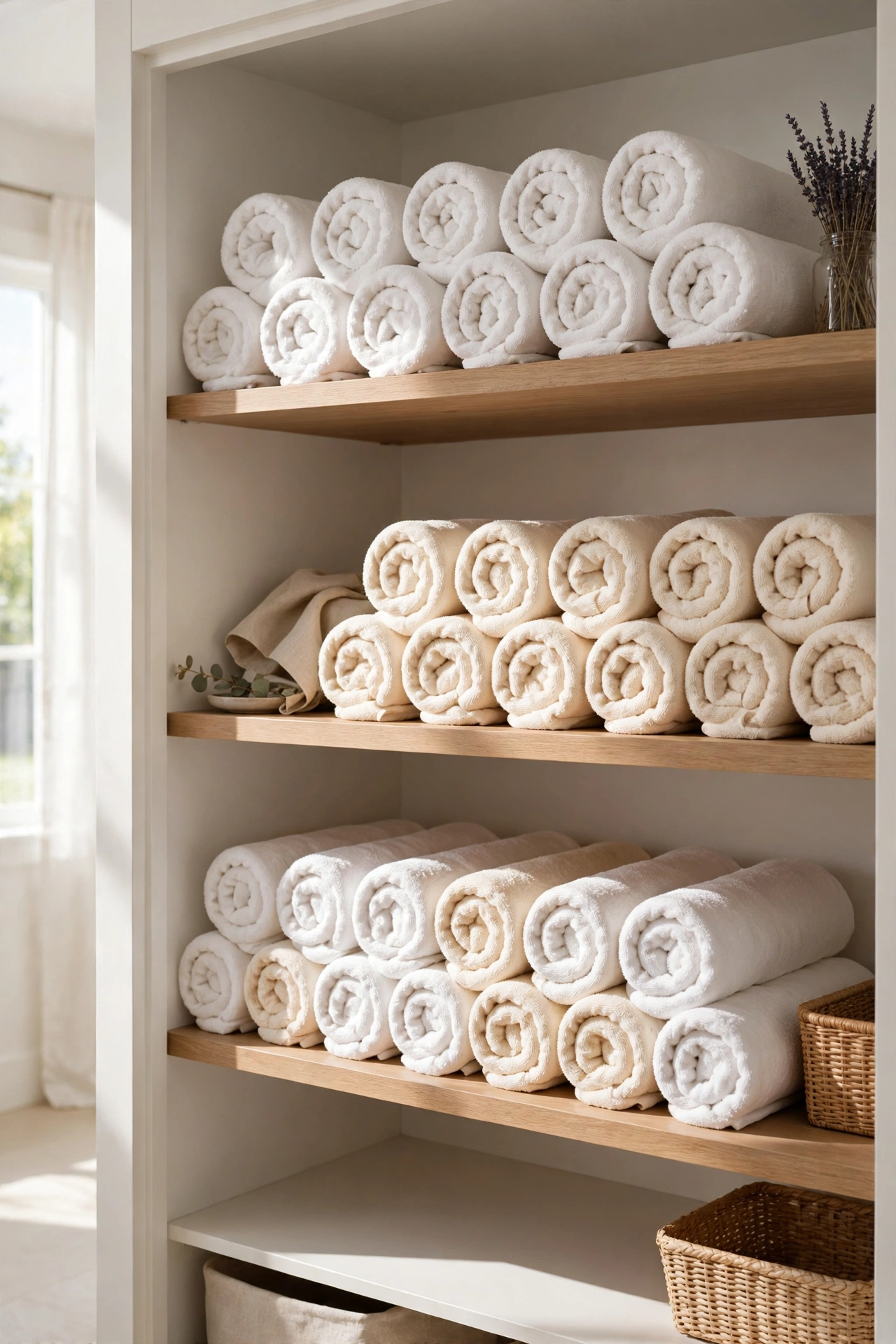
Rolling towels instead of folding them saves space and looks like a small hotel shelf. This works best for hand towels, washcloths, and beach towels on a deep shelf or inside a wide basket. Lay the towel flat, fold it in half lengthwise, then roll it tightly from one end to the other and tuck the loose edge underneath. Line the rolls side by side with the spiral ends facing out for a tidy look. Put everyday bath towels at arm height and save the rolled display for the shelf you see first when the door opens. Rolled towels also make it easy to grab one without toppling a stack, which matters in a busy house. If your towels are thick, roll them a little looser so they do not bulk up too much. Try this today with the towels already in your closet and see how much calmer the shelf feels.
4. Shelf Divider Rows
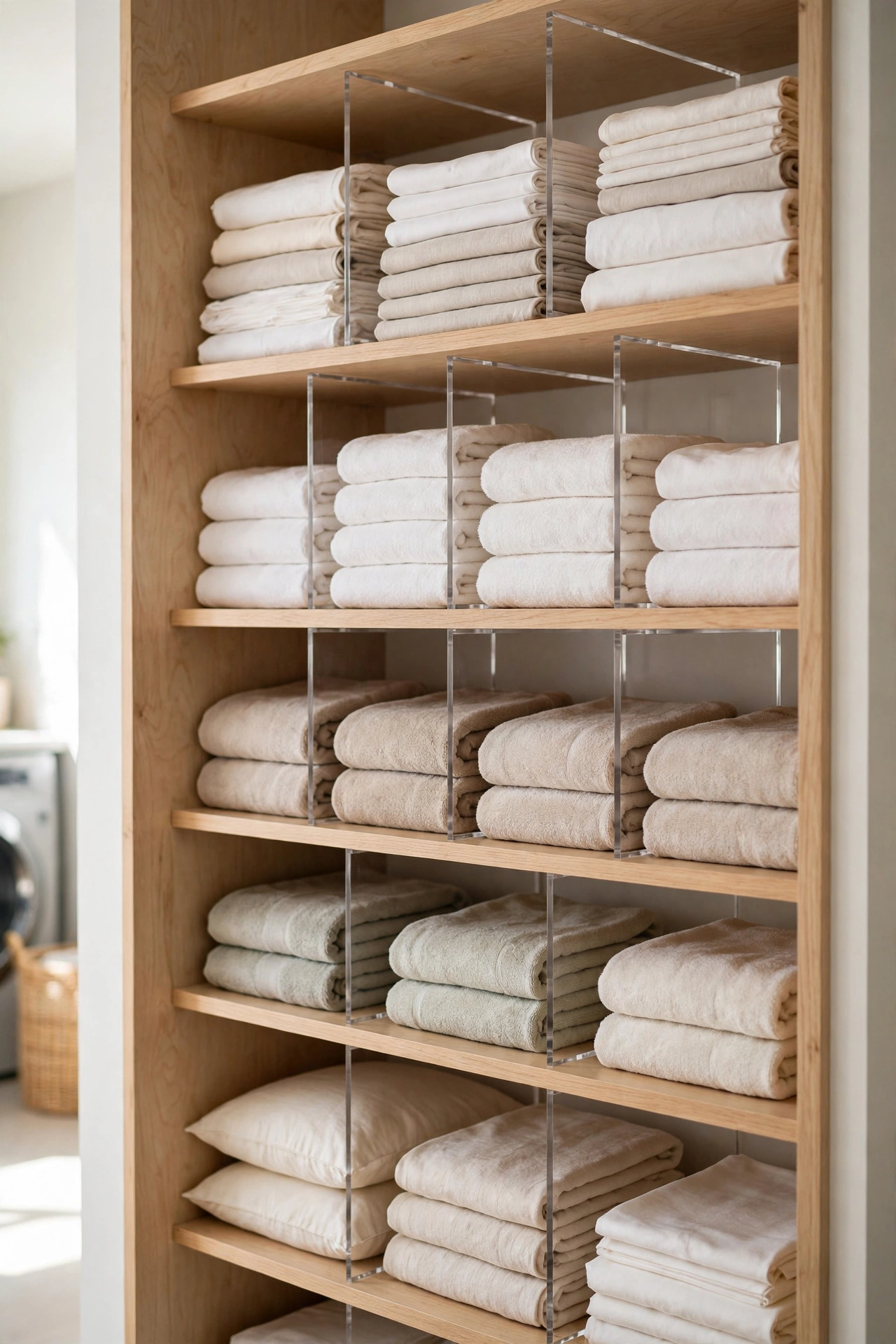
Shelf dividers are small upright panels that stop stacks from sliding into each other. They are perfect for linen closets where tall piles of sheets and towels lean and fall. You can buy clear acrylic dividers that clamp onto the shelf, or use simple vertical bookends if you already own some. Place a divider every eight to ten inches to create neat slots, then give each slot one job. One slot for bath sheets, one for hand towels, one for pillowcases. The stacks stay straight even when someone pulls from the middle. This works on wire shelves too, since most dividers clip right on. For a no cost version, stand a sturdy cutting board upright between stacks as a test before you buy. Once you see how tidy the rows look, you will want dividers on every shelf.
5. Clear Jar Storage
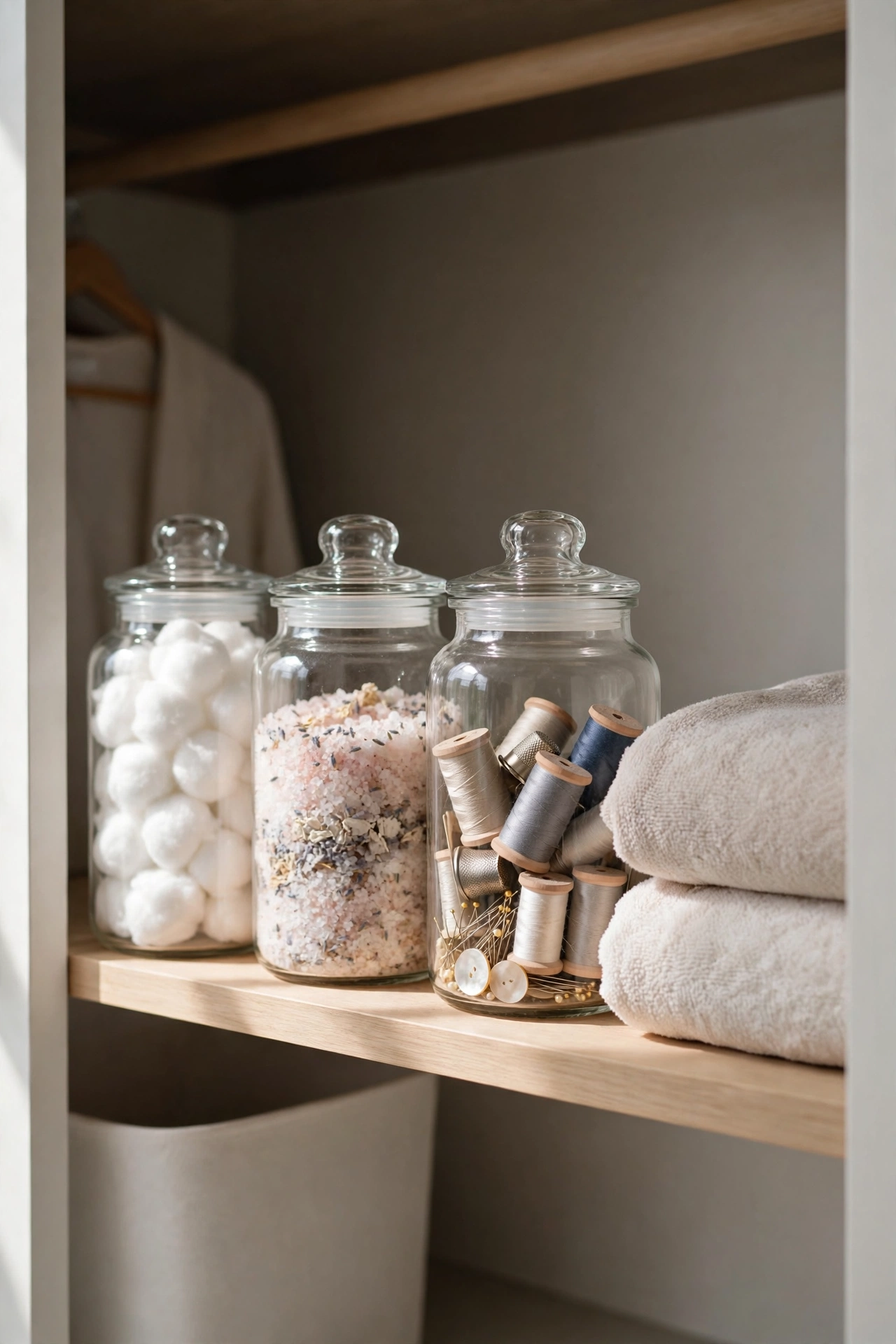
Small things get lost in a linen closet, so give them a clear home. Wide mouth glass jars are perfect for cotton balls, bath salts, spare buttons, safety pins, and sewing kits. Line the jars along a shallow shelf or the inside of the closet where you can see them. Because the jars are clear, you always know what is inside and when you are running low. Choose jars with simple lids that close well to keep moisture out. A small jar of lavender buds on the shelf also keeps the closet smelling fresh. Keep everyday items like cotton pads in the front jar and backup supplies behind it. Wash the jars once in a while so they stay sparkling. This idea costs very little, takes ten minutes to set up, and makes the closet feel thoughtful instead of cluttered.
6. Hanging Door Pockets
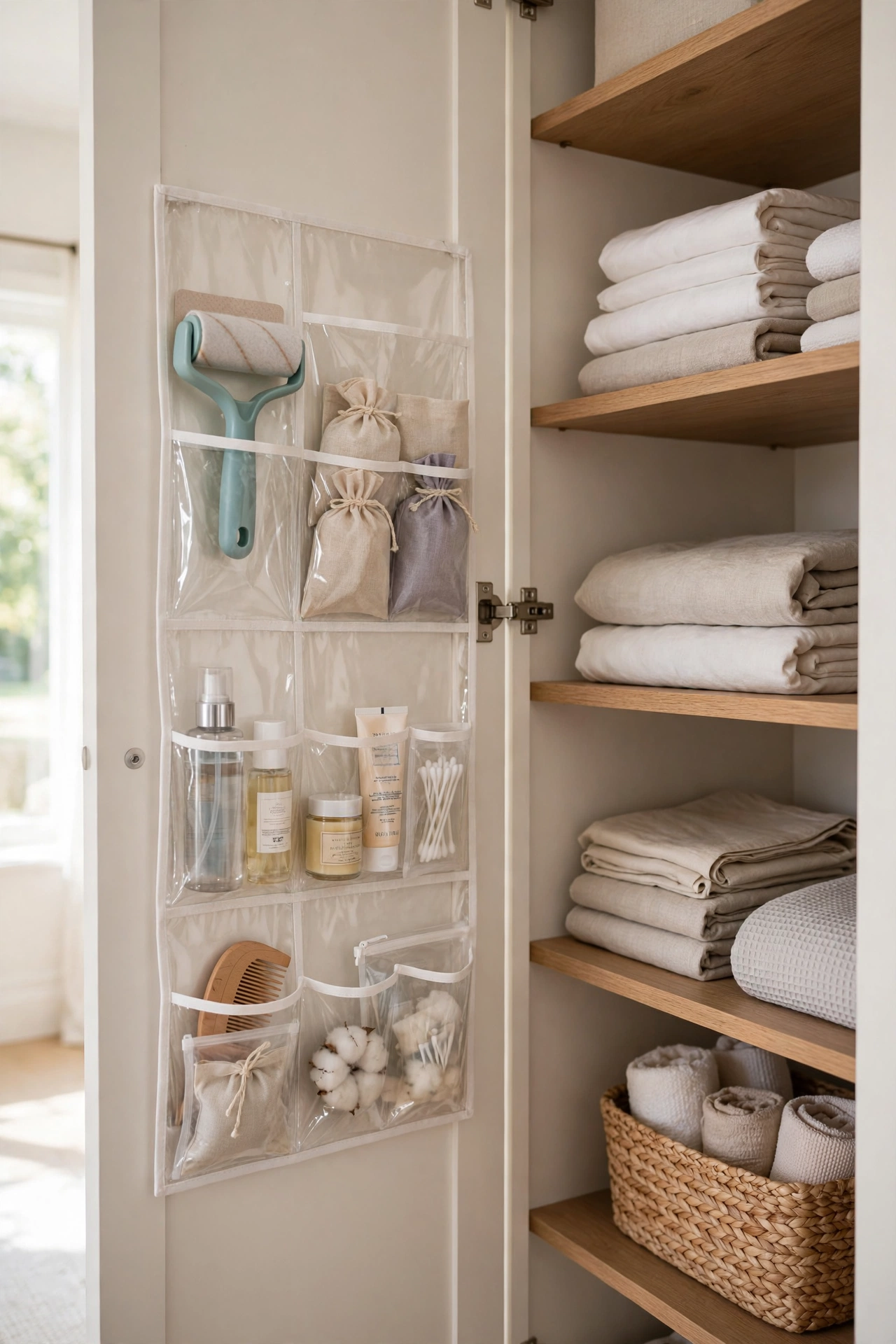
The back of the closet door is free storage most people forget. A clear over the door pocket organizer turns that empty space into homes for small items. Use the pockets for stain remover pens, lint rollers, spare pillowcases, sachets, and travel sized toiletries. Hang it on the inside of the door so it stays hidden when the door is closed. Clear pockets work best because you can see everything without digging. Put the things you grab most in the middle rows at hand height, and store backups up top. Make sure the organizer hangs flat so the door still closes easily. If your door is thin, use hooks that go over the top instead of screws. This is a same day fix that needs no tools beyond the hooks, and it frees up a whole shelf for bigger items.
7. Stacked Pillow Zones
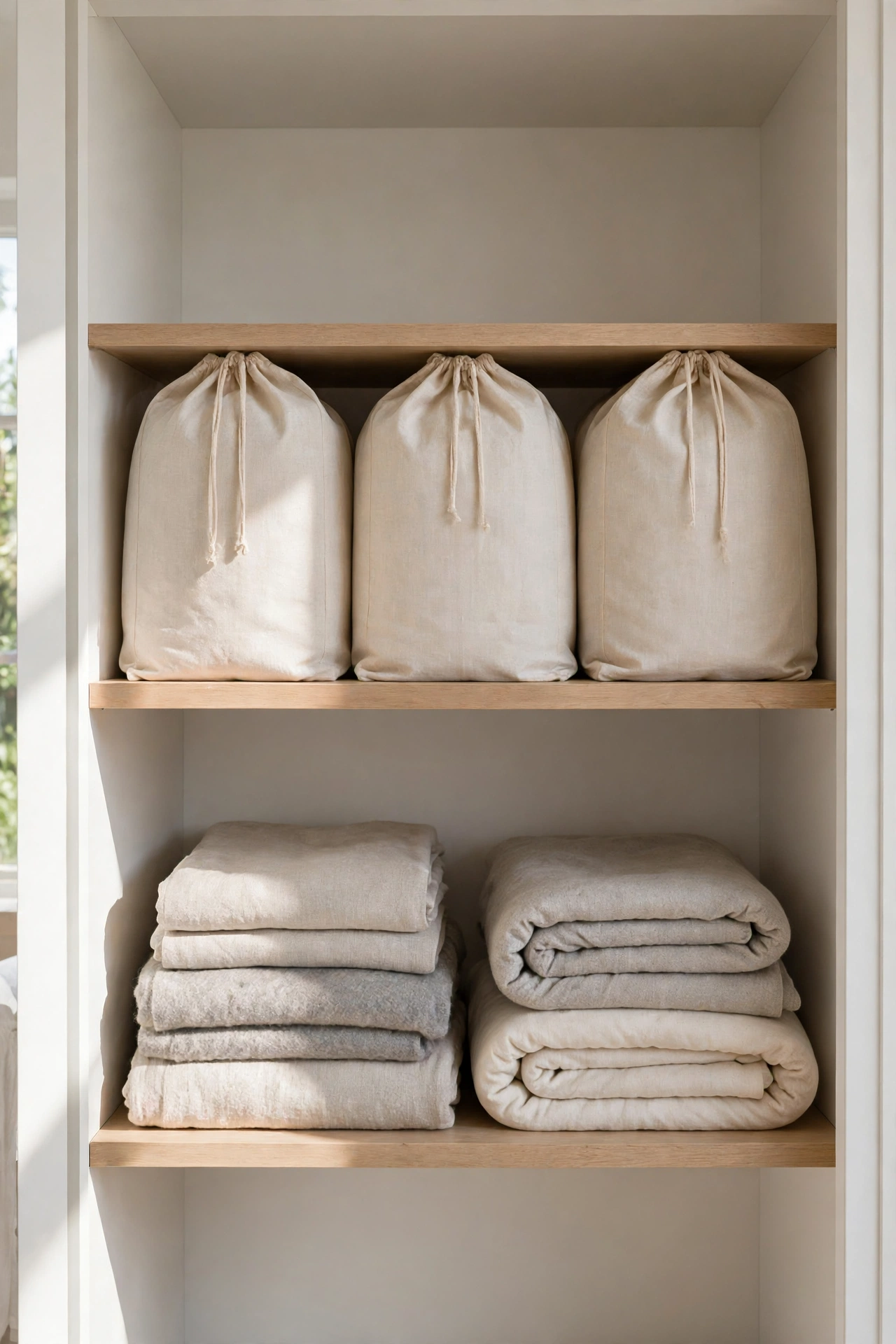
Pillows take up the most room in a linen closet, so they need their own zone. Pick the highest shelf or the very bottom, and keep every spare pillow there together. Stack sleeping pillows flat in piles of two, and stand throw pillows upright in a row if you have them. Slip each pillow into a breathable cotton storage bag or an old pillowcase to keep dust off. Do not squeeze memory foam pillows under heavy stacks, since they lose their shape over time. If your closet is short on space, store only two spare pillows inside and move the rest to under bed boxes. Fluff each pillow and let it air out for an hour before bagging it so no dampness gets trapped. When guests come, you can grab a fresh pillow in seconds instead of hunting through the whole closet.
8. Basket Grouped Linens
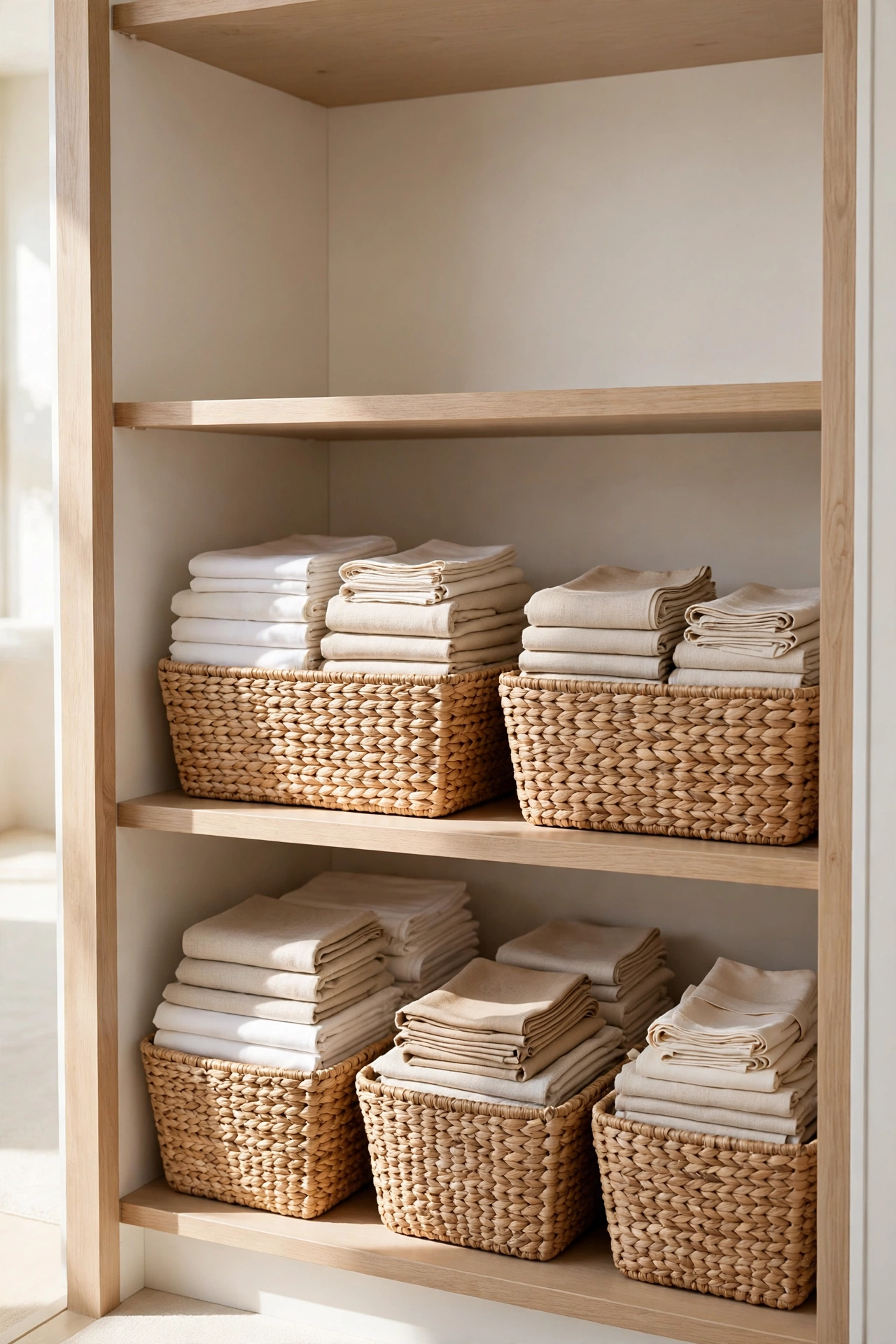
Baskets make open shelves look tidy while keeping groups together. Use one basket for all the guest room linens, one for the kids room, and one for table linens. Woven seagrass or cotton rope baskets look warm and hide wrinkled folds nicely. Place the baskets on the lower shelves where they are easy to pull out like drawers. When you need to change the guest bed, you just lift out one basket and carry it to the room. Line each basket with a light cloth if the weave is rough, so delicate sheets do not snag. Keep the baskets the same size for a calm look, and leave a little space between them so you can grip the sides. This method is kind to messy folders too, since the basket hides uneven edges and still looks neat.
9. Vacuum Bag Storage
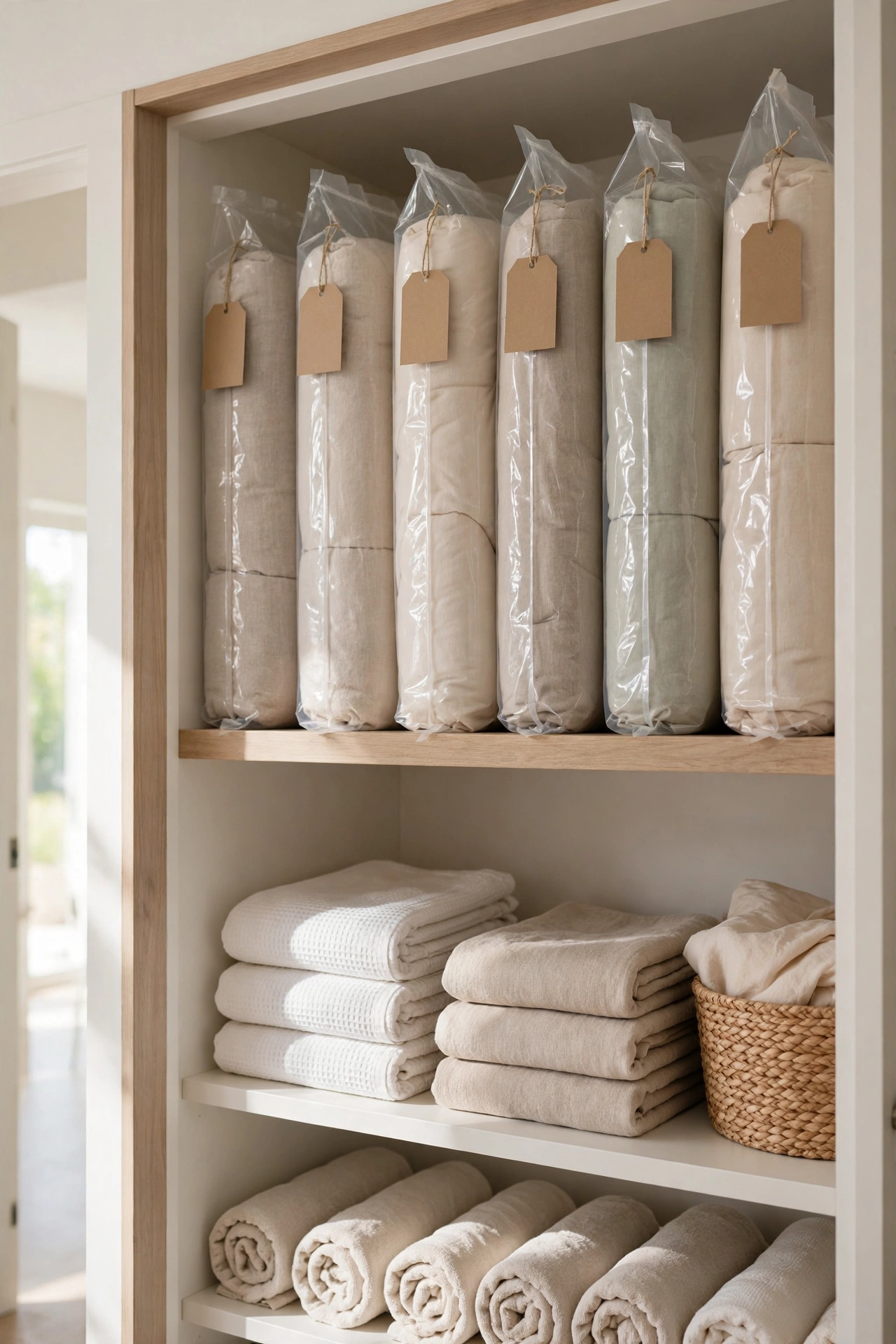
Vacuum bags shrink bulky bedding down to a flat package, which is magic for small closets. They work best for comforters, duvets, blankets, and out of season quilts. Fold the item loosely, slide it into the bag, seal the zipper twice, and press the air out with your vacuum hose. Store the flat bags upright on a high shelf like books, or slide them under the lowest shelf. Label each bag with the season or room so you do not open them all to find one quilt. Keep one bag unsealed for the blanket you use now, and seal the rest. Check the seals every few months, since slow leaks let the bag puff back up. This is the best trick when your closet is bursting, and you can do a whole shelf in under an hour.
10. Color Coded Shelves
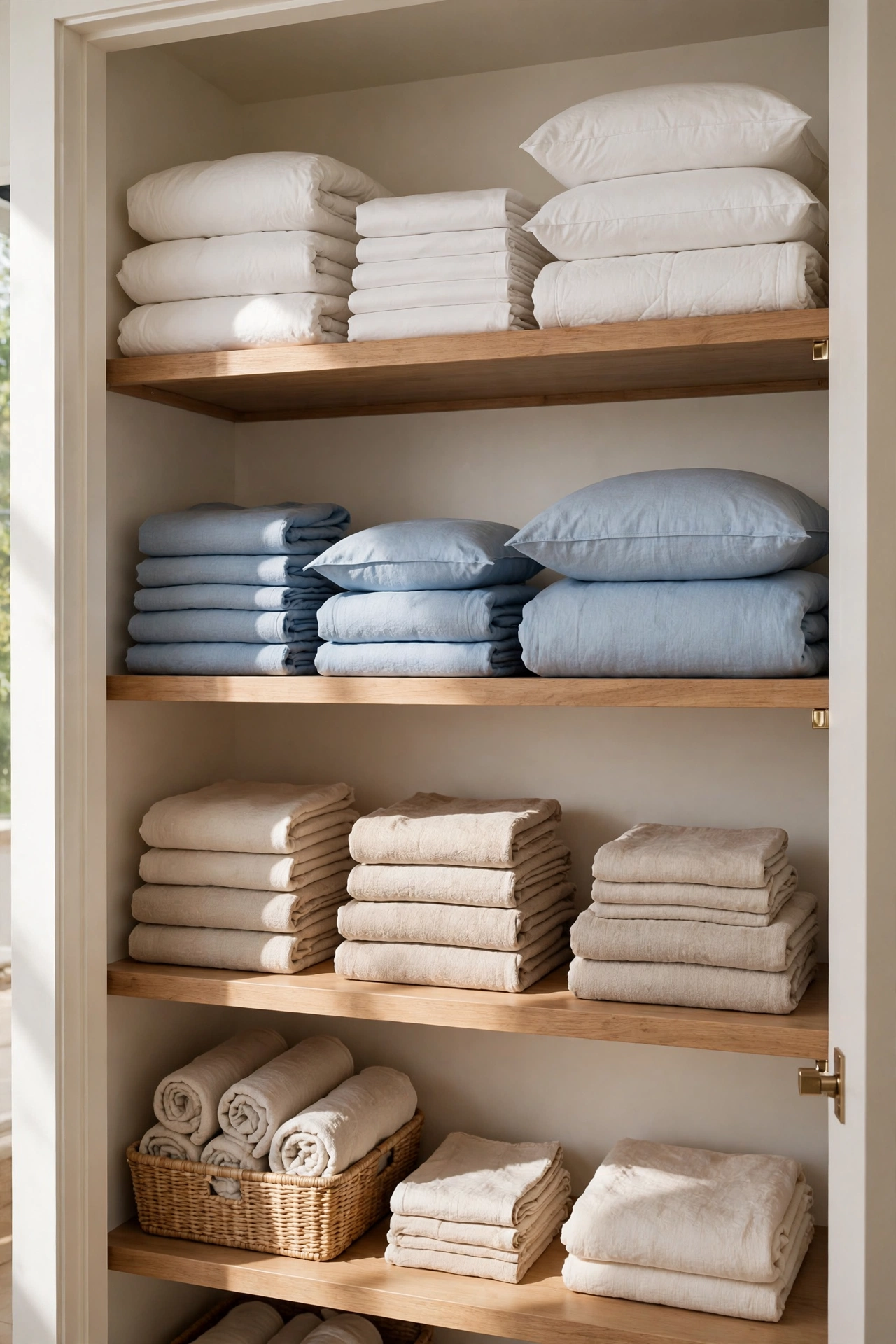
Sorting linens by color makes the closet look calm and helps you grab the right set fast. Give each bedroom its own color family. White and cream for the main bedroom, soft blue for the guest room, fun prints for the kids. Fold and stack each group together on its own shelf or in its own bin. When you strip a bed, you know the blue stack belongs to the guest room without checking tags. This also stops you from mixing up similar sized sheets. If you love white bedding everywhere, sort by pattern instead, with solids on one shelf and prints on another. Take five minutes to refold anything in the wrong group when you put laundry away. The closet starts to look like a little shop, and making the bed gets easier.
11. Pull Out Baskets
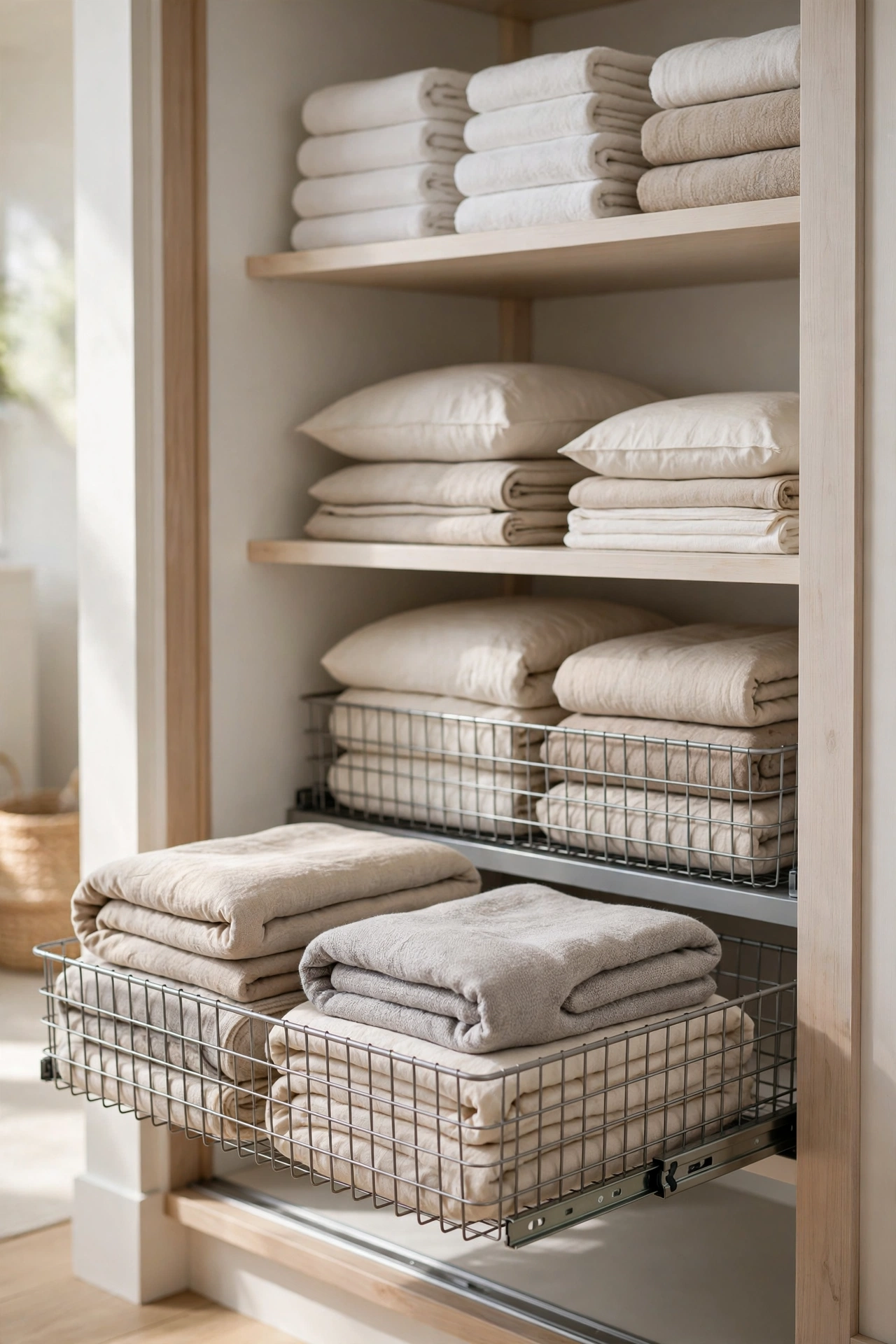
Deep shelves hide things in the back, but pull out baskets fix that. Wire or plastic baskets on a simple slide rail let you roll the whole basket toward you like a drawer. Use them on the lowest shelf for heavy items like blanket sets and extra duvets. You can see everything inside without kneeling and digging. Measure the shelf opening before you buy, and leave a finger width of space on each side so the basket glides. Group similar items in each basket and add a small label on the front edge. Keep the heaviest basket at the very bottom so nothing tips. If new rails feel like too much work, start with one freestanding basket you can slide by hand. You will use the back of the shelf again instead of losing things there.
12. Scented Sachet Corners
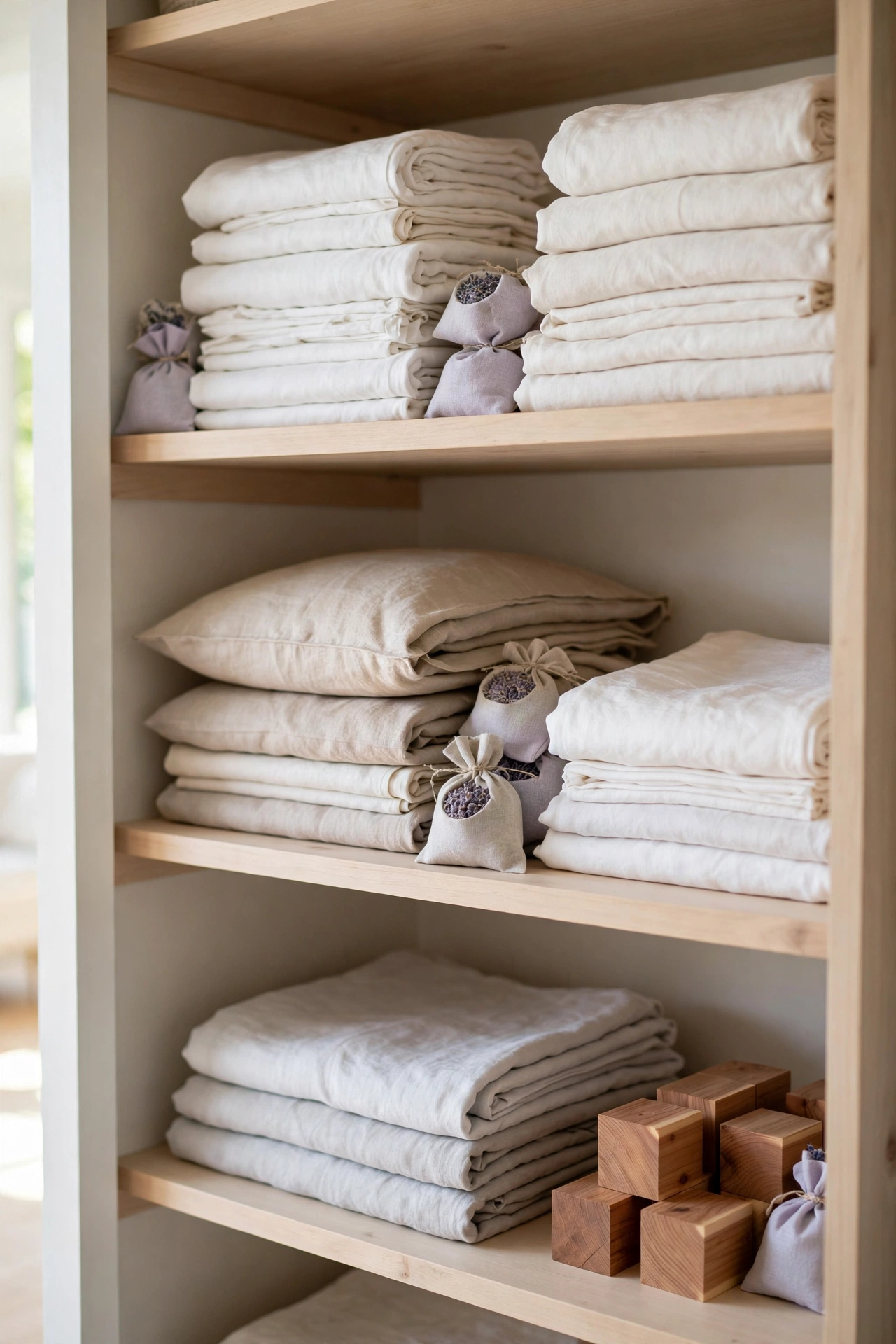
A linen closet should smell as nice as it looks. Tuck small scented sachets into the corners of each shelf, between folded stacks, and inside bins. Lavender, cedar, and clean cotton are classic choices that keep linens smelling fresh for months. You can buy ready made sachets or make your own by filling small cloth bags with dried lavender and rice. Replace them twice a year when the scent fades. Cedar blocks also keep moths away from wool blankets, so add a few near stored quilts. Keep sachets away from direct dampness so they do not spot the fabric. This tiny touch costs almost nothing and makes opening the closet a small pleasure. Guests notice the fresh smell right away when you hand them sheets.
13. Folded Duvet Stacks
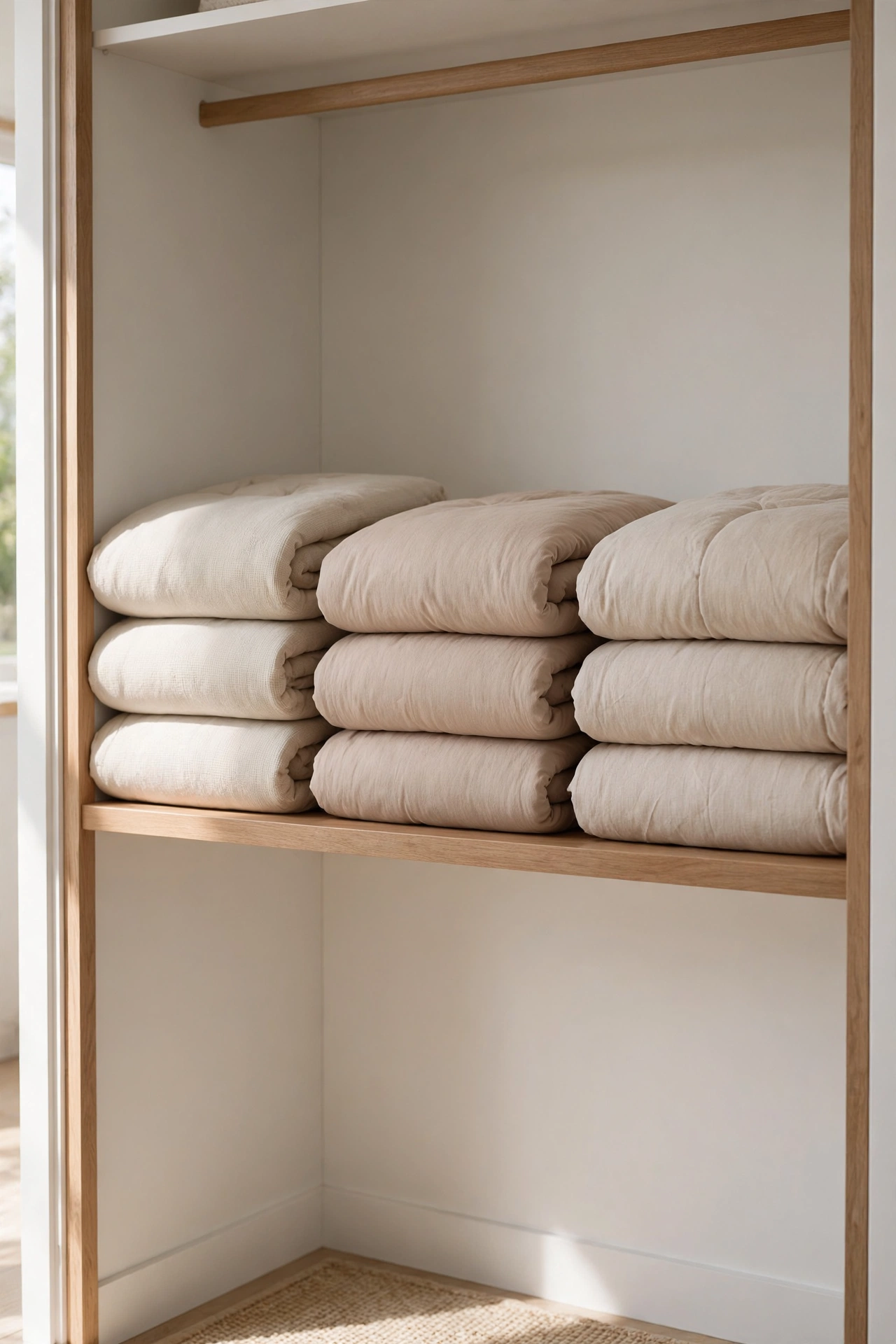
Duvets and comforters are bulky, but folding them the same way every time keeps the shelf neat. Lay the duvet flat on your bed, fold it in half, then in half again, and roll or fold it into a long rectangle. Stack no more than three duvets in one pile so the stack does not wobble. Give duvets their own shelf, away from daily sheets, since you move them less often. If the shelf is deep, stand folded duvets upright in a row so you can pull one out without lifting the whole pile. Slip a dryer sheet between folds for freshness. Take a photo of each folded duvet with your phone and tape a tiny print on the shelf edge if you have many similar ones. It sounds fussy, but it saves real time when seasons change.
14. Narrow Shelf Risers
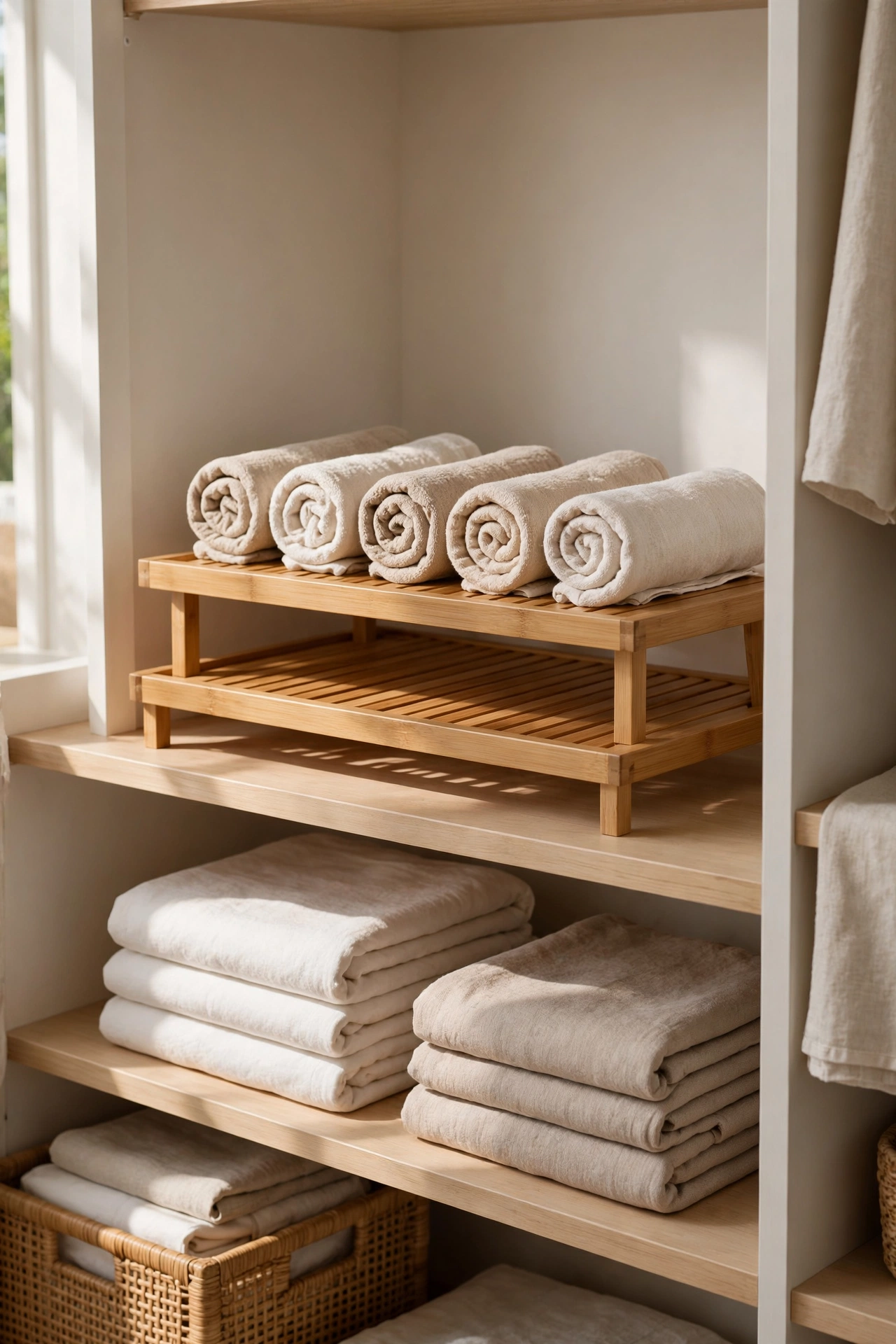
Small risers double the usable space on a shelf by creating two levels. A simple wire or bamboo shelf riser lifts washcloths and hand towels above the taller stacks behind them. Place a riser on a deep shelf, put folded bath sheets underneath, and line up rolled washcloths on top where you can see them. This stops small items from getting buried. Risers also work on the closet floor for baskets, keeping them off the ground and easier to reach. Choose a riser that fits your shelf depth with an inch to spare on each side. Keep the top level light so nothing feels tippy. This is a cheap fix you can set up in minutes, and it makes every shelf hold more without looking crowded.
15. Matching Hanger Hooks
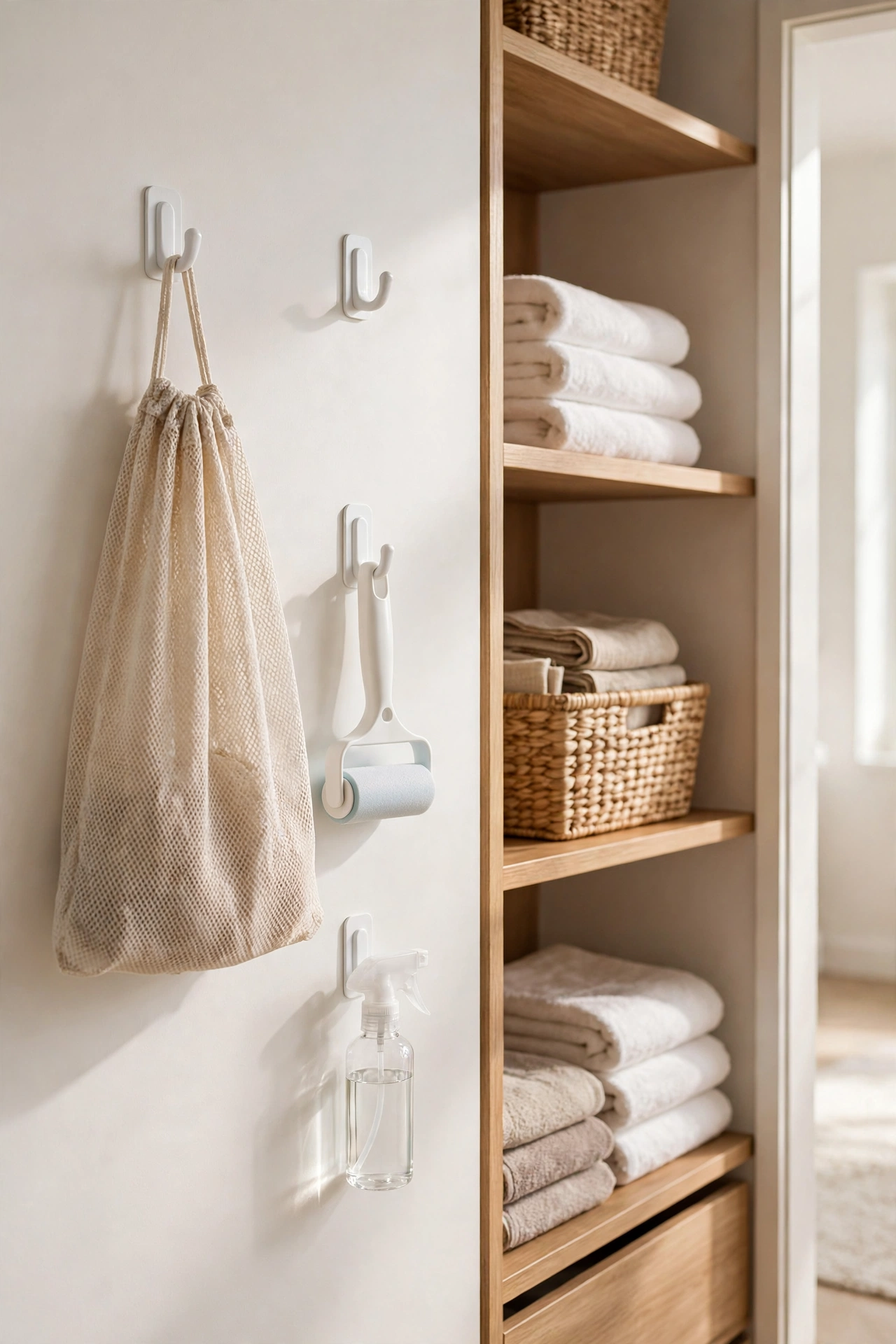
Hooks on the closet walls or door hold the odd shaped things that never fold well. Hang mesh laundry bags, ironing spray, a small steamer, or robes on simple adhesive hooks inside the closet. Matching hooks in one finish, like brushed nickel or white, keep the look tidy instead of random. Stick two hooks on the side wall for the lint roller and the stain stick you grab before laundry day. Hang one mesh bag for single socks waiting for mates, and empty it once a month. Make sure adhesive hooks sit on clean, dry paint so they hold well. Do not overload them, since heavy bags can peel paint. This uses wall space you already have and keeps small tools from cluttering the shelves.
16. Linen Closet Inventory
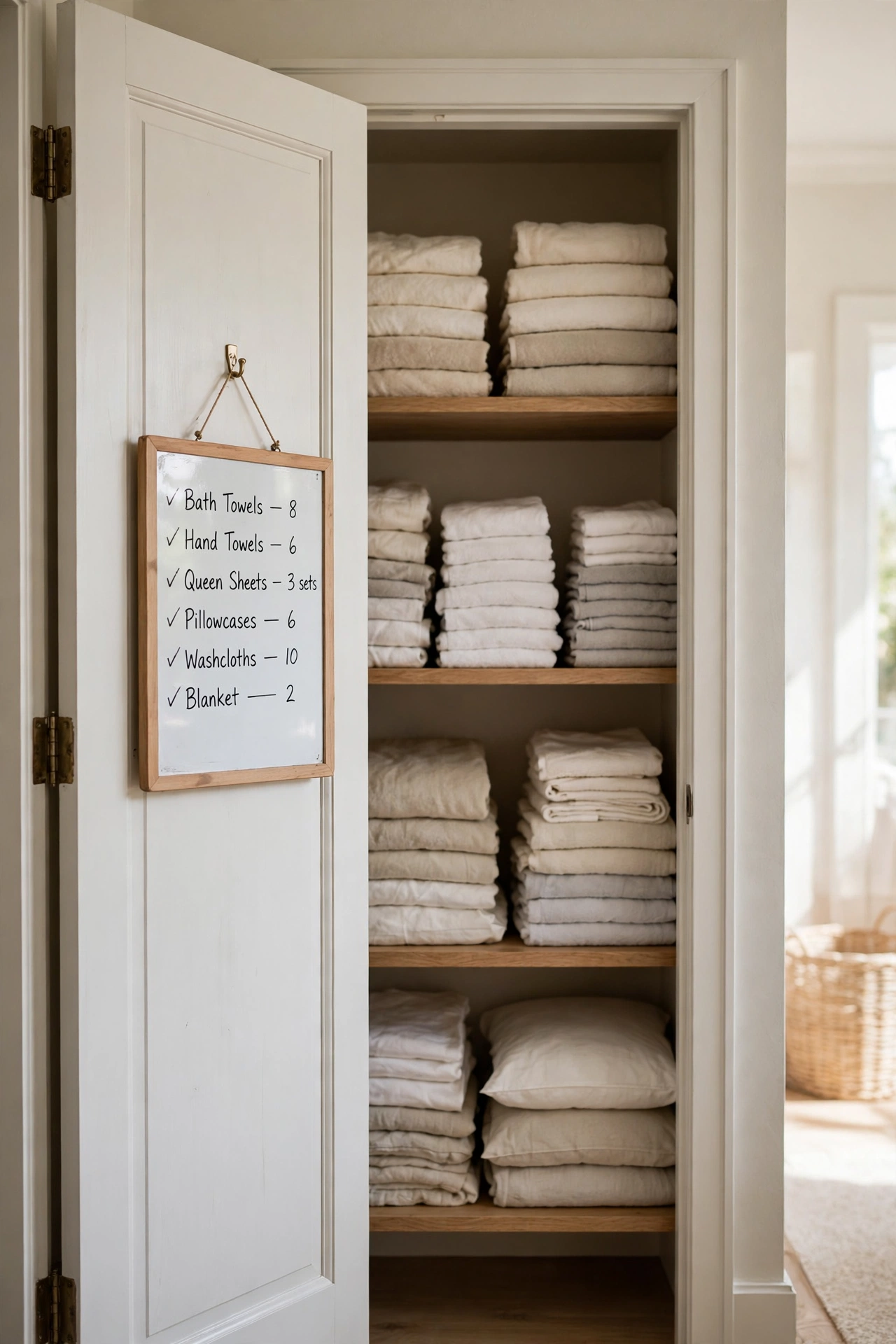
A tiny inventory list on the inside of the door saves you from buying doubles. Write down how many sheet sets, duvet covers, and towel sets you own for each bed and bathroom. Use a small whiteboard or a printed card in a sleeve so you can update it with a marker. When a set wears out, cross it off. When you shop sales, check the list first. Note the sizes too, since queen and king look alike when folded. Keep the list simple with just counts, like Main bed, 3 white sets. Update it on the same day you change seasonal bedding so it stays true. This takes twenty minutes once, and it stops the closet from filling up with extras you do not need.
17. Kids Sheet Bins
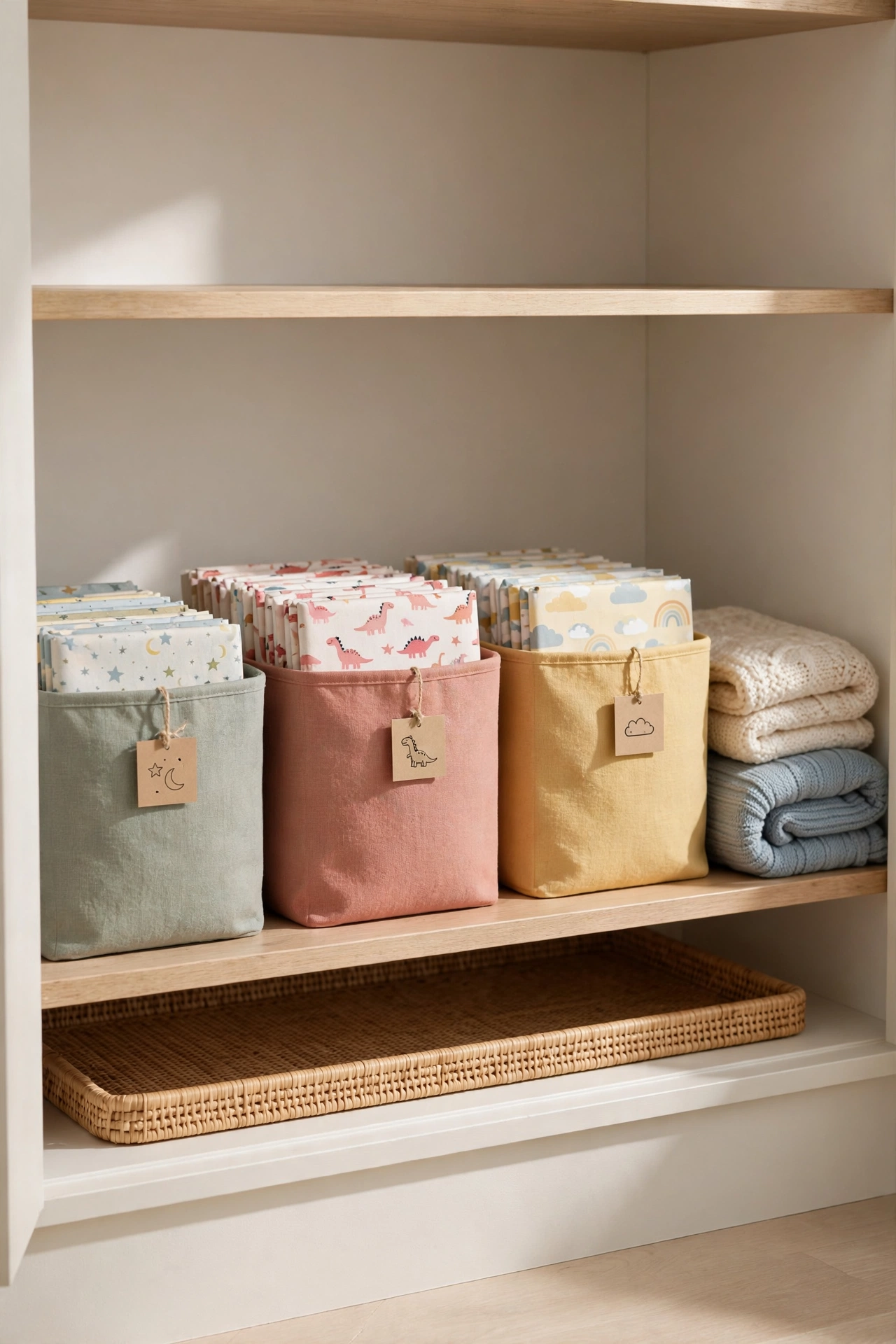
Kids bedding is easier to manage when each child has one low bin. Let them pick a bin color they like, and keep their sheet set, pillowcase, and favorite blanket inside it on the lowest shelf. Use picture labels for little ones who cannot read yet, like a star or a drawing of their bed. Teach them to drop dirty sheets in the laundry and take the clean set from their bin. Keep only one spare set per child in the closet and store the rest elsewhere, since kids outgrow bedding fast. Fold their sets loosely, since perfect folds do not survive small hands anyway. This builds a small habit that keeps their shelf tidy, and it makes bedtime changes faster for you.
18. Seasonal Swap Boxes
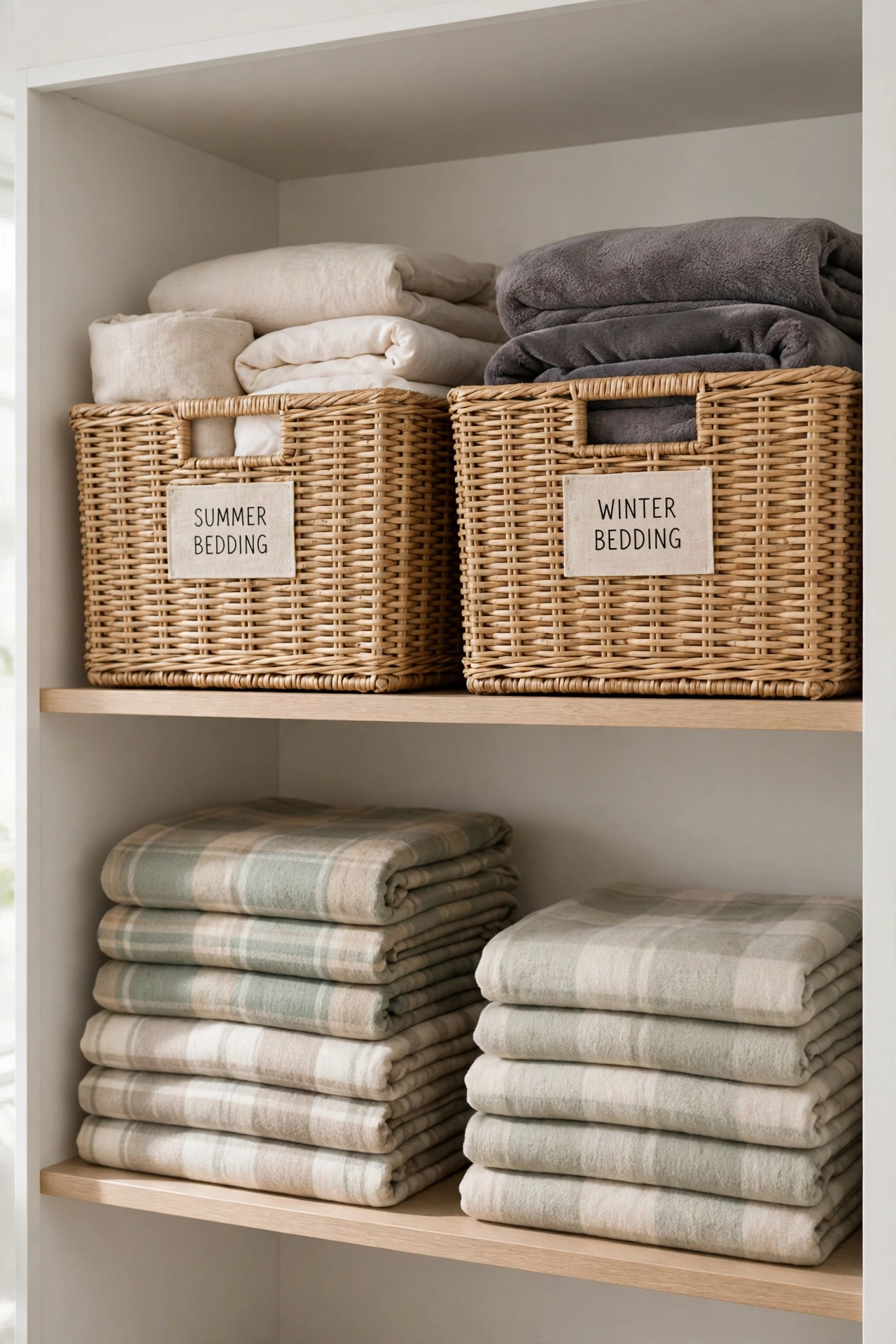
Seasonal bedding needs a rotation plan or it takes over the closet. Keep two sturdy boxes, one for warm weather and one for cool weather. When summer ends, fold the light quilts into the summer box and move it to the top shelf or another closet. Bring the flannel sheets and heavy duvets down to the easy shelves. Label each box clearly with the season and the year so old sets do not linger. Go through each box during the swap and retire anything thin or stained. Wipe the empty shelf before the new season goes in. Doing this twice a year keeps the closet matched to the weather, and you never dig past winter blankets to find a summer sheet.
You do not need a perfect closet, just one that works on a busy day. Start with a single shelf this afternoon and try one idea from this list. Small steps add up fast, and soon every sheet will have a home.
FAQs
How often should I tidy my linen closet?
A quick ten minute tidy once a month is enough for most homes. Refold anything that slid, put strays back in their bins, and check the inventory list. A deeper clean twice a year, when you swap seasonal bedding, keeps it fresh.
What is the easiest way to fold a fitted sheet?
Lay it flat, tuck the corners into each other to make a rectangle, smooth it with your hands, then fold it into thirds. It will never look store perfect, and that is fine. Tucking the set into a pillowcase hides uneven edges.
How do I keep sheet sets from getting mixed up?
Fold the full set together and slide it inside one matching pillowcase. Store bundles upright so you can see each one. If two sets look alike, tie a small tag with the bed name around the bundle.
What size bins work best in a linen closet?
Measure your shelf depth first, then buy bins two inches shallower so they slide easily. Medium bins about twelve inches wide hold one sheet set well. Shallow bins suit washcloths and small items.
How do I stop towels from smelling musty?
Make sure towels are fully dry before they go on the shelf. Leave space between stacks for air, and tuck in a lavender sachet or cedar block. Wash towels with warm water and skip heavy fabric softener, which traps smells.
Can I organize a tiny linen closet?
Yes. Use the door back for pockets, add one riser for two levels, and keep only what you use now. Move off season bedding to another spot. In a tiny closet, fewer items matter more than fancy bins.