You want a bedroom that feels calm when you walk in. A bed that looks made, walls that feel finished, and a corner that finally makes sense. What you don’t want is a shopping cart that costs more than your rent.
Good news: how to decorate a bedroom on a tiny budget is mostly about order, not money. Most people start by buying things. That’s backwards. The cheap wins come first, like clearing the clutter, moving the furniture, and using what you already own.
This guide walks you through 20 steps in the order that actually saves you money. We start with planning and clearing, then move to the bed, the walls, storage, lighting, and the small finishing touches. Every step is low cost and made for complete beginners.
You don’t need a design eye or a big paycheck. You need a pen, a free afternoon, and a little patience. Grab your phone, open your notes app, and let’s start with the room you already have.
1. Set Your Budget First
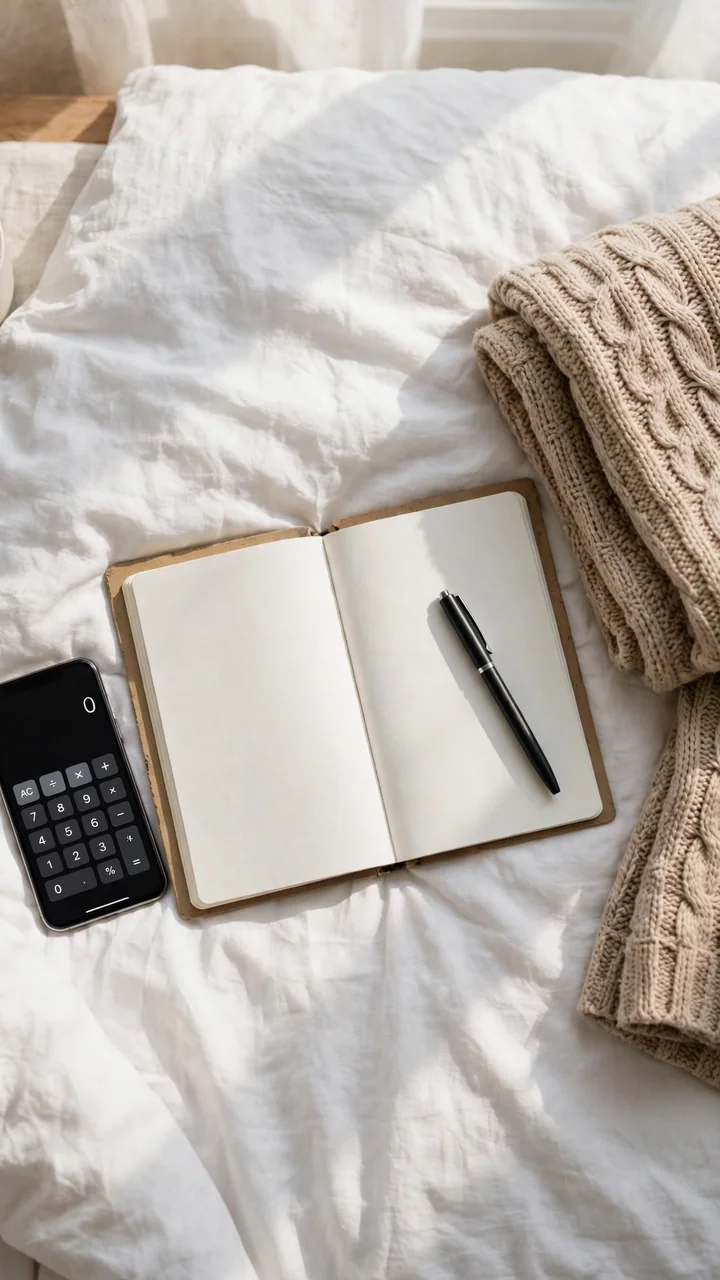
Before you buy a single thing, pick a number.
Open your notes app and write down the most you can spend on the whole room. Be honest. A small number is fine, it just has to be real. Cheap bedroom decor ideas only work when they have a limit.
Then split that number into three jars:
- Big items, like bedding or a rug
- Small items, like hooks and bulbs
- A cushion for surprises
Check the number before every purchase. If an item doesn’t fit, it waits. That midnight sale basket has ruined a lot of good plans.
2. Pick Three Words for Your Style
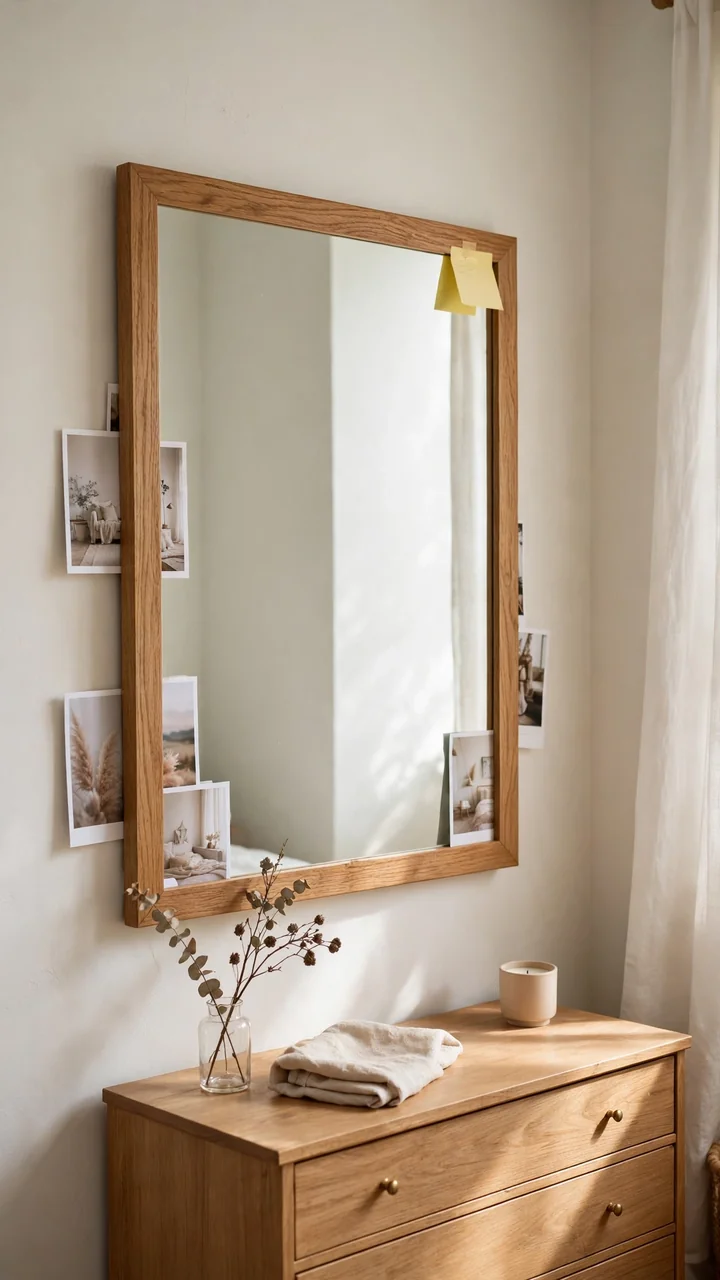
Three simple words can stop a lot of random buying.
Choose words that describe how you want the room to feel, not what it should contain. A few combos to borrow:
- Calm, light, simple
- Cozy, warm, soft
- Fresh, bright, tidy
Write your words on a sticky note and stick it on your mirror. Before you buy anything, ask if it fits all three. If it only fits one, put it back.
💡 Quick Tip
Save five Pinterest photos that match your three words. If a photo doesn’t fit, skip it, even if you like it. Your board will tell you what to look for secondhand.
3. Clear Out and Sort Your Stuff
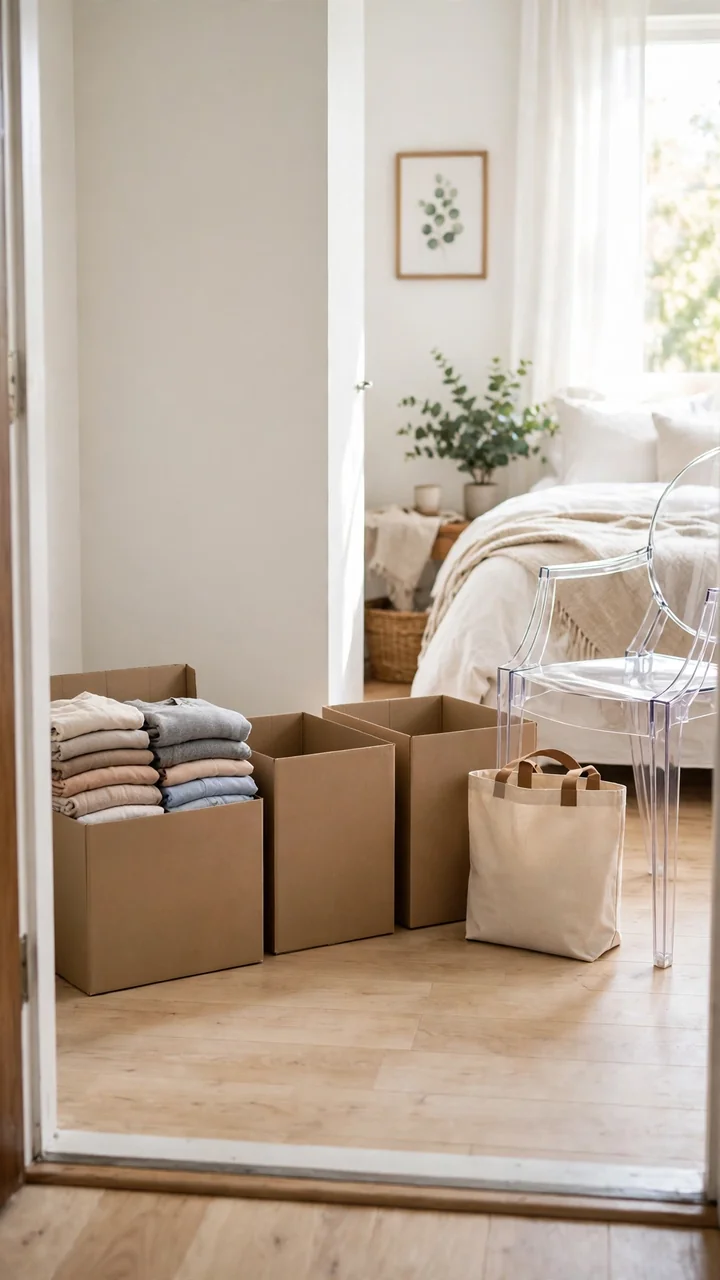
The chair that holds a week of clothes. The nightstand with five old mugs. Clutter makes a room feel small, and no decor can hide it.
Grab three bags or boxes and label them:
- Keep: things you use and like
- Move: things that belong in another room
- Let go: things to donate, sell, or toss
Work one surface at a time, starting with the floor. Stop when the floor and one surface are clear. You don’t need to empty the whole room in one go.
Clothes on the chair, things piled on the dresser, and bags on the floor. The room feels smaller than it is.
Clear floor, one empty surface, and a donation bag by the door. The room feels bigger before you buy a thing.
4. Rearrange Your Furniture
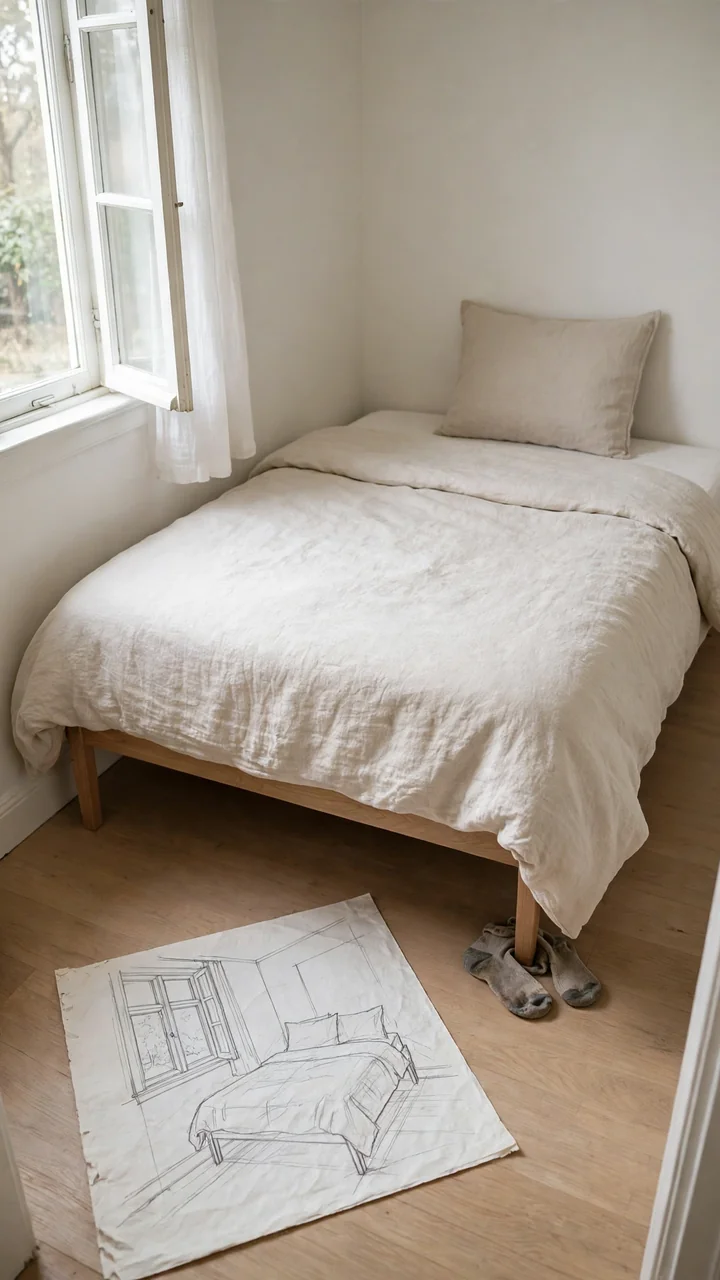
Most beds stay wherever they landed on moving day. Try a new spot first. Moving furniture costs nothing, and it can open up a surprising amount of floor.
Slide, don’t lift. An old sock or a felt pad under each leg protects the floor and saves your back.
Leave a path wide enough to walk through without turning sideways. If you have to squeeze past something, it’s in the wrong place.
Sketch the room on paper and mark the door, window, and outlets.
Try the bed on two other walls before you decide.
Walk from the door to the bed and the closet. Pick the layout with the most open floor.
Live with it for one night. Change it if it feels off in the morning.
5. Choose Three Colors
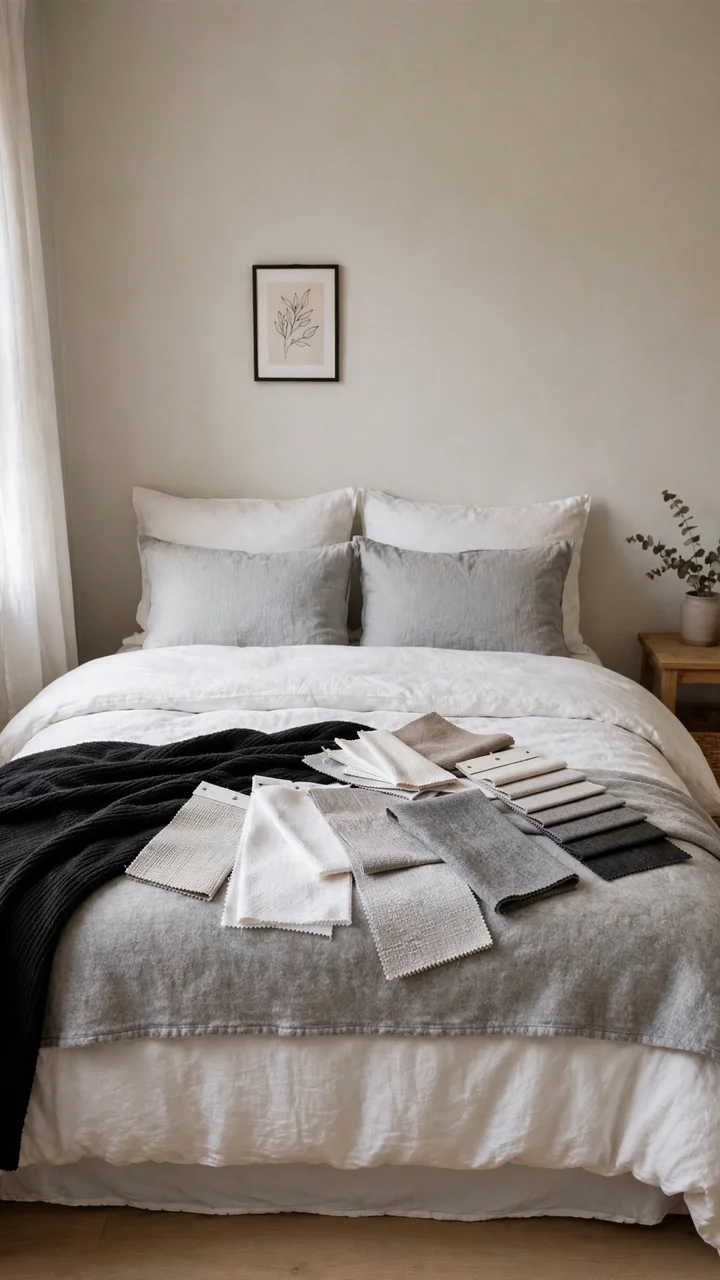
Here’s a simple rule for small bedroom decorating ideas on a budget: one main color, one support color, and one accent.
Start with what you own. Lay your bedding, curtains, and rug on the bed and see which colors already get along. Build from those instead of starting over.
Soft neutrals like white, beige, grey, and warm black are easy to match and easy to find secondhand. Keep the bold color for something small that you can swap later.
6. Layer Your Bedding
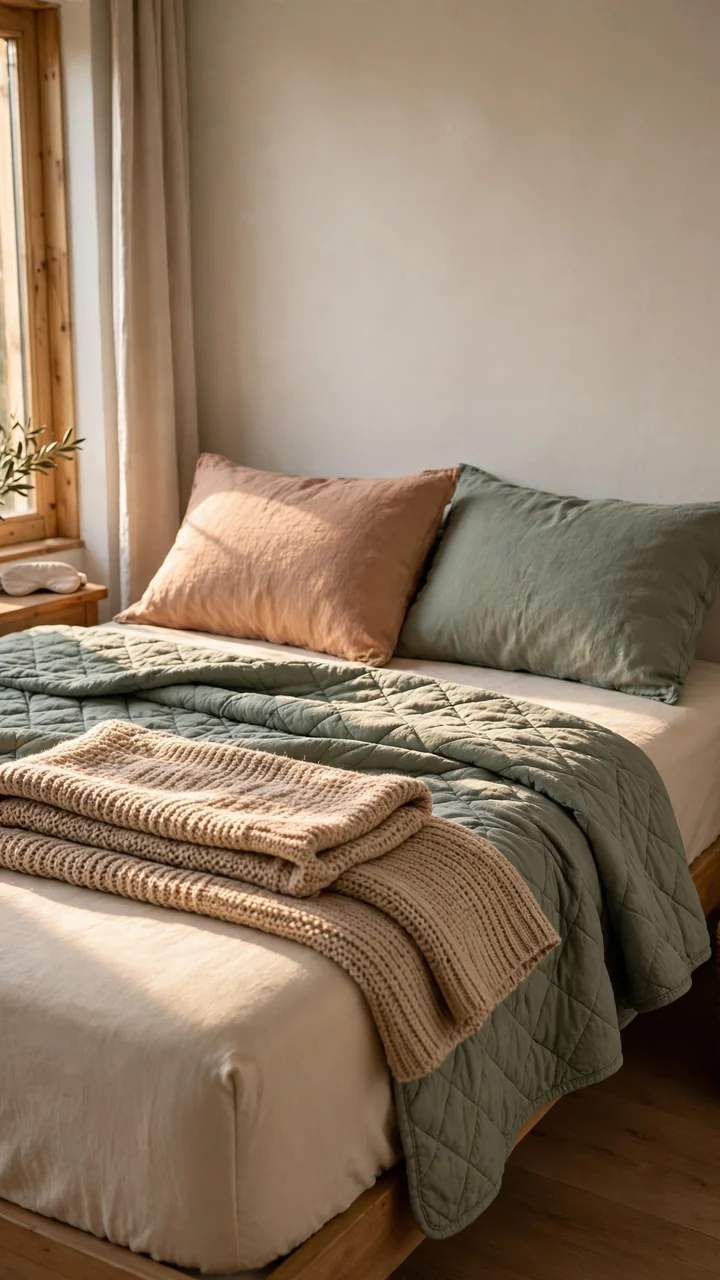
A flat bed looks unfinished. Layers fix that, and you can build them from mismatched pieces.
Think in three levels:
- Base: fitted sheet and flat sheet
- Middle: a duvet, comforter, or quilt
- Top: a throw folded across the foot of the bed
Fold the top layer in thirds so it lies flat instead of bunching up. If your pieces don’t match, stay inside your three colors from step 5 and let the textures differ. A cheap bedroom makeover gets its depth from layers, not price tags.
| Get it secondhand | Buy it new |
|---|---|
| Quilts, throws, and blankets in good shape | Pillows and mattress protectors, for hygiene |
| Duvet covers and extra pillowcases | Fitted sheets, since they wear out first |
| Cotton or linen pieces, which soften after washing | Anything with a stain or a smell you can’t wash out |
7. Make a DIY Headboard
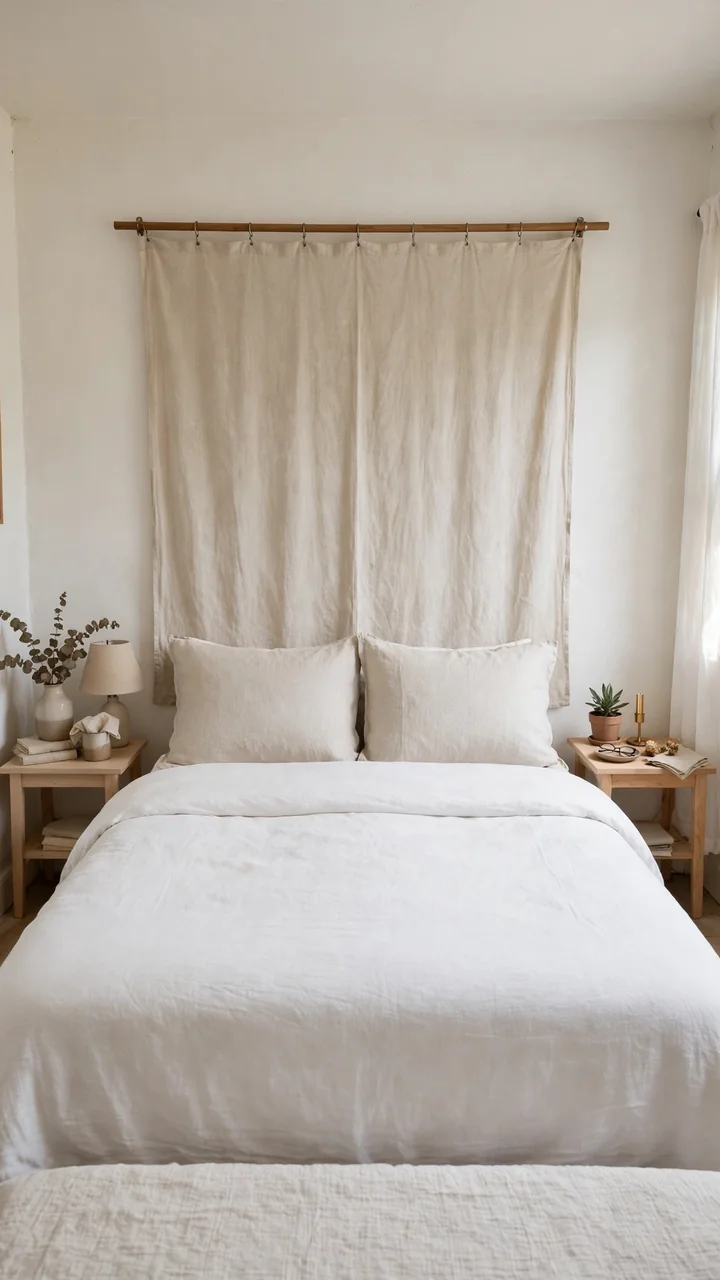
You don’t need a real headboard to get the look of one.
A headboard gives the bed a backdrop and makes the wall behind it feel planned. Three cheap ways to fake it:
- Paint a wide, rounded shape on the wall behind the bed
- Hang a tablecloth or fabric panel from a curtain rod
- Lean a wood board or woven tray against the wall at pillow height
Make the shape a little wider than the bed so it frames it. If you rent, fabric on a rod is the easiest to undo.
Make it wider than the mattress.
Tape the outline first and step back to check it.
Hang fabric from a rod so it can come down fast.
Painting a shape narrower than the bed.
Hanging heavy boards over your pillows.
Skipping the tape and painting by eye.
8. Swap Your Pillow Covers
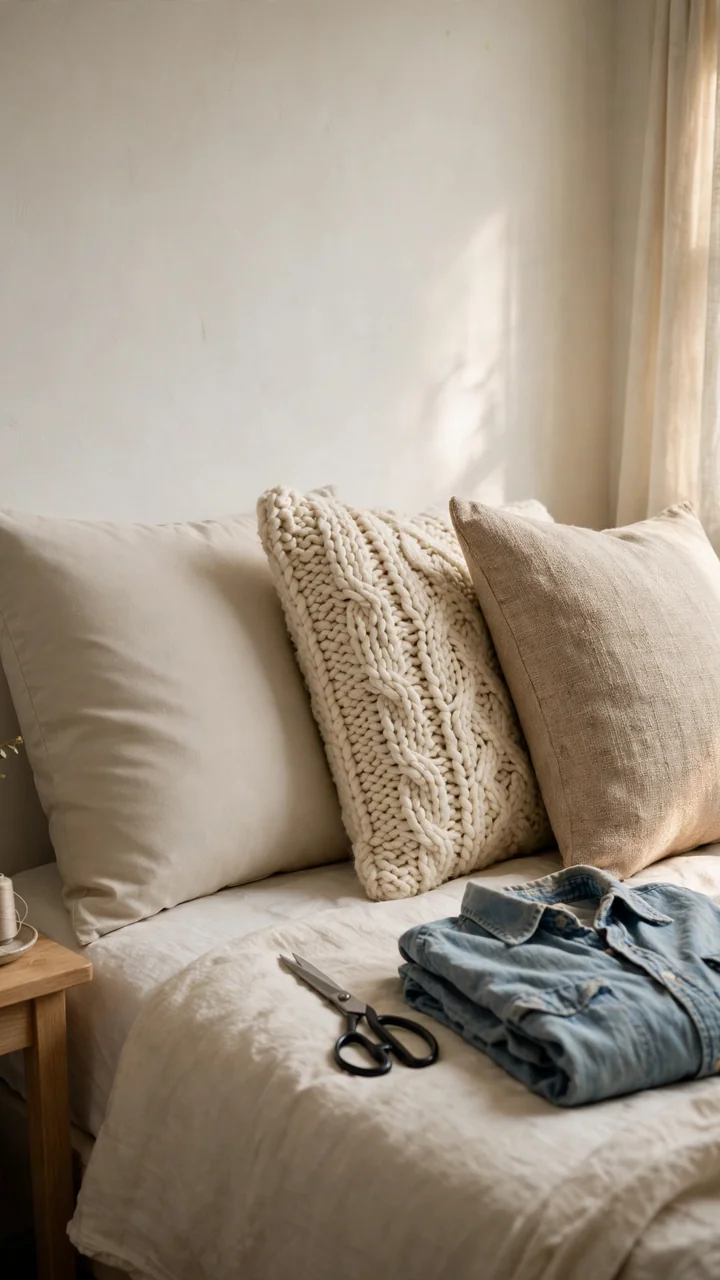
New covers change a bed faster than new pillows do, and they cost much less.
Keep the pillows you have. Hunt for covers at thrift stores, or sew simple envelope covers from an old shirt, a curtain, or fabric scraps. Envelope covers need no zipper, just an overlapping back panel.
Stick to your accent color from step 5, then mix one solid with one texture, like a knit or a linen weave. Two or three pillows are enough on a small bed.
💡 Quick Tip
Pick a cover that is one size smaller than the pillow insert. A tight cover makes the pillow look full and neat instead of floppy.
9. Paint One Accent Wall
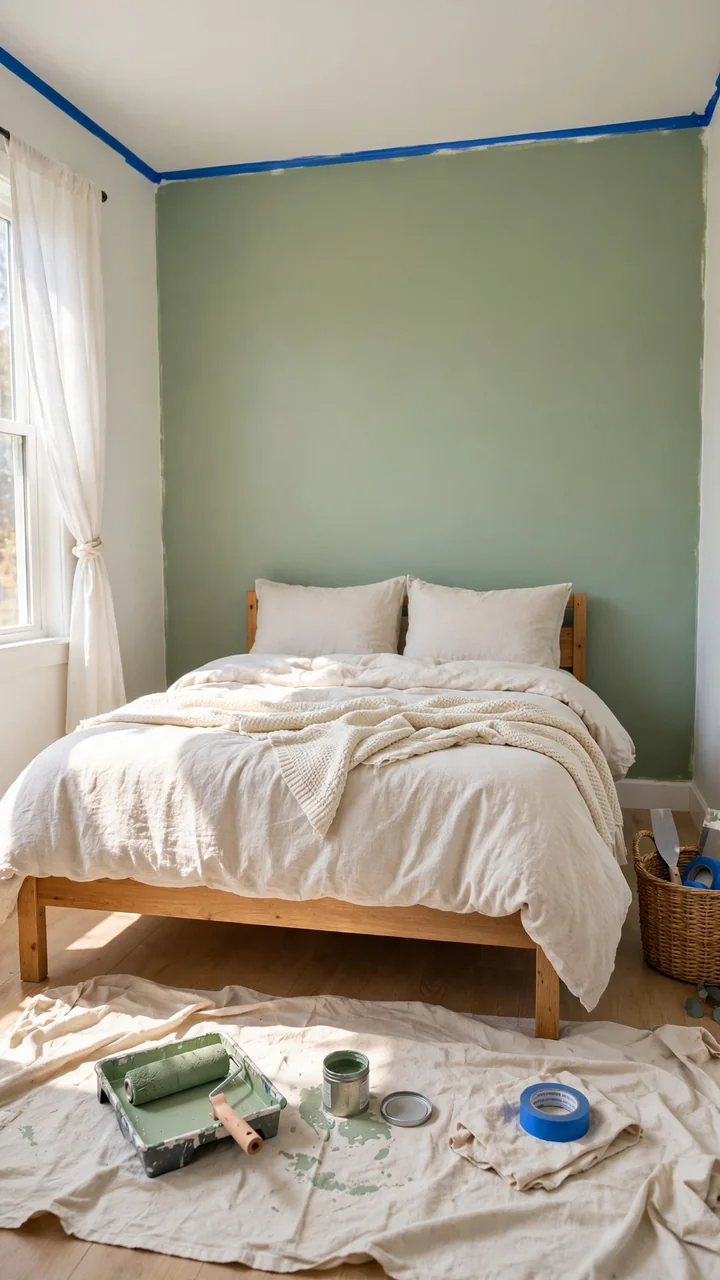
Most people think painting means a whole room and a big bill. One wall changes how the room feels, and a sample pot may be all you need.
Pick the wall you see first from the doorway, which is often the one behind the bed. Check the label on the pot to see how much area it covers before you buy.
Before you start:
- Ask your landlord first if you rent
- Wipe the wall and let it dry
- Tape the edges and the ceiling line
- Paint two thin coats, not one thick one
Test your color on the wall and look at it in the morning and at night before you paint the rest.
10. Make a Gallery Wall
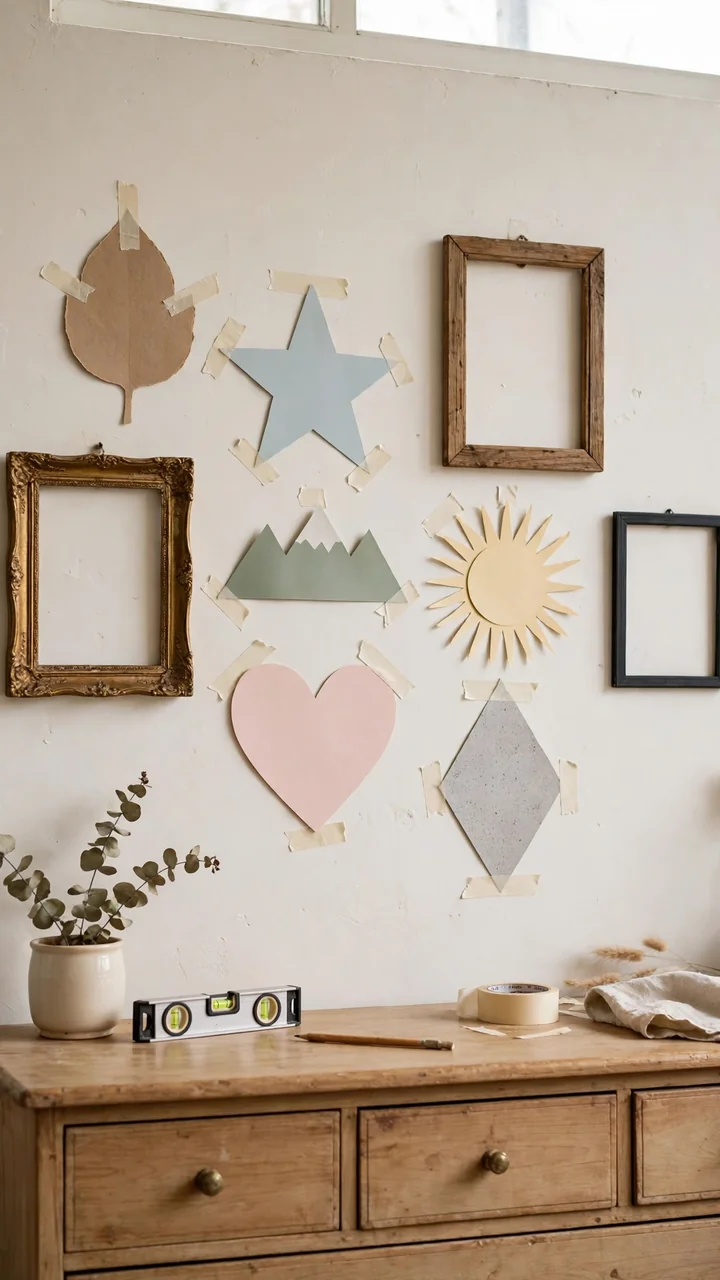
That blank stretch of wall above the dresser is easy to fill without spending much.
Frames are the main cost, so skip new ones. Thrift stores and yard sales always have a pile, and they look better painted in one color. For what goes inside, use free sources:
- Your own photos, printed at home or a copy shop
- Public domain art from museum websites
- Pages from an old calendar or book
- Fabric scraps or pressed leaves
Mix sizes, but keep the frames to two colors.
Lay every frame on the floor and move them around until the gaps look even.
Trace each frame on paper, cut it out, and tape the paper to the wall.
Stand back and fix the layout while it is still just paper.
Hang each frame where its paper is, then peel the paper off.
11. Hang Curtains Higher
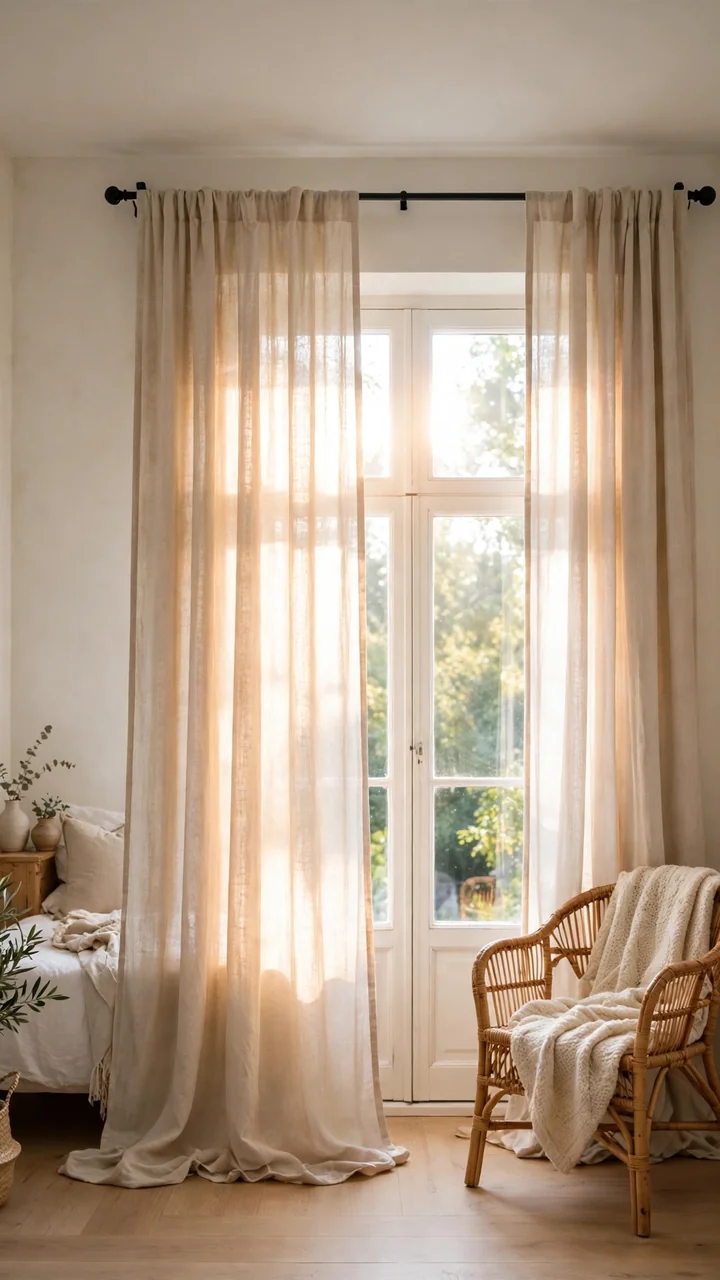
Most curtain rods sit right above the window frame. That’s the mistake.
A low rod cuts the wall in half and makes the ceiling feel closer. Hang it higher and wider, and the window looks bigger without any new fabric.
- Mount the rod a few inches above the frame, or closer to the ceiling if it fits
- Let it stick out past each side of the window by about a hand’s width
- Let the curtains just touch the floor
If your curtains are too short, clip or sew a strip of matching fabric to the bottom edge for extra length.
Rod right above the frame, curtains ending above the floor. The window looks short and the ceiling feels low.
Rod near the ceiling, curtains grazing the floor. The window looks taller and the wall looks longer.
12. Add a Rug Under the Bed
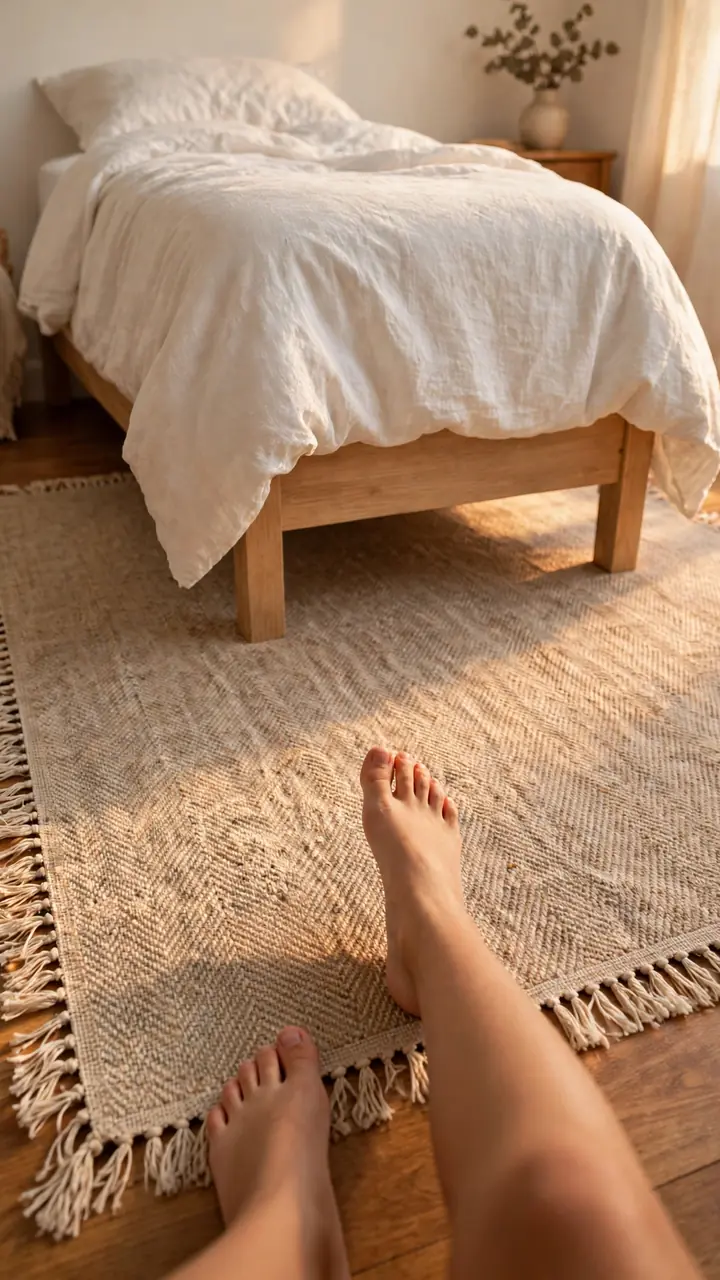
Slide the rug under the bottom two thirds of the bed. The front legs should sit on it, with the rug showing on both sides and at the foot. A rug that’s too small looks like a doormat.
Skip the full price tag. Check thrift stores and online marketplaces first. Flooring shops often sell remnants or bound carpet pieces for much less than a ready-made rug.
It also saves you from stepping onto a cold floor in the morning.
Check before you buy a rug
13. Use the Space Under Your Bed
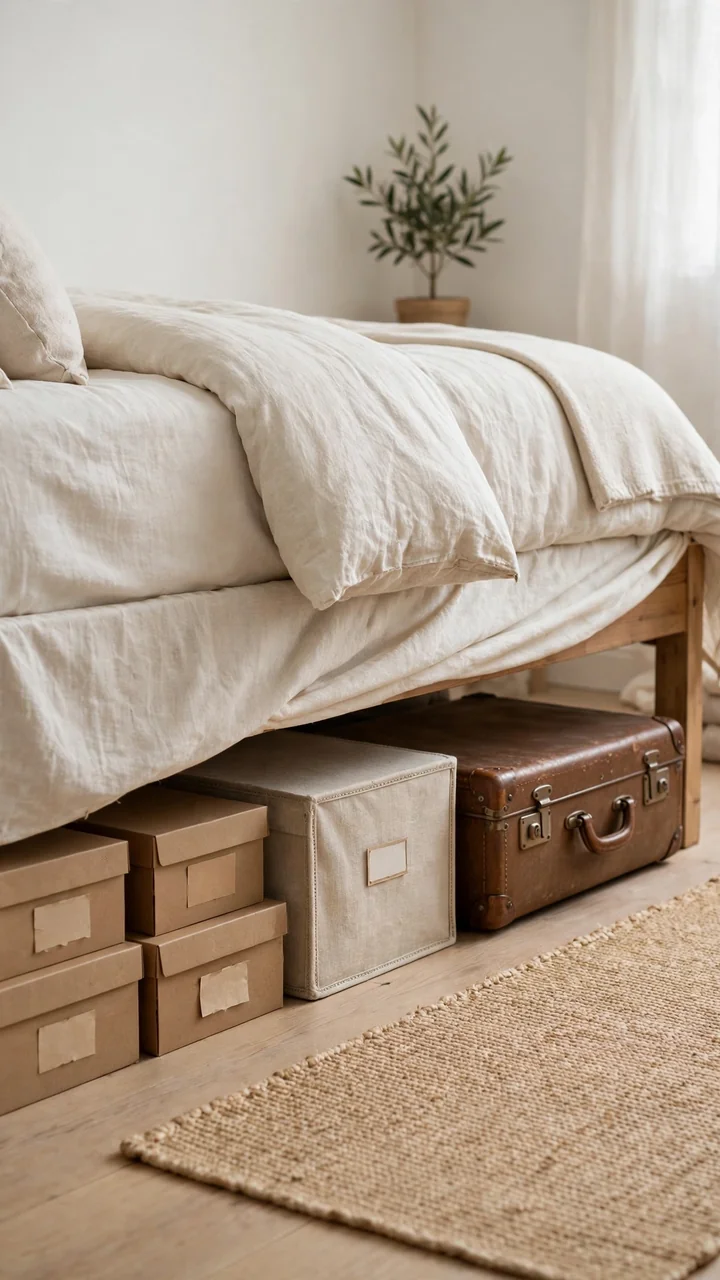
Look at the gap under your bed. It’s probably holding dust and one lonely sock.
That gap is free storage. Before you buy bins, use what you have:
- Shoe boxes for flat items like belts and scarves
- An old suitcase for off season clothes
- Cardboard boxes covered with leftover fabric
- A zip bag or pillowcase to keep spare bedding clean
Slide things in by category and write the contents on a sticky label. Leave the front edge clear so you can see what’s there.
14. Add Wall Hooks
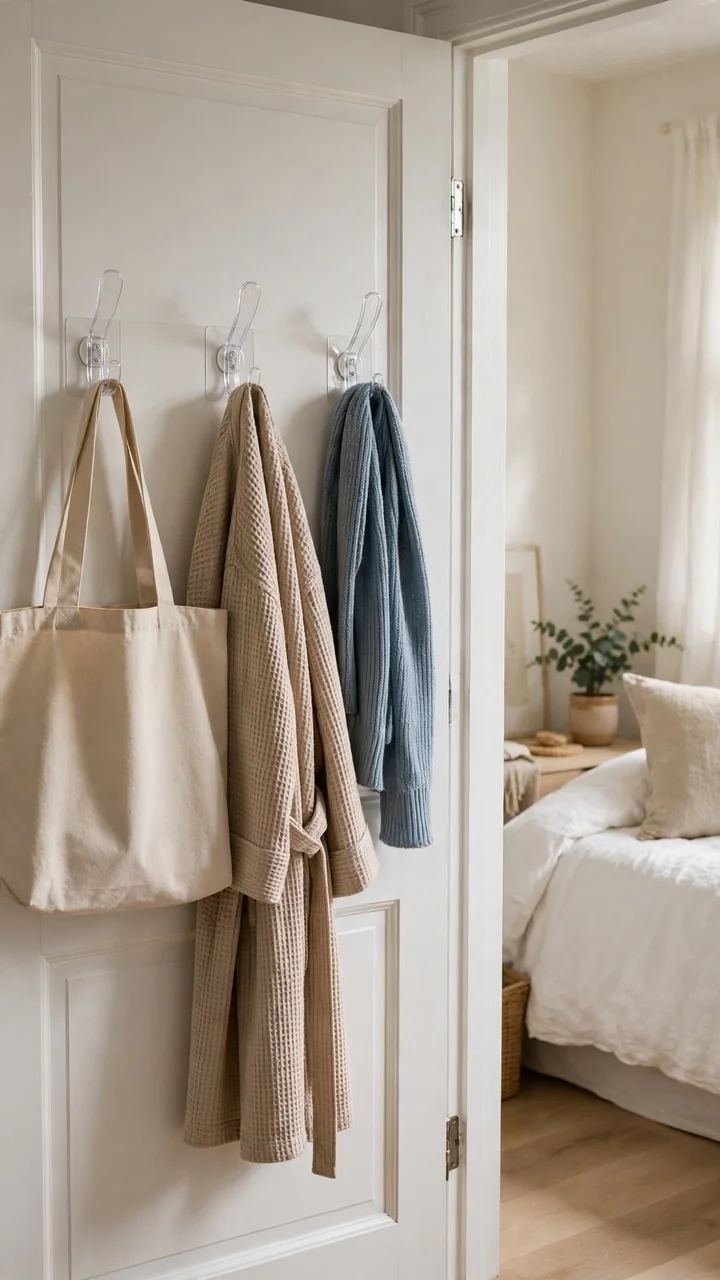
Where does your bag go at night? If the answer is the floor or the chair, you need hooks.
Hooks use wall space, which is the one thing a small room has plenty of. Put one beside the bed for a robe or tote, a row behind the door for coats and bags, and a few near the dresser for scarves and hats.
Adhesive hooks are the easiest low budget bedroom ideas for renters. Press them on clean, dry walls and hold for the time the package says.
⚠️ Watch Out
Every adhesive hook has a weight limit printed on the package. Stay under it, and keep heavy bags on a screw in hook that goes into the wall stud.
15. Make a DIY Nightstand
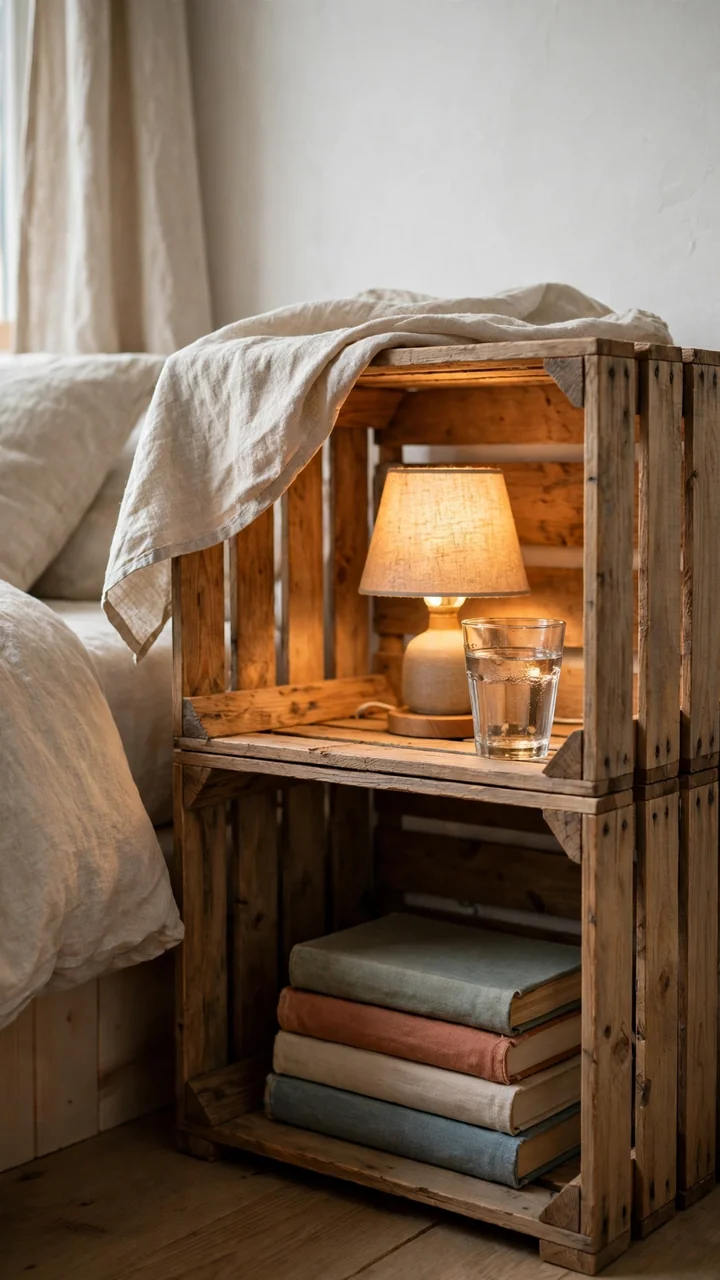
A nightstand doesn’t have to come from a furniture store.
You need a flat top at about mattress height, big enough for a lamp, a glass of water, and your phone. Almost anything sturdy can do that job. Cover the top with a cloth or a tray to make it look planned, and tuck a basket or book underneath if there’s room.
Test it first. Put your lamp on it and give it a gentle push. If it wobbles, pick something else.
16. Switch to Warm Bulbs
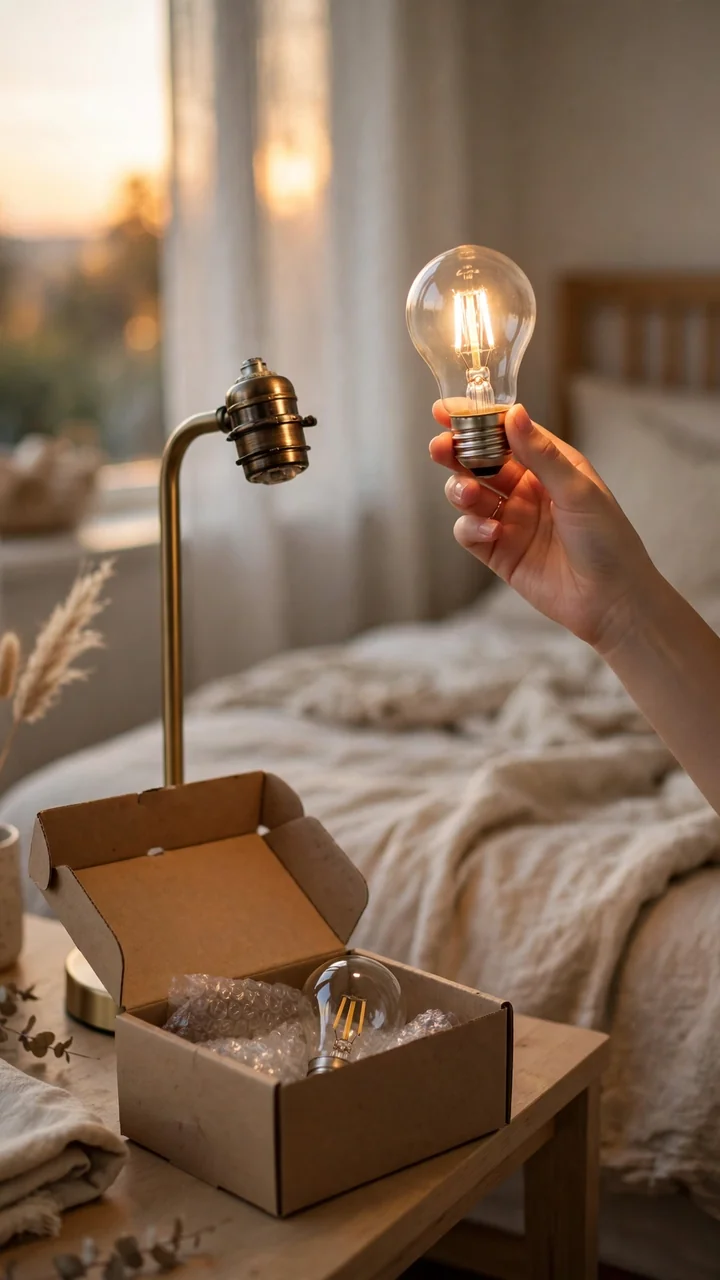
Harsh white light makes a bedroom feel like a waiting room.
The bulb is the cheapest upgrade in this whole guide. Look at the box for the words “warm white” or “soft white” and swap out the cold ones. Do it in every lamp and fixture in the room.
Check the maximum wattage printed on each fixture first. Match the bulb to that limit or stay under it.
| Cool white bulb | Warm white bulb |
|---|---|
| Bluish, sharp light | Yellowish, soft light |
| Good for the kitchen or a work desk | Good for bedrooms and winding down |
| Makes walls and bedding look flat | Makes wood, fabric, and paint look richer |
17. Add a Cozy Lamp
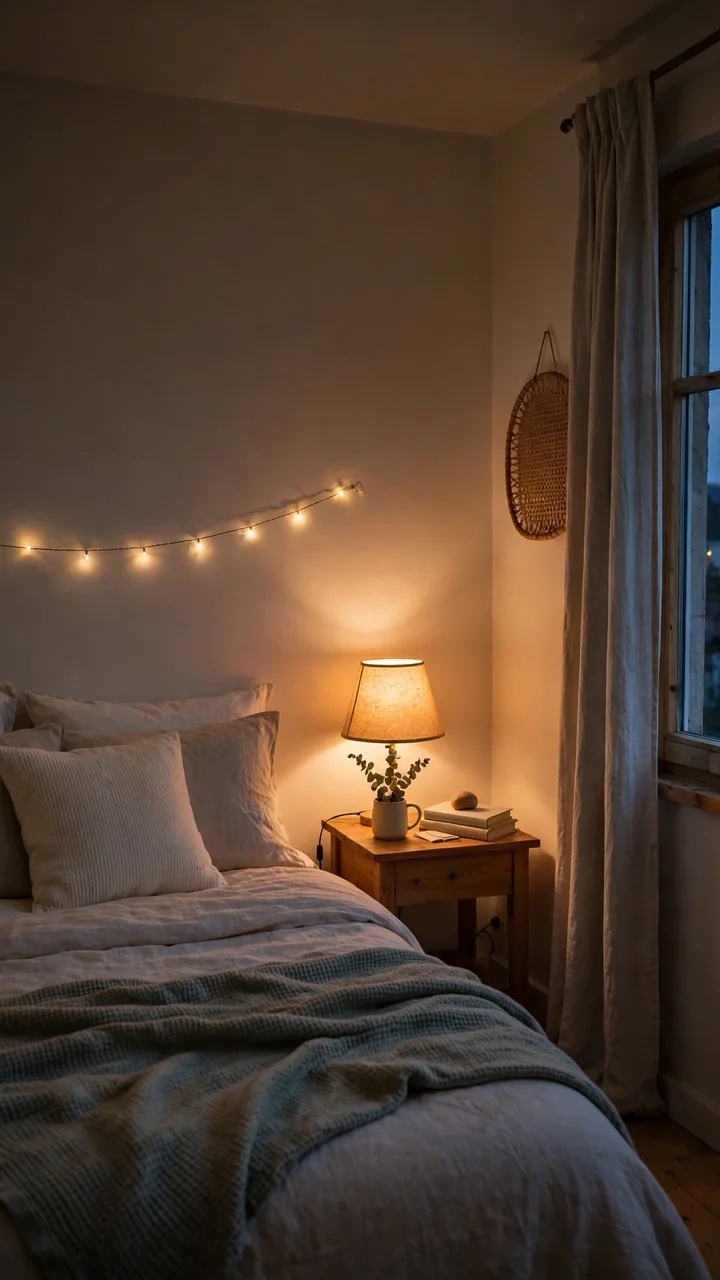
A small lamp does more for the mood than the big ceiling light ever will.
Try this: turn off the overhead light at night and use only low lamps. The room instantly feels warmer and bigger.
You don’t need a fancy lamp. A clip lamp on the headboard or a shelf, a thrifted table lamp with a new shade, or a string of lights along the wall all work. Plug string lights into a timer so you never have to reach for them.
Place the lamp so the bulb sits below eye level.
Use a fabric shade to soften the glow.
Hide the cord behind the furniture.
Leaving the bare bulb uncovered.
Running cords across the walking path.
Hanging string lights over the bed’s heat source or pillow area without checking the rating.
18. Bring in a Plant
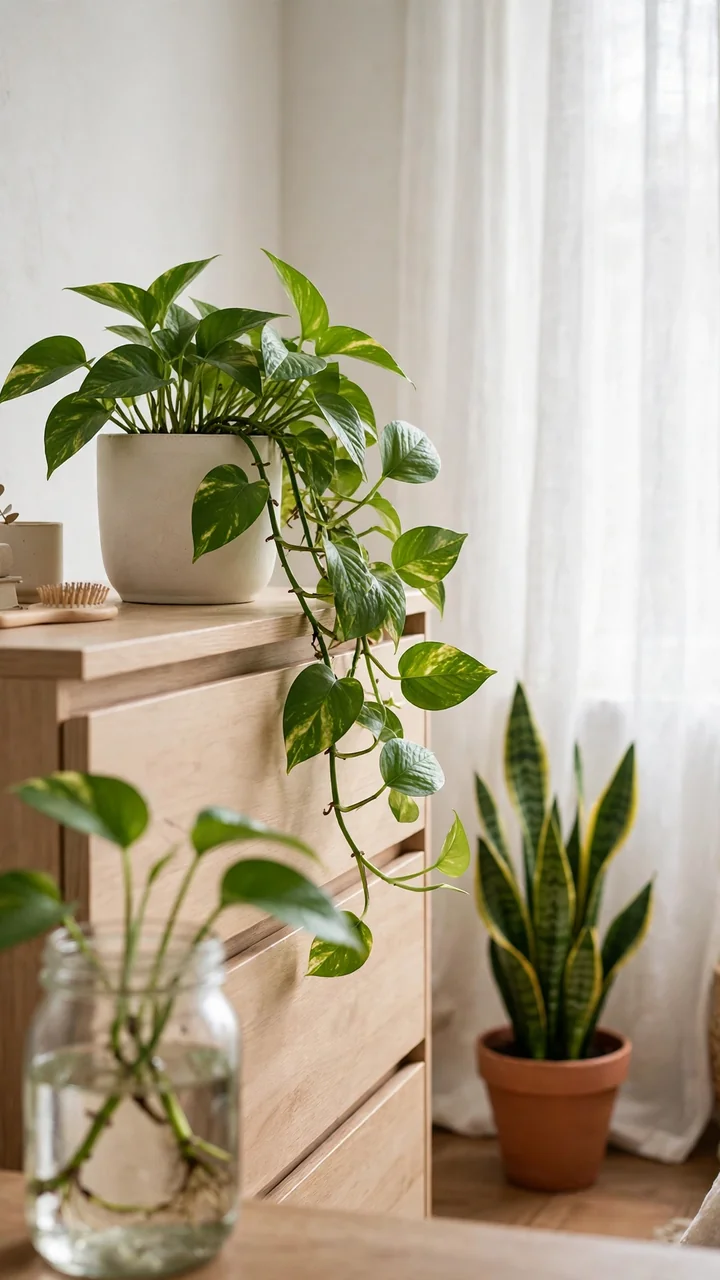
A little green makes a bedroom feel alive, even if you’ve killed a plant before.
Start with one tough one. Pothos, snake plants, and ZZ plants forgive missed waterings and dim corners. Put it on the dresser, a shelf, or the floor beside the window.
If a live plant feels risky, a bunch of dried stems in a jar looks good and never needs water.
Before you bring one home
19. Style Your Dresser Top
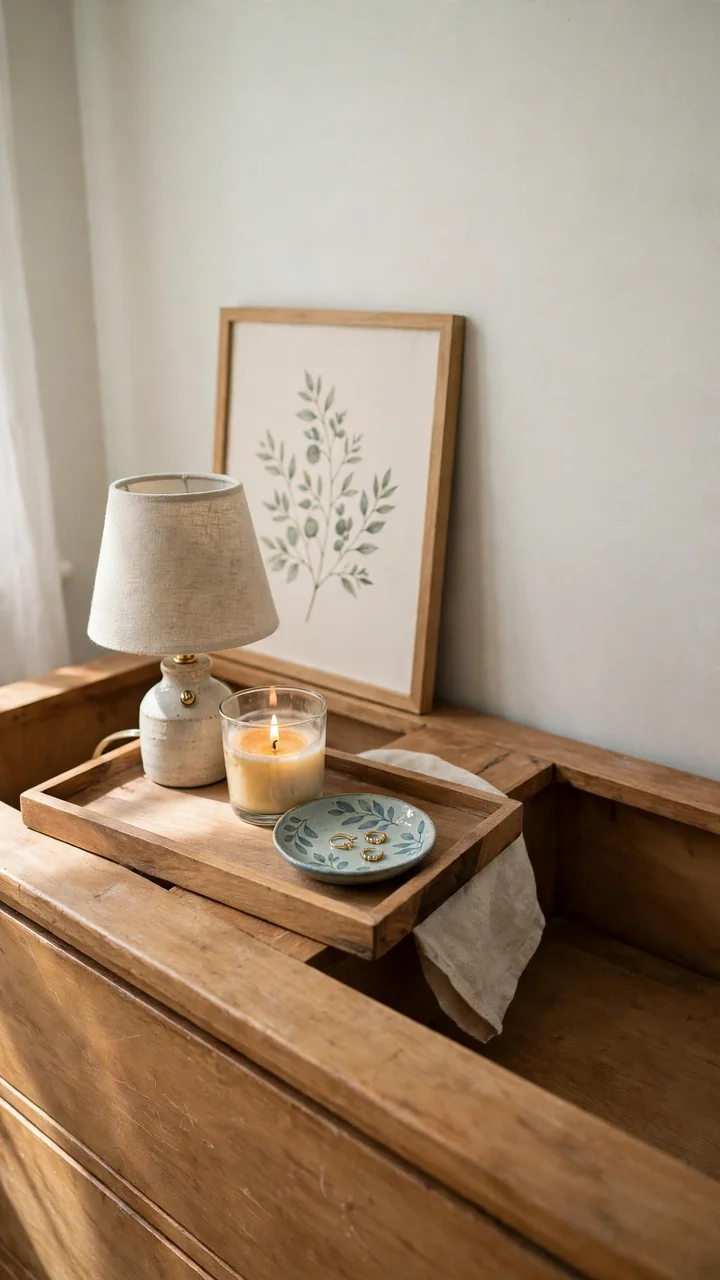
An empty dresser looks bare. A crowded one looks messy. Aim for the middle.
Use a simple formula of three things:
- Something tall, like a lamp, a mirror, or a vase with stems
- Something small, like a candle or a trinket dish
- Something to hold it together, like a tray
Group the small items on the tray so they read as one piece. Leave some open space around the group. The empty gaps are what make it look styled.
20. Add Your Final Touches
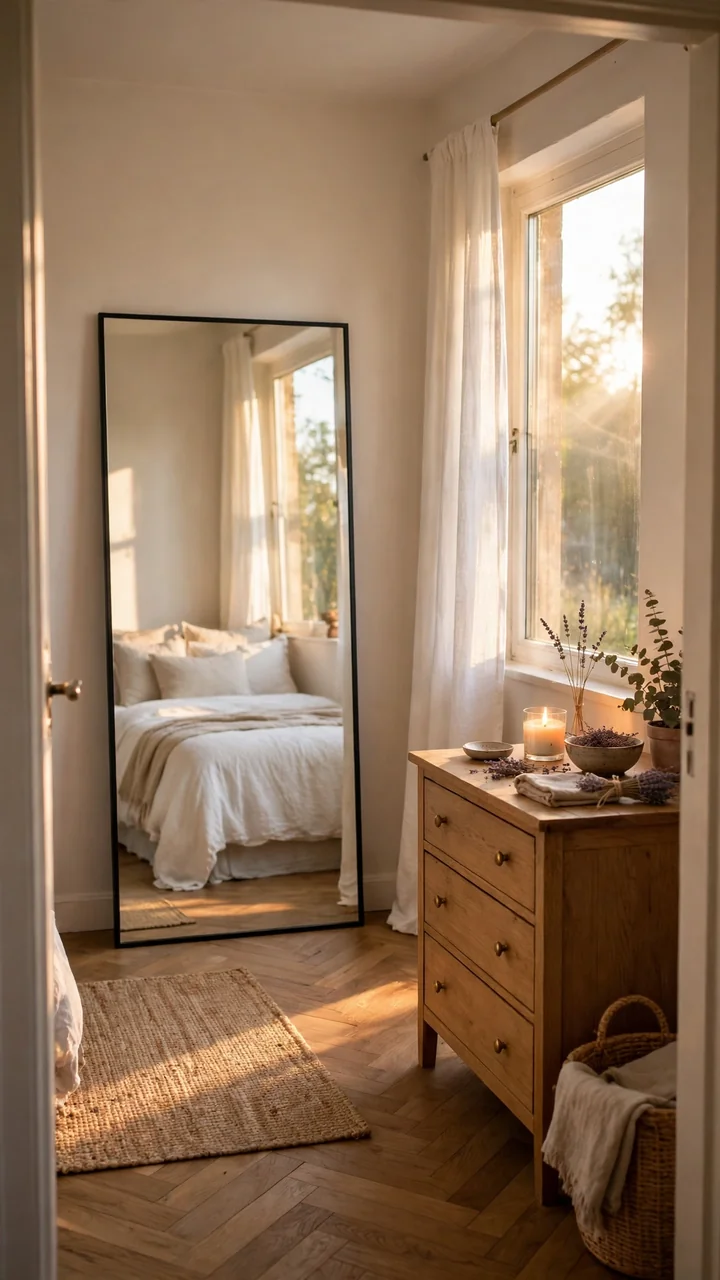
You’re nearly done, and the last bit costs the least.
A mirror leaned against the wall bounces light around and makes the room look bigger. A scent like a candle, a linen spray, or a bowl of dried lavender makes it smell finished too.
Then do the last check. Don’t buy anything else for a week. Live in the room first and see what it actually needs.
Lean a mirror across from the window so it catches the daylight.
Pick one gentle scent and keep it to one spot, like the dresser.
Make the bed, switch on your lamp, and stand in the doorway.
Note one thing that still bugs you. Fix only that, then stop.
Conclusion
You now have a full plan for how to decorate a bedroom on a tiny budget, and almost none of it needed a big shopping trip. You set a number, cleared the clutter, moved the furniture, and used what you already had before spending a cent.
The bed, the walls, the storage, and the lighting each got one small, low cost fix. That’s how a bedroom makeover on a tiny budget really works. Small steps add up, and the room starts to feel like yours.
Take it one step at a time. Do a step or two this weekend, then see how the room feels. You don’t have to finish all 20 in one go.
Save this list for the next time you want to refresh your room, so the steps are ready when you are.
Plan first, spend last. The cheapest fixes come before the shopping.