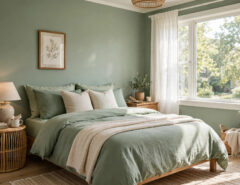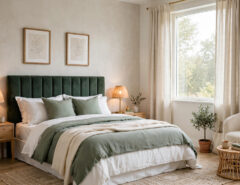
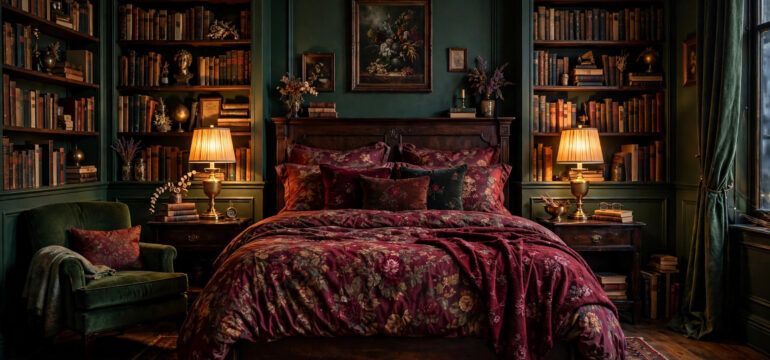
I still remember the first time I stepped inside a real old library. I was nineteen, visiting a college campus with a friend, and we wandered into the oldest building just to look around. The moment the heavy door closed behind us, the noise of the street disappeared. The air smelled like paper and wood polish and something faintly sweet, like old book glue. Tall shelves rose on every side, packed with books whose spines had faded to soft browns and greens. A lamp glowed on a long wooden table where a student sat writing in a notebook. I did not want to leave. I sank into a corner chair and just breathed it all in, and I thought to myself, I want my own room to feel like this.
It took me years to figure out how to bring that feeling home. At first I bought random vintage things and my room just looked cluttered and dark in a sad way. Then I started paying attention to what actually makes an old library feel the way it does. It is not just the books. It is the deep colors on the walls, the weight of real wood, the warm pools of lamplight, and the little details like brass and leather and paper. Once I understood that, everything clicked. I started changing one corner at a time, and each small change made the room feel more like the place I had fallen in love with that afternoon.
These twenty one ideas are the ones that worked for me. They are not about spending a fortune or turning your room into a movie set. They are small, practical changes, most of them cheap, that layer together into that quiet, bookish mood. Some are about color, some are about light, and some are about the little objects that make a room feel lived in and loved. If you have ever wished your bedroom felt more like a library, pour yourself some tea and keep reading. I think you are going to love this.
1. Moody Forest Green Walls
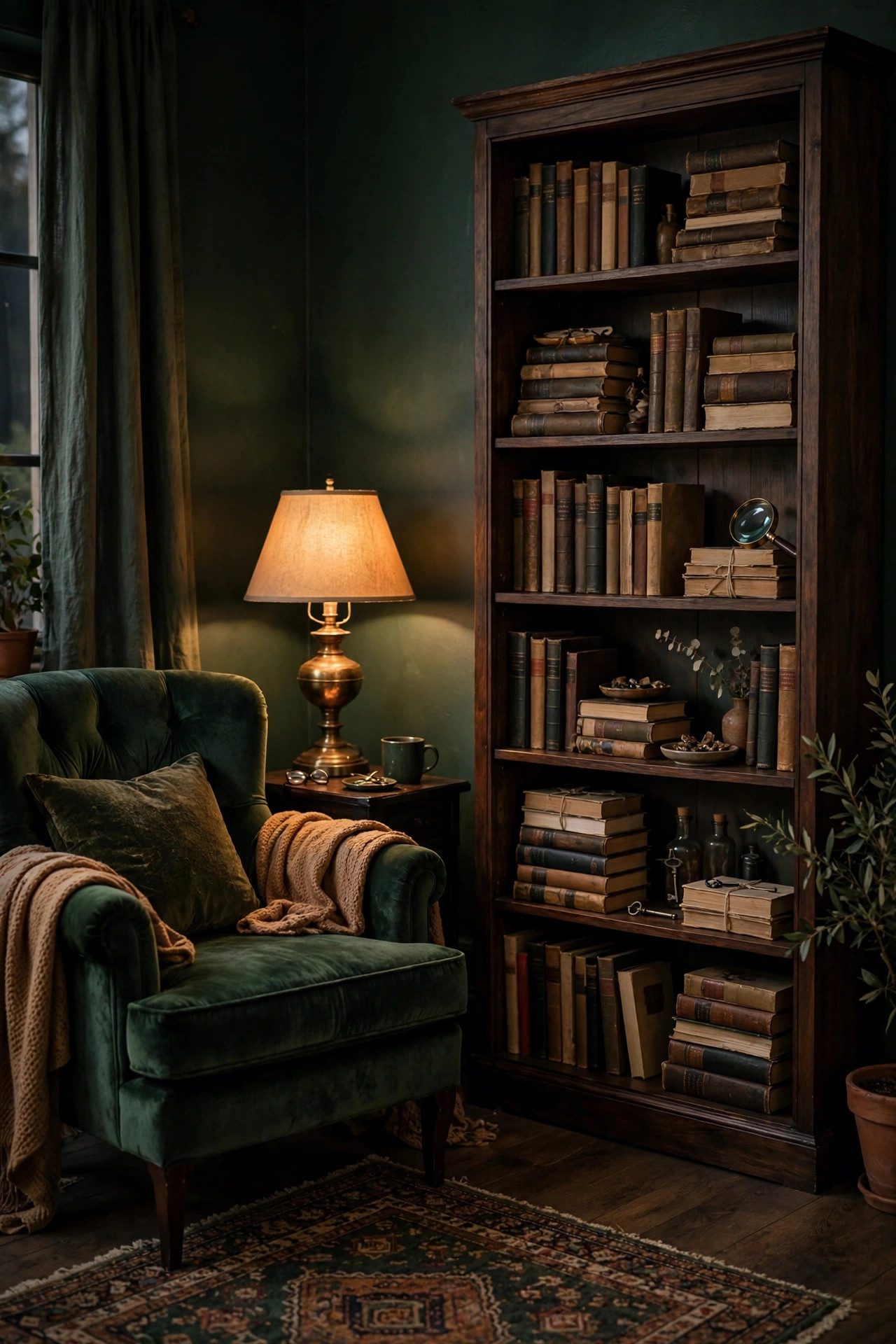
I painted my bedroom walls forest green on a rainy Saturday in October, and my hands were shaking a little when I opened the first can. Green paint looks almost black in the can, and for a panicky moment I was sure I had made a terrible mistake. But I kept going, rolling it on in long, even strokes, and by the time the second coat was up, the whole room had changed its personality. The white walls had always felt a bit cold and bare to me, like a waiting room. The green made the room feel wrapped up, like being inside a forest at dusk or sitting in the stacks of an old library. My wooden bookshelf, which had looked plain and cheap before, suddenly looked rich and warm against that deep color. My brass lamp glowed like a little sun. I sat on the floor with a cup of tea and just looked around, and I felt calmer than I had in months. The next morning I woke up and the room looked completely different in daylight, rich and deep instead of dark, and I lay there for a while just taking it in. My sister came over that week and stood in the doorway with her mouth open, then said it looked like a room in a novel. I think that is the best description anyone has given it. It feels like a place where a story could happen, and honestly, that was the whole point.
If you want to try this, my biggest piece of advice is to test a sample on the wall first and live with it for two days. Paint looks different in morning light and evening light, and green can shift toward blue or brown depending on your room. I almost picked a shade that looked great in the store but muddy on my wall. Also, you do not have to paint all four walls at once. I started with the wall behind my bed, which is the one you see when you walk in, and that single wall did most of the work. A satin or eggshell finish is best because flat paint shows every mark and glossy paint looks too shiny for this mood. One more thing I learned the hard way: take your light bulbs into account. Warm white bulbs make green walls glow like candlelight, while cool daylight bulbs can make them look a little sickly. I swapped my bulbs the same weekend and it made all the difference in the world. I also learned to paint in thin coats and to keep a wet edge, which just means not letting the paint dry in patches as you go. A friend helped me cut in around the ceiling, and having a second pair of hands made the job twice as fast. We finished the whole room in one weekend, and the total cost was under sixty dollars for paint and supplies. People assume a dramatic wall color must be expensive or risky, but it was the cheapest change I made and the one that mattered most.
2. Vintage Book Stacks Everywhere

There is a secondhand bookshop near my apartment with a bargain shelf outside, and one summer I started stopping there every Friday on my way home from work. The books were fifty cents each, or five for two dollars, and I would dig through the pile for the ones with the prettiest old covers. I brought home stacks of them in a tote bag, feeling a little silly, because I already owned more books than I could read in a year. But I was not buying them to read. I was buying them to live with. I stacked them on my nightstand, on the windowsill, on top of my dresser, and beside my reading chair. I sorted them by color without really meaning to, and the deep reds and forest greens and worn golds started to look like part of the room itself. A friend came over and asked if I had read them all, and I laughed and said most of them twice, which was not true at all. She still teases me about it. What surprised me most was how the books changed the way the room sounded, in a small way, like the pages absorbed the sharp edges of noise. My bedroom had always echoed a little because of the bare walls, and the books softened that. I also started noticing covers the way other people notice art, and I would rescue the ugliest ducklings just because the spine was a beautiful shade of oxblood or moss. It became a hobby without me deciding it would be one.
The trick with book stacks is to make them look collected over time, not arranged in one afternoon. I mix tall books with short ones, and I turn some stacks so the spines face out and others so the pages face out, which gives a softer, creamier look. I never stack more than six or seven books in one pile or it starts to look like a tower that might fall. On my nightstand I keep a small stack of three with my reading glasses on top, and it is the first thing I see in the morning. Thrift stores, library sales, and estate sales are the best places to find old hardcovers cheaply, and nobody cares if the pages are yellowed or the dust jacket is missing. In fact, the worn ones look better. Just dust them well when you bring them home, because old books can be very dusty, and wipe the shelves underneath now and then so the whole thing stays fresh. I also slip little dried flowers and old postcards between some of the stacks, which makes them feel even more personal. One stack on my dresser holds a tiny brass key I found inside a book I bought, and I have no idea what it opens, but I love that it is there. If a stack starts to look messy instead of charming, I take it as a sign I have too many books in one spot and move a few to another room. The goal is a home that loves books, not a warehouse.
3. Antique Brass Table Lamps
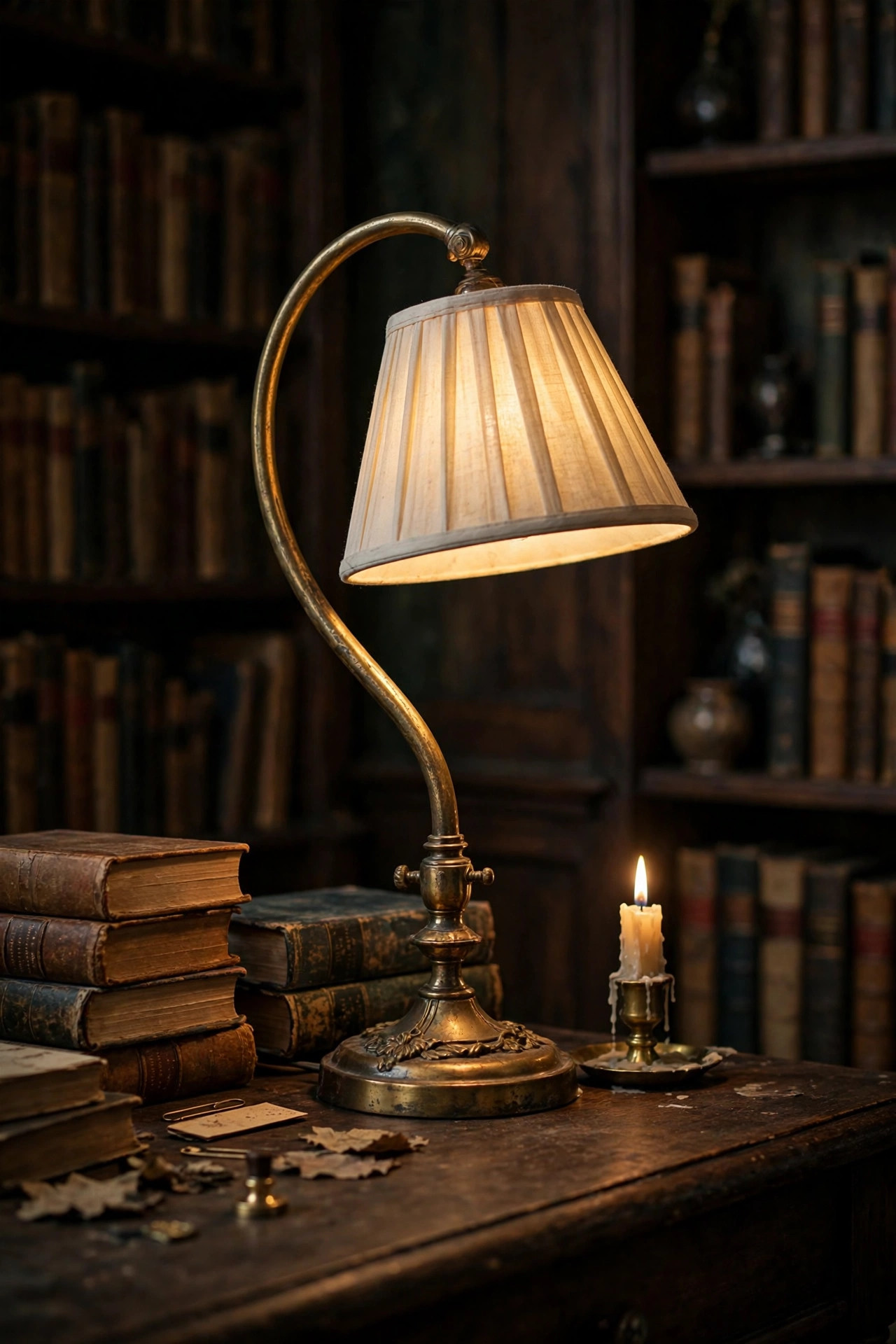
I found my first brass lamp at a flea market, buried under a pile of old picture frames, and the seller wanted eight dollars for it. It was tarnished almost black and the shade was missing, and my friend told me to put it back. But I could see the shape under all that grime, a lovely curved neck and a heavy base, and I took it home in a paper bag like it was something precious. I spent a Sunday afternoon polishing it with lemon and baking soda, and the brass came up warm and golden, with dark shadows left in the crevices that made it look a hundred years old. I put a cream fabric shade on it and set it on my desk, and when I switched it on that evening, the light pooled on the wood in the most beautiful way. It did not look like a lamp from a store. It looked like it had a past. That evening I turned off the ceiling light and just sat at my desk in the lamplight, writing in my journal, and I understood why people in old movies always look so thoughtful at their desks. The light was warm and close and private. My friend who had told me to put the lamp back came over a month later and admitted she was wrong, which I have reminded her of many times since. She now owns two brass lamps herself, so I consider that a complete victory.
Brass lighting is one of the fastest ways to get that old library glow, because the metal itself throws warm reflections around the room. I now have three brass lamps in my bedroom: the desk one, a small one on my nightstand, and a taller one in the reading corner. I keep them all on in the evening instead of using the ceiling light, and the room feels like it is lit by candles. When you shop for them, check that the wiring is safe, because very old lamps can have cracked cords. I had one rewired at a lamp shop for fifteen dollars and it was worth every penny for peace of mind. Look for solid, heavy pieces rather than thin, light ones, because weight usually means better quality. And do not polish them to a mirror shine. A little tarnish in the corners is what gives them their soul. I also keep the shades simple, cream or ivory linen, because patterned shades fight with the mood and colored shades tint the light strangely. A harp and finial in matching brass finishes the look, and those little parts cost almost nothing at a lamp shop. If you find a lamp you love but hate the shade, remember the shade is the easiest part to change. The bones of the lamp are what matter, the weight and the curves, and good bones are worth bringing home.
4. A Gallery Wall of Classical Art
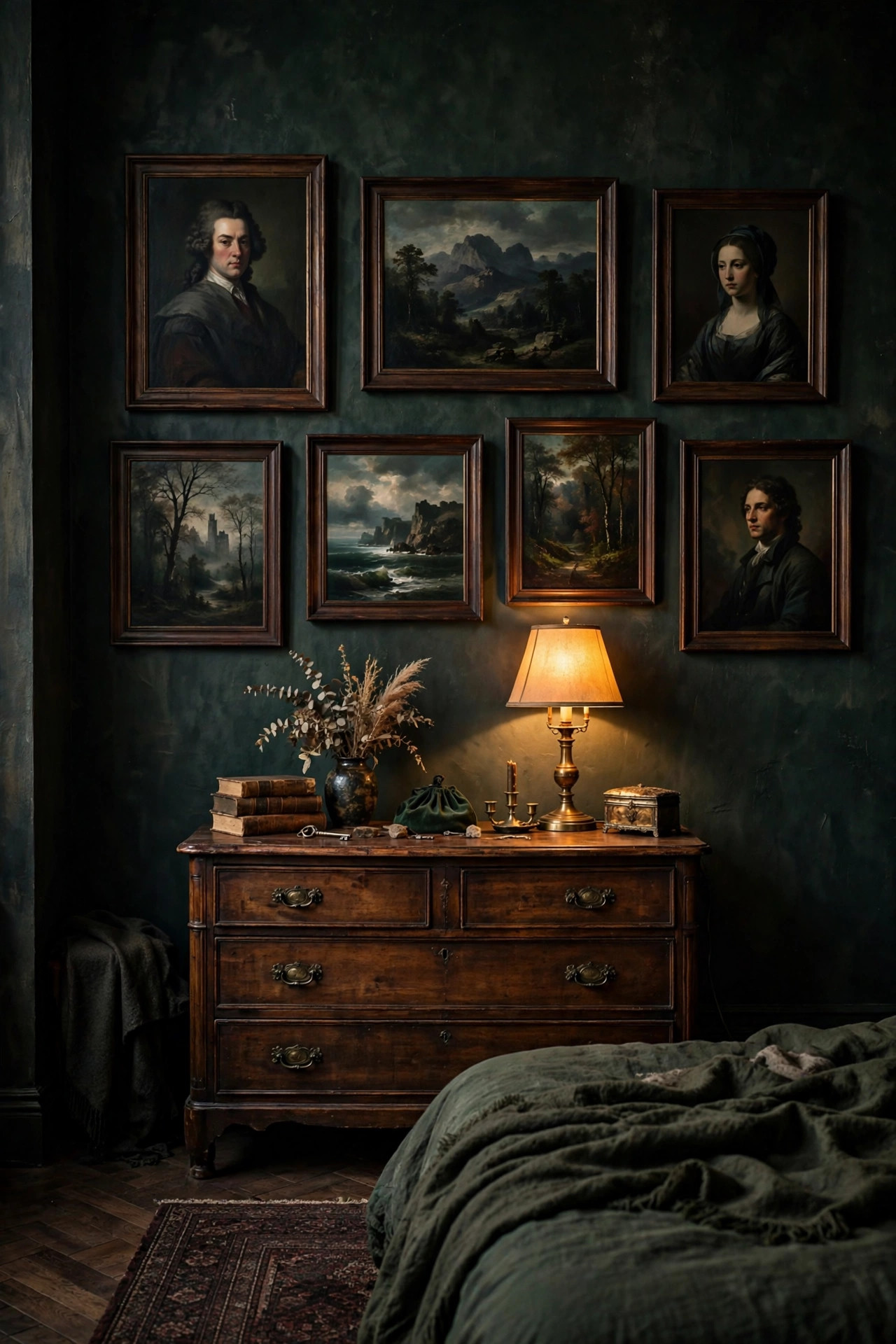
Last winter I printed a dozen classical paintings at the local copy shop, and the whole project cost me less than a pizza. I had been scrolling through museum websites late at night, saving images of moody portraits and dark landscapes and still lifes with fruit and skulls. The copy shop printed them in black and white and sepia on thick paper, and I bought a bundle of cheap wooden frames from a discount store and painted them all the same dark walnut color with a small can of paint I already had. Hanging them was the fun part. I laid them all out on my bedroom floor first and moved them around for an hour like puzzle pieces, mixing big prints with small ones, until the arrangement felt right. When they were finally on the wall above my dresser, my room looked like a tiny museum wing. I stood back and felt ridiculously proud. My neighbor knocked on the door halfway through and ended up staying for tea, watching me shuffle prints around on the floor and offering opinions like an art critic. We laughed a lot that afternoon. When the last frame was up, we stood in the hallway looking in, and she said the room finally looked like me, which was the nicest thing anyone had said about my decorating. I think she was right. The wall felt personal in a way store-bought art never had.
A gallery wall works best when the frames match but the art does not, because that is what gives it the collected, old-world feeling. I keep all my frames dark wood or brass, and inside them anything goes: a stormy seascape next to a portrait of a serious-looking woman from the eighteen hundreds, a sketch of a hand next to a dark floral still life. Museum websites and public domain archives are full of free high-resolution images you can print, which means the art itself costs almost nothing. I hang mine in a loose grid that is a little bit imperfect, because perfect symmetry feels modern to me and I want the opposite of that. Leave small gaps between frames, about two inches, so each piece has room to breathe. And hang the center of the arrangement at eye level. I made the mistake of hanging mine too high at first and it felt disconnected from the rest of the room until I lowered the whole thing by six inches. I also number the backs of the frames lightly in pencil so I remember the arrangement if I ever take them down to paint. Painter’s tape on the wall helps me plan without making a hundred nail holes, and I trace each frame on kraft paper first when I want to be precise. Most of the time I just eyeball it, though, because a little imperfection suits this style. The gallery wall has grown since then, with new prints joining whenever I find something I love.
5. Dark Wood Writing Desk
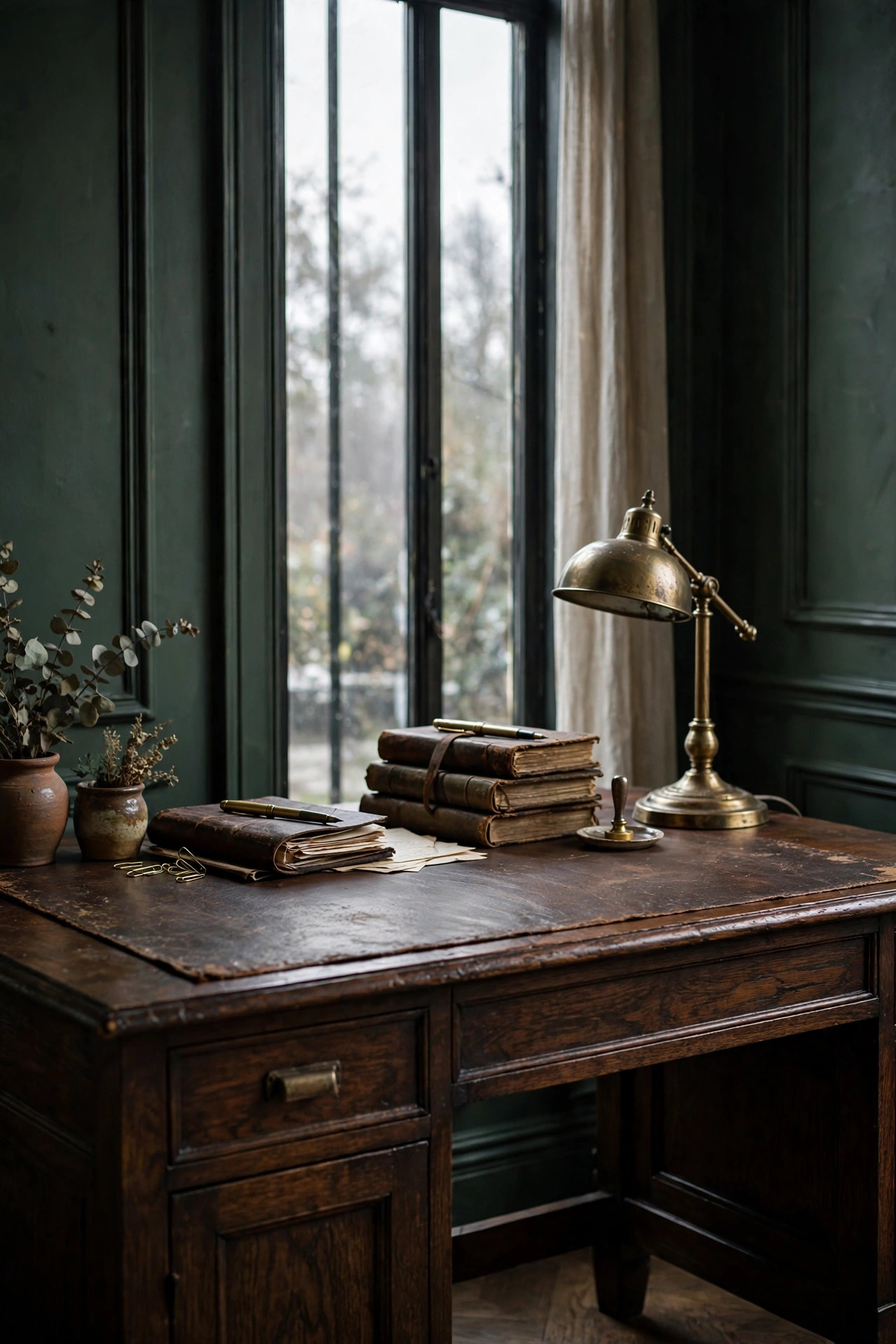
I had been writing at my kitchen table for two years, hunched over a laptop between coffee cups and mail piles, and I told myself it was fine. Then one day I saw a dark wood writing desk at an estate sale, priced at forty dollars because one drawer stuck a little. It was solid oak, heavy as a boat, with a leather writing surface that was worn soft in the middle where someone had written for decades. I rented a small truck and hauled it home, and my neighbor helped me carry it up the stairs while making jokes about my new antique habit. I set it under my bedroom window, put my brass lamp on the left corner and a stack of journals on the right, and sat down in the chair I already owned. The first evening I wrote three pages in my journal without stopping, just because the desk made me want to sit there. It felt like a place where thoughts were supposed to happen. I started keeping a fountain pen in the top drawer, and even though my handwriting is terrible, writing with it feels like an occasion. The drawer that stuck turned out to need nothing but a little candle wax rubbed on the runners, a trick my neighbor taught me while we carried the desk upstairs. Forty dollars for a desk that makes me want to write every day might be the best money I have ever spent on my home.
A real wood desk changes how a room feels in a way that a flat-pack desk never will. The weight of it, the grain of the wood, the little scratches and marks from its past life, all of it adds character. You do not need an expensive antique. Look for solid wood pieces at estate sales, thrift stores, and online marketplaces, and do not be scared of a stuck drawer or a wobbly leg, because those things are usually easy to fix with a little sandpaper or wood glue. I rub mine with a bit of furniture oil twice a year and it glows. Keep the top mostly clear, because a writing desk buried in clutter loses its magic. I allow myself the lamp, a small stack of books, a candle, and whatever I am currently writing in. Everything else lives in the drawers. There is something about sitting down at a beautiful desk that makes even paying bills feel a little bit romantic. I also lined the drawers with old maps I had left over from another project, which makes opening them a small pleasure. A desk pad or blotter protects the leather top from ink and coffee rings, and I wish I had bought one sooner, because my top has a ring I now pretend is character. If you work from home at the same desk, try to clear the work things away in the evening so the desk can go back to being a personal, peaceful place.
6. Velvet Armchair Reading Corner
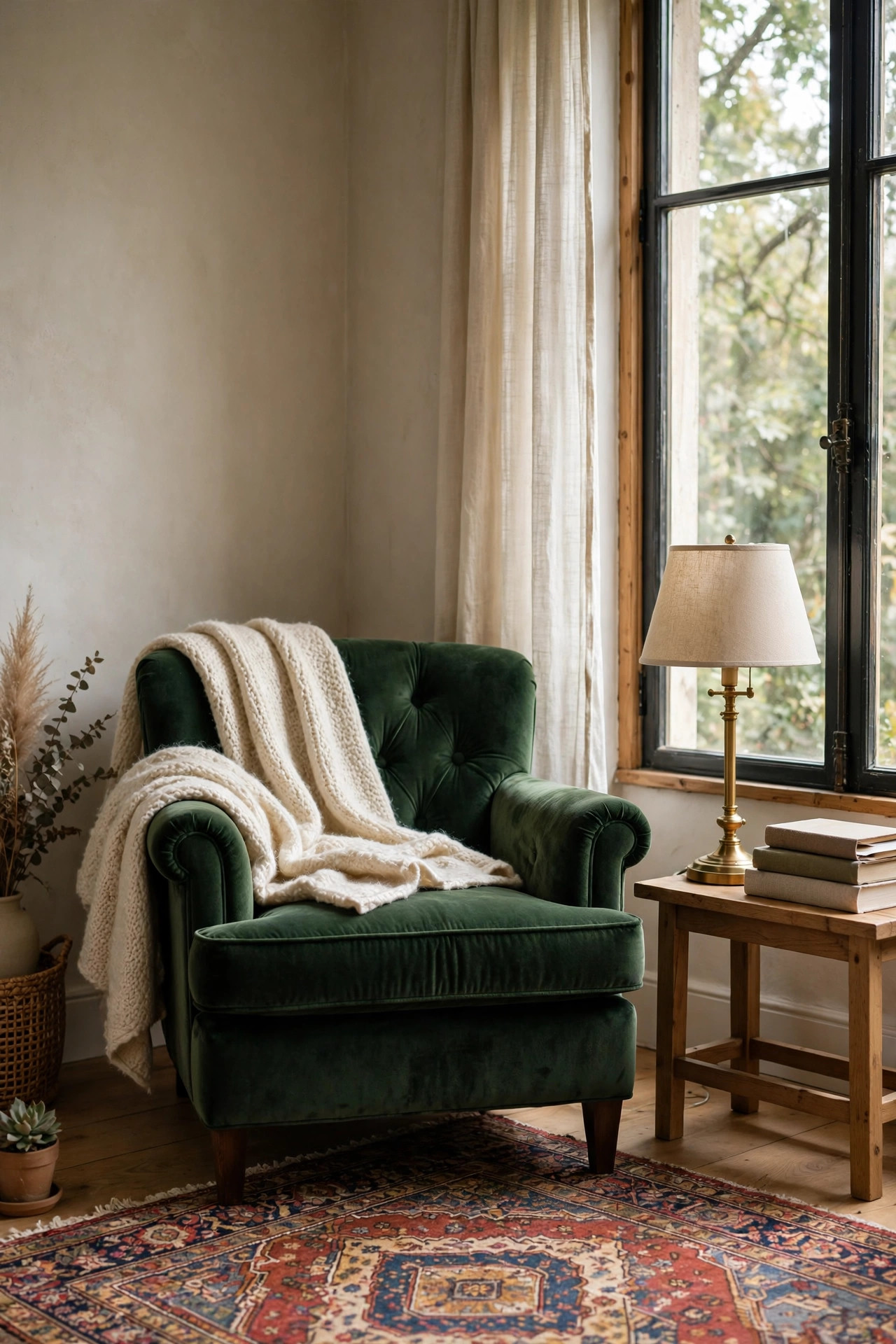
My reading corner started with a chair I almost did not buy. It was a deep green velvet armchair at a charity shop, priced at thirty five dollars, and the velvet was worn thin on one arm. I sat in it right there in the shop and it swallowed me up in the most comfortable way, and I knew I was taking it home. I wedged it into the corner of my bedroom by the window, draped a wool throw over the worn arm, and put a small wooden side table next to it with my brass lamp and a stack of books. That corner is now my favorite place in the entire apartment. On rainy evenings I curl up there with tea and read until the light goes blue outside the window. My cat has claimed the seat cushion as her own personal throne, and I have stopped fighting her for it. The chair has a permanent cat-shaped dent in the cushion now, and I have made my peace with it. Sometimes in the evening my partner brings me tea without asking, just because they see me settled in the corner with a book, and those small kindnesses have become part of what the chair means to me. It is funny how a thirty five dollar chair from a charity shop can become the emotional center of a home, but that is exactly what happened.
A reading corner needs only three things: a comfortable chair, good light, and a surface for your tea. The chair should be one you can sit in for an hour without fidgeting, so test it properly before you buy. Velvet or another soft, heavy fabric suits the dark academia mood best, and deep colors like forest green, burgundy, or mustard look wonderful against dark walls. If you find a chair with worn spots like mine, a throw blanket draped over the back hides a multitude of sins and adds to the cozy look. Place the lamp so the light falls over your shoulder onto the page, not into your eyes. I added a small rug under the chair to mark the corner as its own little zone, and a basket beside it holds the books I am reading now and the ones I want to read next. It is a small setup, but it makes me read more, and that was the whole point. I also added a small footstool I found at the same charity shop a month later, because putting your feet up makes any chair twice as comfortable. A wall-mounted reading light is another option if you do not have room for a table lamp, and I almost went that way. In the end the little table won, because I needed somewhere to put my tea. Whatever you choose, keep it simple and keep it close, because a reading corner only works if everything you need is within arm’s reach.
7. Candle Clusters for Warm Light
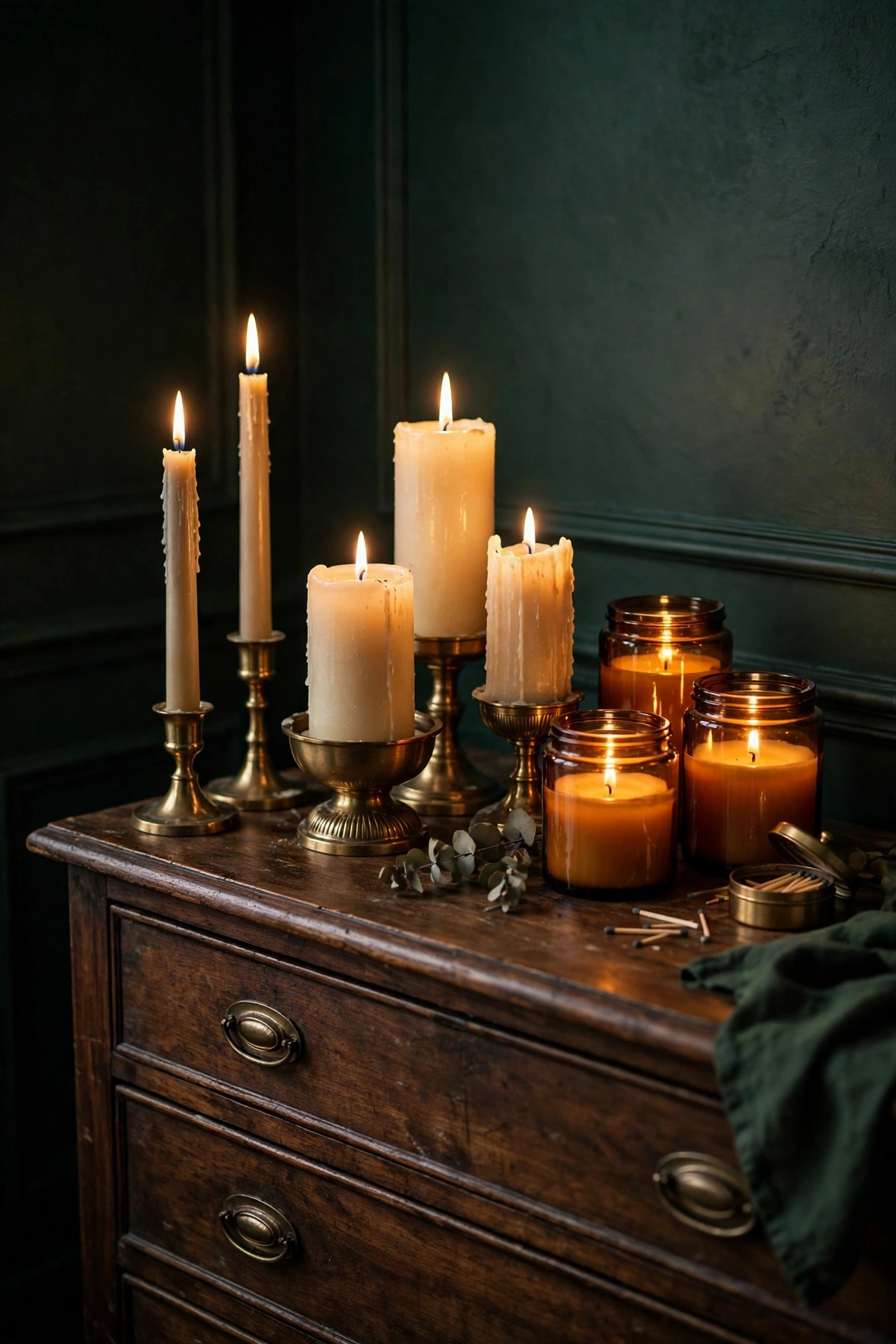
I started collecting candles the way some people collect stamps, one or two at a time, until my windowsill looked like a small chapel. It began with a power outage last autumn. The lights went out at eight in the evening and I lit every candle I owned, maybe ten of them, and set them around my bedroom. The room looked completely different in candlelight. The green walls went almost black, the brass lamps caught little flickers, and the books on the shelves looked like they were hiding secrets. When the power came back on an hour later, I almost did not want it. Now I light candles most evenings, not because I need the light, but because of what the light does to the room. There is no cheaper way to make a bedroom feel like an old library after dark. I have started buying candles whenever I see interesting ones, the way other people buy souvenirs, and each one reminds me of where I found it. There is a tall amber jar from a market in another city that I only light on special evenings, because when it burns down it will be gone. That sounds silly, but these little rituals are what make a house feel like a home instead of just a place you sleep.
The secret is to group candles in odd numbers and at different heights. I use a mix of pillar candles, taper candles in brass holders, and little tea lights in amber glass jars. I set clusters of three or five on my dresser, my desk, and the windowsill, and I vary the heights by stacking some on old books. Safety matters more than mood, so I never leave them burning when I leave the room, and I keep them away from curtains and bedding. If you have pets or you are nervous about open flames, the new flameless candles with the flickering effect are surprisingly good. I have a few mixed in with the real ones and guests can never tell which is which. Unscented candles are best for clusters, because five different scents fighting each other gives me a headache. I save the scented ones for the bathroom and keep the bedroom calm and clean smelling. I store my candle collection in a wooden box under the dresser, sorted by size, which keeps them from getting dusty and makes it easy to grab what I need. Long matches in a little brass holder feel much nicer than a plastic lighter, and they cost almost nothing. I also trim the wicks before lighting, because a trimmed wick burns cleaner and the flame stays small and steady instead of tall and smoky.
8. Persian or Oriental Rug
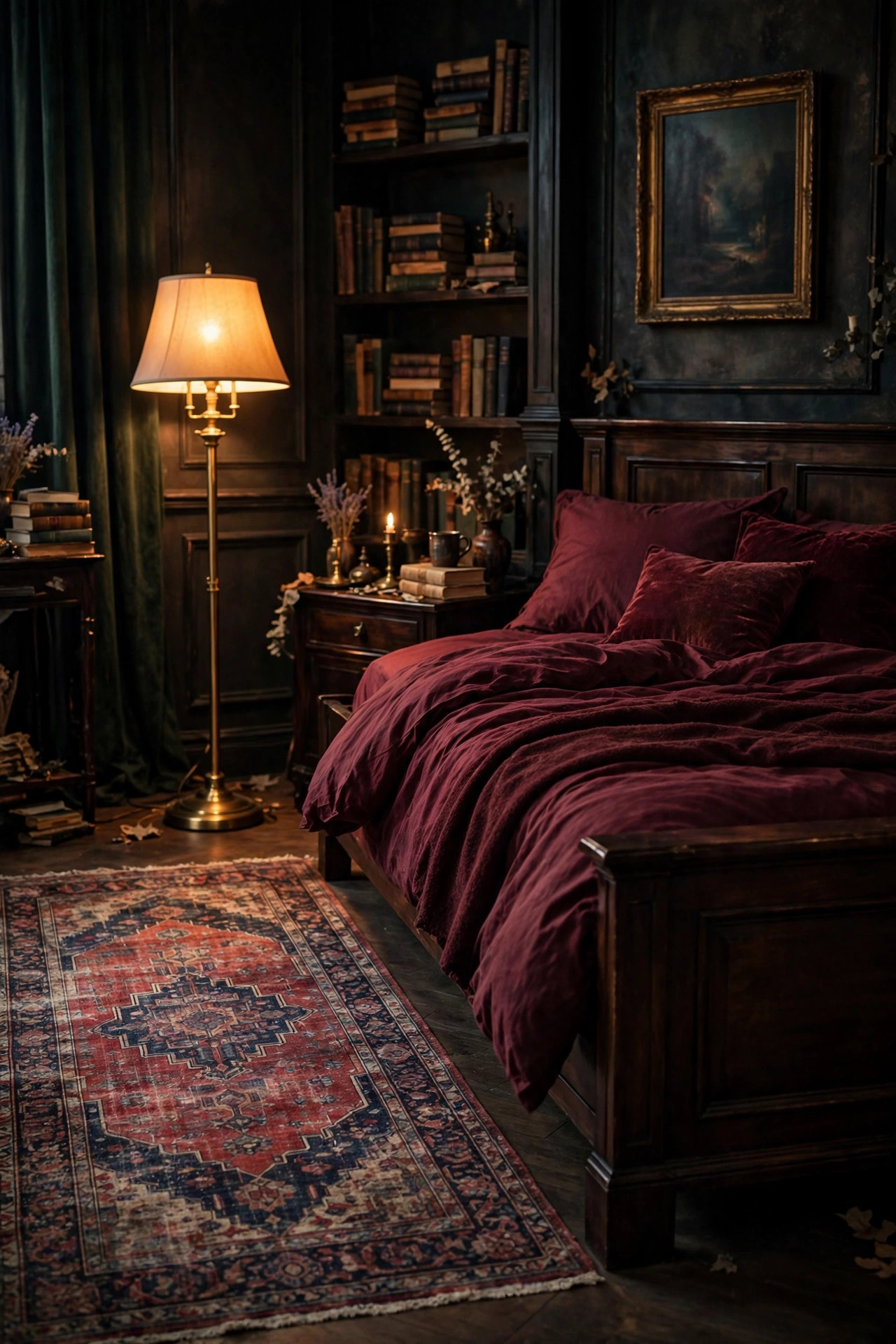
For a long time my bedroom floor was bare wood, and I told myself I liked the simple look. Then I visited a friend whose apartment had a big old Persian rug in the living room, and I spent the whole evening noticing how it changed the sound and the feeling of the room. It muffled footsteps, warmed up the colors, and made everything look more finished. I started hunting for one of my own, and after two months of checking thrift stores and online listings, I found a faded red and navy rug for sixty dollars from a woman who was downsizing. It was worn in the middle and one corner was frayed, but the pattern was still beautiful. I unrolled it beside my bed and the room instantly felt older, softer, and more pulled together. My bare feet thanked me every morning after that. The woman I bought it from told me it had been in her mother’s dining room for thirty years, and I liked knowing it had a history before me. It had faded unevenly where the table had stood, and at first that bothered me, but now I think the pale patch is beautiful, like a memory of another life. When I move someday, the rug is coming with me, and it will carry the story of both houses.
A patterned rug in deep reds, navy, or brown is like a shortcut to the dark academia look, because it brings in age and color and texture all at once. You do not need a real antique or a perfect one. In fact, the faded, worn rugs look the most authentic, and they cost far less than new ones trying to look old. Measure your space before you buy, because a rug that is too small looks lost. Beside the bed, I like a rug wide enough to step onto with both feet in the morning. If the rug you find is a little thin or slides around, a cheap rug pad underneath fixes both problems. I vacuum mine gently once a week and rotate it every few months so it wears evenly. Spills happen, and I blot them right away with a damp cloth instead of rubbing. It has survived coffee, tea, and one memorable ink incident, and it still looks wonderful. If you are buying online, ask the seller for photos in natural light, because rug colors look very different under store lighting. I also check the back of the rug, because a clear pattern on the back usually means better quality. Wool rugs are the most durable and they age gracefully, while synthetic ones can look tired quickly. Mine is wool, and two years of daily use have only made it softer and more beautiful.
9. Leather Bound Journals Display

I have kept a journal since I was sixteen, and for years the notebooks lived in a drawer where I never looked at them. Then one day I was dusting and I pulled them all out, and I realized they told the story of my whole adult life in cracked spines and faded covers. I cleared a shelf on my bookcase and lined them up like soldiers, oldest to newest, and suddenly they were not clutter anymore. They were decor with a past. Now when friends come over, they always drift toward that shelf and ask about the journals, and I tell them stories about the years inside them. A few are leather bound and gorgeous, and a few are cheap spiral notebooks with coffee stains, but together on the shelf they look like the archive of a very interesting person, which is exactly what I want my room to say about me. The oldest one is from when I was sixteen, full of dramatic teenage poetry that makes me cringe and smile at the same time. I would never throw it away. There is something deeply comforting about being able to hold proof that you have grown, that the person who wrote those pages survived and became you. My shelf of journals is really a shelf of evidence that life goes on and gets better.
You can build this look even if you have never kept a journal in your life. Start writing now, and buy one beautiful blank journal to keep on your desk or nightstand as the beginning of the collection. Vintage shops often sell old leather bound books and ledgers for a few dollars, and they look wonderful mixed in with your own notebooks. I stand mine upright like books and lay a few flat in small stacks, and I tie one bundle with a piece of twine for that old archive feeling. A small brass bookend keeps the row from toppling. If you are worried about privacy, remember that nobody is going to open them without asking, and you can always keep the truly personal ones in a drawer and display the prettier, less private ones. The point is not to show off your secrets. The point is to surround yourself with evidence of a life spent thinking and noticing things. I date the first page of every new journal, and I write the year on the spine when I finish one, which makes the shelf look wonderfully archival. A few of my journals have locks, and those stay in the drawer, because some thoughts are just for me. The displayed ones are the everyday kind, full of lists and observations and half-formed ideas. Nobody has ever opened one without asking, by the way. People seem to understand that journals are private, even when they are on display.
10. Heavy Velvet Curtains
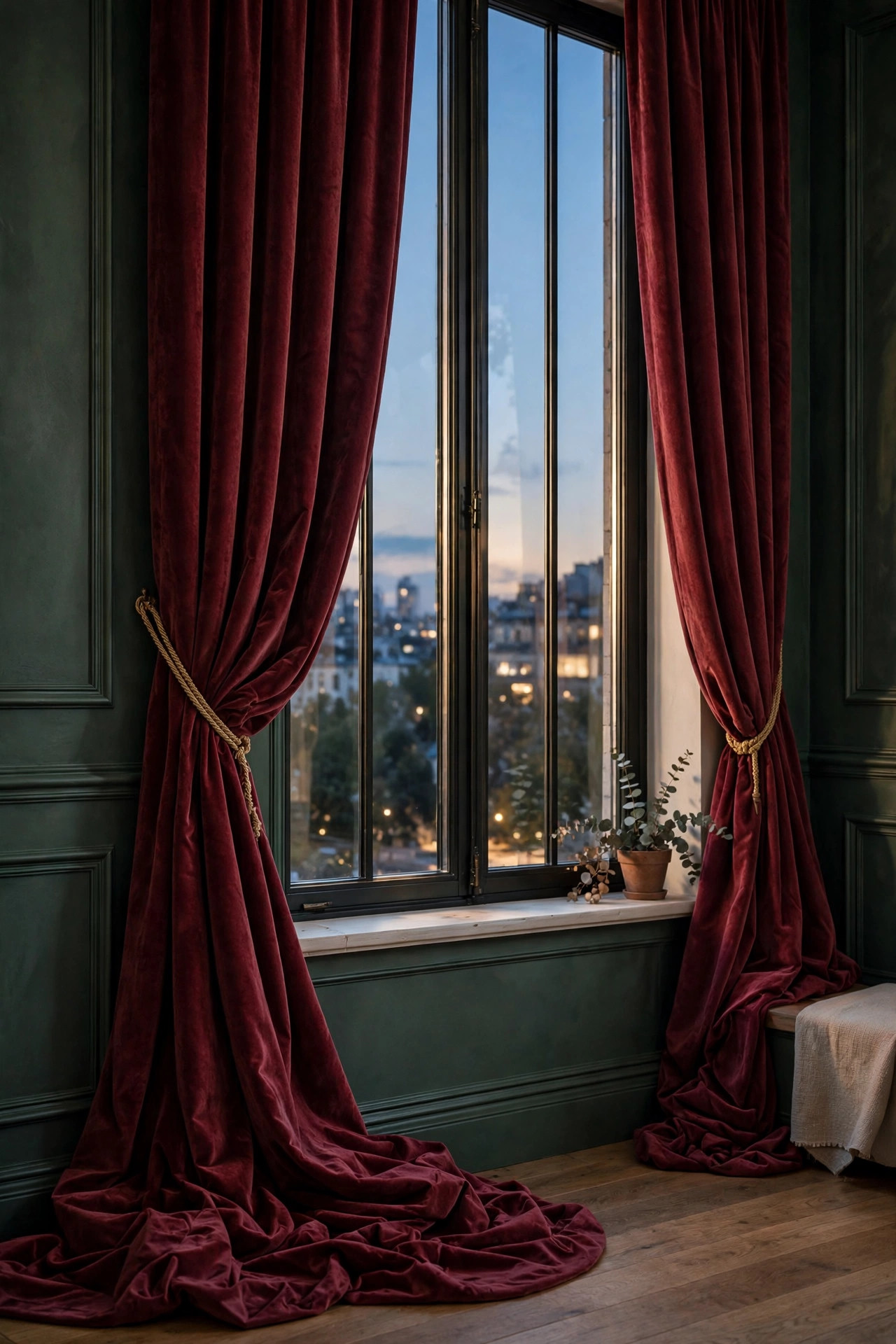
My bedroom used to have thin white curtains that let in every bit of streetlight, and I slept badly for a year without connecting the two things. Then I found a pair of heavy burgundy velvet curtains at an estate sale, still in good shape, for twenty dollars. They were far too long for my windows, which turned out to be a blessing, because they pooled on the floor in soft folds exactly like the curtains in old paintings. The first night I hung them, I closed them and the room went properly dark and wonderfully quiet, as if the outside world had been switched off. I slept better that night than I had in months. I had no idea how much the streetlight had been bothering me until it was gone. My room faces the road, and car headlights used to sweep across my ceiling all night. The velvet stopped all of that, and it also muffled the traffic sounds in a way I did not expect. Heavy fabric is a surprisingly good sound absorber. Now when I close those curtains, it feels like the world has been kind enough to leave me alone for a while. In the daytime, when I tie them back, they frame the window like a stage curtain and make the whole wall look grander.
Heavy curtains do three jobs at once: they block light, they soften sound, and they add that rich, old-world texture that thin curtains never will. Velvet is the classic choice, but heavy cotton, brocade, or even thick linen in a dark color will work. Hang the rod high and wide, well above the window frame and extending past the sides, because this makes the window look bigger and lets the curtains stack neatly to the sides during the day. I learned to buy curtains longer than I need and let them kiss or pool on the floor, since curtains that hover above the floor always look a little unfinished to me. If new velvet curtains are out of your budget, check estate sales and thrift stores, where they turn up often. Wash them gently or have them cleaned, because old curtains can hold a lot of dust, and then enjoy the delicious feeling of pulling them closed at night. I tie mine back with simple brass holdbacks during the day, which cost me a few dollars at a hardware store and look far more expensive. If your curtain rod feels flimsy under the weight, upgrade to a sturdier one, because heavy curtains will slowly pull a weak rod out of the wall. I learned that the hard way in my old apartment. A center support bracket is a small thing that prevents a big disaster.
11. Vintage Globe or World Map

I bought a small vintage globe at a flea market mostly because it was beautiful, not because I had a plan for it. It was about ten inches across, with a cracked varnish and oceans the color of old tea, and it sat on a dark wooden stand. I put it on top of my bookshelf and forgot about it for a week. Then one evening I was dusting and I gave it a spin, and I stood there watching countries from a vanished world turn past: borders that no longer exist, names of places that have changed. It became one of my favorite objects in the room. Guests always spin it too. There is something about an old globe that makes people thoughtful. It sits there quietly reminding you that the world is big and old and full of stories, which is exactly the feeling I want in my bedroom. I have started using the globe to pick dream destinations, closing my eyes and spinning it and putting my finger down at random. Last month my finger landed on a tiny island I had never heard of, and I spent a whole evening reading about it. It is a silly game, but it reminds me that curiosity is a habit worth keeping. The globe is not just decor. It is an invitation to wonder about the world.
An old globe or a framed vintage map brings a sense of history and curiosity that fits the dark academia mood perfectly. Look for globes with that aged, tea-colored finish rather than bright modern ones, because the muted tones blend with dark walls and wood. Place it where it can be touched and spun, on a bookshelf, a desk, or a side table, because a globe behind glass loses half its charm. If you cannot find an affordable globe, a framed antique-style map works just as well. I have a reproduction of an old star chart in a thin brass frame hanging near my reading corner, and it cost me very little. Map shops and museum stores sell beautiful reproductions, and you can also print public domain maps at a copy shop. Hang maps at eye level where you will actually look at them, not up near the ceiling. I sometimes catch myself studying mine instead of reading, and I consider that a feature, not a problem. I framed my star chart myself with a cheap frame and a mat I cut from cream cardstock, and it looks like something from a museum shop. If you go the map route, look for maps with decorative borders and sea monsters in the oceans, because those details are what make old maps so charming. Hang it where you will see it daily, because a beautiful map you never look at is just wallpaper.
12. Dried Flowers in Dark Vases
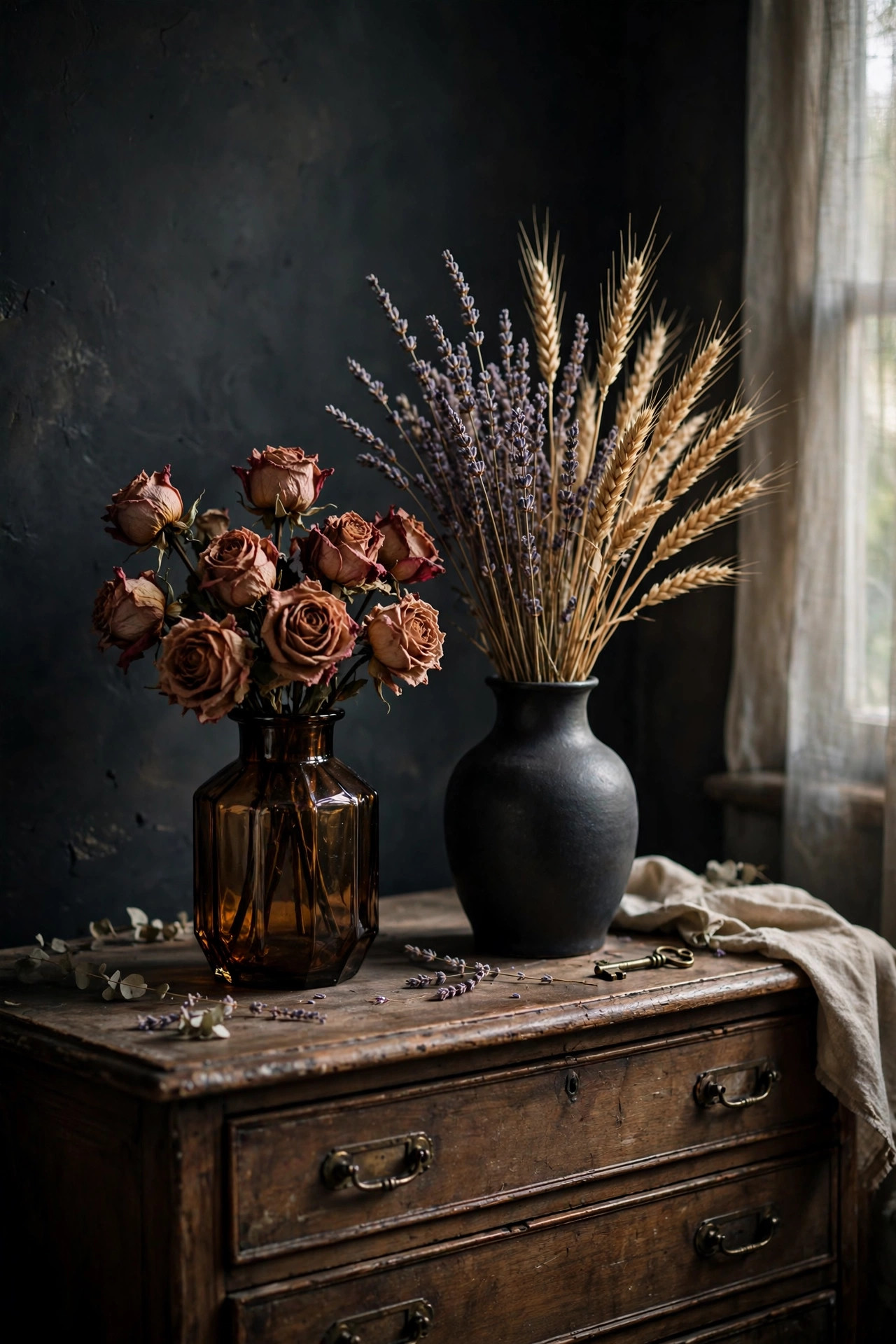
Fresh flowers are lovely, but they wilt in a week and I always felt guilty throwing them away. Dried flowers solved that problem for me and turned out to suit my room even better. It started when a bouquet my sister gave me dried out in the vase and I could not bring myself to toss it. The roses went a deep, dusty red, the baby’s breath turned to a soft cream lace, and the whole thing looked like something from a Victorian painting. I put the vase on my dresser and it stayed there for months, looking more beautiful as it faded. Now I dry flowers on purpose. I hang bunches upside down in my closet for two weeks, then arrange them in dark glass and ceramic vases around the room. They ask for nothing, they last for ages, and they bring in that slightly melancholy, romantic feeling that fresh flowers never quite manage. I also love how they look in winter, when everything outside is gray and bare. They bring a bit of the garden indoors and keep it there through the cold months. A friend who visits every December always comments on them, and last year she started drying her own flowers too, which felt like passing on a small and lovely tradition.
The key is choosing flowers that dry well and vases that suit the mood. Roses, lavender, wheat stalks, eucalyptus, and baby’s breath all dry beautifully and keep their shape. I avoid anything too bright or cheerful, because neon colors fight with the moody palette. Dusty reds, deep purples, creams, and browns are perfect. For vases, I look for dark amber glass, matte black ceramic, or aged brass, usually from thrift stores. A tall bunch of dried wheat in a dark vase on the floor beside my bookshelf looks like it belongs in an old study. Replace the arrangements once a year or when they start shedding too much, because very old dried flowers get brittle and dusty. I keep mine away from direct sun so the colors fade slowly and gracefully instead of bleaching out. It is the lowest maintenance decor I own, and one of the prettiest. To dry flowers yourself, gather them in small bunches, tie the stems with string, and hang them upside down in a dark, dry closet for two to three weeks. They keep their color best away from direct sun during drying. I check on mine like they are a science experiment, which amuses my family. Once they are crisp and dry, arrange them loosely, because tight, fussy arrangements look wrong with dried flowers. Loose and a little wild is the way. My favorite arrangement is a tall bunch of dried lavender in a dark amber bottle on my nightstand, because I catch the faint scent when I turn over in the morning. It is barely there, just a whisper, but it makes waking up nicer. I also keep a small bunch of wheat tied with twine on my bookshelf, and it has been there for over a year, still golden and perfect.
13. Antique Mirror With Patina
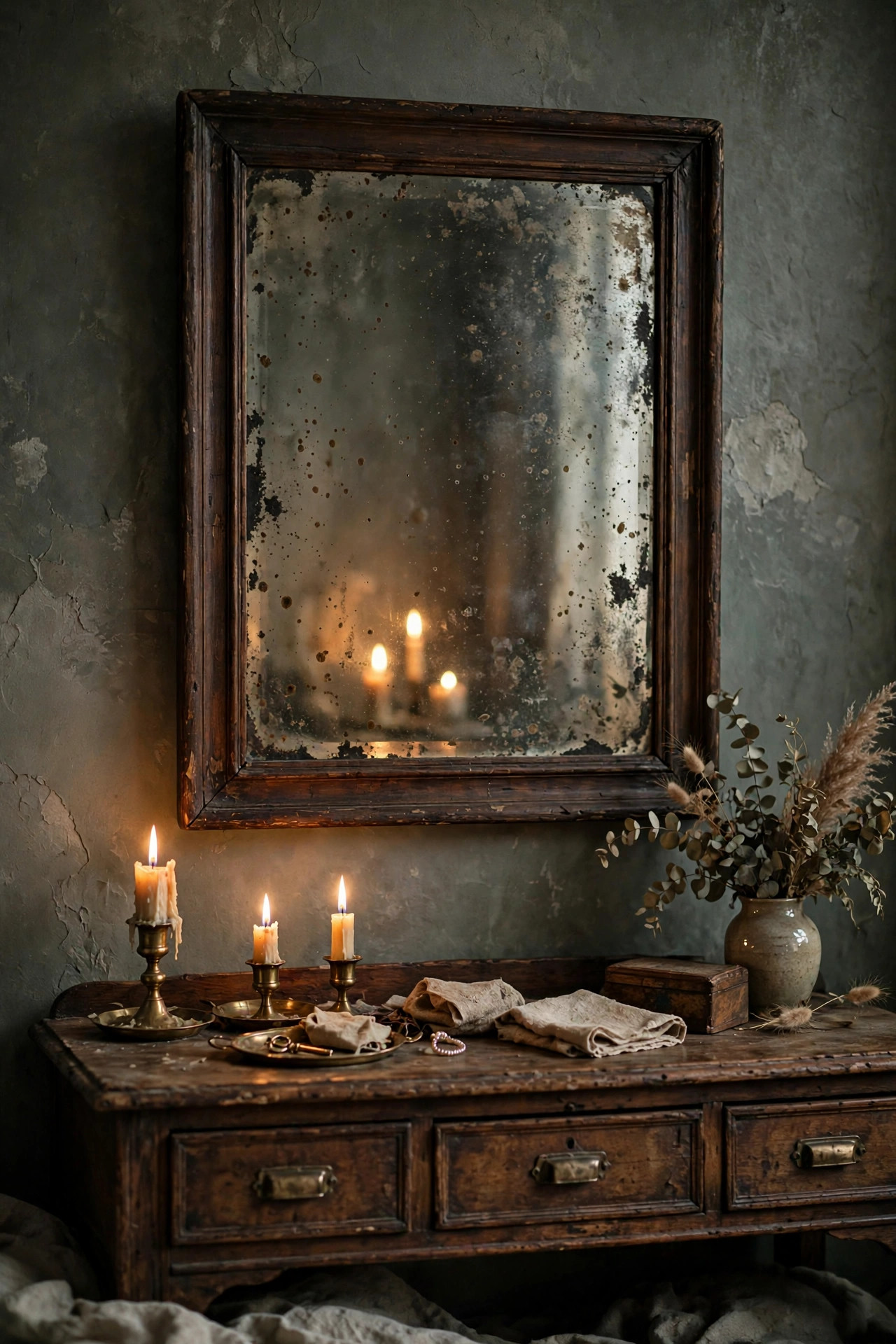
I hung an old mirror with a foxed, spotty surface above my dresser, and it is the most complimented thing in my room. I found it at an antique shop for twenty five dollars because the silvering had gone blotchy with age, which the dealer called a flaw. To me it was the whole point. A perfect new mirror bounces light around in a cold, sharp way. This old one softens everything it reflects. In the evening, when the lamps are on, the room in the mirror looks like a memory of itself, all warm and golden and slightly blurred. I catch my reflection in it while getting dressed and I look a little bit like a painting. It does not show every pore and flaw the way a new mirror does, and honestly, I prefer it that way. The dealer told me the foxing would only get worse with time, and I told him that was fine by me. I like the idea of owning something that keeps changing, that refuses to stay perfect. Every few months I notice a new cloudy patch, and instead of being annoyed, I feel like the mirror is aging alongside me. We are in it together, the mirror and I, both a little worn and both better for it.
Aged mirrors fit the dark academia look because they feel like they have witnessed things. Look for mirrors with foxing, which is the term for those dark spots and cloudy patches, at antique shops, flea markets, and estate sales. The worse the condition, the cheaper the price, and often the better the effect. Make sure the frame is solid and hang it securely, because old mirrors can be heavy. I use proper wall anchors, not just a nail, after a smaller mirror fell off my wall years ago and scared me half to death. Place it where it will catch lamplight or candlelight rather than harsh daylight, because that is when it looks most magical. Above a dresser, over a desk, or leaning against the wall on a mantel all work beautifully. Clean it very gently with a soft dry cloth. Harsh cleaners can damage old silvering further, and the patina is precious, so I protect it. If you cannot find a genuinely old mirror, you can buy new mirrors with an antiqued finish, though they never look quite as good as the real thing. I would rather have a small real one than a big fake one. Check the back for a solid frame and secure hanging wire, because old mirrors are often heavier than they look. Mine needed two wall anchors, and it has not moved a millimeter since.
14. Wall of Floating Bookshelves
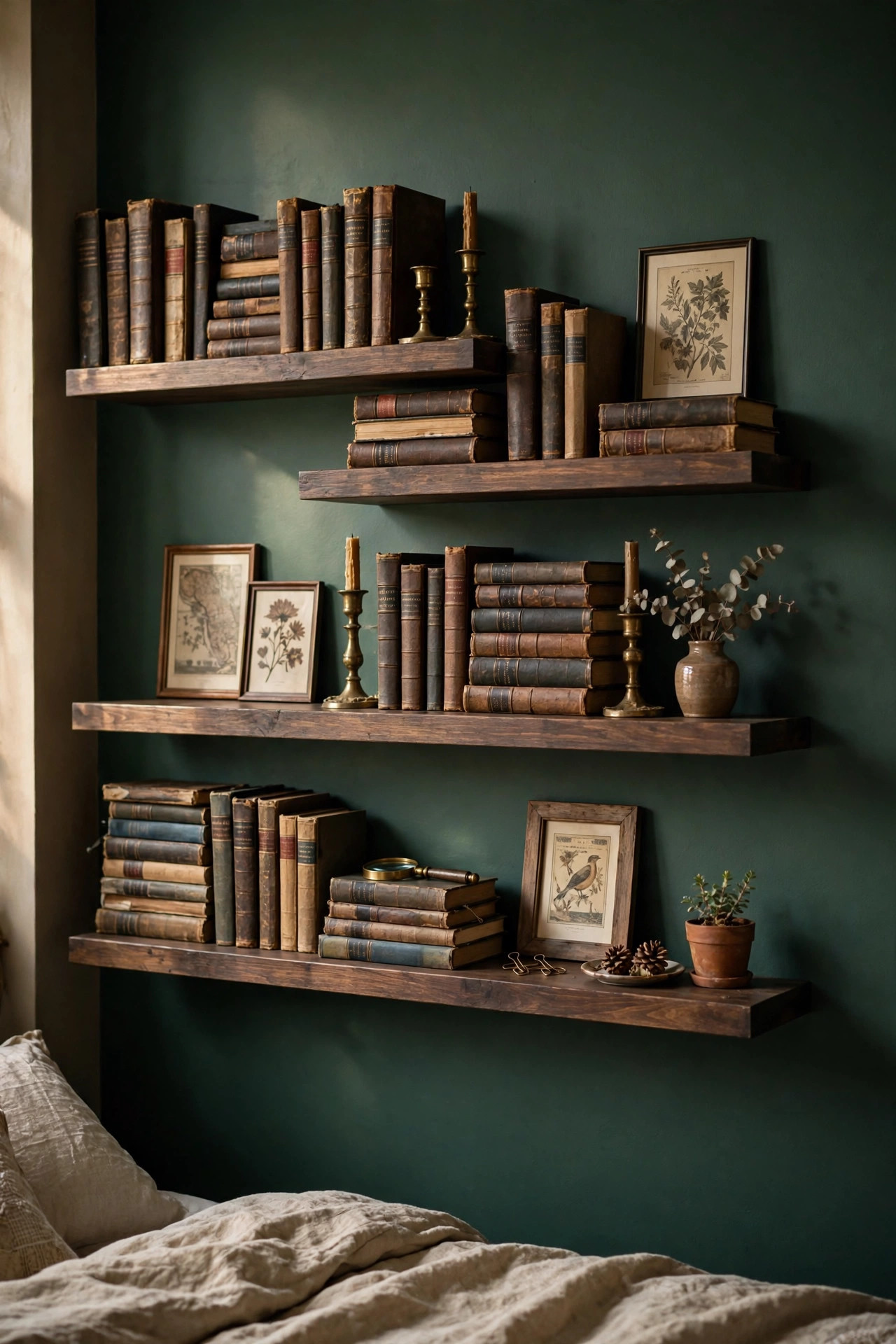
I ran out of bookshelf space two years ago, and instead of buying another big bookcase, I put up floating shelves on the one empty wall in my bedroom. It was the best decision I ever made for that room. I bought six simple dark wood shelves and mounted them in a staggered pattern, like steps climbing the wall, and then I filled them with books sorted loosely by subject. From across the room, it looks like the books are floating, and the wall has become the focal point of the whole bedroom. I lie in bed at night and look at the spines, and it feels like sleeping in a library. My friend said it looked like a bookshop wall, and I took that as the highest compliment. The whole project took one Saturday afternoon and cost less than a nice dinner out. The hardest part was finding the studs in my old plaster walls, and I put three extra holes in the wall before I got it right. A little spackle fixed them, and nobody can tell. My dad came over to help with the last two shelves, and he insisted on testing each one by hanging off it slightly, which terrified me but proved they were solid. We celebrated with pizza on the floor, surrounded by books waiting to be shelved.
Floating shelves are wonderful because they turn an empty wall into storage and art at the same time. I used solid wood shelves rather than the hollow kind, because books are heavy and I wanted shelves that would not sag. Mount them into wall studs whenever possible, and if you cannot find studs, use heavy duty anchors rated for the weight. I learned to leave a little breathing room on each shelf instead of cramming books edge to edge, because a shelf packed too tight looks stressed. I mix in small objects between the books: a brass candlestick here, a tiny framed print there, a small stack of books laid flat to break up the rows. Vary the heights of the shelves so the arrangement feels organic rather than rigid. And step back often while you fill them. I rearranged mine three times before it felt right, and that is completely normal. I also learned to put the heaviest books, like art books and dictionaries, on the lowest shelves, where the brackets bear the most weight. It is a small structural thing that makes everything safer. Leave one shelf partly empty on purpose, because a little negative space makes the full shelves look intentional rather than crowded. I use my empty-ish shelf for a candle and a tiny framed print, and it is my favorite one.
15. Old Typewriter as Decor

My grandfather’s typewriter sat in my parents’ attic for twenty years before I rescued it, and now it holds pride of place on my writing desk. It is a heavy black machine with round glass keys, and it still works if you feed it paper and ribbon. I do not use it for real writing, because I type far too fast and make far too many mistakes for a machine with no delete key. But some evenings I roll in a sheet of thick paper and type a poem or a quote, just for the pleasure of the clack and the ding of the bell. The pages go up on my wall or into my journal. Even when it sits silent, the typewriter is a beautiful object. It has weight and presence, and it tells anyone who sees it that words matter in this room. My grandfather was a journalist, and I like to think he would approve of his typewriter living in a room full of books. My mother says he typed every morning before work, with strong coffee and the radio on low. When I sit near the typewriter with my own coffee, I feel connected to him in a way I cannot quite explain, as if his encouragement is still here, quiet and steady.
You do not need a family heirloom to get this look. Old typewriters turn up regularly at flea markets, estate sales, and online marketplaces, often for very little money because most people do not want the weight and hassle. Look for one with all its keys intact and a case if possible, because the case protects it and looks great too. Test the keys before you buy, not because you will type novels on it, but because a working machine is more satisfying than a broken one. Place it where it can be seen and touched, on a desk or a shelf, with a sheet of paper rolled in as an invitation. I keep a small stack of nice paper beside mine. Dust it gently with a soft brush, because the mechanisms collect dust in every crevice. Even if you never type a word, it is a sculpture with a story. I keep a little brush and a cloth in the typewriter case for dusting, and I oil the moving parts once a year with a single drop of sewing machine oil. If the ribbon is dried out, new ribbons are still sold online for most common models, and replacing it is oddly satisfying. Mine still types in a deep, even black, and every letter I type on it feels like it matters more. Objects carry love, I think, long after the people are gone. Sometimes I run my fingers over the round glass keys and wonder how many stories passed through this machine. News articles, letters to editors, maybe a novel he never finished. It makes me want to write more and waste fewer words. Having his typewriter in my room feels like having his encouragement nearby, quiet and steady, every single day.
16. Framed Vintage Botanical Prints
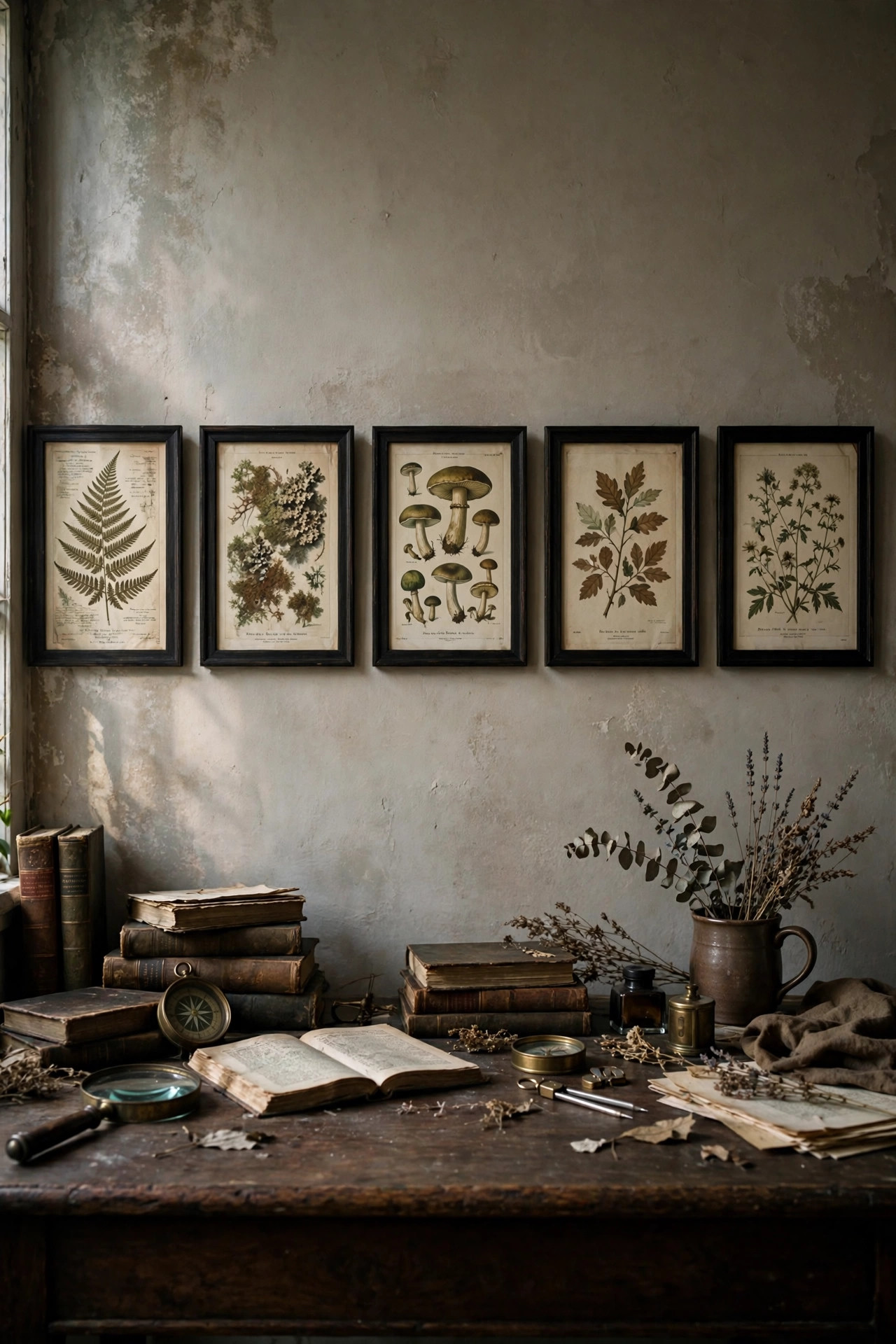
I have always loved the old botanical illustrations in natural history books, the ones where every leaf and root is drawn with impossible care. Last spring I found a damaged antique botany book at a flea market for three dollars. Half the pages were loose and the binding was broken, which made it perfect for my purposes. I carefully removed a dozen of the prettiest plates, pressed them flat under heavy books for a week, and framed them in simple black frames I bought on sale. I hung them in a row above my desk, and they look like they came from a Victorian study. The faded greens and browns of the plants sit beautifully against my dark walls, and the fine linework rewards a closer look. I sometimes stand there with my morning coffee just studying one leaf. The book I took apart was already falling to pieces, so I did not feel guilty, but I would never cut up a healthy book. There is an unspoken rule among book lovers about that, and I respect it. The loose pages had been waiting for someone to love them, and now they are framed and admired daily instead of moldering in a box. It feels like a rescue mission with beautiful results.
Botanical prints bring nature into the room in a way that feels scholarly rather than cottagey, which is exactly right for this style. You can find old illustrated books at flea markets and thrift stores for very little, especially if the binding is damaged. Choose pages with good color and interesting subjects, and handle them gently because old paper tears easily. If you cannot find a book to take apart, museum websites offer free high-resolution downloads of vintage botanical art that you can print at a copy shop. I frame mine simply, because fussy frames fight with the delicate artwork. A row of matching frames looks intentional and calm, while a scattered arrangement feels more collected. Either way works. Hang them where the light hits them during the day, because natural light shows off the fine details. I would rather look at these than at most modern art, and they cost me almost nothing. I arranged mine in a single horizontal row, which suits the long wall above my desk, but a tight grid of nine small prints looks wonderful too. Keep the spacing even, about two inches between frames, for a calm and orderly feel. If you print your own, use matte paper rather than glossy, because glossy prints reflect lamplight and you lose the fine details. Matte looks like real antique paper, which is exactly what we want.
17. Dark Floral Bedding
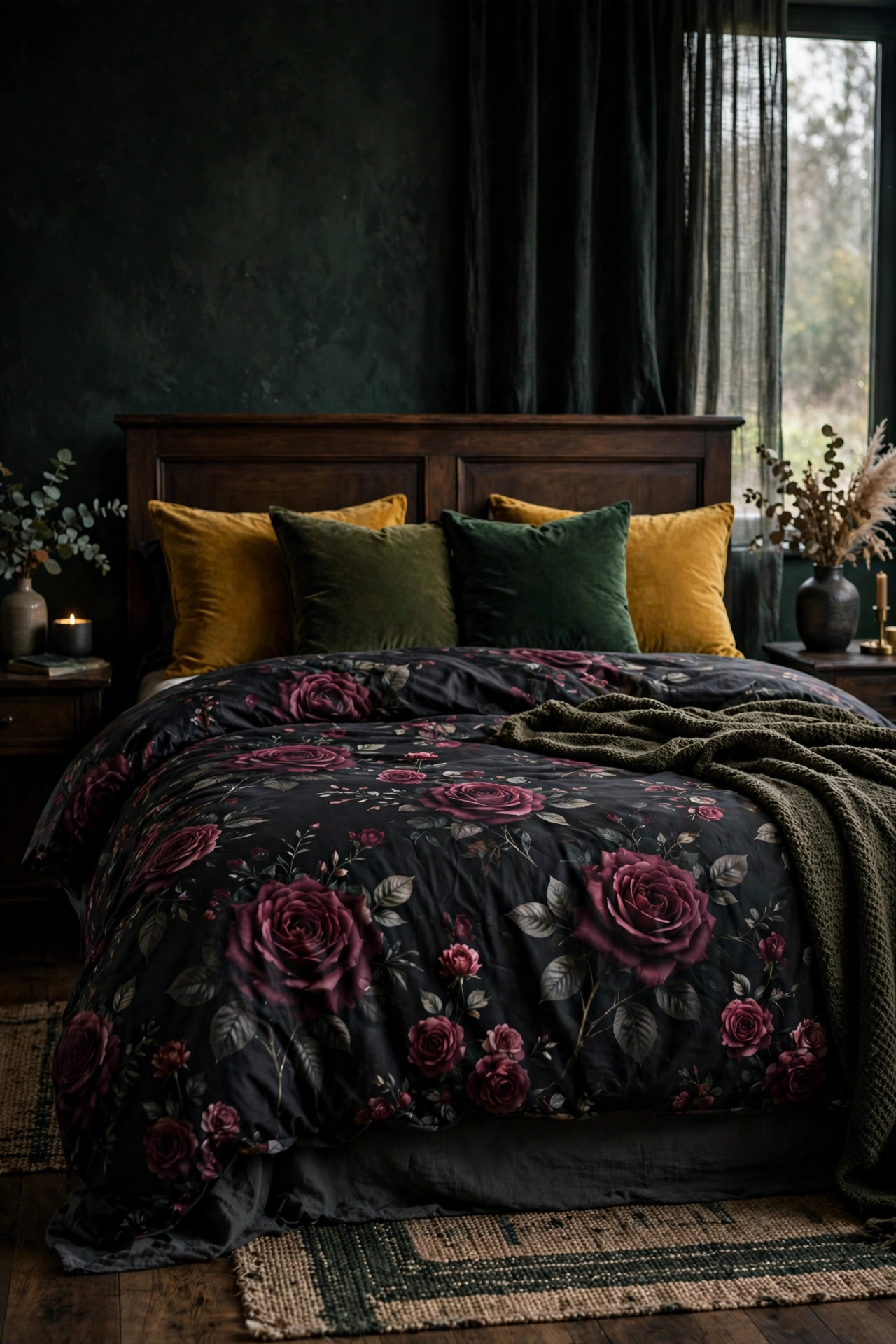
For years I slept under plain white bedding because every decorating article told me it was classic and fresh. But in my green-walled, book-filled bedroom, the white bedding looked like a stranger at a party. It glowed too bright and felt too modern. Then I found a dark floral duvet cover on sale, deep burgundy roses on a near-black background, and I brought it home feeling a little nervous. The moment I put it on the bed, the whole room exhaled. The bedding tied together the rug, the curtains, and the art on the walls. My bed stopped looking like a hotel bed and started looking like it belonged in an old manor house. I added a couple of velvet cushions in mustard and forest green, and now making the bed in the morning feels like arranging a still life. I was nervous the dark bedding would make the room feel smaller, but the opposite happened. Because the bedding echoes the wall color and the rug, everything flows together and the room feels larger and more cohesive. My friend called it jewel-box cozy, and I loved that phrase so much I wrote it in my journal. It is the perfect description of what dark, rich colors do in a small room.
Dark bedding is one of the easiest changes on this list, because you swap it in an afternoon and the effect is instant. Look for florals, damasks, or subtle patterns in deep colors rather than stark black, which can look flat. Burgundy, forest green, navy, and plum all work beautifully. Layer it the way old beds were layered: a fitted sheet, a duvet, a folded throw across the foot, and a few cushions propped against the pillows. The layers add the rumpled, inviting look that makes you want to climb in with a book. Wash new bedding before you use it, because dark dyes can bleed in the first wash and I learned that the hard way with a pale pillowcase. I buy cotton or linen rather than shiny satin, because matte fabrics suit the mood better. It is still just a bed, but now it is the kind of bed you dream about. I also switched to a heavier duvet insert at the same time, because a plump, lofty duvet looks far more inviting than a flat one. Shaking it out each morning takes ten seconds and makes the bed look freshly made even when I am in a hurry. In winter I add a wool throw across the foot, and the bed becomes the warmest spot in the apartment. I have fallen asleep reading there more times than I can count.
18. Stack of Vintage Suitcases
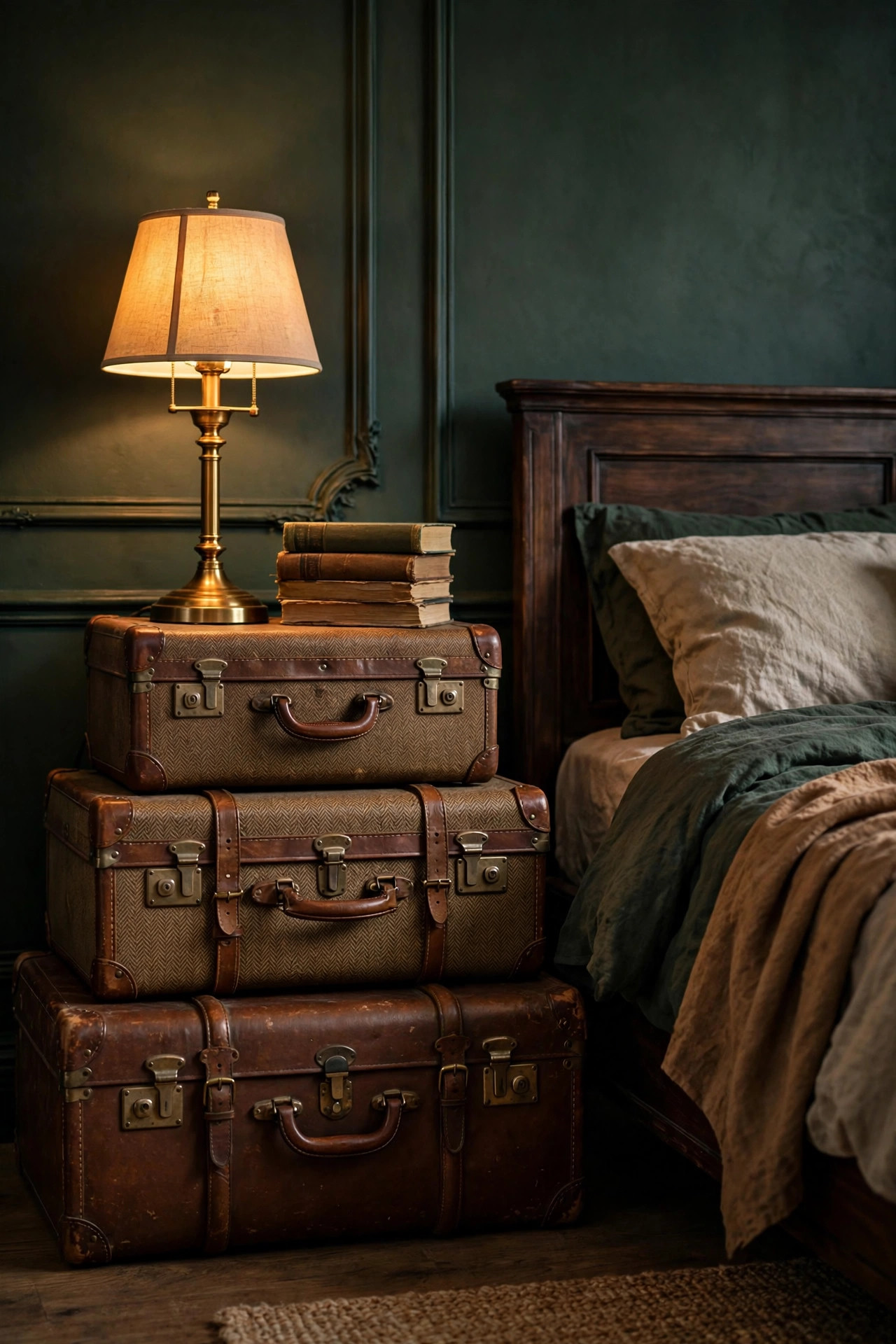
I use a stack of three old suitcases as my nightstand, and it is the most useful piece of furniture I own. I found them one by one at thrift stores over the course of a year: a brown leather one with brass corners, a tweed one with leather straps, and a smaller black one on top. They were ten dollars each, more or less. I stacked them beside my bed, largest at the bottom, and put my lamp and a stack of books on top. Inside, they hold my out-of-season clothes, spare blankets, and the box of old letters I cannot throw away. Every time I open one, it smells faintly of cedar and old paper. Guests always ask about them, and I love telling the story of finding each one. They look like they are packed for a grand tour that never quite happened. The tweed one has a faded shipping label from another country stuck to the side, and I have spent an embarrassing amount of time wondering about the journey it represents. Who carried it, and where were they going? I will never know, and I like the mystery. My suitcases remind me that rooms, like people, are more interesting when they have a past.
Vintage suitcases are perfect for small bedrooms because they are storage and decor in one beautiful package. Look for hard-sided cases with interesting textures: leather, tweed, or canvas with leather trim. Check that the latches work and give the insides a good airing out, because old suitcases can smell musty. I wiped mine inside with a cloth dampened with white vinegar and left them open in the sun for a day, and the smell disappeared. Stack two or three beside the bed as a nightstand, or use a single large one at the foot of the bed for blanket storage. I put small felt pads under the bottom one to protect my floor. If the outside is scuffed, leave it alone. The scuffs are the story. A suitcase that looks brand new misses the entire point, which is that beautiful things have traveled and survived. I put small adhesive felt pads on the bottom of the lowest suitcase to protect my wood floor from the metal corners. If a latch is broken, a leather belt wrapped around the whole case looks intentional and keeps it closed. One of mine has a strap like that, and guests assume it came that way. Inside, I use the cases for things I do not need often, because digging through a stack of suitcases for socks would get old fast.
19. Brass Candlesticks on the Mantel
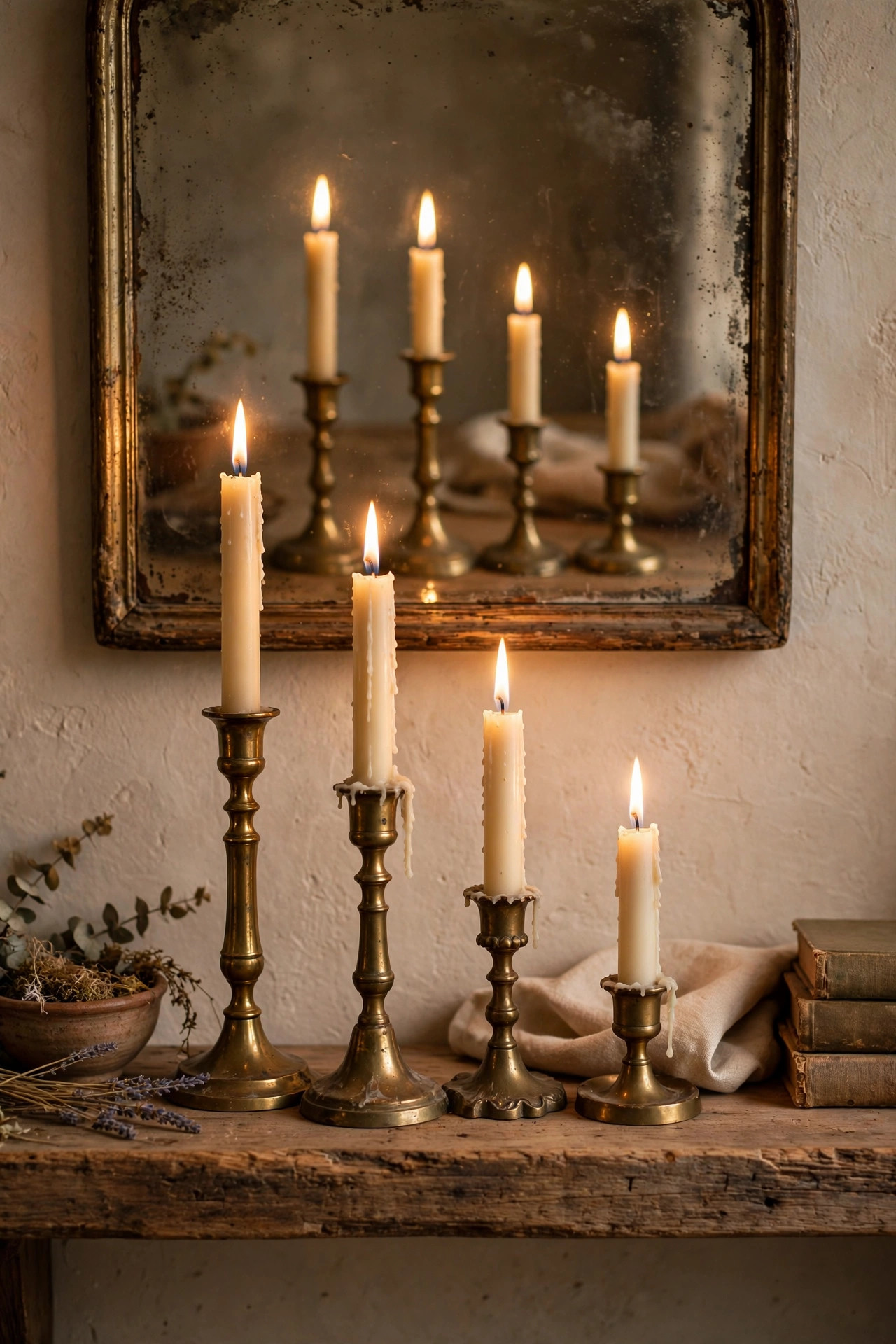
I do not have a fireplace, but I have a wide wooden shelf above my dresser that serves as my mantel, and a row of brass candlesticks lives there. I collected them slowly, one from a flea market, two from my grandmother’s house, one from a charity shop, and none of them match. They are different heights and different shades of brass, from bright gold to deep brown, and that mismatch is what makes them beautiful. In the evenings I light the taper candles and the whole shelf glows. The flames reflect in the old mirror hanging above, doubling the light, and the wall behind goes warm and golden. It is a five minute ritual that changes how the entire room feels. Blowing them out at bedtime, one by one, has become my favorite way to end the day. There is something deeply satisfying about the ritual, the small flame, the soft hiss as each wick goes out, the curl of smoke rising in the lamplight. It signals to my brain that the day is over in a way that flipping a switch never did. I sleep better on nights I do the candle ritual, and I do not think that is a coincidence. Our bodies understand ceremony, even small ones.
A collection of candlesticks is better than a single pair, because the varying heights create a little skyline of light. I look for solid brass pieces with some weight to them, and I do not mind tarnish at all. Taper candles in cream or ivory look best, and I buy them in bulk because I burn through them quickly. Drip a little melted wax in the holder before pushing the candle in, and it will stand straight and steady. I keep a small brass snuffer beside them, which feels wonderfully old fashioned to use. Safety is non-negotiable: the shelf is clear of anything flammable, the candles are far from the curtains, and I never leave them lit when I leave the room. If open flames worry you, tall flameless tapers have gotten very realistic. I have two mixed in with the real ones on nights when I want the look without the worry. I buy my taper candles in boxes of twenty, because buying them one at a time is far more expensive. Cream and ivory are the most versatile colors, and they suit every season. In December I switch to deep red tapers for a festive feeling, then go back to ivory in January. It is a tiny change that makes the whole mantel feel new again, and it costs almost nothing.
20. Moody Portrait in Ornate Frame
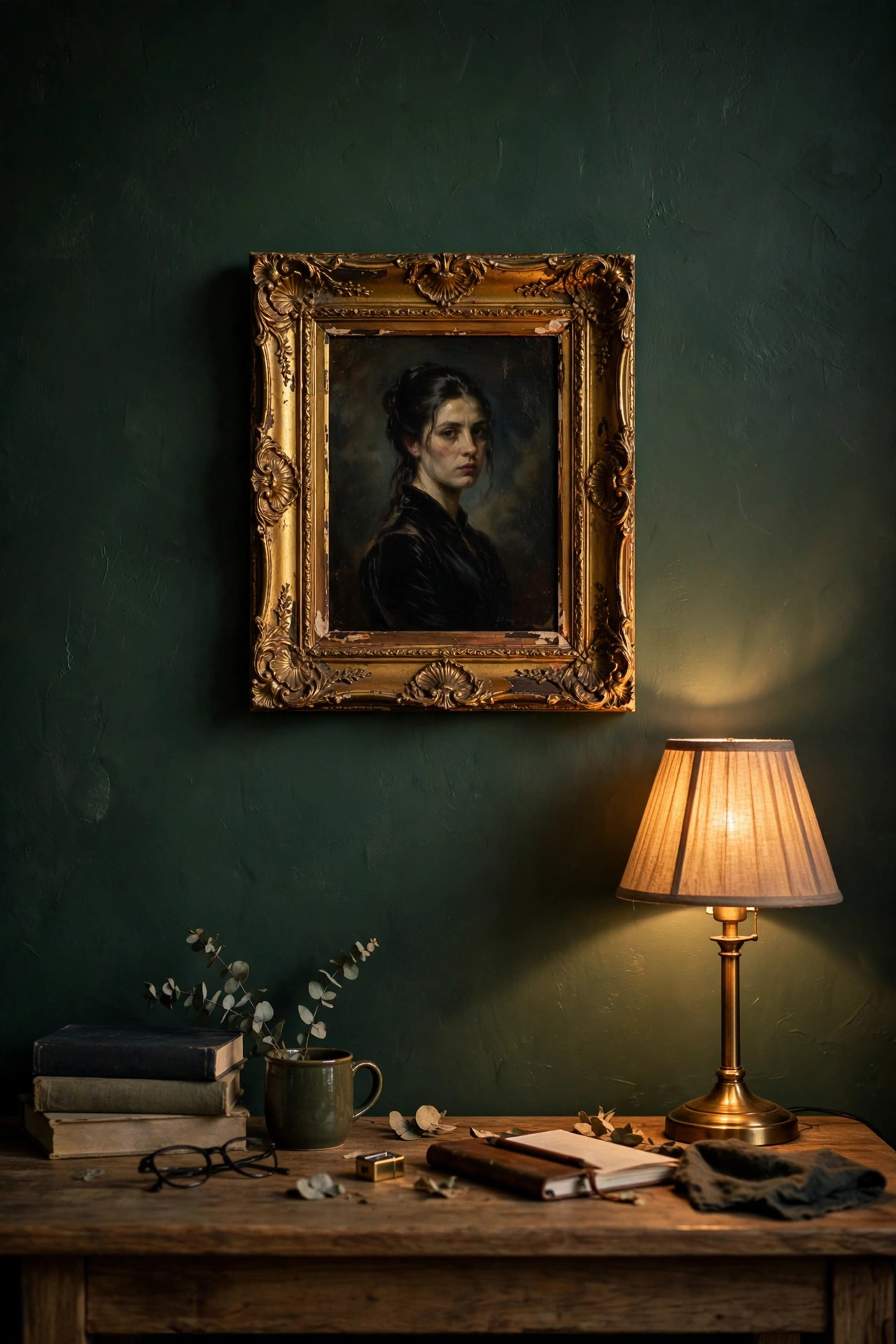
The portrait came into my life by accident. I was at an estate sale, digging through a box of old frames, when I found a small oil painting of a stern woman in a dark dress, her face half in shadow. The frame was ornate gold plaster, chipped in places, and far grander than the little painting deserved. It cost me twelve dollars. I hung it in the hallway for a month, but it kept drawing my eye, so I moved it into my bedroom above my desk. Now she watches me write. I have invented an entire life story for her: a headmistress, a poet, a woman who kept bees and wrote angry letters. She makes the room feel inhabited by more than just me, in the best possible way. Every dark academia room needs at least one mysterious ancestor on the wall, real or imagined. My partner thinks she looks disapproving, but I think she looks like she is keeping a wonderful secret, and we have agreed to disagree. Sometimes when I am stuck on a piece of writing, I look up at her and imagine what advice she would give, which is always some version of working harder and complaining less. It is surprisingly effective, and it makes me smile every single time.
A moody portrait in a heavy frame is the finishing touch that makes the style feel authentic rather than decorated. You do not need an original oil painting. Thrift stores and flea markets are full of old portraits and prints, and the stranger the sitter looks, the better. Look for dark backgrounds, serious expressions, and that slightly haunting quality. The frame matters as much as the art, so choose ornate gold, dark wood, or aged brass, and do not be afraid of chips and wear. Hang it at eye level in a spot where you will see it often, because a portrait tucked in a corner loses its power. I keep mine where the lamplight hits it in the evening, and her face emerges from the shadows in the most dramatic way. If the painting you find is too small for the spot you have in mind, group it with two or three smaller frames to fill the space. I almost passed on mine because of its size, and I am so glad I did not. A tiny portrait in a grand frame has a charm that a big print cannot match. It draws people in close, and that intimacy is exactly what a bedroom should offer. If anyone asks who she is, I just smile. Some things are better left mysterious. A portrait that makes you think is worth a dozen pretty landscapes. I have started noticing old portraits everywhere now, at flea markets and in the backgrounds of movies, and I point them out like a collector spotting treasure. My partner rolls their eyes, but they also suggested the perfect spot for a second portrait in the hallway. I think I have started something I cannot stop, and I am perfectly happy about that.
21. Cozy Window Seat With Books
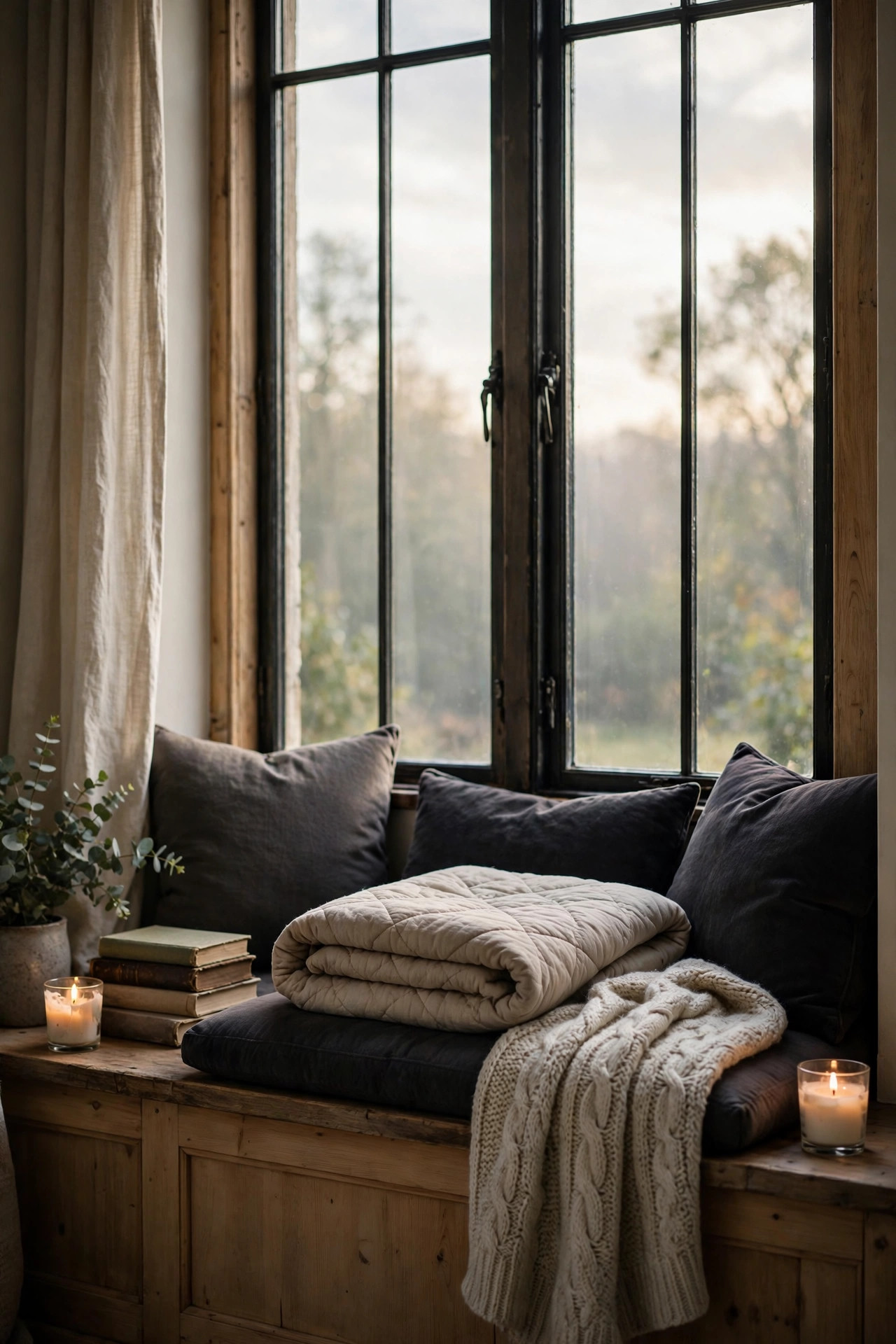
My bedroom window has a deep sill, wide enough to sit on, and for two years I used it as a shelf for dead plants. Then one Sunday I cleared it off, laid down a folded quilt for padding, piled on three cushions, and sat there with a book and a cup of coffee. The light was perfect, the street below was quiet, and I stayed for two hours. I could not believe I had wasted that spot for so long. Now it is my morning place. I sit there with coffee before the day starts, watching the light change, and in the evenings I read there until the sun goes down. I keep a small stack of books on one end of the sill and a candle on the other. It is not a real window seat with built-in storage and carpentry. It is just a wide sill with cushions. But it feels like a secret. In spring I open the window and listen to the birds while I read, and in winter I watch the rain trace patterns on the glass. The seat has taught me to slow down, which sounds like a small thing but has changed my days. I used to rush through mornings with coffee in one hand and my phone in the other. Now I sit, I look out, and I breathe.
You can make a window seat out of almost any deep windowsill or even a low bench placed under a window. The formula is simple: something soft to sit on, something to lean against, and good light. I use a folded quilt because it was what I had, but a proper seat cushion cut to size would be even better. Add cushions in dark, rich fabrics that match the rest of the room, and a throw for chilly mornings. Keep a small stack of books within arm’s reach, because a window seat without books is just a bench. I also keep a tiny tray for my coffee cup so I do not stain the quilt. If your windows are drafty like mine, a heavy curtain you can pull across makes the seat cozy even in winter. It has become the spot I miss most when I travel. If your sill is too narrow for sitting, a sturdy low bench or even a wide ottoman under the window works just as well. The key is keeping it clear, because a window seat buried in laundry stops being a retreat. I made a rule that nothing lives on my window seat except cushions, books, and the coffee tray. It is a small discipline, but it keeps the magic intact. Every room should have one place made purely for sitting and looking out at the world. In spring I open the window and listen to the birds while I read, and in winter I watch the rain trace patterns on the glass. The seat has taught me to slow down, which sounds like a small thing but has changed my days. I used to rush through mornings with coffee in one hand and my phone in the other. Now I sit, I look out, I breathe, and the day starts better. It is a small change with an outsized effect, and it cost me nothing but a folded quilt and a little intention. If you have a deep windowsill you have been using as a shelf, I gently suggest you reconsider. Yours might become your favorite spot too, the place where the day begins slowly and well.
Conclusion
Looking back at this list, I realize none of these ideas required me to be rich or handy or to have perfect taste from the start. I made plenty of mistakes along the way. I bought things that did not work, hung things too high, and once painted a wall a color I hated within a week. But each small change taught me something, and slowly my bedroom became the library-like retreat I had dreamed about since I was nineteen. The room did not change all at once. It changed one brass lamp, one stack of books, one deep green wall at a time, and that slow layering is exactly what gives it its soul.
If you take one thing from my story, let it be this: start with whatever speaks to you most. Maybe it is the paint, maybe it is the candles, maybe it is just a stack of old books on your nightstand. You do not need all twenty one ideas to feel the shift. Even three or four of them, done with love, will make your room feel moodier, warmer, and more like yours. Pour the tea, light a candle, and begin. Your own old library is closer than you think.
FAQs
What is dark academia room decor?
Dark academia room decor is a style inspired by old libraries, universities, and classical art. It uses deep moody colors like forest green and burgundy, dark wood furniture, brass details, stacks of old books, and warm lamplight to create a cozy, bookish, scholarly feeling in a room.
How can I get the dark academia look on a small budget?
Start with thrift stores, flea markets, and estate sales, where old books, brass lamps, and wooden furniture cost very little. Paint one wall a deep color, print free classical art from museum websites, and group candles you already own. Most of my room came together for less than the cost of one new piece of furniture.
What colors work best for dark academia room decor?
Deep, rich colors are the heart of this style. Forest green, burgundy, navy, dark brown, and charcoal are the classics. Warm neutrals like cream and tan keep the room from feeling too dark. I avoid bright neons and stark whites, because they break the old-world spell the other colors create.
Do I need a lot of books for this style?
Books help a great deal, but you do not need a huge library. Even a few well-placed stacks on a nightstand, a desk, and a windowsill create the feeling. Buy cheap old hardcovers from thrift stores and library sales, and choose ones with pretty worn covers. It is about the look and the love of books, not the number.
How do I keep a dark room from feeling gloomy?
The secret is warm lighting in layers. Use several small lamps instead of one bright ceiling light, add candles in the evening, and choose warm white bulbs. Mirrors help bounce light around, and touches of brass and gold catch the glow. My dark green room feels cozy, never gloomy, because of the lamplight.
Can dark academia work in a small bedroom?
Yes, it works beautifully in small rooms. Deep colors actually make small rooms feel snug and intentional rather than cramped. Use floating shelves to save floor space, choose one statement piece like a velvet chair, and keep clutter under control. My own bedroom is small, and the moody style makes it feel like a private retreat.