Laundry day should feel like a small, steady chore, not a workout you dread. You want to finish a load without a sore back, a wobbly reach, or a long walk down the hall with arms full of wet towels.
What gets in the way is usually the room itself. The detergent sits on a high shelf. The only place to fold is a dryer top that is too low. The light is dim, and the rug slides a little every time you step on it. None of that needs a remodel to fix.
These accessible laundry room ideas for seniors on a budget are small changes with big results. Most use things you can find at a dollar store, a hardware store, or around the house. Families helping a parent or grandparent can tackle them too, one afternoon at a time.
Pick two or three that fit your space and start there. Each idea tells you what to get, where to put it, and how to keep it safe.
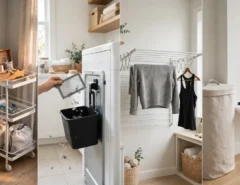
1. Use a Rolling Hamper Cart
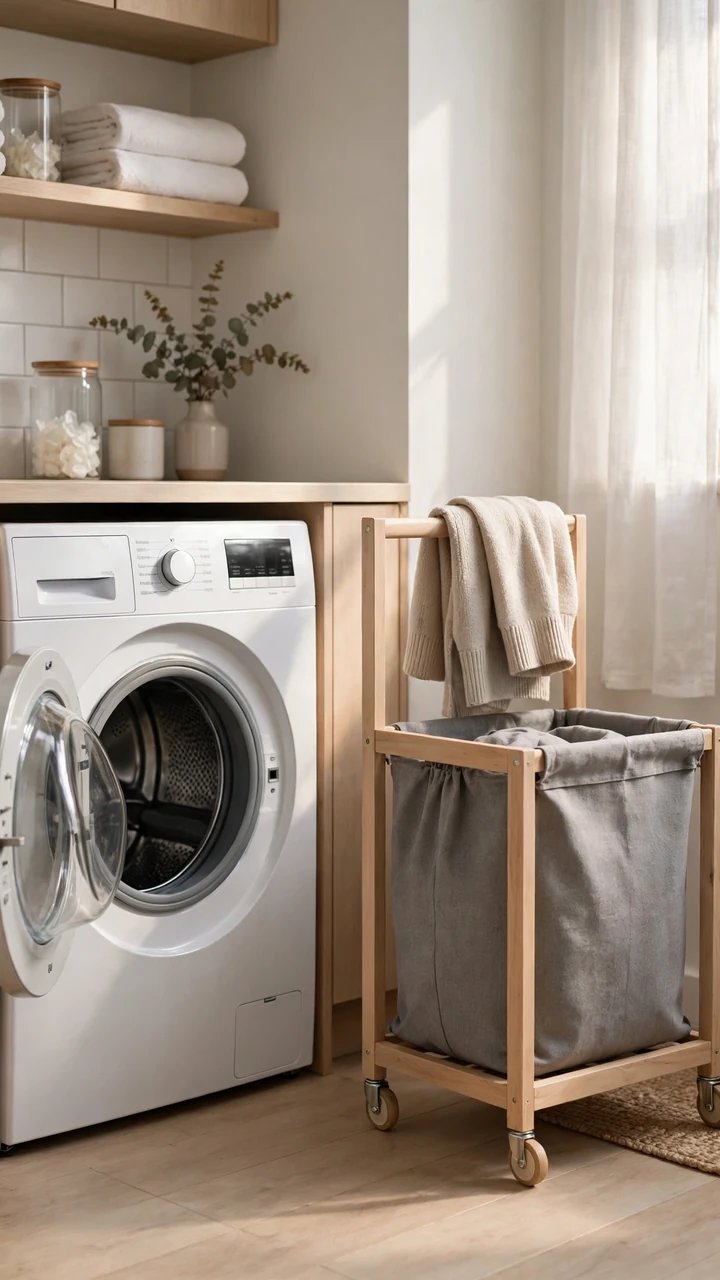
Carrying a full basket is the hardest part of laundry day.
A rolling cart takes the weight off your arms and back. You push it instead of lifting it, and you can park it right beside the washer door.
Look for these when you shop:
- Four wheels, with at least two that lock
- A handle at hip height so you do not have to bend
- A soft fabric bag you can lift out for loading
Keep the cart by the bedroom door, and dirty clothes go straight in as you change. Thrift stores and garage sales often have sturdy ones for very little.
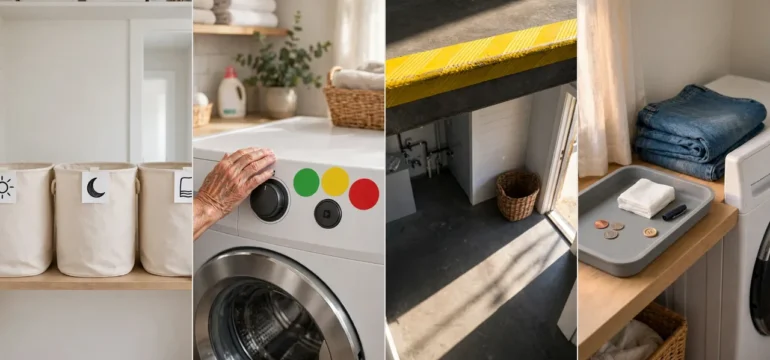
2. Label Your Bins in Big Print
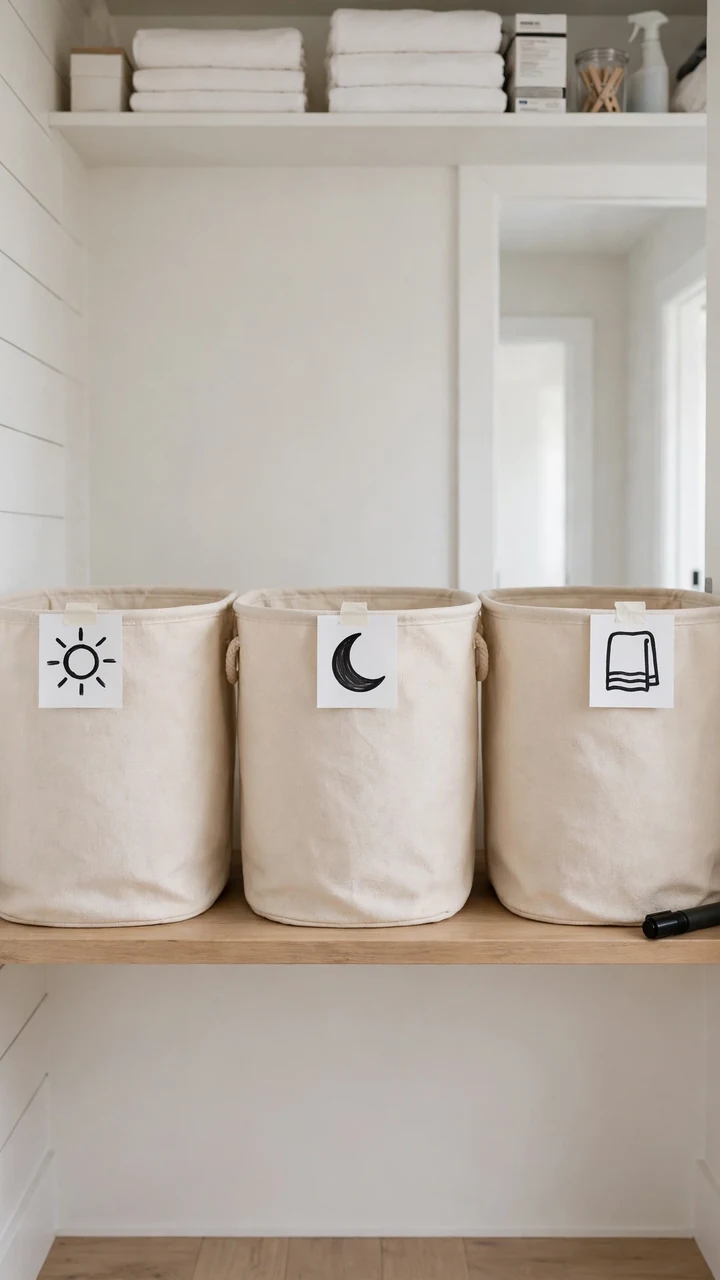
Tiny tags on a basket are easy to miss, especially in dim light.
Cut a strip of white cardstock or use wide masking tape. Write one word with a thick black marker, in capital letters about as tall as your thumb.
Three bins cover most homes:
- Lights
- Darks
- Towels and sheets
Tape each label to the front rim of the bin, not the side, so you can read it while standing. Black on white is the easiest contrast for tired eyes.
💡 Quick Tip
Draw a simple symbol next to each word, like a sun for lights and a moon for darks. A picture helps on days when reading feels like extra work.
3. Switch to Pump Bottles
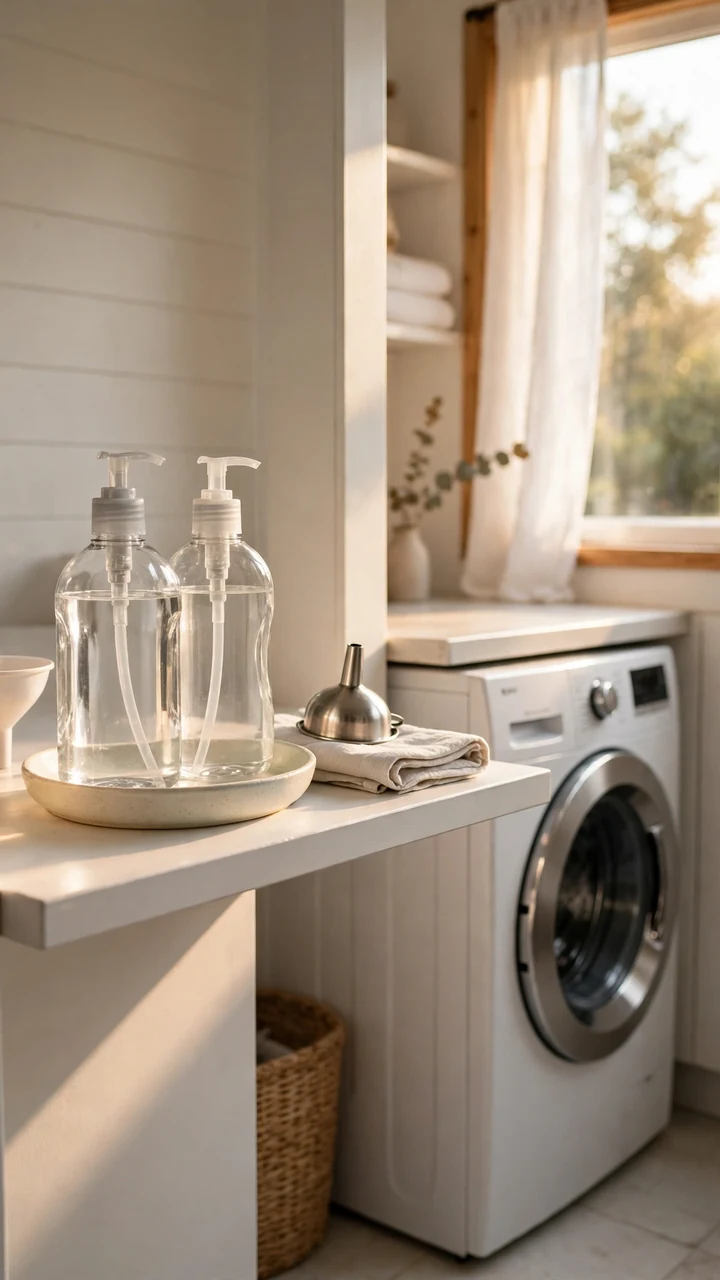
A big detergent jug and a small pump bottle hold the same soap. Only one is easy to handle.
Pour a little at a time into the pump bottle while you sit at the kitchen table, using a funnel to keep spills down. Then set the bottle on a shelf at waist height.
You will need:
- Two or three clean pump bottles
- A small funnel
- A permanent marker
Run a test load to learn how many pumps one load needs, then write that number on the bottle. Label each bottle so detergent and fabric softener never get mixed up.
A heavy jug on a high shelf, a sticky cap, and drips down the side every time you pour.
A light pump bottle at waist height, with a small dish underneath to catch drips.
4. Keep a Grabber by the Dryer
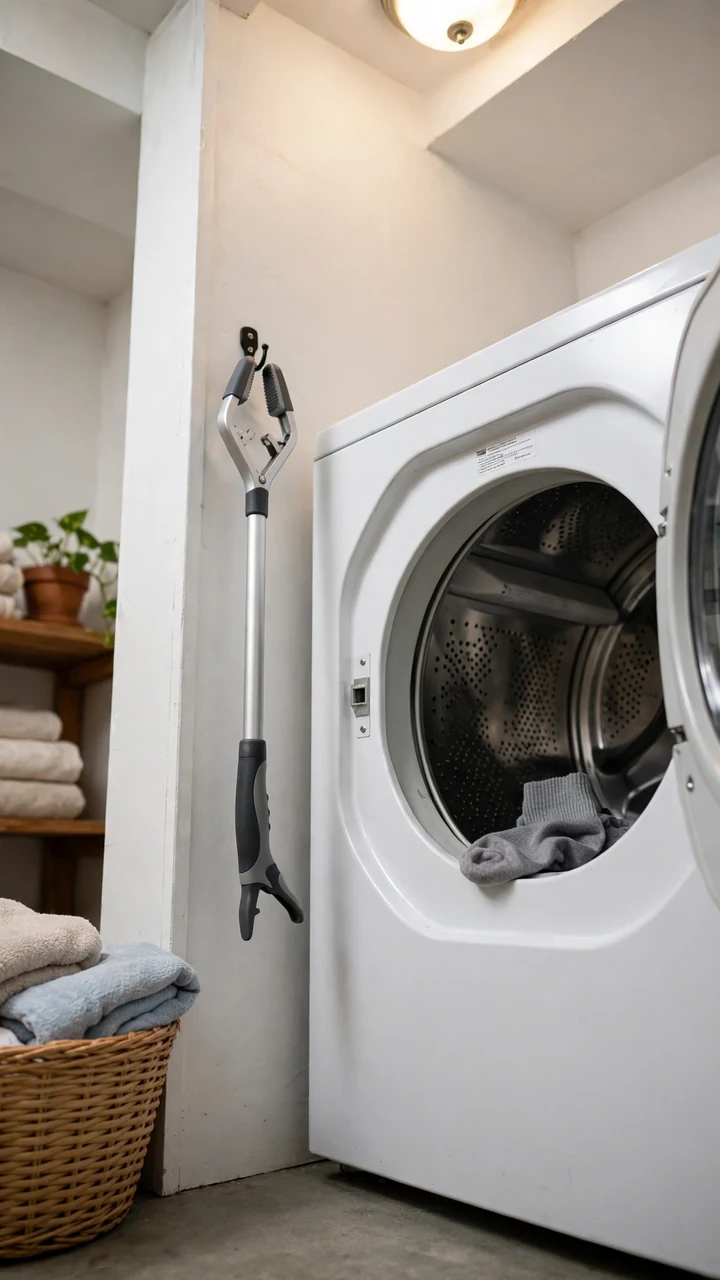
Every dryer has a sock that slides to the very back.
Reaching in after it means bending low and leaning your whole body forward, which is hard on the back and shoulders. A lightweight reach grabber fixes that. Pick one with a trigger handle and rubber tips so small things like socks and washcloths do not slip out.
Hang it on a hook or a magnetic strip on the side of the machine so you never have to hunt for it. It also helps with towels stuck deep in a top loading washer.
Hang the grabber on a hook within arm’s reach of the dryer.
Make sure the dryer is off and the drum has cooled down.
Squeeze the trigger to pick up each item, standing up straight.
Hang it back on the same hook so it is always where you expect it.
5. Mark Dials With Bold Stickers
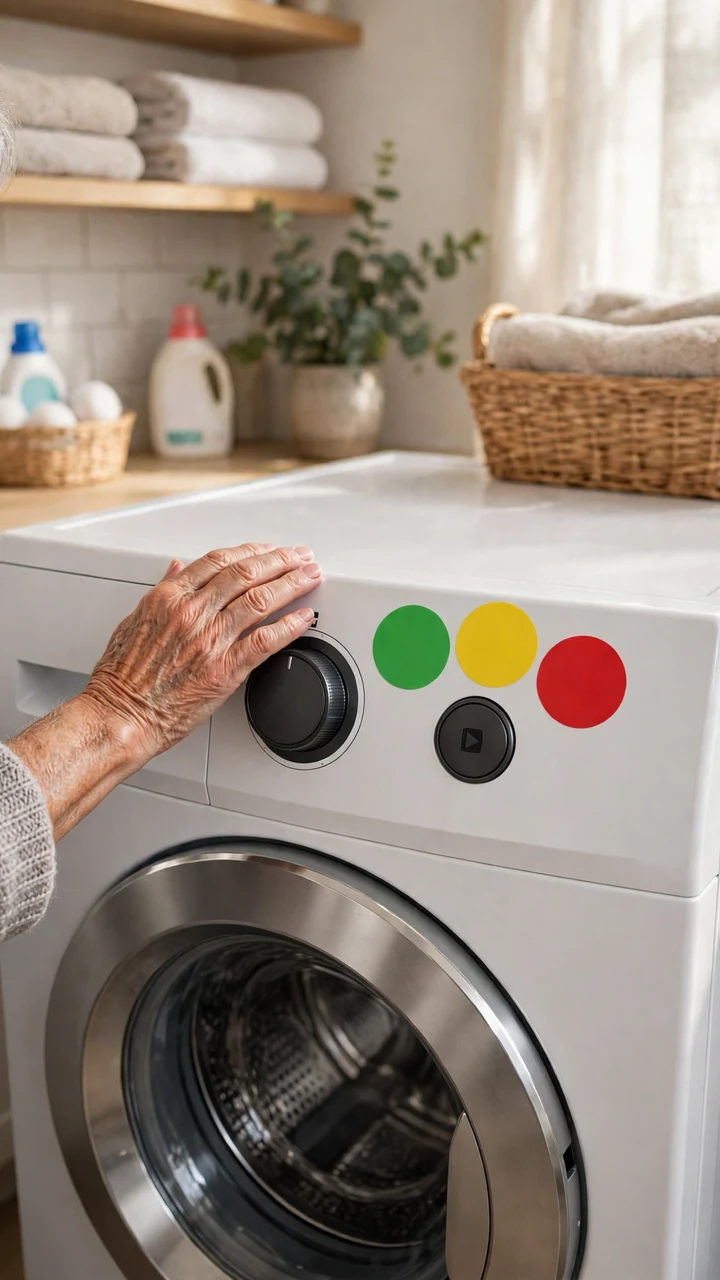
Here is a tiny rule: every setting you use gets its own marker.
Most dials are small, grey, and printed in tiny letters. Bump dots fix that. They are small raised stickers sold at hardware and office supply stores, and you can feel them with your thumb as well as see them. Large round dot stickers work too.
Mark these first:
- Your usual wash cycle
- Your usual dryer heat
- The start button
Use the same colors on both machines so you only have to learn the system once.
6. Store Supplies at Chest Height
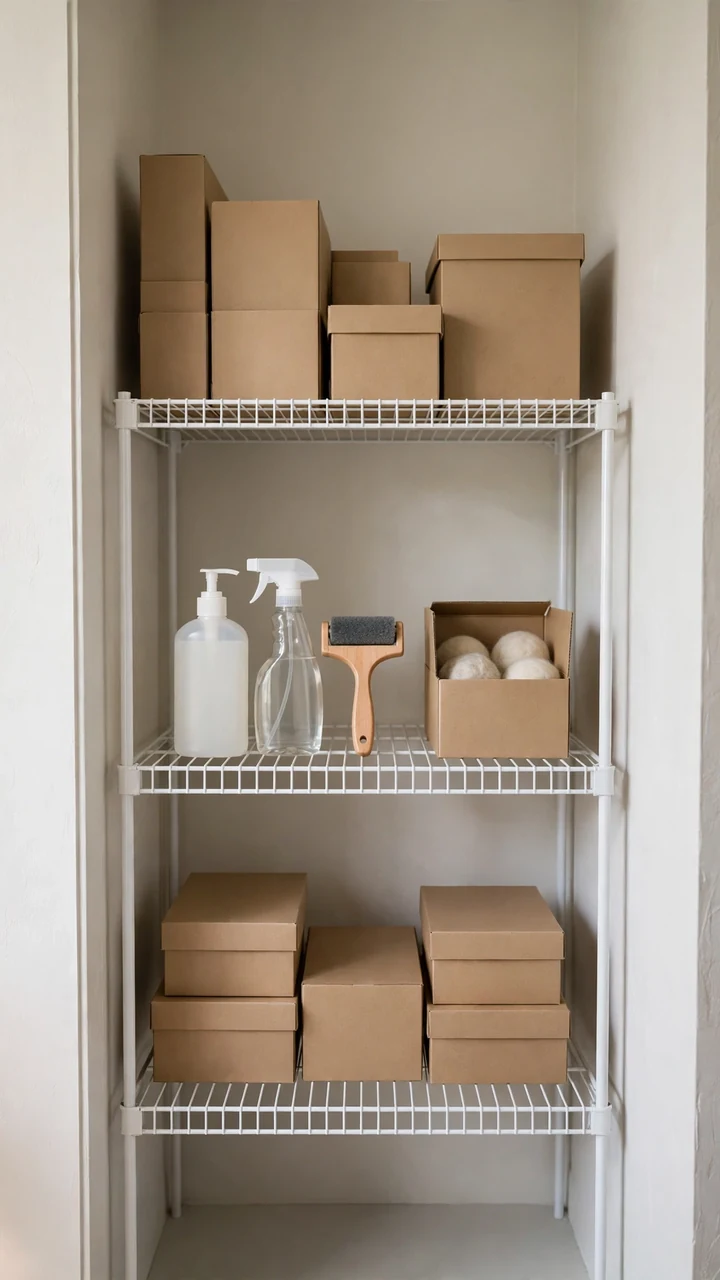
If you need a step stool to reach the detergent, the shelf is in the wrong spot.
The easiest zone to reach sits between your hip and your shoulder. Put what you use every week there. Move bulk boxes and extra bottles up high or down low, where you only visit them once in a while.
A wire rack from the hardware store, a thrift shop bookcase, or a tension rod shelf all work without drilling. Heavier things go at waist height, so you slide them out instead of lifting them overhead. These senior friendly laundry room ideas mostly come down to moving things closer to your hands.
Move these to chest height first
7. Add a Wall Drying Rack
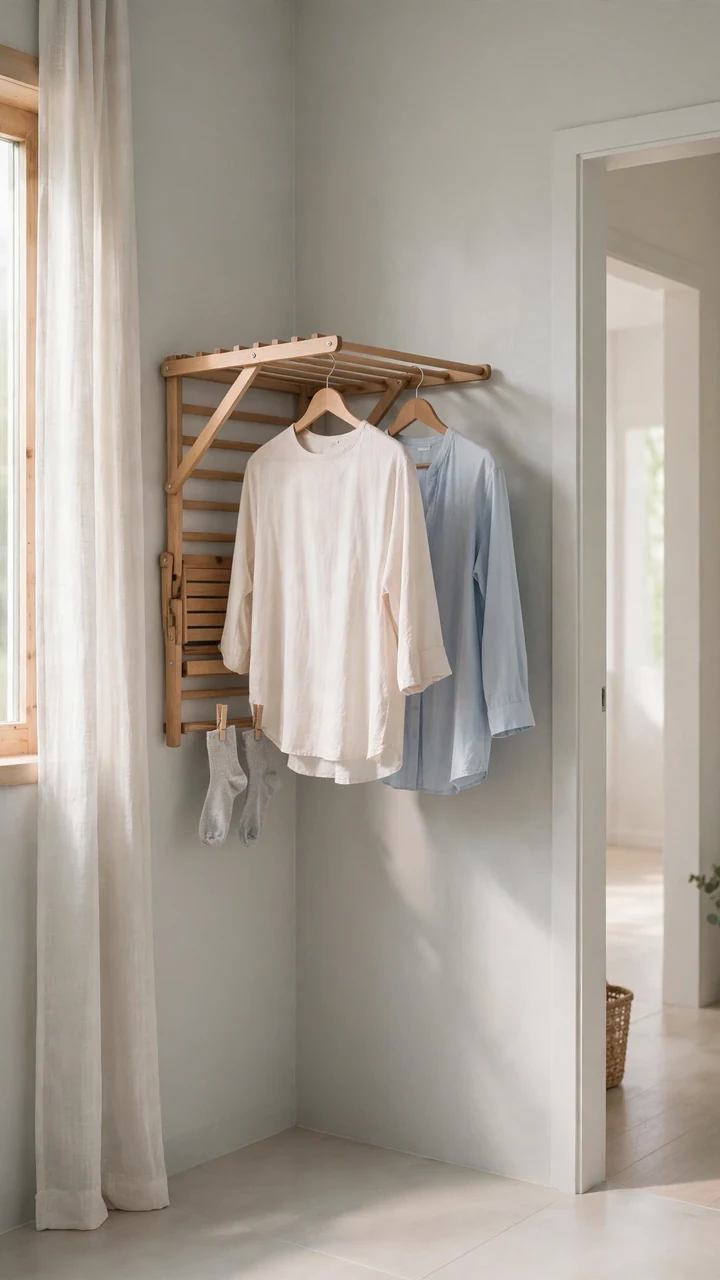
A drying rack does not have to sit in the middle of the floor.
A fold down wall rack stays flat against the wall when you are done, so it never blocks your walking path. Mount it at shoulder height or a little lower, so you can hang a shirt without lifting your arms overhead. Screw it into wall studs, or ask a family member to help with that part, because wet laundry gets heavy.
Renting? An over the door rack gives you hanging space with no drilling at all.
Screw the rack into wall studs.
Set the bar at shoulder height.
Fold it flat after every use.
Hanging it above your head.
Trusting weak wall anchors with wet loads.
Leaving it open in the walkway.
8. Fold on a Counter at Elbow Height
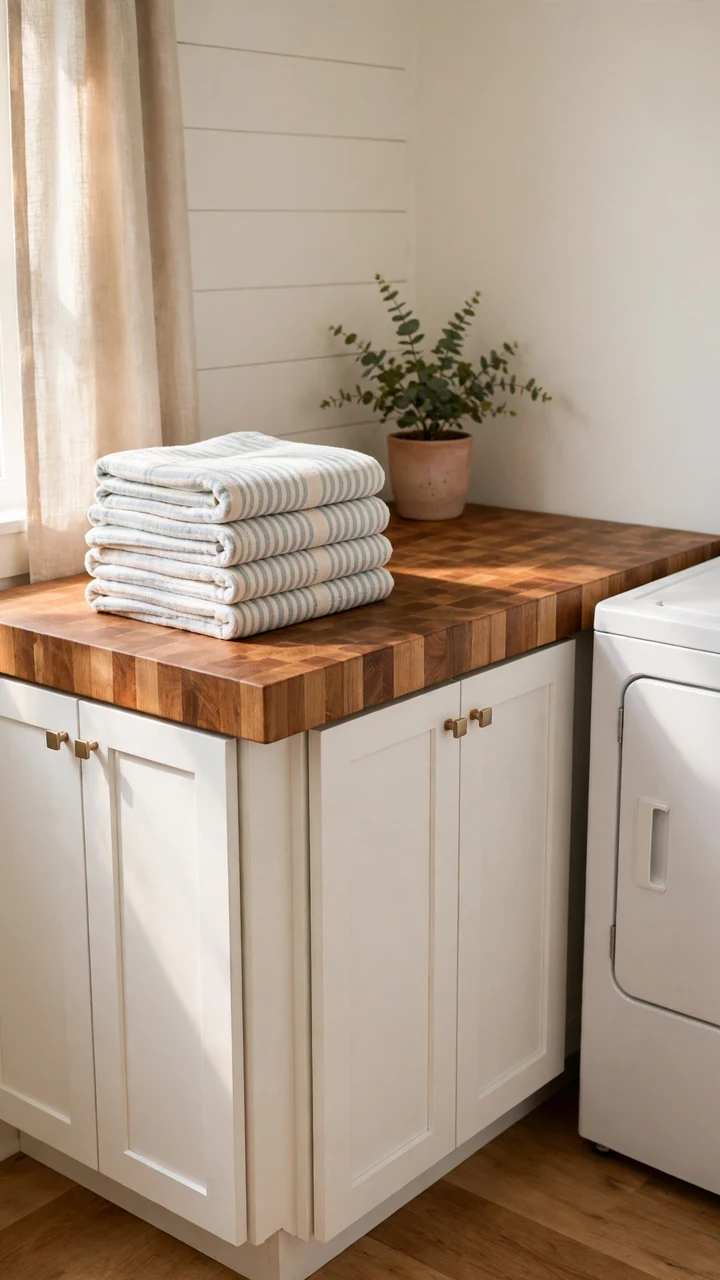
Stand at your folding spot and let your arms hang loose. Now bend your elbows. That is the height your folding surface should be.
Many dryer tops sit too low or run too narrow for a bath towel, and the machine can shake while it runs. A sturdy folding table with adjustable legs fixes both problems. Another low cost route is a butcher block top set across two short, solid cabinets.
Before you buy, check three things:
- It does not wobble when you lean on it
- It is wide enough for a full bath towel
- You can reach the whole top without stretching
| Dryer top | Folding table |
|---|---|
| Often too low, so you bend | Set to your elbow height |
| Can shake during a cycle | Steady with rubber feet |
| Narrow for big towels | Room for sheets and towels |
| No cost | Low cost |
9. Fold Sitting Down on a Tall Stool
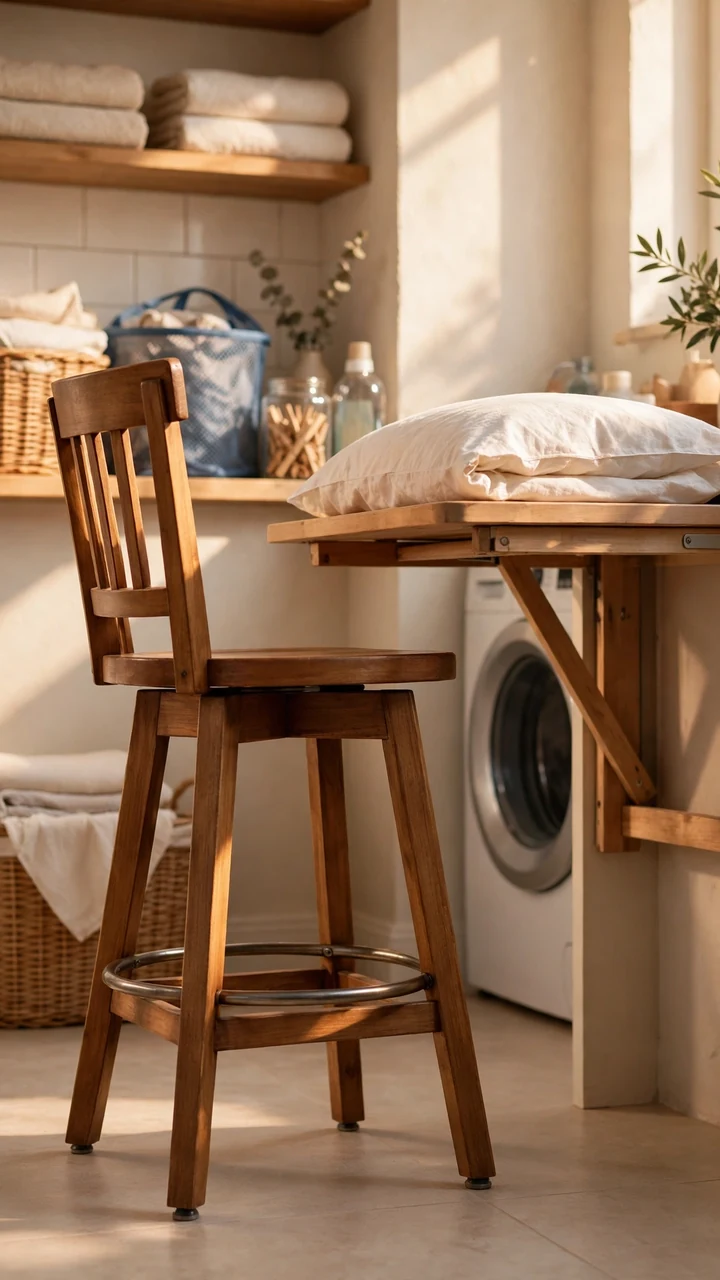
Folding a full load standing up adds up in your legs and lower back.
A counter height stool with a back lets you sit and fold in the same spot. Rest your forearms on the counter and let the towels come to you. Look for a footrest ring and rubber feet that grip the floor. Skip wheels and swivel seats, because the stool should stay put when you stand up.
Armrests help you push up, if you can find them. Tuck the stool under the counter between loads so it never blocks your path. Good aging in place laundry room ideas keep things simple, and a steady seat is one of the simplest.
Test the stool before you buy it. Sit down, then stand up twice. If it slides or wobbles, it is the wrong one.
10. Light the Folding Area With LED Strips
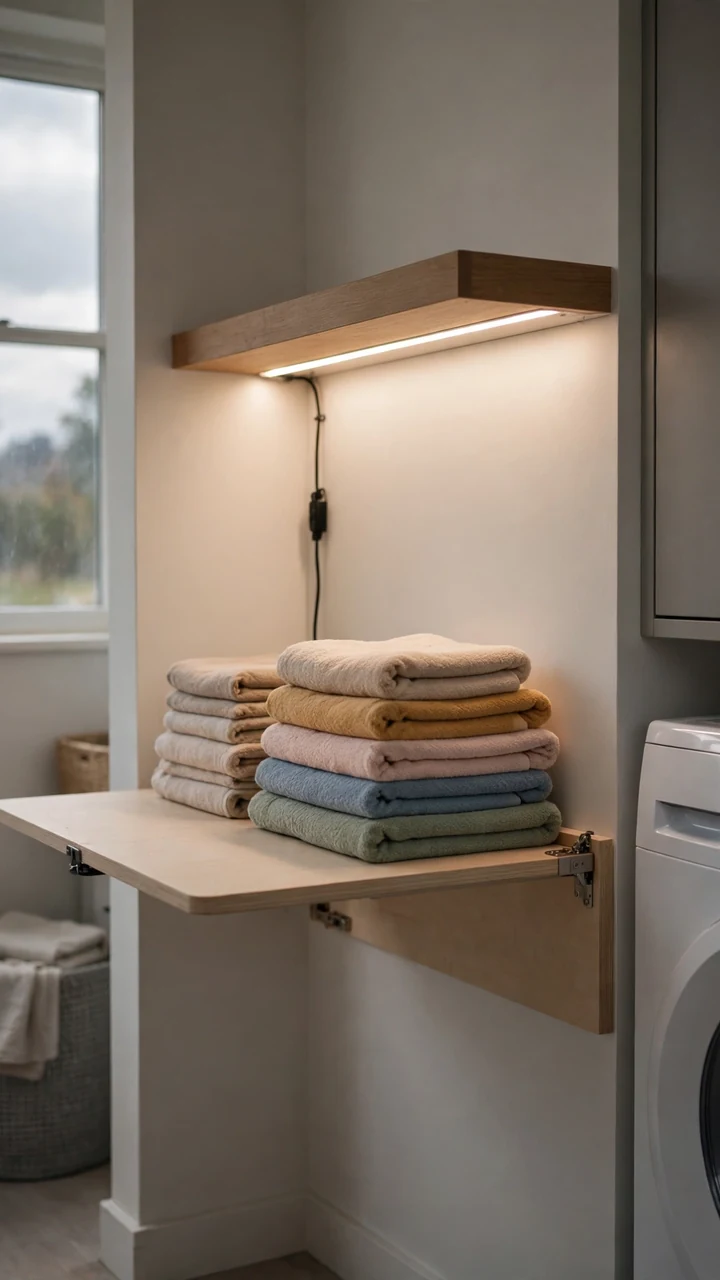
Shadows hide stains, odd socks, and the edge of the step.
Stick on LED light strips fix that in one short sitting. Run one under a shelf or along the front lip of a cabinet, so the light falls right onto your folding surface. Wipe the spot with rubbing alcohol first and let it dry, or the strip may peel off.
Pick neutral white over very yellow or blue light. It shows true colors, which helps when you sort navy from black. Choose a strip with a remote or a tap switch, so you never feel around for a button.
- ▸Battery strips suit a room with no outlet nearby.
- ▸Plug in strips stay bright and skip battery changes.
- ▸Tuck the cord along the wall edge with small clips so no one trips.
- ▸Aim the light down at the counter, not at your eyes.
11. Add a Motion Sensor Night Light
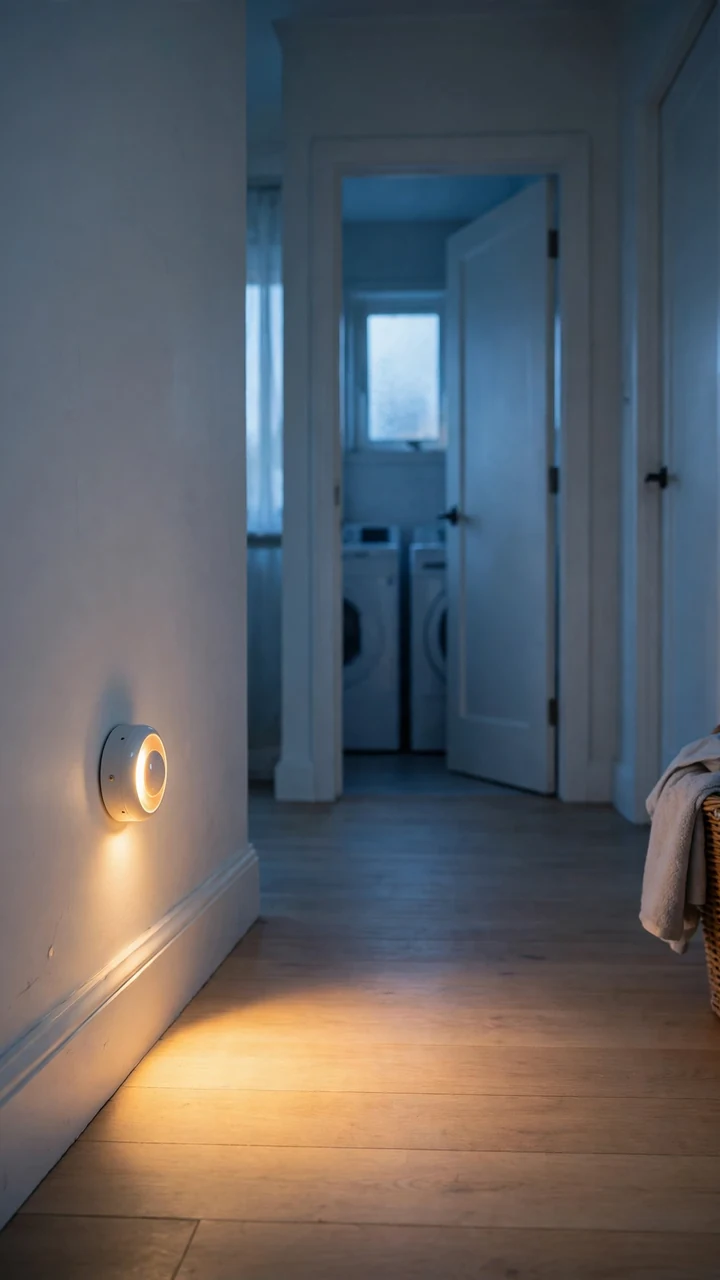
The washer sits at the end of a dark hall, and it is six in the morning.
A motion sensor light switches on when you walk past, so your hands stay free for the basket. Stick one low on the wall, where it lights your feet instead of your eyes. Add a second just inside the laundry room door. It is one of the budget laundry room updates for seniors that needs no tools and no wiring.
Pick warm white over bright blue. It is kinder to sleepy eyes.
Check the batteries when the clocks change in spring and fall.
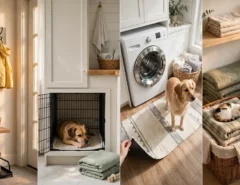
12. Swap Loose Rugs for a Flat Mat
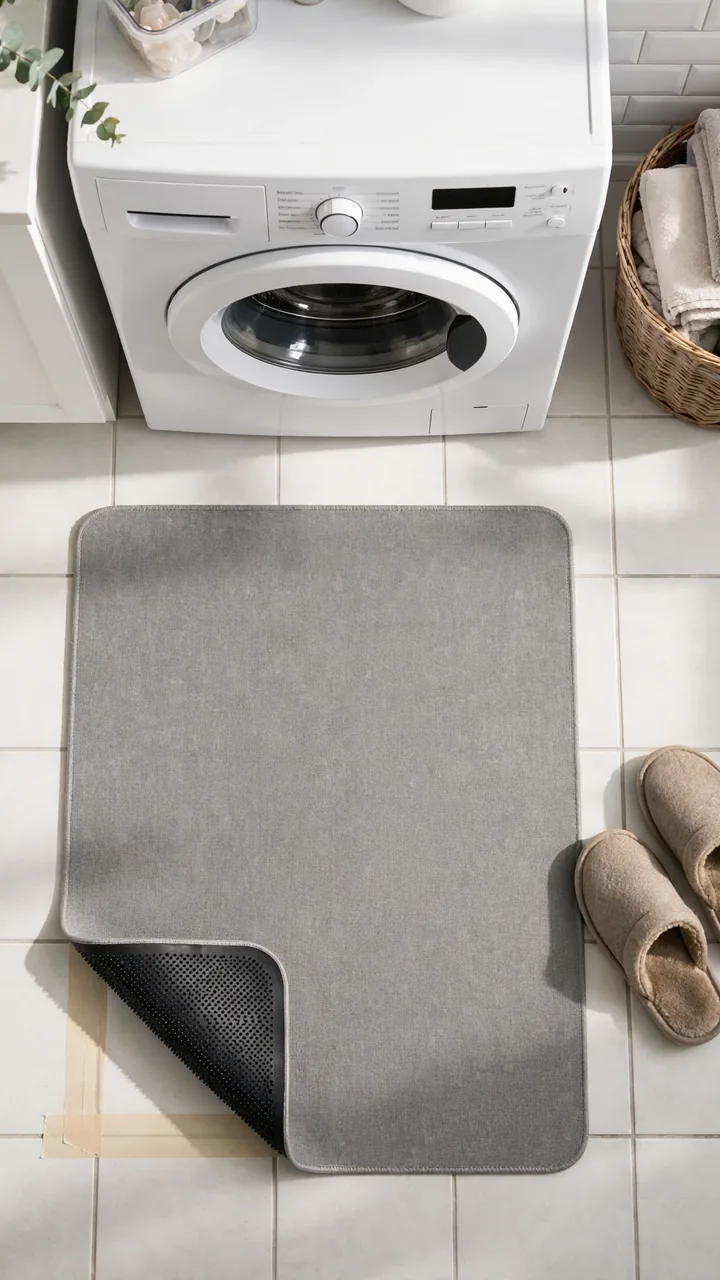
A soft rug feels nice underfoot, but its corners curl and its backing slides.
Replace it with a thin mat that lies flat and grips the floor. Look for these features:
- A rubber or grippy backing
- Edges that slope down, not square lips
- A top you can wipe clean or shake out
On tile or wood, add double sided rug tape under each corner. Laundry rooms get splashes, so choose a mat that dries fast.
⚠️ Watch Out
If a corner lifts even a little, tape it down or take the mat out. A mat that shifts is worse than no mat at all.
13. Mark Step Edges With Bright Tape
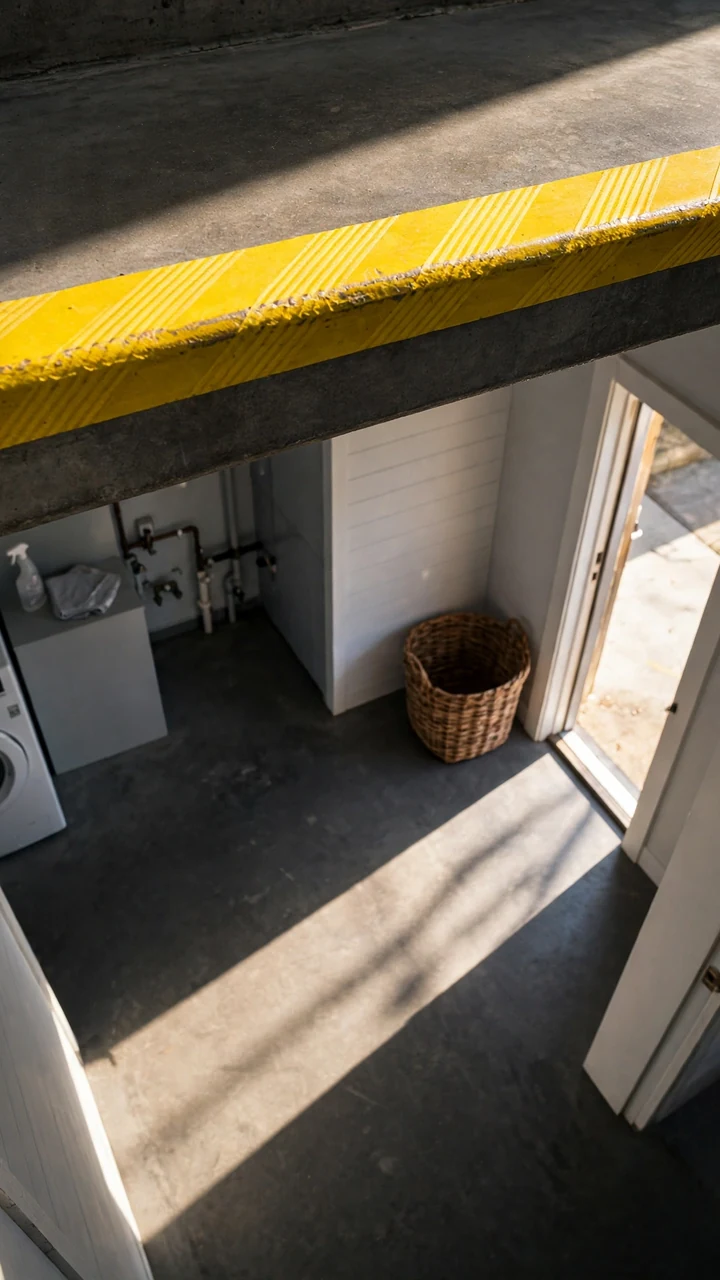
The step you have used for twenty years is the one you stop seeing.
A strip of bright tape along the edge brings it back into view. Use yellow or white on a dark floor, and black on a light one. Anti slip safety tape from the hardware store also grips under a slipper, which plain tape will not.
Mark these spots:
- The door threshold
- Any step down into the room
- The front edge of a washer pedestal
Wipe the surface with a damp cloth and let it dry first. Simple accessible laundry room design ideas like this one work every day, even when the light is low.
A grey step on a grey floor. Your foot finds the edge by guessing.
A bold stripe along the edge, so you see exactly where the step starts and stops.
14. Switch to Lever Faucet Handles
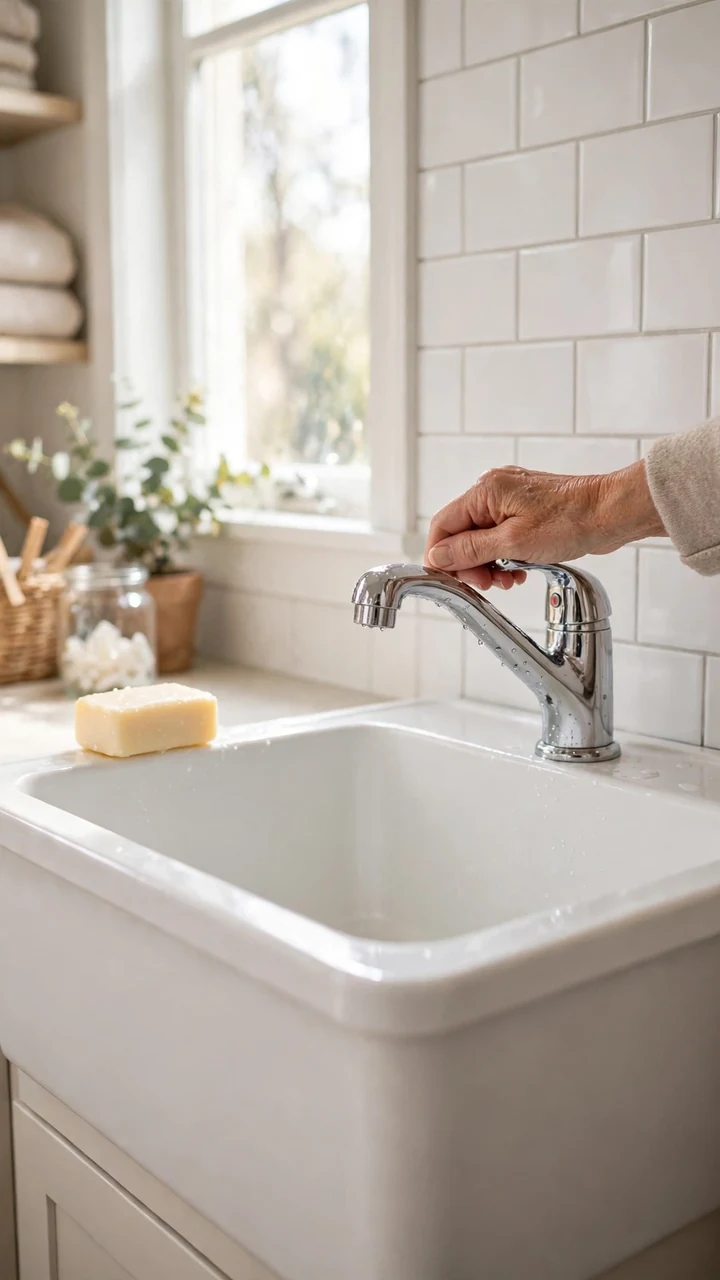
A round knob asks your wrist to grip and twist. A lever asks for a push with the side of your hand.
That gap matters when fingers are stiff or sore. Many laundry room ideas for older adults focus on hands as much as backs, and this is a good example. Some faucets take a new handle in a few minutes with a screwdriver. Others need a whole new faucet, so check the brand name under the sink before you shop.
Not ready to swap? A slip on lever adapter fits over many round knobs.
| Round knob | Lever handle |
|---|---|
| Needs a firm grip and a twist | Works with a push of the hand |
| Slips when hands are soapy | Easy to move with a wet wrist |
| Hard on sore joints | Gentler on sore joints |
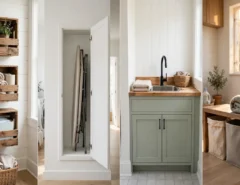
15. Create a Stain Spot Near the Sink
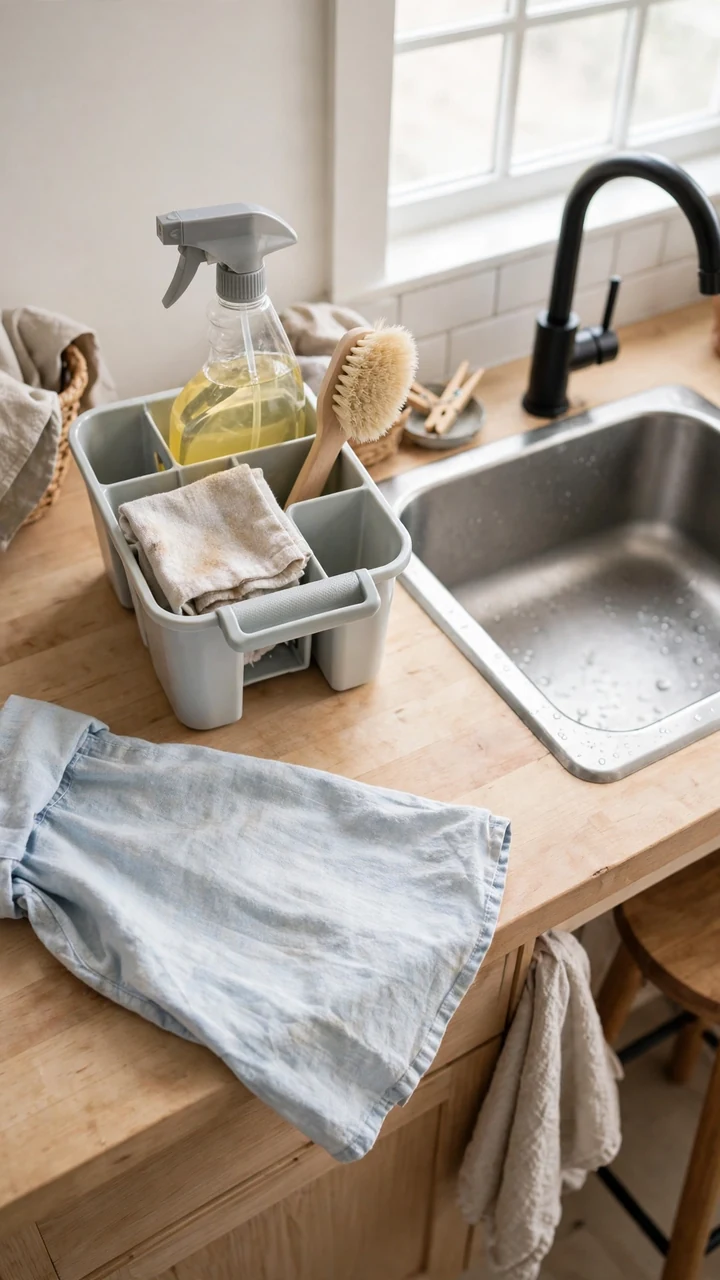
Treat stains in one place and the rest of laundry day moves faster.
Set a small caddy or plastic tub on the counter beside the sink, at a height where you do not have to bend. Keep everything for stains inside it, so you carry one handle instead of hunting for four things. This is an easy laundry room for seniors in miniature, with every tool in one reach.
Sit on a tall stool if you can. Keep every product in its original bottle, and never mix cleaners.
16. Hang Hooks for Daily Items
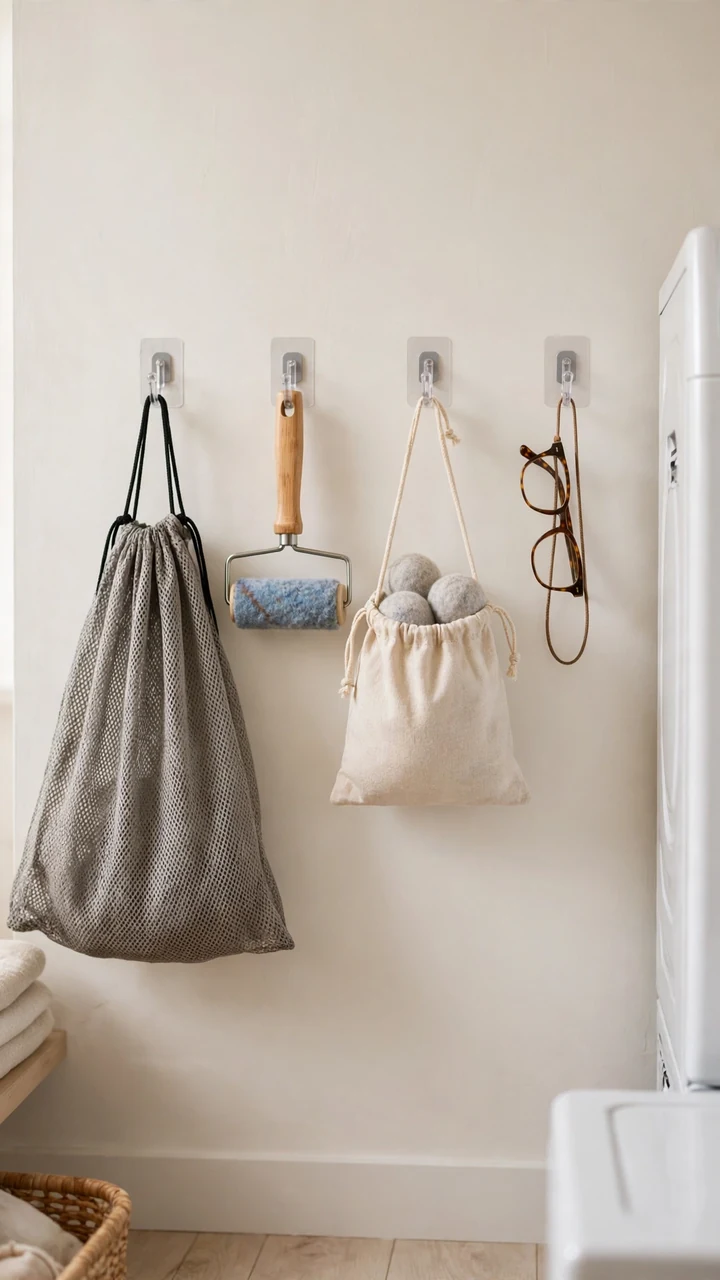
Anything you grab every day should hang where your hand already goes.
Stick-on hooks or a short rail on the wall beside the machines keep small things off the counter and out of drawers. Hang a lint brush, a mesh bag for delicates, a pair of dryer balls in a cloth pouch, and your reach grabber. Mount the hooks between hip and shoulder height, so you never reach up or bend down.
Check the weight limit on the package. Light items only on adhesive hooks, and press each one firmly for the time the label says.
Good things to hang on hooks
17. Clear a Wide Walking Path
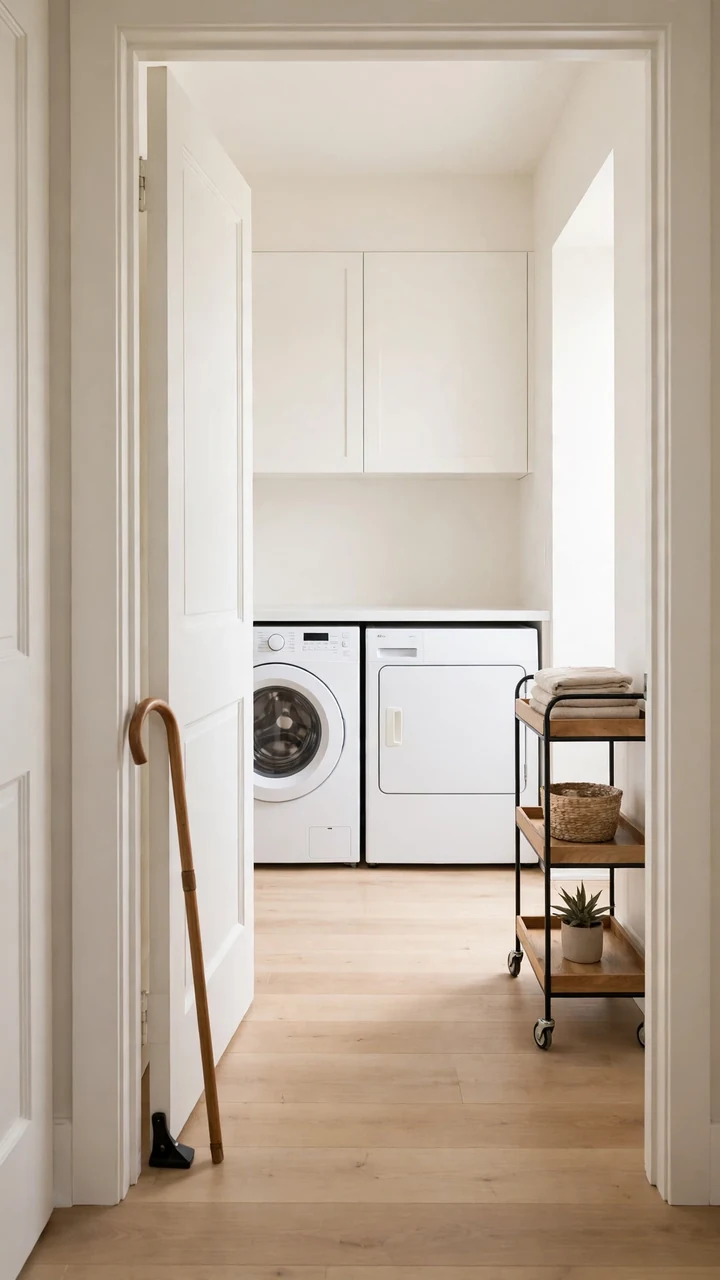
Many people think a laundry room needs more space. Most of the time it needs less stuff in the way.
Walk the route from the door to the washer to the dryer to the folding spot. Anything you step around, move. A basket in the corner, a box by the door, a bucket under the sink. Prop the door open with a rubber door stop so it never swings into you.
Then roll your cart through the route. If it bumps anything, shift it. This kind of senior laundry room makeover on a budget costs nothing but a little rearranging.
If you use a cane or walker, test the path with it in your hand.
Keep the floor clear from door to dryer.
Park the cart in the same spot each time.
Hold the door open with a stop.
Piling bags and boxes by the door.
Leaving cords across the floor.
Letting a door swing into the path.
18. Keep a Small Tray by the Machines
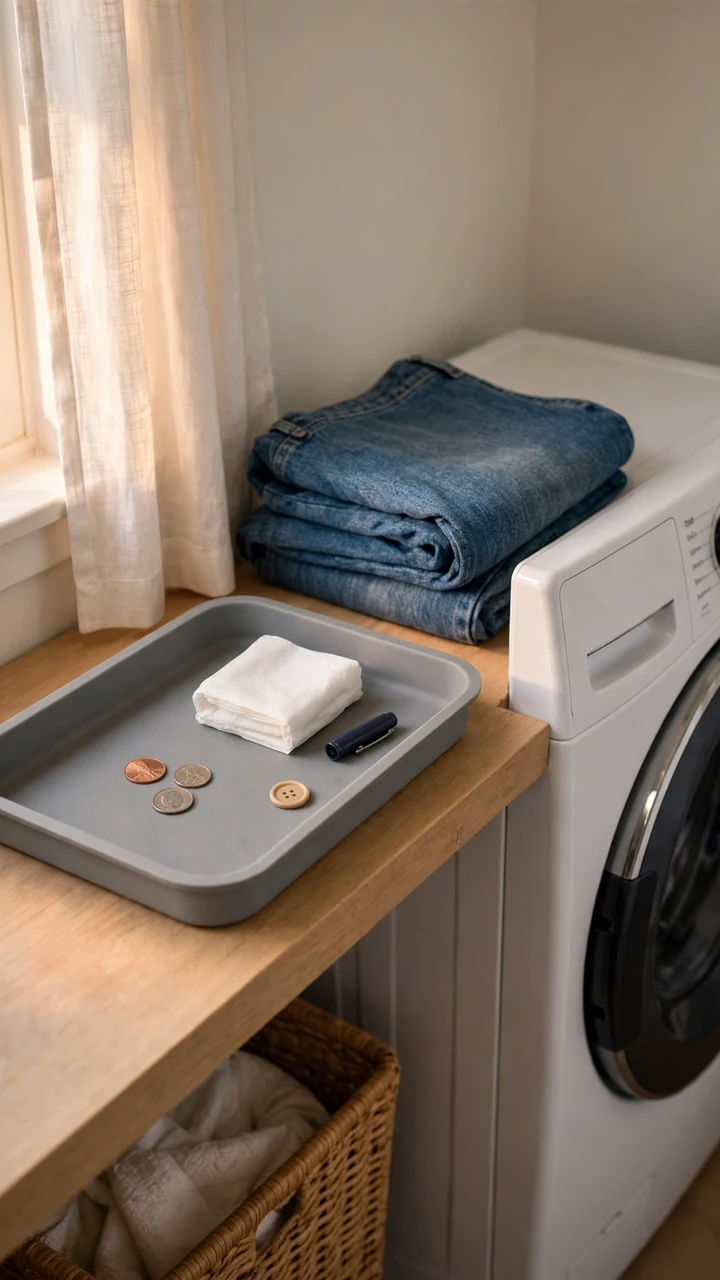
You pull a pair of pants out of the dryer and a tissue, two coins, and a pen cap fall out.
Where do they go? Usually onto the dryer top, then onto the floor, then into the next wash. A small tray fixes the whole chain. Set a shallow dish or a lipped plastic tray on a shelf near the machines, at about waist height. Everything from pockets goes in there.
Choose a tray with a rim so coins do not roll off. A silicone one will not slide around.
Empty it into your pocket or purse when you leave the room.
📌 Good To Know
Check every pocket before the clothes go in the wash. A tray right at hand makes that quick, and it saves a ruined tissue mess later.
19. Use Open Baskets Instead of Cabinets
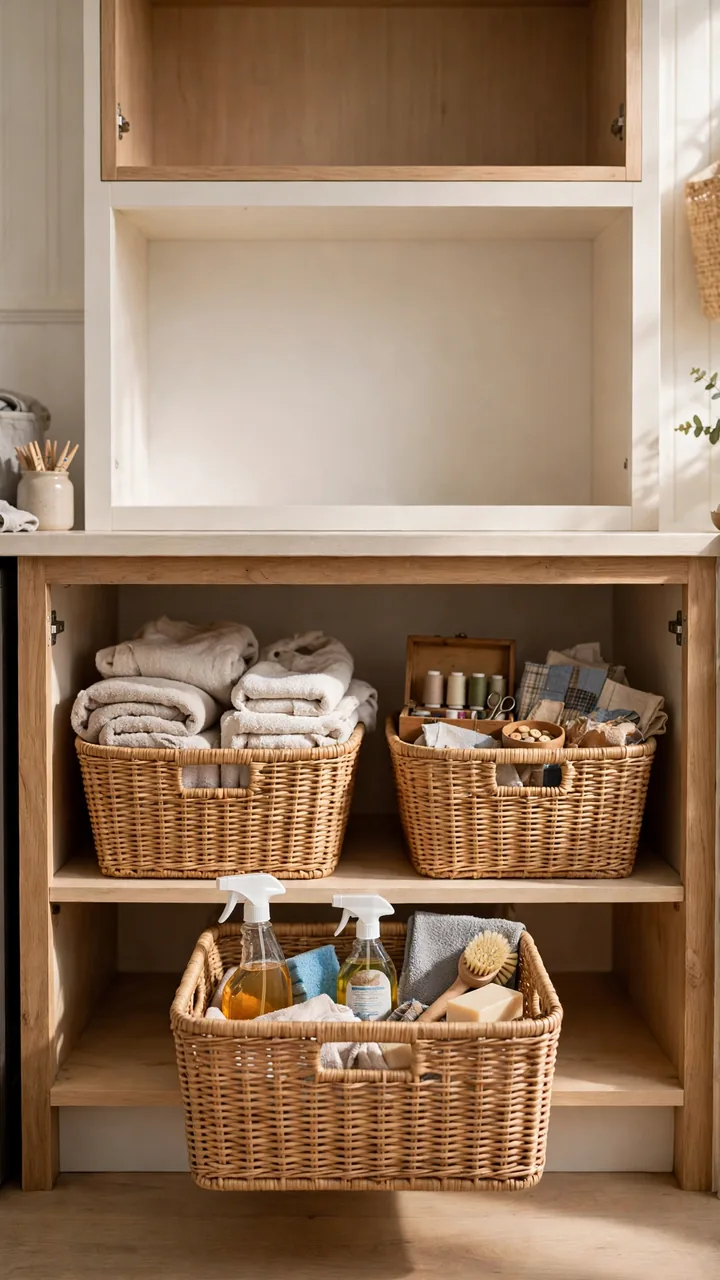
Closed cabinet doors look tidy, but they ask you to open, bend, search, and close.
Open baskets cut those steps down. Take the doors off a low cabinet, or set woven baskets or fabric bins on an open shelf. Everything is visible, and you can slide a basket forward with one hand. Pick baskets with cutout handles so your fingers do not have to grip a thin edge.
Use a few basic groups:
- Cleaning supplies
- Spare towels and sheets
- Items to donate or mend
Keep baskets light. If one is too heavy to slide out, split it into two.
If you can see it, you can reach it. Fewer doors means fewer steps between you and the thing you need.
20. Post a Simple Routine Card
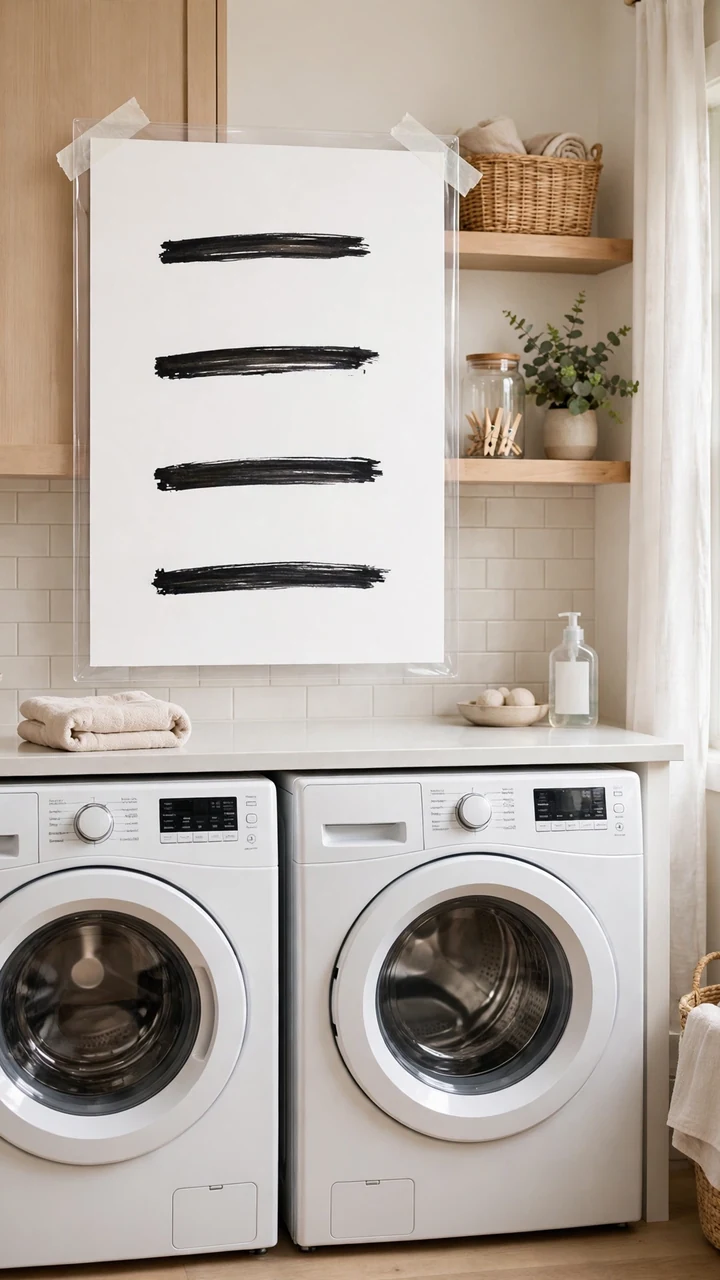
Some days your mind is on a dozen other things, and the order of laundry slips away.
A routine card takes that load off your head. Write the steps in big letters on a sheet of cardstock. Slip it into a clear sleeve, or cover it with wide clear tape, so splashes wipe off. Tape it at eye level above the machines.
Keep it short. Four steps are plenty. Add your own details, like which dial to use or which bin goes first.
Families can help here too. A daughter or grandson can write it out and tape it up in a few minutes. It makes a thoughtful gift, and it is one of the simplest aging in place laundry room ideas to put to work right away.
Sort clothes into the labeled bins.
Check pockets, pump the soap, and press the dotted dial.
Move wet clothes to the dryer with the cart parked beside you.
Fold sitting down, then wheel the cart back to the bedroom.
Conclusion
You do not need a new room to make laundry easier. A rolling cart, a brighter shelf, and a folding spot at the right height can change how the whole day feels, and none of it costs much.
Start small. Pick the one idea that bothers you most, whether that is the dim hallway, the high shelf, or the slippery rug, and fix that first. Add another next week. Within a month, these accessible laundry room ideas for seniors on a budget will add up to a room that works with your body instead of against it.
Families can join in too. An afternoon spent taping down a mat or hanging a few hooks is a kind way to help.
Pick one fix today. Light, grip, height, or reach. Small changes still save your back.
Save this list to your laundry or home board, so it is ready the next time you or someone you love wants laundry day to feel easier.