You want a laundry room where the dog can get rinsed after a muddy walk and nobody has to mop the hallway afterward. You also want the cat to have a spot that is not on top of the clean towels.
That kind of room is easier to build than it sounds. Most laundry rooms already have what pets need: a sink, a hard floor, a door that closes, and a corner nobody uses. They just need a few small changes to work for laundry and animals at the same time.
These pet friendly laundry room ideas all stay on a budget. You will find a dog wash station, a feeding nook, a cozy bed spot, and a few cat friendly fixes. Every idea uses surfaces that wipe clean and materials that are safe around paws and noses.
Start with the one that solves your biggest daily mess. Then add the rest as time and money allow.
1. Turn a Utility Sink Into a Dog Wash Station
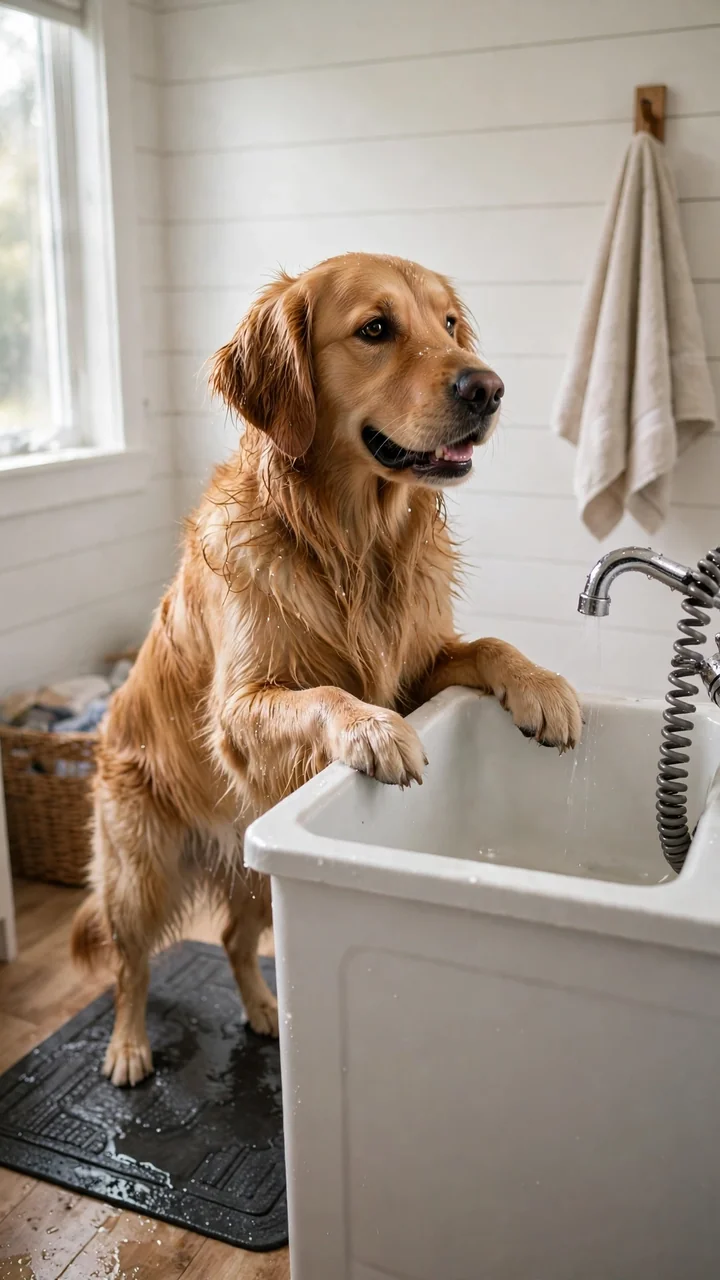
Muddy paws and a bathtub never end well.
A deep utility sink at hip height keeps the mess in one spot and saves your back. It is also one of the easiest dog wash station ideas, since the plumbing is already there. Clip a sprayer hose to the faucet so you can rinse a wiggly dog without filling the basin, and lay a rubber mat in the bottom so small paws do not slip.
Have these ready before bath day:
- A sprayer with a long, flexible hose
- A rubber mat cut to fit the basin
- A hook for the towel within arm’s reach
Large dogs can get a leg and belly rinse here and a full bath outside.
2. Pick Floors That Wipe Clean
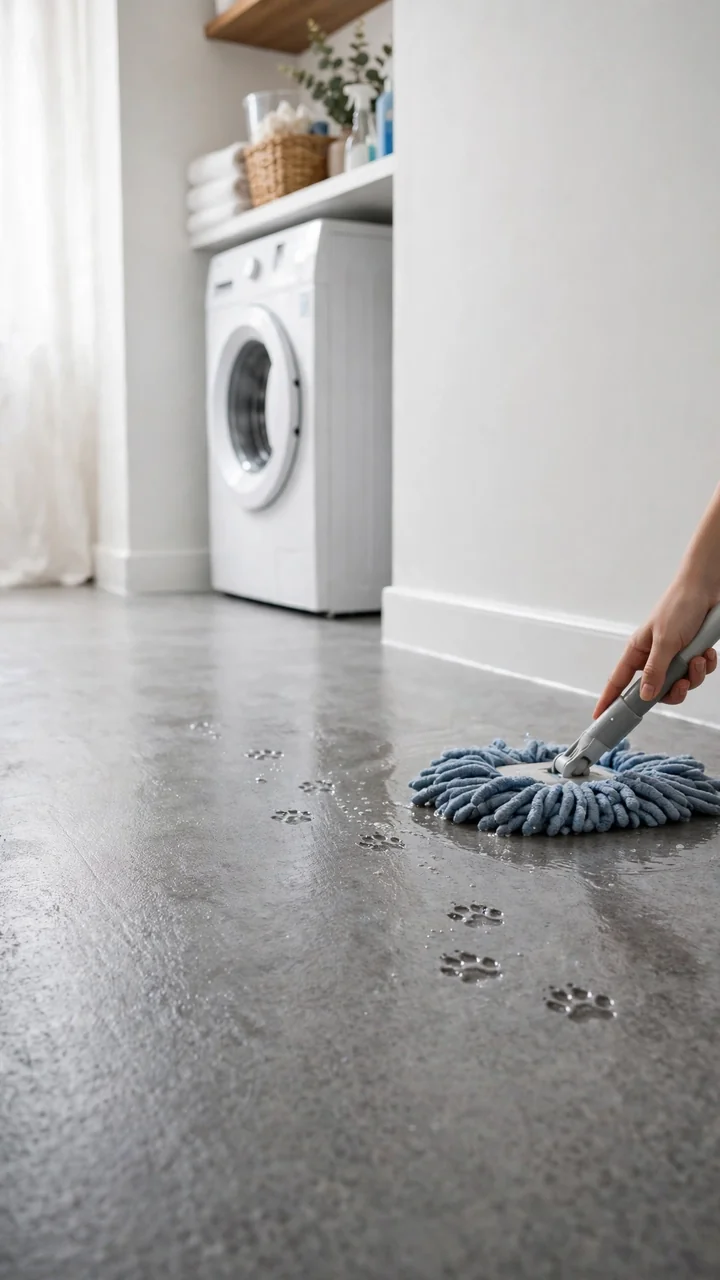
Floors take the most abuse in a pet laundry room.
Sheet vinyl and porcelain tile both handle water, claws, and the occasional accident. Carpet and bare wood do not, so skip them here. If you rent, peel and stick vinyl planks laid over the old floor are the budget fix, and they come up when you move.
Keep seams tight so water cannot sneak underneath. A cheap tube of silicone caulk along the baseboard helps too.
| Sheet vinyl | Porcelain tile |
|---|---|
| Cost: lower | Cost: higher |
| Seams: few, so less to clean | Seams: grout lines need sealing |
| Feel: softer on paws | Feel: hard and cold |
| Tip: pick a textured finish | Tip: pick a matte, grippy tile |
3. Add a Dog Shower Corner
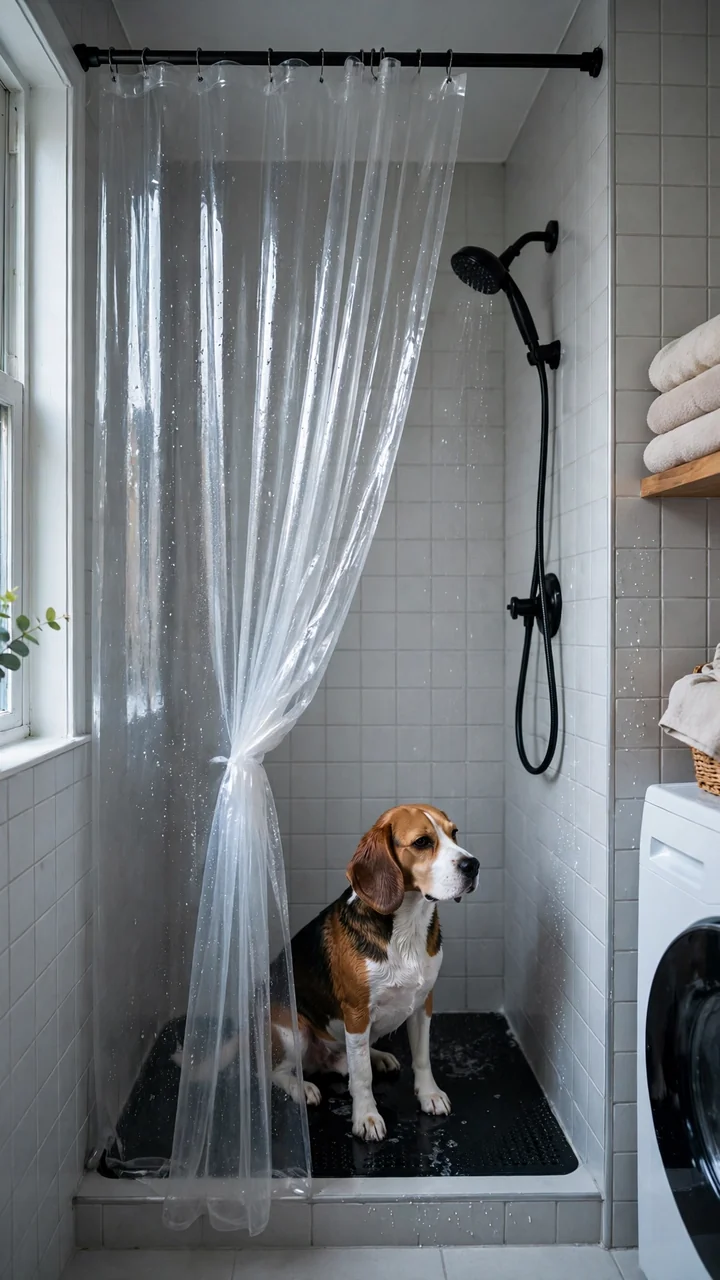
Some dogs will not go near the sink. They are too big, too nervous, or both.
Give them a shower corner instead. If your laundry room already has a floor drain or a shower base, hang a vinyl curtain from a tension rod around the open sides and set a rubber mat on the floor. Add a handheld shower head on a hose so you can rinse low and slow.
No drain? Skip this one and stick with the sink. Standing water on a laundry room floor causes more trouble than a muddy dog does.
A wet dog shakes across the whole room. Towels pile up soaked on the floor.
The curtain catches the spray, the mat grips paws, and the floor stays dry.
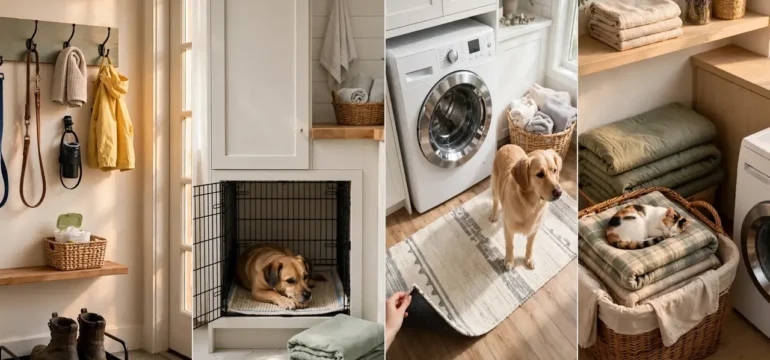
4. Hang Leashes and Towels by the Door
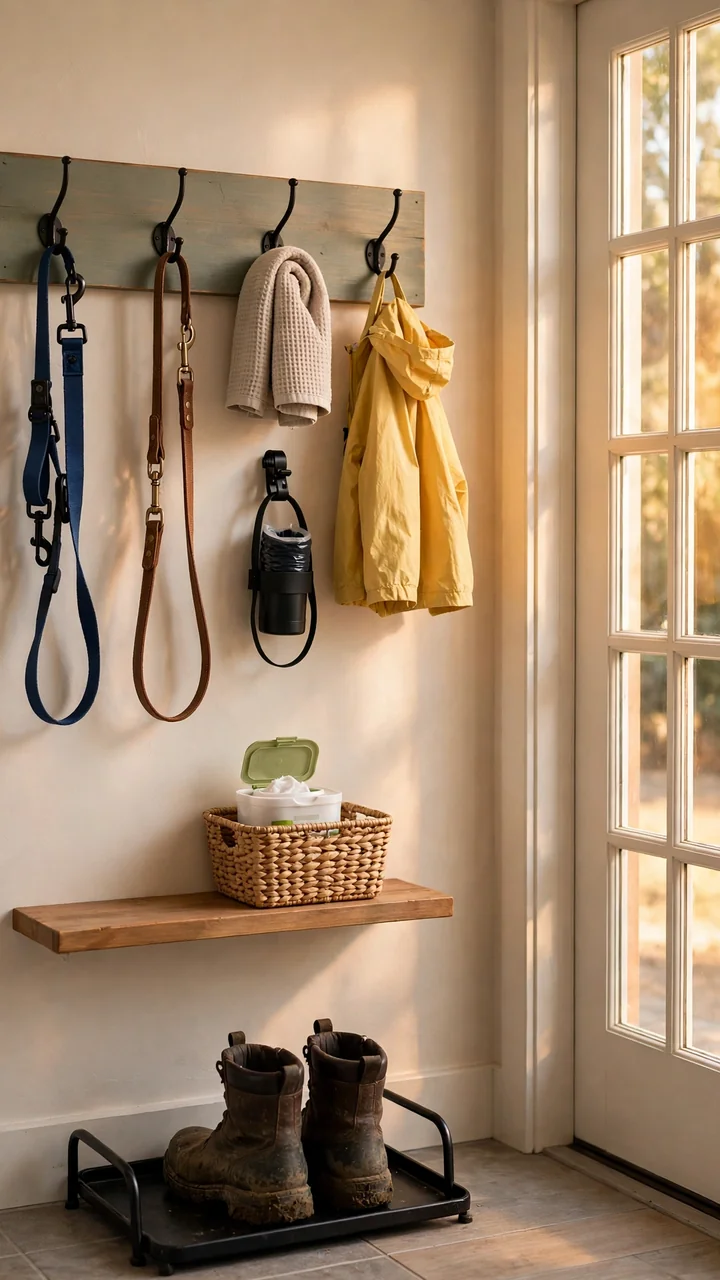
Here is a simple rule: anything you need for a walk lives within one arm’s reach of the door.
Screw a 1×4 board to the wall, paint it in semi-gloss so wet leashes wipe off, and add four or five sturdy hooks. Mount it at your shoulder height so a curious puppy cannot tug the leash down. Keep a towel on the last hook and a small bin below for poop bags and paw wipes.
Muddy days get much easier when the towel is already waiting.
What goes on the hooks
5. Set Up a Dog Feeding Station
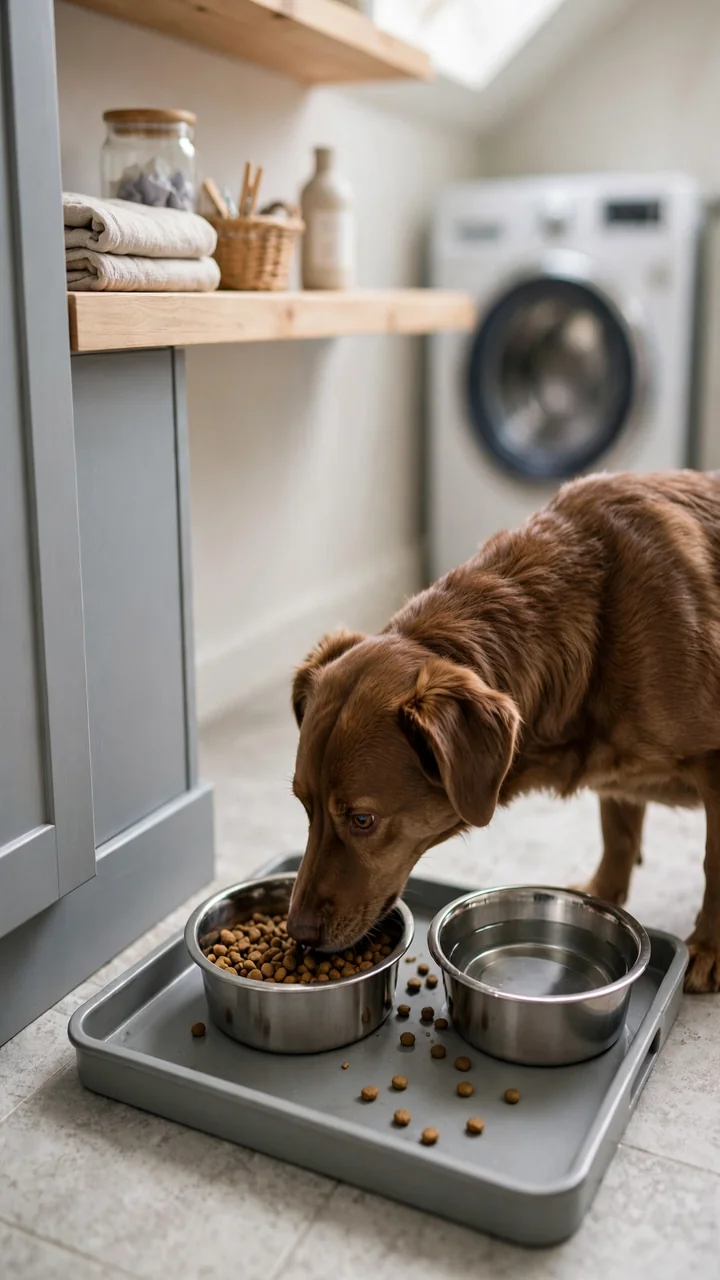
Dinner stays in one spot, and the floor stays clean.
Choose a corner away from the washer door, since a spinning machine and a nervous eater do not mix. A low shelf or the space beside the base cabinet works well. Set the bowls on a washable tray with a lip so spills stay put.
Raised bowls can help some tall dogs, but ask your vet before using them for deep chested breeds. Stainless steel is the easiest material to scrub, and it does not hold smells the way plastic can.
6. Put a Silicone Mat Under the Water Bowl
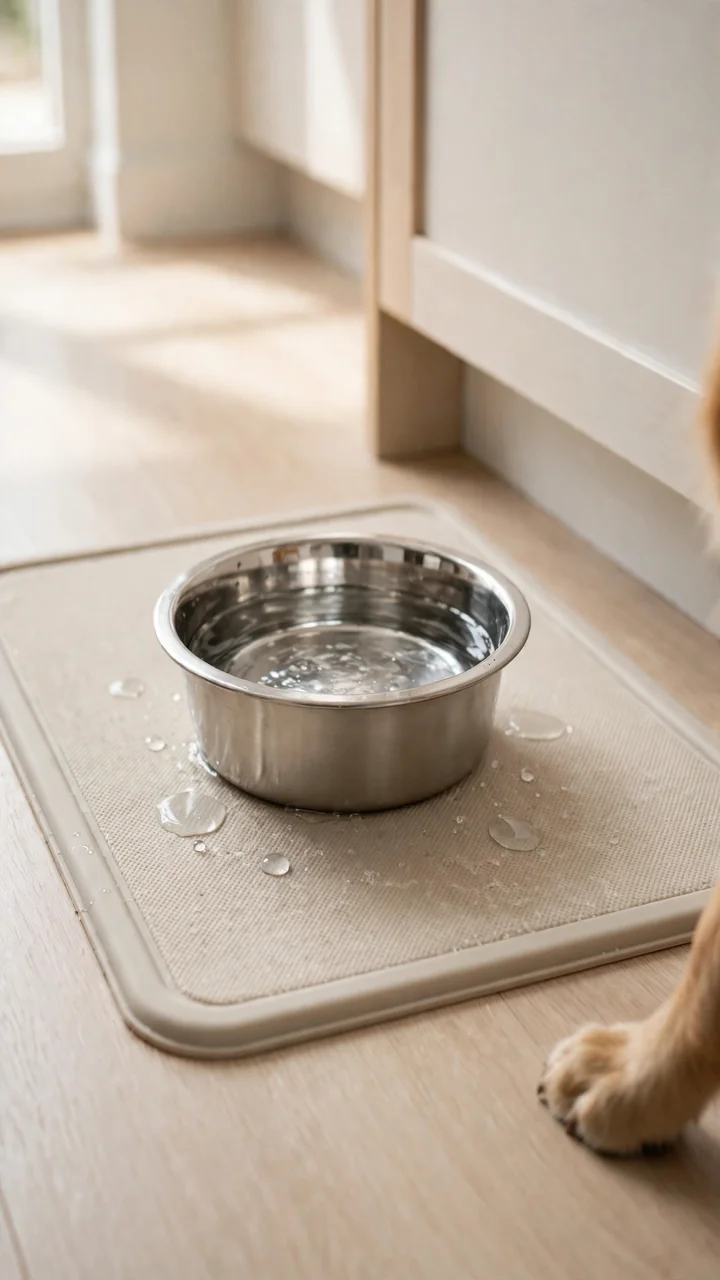
Water bowls travel. Dogs push them, splash them, and drink with their whole face.
A silicone mat with a raised edge catches the drips, and it will not slide on vinyl the way a towel does. Pick one a few inches wider than the bowl on every side. Rinse it in the sink once a week and let it air dry.
Cats can use the same trick. A smaller mat under their bowl keeps whiskers and splashes off the floor.
💡 Quick Tip
Wipe the underside of the mat each week, too. Water gets trapped there, and the floor stays damp if you skip it.
7. Store Kibble in Airtight Bins
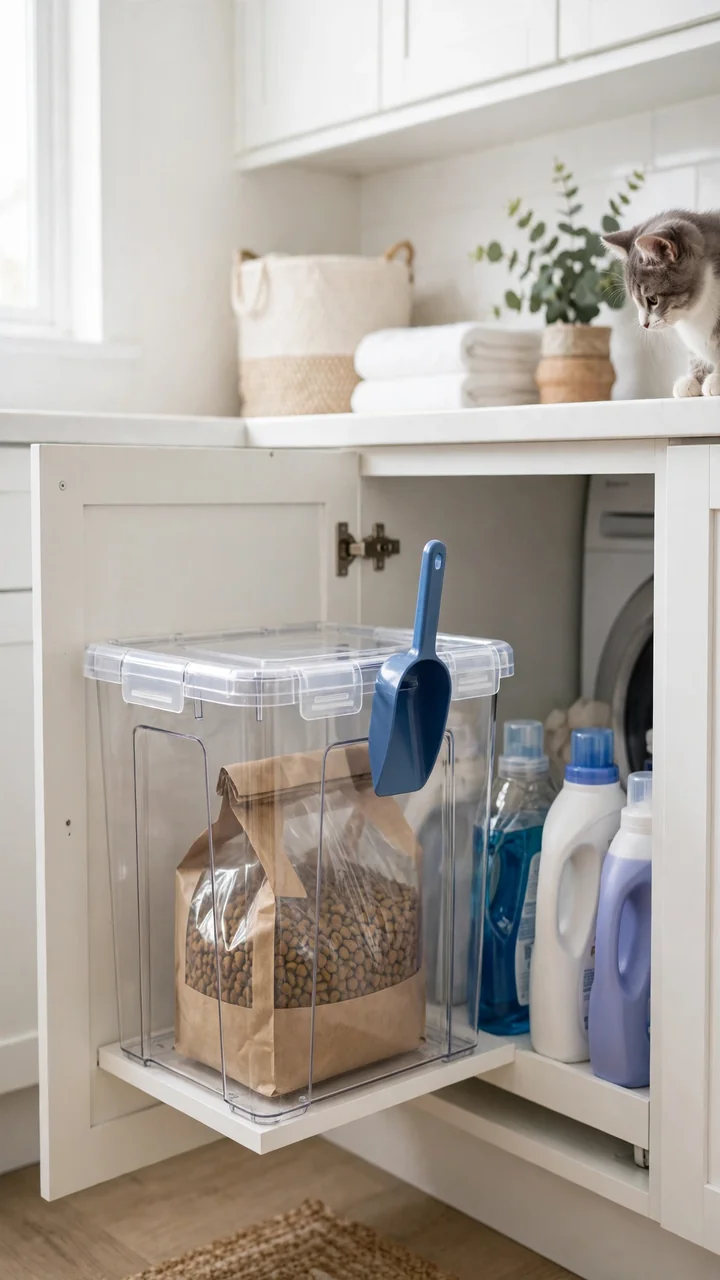
An open bag of kibble goes stale fast, and the smell finds every corner of a small room.
Set a sealed bin inside the base cabinet, well away from the detergent shelf. Keep the food in its original bag and place the whole bag in the bin. That way you still have the brand name and lot number if a recall ever happens.
Tape a scoop to the inside of the lid. You will stop digging through the bag with a coffee mug.
Keep food in the original bag inside the bin.
Store it on a shelf away from cleaners.
Wash the empty bin before a new bag goes in.
Pouring kibble loose into a bin you never wash.
Storing food next to detergent or pods.
Leaving a torn bag open on the floor.
8. Keep a Grooming Drawer
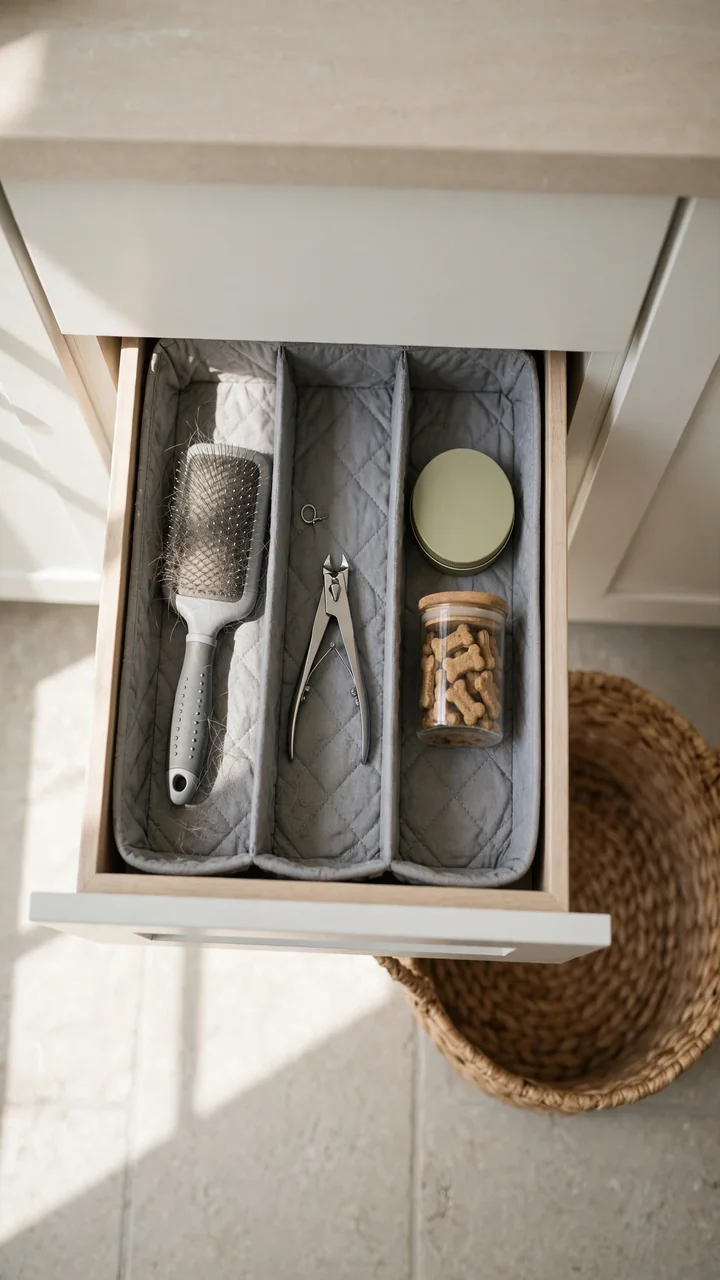
A brush you can find in ten seconds gets used. One you have to hunt for does not.
Give grooming tools their own shallow drawer near the sink. Check that any balm or wipe is labeled pet-safe, since dogs lick their paws.
Line the drawer with a washable shelf liner so loose hair wipes out in one pass.
Sort tools into small bins: brushes in one, nail clippers and wipes in another.
Add a small towel and a jar of treats on top, so grooming ends on a good note.
9. Tuck a Dog Bed Under the Counter
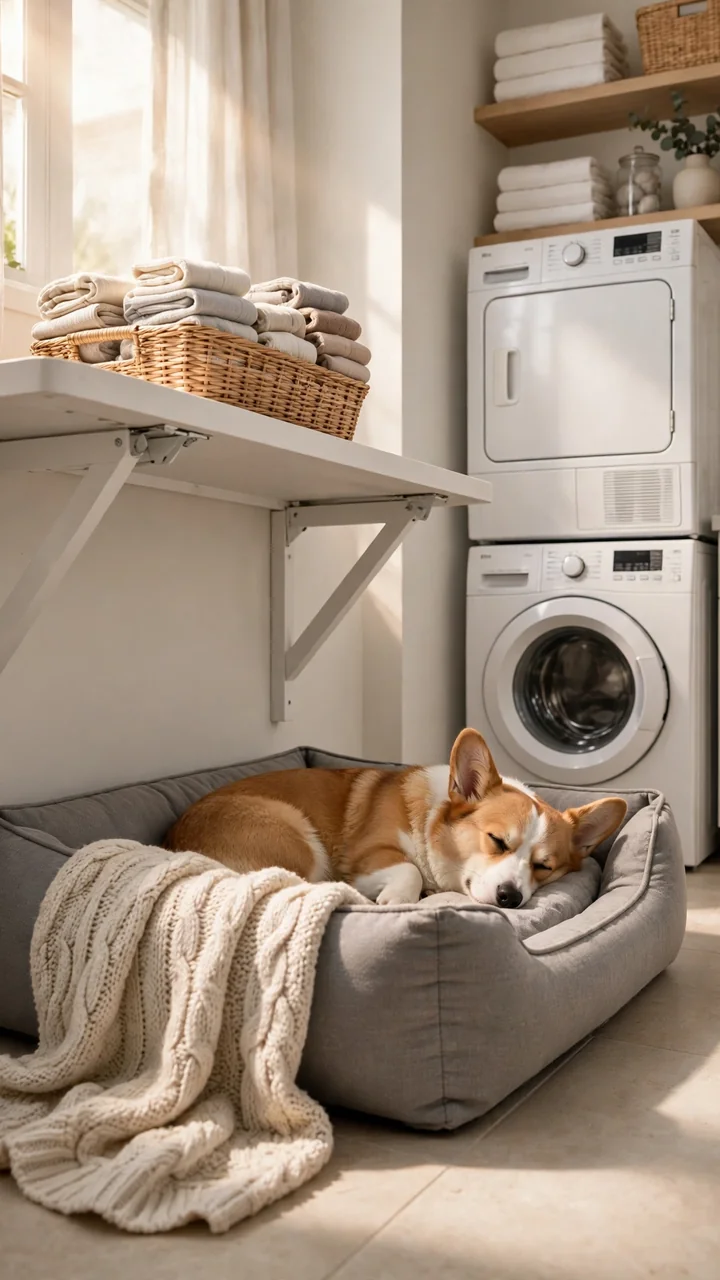
Most folding counters have a dead zone underneath, about the width of a dog bed. Slide one in there and your dog naps beside you while you sort socks.
This is one of the easiest laundry room dog bed ideas because it uses space you already have. Measure the gap first, then pick a bed with a cover that goes in the washer. Keep it a few feet from the dryer vent, since warm exhaust air and a sleeping dog do not belong together.
<div style="background:#101010; border-radius:12px; padding:22px 24px; margin:26px 0; box-sizing:border-box;">
  <div style="font-size:13px; letter-spacing:1px; color:#ffffff; opacity:0.85; font-weight:700; margin-bottom:6px;">THE ONE THING TO REMEMBER</div>
  <p style="margin:0; color:#ffffff; font-size:clamp(16px,2.6vw,19px); line-height:1.55; font-weight:600;">Buy a bed with a cover you can toss in the washer. In a laundry room, you already have the machine.</p>
</div>
10. Turn a Lower Cabinet Into a Crate
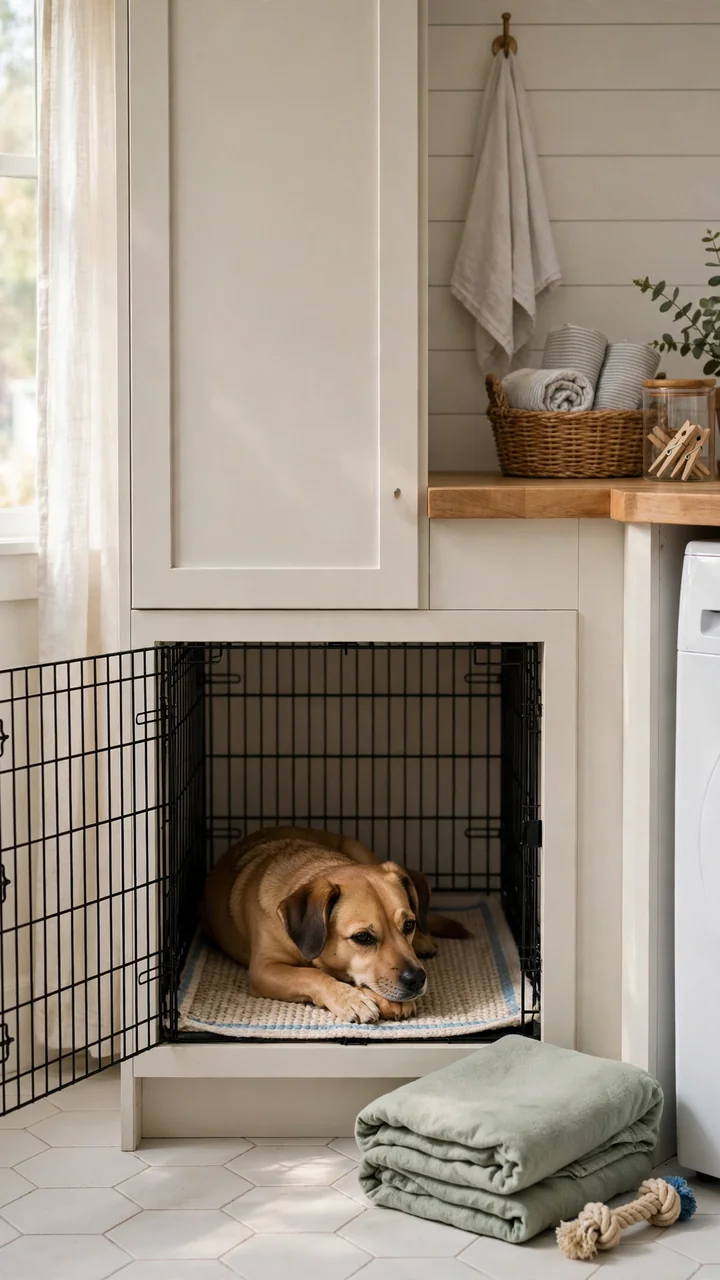
A base cabinet already has a floor, a roof, and three walls. That is most of a crate.
Take off the doors and hinges, then add a metal crate door or a vented front panel so air can move through. Sand any cut edges smooth. This works best for dogs that already like their crate, so skip it if yours does not.
- ▸Size it so your dog can stand up and turn around.
- ▸Line the floor with a washable mat, not a loose blanket.
- ▸Leave the back open or vented so the space does not trap heat.
- ▸Keep it away from the dryer and its exhaust.
11. Give Cats a Shelf Path Up High
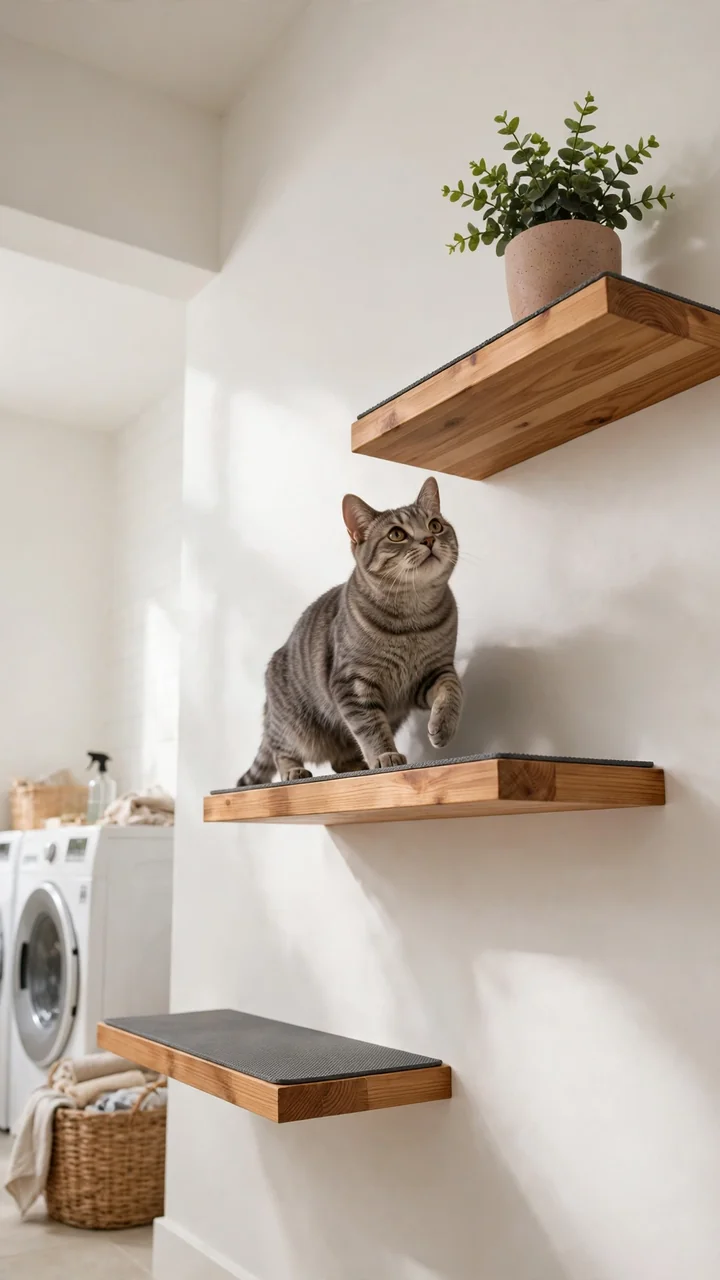
Cats feel safer when they can watch the room from above, and a laundry room has plenty of wall to give them.
For a cat friendly laundry room, mount two or three shelves in a staircase pattern, each one a short hop above the last. Here is what keeps them solid:
- Screw the brackets into wall studs, not just drywall.
- Keep the shelves off the washer and dryer so vibration does not shake them loose.
- Top each shelf with a thin non-slip pad you can wipe clean.
Always look inside the dryer drum before you start a load. Cats love warm, dark spaces.
12. Hide the Litter Box in a Cabinet
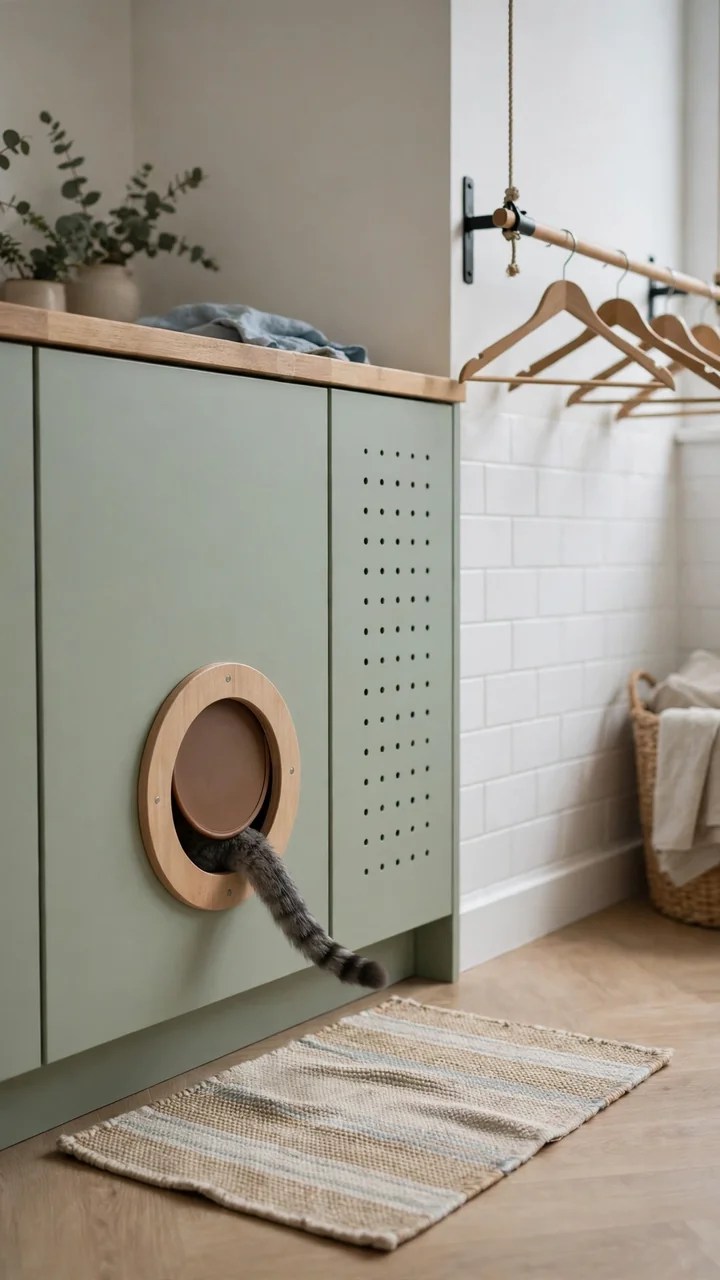
A litter box in the middle of the floor is the one thing everyone sees and nobody wants to.
A lower cabinet fixes that. Cut a round or arched cat door into the front panel, big enough for your largest cat to walk through without squeezing. Sand the edges smooth. Then set a washable mat just outside the door to catch stray litter before it spreads.
Place the cabinet far from the feeding corner. Cats and dogs both prefer their food and their bathroom well apart.
⚠️ Watch Out
Do not seal the cabinet shut. Drill a few vent holes in the back or sides so air can move, and scoop daily. A closed box holds smells in fast.
13. Lock Up Detergent and Pods
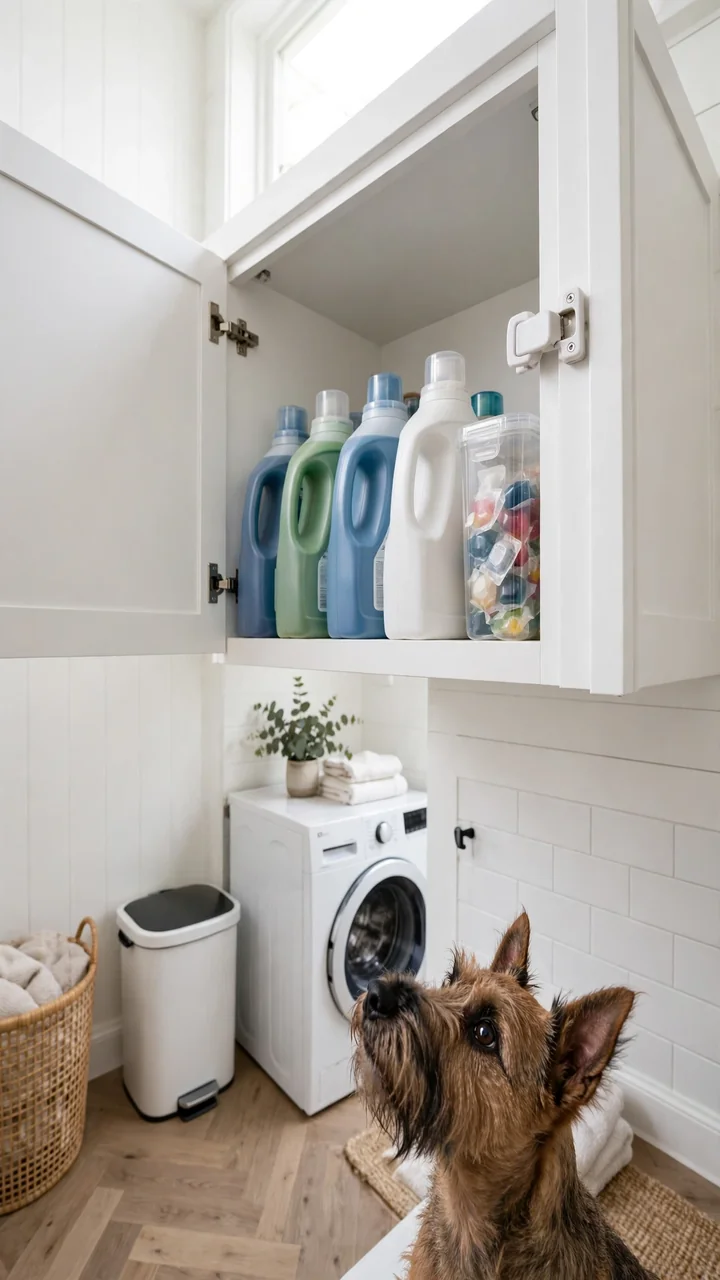
Laundry pods can look like chew toys, and a curious dog does not read labels.
Move detergent, pods, bleach, and fabric softener to a high cabinet. If the only space is low, add a childproof latch to the cabinet door. Both fixes take one short afternoon and cost very little.
Watch the trash can too. Used dryer sheets in an open bin are tempting, so choose one with a lid that closes. If your pet swallows anything from the laundry shelf, call your vet right away.
14. Dry Wet Pet Towels on a Tension Rod
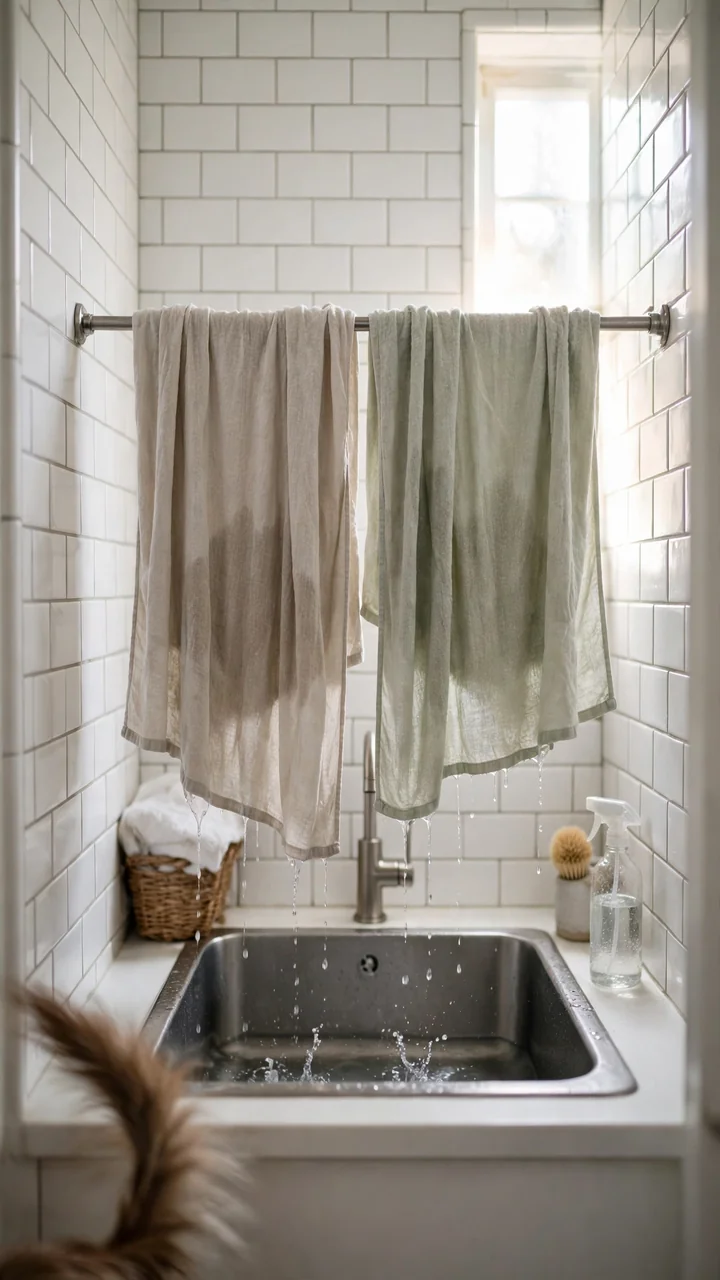
Here is a simple rule: a wet towel should never sit in a heap.
Wedge a tension rod across an alcove, or place one above the utility sink so drips land in the basin. Spread the damp towel over it right after a bath or a muddy walk. It airs out fast, and it does not turn sour before wash day.
Keep the rod away from the dryer vent, where warm air can bend the rod or loosen it.
Before you hang it up
15. Make a Fur Cleanup Station
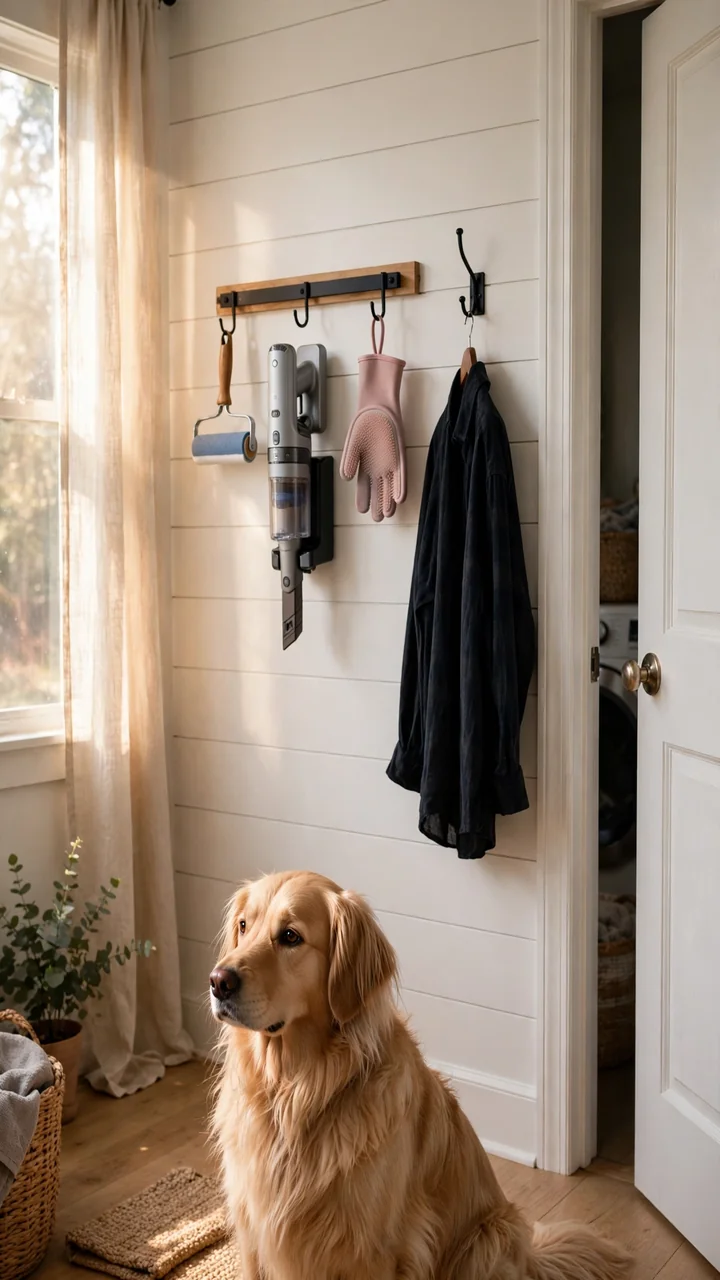
Look at the wall by the door. A lint roller, a handheld vacuum, and a rubber grooming glove can all hang there in a neat row.
The roller handles your clothes before you leave. The vacuum takes care of the dog bed and the floor corners. The glove lifts hair off a pet while it sits next to you.
Run the dryer lint screen after every load of pet bedding. Fur builds up there faster than you would guess, and the screen is quick to empty.
One more habit: rinse fur into the trash, not down the sink drain.
Fur on every dark shirt, the dryer lint screen packed solid, and a vacuum stored in a closet down the hall.
Tools hang within reach of the door, so a quick roll takes ten seconds and the dryer screen gets emptied every time.
16. Use a Washable Runner Rug
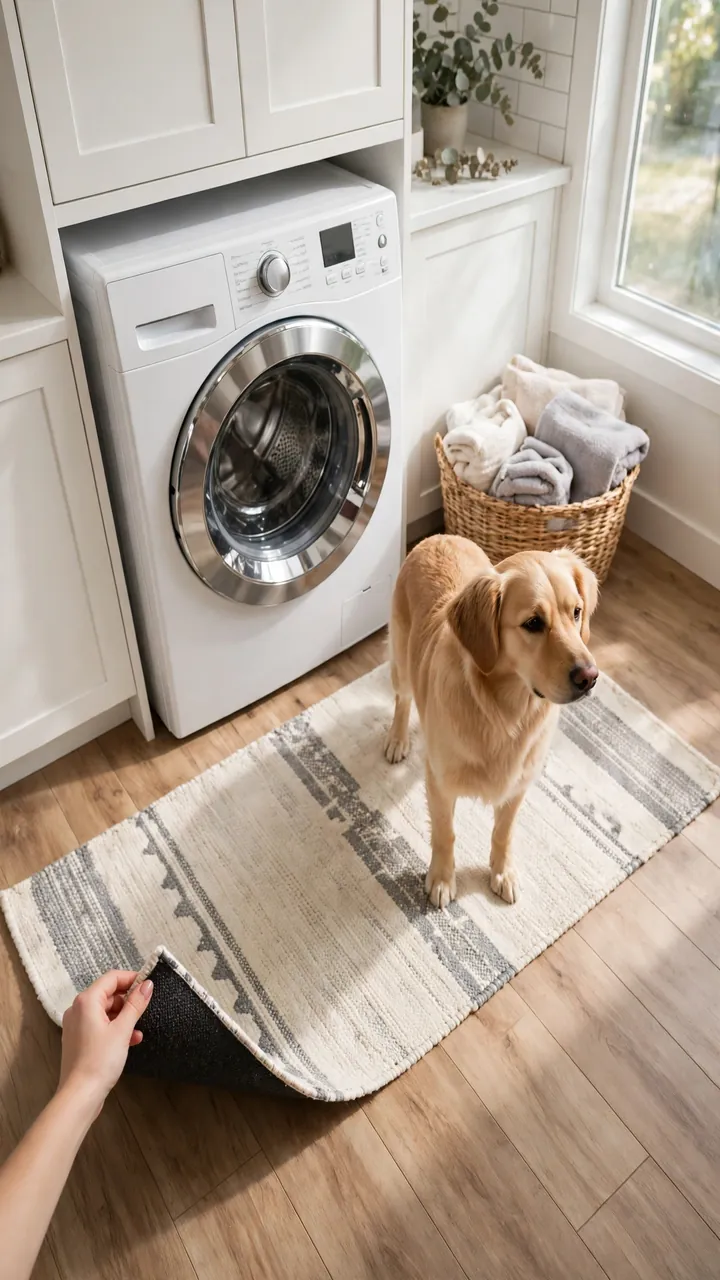
Bare floors can be cold and slippery, and dogs skid on them when they get excited.
A low-pile runner in front of the sink or washer gives them grip and gives you a soft place to stand. Pick one with a rubber backing and a label that says machine washable. Fold it into the wash with your pet towels every couple of weeks.
Skip thick shag. It holds water, fur, and mud, and it takes forever to dry. If a rug ever starts to slide, add a non-slip pad underneath.
| Low-pile runner | Thick shag rug |
|---|---|
| Washing: fits in most machines | Washing: often too bulky |
| Fur: shakes or vacuums out | Fur: tangles deep in the pile |
| Drying: fast | Drying: slow and damp |
| Safety: flat, easy to walk on | Safety: claws can snag |
17. Add a Gate to Keep Pets Out
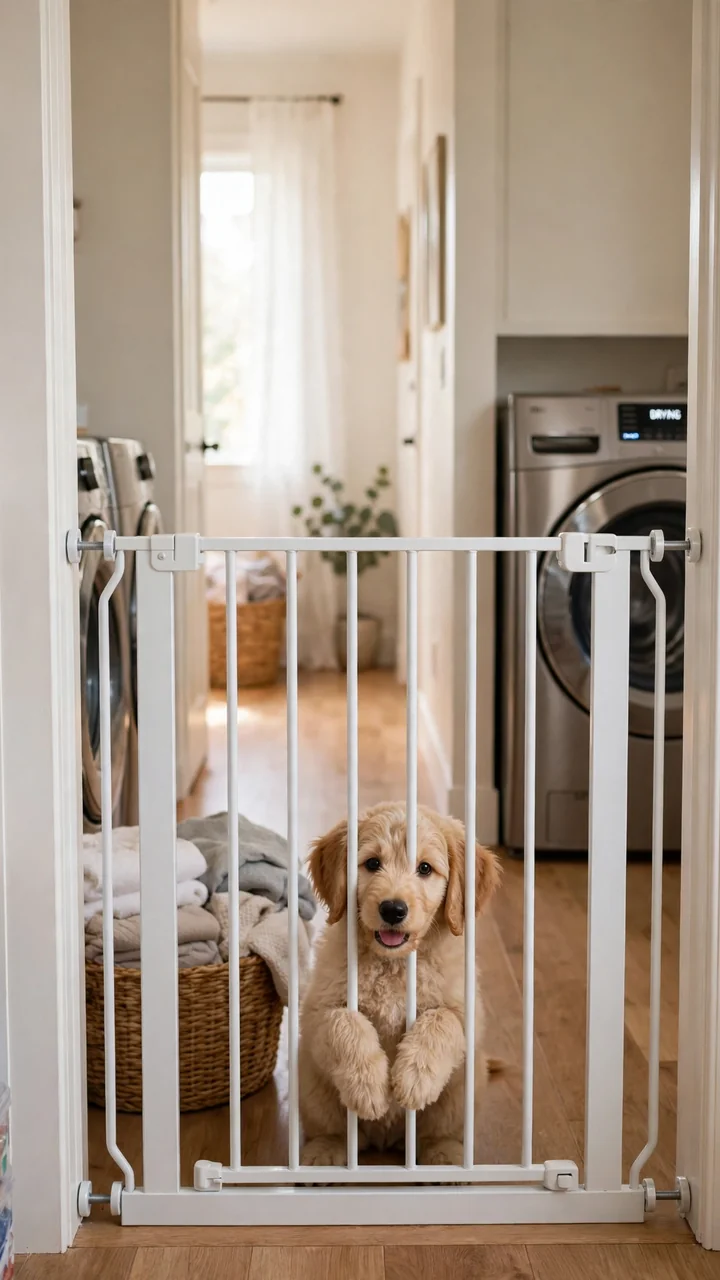
Some days the laundry room should be a pet-free zone.
Think hot dryer, open detergent, or a freshly mopped floor. A pressure-mounted gate in the doorway takes a minute to set up and comes down just as fast. A half door works too if you like to see your dog’s face peeking over the top.
Pick a gate tall enough that your dog cannot jump it, and with bars close enough that a cat cannot squeeze through. This is one of the most useful pet laundry room ideas for anyone with a curious puppy.
Close the gate when you run the dryer.
Measure the doorway before you buy.
Test it by pushing hard on the bottom corners.
Buying a gate with wide gaps for a small pet.
Leaving a gate half latched.
Using a gate as a replacement for supervision.
18. Paint Lower Walls in Scrubbable Paint
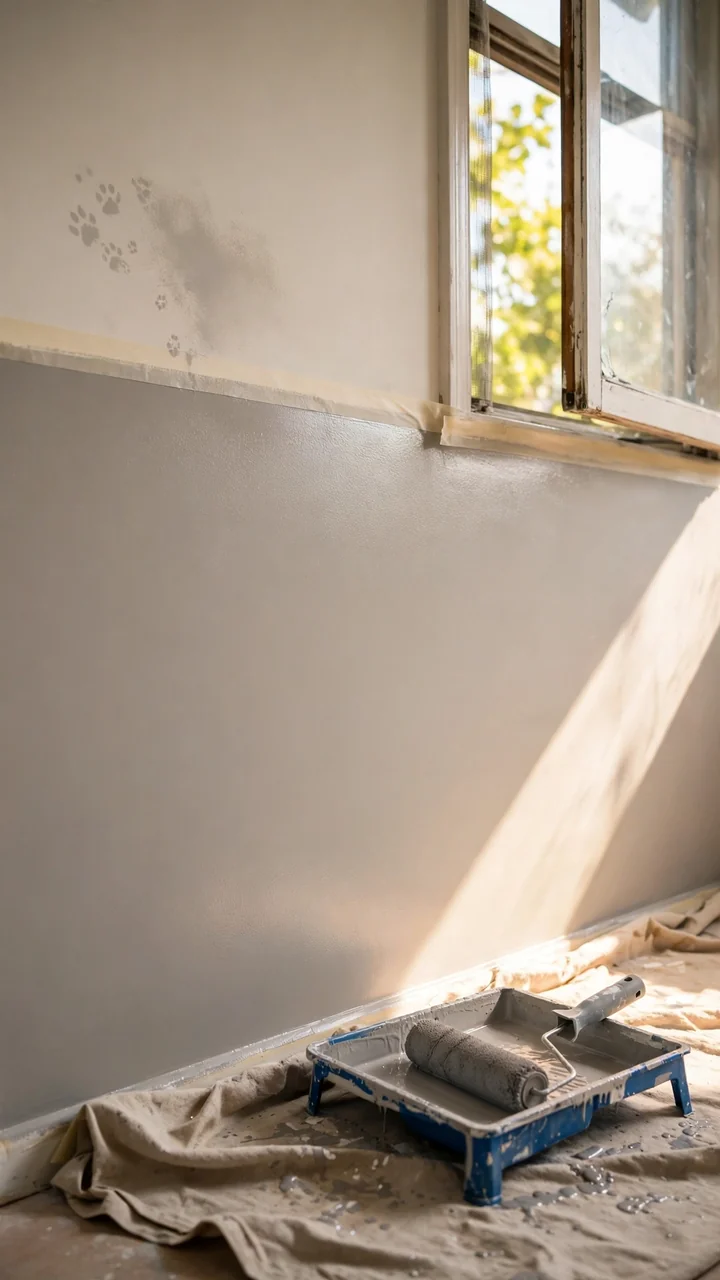
Look at the bottom two feet of your laundry room wall. That is where the splashes, nose prints, and muddy shakes land.
Repaint that zone in a semi-gloss or scrubbable finish, so a damp cloth does the cleaning. Choose a low-VOC paint, and keep pets out of the room until it has dried and aired out. A soft grey or warm white hides smudges better than pure white does.
Wash the wall with warm soapy water and let it dry fully.
Tape off the top edge about two feet up and the baseboard below.
Roll on two thin coats, with the drying time on the can between them.
Open a window or run a fan until the smell fades, then let your pets back in.
19. Use a Basket for Pet Blankets
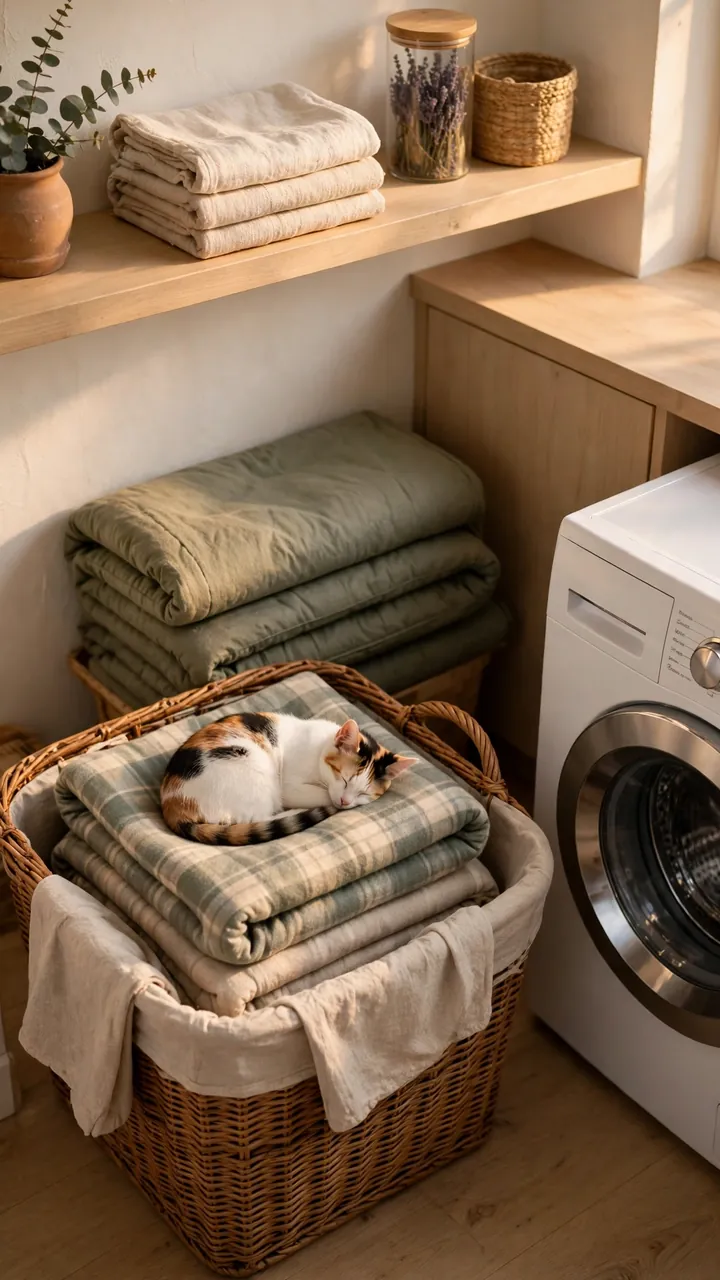
Pet bedding has a way of ending up in the family laundry pile. Then everyone’s clothes come out covered in fur.
Give pet blankets and covers their own basket, and keep it near the washer. A woven plastic basket wipes clean, and a fabric liner lifts out for washing. When the basket fills, run one load of just pet items with a fragrance-free detergent, since strong scents can bother a dog’s nose.
Cats will sit in the basket if you let them. Add a folded blanket on top and call it a bonus bed.
Wash pet bedding on its own. Your family’s clothes stay clean and your pet’s blankets get a proper wash.
20. Post a Feeding and Vet Info Board
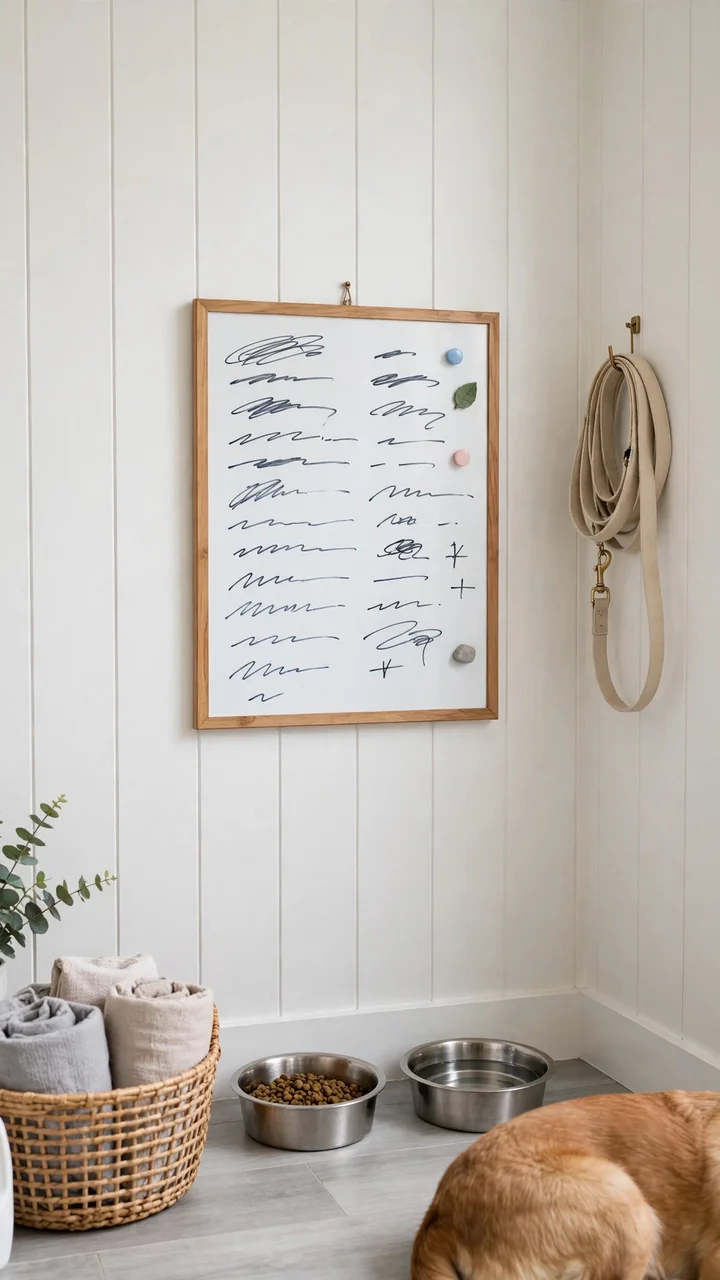
Someone else will feed your pet one day. A neighbor, a sitter, or a family member who has never opened your cabinet.
A small whiteboard or framed chalkboard near the bowls solves that. Wipe-clean surfaces work best, since the board hangs in a damp room. This small laundry room pet area detail saves a lot of questions, and it is one of the cheapest on the whole list.
What to write on the board
Conclusion
A laundry room that works for pets does not need a big budget or a full remodel. It needs a few smart choices: floors that wipe clean, a sink that handles bath day, a corner for dinner, and a spot where your dog or cat can settle in while you fold towels.
Pick the one idea that fixes your messiest daily problem and start there. Maybe that is the hooks by the door, or the lid on the kibble bin. One small change makes the next one easier to see.
Your laundry room can handle the washing and the wagging tails at once. These pet friendly laundry room ideas give you plenty of ways to get there.
Save this list to your laundry room or pet board, so it is ready the next time you want to make a little more room for your pets.