
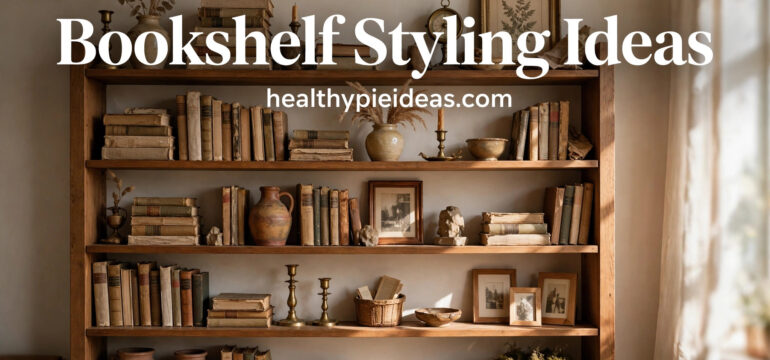
Walk through any beautifully designed home right now and you will notice the same thing. Shelves no longer look brand new and perfectly matched. Instead they feel collected, warm, and full of character, as if every piece arrived with a story. This shift toward vintage finds is one of the loveliest things happening in design, and the bookshelf is the best place to try it. These bookshelf styling ideas will show you how to mix old crates, brass bits, worn pottery, and thrifted frames with the books you already own. The result looks effortless, but it comes from a few simple choices anyone can make.
Before you place a single thing, take everything off your shelves and start with a clean slate. Shop your own home first, because you probably own more vintage looking pieces than you think. Group items by material rather than by size, and leave some empty space on every shelf. Breathing room is what separates a styled shelf from a crowded one, and it costs nothing.
1. Anchor Shelves With Aged Wooden Crates
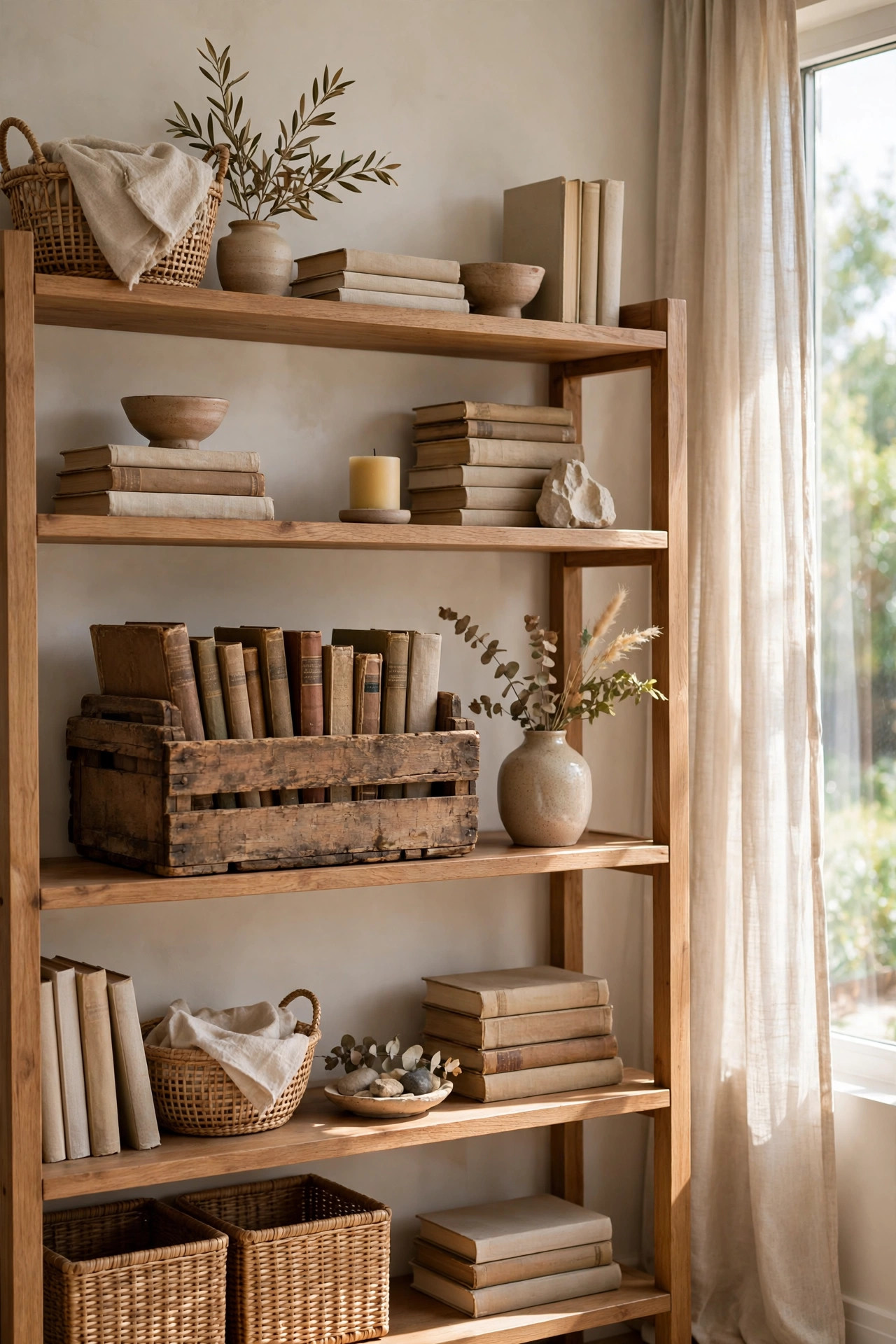
Every well styled shelf needs something with visual weight near the bottom, and an aged wooden crate does this job beautifully. The rough texture and deep tone of old wood ground the whole arrangement, so the lighter books and small objects above it feel balanced. New shelves can look flat and one note, but a crate with a bit of wear brings instant warmth and history. It tells the eye where to land first, which makes the rest of the styling feel calm and intentional.
Turn the crate on its side and fill it with books standing upright, or set it flat and stack books on top of it. One crate per bookcase is enough, because the point is a single strong anchor, not a theme. Look for crates at flea markets or farm shops, and do not worry about scuffs or faded lettering. Those small marks are exactly what make it feel real and collected rather than staged.
2. Stack Old Books Horizontally As Pedestals
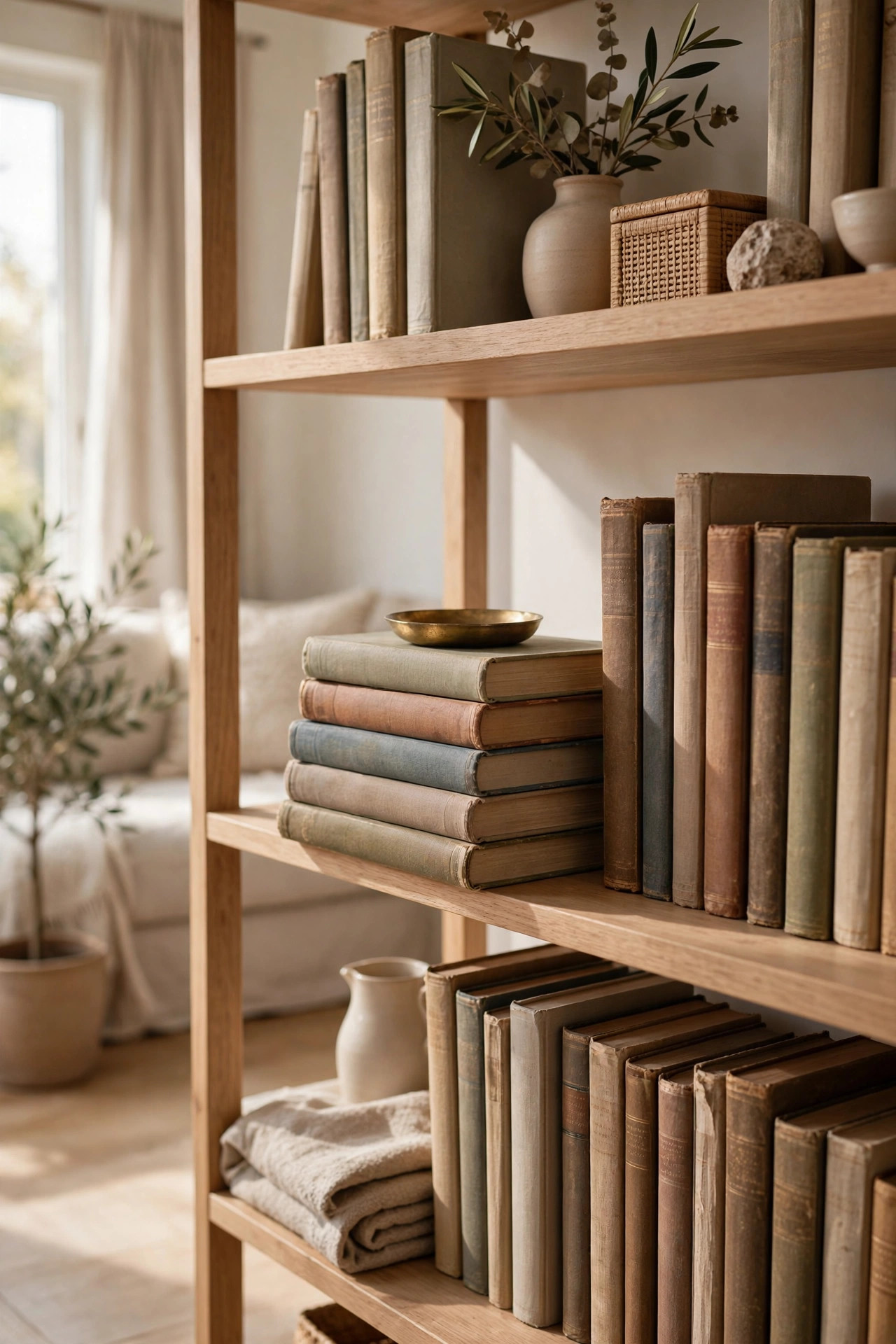
Rows of upright books can start to look like a library wall, which is fine but not very interesting. Horizontal stacks break that rhythm and create little platforms that lift small objects into view. A stack of three or four worn books gives you a new height to play with, and the eye loves that kind of gentle up and down movement. It is a simple trick, yet it changes the whole feeling of a shelf from flat to layered.
Choose books with cloth covers in soft, muted colors, and turn the spines so the prettiest ones face out. Top each stack with something small, like a brass dish, a tiny vase, or a candle. Keep the stacks to about five books or fewer so they stay neat, and vary the stack heights across the shelf. This is one of those bookshelf styling ideas that looks far more considered than the effort it takes.
3. Mix Brass Candlesticks Between Tall Book Rows
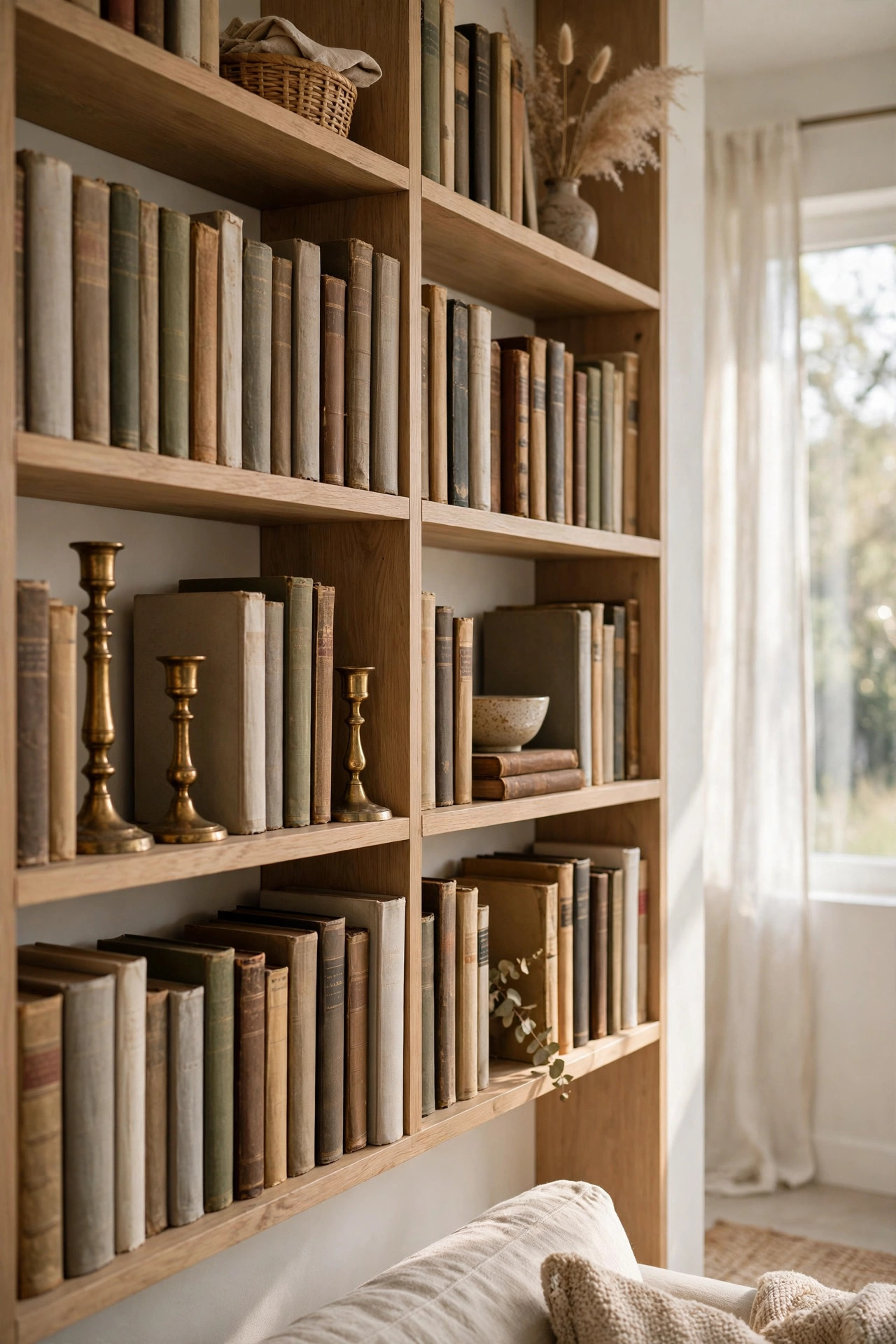
Books are mostly matte paper and cloth, so a little shine goes a long way. Brass candlesticks catch the light and add a warm golden glint that wakes up long rows of spines. When you place them at different heights among the books, they lead the eye across the shelf instead of letting it slide past. Metal against paper is one of the oldest styling contrasts, and it works because the two textures make each other look better.
Thrift stores almost always have brass candlesticks for a few dollars, so this is an easy win. You can polish them to a shine or leave the soft patina, and both look good with vintage finds. Tuck one or two into gaps between book sections rather than lining them up in a row. A little unevenness keeps the shelf feeling natural, like the pieces gathered there over time.
4. Display Vintage Pottery In Curated Groups
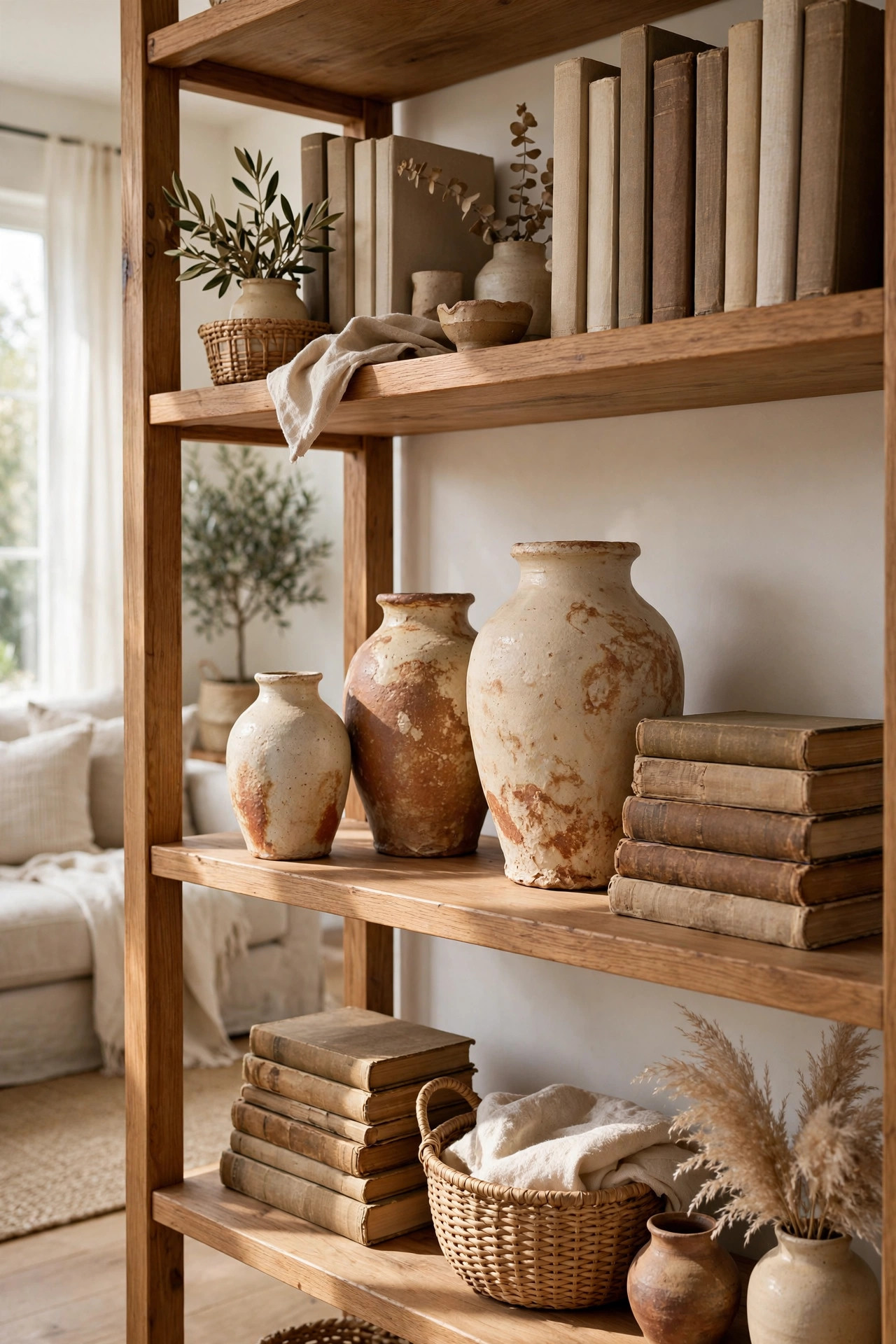
A single small vase can disappear on a big shelf, but three pieces of pottery grouped together read as a collection. The eye treats them as one shape, which gives the arrangement presence without adding clutter. Handmade vintage pottery brings soft, rounded forms that balance all the straight lines of books and shelves. Its slightly imperfect surface also adds the kind of texture that new decor often lacks.
Keep your group within one color family, such as creams, warm whites, or rusty earth tones, and vary the sizes from small to medium. An odd number almost always looks better than an even one, so aim for three or five. Place the group where a shelf feels empty or flat, and let the tallest piece sit slightly behind the others. The result feels gathered and calm, never fussy.
5. Frame A Small Oil Painting On The Shelf
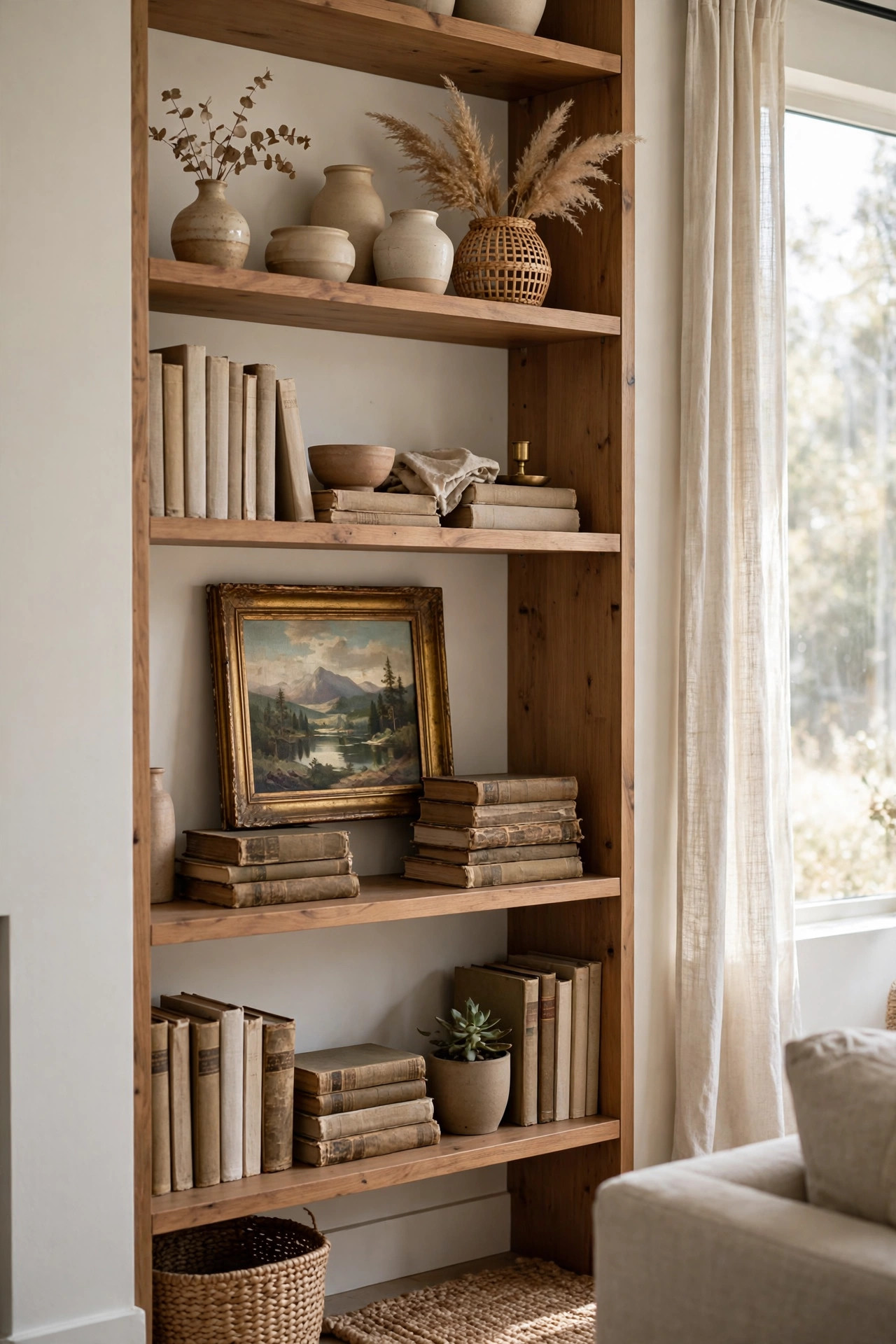
Leaning a small oil painting on a shelf is a quiet way to add depth and an old world mood. The frame itself becomes part of the decor, especially if it is carved wood or aged gold, and the painted scene gives the eye somewhere soft to rest. Books and objects are all hard edges, so a painting introduces a different kind of surface. It makes the whole shelf feel like it belongs to someone with taste and history.
Flea markets and charity shops sell small paintings very cheaply, so you can experiment without worry. Lean the painting against a stack of books, overlapping them slightly so it feels tucked in rather than placed. Landscapes and still lifes work best because their calm colors sit easily next to book spines. Keep the painting small enough that books remain the main story of the shelf.
6. Layer Antique Frames Over Family Photos
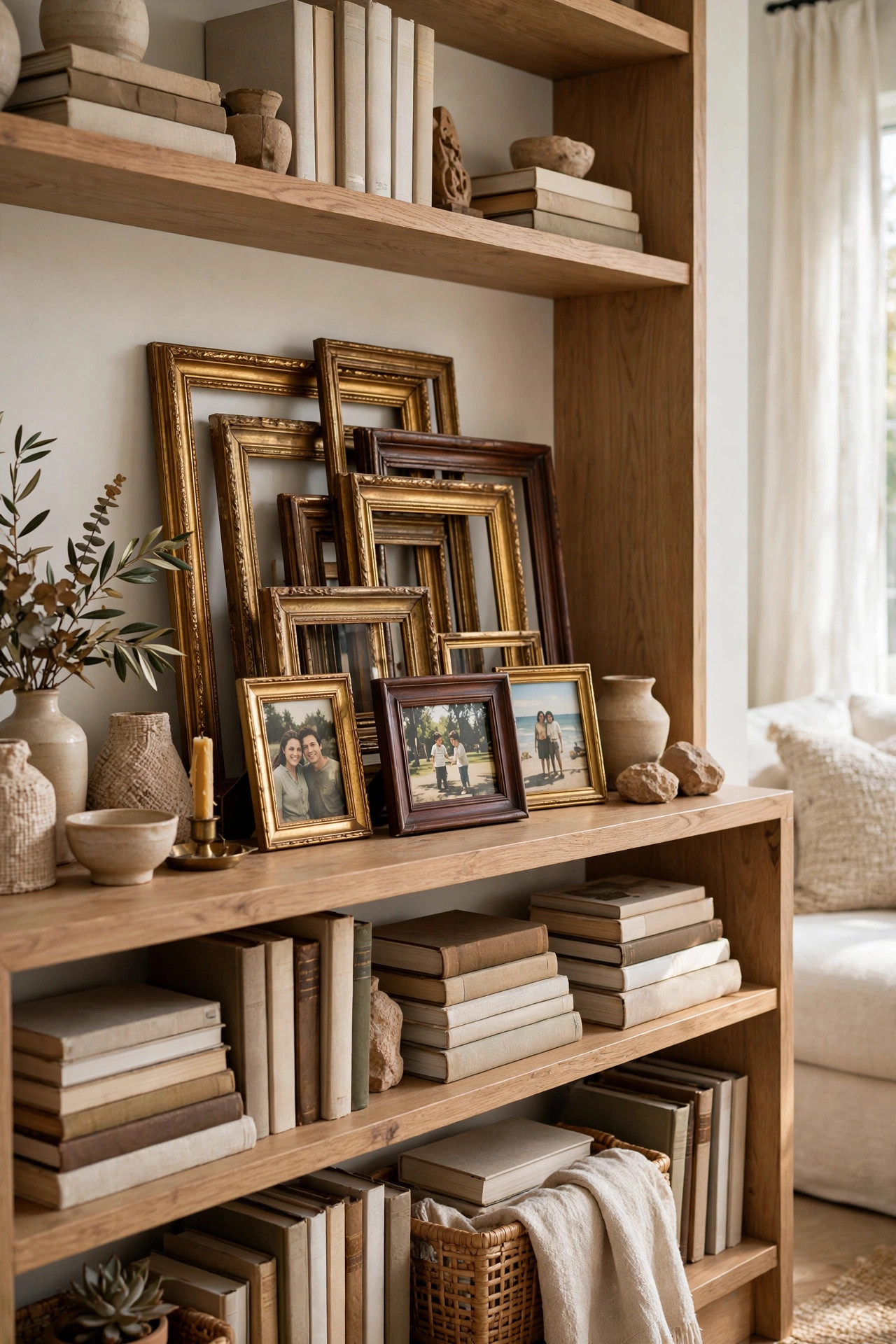
Layering frames in front of one another creates a sense of depth that a single row of photos cannot. The eye moves from the front frame to the ones behind, and that little journey makes the shelf feel dimensional and rich. Empty antique frames are beautiful on their own too, with their carved corners and aged finishes acting like small sculptures. This is styling that rewards a second look, which is exactly what you want in a living room.
Mix gold toned and wooden frames, and let them overlap by an inch or two. Keep the actual photos small so the frames do the visual talking, and lean the whole arrangement rather than hanging it. Two or three layered frames on one shelf are plenty. If a frame is chipped or worn, let it show, because that wear is what makes vintage frames more interesting than new ones.
7. Light A Shelf With A Vintage Brass Lamp
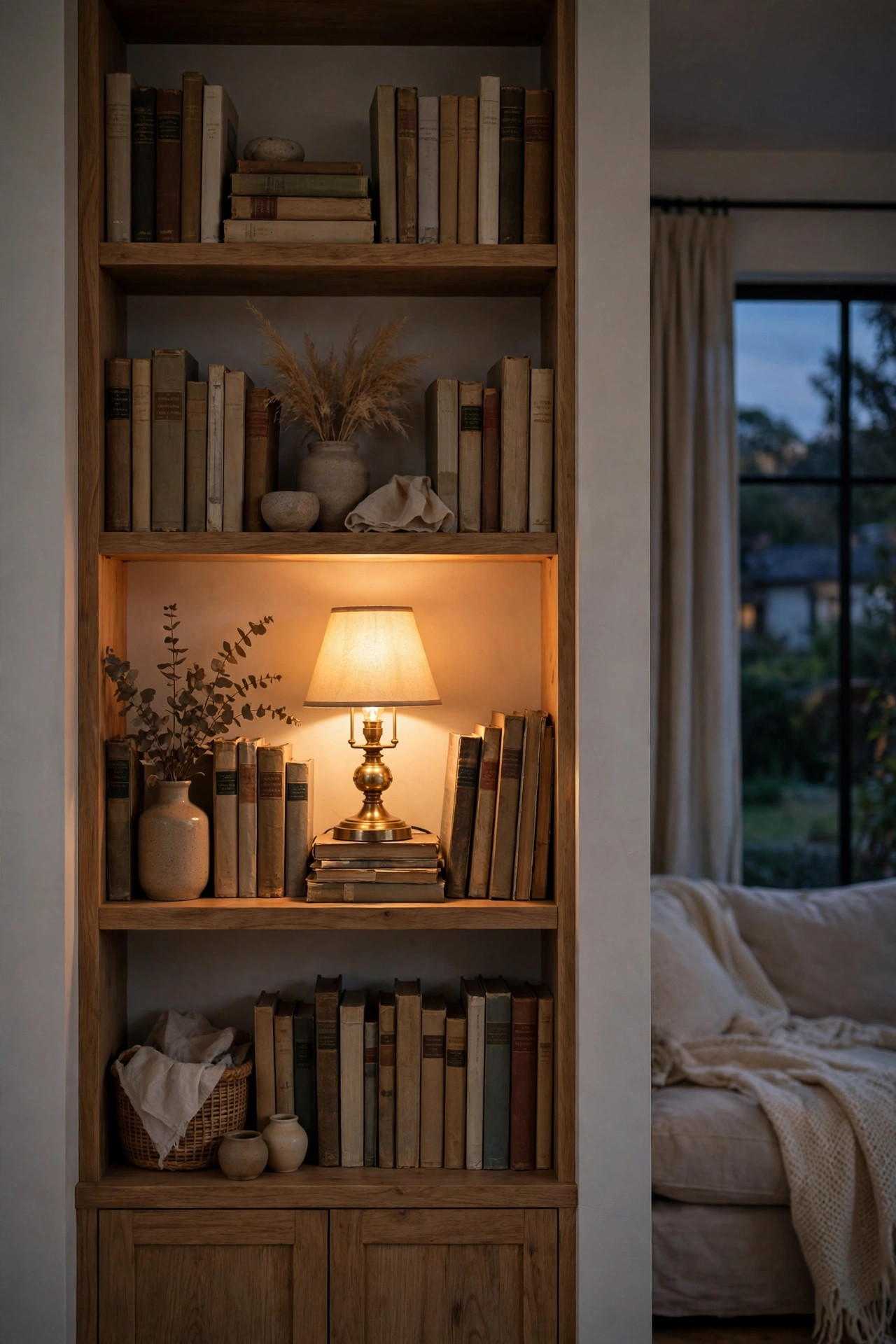
A small lamp on a bookshelf changes everything once evening comes. Warm light pooling on book spines and brass objects makes the whole bookcase glow, and it turns the shelf into a focal point after dark. Light naturally draws the eye, so a lit shelf feels alive while the rest of the room settles. It is also deeply practical, giving you a soft reading light right where the books are.
Choose a small brass lamp with a simple shade, and keep the bulb low wattage and warm in tone. Tuck the cord neatly down the back of the bookcase so it disappears. One lamp is enough for most bookcases, placed on a middle shelf where its light can spread up and down. This one addition makes your bookshelf styling ideas feel finished in a way that objects alone cannot.
8. Style Thrifted Vases At Different Heights
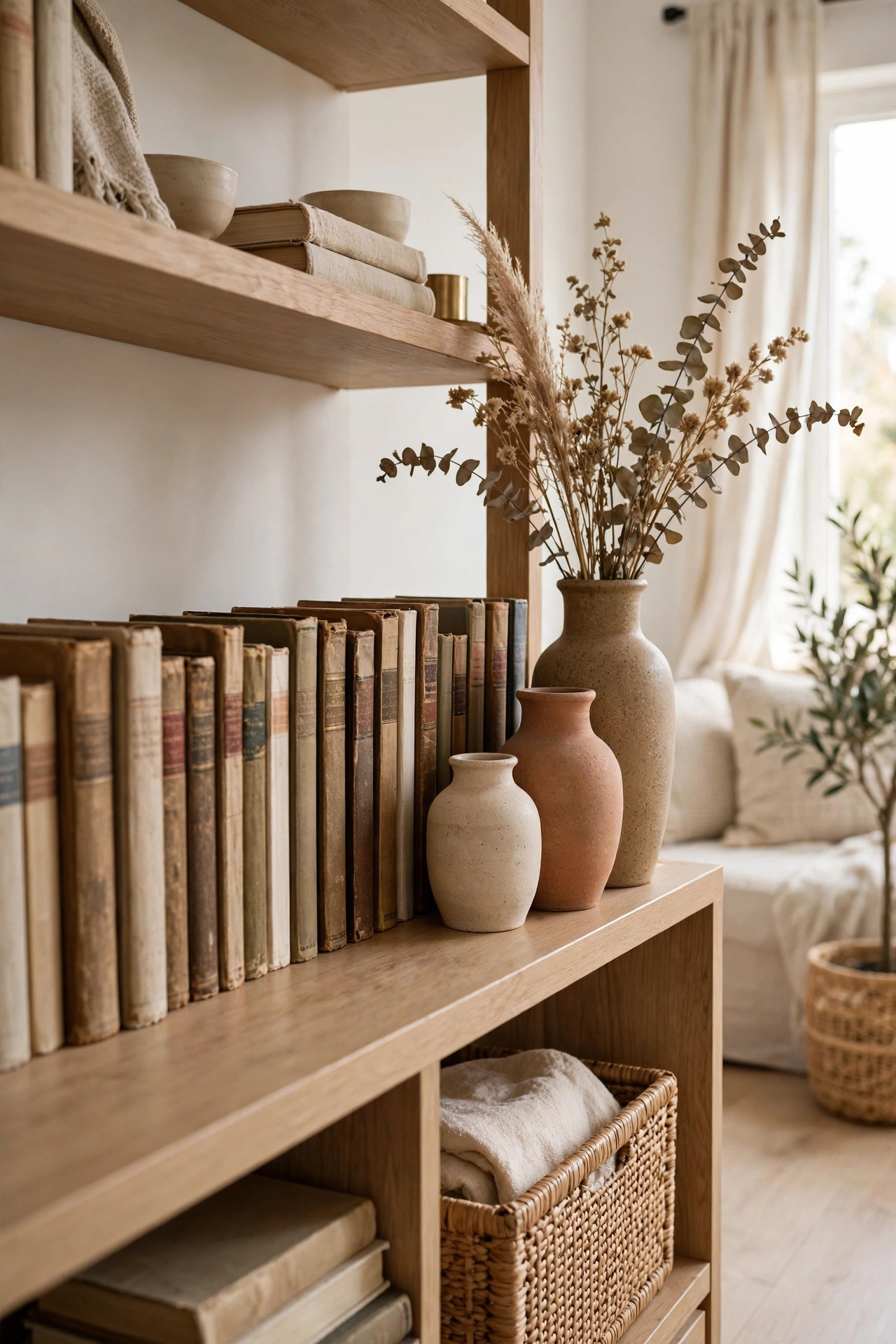
Height variation is the backbone of good shelf styling, and a trio of vases is the easiest way to get it. When three vases rise to three different heights, they form a gentle slope that the eye follows with pleasure. Same height objects in a row look static, but varied heights feel composed and natural. This is why designers reach for groups of three so often, because the rhythm just works.
Gather vases in similar materials, like all glass or all ceramic, so the group feels related. Fill the tallest one with dried stems and leave the others empty, because a mix of full and empty keeps it relaxed. Place the trio where a shelf needs a lift, usually near the end of a book row. These little height stories are what make bookshelf styling ideas look effortless instead of arranged.
9. Flank The Bookcase With A Vintage Ladder
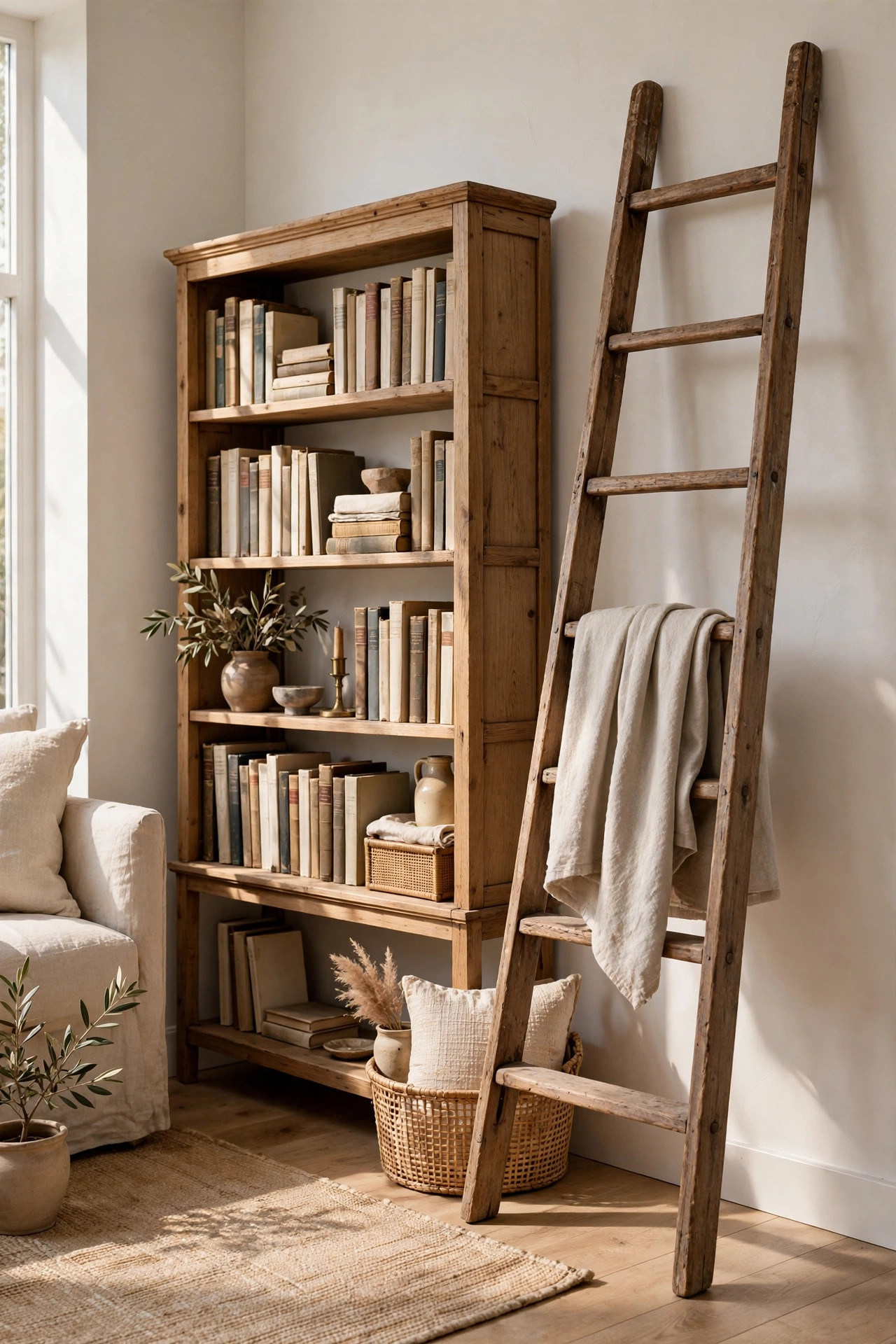
A bookcase is a big rectangle, and a vintage wooden ladder leaning beside it softens that shape beautifully. The ladder adds a vertical line that is slightly off the grid, which keeps the whole corner from feeling boxy. It also brings its own story, suggesting attics and libraries and well loved homes. As a styling move, it extends the bookshelf beyond its frame and makes the vignette feel bigger.
Lean the ladder at a gentle angle and keep what you put on it very simple. A folded throw over one rung or a small hanging basket is enough. Avoid loading every rung, because the ladder should read as an accent, not storage. Its worn wood will echo the other vintage pieces on your shelves, tying the whole corner together without matching anything exactly.
10. Weave Dried Flowers Through The Shelf Rows
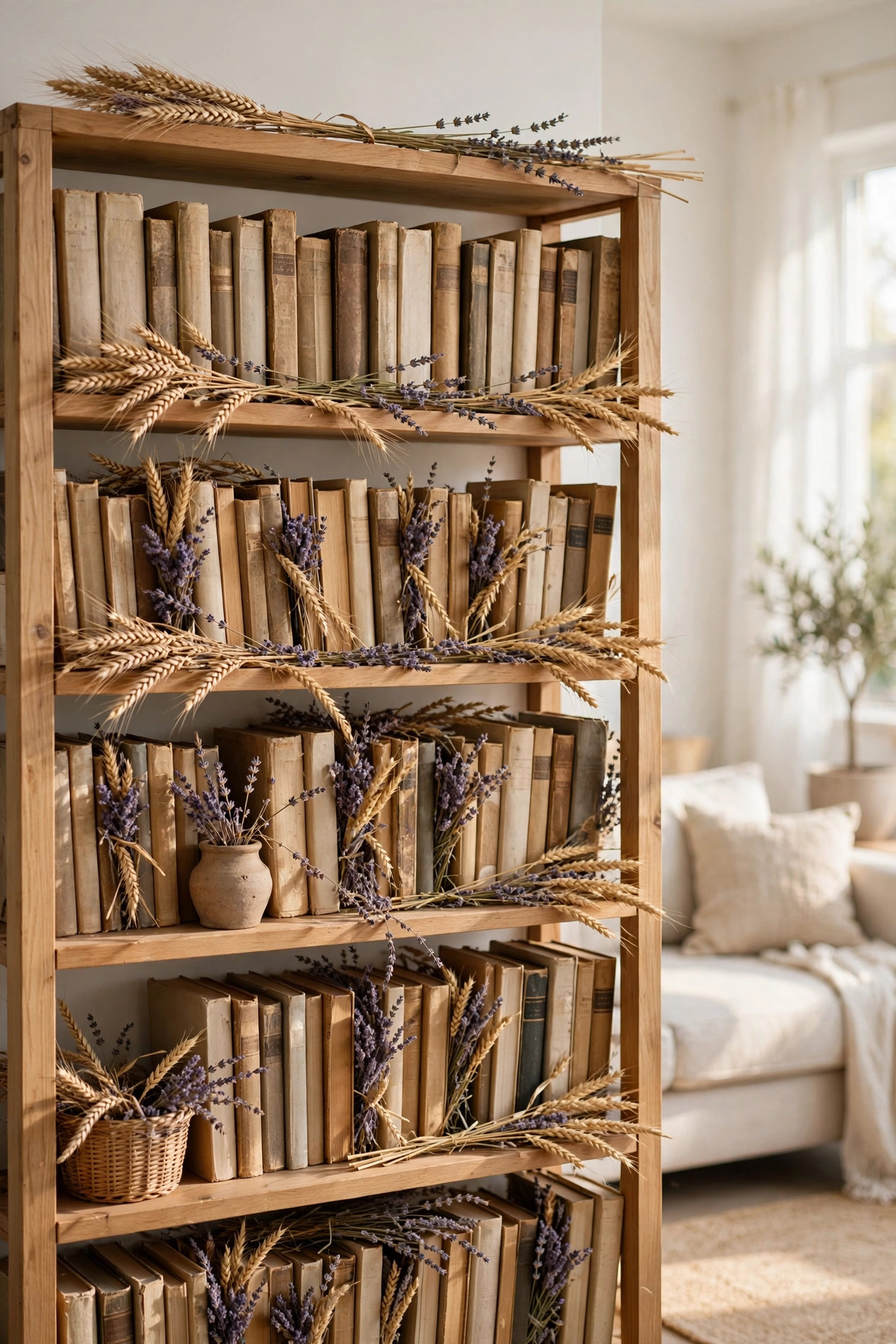
Books and shelves are all hard lines and flat surfaces, so something soft and organic keeps the look from feeling stiff. Dried flowers add gentle movement and a natural texture that relaxes the whole arrangement. Their muted colors sit quietly next to book spines instead of competing with them. This is one of the easiest bookshelf styling ideas, and it brings a little of the outdoors in.
Lay a long stem horizontally across the top of a book row, or stand a small bunch in a narrow vase at the end of a shelf. Wheat, lavender, and dried eucalyptus all keep their shape well and last for months. Keep the stems loose and airy rather than packed tight, because the goal is a whisper of nature, not a bouquet. Replace them when they get dusty and the shelf feels fresh again.
11. Use Vintage Hat Boxes To Build Height
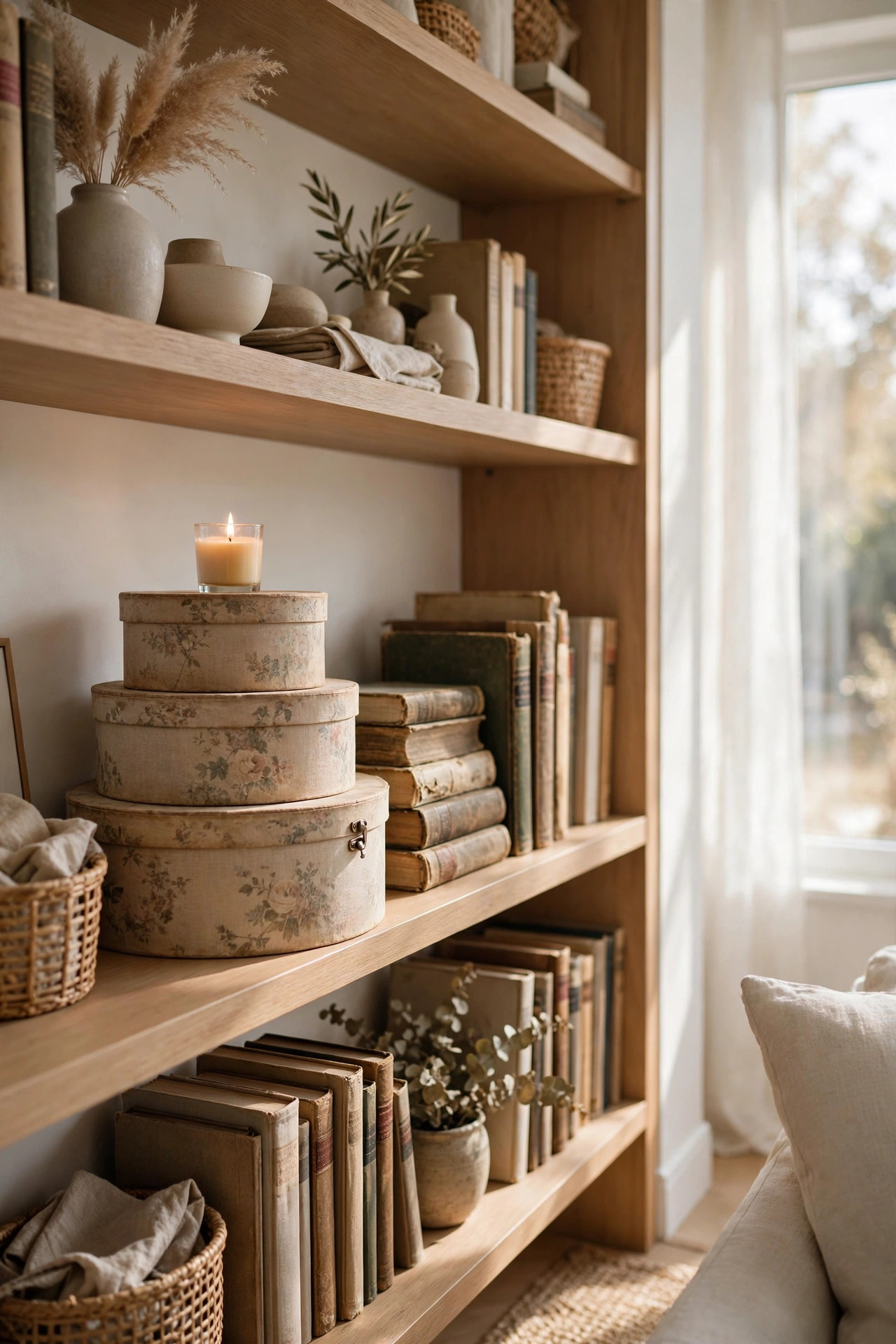
Some shelves have an awkward gap between the top of the books and the shelf above, and hat boxes fill that space gracefully. Stacked boxes add height where the eye expects it, and their round shapes contrast nicely with all the rectangles around them. Patterned vintage boxes bring a gentle print into the mix without overwhelming the books. They are practical too, hiding small clutter inside while looking decorative outside.
Stack two or three boxes with the largest at the bottom, and place them toward one end of a shelf. Top the stack with a small object, like a candle or a tiny plant, to finish the shape. Look for boxes in faded florals or stripes, because soft vintage patterns age well on a shelf. If the boxes are plain, a ribbon tied around them adds a thoughtful detail.
12. Crown The Top With Old Film Cameras
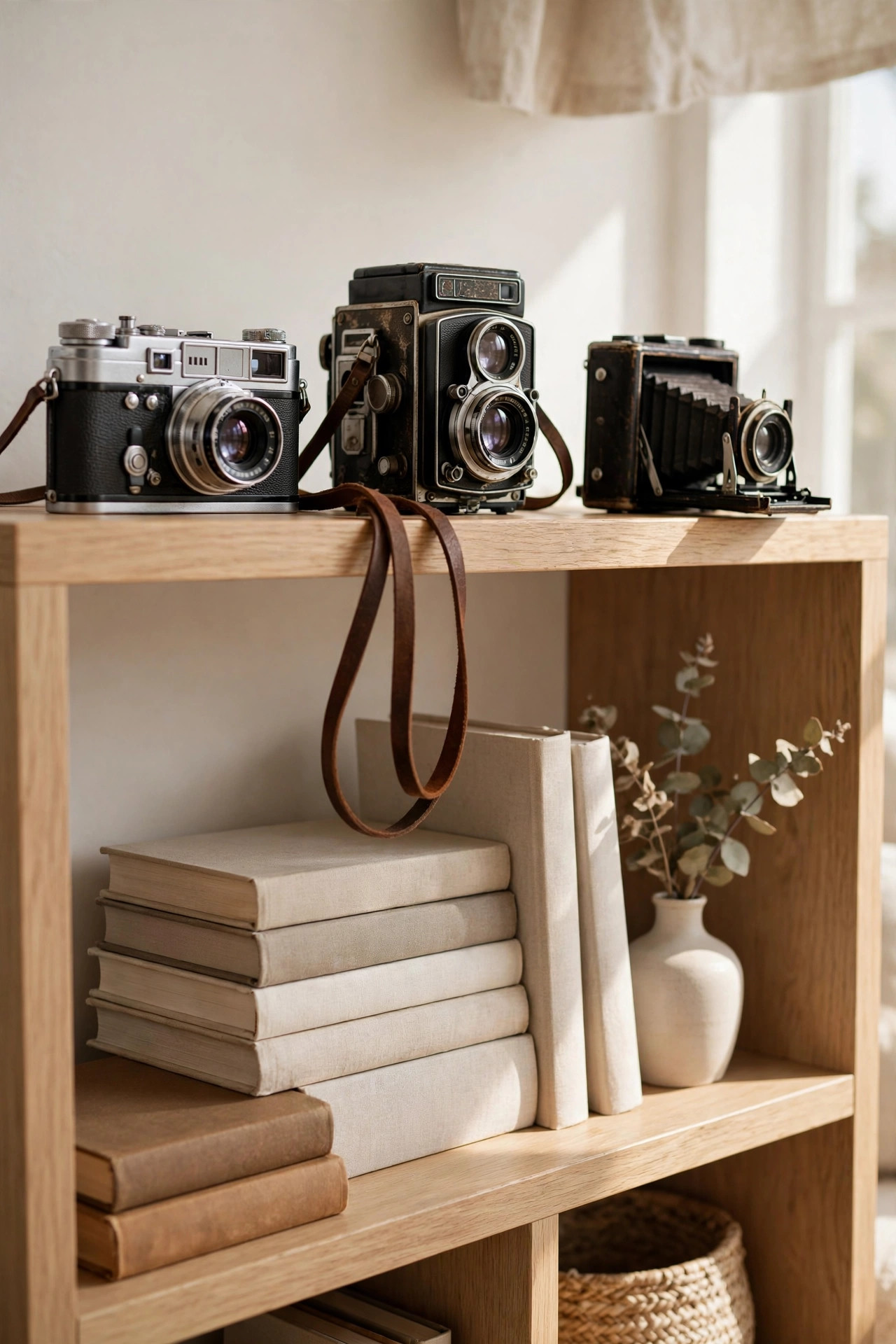
The top of a bookcase is styling space most people waste, and old film cameras fill it with personality. Their interesting shapes and dials read almost like sculpture from a distance, and they hint at a hobby and a history. A row of cameras along the top draws the eye upward and finishes the bookcase like a crown. It is an unexpected touch, which is exactly why guests always comment on it.
Line up two or three cameras at slight angles rather than in a stiff row, and mix sizes if you can. Leather straps can hang naturally over the edge for a relaxed feel. Keep the top otherwise clear so the cameras hold the spotlight. Flea markets and estate sales are full of old cameras, and they do not need to work to look wonderful.
13. Give A Corner Over To Vintage Tin Toys
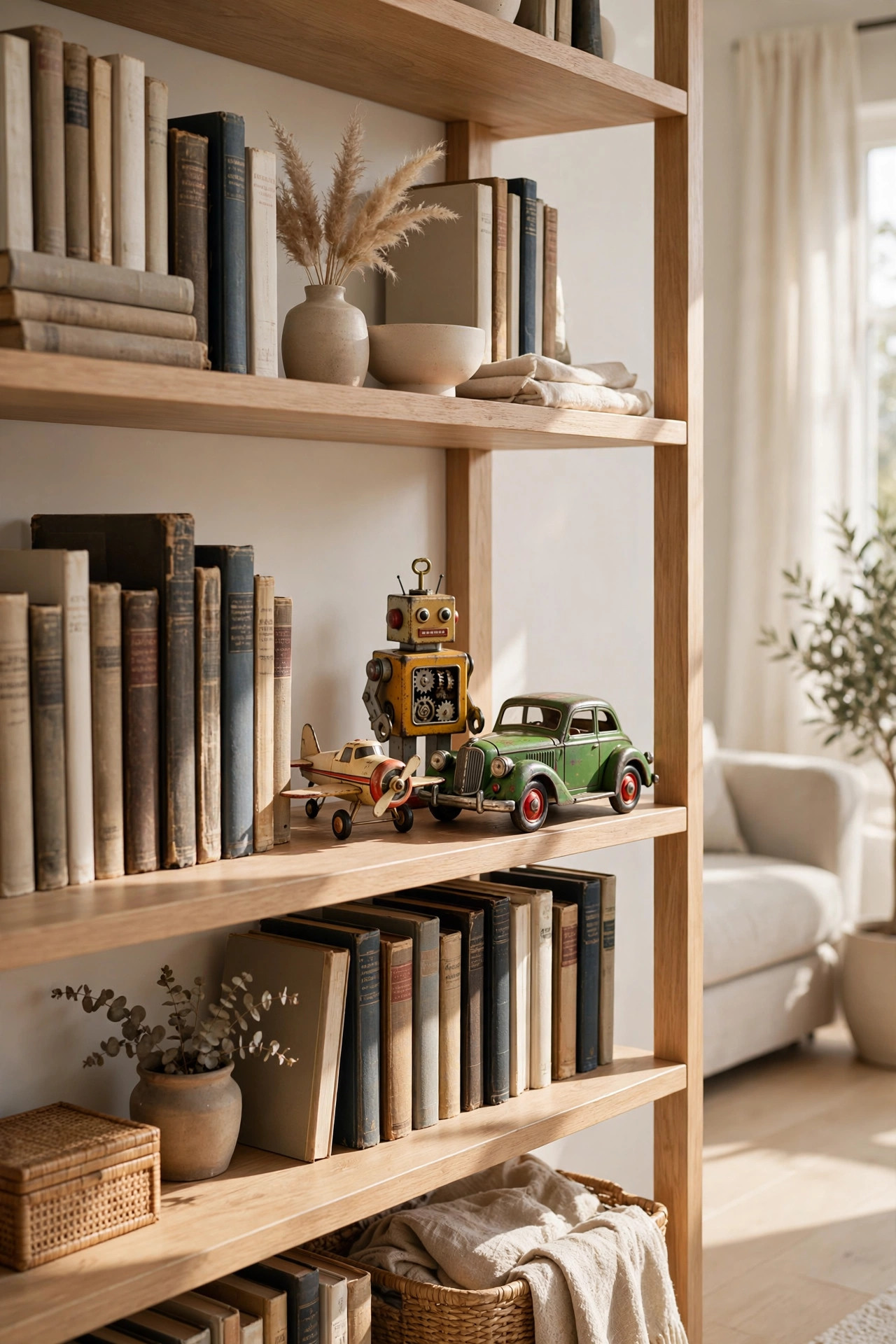
A shelf that is all books and serious objects can feel a bit heavy, so one playful corner lightens the mood. Vintage tin toys add small pops of color and a sense of nostalgia that makes the whole bookcase feel loved. They remind you that a home is for living, not just looking. A touch of playfulness is what separates a styled shelf from a showroom shelf.
Keep the toys grouped in one corner rather than scattered across shelves, because one cluster reads as intentional. Two or three toys are enough, balanced by books on either side. Wind up toys, tin cars, and small robots all work, and a little wear only adds charm. This corner will probably become the part of the shelf that visitors pick up and smile at.
14. Hang A Small Wreath On The Shelf Edge
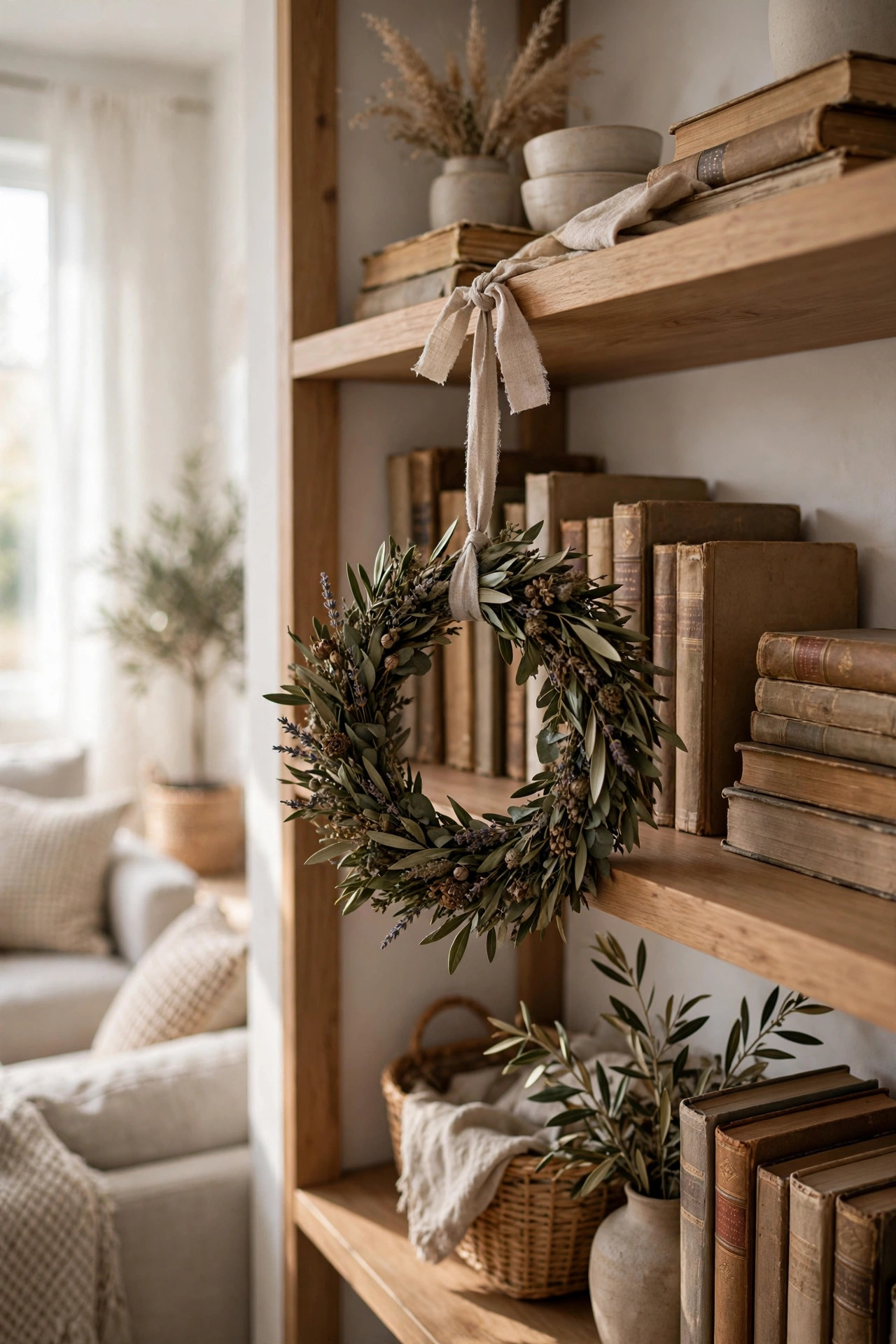
A wreath hung on the front edge of a shelf breaks up all those straight horizontal lines in the loveliest way. Its round shape is a gentle interruption, and it creates a focal point right at eye level. Because it sits in front of the books rather than among them, it adds a layer of depth. This small move has an outsized effect, like jewelry on an outfit.
Choose a small wreath of dried greenery or faux leaves, and hang it from a simple ribbon looped over the top of the bookcase side or from a tiny nail. Keep it in scale with the shelf, because an oversized wreath will swallow the books behind it. You can change the wreath with the seasons, which gives your shelves a fresh note a few times a year without restyling everything.
15. Make A Vintage Clock The Focal Point
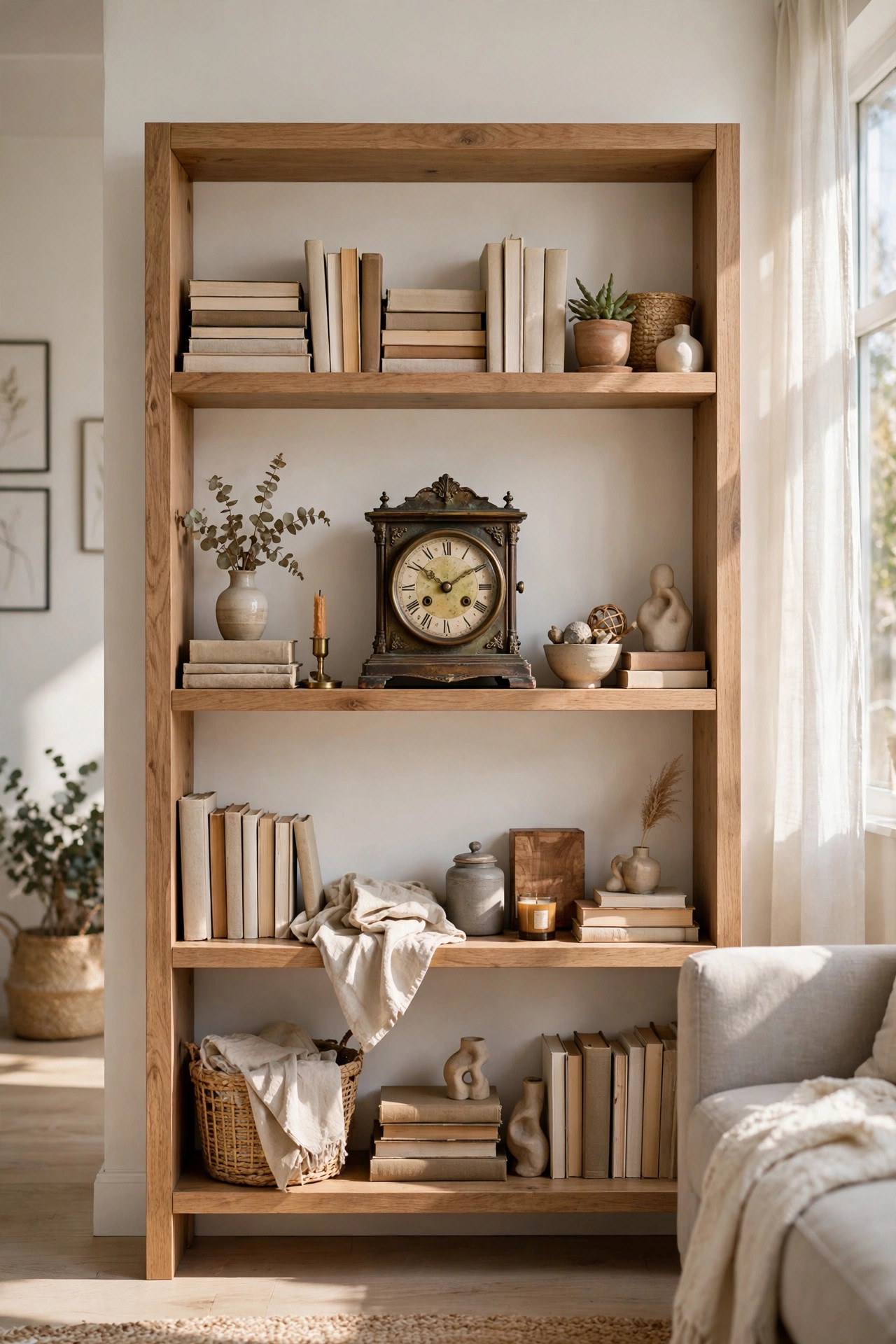
Every bookcase benefits from one clear focal point, and a vintage clock is a strong candidate. It is bigger and bolder than most shelf objects, so the eye settles on it first and the rest of the shelf arranges itself around it. A clock also earns its place by being useful, which makes the styling feel honest rather than decorative for its own sake. Roman numerals and aged faces bring a classic feel that suits vintage styling perfectly.
Place the clock at eye level on a central shelf and give it breathing room on both sides. Let it be the largest object on that shelf, with smaller books and objects stepping down in size around it. A mantel style clock or a small wall clock leaned against the back both work. Once the focal point is set, the rest of your bookshelf styling ideas fall into place around it more easily.
16. Tuck Woven Baskets Under The Bottom Shelf
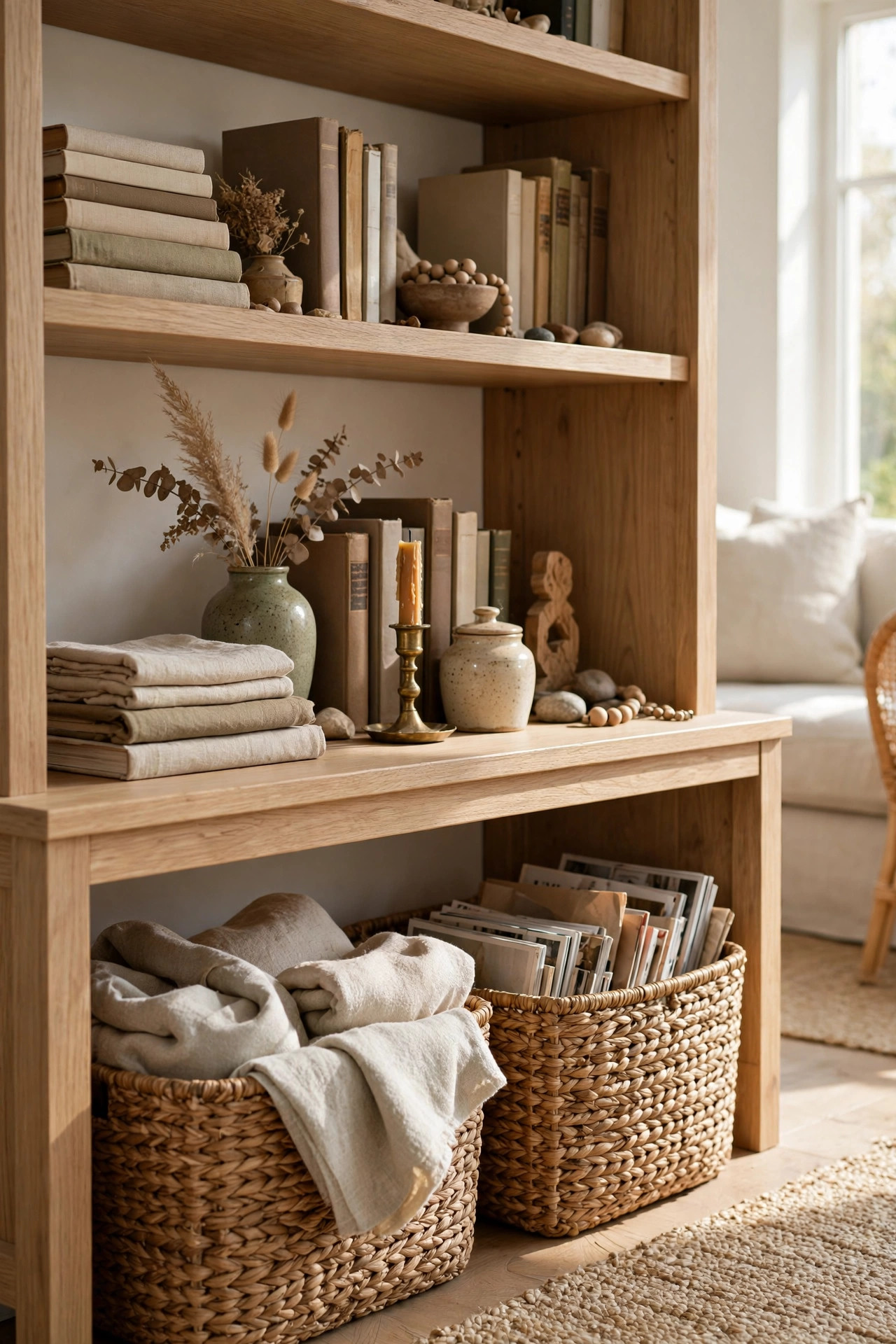
The bottom shelf of a bookcase often becomes a dead zone of clutter, and woven baskets solve this quietly. They hide the mess while adding a warm natural texture that balances the harder materials above. Baskets at the base also give the bookcase a finished, grounded feeling, like a solid foundation. Visually, they keep the heaviest texture low, which feels stable and calm.
Use two or three baskets in similar weaves and tones so they read as a set. Store throws, magazines, or kids books inside, because the bottom shelf is the easiest to reach. Pull the baskets forward so their fronts sit flush with the shelf edge for a tidy look. This practical idea might be the hardest working one on the list, and it still looks beautiful.
17. Pin Old Postcards For A Collected Wall
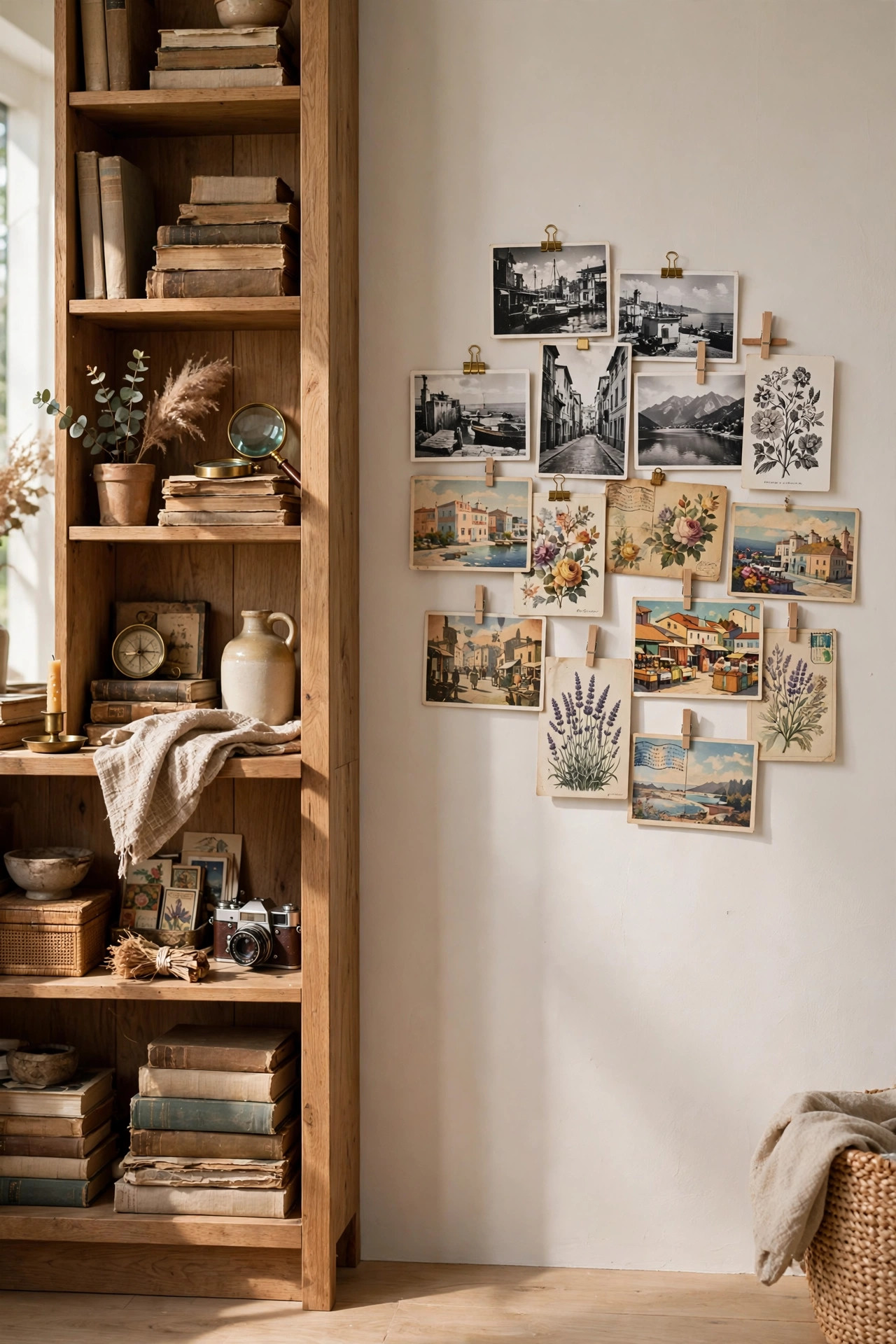
Styling does not have to stop at the edge of the shelf, and old postcards let the story spill onto the wall. Pinned above or beside the bookcase, they feel personal and traveled, like fragments of trips and other eras. Their small scale and varied images add visual interest without demanding attention. This is the detail that makes a bookshelf feel truly collected over time rather than decorated in a weekend.
Use small clips, pins, or washi tape to attach the postcards, and keep the arrangement loose and slightly uneven. Mix black and white cards with colored ones for a rich, layered look. Ten to fifteen cards make a nice cluster, and you can add to it whenever you find new ones. Because it grows gradually, this display will always feel authentic, which is the heart of effortless style.
A Shelf That Tells Your Story
The best bookshelves are never finished, and that is their charm. As you find new vintage pieces at markets and travels, your shelves will keep growing richer and more personal. Start with a few of these bookshelf styling ideas, live with them for a while, and let the collection build naturally. The goal was never perfection, but a shelf that feels like you, full of warmth, history, and quiet character. Years from now, you will look at it and see not just books, but the story of your home.
FAQs
How do I style a bookshelf without it looking cluttered?
Start by removing everything and only putting back what you love. Group objects in odd numbers, leave empty space on every shelf, and give each shelf one clear focal point. If a shelf still feels busy, take away one more thing. Restraint is what makes bookshelf styling ideas look effortless instead of crowded.
Where can I find vintage pieces for my shelves?
Thrift stores, flea markets, estate sales, and charity shops are the best hunting grounds, and prices are usually very low. Ask family members too, because attics often hold brass candlesticks, old cameras, and frames nobody is using. Online marketplaces work as well, but seeing pieces in person helps you judge scale and condition. Go often, because stock changes constantly.
Should I organize my books by color?
Color organizing looks striking in photos but can make real book collections hard to use. A gentler approach is to group books loosely by tone, keeping darker spines together and lighter ones together, without strict rainbow order. Mixing in horizontal stacks and objects breaks up the color blocks naturally. Choose whatever system lets you actually find your books, because a shelf you use stays styled longer.
How many decorative objects should go on each shelf?
A good rule is three to five objects per shelf, not counting books. Each shelf needs one focal piece, a couple of supporting objects, and some empty space to breathe. Fewer, larger objects almost always look better than many tiny ones scattered about. Step back and look at the whole bookcase, because balance across shelves matters more than any single shelf.
Can I mix modern furniture with vintage finds?
Yes, and the mix is exactly what makes this style feel current. A clean modern bookcase actually shows off vintage pieces better than an antique one would, because the contrast lets each piece stand out. Keep your modern lines simple so the vintage finds bring the character. This balance of old and new is at the heart of the collected look designers love right now.
How often should I restyle my bookshelf?
There is no schedule you must follow, but a light refresh once or twice a year keeps shelves feeling alive. Change the wreath with the seasons, swap in new market finds, or simply move objects between shelves for a fresh eye. Regular dusting matters more than restyling, because vintage pieces show dust quickly. Let the shelf evolve slowly, and it will always look collected rather than decorated.