
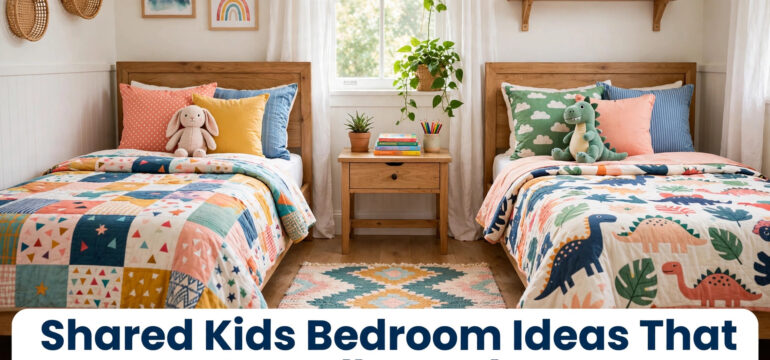
Here is my honest confession about shared kids bedrooms. The first time I set one up, I bought two of everything in the exact same color, lined the beds up like a little hotel room, and told myself the matching look would keep things fair. It took about four days before my kids were fighting over which side got more sunlight, and I realized fair does not mean identical. Kids do not want the same room twice. They want their own little corner inside one room, and that small shift in thinking changed everything I did after that.
Since then I have helped friends, cousins, and my own sister set up shared rooms for siblings, and I have learned what actually works when two kids share one space. It is not about buying more stuff. It is about smart zones, clear rules, and a few cheap tricks that give each kid a sense of ownership. These 22 ideas are the ones I keep recommending, and every single one comes with a real tip you can use this weekend.
1. Bunk Beds With Storage Drawers
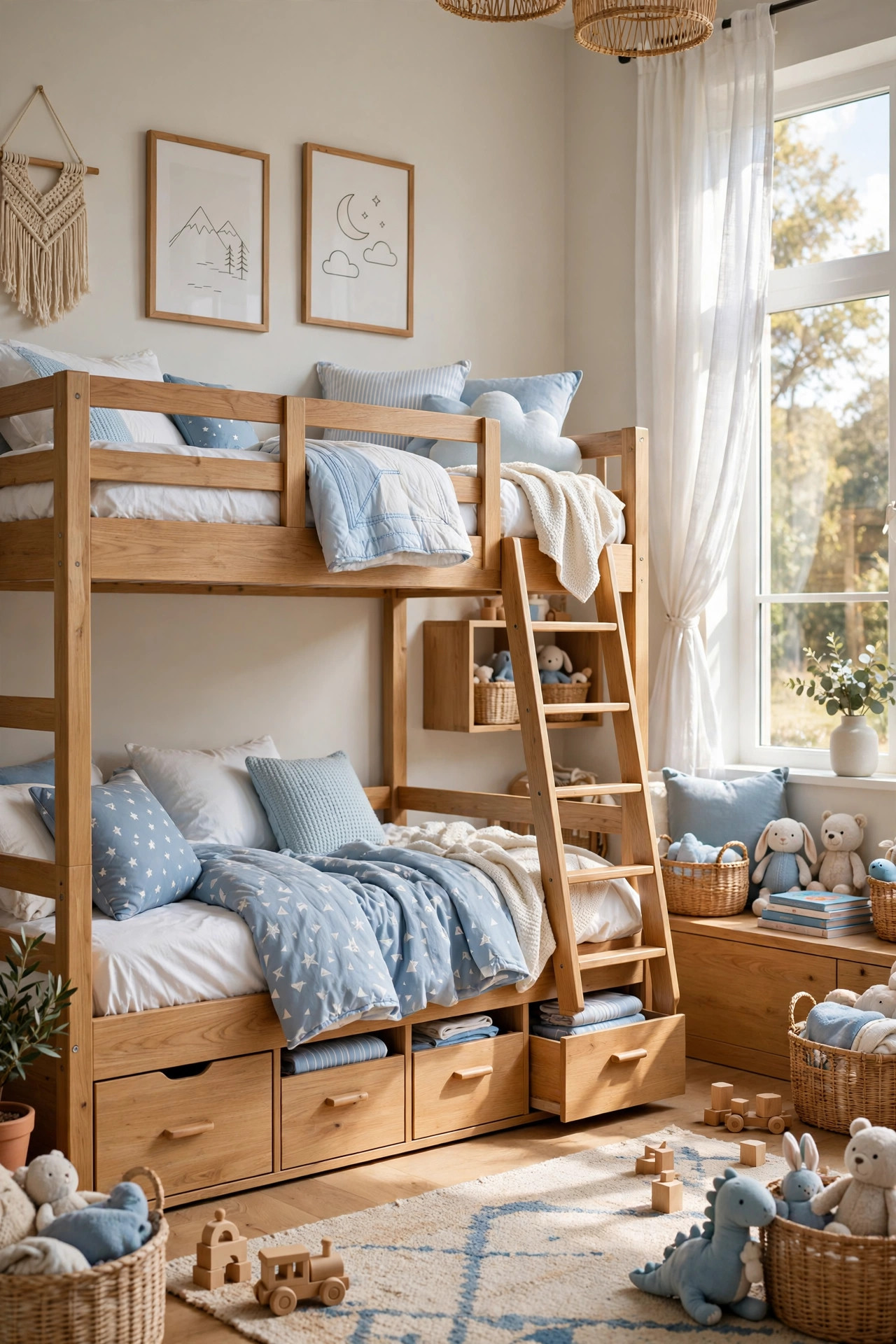
If floor space is tight, bunk beds are the obvious answer, but the smart move is choosing a bunk with deep drawers built into the base. Those drawers swallow out-of-season clothes, extra bedding, and the toy overflow that never seems to have a home. You get two beds in the footprint of one, plus the storage of a whole dresser, which means you might not need a dresser at all.
Budget tip: check secondhand listings for solid wood bunks, because new ones with storage can cost a lot. Look for drawers that roll smoothly and guard rails high enough that little kids cannot tumble out. A quick how-to before you buy: measure your ceiling height, since you want at least two feet of space between the top mattress and the ceiling so the top bunk kid can sit up without bumping their head.
2. Color-Coded Bedding for Each Kid
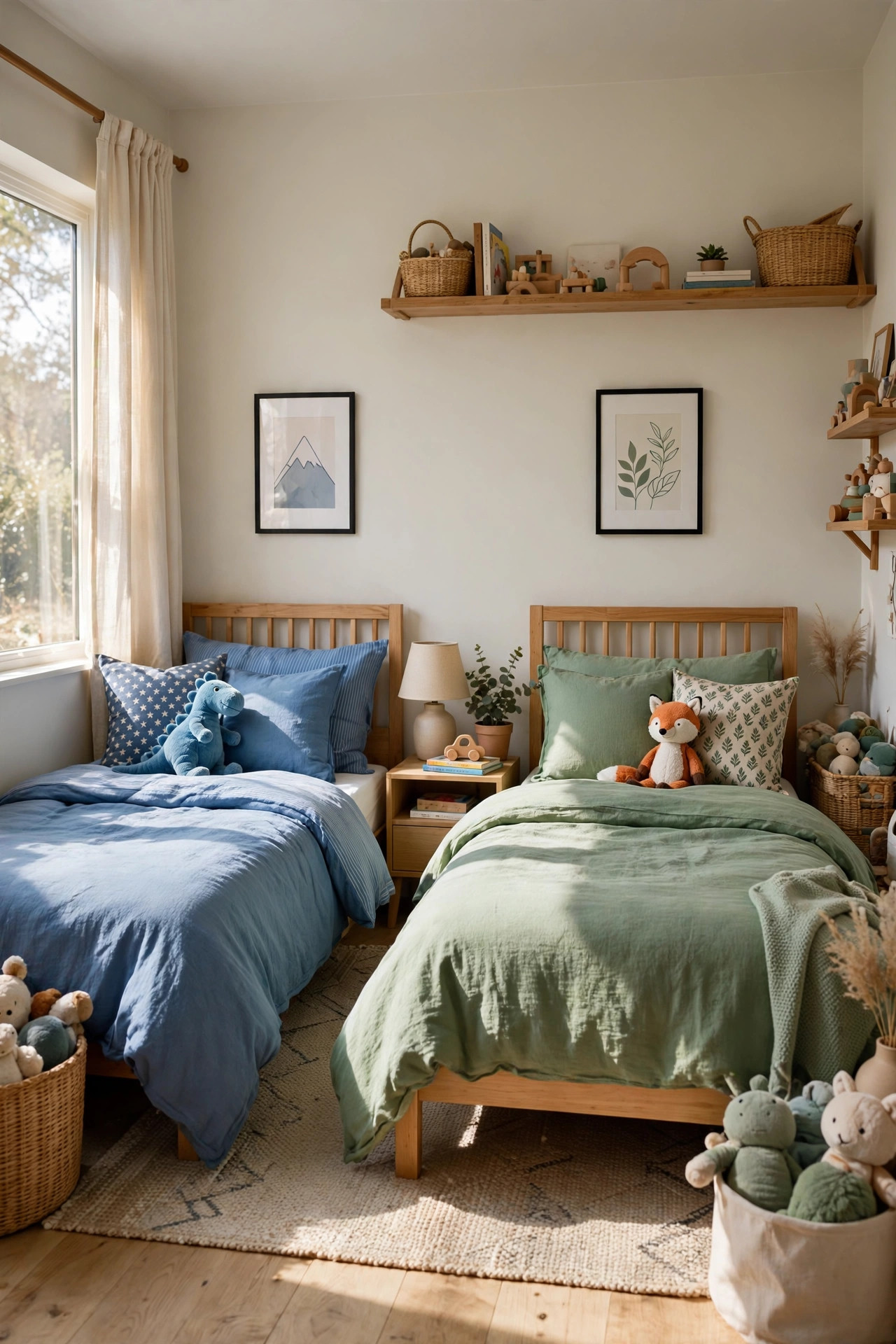
Matching bedding looks cute in photos, but in real life it starts arguments about whose pillow is whose. Give each kid their own color and half the laundry fights disappear. One kid gets blue sheets, the other gets green, and everyone always knows which bed is theirs. It is a tiny change that makes the room feel like two personal spaces instead of one shared compromise.
How to do it on a budget: buy solid-color sheet sets on sale and let each kid pick their color from three options you pre-approve, so you still control the palette. Then add one shared accent color in throw pillows or a rug so the room still looks pulled together. Wash tip: hang one color-coded laundry bag per kid on the closet door and sorting becomes a two-minute job.
3. One Long Desk Split in Half
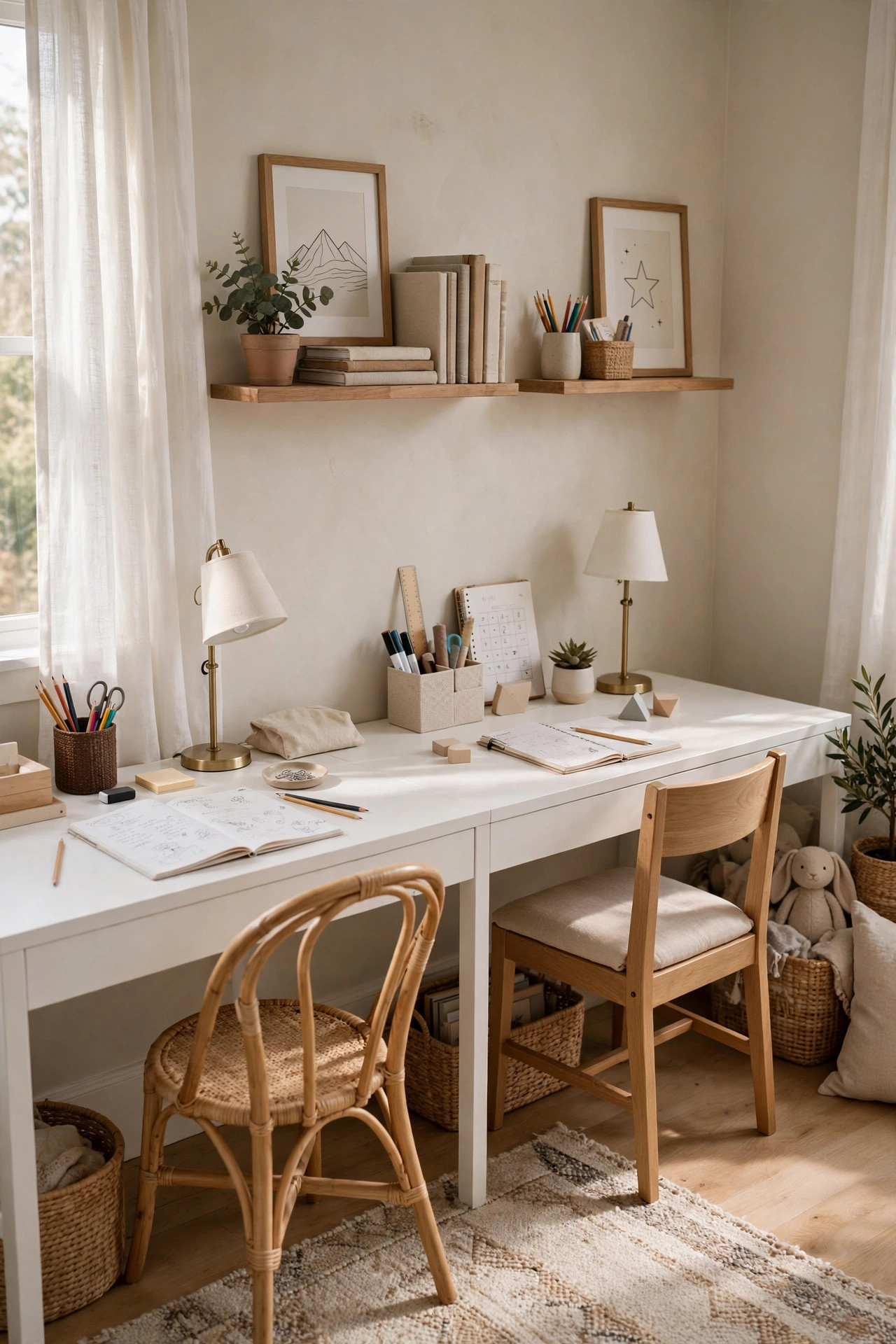
Two separate desks eat up a shocking amount of room, but one long desk along a wall gives both kids a homework spot without doubling the furniture. Draw an imaginary line down the middle, or use a strip of washi tape on the desktop, and each kid gets their half. They sit side by side, which actually helps younger kids focus because they copy the older one’s study habits.
The how-to is simple: a basic six-foot folding table, or a long countertop resting on two file cabinets, works as the desk base, and each side gets its own desktop organizer so supplies never mix. Budget tip: file cabinets from thrift stores cost a few dollars and double as drawer storage. Add one small desk lamp per side and you have a homework station for the whole room for under fifty dollars.
4. Curtain Panels for Privacy
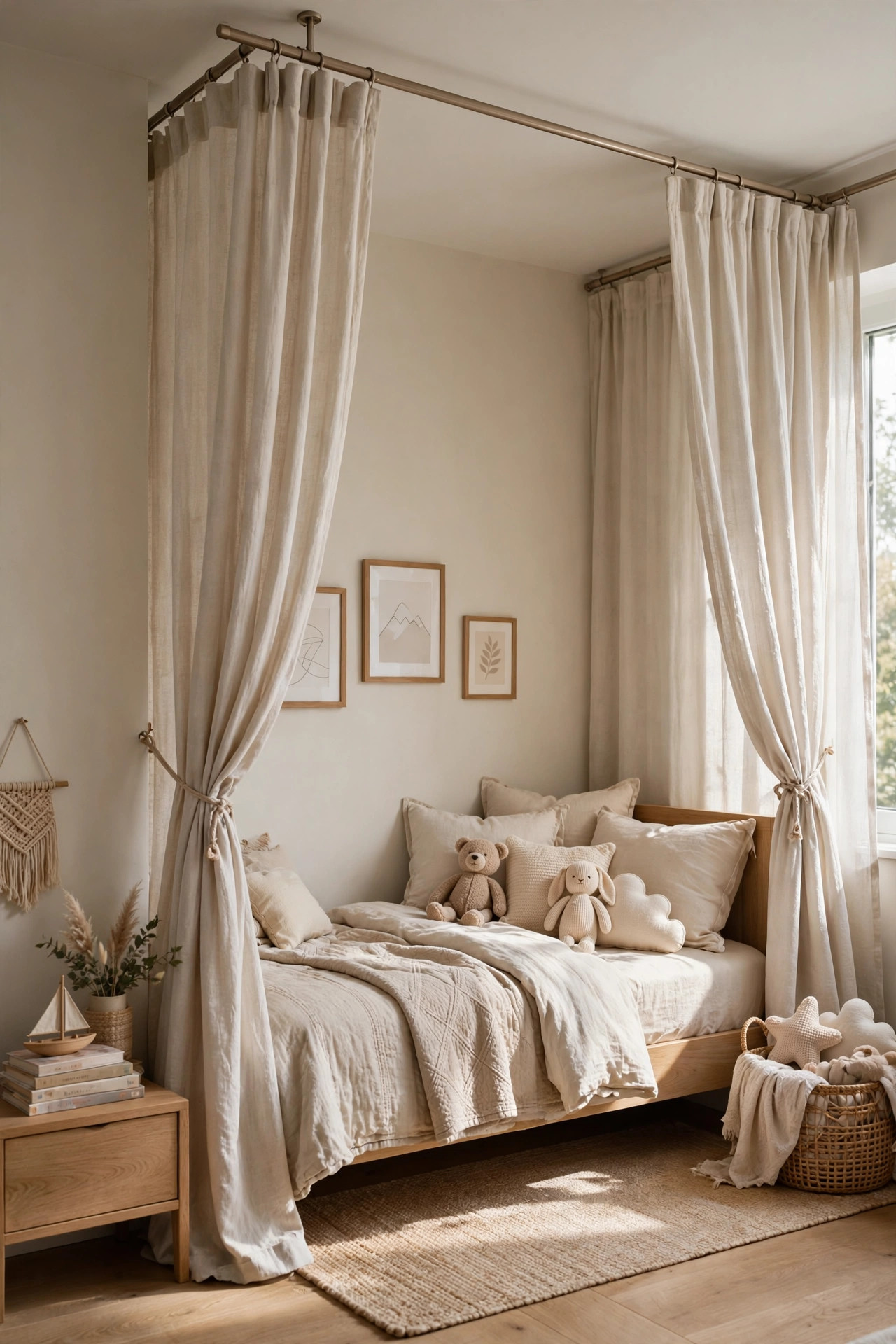
Every kid needs a door they can close, even a pretend one. A curtain panel hung from the ceiling around one bed creates a little private nook for reading, resting, or just being alone for ten minutes. It is the cheapest privacy you can buy, and kids love the cozy tent feeling it gives their bed.
Here is how to hang it: mount a curved shower curtain rod or a ceiling track around three sides of the bed, then thread on a flat bedsheet or a pair of inexpensive curtain panels. The total cost is usually under thirty dollars. Let each kid pick their own curtain color so the nook feels truly theirs, and use tie-backs during the day so the room still feels open and bright.
5. Loft Bed With Play Space Below
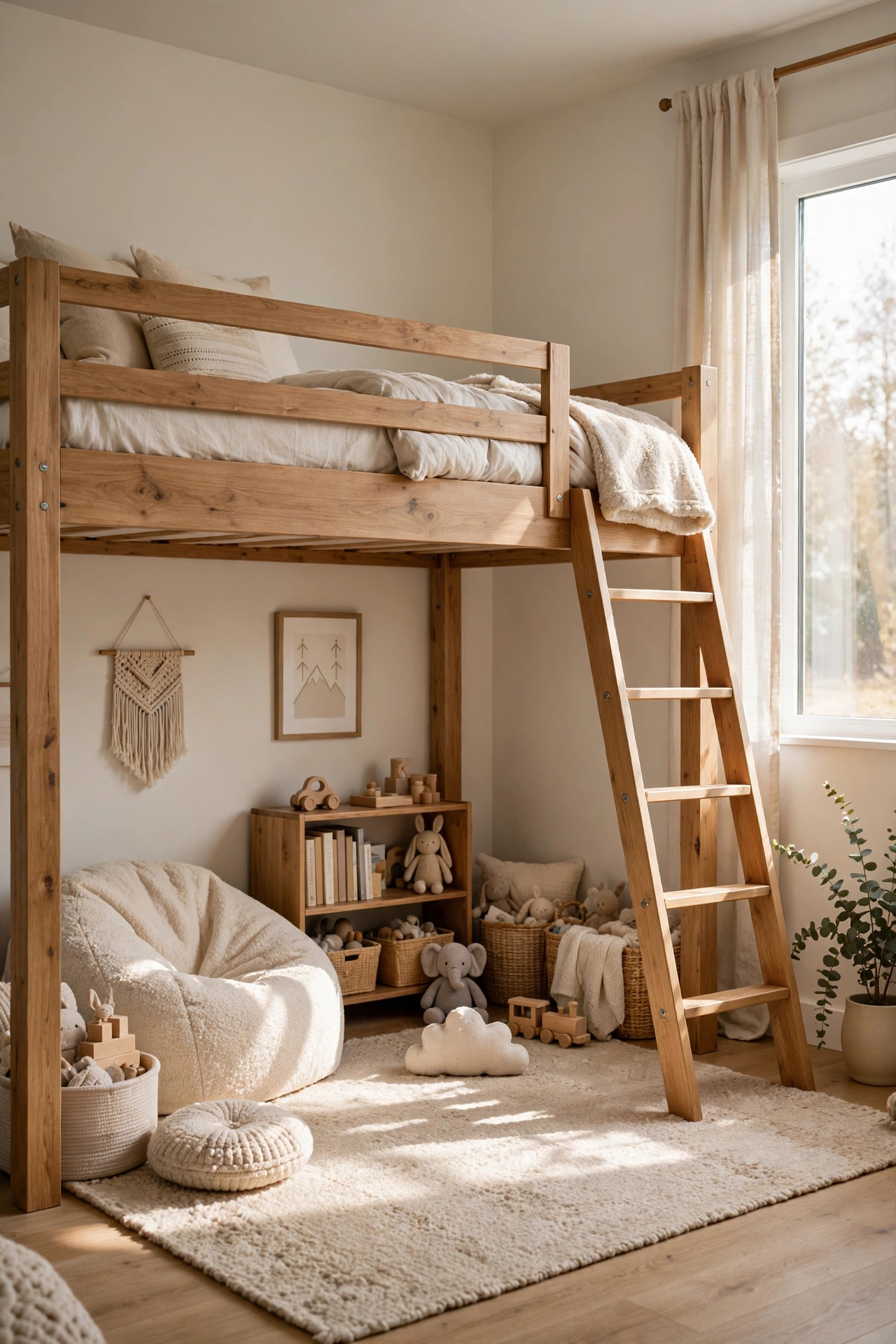
If only one kid needs the height, a loft bed turns the space underneath into a play zone, a reading corner, or a homework spot. It is like getting a second room for free. The kid on top gets the fun of climbing up, and the space below becomes whatever the room needs most, which changes as kids grow.
Safety first: only use a loft bed for kids over six, and always use a guardrail on both sides of the top, not just the wall side. Budget tip: the area below does not need fancy furniture. A beanbag, a small bookshelf, and a clip-on light turn it into a reading den for almost nothing. As they get older, swap the beanbag for a small desk and the play zone becomes a study zone.
6. Matching Nightstands, Different Lamps
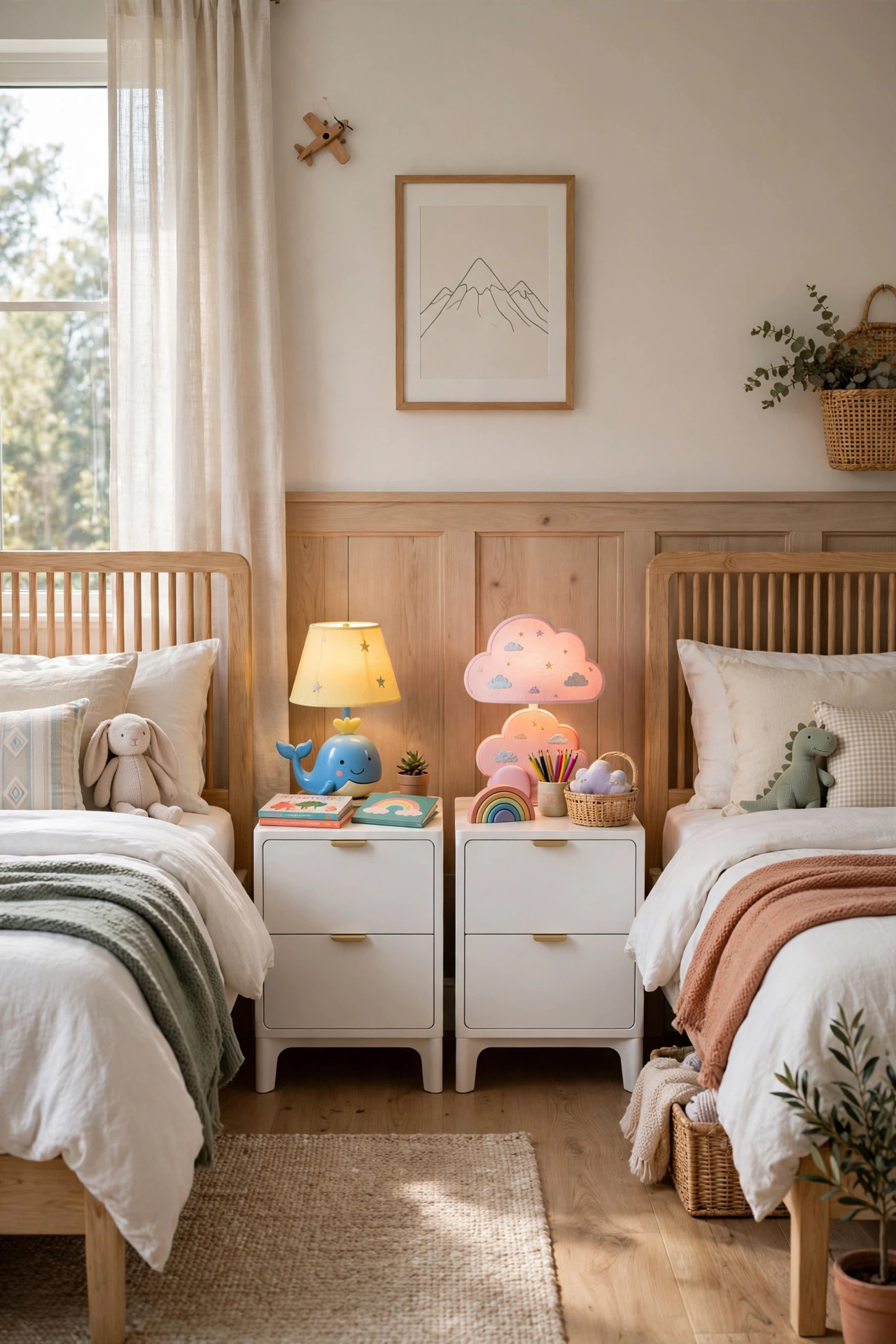
Two matching nightstands keep the room looking tidy and balanced, which matters when the room is small and every piece of furniture is visible. But let each kid choose their own lamp, and suddenly those identical tables feel personal. One kid might pick a dinosaur lamp, the other a star projector, and both are happy.
How to keep it cheap: buy the nightstands as a matching pair from a discount store, then let each kid pick a lamp under fifteen dollars. Plug-in wall sconces are another great option if floor space is tight, since they free up the whole tabletop. Either way, each kid gets a little glow that is theirs alone, which makes bedtime feel special instead of shared.
7. Clip-On Reading Light Per Bed
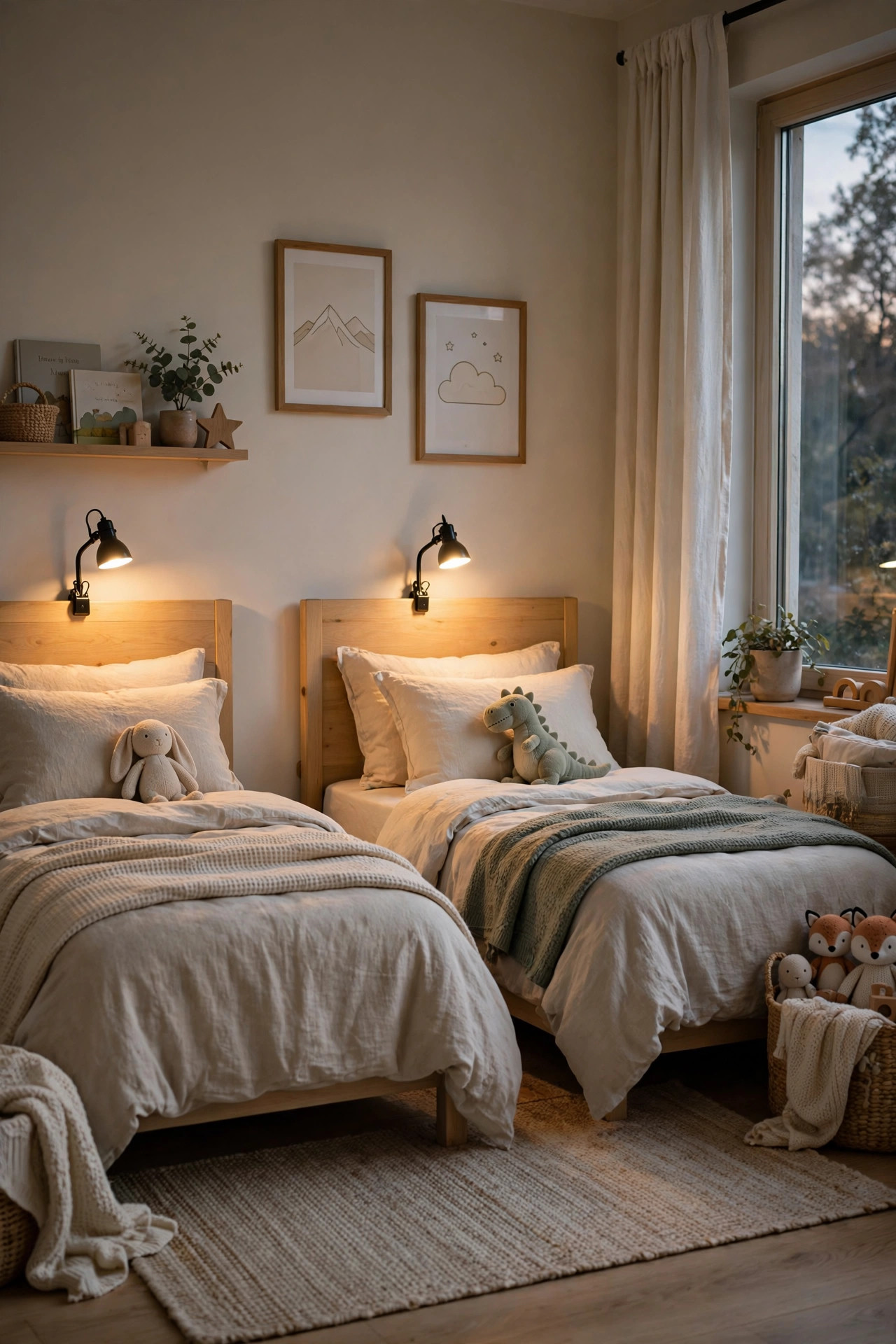
Different bedtimes are the number one shared-room problem I hear about. A clip-on reading light lets the night owl read in bed while the early sleeper actually falls asleep. The light stays focused on one book instead of flooding the whole room, and both kids get what they need.
Buy two identical clip lights with warm bulbs, one per bed, and keep them clipped to the headboard or bed frame so they never get lost. They cost about ten dollars each and run on batteries or USB, so there is no wiring to deal with. Set a simple rule: reading light on means quiet time, and the whole house sleeps better.
8. Rolling Storage Bins Under Beds
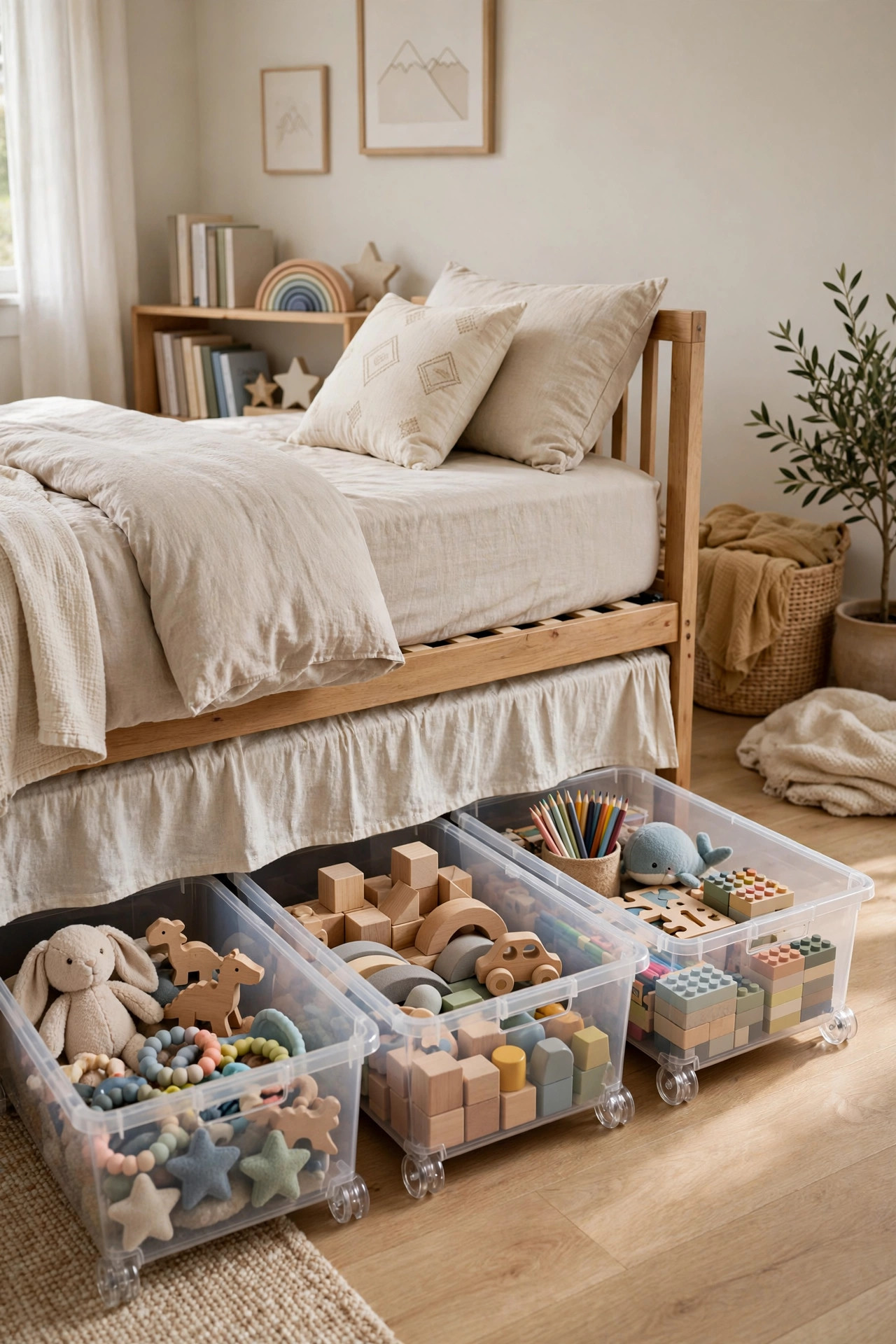
The space under the bed is the most wasted space in a kids room. Flat rolling bins turn it into hidden storage for toys, art supplies, or extra clothes. Kids can pull them out themselves, which means cleanup actually happens without you standing over them.
Measure the clearance under the bed before you shop, since bunks and platform beds sit at different heights. Clear bins work best because kids can see what is inside without dumping everything out. Budget tip: add stick-on labels with pictures for younger kids who cannot read yet. One bin per category, like cars, dolls, and art stuff, keeps the system simple enough that kids will actually use it.
9. A Shared Chalkboard Wall
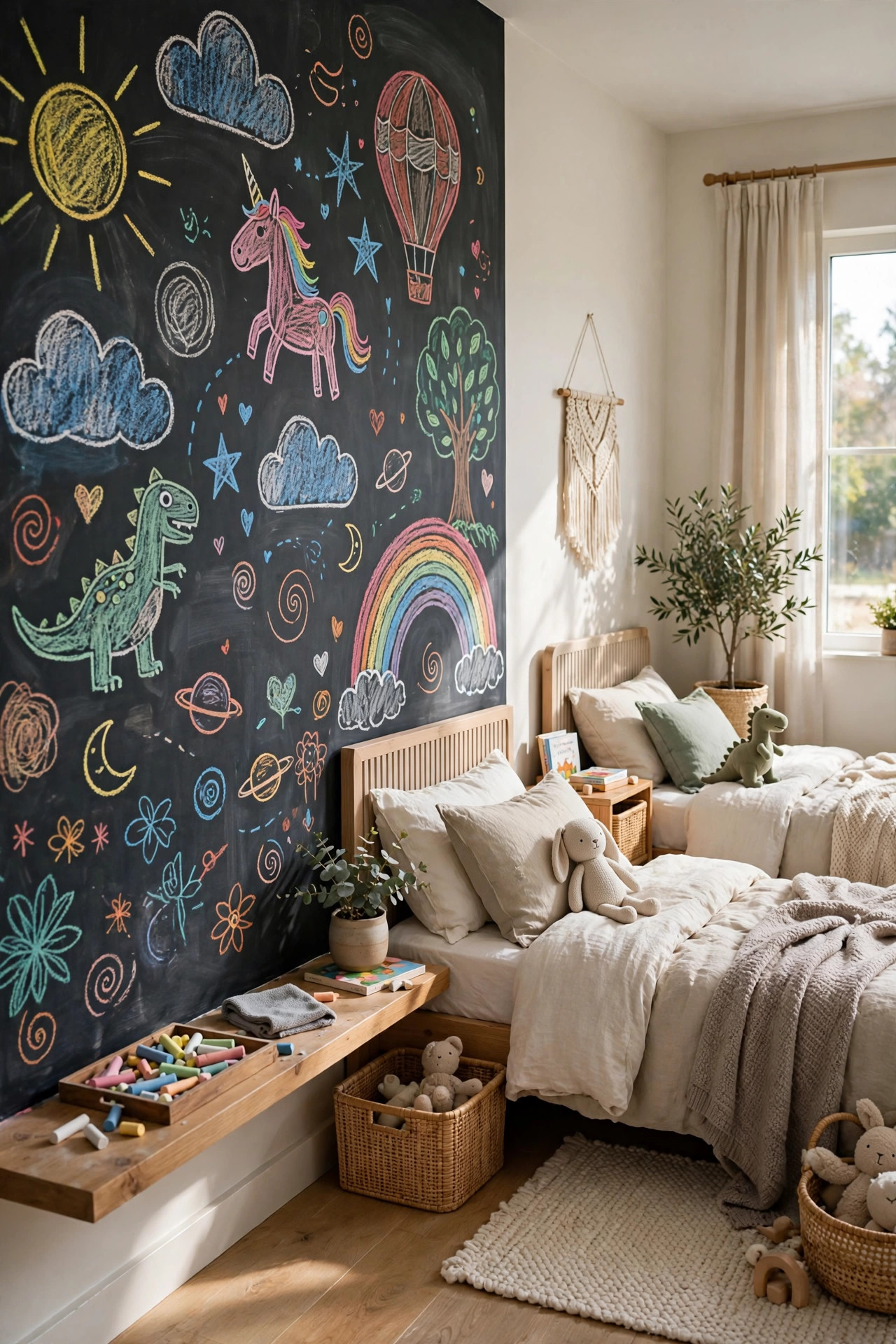
A chalkboard wall gives both kids one big creative space that does not take up a single inch of floor. They can draw together, leave each other notes, or practice spelling words side by side. It turns a boring wall into the most-used spot in the room.
You do not need real chalkboard paint, which can be messy to apply. Large chalkboard contact paper rolls stick right on the wall and peel off cleanly when you move, which renters love. Frame the area with washi tape so the drawings stay inside the zone. Keep a small tray of chalk and erasers on a nearby shelf, and the wall becomes instant entertainment on rainy days.
10. Back-to-Back Dressers as Divider
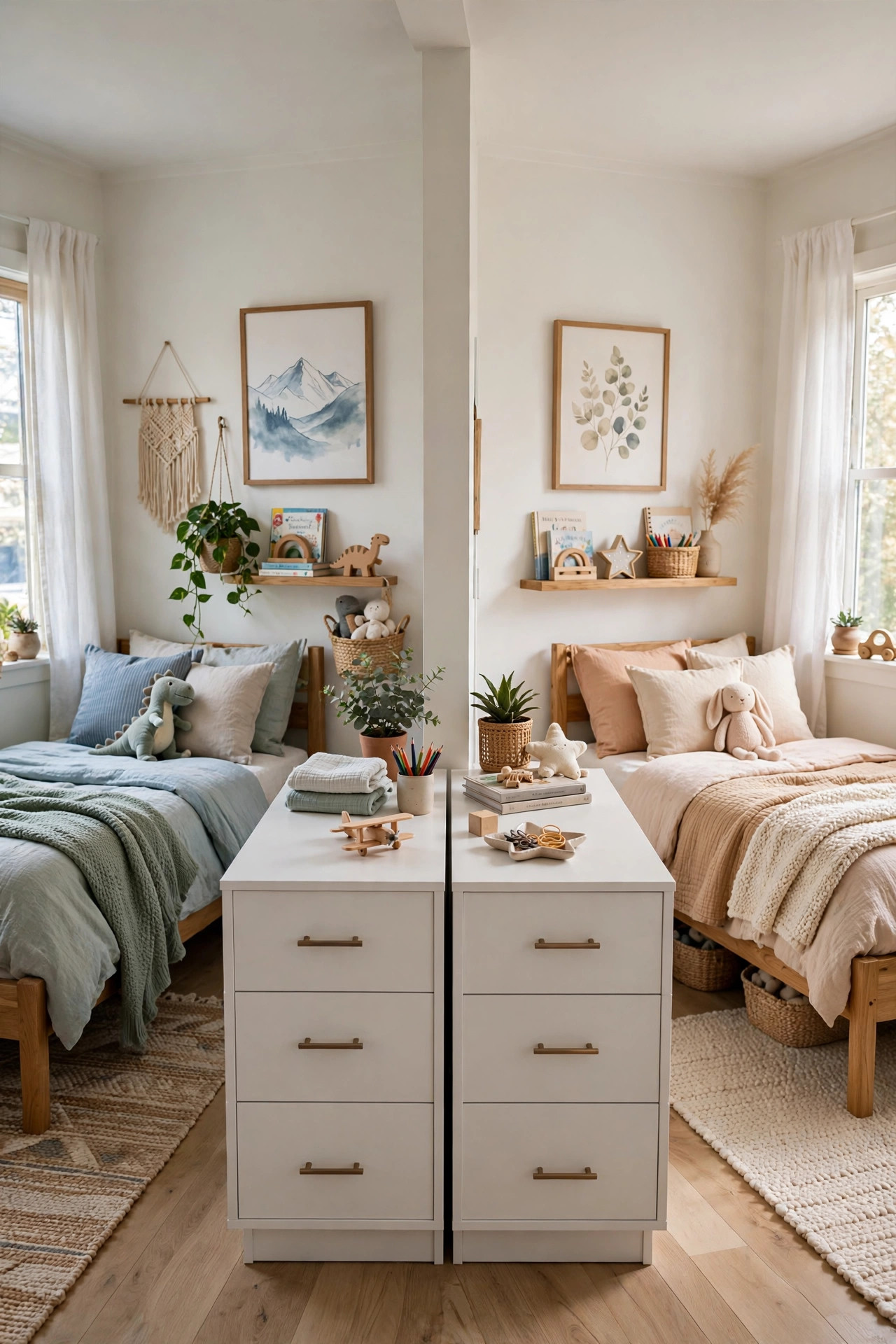
If the room is wide enough, two low dressers placed back to back in the middle of the room create a natural divider. Each kid gets their own dresser facing their own side, and the room instantly feels like two halves. It is storage and a room divider in one move.
Use low, wide dressers rather than tall ones so the room still feels open and light can travel across. Anchor the two dressers to each other with a simple bracket so they cannot tip or slide apart. Each kid decorates the top of their own dresser, which gives them a little display shelf that is all theirs. Thrift stores are full of sturdy low dressers for very little money.
11. Name Signs Above Each Bed
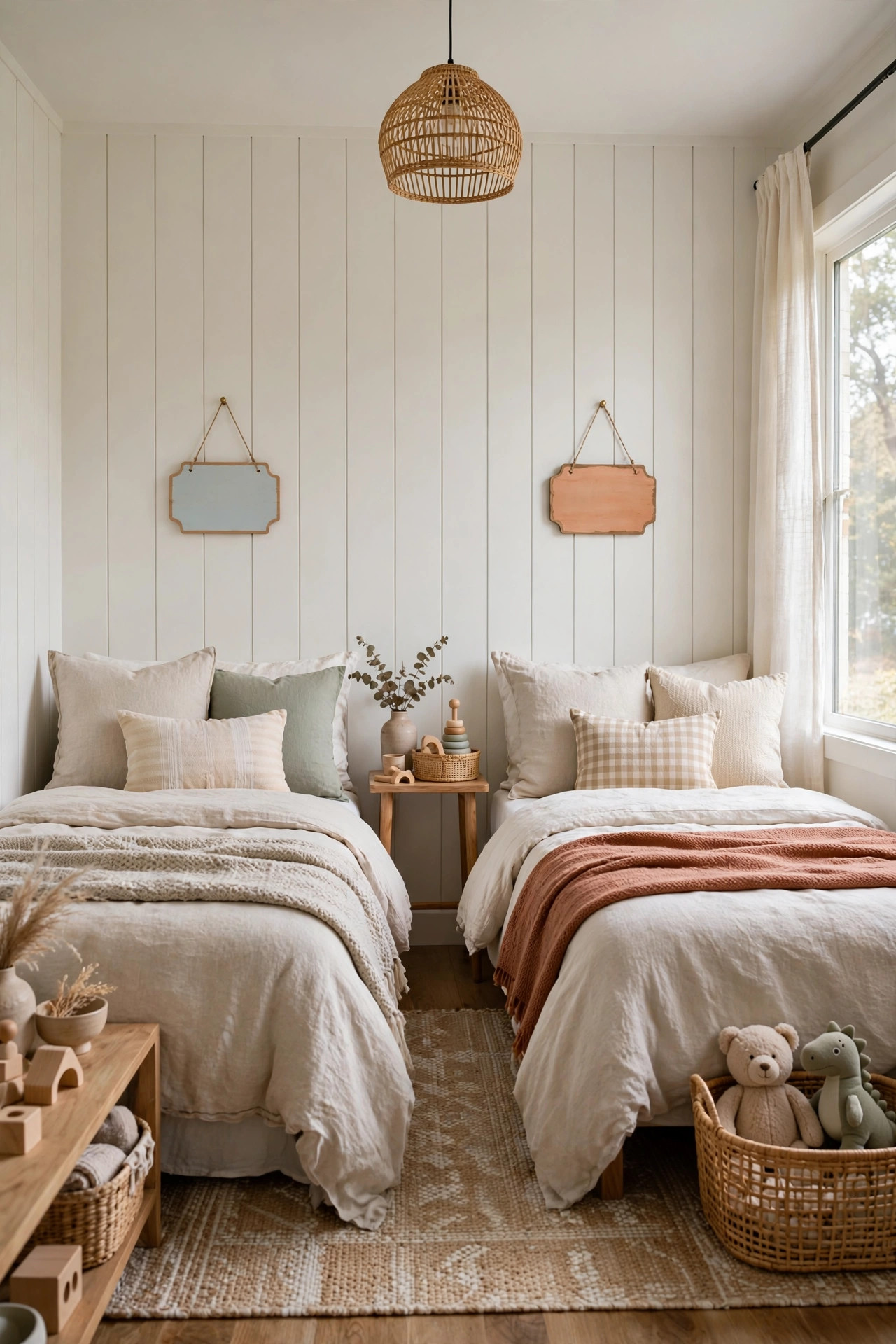
A name sign above each bed is a small thing that makes a big difference. It tells each kid, without any words from you, that this spot belongs to them. Kids who feel ownership over their space take better care of it, and they argue less about boundaries.
This is a perfect weekend craft to do together. Buy two plain wooden plaques from a craft store, and let each kid paint and decorate their own however they want. Hang them with removable adhesive strips so there is no wall damage. The total cost is under ten dollars per kid, and the pride on their faces is worth ten times that.
12. Closet Zones With Labels
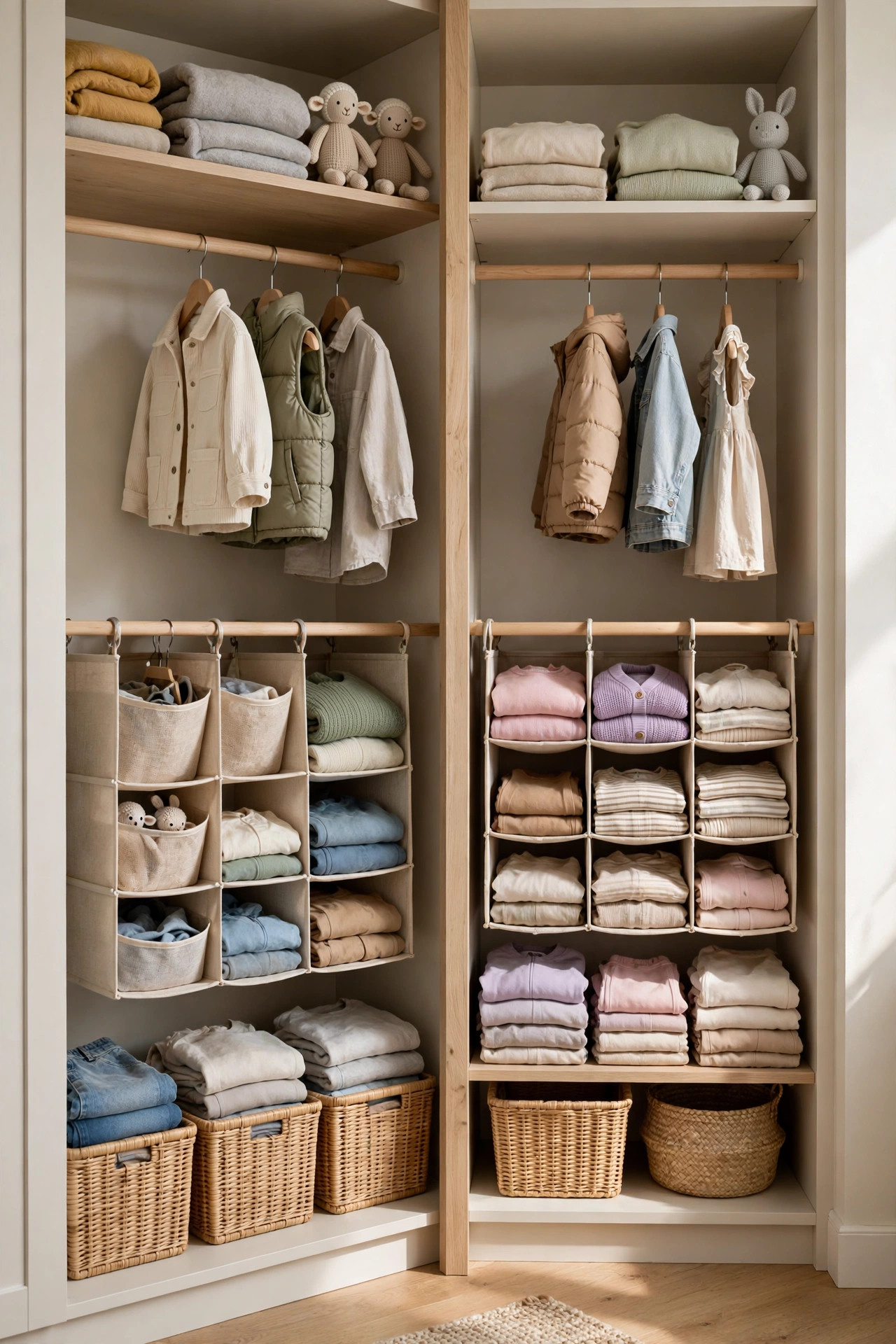
One shared closet only works if it is clearly divided. Split it right down the middle, give each kid one side, and label everything. When every shelf and bin has a name on it, there is no more mystery about whose sweater is whose, and getting dressed in the morning gets faster.
How to set it up: use a hanging closet organizer on each side for folded clothes, and put one labeled bin on the top shelf per kid for out-of-season stuff. A strip of colored tape down the middle of the closet rod makes the dividing line visible even to little kids. Do a quick ten-minute closet check together every Sunday so the zones stay honest.
13. Corner Reading Nook for Two
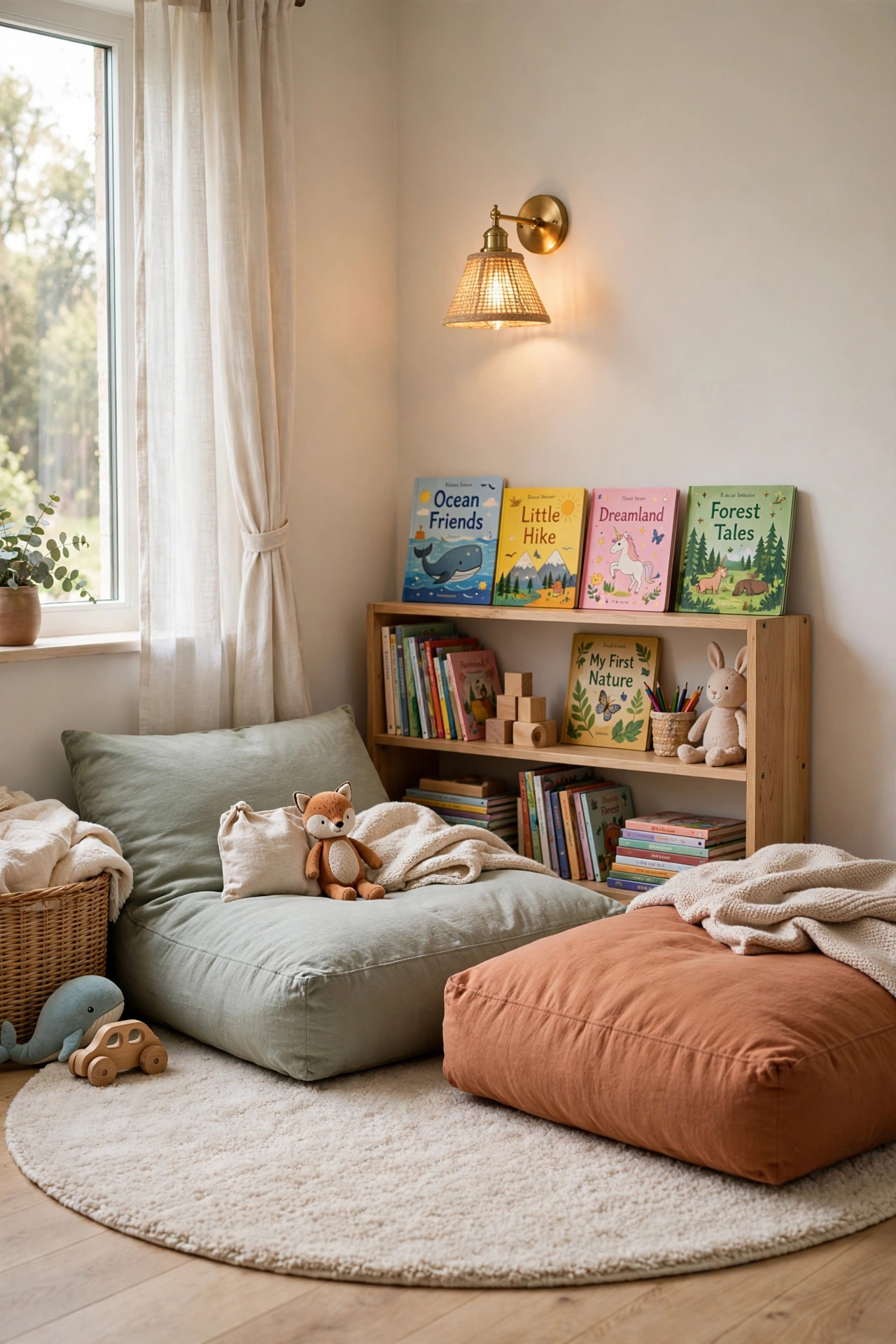
Every shared room needs one spot where both kids actually want to hang out together. A corner reading nook with big floor cushions, a small bookshelf, and a soft light becomes the room’s happy place. It is where siblings become friends instead of just roommates.
You do not need much space. An empty corner about four feet wide is plenty. Layer a soft rug, add the cushions, and mount a small plug-in wall light above so nobody fights over the lamp. Budget tip: floor cushions from discount stores work just as well as expensive beanbags. Keep a basket of shared books there, and you will be amazed how often both kids end up in that corner at once.
14. Peel and Stick Wall Decals
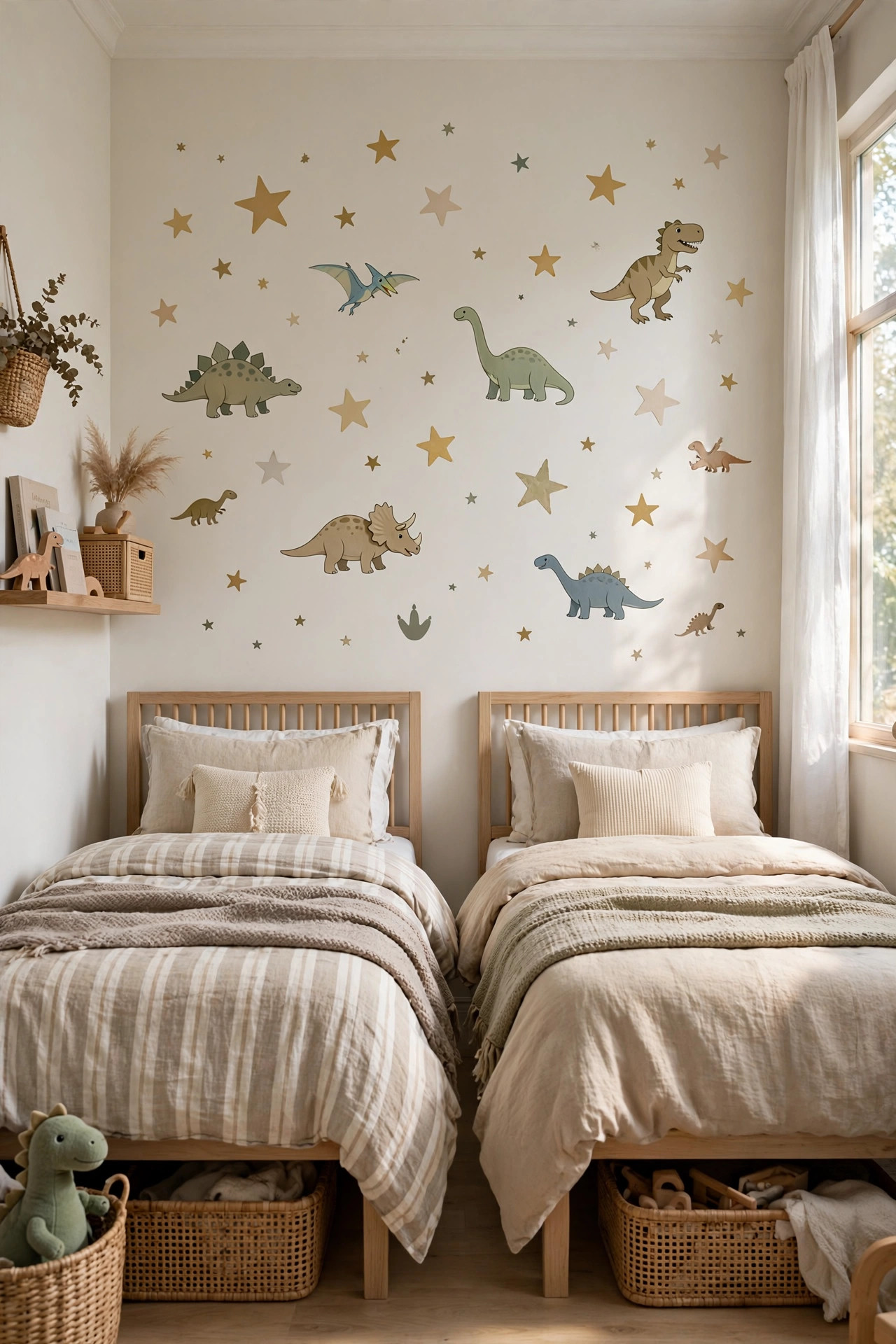
When two kids share a room, the walls have to please two different tastes, which is nearly impossible with paint. Peel and stick decals solve it completely. Each kid picks their own decals for their side of the room, and if tastes change next year, you just peel them off.
Let each kid choose from a few parent-approved sets so you do not end up with clashing themes. Stars on one side and dinosaurs on the other can absolutely coexist. The decals go up in an afternoon with no tools, and they come off cleanly, which makes them perfect for renters. One pack usually covers a good chunk of wall for under twenty dollars.
15. Two Rugs, Two Territories
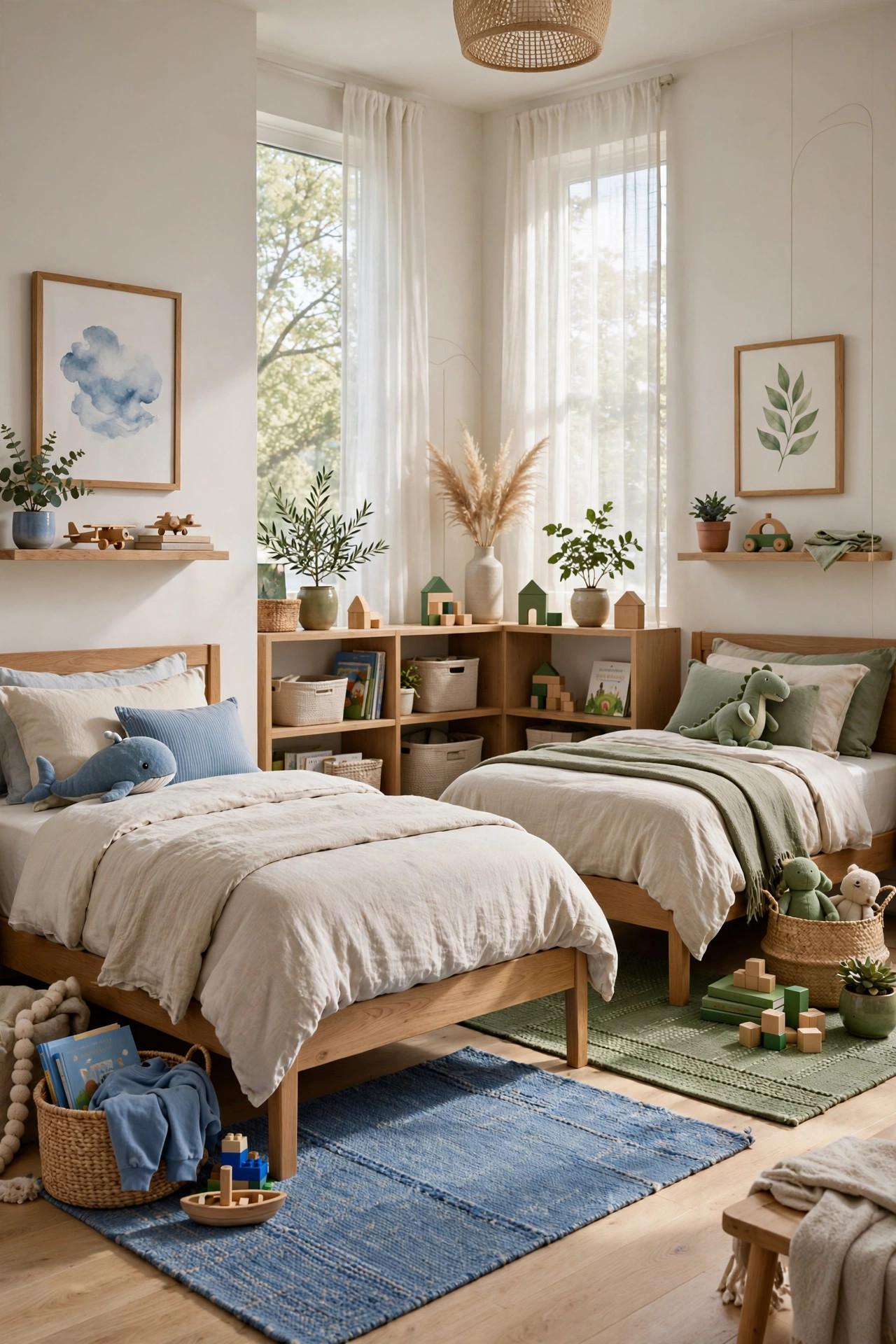
A rug is a boundary kids understand without being told. Put one rug beside each bed, and each kid instantly has a defined zone that feels like theirs. It warms up cold floors, softens noise, and visually splits the room in a way that feels fair.
Let each kid pick their own rug in their own color or pattern, keeping the sizes matching so it still looks balanced. Washable rugs are worth every penny in a kids room, since spills and crumbs are guaranteed. A five-by-seven rug per side is usually plenty, and discount stores carry great washable options for under forty dollars each.
16. Floating Shelves at Kid Height
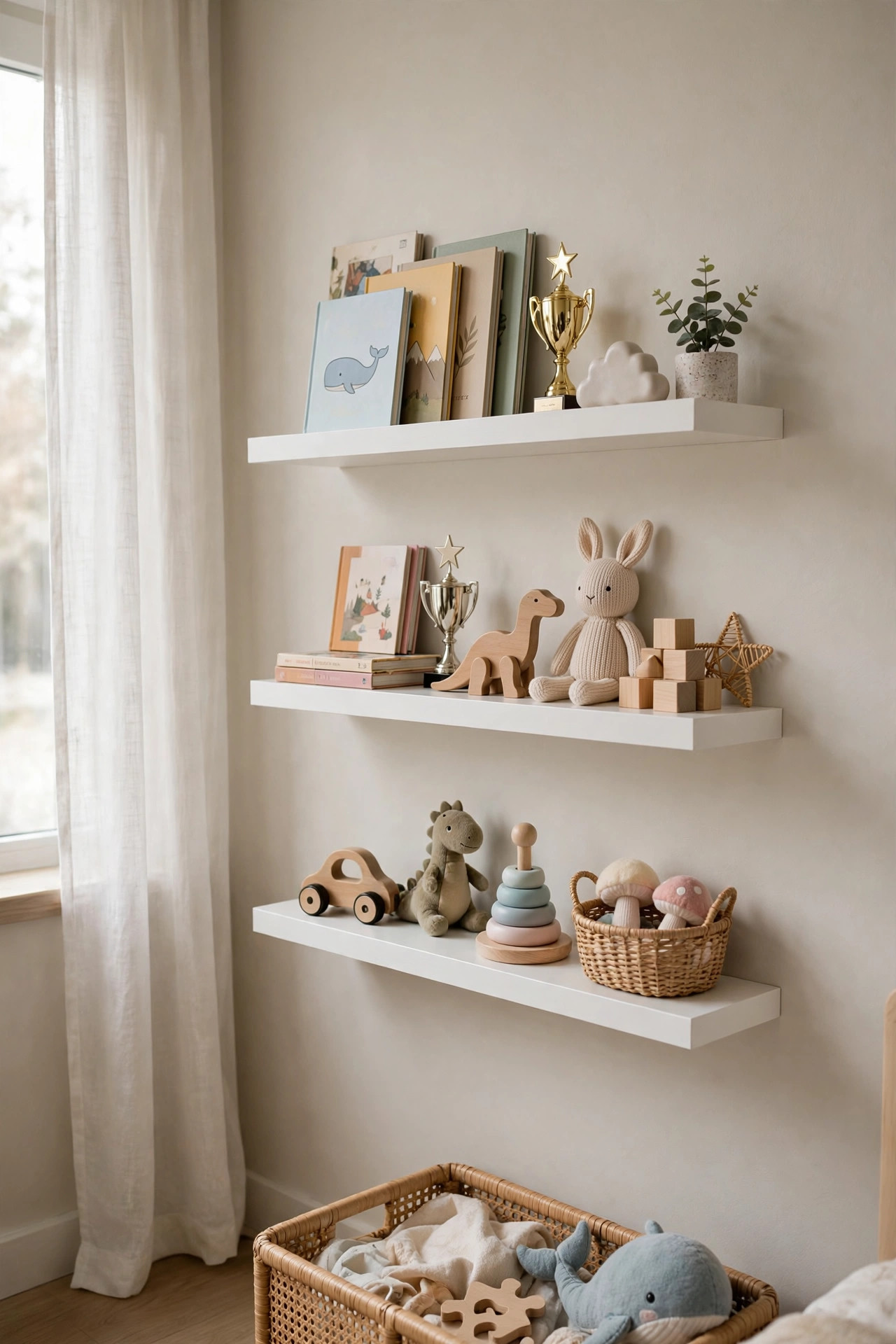
Floor space is precious in a shared room, so take storage up the wall. A floating shelf mounted at each kid’s eye level gives them a personal display spot for trophies, favorite books, or special treasures. It keeps precious things off the floor where they get stepped on.
Mount the shelves low enough that each kid can reach theirs without climbing, which is safer and means they will actually use them. Use proper wall anchors, not just nails, so the shelves hold real weight. Let each kid arrange their own shelf however they want, even if it looks messy to you. That shelf is their museum, and ownership matters more than style.
17. Artwork Clip String Display
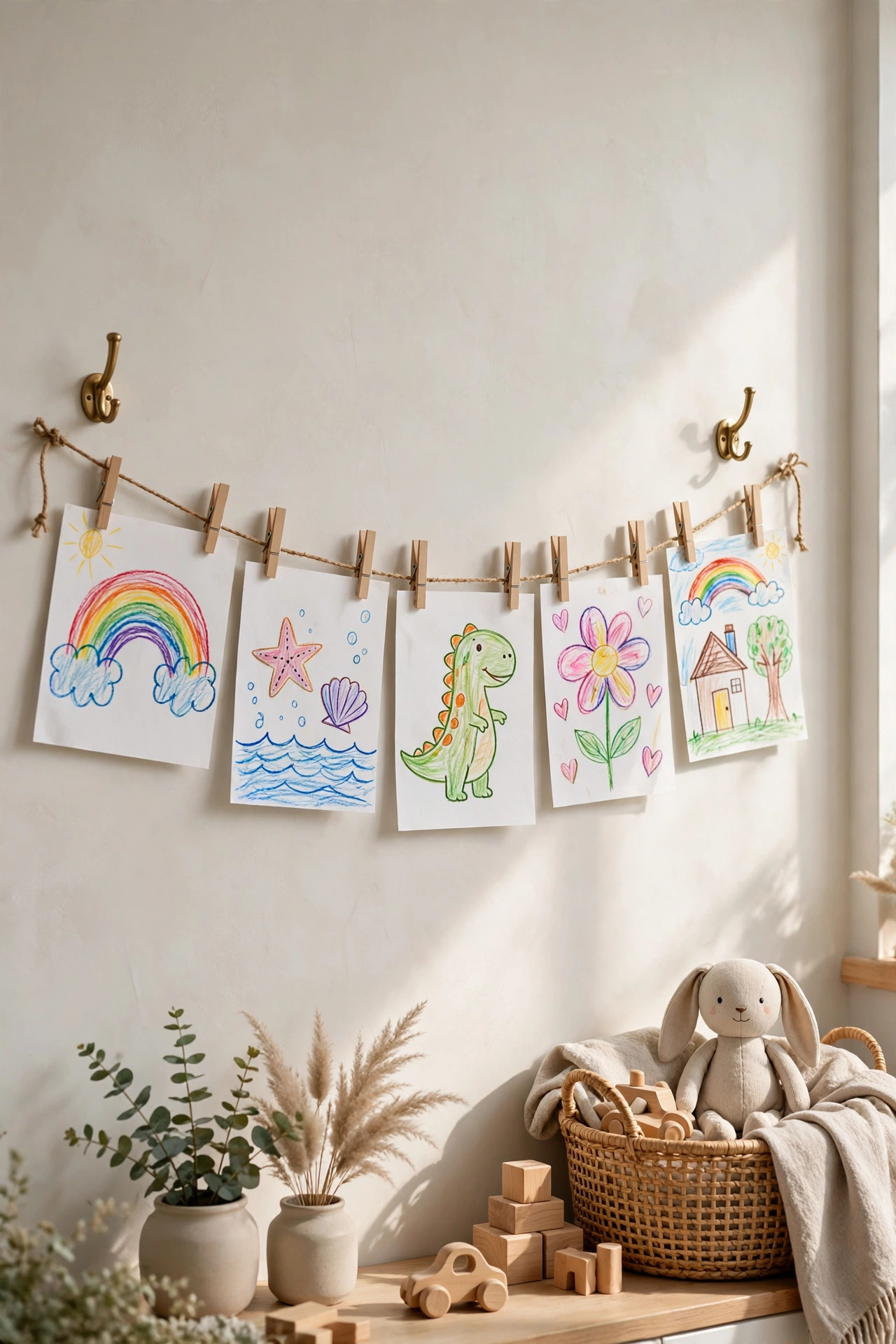
Kids make a mountain of artwork, and the fridge only holds so much. A simple string with clips along one wall gives both kids a rotating gallery for their latest creations. They can swap pieces in and out themselves, which makes them feel proud every time they update it.
Here is the easy version: screw two small hooks into the wall, string twine or ribbon between them, and add wooden clothespins. Give each kid their own half of the string so there is no fighting over space. When the string gets full, photograph the oldest pieces before taking them down, so the art is saved even when the paper is recycled.
18. Bedside Caddies Save Space
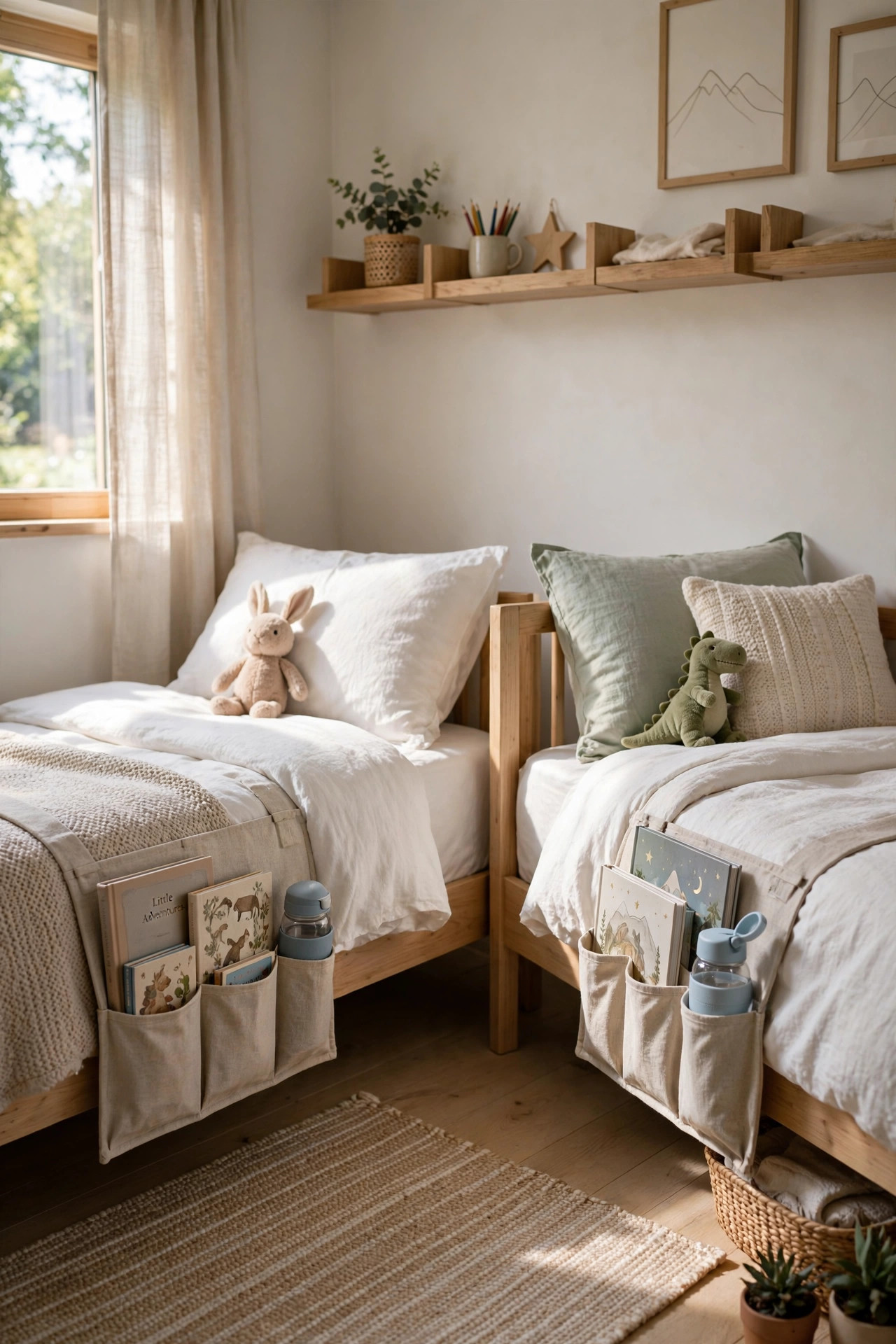
In a really small shared room, there might not be space for nightstands at all. Bedside caddies that hang over the mattress edge hold a book, a water bottle, a flashlight, and glasses, all within arm’s reach. They cost almost nothing and need zero floor space.
Look for caddies with multiple pockets and a sturdy flap that slides between the mattress and the frame so it stays put. Each kid gets their own, in their own color, which keeps things from migrating to the wrong bed. They are also great for bunk beds, where a nightstand cannot reach the top bunk anyway.
19. Blackout Curtains for Bedtimes
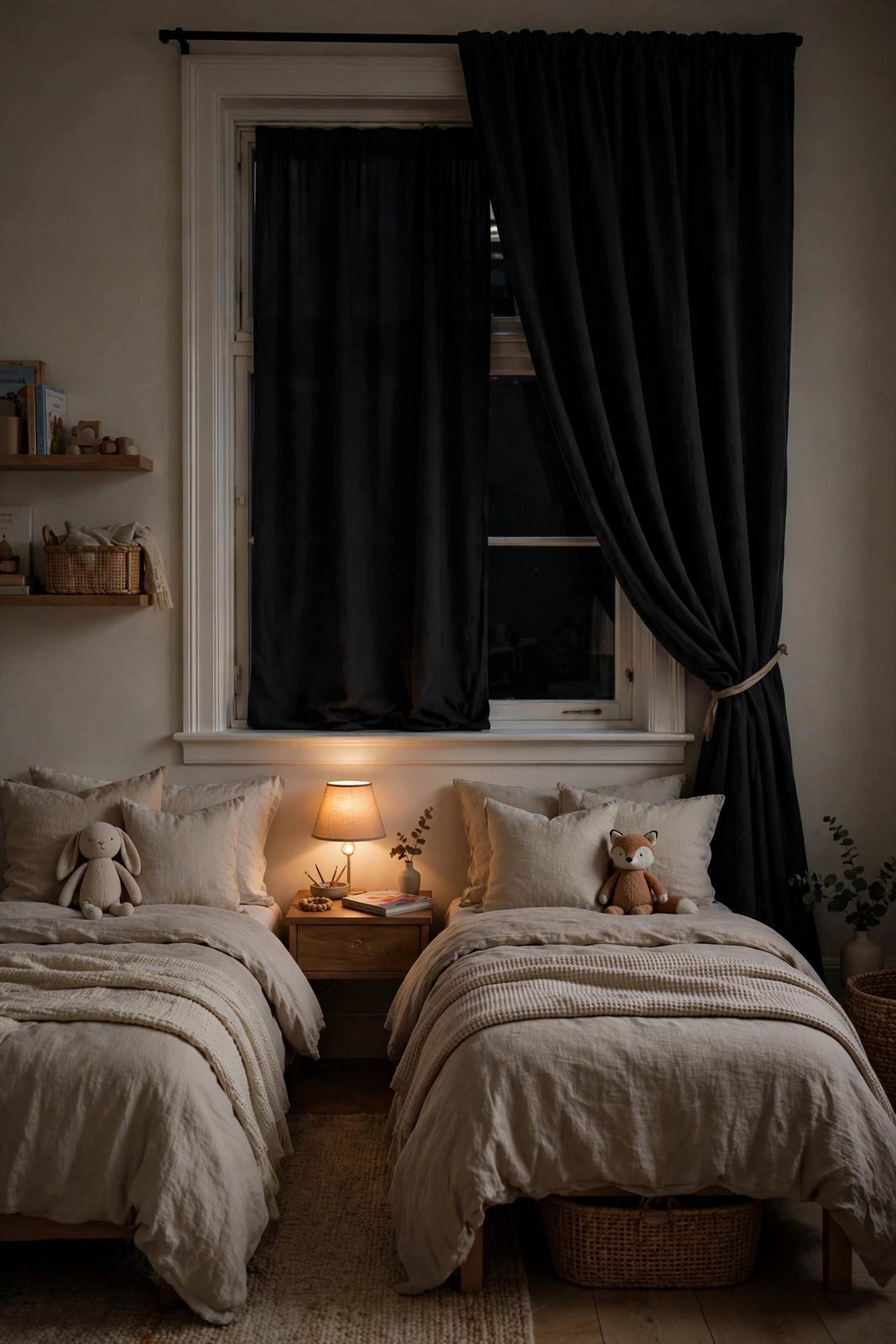
When one kid needs sleep and the other is still playing quietly, light becomes the enemy. Blackout curtains on the room’s windows let you darken the sleeping zone while a small lamp stays on in the play zone. It is the simplest way to run two bedtimes in one room.
You do not need expensive custom curtains. Affordable blackout panels from discount stores work just as well, especially in fun colors the kids pick. Hang them on a wraparound rod so light cannot sneak in around the edges. Pair them with the clip-on reading lights from earlier, and staggered bedtimes stop being a nightly battle.
20. Pop-Up Tent for Quiet Time
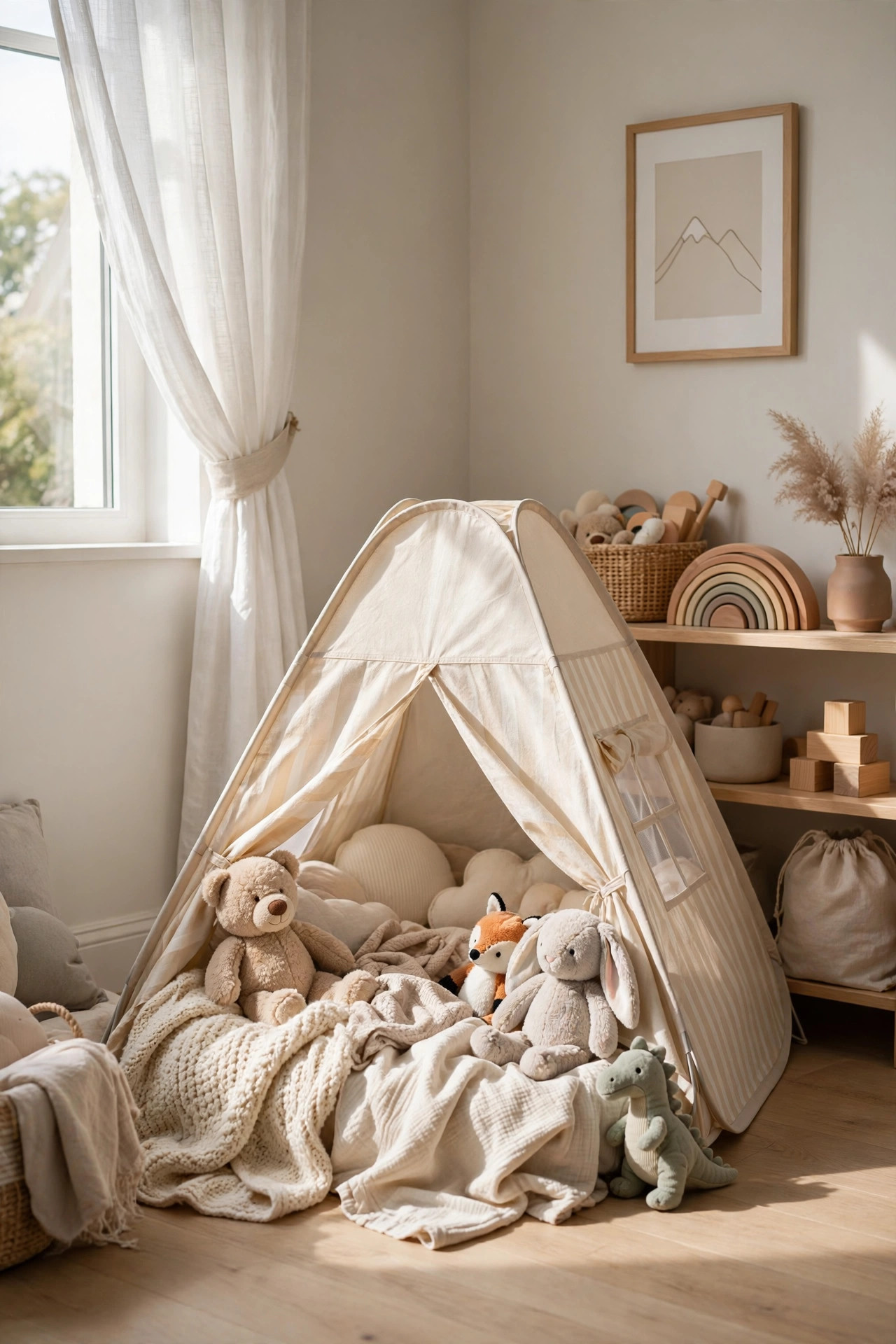
Sometimes a kid just needs to be alone, and in a shared room that can feel impossible. A small pop-up tent in the corner gives them a private hideout for reading, calming down, or playing quietly. It is their personal space inside the shared space, and kids adore it.
Pop-up tents fold flat when not in use, so they do not permanently eat floor space. Put a soft blanket and one stuffed animal inside and it becomes the coziest spot in the house. Set a simple house rule: when someone is in the tent, the other kid gives them space. That one rule teaches respect better than a hundred lectures.
21. Picture Labels on Toy Shelves
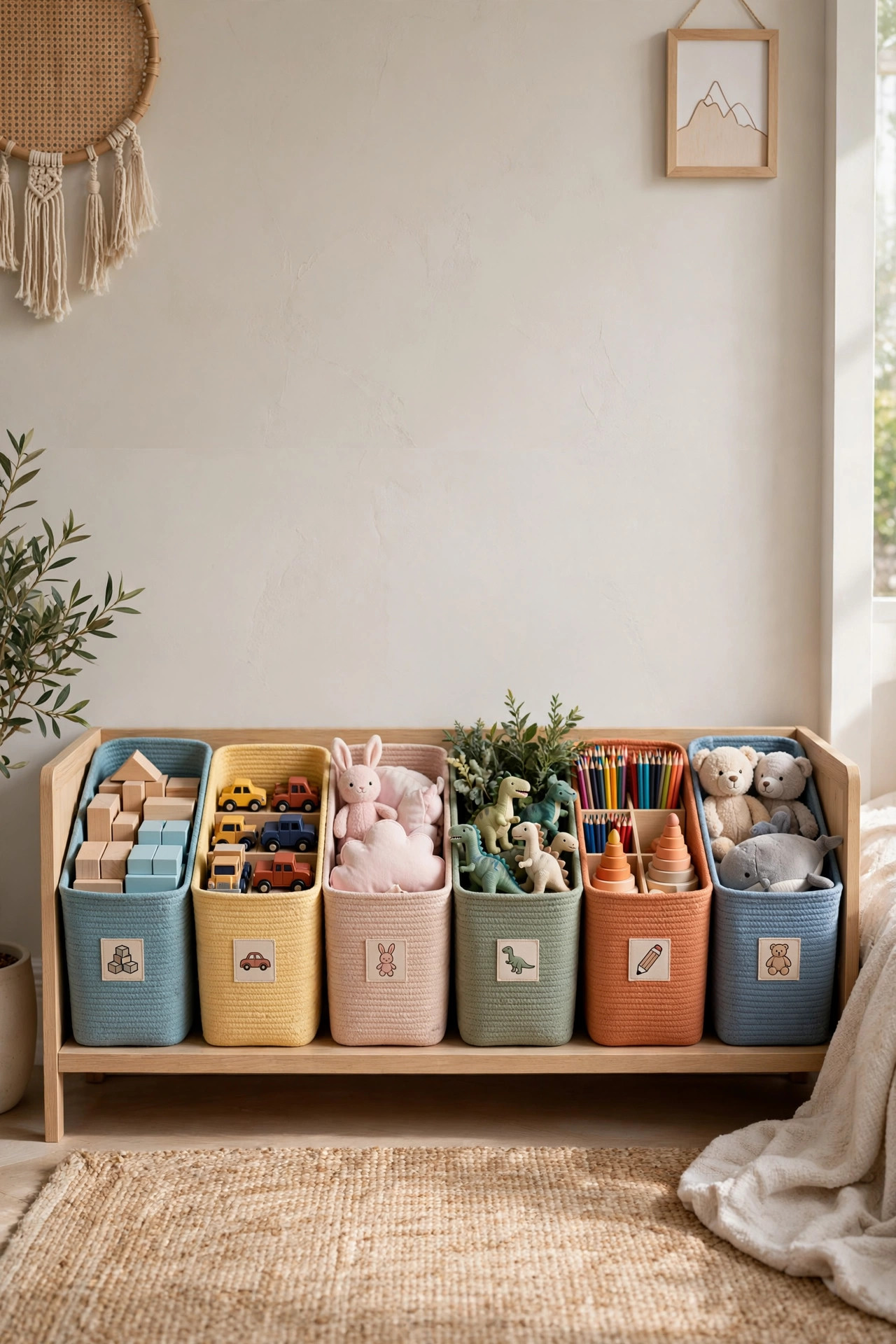
Shared toys cause shared messes, and nobody knows where anything goes. Picture labels on each shelf or bin show exactly what belongs where, so even kids who cannot read yet can clean up correctly. Cleanup stops being a fight and starts being a matching game.
Take photos of the actual toys with your phone, print them small, and tape them to the front of each bin. It takes about twenty minutes and the system runs itself after that. Keep the categories broad, like blocks, dolls, and cars, instead of sorting by tiny details. Fewer, bigger categories mean the system survives real life.
22. Ten-Minute Nightly Reset
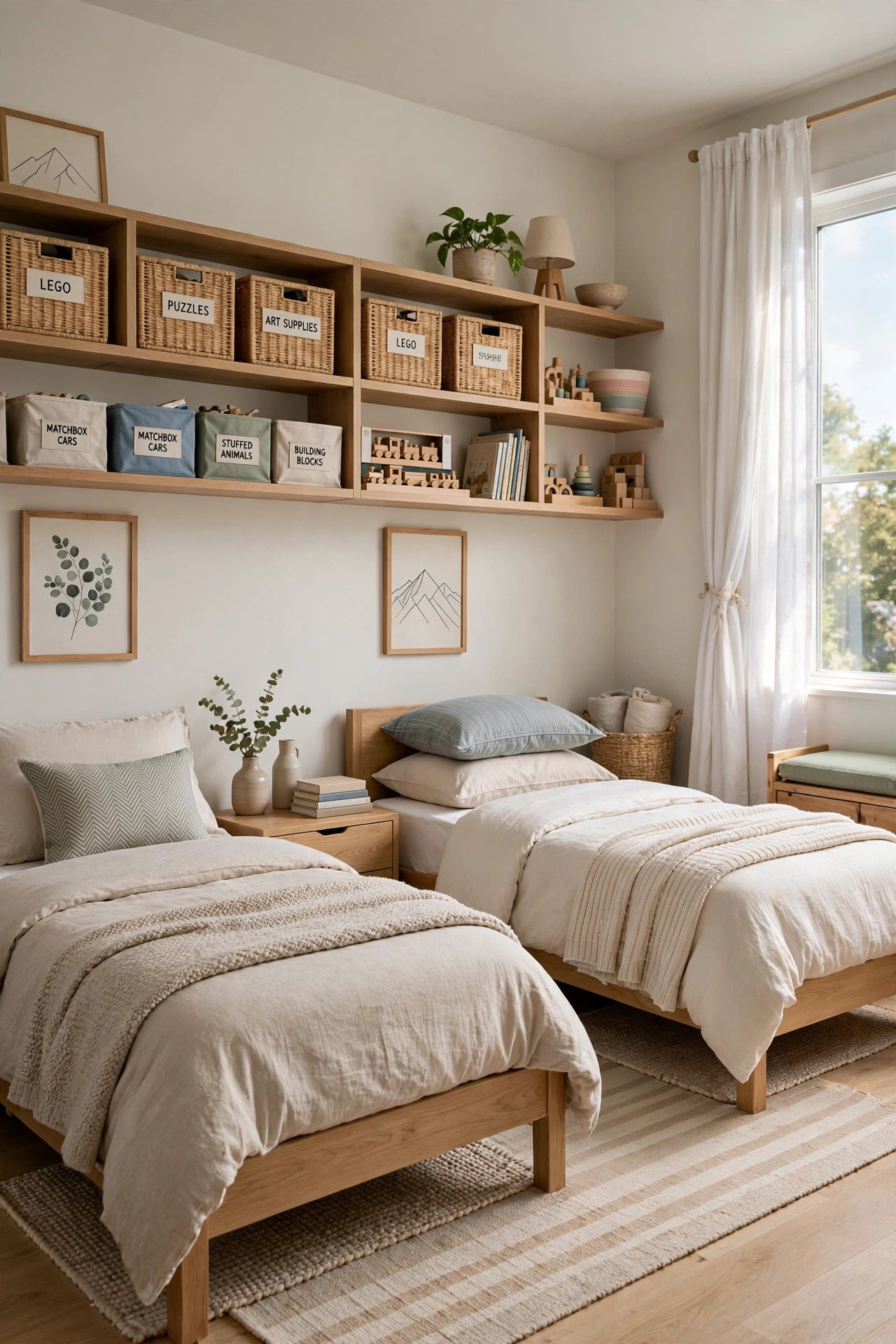
A shared room gets messy twice as fast as a single room, which means cleaning has to be twice as simple. The ten-minute nightly reset is exactly what it sounds like: set a timer for ten minutes before bed, put on music, and everybody tidies until the timer rings. When the timer stops, you stop, even if it is not perfect.
The trick is making it a game, not a chore. Race to see who can put away the most toys, or pretend the floor is lava and everything has to be off it. Do it every single night at the same time so it becomes a habit like brushing teeth. After two weeks, the room practically cleans itself, and mornings start calm instead of chaotic.
You do not need a bigger house to make a shared bedroom work. You need a few smart zones, a couple of cheap fixes, and the patience to let your kids make the space their own. Start with just one idea from this list this weekend, maybe the color-coded bedding or the clip-on lights, and watch how fast the room feels different.
The goal was never a perfect room. It is a room where both kids feel like they belong, where fights get shorter and quiet moments get longer. Pick one project, do it together, and let your kids take it from there. You have got this.
FAQs
How do you give each kid privacy in a shared bedroom?
Curtain panels around the bed, a pop-up tent in the corner, and clear zones marked by rugs all give kids a sense of personal space without building walls. Even small signals help, like a name sign above each bed or their own lamp. The key is giving each kid at least one spot that feels completely theirs, plus a house rule that private time is respected.
What is the best bed setup for a shared kids room?
Bunk beds with storage drawers work best in small rooms because they free up the most floor space. If the ceiling is low or the kids are very young, two twin beds placed in an L shape or on opposite walls is safer and still leaves room to play. For one older and one younger child, a loft bed for the older kid with a play or study zone underneath is a great fit.
How do you stop siblings from fighting over space?
Clear, visible boundaries prevent most fights before they start. Color-code bedding, split the closet with labeled zones, and use rugs to mark each kid’s territory. Make the rules together so both kids feel heard, and give each child one thing that is completely theirs to control, like their own shelf or lamp. Most space fights are really about feeling unheard.
How much storage does a shared kids bedroom need?
Plan for roughly double what one kid needs, but use hidden storage to keep it invisible. Under-bed rolling bins, bunk drawers, closet organizers, and wall shelves together usually handle it. The real secret is not more bins but fewer things. Do a toy donation run together twice a year and the storage you have will suddenly feel like enough.
What if my kids have different bedtimes?
Run two bedtimes in one room with blackout curtains and clip-on reading lights. Darken the sleeping side with the curtains while the night owl reads quietly with their personal light. Keep the rule simple: when the reading light is on, voices stay at a whisper. Most families find the younger one falls asleep anyway within twenty minutes.
How do you decorate for two kids with different tastes?
Keep the big things neutral and let each kid personalize their own zone. White or light walls, matching furniture, and one shared rug color keep the room calm, while each kid picks their own bedding color, wall decals, lamp, and shelf decorations. Peel and stick decals are perfect for this because each side can have its own theme and you can change them later without repainting.