
I’ll be honest. For years I thought green kitchen cabinets were a passing trend, the kind of thing people paint over the minute they try to sell the house. I told my neighbor exactly that when she painted her cabinets a soft sage. I said it would look dated in two years. That was four years ago, and her kitchen still looks better than mine. I ate my words, and then I went home and painted my own island green.
That is how I learned that green is not a trend color in the kitchen. It is a nature color, and nature does not go out of style. Green cabinets make a kitchen feel calm in the morning and cozy at night. They hide smudges better than white, they look good with wood and marble and brass, and they give a plain kitchen a personality without a full remodel. Since my own paint job, I have helped three friends pick their greens, and I have made enough mistakes to know what actually works.
These 18 green kitchen cabinet colors are the ones I would hand to anyone standing in the paint aisle with a swatch in each hand. Some are soft, some are bold, and all of them come from real kitchens I have seen or worked in, not from a catalog.
Let us start with the soft greens, because that is where my own story begins, and it is the safest place for yours to start too.
1. Sage Green Shaker Cabinets
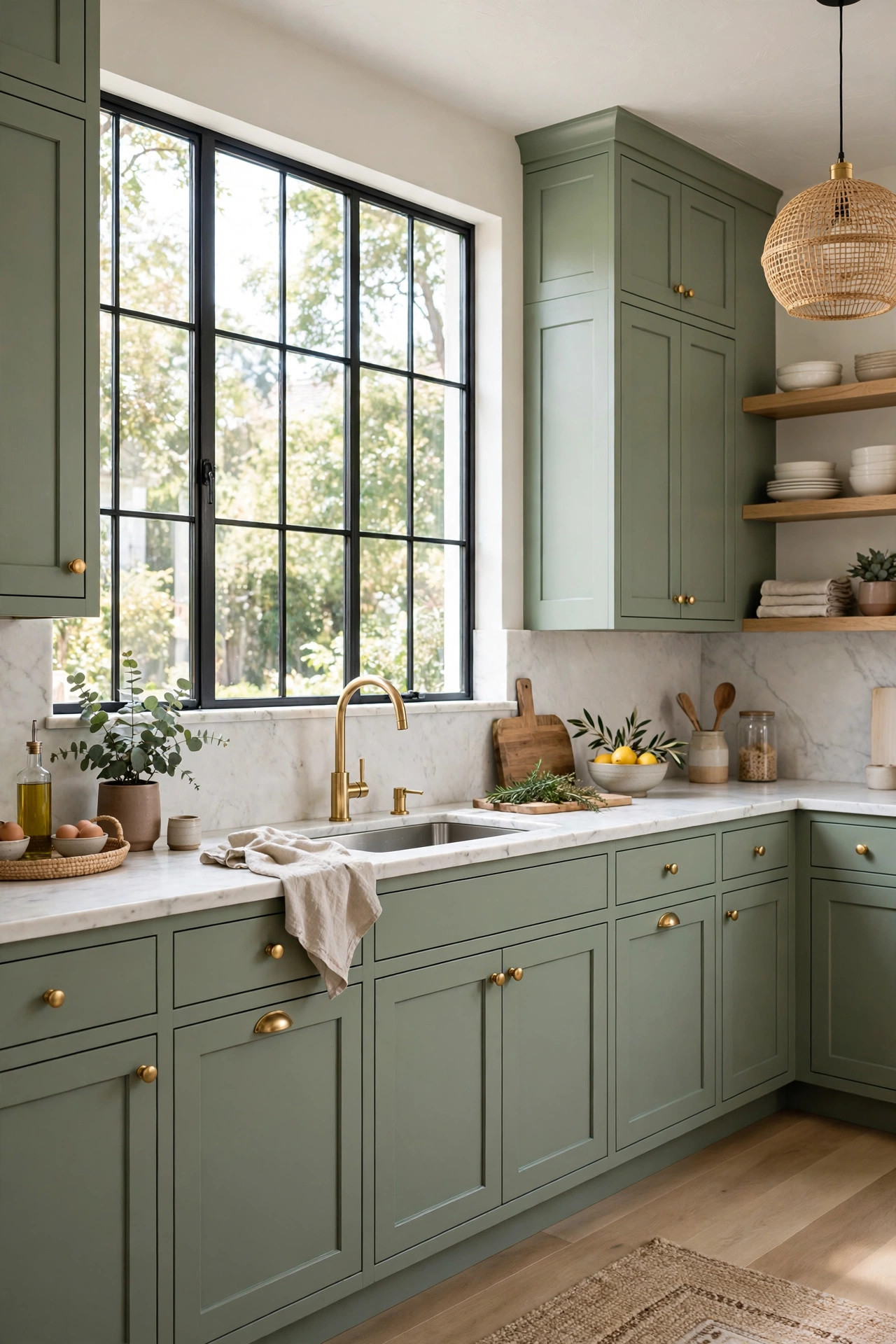
My neighbor’s kitchen is the reason I am writing this. She painted her shaker cabinets a soft sage green, the kind of gray green that changes with the light, and the whole room felt calmer the day the paint dried. Sage works because it is not really a color that shouts. It sits quietly between gray and green, so it goes with almost everything you already own. If your counters are white and your floors are wood, sage just slides right in.
The best part is how forgiving sage is. It hides dust and little fingerprints better than white cabinets ever could, and it never looks harsh under bright kitchen lights. I would pick a sage with a warm undertone if your kitchen gets cool northern light, because cool light can turn a gray green a little flat. Pair it with simple black or brass knobs and you are done. This is the green I recommend to anyone who is nervous about color.
2. Soft Pistachio Green Cabinets
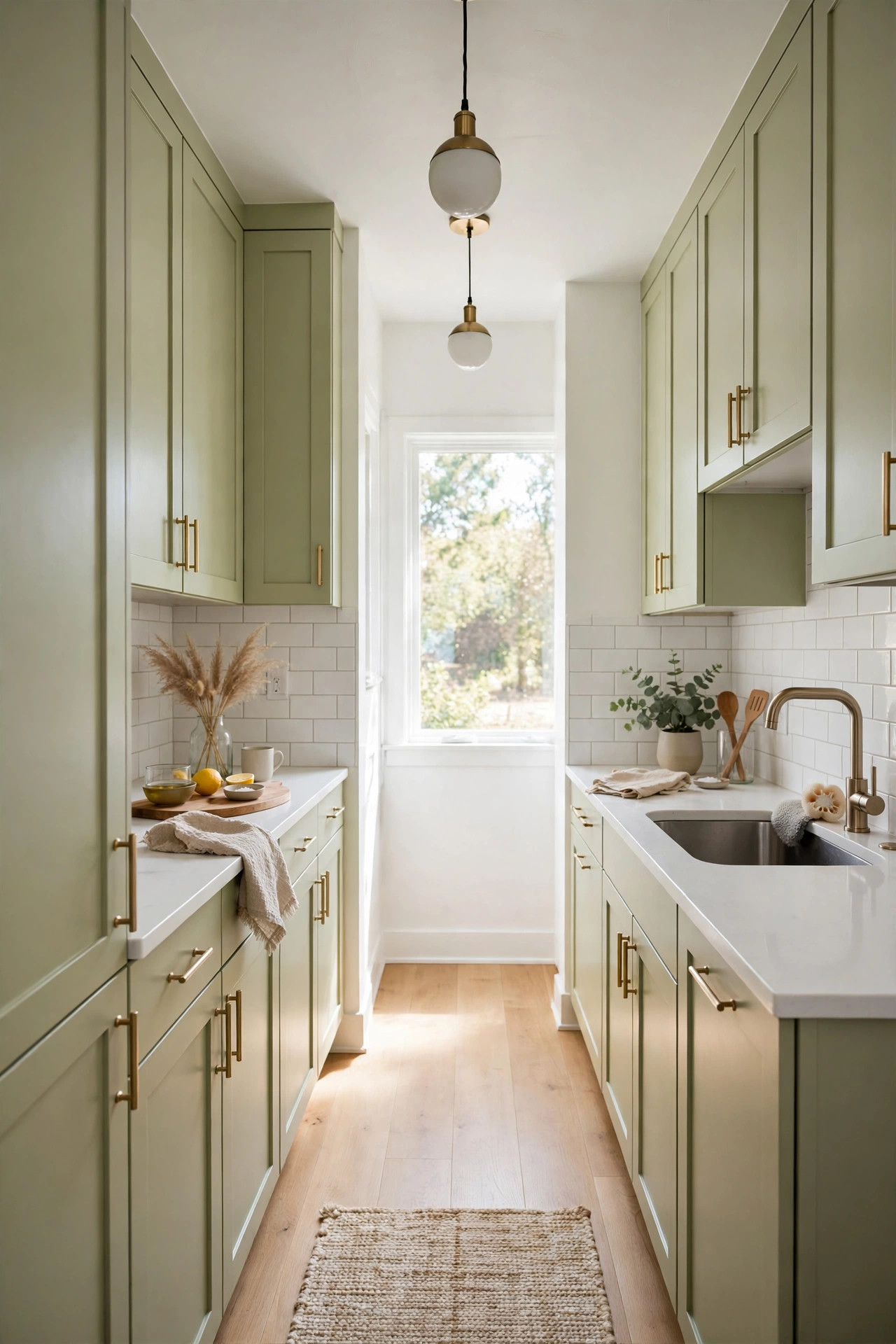
Pistachio is sage’s lighter, happier cousin. I saw it in a small galley kitchen last spring, and the room felt like it was smiling. The pale green bounced light around the narrow space and made the whole kitchen feel bigger and brighter than it had any right to feel. If your kitchen is small or dark, this is the green that helps the most.
Pistachio works best with clean white counters and a simple backsplash, because the color is the star and it does not need competition. Keep the hardware simple too. I saw one kitchen where the owner paired pistachio cabinets with busy patterned tile, and the two fought each other all day long. Let the green breathe. One pretty color, one quiet counter, and the room does the rest.
3. Seafoam Green Cabinets
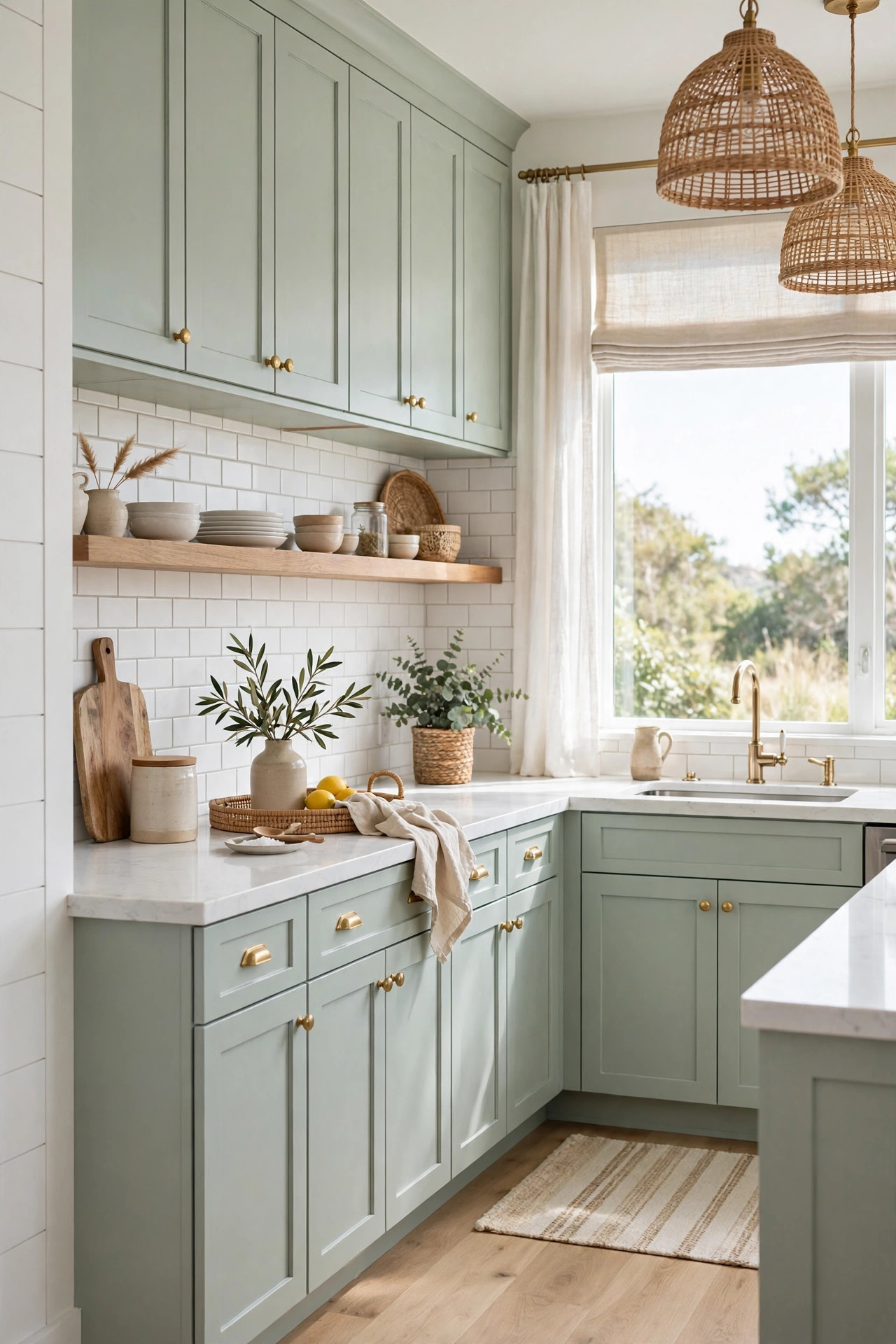
Seafoam takes me straight back to my grandmother’s kitchen, which had the palest green cabinets and always smelled like fresh bread. It is a retro color in the best way, soft and a little blue, like the edge of a wave. In a modern kitchen it feels fresh and coastal. In an older home it feels like it was always meant to be there.
This color loves white. White counters, white subway tile, white ceiling, and the seafoam just glows in the middle of it all. I would avoid pairing it with dark wood floors if you can, because the contrast can feel heavy against such a light color. Light floors or a simple rug work better. Seafoam is proof that a kitchen does not need to be bold to be beautiful.
4. Pale Celadon Green Cabinets
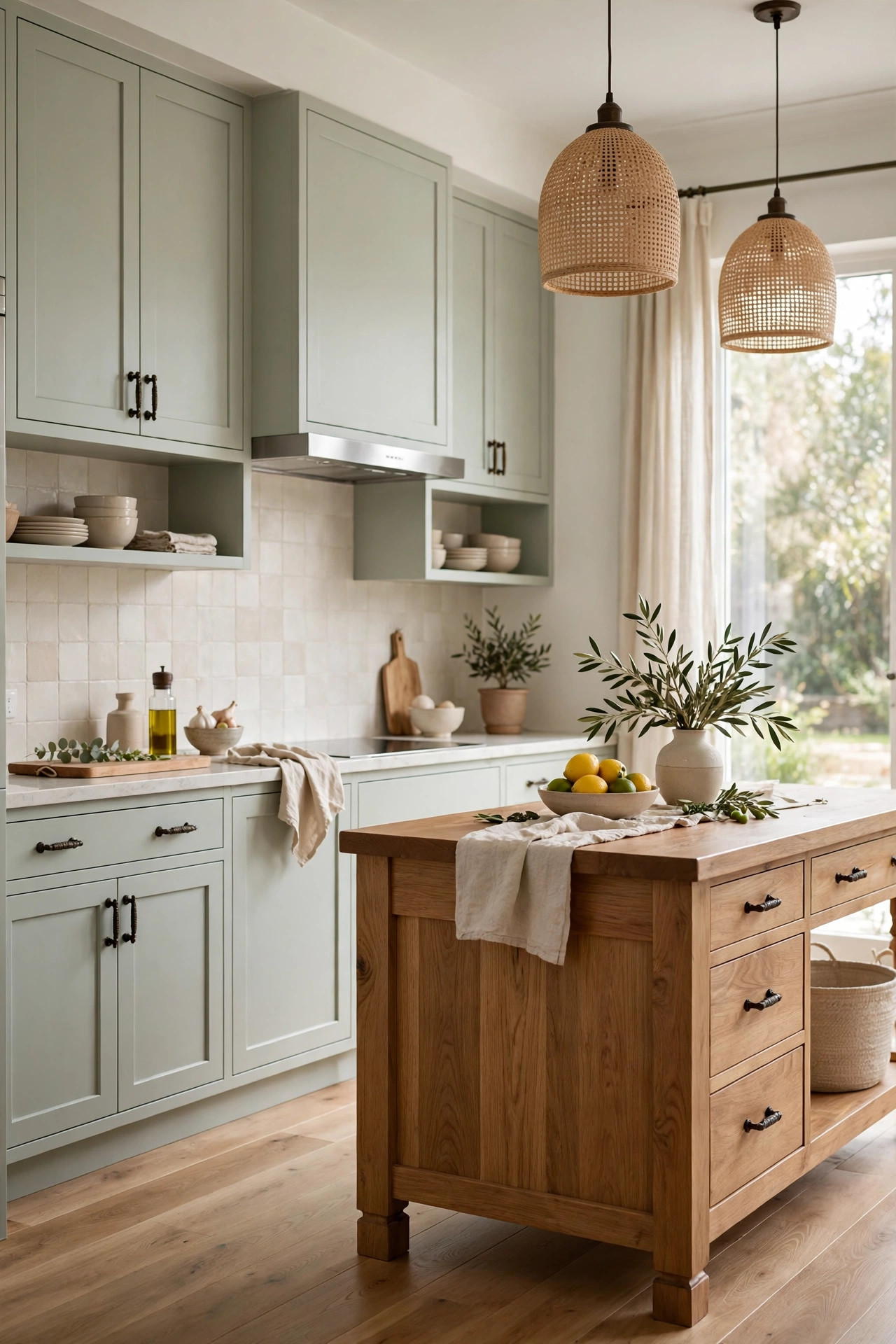
Celadon is the color of old pottery, a pale gray green with a soft, almost misty feel. A friend of mine used it on her kitchen cabinets after seeing it on a handmade vase she loved, and the match was perfect. It is a quiet color that makes a kitchen feel thoughtful and calm, like everything was chosen on purpose.
Because celadon is so soft, it needs a little contrast to keep the kitchen from feeling washed out. My friend added dark bronze hardware and a warm wood island, and those two things gave the pale cabinets something to lean against. Without them the room might have felt a little sleepy. Think of celadon as the calm background, then add one or two warmer pieces to wake it up.
5. Light Sage Green Cabinets With Oak Floors
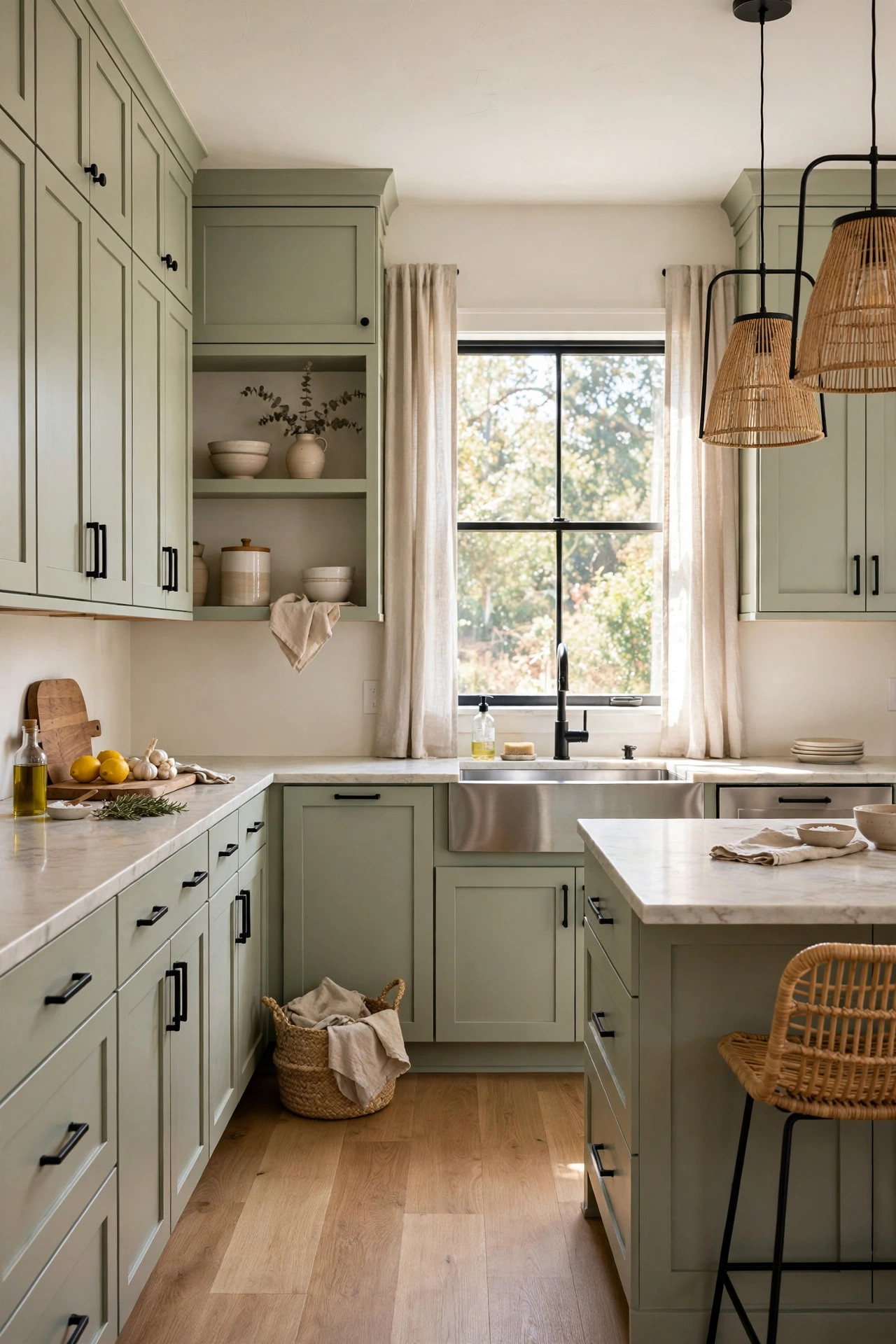
This combination is my answer when someone asks for a kitchen that will still look good in fifteen years. Light sage cabinets with natural oak floors is a pairing that never argues. The green cools down the warmth of the wood, and the wood warms up the coolness of the green. They meet in the middle and the whole room feels balanced.
I saw this exact combo in a 1990s ranch house that had been updated on a tight budget. They kept the original oak floors, painted the old cabinets light sage, and swapped the hardware for simple black pulls. The total cost was less than a new sofa, and the kitchen looked completely new. If you have wood floors already, you are halfway to this look before you even buy paint.
Then I got braver, and that is when the deep greens won me over. These are the colors I was scared of, and now they are my favorites.
6. Deep Forest Green Kitchen Island
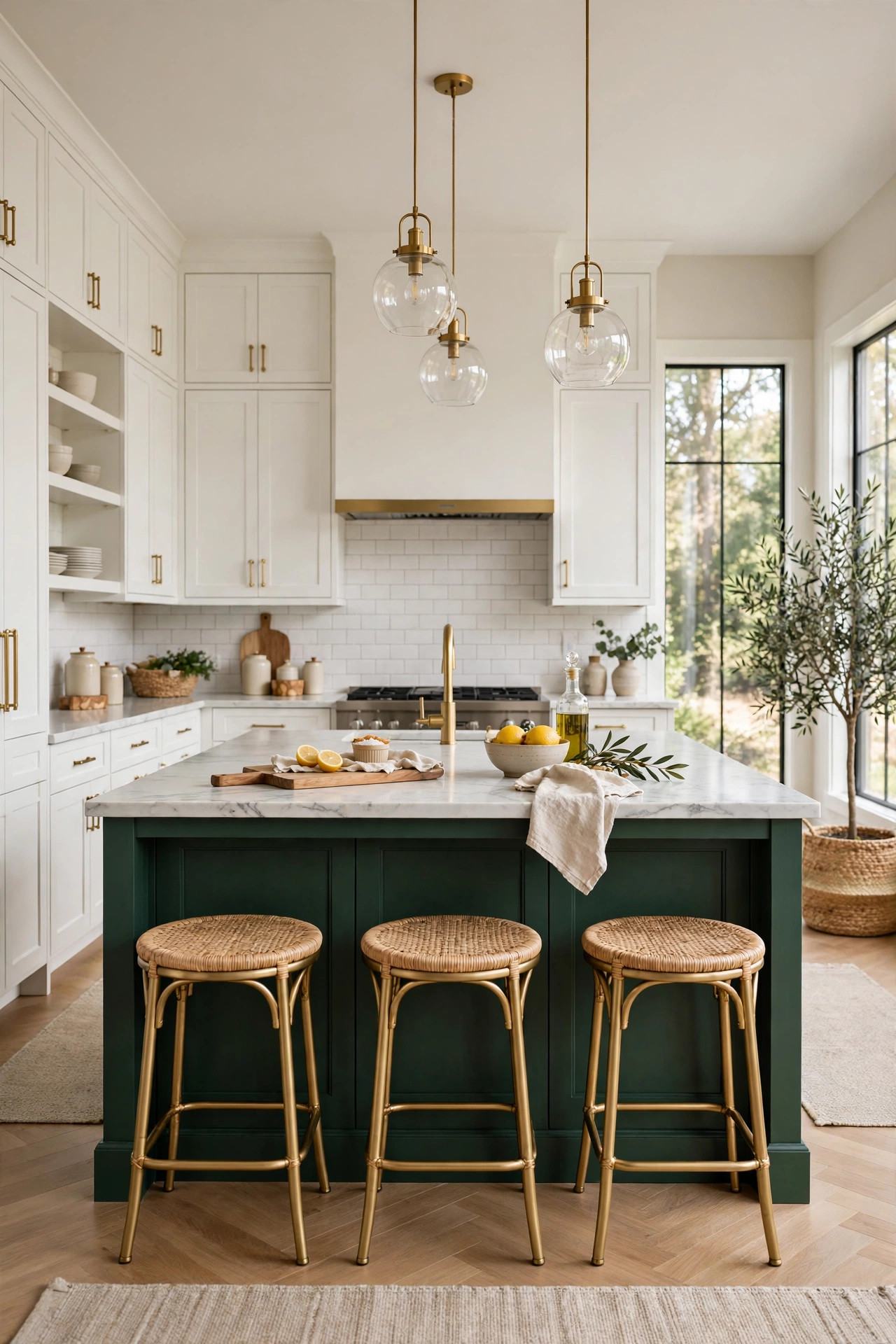
Painting just the island is the smartest way to try a dark color. I did this in my own kitchen two years ago, and it was the best decision I made in that whole remodel. The deep forest green island became the anchor of the room. Everything else stayed white and quiet, and the island did all the talking. Guests notice it before they notice anything else.
Forest green works on an island because it grounds the room the way a dark rug grounds a living room. It hides every scuff from shoes and chair legs, which is a real gift in a busy kitchen. I paired mine with brass bar stools and a white marble top, and the combination looks expensive without trying. If you paint nothing else green, paint the island. You will not regret it.
7. Hunter Green Cabinets With Marble Counters
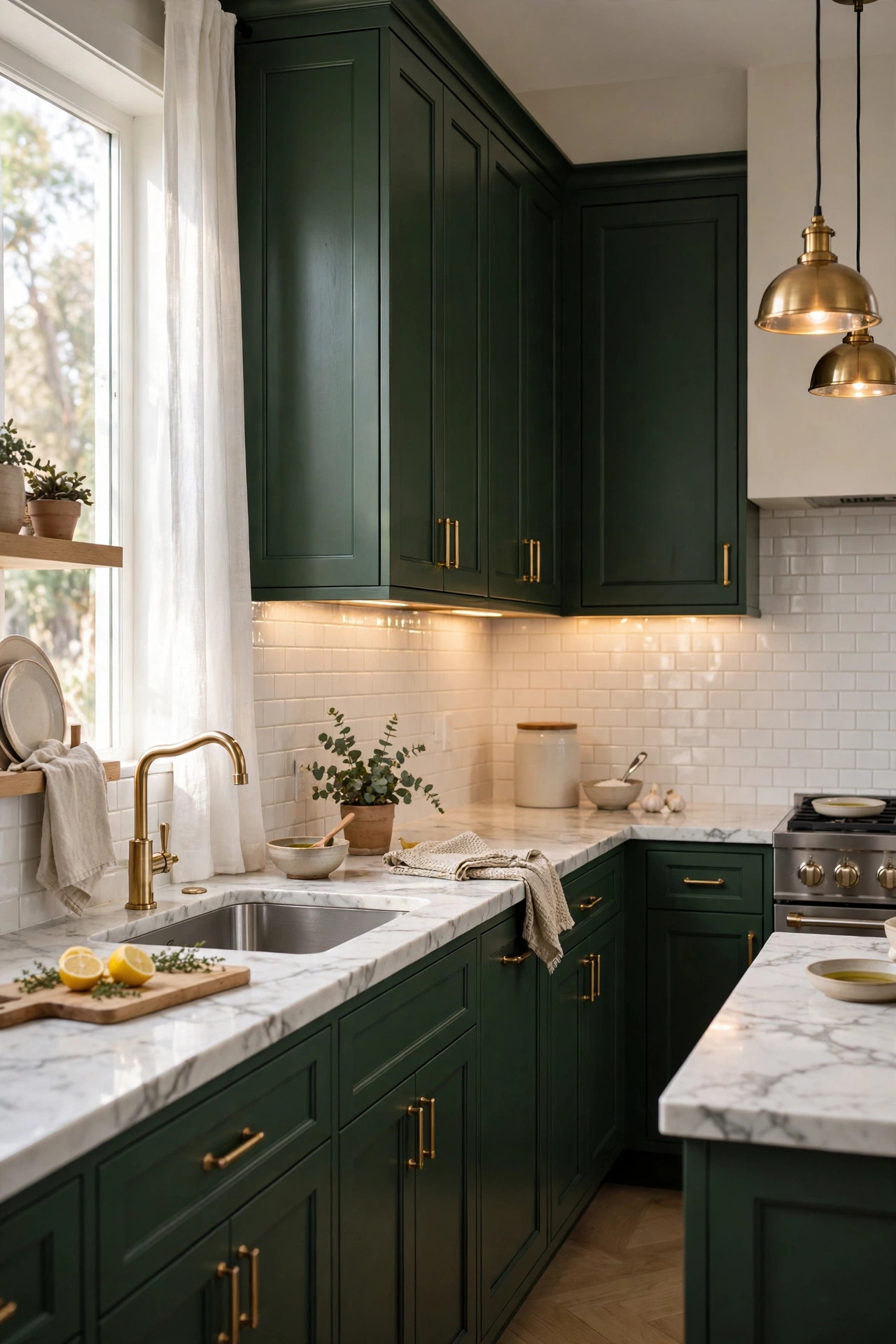
Hunter green and white marble is the combination I recommend when someone wants their kitchen to feel rich. I helped my brother with this one. His kitchen had good bones but no personality, and the deep hunter green cabinets changed everything. The marble counters keep the dark color from feeling heavy, because the white stone reflects light back up into the room.
The trick with hunter green is lighting. Dark cabinets drink up light, so you need good under cabinet lighting and a bright backsplash to keep the room lively. My brother added simple LED strips under his upper cabinets, and the whole kitchen glowed. It cost him one Saturday and about fifty dollars. Dark green without good light feels like a cave. Dark green with good light feels like a jewel box.
8. Emerald Green Cabinets With Brass Hardware
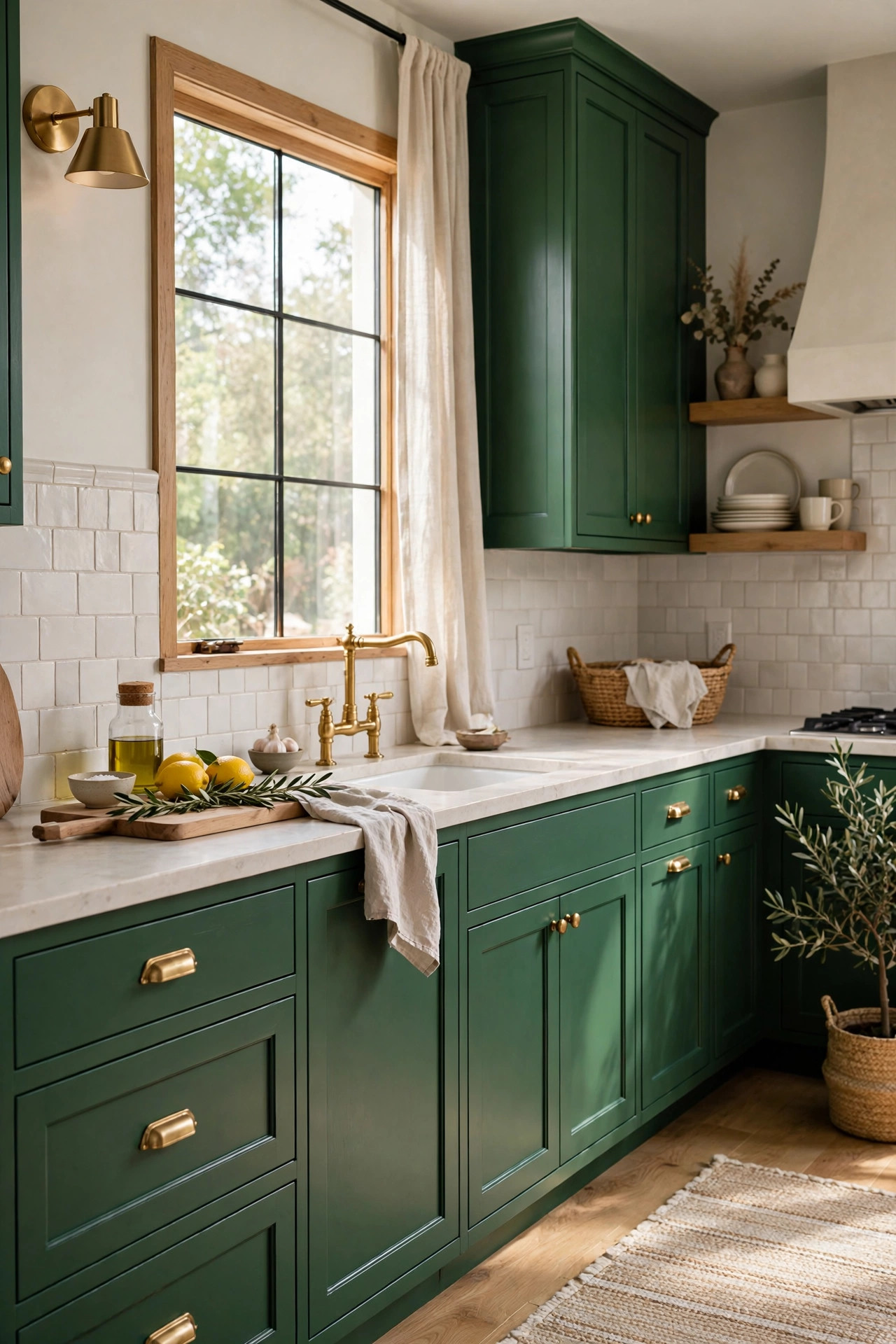
Emerald is the green that feels the most alive. It is richer than sage and brighter than forest, with a jewel tone that catches the light. I saw emerald cabinets with brass hardware in a city apartment kitchen, and the whole small space felt glamorous, like a little cocktail bar. The brass and the emerald just love each other.
This pairing works because warm metal and cool green balance each other perfectly. The brass keeps the emerald from feeling cold, and the emerald keeps the brass from feeling fussy. If you go emerald, commit to the brass everywhere. Faucet, knobs, light fixtures, all of it. Mixed metals can work in some kitchens, but emerald and brass are such a perfect pair that you should not dilute it.
9. British Racing Green Cabinets
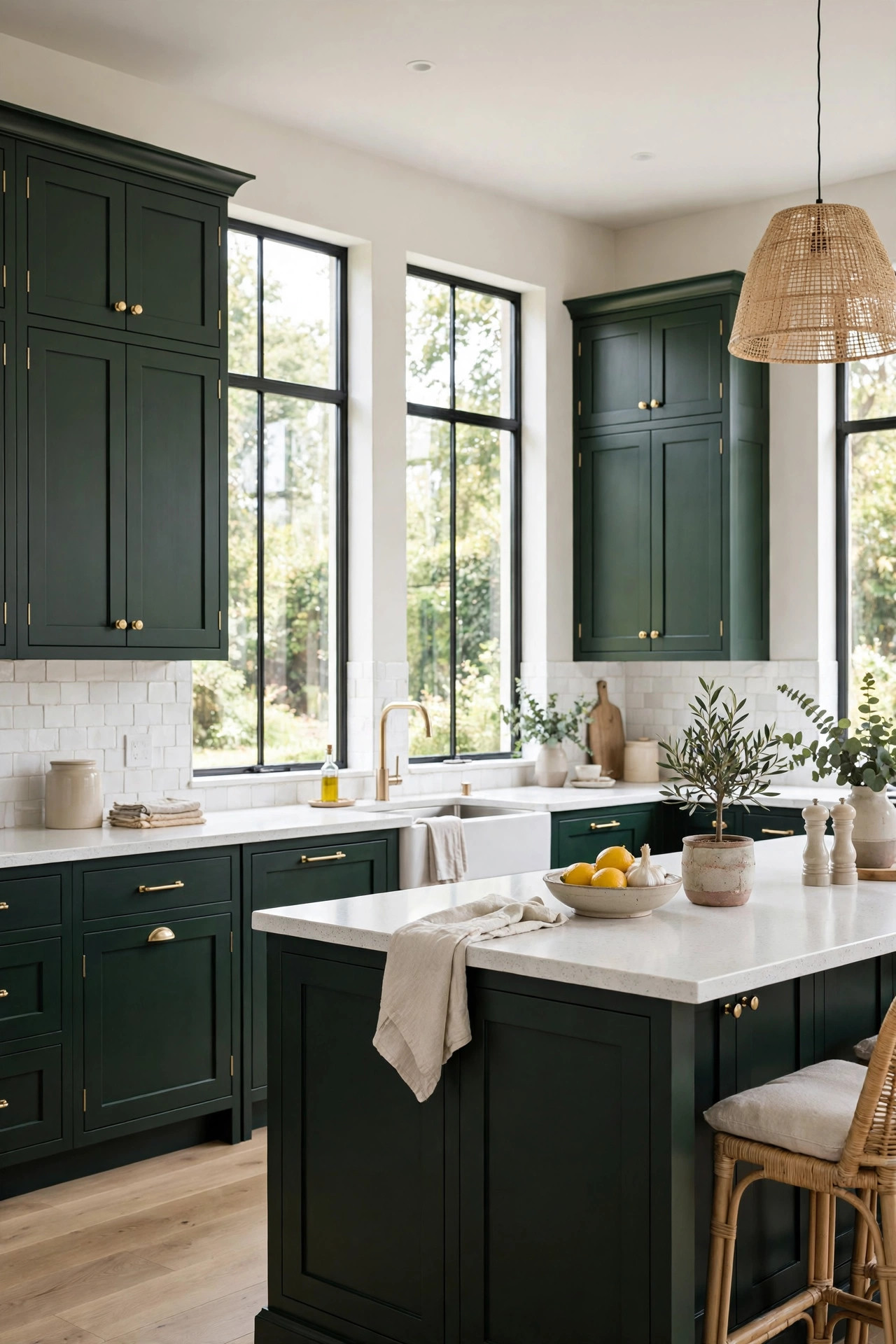
British racing green is the darkest, most serious green on this list. It is nearly black in dim light, and then it glows green when the sun hits it. I was nervous the first time a friend chose it, because it felt like such a bold move. Then I saw it finished, and the kitchen looked like something from a design magazine. It has confidence.
This color needs space and light to work its best. In a tiny dark kitchen it can close the walls in, so I would save it for a kitchen with good windows or an open plan layout. Pair it with light counters and a pale backsplash to keep the balance. My friend used white quartz and handmade white tile, and the dark cabinets looked even richer against all that brightness. Bold color, bright surroundings, that is the formula.
10. Jade Green Cabinets With Gold Accents
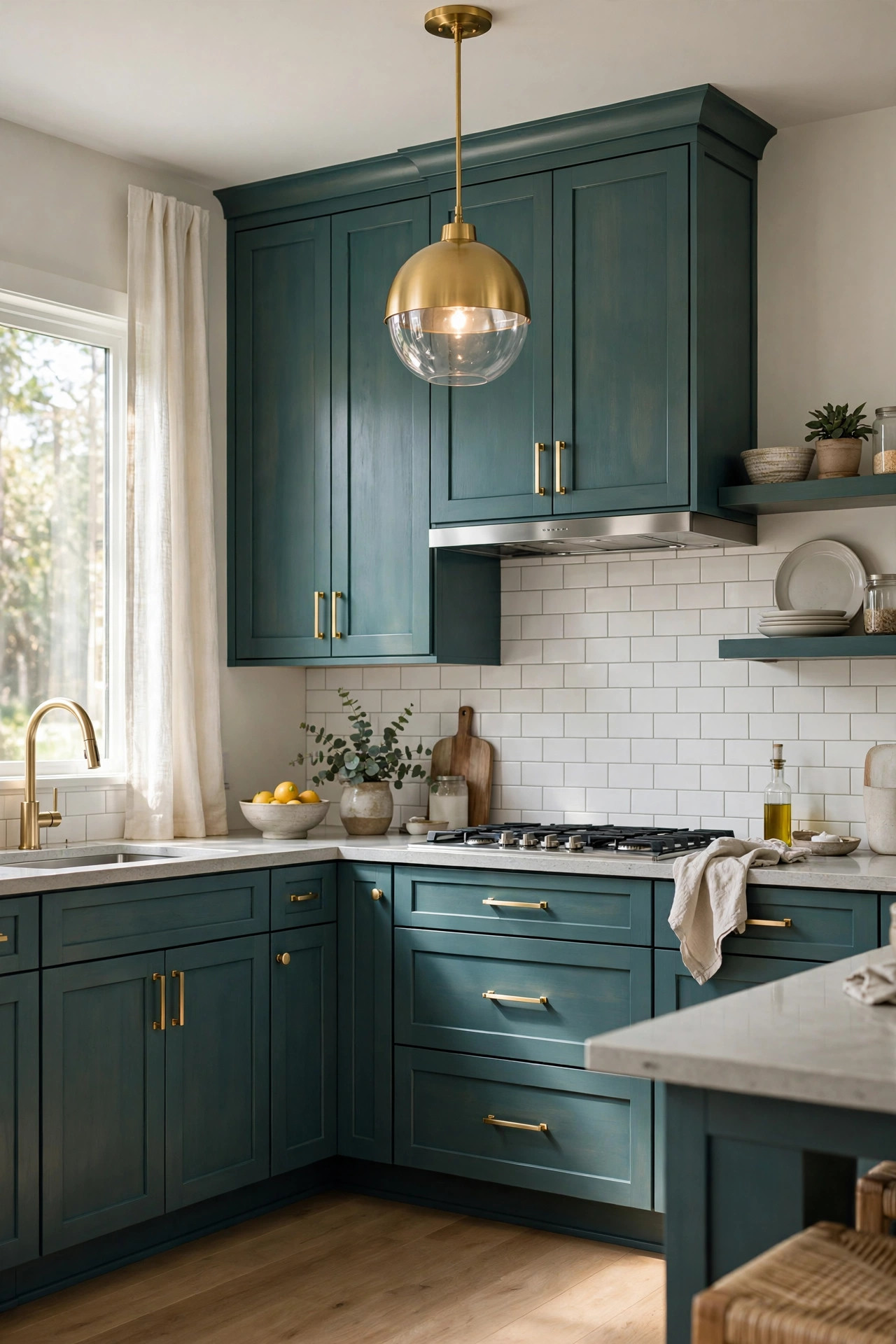
Jade sits right between emerald and teal, a rich blue green that feels both classic and fresh. I first noticed it in a restaurant kitchen that was open to the dining room, and I could not stop looking at it. The color had depth, like looking into deep water. At home it gives a kitchen that same layered, interesting feeling.
Gold accents are the natural partner for jade. I am talking about real warm gold tones, not shiny yellow gold. Brushed gold hardware, a gold framed mirror or art on the wall, maybe a gold pendant light over the island. The gold pulls out the warmth hiding inside the jade and the whole room glows. Keep the rest simple. White or light gray counters let the jade and gold be the stars.
The earthy greens came next in my journey, and honestly these are the ones I recommend most often now. They feel like home.
11. Olive Green Lower Cabinets
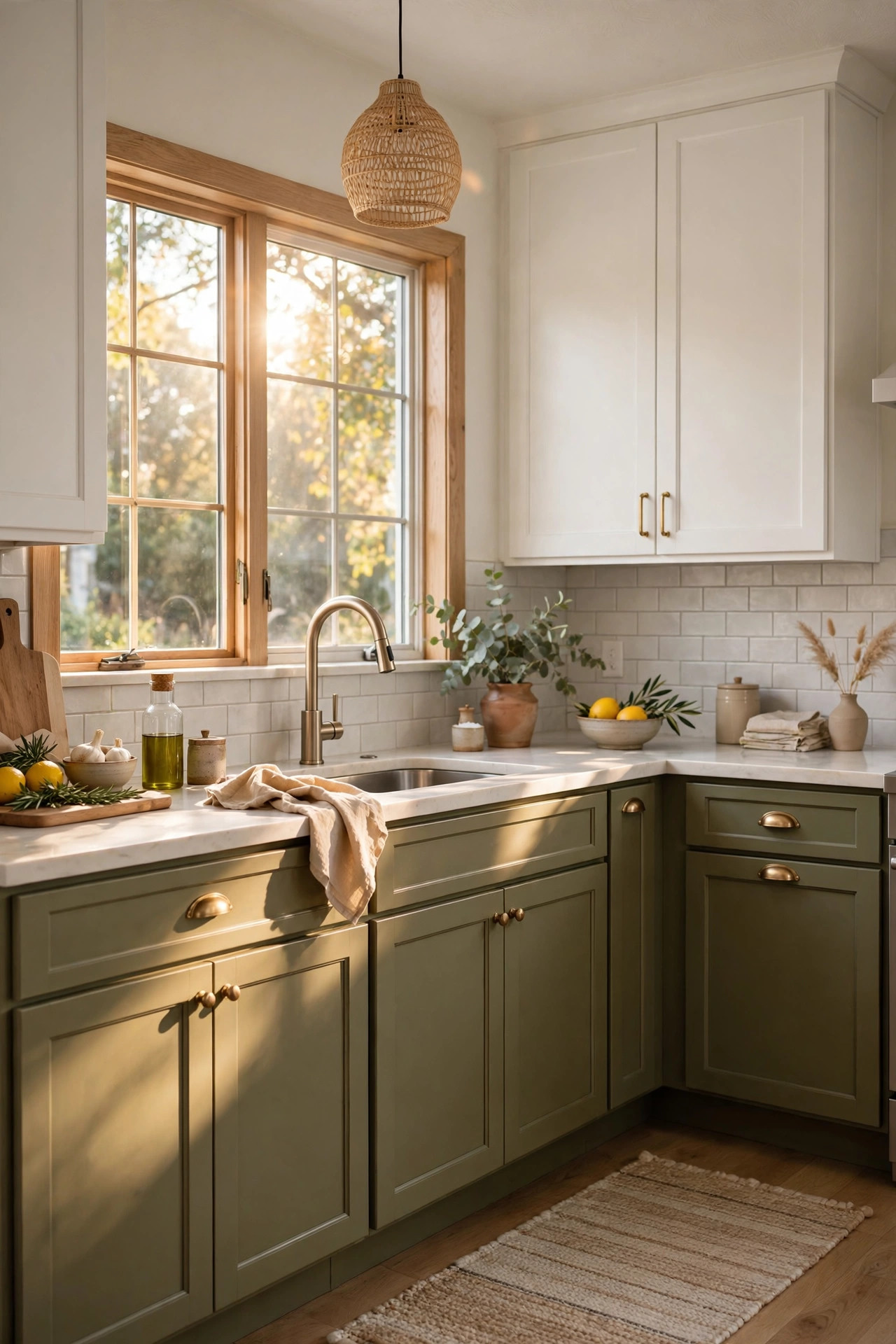
Olive is the green of the Mediterranean, warm and a little brown, like good olive oil. I painted my lower cabinets olive while keeping the uppers white, and it was the perfect middle ground. The kitchen felt colorful but never loud. Olive has a warmth that the cooler greens do not, so it works beautifully in kitchens that get a lot of warm afternoon sun.
The two tone trick is what makes olive so easy to live with. White uppers keep the room bright and open, while the olive lowers add all the character. You get the best of both worlds, and if you ever get tired of the color, you only have to repaint the bottom half. I tell nervous first timers to start here. Olive lowers and white uppers is the training wheels of green kitchens, and I mean that as a compliment.
12. Eucalyptus Green Cabinets
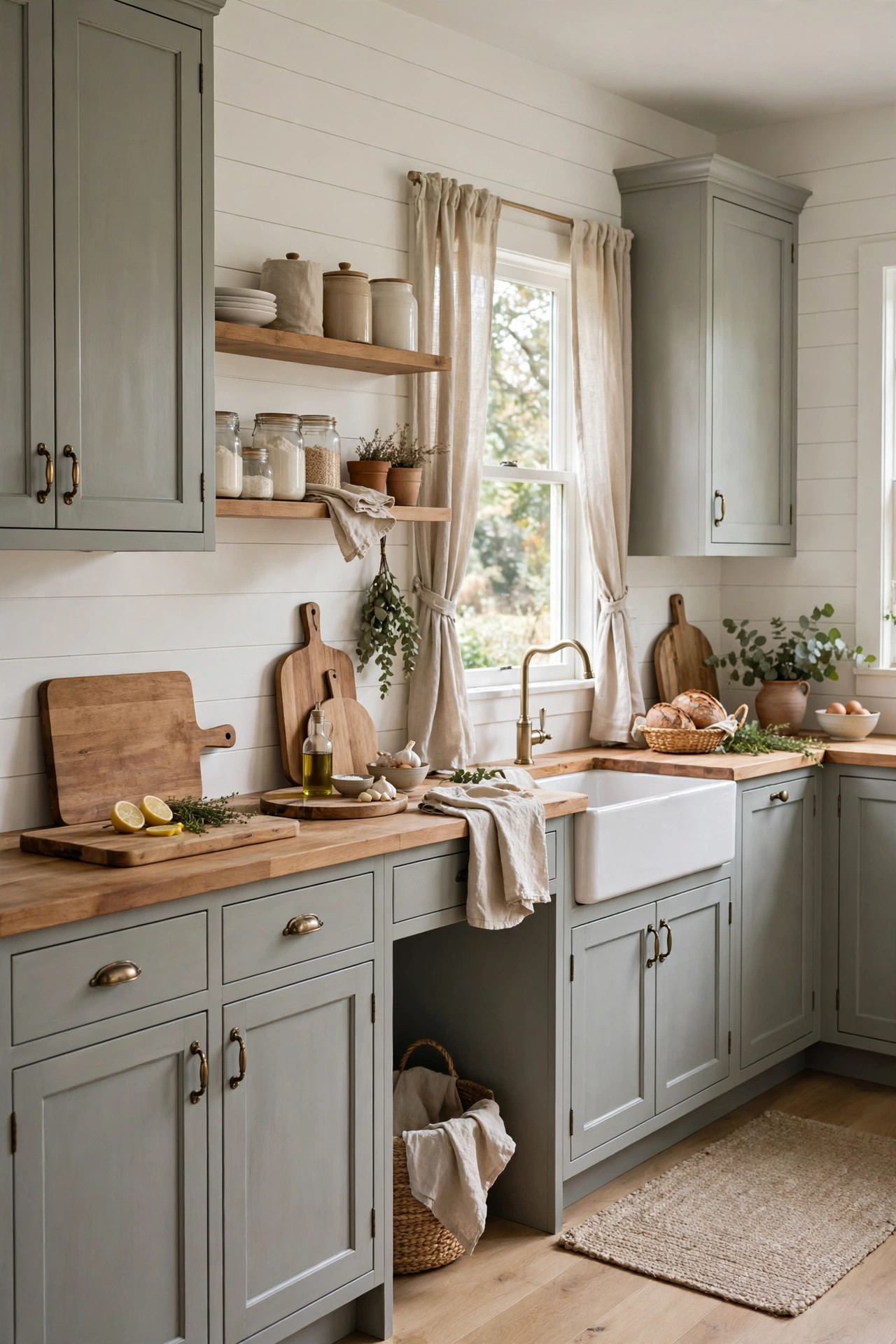
Eucalyptus is that soft gray green you see on the leaves in a florist’s cooler. It is calm and a little silvery, and it makes a kitchen feel like a deep breath. My cousin used it in her farmhouse kitchen with white shiplap walls, and the whole room felt peaceful. It is the green for people who want color without any drama at all.
This color is at its best with natural textures. Wood cutting boards left out on the counter, a jute runner on the floor, linen curtains on the window. The silvery green and the natural materials speak the same quiet language. I would keep the hardware simple and dark, like oil rubbed bronze, because shiny chrome can feel too cold against such a soft color. Everything in a eucalyptus kitchen should feel touchable.
13. Moss Green Cabinets With Butcher Block
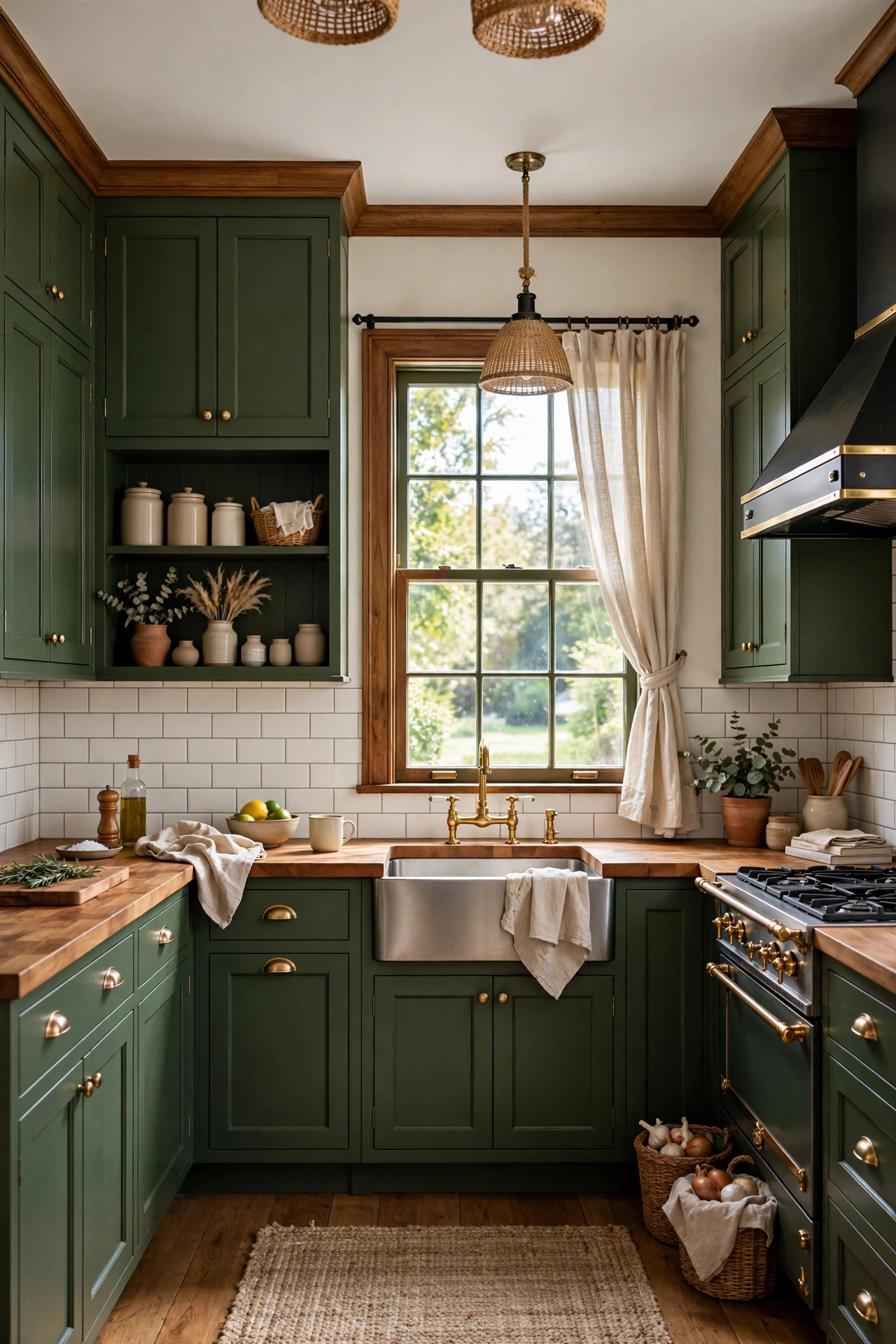
Moss is the green of a forest floor, deep and earthy with a brown undertone. Paired with butcher block counters, it creates the warmest kitchen on this list. I saw this combination in a craftsman style home, and the kitchen felt like a hug. The wood counters and the moss cabinets were made for each other.
Butcher block needs a little care, since wood counters want oiling a few times a year, but the payoff is huge. The warm wood keeps the deep moss green from feeling dark or heavy. Together they make a kitchen that feels handmade and honest. I would add a simple white subway tile backsplash to keep things bright between the two warm surfaces. It is a classic combination that never looks trendy, just timeless.
14. Fern Green Cabinets With White Subway Tile
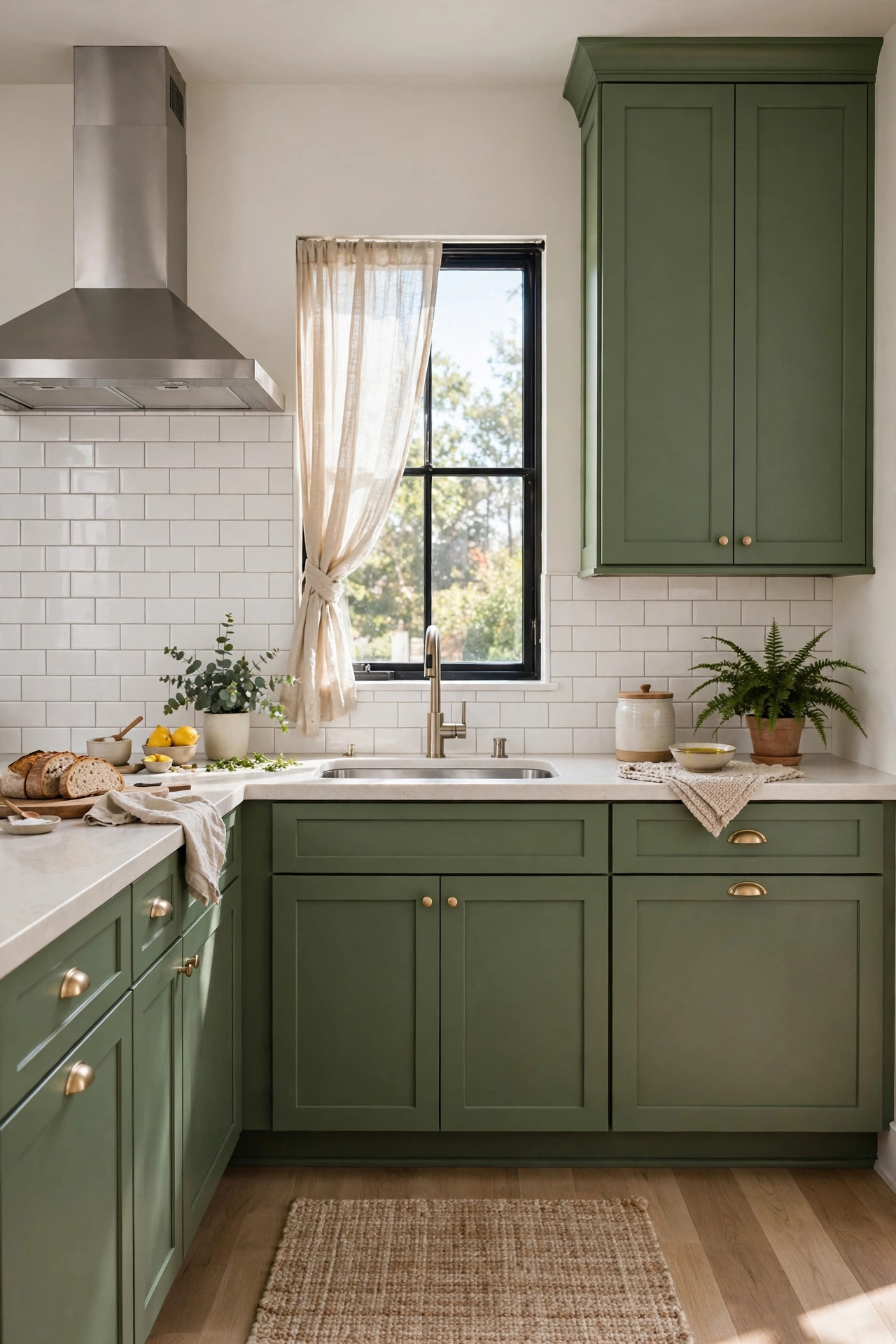
Fern is a true medium green, the color of the plant on a shaded porch. It is fresh without being bright, and it has enough depth to feel serious. With classic white subway tile, it makes a kitchen that feels clean and timeless. I helped a friend with a 1980s kitchen update using this exact pairing, and the dated oak cabinets disappeared under the fern green paint.
White subway tile is the hardest working partner a green cabinet can have. It is cheap, it is classic, and its glossy surface bounces light around the room. Against fern green it looks crisp and fresh, like a white shirt with a green sweater. Keep the grout light and the lines clean. This is a combination that appraisers and buyers love too, if resale is on your mind. It reads as updated without reading as risky.
15. Avocado Green Vintage Cabinets
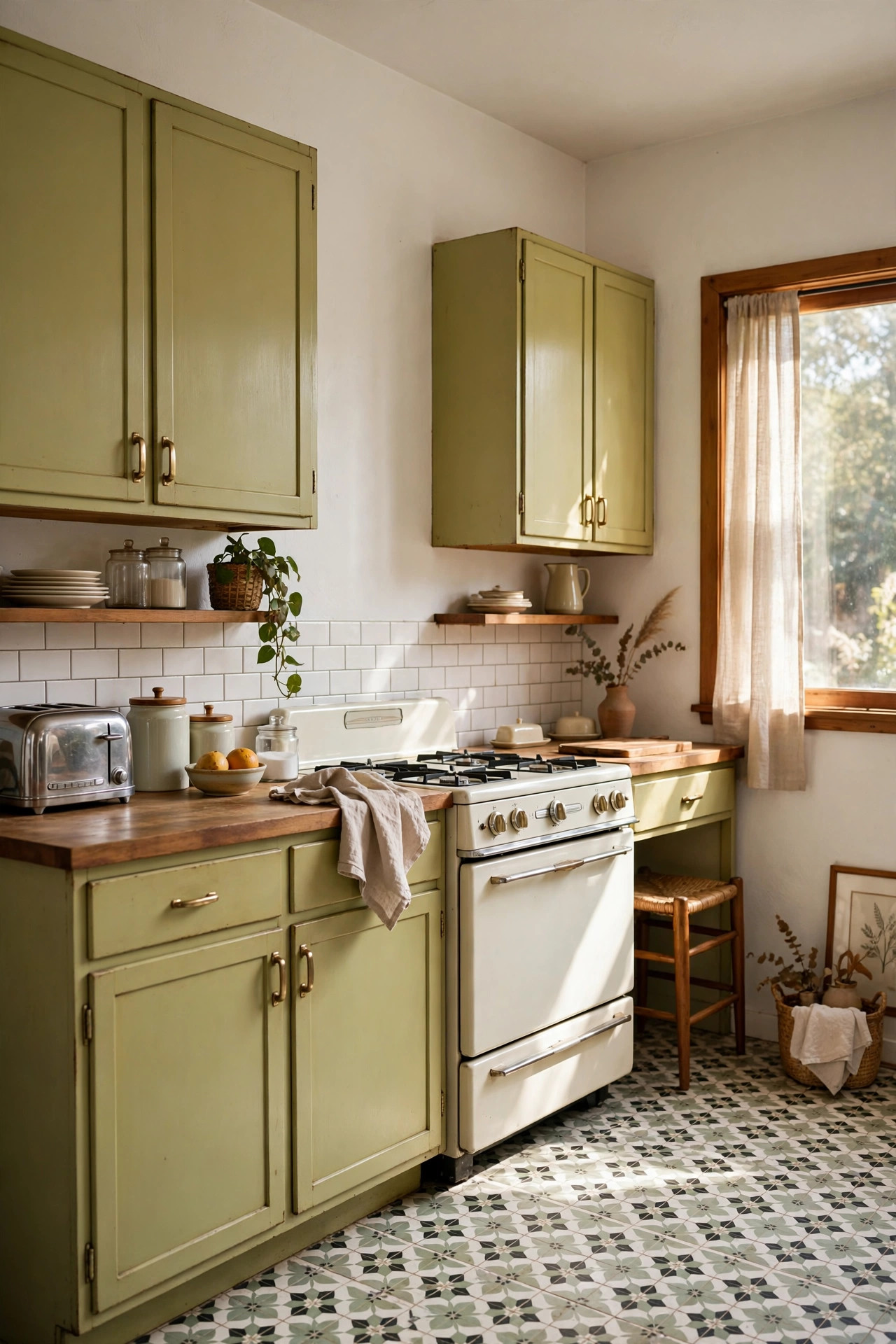
I know what you are thinking, because I thought it too. Avocado green sounds like a 1970s mistake. But hear me out. In the right kitchen, a muted avocado, more like a soft yellow green than the bright stuff from old appliances, looks warm and wonderful. I saw it in a mid century home with all its original character, and the avocado cabinets looked completely right, like they had always belonged there.
The secret is keeping it muted and pairing it with the right partners. Warm white walls, simple wood accents, and maybe a fun patterned floor tile. Do not pair avocado with gray, because gray turns it muddy. Pair it with warm tones and it glows. This is not the green for a sleek modern kitchen. It is the green for a home with soul, and in that setting it is perfect.
And if painting the whole kitchen feels like too much, these last ideas are for you. You can get the green you love without committing every cabinet in the room.
16. Teal Green Cabinets
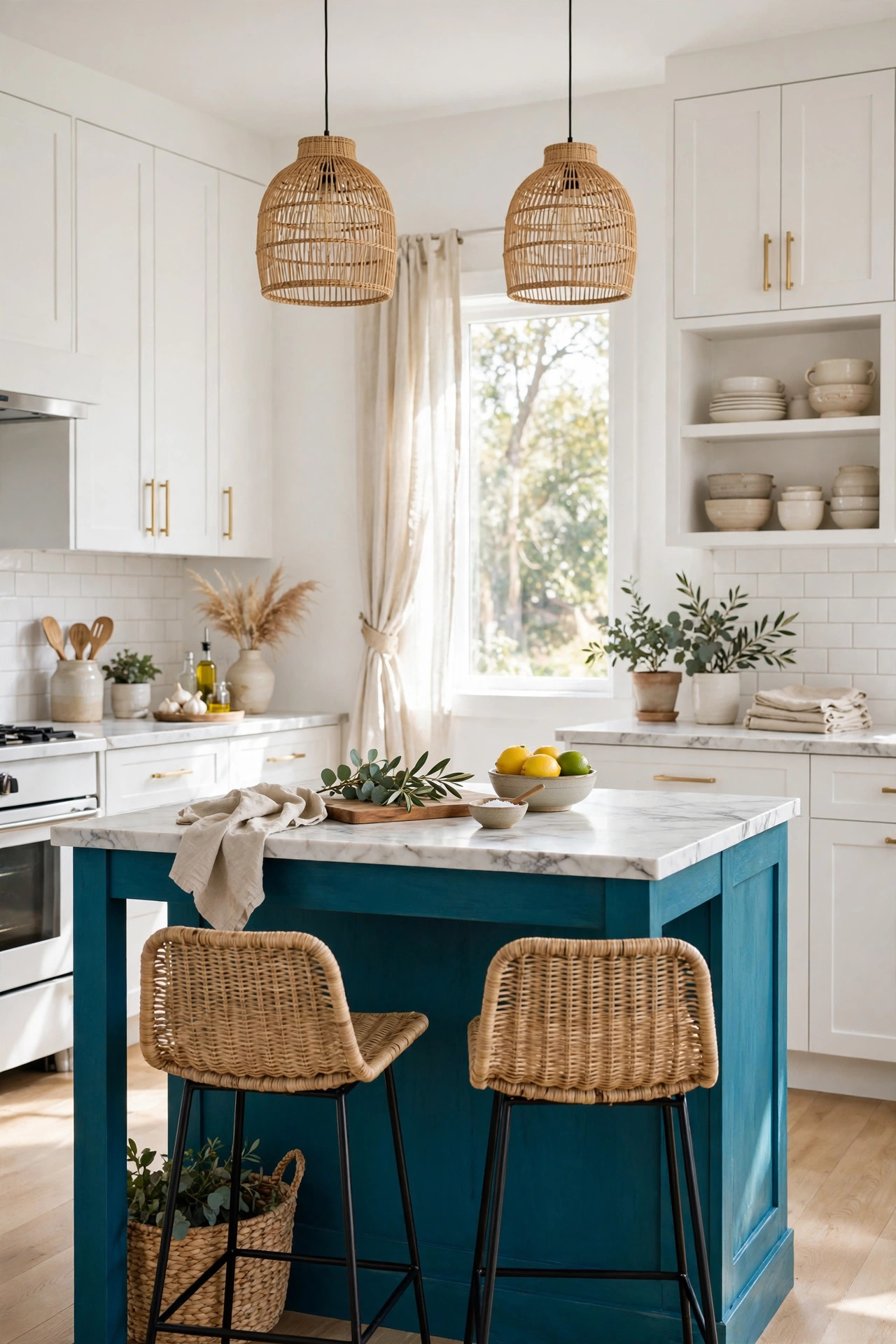
Teal is green with a shot of blue, and it brings an energy that the other greens do not. I used it on a small kitchen island in a rental friendly way, with peel and stick panels, and it became the happiest corner of the whole apartment. Teal feels playful and fresh, like the kitchen is in on a joke.
Because teal is so lively, a little goes a long way. An island, a pantry door, a built in hutch, that is plenty. Pair it with crisp white and let it pop. I would keep the rest of the kitchen very simple when teal is involved, because it does not need help getting noticed. One teal moment per kitchen is the rule I follow. Any more and the joke gets old.
17. Two Tone Green and Cream Cabinets
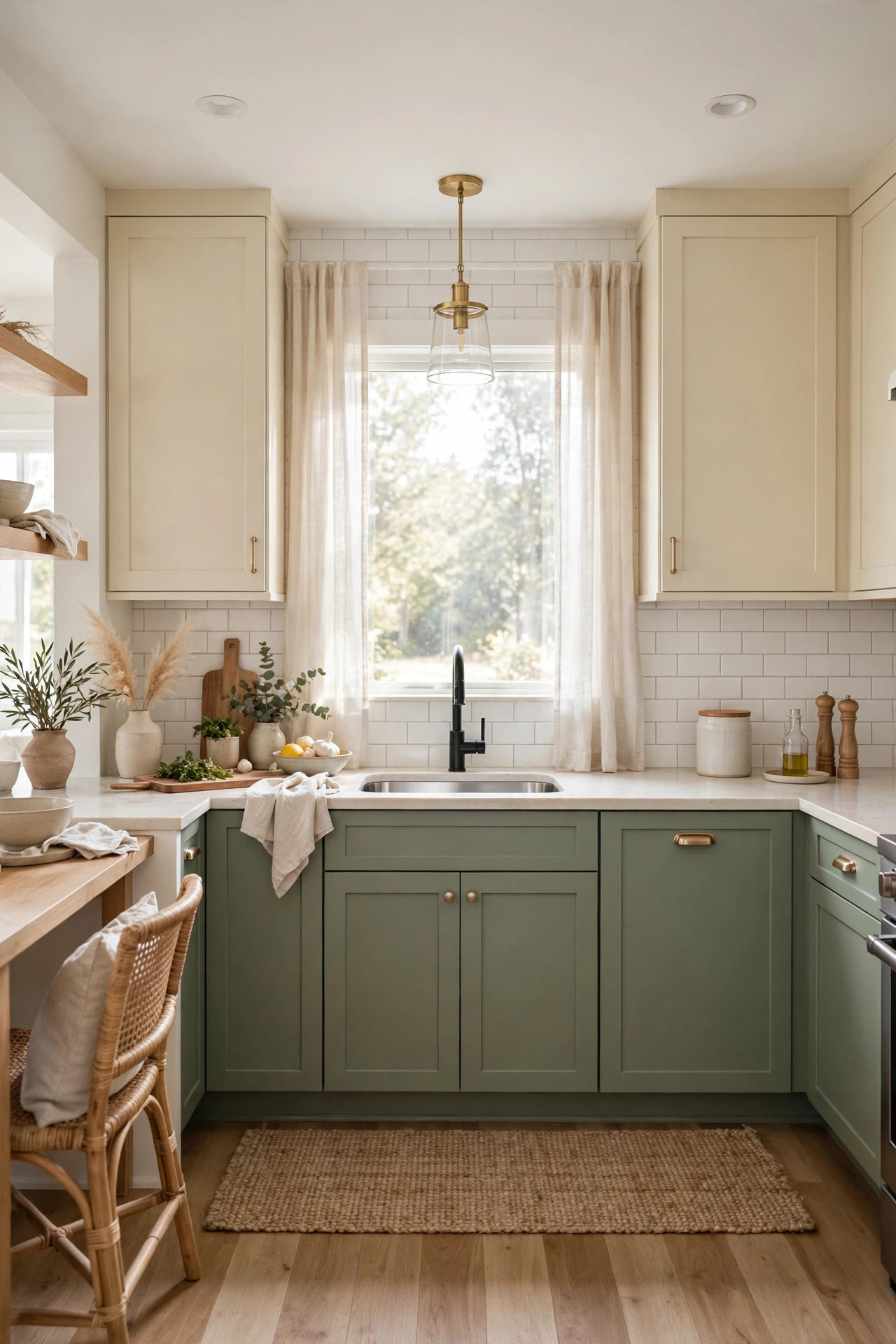
Two tone cabinets are the answer for people who love green but fear commitment. Paint the lowers a green you love, sage, olive, or even forest, and keep the uppers a warm cream. I did this in stages in my own kitchen, lowers first, and lived with it for a month before deciding the uppers could stay cream forever. They could. The combination is that good.
Cream is better than stark white here, because cream has a warmth that talks to the green. Stark white next to a warm green can look a little sharp, like they are arguing. Cream and green get along. This approach also saves money and time, since you are only painting half the cabinets. It is the most practical idea on this list, and it might be the prettiest too.
18. Dark Green Cabinets With Open Wood Shelves
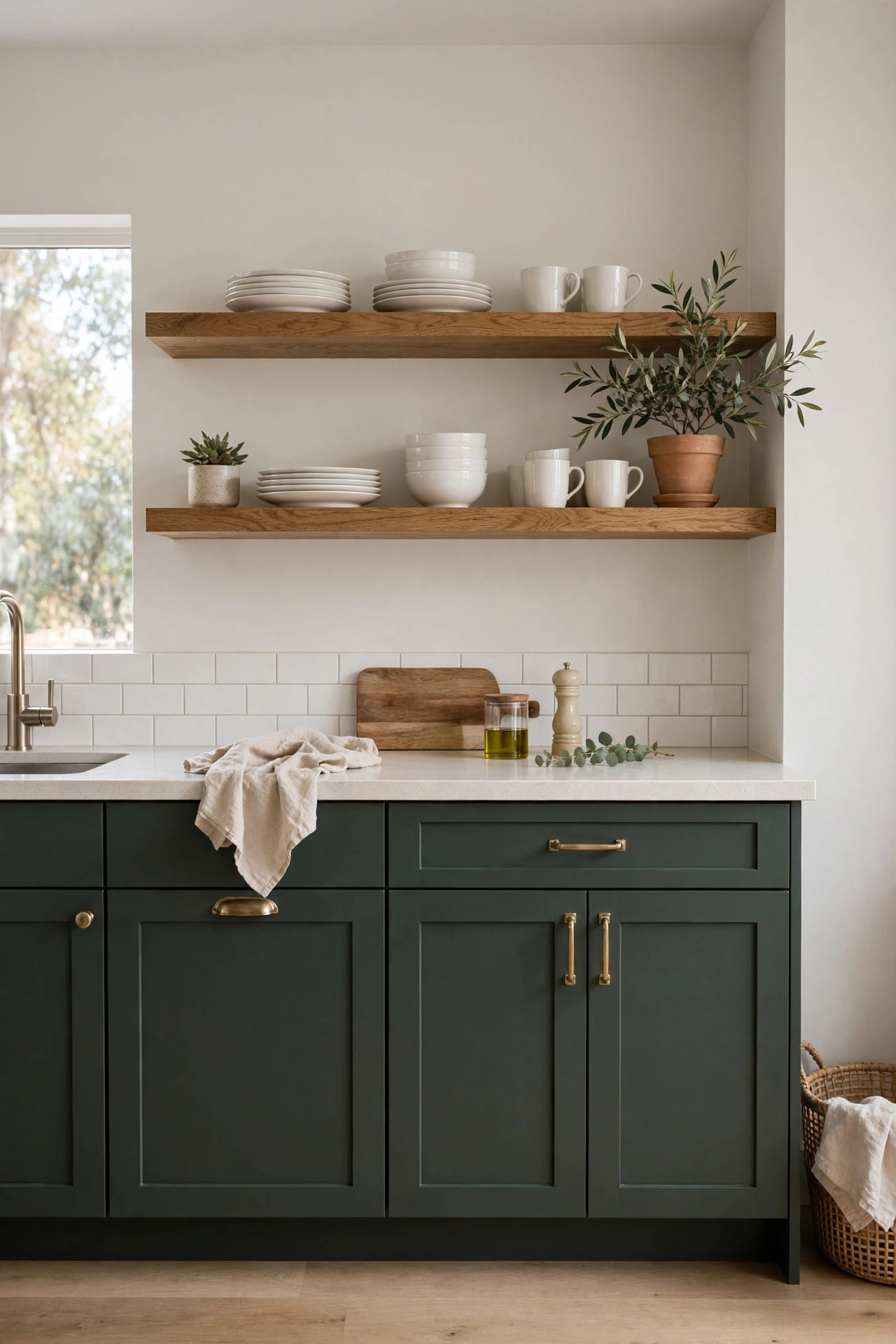
Swapping upper cabinets for open wood shelves is a big move, but with dark green lowers it is a beautiful one. I saw this in a kitchen where the owner had taken down her old uppers and put up simple oak shelves instead. The dark green lower cabinets looked richer than ever, and the open shelves kept the room feeling light and airy. The wood and the green were perfect partners.
Open shelves do ask something of you. They need to stay tidy, and they collect dust faster than closed cabinets. But they also force you to keep only the dishes you love, which is a gift in disguise. Style the shelves simply. White dishes, a few glasses, maybe a small plant. Let the dark green below and the wood around them do the talking. This kitchen felt personal in a way that wall to wall cabinets never do.
If I had to pick one green for my own kitchen all over again, I would go with the olive lowers and cream uppers from idea 17. It is the combination I actually live with, and three years later I still smile when I walk in. The sage shaker from idea 1 is a close second, and it is what I tell every nervous friend to choose. You really cannot go wrong with either one.
Start with a sample pot, paint a big piece of cardboard, and live with it on the counter for a few days. Watch it in morning light and evening light before you commit. Green is a forgiving color, but the right green makes all the difference. Pick the one that makes you happy at seven in the morning, because that is when you will see it most.
FAQs
What is the most popular green for kitchen cabinets right now?
Sage green is the most popular choice, and it has been for a few years. It is soft, it goes with everything, and it does not feel trendy in a way that will date your kitchen. Forest green and olive are close behind. If you want a safe pick that still feels fresh, sage is the one most designers reach for first.
Do green kitchen cabinets hurt resale value?
In most cases, no. A well done green kitchen, especially in a classic shade like sage or forest green, often helps a home stand out in listings. The key is choosing a timeless shade rather than a neon or muddy one. If you are worried, keep the green to the island or lower cabinets, which buyers see as a design choice rather than a risk.
What wall color goes with green kitchen cabinets?
Warm white is the safest and most popular choice. It keeps the kitchen bright and lets the green be the star. Light gray works too, especially with cooler greens like eucalyptus. I would avoid beige with most greens, because beige can make green look dull. When in doubt, paint the walls a warm white and call it done.
What hardware looks best with green cabinets?
Brass or gold hardware is the classic partner for green cabinets, from sage to emerald. The warm metal makes the green glow. Black hardware is a close second and looks more modern. I would avoid chrome with most greens, since it can feel cold. Match your faucet to your knobs for the most pulled together look.
Can I paint my kitchen cabinets green myself?
Yes, and many people do. The secret is in the prep, not the painting. Clean the cabinets well, sand them lightly, use a good primer, and apply two thin coats of a paint made for cabinets. Take the doors off and label them so they go back in the right spots. It takes a weekend or two, but the savings over hiring a painter are huge.
Which green is best for a small kitchen?
Lighter greens like pistachio, seafoam, or light sage are best for small kitchens because they reflect light and make the room feel bigger. If you love dark green, use it on just the island or the lower cabinets and keep the uppers white. Good lighting matters even more in a small space, so add under cabinet lights no matter which green you choose.