You want a living room where your dog can stretch out on the sofa and guests never notice. No gray hair on the cushions, no shredded corner on the arm, no sniffing the air when someone sits down.
That room is possible, and it doesn’t need a big budget. Most of the work comes from a few smart swaps: a cover you can wash, a rug that hides what it catches, a post your cat likes more than your sofa.
These pet-friendly living room ideas on a budget focus on what holds up around claws, drool, and shedding season. Some cost a few dollars. Some take ten minutes. None of them ask you to keep your pet off the furniture.
Dog friendly and cat friendly choices can share one room without clashing. You just need to know where fur lands, where claws go, and what can go in the washer. Let’s start with the biggest surface in the room.
1. Use a Washable Sofa Slipcover
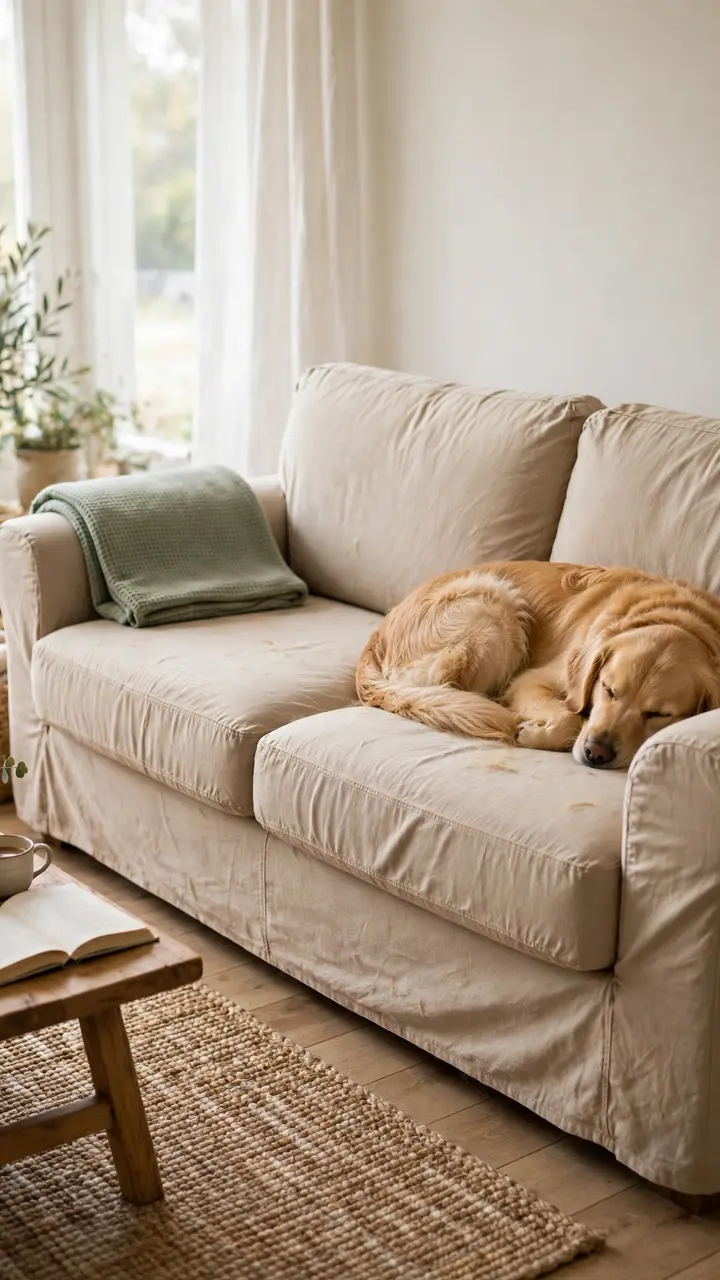
Your sofa still has good bones. It just has a fur problem.
A fitted slipcover costs far less than a new couch, and you can wash it when it gets bad. Look for a cotton blend or a tight canvas weave in a mid tone, since that shade hides both light and dark hair. Measure the width, depth, and arm height before you buy. A loose cover slides around and invites claws.
Two quick fit tricks:
- Push rolled towels or foam pool noodles into the seams to hold the cover in place.
- Buy a second cover if you can, so one is always clean.
Cushions coated in hair, a scratched arm, and a throw you shake out every single day.
A fitted cover in a mid tone that hides hair and goes straight into the wash.
2. Throw a Blanket Over Their Favorite Spot
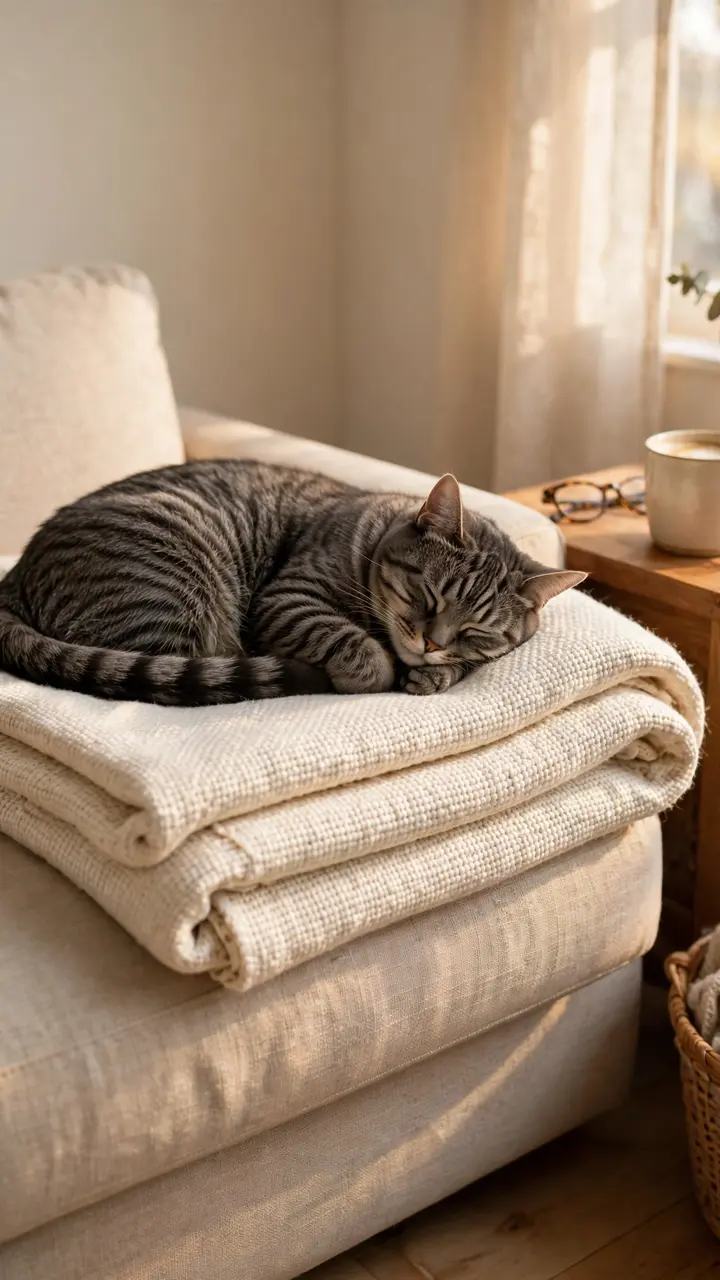
Every pet picks one cushion and claims it. It is usually the same cushion, every day.
Don’t fight it. Cover that spot. A tight weave throw in cotton or a flat knit lets fur brush off, while chunky loose knits trap hair and snag claws. Fold it in thirds across the seat so it stays put, and shake it outside once a day.
💡 Quick Tip
Tuck the edges deep into the cushion gaps. A throw that slides every time your dog jumps up ends up on the floor. Pick a color close to your sofa so it looks planned, not like a cover up.
3. Pick a Washable Flat-Weave Rug
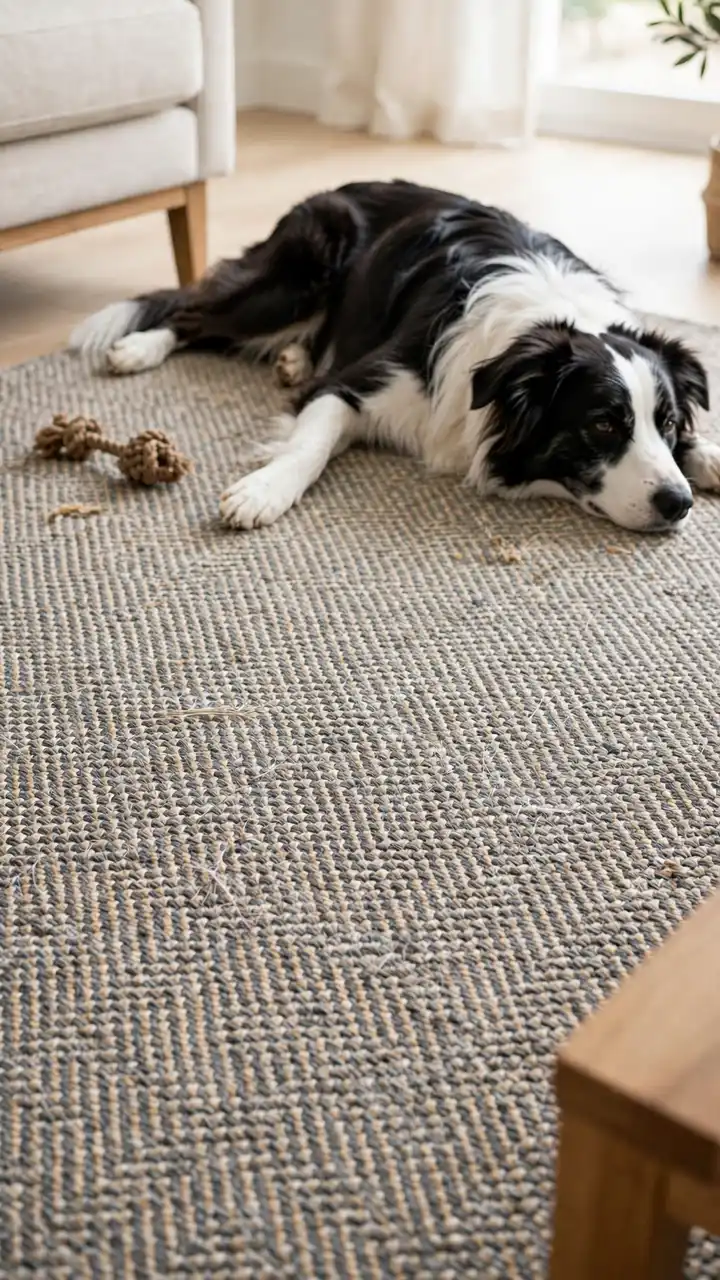
Shaggy rugs look soft, but fur sinks deep into them and your vacuum fights for every strand. Flat-weave rugs sit tight to the floor. Hair stays on top where you can see it and pull it up.
Look for a washable rug with a thin backing that fits in the machine, or a low pile cotton or polypropylene rug that you can shake out and hose off. Patterns in gray, oat, or soft mixed tones hide hair better than solid cream or solid black. Skip looped fibers, because claws catch in them.
4. Choose a Fur-Resistant Sofa Fabric
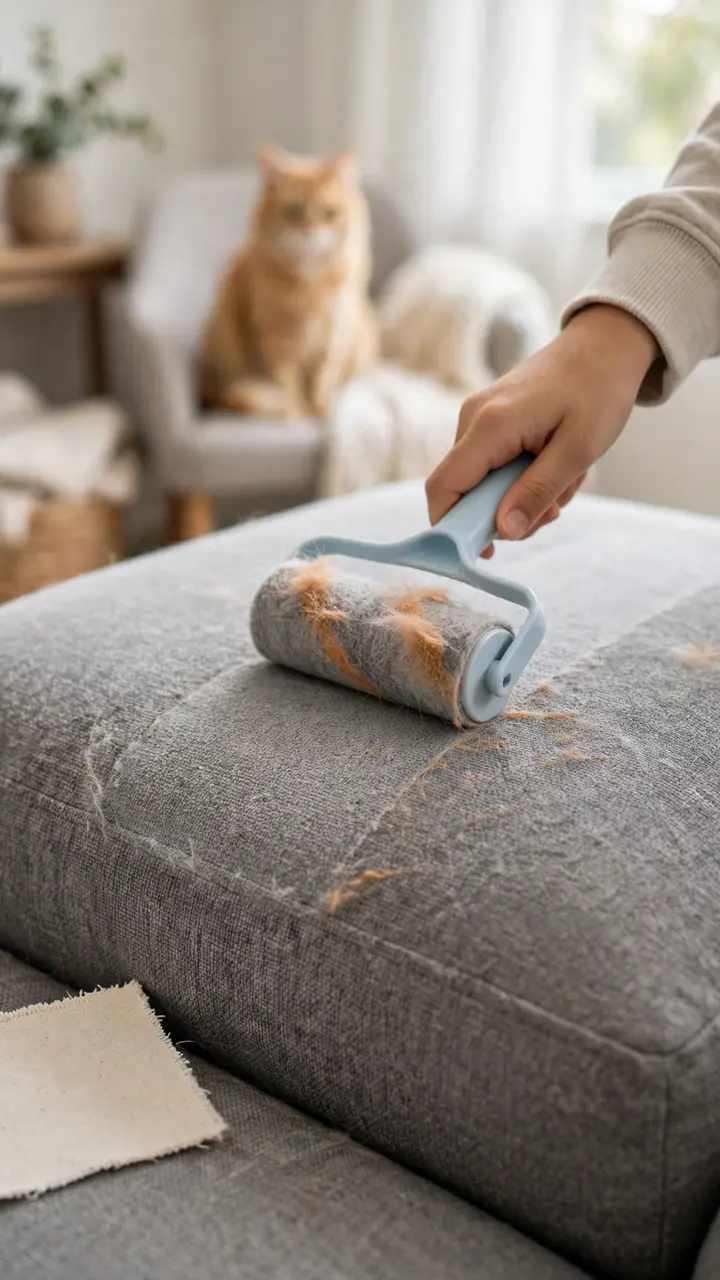
Velvet and chenille look great in a showroom. Then a cat climbs on and the hair sticks like glue.
If you are buying a new sofa or reupholstering, go for a smooth, tight weave. Microfiber and canvas let hair brush off with one swipe. Faux leather wipes clean, but claws can cut it, so it suits dogs with trimmed nails better than determined scratchers. Always check the care tag before you buy.
| Fabric | Fur | Claws |
|---|---|---|
| Microfiber | Brushes off easily | Tight weave resists snags |
| Canvas | Lint roller works well | Sturdy, holds up |
| Faux leather | Wipes off with a cloth | Can scratch or tear |
| Velvet or chenille | Hair clings tight | Snags easily |
5. Add a Scratching Post That Looks Like Decor
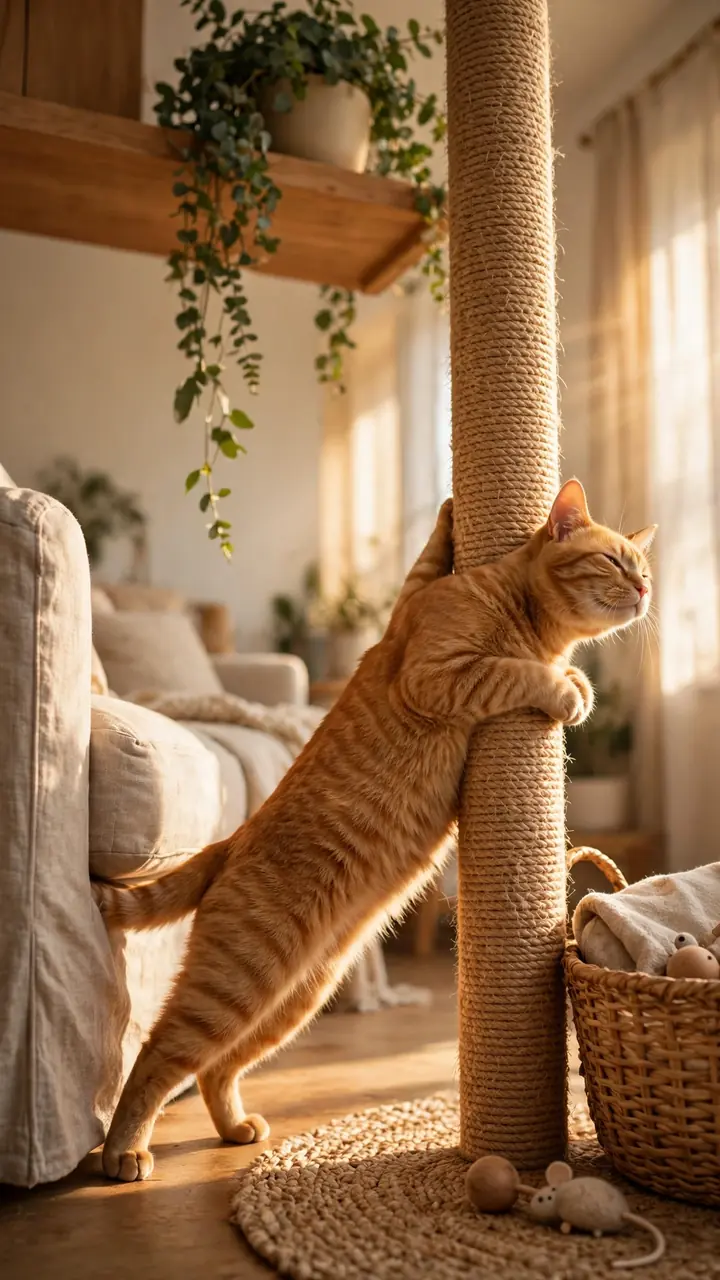
A cat with a better option stops attacking your sofa arm. The trick is making that option something you don’t mind seeing.
Skip the carpeted tower in a bright color. Look for sisal rope posts or flat sisal mats in natural tones, which blend with a jute rug or wood floor. Set it right beside the sofa corner your cat already targets, not across the room. Cats scratch where they stretch, and that is usually right after a nap.
6. Match the Dog Bed to Your Rug
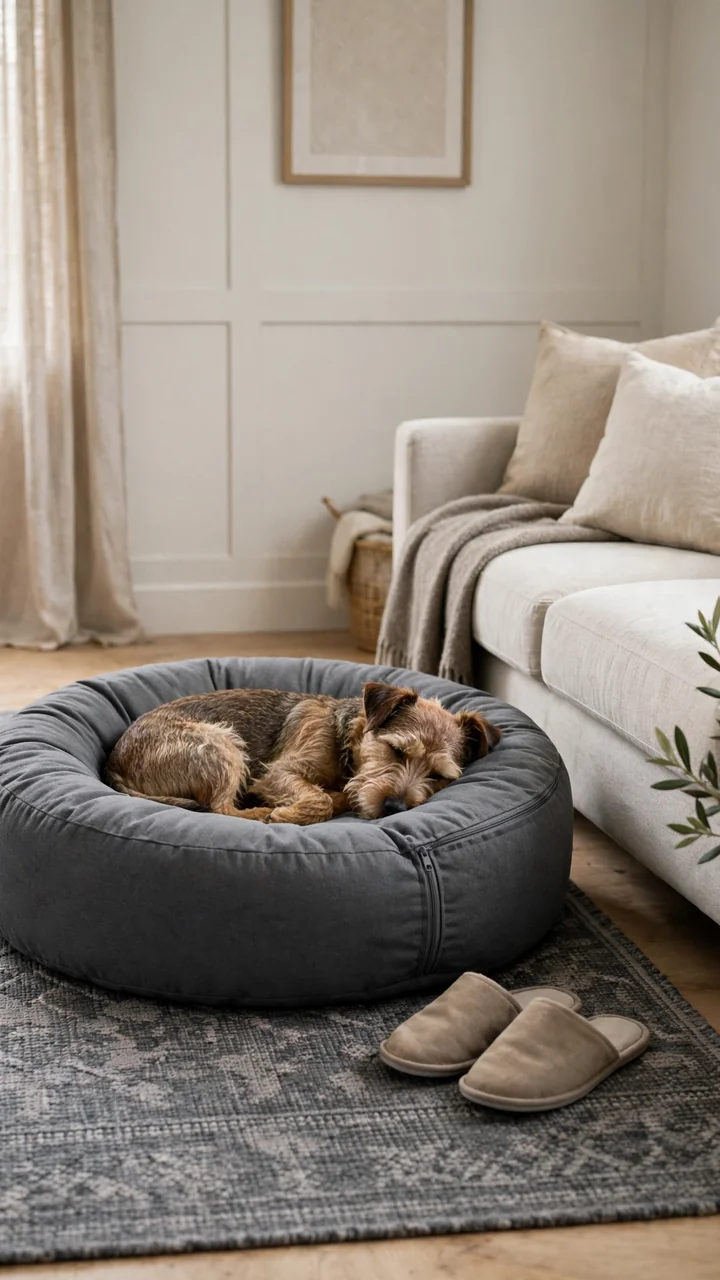
The bed sits in the middle of the floor, bright blue, and clashes with everything.
Pick one in a color close to your rug or sofa instead. Oatmeal, charcoal, and soft gray all hide dog hair and blend in. Check that the cover unzips, because a bed you can’t wash will smell within a month. Skip the memory foam tray with a sewn-in cover if you have a drooler.
Place it against a wall or beside the sofa, where your dog already likes to lie. A bed in the walkway gets ignored.
Measure your dog lying fully stretched out, then add a few inches so the bed isn’t a squeeze.
Hold a fabric swatch or the bed’s photo up to your rug and sofa before you buy.
Set it where your dog naps now, then wash the cover every couple of weeks.
7. Put Cat Shelves on the Wall
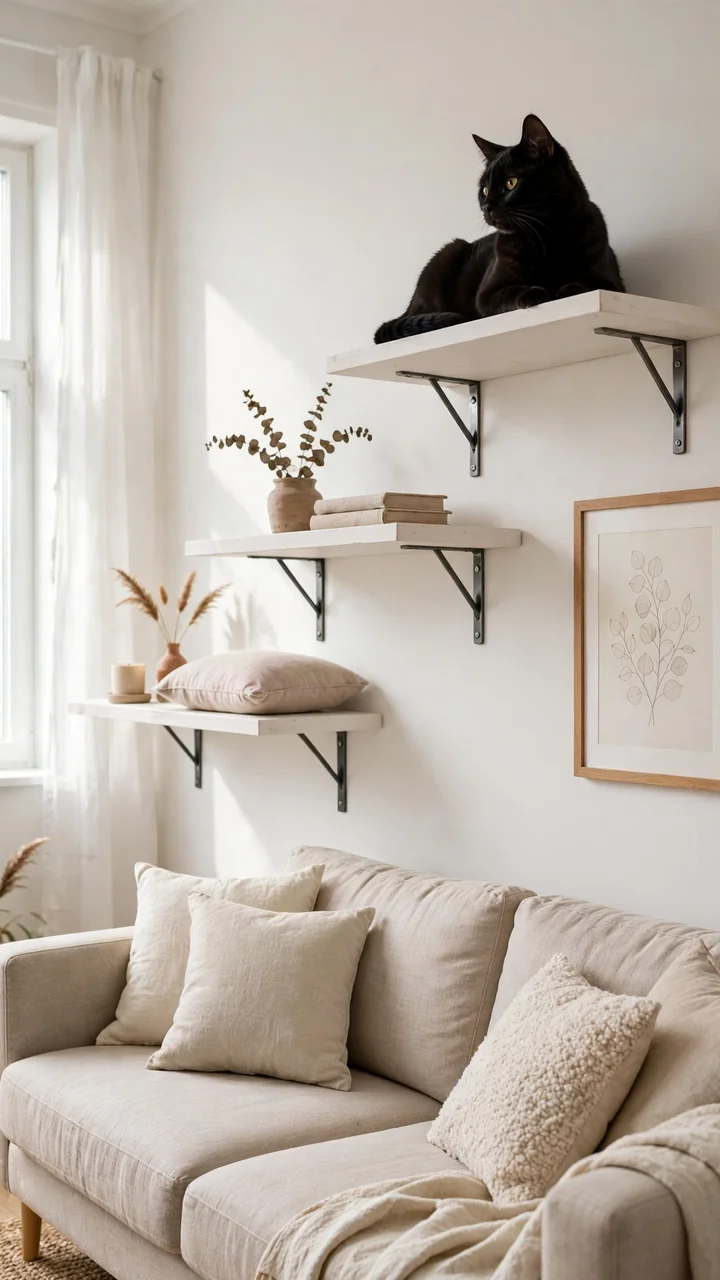
Cats want to be up high. If the only high spot is the back of your sofa, that is where the claws go.
Wall shelves give them a route up that isn’t your furniture. Mount two or three in a loose staircase, close enough for an easy hop, and leave one wide enough for a full nap. Wood shelves painted to match your wall disappear into the room.
Screw the brackets into wall studs, not just drywall. A cat landing at full speed puts more force on a shelf than you would guess.
Give your cat a better high spot than the sofa, and the sofa gets left alone.
8. Paint the Lower Wall With Scrubbable Paint
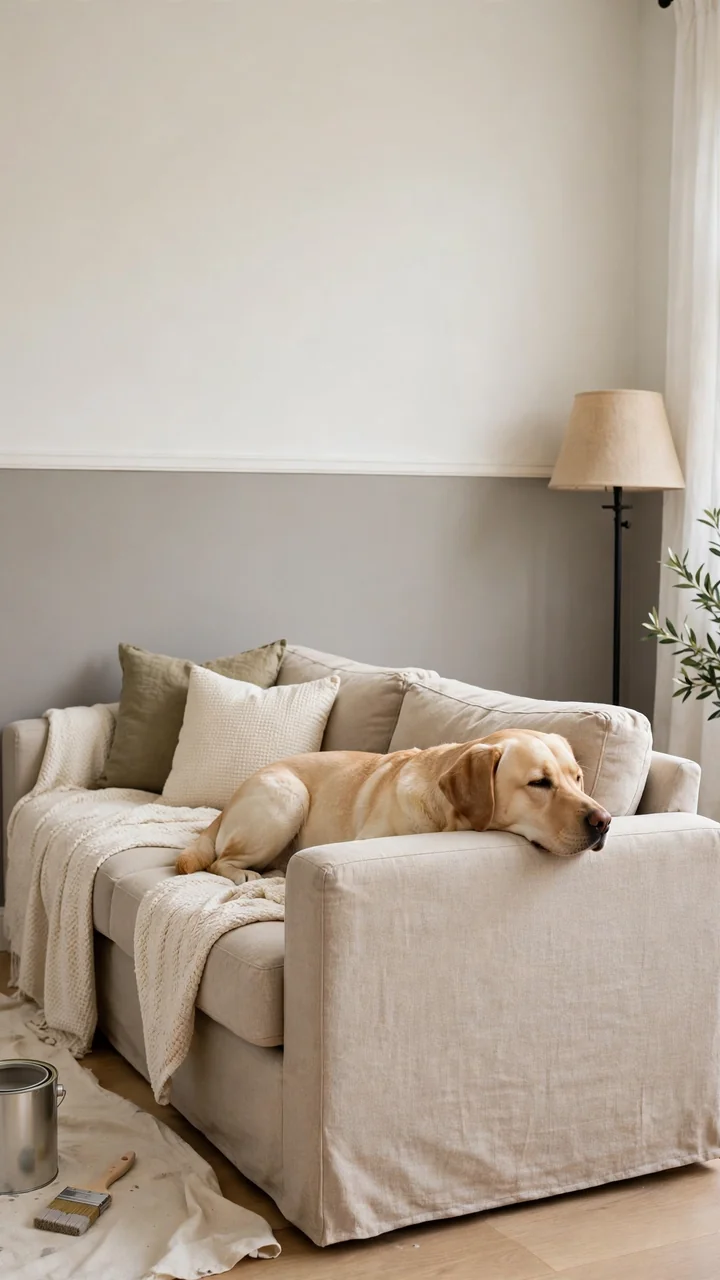
Walls near the sofa take the worst of it. Muddy paws, wagging tails, and nose smudges build up at pet height.
Paint just the bottom third of the wall in a washable satin or eggshell finish. A deeper tone, like warm gray or soft taupe, hides marks better than white. Add a thin strip of trim along the top edge and it looks like a planned two-tone wall, not a patch job.
One quart covers a lot of lower wall space, so the cost stays small. Let it cure fully before you scrub it.
What to grab first
9. Hide Pet Toys in a Storage Ottoman
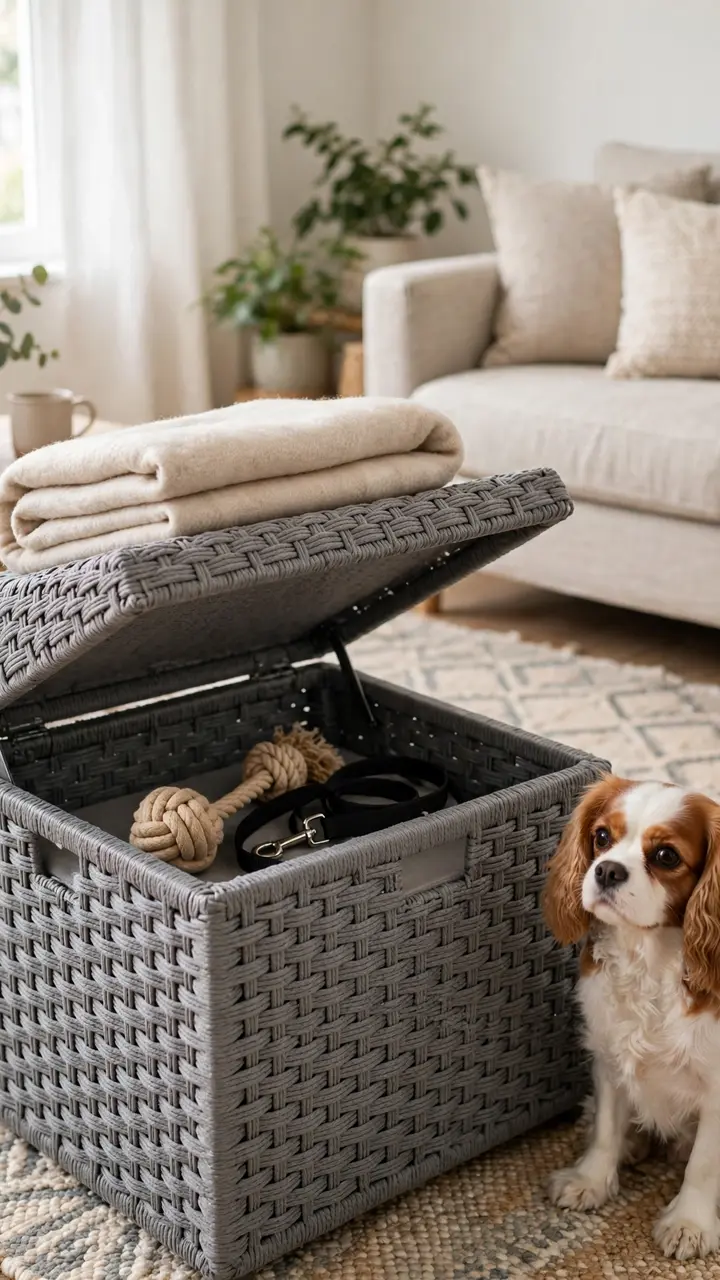
Toys on the floor make a living room look messy fast, even if everything else is clean.
An ottoman with a lid gives you a seat, a footrest, and a hidden bin in one piece. Pick a washable or wipeable cover in a tight weave, and keep the lid on a soft hinge so it doesn’t slam on a nose. Store the daily favorites, leashes, and a spare ball inside.
Rotate the toys. Pull out two or three at a time and your pet acts like they are new.
Choose a tight weave cover you can wipe.
Pick a lid that lifts off or lowers slowly.
Tufted or looped fabric that snags claws.
Heavy lids that can drop on a curious paw.
10. Swap Floor Lamps for Wall Sconces
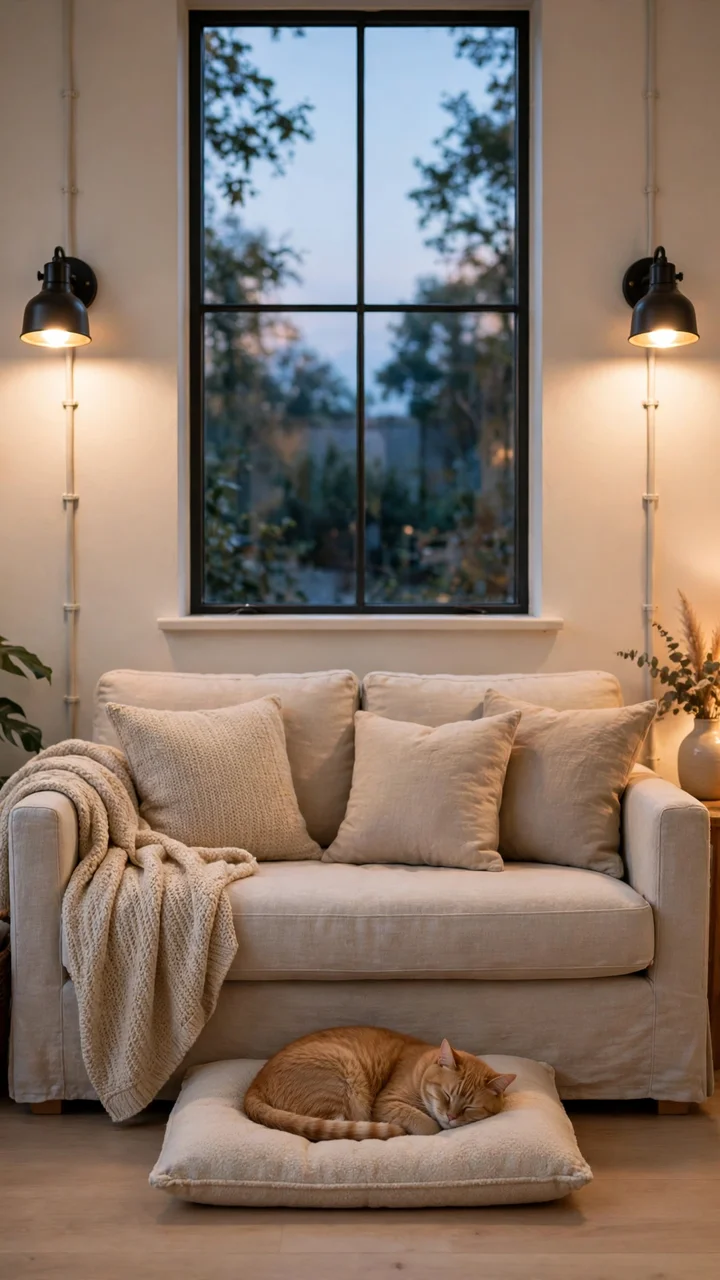
Floor lamps are an easy target for a swinging tail. One bad knock and the shade is on the rug.
Plug-in wall sconces move the light up and away from pets. They need no wiring, which makes them a fit for renters too. Mount them at eye level on either side of the sofa and let the cord run down inside a paint-matched cord cover. That one detail makes the setup look built in.
Battery-powered puck lights work if you don’t want a visible cord at all.
- ▸Pick a sconce with a switch on the fixture, so nobody reaches behind the sofa.
- ▸Paint the cord cover the same color as the wall to hide it.
- ▸Use warm white bulbs so the room feels soft in the evening.
- ▸Keep cords short and tight to the wall so nothing dangles to chew.
11. Build a Cat Window Perch
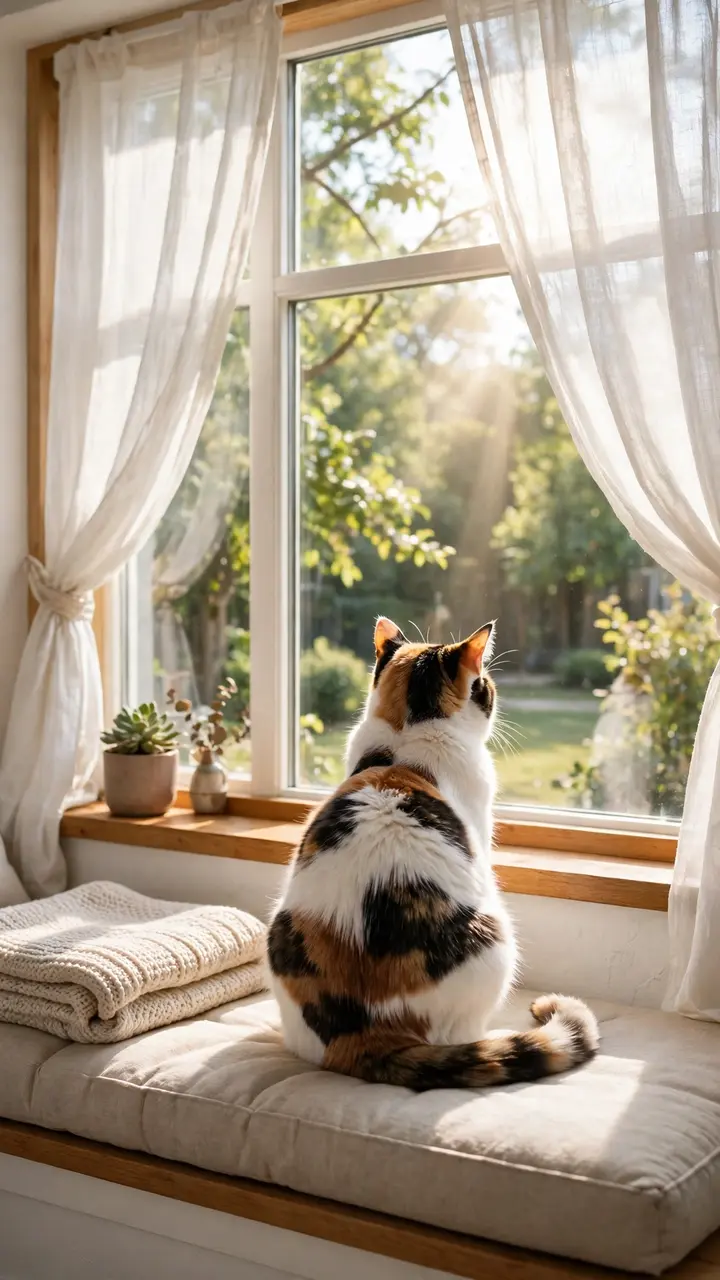
A cat on the sofa back is usually a cat looking for a view.
Give her a better one. A padded window seat or a sturdy shelf at sill height lets her watch birds all afternoon, and the sofa gets a break. Add a flat cushion in a tight weave, and tuck a small folded blanket on top for the sunny hours.
If you can’t build a shelf, use a perch that suction cups to the glass. Check the weight rating first, and press it to a clean window.
Put the perch where the morning sun lands. Cats go where it’s warm.
12. Switch to Short Curtains or Roman Shades
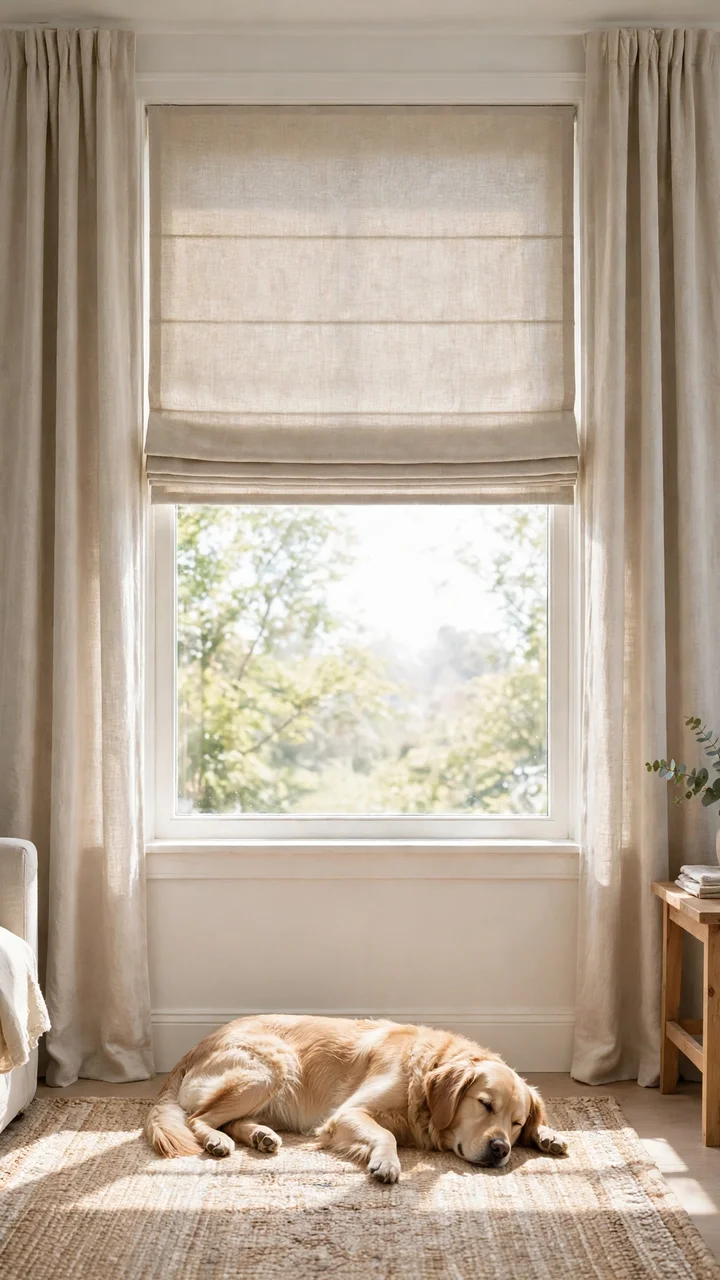
Long curtains look soft until a cat climbs them or a dog wipes a wet nose down the hem.
Panels that stop at the windowsill stay out of reach, and the fur doesn’t collect at the bottom. Roman shades work even better, since the fabric sits flat against the glass. Choose a tight cotton or linen blend in a color close to your wall.
Hang the rod right above the window frame so the shade looks neat and clean.
⚠️ Watch Out
Dangling blind cords can hurt pets and kids. Choose cordless shades, or wind any cord up high and out of reach.
13. Hide the Litter Box in a Cabinet
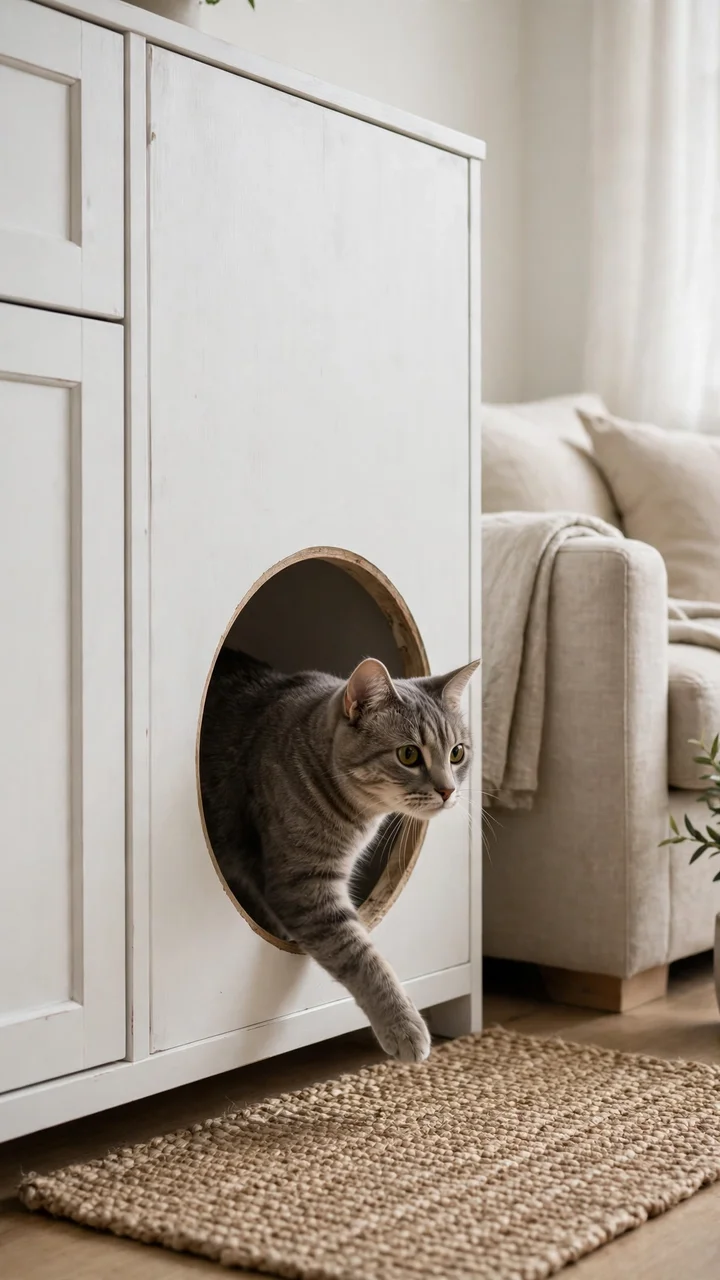
Nobody wants a litter box next to the sofa, but cats still need it close.
Take a basic cabinet or storage bench and cut a round hole in one side, about the size of your cat’s head and shoulders plus a little extra. Sand the edges smooth. Drill a few small holes in the back so air can move through.
Paint the cabinet the same color as your wall and it fades into the room. Scoop daily, because a hidden box that smells will get found fast.
Keep the box size the same as before so your cat doesn’t feel squeezed.
An open plastic box in the corner, with litter tracked across the floor.
A painted cabinet with a side opening, plus a mat out front to catch stray litter.
14. Turn a Dog Crate Into a Side Table
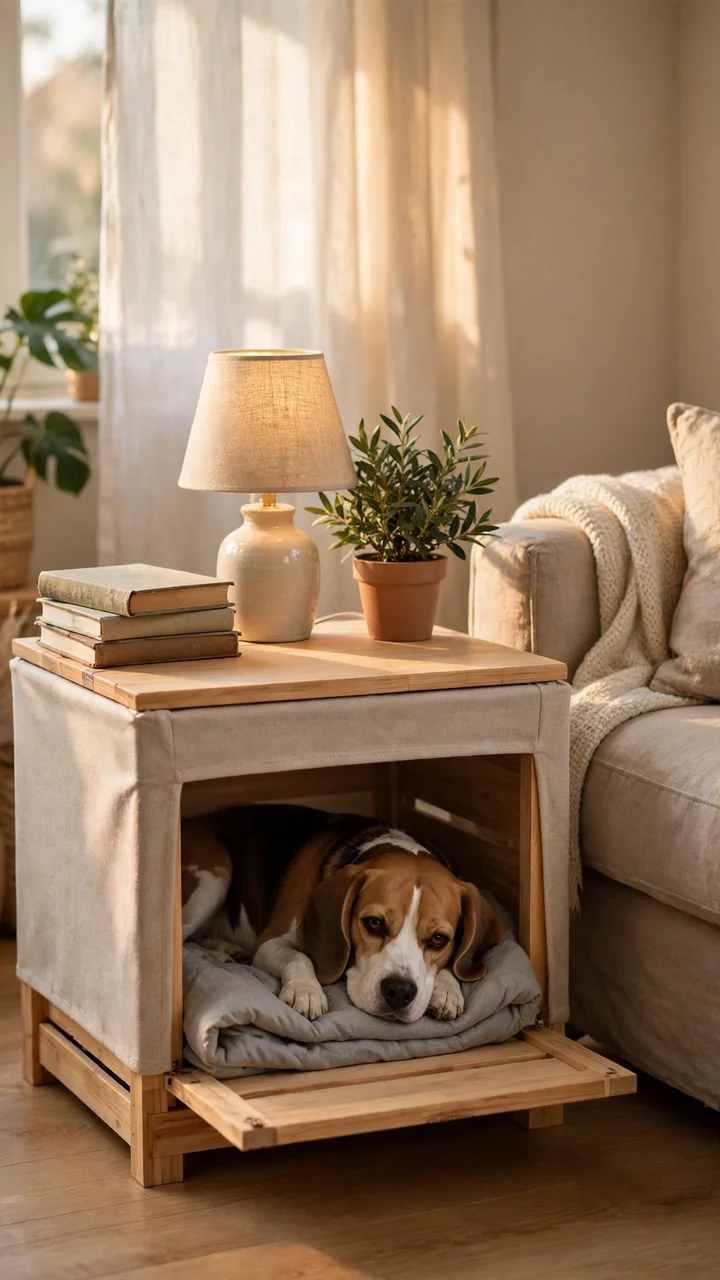
Crates are useful and rarely pretty.
You can fix that without moving it. A fitted fabric cover plus a flat wood top turns a wire crate into a side table for a lamp and a plant. Leave the front door uncovered so your dog still has air and a clear way in. A furniture style crate in wood works if you want it ready made.
Place it beside the sofa so it reads as part of the seating area. This is pet proof living room furniture that does two jobs.
| Fabric Cover | Wood Style Crate |
|---|---|
| Lower cost, uses the crate you own. | Higher cost, comes ready to use. |
| Washable, but a chewer may snag it. | Sturdier, but can be harder to move. |
| Needs a flat top added. | Top surface is built in. |
15. Choose a Rounded Wood Coffee Table
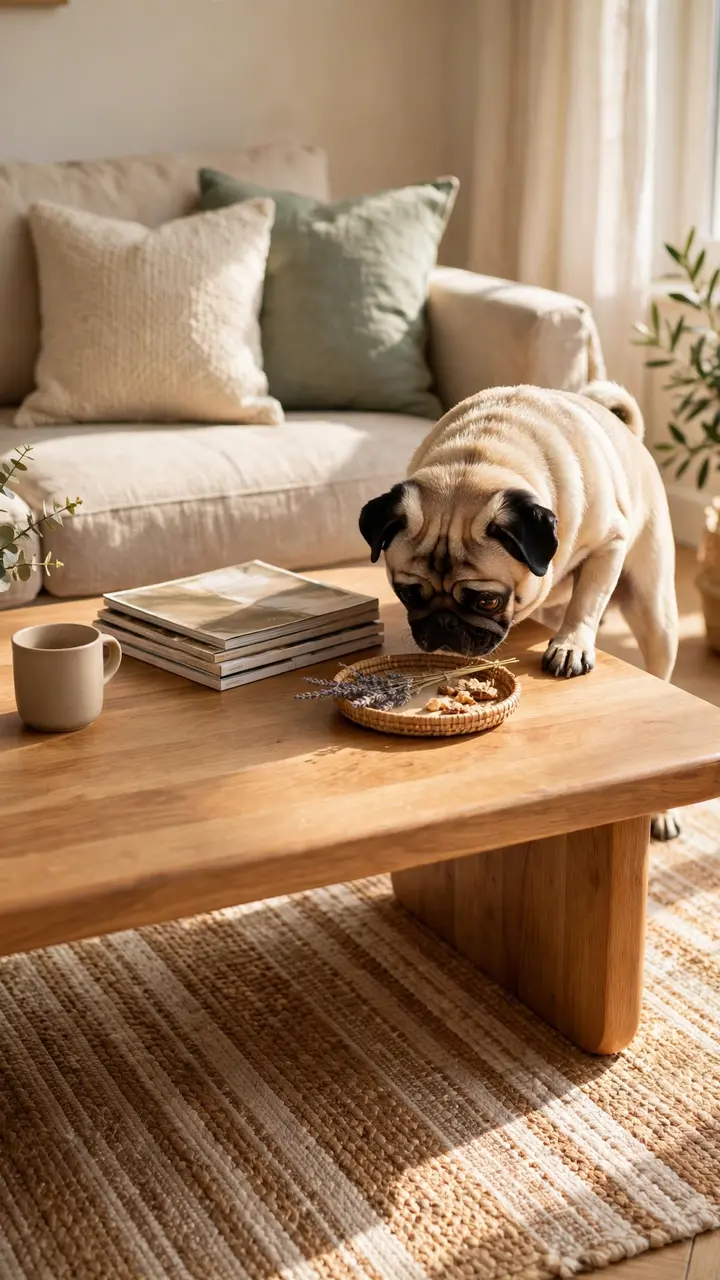
Glass coffee tables look clean for about ten minutes.
Then come the nose prints, the paw smudges, and the corner your dog’s hip finds every time. A wood table with rounded corners and a sealed finish handles all of it. Wipe it with a damp cloth, and the surface hides small scratches better than glass or glossy paint.
Look for sturdy legs and no sharp edges at pet height. Secondhand shops often have solid wood tables for much less than new ones.
Pick rounded corners and a sealed finish.
Try a secondhand solid wood table.
Glass tops that show every smudge.
Sharp metal corners at pet height.
16. Add Pet-Safe Plants Out of Reach
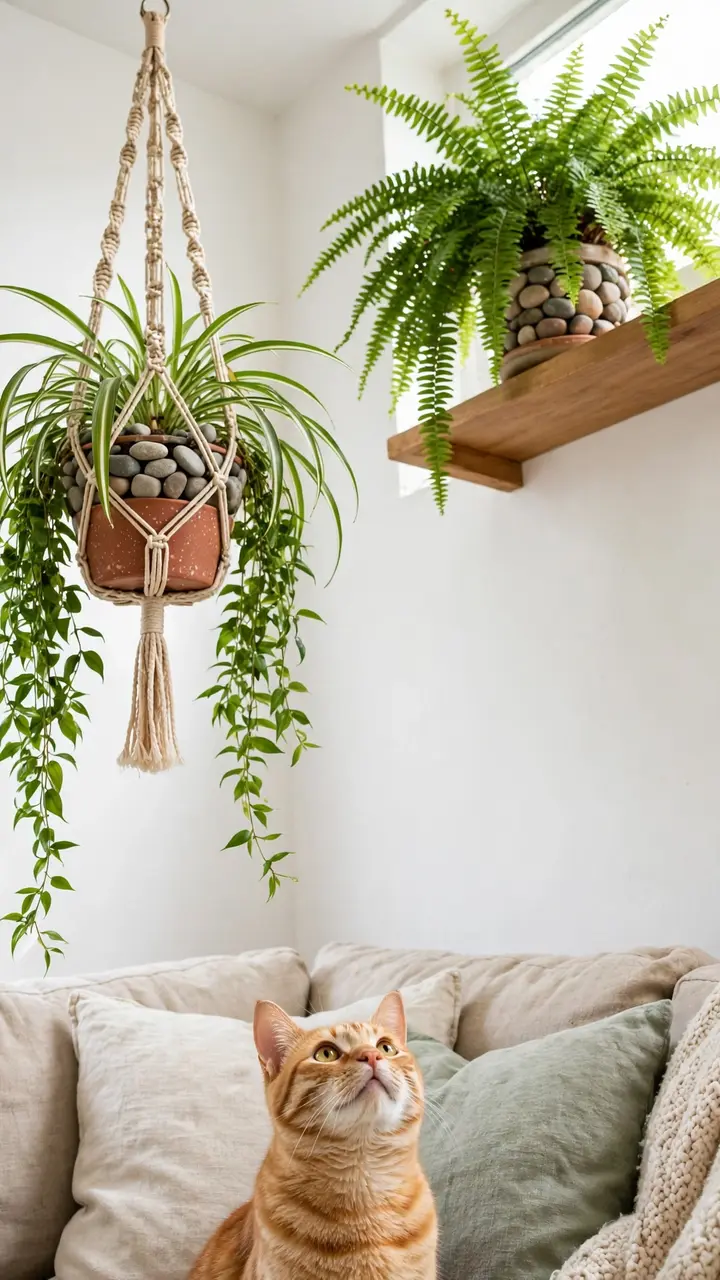
A living room with no greenery can feel flat, but some common houseplants make pets sick.
Stick with plants that are listed as non-toxic for cats and dogs, like spider plants, Boston ferns, and parlor palms. Check any plant on the ASPCA’s toxic and non-toxic list before it comes home. If you already own a plant you aren’t sure about, ask your vet.
Even safe plants can end up in the dirt and on the rug. Hang them from a wall hook or set them on a high shelf, and add a layer of smooth stones over the soil so nobody digs.
Before a plant comes home
17. Match Pillows to Your Pet’s Fur Color
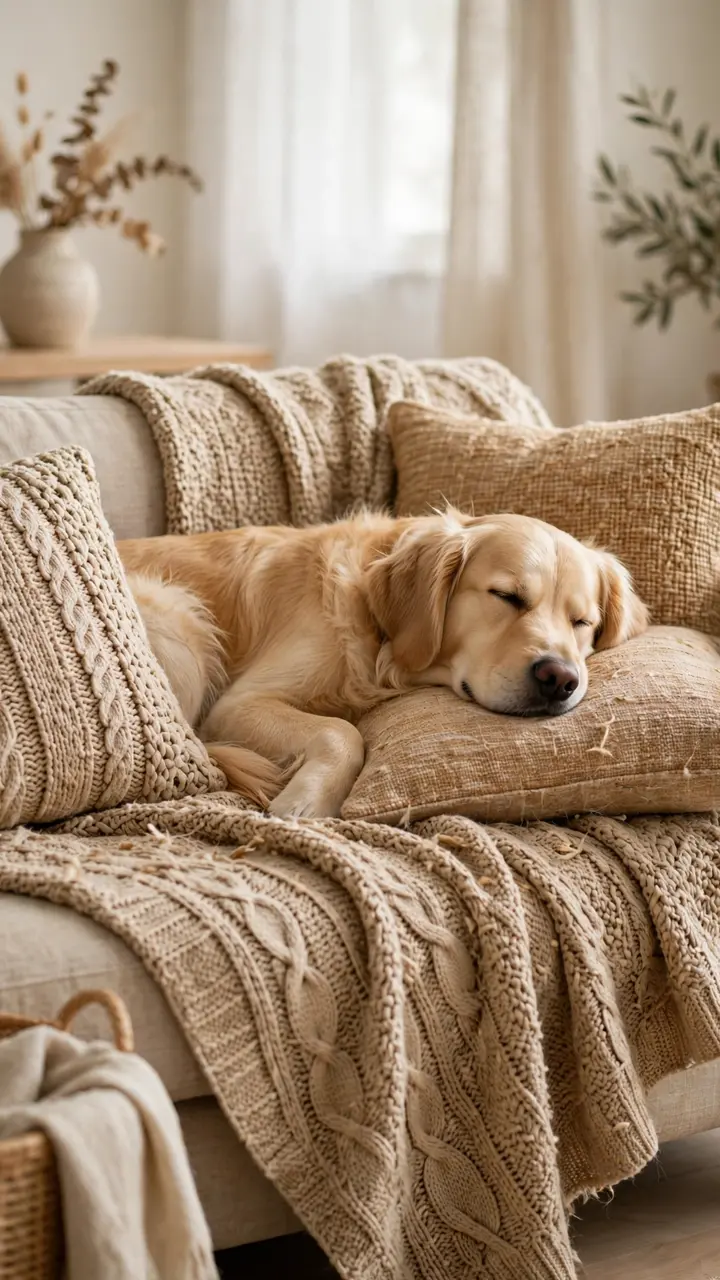
Here is a simple way to hide pet fur in a living room: stop fighting the color.
Look at your pet’s coat, then pick throw pillows and blankets in a close shade. A golden dog looks natural on oat and tan. A black cat disappears into charcoal. A gray tabby blends with a heathered gray weave. Hair that matches the fabric barely shows between cleanings.
Use a textured fabric instead of a flat solid, because texture breaks up the lines of any stray hair.
18. Use Zip-Off Pillow Covers

Pillows pick up fur faster than any other soft piece in the room.
Buy pillow forms and covers separately. Covers with a zipper or an envelope back come off in seconds and go straight into the machine. Pillows with sewn-shut covers just collect hair for good. Buy two sets in the same color, so one is always on the sofa while the other is clean.
Stay away from fringe, tassels, and loose beads. Those become toys within a day.
- ▸Pick covers with a hidden zipper or an envelope back.
- ▸Wash covers inside out to protect the fabric.
- ▸Keep a spare set so laundry day never leaves bare pillows.
- ▸Skip trim that dangles, since pets love to chew it.
19. Keep a Fur Cleanup Basket Nearby
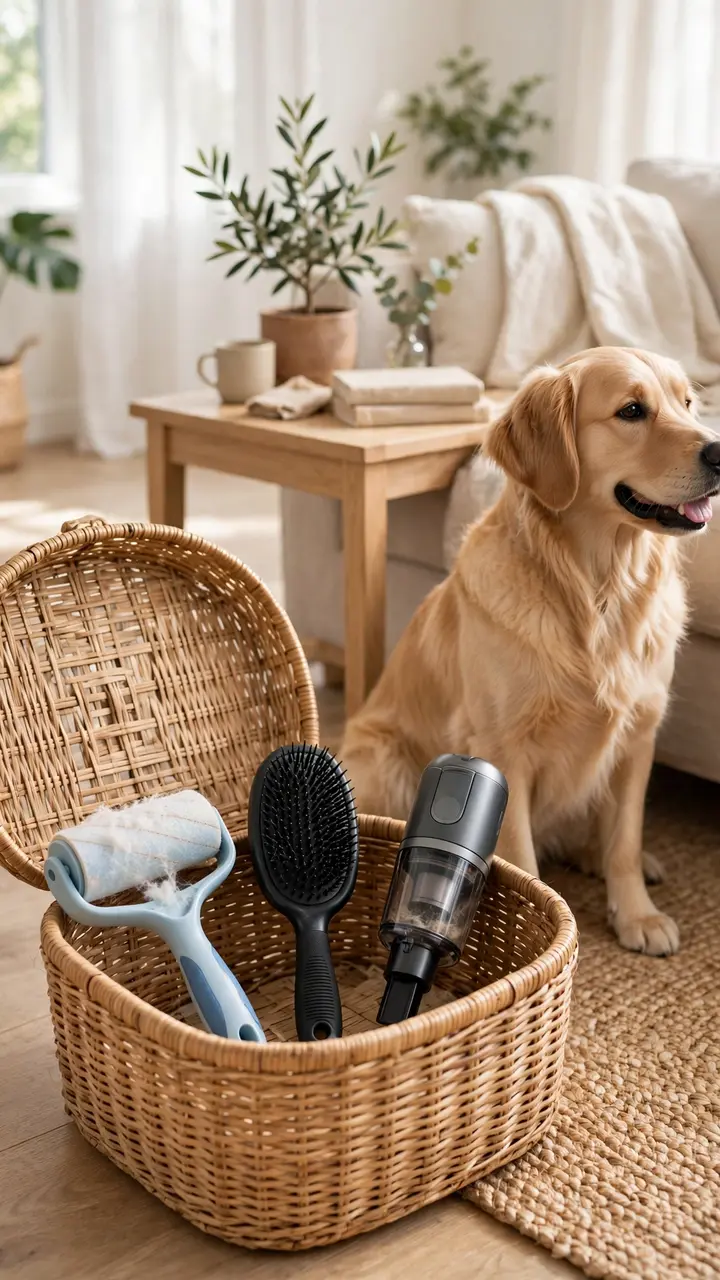
A lint roller buried in a drawer never gets used.
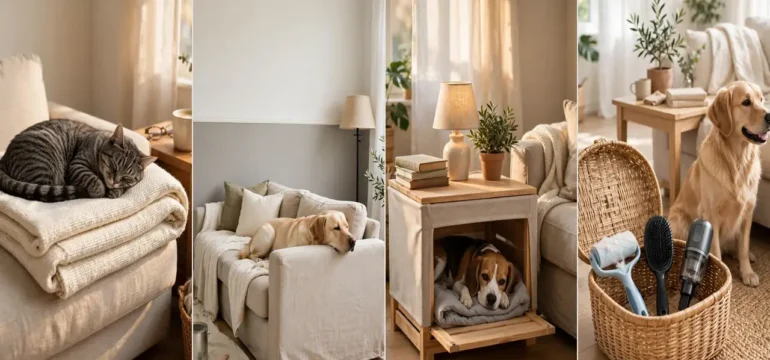
Put your cleanup tools in a pretty basket beside the sofa, and the five second wipe actually happens. Inside, keep a lint roller, a rubber squeegee or dampened glove for pulling hair off fabric, and a small handheld vacuum. A woven basket with a lid looks like decor, so it fits a chic pet friendly living room without any fuss.
Do a quick pass before guests arrive. It takes about two minutes.
Tools you can see get used. Tools in a drawer don’t.
20. Set Up a Paw-Wipe Spot at the Door
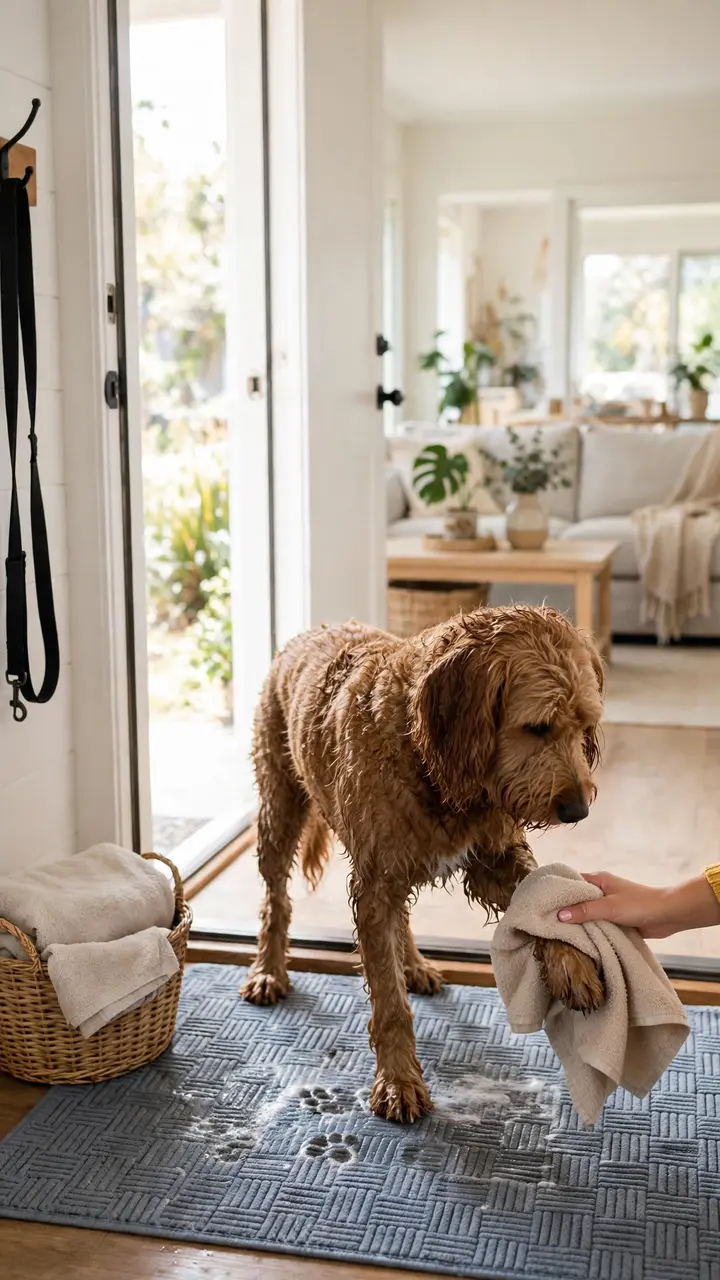
Most of the mess in your living room walked in through the front door.
Stop it at the entry. Put a washable mat and a small bin with a towel or pet wipes just inside, and wipe paws every time you come in from a walk. A hook above it holds leashes. After a rainy day, the dog that dries off at the door leaves clean floors behind.
Set a washable mat just inside the door so paws land on it first.
Keep a towel or wipes in a basket within arm’s reach.
Wipe all four paws, then let your dog walk in.
Make Room for Everyone
Your living room can hold your pets and your taste at the same time. You don’t need a new sofa or a big budget. Pick one change for this weekend, like a washable slipcover or a flat-weave rug, and add the rest as you go.
The best pet-friendly living room ideas on a budget all work the same way. They follow your pet’s habits instead of fighting them. Give your cat a high spot that isn’t the sofa back, give your dog a bed worth using, and keep a lint roller where you can grab it.
Small swaps add up fast. A few weeks from now, the fur will still be there, but it will be a lot easier to live with.
Save this list to your Pinterest board for the next time you want to refresh your living room, and send it to a friend whose sofa looks like yours.