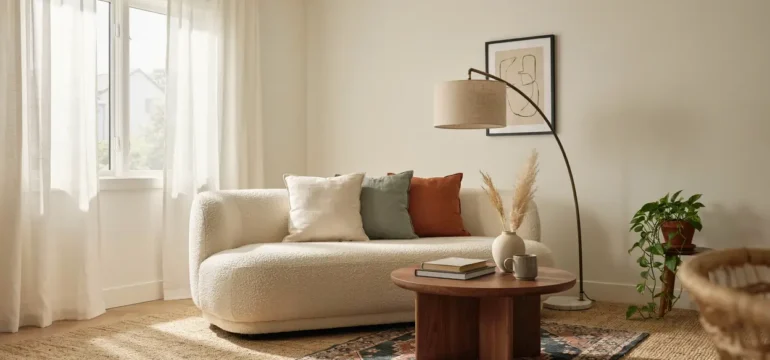
Have you ever walked into a living room and immediately felt calm, even though you couldn’t point to any one thing that made it special? That feeling usually comes from a few small, thoughtful choices working together rather than one big statement piece. A living room that feels put together isn’t about spending a lot of money or filling every corner with decor. It’s about layering textures, choosing furniture that fits the space, and adding a few personal touches that make the room feel lived in instead of staged. Whether your living room is large and open or small and cozy, the nineteen ideas below will help you get there. Some are quick weekend projects, others are simple styling swaps you can do in an afternoon, but all of them are things you can actually see and photograph in a real home.
1. Layered Neutral Textures
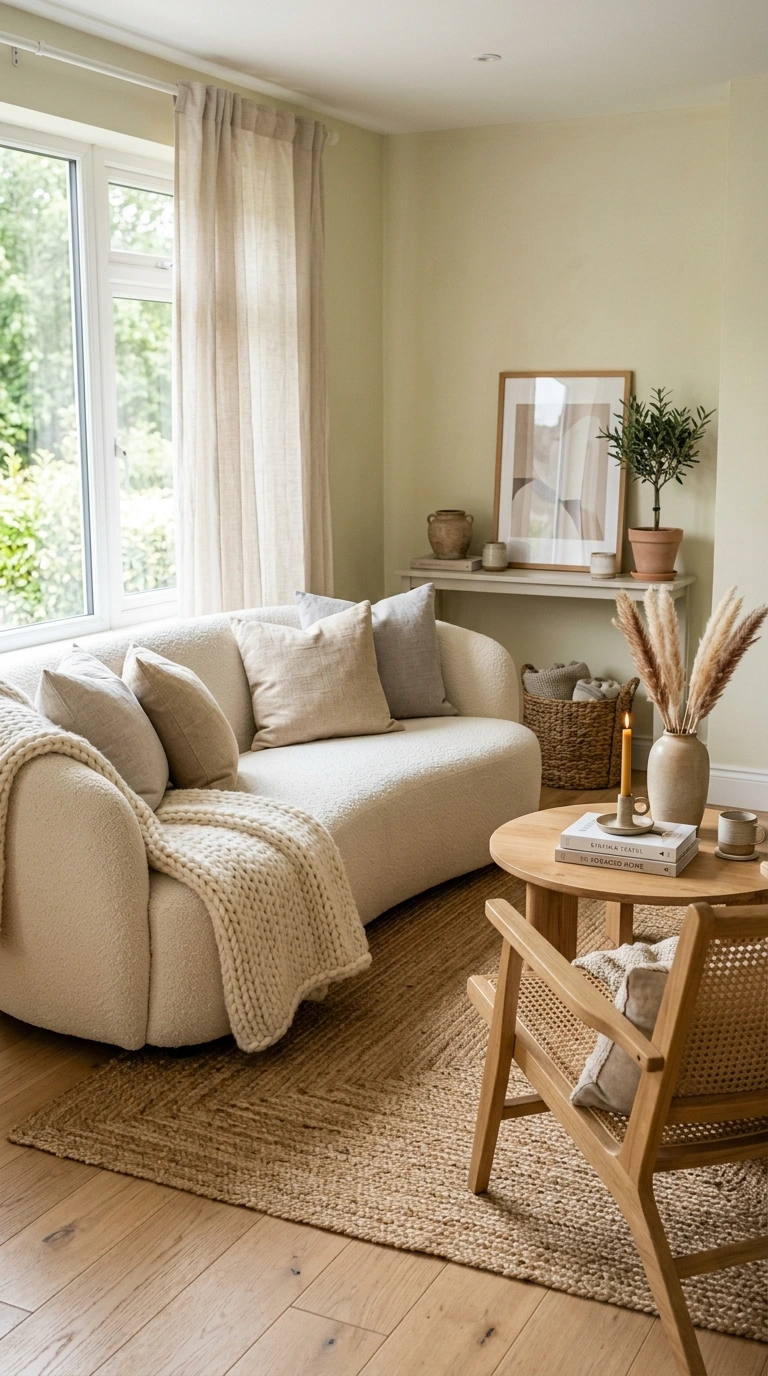
A living room built entirely on neutral colors can still feel rich and interesting if you layer different textures instead of relying on color alone. Mix a woven jute rug with a soft boucle sofa, then add linen throw pillows and a chunky knit blanket for contrast. This combination keeps the eye moving around the room even though the color palette barely changes from one item to the next.
Choose a mix of matte and shiny finishes too, like a matte ceramic lamp base next to a glossy glass coffee table. This prevents the room from feeling flat or one dimensional. Add a wood or rattan accent chair to bring in a warmer, more organic texture alongside the softer fabrics. This approach works especially well in small living rooms, since sticking to neutral tones keeps the space feeling open while the layered textures still give it plenty of personality and warmth.
2. Warm Terracotta Wall
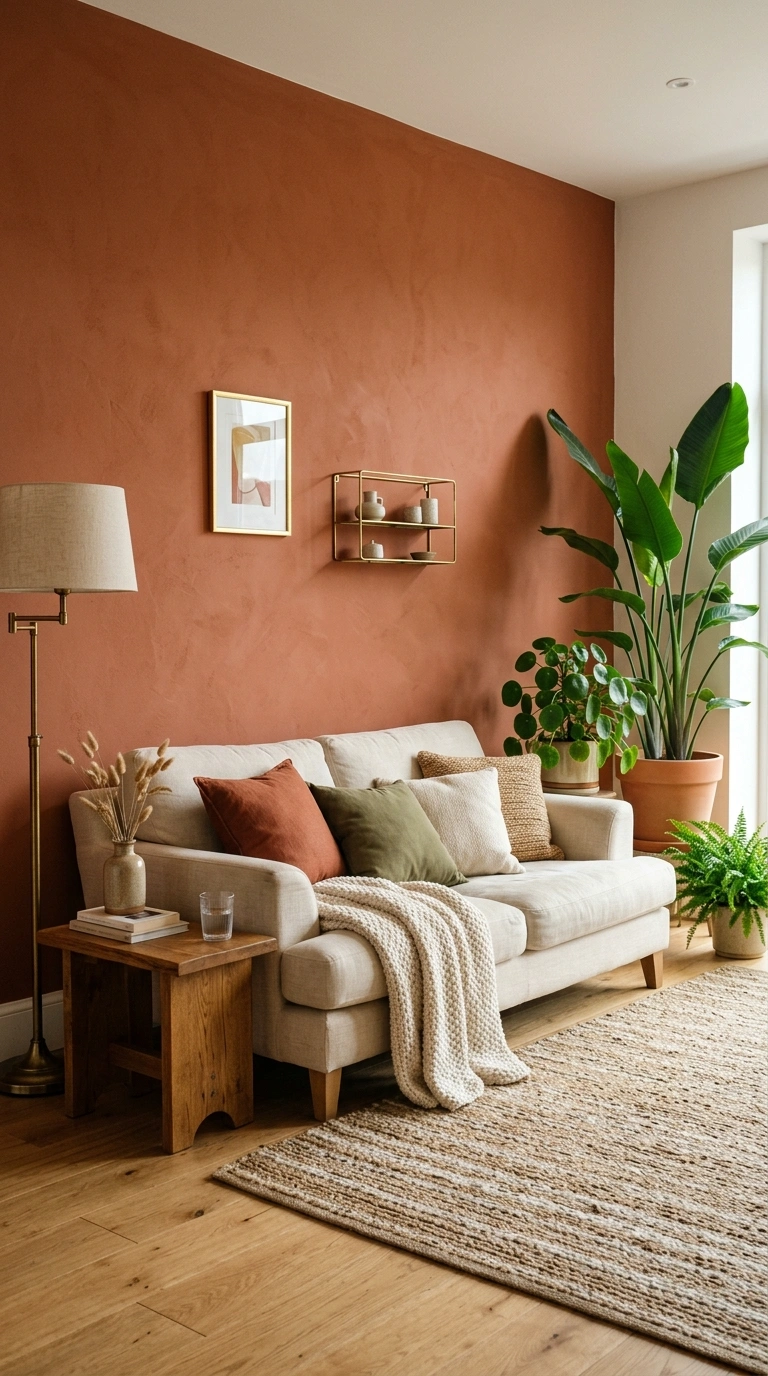
An accent wall painted in warm terracotta instantly gives a living room a focal point without requiring a full furniture change. Choose the wall behind your sofa or the one your eye lands on first when entering the room, and keep the remaining walls a soft white or cream to let the terracotta stand out clearly.
Pair the wall with warm wood furniture and brass or black metal accents to complete the earthy feeling. A cream colored sofa or a set of linen curtains keeps the room from feeling too dark, since terracotta is a warm, saturated color that needs some lighter pieces to balance it out. Add a few green plants in front of the wall, since the contrast between terracotta and greenery photographs beautifully and gives the room an inviting, sun warmed feeling all year round.
3. Cozy Reading Nook
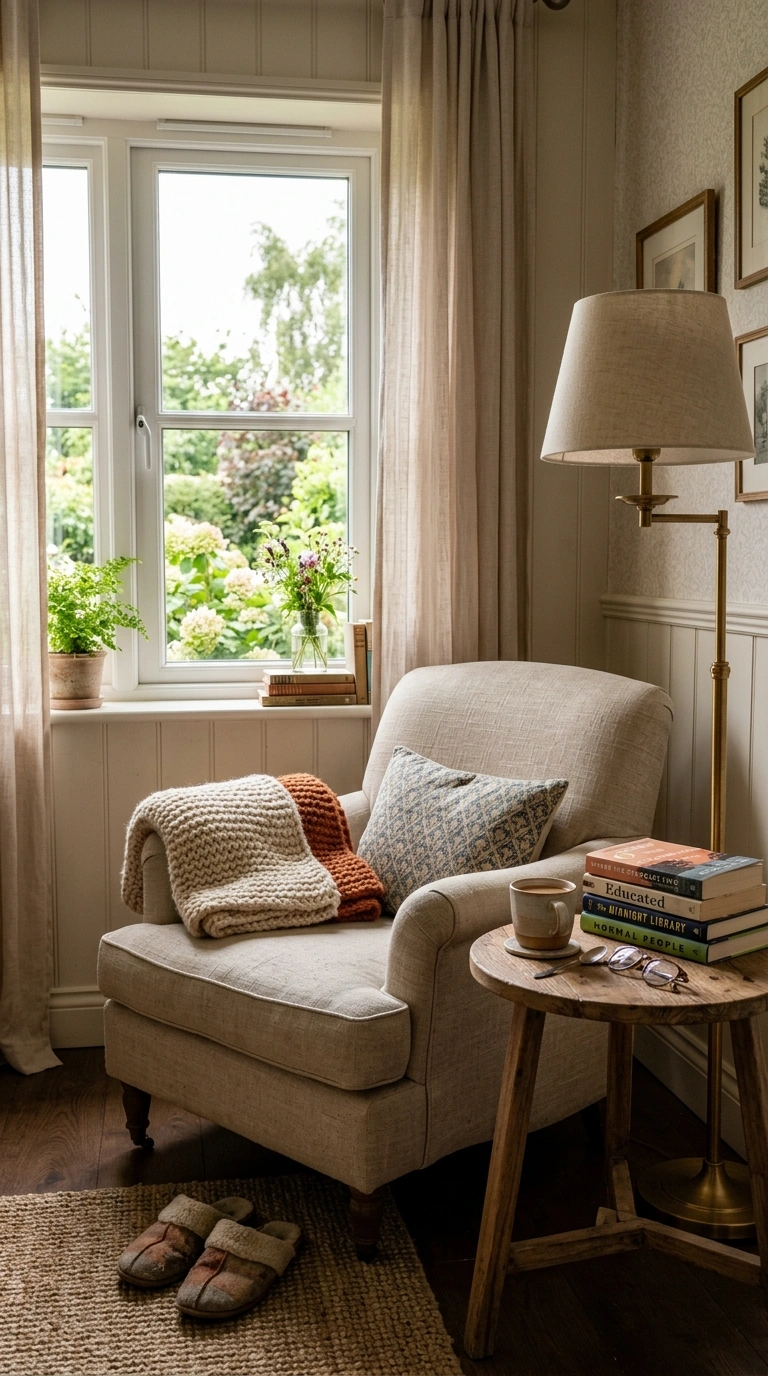
A small reading nook turns an unused corner into one of the most inviting spots in the house. All you need is a comfortable armchair, a small side table, and a floor lamp with warm lighting to make the corner feel intentional rather than like leftover space. Position the chair near a window if possible, since natural light makes reading nooks feel even more welcoming.
Add a soft throw blanket draped over the arm of the chair and a small stack of books on the side table to signal exactly what the space is for. A woven basket nearby can hold extra blankets or magazines, keeping the area tidy while still looking lived in. This idea works in almost any living room, even a small one, since it only requires a few square feet to create a spot that feels like it was made just for slowing down.
4. Statement Area Rug
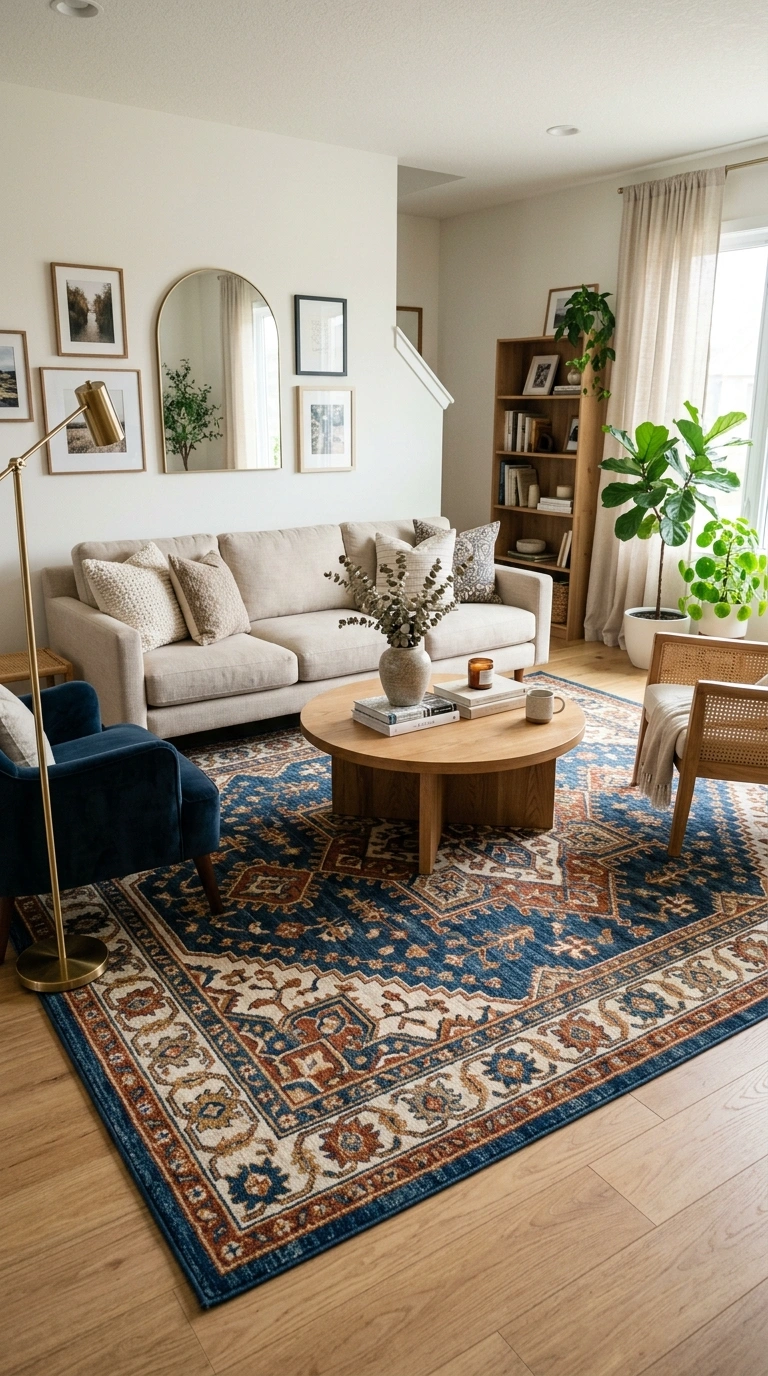
A bold area rug can anchor an entire living room and pull together furniture that might otherwise feel scattered. Choose a rug large enough that at least the front legs of your sofa and chairs sit on top of it, since a rug that’s too small will make the whole seating area look disconnected and floating.
Pick a pattern or color that contrasts gently with your furniture, like a warm terracotta rug against a cream sofa, or a soft neutral rug with subtle texture if your furniture already has bold colors. The rug should feel like it grounds the room rather than competes with everything else in it. This is one of the fastest ways to update a living room’s whole feeling, since a new rug changes the mood of the space without requiring you to move or replace a single piece of furniture.
5. Gallery Wall Display
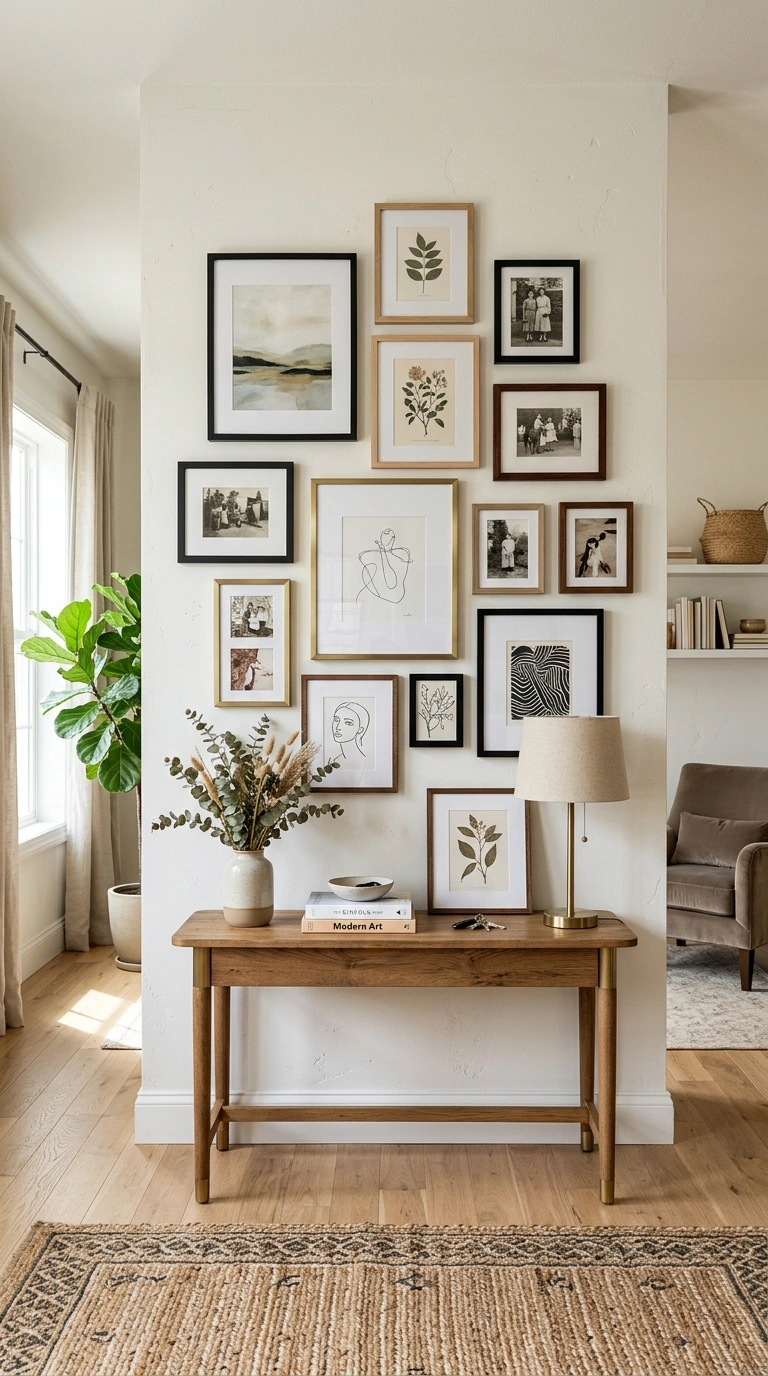
A gallery wall turns a plain stretch of wall into a personal, curated display that instantly makes a living room feel more finished. Mix a few different frame sizes and finishes, like a mix of black, wood, and brass frames, rather than using identical frames throughout. This variety keeps the wall from looking like a set you bought off a shelf.
Include a mix of photos, art prints, and even a small mirror to break up the visual rhythm and add depth. Lay the frames out on the floor first to plan the arrangement before hammering any nails, starting with the largest piece in the center and working outward. This idea works especially well above a sofa or console table, where the empty wall space often goes unused, and it gives you an easy way to update the room’s personality over time.
6. Soft Sage Sofa
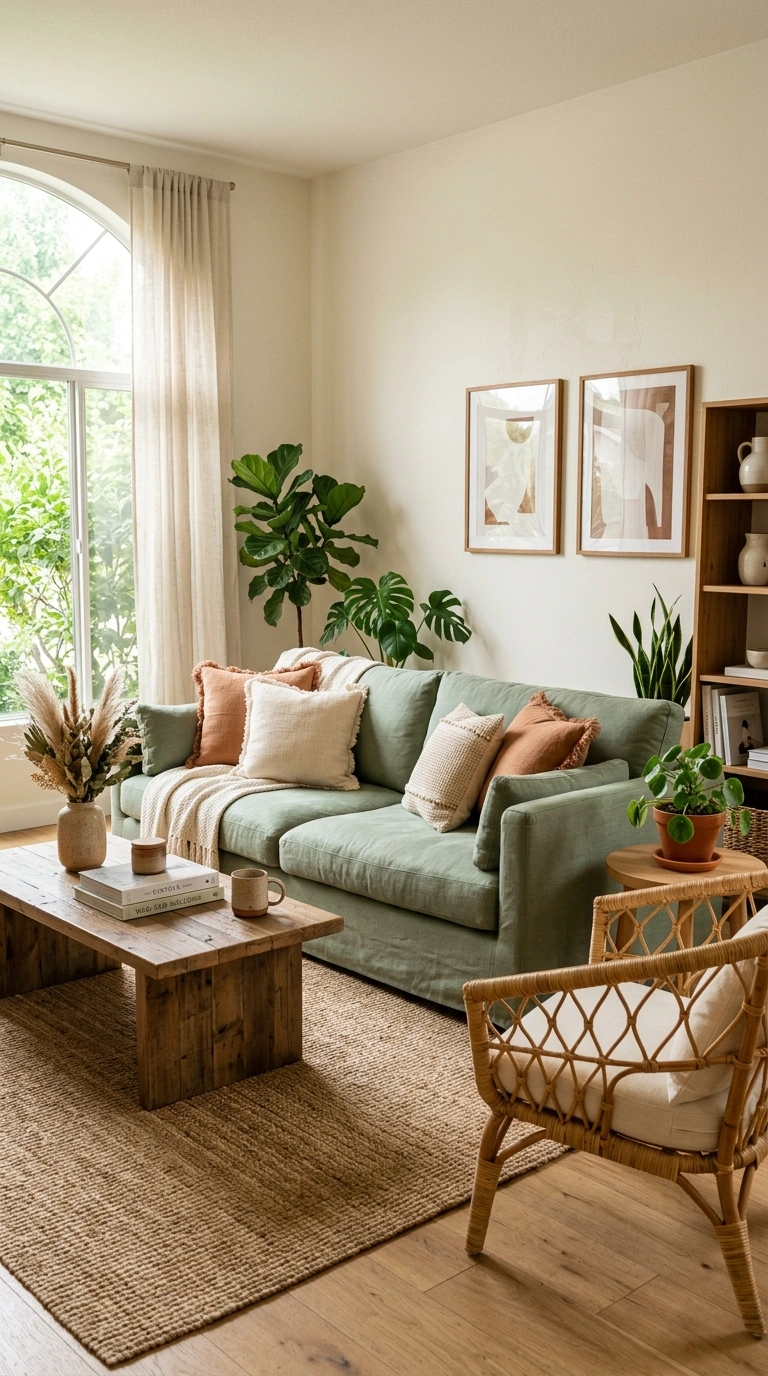
A sage green sofa becomes the anchor of the whole living room, giving you a calm, earthy base to build the rest of the space around. Pair it with warm wood furniture, like a wood coffee table or a rattan side chair, to keep the room feeling grounded and natural rather than overly styled.
Add cream or terracotta throw pillows to warm up the green and keep it from feeling cold or clinical. A jute or wool rug underneath continues the natural, textured feeling throughout the room. This scheme works particularly well in living rooms with a lot of houseplants, since the sage tone blends seamlessly with greenery and makes the whole space feel a little more like bringing the outdoors in without going overboard on a full botanical theme.
7. Warm Wood Furniture
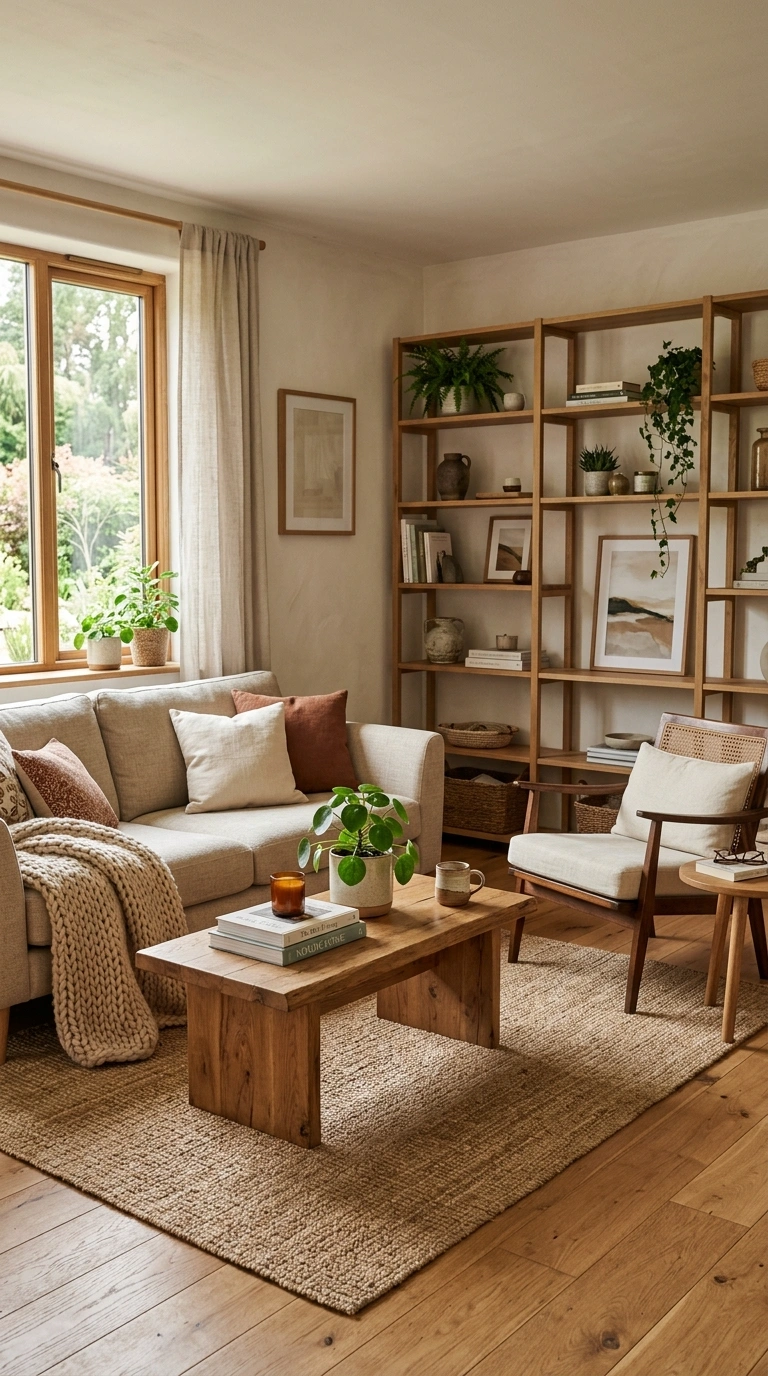
Choosing furniture pieces with visible wood grain, rather than painted or laminate finishes, instantly gives a living room a warmer, more grounded feeling. A wood coffee table, a wood framed accent chair, or open wood shelving all add texture and depth that flat, single toned furniture can’t quite match on its own.
Mix wood tones intentionally rather than trying to match everything exactly, since a slightly darker wood coffee table next to a lighter wood shelf actually looks more collected than a perfectly matched set. Pair the wood pieces with soft textiles, like a linen sofa or a wool throw blanket, to balance the hardness of the wood with something soft. This approach works in almost any living room style, from modern to farmhouse, and tends to feel timeless rather than trend driven.
8. Black Accent Furniture
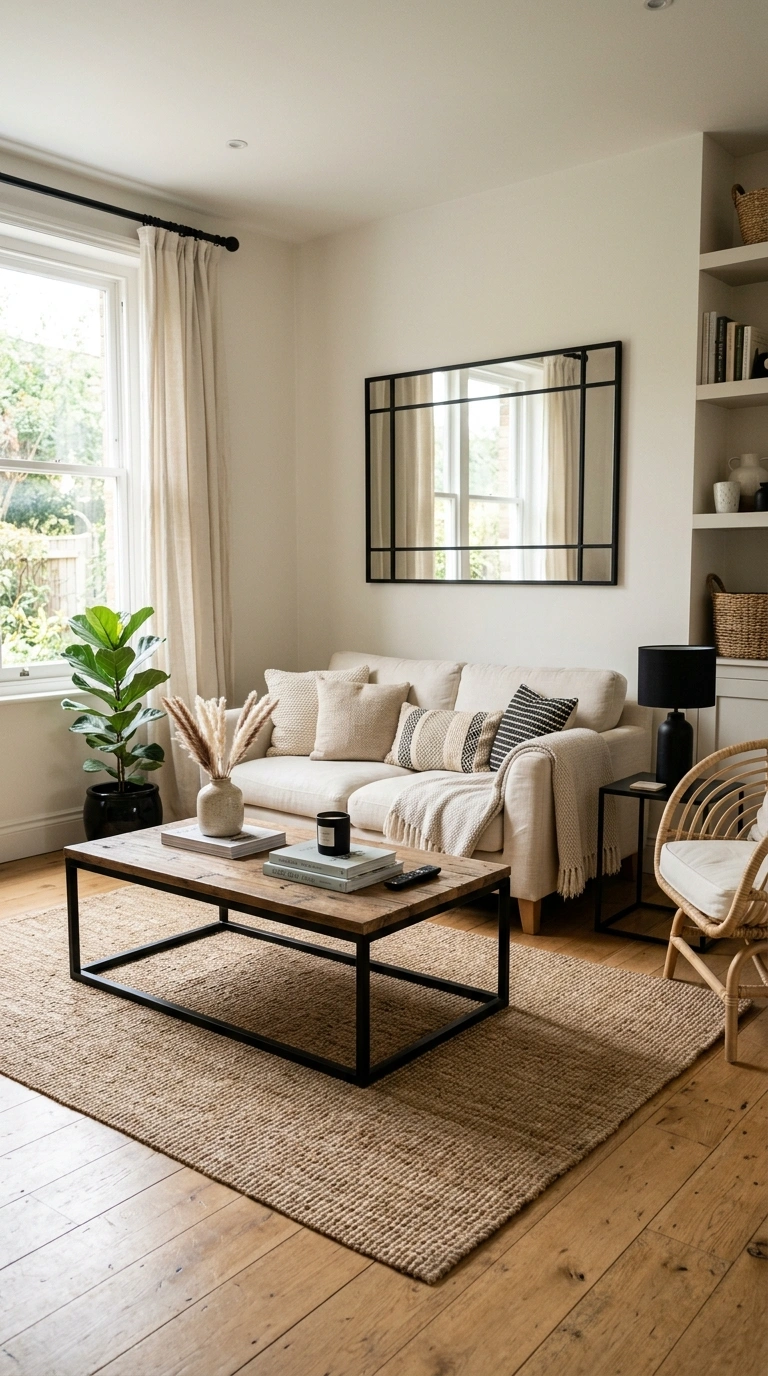
A few pieces of black furniture, like a black metal coffee table frame or black framed windows, add sharp contrast to an otherwise light and neutral living room. This small dose of black keeps the room from feeling too soft or washed out, giving the eye something to land on as it moves around the space.
Balance the black accents with plenty of warm neutrals, like a cream sofa, wood floors, or linen curtains, so the black reads as an intentional accent rather than an overwhelming color choice. A black framed mirror or a black metal light fixture works especially well for this, since these pieces add contrast without taking up much visual space. This idea is an easy way to modernize a living room that already has good furniture but needs a bit more definition.
9. Layered Lighting Design
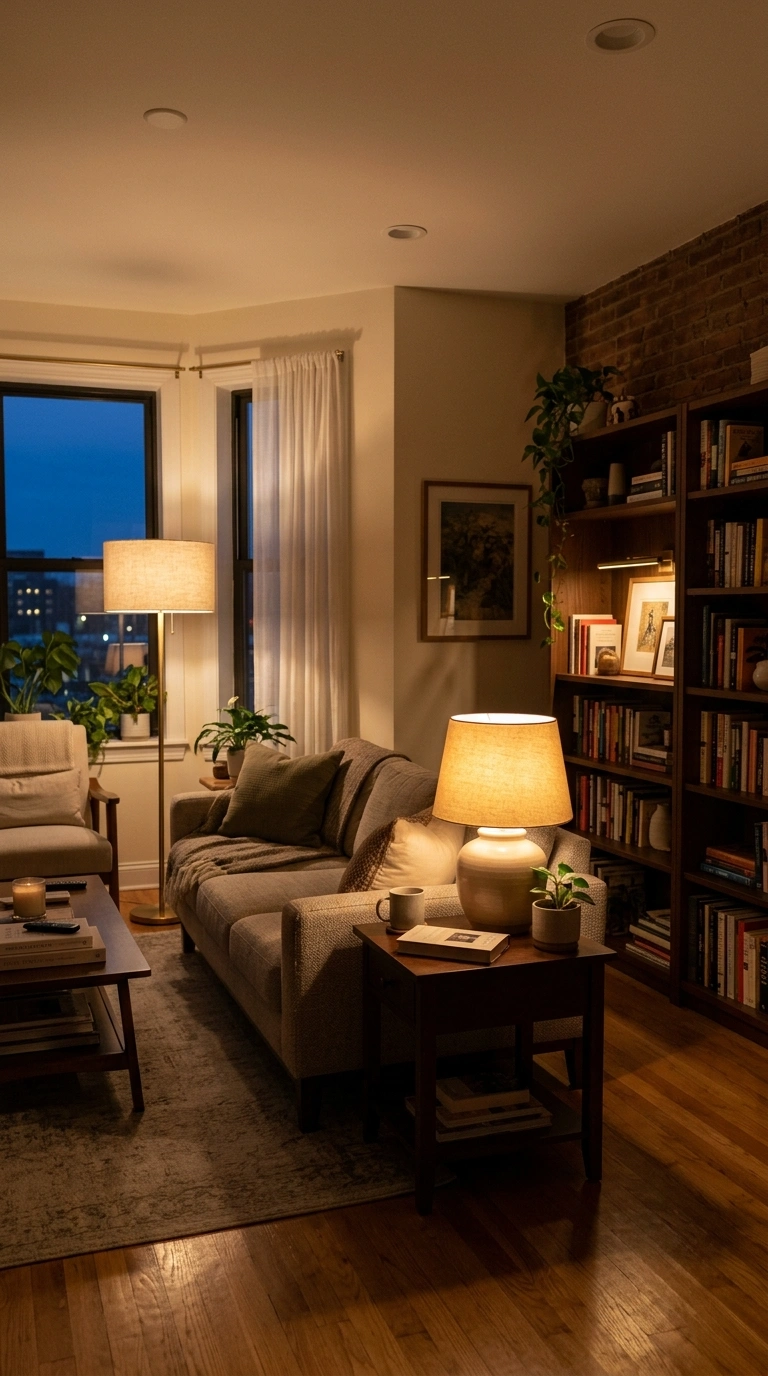
Relying on a single overhead light makes most living rooms feel flat and a little cold, no matter how nice the furniture is. Instead, layer your lighting with a floor lamp in one corner, a table lamp on a side table, and maybe a smaller accent light near a bookshelf or reading chair. This creates pockets of warm light throughout the room instead of one harsh source overhead.
Choose warm toned bulbs rather than cool white ones, since warm light makes a living room feel cozier, especially in the evening. A dimmer switch on your main overhead light gives you even more control over the mood throughout the day. This idea costs very little compared to buying new furniture, but it makes an enormous difference in how inviting and finished the room feels, especially in photos taken during golden hour light.
10. Bold Accent Wall
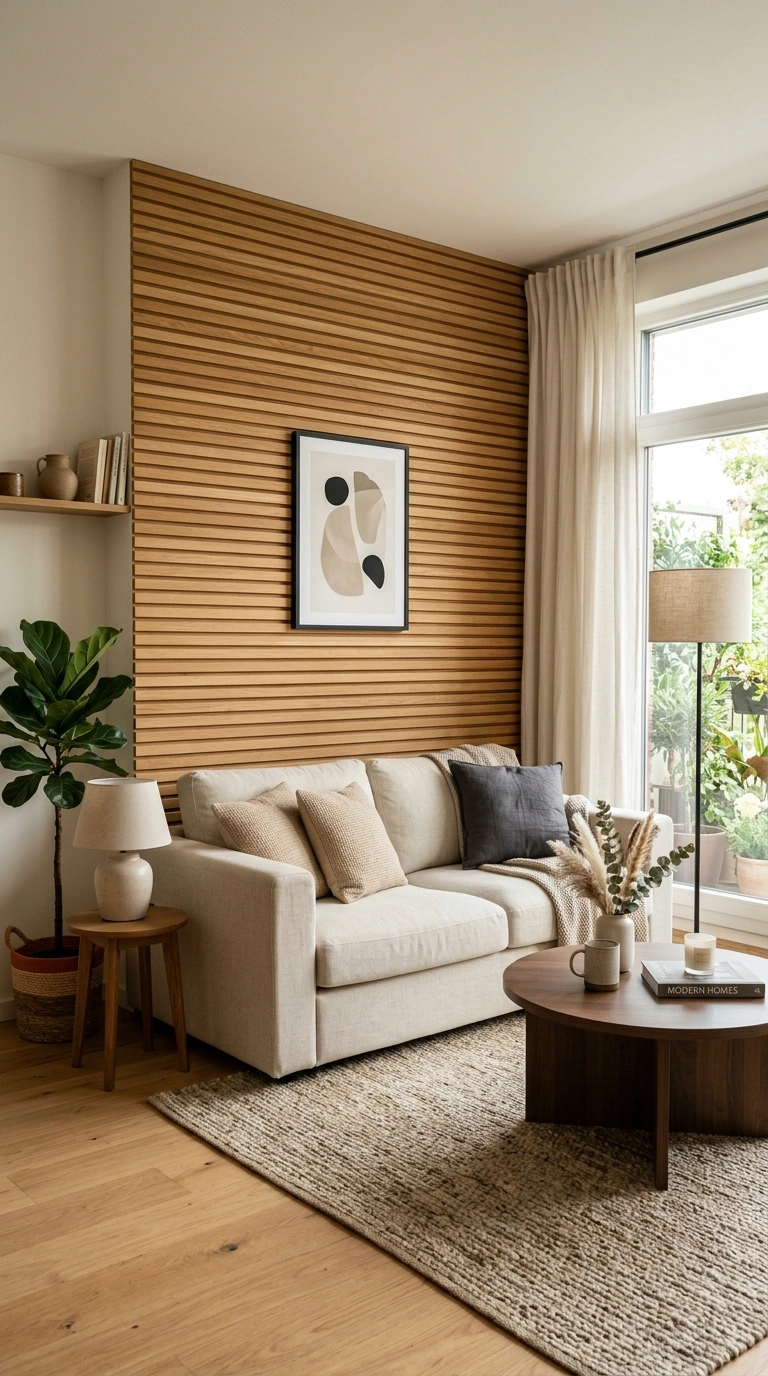
An accent wall doesn’t have to be a solid color. Consider a bold wallpaper pattern, a wood slat wall, or even a textured plaster finish behind your sofa or television to give the room a strong focal point. This kind of statement wall gives a living room personality that a plain painted wall simply can’t match.
Keep the rest of the room’s furniture and decor fairly simple so the accent wall has room to be the star. A neutral sofa, simple curtains, and minimal wall art elsewhere in the room let the eye rest before landing back on the feature wall. This idea works well in rental friendly versions too, since peel and stick wallpaper or removable wood panels can achieve a similar look without a permanent commitment to the space.
11. Textured Boucle Sofa
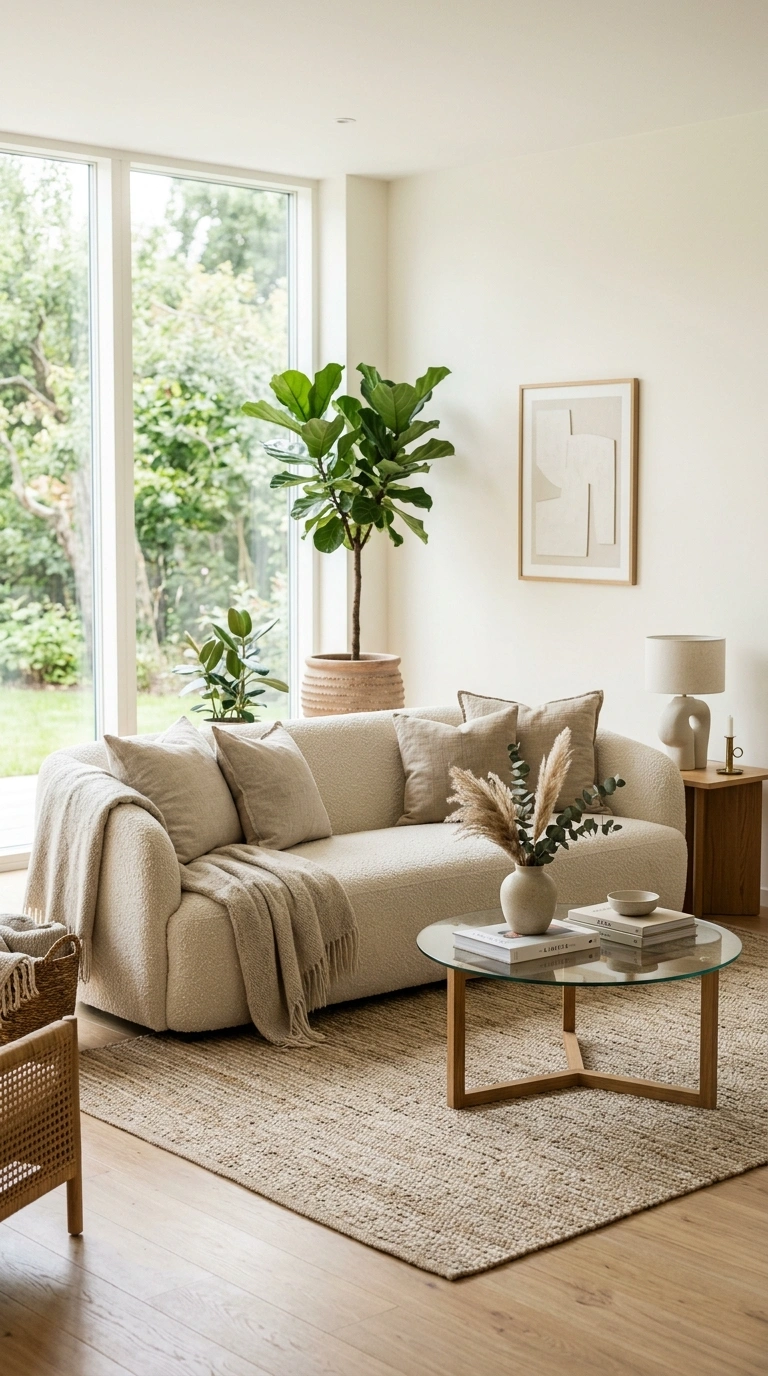
A boucle fabric sofa brings a soft, nubby texture into the living room that photographs beautifully and feels wonderful to sink into. Choose a neutral color like cream, oatmeal, or soft gray so the texture itself becomes the main visual interest rather than competing with a bold pattern or color.
Pair the sofa with smooth, contrasting textures nearby, like a glass or wood coffee table, so the boucle texture really stands out against something sleeker. Add a few throw pillows in a complementary fabric, like linen or velvet, to build out the layered feeling even further. This idea works especially well in living rooms going for a soft, modern look, since boucle has become one of the most requested fabrics for its cozy yet current appearance.
12. Vintage Rug Layering
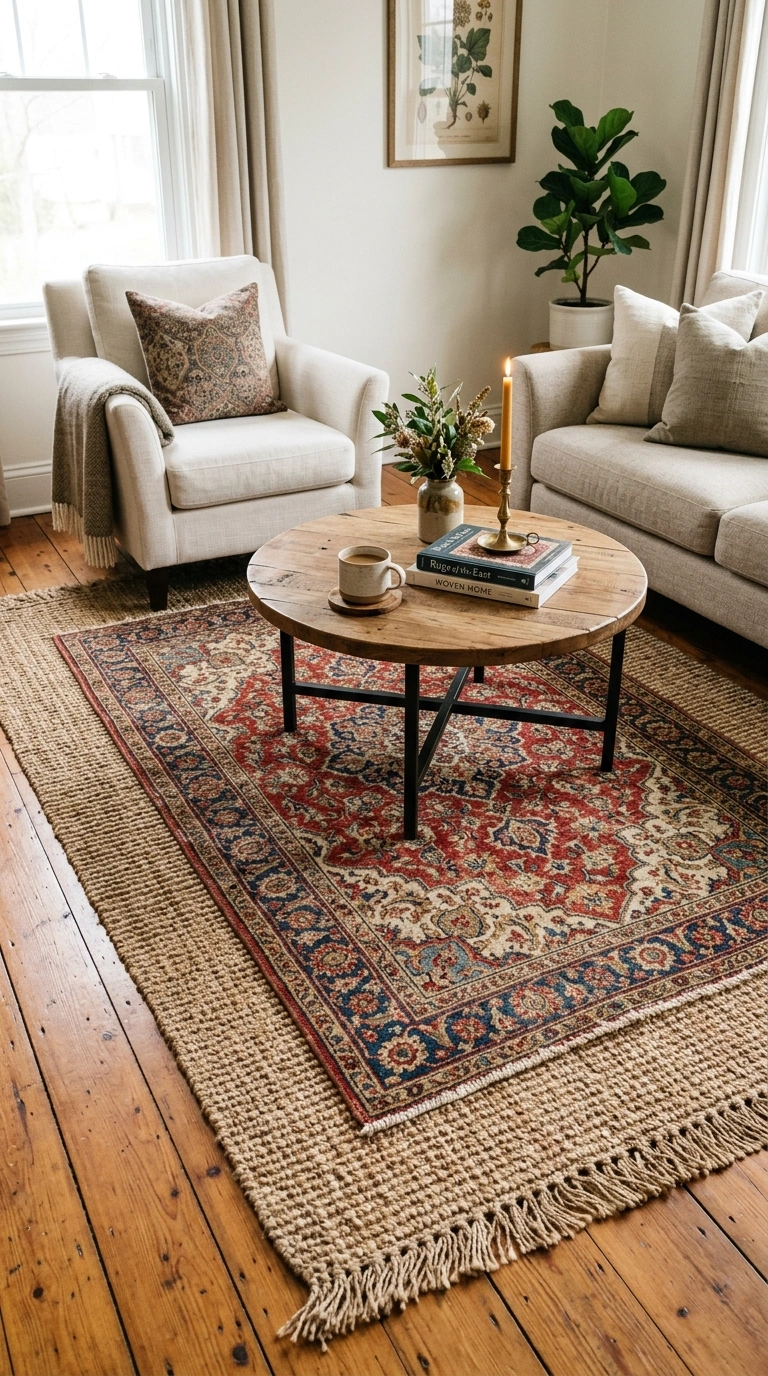
Layering two rugs, a larger jute or sisal rug topped with a smaller vintage patterned rug, adds instant depth and warmth to a living room. Place the natural fiber rug as the base under your furniture, then position the smaller patterned rug slightly off center in the seating area, often angled or placed under the coffee table.
This layered look works especially well in living rooms with hardwood or tile floors, since the natural fiber rug adds warmth and softness underfoot while the vintage rug adds color and pattern. Choose a vintage rug with faded, muted tones rather than bright, saturated colors to keep the overall look feeling collected rather than mismatched. This idea is a favorite among decorators because it makes a room feel like it came together over time rather than all at once.
13. Open Shelving Display
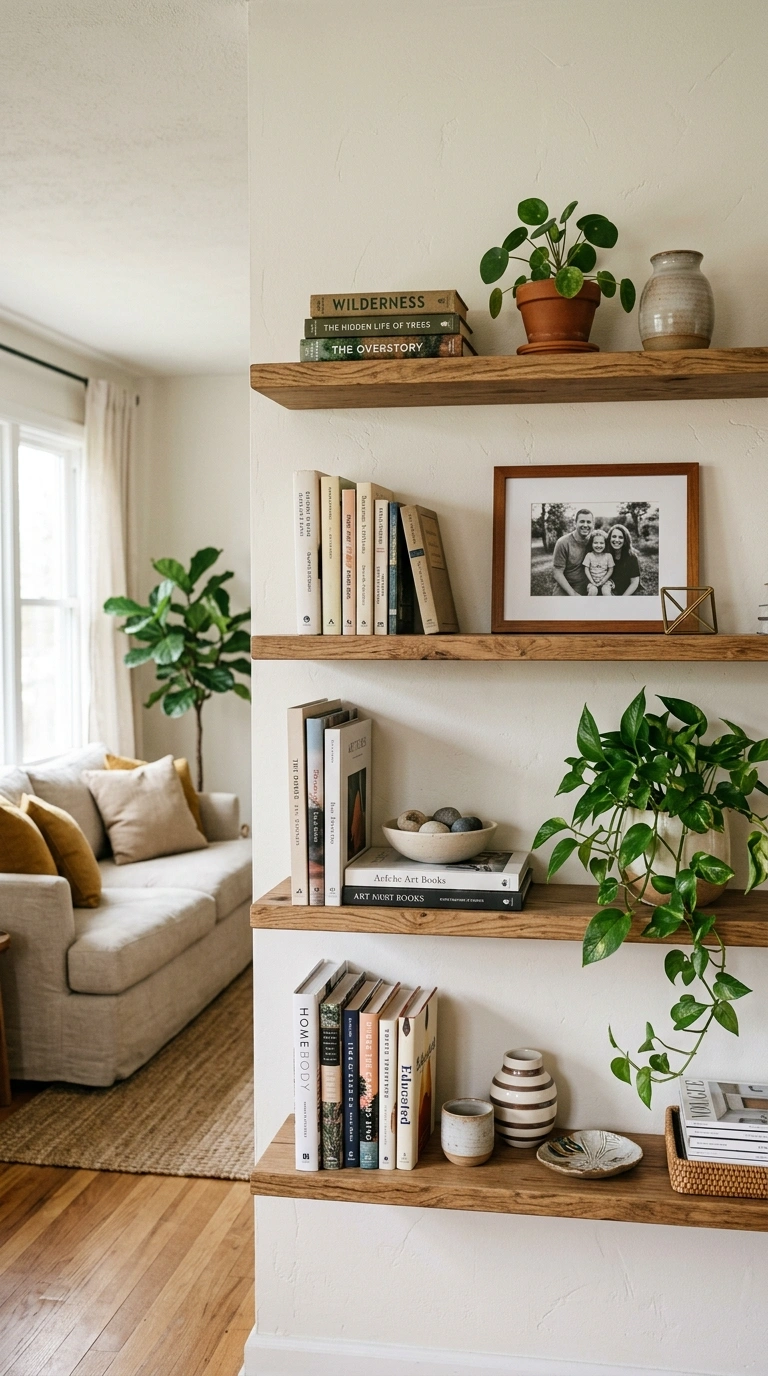
Open shelves in a living room give you a place to display books, small plants, and personal objects in a way that feels curated rather than cluttered. Avoid overfilling every shelf. Instead, leave some breathing room between items so each piece has a chance to stand out on its own.
Mix vertical items, like stacked books or tall vases, with horizontal ones, like a small framed photo or a woven basket, to keep the arrangement visually interesting. Group items in odd numbers, like three or five, rather than pairs, since odd groupings tend to feel more natural and less rigid. This idea works well next to a fireplace or on either side of a window, and it gives you an easy way to rotate decor throughout the year without much effort.
14. Curved Furniture Shapes
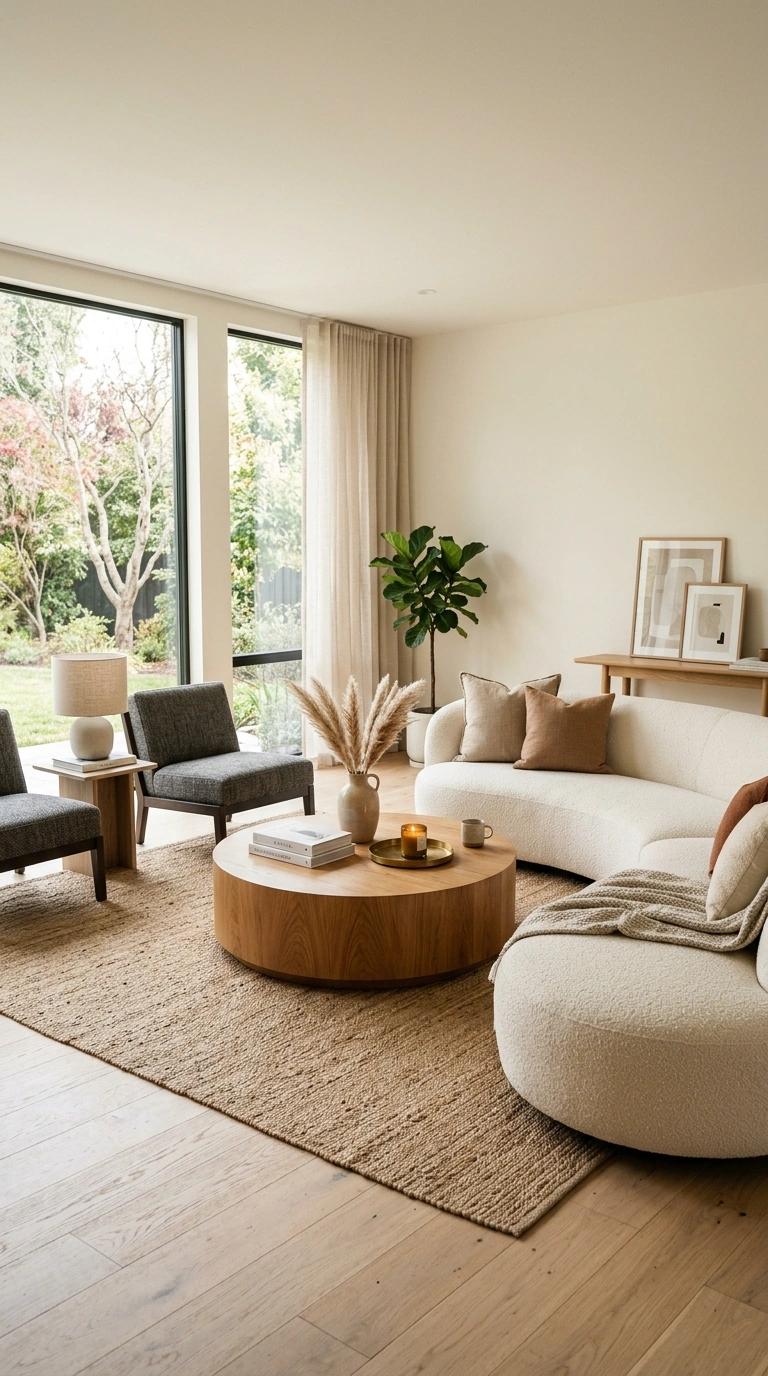
Curved sofas, round coffee tables, and arched mirrors soften the sharp lines that most living rooms are built around. Swapping even one boxy piece of furniture for something with a curved silhouette can make the whole room feel more current and a little less rigid.
Pair a curved sofa with straight lined accent chairs to keep some balance in the room, since an entire space full of curves can start to feel a bit too soft. A round coffee table works especially well in front of a curved sofa, since the shapes echo each other without feeling repetitive. This idea has become especially popular in smaller living rooms, since curved furniture tends to improve the flow of foot traffic around the room compared to sharp cornered pieces.
15. Woven Natural Textures
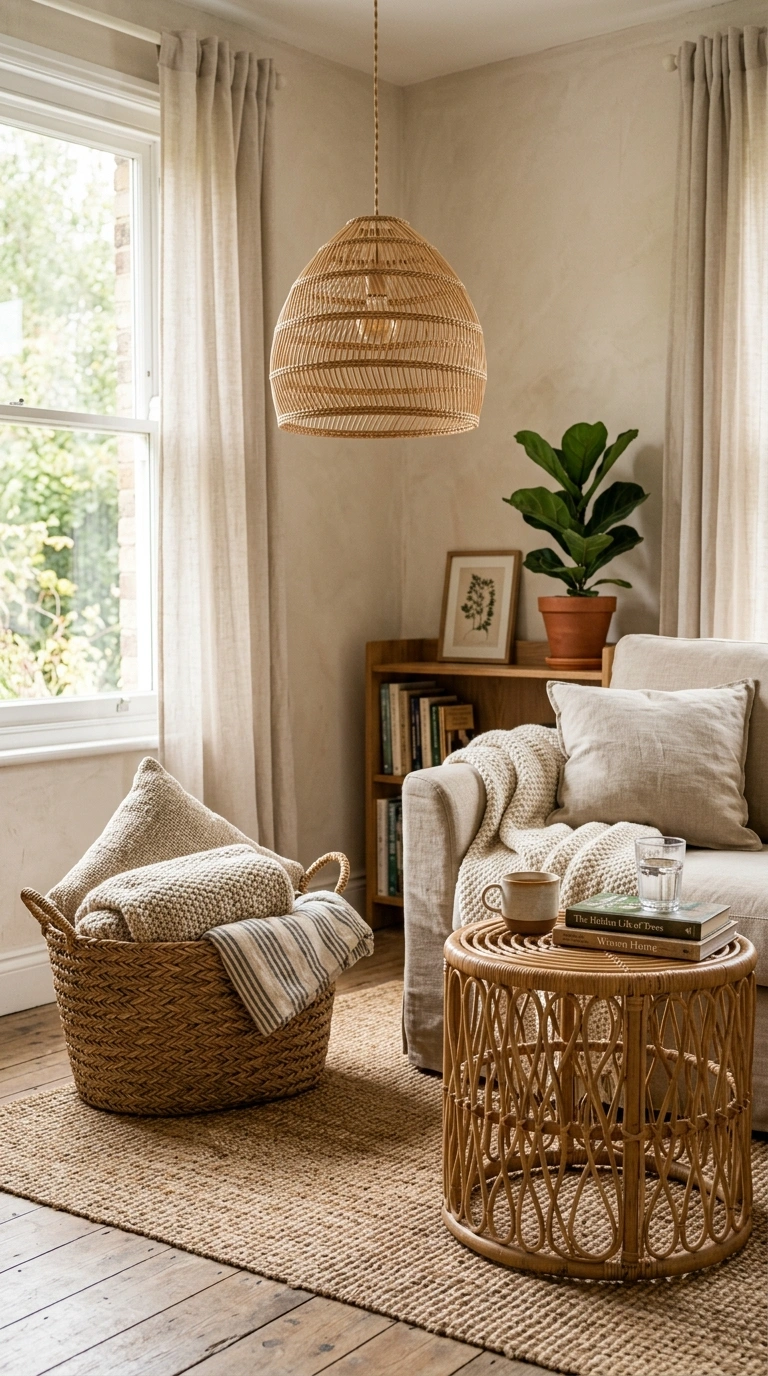
Bringing in woven materials, like a rattan chair, a jute rug, or a woven pendant light, adds an organic, textured feeling to a living room without introducing any new color. These natural textures work well in almost any color scheme, since their neutral tones blend easily with whatever palette you already have in place.
Mix a few different woven textures rather than sticking to just one, like pairing a rattan side table with a woven basket for throw blankets and a jute rug underfoot. This layering of natural materials gives the room warmth and depth that smooth, manufactured surfaces can’t quite achieve on their own. This idea works especially well in living rooms that lean modern or minimalist, since the woven textures soften the space without cluttering it with extra decor.
16. Grounding Coffee Table
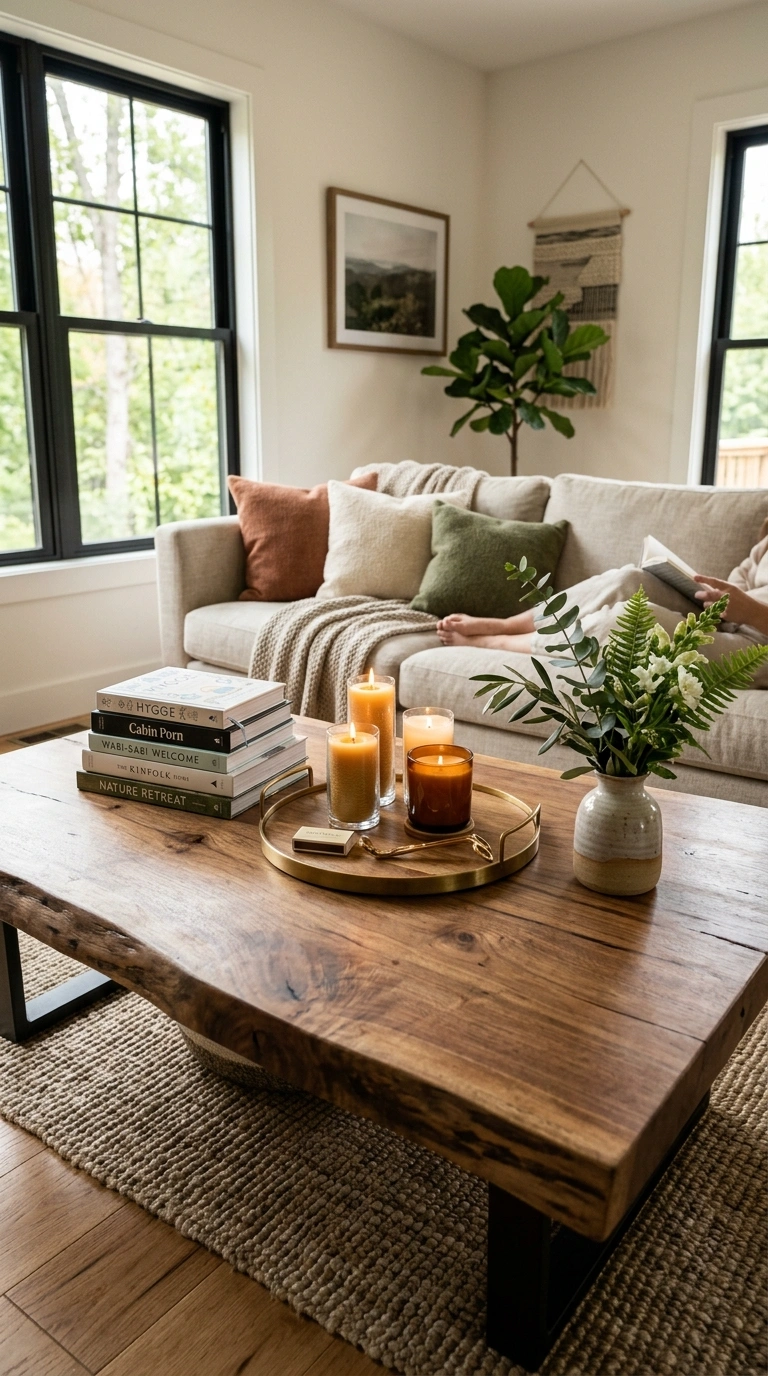
A substantial coffee table, whether it’s a large wood slab or a chunky stone piece, gives the living room a visual anchor that ties the whole seating area together. Choose a table that feels proportional to your sofa, since a coffee table that’s too small tends to get visually lost in a larger room.
Style the table with a stack of books, a small tray holding candles or coasters, and perhaps a small vase of greenery, keeping the arrangement simple rather than crowded. Leave enough empty space on the table for it to still feel usable, since a coffee table covered in decor stops functioning as an actual table. This idea works in almost any living room style and instantly makes the seating area feel more grounded and complete.
17. Statement Ceiling Light
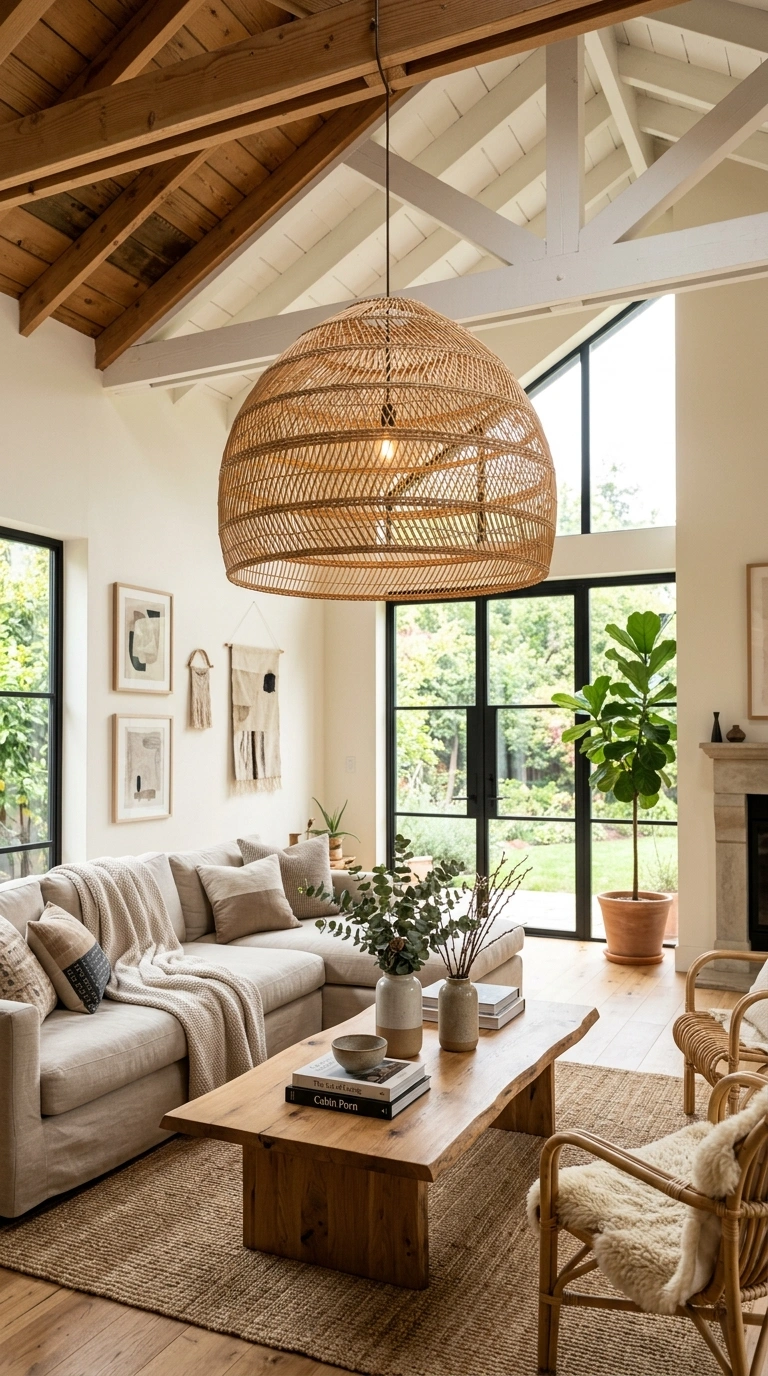
Swapping a plain overhead fixture for a statement light, like a woven pendant, a sculptural chandelier, or an oversized paper lantern, gives the living room an instant focal point overhead. This is especially effective in rooms with higher ceilings, where the empty space above eye level often goes completely unused.
Choose a fixture that complements your existing furniture finishes, like a rattan pendant in a room with wood furniture, or a black metal fixture in a room with black accents elsewhere. Position the light so it centers over your main seating area, like above the coffee table, rather than off to one side. This idea is a relatively simple electrical update that makes a dramatic difference in how finished and intentional the whole room feels.
18. Symmetrical Furniture Layout
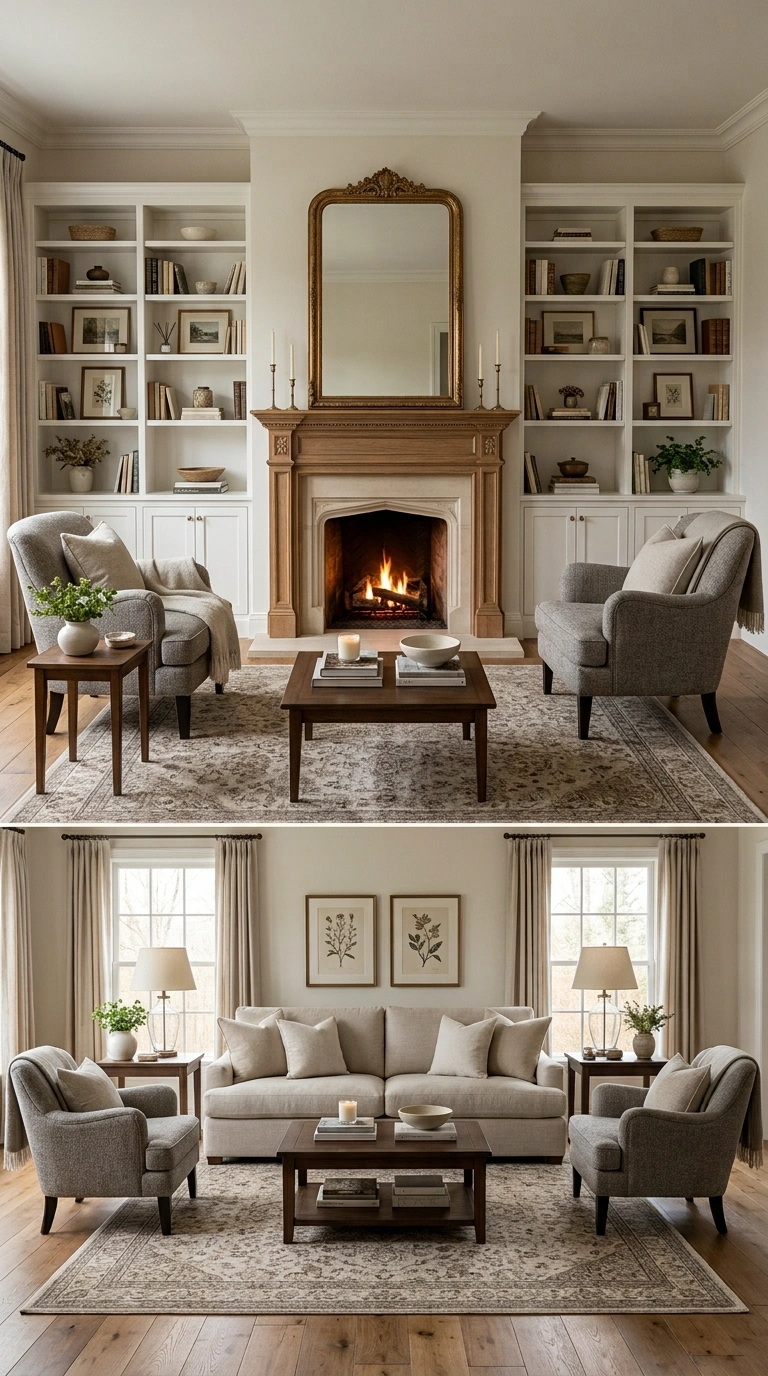
Arranging furniture symmetrically, like matching accent chairs on either side of a sofa or identical lamps on either side of a console table, gives a living room an instantly calm, balanced feeling. This layout works especially well in more formal or traditional style living rooms, where balance tends to read as put together and intentional.
Center your furniture around a clear focal point, like a fireplace, a television, or a large window, and build the symmetry outward from there. Even small touches, like matching throw pillows on each end of the sofa, reinforce the balanced feeling throughout the room. This idea is especially helpful if your living room already has good furniture but feels slightly off, since sometimes a simple rearrangement into a symmetrical layout is all a room needs to feel finished.
19. Cozy Blanket Ladder
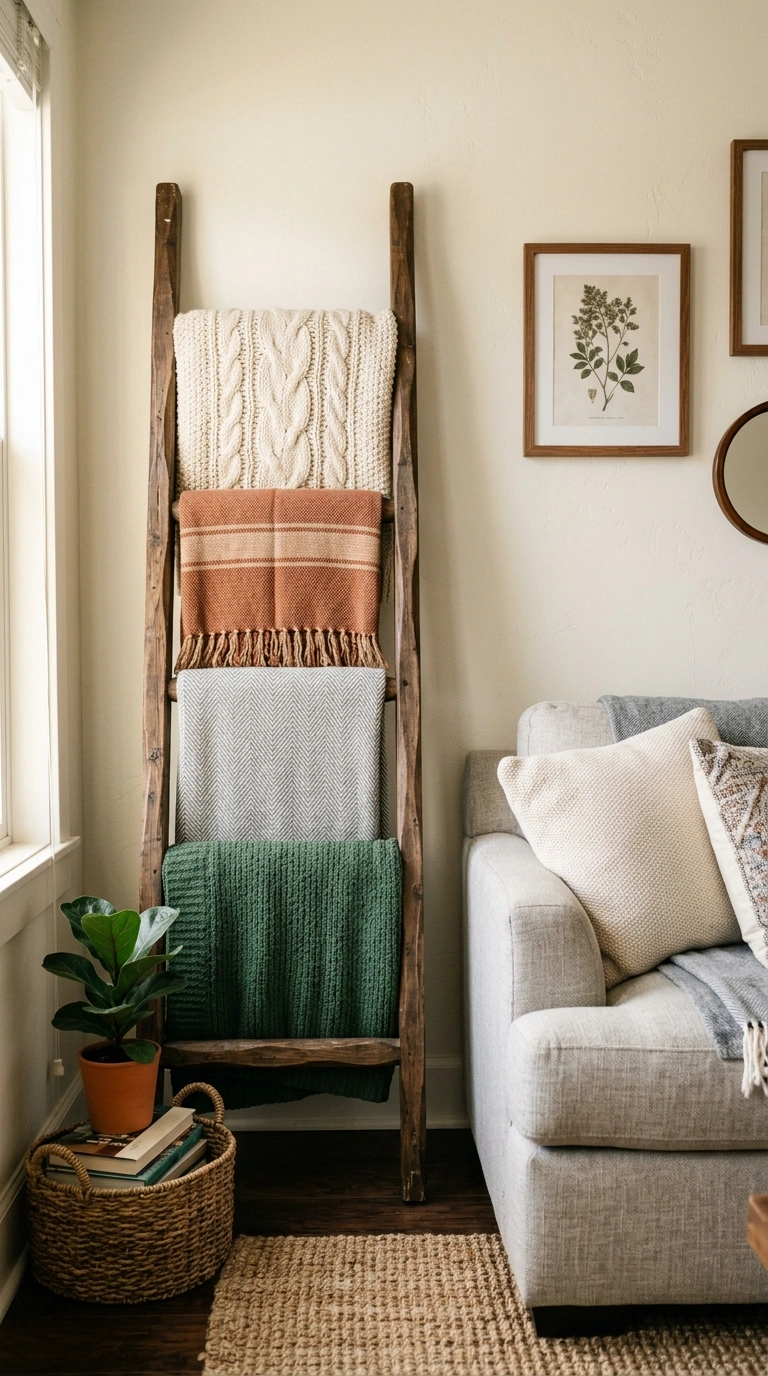
A wood blanket ladder leaned against the wall near the sofa is a small, simple addition that makes a living room feel warmer and more lived in almost immediately. Drape two or three folded blankets over the rungs in a mix of textures, like a chunky knit and a soft woven throw, to add visual interest.
Position the ladder in an empty corner or beside the sofa where a blanket would otherwise just get tossed over the armrest. This keeps the room looking tidy while still giving you easy access to a blanket on a cold evening. This idea costs very little and takes just a few minutes to set up, but it adds a cozy, homey touch that photographs well and makes the whole living room feel a little more welcoming.
Final Thoughts
A stylish living room doesn’t need a full renovation or a big budget. Small, intentional choices, like layering textures, adding warm lighting, or rearranging furniture, add up to a space that feels calm and finished. Start with one idea from this list and build from there at your own pace.
FAQs
What makes a living room look put together instead of just decorated?
A put together living room usually has a mix of textures, a clear focal point, and furniture that is properly scaled to the room. Random matching decor tends to look staged, while a few layered, intentional choices make the space feel finished and personal.
How can I make a small living room feel more stylish without adding clutter?
Focus on one or two focal points, like a rug or an accent wall, rather than filling every surface with decor. Light colors, curved furniture, and open shelving also help a small living room feel more open and styled at the same time.
Do I need to spend a lot of money to update my living room?
Not at all. Simple changes like new lighting, a layered rug, or rearranging furniture into a more symmetrical layout can transform a living room without buying anything expensive. Small, thoughtful touches often make more of a difference than one big purchase.
What colors make a living room feel cozy?
Warm neutrals, terracotta, sage green, and warm wood tones all tend to create a cozy feeling in a living room. Pairing these colors with warm, layered lighting rather than harsh overhead light makes the space feel even more inviting.
How many textures should a living room have?
A good rule of thumb is at least three different textures, such as a woven rug, a soft knit throw, and a smooth wood or glass surface. This mix keeps the room feeling layered and interesting without needing extra color or pattern.