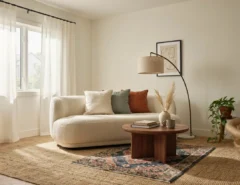
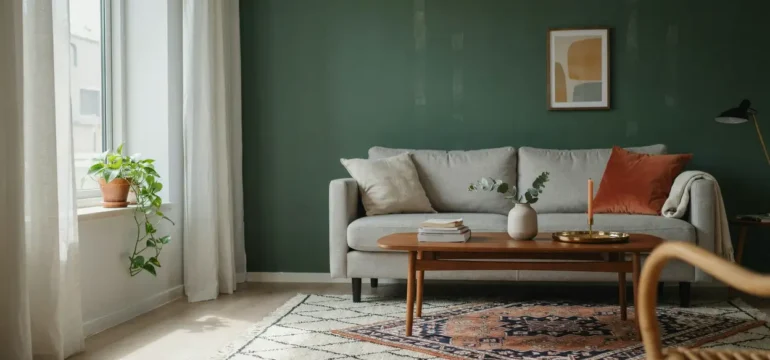
A living room does not need a big budget to feel fresh and put together. Most of the time, the room just needs a few smart changes instead of a full renovation. Maybe the walls feel plain, the furniture looks tired, or the room just does not feel like you anymore. The good news is that small updates can make a big difference, and you can do almost all of them yourself over a weekend. This list has 22 living room ideas that cost little but look like a lot more money was spent. You will find ideas for walls, furniture, lighting, and small details that pull a room together. Pick a few that match your style and your budget, and work through them one at a time. By the end, your living room will feel warm, current, and finally finished.
1. Paint An Accent Wall
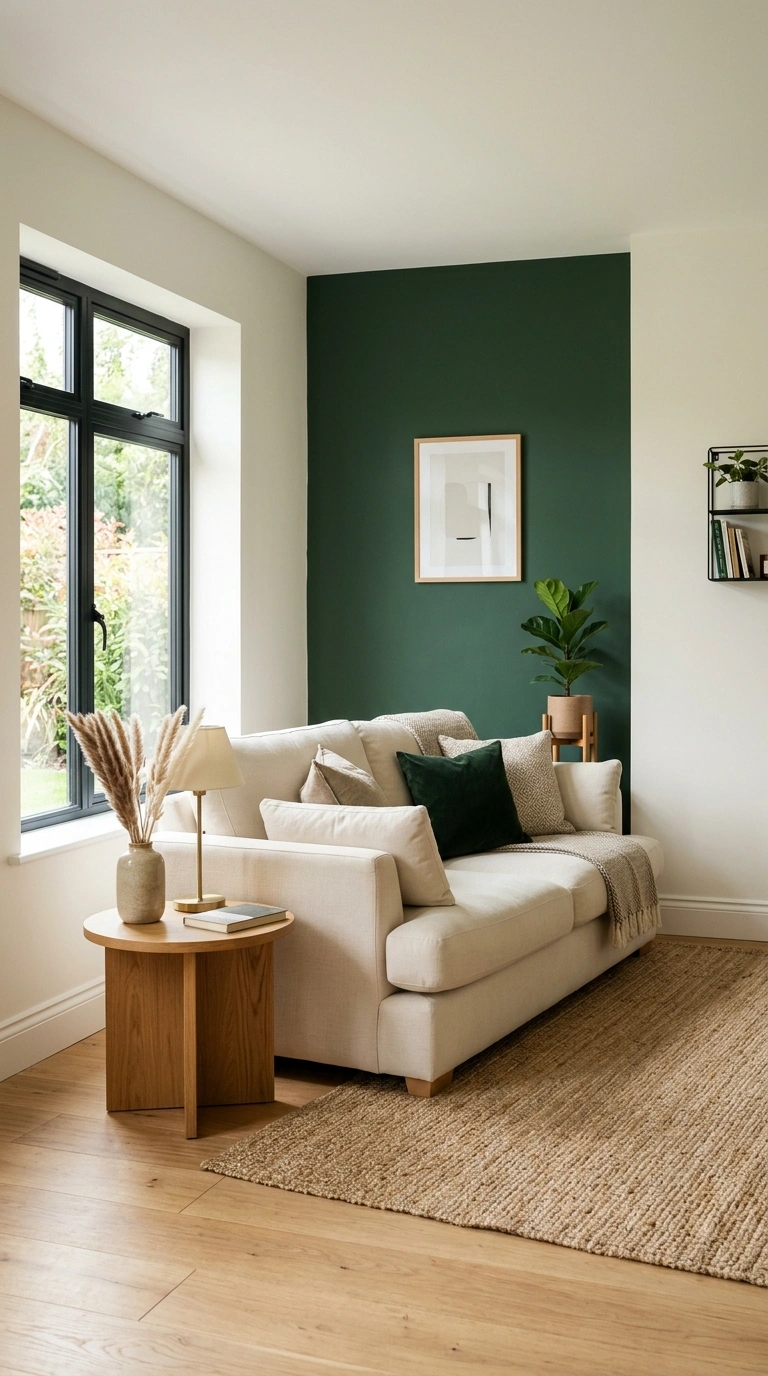
Choosing one wall to paint a bold or deep color is one of the easiest ways to change the whole feel of a living room without spending much money. Pick the wall that gets the most attention, usually the one behind the sofa or the wall you see first when you walk in. Colors like deep green, warm terracotta, or soft navy work well because they add depth without making the room feel dark. Use painter’s tape along the trim and ceiling line so the edges stay clean, and plan on two coats for even coverage. A gallon of paint usually costs less than fifty dollars and can be finished in an afternoon.
Once the paint dries, keep the rest of the walls a light neutral color so the accent wall stands out. Add a few frames or a mirror on that wall later to finish the look. This one change often makes the whole room feel more designed and less like it was left unfinished.
2. Create A Gallery Wall
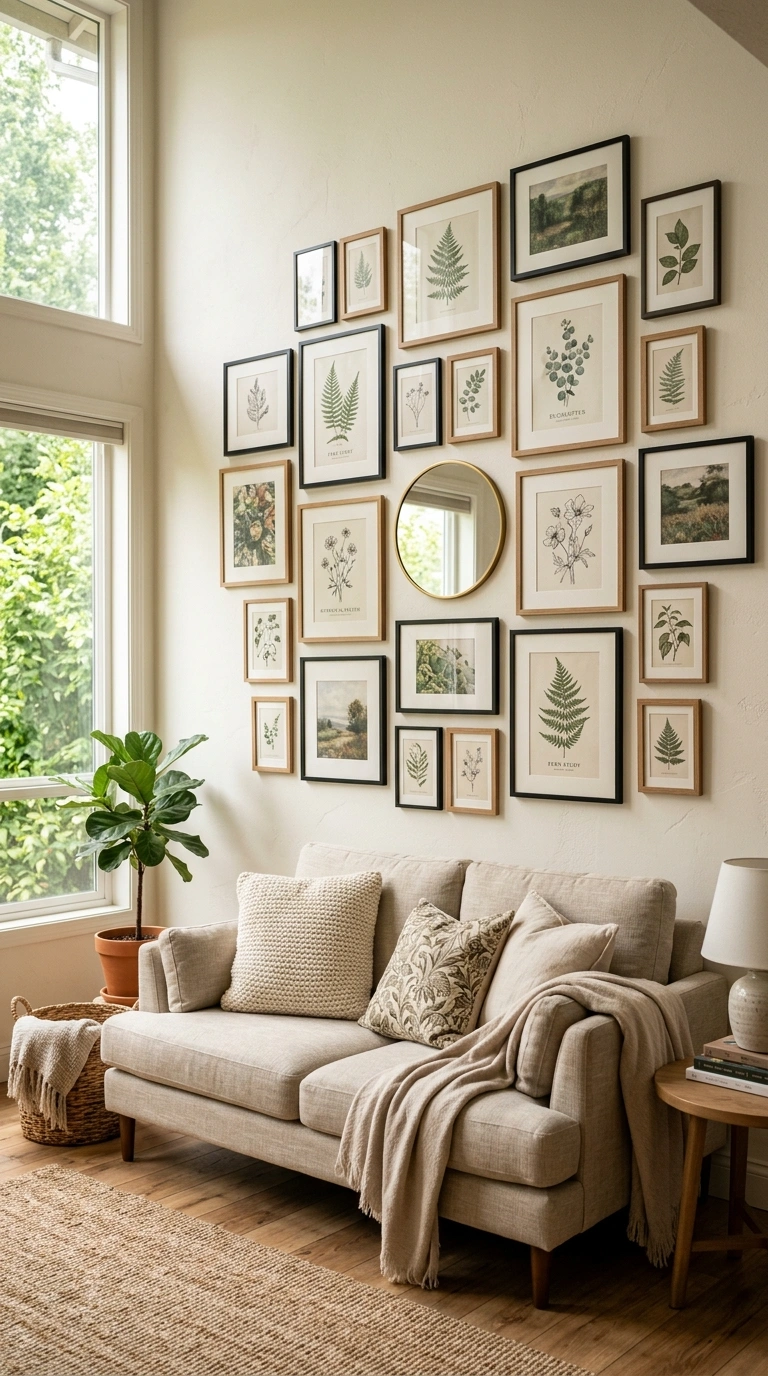
A gallery wall gives a plain living room wall real personality without needing new furniture or paint. Start by gathering frames in different sizes but the same finish, like black metal or natural wood, so the wall still looks put together even with mismatched art. Lay the frames out on the floor first and arrange them until the spacing feels balanced, then trace the layout onto paper to use as a guide on the wall.
Mix in a few photos, prints, and even a small mirror to keep the eye moving around the display. Hang the center frame at eye level and build out from there, leaving about two to three inches between each piece. This works especially well above a sofa or console table where there is a long stretch of empty wall. Thrifted frames and printable art keep this idea nearly free, and it instantly makes a room feel more lived in and thought out.
3. Layer Cozy Rugs
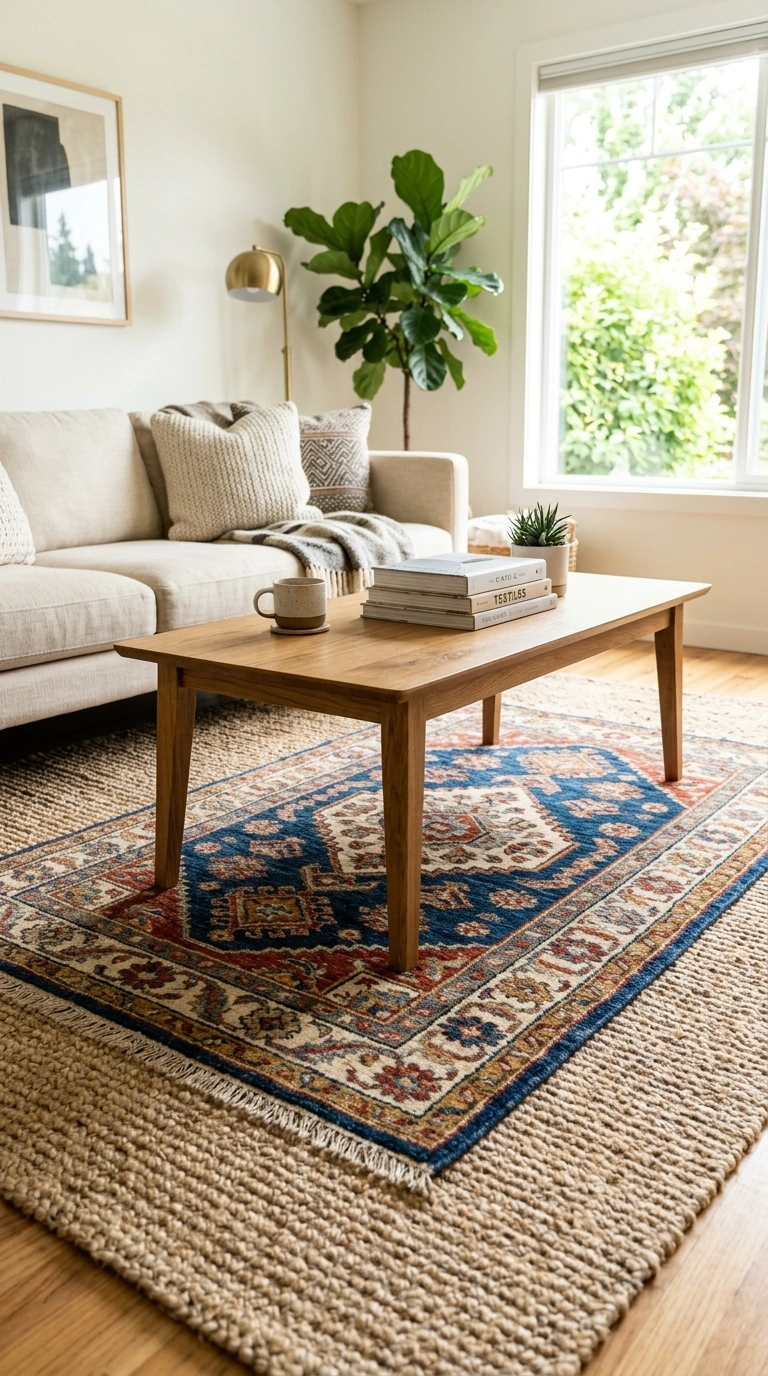
Layering a smaller patterned rug over a larger neutral rug adds texture and warmth to a living room without buying new furniture. Start with a plain jute or flatweave rug as the base, then place a smaller rug with a pattern or texture on top, slightly off center so both layers show. This works great under a coffee table or in a seating area where the floor feels bare or cold.
Wool or cotton rugs add the most texture, while the base rug keeps the look grounded and not too busy. Secure both rugs with a rug pad underneath so they do not slide around when people walk through the room. This trick is popular because it adds visual interest at floor level, which is often the most overlooked part of a living room. Thrifted or discount store rugs work perfectly for this, since the layering effect matters more than having an expensive rug on top.
4. Swap Throw Pillows
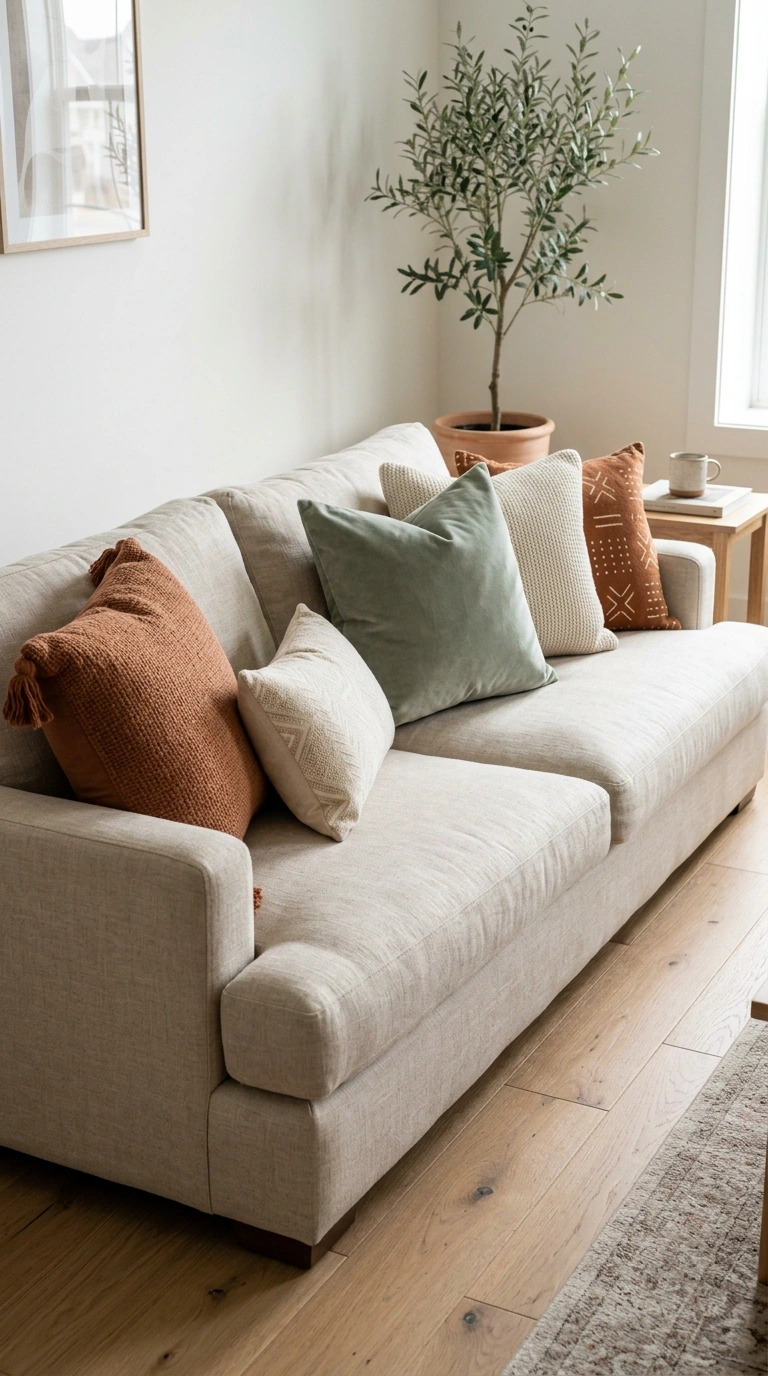
New throw pillow covers are one of the cheapest ways to change how a sofa looks and feels. Pick two or three colors that pull from something already in the room, like a rug, a painting, or curtains, so the new pillows feel connected instead of random. Mixing textures such as linen, knit, and velvet keeps the sofa from looking flat, and different sizes add more visual depth than pillows that all match.
A common styling trick is to use an odd number of pillows, like three or five, arranged largest to smallest from the outside in. Covers cost far less than full pillows and can be swapped out again by season without much expense. This update takes only a few minutes but changes the entire mood of the seating area, making a tired sofa feel brand new again.
5. Hang Fresh Curtains
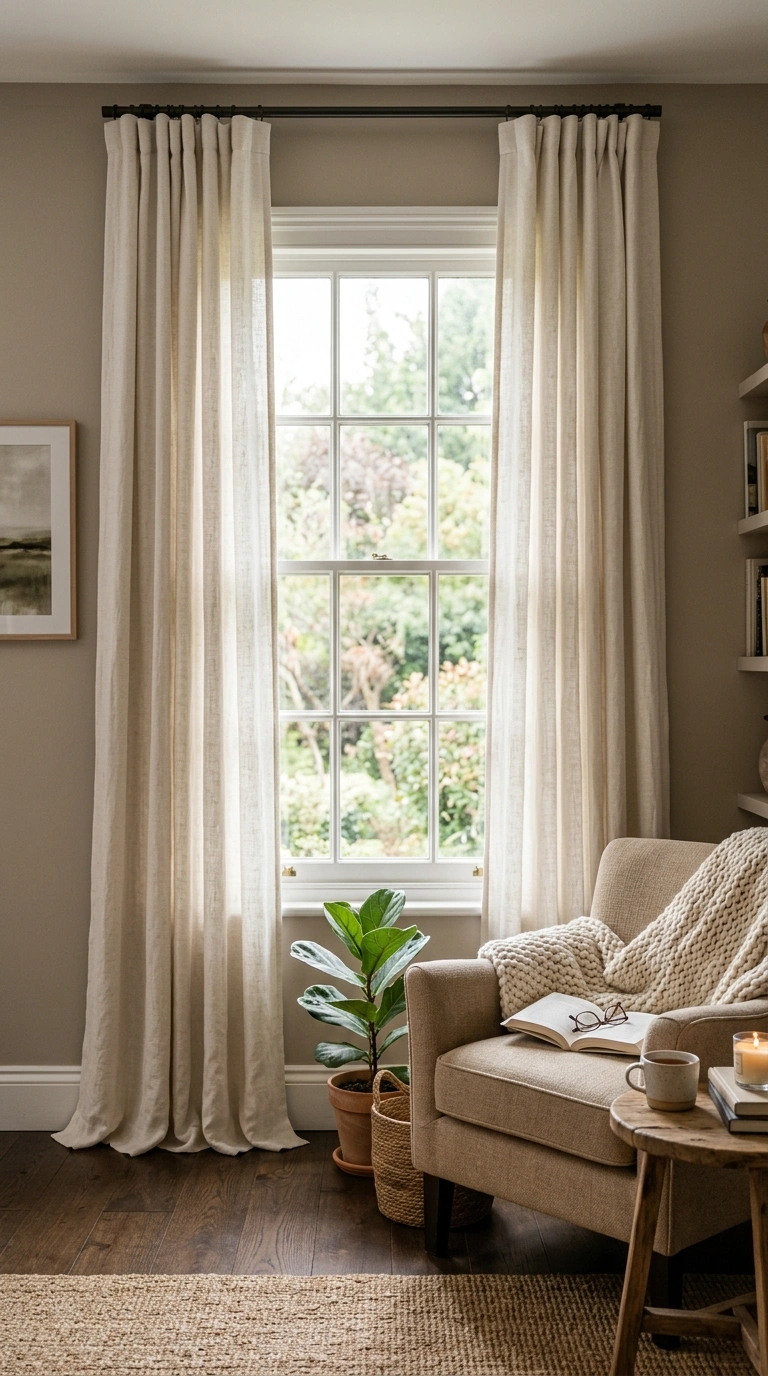
New curtains can make windows look taller and a room feel more finished, and they are one of the most noticeable updates you can make. Hang the curtain rod a few inches above the window frame and wider than the window itself so the curtains do not block light when open and the window appears larger than it is. Choose a fabric that lets in soft light, like linen or a light cotton blend, for a relaxed and airy feel, or a heavier fabric if you want the room to feel cozier and more private.
Let the curtains just brush the floor for a clean, tailored look instead of pooling in a bunch. This small change draws the eye upward and makes ceilings feel higher than they actually are. Even budget curtain panels from a discount store look expensive once they are hung correctly with the right length and placement.
6. Repaint Wood Furniture
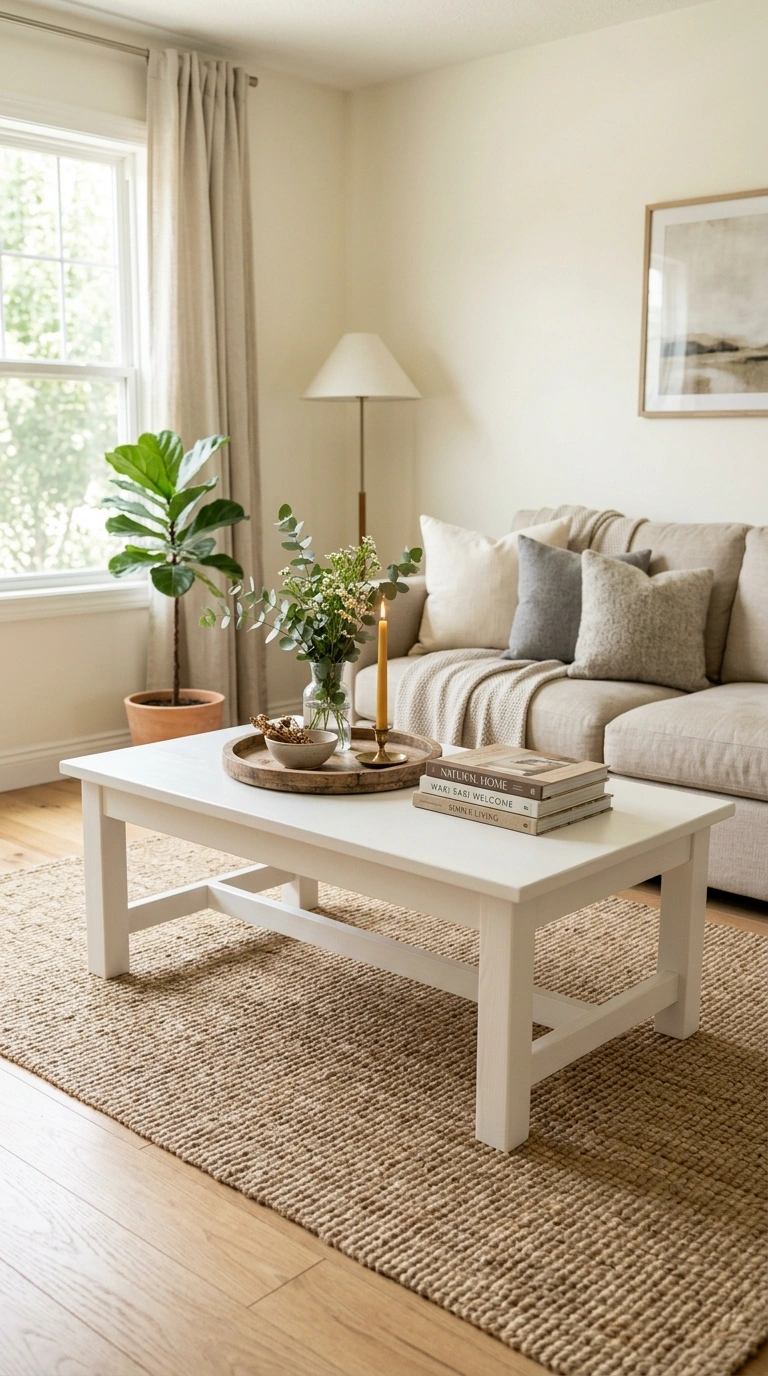
An old wood coffee table, side table, or bookshelf can look brand new with a coat of paint instead of being replaced. Sand the surface lightly first so the paint has something to grip, then wipe away the dust with a damp cloth before painting. White, black, or a soft sage green are popular choices because they match almost any living room style.
Two thin coats work better than one thick coat, and a clear sealant on top protects the finish from scratches and water rings. This project usually costs under twenty dollars in supplies and can be done outside or in a garage over a weekend. It is a great option for furniture that has good bones but outdated color or a beat up finish. Once it dries, the piece looks like something you would find in a home decor store instead of something pulled from storage.
7. Add Floating Shelves
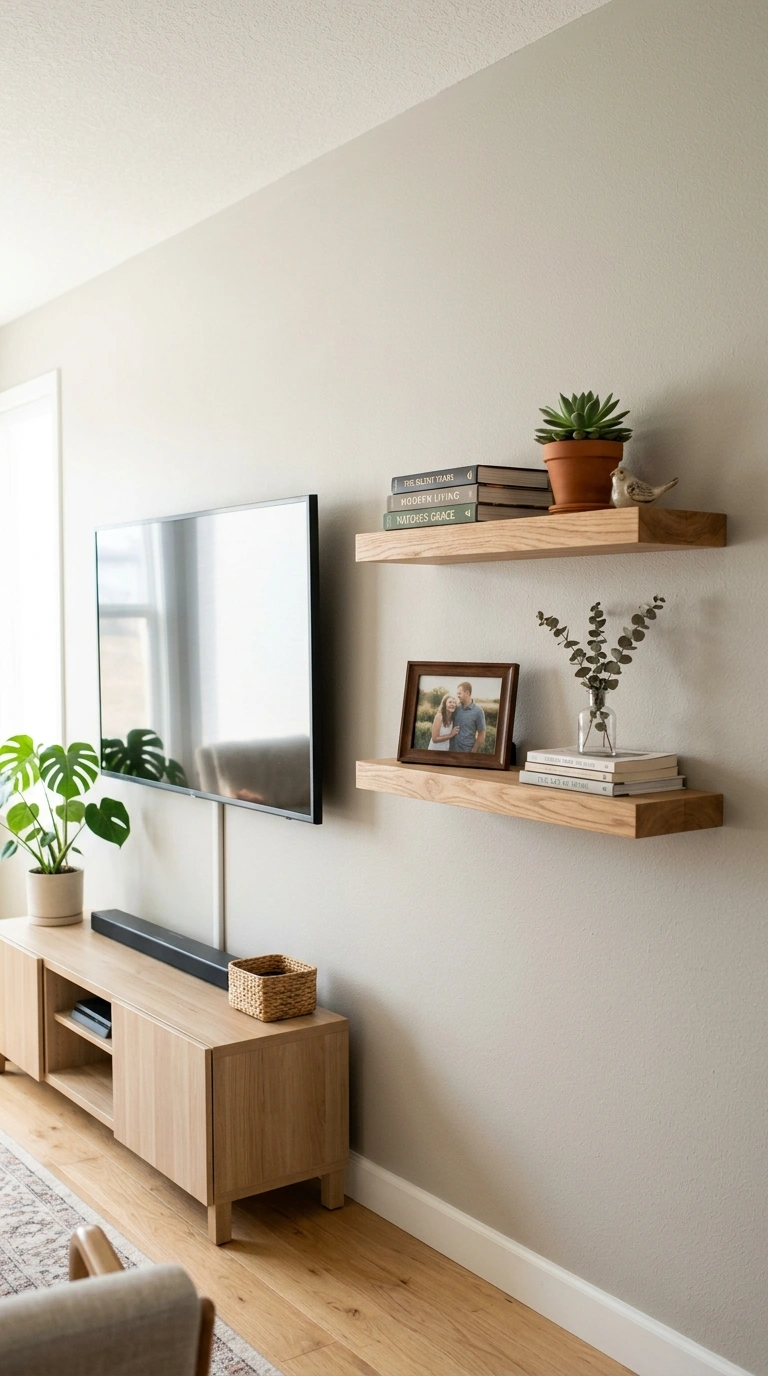
Floating shelves add storage and display space to a living room without taking up any floor room, which makes them perfect for smaller spaces. Install two or three shelves at slightly staggered heights on either side of a television or above a console table for a balanced look. Keep the styling simple by mixing a few books, a small plant, and one or two decorative objects on each shelf instead of filling every inch of space.
Leaving some empty room on each shelf actually makes the display look more intentional and less cluttered. Choose a wood tone or paint color that matches your existing furniture so the shelves blend into the room instead of standing out on their own. Floating shelf kits are inexpensive and simple to install with a drill, making this an easy weekend project that adds real function and style at the same time.
8. Bring In Houseplants
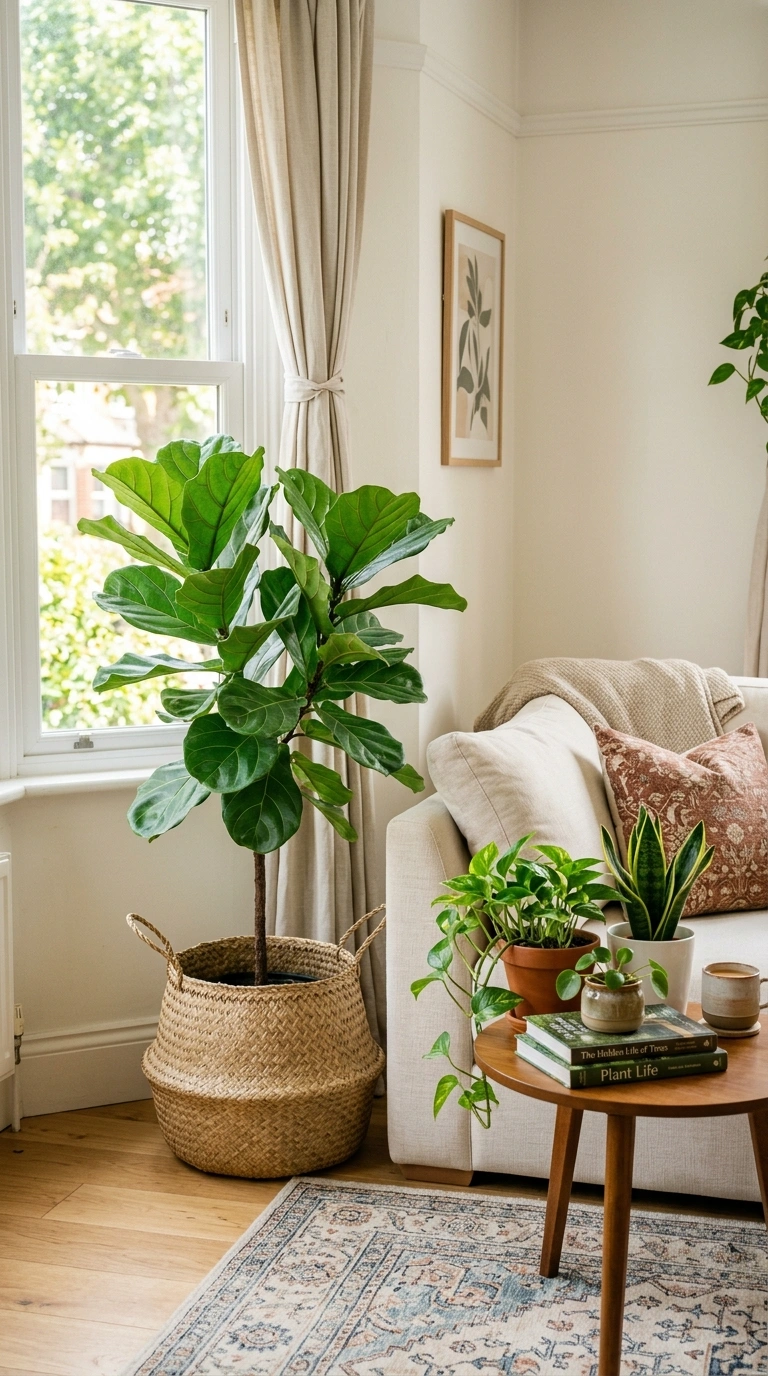
Adding a few plants is one of the simplest ways to make a living room feel more alive and finished. A tall plant like a fiddle leaf fig or snake plant fills an empty corner and draws the eye upward, while smaller plants on a shelf or side table soften hard edges around furniture. If you do not have a lot of natural light or time for plant care, realistic faux plants work just as well for the visual effect and cost less over time.
Group plants in odd numbers and vary the pot heights and textures, mixing woven baskets with ceramic pots for more visual interest. Plants also help balance out a room that has a lot of straight lines and hard surfaces, like a leather sofa or a glass coffee table. This is one of the lowest cost updates on this list but makes a noticeable difference in how warm and welcoming a room feels.
9. Style The Coffee Table
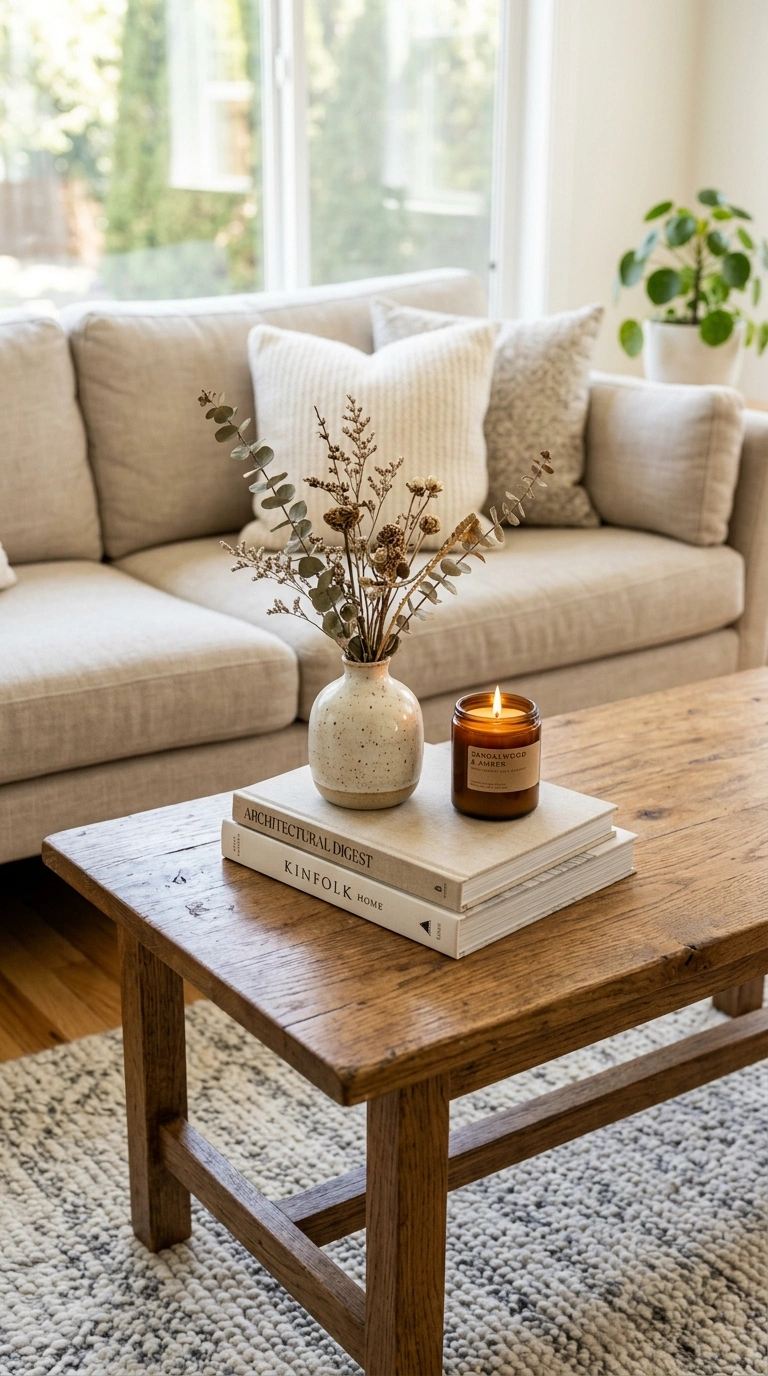
A coffee table is one of the first things people notice when they walk into a living room, so a little styling goes a long way. Start with a stack of two or three coffee table books, then add a small tray to hold a candle or a small plant so the surface feels organized instead of scattered. Keep the arrangement to three or four items total, leaving open space so the table does not feel crowded.
A small vase with a few stems, real or faux, adds a soft touch of color and height. If the table has a shelf underneath, use it for a woven basket with a folded throw blanket for extra texture. This kind of simple styling costs very little since most of the items can be things you already own, just arranged with a little more intention than before.
10. Hang A Statement Mirror
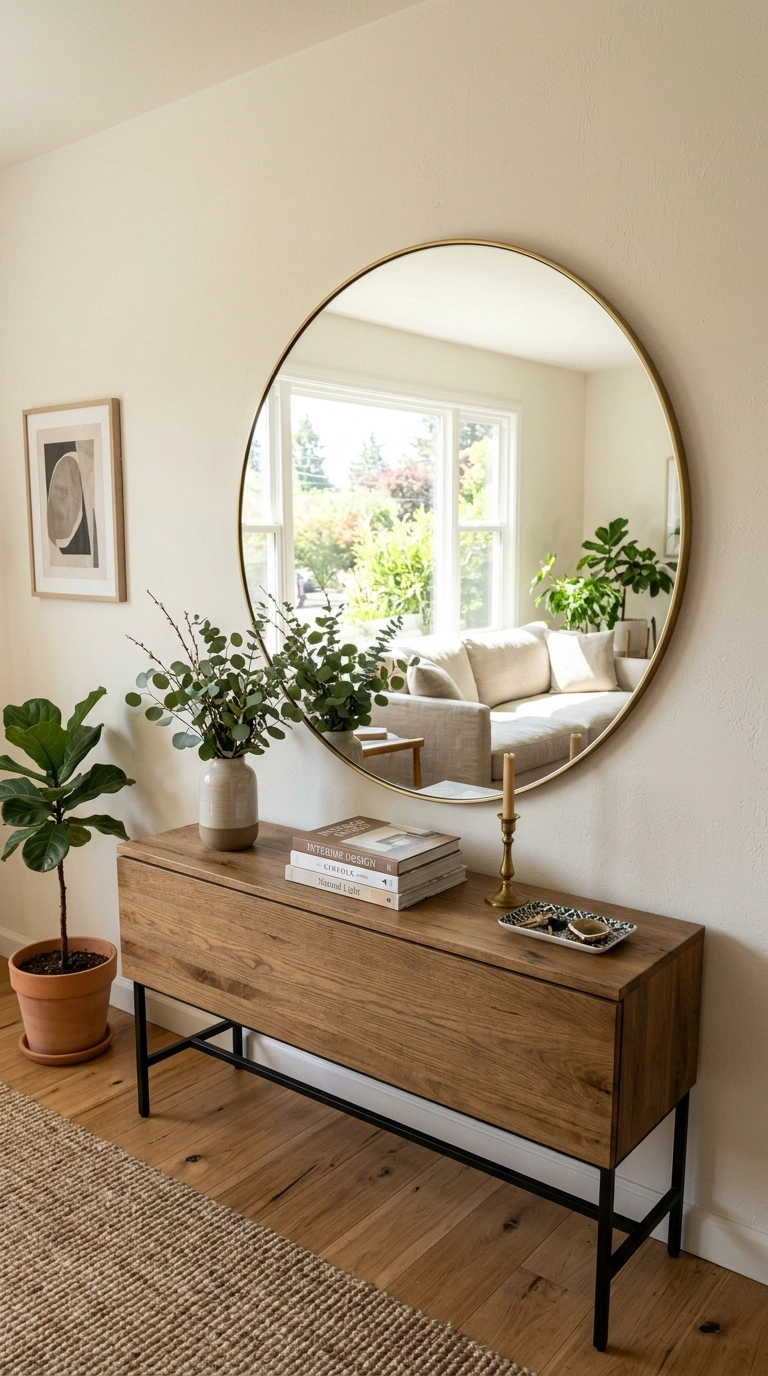
A large mirror can make a living room feel bigger and brighter by reflecting light and the view across the room. Hang it on a wall opposite a window so it bounces natural light back into the space, or above a console table or fireplace as a focal point. Round mirrors soften a room full of straight furniture lines, while an arched or rectangular mirror adds height to a low ceiling.
Thrifted mirrors with outdated frames can be given new life with a coat of spray paint in gold, black, or white to match your current decor. This single piece often becomes the focal point of the entire room and photographs beautifully, especially with natural light bouncing off the glass. It is a simple swap that makes a noticeable difference in how open and bright a living room feels, even in a smaller space.
11. Use Woven Baskets
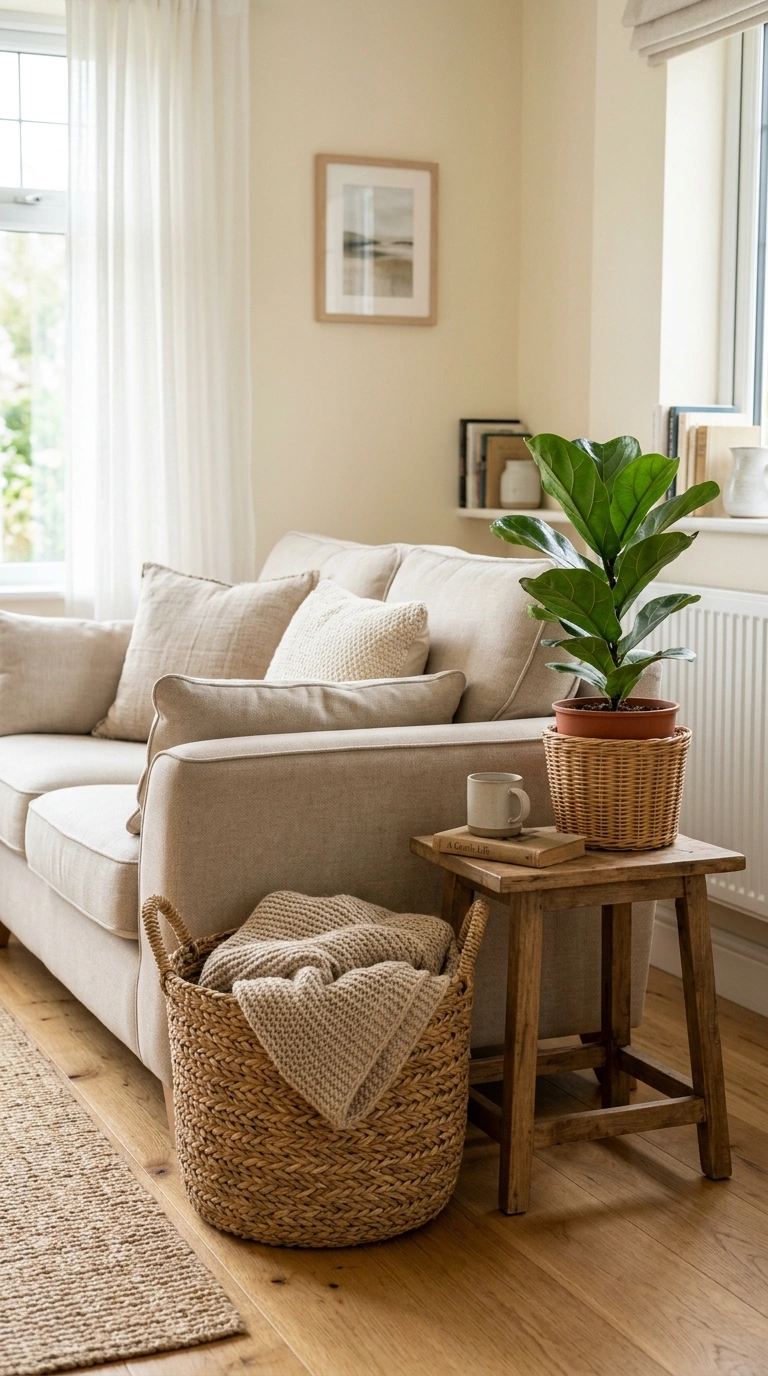
Woven baskets are both functional and decorative, making them one of the most useful budget additions to a living room. Use a large basket beside the sofa to hold throw blankets, magazines, or the remote controls that usually clutter the coffee table. A smaller basket on a shelf can hold plants or act as a simple decorative object on its own.
The natural texture of woven baskets, whether rattan, seagrass, or jute, adds warmth to a room that might otherwise feel too smooth or modern. They also solve a real storage problem, which means the room stays looking tidy without extra effort. Thrift stores and discount home stores usually carry a wide range of basket sizes and styles at low prices, so it is easy to find a few that match your room’s color palette and overall style.
12. Build A Reading Nook
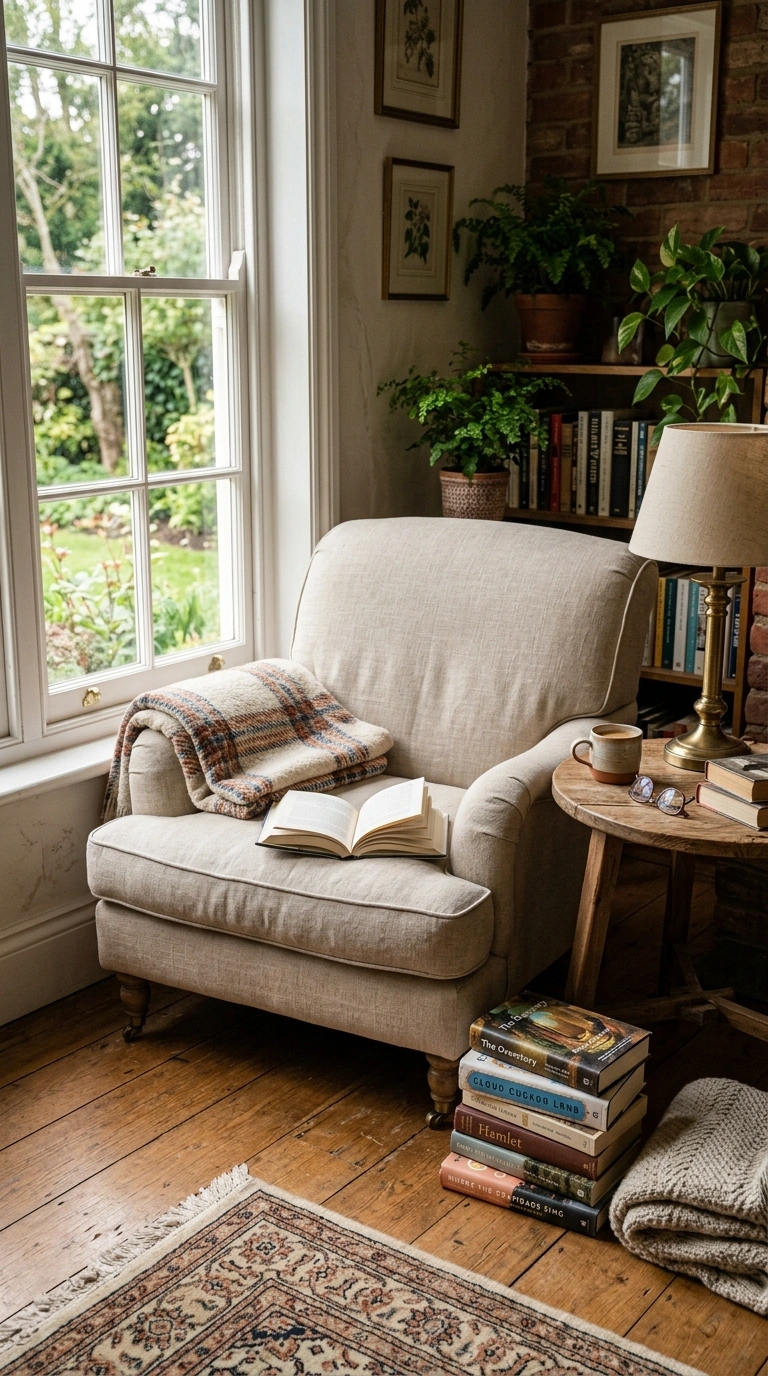
A reading nook turns an unused corner of the living room into a cozy spot that feels intentional rather than empty. Choose a corner near a window if possible, then add a comfortable chair or a floor cushion along with a small side table for a lamp and a cup of coffee. Layer in a soft throw blanket and a patterned pillow to make the space feel warm and inviting.
A small bookshelf or a stack of books on the floor nearby completes the look and shows what the space is meant for. Good lighting matters most here, so add a floor lamp or a table lamp with warm bulbs if the natural light in that corner is limited. This idea works especially well in living rooms that have an awkward corner that never seems to know what to do with itself, giving it a clear and charming purpose.
13. Update Old Lampshades
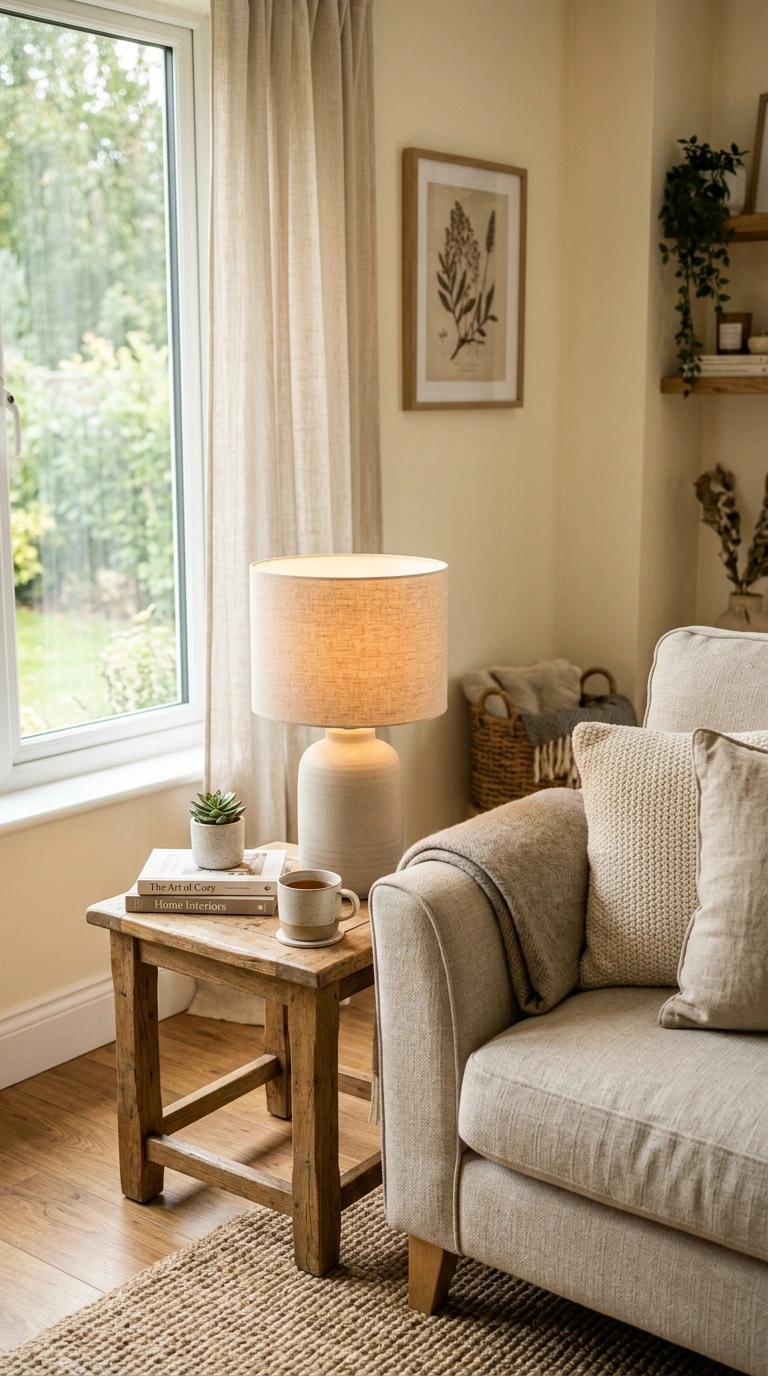
Swapping out old, yellowed, or mismatched lampshades is a quick fix that changes how a room feels once the lights are on. Choose shades in a neutral linen or off white color that fit the base’s shape and size, since a shade too small or too large will throw off the whole lamp. Drum shades give a room a more modern feel, while empire or bell shaped shades suit a more traditional style.
This update usually costs less than twenty dollars per lamp and takes only a minute to switch out. Warm white bulbs also make a big difference in how cozy a room feels compared to cool white light, so it is worth updating the bulbs at the same time as the shades. This small detail is often overlooked, but it changes the entire mood of a living room once evening comes and the lamps turn on.
14. String Warm Fairy Lights
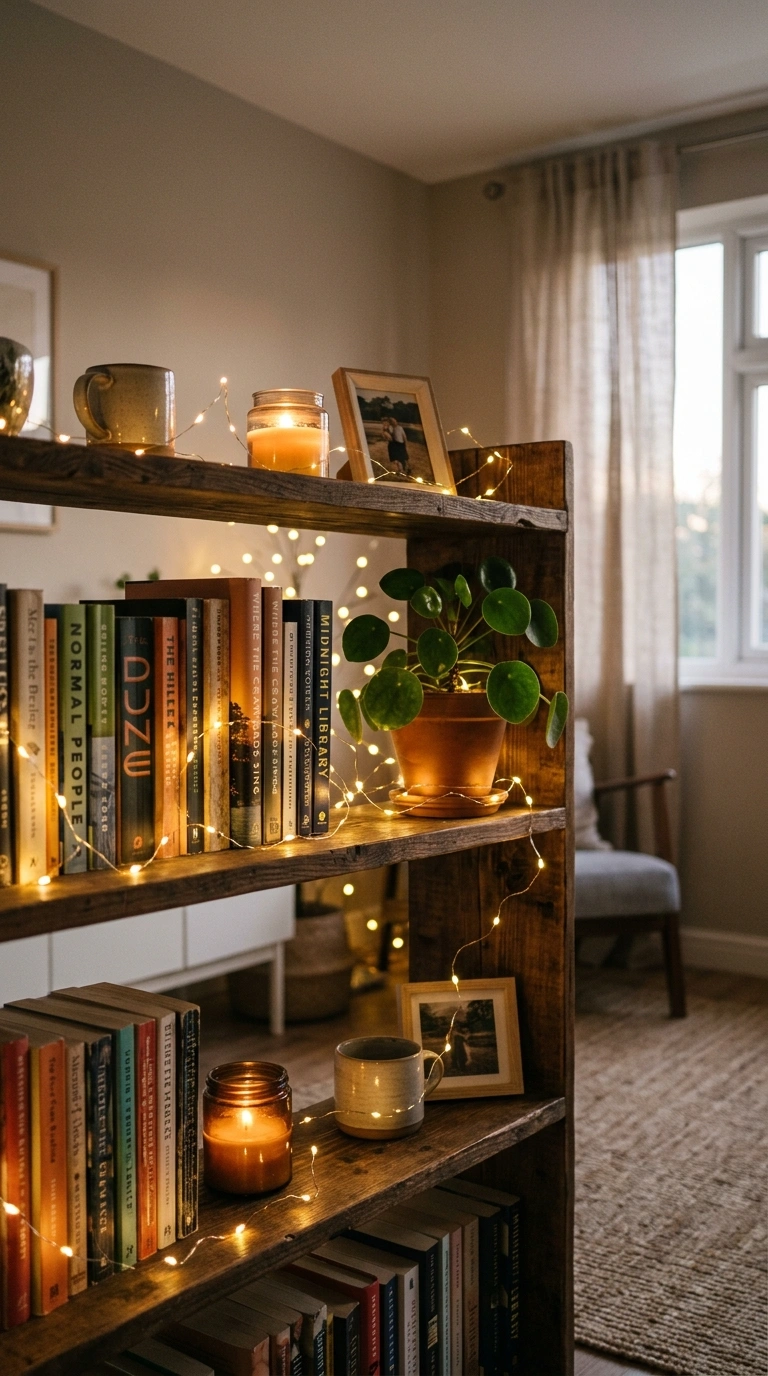
Adding string lights to a living room creates a soft, warm glow that makes the space feel cozy once the sun goes down. Wrap them around a curtain rod, drape them along a shelf, or tuck them into a glass jar or vase for a simple centerpiece. Choose warm white lights instead of cool white or colorful ones for a more grown up, decor friendly look that works with almost any style.
Battery operated or plug in string lights both work well, and many now come with a small remote for easy on and off control. This idea is especially popular for renters since it requires no wiring or permanent changes to the room. It photographs beautifully for evening pictures and adds a layer of ambiance that overhead lighting alone cannot give a room, all for the cost of one inexpensive strand of lights.
15. Rearrange Your Furniture
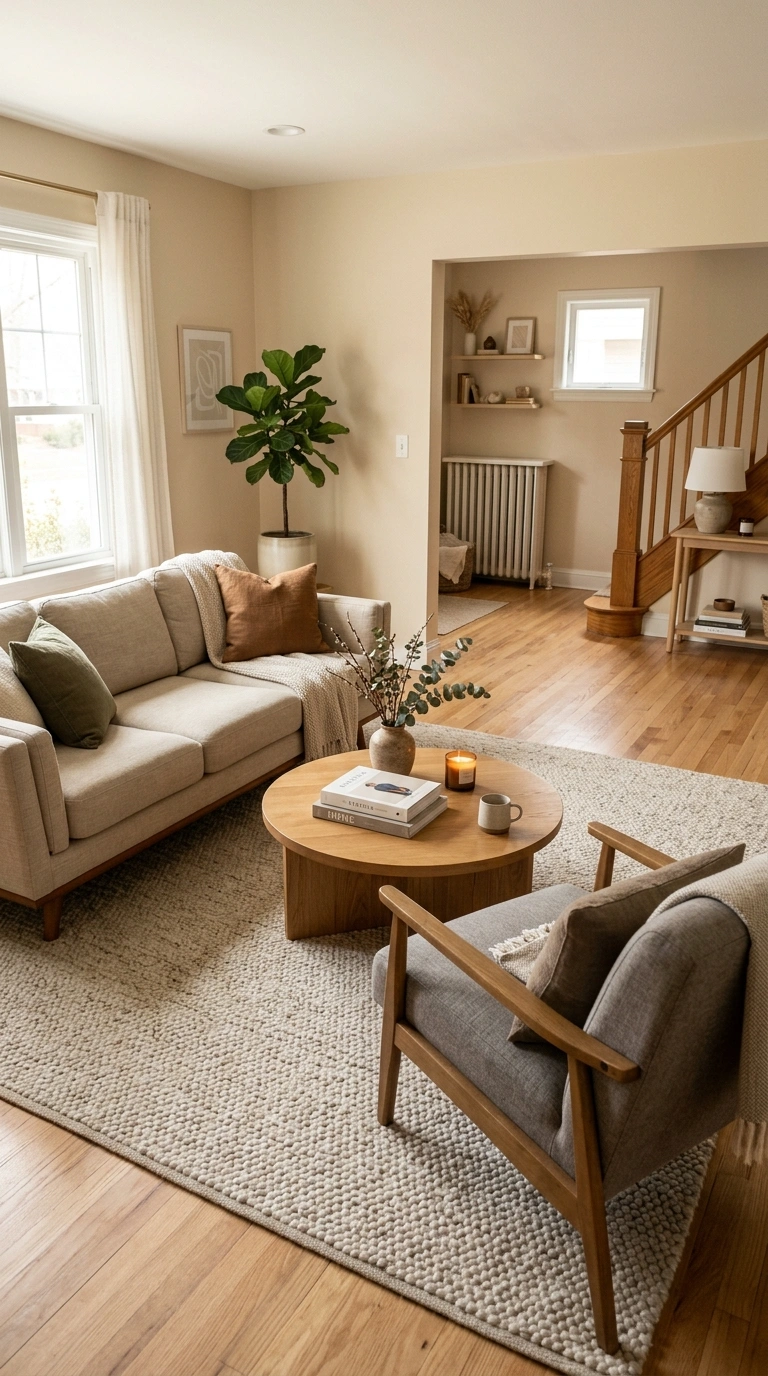
Sometimes the best living room update costs nothing at all, just a new furniture layout. Try angling the sofa instead of pushing it flat against a wall, or float it in the middle of the room if the space allows, which can make a small room feel more open. Pull the coffee table a few inches closer to the seating area so conversation feels easier, and make sure there is a clear walking path through the room.
Moving a chair to face the sofa instead of the television can also create a more social layout for a living room that hosts guests often. Before moving heavy furniture, it helps to sketch a few layout options on paper first. This is one of the only ideas on this list that requires no purchases at all, just some time and a little trial and error to find what works best.
16. Add A Bold Rug
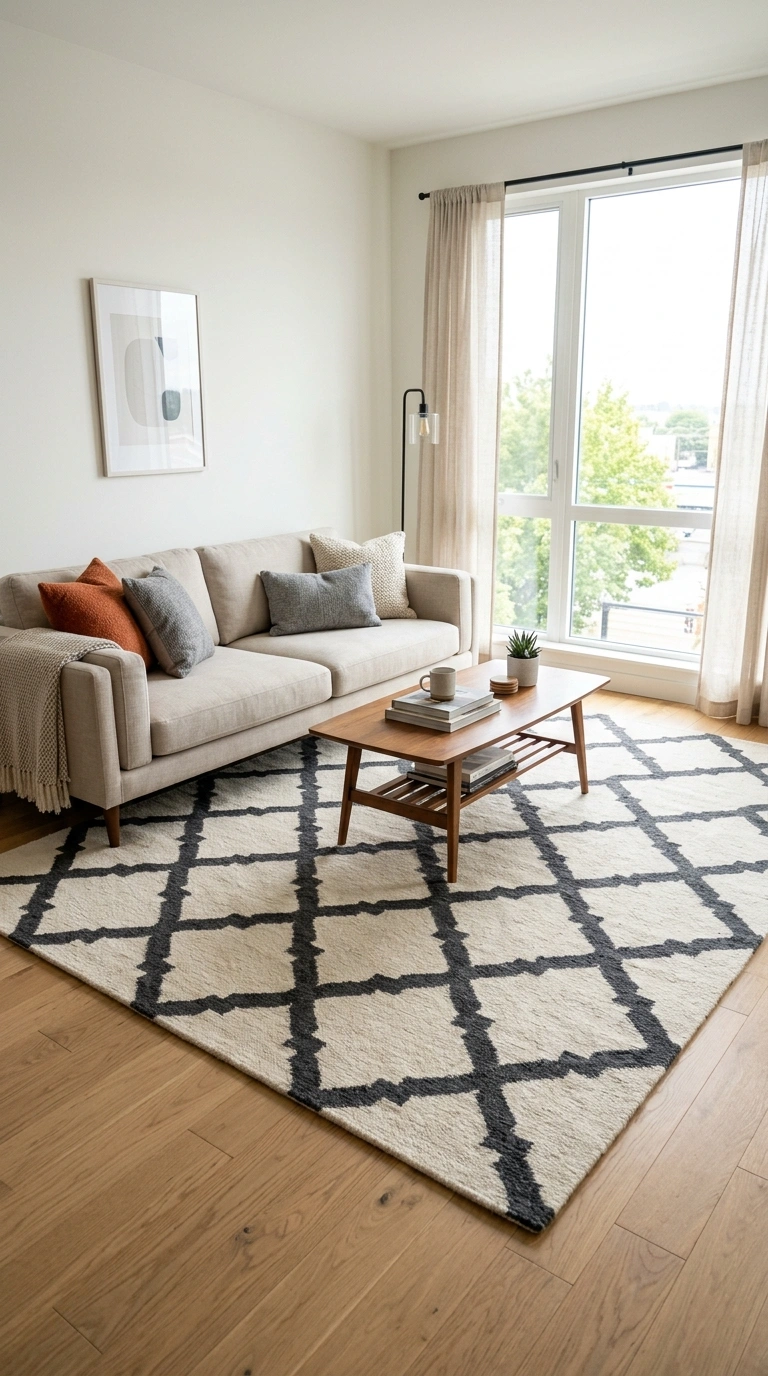
A rug with a bold pattern or bright color can anchor a living room and hide a plain floor at the same time. Choose a rug large enough that at least the front legs of every piece of furniture sit on it, since a rug that is too small will make the room feel disconnected and awkward. Patterns like Moroccan trellis, stripes, or floral prints add personality, especially in a room where the walls and furniture are kept fairly neutral.
A bold rug is also forgiving when it comes to spills and everyday wear, since busy patterns hide stains and marks better than solid colors. This is often one of the higher cost items on a budget list, but sale racks, online marketplaces, and discount stores regularly carry patterned rugs at a fraction of retail price, so it is worth checking a few sources before buying full price.
17. Style A Bookshelf
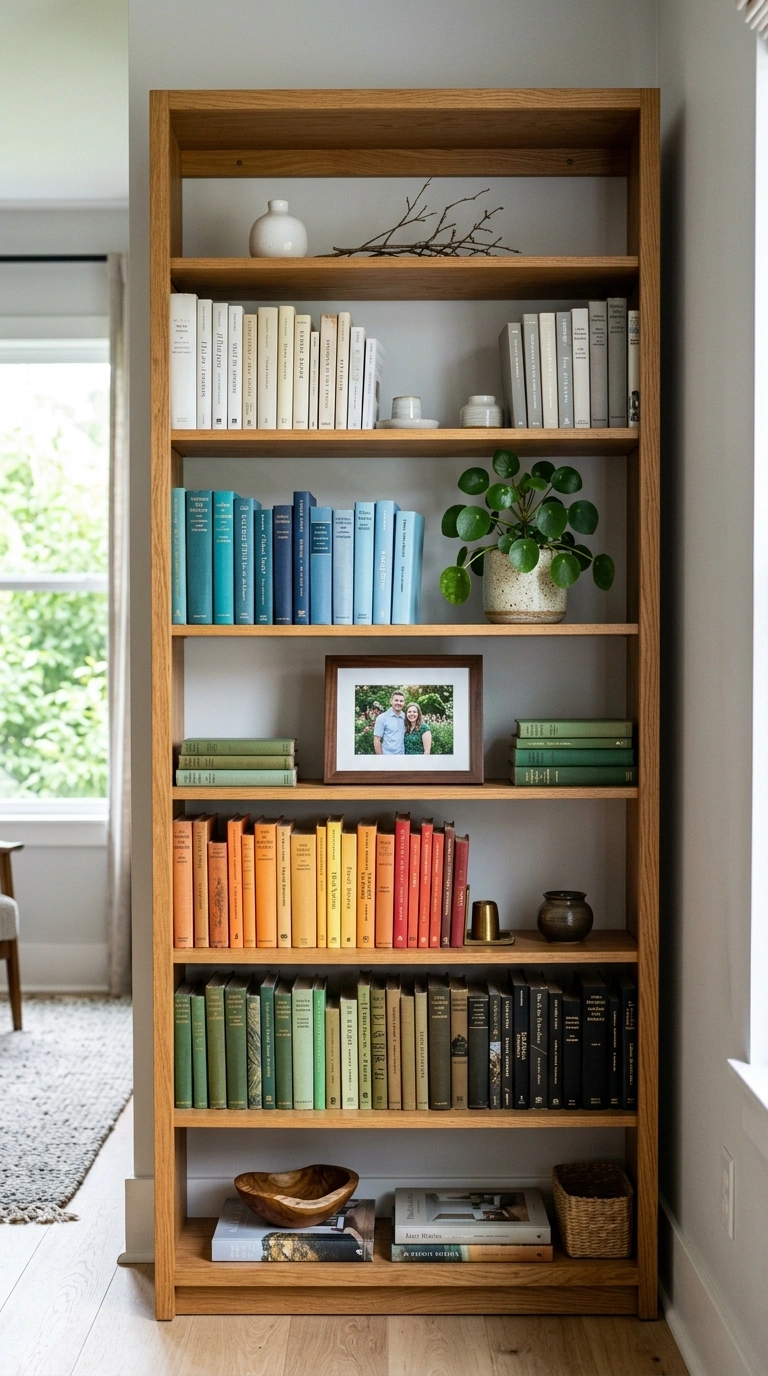
A bookshelf that is either too full or too empty can throw off the balance of an entire living room, so a little restyling makes a big difference. Start by pulling everything off the shelves, then group books by color or size instead of alphabetically for a more visual, less cluttered look. Stack some books flat and stand others upright, using the flat stacks as a base to display a small object like a candle or a framed photo.
Leave some open space on each shelf rather than filling every inch, since empty space actually makes a shelf look more curated. Mix in a plant or two to soften all the straight lines of the books and shelf frame. This project costs nothing if you are only using items you already own, and it can completely change how organized and intentional the room feels.
18. Install Wall Sconces
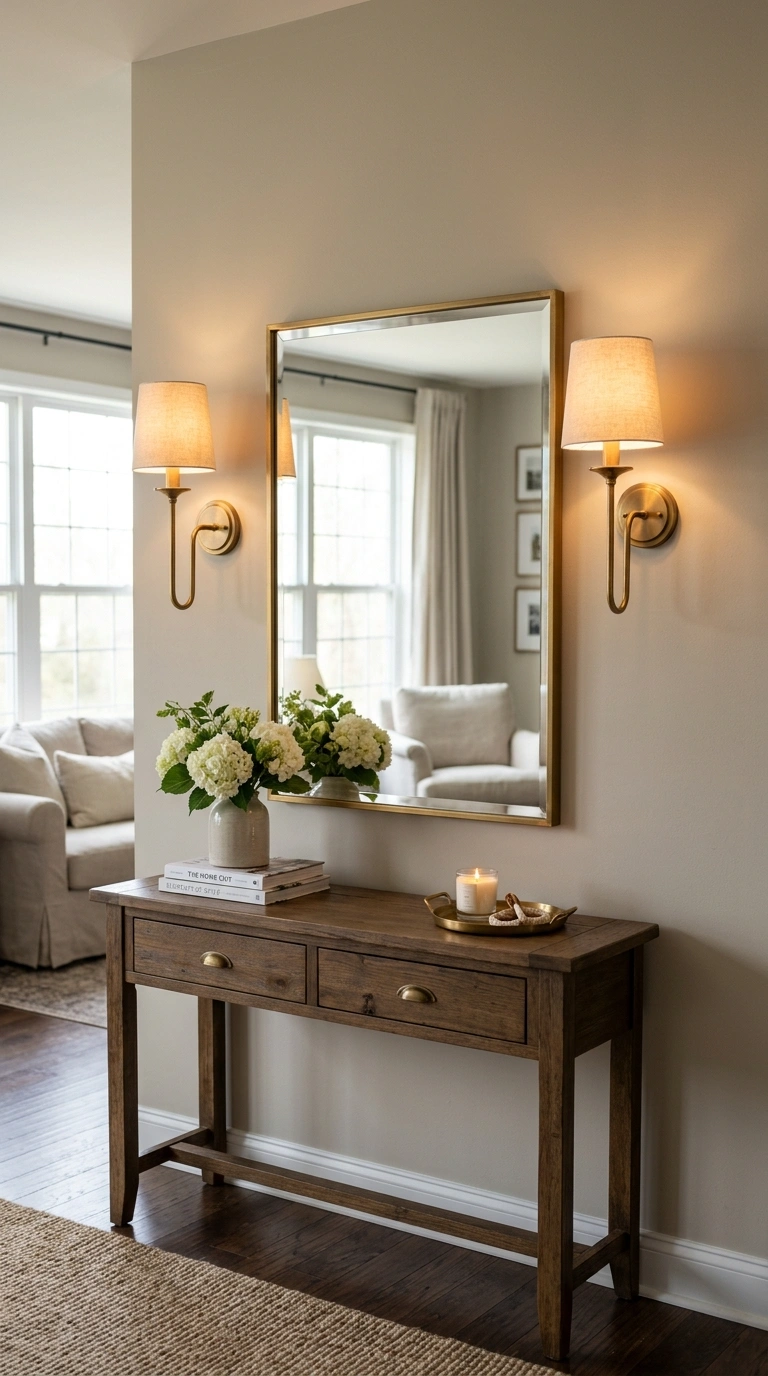
Wall sconces add a soft layer of light to a living room and free up table space that lamps usually take up. Battery operated or plug in sconces are the easiest option since they do not require any electrical work, making them ideal for renters or a quick weekend project. Install them on either side of a piece of art, a mirror, or a fireplace for a balanced, symmetrical look that feels more designed.
Choose a warm bulb so the light feels cozy rather than harsh, especially if the sconces will be used in the evening. This kind of layered lighting, combined with a floor lamp or overhead fixture, makes a room feel much more finished than a single light source ever could. Sconces also add a bit of architectural interest to a plain wall, giving the room more depth without needing any structural changes.
19. Add A Blanket Ladder
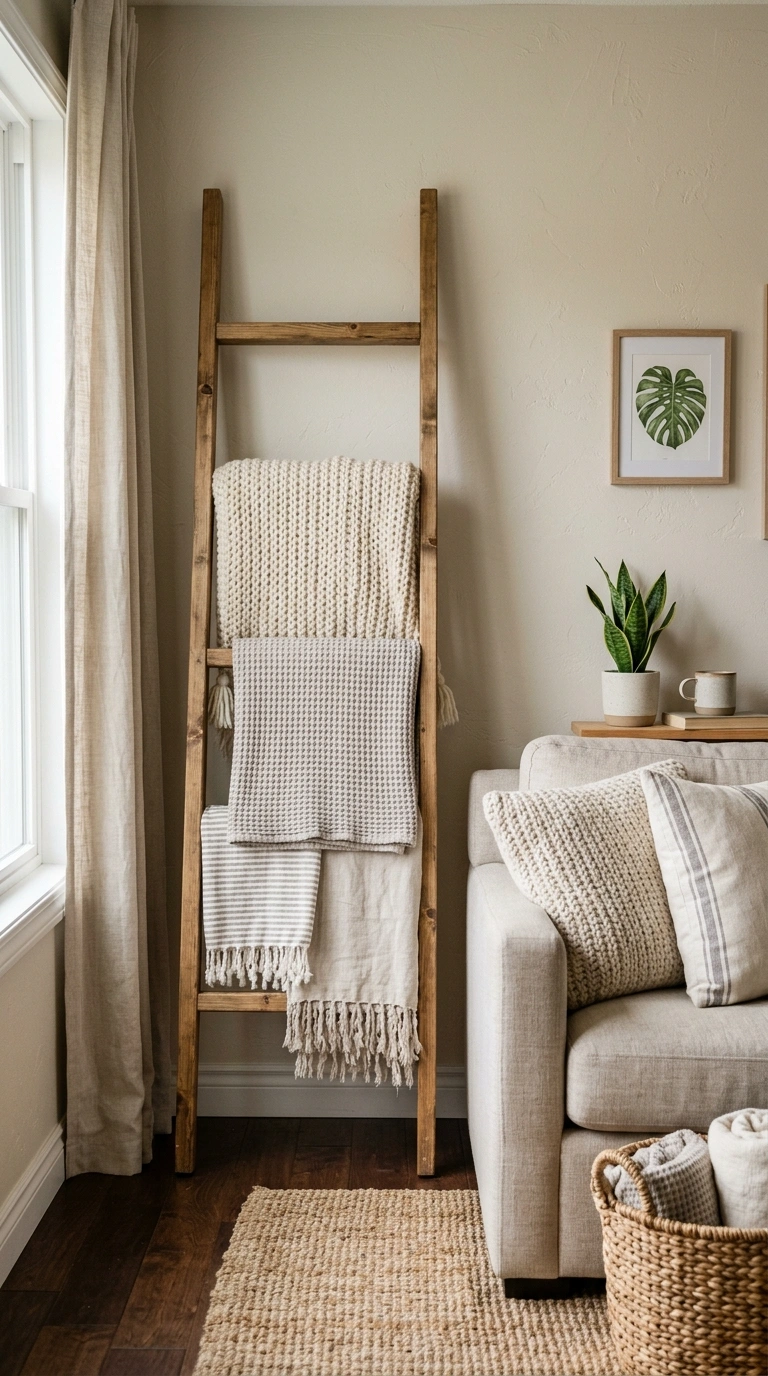
A wooden blanket ladder leaned against the wall is a simple way to display throw blankets while keeping them handy for movie nights. Place it beside the sofa or in an empty corner, then drape two or three blankets over the rungs in a mix of colors and textures like knit, waffle weave, and solid cotton. This idea solves the common problem of blankets piling up on the sofa arm or getting stuffed into a basket where they are hard to find.
A blanket ladder can be bought inexpensively or built from a few pieces of wood for those who enjoy a simple DIY project. It adds height and a bit of rustic charm to a room, especially one that leans toward a farmhouse or cottage style. This is a small detail, but it photographs well and makes a living room feel cozier right away.
20. Use A Vintage Trunk
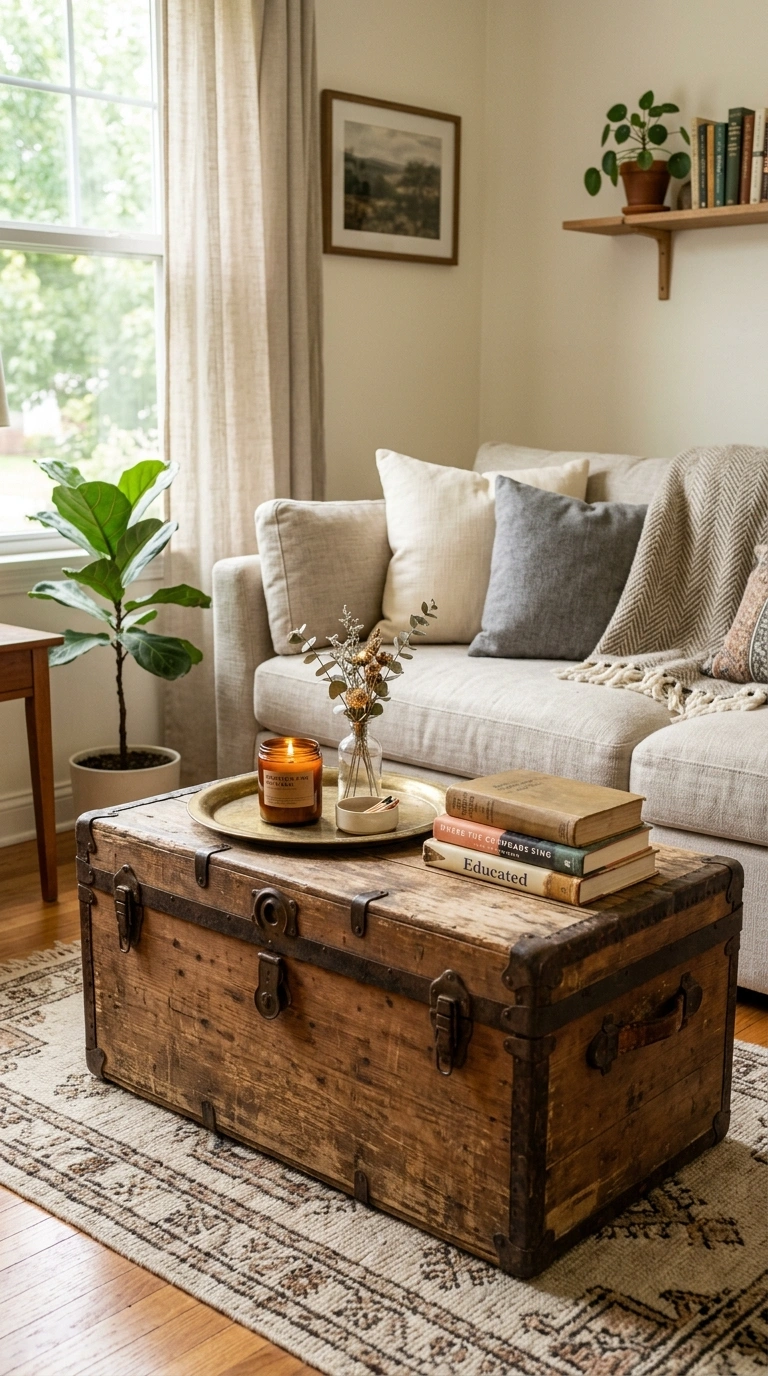
An old trunk used as a coffee table brings character to a living room while also solving a storage problem. Look for one at a thrift store, flea market, or estate sale, since the worn leather or wood finish adds instant charm that new furniture often lacks. Use the top surface for the usual coffee table styling, like a tray, a candle, and a stack of books, and use the inside of the trunk to store extra blankets, magazines, or remote controls out of sight.
This idea works especially well in living rooms with a vintage, eclectic, or farmhouse style, though a clean lined trunk can also fit a more modern room. Trunks are often priced lower than traditional coffee tables at secondhand shops, making this both a budget friendly and a conversation starting piece for the room.
21. Create A Gallery Shelf
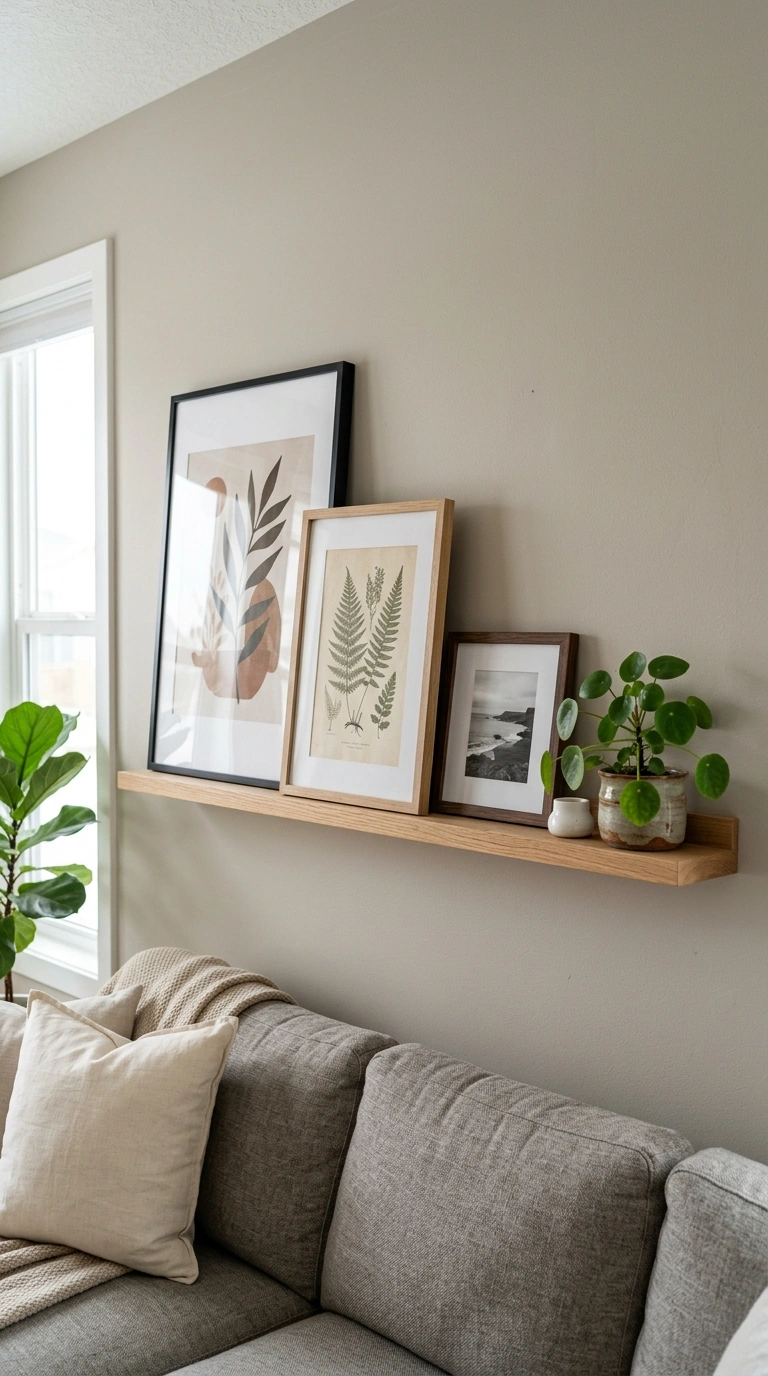
A gallery shelf uses one long, narrow floating shelf to display a row of framed art, leaning pieces against the wall instead of hanging each one separately. This makes it easy to switch out the art whenever you want without patching new nail holes in the wall. Lean two or three frames of different sizes on the shelf, overlapping them slightly for a relaxed, layered look, and add a small plant or object at one end to break up the row of frames.
This idea works well above a console table, a sofa, or in a hallway that connects to the living room. It is especially useful for renters since only one shelf needs to be mounted instead of multiple nail holes for individual frames. The look feels curated and current, and it costs very little if you are using art and frames you already have.
22. Add Textured Wall Art
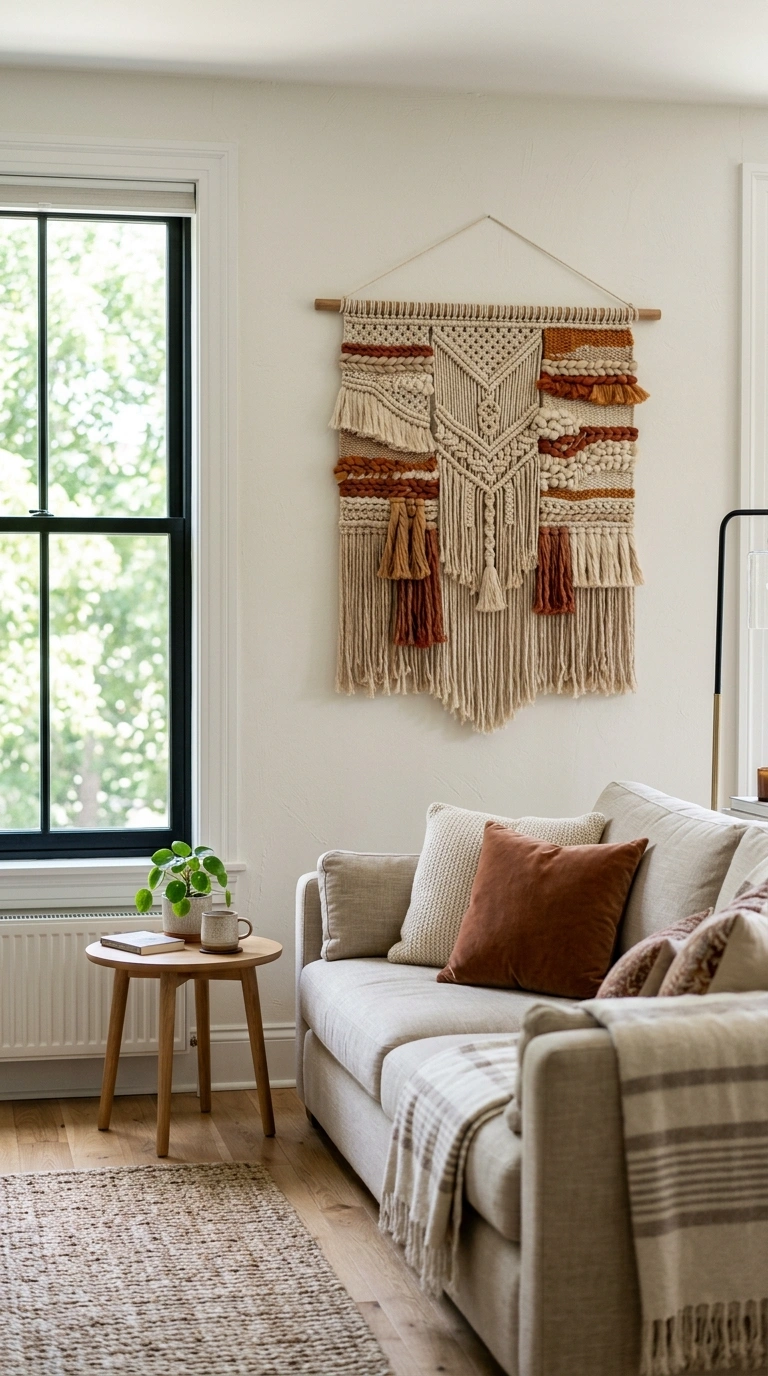
Wall art with real texture, like a woven wall hanging, a fabric tapestry, or a piece with raised material, adds depth to a living room in a way that flat prints cannot. Hang it above the sofa or on an empty wall as a focal point, choosing a size that fills a good portion of the wall rather than something too small and lost in the space. Neutral tones like cream, tan, and rust work well since they add texture without competing with other colors in the room.
This kind of art also softens a room that has a lot of hard surfaces, like a leather sofa, wood floors, or a glass coffee table. Many textured pieces can be found affordably at craft stores or made at home with basic materials like yarn and a wood dowel, making this an easy and inexpensive way to finish a plain wall.
A living room does not need to be redone all at once. Pick two or three ideas from this list to start, and add more over time as your budget allows. Small changes like these add up fast, and before long the room will feel like a space you actually enjoy spending time in.