
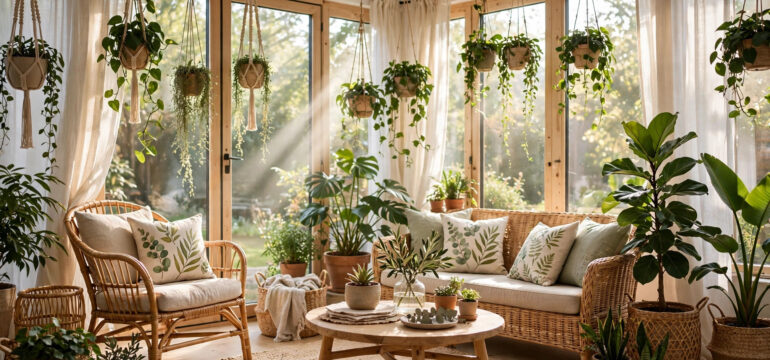
Come with me and step through the glass doors of the sunroom. This is the brightest spot in the house, the room that smells like warm soil and fresh leaves, and today I am going to walk you through it idea by idea. We will start at the entrance, wander past the reading corner, look up at the plants hanging from the ceiling, and finish at the far end where the daybed waits for an afternoon nap. A sunroom works best when it feels like the garden just decided to move inside for a while. That means natural materials like rattan, wicker, jute, and wood, plus as many plants as you can reasonably keep alive. It also means light fabrics that move when the breeze comes through the windows, and colors that come straight from nature: leaf green, warm terracotta, sandy beige, and soft sky white.
The good news is that you do not need a big budget or a contractor to make this happen. Most of the ideas on this tour are simple swaps and small additions. You can start with one corner and let the room grow over time, the same way a garden grows. Some ideas are about comfort, like the reading chair and the daybed. Some are about plants, because a sunroom without plants is just a bright empty room. And a few are about the small details, like string lights and macrame, that make the whole space feel finished. So take a slow walk with me around this room. By the time we reach the last idea, you will know exactly which corners of your own sunroom to work on first.
1. Rattan Armchair Reading Corner
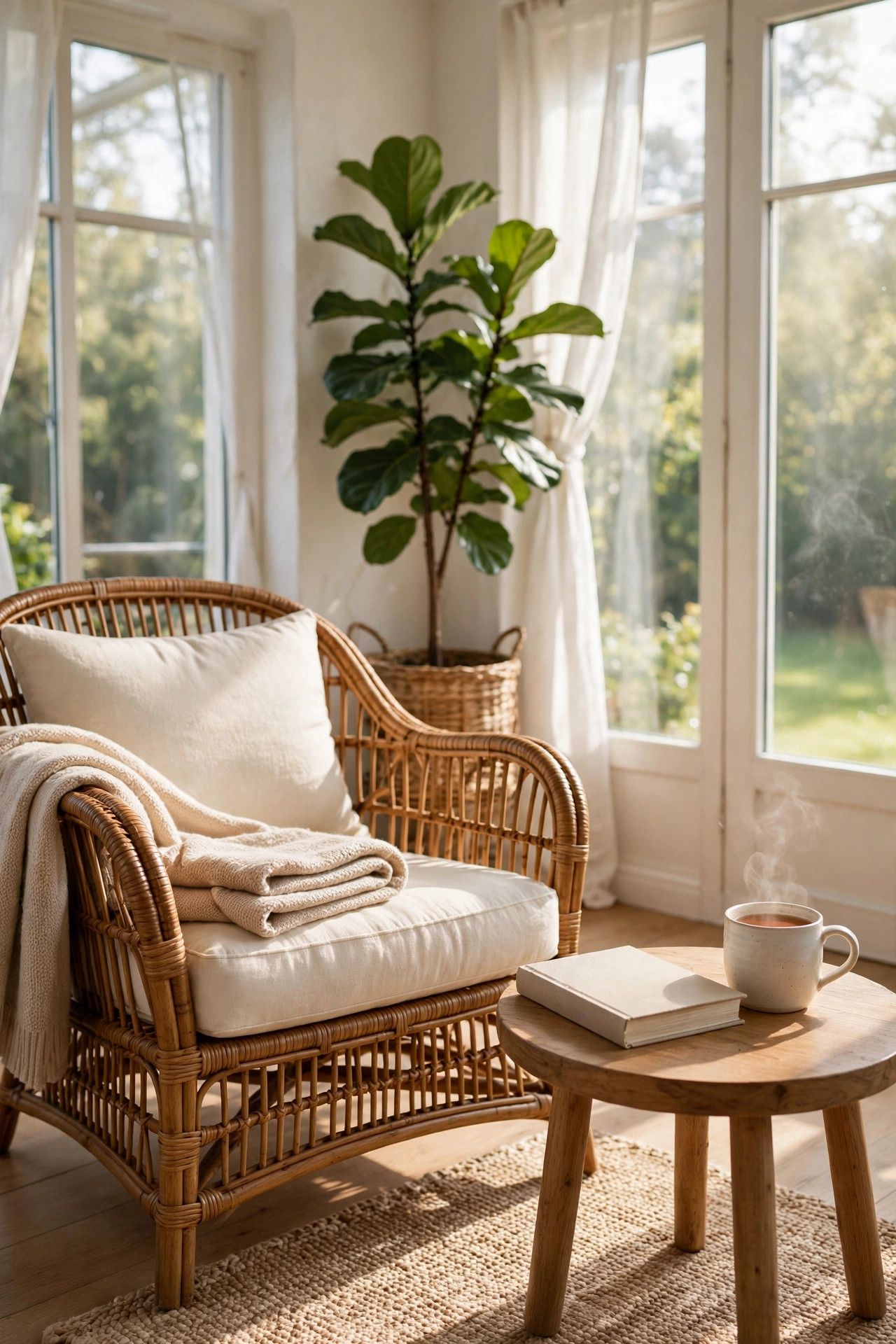
Step inside the sunroom and turn to your right, because that is where we will put the first chair. Right next to the door, angled toward the windows, place a wide rattan armchair with a thick seat cushion that you can sink into without thinking twice. Rattan is the perfect sunroom material because it looks like it belongs with plants, it handles bright sunlight without fading the way cheap plastic does, and it stays cool to the touch even on a hot afternoon when the glass turns the room warm. Add a cushion in a washable cream or light green fabric, since this chair will get a lot of sun and a lot of use through every season of the year. The washable cover matters more than you might think, because pollen, dust, and the occasional muddy paw print are simply part of sunroom life, and being able to toss the cover in the washing machine keeps the chair looking fresh. Keep a small throw blanket folded over one arm for chilly mornings, and choose a chair wide enough that you can curl up sideways with your feet tucked under you. You have now built a seat that invites you to sit down every single time you walk past it, which is exactly what a reading corner should do.
Now look at what surrounds the chair, because a reading corner needs more than just a chair to feel complete and truly inviting. Place a small round side table next to it, big enough for a mug of tea and a book, and put a tall potted plant behind the chair so the leaves frame you like a little green curtain while you read. A floor lamp or a simple clip on reading light is worth adding too, because on gray winter days or late summer evenings you will still want to settle in here with a story. Add a small basket under the side table to hold two or three books you are currently reading, so the corner always feels ready and waiting. The whole point of this corner is that it becomes a daily habit: morning coffee here, an evening chapter here, a quiet ten minutes here whenever the house feels too loud or too busy. Once you set up this one chair with real care, you will notice the sunroom starts pulling you in more often, and the rest of the room will start to feel like it needs to keep up with this cozy new standard you have set.
2. Hanging Plant Canopy
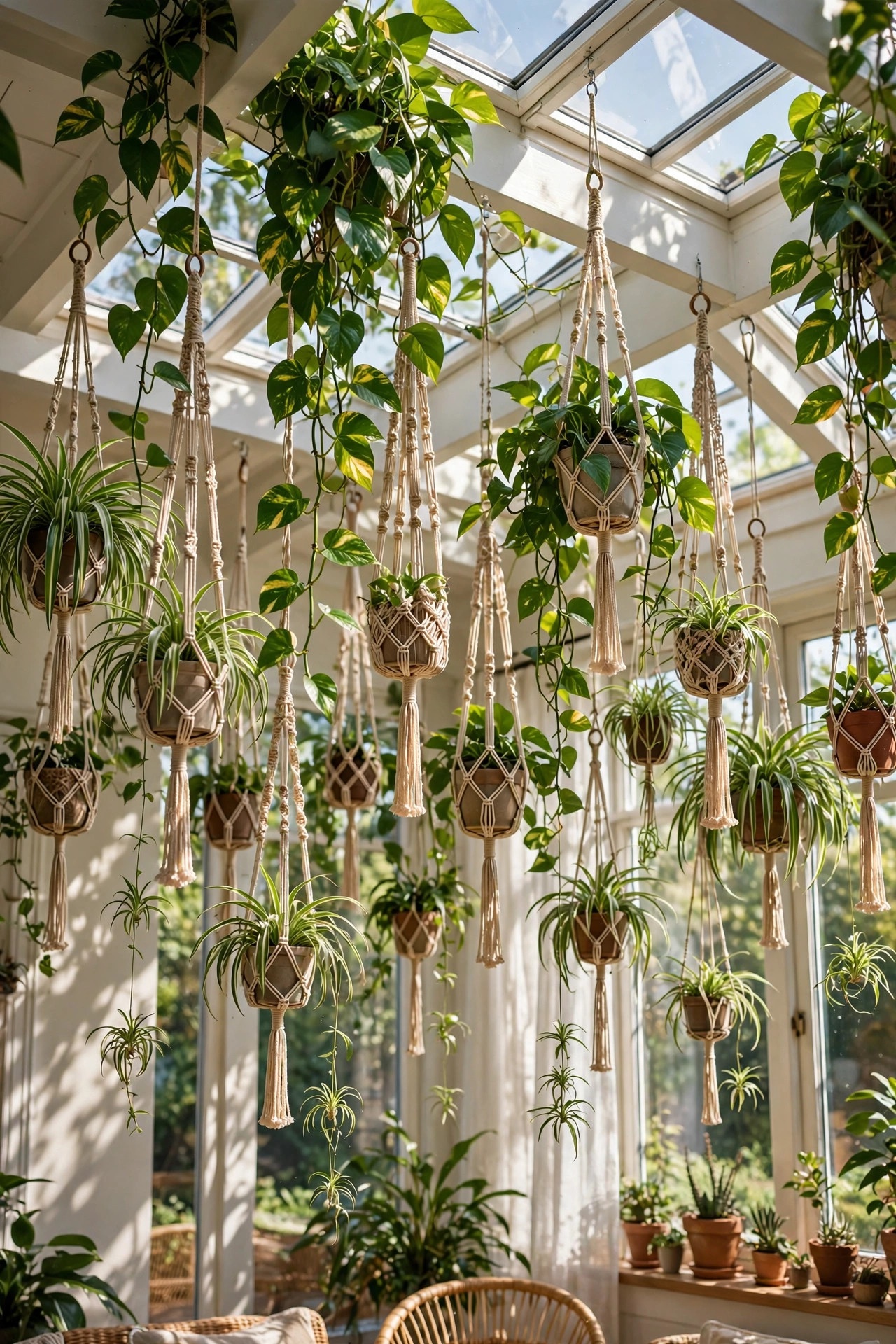
Now lift your eyes up, because the ceiling is the most underused part of almost every sunroom. A hanging plant canopy turns all that empty air above you into a living green ceiling, and it changes the whole feeling of the room in a way that floor plants alone cannot. Choose trailing plants like pothos, spider plants, or string of pearls, because their leaves spill downward and create soft green curtains as they grow longer through the months. Hang them at different heights using simple ceiling hooks with macrame hangers or light chain, and vary the pot sizes so the canopy looks natural and layered instead of lined up in a stiff perfect row. Make sure each plant still gets enough light where it hangs, and just as important, make sure you can reach every single pot with a watering can without climbing on furniture. The prettiest hanging garden in the world fails fast if watering it feels like a chore you keep putting off until the leaves turn brown. Take a photo of the canopy on day one so you can compare it a few months later, because the growth will surprise you. Most trailing plants in a bright sunroom grow fast, and within one season your ceiling will look fuller and more lush than you imagined. That visible progress is one of the most rewarding parts of this idea, watching bare chains slowly disappear under waves of green.
Give the canopy a little time and attention each week, and it will reward you with one of the most relaxing views in the entire house. Trim the trailing vines when they get so long they brush the furniture, wipe dust off the leaves with a damp cloth once a month so they can breathe and absorb light properly, and rotate the pots every few weeks so growth stays even on all sides instead of leaning toward the window. If your sunroom ceiling is high, keep a small step stool tucked nearby so watering never feels like a project. The real magic of this idea is how it makes the room feel cooler and calmer, almost like sitting under real trees in a garden. Guests always look up and smile when they walk in, and on bright mornings the sunlight filtering through the leaves throws dancing shadows across the floor and furniture that no store bought decoration could ever copy or replace. In the evening, the hanging plants soften the look of the ceiling so the whole room feels lower and cozier. Friends will ask how you water everything, and you will smile because the step stool and the weekly routine have made it second nature. A green ceiling is the kind of feature people remember, and it costs far less than most statement decorations.
3. Wicker Sofa with Botanical Pillows
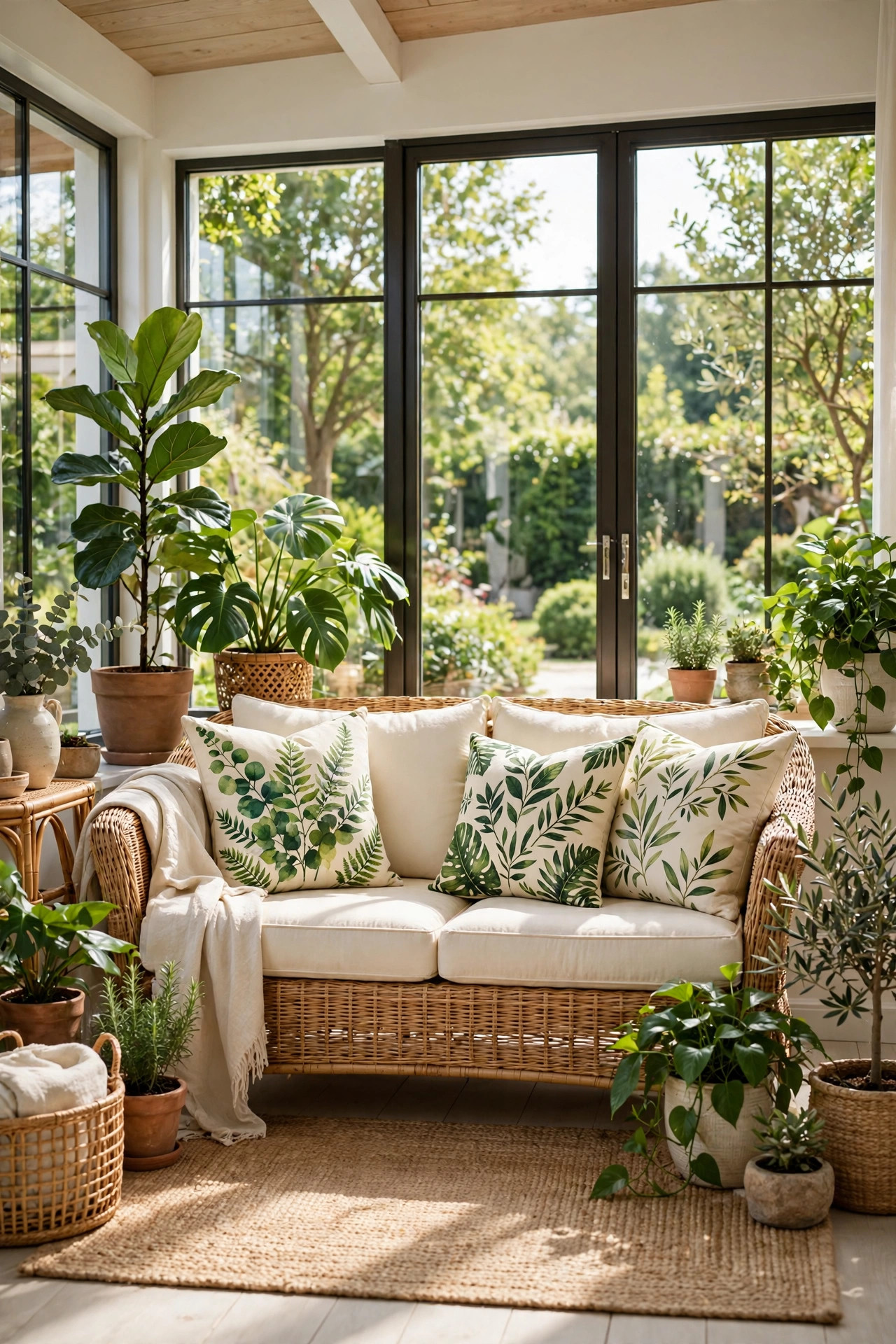
Walk a few steps deeper into the room and you will reach the main seating area, and this is where a wicker sofa earns its place as the heart of the sunroom. A two or three seat wicker sofa gives the space a real living room feeling without blocking any light, because the open weave lets brightness pass right through it in a way that solid upholstered furniture never could. Choose a sturdy frame with thick comfortable cushions, and pick a cushion color that stays light, like warm white, soft beige, or pale sage green. Dark cushions in a sunroom fade fast in strong sun and show every bit of dust, pollen, and pet hair, while light ones keep the room feeling airy and fresh through all four seasons. Make sure the cushions have removable covers so you can wash them when the plants drop leaves or the garden dirt finds its way inside, which it always does no matter how careful you are. Test the seat depth before you buy, because a sofa that looks pretty but feels shallow will sit empty while everyone crowds onto the daybed instead. Check that the frame has solid joinery and a decent warranty, because a sunroom sofa gets daily use in heat and humidity. A well made wicker frame can last ten years or more with basic care. Spending a little more on the frame now saves you from replacing a wobbly sofa in two years.
Now dress that sofa with pillows that carry the garden theme, because plain cushions alone can look a little flat and unfinished. Mix two or three botanical prints, like large monstera leaves, simple fern patterns, or soft watercolor flowers, with a couple of solid pillows in matching greens or creams to give the eye a place to rest. Vary the sizes and shapes, a couple of square pillows plus one long lumbar pillow across the front, so the arrangement looks relaxed and collected instead of stiff and store bought. Step back and look at the sofa from the doorway to check the balance, because this is the piece your eye lands on first when you enter the room. A well dressed wicker sofa makes the whole sunroom feel pulled together and intentional, and it gives you a comfortable spot for long conversations, board games with the kids on rainy afternoons, or just sitting with your feet up watching the clouds move slowly past the glass roof. Swap the pillow covers with the seasons if you like a fresh look, keeping the same inserts and just changing the cases. Lightweight summer prints and warmer autumn tones keep the sofa feeling current all year. This small habit costs little and makes the whole room feel newly decorated every few months.
4. Tall Floor Plants in Ceramic Pots
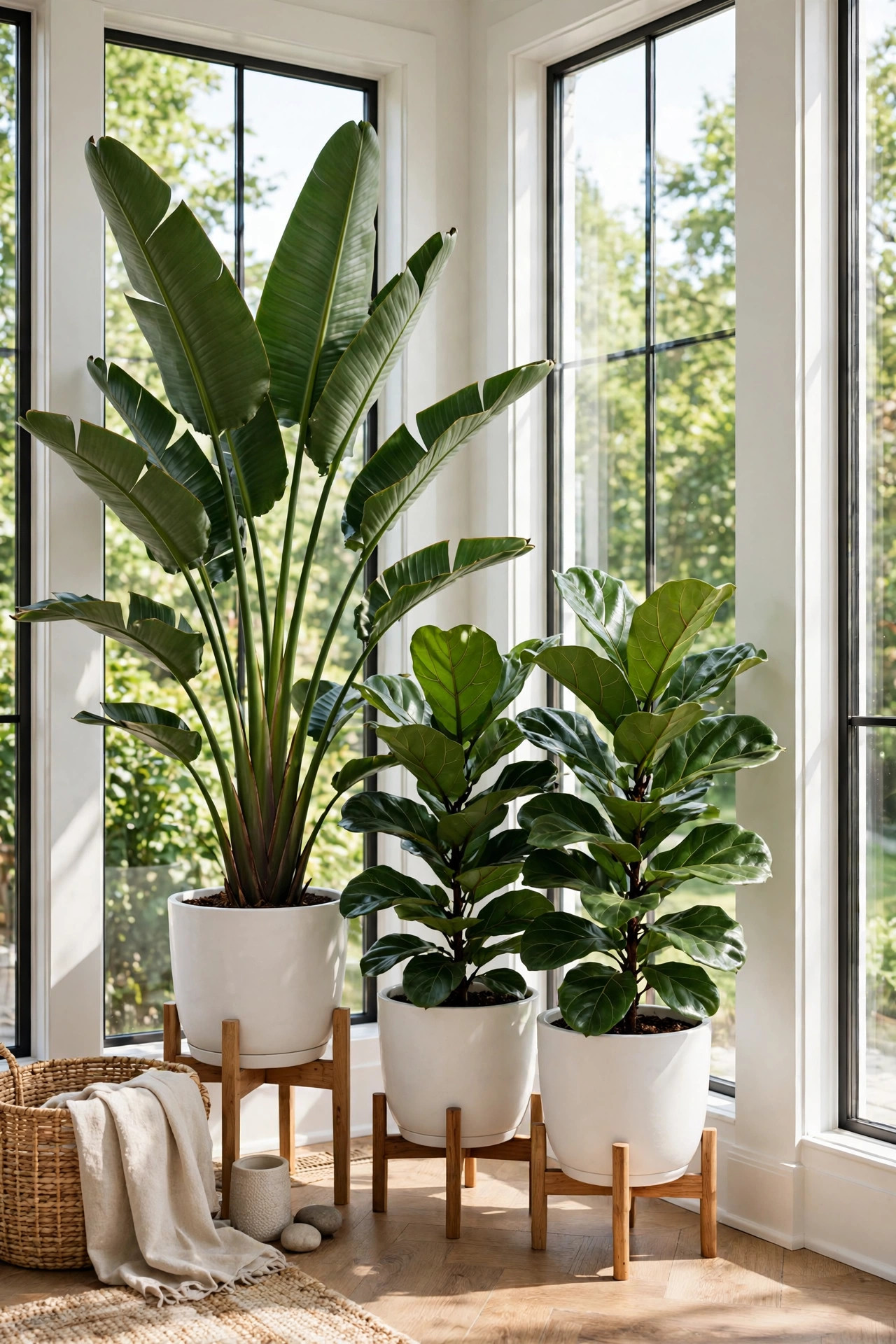
Keep walking along the windows and notice the corners, because tall floor plants are what turn empty corners into the lushest and most dramatic spots in the room. A fiddle leaf fig, a bird of paradise, or a tall rubber plant adds height and presence that smaller plants simply cannot give you, drawing the eye upward and making the ceiling feel higher. Put each one in a large ceramic pot in white, cream, or soft gray, because ceramic keeps the soil moist longer than terracotta and the clean simple color lets the plant itself be the star of the show. Group them in odd numbers, three tall plants filling one big corner or a single tall plant paired with a medium one beside the sofa, since odd groupings look more natural to the human eye. Make sure every pot has drainage holes and sits on a small stand or a saucer, so water never stains your floor and air can move under the pot to keep the roots healthy. If a pot feels too heavy to move for cleaning, put it on a wheeled plant caddy from the very start. You will thank yourself the first time you need to mop underneath it. Heavy ceramic pots are wonderful anchors, but only if you can still move them when you need to.
Caring for tall plants in a sunroom is mostly about light and routine, and a sunroom hands you the light part for free. Most large leafy plants love bright indirect light, so a spot a few feet back from the glass is perfect, close enough to stay bright all day but far enough that the harsh midday sun does not scorch the leaves. Water deeply when the top two inches of soil feel dry to your finger, and feed them with a gentle liquid fertilizer once a month during spring and summer when they are actively growing new leaves. Wipe the big leaves with a damp cloth now and then, because dusty leaves cannot catch light well and the whole plant starts to look tired and dull. Stake young tall plants loosely so they grow straight while their stems are still soft. When you get this right, these tall plants become the quiet anchors of the room, the bold green shapes that make everything else, the chairs, the rug, the little tables, feel like they are sitting inside a real indoor garden. Watch for new leaves unfurling in spring, because that is your sign the plant is happy with its spot. A plant that keeps pushing out fresh growth is telling you the light, water, and food are all right. That quiet feedback loop is one of the true joys of keeping big leafy plants.
5. Light Linen Curtains
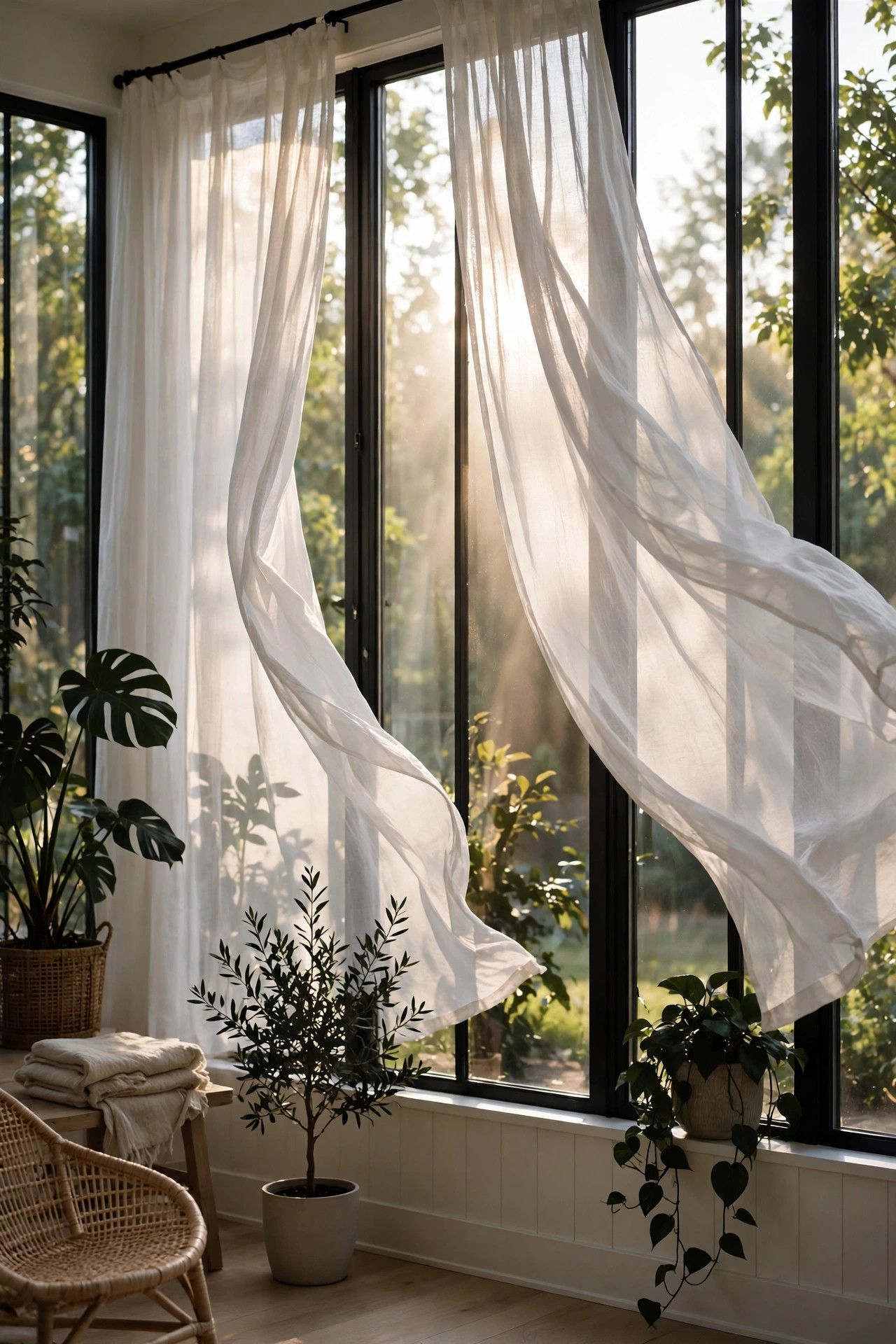
Turn toward the windows now and imagine them dressed in light linen curtains, because bare glass can make a sunroom feel harsh and glaring at midday. Linen is the ideal curtain fabric here since it softens the light without blocking it, and it moves gently when air flows through the open windows, which makes the whole room feel alive and breathing. Choose white, oatmeal, or a very pale green, and hang the panels high and wide so they frame the windows generously instead of covering up the glass you paid for. When the curtains are pulled open, you want to see as much of the garden as possible, and when they are drawn closed, the linen turns strong sunlight into a soft warm glow that flatters everything and everyone in the room. The natural slubby texture of linen adds a relaxed handmade feeling that fits perfectly with rattan, wicker, and wood. If your windows are very tall, consider two panels per window so the gathered fabric looks full rather than stretched thin. Fuller panels filter light more softly and look more luxurious. This is one case where a little extra fabric makes a visible difference. Wider panels also stack back more neatly to the sides on days when you want the full garden view unobstructed.
Linen curtains also solve the practical problems that come with living in a glass heavy room. On summer afternoons they cut the glare on book pages and phone screens so you can actually read in your favorite chair, and in winter they add a thin layer of softness that makes the room feel less drafty and cold. Wash them a couple of times a year, since sunroom curtains collect dust and pollen faster than curtains in any other room of the house, and the natural wrinkles of linen mean you never have to iron them, which is a blessing. If your sunroom has a door leading out to the garden, hang a curtain panel on each side of it too, so the doorway feels soft and welcoming instead of like a plain glass barrier. This is one of those ideas that seems small when you read about it, but it changes how the room feels the very moment you hang them up, turning a bright box of glass into a space that feels gentle, calm, and truly lived in. On the brightest days, half drawn linen panels create beautiful stripes of light and shade across the floor. That moving pattern changes through the day and keeps the room feeling dynamic. It is a free light show that comes with the curtains.
6. Garden Table Breakfast Nook
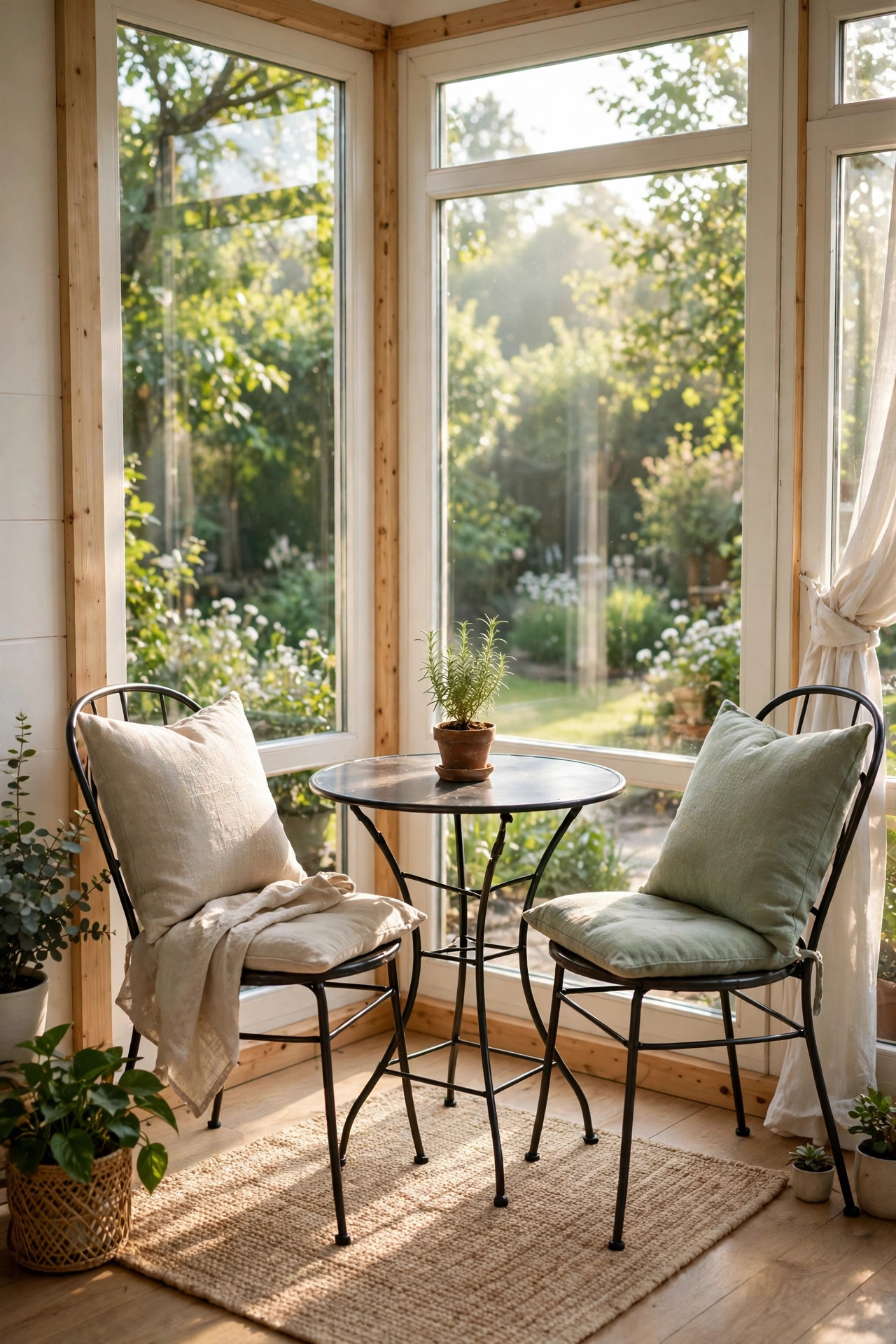
Over by the sunniest window, leave enough open space for a small garden table, because breakfast honestly tastes better when you eat it surrounded by plants and morning light. A round metal or wooden bistro table with two chairs fits into a surprisingly small corner and turns it into the most used spot in the entire house. Look for a table with a weather resistant finish, since sunroom humidity and the occasional splash from watering the plants are harder on furniture than normal indoor air. Keep the tabletop mostly clear so it stays useful every day, with just a small potted herb or a tiny vase of fresh cut flowers in the middle as a simple centerpiece. The simplicity is the whole point: this is a place to eat, drink coffee, and watch the garden wake up, not another surface that slowly collects mail, keys, and clutter. Choose chairs with a wipeable finish or washable cushions, because breakfast crumbs and coffee drips happen in real life. A quick wipe keeps the nook inviting instead of sticky. Practical finishes mean you actually use the spot daily instead of saving it for show. A quick wipe down each morning keeps the nook ready for breakfast without any extra fuss or effort.
Make this nook a real part of your morning routine and it will pay you back every single day. Set out two comfortable chairs with cushions you actually enjoy sitting on, because a pretty chair that hurts your back after ten minutes will sit empty no matter how nice it looks in photos. Add a small tray on the table to hold the salt, sugar, and napkins so breakfast does not require three trips back to the kitchen. In the warmer months, open the windows wide while you eat and let the garden sounds drift in, the birds, the breeze in the leaves, the distant lawn mower. In winter, this sunny corner will be the warmest seat in the house, and you will find yourself lingering over a second cup of coffee just to stay in the light a little longer. Families who set up a breakfast nook like this often find that everyone drifts here in the morning without being asked, and slow weekend breakfasts stretch longer because nobody wants to leave the light, the plants, and the view. Keep a small potted plant on the table that you water when you sit down each morning, tying plant care to a habit you already have. That tiny ritual keeps the centerpiece alive and thriving. Soon the whole nook feels like a living part of your routine.
7. Tiered Plant Stand Display
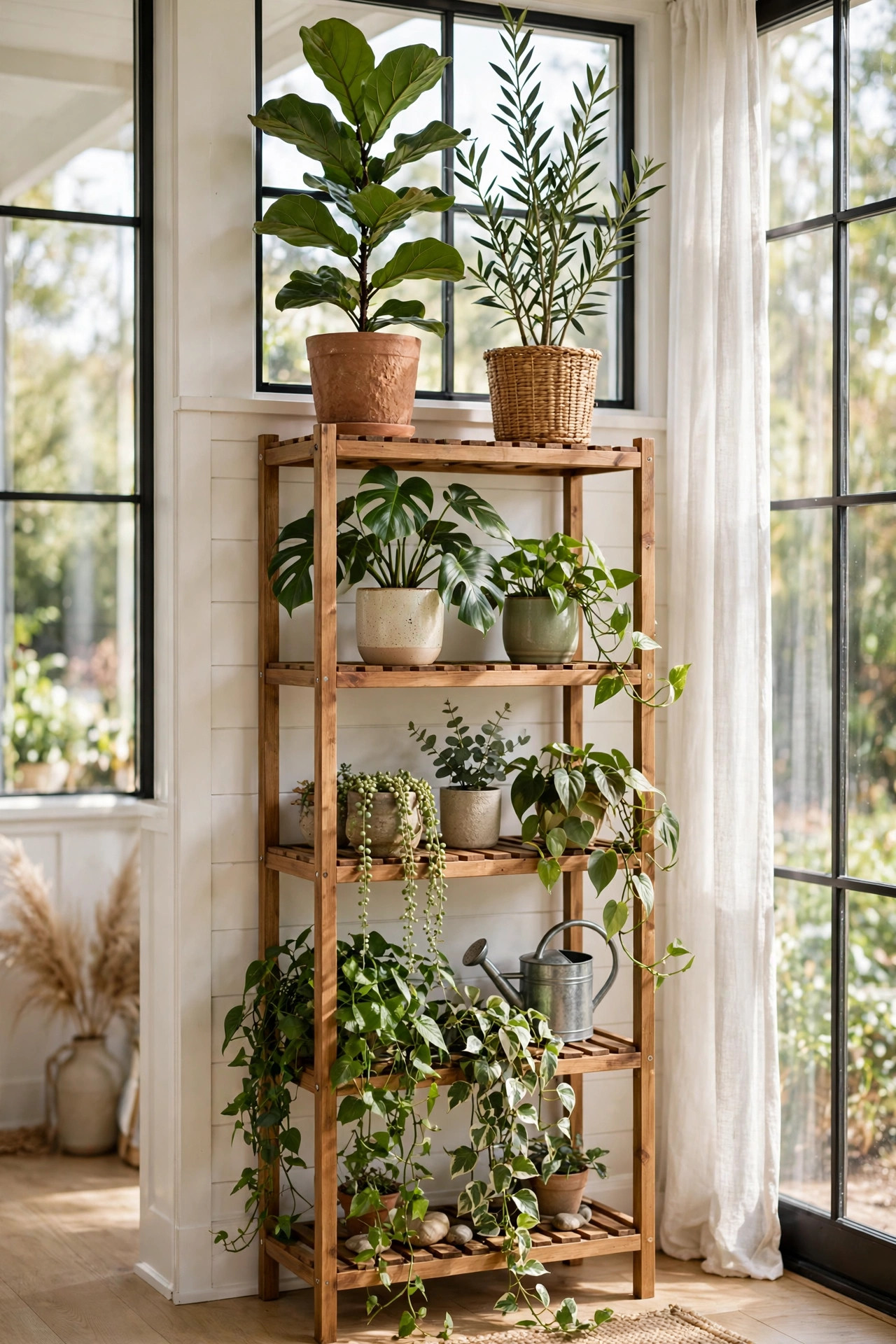
Look at the wall between the windows, that flat stretch where nothing is happening yet, and picture a tiered plant stand filling it with life and color. A three or four level stand in warm wood or simple black metal lets you display a whole collection of plants in the footprint of a single pot, which is perfect when your love of plants is bigger than your available floor space. Arrange the plants so the tallest ones sit on the top shelf and the trailing ones spill gracefully off the lower shelves, and mix leaf shapes, sizes, and shades of green so the display looks like a little curated garden rather than a row of identical pots from the store. Keep a small watering can and a spray bottle on the bottom shelf so your care supplies are always within reach, turning the stand into a self contained plant station that makes looking after everything easy and even enjoyable. Leave a little space between pots for air to move, because crowded leaves can trap moisture and invite pests. Good airflow keeps every plant healthier. A stand that looks slightly airy always looks better than one packed too tight. Breathing room between the leaves also shows off each plant’s individual shape and character much better.
The tiered stand also makes plant care simpler in a way that matters more than it might sound at first. Because every plant is visible at a single glance, you will notice dry soil, yellowing leaves, or exciting new growth without having to hunt around the room and check pots one by one. Rotate the pots a quarter turn every couple of weeks so each plant grows evenly toward the light instead of leaning sideways. Group plants with similar water needs on the same shelf, so you are never guessing which one is thirsty and which one wants to be left alone, and tuck a few small decorative touches between the pots, like a smooth river stone, a tiny lantern, or a piece of weathered driftwood. Step back after you finish arranging it and you will see exactly what your visitors see: a living piece of art that changes a little every week as plants grow, bloom, and trail, giving you a fresh new view of the room all year long. Photograph your arrangement once a season so you can see how far it has come. Plants grow slowly day to day, but the seasonal photos reveal real change. Those pictures become a lovely record of your indoor garden’s life.
8. Natural Jute Rug
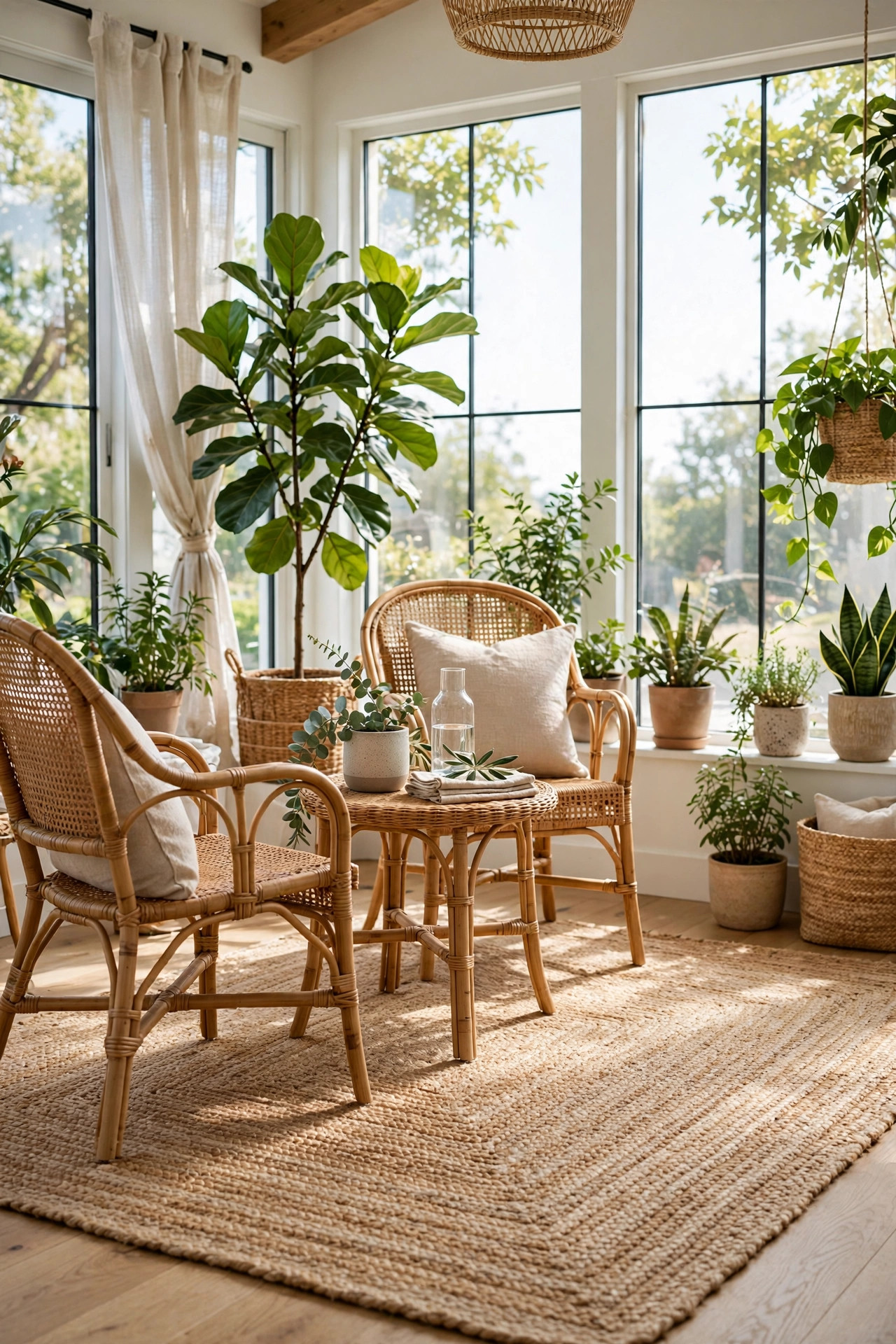
Now look down, because the floor is doing more work in this room than you might realize, and a natural jute rug is what ties everything together into one warm picture. Jute has a warm sandy color and a nubby woven texture that feels like the outdoors under your bare feet, and it fits the sunroom perfectly because it never tries to compete with the plants for attention. Choose a rug big enough that the front legs of your main seating sit comfortably on it, since a rug that is too small makes furniture look like it is floating lost in the middle of the floor. A rectangular shape works well under a sofa and coffee table, while a large round jute rug looks wonderful under a bistro table or a single reading chair. Jute handles strong sunlight well without fading much, and it hides dust and dried fallen leaves far better than light fabric rugs ever could. In a large sunroom, you can layer a smaller patterned rug over the jute for extra color and softness. The jute acts as a neutral base that makes the top rug pop. Layering is an easy way to change the room’s look without buying all new furniture.
Living with a jute rug in a sunroom takes just a little regular care to keep it looking good for many years. Vacuum it on a low suction setting, because strong suction can pull the natural fibers loose and damage the weave, and carry it outside to shake out a few times a year to get the deep dust out of the fibers. Put a good rug pad underneath so it does not slide around on smooth floors and so it feels softer and more cushioned underfoot. If you spill water while watering a nearby plant, blot it up quickly with a towel rather than letting it soak in, since natural fibers can stain or develop a musty smell if they stay damp. When you stand in the doorway and look at the whole room, the jute rug is the quiet hero that connects the rattan chairs, the wicker sofa, and the plant stands into one warm welcoming scene instead of a collection of separate pieces, and that grounding effect is worth every penny. Rotate the rug twice a year so wear and sun exposure stay even across the whole surface. Even rotation doubles its good looking life. This takes five minutes and saves you from a rug that looks new on one side and tired on the other.
9. Ceiling Fan with Bamboo Blades

Glance up again, this time at the ceiling fan, because in a sunroom it is both a beautiful decoration and a genuinely hardworking tool. A fan with bamboo or light wood blades fits the natural style of the room so much better than a plain white or brushed metal fan, and it keeps the air moving on hot afternoons when all that glass turns the room into a greenhouse. Moving air makes a sunroom feel several degrees cooler without any need for air conditioning, and it keeps your plants happier too, since gentle air circulation helps prevent mold from forming on the soil surface and encourages stronger sturdier plant stems. Choose a fan sized properly for your room, and mount it high enough that tall plants and hanging baskets can never reach the blades as they grow. A fan with a remote control is worth the small extra cost, so you can adjust the speed without getting up from your chair. Look for a fan with a reversible motor and at least three speeds so you can fine tune the breeze. Gentle low speed is usually perfect for a sunroom. You want moving air, not papers flying off the side table.
Run the fan the right way for the season to get the most comfort out of it all year. In summer, the blades should spin counterclockwise so the breeze pushes down directly on you where you sit, and in winter, switch it to clockwise on the lowest speed so it gently pushes the warm air that collects near the ceiling back down to your level. Clean the blades a few times a year with a damp cloth, because a sunroom fan collects dust and pollen faster than fans in other rooms, and dusty blades just blow that dust back into the air you breathe. The soft steady hum of the fan becomes part of the room’s background music, like a quieter indoor version of a summer breeze outside. When guests walk in and feel that gentle air moving through the leaves of your hanging plants, the whole sunroom feels alive in a way that still heavy air never could. In spring and fall, the fan alone often keeps the room comfortable with the windows cracked open. That natural ventilation saves energy and feels wonderful. The fan and the open windows are a perfect team for mild weather. On those perfect mild days, the sunroom practically cools and freshens itself with almost no effort from you.
10. Herb Garden Window Shelf
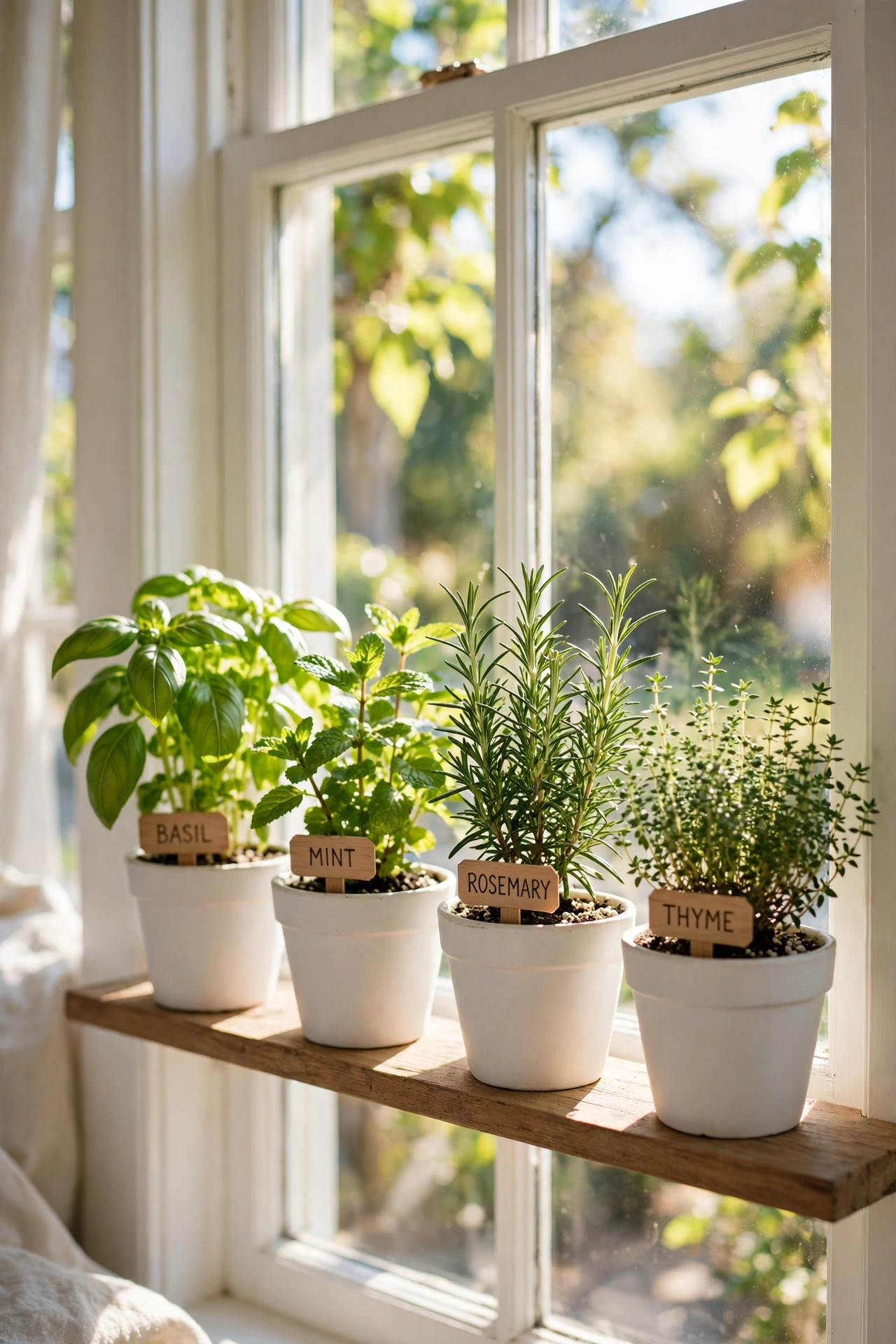
Walk over to the brightest windowsill, or the shelf mounted right below it, because this is where a small herb garden will truly thrive and earn its keep. Basil, mint, rosemary, thyme, and parsley all grow happily in a sunroom with plenty of light, and having fresh herbs within arm’s reach genuinely changes how you cook every day. Use matching small pots in white or classic terracotta so the shelf looks neat and intentional, and label each pot with a simple wooden plant marker so guests and family can tell the mint from the basil at a glance. A narrow shelf board mounted right under the window works beautifully for a row of pots, or you can line the pots along a deep windowsill if yours is wide enough to hold them safely. Keep the herbs you reach for most often closest to the kitchen door, so grabbing a fresh handful on your way to the stove becomes completely effortless. Start with just three or four herbs you actually cook with, rather than a dozen you might use someday. A small thriving herb garden beats a large struggling one. You can always add more pots once the first ones are doing well.
Fresh herbs ask for very little care and give back constantly, which makes them one of the most satisfying sunroom projects you can start. Most herbs like their soil lightly moist but never soggy, so check them with your finger every couple of days and water when the top of the soil feels dry. Pinch off the tops of basil and mint regularly, because trimming encourages bushy full growth and gives you exactly the leaves you want for cooking anyway, so nothing goes to waste. Snip your herbs in the morning when their oils and flavor are at their strongest, and toss them into salads, pasta, roasted vegetables, and tea the very same day. There is something deeply pleasing about walking into your sunroom, brushing your hand across the rosemary so its scent rises up around you, and snipping exactly what you need for tonight’s dinner. It makes the room feel useful as well as beautiful, a little kitchen garden glowing in the sunniest spot of the whole house. Dry or freeze extra herbs at the peak of summer so you have garden flavor in winter too. A tray of frozen herb cubes saves the taste of July for January. Your future self will be grateful every time you cook.
11. Daybed with Crisp White Bedding
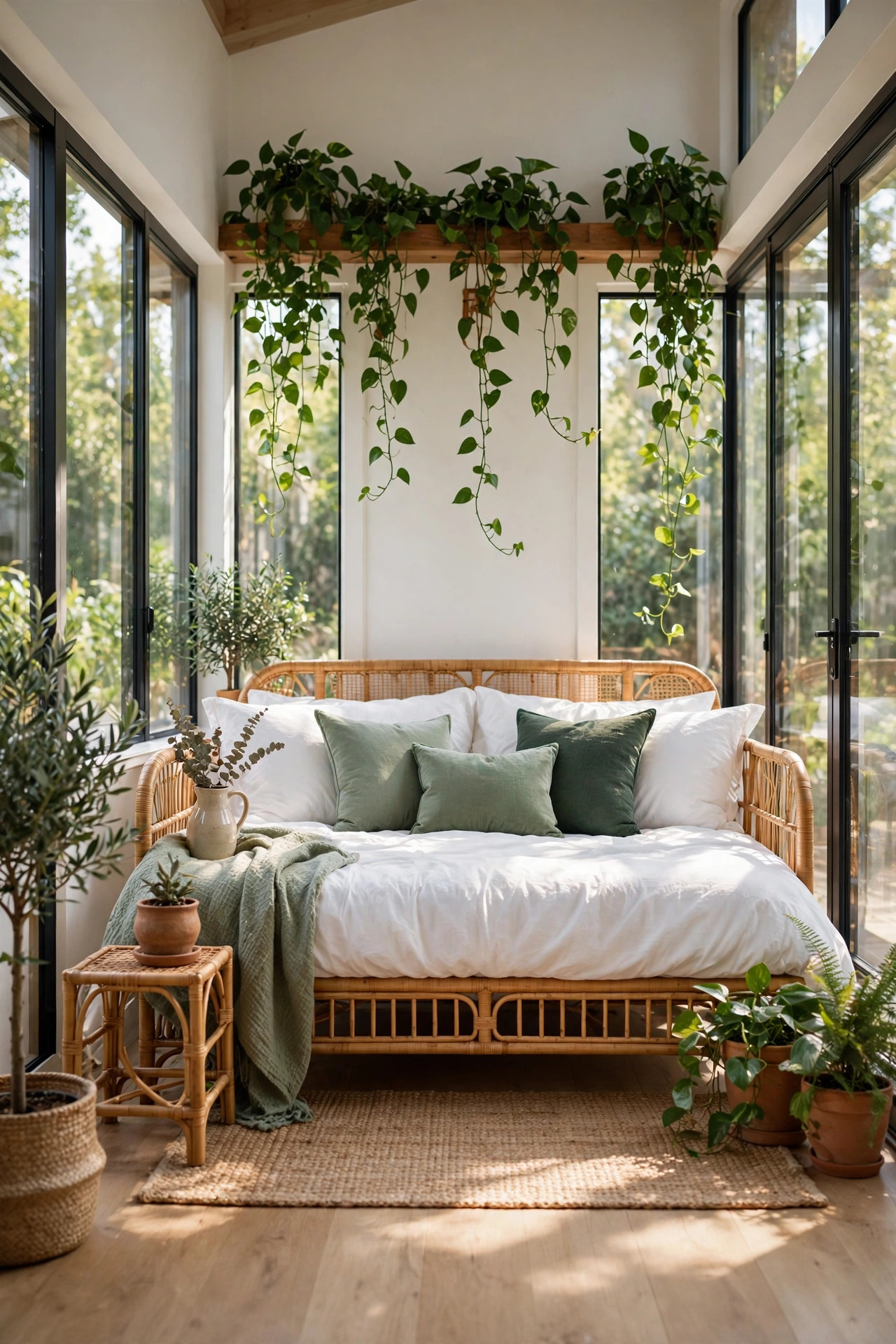
Continue to the far end of the room, where the light turns soft and golden in the afternoon, because this is the perfect spot for a daybed. A daybed gives you a comfortable sofa by day and a nap spot by mid afternoon, and dressed in crisp white bedding it looks fresh, clean, and calm against all the green surrounding it. Choose a simple wooden or rattan frame that matches the rest of your sunroom furniture, and dress it with real bedding, a fitted sheet, a light quilt, and proper sleeping pillows tucked behind a row of decorative cushions, so it feels like a genuine bed rather than a couch pretending to be one. White bedding in a sunroom works beautifully because it reflects light around the corner and makes the whole space feel clean, and you can bleach it back to bright white whenever plant soil or garden dust leaves its inevitable mark. Add a mattress topper if the daybed mattress feels thin, because nobody naps twice on a lumpy uncomfortable bed. Choose a daybed frame with a trundle or storage drawers underneath if you need the extra space. Sunrooms rarely have closets, so hidden storage is precious. Blankets, board games, and spare plant supplies can all live out of sight.
This daybed will quietly become the most fought over seat in the entire house, so set it up for serious comfort from the start. Keep a lightweight blanket folded at the foot for cooler evenings, place a small basket beside it holding a couple of good books and a sleep mask for bright afternoons, and hang a trailing plant on the wall above so soft green leaves drape gently near the headboard. On rainy days, lying here listening to the rain patter on the glass with a book in your hands is one of life’s simplest and best pleasures. And when guests stay over and the bedrooms are already full, this sunny corner turns into the guest room everyone secretly hopes to get. A daybed at the far end of the sunroom also gives the whole tour a destination, a reason to walk the full length of the room and settle in at the end of it. Drape a light quilt over the foot of the daybed in a color that echoes your pillows. That one folded layer makes the bed look styled rather than slept in. It takes ten seconds and makes the whole corner look intentional. That small styling touch is exactly what separates a proper daybed from a spare mattress in the corner.
12. Terracotta Pot Collection
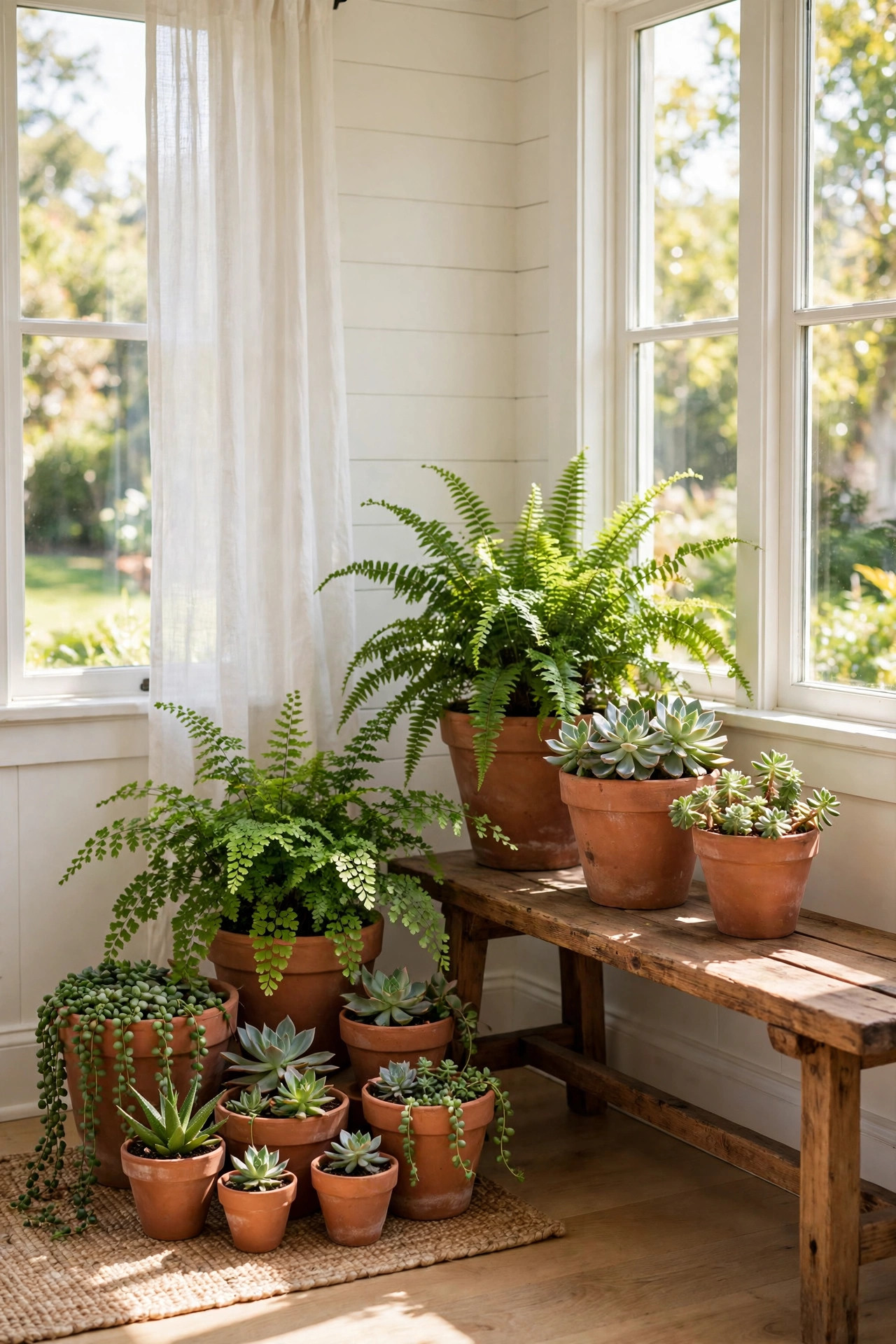
Now turn your attention to the smaller plants, because a collected group of terracotta pots brings a warm handmade feeling that no other planter material can match. Terracotta’s rich orange brown color echoes garden soil and sun baked clay, and it looks right at home among green leaves in a way that plastic pots never quite manage. Gather pots in many different sizes, from tiny ones for little succulents to large ones for bushy ferns, and group them together on a bench, a sturdy shelf, or even directly on the floor in a sunny corner where they catch the light. The slight differences in color and texture between the pots are part of their charm, so do not worry about them matching perfectly like a store display. A little water staining, a patch of moss, or a faded rim on older pots only makes the collection look more like a real gardener lives and works here. Hunt for terracotta at yard sales and flea markets, where old pots cost almost nothing and already have beautiful patina. A little dirt and age only add character. Mixing new and vintage pots makes the collection feel collected over time. Over time the mix starts to look like a collection lovingly gathered across many happy gardening years.
Terracotta pots are practical as well as pretty, and understanding how they work helps your plants thrive in them. The clay is naturally porous, which means water slowly evaporates through the walls and the soil dries out faster, so plants that prefer to stay a bit on the dry side, like succulents, cacti, and Mediterranean herbs, do especially well in terracotta. Soak brand new pots in water for a few hours before planting so they do not steal moisture from the fresh soil on day one, and always use pots with drainage holes sitting on saucers to protect your floors. In winter, move terracotta pots a little away from cold glass, since chill can travel through the clay and stress the roots. When you step back and look at a full collection of these warm clay pots overflowing with green plants, the corner feels like a small piece of a Mediterranean garden, and that sunny old world charm is exactly what a sunroom is made for. Group your terracotta pots by water needs as well as by looks, keeping the thirsty ferns together and the dry loving succulents together. Watering becomes faster and mistakes become rare. Smart grouping is the secret of every great plant collection.
13. Glass Top Side Tables
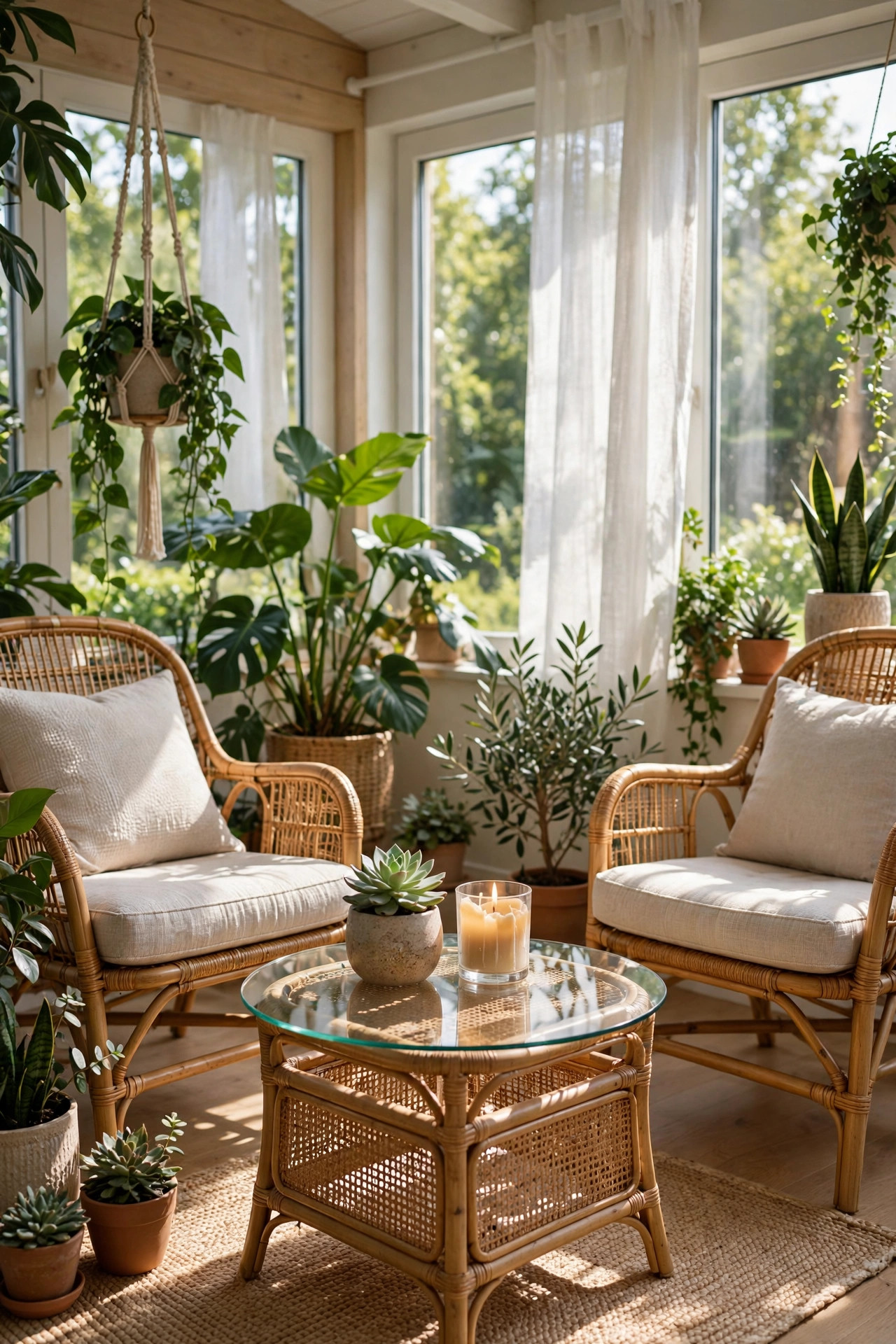
Look at the small spaces between your chairs and sofas, because those little gaps are where glass top side tables do their best and most useful work. In a sunroom, every piece of furniture should let light pass through rather than block it, and a glass top table almost disappears visually, keeping the room feeling open, bright, and spacious. Choose tables with rattan, wicker, or light wood bases so they match the natural relaxed style of the rest of the room, and give the glass a quick wipe once a week, since dust and fine plant mist show up fast on a clear surface. A glass top is also genuinely practical here because it does not stain or ring the way bare wood does when a plant pot sweats underneath or a cold drink leaves a wet circle. Look for tempered glass with smooth rounded edges, which is safer and easier to clean than sharp cornered panes. If you find vintage rattan bases at a thrift store, you can have new glass tops cut to fit for very little money. Old bases with new glass look custom and charming. It is one of the easiest furniture rescues you can do.
Place one of these tables next to every single seat so nobody ever has to get up to set down a drink, a book, or their reading glasses. Style them simply, because a cluttered glass table looks messy very quickly: a small succulent in a pretty pot, a coaster, and maybe a candle is plenty for each one. The see through surface means the pattern of the rug or the leaves of the plant underneath stays visible, which keeps the room feeling layered and interesting instead of crowded. If you have small children, anchor the safety point early by choosing sturdy weighted bases and teaching little ones that the table is for looking through, not for climbing on. These quiet little tables never steal attention from the plants or the view, but take them away and the room suddenly feels awkward, with everyone holding their mugs and nowhere comfortable to rest them. That is how you know they are doing their job perfectly. Keep a small stack of coasters on each table so guests never have to ask for one. Visible coasters get used, hidden ones do not. This tiny detail protects your glass and your wood from rings and stains.
14. Birdcage Accent Decor
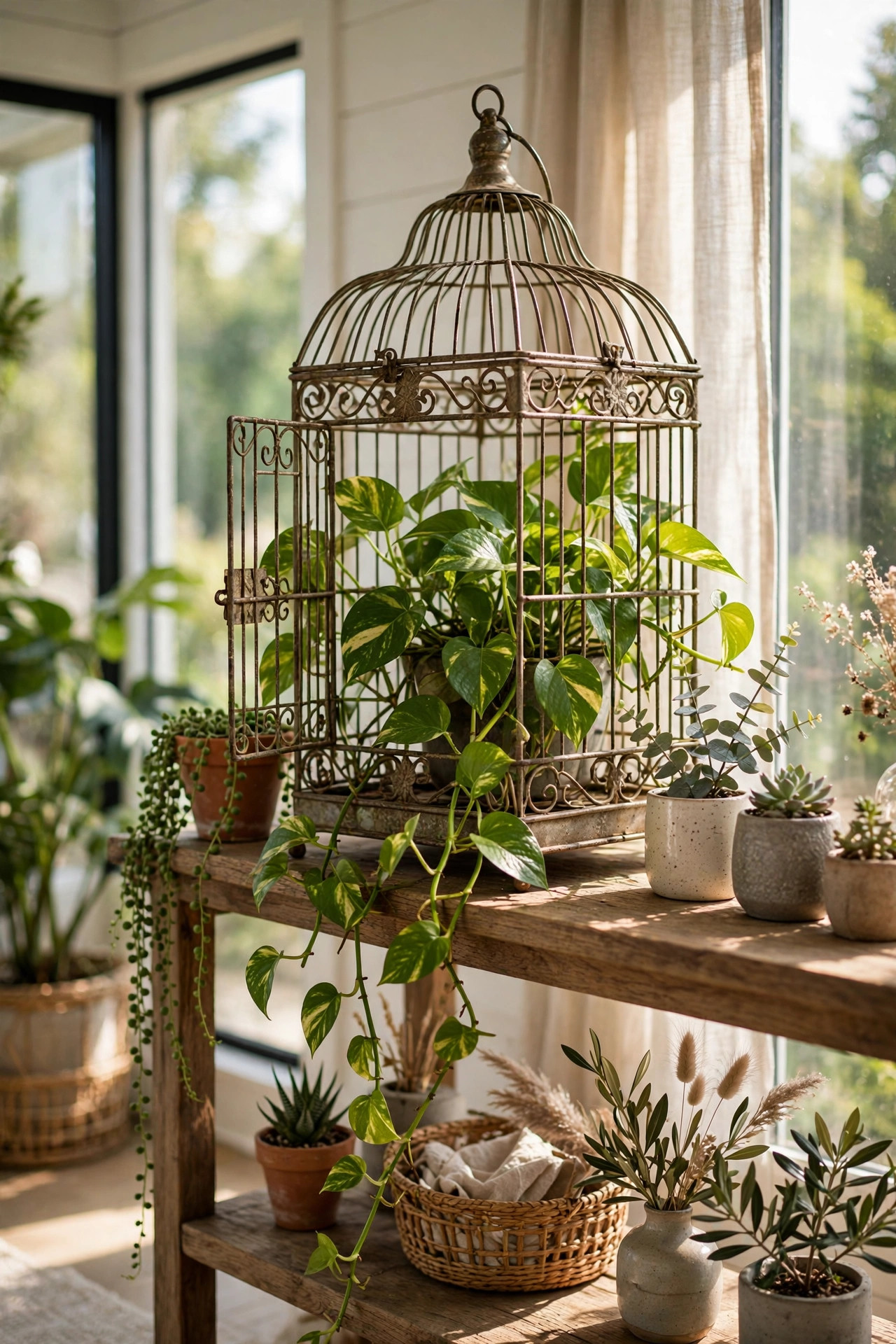
Now let your eyes wander across the shelves and tabletops, because a vintage style birdcage used as decoration adds a storybook touch that makes the sunroom feel special. Look for an old metal birdcage at a flea market, antique shop, or thrift store, the kind with gracefully curved bars and a little dome top, and clean it up gently with a soft damp cloth. You can leave it empty as a sculptural piece that catches the light beautifully, or fill it with something unexpected and delightful: a trailing pothos spilling green through the bars, a cluster of warm fairy lights, or a few candles in sturdy glass holders. Hang a small one from a ceiling hook near a sunny window where it can sway slightly, or set a large one on the floor in a corner with a climbing plant growing up through it over time. Spray paint a rusty birdcage in matte white or soft gold to give it new life before styling it. A fresh finish makes a thrifted find look intentional. Two light coats are all it takes to transform the whole piece. Let each coat dry fully before adding the next one, and always spray in a ventilated spot outdoors for safety.
The charm of a birdcage in a sunroom is that it feels like it belongs to the garden world just outside the glass, connecting your room to the old conservatories and garden rooms of long ago. That sense of history gives your space character and depth even if every other piece of furniture is brand new. Style it with the changing seasons to keep it fresh: tiny pumpkins and dried leaves in the fall, evergreen sprigs and pinecones in winter, fresh cut flowers in spring, and seashells in summer. Keep the thin bars dusted, since they collect dust quickly in a bright plant filled room, and always keep any lit candles in sturdy glass holders well away from trailing plant leaves. Guests always ask about the birdcage, and it becomes one of those small memorable details that makes people talk about your sunroom long after they leave, a little piece of whimsy resting among all the green. Tuck a small battery candle inside the cage for evenings, so it glows softly among the plants. The light shining through the bars makes lovely patterns. It becomes a tiny lantern that adds magic after dark. It gives the whole corner a soft magical glow that bright overhead lights could never match.
15. Floor Cushion Sitting Spot
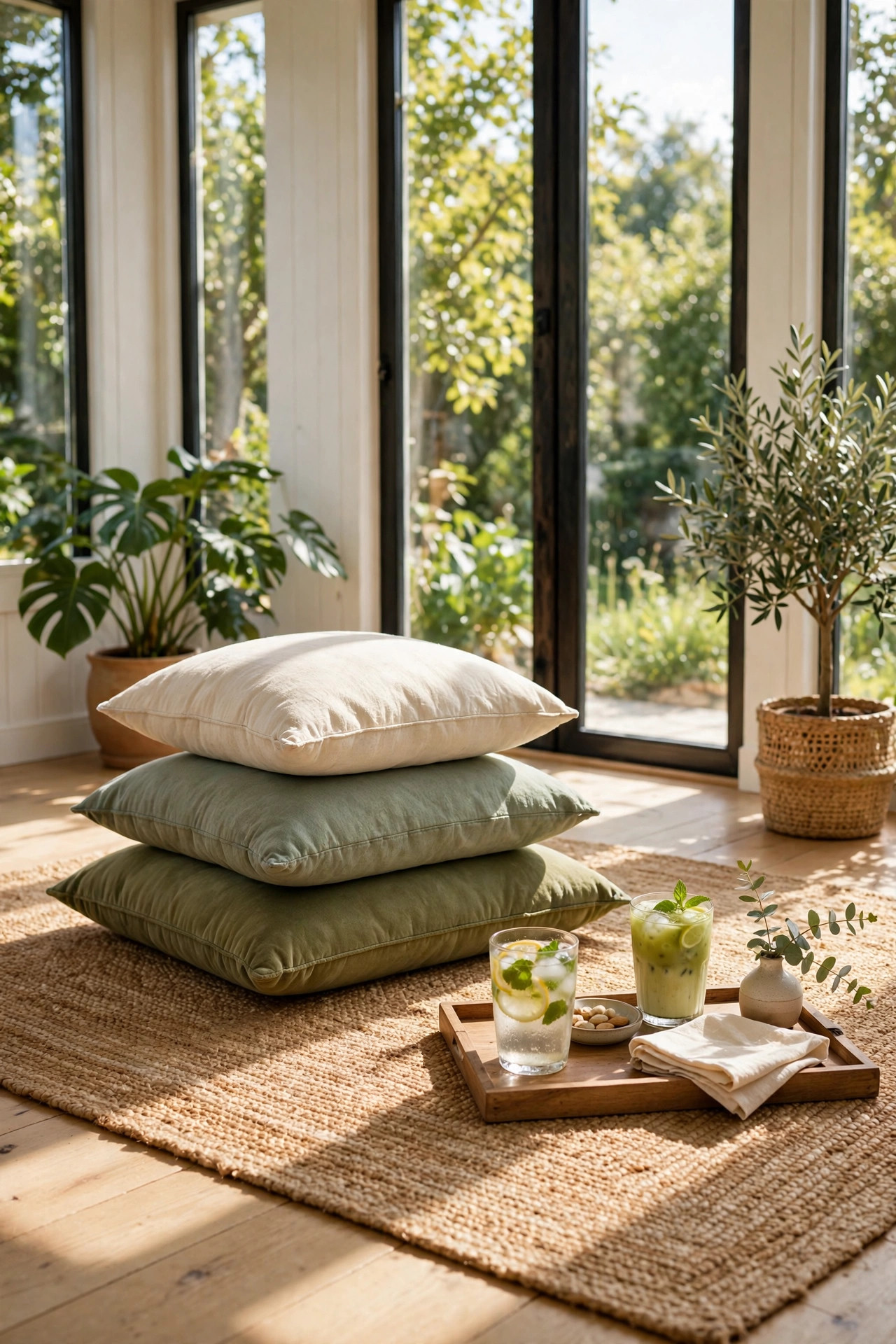
Look down at that sunny patch of floor near the biggest window, because not every seat in a sunroom needs legs to be wonderful. A generous pile of large floor cushions in washable outdoor fabric turns an empty patch of sunlight into the most relaxed hangout spot in the entire room. Choose cushions in greens, creams, and soft garden patterns that match your other textiles, and stack two or three together so sitting on the floor feels comfortable and supportive instead of hard and flat. Layer them on top of your jute rug for extra softness under you, and keep a low wooden tray nearby for drinks, snacks, and whatever book is currently being read. This is the spot where kids will flop down with coloring books on rainy days, where teenagers will stretch out with their phones in a sunbeam, and where you might end up sitting cross legged with your morning coffee just because the warmth feels too good to leave. Choose cushion inserts that are firm enough to hold their shape but soft enough to sink into. Cheap flat inserts go lumpy fast. Good inserts cost a little more but keep the spot comfortable for years. Replace flattened inserts right away, because lasting comfort is the entire point of this sunny spot.
Floor cushions make the sunroom feel playful, casual, and welcoming in a way that formal furniture simply cannot match. They are easy to move, so you can drag them into the sunniest patch as the light travels across the room through the day, and easy to stack neatly in a corner when you need the floor clear for a project or a gathering. Look for cushions with removable washable covers, because life at floor level means more dust, more pet hair, and the occasional spill. In the evening, pile them near the string lights for a cozy low lounge feeling, almost like having an indoor picnic every night. This simple idea costs very little money but changes how the whole room gets used, because suddenly there is no wrong way to sit here. Some rooms in a house are for sitting up straight, and this sunny corner of your sunroom is for sinking down, stretching out, and doing absolutely nothing in the sunshine. Store a lightweight throw blanket in the cushion stack for cool evenings. When the sun drops, you can wrap up without leaving your spot. That easy comfort keeps the nook in use long after sunset. You will be amazed how quickly this simple cushion pile becomes everyone’s favorite seat in the house.
16. String Lights for Evenings
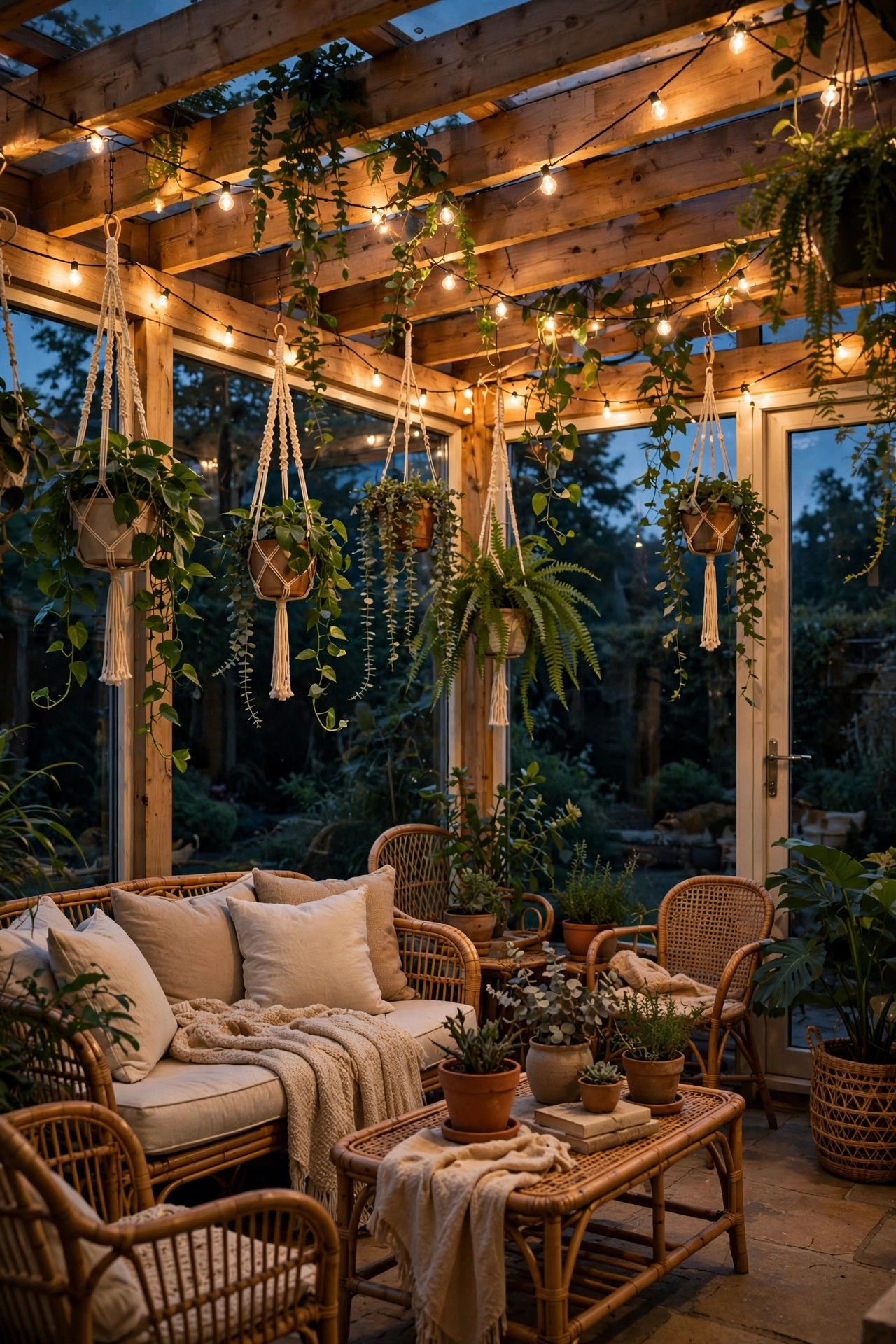
Stay in the room as the sun goes down, because a sunroom should never go dark and empty when the daylight fades. String lights draped along the ceiling beams, around the window frames, or woven gently through the hanging plants turn the room into a glowing garden after sunset. Choose warm white lights rather than cool blue white, because warm light flatters skin tones, makes the plants look lush and deep green, and feels cozy and inviting instead of harsh and cold. Battery operated or solar powered strings work well if you do not have outlets in the right spots, and a simple timer plug means they switch on by themselves every evening so you never have to remember. Drape them loosely in gentle swags rather than pulling them tight in straight lines, since soft curves look more natural, relaxed, and romantic against the plants. Mix two different string lengths for a more natural layered look, with longer swags hanging behind shorter ones. The variation looks organic rather than uniform. Your eye reads the layers as depth and richness. Step back to the doorway and squint at the whole arrangement to check that the layers feel balanced, natural, and inviting from every angle.
Evening is when the sunroom becomes a completely different room, and the string lights are what make that magical transformation happen. With the lights glowing softly and the garden dark beyond the glass, the room feels like a secret hideaway, perfect for late conversations that stretch past midnight, a quiet glass of wine, or peaceful time alone with a book. The lights reflecting in the glass multiply the glow all around you, and the plants throw soft moving shadows on the ceiling that sway gently when the fan runs. Keep a spare string or two on hand, because one dark burned out section in a corner is surprisingly noticeable, and check the wires once a season for any wear. When friends see your sunroom glowing softly on a warm summer evening, it becomes the place everyone wants to gather, and you will find yourself spending far more evenings out here than you ever planned. Add a few strings along the garden path outside too, so the view from the sunroom glows as well. Indoor and outdoor light together erase the boundary between them. The whole property feels like one continuous magical space. That warm glow will draw you outside on evenings when you might otherwise have stayed indoors.
17. Wooden Bench with Garden Cushions
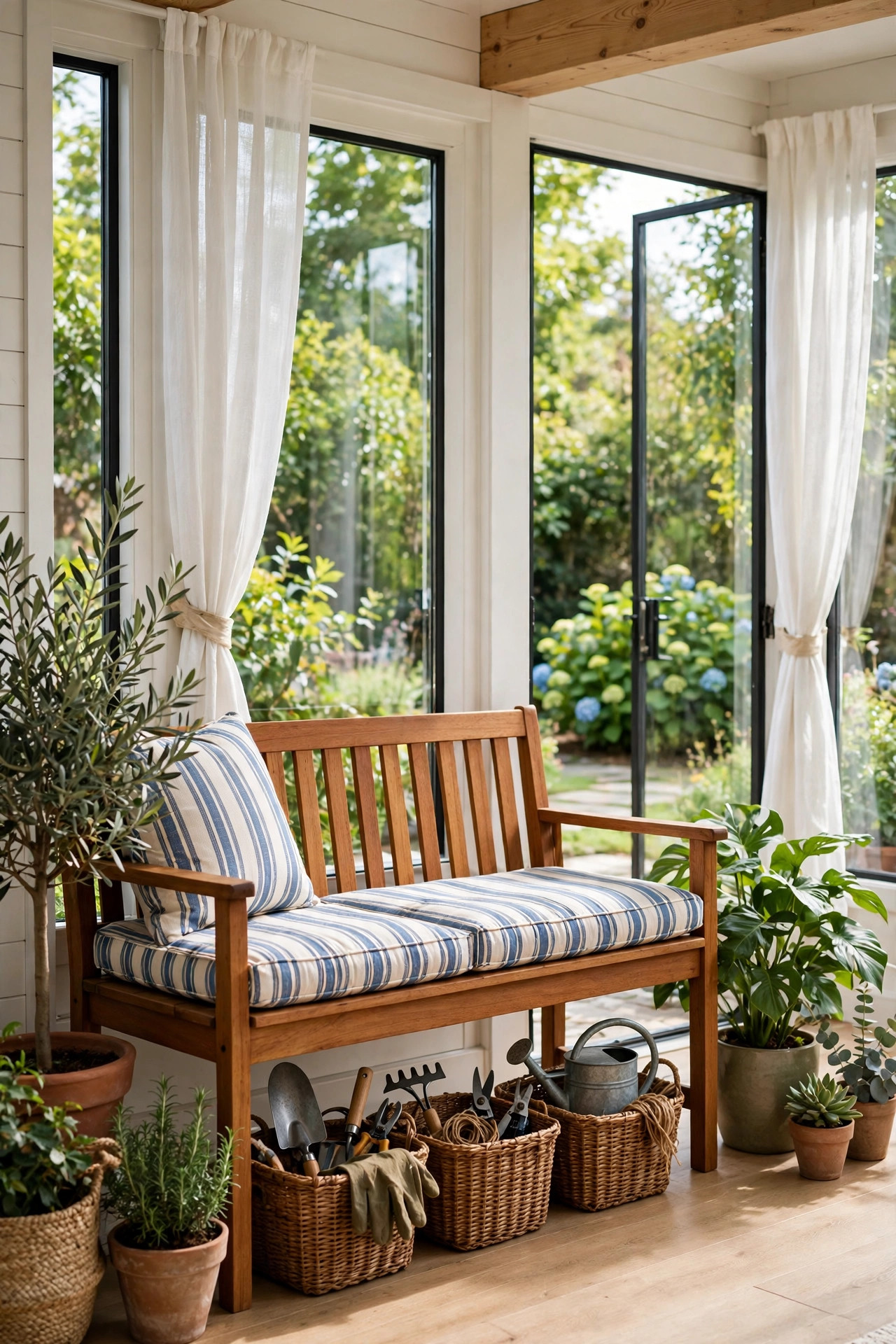
Walk back toward the entrance and notice the wall beside the door, because a wooden bench here solves two everyday problems at once. A simple sturdy wooden bench gives you a place to sit while you pull on your garden shoes, and topped with comfortable outdoor cushions it becomes yet another inviting seat for the room itself. Choose a bench in teak, cedar, or acacia, woods that handle humidity and temperature swings well, and add cushions in a washable fabric with a garden friendly pattern like classic stripes or small cheerful florals. Tuck a couple of woven baskets underneath for garden gloves, seed packets, twine, and the small tools you reach for every day, so the bench works as practical storage too. This is the piece that connects the sunroom to the garden outside, the threshold spot where indoor comfort meets outdoor work, and it deserves the same care as everything else in the room. Oil the wood once a year to keep it from drying out in the bright sunroom air. A quick coat takes twenty minutes and adds years to its life. Well oiled wood also looks richer and more beautiful. Your bench will thank you with decades of sturdy service and ever richer, more beautiful color.
A bench by the door gets used in more ways than you will ever predict until you actually live with it. It becomes the landing spot for grocery bags on the way in from the car, the resting place where the watering can waits between uses, and the seat where you pause to enjoy one more minute of sunshine before heading inside for the night. Style the top simply and keep it that way: the cushions, a folded throw for chilly mornings, and one small potted plant at the end for a touch of green. Keep the baskets underneath reasonably tidy, because this bench is the first thing you see when you walk in and the last thing you see when you leave, so it sets the tone for the whole room. A solid wooden bench like this can last for decades with an occasional oiling, and it will collect the small scratches and marks of a well loved garden life. Those marks are not damage; they are the story of every single plant you carried through that door. Hang a hook above the bench for your sun hat and garden apron, so everything you need is in one place. Grabbing your gear becomes one smooth motion on the way out. Small organization like this makes gardening more joyful.
18. Macrame Wall Hanging
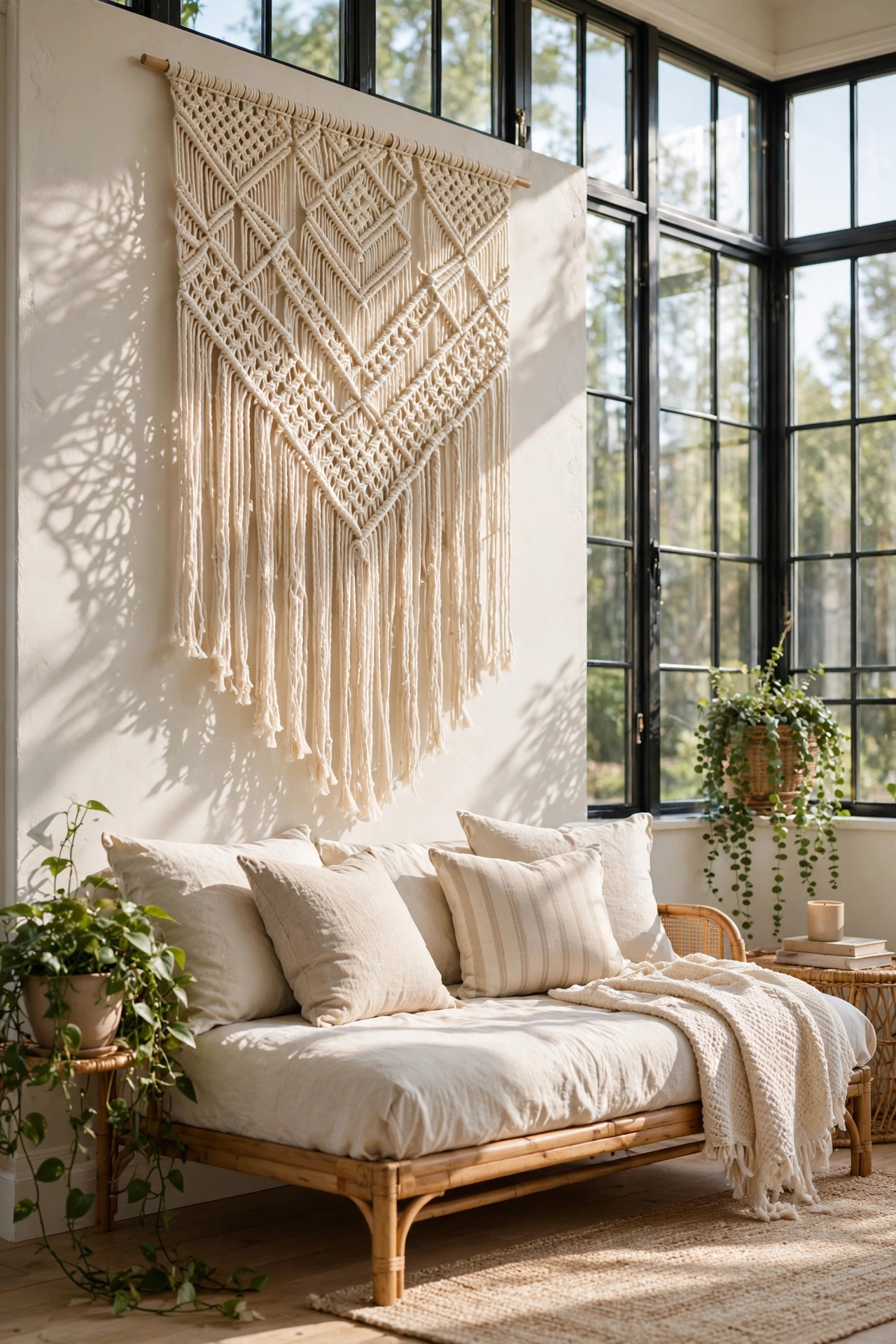
Finally, turn to the last bare wall, the one that has been waiting patiently through this entire tour, and give it a beautiful macrame wall hanging. Hand knotted cotton in cream or natural beige adds soft inviting texture that balances all the hard glass and smooth ceramic surfaces in the room. Choose a large piece with long flowing fringe that moves slightly when the air stirs, and hang it where it catches the light so the knots throw delicate lacy shadows on the wall behind it. A big macrame piece above the daybed or the bench fills empty wall space without adding any visual weight, which matters a great deal in a room where you want to protect that light airy feeling. If you buy handmade, you are supporting a real craftsperson and getting a one of a kind piece, and if you make one yourself from a simple kit, it becomes a personal piece with its own story to tell guests. If you make your own, start with a simple pattern and natural cotton cord from a craft store. Beginner kits walk you through every knot step by step. Your first piece will not be perfect, and that handmade charm is exactly the point.
Macrame fits the sunroom style so naturally that it almost feels like it grew there on its own. The knotted cotton echoes the woven textures of the rattan and wicker furniture nearby, and the handmade quality keeps the room from ever feeling like a cold furniture showroom. Keep it clean with an occasional gentle shake outside or a light vacuuming using a soft brush attachment, since textured fibers collect dust in a plant filled room. Pair it with a small trailing plant hung nearby so the soft fringe and the green vines play off each other, softness against softness. When you step back to the doorway and take one last look at the whole room, this final piece is what makes the tour feel complete: the walls are dressed, the plants are thriving, the seats are waiting, and the garden has truly, finally, moved indoors. Step back to the doorway one more time and notice how the soft textile balances the hard glass all around it. That balance of textures is what makes a room feel finished. You have walked the full tour, and the sunroom is ready to enjoy. Every texture in the room now has its perfect partner, and the whole space finally feels whole and complete.
Conclusion
Now step back to the doorway and take one last slow look at the whole room. The rattan chair waits by the entrance, the plants hang green and full overhead, the wicker sofa holds its botanical pillows, and the daybed at the far end glows in the afternoon light. Every idea on this tour works on its own, but together they turn a plain glass room into a living space that breathes. You do not have to do all eighteen at once. Start with the idea that made you smile first, the reading corner, the herb shelf, the string lights, and let the room grow from there the way a garden does, one plant and one comfortable seat at a time.
The best sunrooms are never really finished, and that is part of their charm. Plants grow and get repotted, cushions get recovered in new fabrics, and a flea market find like that birdcage shows up one Saturday and earns its place. What matters is that the room keeps doing its main job: bringing the garden indoors so you can enjoy it in every season, in every kind of weather, with a cup of something warm in your hands. So pick your first project this weekend, open those glass doors wide, and start building the brightest, greenest, most loved room in your house.
FAQs
What is the best flooring for a sunroom?
Tile, sealed concrete, and luxury vinyl plank are the best choices for sunroom flooring because they handle sunlight, humidity, and water from plants without damage. Tile stays cool in summer and cleans up easily when soil spills, while sealed concrete gives a modern garden room feel and stands up to heavy pots. Luxury vinyl plank looks like real wood but will not warp in humid air the way hardwood can. Avoid carpet and unfinished hardwood, since both suffer in bright sun and damp conditions. Whatever you choose, use saucers under every pot and a rug pad under area rugs to protect the surface underneath.
How do I keep my sunroom cool in summer?
A ceiling fan is the single most effective tool for cooling a sunroom, since moving air makes the room feel noticeably cooler without air conditioning. Light linen curtains cut glare and block the harshest midday sun while still letting brightness through. Open windows on opposite sides of the room to create cross ventilation, and consider a shade cloth on the outside of the glass during heat waves, which blocks heat before it enters. Keep plants watered, since healthy plants release moisture into the air and cool the room slightly. Avoid dark furniture and fabrics, which absorb heat and radiate it back into the space all afternoon.
What plants grow best in a sunroom?
Most sun loving houseplants thrive in a sunroom, including fiddle leaf figs, bird of paradise, rubber plants, succulents, and citrus trees in pots. Trailing plants like pothos and spider plants are perfect for hanging baskets and high shelves. Herbs such as basil, rosemary, mint, and thyme grow beautifully on a sunny windowsill and give you fresh ingredients for cooking. The key is matching each plant to its light spot: sun lovers right by the glass, and plants that prefer indirect light a few feet back. Always check whether a plant is safe for pets and children before bringing it home, since some popular sunroom plants are toxic if chewed.
How do I stop sunroom furniture from fading?
Choose furniture and fabrics made for sun exposure, such as rattan, wicker, teak, and solution dyed outdoor fabrics, which resist fading far better than regular indoor materials. Rotate cushions and pillows every few weeks so all sides get equal sun and no single side bleaches out. Light linen curtains or UV filtering window film cut the harshest rays while keeping the room bright. Bring delicate pieces, like antique wood or dark dyed fabrics, away from the sunniest windows or accept that they will develop a sun kissed patina over time. Washable slipcovers are a smart trick, since you can replace a faded cover for little money instead of replacing the whole piece of furniture.
Can I use a sunroom all year round?
Yes, with a little planning a sunroom works in every season. In winter, the glass captures daytime warmth, and a small space heater or heated throw keeps it comfortable on cold evenings. Thermal curtains that you close at night help hold the day’s warmth inside. In summer, ceiling fans, cross ventilation, and light curtains keep it breezy. Choose plants that tolerate temperature swings, or move tender tropicals away from cold glass in winter. A sunroom often becomes the most loved room in winter, when it is the one place in the house that still feels bright and green while the garden outside sleeps.
How much does it cost to decorate a sunroom?
A sunroom refresh can cost very little or quite a lot depending on your approach. A budget makeover using thrifted rattan pieces, affordable plants, jute rugs, and string lights can come in under a few hundred dollars. Mid range projects with a new wicker sofa, quality outdoor cushions, ceramic pots, and linen curtains typically run into the low thousands. The plants themselves are one of the cheapest parts: small starter plants cost little and grow fast in all that light. Start with seating and plants, which make the biggest visual difference, and add decorative layers like macrame, birdcages, and extra lighting over time as your budget allows.