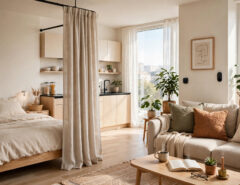

If your nursery corner feels dark and cramped no matter what you do, take a deep breath. You are not failing at this. Small nurseries are honestly one of the hardest rooms to get right, because every piece of standard baby furniture was designed for a big bedroom. A full size crib, a wide dresser, a deep rocking chair, and a separate changing table each assume you have space to spare. Put all four into a ten by ten room, or a corner of your own bedroom, and there is barely room left to stand, let alone rock a fussy baby at 2 a.m. The room starts to feel like a storage closet that happens to contain an infant, and no amount of cute wall art fixes that.
The good news is that a small nursery does not need a bigger room. It needs smarter choices. Almost every frustration in a tiny nursery comes down to furniture that wastes space or walls that sit empty, and both problems have simple, affordable fixes. A changing table that folds flat against the wall. A crib with a smaller footprint. Storage that climbs up instead of spreading out. None of these ideas require knocking down walls or spending thousands of dollars. They just ask you to think about the room differently, starting with whatever bothers you most.
That is exactly how the ideas below are organized. Each one starts with the real problem, the thing that makes you sigh every single day, and then gives you the practical fix that solves it. Read through all sixteen, pick the three or four problems that sound like your home, and start there. You do not have to do everything at once. Fixing even two or three pain points can make the same small room feel calm, open, and twice as big.
1. Wall Mounted Fold Down Changing Table
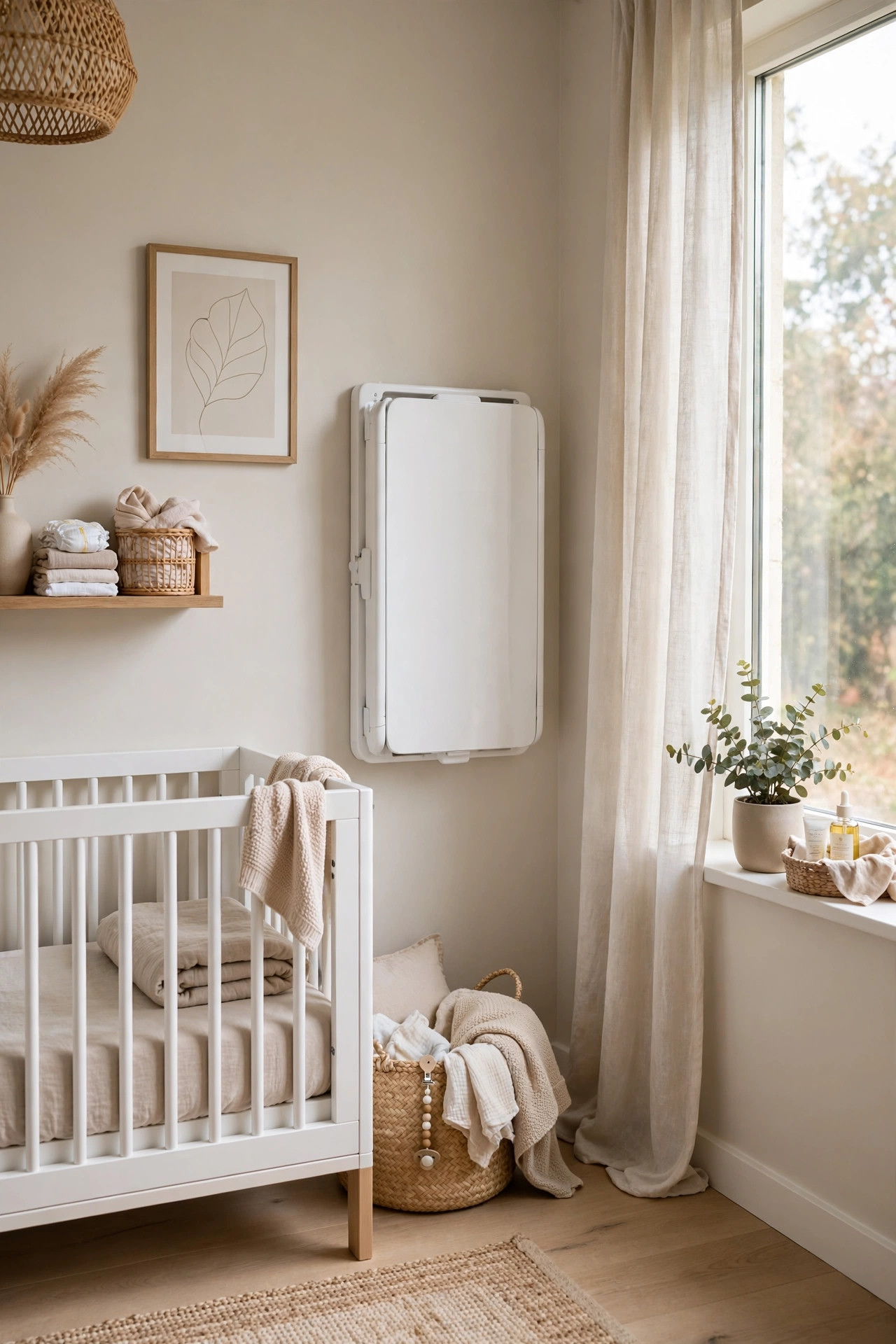
A standard changing table is one of the biggest space wasters in a small nursery. It claims a permanent two by three foot patch of floor, twenty four hours a day, for a job you do maybe ten minutes at a time, a few times a day. The rest of the time it just sits there, collecting spare diapers, half used lotion bottles, and laundry you meant to fold last weekend. In a tiny room, that dead footprint is the difference between walking freely and doing an awkward sideways shuffle around furniture every time the baby cries.
The fix is a fold down changing table mounted to the wall, which gives you back that floor completely. These units hinge flat like a murphy bed, so when changing time is over you lift the platform up and it locks flush against the wall, only a few inches deep. Look for one rated for at least thirty pounds, with raised safety edges and a strap, and mount it into wall studs or solid blocking, never just drywall. Keep a small basket of supplies on a nearby shelf so you are not hunting for diapers one handed while the baby waits. The first time you fold it up and see open floor where furniture used to be, you will wonder why every small nursery does not have one.
2. A Mini Crib That Fits Anywhere
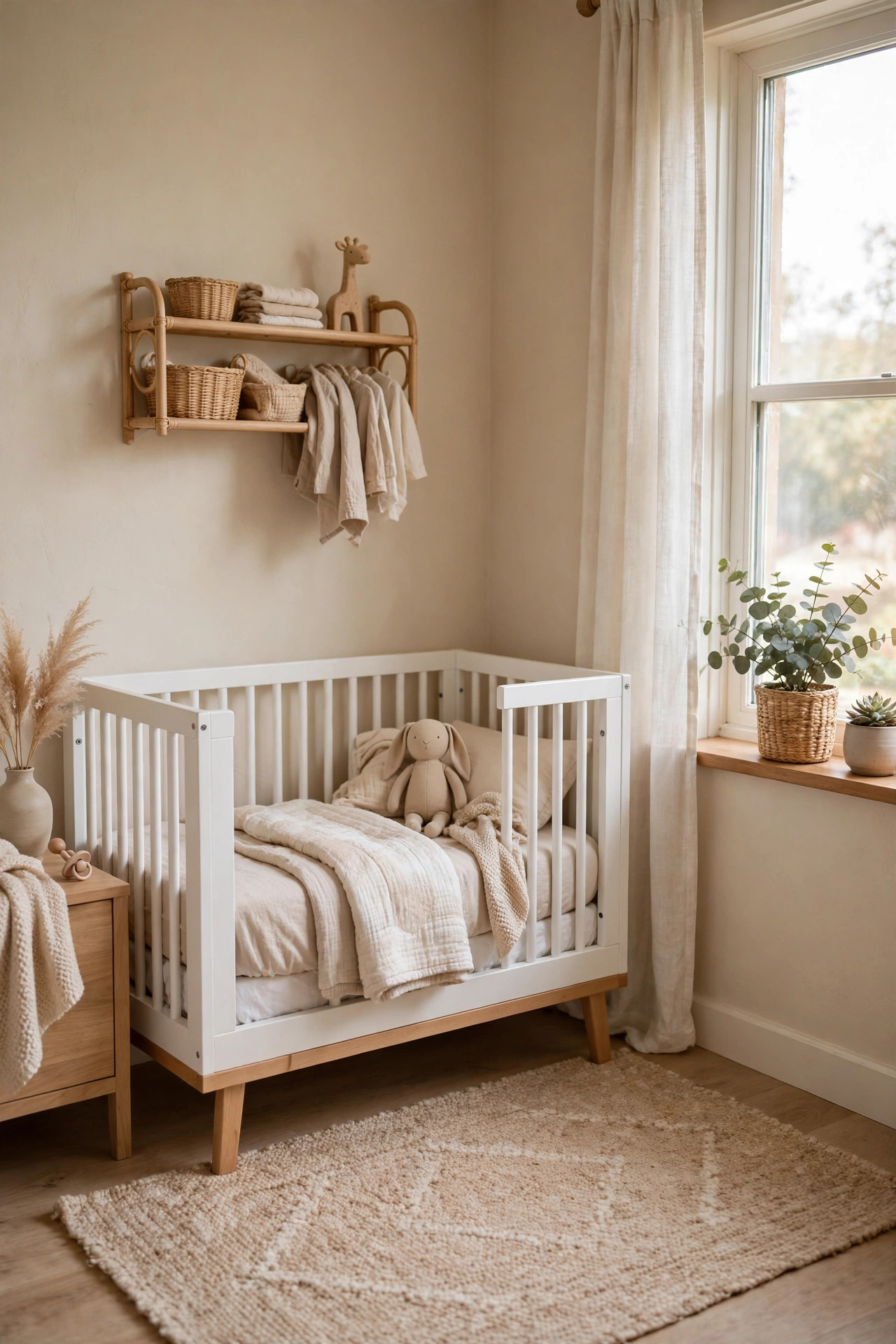
A full size crib measures about fifty four inches long and thirty inches wide, and in a small room that single rectangle can swallow the whole layout. There is no room left for a chair, the dresser gets pushed into a corner where its drawers barely open, and you end up climbing over furniture for every midnight feeding. Many parents assume the crib size is non negotiable and suffer through a room that never works, when the crib itself is the problem.
The fix is a mini crib, which is roughly thirty eight inches long and twenty four inches wide, a footprint nearly a third smaller than standard. Mini cribs meet the same safety standards as full size cribs, and most babies sleep comfortably in one well into their first year, sometimes longer. Many models also come with locking wheels, so you can roll the crib aside during the day and roll it back at night, which is a lifesaver in a shared bedroom. Measure your doorways before you buy if you plan to roll it between rooms, and pick up standard mini crib sheets, which are easy to find online. One swap solves the single biggest space problem in the nursery.
3. Turn the Closet Into a Crib Nook
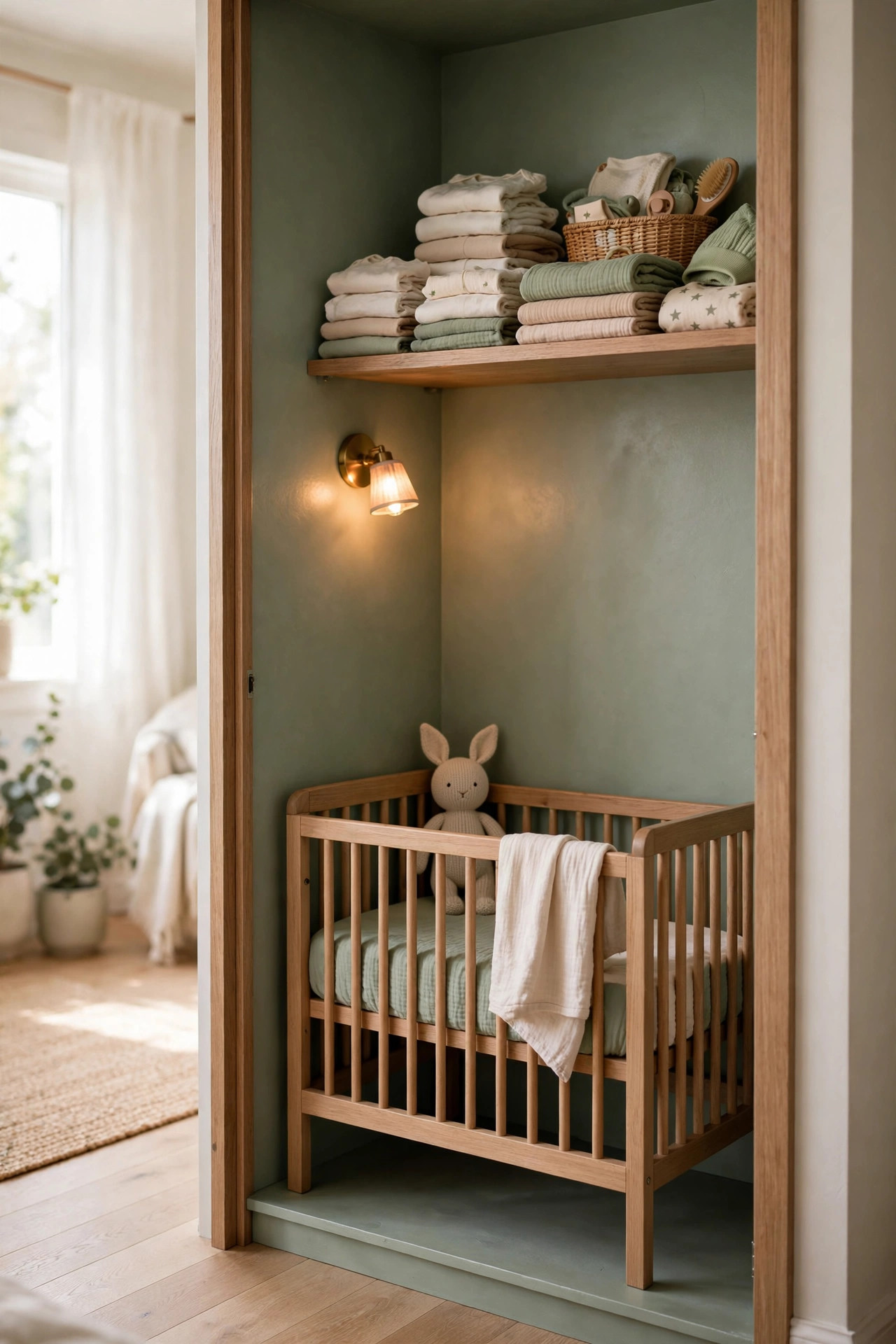
Sometimes there is truly no floor space for a crib at all. This happens a lot in apartments where the nursery is a corner of the master bedroom or a room barely bigger than a closet itself. You sketch the layout ten times, move the furniture on paper, and every version ends with the crib blocking the door or the closet. It feels impossible, and it is easy to conclude that a nursery simply cannot work in your home.
The fix is to put the crib inside the closet. Remove the closet doors, take out the hanging rod, and you have a ready made nook about two feet deep and four to six feet wide, which fits a mini crib perfectly. Paint the inside a soft color, add a small plug in wall sconce or battery puck lights for a gentle glow, and hang a curtain on a tension rod if you want to close it off during naps. Keep the closet’s upper shelf for diapers and out of season clothes so no storage is lost. Check that air flows freely, keep the space clear of anything the baby could reach, and never place the crib near blind cords. What was dead storage becomes the coziest sleeping corner in the house.
4. Floor to Ceiling Shelves for Vertical Storage
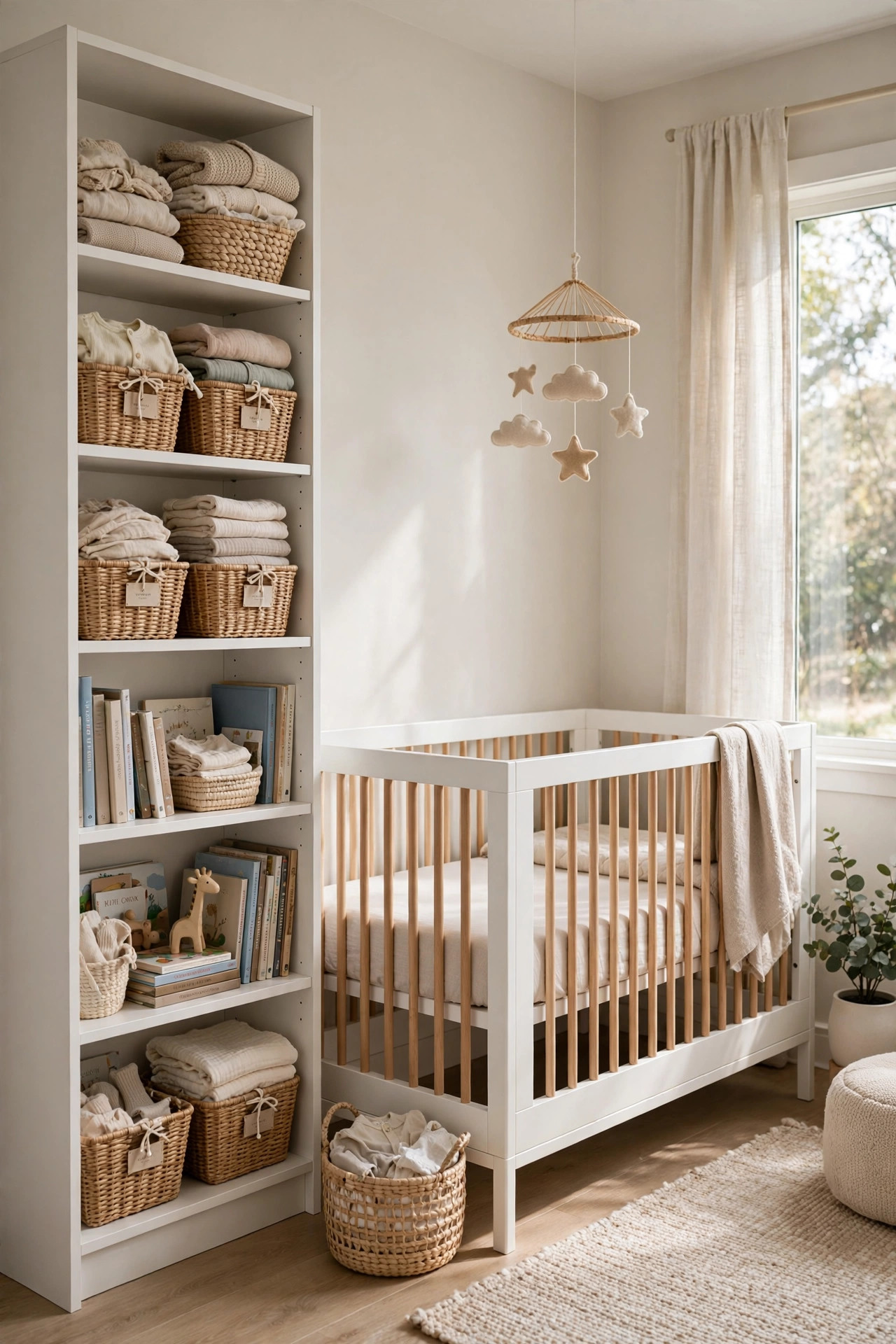
In a small nursery the floor fills up fast, and then everything feels chaotic. Baskets pile on baskets, the dresser top disappears under bottles and creams, and you cannot find the pacifier because it is buried under three layers of stuff. The real problem is not that you own too much. It is that you are only using the bottom three feet of your walls while the upper half sits completely empty.
The fix is to run shelving all the way up. A tall narrow bookcase, or two or three floating shelves stacked from about four feet up to near the ceiling, turns empty wall into serious storage without touching the floor plan. Keep everyday items on the lowest shelf where you can grab them one handed, and move the rarely used things to the top: the next size up clothes, the backup diaper packs, the keepsake box. Anchor every tall piece of furniture to the wall with anti tip straps, because a climbing toddler and an unsecured bookcase is a dangerous combination. Label a few baskets so anyone helping with the baby can find things fast. When storage goes vertical, the floor stays clear, and a clear floor is what makes a small room feel calm.
5. Rolling Drawers Under the Crib
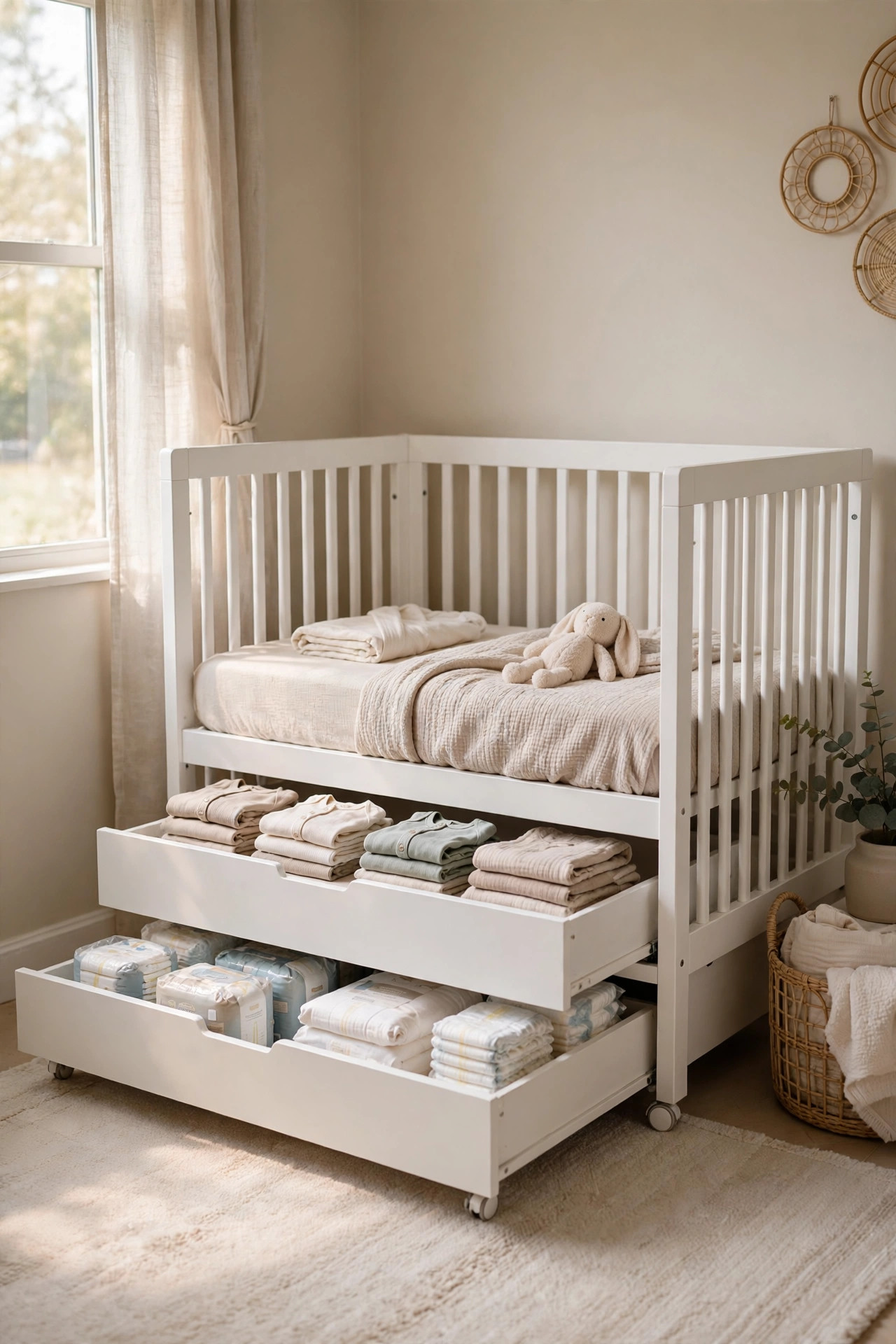
The space under the crib is dead space in most nurseries. It collects dust bunnies and the occasional lost sock, while three feet away you are stacking diaper boxes in the hallway because there is nowhere to put them. That gap is usually six to eight inches tall across the full footprint of the crib, which is a shocking amount of storage to waste in a room where every inch counts.
The fix is to slide low rolling drawers or flat bins under the crib and put that space to work. Shallow rolling carts, under bed storage boxes, or even a simple tray on casters can hold a surprising amount: a full pack of diapers, spare sheets, sleep sacks, and the next size of clothes. Choose bins with lids or drawers that close, so dust stays out and everything looks tidy when guests peek in. Keep one bin as the going out bin with diaper bag restock supplies, so leaving the house takes minutes instead of a scavenger hunt. Measure the clearance under your crib first, since low profile cribs sit closer to the floor, and pick bins at least an inch shorter than the gap so they slide easily. It is storage you already own. You are just finally using it.
6. A Slim Glider Instead of a Bulky Rocker
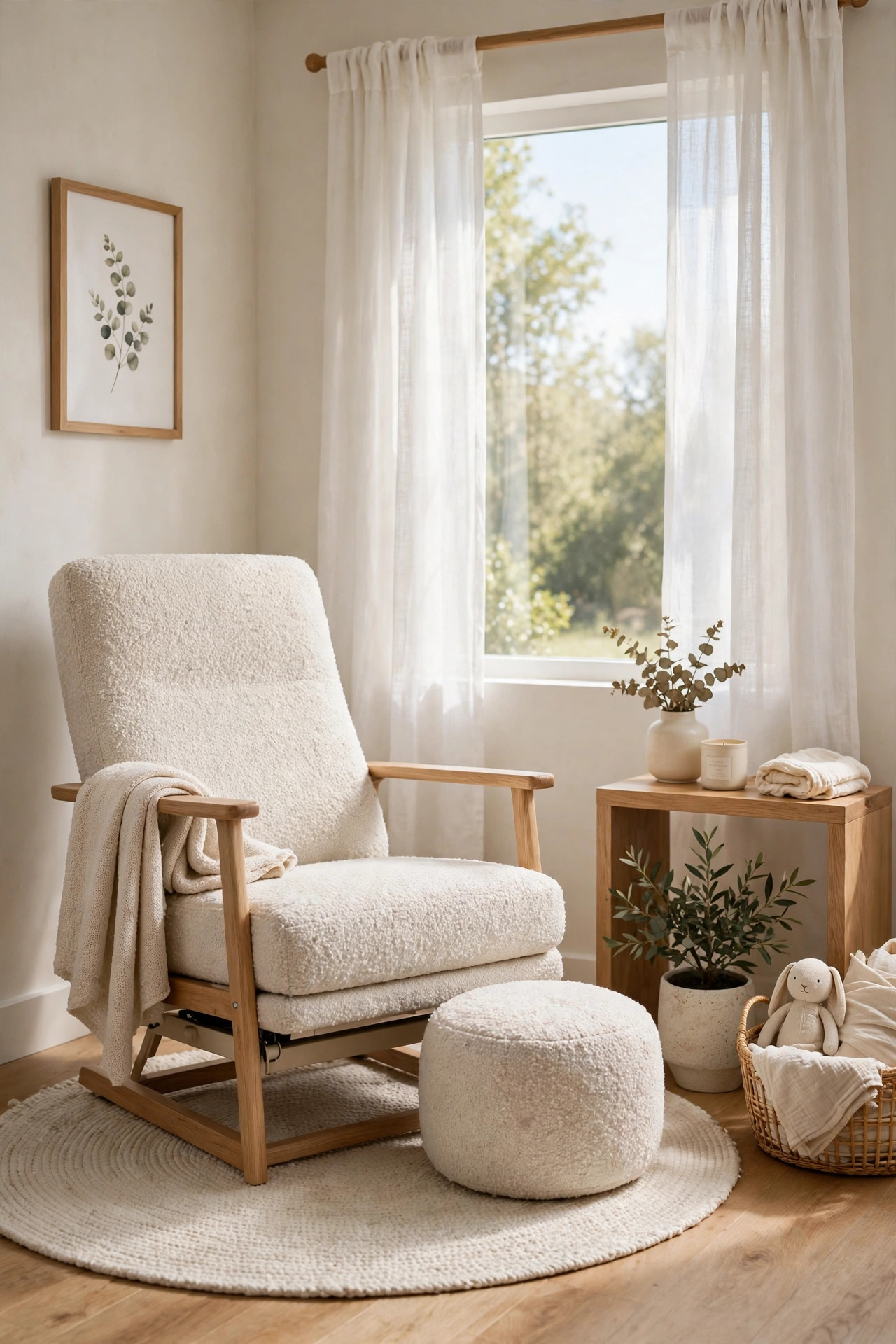
A traditional rocking chair or big glider is wonderful until you try to fit it into a small nursery. Classic models are deep and wide, and they need a foot or more of clearance behind them to rock, which means they demand a full corner to themselves. In a tight room the chair either does not fit at all, or it fits but blocks the closet, the window, or your path to the crib. Skipping the chair feels wrong, because those 3 a.m. feeds need somewhere comfortable to happen.
The fix is a slim profile glider or a slipper style nursing chair built for small spaces. These chairs are narrower through the hips and shallower front to back, and many glide on a track that needs only a few inches of wall clearance instead of a full rocking arc. Look for solid arm support at the right height for feeding, because sore arms will ruin the experience no matter how pretty the chair looks. A small lumbar pillow and a footrest pouf, which tucks under the chair when not in use, complete the setup without adding bulk. Try the chair in person if you can, and sit in it for a full five minutes, because comfort at minute one and comfort at minute forty are very different things. You still get your cozy feeding spot. It just stops eating the room.
7. Floating Corner Shelves for Dead Corners
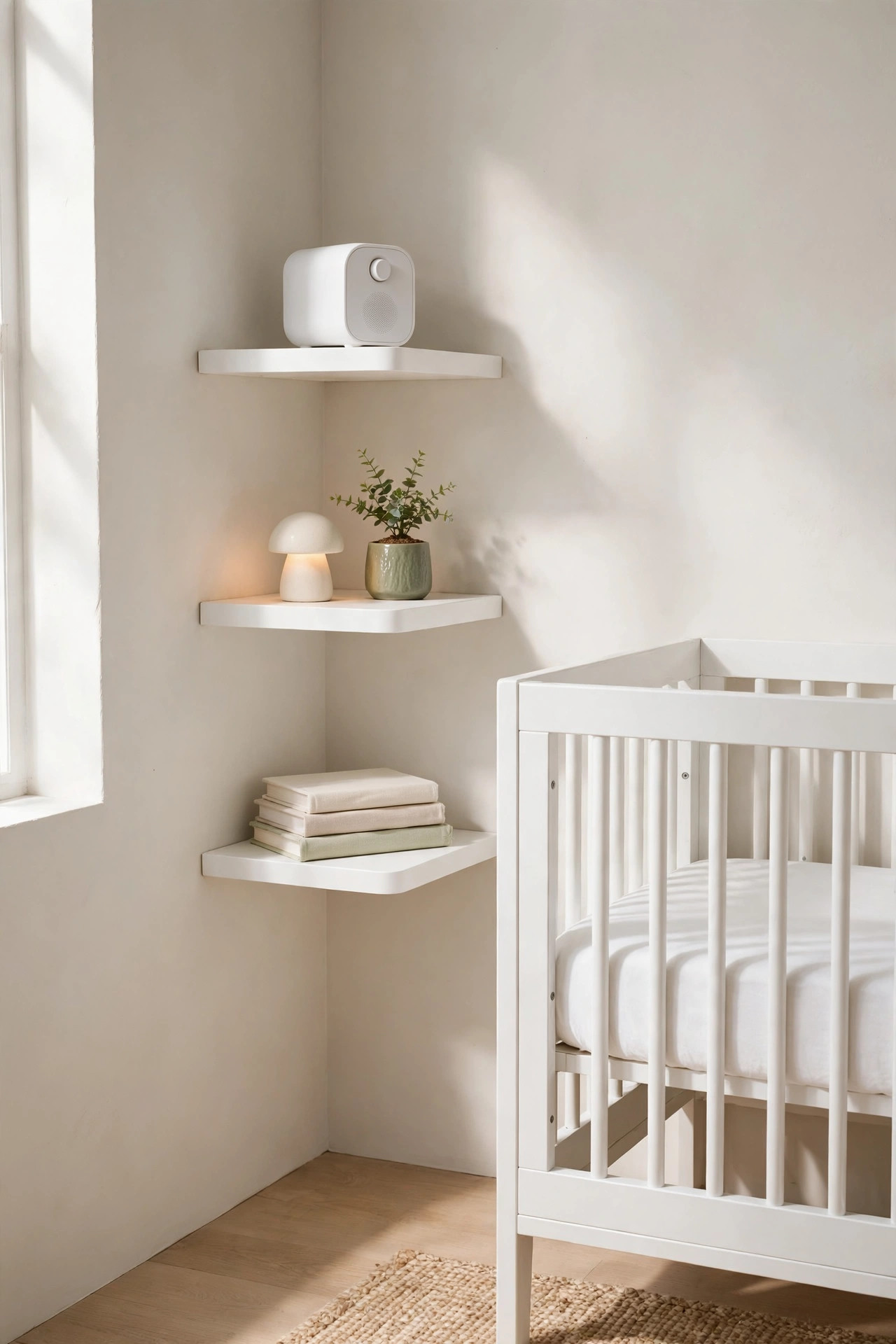
Corners in small nurseries tend to become dead zones. They are too tight for furniture, too awkward for the crib, and too dark to be useful, so they slowly fill with random clutter: a pile of gifts, the bouncer you are not using yet, a bag of hand me downs. Meanwhile you are desperate for somewhere to put the sound machine, the night light, and the bottle of water you need during night feeds.
The fix is to claim those corners with small floating shelves. Two or three short shelves stacked in a corner, or a single triangular corner shelf, turn wasted space into a proper nightstand alternative right next to the crib or glider. That is the perfect home for the sound machine, a dim night light, a water bottle, and your phone, all within arm’s reach during feeds. Keep the shelves shallow, six to eight inches deep, so they do not jut out and become a head bumping hazard in a tight walkway. Style the top shelf with one small plant or a framed print and keep the lower ones purely practical. Corners stop being clutter magnets the moment they have a job, and this is one of the cheapest fixes on the list.
8. Over the Door Organizer for Diaper Supplies
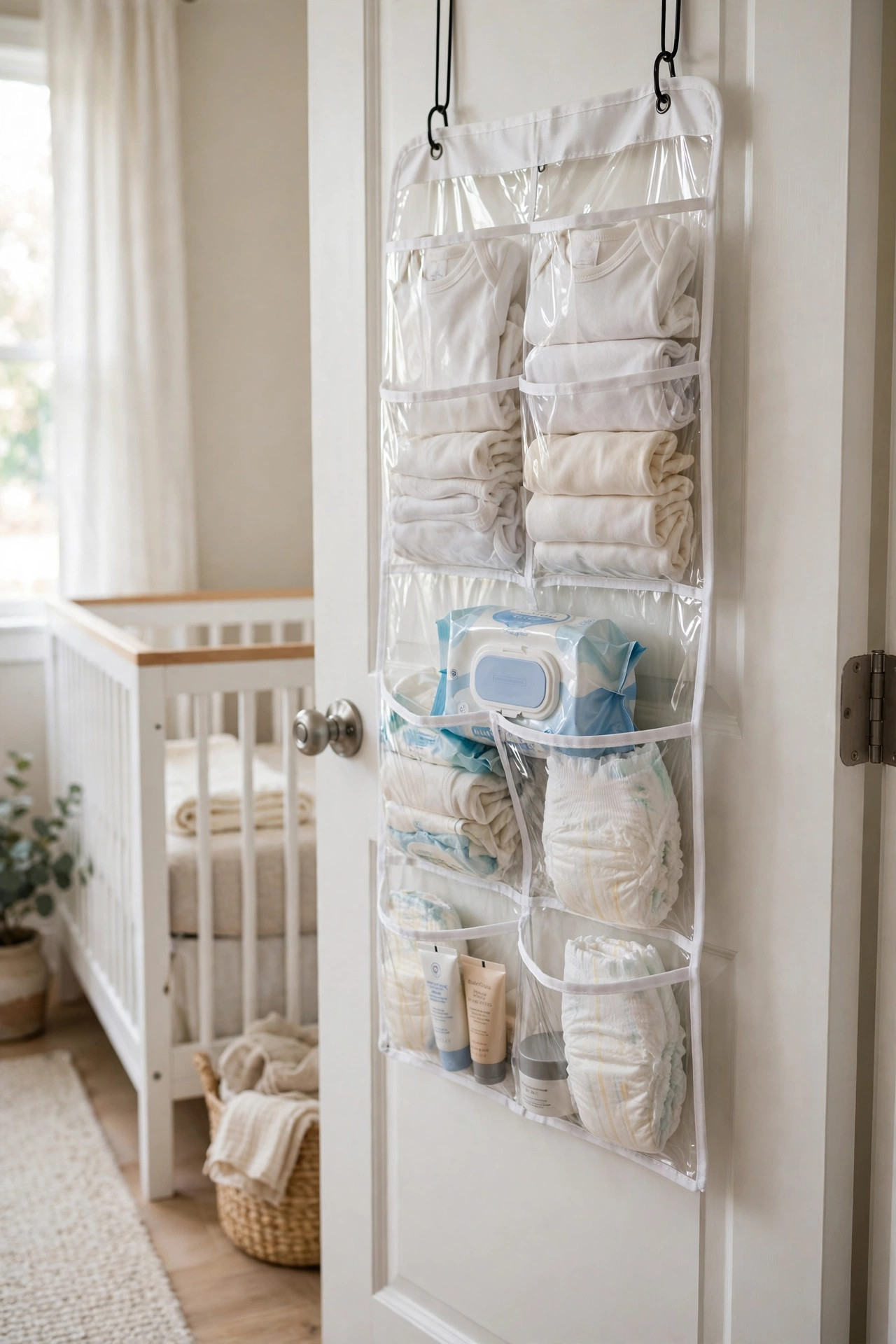
Diaper changing supplies have a way of spreading across every flat surface in the nursery. The cream lives on the dresser, the wipes are on the shelf, the spare onesies are in a drawer across the room, and at 2 a.m. you are doing laps with a crying baby on your hip. In a small room there is no spare dresser top for a full changing station, so the supplies end up wherever they land.
The fix is to hang a clear over the door pocket organizer on the back of the nursery door or closet door and give every supply its own pocket. Diapers go in the big bottom pockets, wipes and creams in the middle, spare onesies and burp cloths up top. The clear pockets matter, because you can see everything without digging, which is priceless when you are half asleep. Choose an organizer with sturdy hooks that clear the door frame, and check that the door still closes fully. If the pockets swing, add a small adhesive hook at the bottom to hold it steady. One door, zero floor space, and every changing supply visible and grabbable in a single spot. Nighttime you will be grateful.
9. A Round Rug to Open Up the Floor
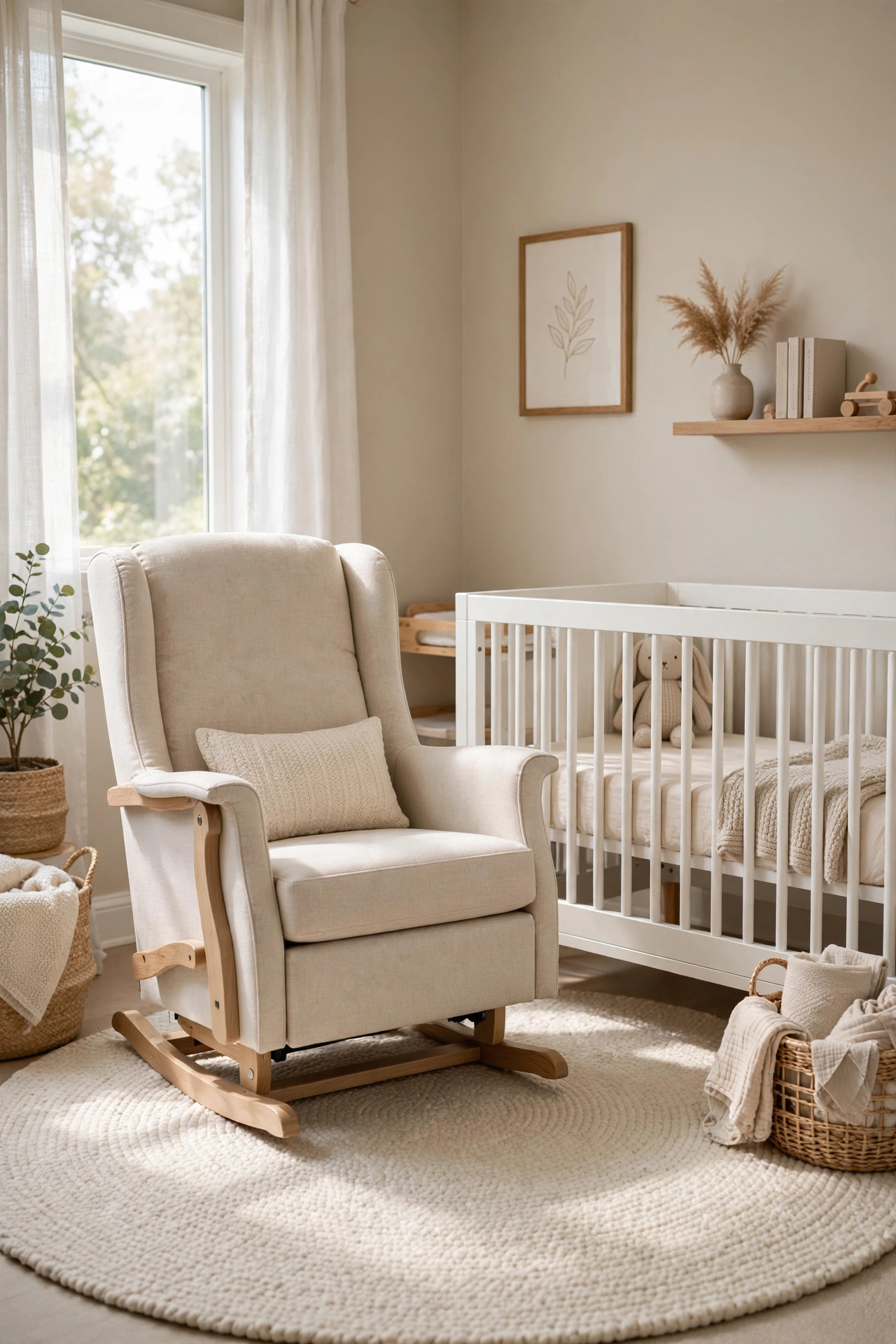
A rectangular rug in a small nursery often makes the room feel smaller, not bigger. Its hard corners chop the floor into zones, the edges land awkwardly under furniture legs, and the eye reads every boundary as a wall. A rug that is slightly too small looks like a postage stamp, and one that is slightly too big bunches against the walls. Either way the floor feels busy and broken up.
The fix is to lay down a round rug instead. Without corners, a round rug lets the eye travel smoothly across the floor, which makes the whole room feel more open and continuous. It also tucks neatly beside a crib or under a glider without awkward overhang, and it softens all the hard rectangles of baby furniture. Choose a low pile, washable rug, because nursery rugs take a beating from spit up, diaper leaks, and crawling knees, and being able to throw it in the wash is worth more than any pattern. Size it so the front legs of the glider sit on the rug with room to spare. It is a small swap that changes how the entire floor reads.
10. Light Paint Plus a Mirror to Double the Light
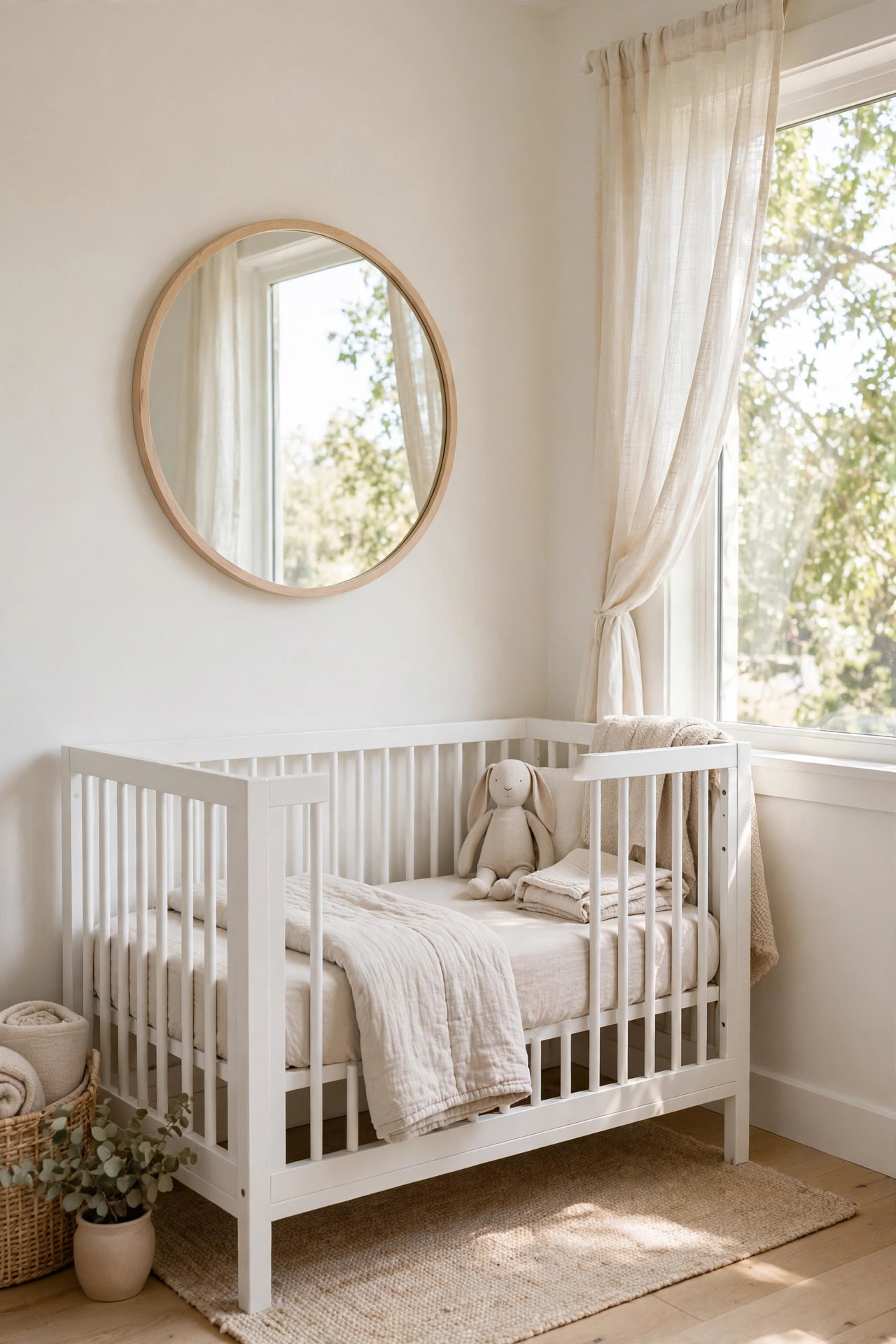
Small nurseries are often the darkest rooms in the house: a bedroom with one small window, a north facing wall, or a corner that never gets direct sun. Dark paint or busy wallpaper makes it worse, absorbing what little light exists until the room feels like a cave. A cave is the last thing you want at 3 a.m. when you are already exhausted and trying to settle a crying baby.
The fix is to paint the walls a light, warm white or the palest soft neutral, and hang one good sized mirror opposite or beside the window. Light paint bounces the available light around instead of swallowing it, and the mirror doubles whatever daylight comes in, effectively adding a second window. Choose a mirror with a simple frame and hang it securely, well out of the baby’s reach, or use a shatterproof acrylic mirror for extra peace of mind. Keep the ceiling bright white too, since the ceiling is the biggest reflector in any room. If repainting is not an option, even light curtains and pale bedding move the needle. This fix costs almost nothing and it changes the mood of the room more than any furniture ever could.
11. A Pegboard Wall That Grows With Your Baby
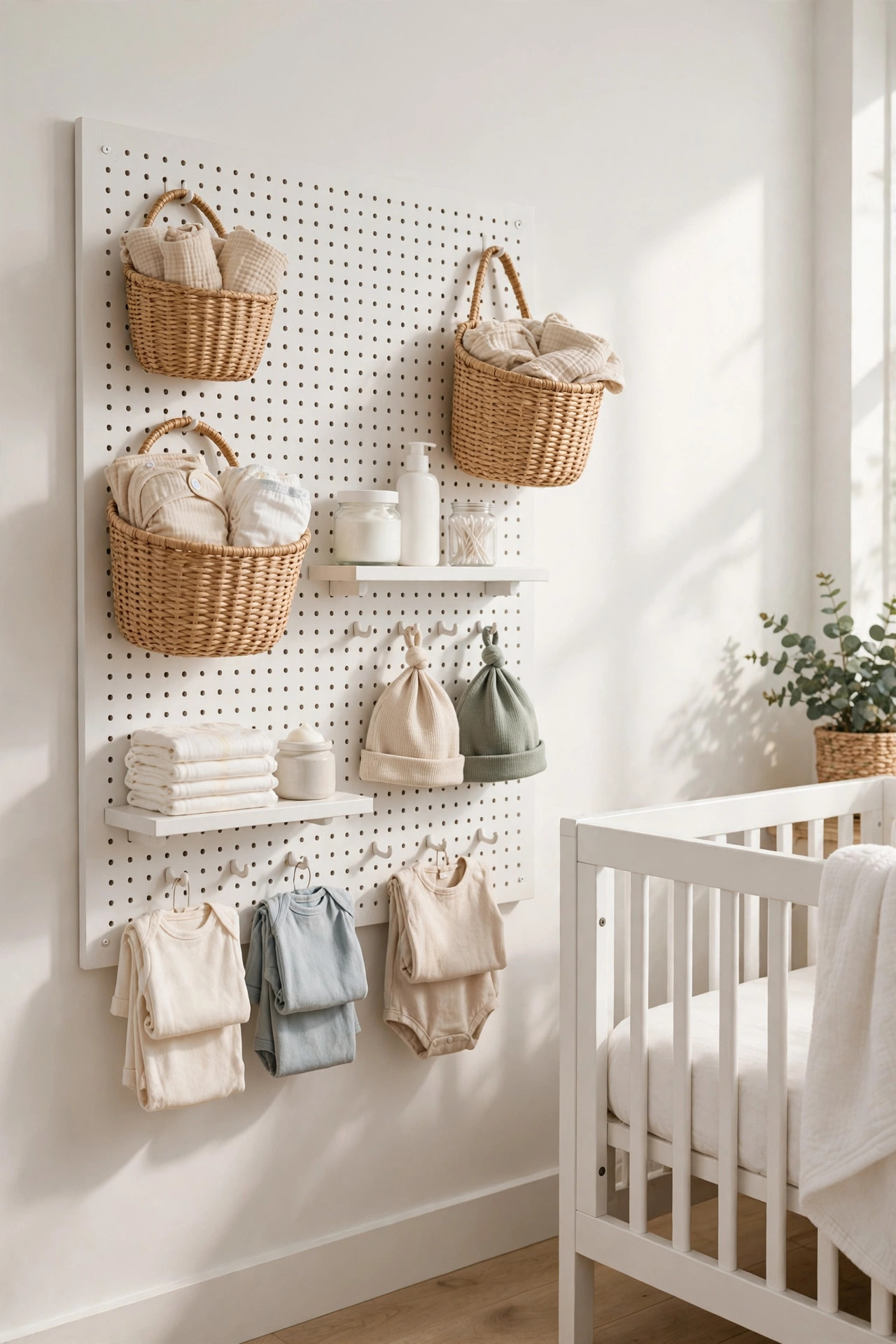
Baby storage needs change fast. The newborn stage needs diapers and swaddles within reach. Six months later it is teethers and bibs. A year later it is books and toys. Fixed organizers and single purpose furniture cannot keep up, so parents buy new storage every few months and the small nursery fills with mismatched bins that never quite work.
The fix is to mount a pegboard panel on one wall and let it evolve with you. Hooks, small shelves, baskets, and cups all hang on the same board and rearrange in seconds with no new holes. Start with diaper caddies and a small shelf for creams at changing height, then swap in toy baskets and book ledges as the baby grows. Paint the pegboard the same color as the wall so it blends in and looks intentional rather than workshop like. Keep heavy items low and light decor up high, and screw the board into studs since a loaded pegboard gets heavy. One wall, endless rearrangements, and you stop buying new organizers every season.
12. A Dresser That Doubles as a Changing Station
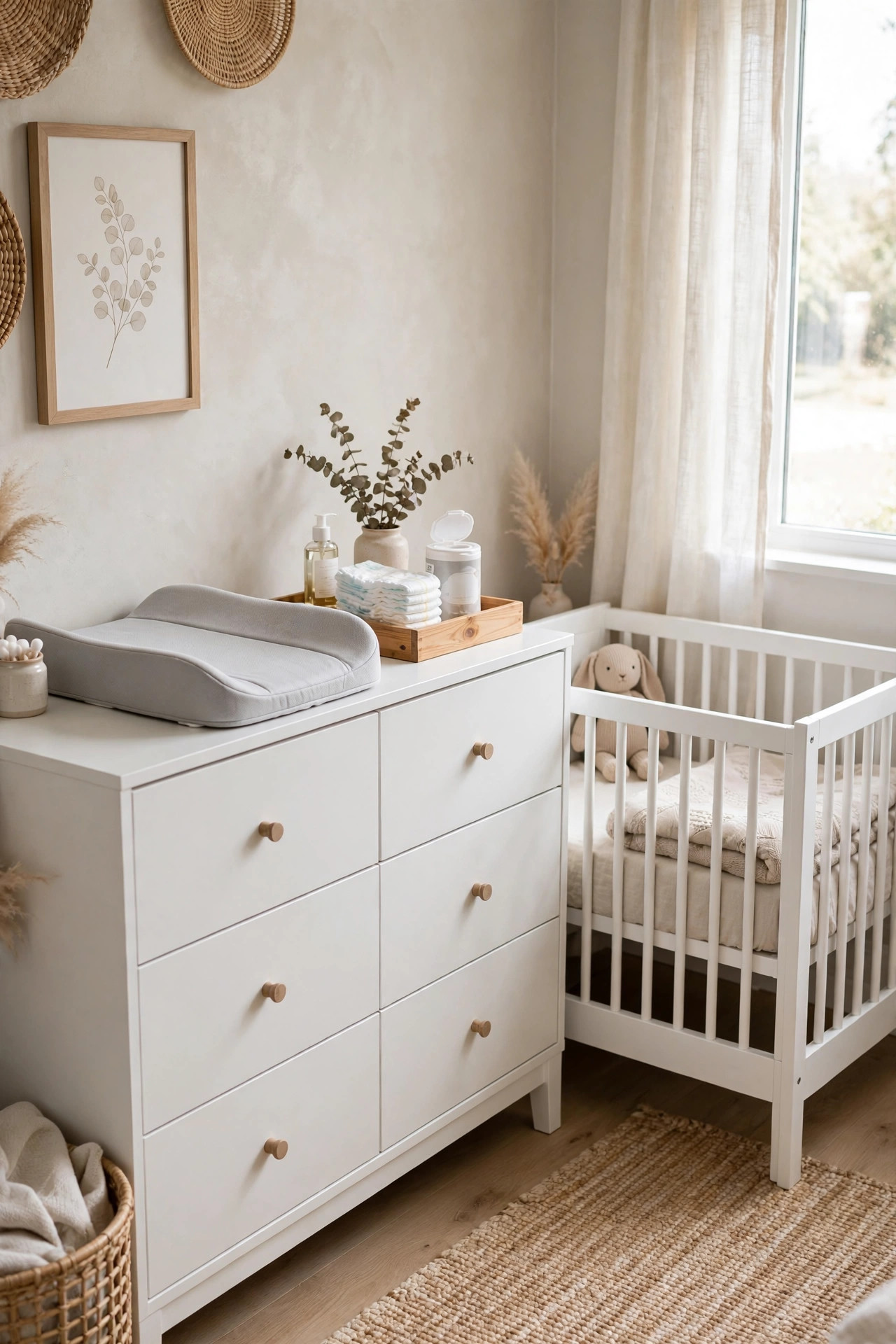
A dresser plus a separate changing table means two big pieces of furniture doing jobs that overlap, and in a small nursery that second footprint is pure luxury you cannot afford. But skipping the dresser is not realistic either, because baby clothes are shockingly numerous and they need drawers, not piles on the floor.
The fix is to make the dresser do both jobs. Choose a sturdy, wide dresser at a comfortable changing height, usually around thirty six inches, and top it with a contoured changing pad with a safety strap. Add a small tray or caddy on one side for diapers, wipes, and cream so everything is within reach. Anchor the dresser to the wall, which matters even more now that you will be leaning on it several times a day. When the diaper days end, remove the pad and you have a normal dresser, with no wasted furniture to sell or store. Pick a dresser with deep drawers and use simple dividers so tiny clothes stay sorted instead of becoming a jumbled mess. One piece of furniture, two jobs, zero wasted floor.
13. Curtains Hung High and Wide
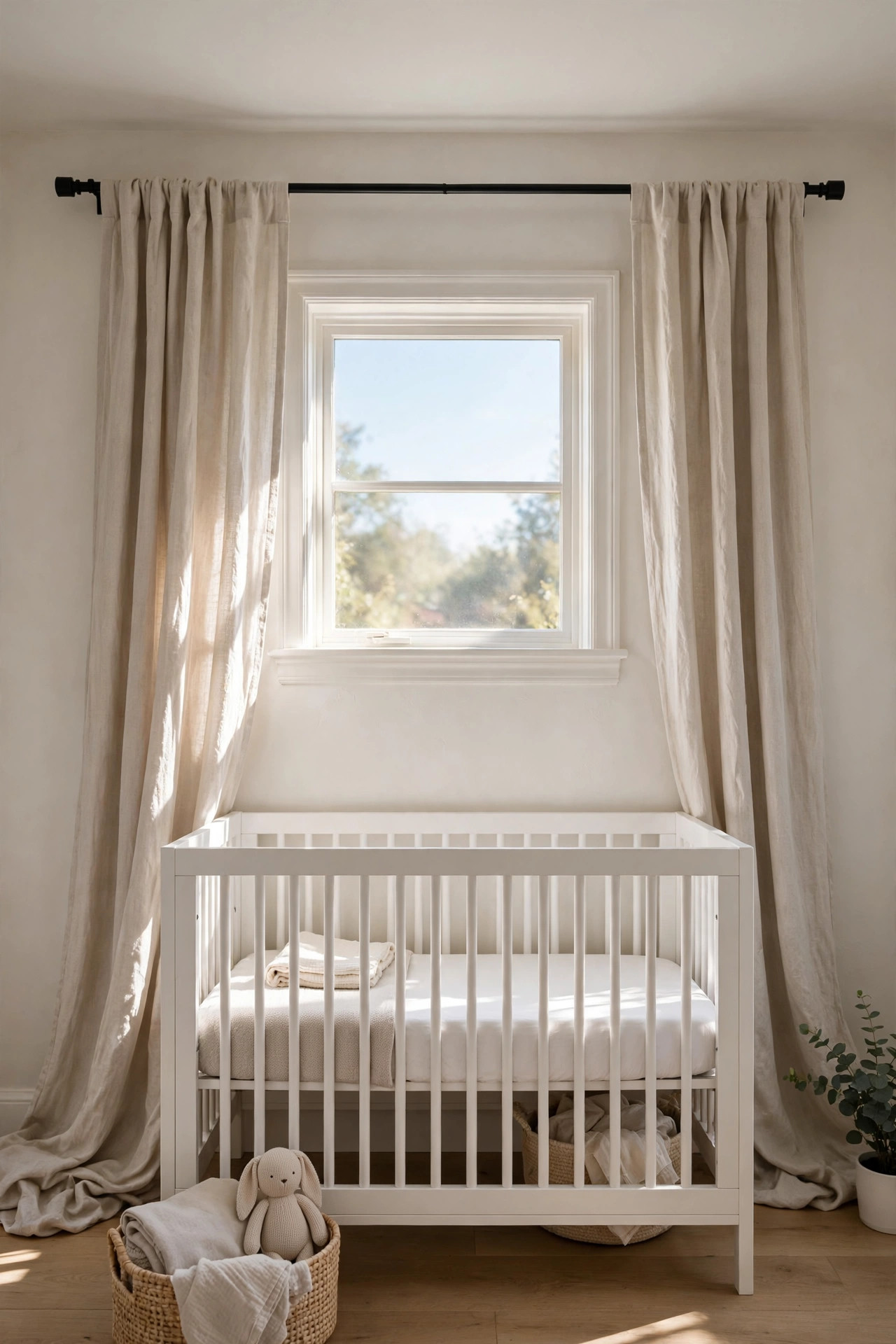
In small nurseries the window is often small too, and curtains hung right at the frame make it look even smaller. Short, narrow curtains frame a tiny patch of glass like a porthole, which tells the eye the whole room is tiny. Heavy dark curtains make it worse by swallowing the wall around the window and blocking precious light.
The fix is to hang the curtain rod close to the ceiling and extend it six to twelve inches beyond the window frame on each side. This one trick makes the window look much taller and wider than it is, because the eye follows the fabric, not the glass. Choose light, airy fabric in a soft neutral, and let the panels just kiss the floor. For naps, layer a blackout shade or blackout liner behind the pretty panels so the room gets properly dark without sacrificing the look. A bigger looking window makes the whole room feel bigger, and better naps are a bonus every parent will take.
14. A Rolling Cart as a Mobile Diaper Station
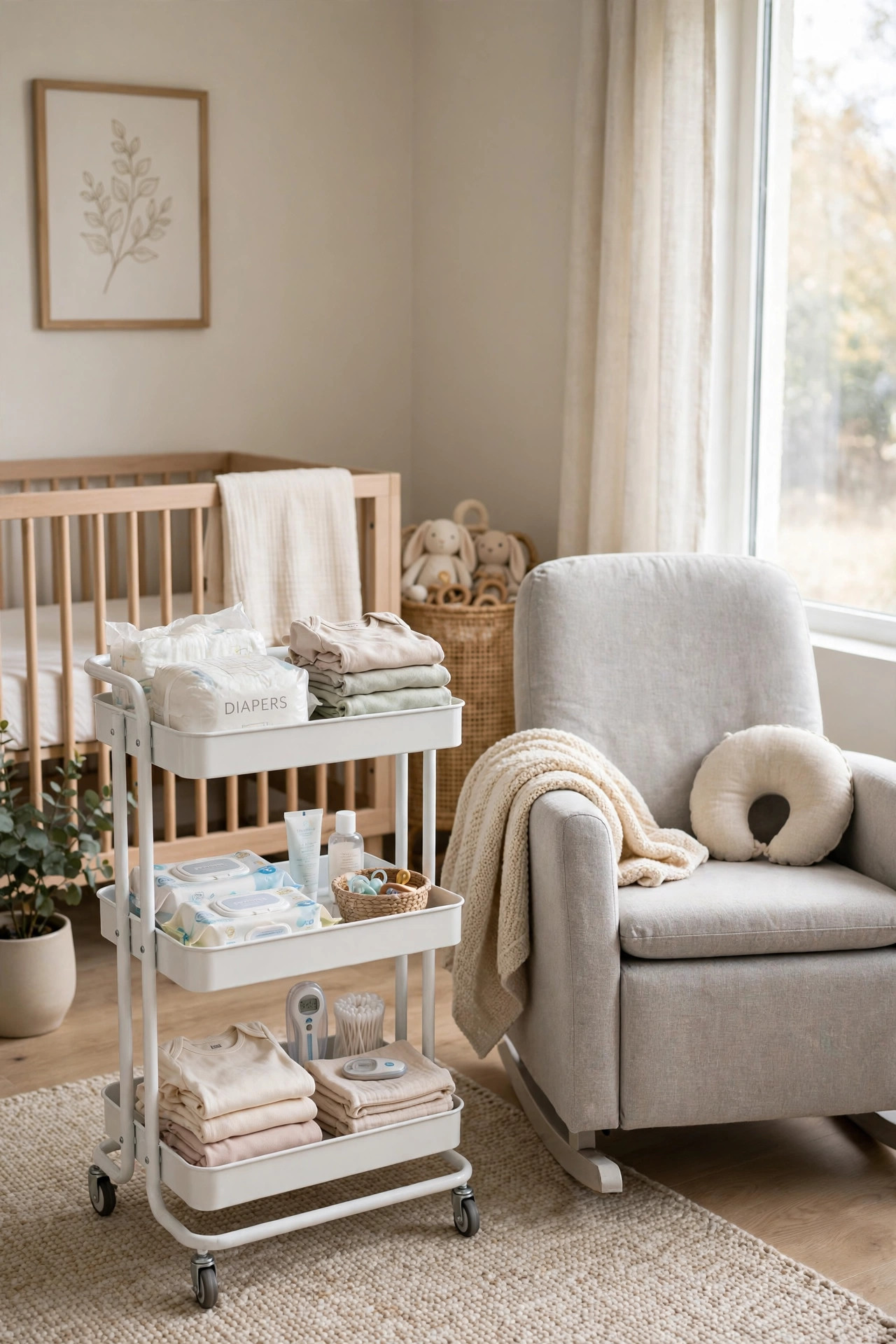
In a small nursery the changing spot is fixed but the baby is not. You change the baby on the dresser, then carry a squirming infant to the glider for feeding, then to the crib, and the supplies you need are always in the other spot. Fixed stations assume you stay put, and real life with a baby never works that way, especially in a tight room where every step counts.
The fix is to load a small three tier rolling cart and let your diaper station follow you. Stock the top tier with diapers, wipes, and cream, the middle with spare onesies, burp cloths, and a change of your own shirt, and the bottom with extra sheets and sleep sacks. Roll it to the dresser for changes, to the glider for feeds, and park it in a corner or closet when the day is done. Choose a cart with locking wheels so it stays put on hard floors, and keep the top tier tidy since it is always visible. This is also the perfect solution for a nursery corner in your bedroom, where there is no room for a dedicated changing table at all. When the baby outgrows diapers, the cart becomes art supply storage or a bathroom caddy. Few purchases work this hard.
15. Wall Decals Instead of Heavy Frames
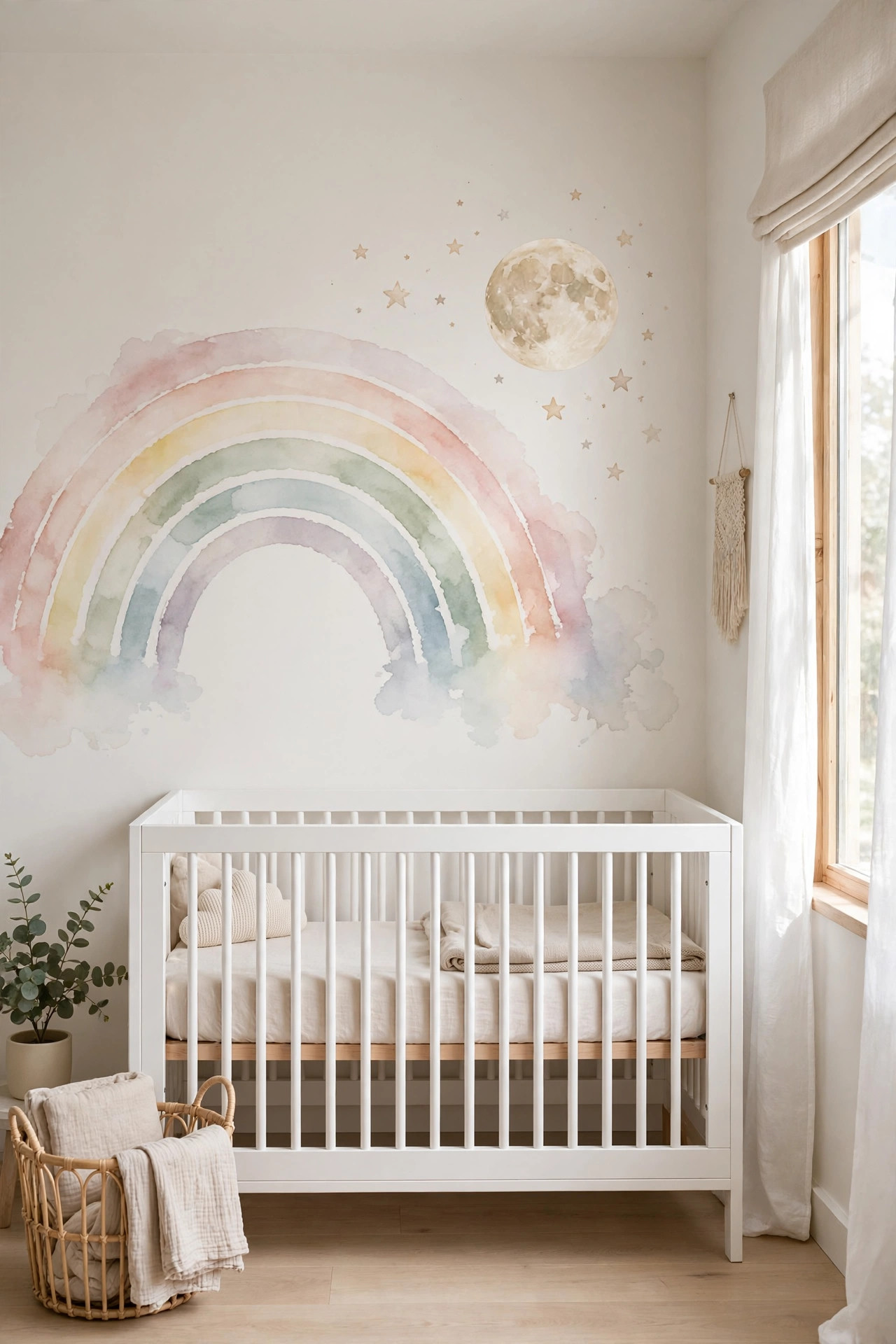
Gallery walls look charming in big nurseries, but in a small one they often backfire. Multiple frames add visual weight, each one needs a nail and careful leveling, and a cluster of dark frames on a small wall can make the room feel busy and closed in. Worse, frames have depth and glass, which catch light awkwardly and collect dust in a room you are already struggling to keep tidy.
The fix is to decorate with wall decals instead. Modern decals come in beautiful designs: soft rainbows, moons and stars, leafy branches, gentle animals. They add all the charm of art with literally zero depth. They go up in minutes, peel off cleanly when you redecorate, and cost far less than framing. Place a large scale decal on the main wall behind the crib for a focal point, and keep the other walls quiet so the room breathes. For renters this is the dream fix, since there are no nail holes to fill when you move. If you love one special framed print, hang just that one and let the decals do the rest. All of the personality, none of the clutter.
16. One Warm Statement Light Fixture
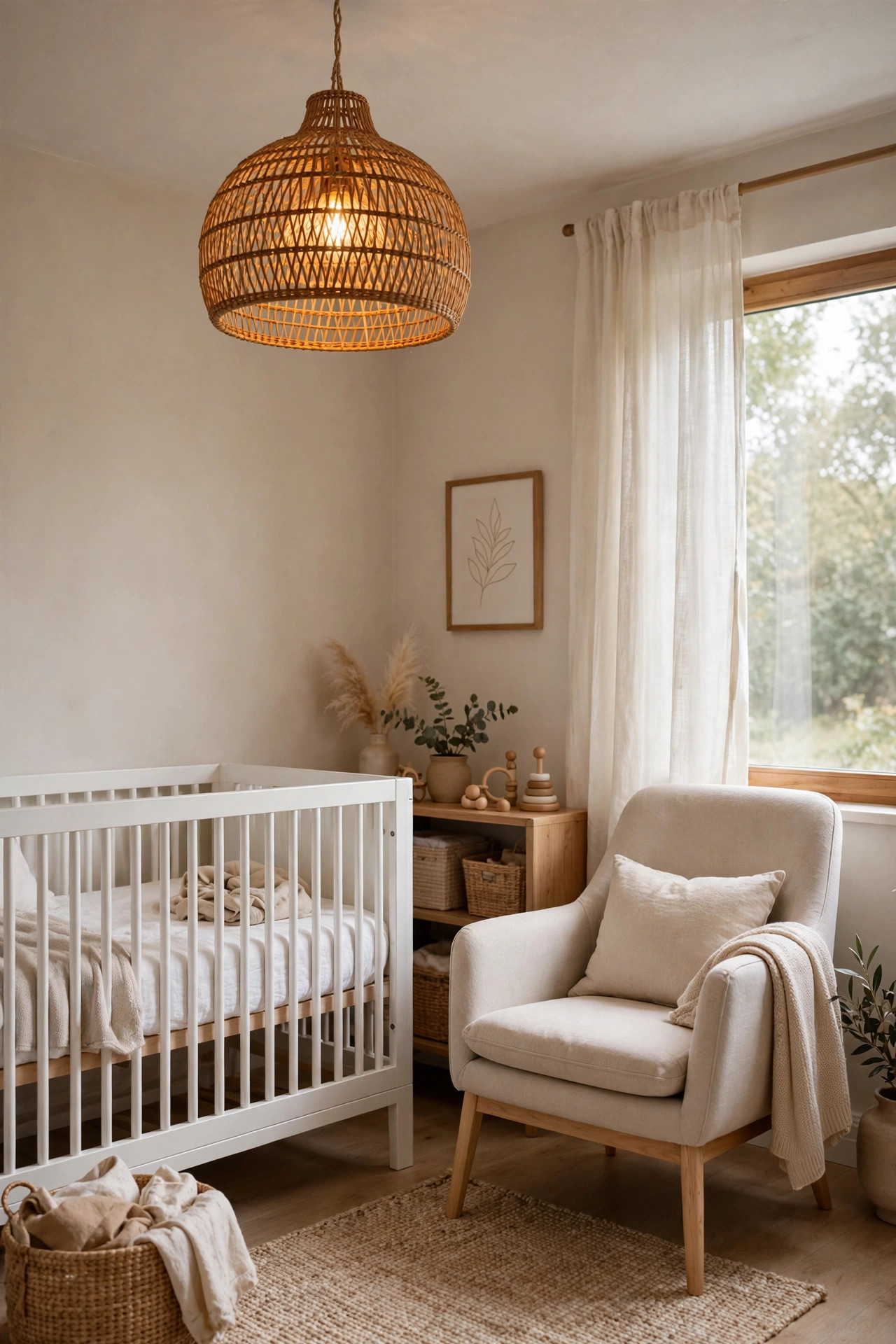
Small nurseries usually get the worst lighting in the house: a single harsh ceiling light or, just as bad, no ceiling light at all and one sad lamp in the corner. Harsh overhead light is blinding during night feeds, and a dim corner lamp leaves the rest of the room in shadow, which makes the space feel smaller and gloomier than it is.
The fix is to install one warm, beautiful light fixture and put it on a dimmer. A small rattan pendant, a soft fabric drum shade, or a sculptural flush mount draws the eye up, which makes the ceiling feel higher and the room feel larger. The dimmer is the real hero, letting you go from bright for diaper changes to a soft glow for nursing to nearly dark for the final rock to sleep. Add a small plug in night light near the floor for those middle of the night diaper runs, so you never need the big light at 3 a.m. Choose warm white bulbs around 2700 Kelvin, because cool daylight bulbs feel clinical and make everyone look tired. Good light does not just help you see. It makes the small room feel like a haven.
If you take one thing from this list, let it be this: a small nursery is not a lesser nursery. Every problem on this list, the crib that eats the room, the supplies with nowhere to live, the dark corners, the chair that will not fit, has a fix that real parents use every day in real apartments and small bedrooms. You do not need more square feet. You need the right swaps, and now you know exactly which ones solve which headaches.
Start with the two or three problems that bother you most and fix those first. Fold up the changing table, swap in the mini crib, hang the mirror. Then live in the room for a week and notice what still nags at you. Small rooms reward small, thoughtful changes more than big overhauls, and each fix makes the next one easier to see. Your baby will not remember the square footage. They will remember being held, rocked, and sung to in a room that felt calm and full of love, and that has nothing to do with size.
What size crib is best for a small nursery?
A mini crib is the best choice for most small nurseries. It measures about 38 inches long and 24 inches wide, compared to about 54 by 30 inches for a full size crib, and it meets the same safety standards. Most babies sleep comfortably in a mini crib through the first year. If your room cannot fit even a mini crib, a bassinet works for the first few months while you plan a longer term setup.
How do I fit a nursery into the corner of my bedroom?
Start with the smallest safe sleep option, a mini crib or bassinet, and build around it. Use a rolling cart instead of a changing table so your diaper station moves with you, hang an over the door organizer for supplies, and let one dresser drawer hold the baby’s clothes. A curtain on a tension rod or a folding screen can give the corner its own identity without building walls.
What colors make a small nursery look bigger?
Light, warm whites and the palest soft neutrals make the biggest difference, because they bounce light around instead of absorbing it. Keep the ceiling bright white, choose light curtains and bedding, and add one mirror to double the daylight. Save deeper colors for small accents like a throw pillow or a single decal, so the room stays airy.
Where do I store everything without a big dresser?
Think vertical and hidden. Floor to ceiling shelves use empty wall space, rolling bins under the crib turn dead space into storage, and an over the door organizer holds all the diaper supplies. A dresser that doubles as a changing station covers clothes and changes in one footprint. Most small nurseries do fine with one dresser plus these helpers.
Is a mini crib safe for overnight sleep?
Yes. Mini cribs sold today must meet the same federal safety standards as full size cribs, including slat spacing and structural requirements. Always buy new, or check that a used crib has all its parts, hardware, and instructions, and that it has never been recalled. Use a firm mini crib mattress with a fitted mini crib sheet, and keep the sleep space bare, with no blankets, pillows, or bumpers.
How can I make a small nursery feel cozy instead of cramped?
Cozy comes from warmth and light, not from filling the space. A round washable rug softens the floor, warm white bulbs on a dimmer set the mood, and one beautiful light fixture draws the eye up. Keep surfaces clear, let the walls breathe with decals instead of heavy frames, and add texture with a knit throw or soft curtains. A calm, uncluttered room always feels bigger and more inviting than a crowded one.