
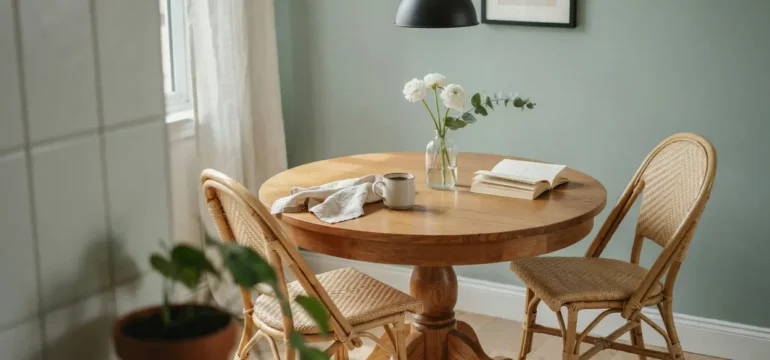
If you have ever pushed a tiny kitchen table into a corner and just left it bare because you weren’t sure what else to do with it, you are far from alone. Small tables often get treated as an afterthought, tucked away and forgotten, when really they can be one of the coziest spots in the whole house. The good news is that a small footprint does not mean small style. In fact, some of the warmest, most inviting kitchen nooks belong to tiny two or four seat tables that someone took the time to style with a little thought. You do not need a big dining room or a huge budget to make this happen. What you need is the right combination of shape, texture, and a few well chosen objects that make the space feel finished rather than forgotten. Here are twelve ways real homeowners have styled their small kitchen tables into spots people actually want to sit at.
1. Round Pedestal Table
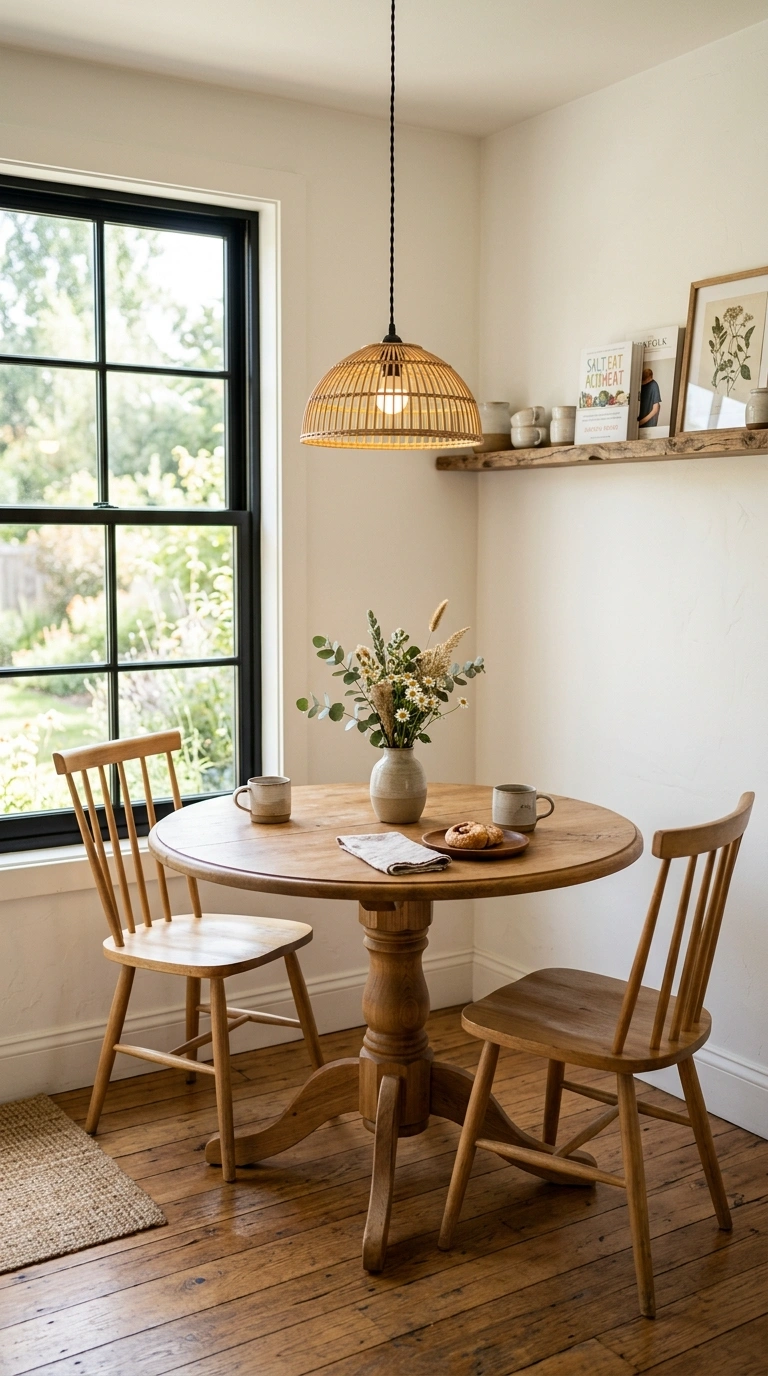
A round pedestal table is one of the smartest shape choices for a tight kitchen corner because it has no legs sticking out at the sides to bump into, and its curved edges make it feel less bulky than a square or rectangular option. This shape works especially well against a wall or tucked into a bay window, since people can slide chairs in close without the awkward corner clash that square tables often cause in small rooms. The single center pedestal base also opens up floor space visually, which makes the whole kitchen feel less crowded.
When choosing a round table for a small space, a diameter between thirty six and forty two inches usually seats four comfortably without overwhelming the room. Pairing it with slim wooden or woven chairs, rather than bulky upholstered ones, keeps the overall look light and airy. Adding a simple pendant light directly above the center of the table draws the eye upward and makes the whole corner feel like an intentional, styled dining nook rather than an empty gap that got filled.
2. Layered Table Runner
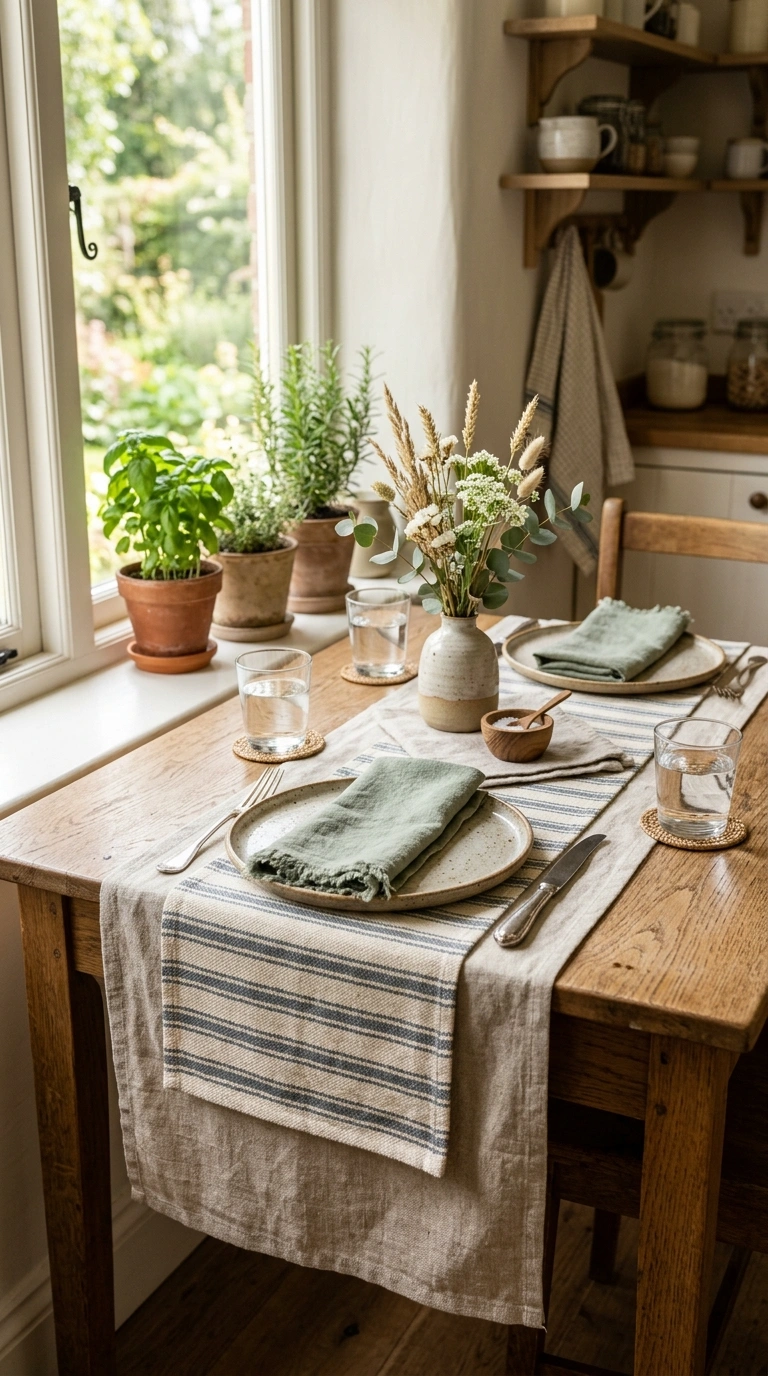
A layered table runner, meaning a plain linen runner topped with a slightly narrower patterned one, adds depth and color to a small table without covering up too much surface area. This works particularly well when the table itself is a nice wood finish that you still want visible around the edges. Neutral linen on the bottom layer paired with a striped or subtly patterned runner on top creates a collected, thoughtfully put together look rather than a flat, single fabric covering.
To style this well, let the runners hang evenly off both ends of the table rather than bunching to one side, and keep the width narrow enough that most of the wood grain still shows along the sides. A short stack of cloth napkins placed at each place setting on top of the runner ties the whole look together. This small styling trick photographs beautifully because the texture and color layering catches the eye immediately, even in a very small dining space.
3. Bud Vase Cluster
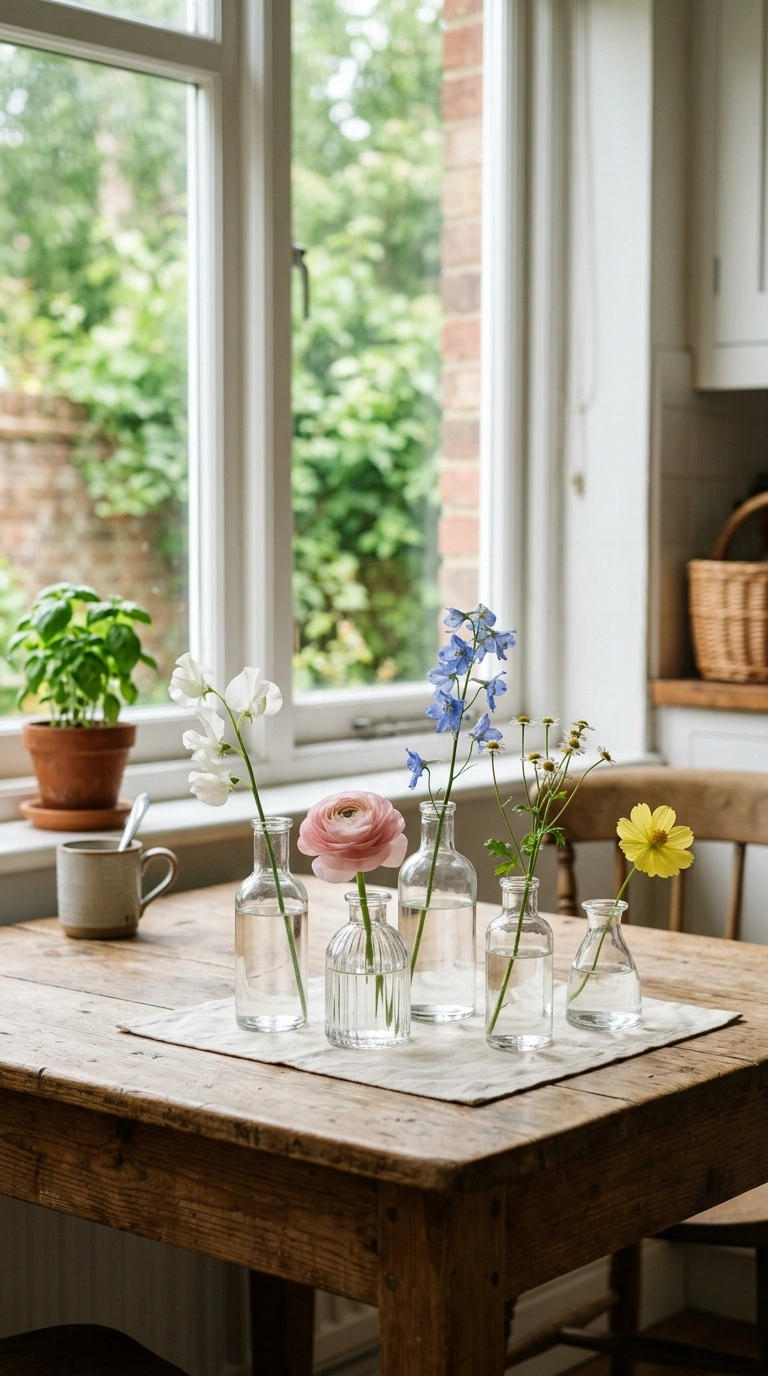
Instead of one large centerpiece that can overwhelm a small table and get in the way during meals, a cluster of tiny bud vases holding single stems creates height and color without taking up much surface space. Three to five small glass or ceramic vases grouped together in the center of the table, each holding just one flower or a small sprig of greenery, gives a delicate and effortless look that feels fresh rather than fussy.
Mixing vase heights slightly, with a couple taller and a couple shorter, adds visual interest and keeps the arrangement from looking too uniform or store bought. Clear glass bud vases let the stems themselves be the star, while a mix of white and soft green tones keeps the palette calm and versatile for everyday use. Because the vases are small, the arrangement can be pushed easily to one side during meals, making this one of the most practical styling ideas for a table used daily.
Also read: 19 Cottagecore Kitchen Ideas Full of Cozy Vintage Charm
4. Mismatched Dining Chairs
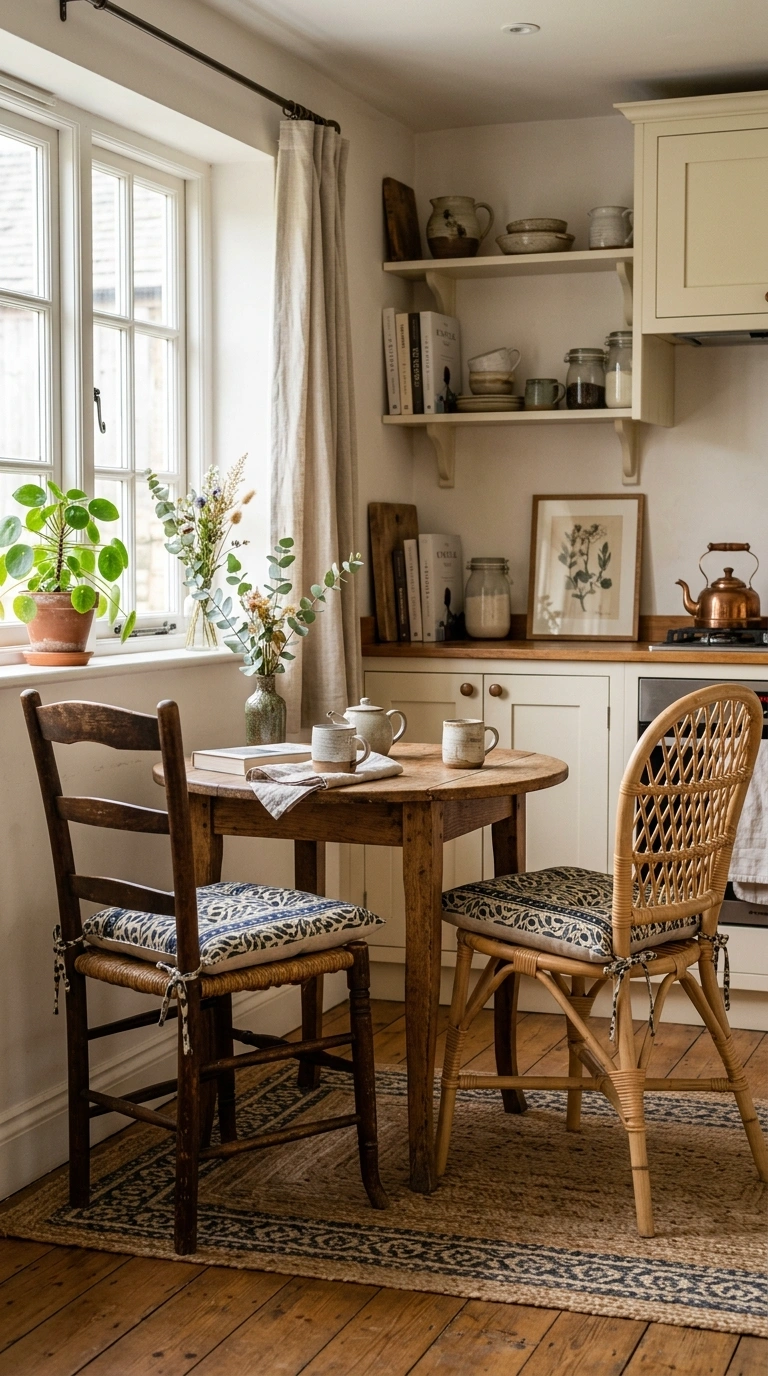
Choosing mismatched chairs around a small kitchen table might sound unusual, but it is actually one of the easiest ways to add personality and make the space feel curated rather than store bought. Pairing two different chair styles, such as a wooden ladder back chair on one side and a woven rattan chair on the other, gives the table a collected, lived in feeling that a matching set simply cannot replicate. This works especially well in cottage, farmhouse, or eclectic kitchens.
To keep the mismatched look intentional rather than chaotic, sticking to a similar wood tone or a shared color thread between the chairs helps tie everything together visually. Adding coordinating seat cushions in the same fabric across both chair styles is another simple trick that unifies the look instantly. This styling choice also solves a practical problem for small kitchens, since it allows odd numbered seating, like three chairs around a small table, to look completely natural.
5. Woven Placemats
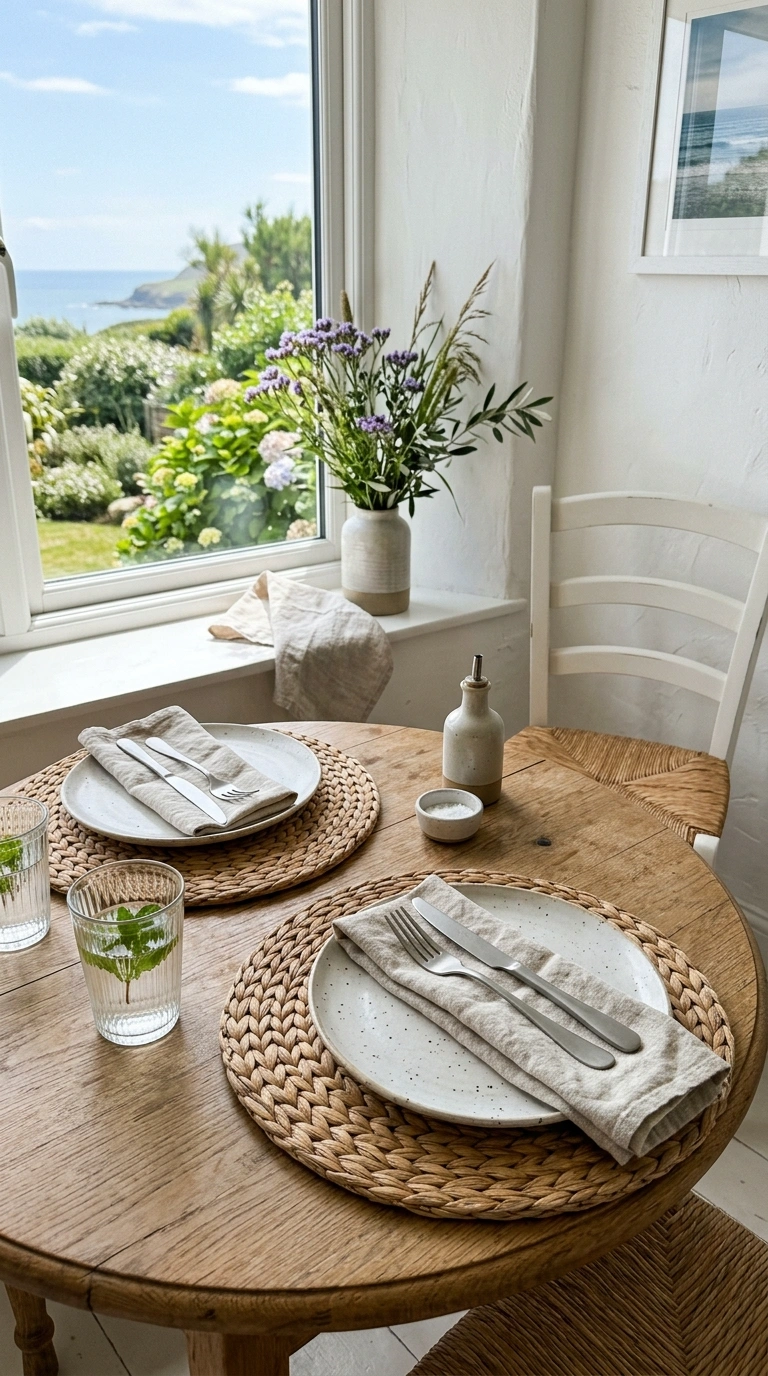
Woven placemats made from natural materials like rattan, jute, or seagrass bring warmth and texture to a small table top, especially when paired with simple white or stoneware dishes. Unlike a full tablecloth, placemats keep more of the table’s natural wood grain visible, which tends to make a small table feel less bulky and more open. This look fits beautifully in kitchens with a coastal, natural, or farmhouse feel.
Layering a woven placemat under a plain white plate and a simple cloth napkin creates a soft, textured base for each place setting without adding visual clutter. Choosing placemats in a slightly irregular or handwoven texture, rather than a perfectly uniform machine made pattern, adds an authentic, collected quality to the table. Because these placemats wipe clean easily and store flat, they are also one of the most practical daily styling choices on this entire list.
6. Pendant Light Above
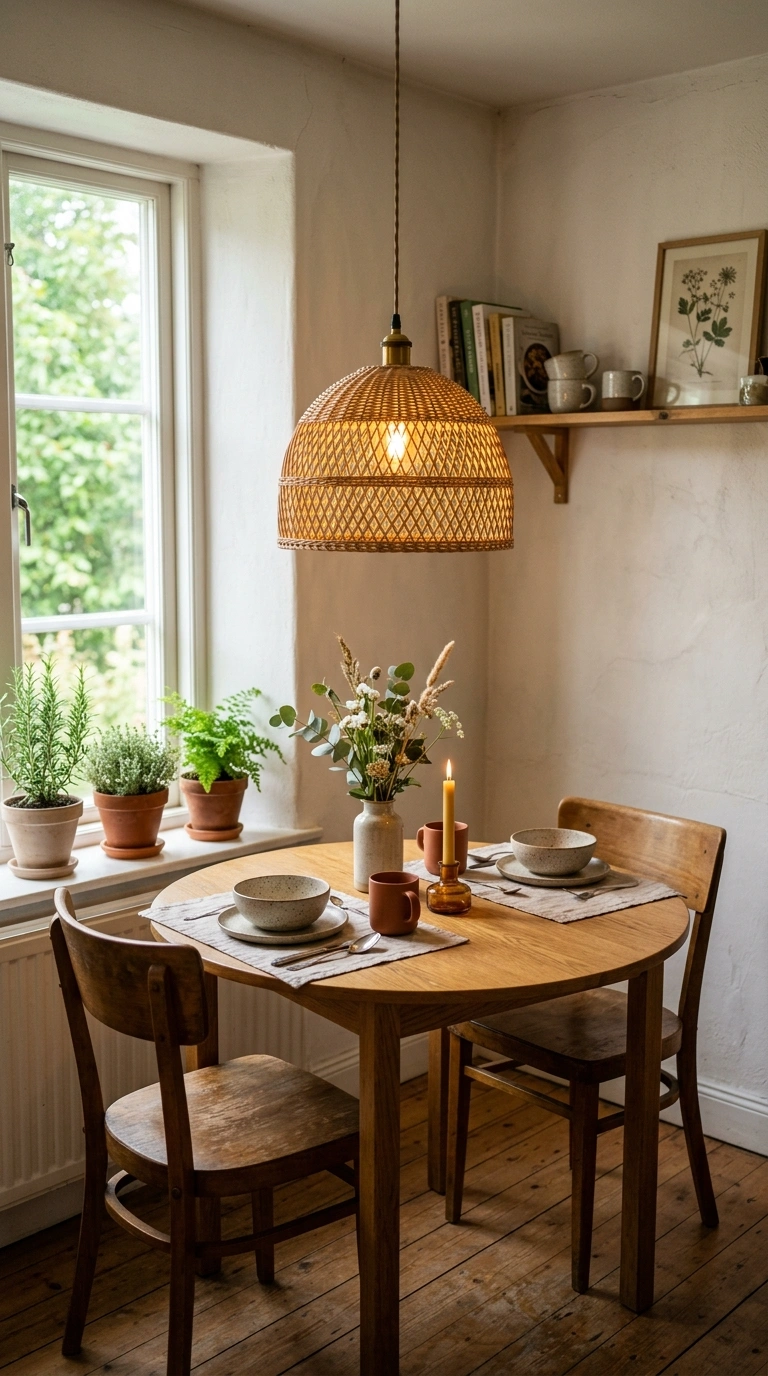
Hanging a single pendant light directly above a small kitchen table instantly draws attention to that corner of the room and makes it feel like a defined, intentional dining spot rather than just a table pushed against a wall. A warm toned glass or woven rattan pendant shade softens the light and adds a cozy glow during evening meals, which photographs beautifully against a plain white or wood ceiling.
The ideal hanging height typically places the bottom of the pendant about thirty inches above the table surface, low enough to feel intimate but high enough to avoid blocking sightlines across the table. Choosing a pendant with a slightly larger visual presence than the table itself actually helps balance the scale of a small dining area, making the whole nook feel more grounded and purposeful. This single lighting change is often the difference between a table that looks like an afterthought and one that looks like a designed feature of the home.
7. Corner Banquette Nook
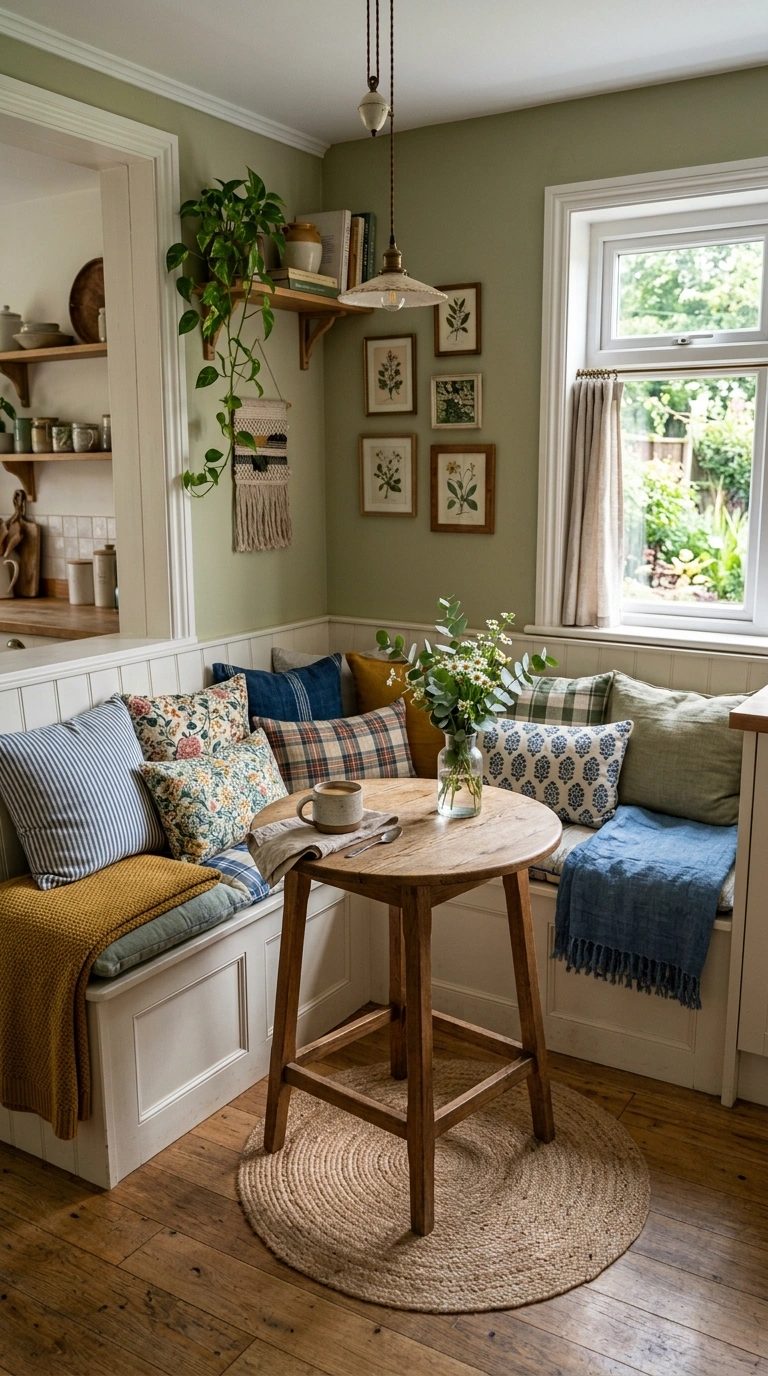
Building or buying a small corner banquette bench transforms an awkward, underused kitchen corner into a cozy, café style dining nook that maximizes seating without taking up floor space the way individual chairs do. A banquette tucked into an L shaped corner, paired with just one or two chairs on the open side of the table, creates a warm, inviting seating arrangement that feels custom designed even in a modest kitchen.
Adding a few cushions in a mix of solid and patterned fabric against the bench back softens the look and makes the seating feel comfortable rather than utilitarian. A single round or slightly oval table pulled up against the banquette allows for easy sliding in and out of the corner seat. This styling approach is especially popular in small kitchens because it visually reads as a much larger, more considered dining space than the square footage would suggest.
8. Stacked Linen Napkins
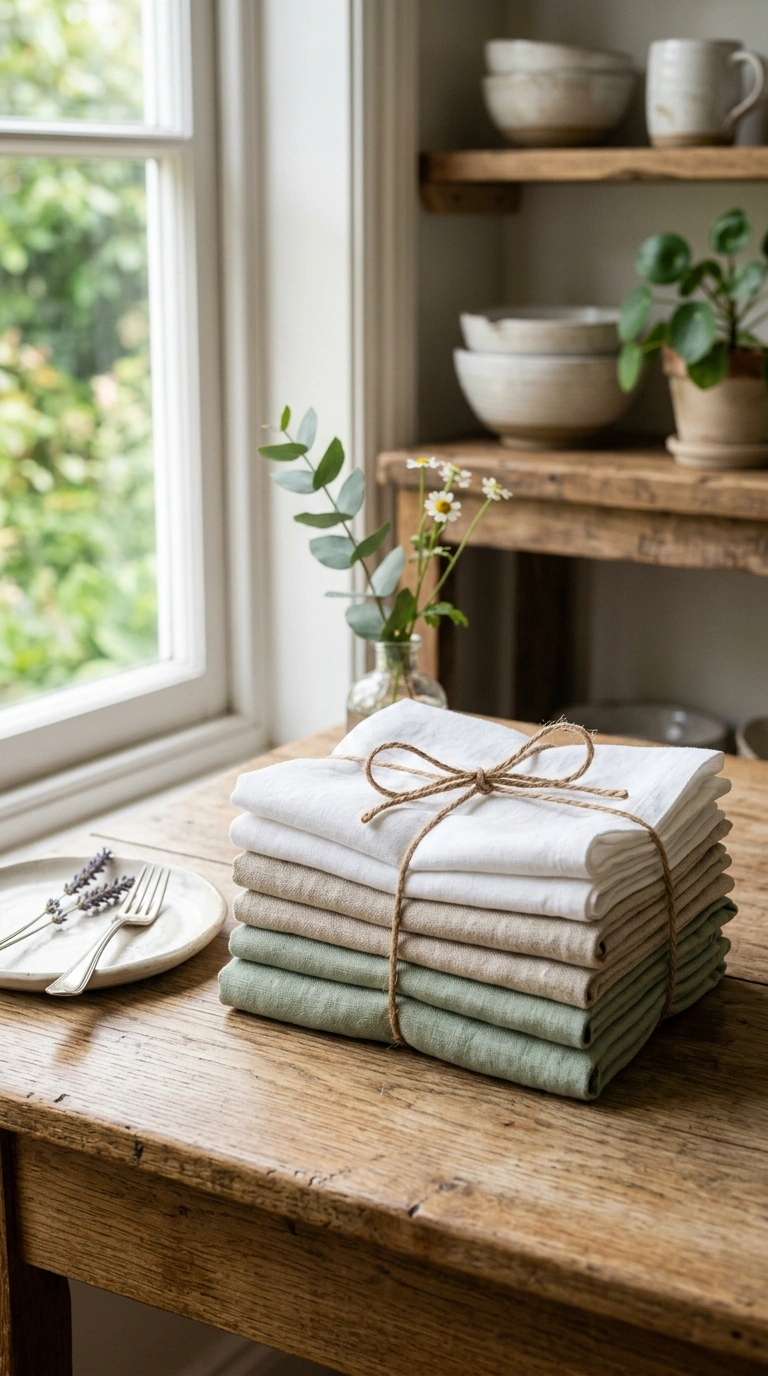
A neat stack of folded linen napkins placed at the center or corner of a small table, tied with a simple piece of twine or ribbon, adds an effortless styling detail that suggests a table ready for company at any moment. This small touch works especially well on tables that are otherwise kept fairly bare, since it introduces soft texture and a hint of color without cluttering the limited surface space.
Choosing linen in a soft, slightly wrinkled texture rather than a stiff, pressed fabric gives the stack a relaxed, lived in appearance that feels warm rather than formal. Layering two or three napkins in complementary tones, such as white, oatmeal, and soft sage, adds subtle depth to the stack. This styling idea photographs particularly well in natural light, since the soft folds and muted colors catch shadows in a way that feels calm and homey.
9. Small Fruit Bowl
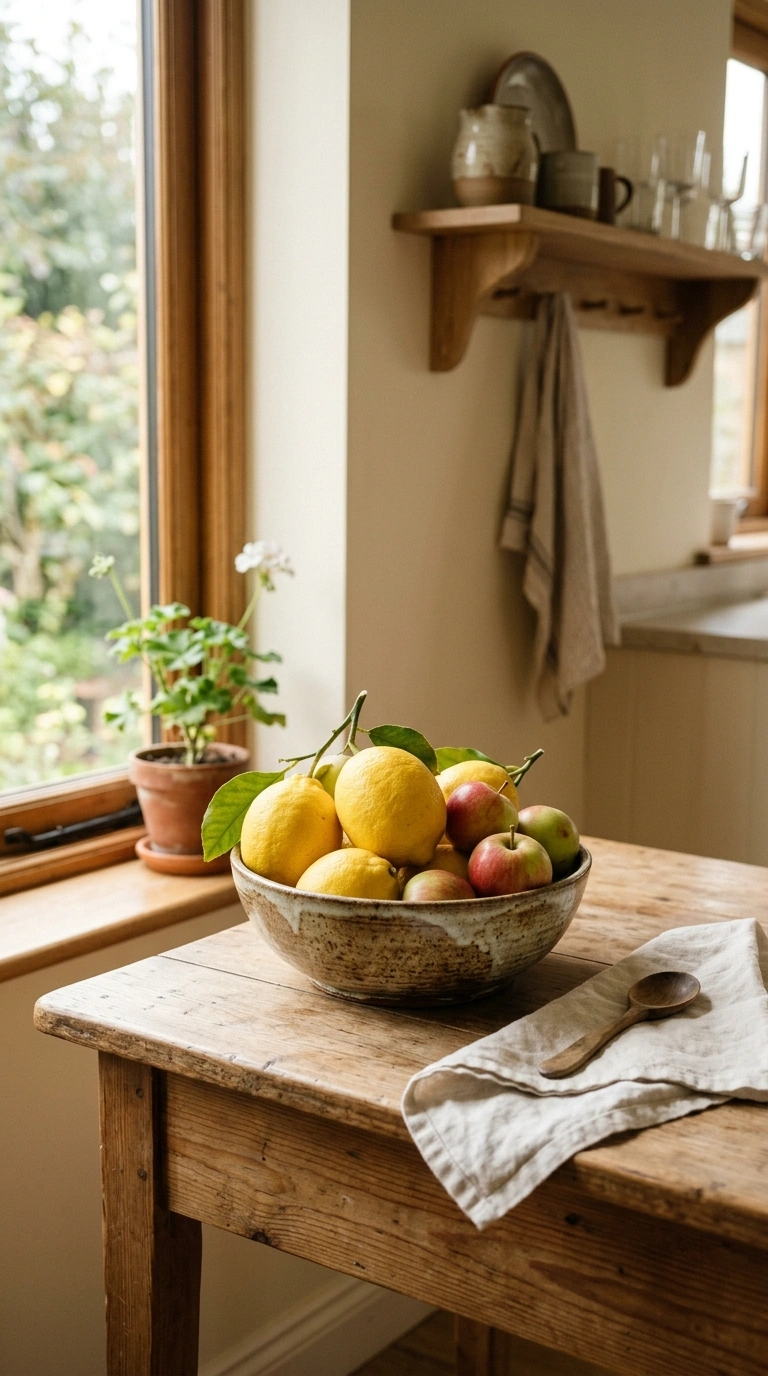
A simple ceramic or wire fruit bowl filled with lemons, apples, or oranges brings natural color and a lived in feeling to a small kitchen table without requiring any real design skill. This is one of the most practical styling ideas on this list because the bowl serves a genuine daily purpose, holding actual fruit for snacking, while also functioning as an easy centerpiece that never looks out of place.
Choosing a bowl with a slightly textured or handmade look, rather than a plain glossy finish, adds a bit of visual interest even when the bowl itself is empty. Grouping fruit by color, such as all yellow lemons or a mix of red and green apples, creates a more polished, styled appearance than a random assortment. Because the bowl can be pushed to the center or side depending on mealtime needs, this idea works beautifully for tables used constantly throughout the day.
10. Nearby Wall Mirror
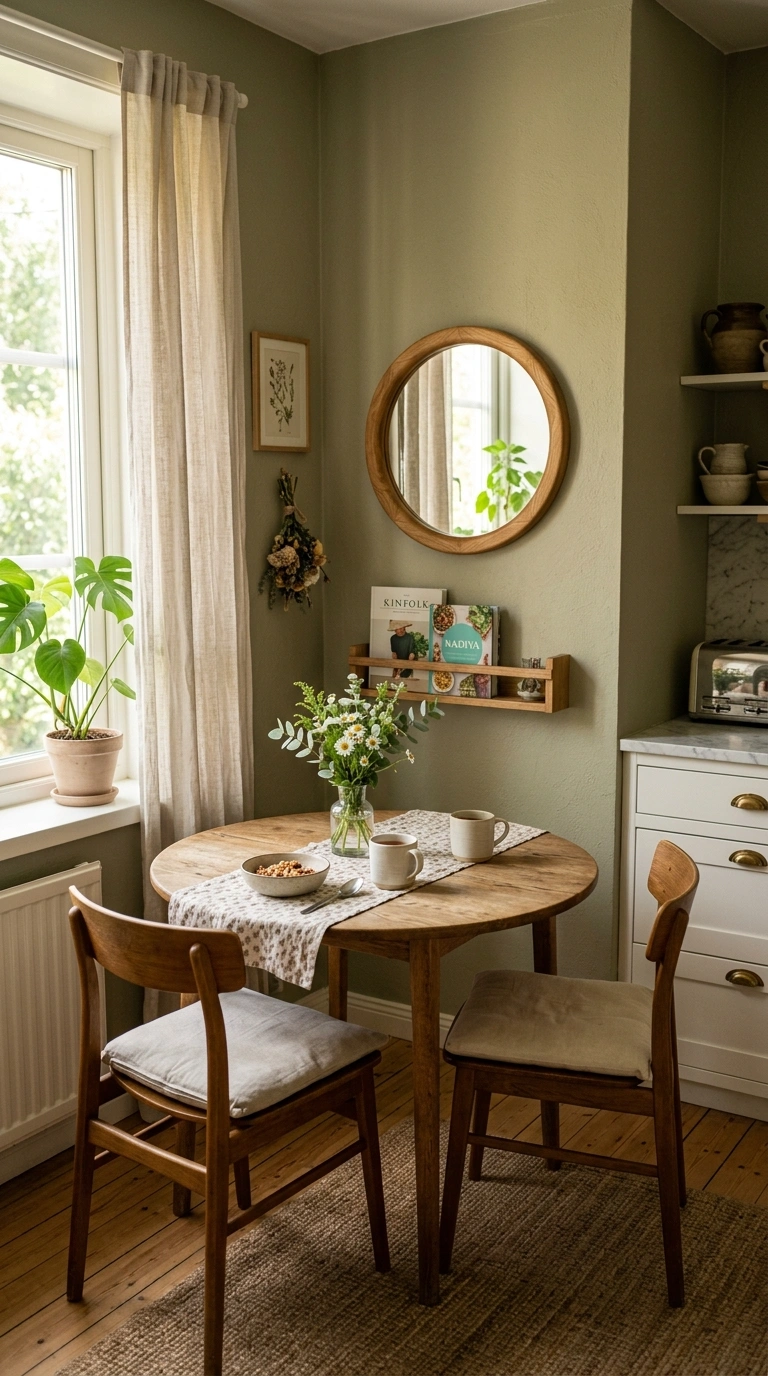
Hanging a mirror on the wall near a small kitchen table does double duty, since it reflects natural light back into the dining area while also making the whole corner feel larger and brighter than it actually is. A mirror with a simple wood or rattan frame tends to feel warmer and more casual than an ornate metal frame, which suits the relaxed nature of a small kitchen nook.
Positioning the mirror so it reflects a window or a light fixture amplifies the brightness effect significantly, which is especially helpful in small kitchens that do not get much direct sunlight. A slightly oversized mirror relative to the table below actually helps the space feel more expansive rather than overwhelming it, since the reflection visually doubles the depth of the room. This is one of the simplest styling additions on the list, requiring just one item and a single wall hook.
11. Café Style Curtains
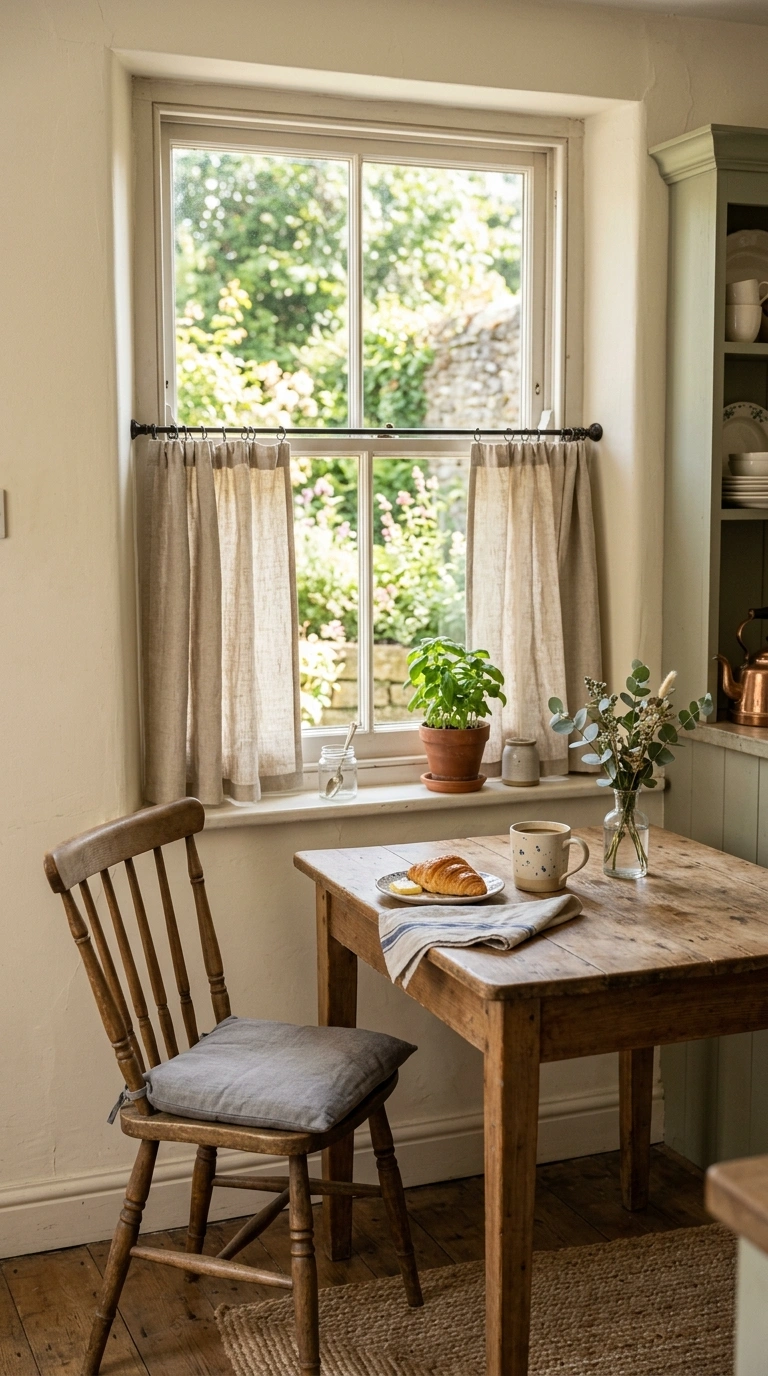
Short café style curtains hung at the bottom half of a window near the kitchen table add softness and privacy without blocking the natural light that makes a small dining nook feel open and cheerful. A lightweight linen or cotton fabric in a soft neutral or subtle stripe pattern keeps the look casual and breezy, which fits well with the relaxed, everyday nature of a kitchen table setting.
Mounting the curtain rod at the halfway point of the window frame, rather than at the very top, is what gives café curtains their signature charming look and keeps the top portion of the window fully open for light and a view. Choosing a fabric that echoes another textile already in the space, like the table runner or napkins, ties the whole nook together visually. This small window treatment detail often becomes the finishing touch that makes a small table area feel like a complete, styled corner of the home.
12. Drop Leaf Table
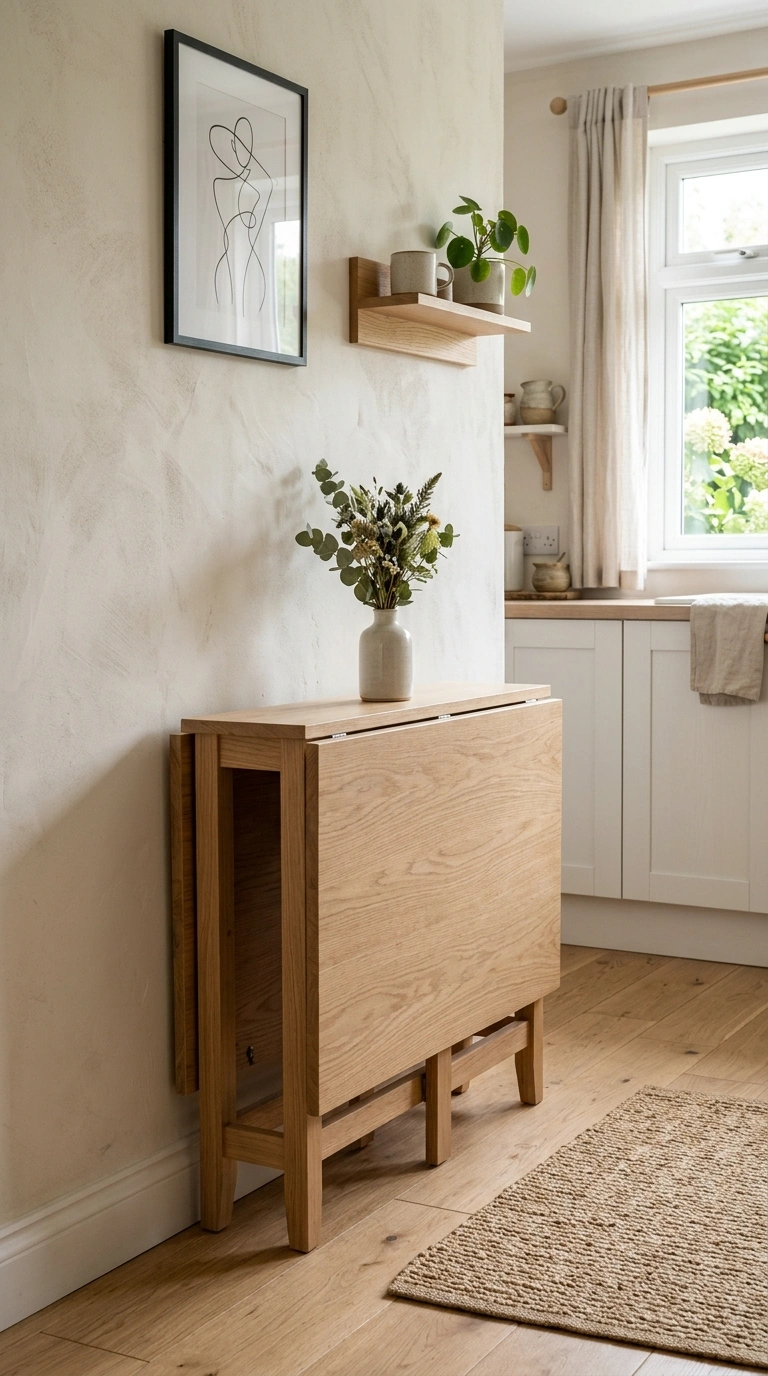
A drop leaf table offers one of the most practical solutions for small kitchens, since the sides can fold down when not needed and fold up to seat more people when company comes over. Styled with the leaves down, the table takes up minimal daily footprint against a wall, while still providing full seating capacity for occasional gatherings, which makes it one of the more flexible furniture choices for tight spaces.
Choosing a drop leaf table in a light wood tone, rather than a dark heavy finish, keeps the piece feeling airy even when both leaves are raised. Styling the table simply, with just a small vase or a stack of napkins when the leaves are down, keeps the everyday look clean and uncluttered. When leaves are raised for guests, adding place settings and a slightly larger centerpiece transforms the same small table into a proper dining setup within minutes.
Also read: White Oak Kitchen Ideas Full of Warmth and Character
Conclusion
A small table does not need to feel small in style. With the right shape, a few thoughtful textures, and a little attention to what sits on top of it, even the tightest kitchen corner can become the coziest seat in the house. Try one idea this week and see how much warmer that little table feels.
Also read: 18 Moody Blue Kitchen Ideas for a Bold, Dramatic Refresh
FAQs
What is the best table shape for a very small kitchen?
Round tables generally work best in tight spaces since they have no sharp corners to bump into and allow chairs to tuck in closely from any angle.
How do I make a small table feel less empty without cluttering it?
Small styling layers like a woven placemat, a bud vase cluster, or a simple fruit bowl add warmth without taking up much usable surface space.
Can mismatched chairs really work in a small space?
Yes, mismatched chairs often work even better in small kitchens since they allow for flexible, odd numbered seating around an awkwardly sized table.
Is a pendant light necessary for a small kitchen table?
It is not necessary, but a single pendant hung above the table helps define the space as an intentional dining spot rather than an afterthought.
What is the easiest styling idea to start with today?
A small fruit bowl or a stack of folded napkins takes only a few minutes to set up and instantly makes a bare table feel more finished.