
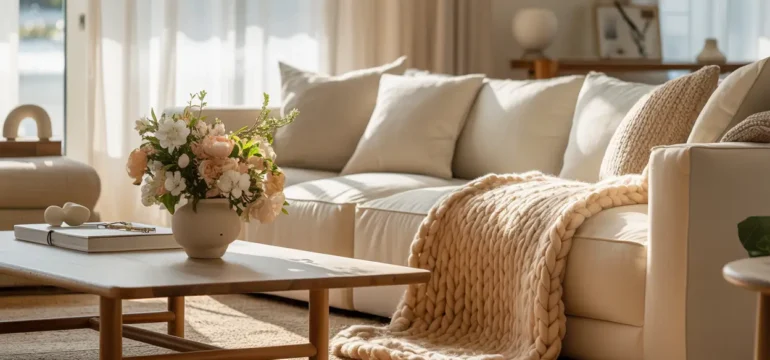
My favorite part of decorating isn’t picking one style and sticking with it forever. It’s the small swaps that happen every few months, the little changes that make a home feel like it’s actually paying attention to the calendar instead of looking the exact same in July as it does in January. You don’t need to redecorate an entire room to feel this shift. A few swapped pillow covers, a new centerpiece, or a different candle scent on the counter can do more than people expect. Below are twenty-five ideas broken into the four seasons, each one simple enough to pull off in an afternoon and swap out again when the next season rolls around. Think of this less like a checklist and more like a rotating wardrobe for your home, one that keeps things feeling current without ever feeling like you’re starting from scratch.
1. Pastel Spring Wreath
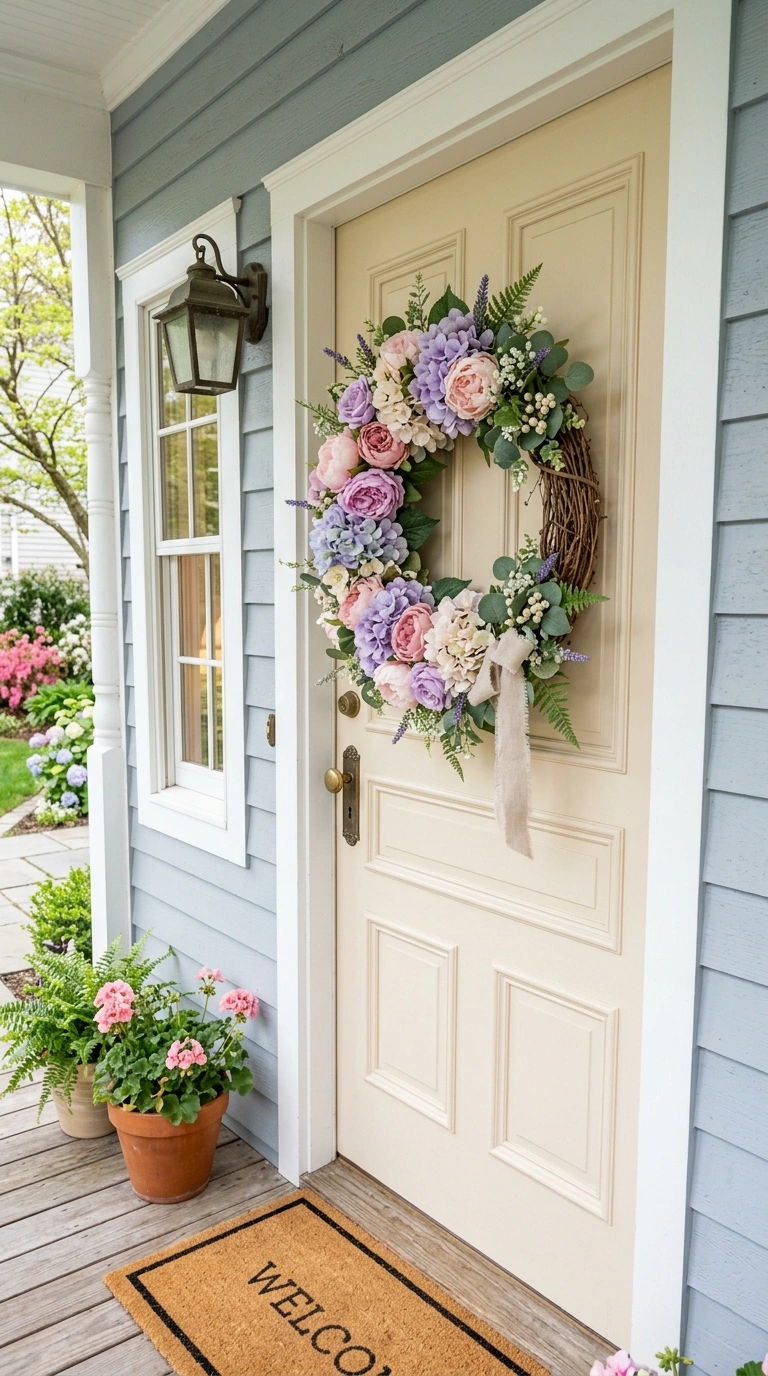
A pastel wreath on the front door is one of the fastest ways to signal that spring has arrived, even if the weather outside hasn’t fully caught up yet. Look for wreaths made with faux peonies, ranunculus, or hydrangea in soft pink, lavender, and cream tones rather than the deeper colors typical of fall wreaths. A grapevine or twig base keeps the overall look light and natural instead of overly formal.
Hang the wreath using an over-the-door hook so you’re not putting nail holes in your door, and center it at eye level for the best visual impact from the street or porch. If your door already has a strong color, choose wreath flowers that complement rather than clash with it, like soft blues against a red door or blush tones against navy. Swap it out again once summer arrives so the display keeps feeling seasonal rather than stale.
2. Fresh Tulip Centerpiece
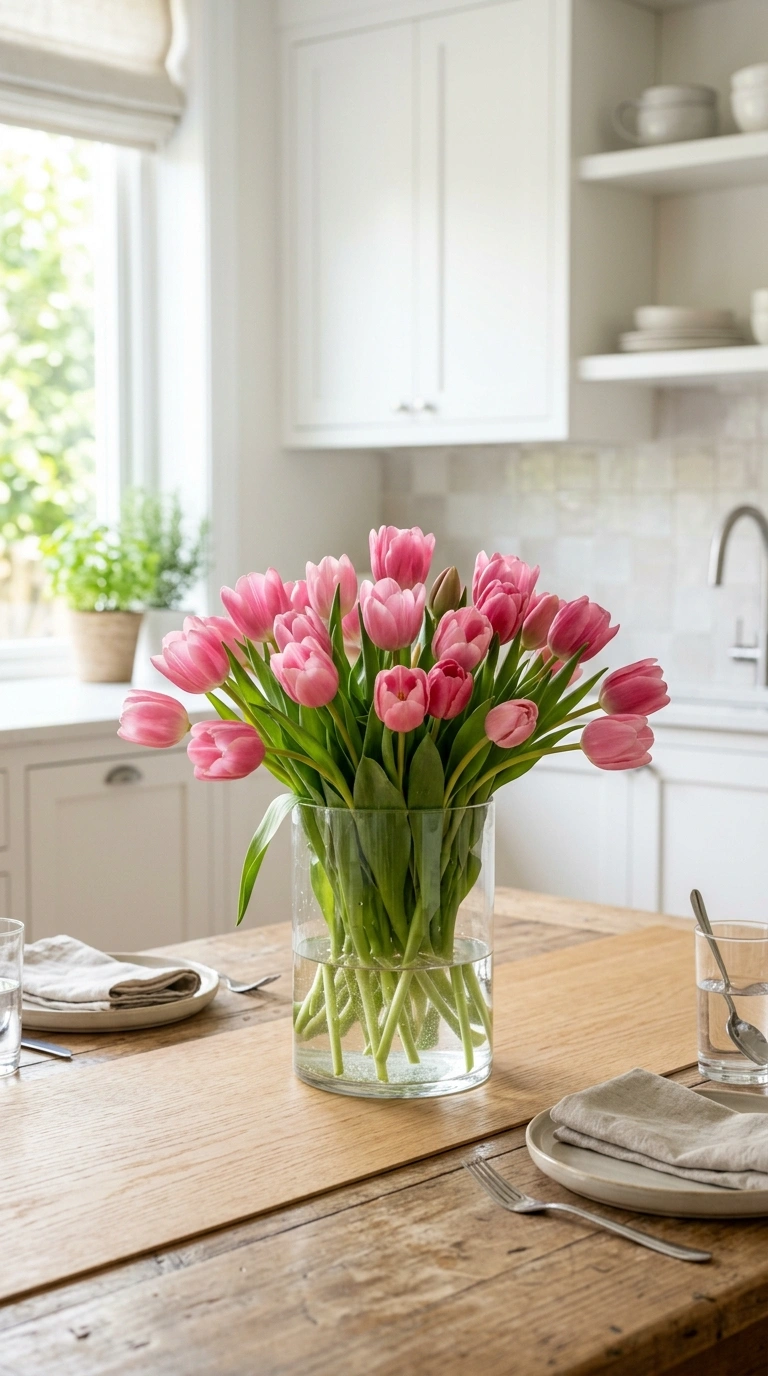
A simple vase of fresh tulips on the kitchen table or entryway console is one of the easiest seasonal swaps there is, and it makes the whole room feel brighter almost instantly. Choose a clear glass vase so the stems themselves become part of the display, and pick tulips in a single color for a cleaner look or mix two complementary shades like coral and yellow for something more playful.
Trim the stems at an angle before placing them in water, and change the water every two to three days to keep the tulips looking fresh longer, since they tend to wilt faster than sturdier flowers. Keep the vase away from direct heat sources like a sunny windowsill in the middle of the day, which can shorten how long the blooms last. A small cluster of tulips repeated in two or three rooms ties the spring refresh together throughout the house.
3. Light Linen Curtains
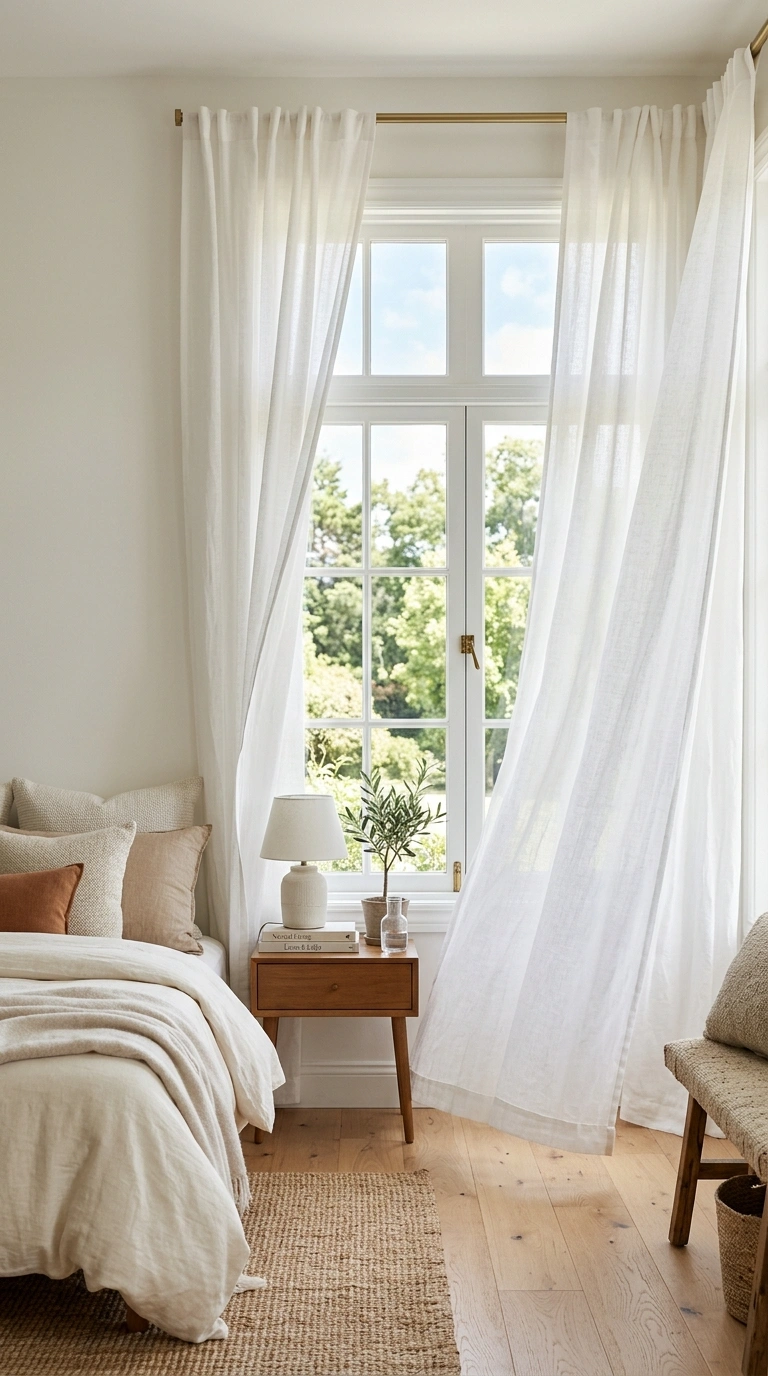
Swapping heavier curtains for light linen ones is a seasonal change that affects how a whole room feels, not just how it looks. Linen has a natural texture and a slightly rumpled look that suits spring and summer, letting in more light while still offering privacy. White, oatmeal, and soft sage are the most versatile colors, working with almost any wall color already in the room.
Hang the curtains slightly higher than the window frame and wider than the window itself, which makes the window look larger and lets in more natural light when the panels are pulled open. Choose unlined linen panels for the softest, most relaxed drape, and give them a light steam if they look wrinkled straight out of the packaging. This single swap alone can make a room feel like it’s shifted seasons even if nothing else changes.
4. Woven Spring Baskets
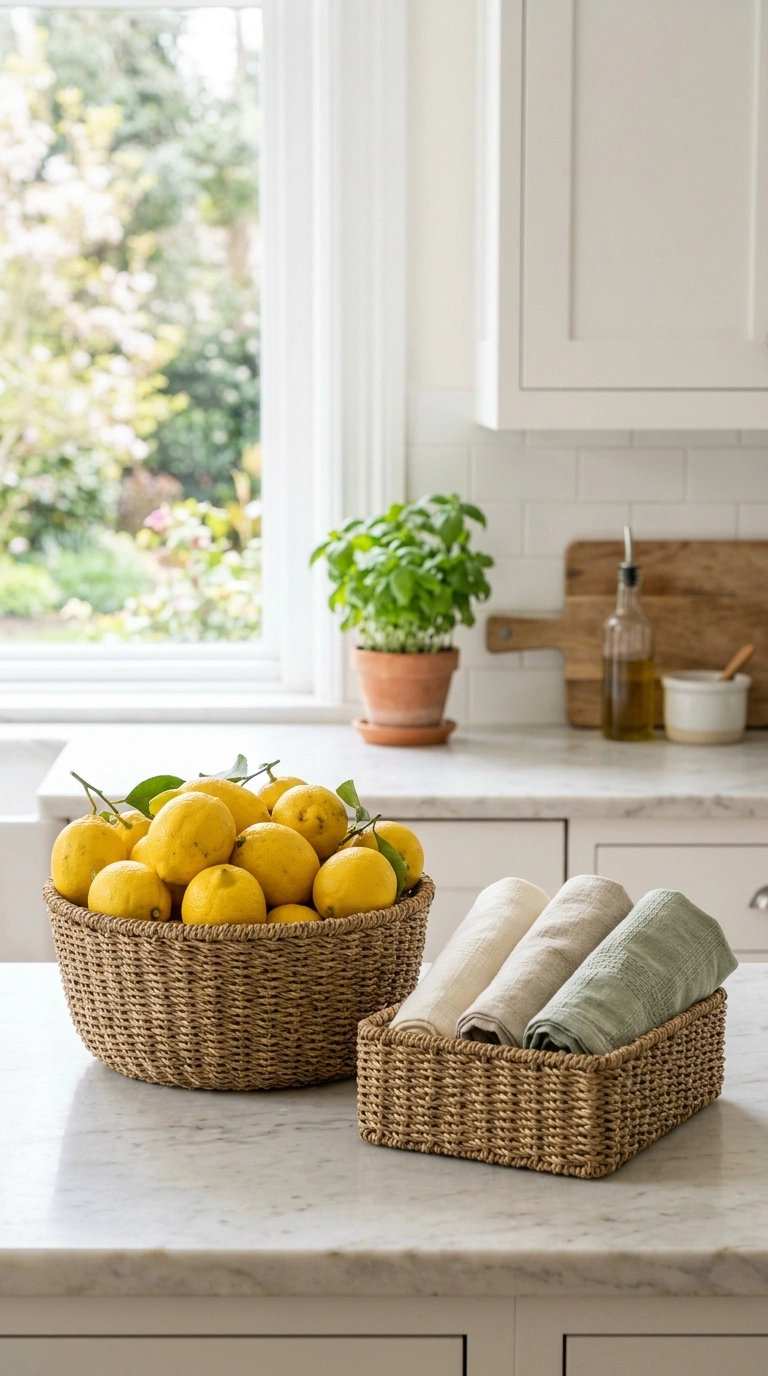
Woven baskets holding fresh produce, folded blankets, or spring greenery bring a natural, lived-in texture to a kitchen or living room during the warmer months. Seagrass and rattan baskets in their natural, unstained color pair especially well with the lighter palette that spring decor tends to lean toward. Use a few different sizes rather than matching baskets so the display looks collected over time instead of bought as a set.
In the kitchen, a basket of lemons or fresh produce on the counter doubles as decor and something genuinely useful. In the living room, a low basket filled with a couple of folded throws keeps them accessible without them cluttering the sofa. Rotate what’s inside the baskets as the season shifts, swapping citrus for stone fruit or adding fresh cut greenery as it becomes available.
5. Citrus Kitchen Bowl
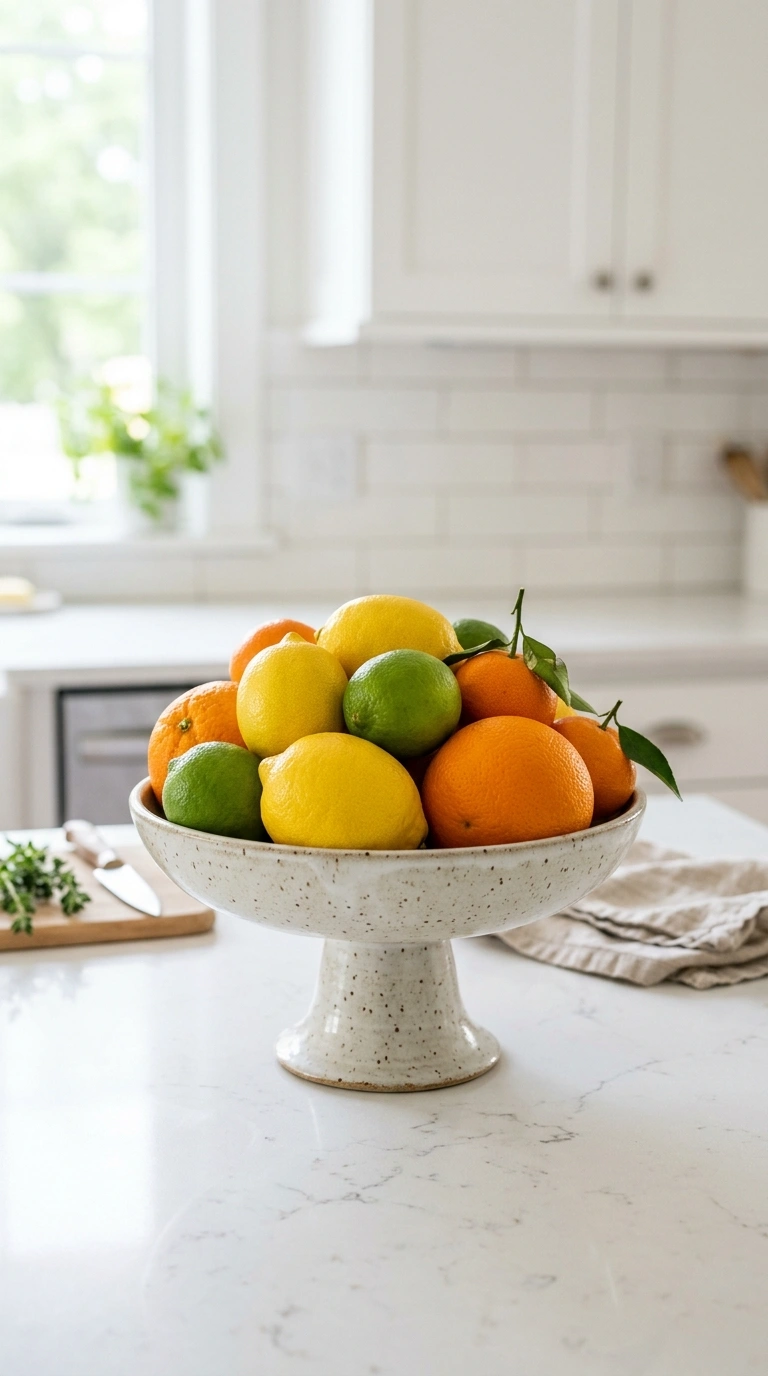
A bowl of citrus fruit sitting out on the kitchen counter or dining table is a small styling trick that adds color and life to a kitchen with almost no effort or cost. Lemons, limes, and oranges in a simple ceramic or wooden bowl bring a cheerful pop of yellow, green, and orange that fits naturally with spring and summer color palettes.
Choose a bowl with some height or a pedestal base so the fruit is slightly elevated and easier to see from across the room, rather than a flat bowl that blends into the counter. Mix at least two types of citrus for visual variety instead of using just one. Since this is real fruit and not decor pieces, swap it out every week or two to keep it looking fresh and to actually use it in the kitchen before it goes bad.
6. Rattan Summer Accents
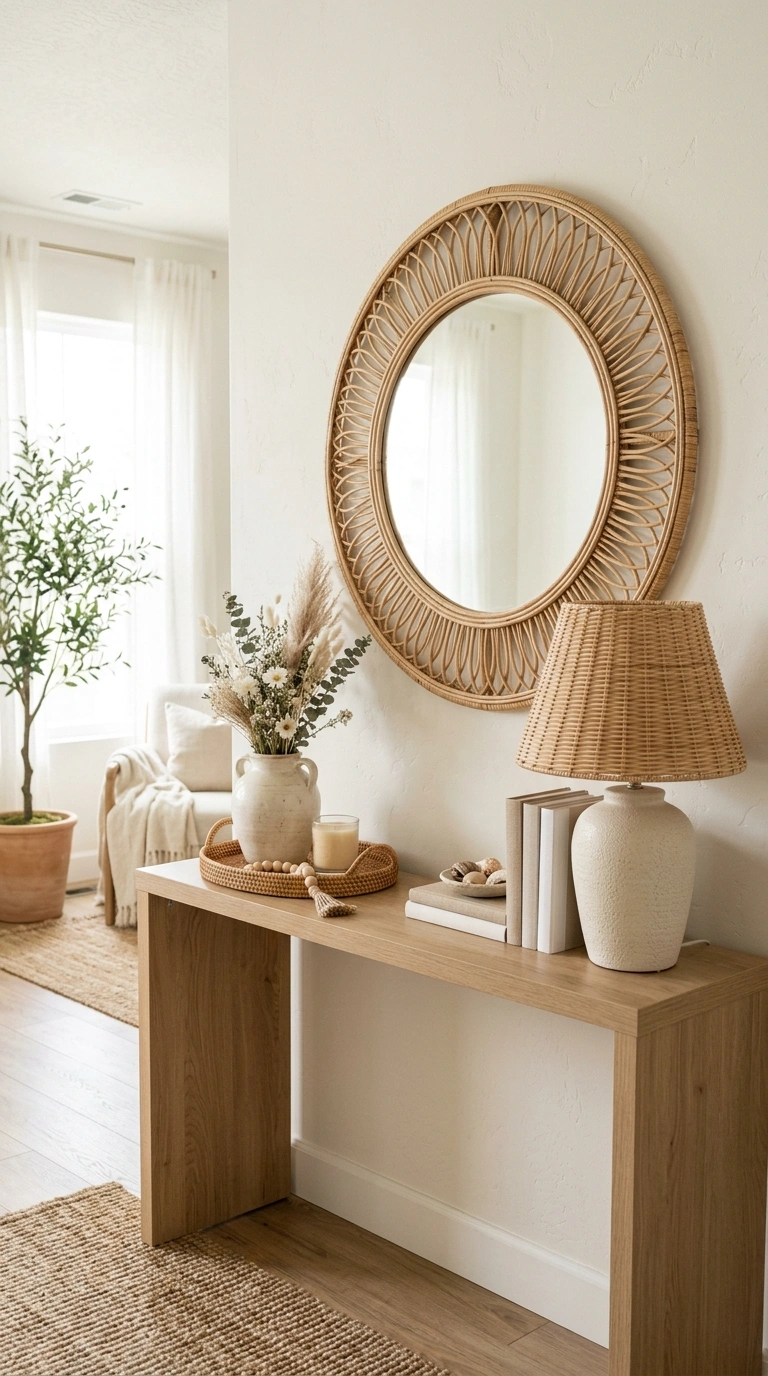
Swapping in a few rattan accent pieces, like a mirror frame, a lampshade, or a set of coasters, brings a relaxed, warm-weather feel into a living room or bedroom during summer. Rattan has enough texture to stand out without being loud, which makes it easy to layer into a room that already has a mostly neutral color scheme. A round rattan mirror above a console table is one of the simplest places to start.
Balance the rattan against smoother materials already in the room, like a glass coffee table or linen sofa, so the texture reads as intentional rather than overwhelming. Keep the rest of the room’s colors light and airy, in whites, creams, and soft blues, to let the natural rattan tone stand out as the seasonal accent. Store these pieces away again once fall decor comes out to keep the seasonal rotation feeling distinct.
7. Striped Beach Towels Display
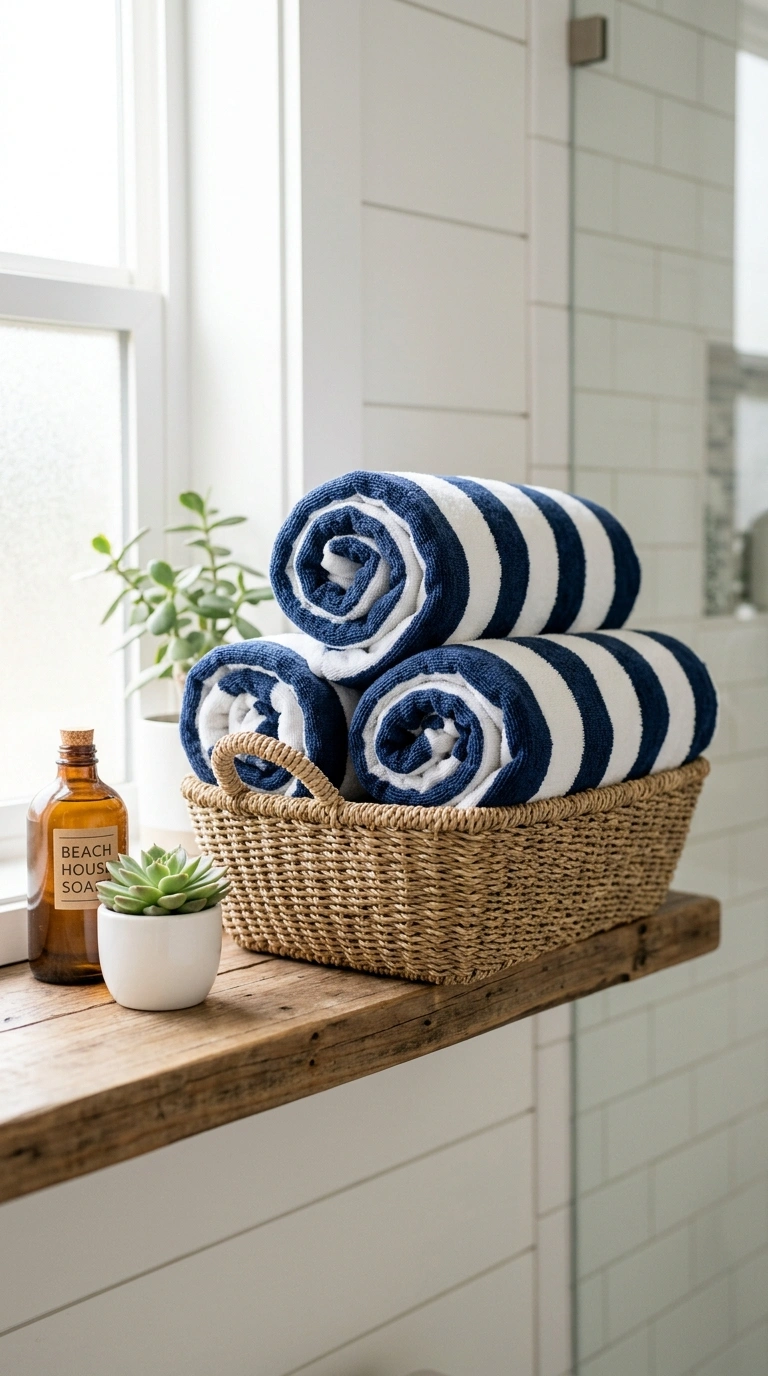
Rolling and stacking a few striped beach towels in a bathroom or entryway basket is a small styling detail that instantly reads as summer. Choose towels in classic cabana stripes, navy and white or terracotta and cream, so they photograph well and match most existing color schemes without clashing. Roll them tightly rather than folding flat, since rolled towels take up less space and look more intentional when displayed.
Stack three or four rolled towels in a low basket near the back door or in the bathroom, both as decor and as a genuinely useful grab-and-go spot before a pool day or beach trip. This works especially well in a mudroom or entryway where guests see it first. Swap the towels back into regular storage once the weather cools down so the display doesn’t feel out of place in the fall.
8. Potted Herb Windowsill
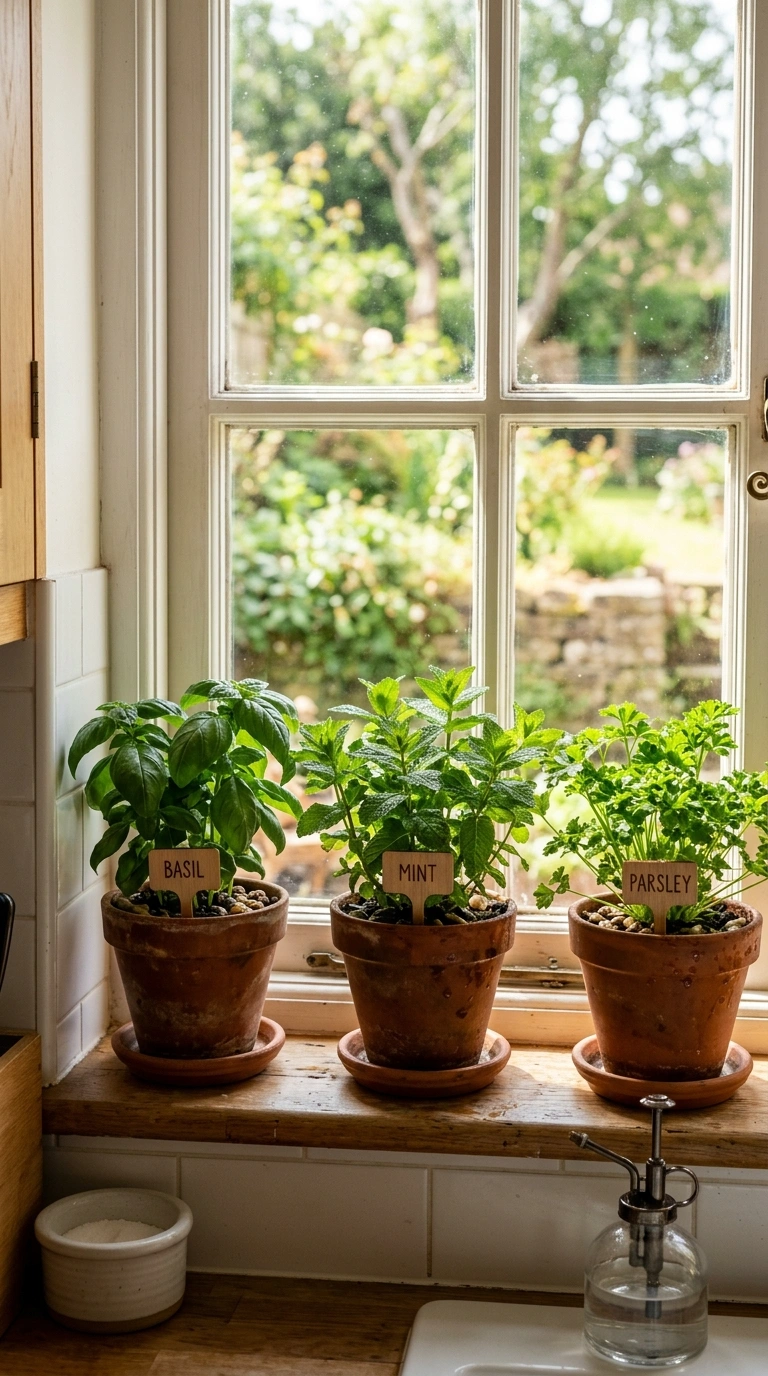
A row of small potted herbs along a sunny kitchen windowsill is both a practical cooking tool and a simple piece of seasonal styling that peaks in the warmer months. Basil, mint, and parsley are easy to grow and stay fairly compact, which makes them well suited to a narrow windowsill without crowding it. Terracotta pots in matching or graduated sizes give the row a clean, cohesive look.
Turn the pots occasionally so each plant gets even light on all sides instead of leaning toward the window. Use a small drainage tray underneath each pot to protect the windowsill from water damage. Snip the herbs regularly for cooking, since regular trimming actually helps the plants grow fuller and look better, rather than letting them grow leggy and sparse over the season.
9. Blue and White Summer Table
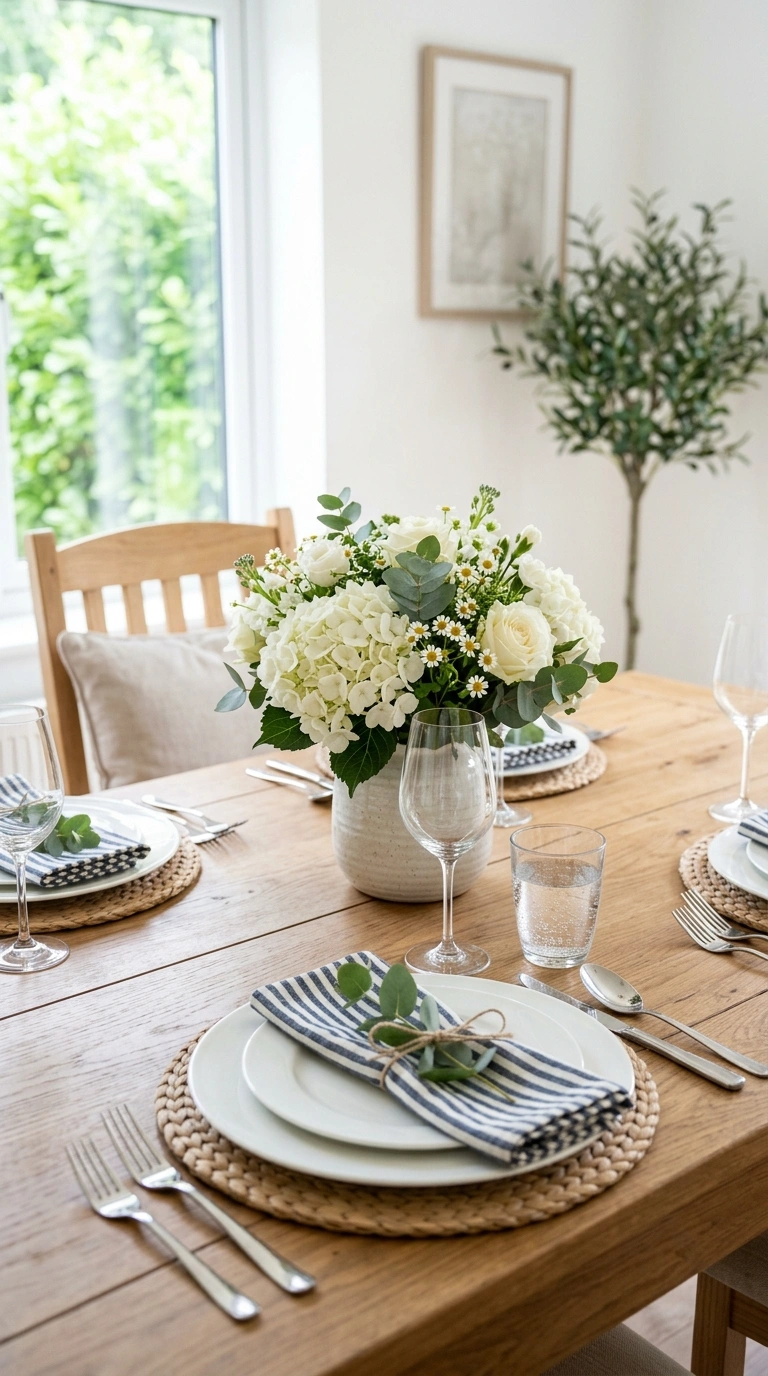
Setting the dining table with a blue and white color scheme is a classic, easy way to bring summer freshness into the dining room without buying an entirely new set of dishes. Look for striped or gingham linens in navy or cornflower blue against white plates and glassware. A simple centerpiece of white flowers, like daisies or hydrangea, keeps the look cohesive without adding another competing color.
Layer a woven placemat underneath the plates for texture, and use cloth napkins tied with a simple piece of twine or ribbon for a slightly more styled look at a dinner party. Keep the table setting relatively simple rather than overly formal, since summer table styling tends to feel more relaxed than a winter holiday table. This color scheme works well for everyday use or for hosting a summer gathering.
10. Breezy Sheer Drapes
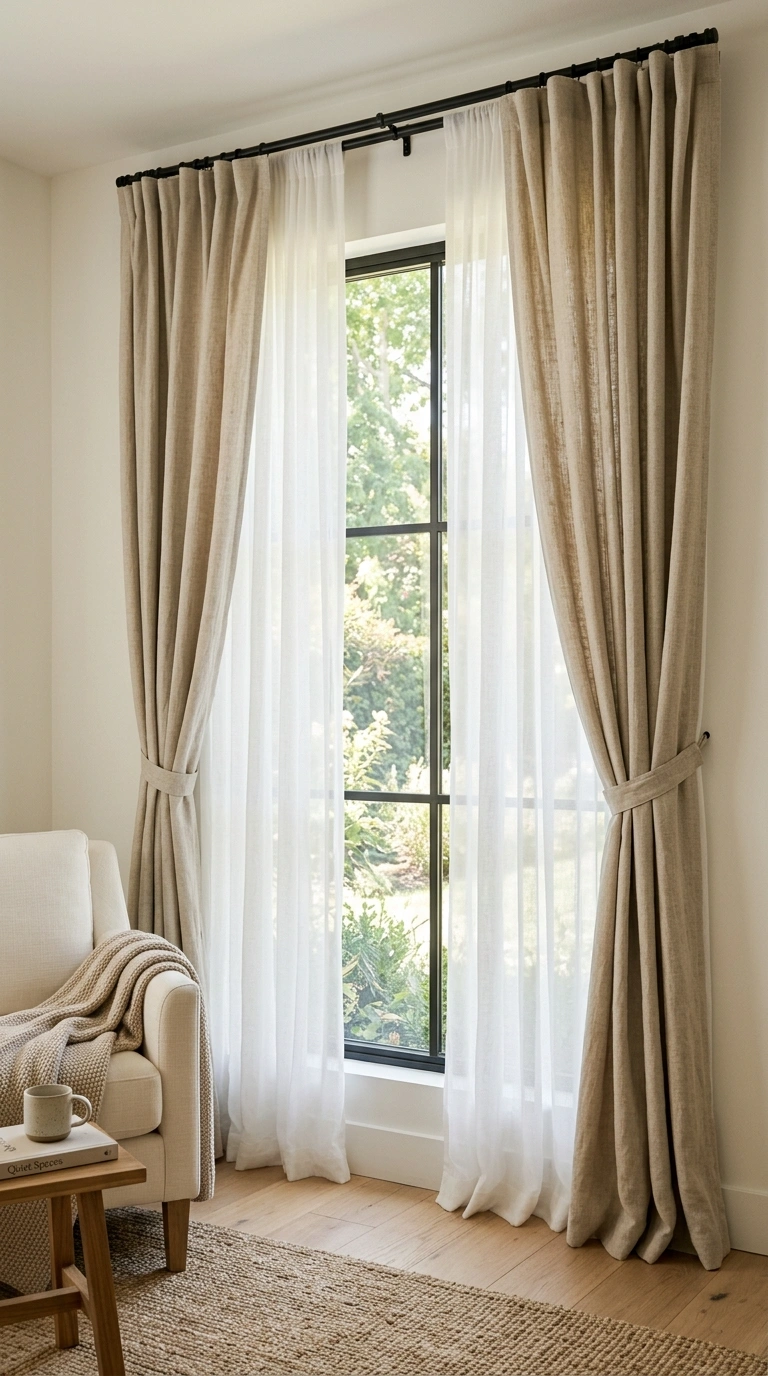
Layering a sheer drape panel behind or alongside heavier curtains lets a room feel brighter and breezier during summer without giving up privacy entirely. White or ivory sheers filter the harsh midday sun into something softer, which is especially useful in a bedroom or living room that gets strong afternoon light. Hang them on a second, thinner rod set slightly behind your main curtain rod.
Let the sheer panels pool slightly at the floor for a relaxed, romantic look, or hem them to just skim the floor for a cleaner, more tailored appearance. Open the heavier curtains fully during the day in summer and let the sheers do the work of softening the light on their own. This layered look also makes windows appear taller and more elegant, which is a nice bonus beyond the seasonal feel.
11. Pumpkin Porch Display
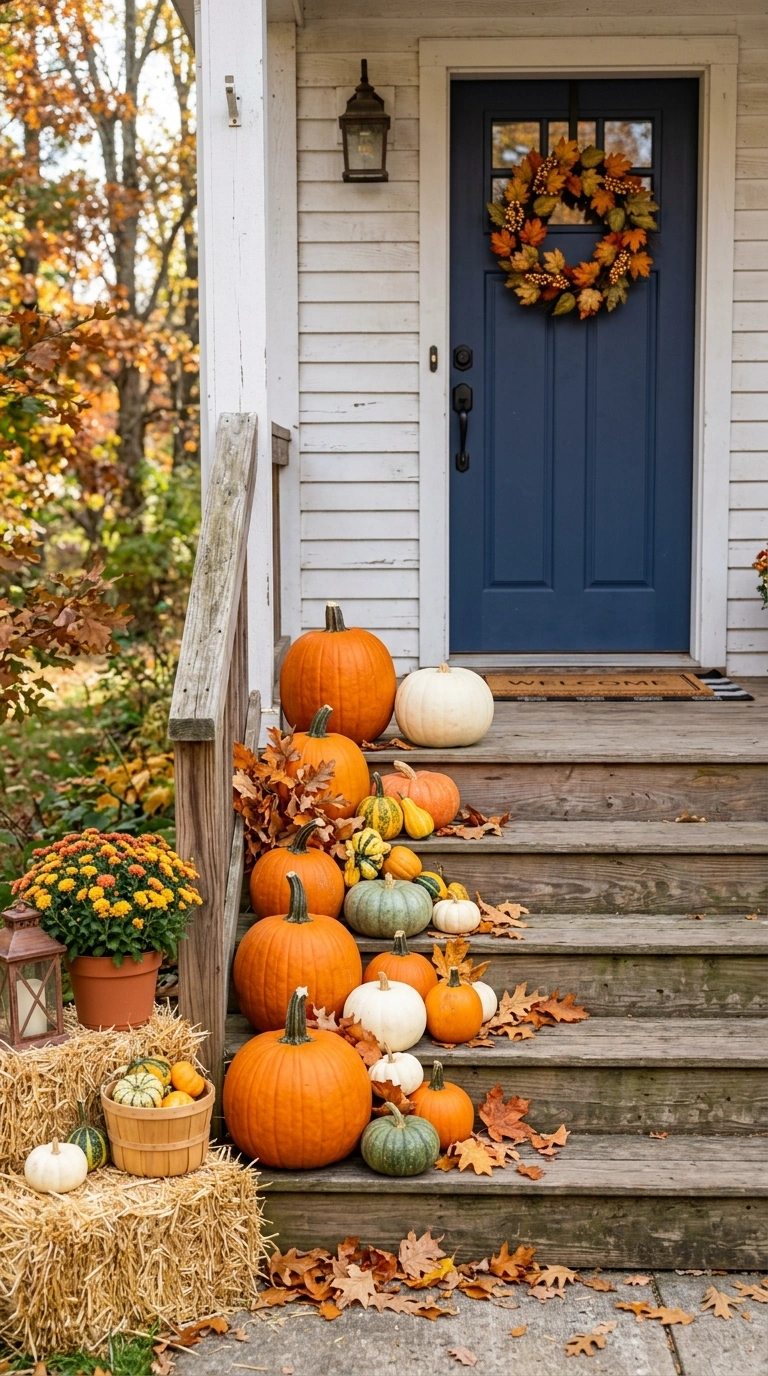
A cluster of pumpkins on the front porch steps is one of the most recognizable fall decor moments, and it works whether you go with real pumpkins, faux ones, or a mix of both. Choose a range of sizes and a mix of orange, white, and green pumpkins for visual variety instead of using all one color. Group them in odd numbers, like three or five, since odd groupings tend to look more natural than even ones.
Arrange the display with the largest pumpkins toward the back or bottom step and smaller ones cascading toward the front, which creates depth in photos taken from the front yard or street. Add a few bundles of dried corn stalks or hay bales alongside the pumpkins for extra texture. If using real pumpkins, check them weekly for soft spots and replace any that start to break down, especially in humid climates.
12. Warm Plaid Throw Blankets
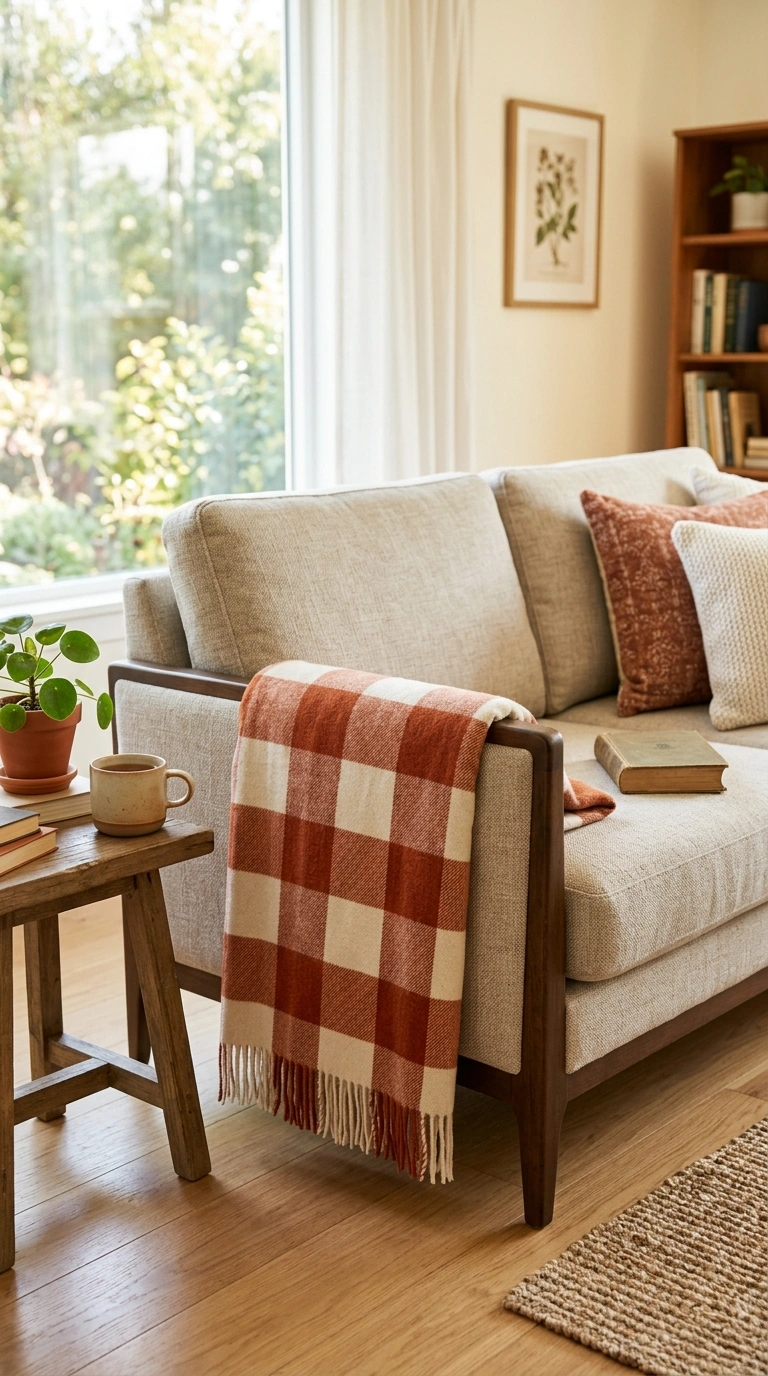
Draping a plaid throw blanket over the back of a sofa or armchair is a fast, affordable way to bring in that cozy fall feeling the moment the weather starts to cool. Look for wool or wool-blend blankets in classic buffalo check or tartan patterns in colors like rust, forest green, or deep red, which read as warm and seasonal without looking like holiday decor specifically.
Fold the blanket in thirds and drape it over one arm of the sofa, letting it hang naturally rather than folding it into a stiff, perfect square. If you have more than one sofa or chair in the room, repeat the same blanket or a coordinating pattern on each piece to tie the room together. Swap out lighter summer throws for these heavier ones as soon as the first cool evenings arrive.
13. Dried Wheat Centerpiece
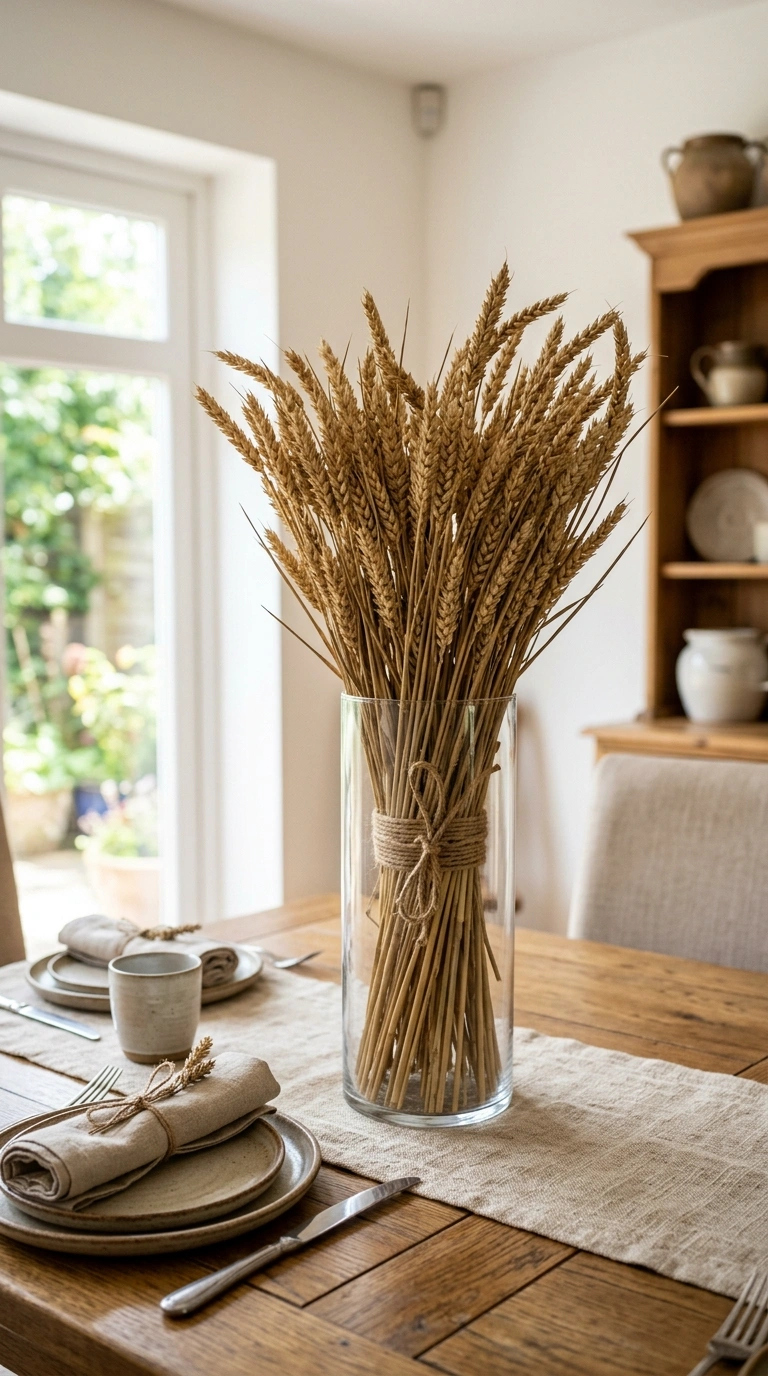
A bundle of dried wheat stalks tied with twine and displayed in a tall vase makes a simple, low-maintenance centerpiece that captures the feeling of fall harvest season. Unlike fresh flowers, dried wheat doesn’t need water or regular replacing, which makes it a nice option for a centerpiece that can stay out for weeks without any upkeep. A ceramic or glass vase in a neutral tone lets the golden wheat color stand out.
Trim the stalks so they’re proportional to the vase, generally about one and a half times the height of the vase itself, so the arrangement doesn’t look top-heavy or sparse. Place the arrangement on a dining table, entryway console, or mantel where it has room to be seen from multiple angles. Add a few dried eucalyptus stems for a bit of contrasting color and texture if you want something slightly more layered.
14. Cinnamon Stick Vase Filler
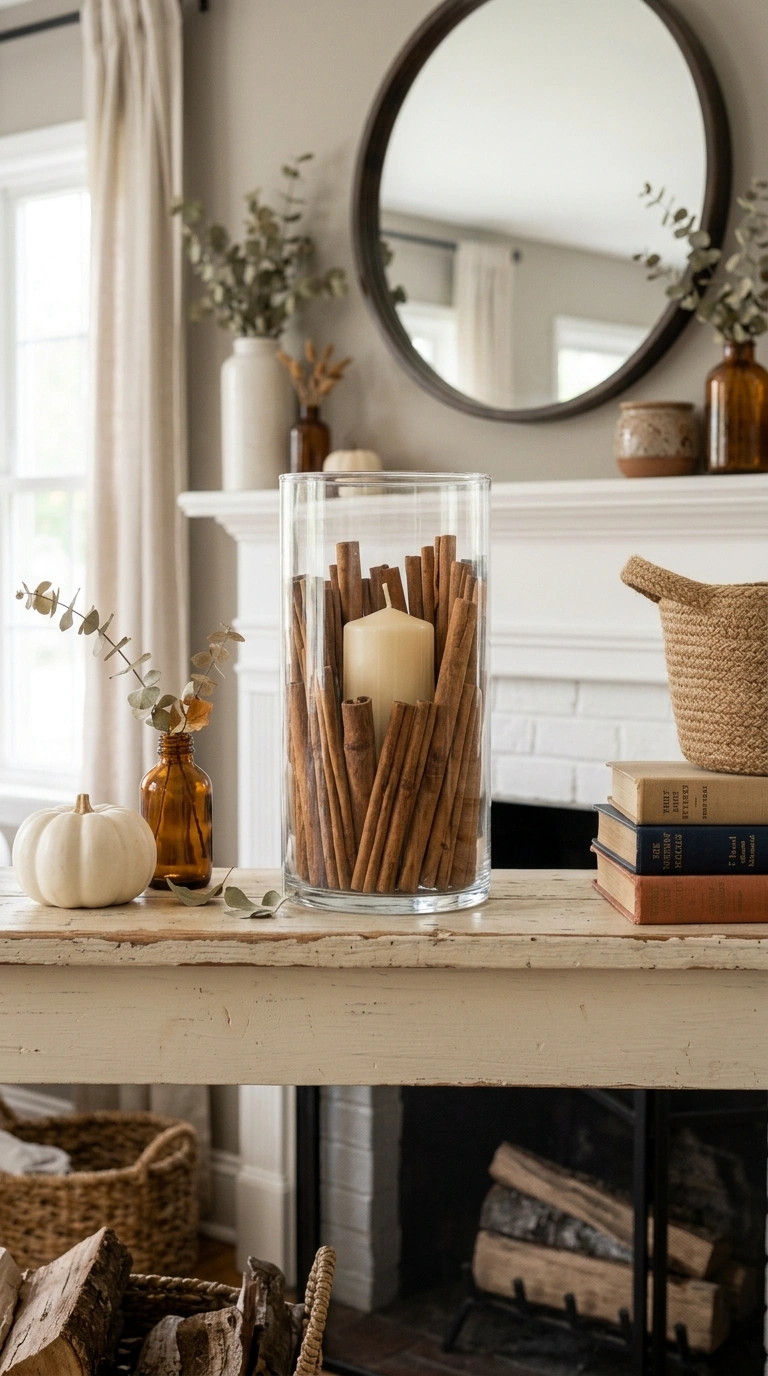
Filling a clear glass vase with cinnamon sticks and using it to hold a candle or a small bundle of dried flowers is a simple styling trick that adds both a seasonal look and a warm scent to a room. Choose a straight-sided glass vase or hurricane so the cinnamon sticks stack neatly against the glass instead of shifting around loosely.
Layer the cinnamon sticks vertically around the inside edge of the vase before placing a smaller candle holder or a second, smaller vase inside the center. This creates a clean ring of cinnamon visible through the glass without the sticks scattering everywhere. Use this on a mantel, dining table, or entryway table during the cooler months, and store the cinnamon sticks in a sealed bag once the season ends so they keep their scent for next year.
15. Amber Glass Candle Holders
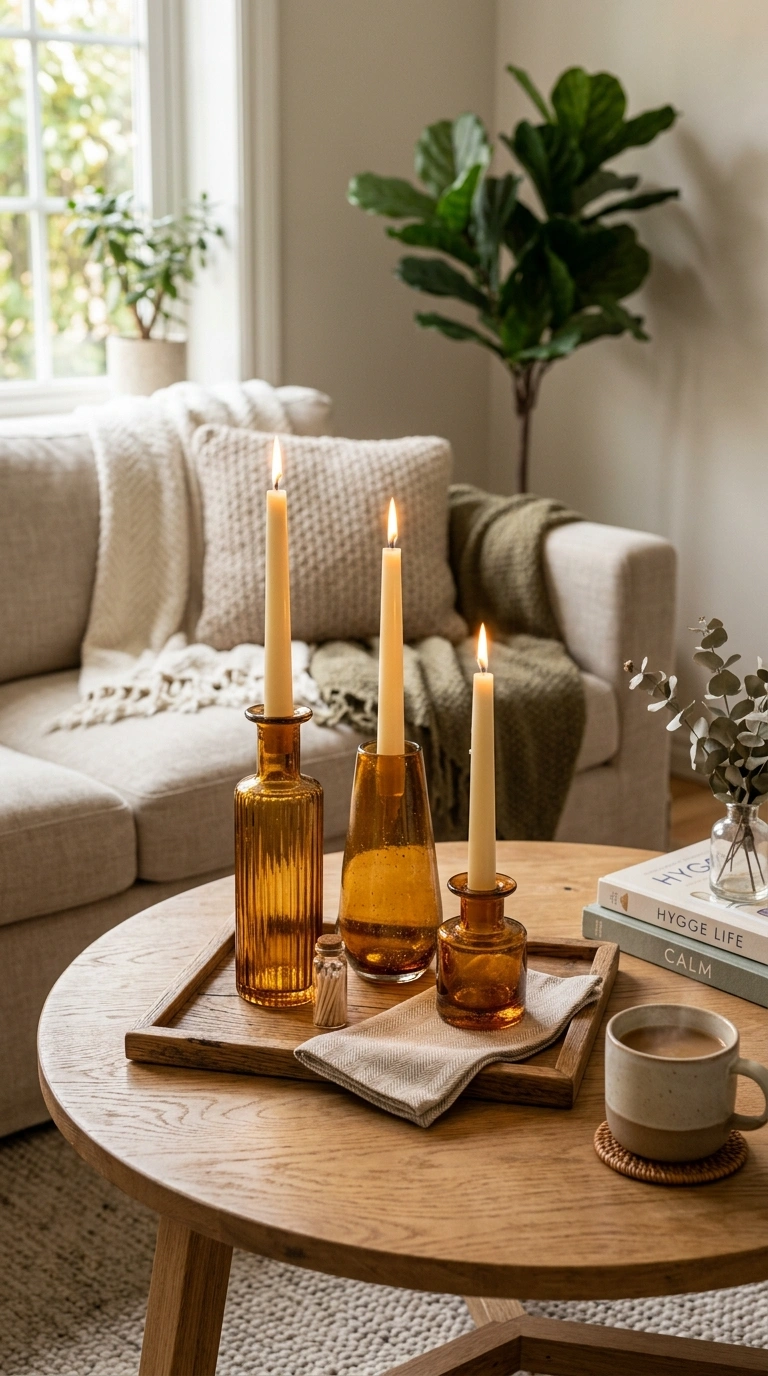
Swapping in a few amber or smoked glass candle holders is a small but effective way to warm up a room’s look as the weather turns cooler. The amber tone catches candlelight beautifully in the evening and pairs naturally with the deeper colors that tend to show up in fall and winter decor, like rust, olive, and warm brown. Group three holders of varying heights together rather than spacing single candles around the room.
Place the grouping on a coffee table, mantel, or dining table centerpiece, and use unscented or lightly scented candles if you’re also using scented items elsewhere in the room so the smells don’t compete. Cluster the holders on a small wooden or metal tray to keep wax drips contained and to make the whole grouping easy to move for cleaning or table settings.
16. Rustic Wood Bowl Display
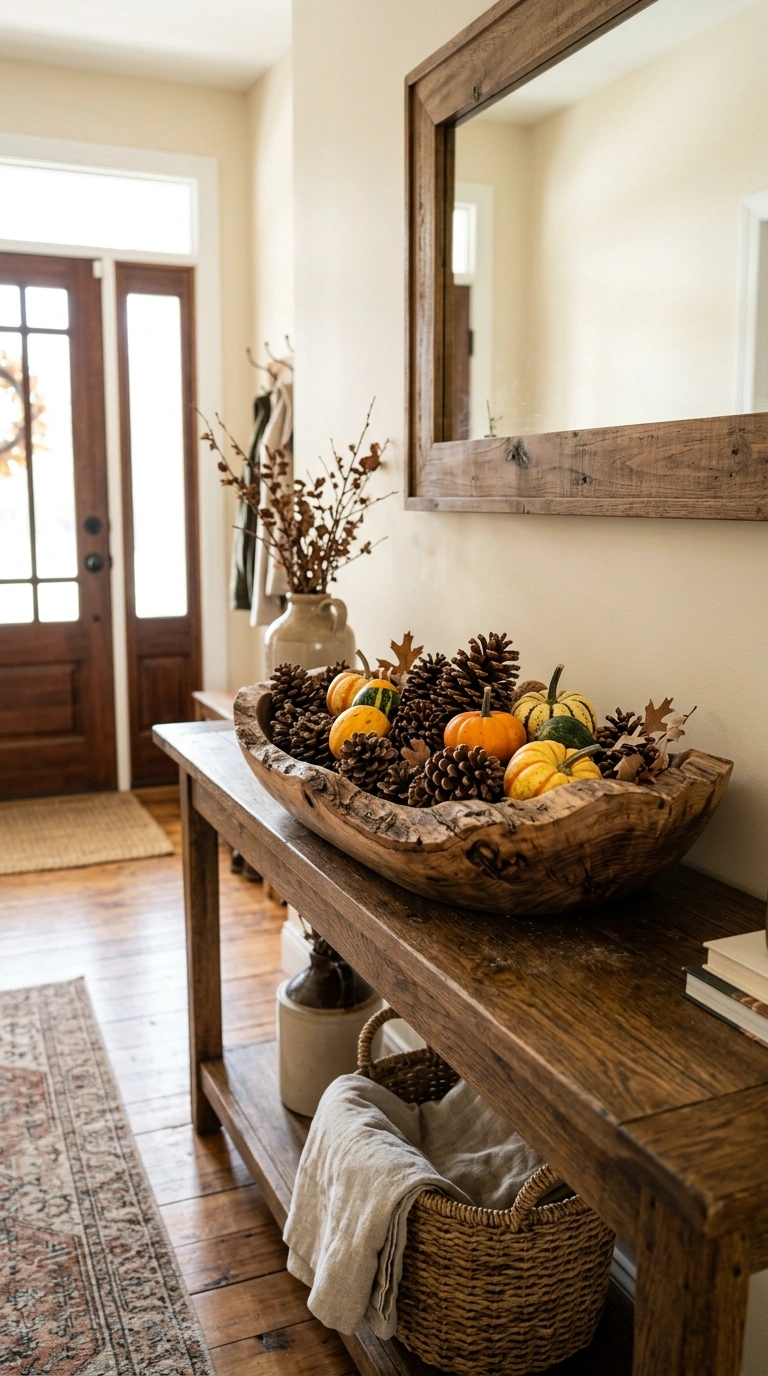
A large rustic wood bowl filled with pinecones, small gourds, or seasonal ornaments on a coffee table or console brings warmth and texture into a room during the cooler months. Choose a bowl with a live edge or visible wood grain for the most natural look, and pick a size proportional to the table it’s sitting on so it doesn’t look too small or overwhelming.
Fill the bowl generously rather than sparsely, mounding the contents slightly above the rim for a fuller look in photos. Mix textures within the bowl, like smooth gourds against rougher pinecones, for visual interest rather than filling it with just one type of item. This display works well from early fall straight through the holiday season if you keep the color palette in warm neutrals rather than switching to bright holiday colors partway through.
17. Evergreen Garland Mantel
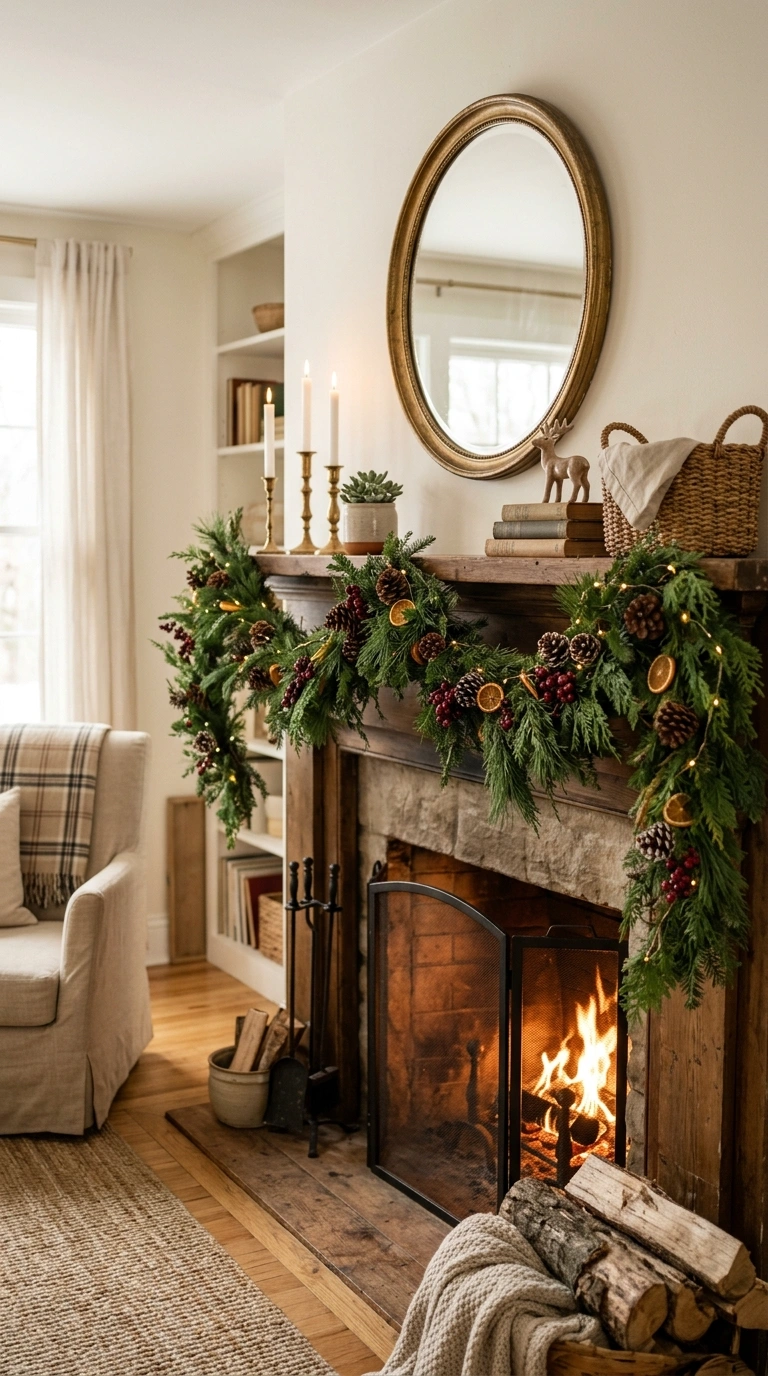
Draping fresh or faux evergreen garland along a mantel is one of the most classic winter decor moves, and it instantly makes a living room feel more festive without needing a full holiday theme. Look for garland with a mix of pine, cedar, and eucalyptus for varied texture rather than a single flat type of greenery. Faux garland is a practical choice if you want to reuse it for several seasons.
Drape the garland so it dips slightly in the middle of the mantel and drapes down a bit on each end, rather than laying it perfectly straight, which gives it a more natural, relaxed shape. Tuck in a few pinecones or small string lights along the length for extra texture and a soft glow in the evening. Secure the garland with small removable hooks or museum putty so it doesn’t slide around or damage the mantel surface.
18. Cozy Knit Pillow Covers
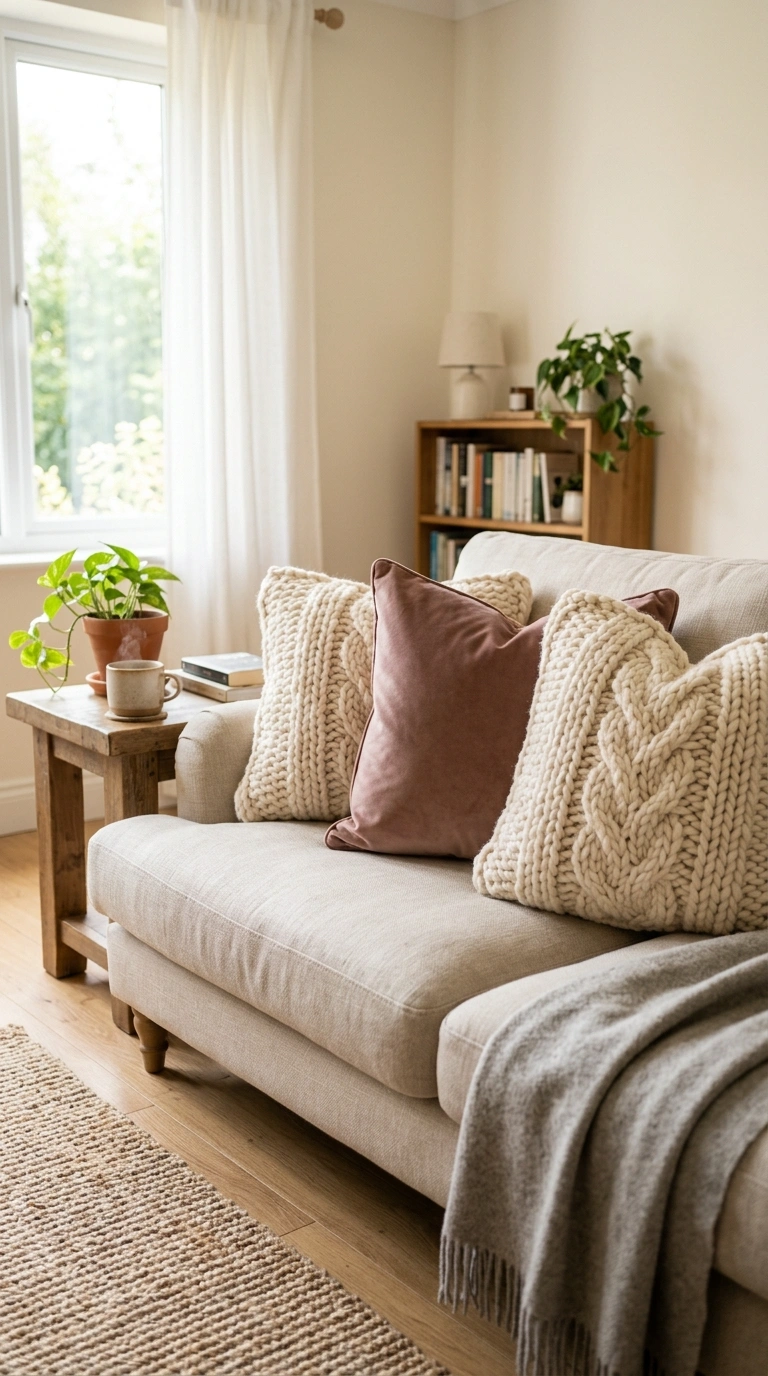
Switching to chunky knit pillow covers on the sofa or bed is one of the simplest seasonal swaps and one of the most effective at making a room feel instantly cozier once winter arrives. Cream, oatmeal, and soft gray knit covers work with almost any existing color scheme, and the raised texture adds visual interest even in an otherwise simple, neutral room.
Mix knit pillow covers with a couple of smoother velvet or faux fur pillows for contrast, rather than using all one texture, which can start to feel flat. Choose covers with a zipper or envelope closure so they’re easy to remove and wash after a season of use. Store your lighter linen or cotton summer pillow covers away in a labeled bin so the seasonal swap is quick and easy to repeat next year.
19. Twinkling Fairy Light Jars
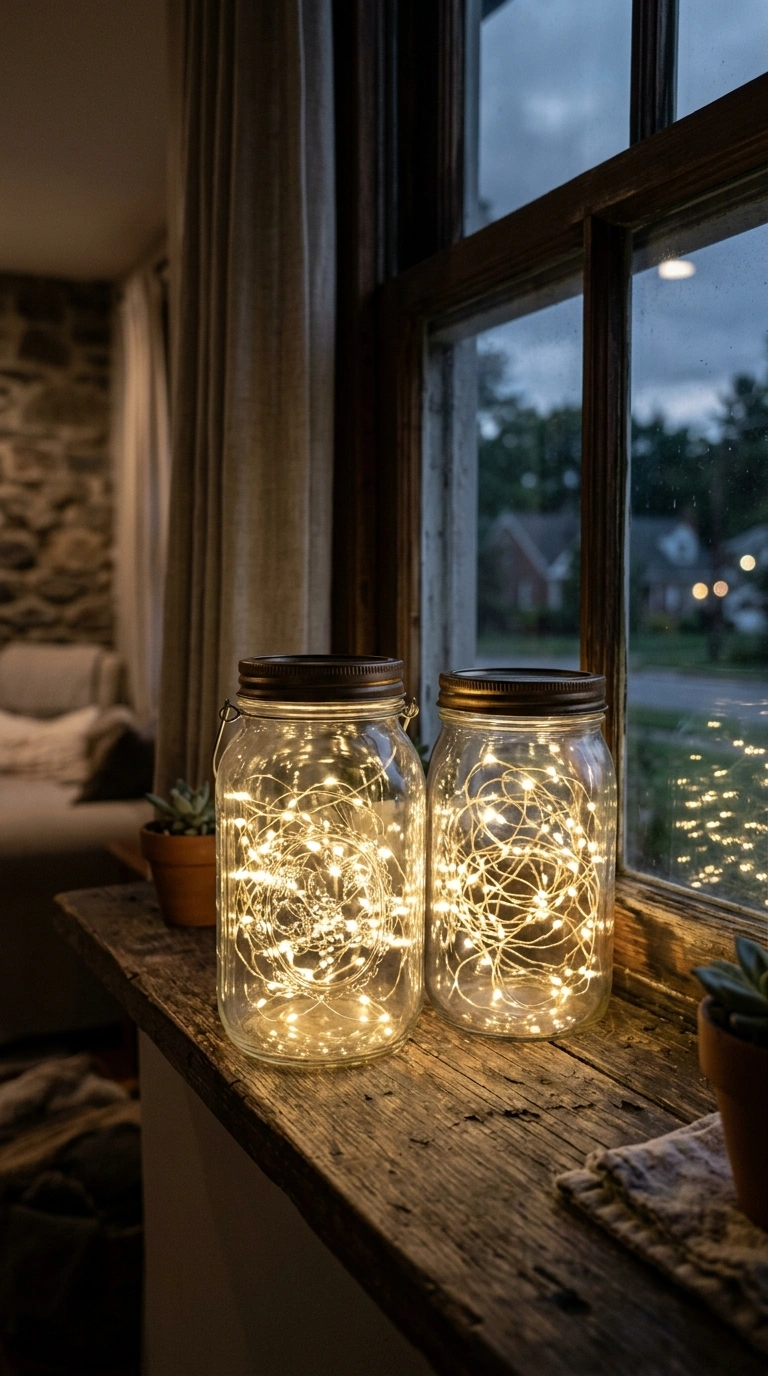
Filling mason jars or glass vases with a small strand of battery-powered fairy lights creates a soft, twinkling glow that works beautifully as winter decor on a windowsill, mantel, or entry table. Look for warm white lights rather than cool white or colored ones, since warm white gives that cozy, candlelit feeling that suits the season best.
Coil the light strand loosely inside the jar rather than packing it tightly, so the bulbs are visible from multiple angles instead of bunched together. Place the battery pack, if it isn’t built into the lid, discreetly behind the jar or tucked under a bit of greenery so it doesn’t distract from the glow. Group two or three jars of varying heights together for a fuller display, and set them on a timer so they turn on automatically each evening.
20. Wooden Bead Garland
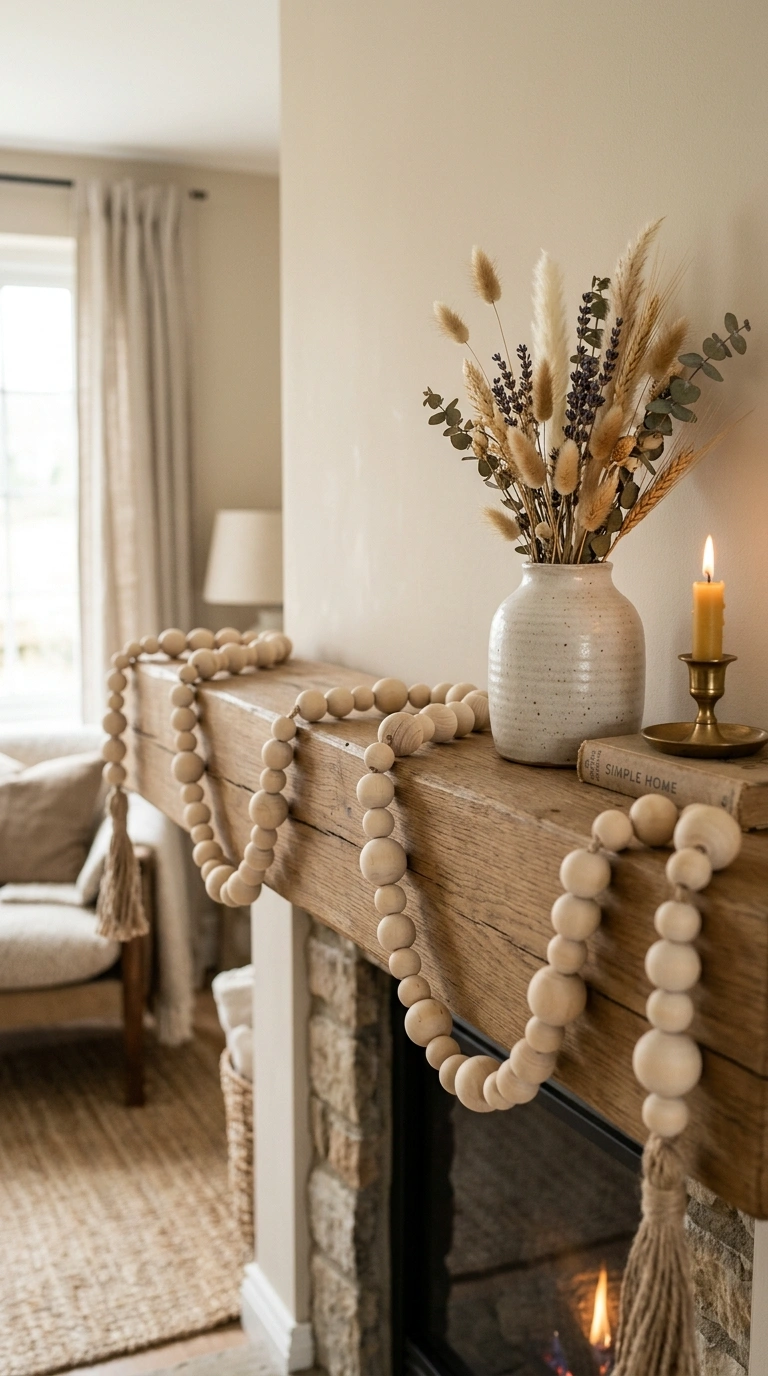
A long strand of wooden bead garland draped along a mantel, staircase railing, or wrapped around a small tree branch adds warmth and texture during the winter months without leaning too heavily into any one holiday. Natural, unpainted wood beads keep the look neutral and versatile, while a few beads painted white or cream can be mixed in for subtle contrast.
Drape the garland loosely rather than pulling it taut, letting it dip and curve naturally along whatever surface you’re decorating. This garland pairs especially well with evergreen branches or a simple vase of dried florals, since the wood tone bridges the gap between the greenery and any metal or ceramic accents nearby. It’s also sturdy enough to reuse year after year, unlike more delicate paper or fabric garlands.
Also read: 21 Elegant Halloween Decor Ideas That Aren’t Tacky
21. Pinecone Basket Display
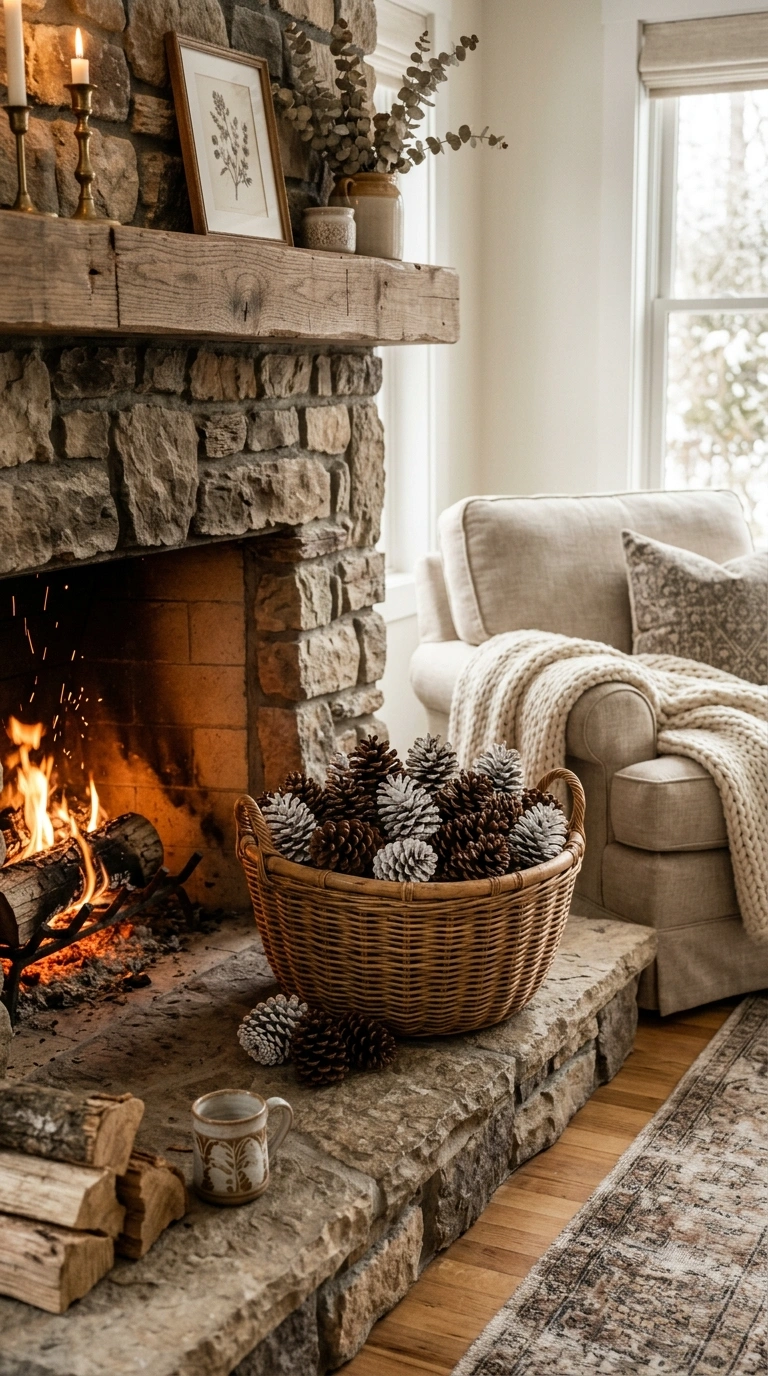
A low basket filled with pinecones near the fireplace or on a console table is a simple, natural way to bring winter texture into a room. Use pinecones of varying sizes, and consider a mix of natural brown ones alongside a few dipped lightly in white paint or fake snow for a subtle wintery touch without going overly themed.
Place the basket somewhere it will actually get noticed, like next to a reading chair or on the hearth, rather than tucked in a corner. If you have a working fireplace, this basket doubles as a genuinely useful spot to grab a few pinecones as natural fire starters. Refresh the pinecones each year, since they tend to flatten and lose their shape after being stored away for several months.
22. Velvet Holiday Table Runner
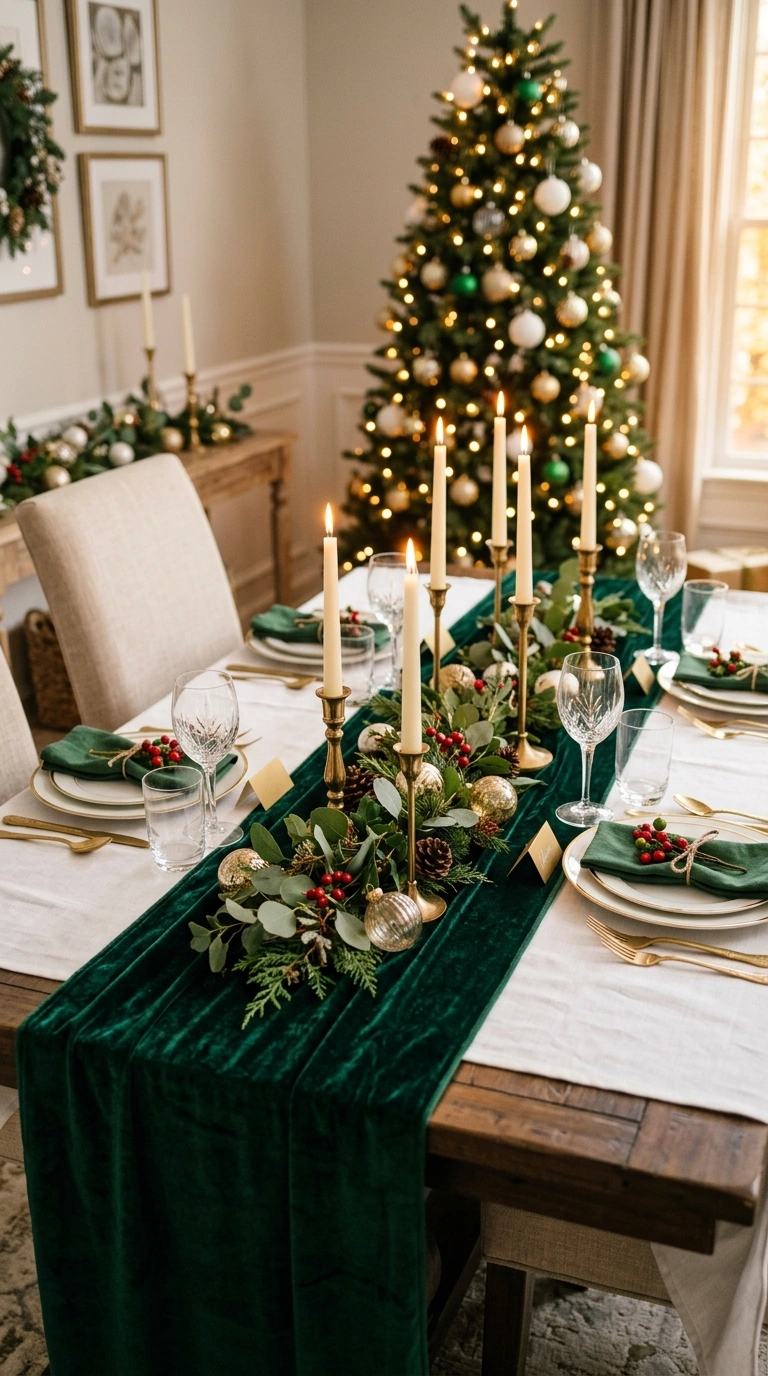
A velvet table runner down the center of the dining table is an easy way to dress up the space for winter gatherings without committing to a full holiday theme with ornaments and lights. Deep jewel tones like emerald, burgundy, or navy velvet catch the light beautifully under candlelight or a chandelier, giving the table an elegant, slightly formal feel.
Layer the runner over a plain white or cream tablecloth so the velvet texture stands out against a simple background rather than competing with a patterned cloth underneath. Add a few candle holders or a low floral arrangement directly on top of the runner rather than off to the side, which keeps the eye moving down the center of the table. Store the runner folded flat, not rolled, to avoid crease marks in the velvet.
Also read: Thanksgiving Tables Worth Setting: 13 Decor Ideas
23. Layered Winter Throws
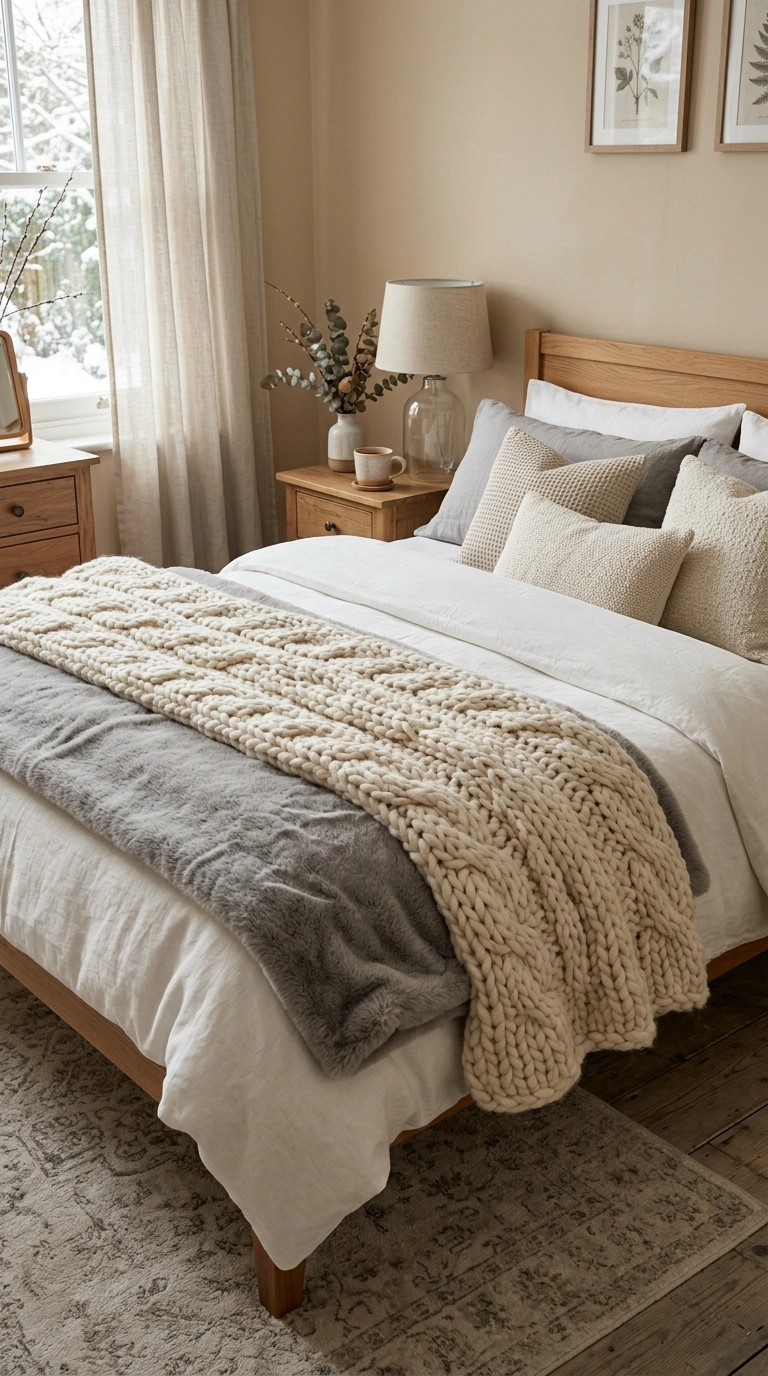
Layering two or three throw blankets in different textures across the foot of a bed or the arm of a sofa is a simple styling trick that makes a room feel more thoughtfully put together during the colder months. Mix a chunky knit throw with a smoother faux fur or sherpa one, keeping the color palette within two or three shades so the layers feel coordinated rather than mismatched.
Fold each blanket slightly differently, one draped loosely and one folded into a neat rectangle, so the layers have some visual variation instead of looking stacked and flat. This works well at the foot of a bed for both looks and practicality, since guests or family members can easily grab an extra layer on a cold night. Rotate the throws to the laundry regularly since they get more use during winter than any other season.
24. Fresh Eucalyptus Bundle
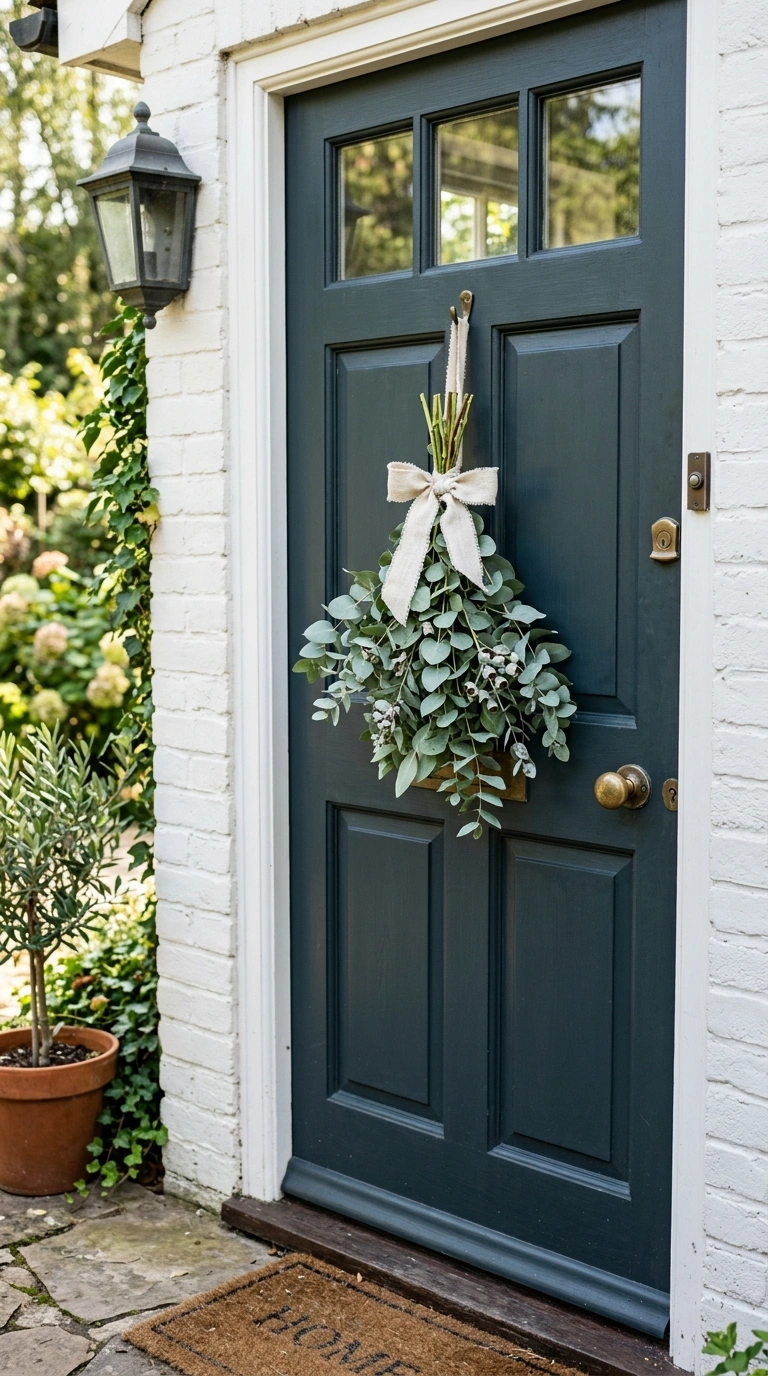
A simple bundle of fresh or dried eucalyptus tied with twine and hung on a door or laid across a mantel adds a soft, muted green that works beautifully as a transition piece between seasons, especially heading into winter. Eucalyptus holds its shape and color well even after drying, which makes it a low-maintenance option compared to fresh flowers.
Hang a small bundle on the front door using a simple ribbon, or lay a longer piece flat along a mantel or table runner for a more relaxed, garland-like look. The silvery green tone pairs especially well with warm wood tones and brass accents already common in winter decor. Mist dried eucalyptus lightly with water every so often to help it hold onto some of its natural fragrance a bit longer.
Also read: Cozy Fall Decor Ideas for Every Room (21 Picks)
25. Snowy White Vase Arrangement
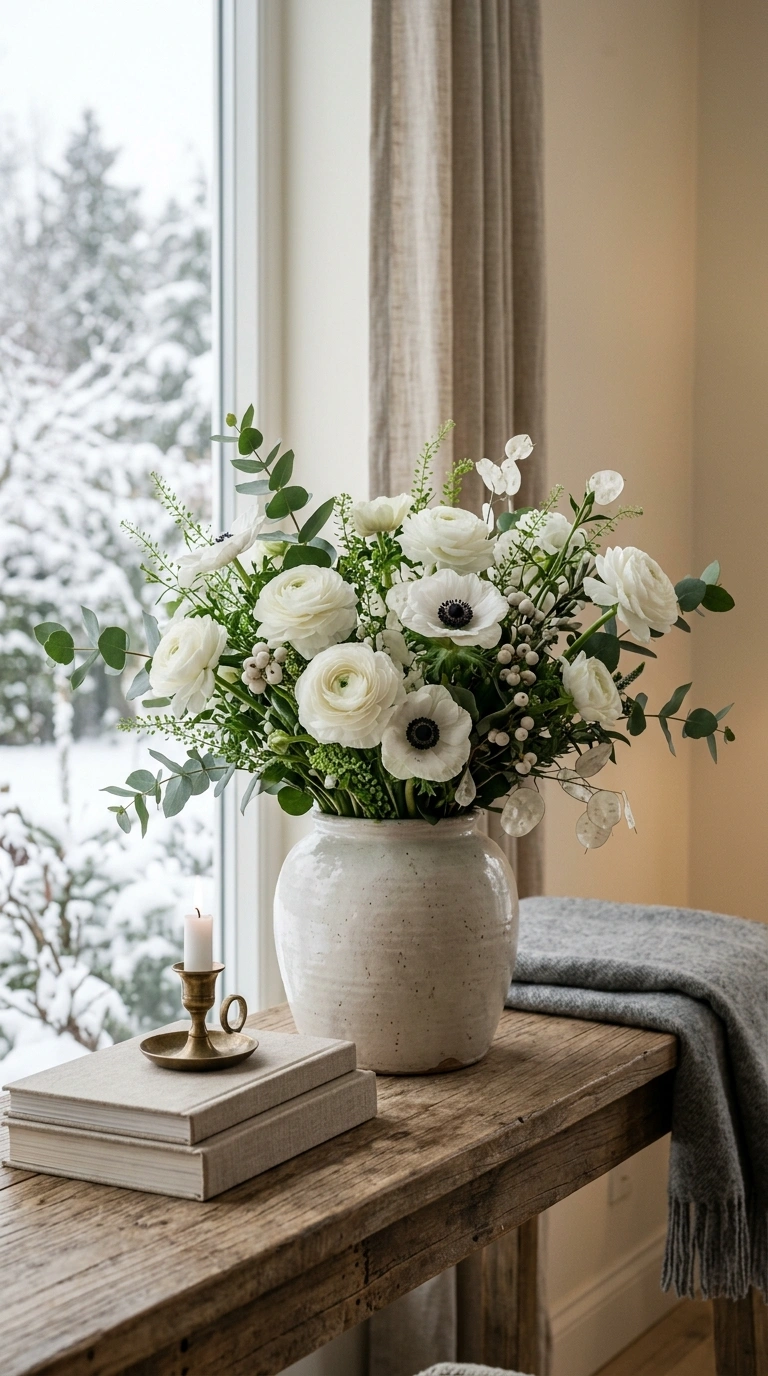
An arrangement of white flowers, like ranunculus, anemones, or amaryllis, in a simple clear or ceramic vase brings a clean, wintery feel into a room without needing an entire snow-themed display. White flowers against a backdrop of deep green or dark wood furniture create a nice contrast that photographs well in low winter light.
Choose a vase with a slightly wider mouth so the stems can spread out naturally rather than bunching tightly together, which gives the arrangement a fuller, more relaxed shape. Trim stems every few days and change the water regularly to help the blooms last as long as possible through the winter months. Place the arrangement somewhere it catches natural light from a nearby window, since white flowers tend to look their best with soft, indirect daylight around them.
Rotating through these seasonal touches doesn’t need to be complicated. Pick a few ideas that match where you are right now, and let your home shift along with the calendar, one small swap at a time.
FAQs
How often should I update my home’s seasonal decor?
Most people find a good rhythm updating decor four times a year, once per season, though smaller swaps like pillow covers or a centerpiece can happen more often if you enjoy it.
What’s the easiest seasonal decor to start with?
Textiles are the easiest place to start, since swapping pillow covers, throw blankets, and table linens takes very little time or money compared to changing furniture or larger pieces.
Where should I store seasonal decor between uses?
Clear, labeled bins in a closet, garage, or under-bed storage work well. Labeling by season, not just by item, makes it much faster to find what you need when the next season arrives.
Can seasonal decor work in a small apartment?
Yes. Small swaps like a vase of seasonal flowers, a new candle scent, or a single throw blanket make just as much of a difference in a small space as they do in a larger home.