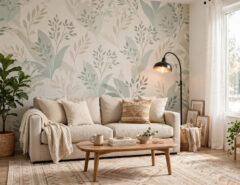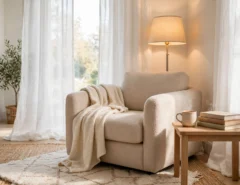
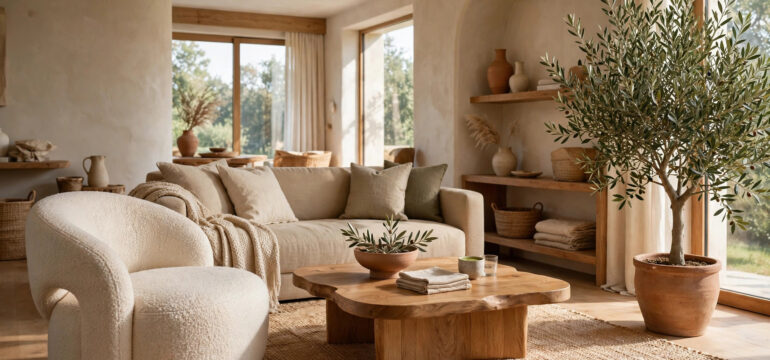
I will never forget the first time I walked into a truly modern organic living room. It belonged to a friend who had just redone her space, and I stopped in the doorway because the room felt like a deep breath. There was a curved boucle chair that practically begged me to sit in it, a chunky wooden coffee table with the most beautiful grain, and sunlight falling across a jute rug. Nothing matched perfectly, yet everything belonged. It was modern but not cold, minimal but not empty. That room taught me what this style is really about. It is nature softened for modern life. These 20 ideas come from that feeling, and each one will help you build a room that wraps around you like a warm afternoon.
1. Curved Boucle Chair
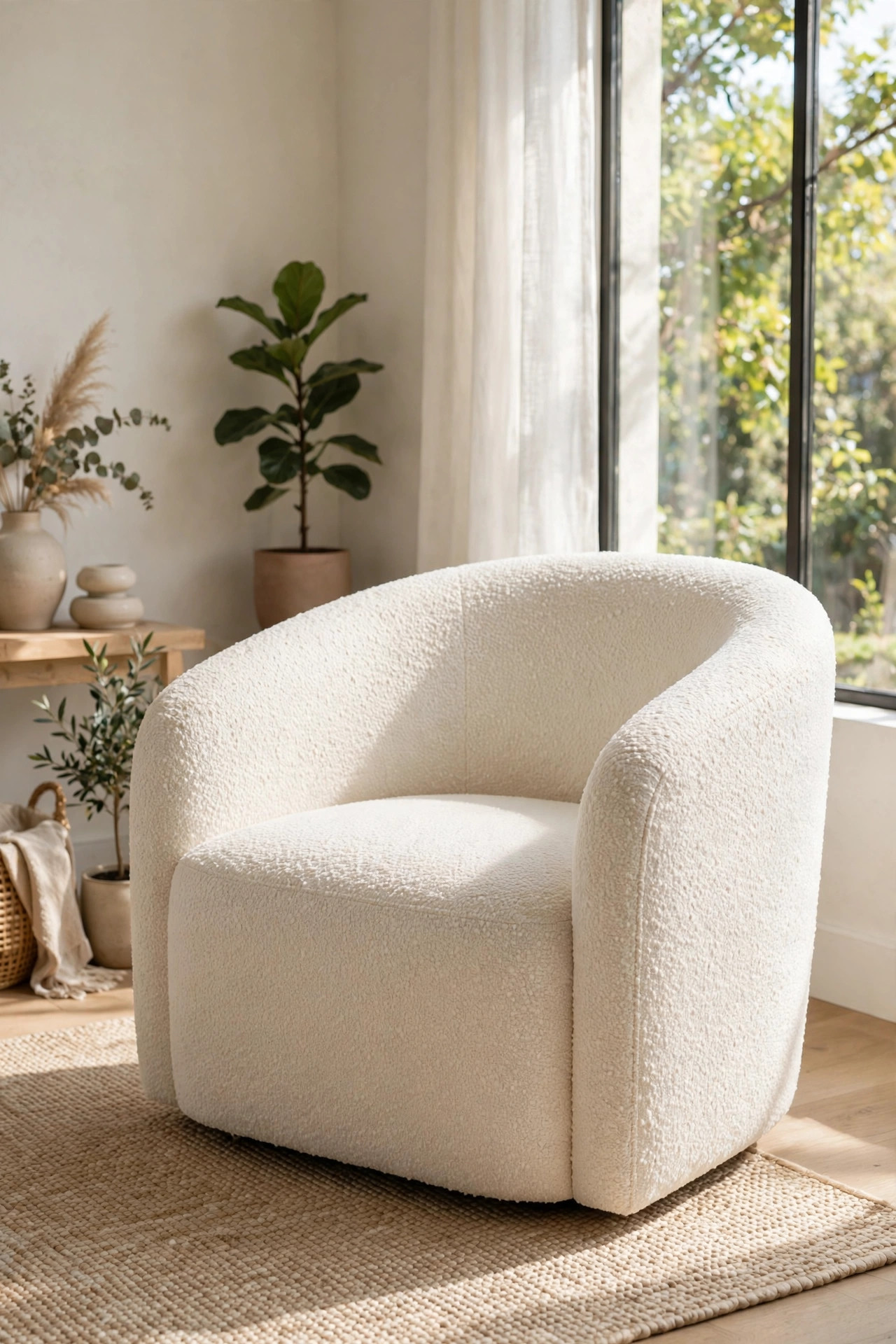
The first thing I sank into at my friend’s house was her curved boucle chair, and I understood the hype instantly. The chair hugs you. Its rounded back and soft, nubby fabric feel like being held, and the cream color glows in natural light. Boucle is the texture of modern organic style, all those little loops catching light and shadow. A curved shape softens a room full of straight lines and rectangles. It is the piece guests always gravitate toward, and it instantly makes a living room feel designed. I sat there for a good twenty minutes just talking, and I noticed I kept running my hand over the armrest. That is the thing about this chair. It invites touch in a way flat modern furniture never does.
You do not need the most expensive version to get the feeling. Look for a curved accent chair in boucle or a similar nubby fabric, in cream, oatmeal, or soft white. Place it at an angle near a window where the light hits the texture. Add a small lumbar pillow in a warm tone for comfort. If boucle is out of budget, a curved chair in any soft textured fabric gives you most of the effect. This one chair can set the tone for the entire room. I learned later that my friend found hers on sale, so do not assume you need a designer budget. Watch for open box deals and floor models, because the nubby fabric hides wear beautifully.
2. Chunky Wood Coffee Table
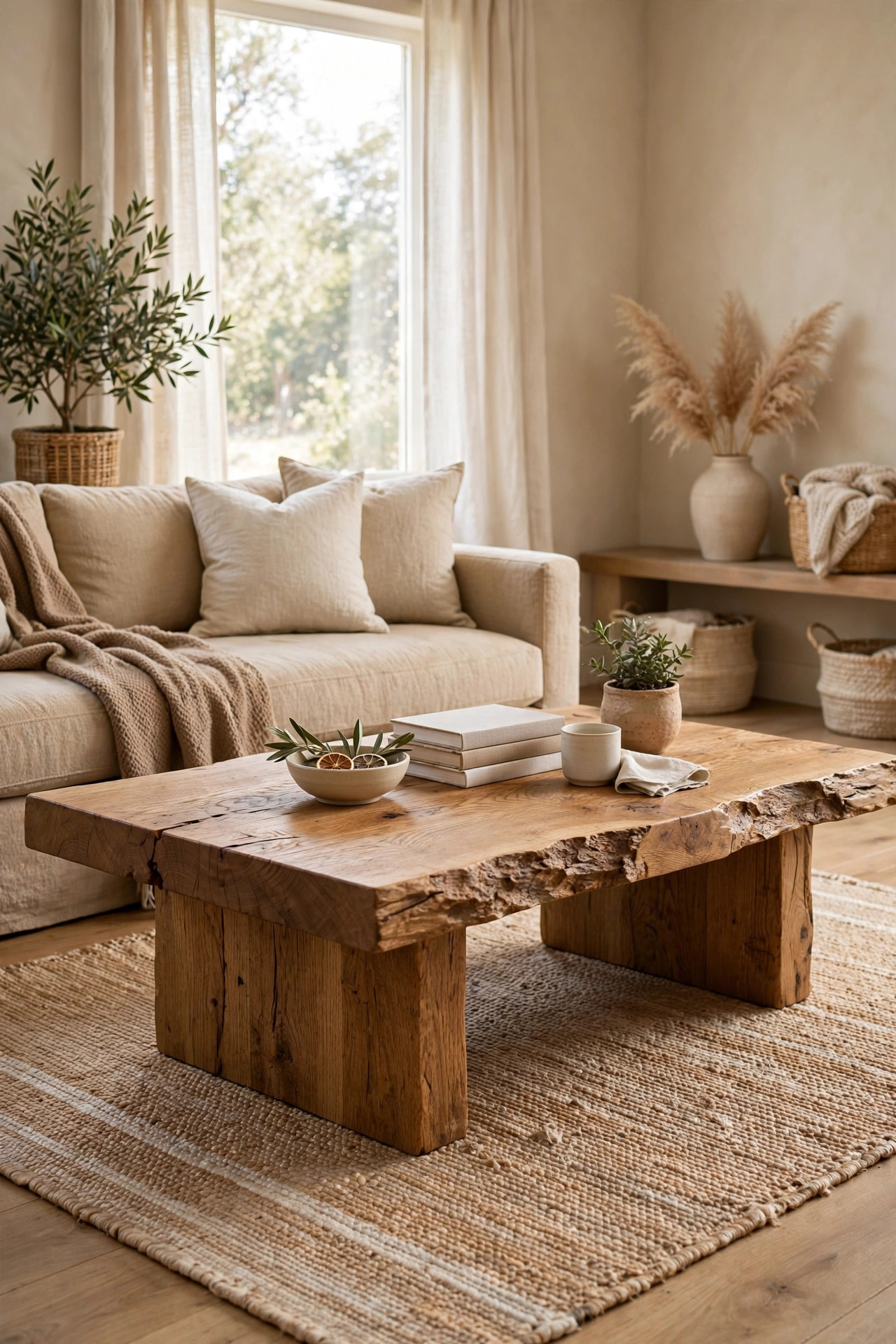
My friend’s coffee table was a thick slab of oak with live edges, and I could not stop touching it. That is what real wood does in a modern organic room. It brings the outdoors inside in the most honest way. The grain tells a story, the weight feels permanent, and the warm tone balances all the soft white fabrics around it. A chunky wood table grounds the seating area the way nothing else can. It says this room is for living, not just looking. I remember setting my coffee cup down on it and feeling almost guilty, like I should use a coaster on something so beautiful. My friend just laughed and said the rings and marks are part of its story. That attitude stuck with me.
Choose a coffee table in oak, walnut, or reclaimed wood with visible grain. Round or oval shapes feel softer and more organic than sharp rectangles. If a solid slab is too pricey, a good veneer over thick construction still gives you the look. Keep the styling simple, a stack of two books, a small bowl, maybe a candle. Let the wood be the star. This table will be the hardest working, most loved piece in your living room. Check the height before you buy. It should sit about an inch or two lower than your sofa seat. And if you have little kids, rounded edges are a gift you will appreciate every single day.
3. Jute Area Rug
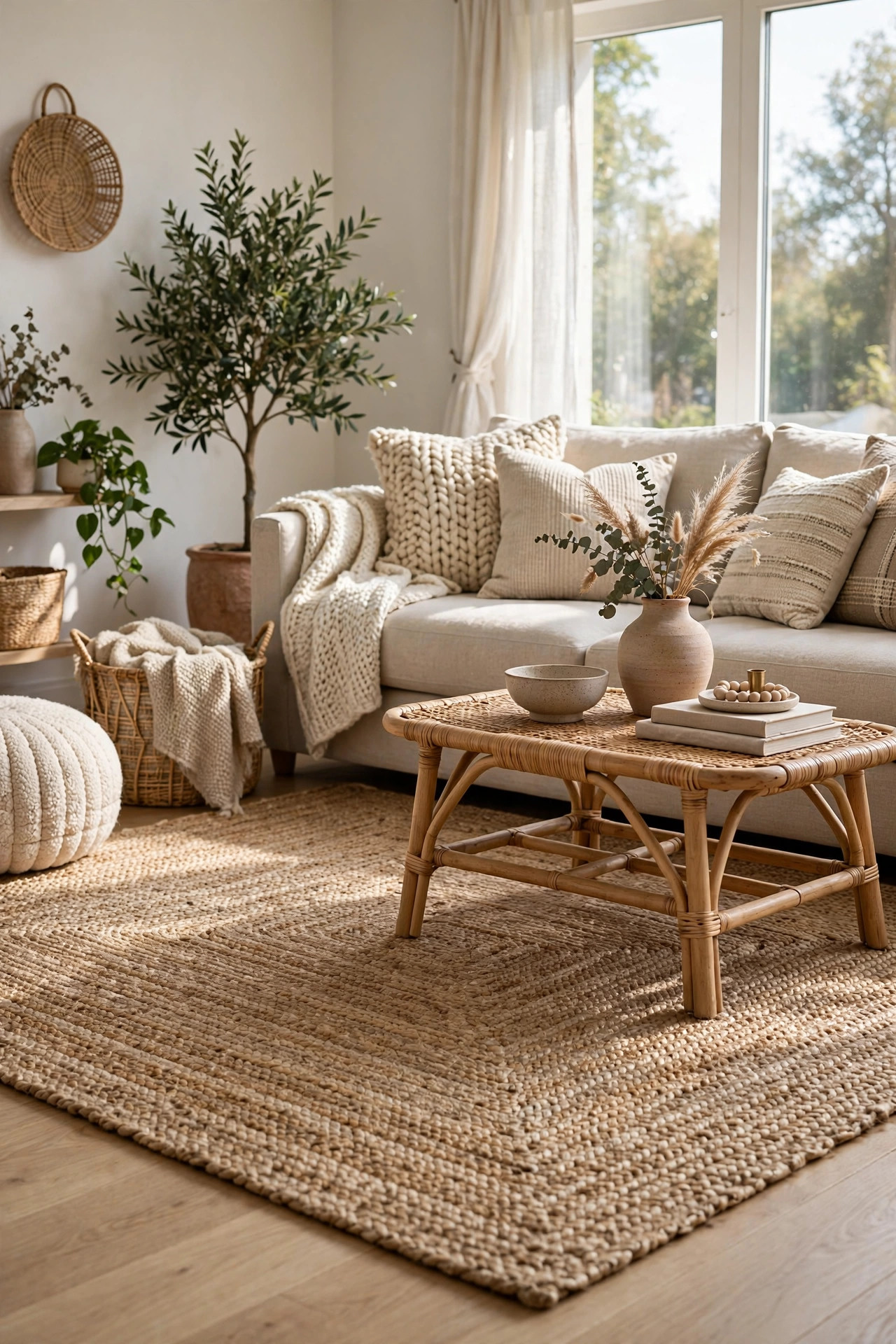
I remember the rug under my feet more than I expected to. It was jute, rough and natural, and it made the whole room feel grounded, literally. Jute rugs are the foundation of modern organic floors. Their woven texture adds warmth without pattern, and their sandy color works with everything. They feel casual and honest, like the room is not trying too hard. Layer a smaller soft rug on top if you want extra coziness underfoot. I walked in wearing socks and the texture felt honest under my feet, a little rough but in a good way. My friend told me she chose jute because her dog’s claws had destroyed her old rug. Two years later the jute still looked the same, which sold me completely.
Measure your seating area before buying, since a too small rug is the most common mistake. The front legs of your sofa and chairs should sit on the rug. Jute is durable and affordable, but it can be rough on bare feet, so layering helps. Shake it out regularly and spot clean spills quickly. This natural foundation lets every other texture in the room shine. One warning I learned the hard way: jute and heavy furniture do not mix well without pads underneath. The fibers can dent. Also keep it away from damp entryways, because jute does not love moisture. In a dry living room, though, it is nearly perfect.
4. Linen Slipcover Sofa
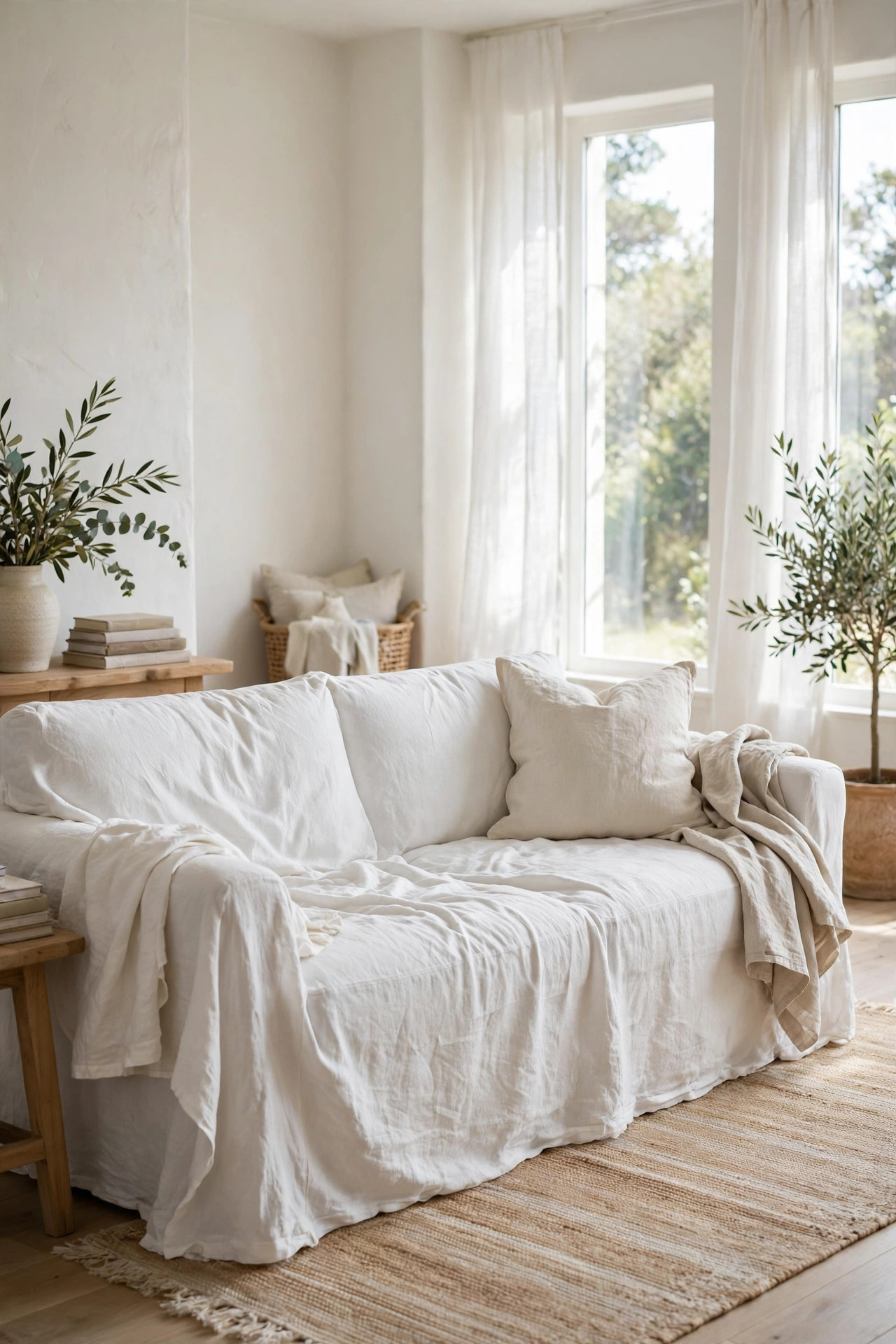
The sofa in that room wore a washed linen slipcover, slightly rumpled in the most perfect way. I learned that day that wrinkles can be beautiful. Linen slipcovers give a sofa a relaxed, lived in look that is the opposite of stiff and formal. The fabric breathes, it softens with every wash, and it invites you to actually live on it. In white or oatmeal, it reflects light and keeps the room feeling airy. It is comfort you can see. I asked my friend if she worried about the wrinkles, and she said that was the whole point. A linen sofa is supposed to look lived in. Coming from a house where my mother ironed everything, that felt like permission I did not know I needed.
Slipcovers are also practical. You can remove and wash them, which is a lifesaver with kids or pets. Choose a washed linen or linen blend in a light neutral. If a new sofa is not in the budget, a slipcover can transform the one you have. Tuck it neatly but do not stress about perfect smoothness, the relaxed look is the point. Add throw pillows in warm textures to complete the invitation. Wash the slipcover on gentle and let it air dry most of the way, then put it back on slightly damp. It smooths out just enough while keeping that relaxed look. Buy a spare set if you can, so the sofa never has to sit naked on wash day.
5. Travertine Side Table
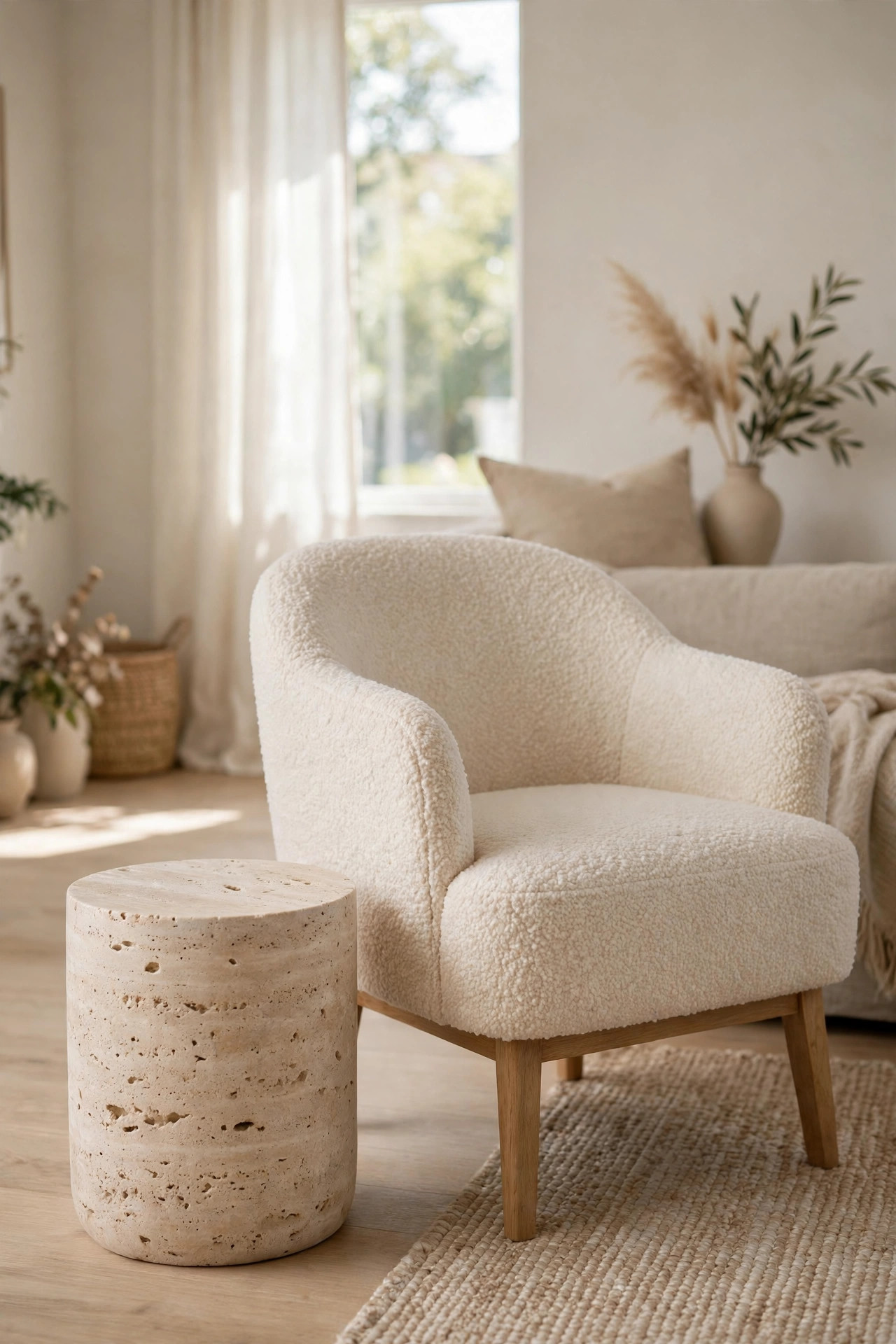
Next to the boucle chair sat a small travertine side table, and it looked like a piece of ancient sculpture. Travertine and other natural stones bring an earthy, timeless quality to modern organic rooms. The pitted surface and warm beige tones feel like they came straight from a quarry. A stone side table adds weight and permanence next to soft upholstery. It is the contrast of hard and soft that makes the style so interesting. I picked it up expecting it to be light, and it was surprisingly heavy. That weight is part of its charm. It does not wobble or shift when you set a drink down. My friend said she found it at a local stone yard, of all places, for less than a big box store would charge.
You can find travertine style side tables at many price points now, from real stone to convincing looks. Keep the shape simple, a drum or a plinth, so the material speaks. Style it with one object, a small vase or a candle, and nothing more. Seal real stone to protect it from drink rings. This little table adds a gallery like moment to your living room. If real travertine feels too precious, there are composite versions that look almost identical and shrug off spills. Either way, use a coaster for red wine. Stone is strong but it can stain, and I learned that lesson on a marble table years ago.
6. Woven Pendant Light
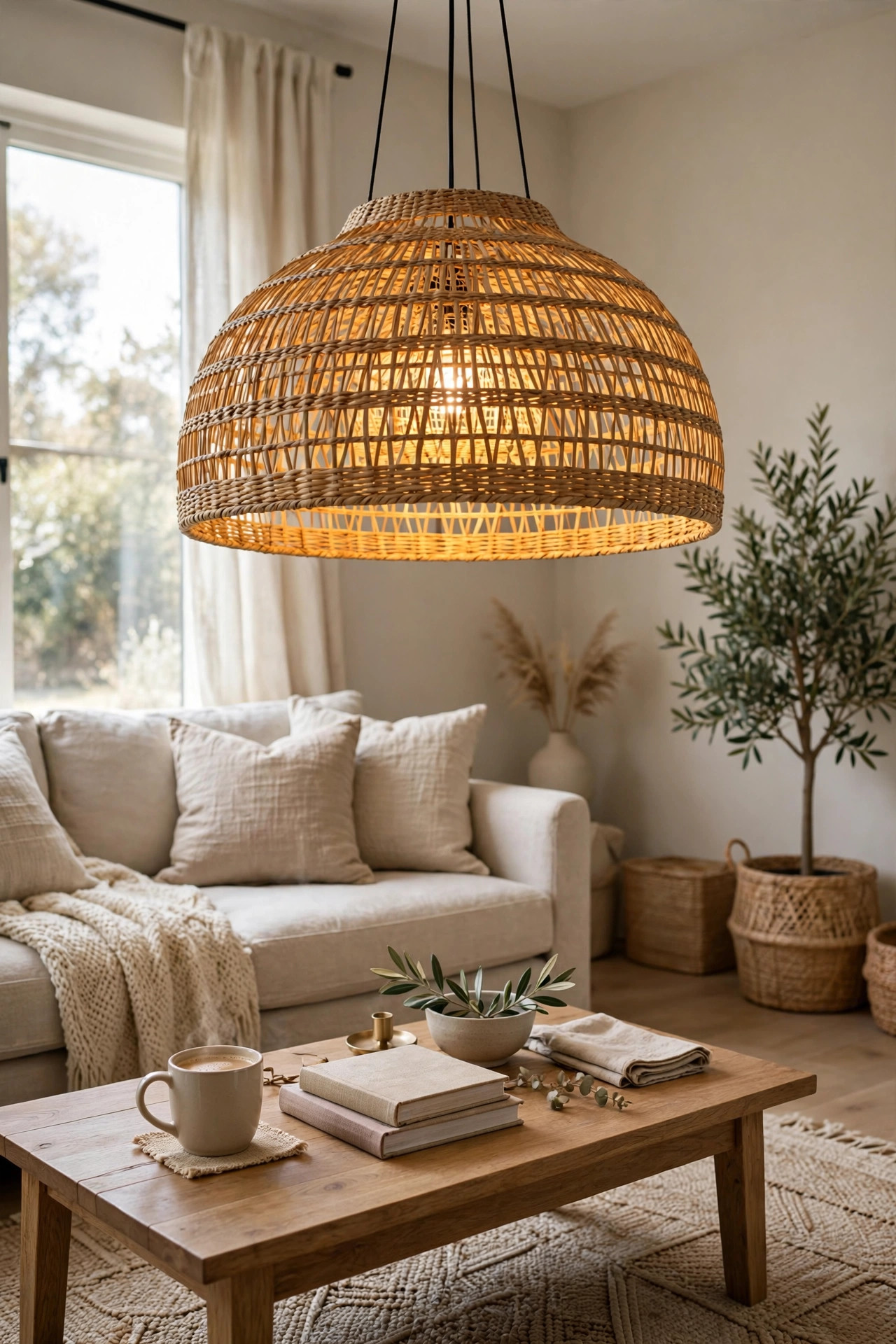
Hanging over the coffee table was a large woven pendant, like an upside down basket, glowing warmly from within. I loved how it softened the ceiling. Woven pendants in rattan, seagrass, or bamboo bring natural texture overhead, where rooms often forget about texture entirely. The light filtering through the weave creates beautiful patterns on the walls. It feels handmade and human in a way that metal fixtures never do. When my friend flipped the switch, the whole room changed. The weave threw soft shadows across the ceiling like sunlight through leaves. I actually gasped a little. It was the single most dramatic moment in that whole room tour, and it came from a lampshade.
Hang one large woven pendant as the centerpiece of your living room, centered over the coffee table or seating area. The bottom should hang about seven feet from the floor. Choose a warm bulb so the glow feels like late afternoon sun. If you rent, a plug in version with a long cord works beautifully. This light fixture alone can shift a whole room toward organic warmth. Measure twice before you hang it. In a room with eight foot ceilings, the bottom of the pendant should sit around seven feet off the floor so tall guests do not bump their heads. And put it on a dimmer if you can. Dimmed to half, a woven pendant feels like candlelight.
7. Sheer Linen Curtains
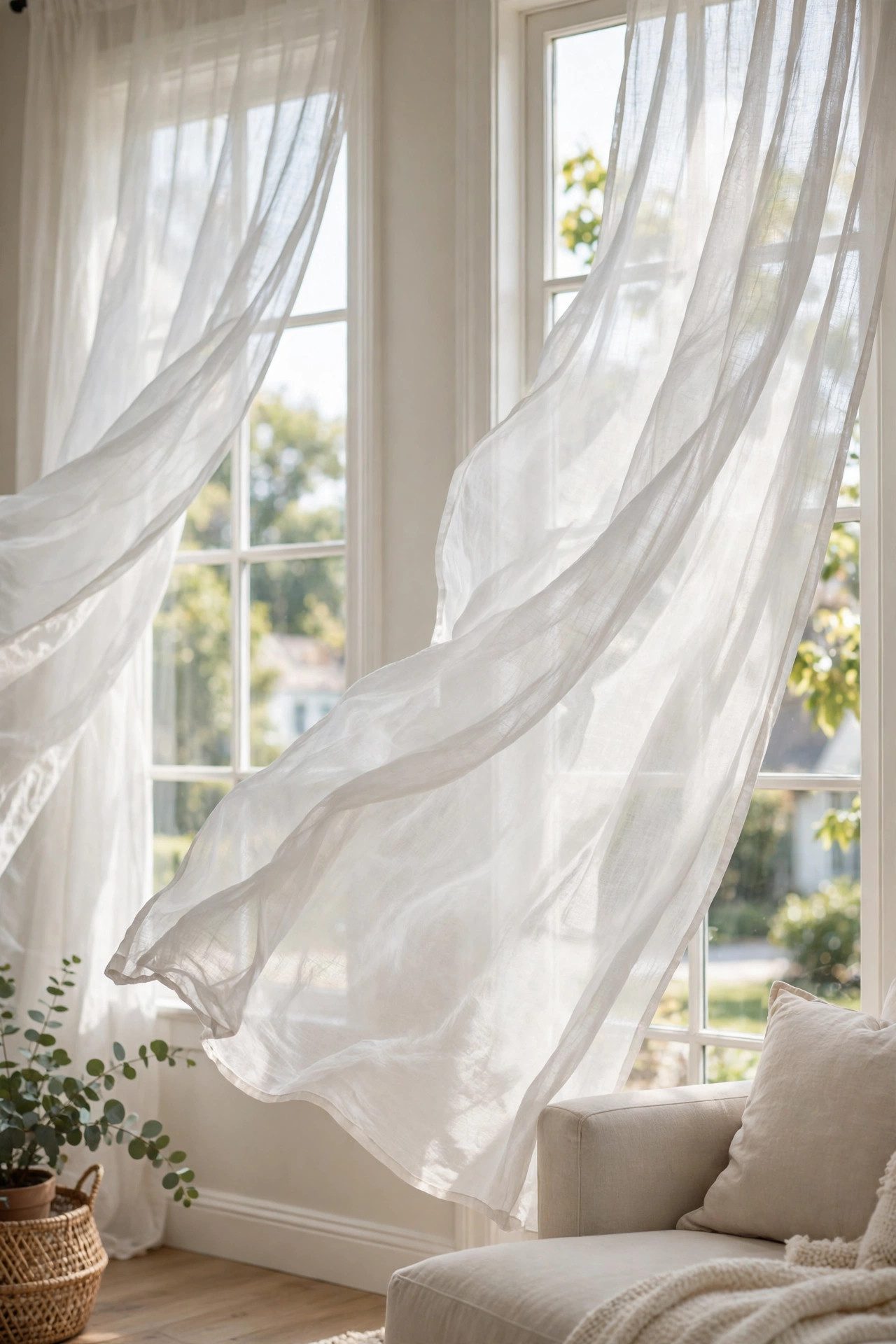
The windows wore sheer linen curtains that moved slightly in the breeze, and the light coming through them was pure magic. Heavy curtains would have killed that glow. Sheer linen filters sunlight into something soft and dreamy while still giving you privacy. The fabric itself adds texture to the windows, and the gentle movement brings the room to life. In a modern organic room, windows should feel like part of nature, not a barrier to it. I remember standing by that window and watching the curtains breathe with the air. It sounds dramatic, but it genuinely changed how the room felt. My own living room had heavy drapes at the time, and I went home and took them down that same week.
Hang sheer linen panels on a simple wood or black rod, mounted high and wide so the windows look bigger. Choose white or natural flax color. Let them fall to the floor for an elegant look. You can layer them over blinds for nighttime privacy. Wash them occasionally to keep them bright. These curtains turn ordinary daylight into the room’s best feature. If your windows face the street, do not worry about privacy. Sheer linen blurs the view from outside during the day while letting you see out clearly. For bedrooms you would need more, but in a living room, sheers are usually enough. They also wash easily, which surprised me.
8. Handmade Ceramic Vases
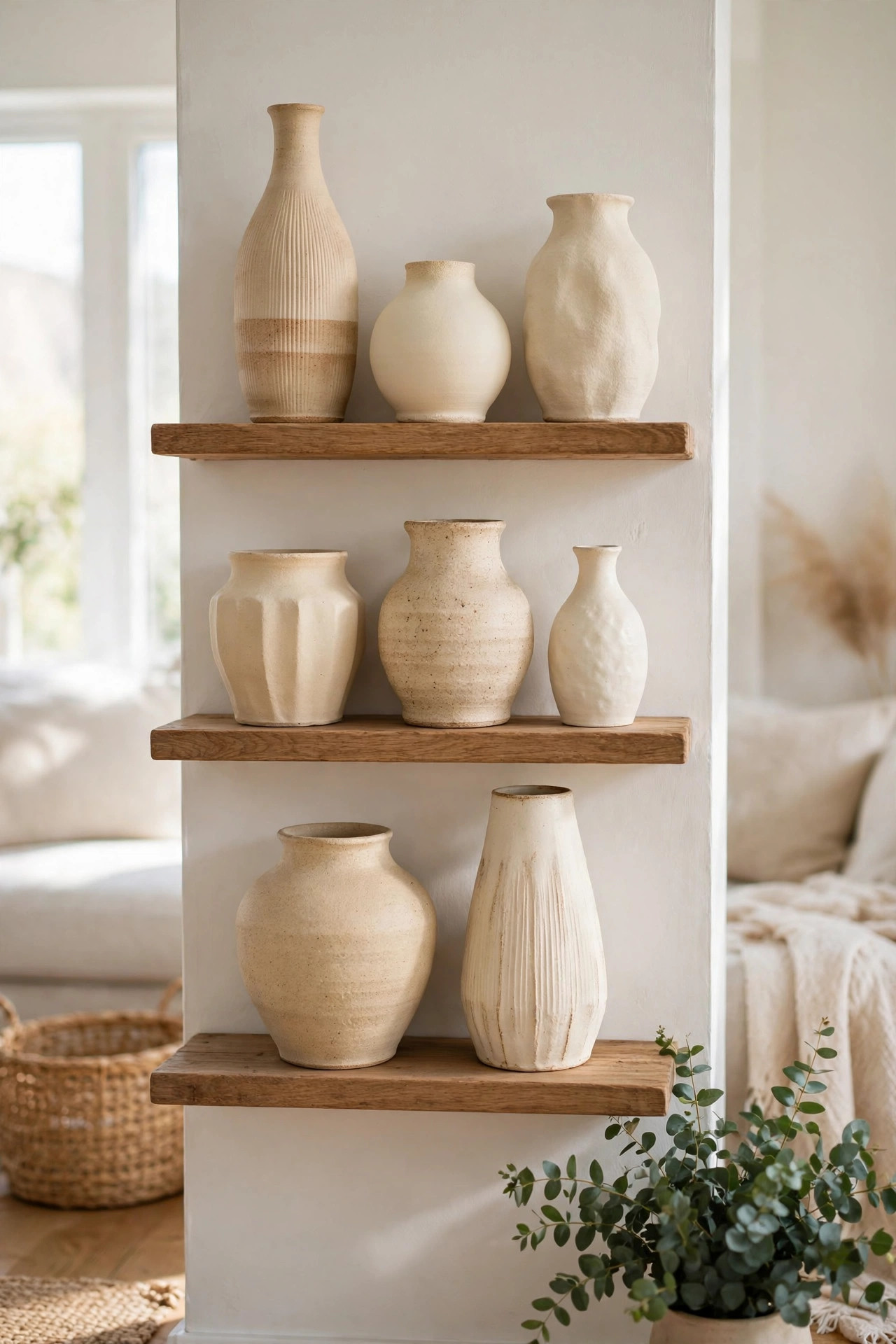
On the wooden shelves, I noticed a collection of handmade ceramic vases, each slightly imperfect in the most charming way. That imperfection is the point. Handmade ceramics bring the human touch into a room, proof that someone shaped them with their hands. Their organic shapes and matte glazes fit the modern organic palette perfectly. Grouped together, they become a quiet art installation. My friend told me each one came from a different place. One from a trip, one from a flea market, one made by her neighbor. None of them matched, and that was exactly why they worked together. I have started collecting the same way, one piece at a time, and it is so much more fun than buying a set.
Start with three vases in different heights but similar tones, cream, sand, or clay. Place them on a shelf, a console, or the coffee table. Leave some empty and put simple stems in others. You do not need expensive art pieces, local potters and thrift stores are full of beautiful handmade ceramics. These small objects add soul that mass produced decor never can. Do not be afraid of the thrift store shelf. Handmade ceramics are one of the easiest things to find secondhand, because people give away beautiful pieces without knowing what they have. Look for a potter’s mark on the bottom. And if a vase has a tiny chip, put that side to the back. Nobody will ever know.
9. Olive Tree Corner
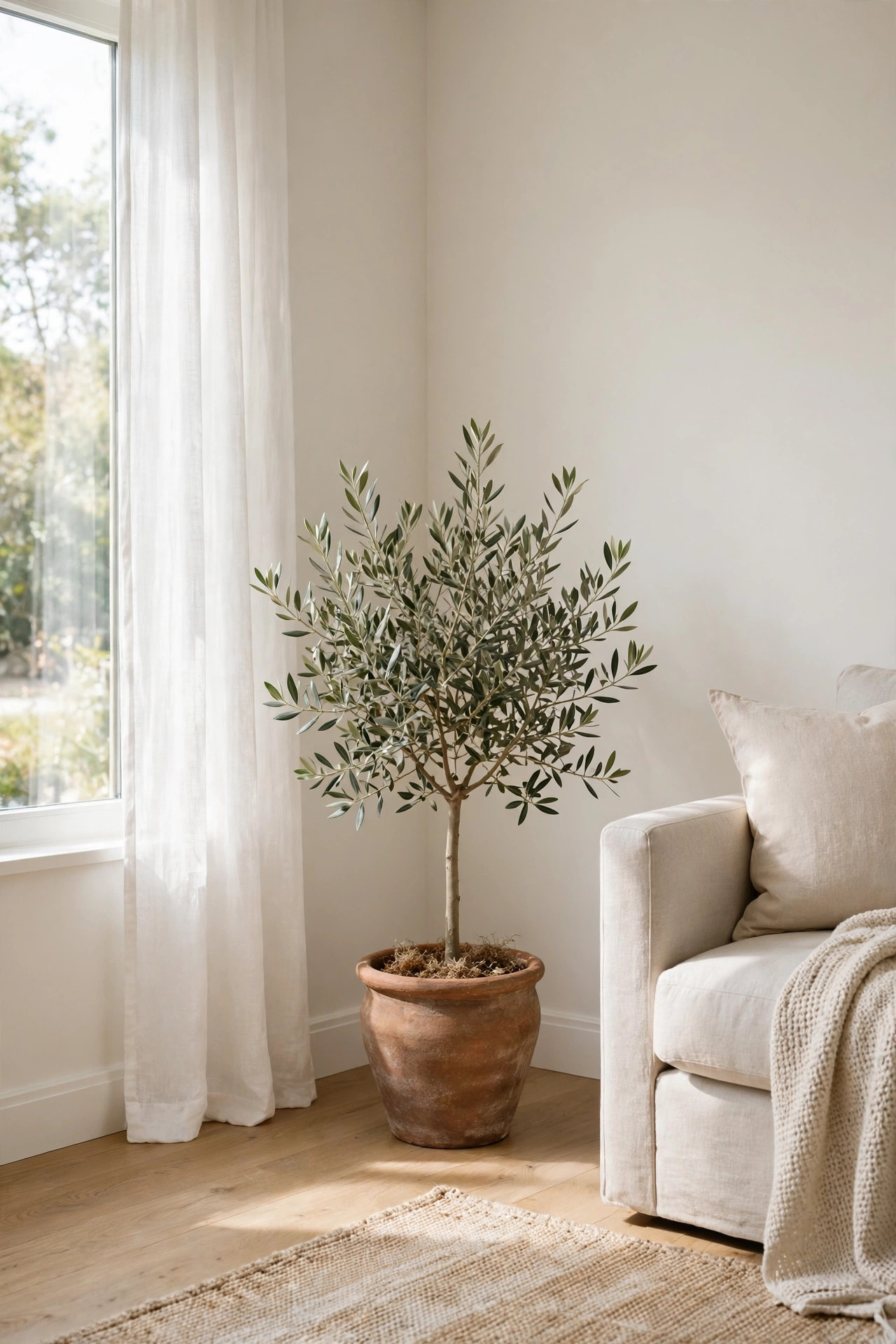
In the corner stood a small olive tree in a clay pot, and it changed the whole energy of the room. A real tree brings life, height, and a sculptural shape that no furniture can provide. Olive trees are the darling of modern organic style, with their silvery green leaves and graceful branches. The clay pot kept it earthy and grounded. That corner went from empty to essential with one plant. I asked if it was real, because the leaves looked too perfect. She laughed and pinched one to show me. It was real, and apparently easier than I expected. She said it mostly takes care of itself as long as it gets sun, which is my favorite kind of plant.
Olive trees need bright light, so place yours near your sunniest window. Water when the top inch of soil is dry, and rotate the pot so it grows evenly. If your light is limited, a faux olive tree still gives you the shape and color. Choose a simple clay or stone pot, never shiny plastic. One good tree does more for a room than a dozen small plants. If you go faux, spend a little more for a good one. Cheap fake trees have a plastic shine that ruins the effect. Bend the branches a little so it does not look factory perfect. And dust the leaves now and then, because dusty fake leaves are the fastest way to give the game away.
10. Wool Throw Blankets
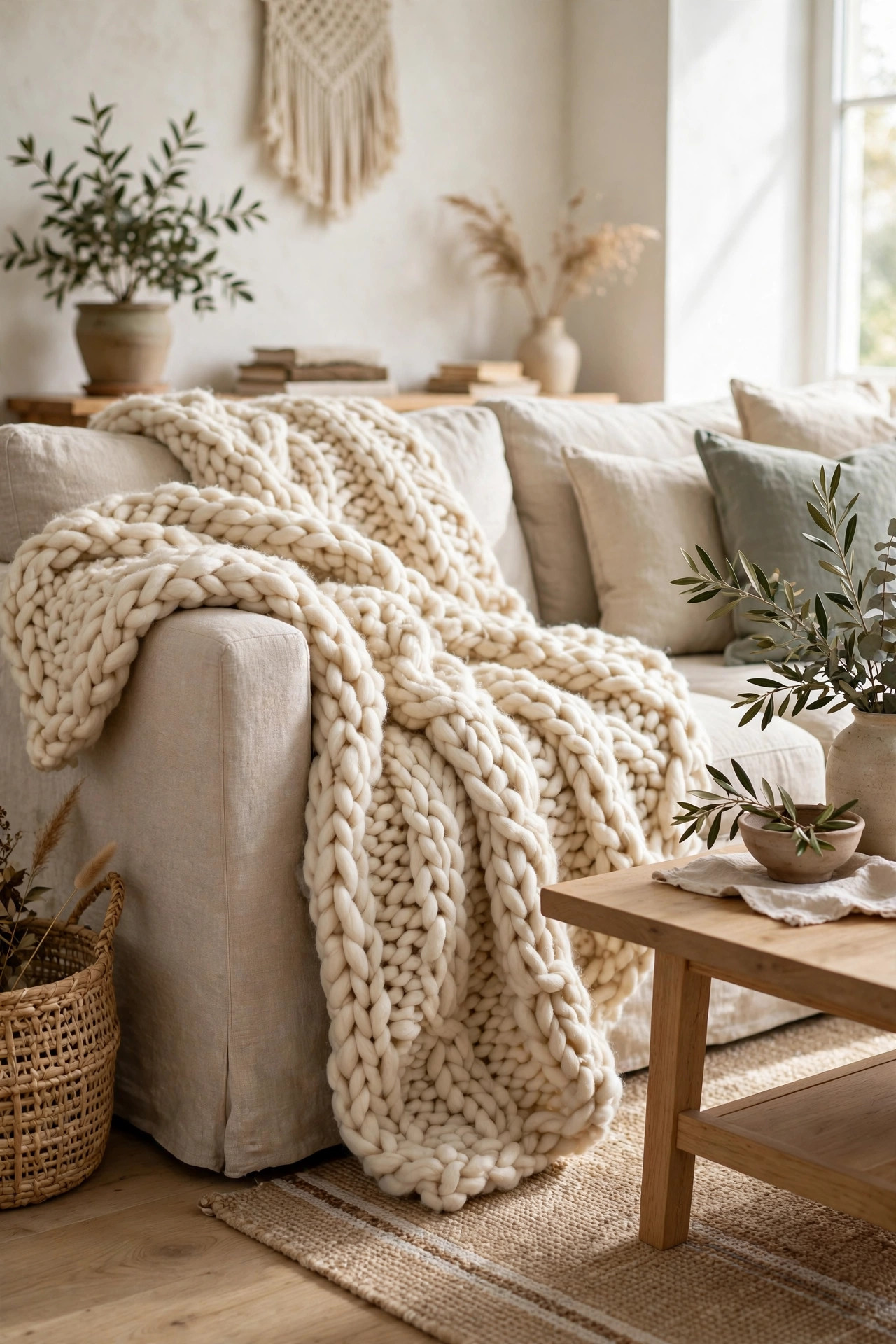
Draped over the sofa arm was a chunky wool throw, and I pulled it over my lap without thinking. That is the test of a good throw. Wool and chunky knit blankets add the cozy layer that modern organic rooms need. Their texture contrasts beautifully with smooth linen and sleek wood. A throw says someone lives here and gets comfortable. It is warmth you can touch. My friend keeps two, one on the sofa and one folded in a basket. She said the basket one is for guests, and I loved that. It made me feel welcome in a way words could not. Now I do the same thing, and visitors always comment on it.
Choose throws in cream, oatmeal, camel, or soft gray. Drape one over the sofa arm and fold another in a basket nearby. Wool is warm and durable, though it needs gentle washing. If wool itches you, a chunky cotton knit gives a similar look. These soft layers are what turn a pretty room into a room you never want to leave. Wool throws can be an investment, so check the label before you fall in love. Some need dry cleaning, which gets old fast. I look for machine washable wool or a good wool blend. And store them folded, not hanging, because wool stretches under its own weight over time.
11. Arched Floor Mirror
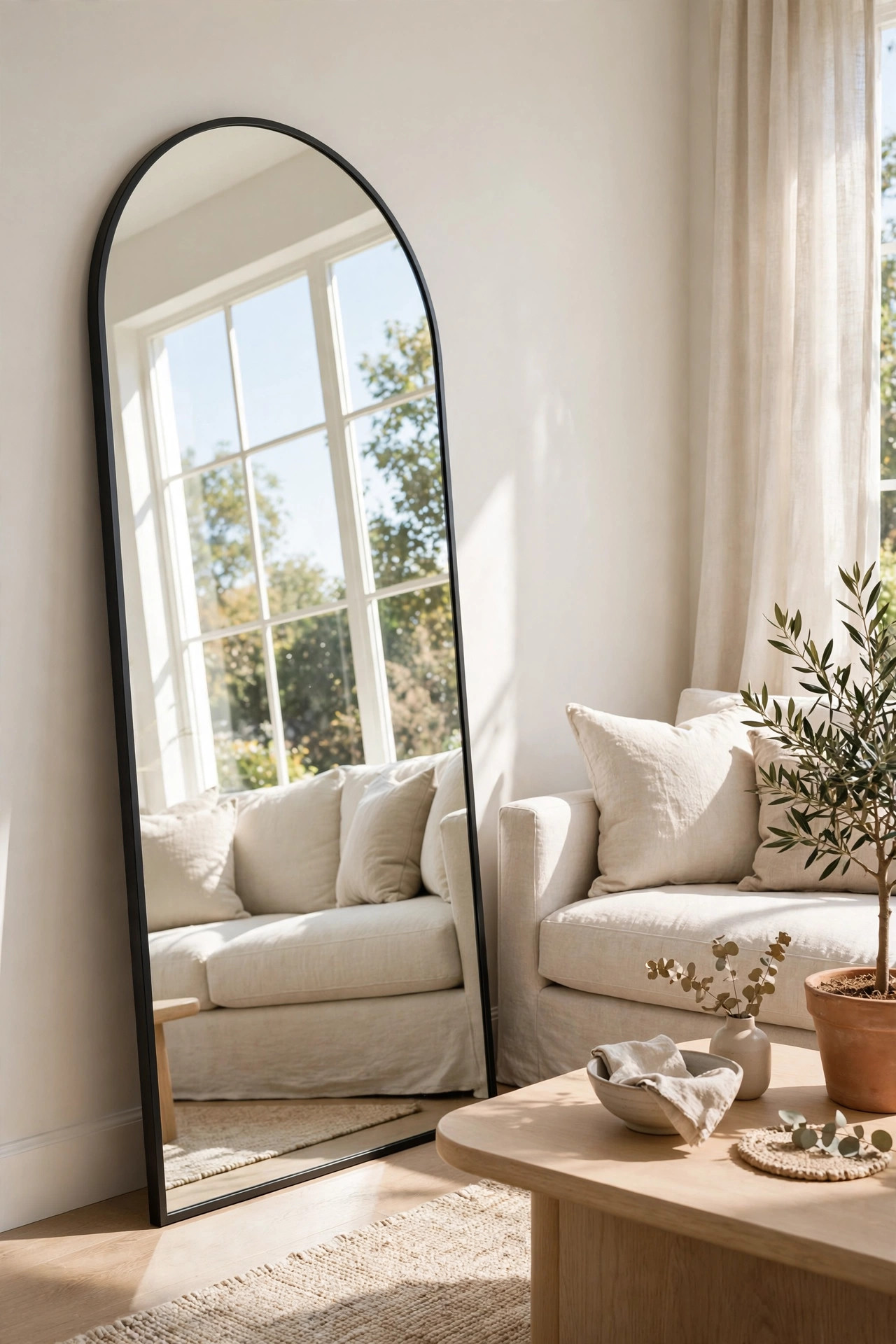
Leaning against the wall was a tall arched mirror, and it did two beautiful things at once. The arch shape echoed the curved chair and softened all the room’s straight lines. The mirror bounced light deep into the space and made the room feel twice as big. Arches are a signature shape in modern organic design, borrowed from Mediterranean architecture. They feel ancient and modern at the same time. I watched my friend check her reflection in it before we left for dinner, and I realized a leaning mirror is also just practical. It catches you on the way out. The arch shape made even that quick glance feel a little more graceful than a plain rectangle would.
Lean a large arched mirror against the wall opposite your windows for maximum light reflection. Make sure it is secured so it cannot tip. A thin wood or brass frame keeps it warm. If an arch is hard to find, any mirror with a curved top works. This one piece adds light, space, and architecture all at once. Safety first with a leaning mirror. Use wall straps or anti tip hardware, especially if you have kids or pets who might bump it. A big mirror is heavy, and I would never forgive myself if one fell. Most come with the hardware now, so it takes ten minutes.
12. Raw Edge Wood Bench
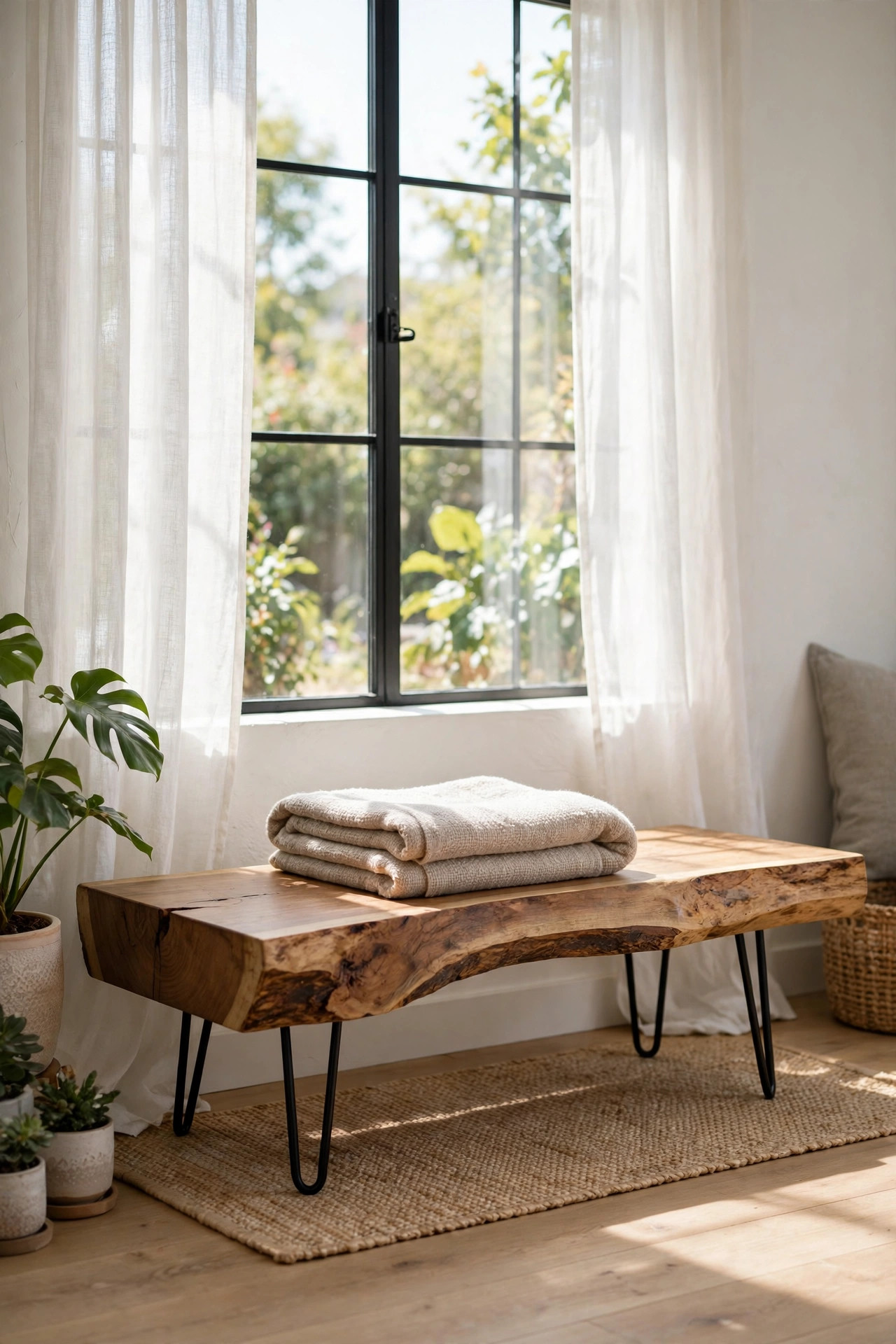
Under the window sat a raw edge wooden bench, simple and beautiful. It gave the room extra seating without the bulk of another chair, and its natural edge kept the organic feeling strong. A bench is wonderfully flexible, it works as seating, a footrest, or a display surface. The raw edge reminds you that this was once a living tree, which is the heart of the style. My friend told me hers came from a fallen tree on her parents’ land, cut and sanded by her brother. I do not have a brother with a sawmill, so I bought mine, but the story reminded me that the best pieces often have a history. Ask at local lumber yards for offcuts.
Place a wood bench under a window, behind a sofa, or at the foot of a daybed. Add a folded throw or a cushion for comfort. Choose a finish that matches your other wood tones loosely, they do not need to match exactly. A bench is often cheaper than a chair and twice as versatile. It is quiet, useful beauty. A bench under the window becomes the best seat in the house on a sunny morning. Add a thin cushion if the wood feels hard, but do not cover the whole top. You want to see that grain. And check that it sits level. A wobbly bench will drive you quietly mad.
13. Stoneware Table Lamp
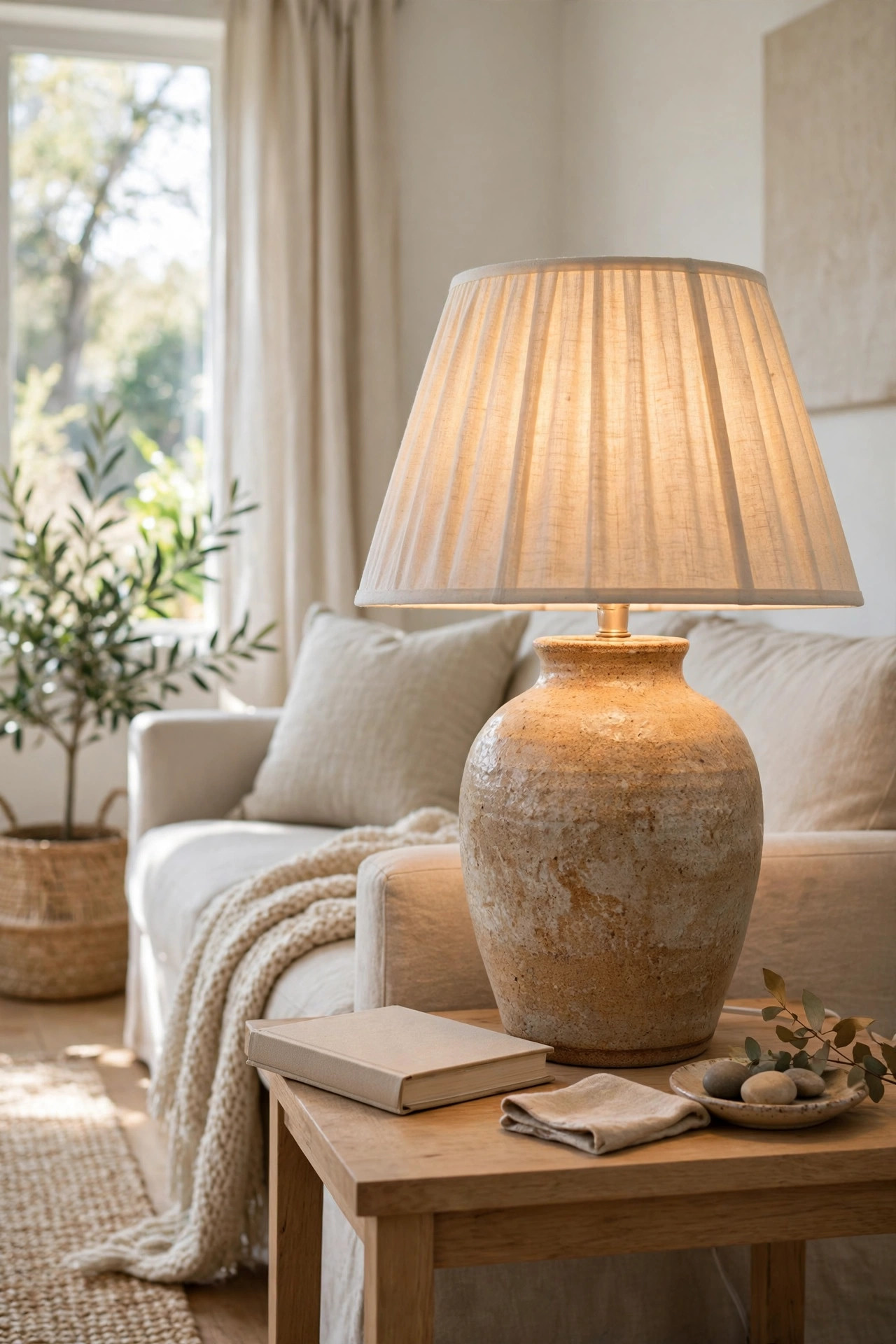
On the side table glowed a table lamp with a handmade stoneware base. I loved how the light seemed to come from something ancient. Ceramic and stoneware lamp bases bring the same handmade warmth as the vases, but with the added gift of light. The textured base catches the glow of the bulb and becomes a sculpture after dark. It is a small detail that makes evenings in the room feel special. I noticed it because the base had a tiny fingerprint in the glaze, left by whoever made it. Instead of a flaw, it felt like a signature. My friend said she bought it from a potter at a craft fair, and now I look for lamp bases the same way I look for art.
Choose a lamp with a ceramic, stone, or travertine base in a warm neutral. Pair it with a simple linen shade that lets the light through softly. Place one on each side table for balance, or let a single statement lamp shine alone. Use warm bulbs throughout the room for consistency. This lamp turns a corner from forgotten to favorite. Table lamps do more than overhead lights ever can. They create pools of warm light at sitting height, which is where you actually live. I keep mine on a timer so the room glows welcoming even when I walk in after dark.
14. Layered Neutral Textiles
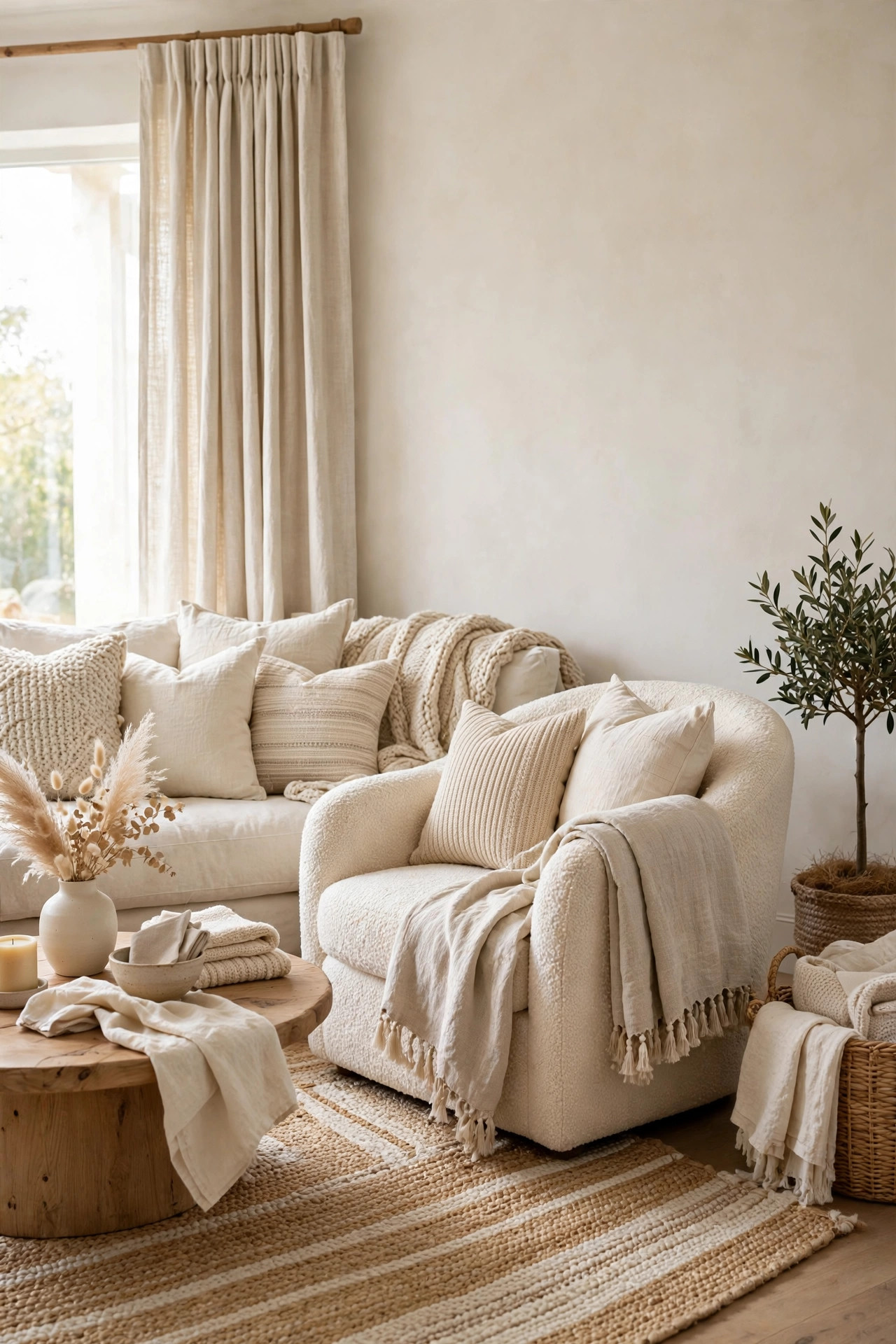
What struck me most was how many textiles shared the room without clashing. Linen curtains, a wool throw, boucle chair, jute rug, cotton pillows, all in creams and oatmeals and sands. Layering neutrals is the modern organic secret. When everything is a slightly different neutral, the room feels rich and deep instead of flat. The variety of textures does the work that color usually does. My friend admitted she built it up over two years, one textile at a time. That honesty was refreshing. Nobody’s room looks like a magazine on day one. She started with the rug, then found the curtains on sale months later. The slow way is the good way.
Build your layers gradually. Start with the rug, add curtains, then pillows and throws in a mix of textures. Stay within a tight family of warm neutrals so it stays calm. Mix nubby with smooth, matte with slightly sheeny. If it ever feels boring, add one deeper tone like camel or clay. This layering is what makes the room feel collected over time rather than decorated in a day. Take a photo of your room in black and white if you want to check your neutrals. Without color distracting you, you can see whether the tones actually harmonize. I do this with my phone and it has saved me from clashing beiges more than once.
15. Dried Floral Stems
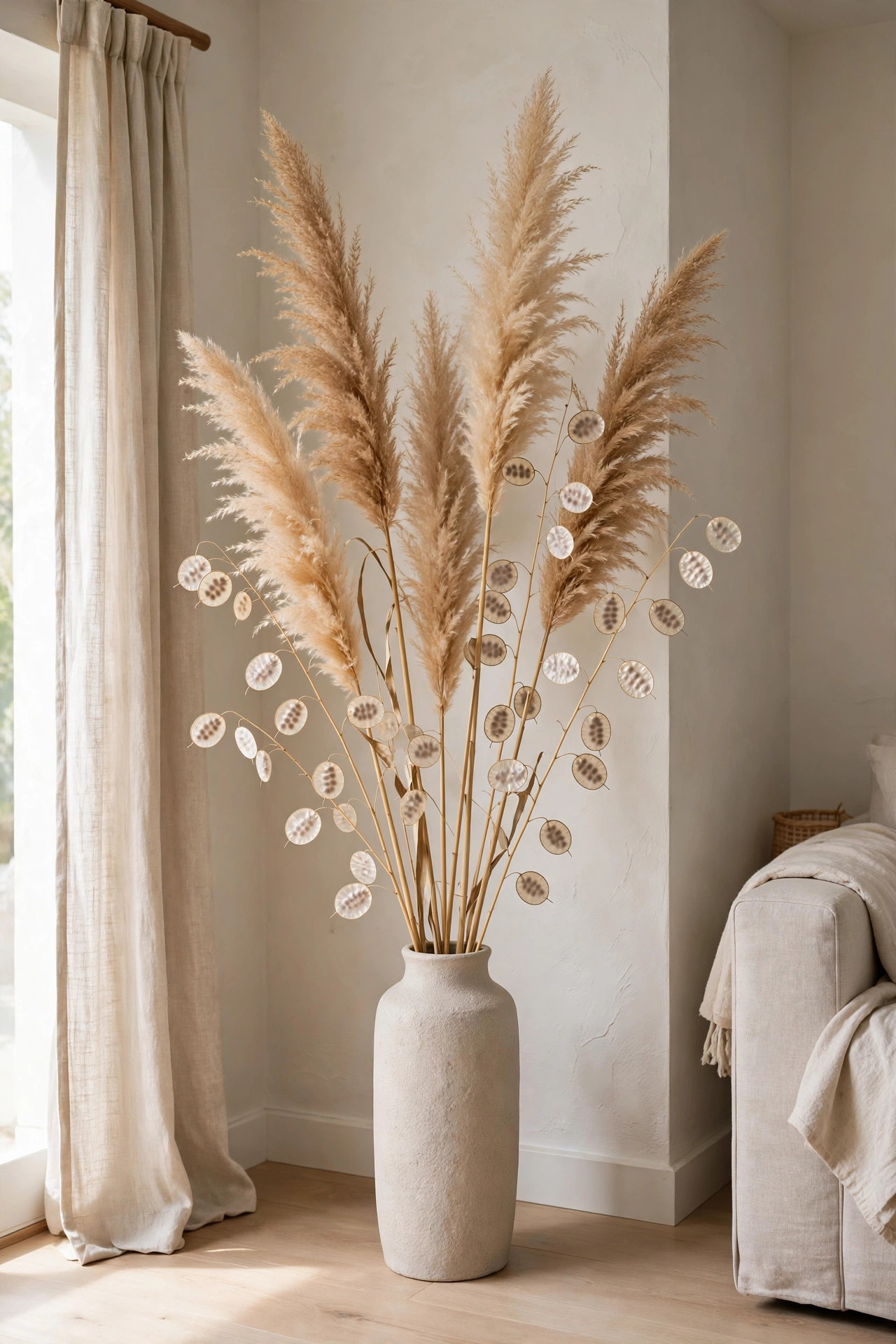
In one of the ceramic vases stood tall dried stems, pampas grass and dried lunaria, and they were stunning in their stillness. Dried florals are perfect for modern organic rooms because they last for months and their muted tones fit the palette. They add height and movement without any maintenance. There is something poetic about their fragility that fresh flowers do not have. My friend said she bought that pampas grass two years ago and it still looked the same. Two years. I did the math on what I spend on fresh flowers in two years and felt a little sick. Dried stems are the budget move nobody talks about enough.
Choose pampas grass, dried eucalyptus, bunny tails, or lunaria in natural tones. Place tall stems in a floor vase and smaller ones on shelves. Keep them out of direct sun so they do not fade fast. Shake them gently outdoors now and then to remove dust. They bring the feeling of a late summer field indoors. One caution from experience: pampas grass sheds. Give new plumes a light mist of hairspray before you bring them inside, and most of the fluff stays put. Also keep dried stems away from open flames. They are beautiful but they are also basically kindling, so candles and pampas should never share a shelf.
16. Low Profile Sofa
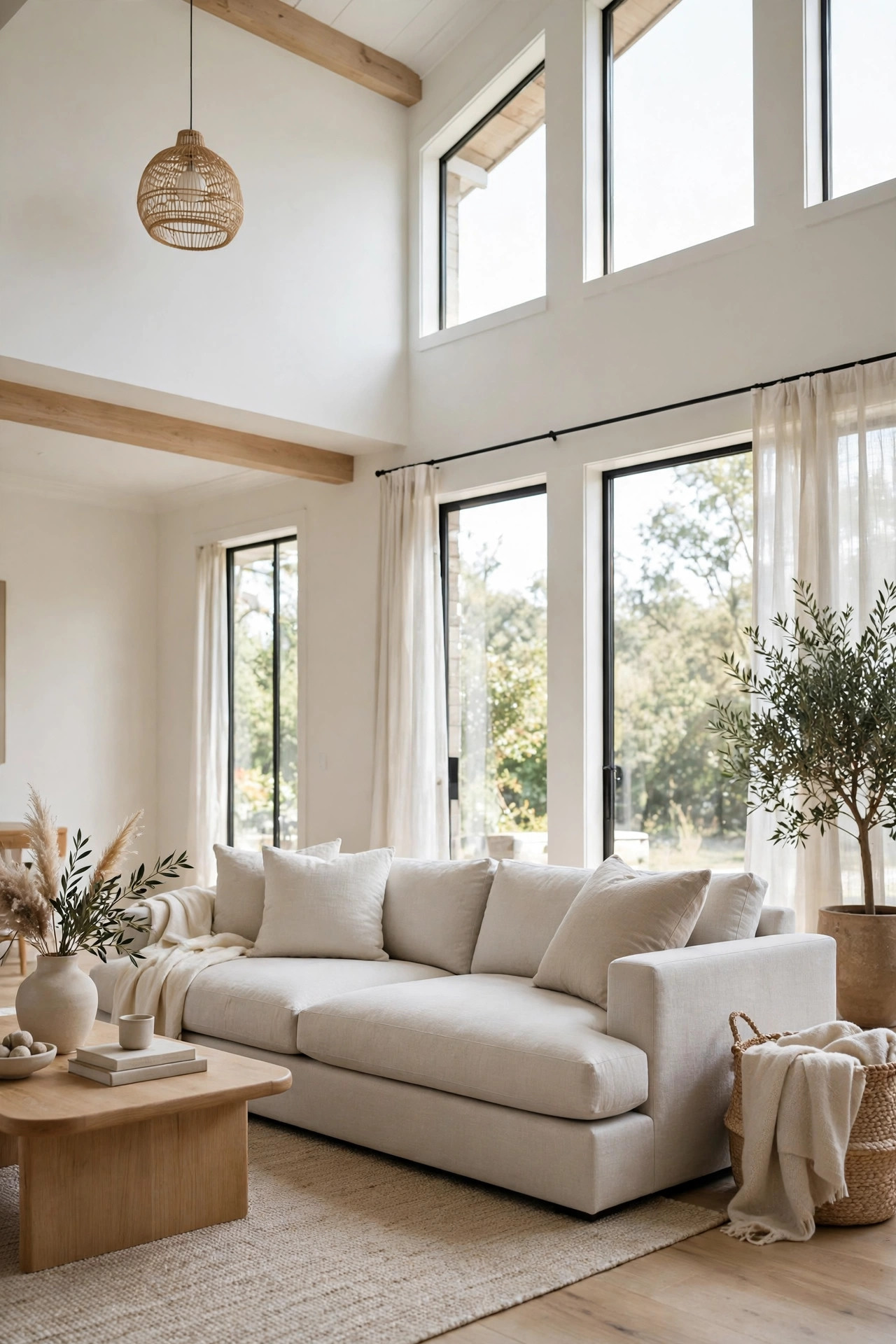
The sofa sat low to the ground, and I realized how much that changed the room’s feeling. Low profile furniture makes ceilings feel higher and rooms feel calmer. It has a relaxed, lounge like quality that invites you to sink in rather than sit up straight. In modern organic rooms, that low horizontal line echoes the horizon and feels deeply restful. It is the opposite of stiff and formal. I am tall, and low sofas usually make me feel like I am sitting in a hole. But this one had a deep seat that supported my legs properly. My friend said the trick is seat depth, not seat height. That changed how I shop for sofas entirely.
If you are sofa shopping, look for deep seats and low backs in a light neutral fabric. If you love your current sofa, lower the visual height with low profile legs or a slipcover. Pair it with a low coffee table so the proportions stay balanced. This relaxed silhouette sets the tone for the whole room. Low furniture is not for everyone. If getting up from a low sofa is hard on your knees, this trend is not worth the ache. Comfort beats style every time. But if your body is fine with it, that low lounge feeling is hard to beat on a lazy Sunday.
17. Woven Storage Baskets
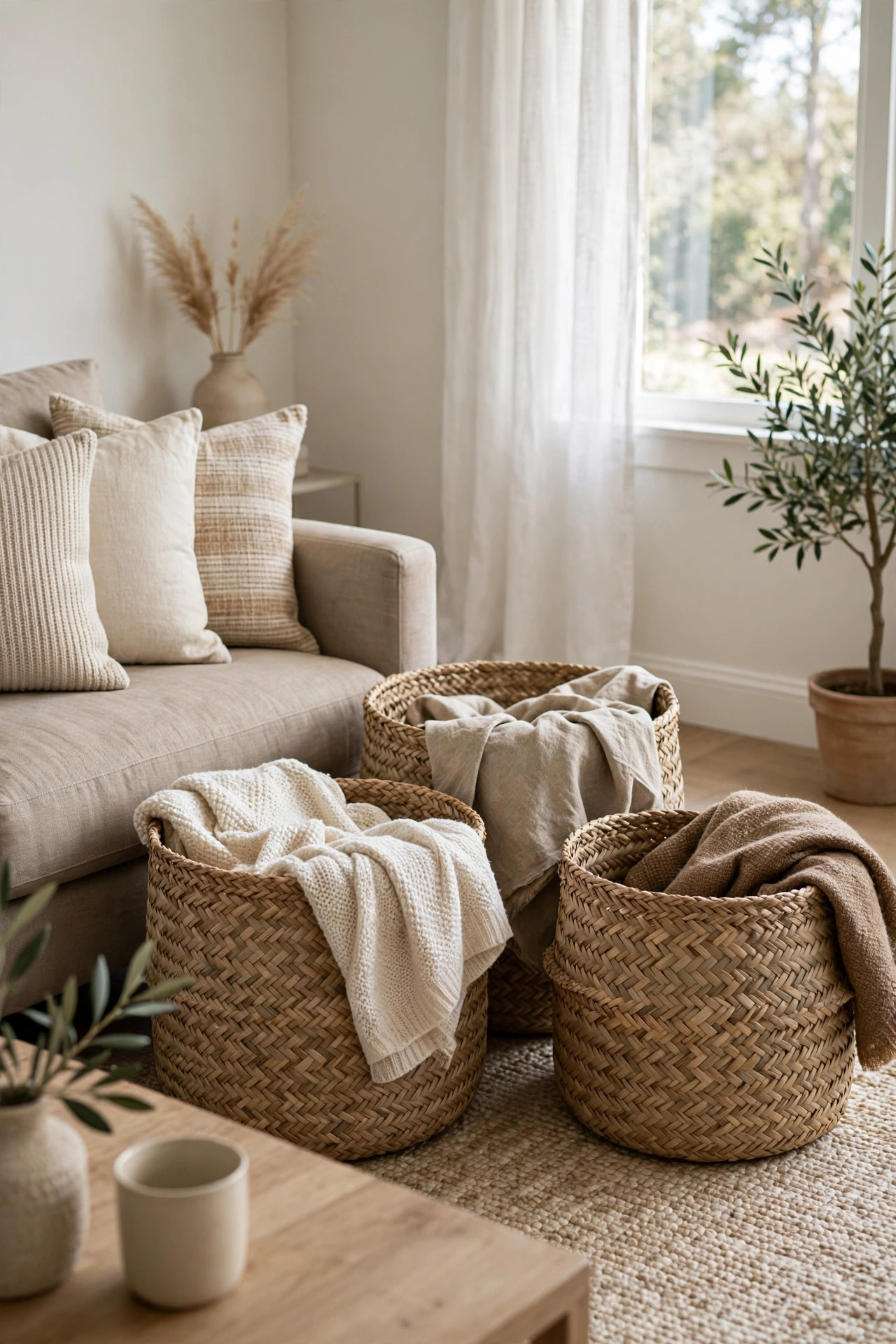
Tucked beside the sofa were large woven baskets holding throws and magazines. I appreciated how they hid clutter in something beautiful. Woven baskets in seagrass, rattan, or water hyacinth are the workhorses of modern organic storage. They corral the mess of real life while adding yet another natural texture. Everything looks better in a basket. My friend’s toddler had stuffed an entire picture book collection into one basket, and honestly it looked charming. That is the magic of baskets. They make even chaos look intentional. I have stopped fighting the mess in my own living room and just bought bigger baskets.
Use large baskets for throws, medium ones for magazines and remotes, small ones for odds and ends. Choose a consistent weave and tone so they look intentional. Place them where clutter actually happens, next to the sofa, under the console, by the door. They make tidying up feel like styling rather than chores. Check the weave before you buy. Loose weaves snag on knit throws and rough hands. I run my palm over the inside of every basket in the store. If it feels scratchy, it will eat your blankets. Tight, smooth weaves are worth the extra few dollars. And label the biggest baskets if you share the house, so everyone puts things back where they belong.
18. Limewash Accent Wall
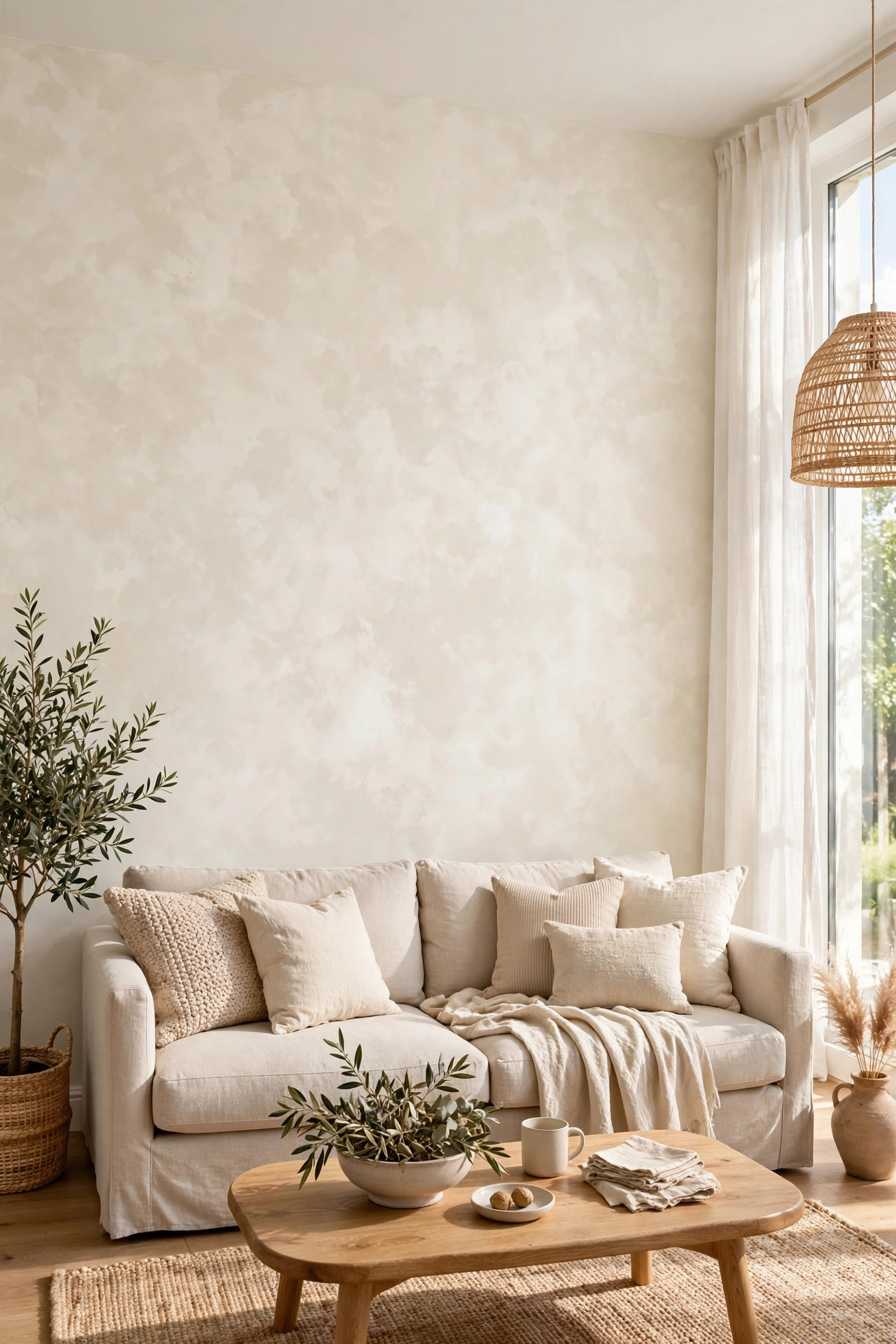
One wall wore a limewash finish, soft and cloudy like an old plaster wall in Italy. I kept looking at it because it changed as the light moved. Limewash paint creates depth and movement that flat paint never can. Its mottled texture feels ancient and handmade, perfect for the organic side of the style. In a warm white or soft beige, it adds interest without adding color. I touched the wall, I could not help it, and my friend did not even flinch. She said everyone does it. There is something about a textured wall that bypasses your manners and goes straight to your fingertips. Flat paint has never made anyone do that.
Limewash is a DIY friendly project. The paint goes on with a large brush in crisscross strokes, and the technique is forgiving. Choose one wall, ideally the one you see first when entering. Practice on a board first to get the feel. The result looks like a European villa wall and costs little more than regular paint. It is texture you can feel with your eyes. Work in small sections and step back often. Limewash looks patchy while wet and that is normal. It evens out as it dries, which feels like magic the first time. And keep a damp edge as you go, so you do not get hard lines where sections meet.
19. Sculptural Branch Decor
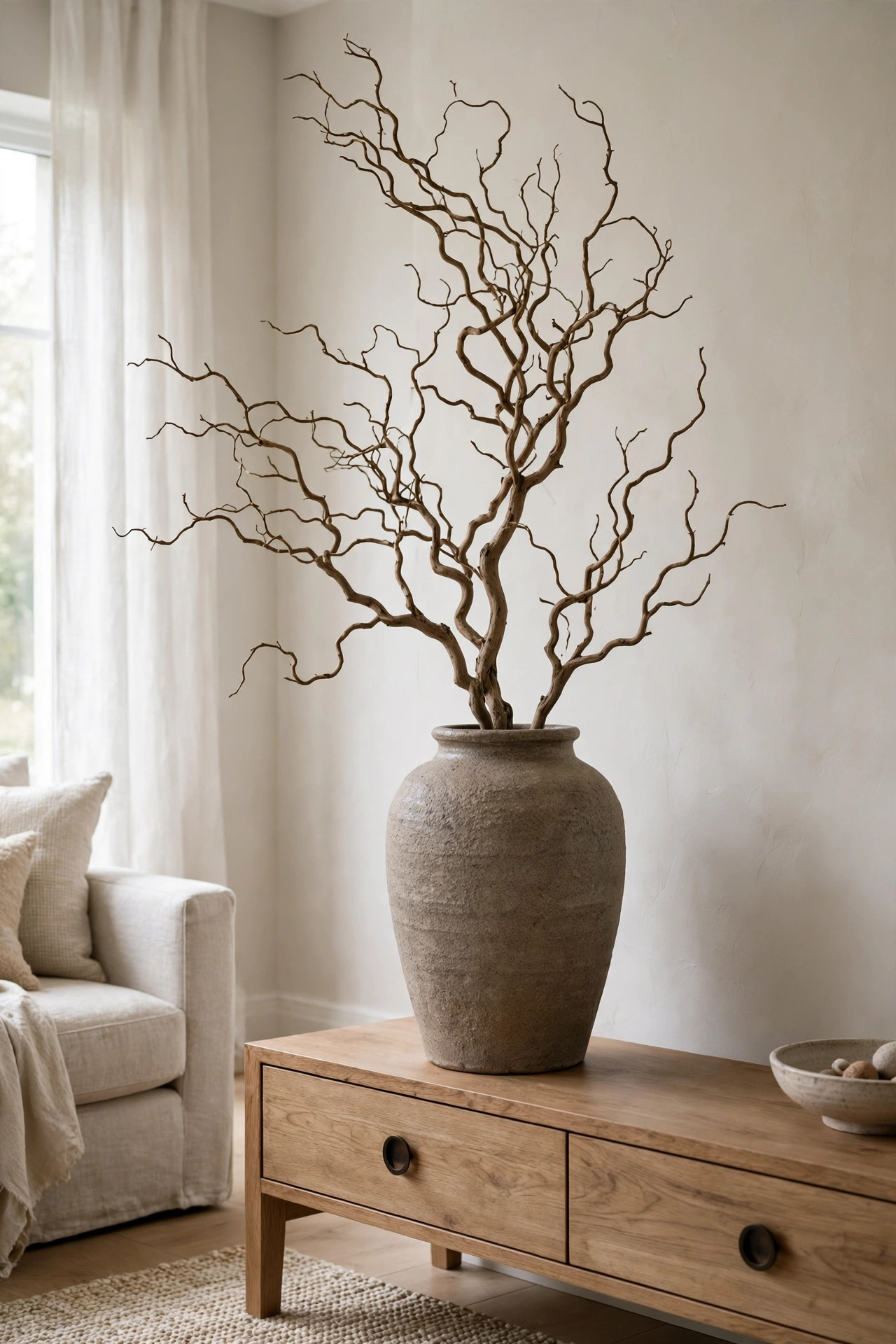
On the console stood a tall vase holding a single sculptural branch, bare and beautiful. It was the most striking thing in the room, and it cost nothing. A bare branch brings the wildness of nature indoors in its purest form. Its twisting shape is a sculpture that no artist could improve. Against the soft neutrals, its dark lines draw the eye like a drawing. My friend found hers after a storm, just lying on the sidewalk. She carried it home like a trophy and her husband thought she had lost her mind. Now it is the thing every visitor asks about. The best decor stories start with someone thinking you are a little crazy.
Find an interesting branch on a walk and let it dry fully before bringing it inside. Place it in a tall heavy vase so it cannot tip. You can leave it bare or add tiny fairy lights for evenings. Eucalyptus branches and curly willow also work beautifully. This is nature as art, free and unforgettable. Make sure the branch is fully dry and pest free before it comes inside. I leave mine in the garage for a few weeks first. Give it a shake and a good look for hitchhikers. A quick wipe with a damp cloth takes off the dust, and then it is ready for its vase.
20. Soft Rounded Rug Layer
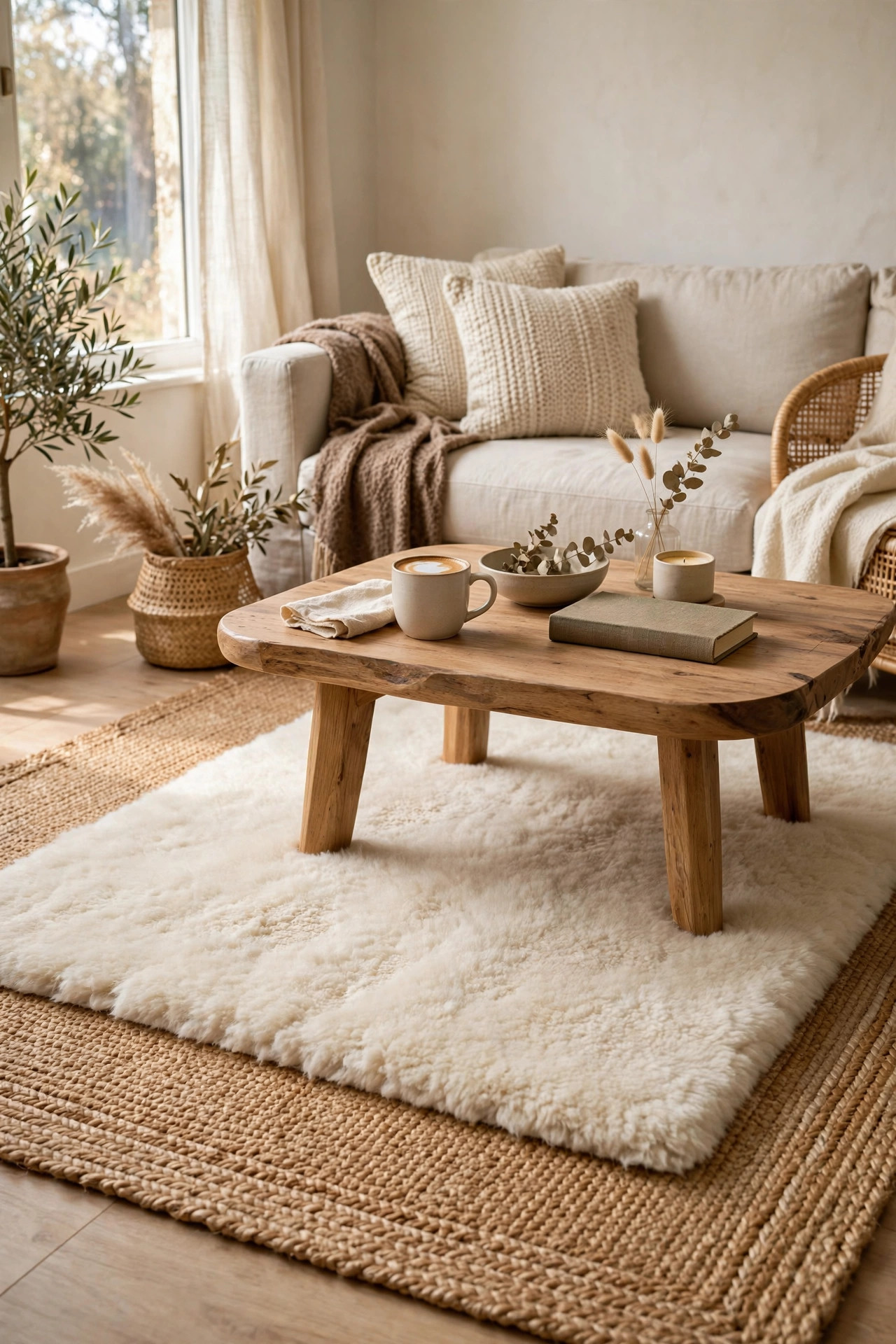
Under the coffee table, layered over the jute rug, was a smaller soft rug in cream wool. I slipped off my shoes to feel it. Layering a soft rug over a natural fiber rug gives you the best of both, the organic texture of jute and the cloud like comfort of wool. The layered edges add visual interest and make the seating area feel extra intentional. It is the finishing touch that says every detail was considered. My friend confessed the layered rug was an accident. The wool rug was too small on its own, so she put it over the jute instead of returning it. It looked so good she kept it. Some of the best design ideas come from mistakes you decide to keep.
Choose a soft rug about two thirds the size of the base rug, in cream or ivory. Wool, cotton, or a soft synthetic all work. Center it under the coffee table. Make sure the layers do not slip by using a rug pad. This final layer is pure comfort, and your feet will thank you every day. Vacuum layered rugs with the beater bar off so you do not chew up the edges. And rotate the top rug now and then so it wears evenly. Two rugs means twice the vacuuming, I will not lie, but your feet will tell you it is worth it.
Conclusion
I left my friend’s house that day determined to bring that feeling home, and now you have the same 20 ideas I started with. You do not need all of them. Pick the three that made your heart beat a little faster, start this weekend, and let your room grow warmer one natural layer at a time.
FAQs
What is modern organic decor exactly?
It is a style that mixes clean modern lines with natural materials and textures. Think curved furniture, real wood, stone, linen, and plants, all in a warm neutral palette. It feels minimal but cozy, never cold or stark.
What colors work in a modern organic living room?
Warm neutrals are the foundation, cream, oatmeal, sand, beige, and soft white. Add depth with camel, clay, warm gray, and natural wood tones. Green from plants is the perfect accent. Avoid harsh whites and cool grays, which fight the warmth.
Is modern organic decor expensive to achieve?
Not necessarily. Natural materials like jute, wood, and clay are often affordable. Thrift stores are full of wood furniture and handmade ceramics. Start with a jute rug and linen curtains, which give you the feeling for very little money.
How is modern organic different from minimalism?
Minimalism can feel cold and empty, while modern organic is warm and layered. Both value simplicity, but modern organic embraces texture, natural imperfections, and cozy layers. It is minimalism you can sink into.
What furniture shapes suit this style?
Curved and rounded shapes, arched mirrors, round coffee tables, curved chairs. Soft lines echo nature and balance the straight lines of walls and windows. Even one curved piece can shift a whole room toward the style.
Can I mix modern organic with my existing decor?
Yes, it mixes beautifully. Add natural textures like a jute rug, wood accents, and linen textiles to whatever you have. Remove anything cold or overly shiny. The style is forgiving because it is about feeling, not rules.