I’ll be honest. For years I thought pendant lights were just decoration, the kind of thing you pick in five minutes and never think about again. I bought three cheap pendants for my kitchen island because the shades looked nice in the store. Once they were up, the light was so dim I could barely see the cutting board, and they hung so high they looked like they were trying to escape the room.
That was my first lesson: pendant lights are not just pretty shapes. They decide how your kitchen feels at seven in the morning and how your dining room feels when friends stay late for dinner. Since then I have changed the pendants in my own kitchen twice, helped two friends pick theirs, and made every mistake in the book so you do not have to.
These 15 pendant light ideas are the ones I wish someone had handed me back when I was standing in the lighting aisle with no clue. Some are about style, some are about the practical rules that nobody tells you, and all of them come from real rooms, not catalogs.
Start with the kitchen island, because that is where most people hang their first pendant and get it wrong.
1. Three Matching Pendants Over the Island
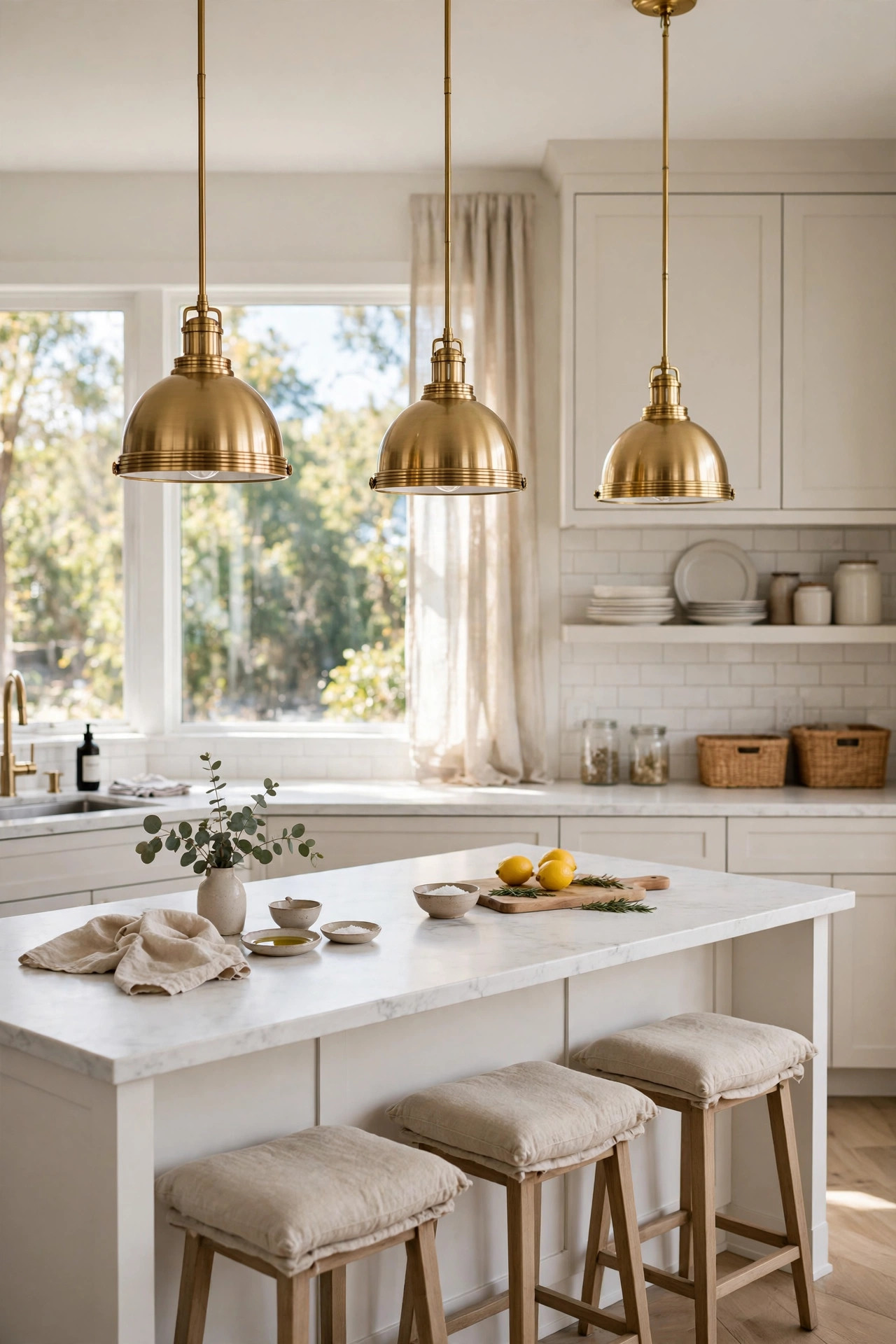
When my sister redid her kitchen she asked me if one big pendant or three small ones would look better over her island. I told her to try three matching ones, and it was the right call. Three pendants in a row give you even light across the whole counter, so you are not chopping vegetables in a shadow. They also look balanced from every angle in an open plan kitchen, which one big light never quite does.
The trick is to space them evenly. Leave about 24 to 30 inches between each shade, and make sure the end ones sit at least six inches in from the edge of the island. Keep all three exactly the same, same shade, same bulb, same height, because mixing them just looks messy. This is the safest pendant idea there is, and sometimes safe is exactly what a kitchen needs.
2. Oversized Drum Pendant as the Star
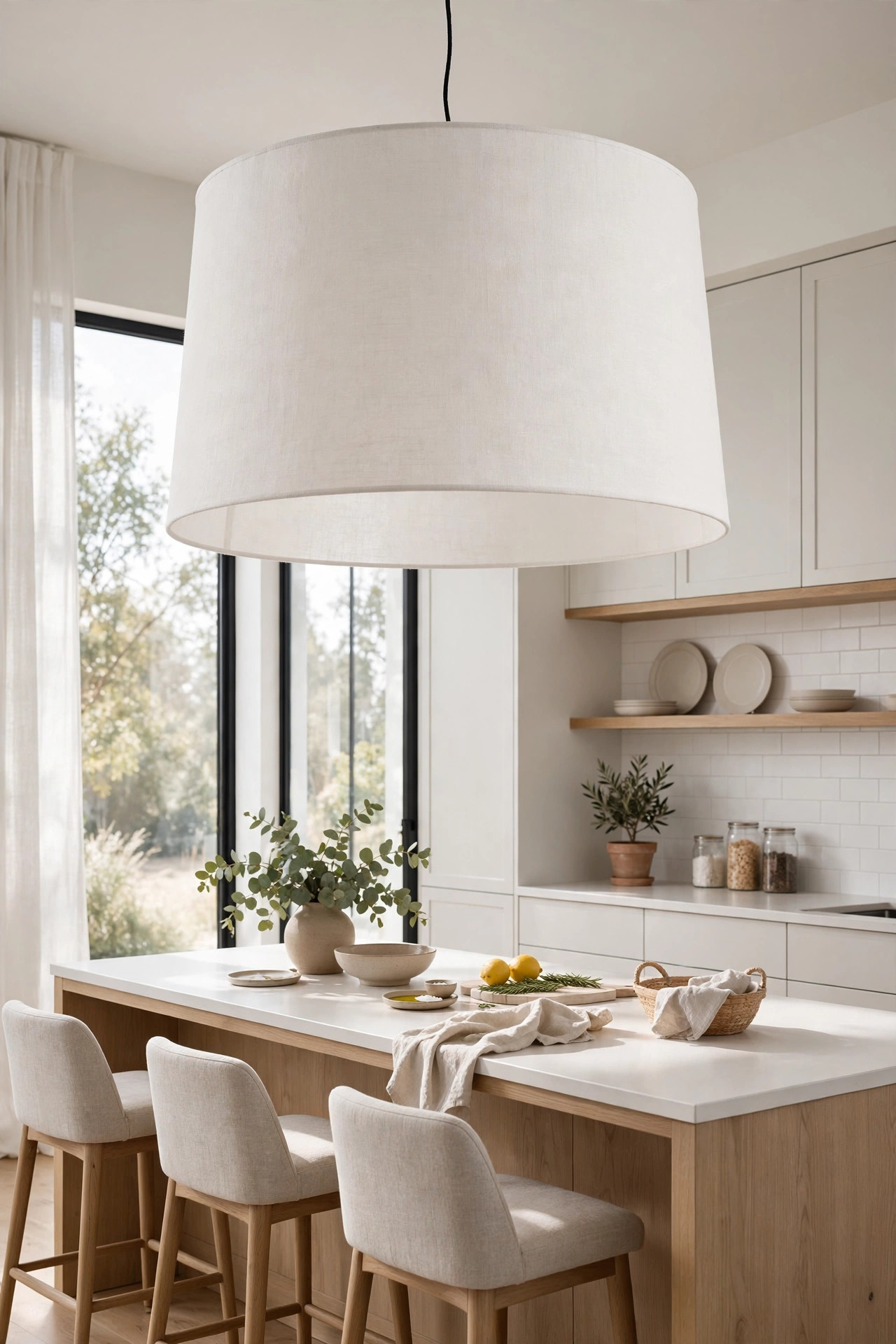
A friend of mine has a small kitchen with a big personality, and she went against my advice and hung one giant drum pendant over her island. I ate my words the minute I saw it. An oversized shade fills the space above the counter in a way that makes the whole kitchen feel styled, like the pendant is a piece of art instead of just a light.
This works best when the rest of the kitchen is simple. If your cabinets are plain and your counters are quiet, a big drum shade gives the eye somewhere to land. Just check your ceiling height first. A shade that wide needs at least eight feet of ceiling so nobody feels like they are about to bump into it.
3. Glass Pendants That Disappear
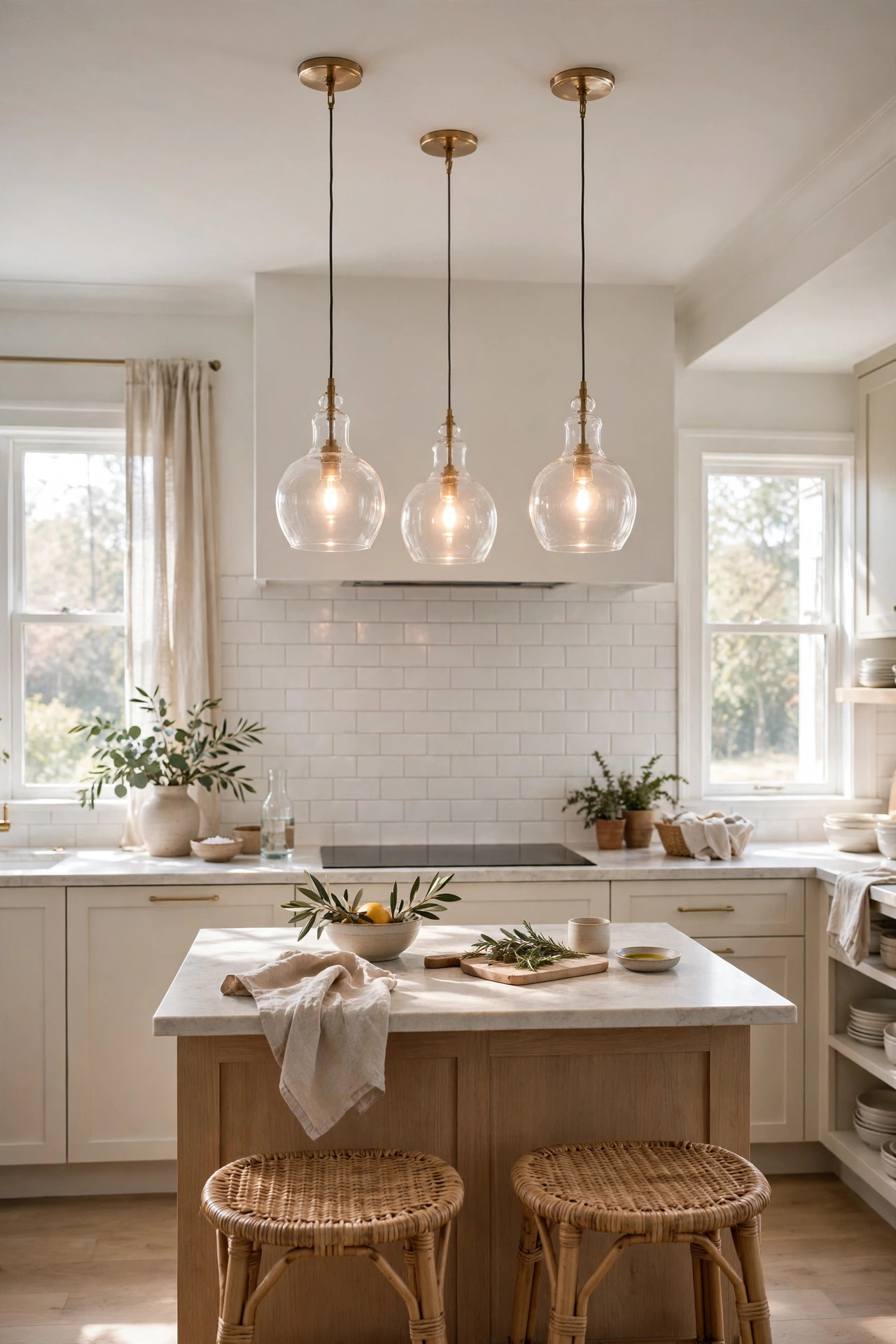
My cousin has a tiny kitchen with low ceilings, and glass pendants saved her. Clear glass shades give you the light and the layered look of a pendant without blocking your view across the room. From the living room side of her open plan space, you barely notice them, and the kitchen feels bigger for it.
The only downside is that glass shows everything. Fingerprints, dust, the dead bugs that somehow find their way inside, you will see all of it. I wipe mine down once a month and it takes two minutes, so do not let that scare you. Pick clear glass over frosted if you want the disappearing act, and use a pretty bulb because everyone will see it.
Dining rooms play by different rules. The light hangs lower, the mood matters more, and this is where you can have a little fun.
4. Linear Pendant Over a Long Table
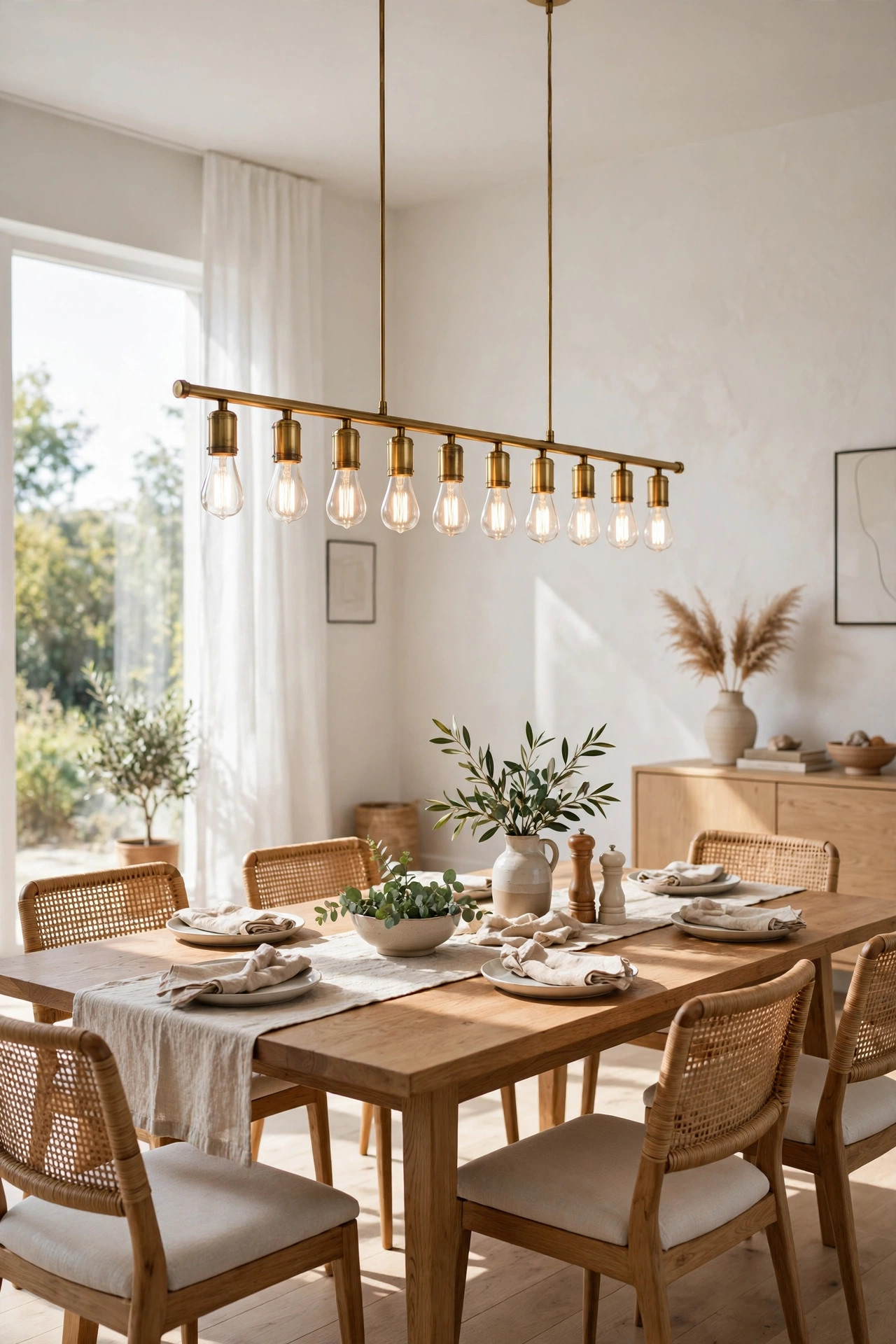
Long rectangular dining tables and single round pendants do not get along. I learned this at a dinner party where one lonely pendant lit up the middle of a ten foot table while both ends sat in the dark. A linear pendant, one long bar with several lights built in, fixes that problem completely.
It throws even light down the whole length of the table, so nobody eats in a shadow. Measure your table first and pick a fixture that is about two thirds as long as the table itself. Hang it 30 to 36 inches above the tabletop, and your dining room will feel like it was planned by someone who knows what they are doing.
5. Cluster of Small Pendants at Mixed Heights
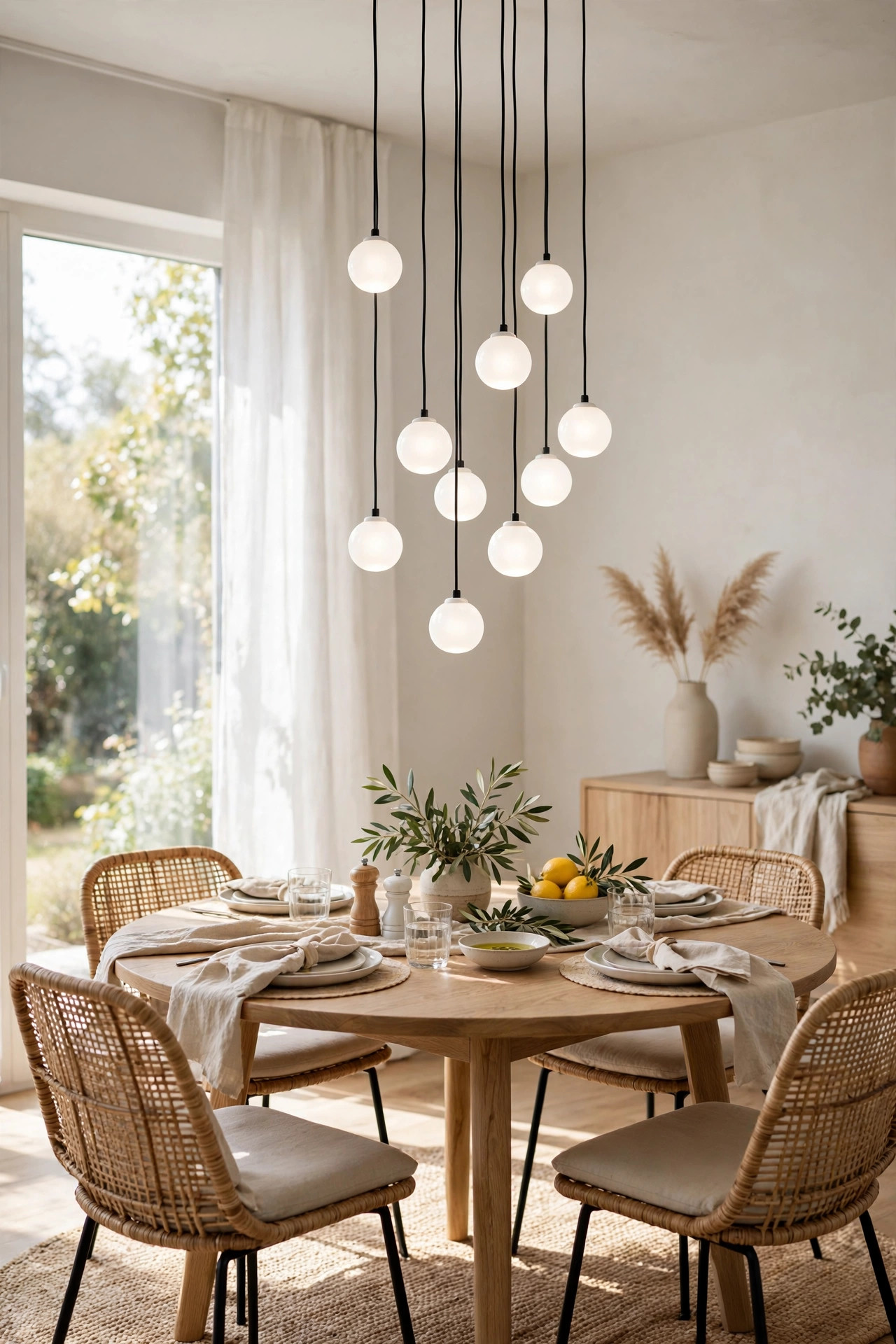
If your dining room needs some personality, a cluster of small pendants at different heights is my favorite move. I saw this in a restaurant once, a bunch of little globe lights hanging at staggered heights over one table, and I came home and copied it in my own dining room that same month.
The trick is to keep it intentional. Group three to seven pendants, vary the heights by about six inches, and keep the shades matching so it looks playful but not chaotic. Odd numbers work best. This idea is forgiving too. If one pendant hangs a little off, the whole arrangement still looks good.
6. Woven Rattan Pendant for Warmth
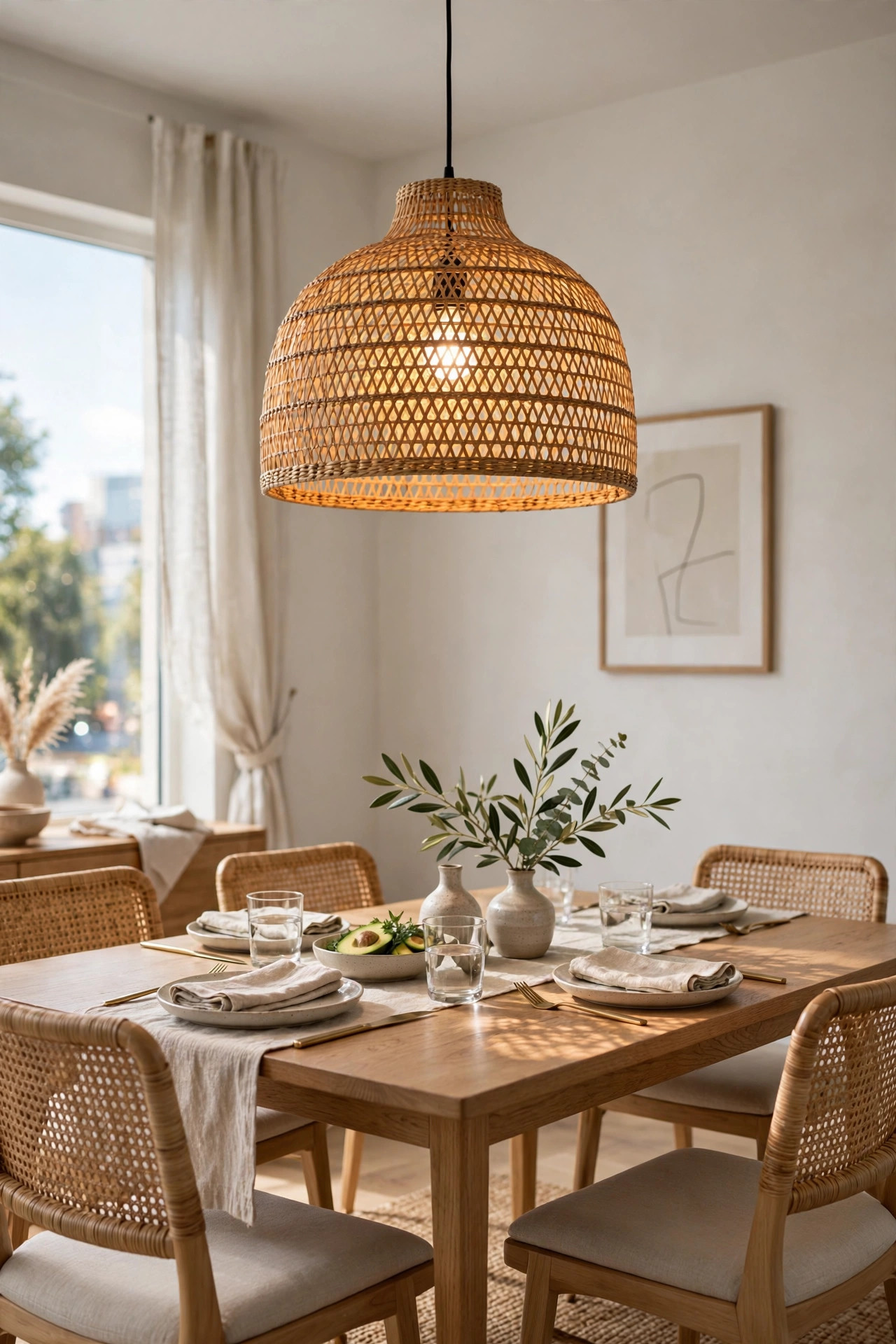
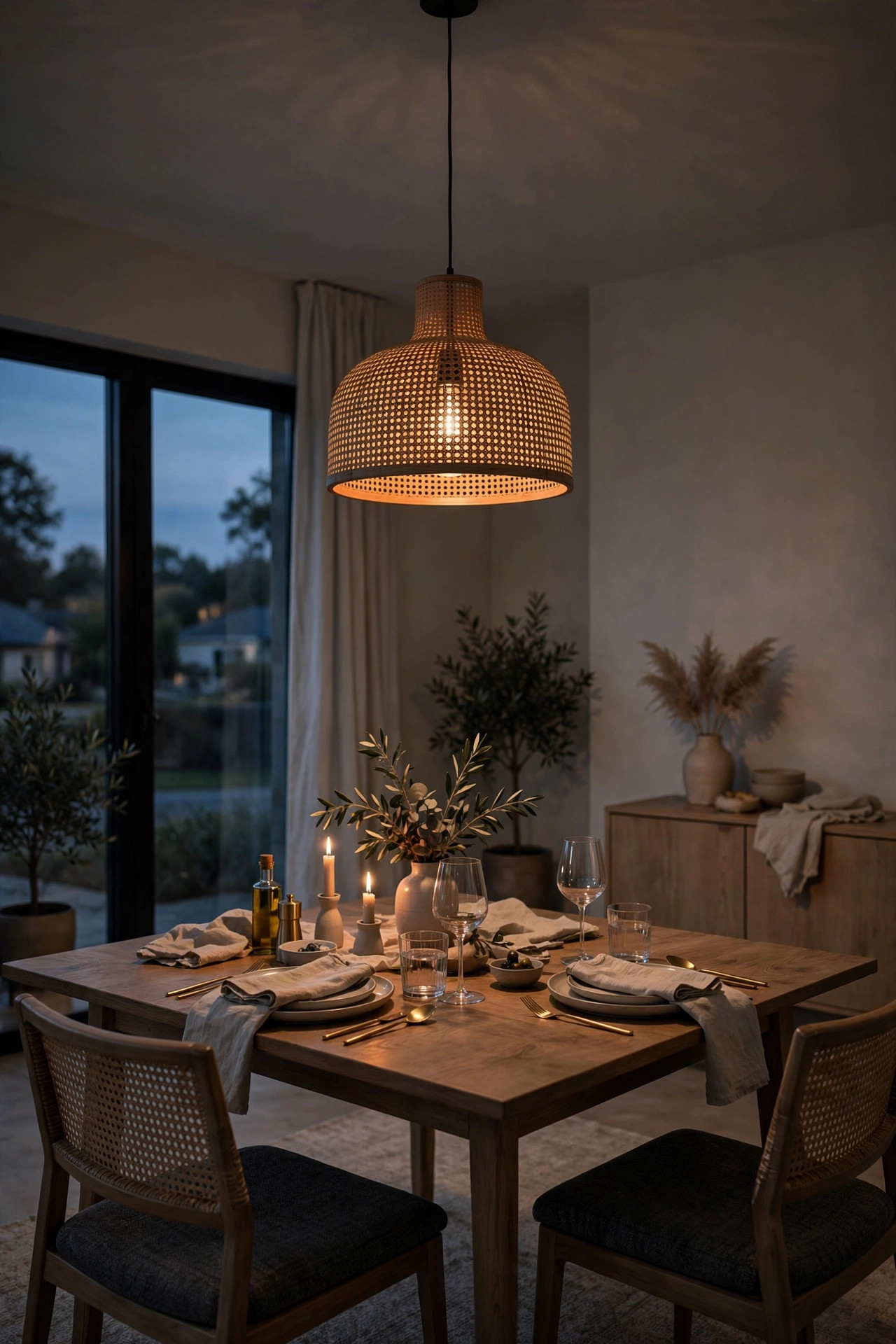
Nothing changes the mood of a dining room faster than a woven rattan pendant. I put one over my own dining table two years ago, and every single guest asks about it. The woven texture softens the room in a way metal and glass never do, and when the bulb is on, the light filters through the weave and throws the prettiest patterns on the walls.
Rattan works with almost any style too. It fits a coastal room, a farmhouse room, even a modern room that needs one warm piece. Just size it right. The shade should be about half to two thirds as wide as your table. And pick one with an open weave if you want more light, or a tight weave if you want more shadow play.
7. Black Metal Dome Pendants
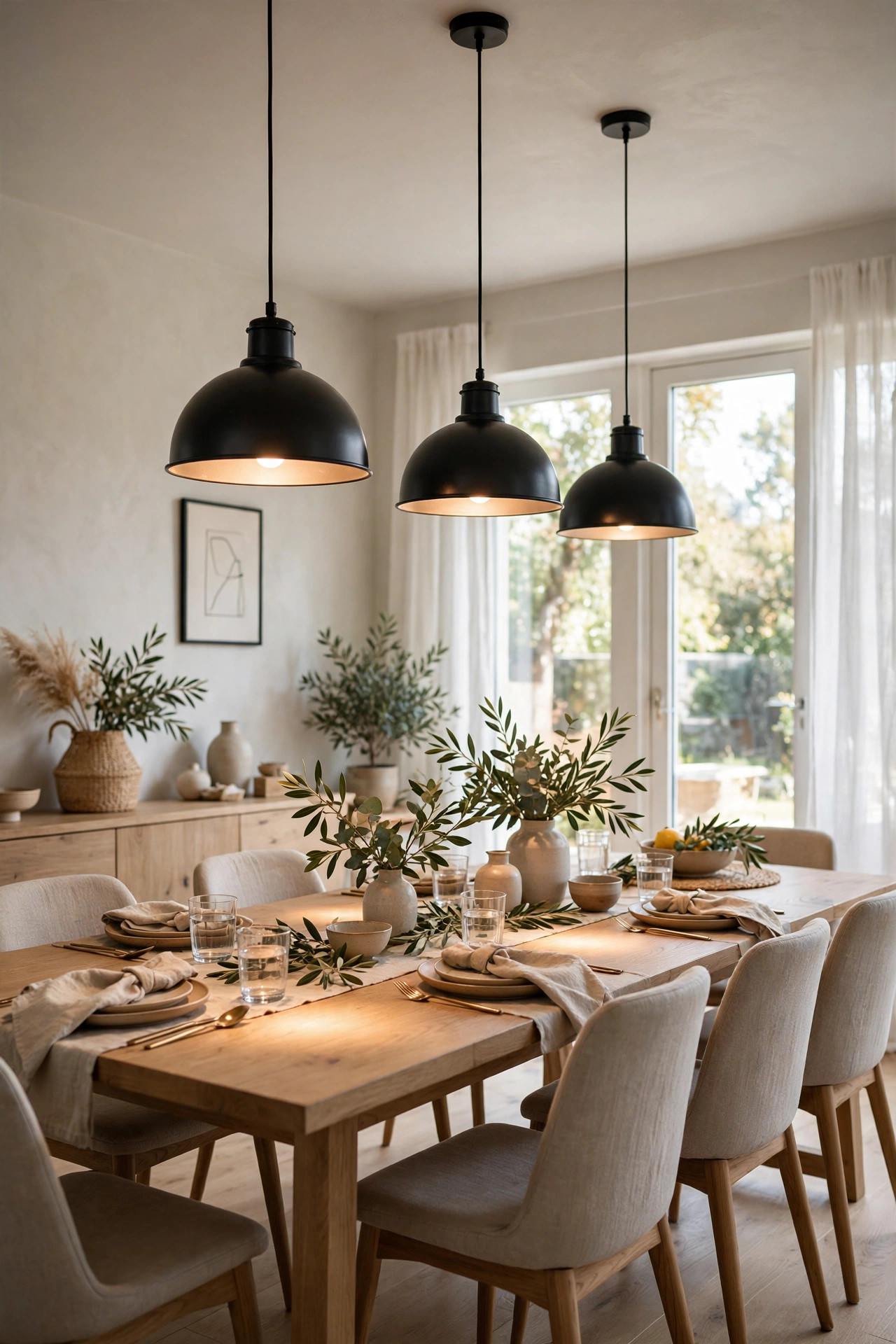
There is something about black dome pendants over a dining table that always looks right. I have seen them in farmhouse rooms, industrial lofts, and plain white kitchens, and they work everywhere. The dome shape pushes light straight down onto the table, which is exactly where you want it when you are eating.
Black is also the easiest color to live with. It does not show dust, it matches any hardware, and it never clashes with your chairs or your rug. If you are scared of picking the wrong finish, black domes are the safe bet that does not look boring. Hang two or three in a row over a long table and call it done.
Here is the practical stuff nobody puts on the pretty idea lists, but these four tips changed my rooms more than any shade style ever did.
8. Hang Them 30 Inches Above the Counter
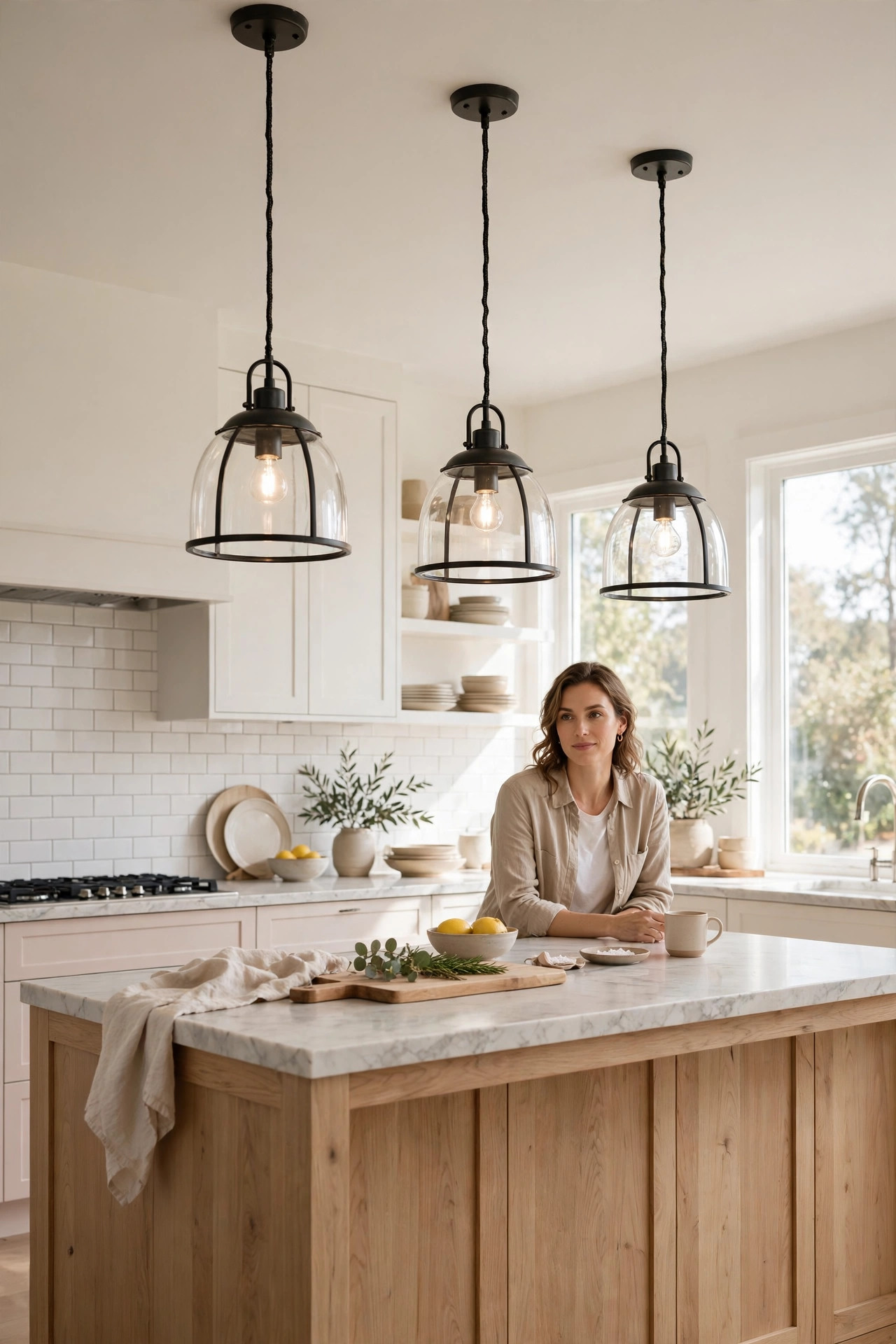
This is the rule I broke in my first kitchen, and it cost me a year of bad lighting. Pendant lights over a kitchen island should hang with the bottom of the shade 30 to 36 inches above the countertop. Any higher and the light spreads too thin. Any lower and tall people hit their heads and the shades block your view across the room.
I know measuring sounds fussy, but do it once and you are done forever. Have someone hold the pendant while you stand at the island and check the sightline from the other side of the room. You want the light low enough to feel intimate but high enough that you can see the face of whoever is cooking with you. Thirty inches is my sweet spot.
9. Pick Warm Bulbs for Dining
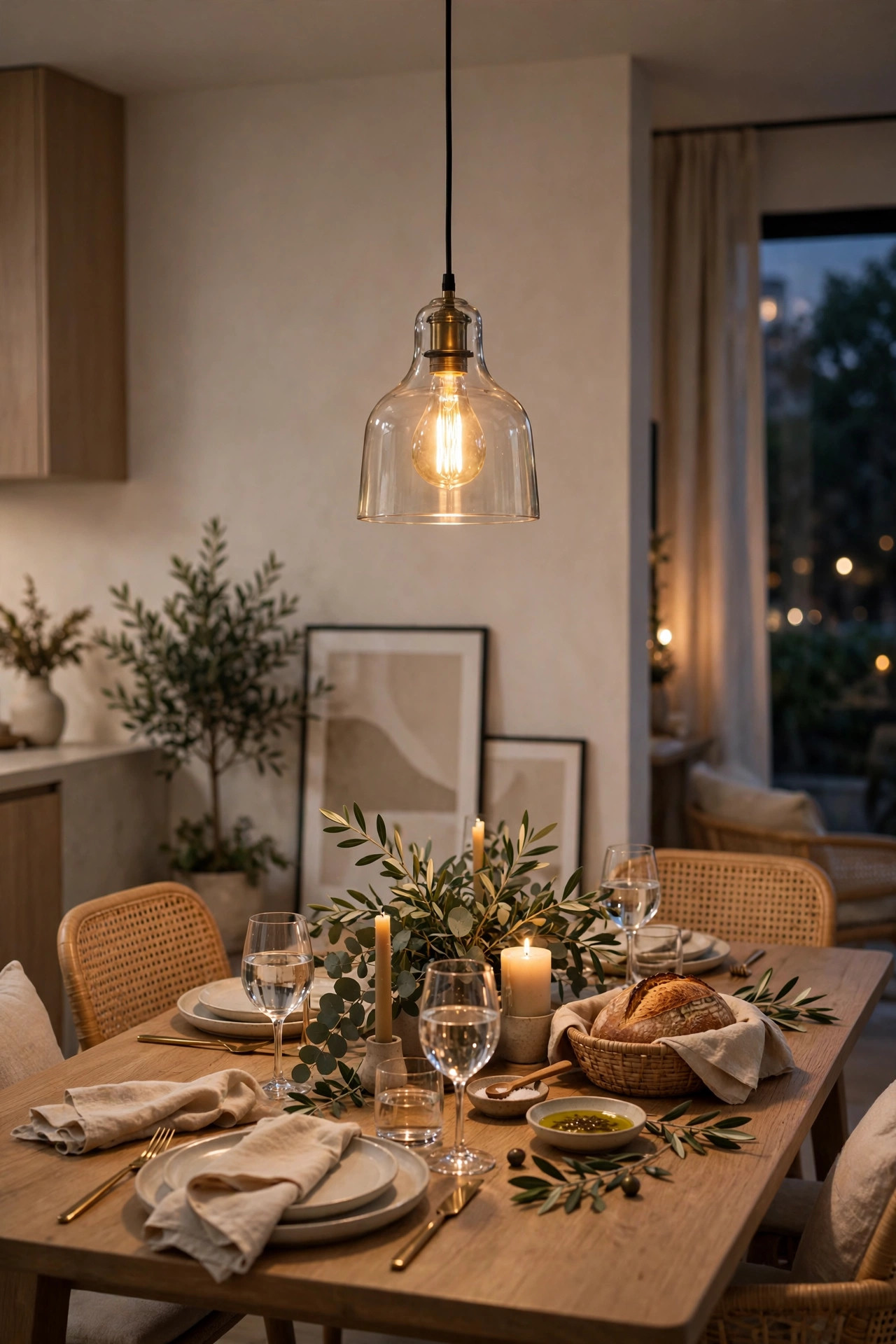
The fanciest pendant in the world will still make your dining room feel like an office if you put a cold blue bulb in it. I made this mistake in my dining room and wondered for a month why dinner felt so unwelcoming. Then I swapped the bulbs for warm ones at 2700K and the room changed overnight.
Warm light flatters food, faces, and paint colors. It makes white wine glow and makes everyone look a little better, which is never a bad thing at dinner. Look for the Kelvin number on the box. Anything from 2700K down to 2200K will give you that cozy candlelit feel. Anything above 3000K belongs in a workspace, not over your table.
10. Put Dining Pendants on a Dimmer
If I could only give one piece of pendant advice, this would be it. Put your dining room pendants on a dimmer switch. Bright light for homework and board games, low light for dinner and conversation. One fixture, two completely different rooms, all for the price of a dimmer switch and an hour of an electrician’s time.
Make sure your bulbs are dimmable too, because not all LED bulbs are, and a non dimmable bulb on a dimmer will buzz and flicker. Check the box before you buy. I dim my dining pendants to about half for weeknight dinners, and it is the single best money I have spent on my house.
11. Match Pendant Finish to Cabinet Hardware
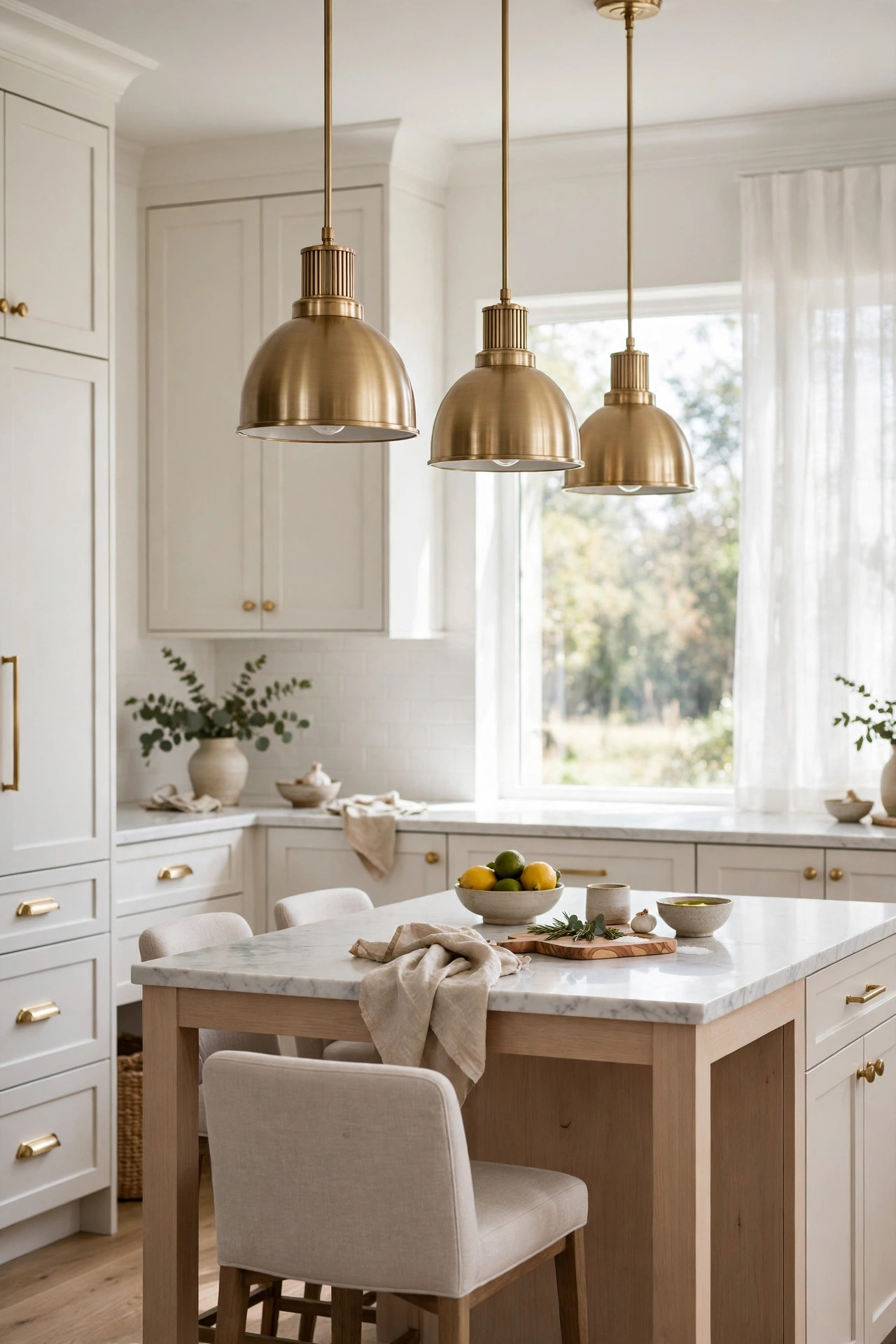
This sounds like a tiny detail, but it is the difference between a kitchen that looks pulled together and one that looks random. When I changed my cabinet hardware from chrome to brushed brass, my old chrome pendants suddenly looked like strangers. I swapped the pendants to match and the whole kitchen snapped into place.
You do not need an exact match. The finish just needs to be in the same family, warm with warm, cool with cool. Black hardware pairs with black pendants, brass knobs pair with brass or gold pendants, nickel handles pair with silver or glass. If you are ever unsure, black goes with everything.
These last four are the looks I keep coming back to, the ones I recommend when someone asks me what I would actually pick.
12. One Statement Pendant in a Small Kitchen
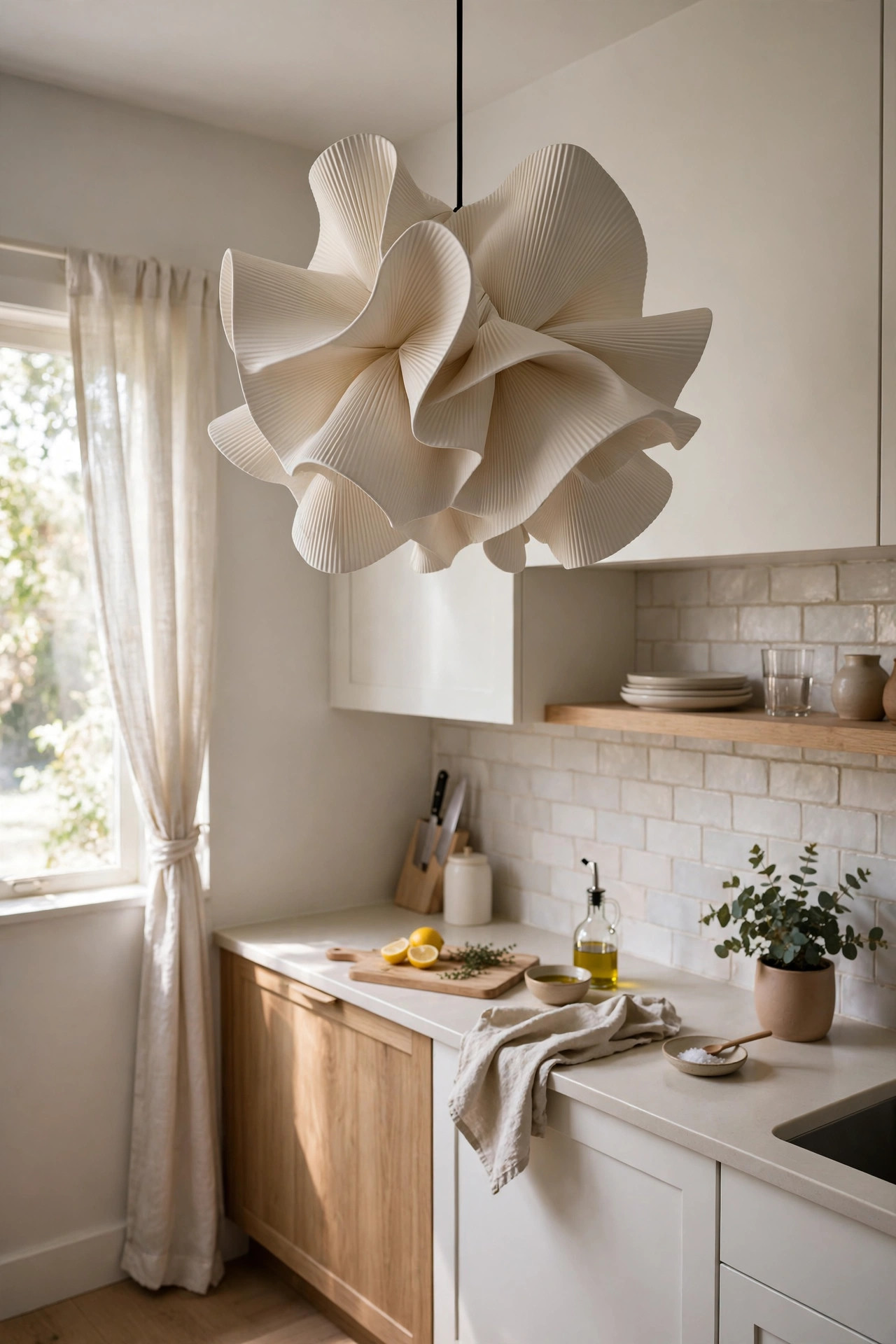
Small kitchens do not need three pendants. One good one is plenty. My old apartment kitchen had about six feet of counter and one single pendant over it, and it was perfect. A single statement pendant gives a small kitchen a focal point without crowding the ceiling.
Go bold here since you only get one. Pick an interesting shape, a fun material, or a color that pops against your cabinets. Hang it centered over the main work area and keep the rest of the ceiling clear. In a small kitchen, one pendant that you love beats three pendants that are just fine.
13. Brass Pendants With Marble Counters
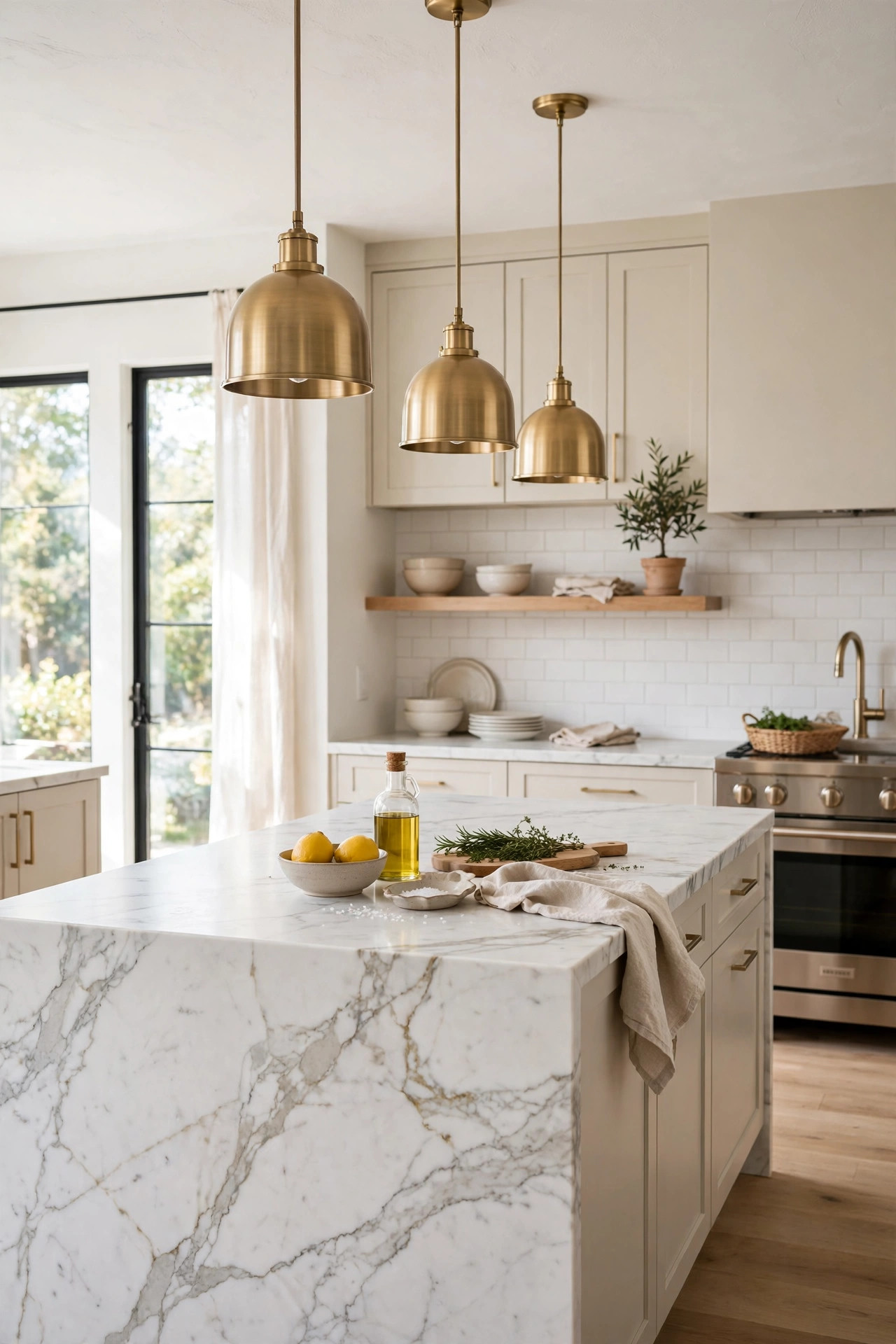
Brass and white marble are the combination I recommend most, and I have never heard a regret. The warm gold of the brass softens the cool white of the marble, and the whole kitchen feels expensive without trying too hard. My neighbor has this exact pairing and her kitchen photographs like a magazine.
The key is to keep the brass muted. Brushed or aged brass looks rich. Shiny polished brass can look loud, especially in a bright kitchen. Two or three brass pendants over a marble island is the classic move, and if your faucet and hardware are brass too, the whole room will sing.
14. White Pendants in a Dark Kitchen
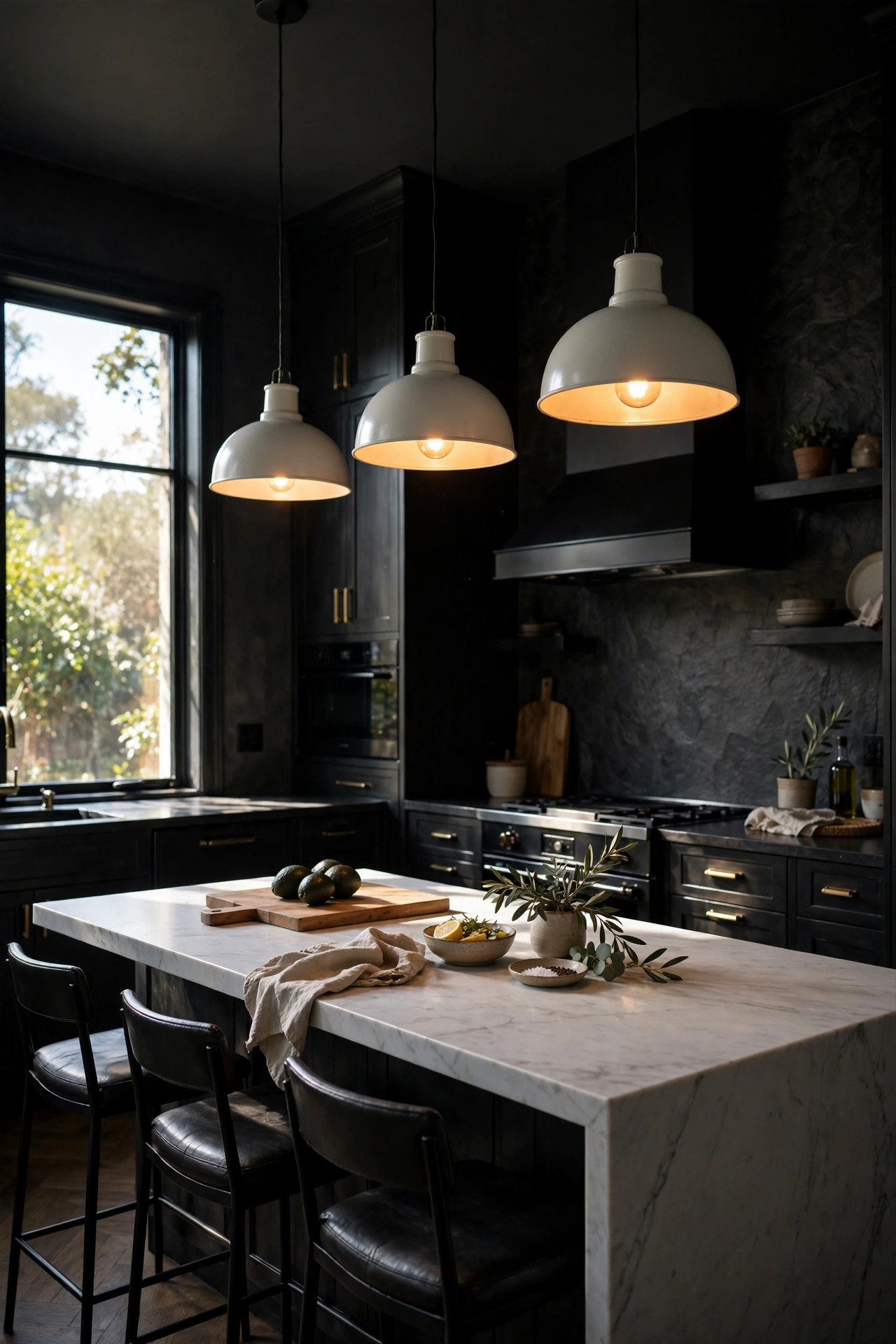
Dark kitchens are beautiful until you realize they can feel like a cave. My brother painted his kitchen cabinets charcoal and then wondered why the room felt so heavy. White pendants fixed it. They catch the light and give the eye bright spots to rest on, which lifts the whole room.
White shades also bounce light back down onto dark counters, so you actually get more useful light for cooking. Pick a simple shape, a dome or a cone, and keep them bright white, not cream. Against dark cabinets the contrast looks crisp and modern, and the kitchen stops feeling closed in.
15. Vintage Edison Pendants Over a Farm Table
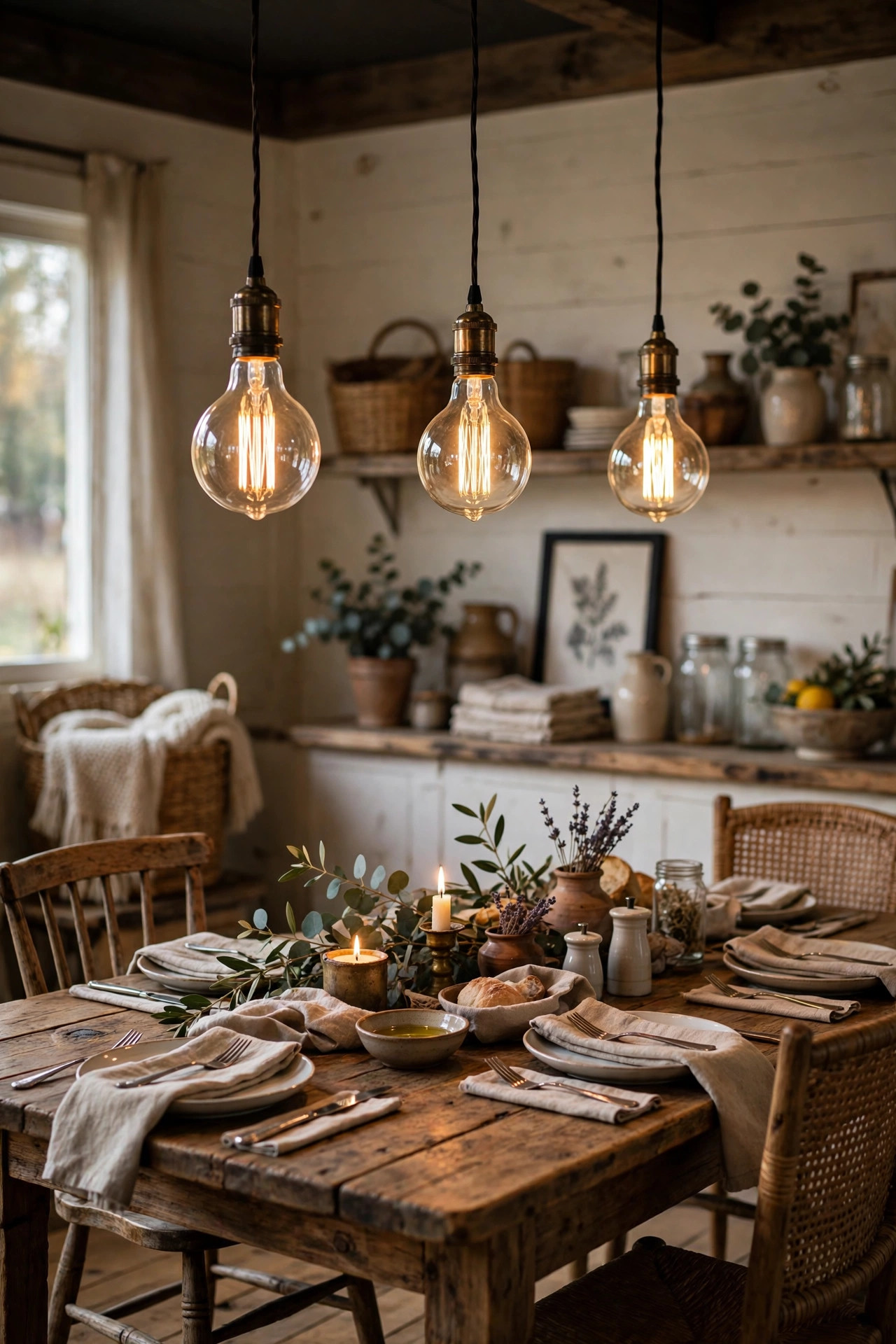
There is no cozier dining room move than Edison bulbs glowing over a farmhouse table. I have this in my own dining room right now, simple black cords, clear glass shades, and those big vintage bulbs with the visible filaments. At night it feels like eating by candlelight, only you can actually see your food.
Edison bulbs are dimmer than regular bulbs, so plan for that. Use two or three pendants over the table instead of one, and keep them a little lower than usual so the light lands where you eat. The filaments are the star here, so skip heavy shades and let the bulbs show. This look only gets better with a wood table underneath it.
If I had to pick one idea for my own home from this whole list, it would be the dimmer switch, honestly. All the pretty shades in the world do not matter as much as being able to turn the light down when dinner is ready. But if we are talking looks, the rattan pendant over my dining table is still my favorite thing in my house.
Pick the idea that fits your room and your budget, measure twice before you hang anything, and use warm bulbs. If you do those three things, your pendant lights will be doing their job. And if you hang them too high like I did the first time, just laugh and move them. That is what I did.
FAQs
How many pendant lights do I need over a kitchen island?
For a standard island of six to eight feet, three pendants spaced evenly is the classic answer and it rarely looks wrong. As a rule of thumb, plan on one pendant for every two feet of island, and keep the end pendants at least six inches in from the edges. For a short island under five feet, one or two pendants will do the job without crowding the space.
How low should pendant lights hang over a dining table?
The bottom of the shade should sit 30 to 36 inches above the tabletop. This is low enough to feel cozy and to light the table well, but high enough that you can see across the table when you are seated. If your ceilings are very high, you can go a little lower, but never hang them so low that they block your view of the person across from you.
Can pendant lights provide enough light on their own?
Pendants give you focused light over the island or the table, but they do not light a whole room by themselves. In a kitchen, pair them with recessed ceiling lights or under cabinet lighting so the corners do not go dark. In a dining room, a pair of wall sconces or a floor lamp in the corner fills in the rest. Think of pendants as the main task light, not the only light.
What size pendant shade should I choose?
Over a dining table, the shade should be about half to two thirds as wide as the table. Over a kitchen island, keep the shade narrower than the depth of the island so nobody bumps into it while working. When in doubt, go one size smaller than you think. A pendant that is slightly small looks fine, but one that is too big takes over the room.
Are glass pendant lights hard to keep clean?
Glass shows fingerprints and dust more than any other shade, but cleaning them is easy. I wipe mine with a damp microfiber cloth once a month and it takes two minutes per shade. Avoid frosted glass if cleaning bothers you, because it shows smudges even more. Honestly, the light you get from clear glass is worth the small effort.
Do pendant lights work with sloped ceilings?
Yes, they work fine as long as you buy fixtures made for sloped ceilings or add a sloped ceiling adapter. The adapter lets the cord or rod hang straight down instead of at an angle. Check the product details before you buy, because not every pendant includes one. With the right adapter, a pendant hangs just as straight on a slope as it does on a flat ceiling.