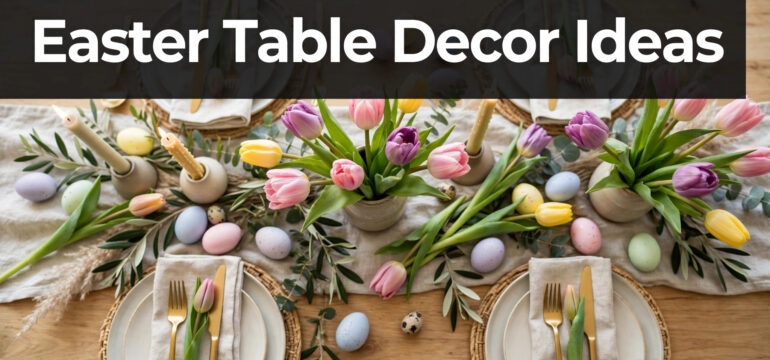
This spring, Easter table design is leaning soft and romantic. Stylists are moving away from loud, cartoonish Easter prints and toward layered pastels, real flowers, and textures that feel like a fresh garden. The look is calm, light, and quietly festive, the kind of table that photographs beautifully and feels even better in person. The big trend this season is mixing. Mixing high and low candlelight, old and new pieces, formal whites with casual gingham. Tables that feel collected rather than staged are everywhere in spring editorials right now. That is good news for you, because a collected table is much easier to build from things you already own. Here are 19 ideas that bring all of that together. Each one is simple to style with a few fresh flowers and everyday pieces from your own home. Pick the looks you love and build a table that feels like spring itself.
1. Soft Pastel Layered Tablecloths
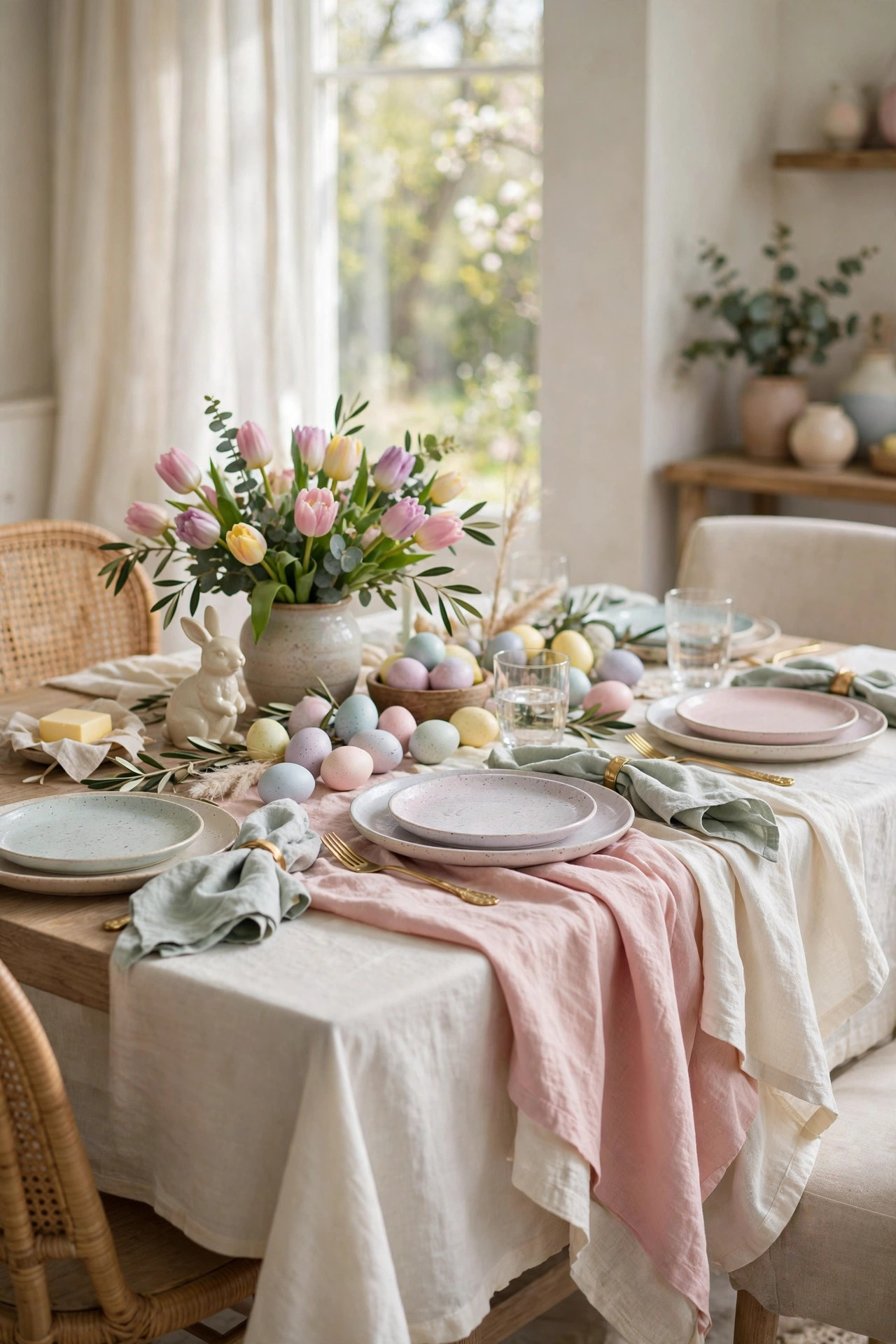
Layering two tablecloths is one of the easiest ways to make an Easter table look styled instead of just covered. Start with a soft white or ivory cloth as the base, then lay a pastel runner or a second cloth in blush, mint, or pale yellow slightly off center. The two layers create depth and movement that a single flat cloth cannot give.
It works visually because the eye reads the overlap as intentional styling, the way a good outfit layers fabrics. The pastel tone peeks out at the edges and frames the centerpieces beautifully. This is also a forgiving look. If your table has scratches or a dark wood tone you want to hide, the layers cover it completely while the colors keep everything light and springlike.
2. Fresh Tulip Centerpiece in a Low Bowl
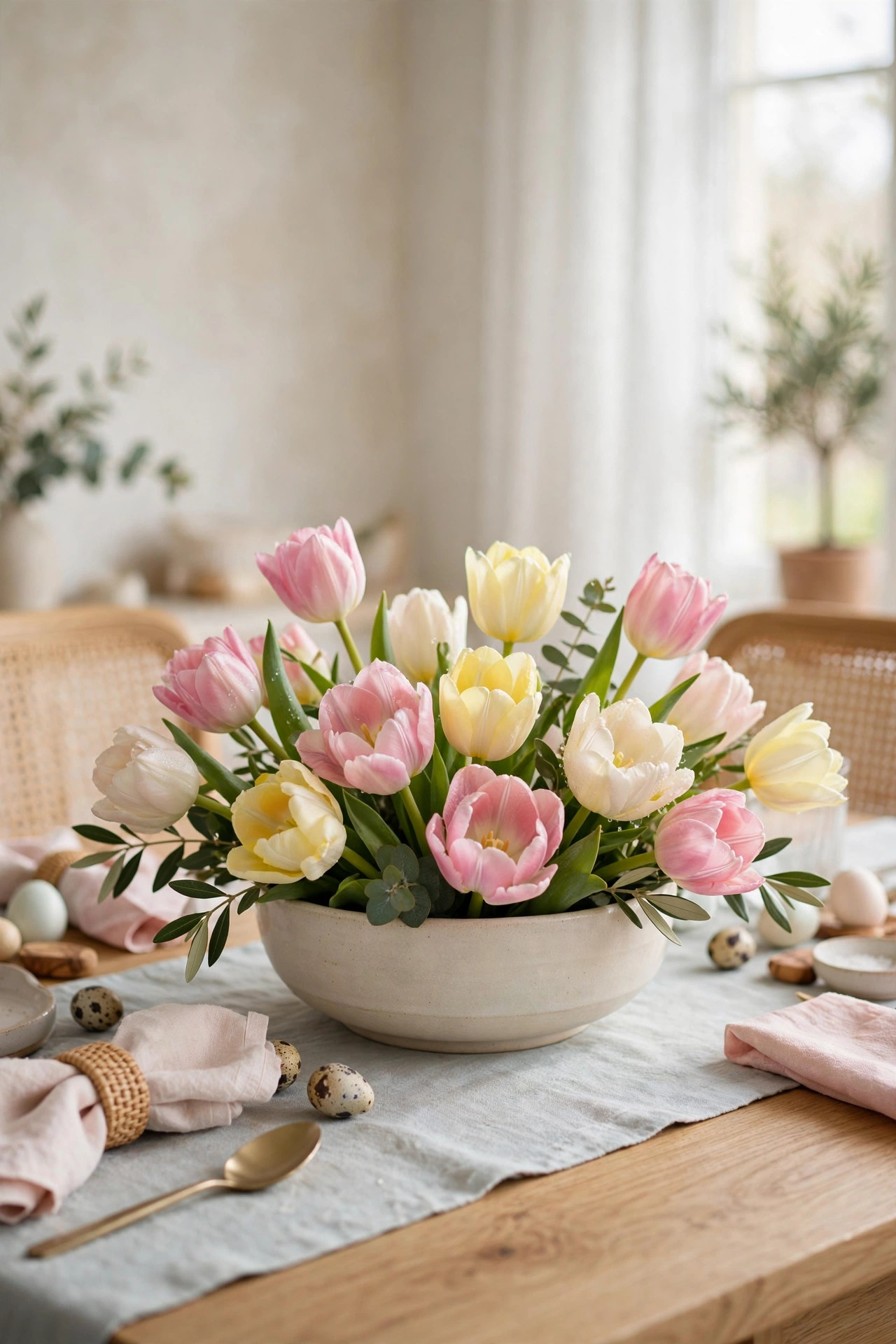
A low bowl of fresh tulips is the most natural centerpiece you can set on an Easter table. Choose tulips in soft pink, cream, and pale yellow, and cut them at different heights so the arrangement feels loose and garden fresh. Place the bowl right in the middle of the table where everyone can see the blooms.
Low arrangements work because they never block the view across the table. Guests can talk easily, and the flowers become a shared focal point instead of a wall. Tulips are also a spring flower that keeps changing as the day goes on, opening wider in warm room light. That slow movement makes the table feel alive all afternoon.
3. Dyed Eggs Displayed in a Dough Bowl
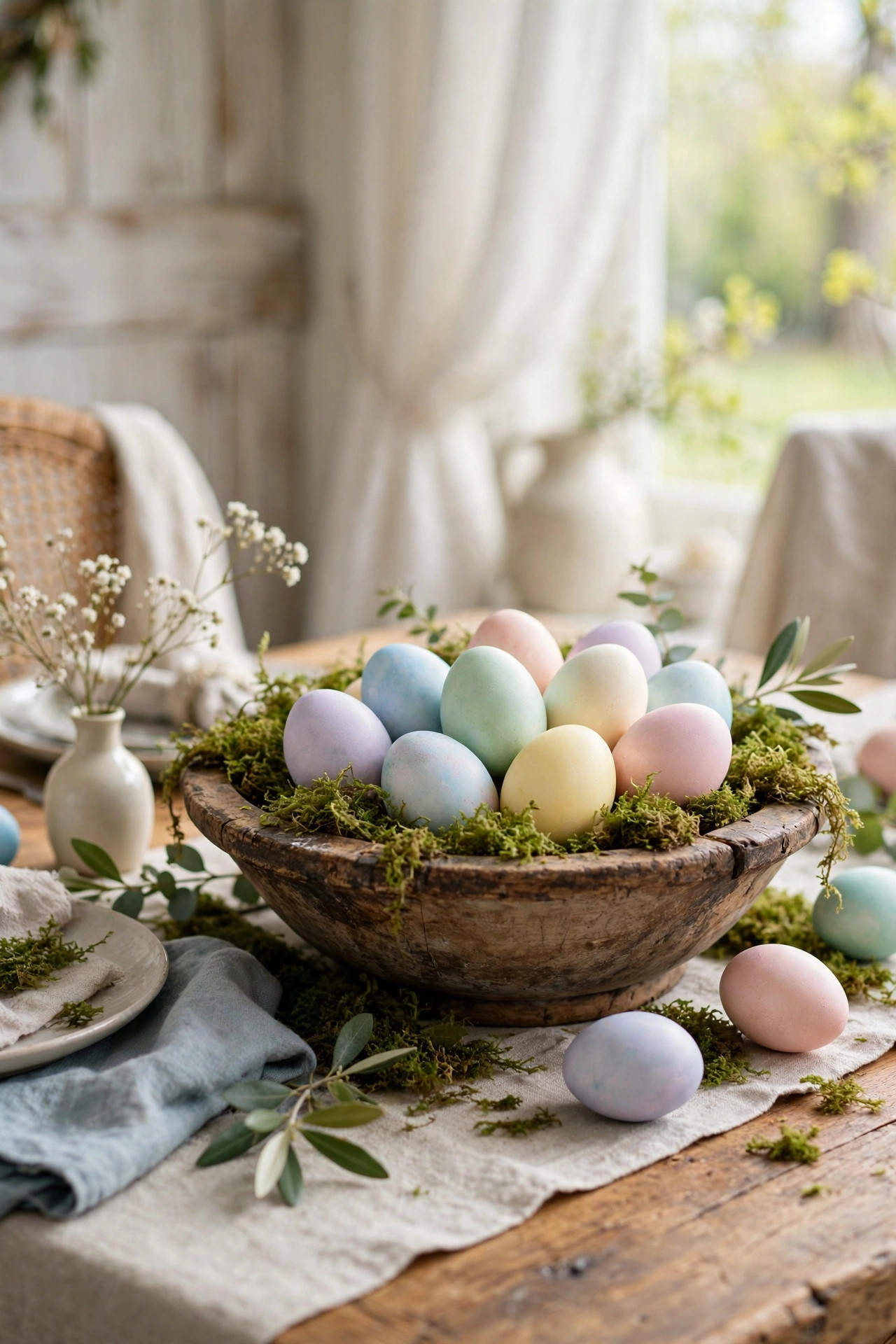
Fill an old wooden dough bowl with dyed Easter eggs and you have a centerpiece with real history and charm. Mix pastel eggs with a few speckled ones, and tuck a little moss or straw underneath so the eggs sit naturally. The bowl can stay in the center of the table or slide to one end.
This idea works because of contrast. The rough, handmade wood against smooth, glossy eggs creates texture the eye loves. The curved bowl shape gathers everything into one neat group, which keeps the table from looking scattered. It also costs almost nothing. Leftover eggs from the morning hunt find a second life as decor.
4. Linen Napkins With a Spring Sprig Tuck
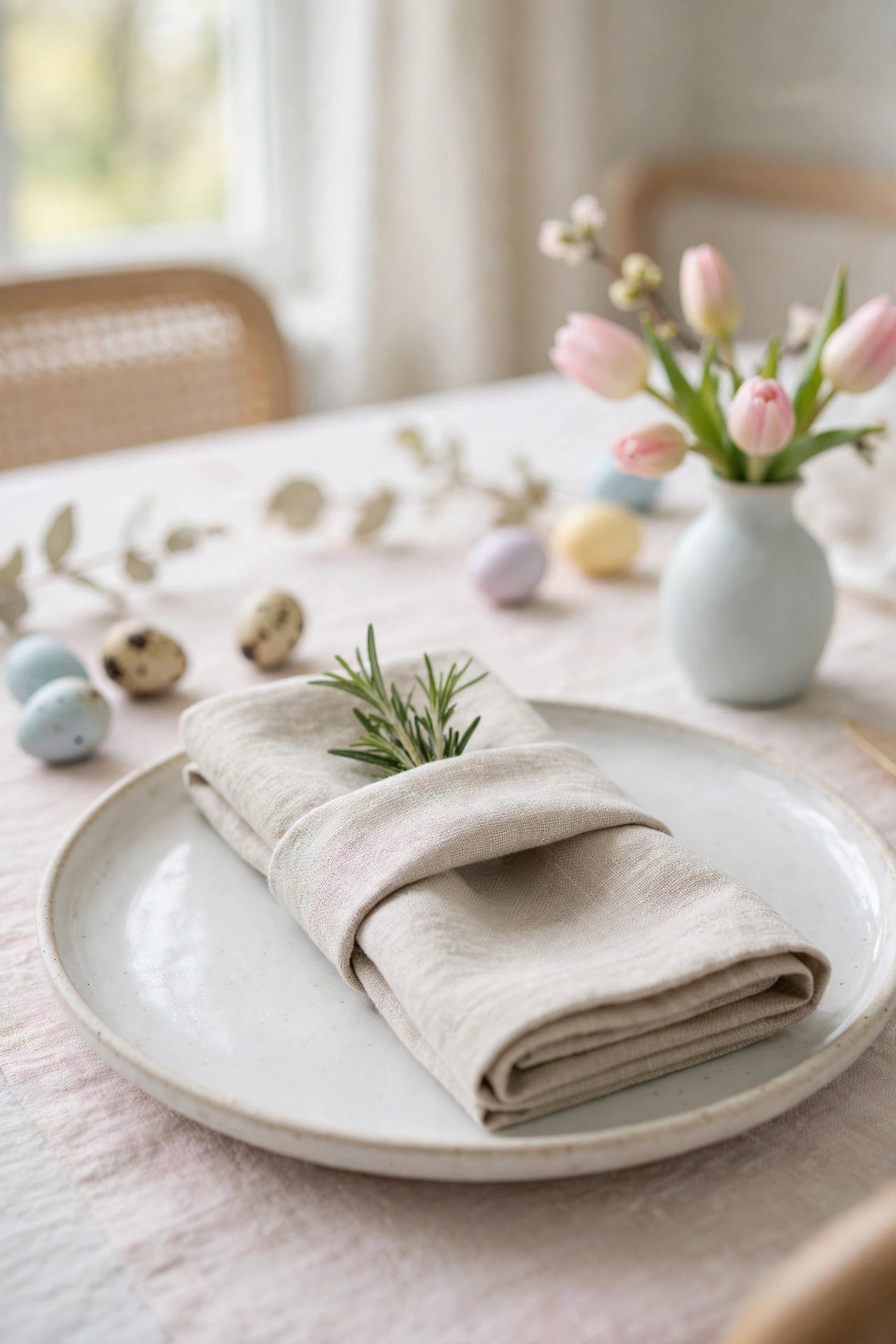
Fold a simple linen napkin and tuck a small sprig of fresh rosemary, lavender, or eucalyptus into the fold. Lay it across each plate or rest it on the side of the bread plate. It takes ten seconds per setting and changes the whole feel of the place setting.
The trick works visually because it breaks the hard line of the folded napkin with something organic and soft. The green sprig against neutral linen is a classic color pairing that always looks fresh. It also appeals to more than the eyes. Guests will notice the gentle scent as they sit down, which makes the welcome feel thoughtful and personal.
5. White Dishes on Pastel Chargers
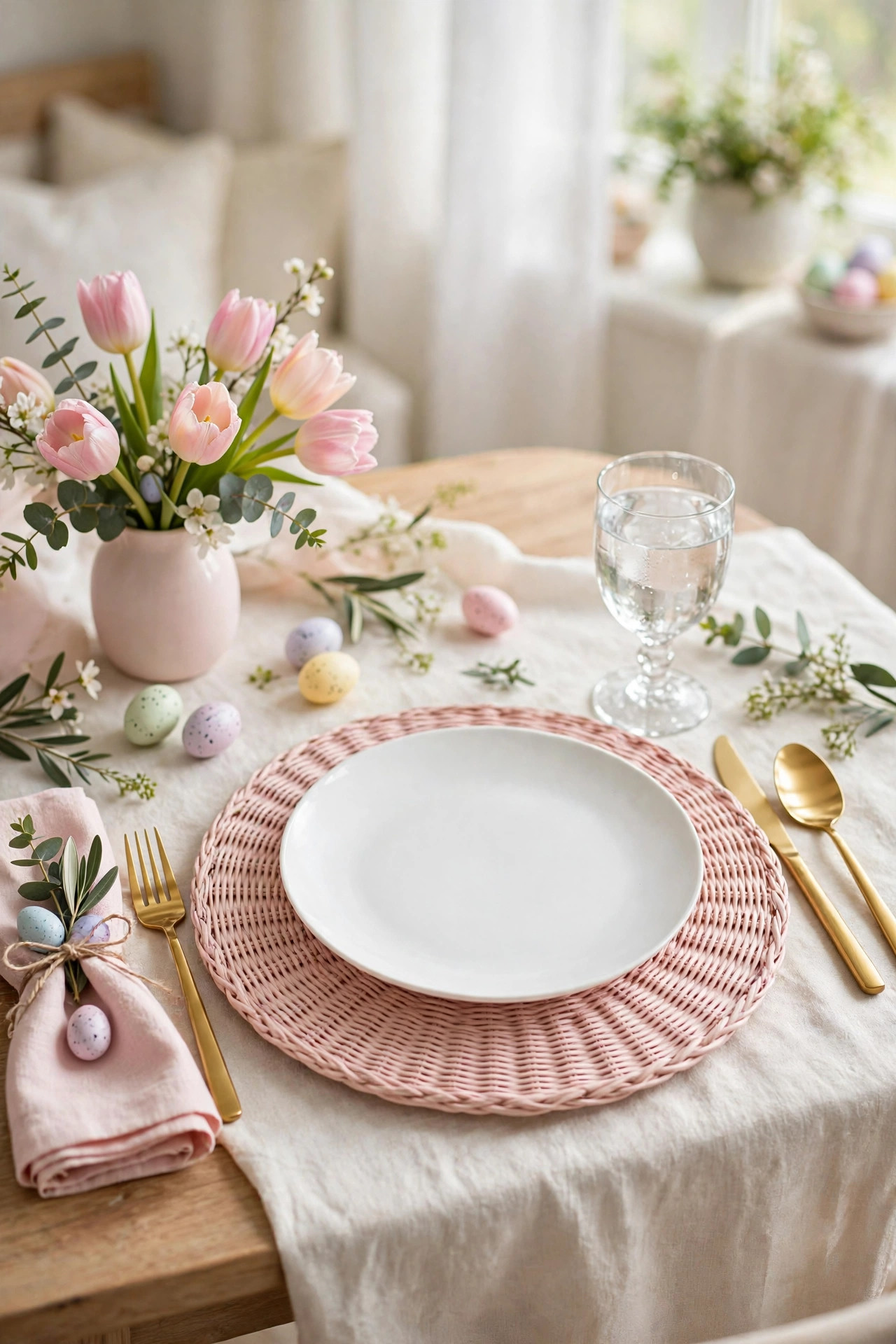
If you own plain white dishes, pastel chargers are the fastest way to give them an Easter look. Set a blush, mint, or lavender charger under each plate and the whole table shifts into spring mode. You do not need a special set of dishes for one holiday.
Chargers work because they add a ring of color exactly where the eye lands when someone looks at a place setting. White dishes keep things calm and let the charger do the talking. This layering also makes the table look more formal and pulled together, even if the rest of the meal is a simple family dinner.
6. Bud Vases Down the Center
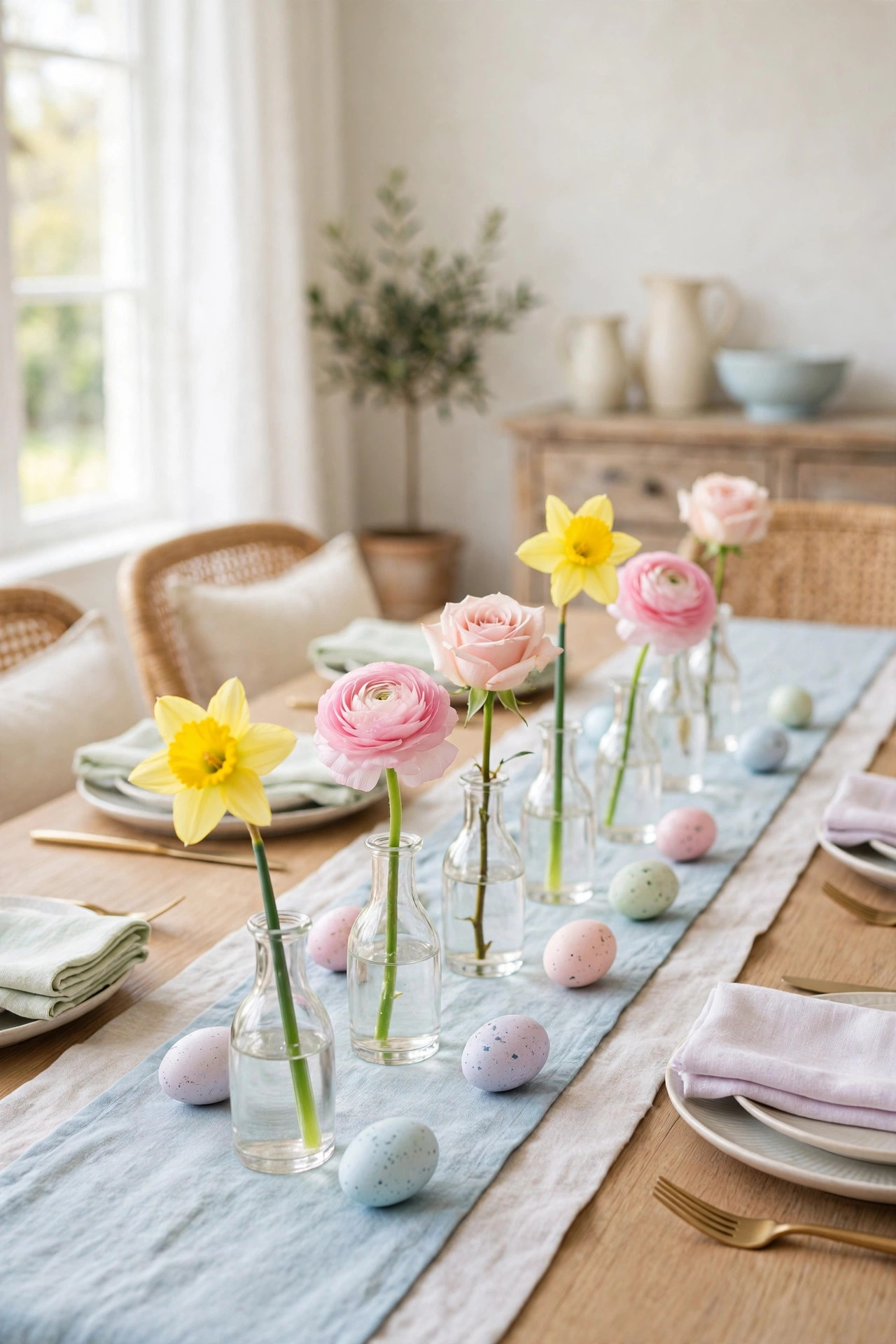
Instead of one big centerpiece, line up five to seven small bud vases down the middle of the table. Put a single stem in each. A daffodil, a ranunculus, or one small rose is all it takes. Space them unevenly so the line feels relaxed, not measured.
A row of bud vases works because repetition creates rhythm. The eye travels down the line and reads the whole table as one design, not a collection of random objects. Small vases also solve a real hosting problem. They leave plenty of room for serving dishes, and guests can move one aside without ruining the look.
7. Carrot Top Greenery Table Runner
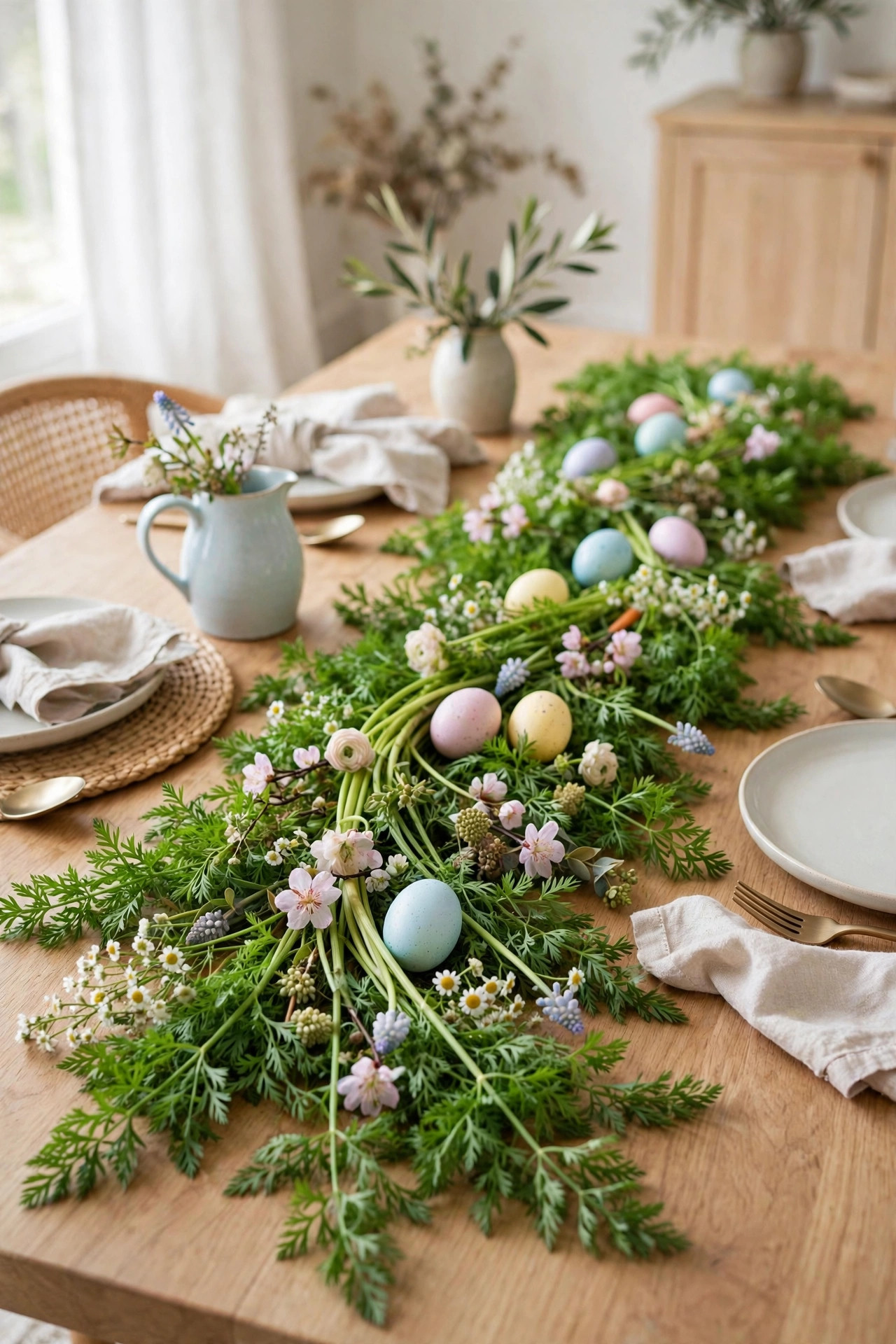
Save the feathery tops from your cooking carrots and lay them in a loose line down the table as a living runner. The bright green fronds look surprisingly beautiful, and you can weave in a few pastel eggs or small flowers. This is the kind of detail that makes guests lean in for a closer look.
It works because real greenery brings a freshness that fabric runners cannot match. The carrot tops are airy and fine textured, so they soften the hard surface of the table without taking up space. There is also a playful charm to it. The greens echo the Easter bunny theme in the most natural way, and they cost nothing since they came from the kitchen anyway.
8. Speckled Egg Place Cards
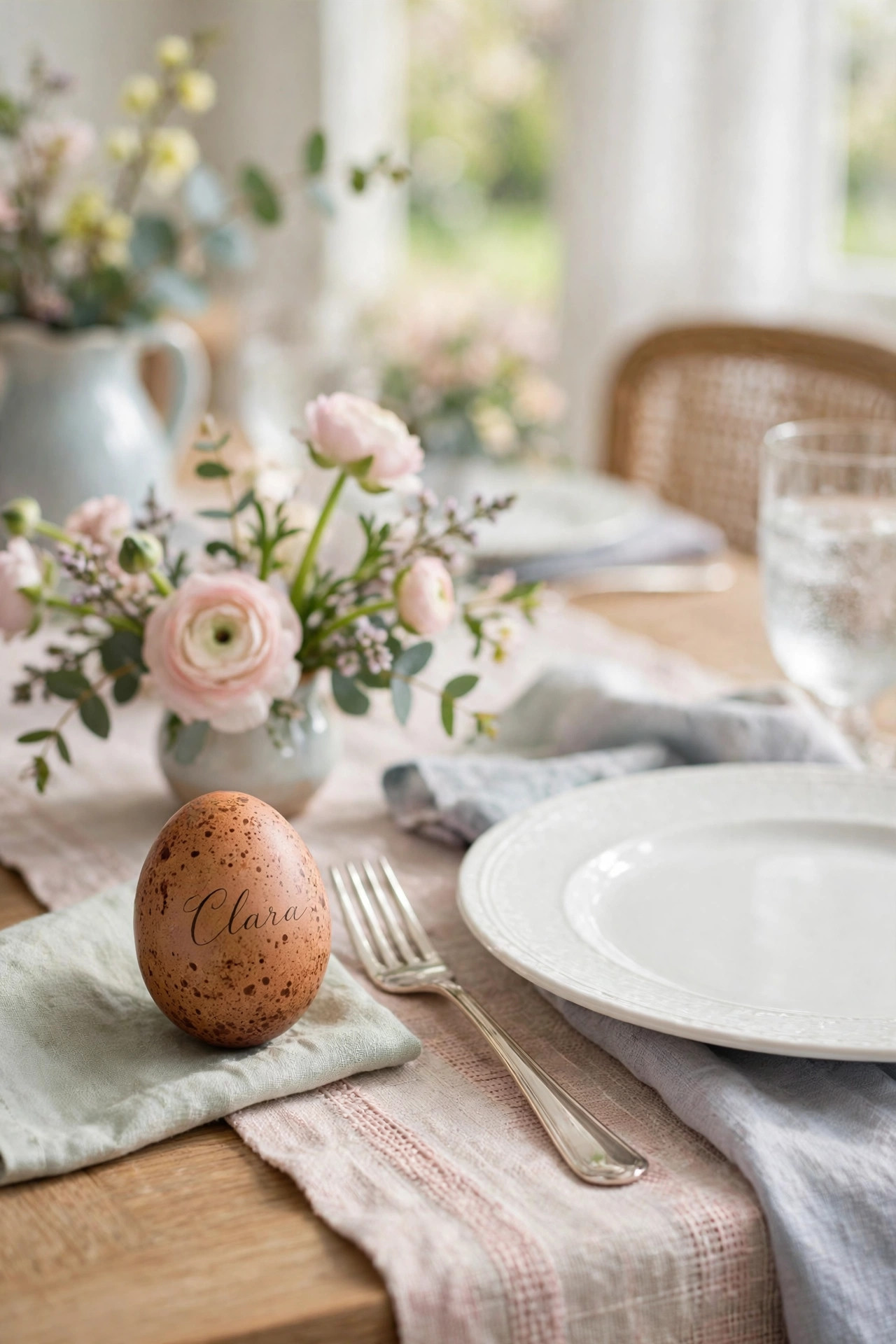
Write each guest’s name on a speckled brown egg with a fine paint pen and set one at every plate. The speckled shell looks like something from a craft store but it is completely natural. Guests love finding their own name on something so personal.
Place cards work because they make the table feel considered. Each setting gets its own small moment of attention, which raises the whole table. The egg shape is ideal too. It is small enough not to crowd the plate, and its natural speckles mean no two place cards ever look the same.
9. Glass Cloche Over a Decorative Nest
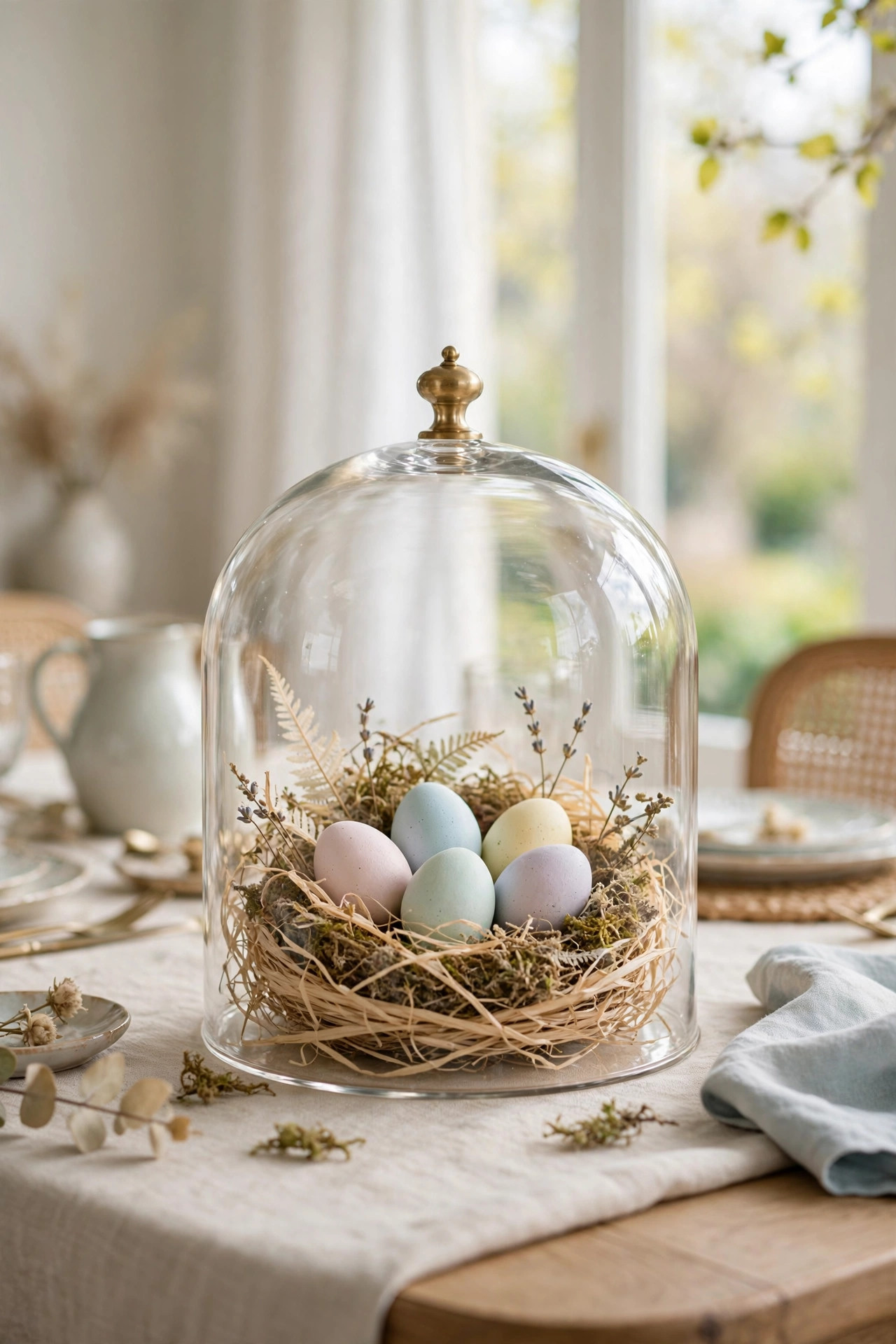
Build a small nest from raffia, twigs, or dried moss, tuck a few pastel eggs inside, and cover it with a glass cloche. The cloche turns a simple craft into something that looks like a museum piece. Set it at one end of the table or use two smaller ones as bookends for the centerpiece.
The glass dome works because it adds height and shine to a table that might otherwise feel flat. Everything inside looks more precious under glass. The dome also catches and reflects candlelight beautifully in the evening. It is a design move that looks expensive but takes only a few minutes to put together.
10. Mix of High and Low Candles
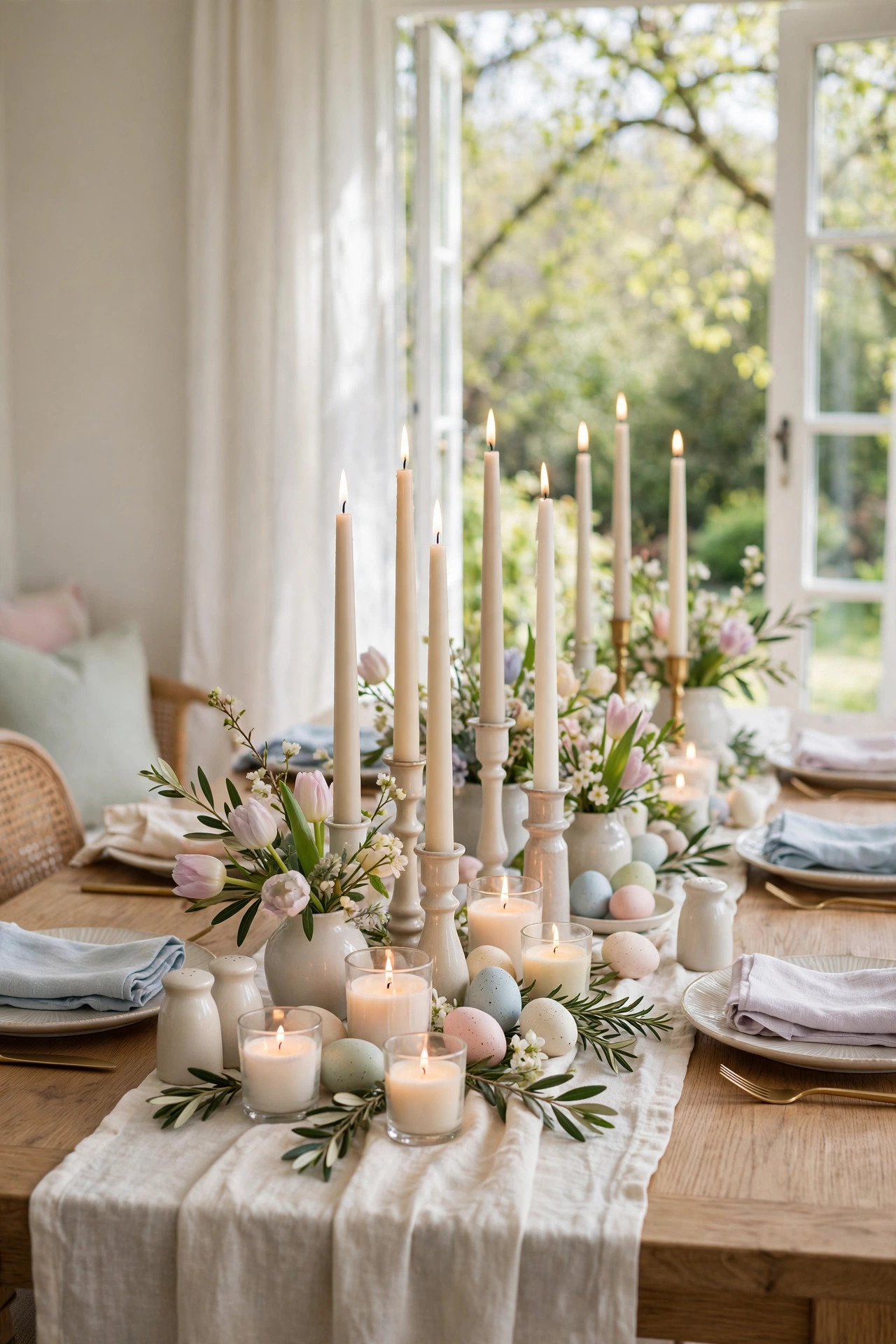
Use candlesticks of different heights along your Easter table, tall tapers mixed with short votives or tea lights. Keep them in the same color family, soft whites, creams, or pale pastels. Group them in threes where they will not block sightlines.
Mixed heights work because they create a skyline effect on the table. Flat candlelight feels dull, but varied heights give the table shape and movement, even during the day. When evening comes, the different flame levels make the glow feel rich and layered. Just keep tall candles toward the ends so conversation still flows easily across the table.
11. Bunny Figurines as a Collected Set
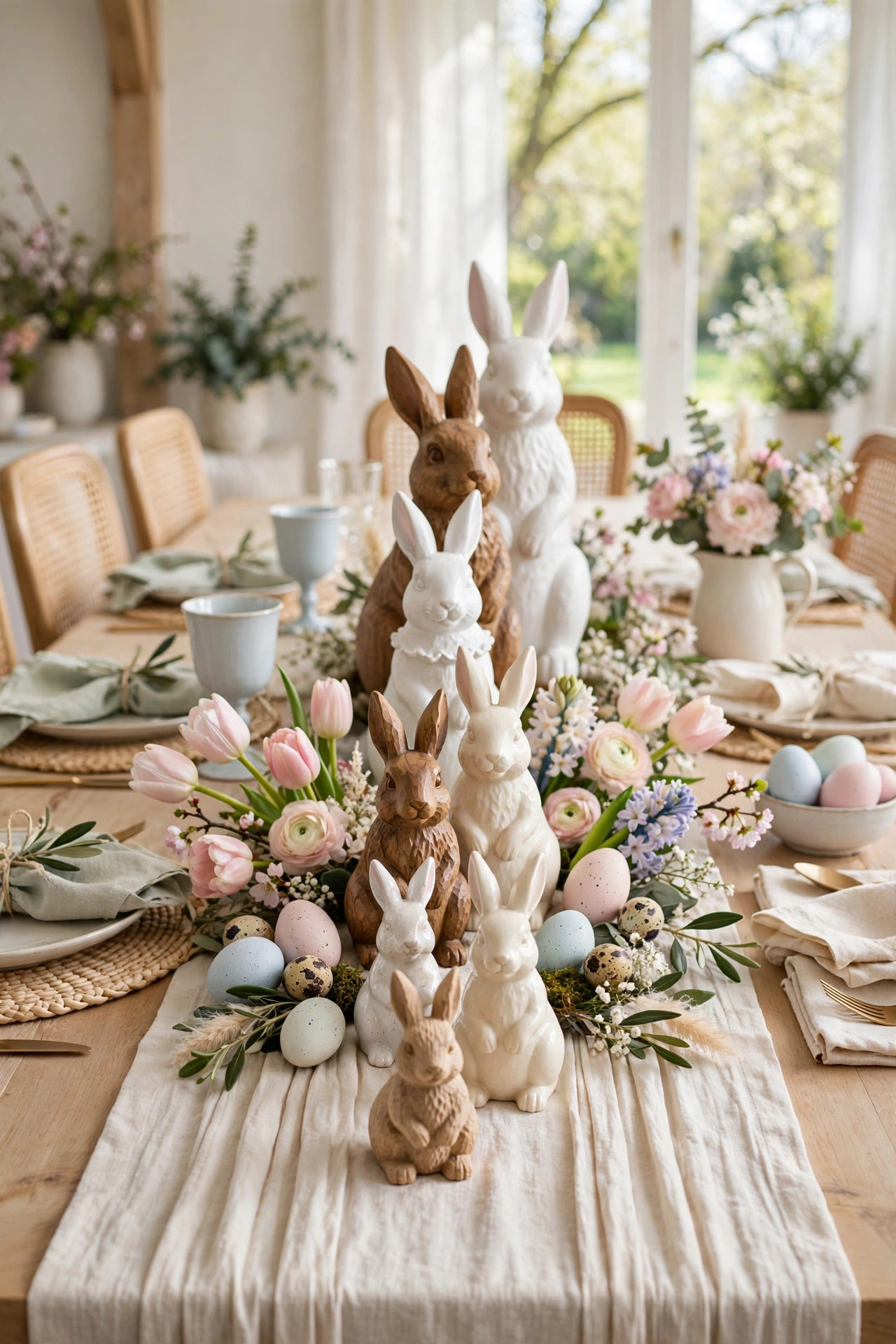
Gather every bunny figurine you own, from the vintage ceramic one to the simple wooden toy, and group them down the center of the table. A collected set looks intentional when the pieces share a color palette, even if their styles are different. Cream, white, and natural wood tones work best together.
This idea works because grouping turns ordinary objects into a display. One bunny is a knickknack. Seven bunnies in a row become a design statement. The repetition of the same shape in different sizes creates the rhythm that stylists love. It also tells a story. Guests will ask about the collection, which makes the table a conversation starter.
12. Gingham Runner for a Casual Feel
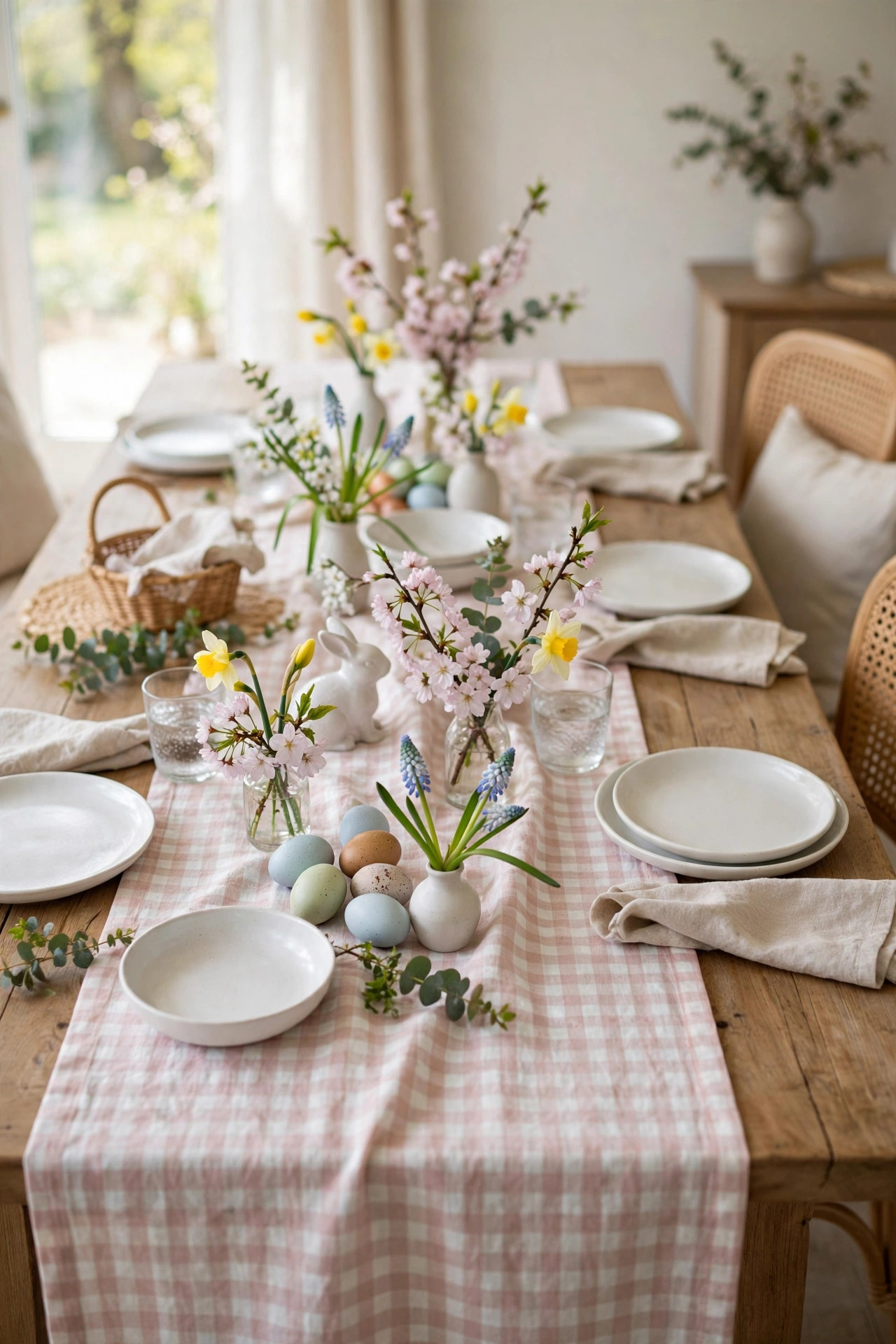
A gingham runner in pale pink, blue, or yellow gives an Easter table an easy, picnic-like feel. The checked pattern is cheerful without being loud, and it pairs beautifully with simple white dishes and fresh flowers. It works for brunch, lunch, or a relaxed family dinner.
Gingham works visually because patterns add energy that solid linens lack. The small checks read as texture from across the room but as pattern up close, which keeps the table interesting from every seat. It also sets the tone for the meal. Gingham says relaxed and happy, so guests arrive ready to enjoy themselves instead of feeling formal and stiff.
13. Fresh Herb Pots as Guest Favors
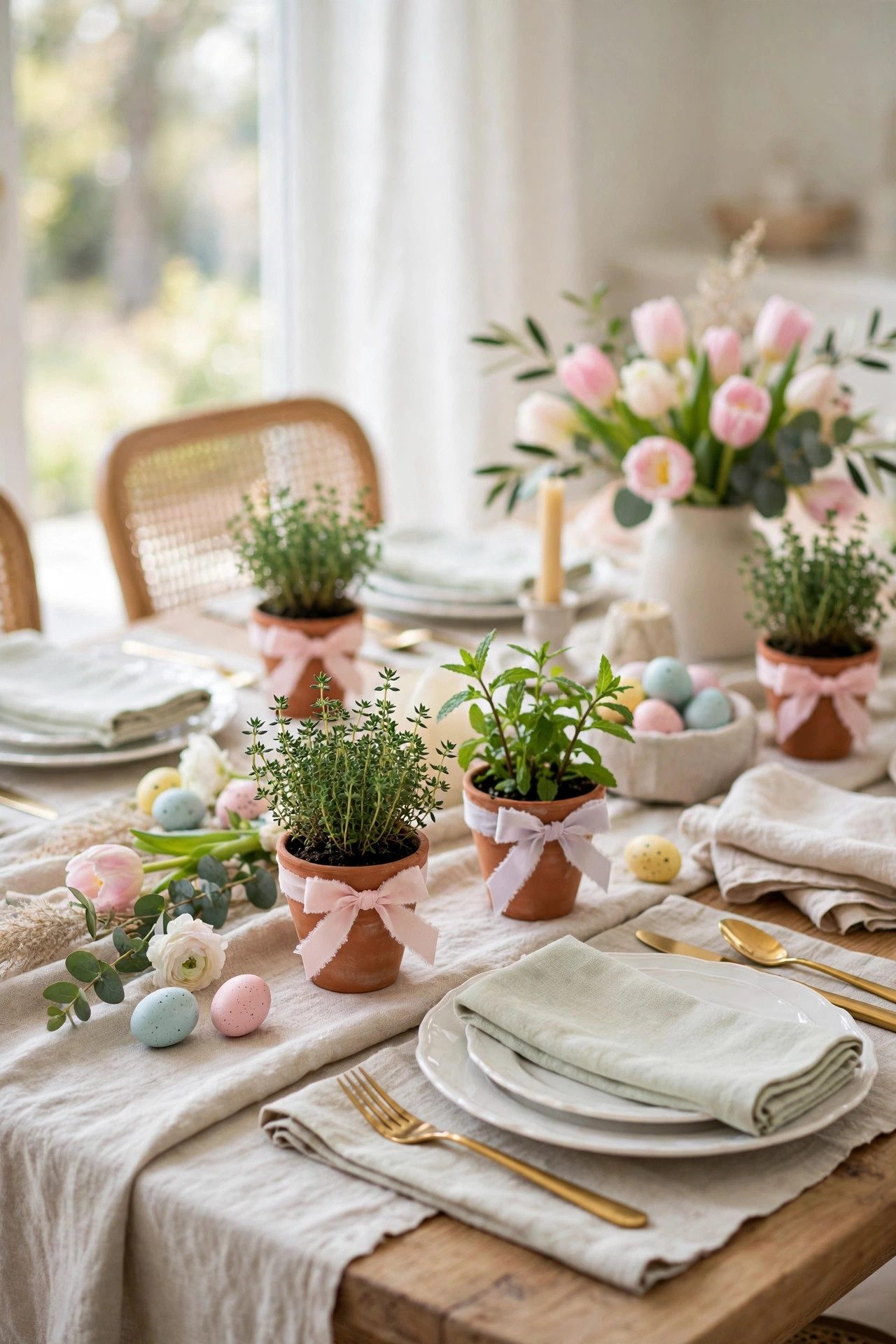
Set a small potted herb at each place setting, thyme, mint, or parsley in a little terracotta pot. Tie a ribbon around it and it becomes both the place setting accent and the favor guests take home. The pots add living green to the table for the whole meal.
This idea works on two levels. First, the repeated pots create a clean, rhythmic pattern down the table that looks styled and fresh. Second, it removes the question of what to send guests home with. A living favor feels generous and useful in a way a bag of candy does not. Every time a guest uses the herb later, they will remember the meal.
14. Pastel Taper Candles in Brass Holders
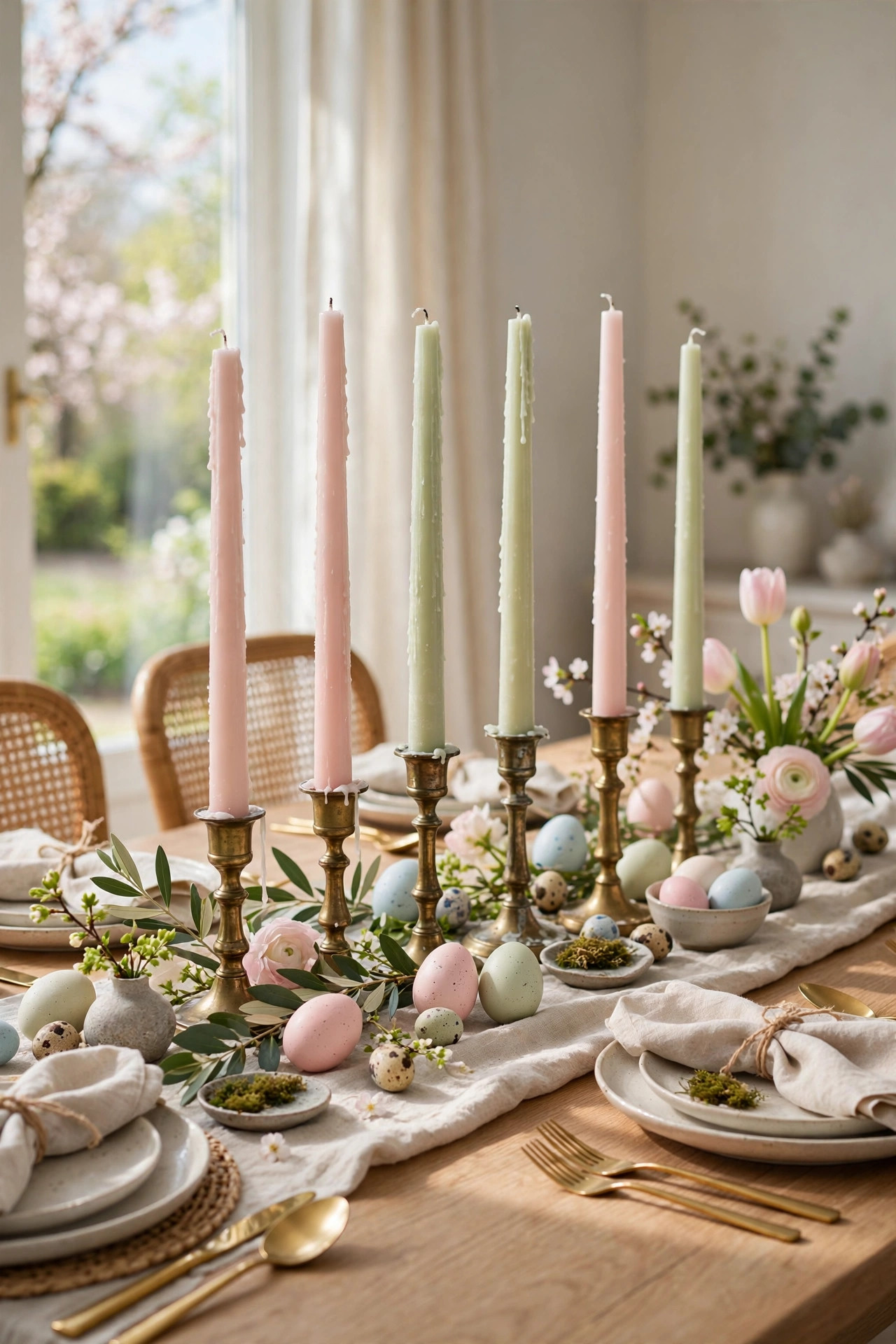
Tall pastel taper candles in aged brass holders bring a quiet elegance to an Easter table. Choose tapers in blush, pale green, or soft yellow and let the brass add a warm, slightly vintage glow. Even unlit, they look beautiful. Lit, they are magical.
The pairing works because pastel and brass are a perfect spring contrast. The cool, soft candle color plays against the warm metal, and each one makes the other look richer. Brass also ages beautifully, so the holders can be simple and still look expensive. Place them toward the ends of the table where their height frames the whole scene like bookends.
15. Layered Cake Stand Centerpiece
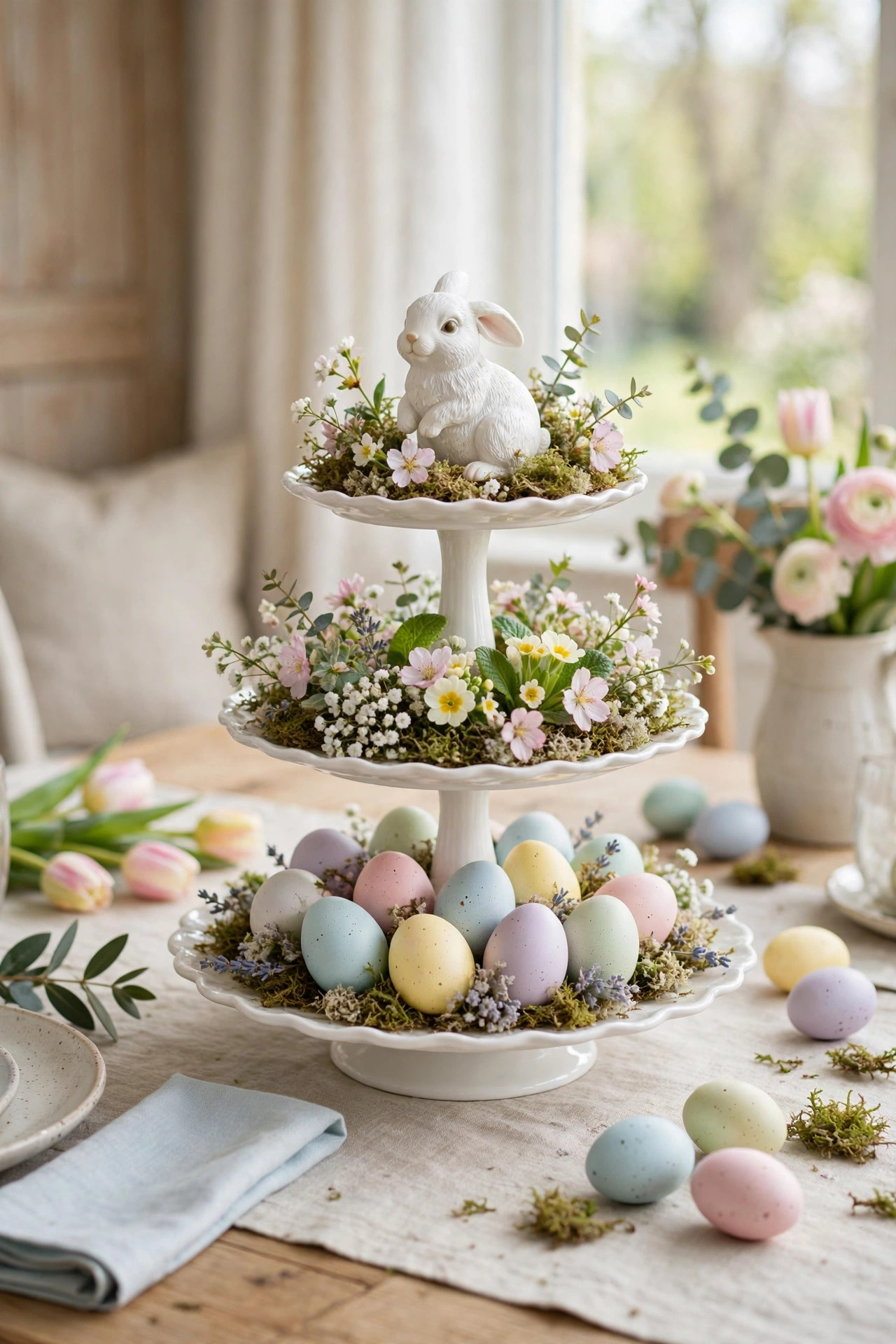
Use a tiered cake stand as the backbone of your centerpiece. Stack it with pastel eggs on the bottom tier, small flowers or moss on the middle, and one pretty bunny or a single bloom on top. The stand gives you a vertical centerpiece that takes up almost no table space.
Layered stands work because they build upward instead of outward. On a crowded Easter table, height is precious. The tiers keep every element visible from every seat, and the round shape mirrors the plates around it. When dessert arrives, the stand can even be cleared and reused, which makes it practical as well as pretty.
16. Neutral Table With One Color Pop
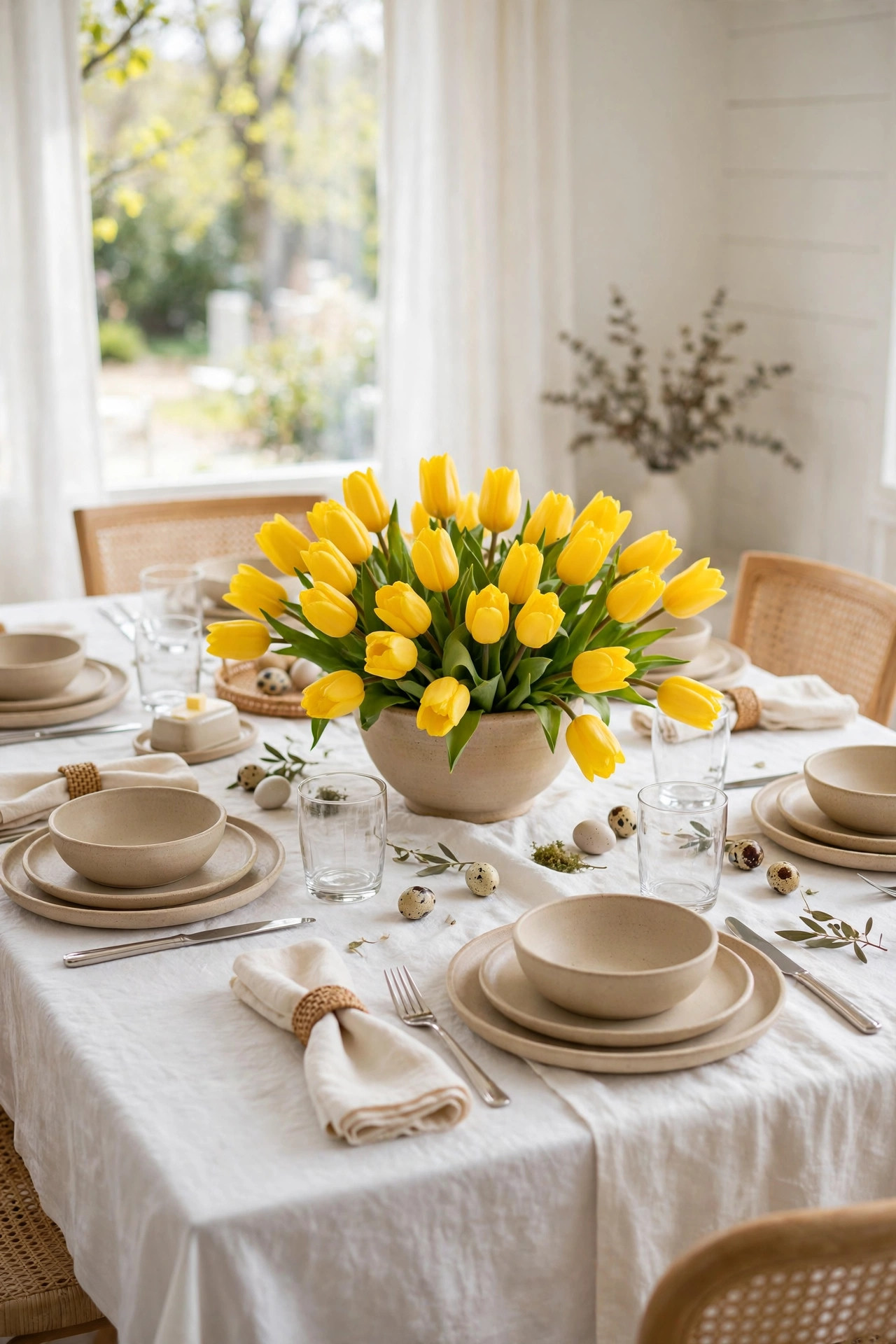
Keep everything neutral, white cloth, cream napkins, beige dishes, and then add one strong color in a single place. It could be a bowl of bright yellow tulips, a coral runner, or a cluster of turquoise eggs. Everything else stays calm so that one color can shine.
This is one of the strongest design principles there is. Restraint makes the accent louder. When only one element carries color, the eye goes straight to it and the whole table feels purposeful. It is also the easiest Easter look to pull off. You only need one colorful item, so you can shop your house instead of buying a whole new set of decor.
17. Woven Placemats for Texture
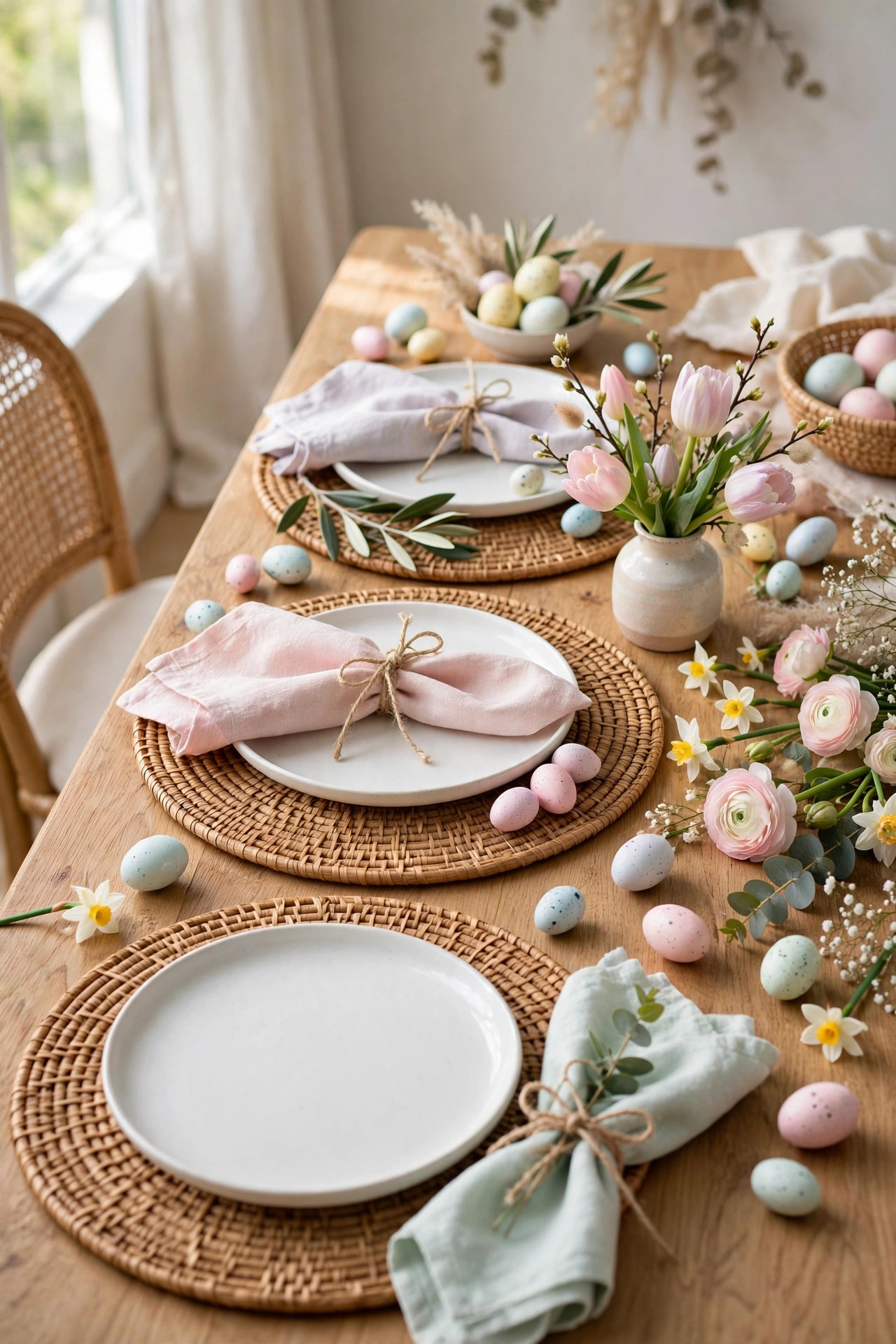
Woven placemats in natural rattan, jute, or seagrass add instant texture under each place setting. They ground the table and give every plate a defined home. On a pastel Easter table, the warm natural fibers balance all the soft color beautifully.
Texture works because a table of only smooth surfaces can look flat and cold. The woven pattern catches light and shadow, which adds depth even before any color is considered. Placemats are also practical. They protect the tablecloth, they are easy to shake off after the meal, and they can be reused all spring long.
18. Hanging Branch Above the Table
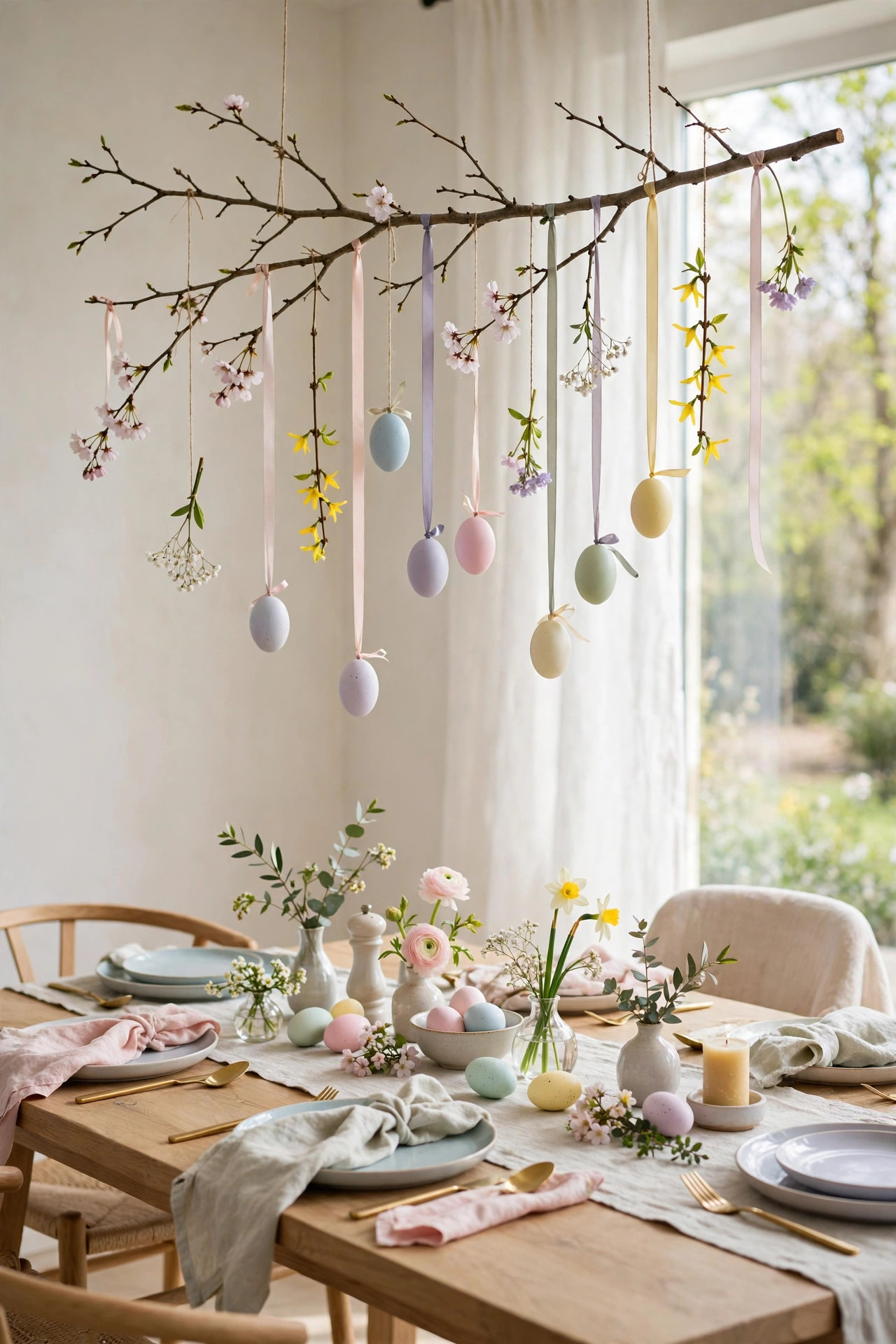
Hang a bare branch or a bundle of pussy willow stems above the table with clear fishing line or thin ribbon. Hang a few pastel eggs, small flowers, or paper ornaments from it at different lengths. It takes a little effort to set up, but the effect is unforgettable.
An overhead element works because it draws the eye upward and makes the whole room feel decorated, not just the table surface. It creates a canopy of spring over the meal, which feels festive and a little magical. This is the trick event stylists use to make a simple dinner feel like an occasion. Keep the branch high enough that tall guests can stand comfortably beneath it.
19. Simple White Table With Fresh Greens
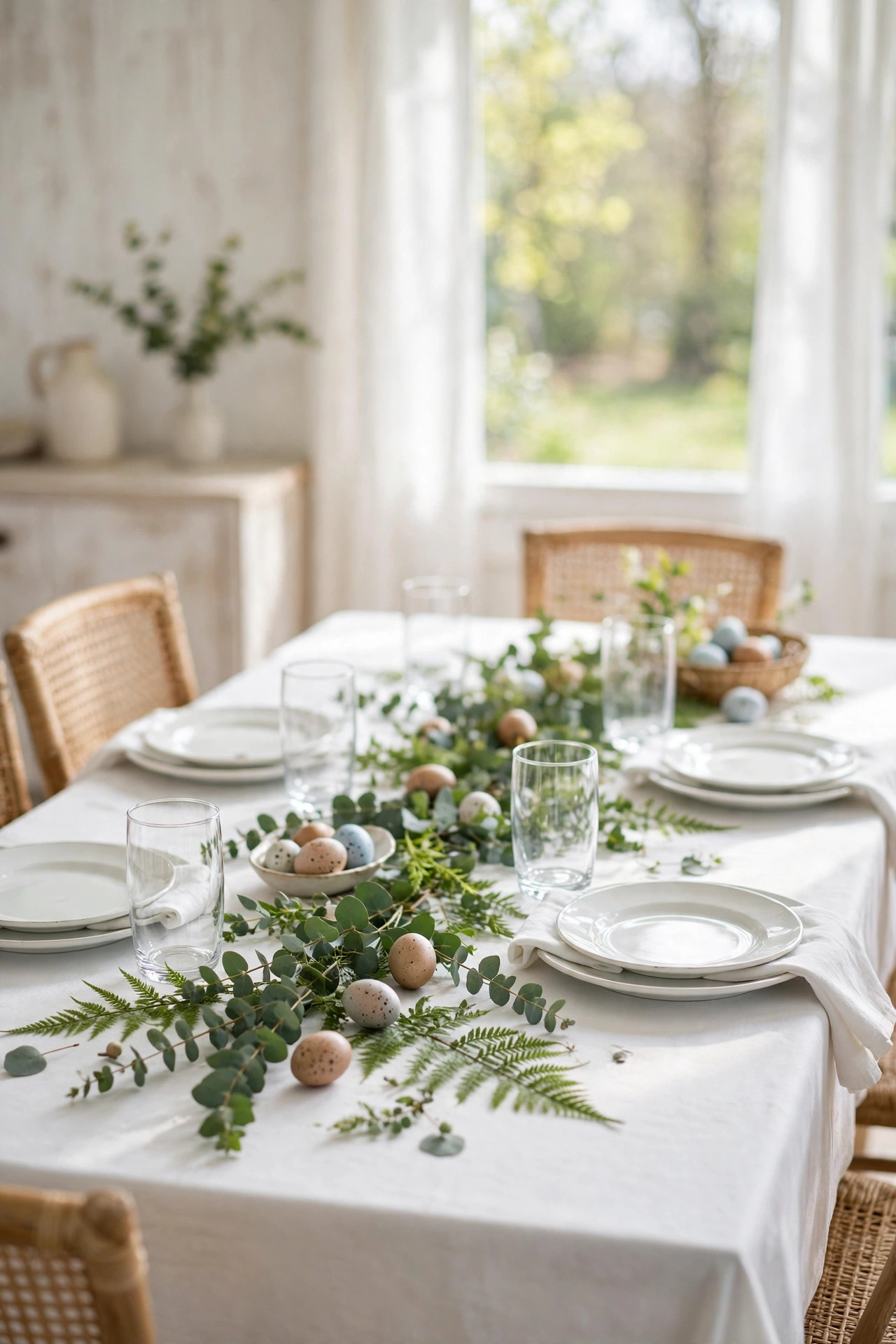
Sometimes the most beautiful Easter table is the simplest one. A crisp white tablecloth, white plates, and clear glasses, with loose fresh greens scattered down the center. Add eucalyptus, ferns, or even branches from the yard. Nothing else is needed.
This look works because contrast does all the heavy lifting. The green against the white is clean and vivid, and the simplicity lets the food become the real decoration. It also never goes out of style. While patterned and themed tables can feel dated, a white table with fresh greens looks right every single spring. If you only have time for one thing, make it fresh greenery.
Conclusion
This spring, the Easter table is all about softness, freshness, and things that feel gathered rather than bought. Whether you layer pastel linens, hang a branch overhead, or simply fill a bowl with tulips, the best tables share one quality. They feel like the season itself, light, new, and full of hope.
Choose the ideas that fit your home and your crowd, and do not feel you need all nineteen. Even two or three of these details will make your table feel styled for the holiday. Happy Easter, and happy styling.
FAQs
What colors work best for Easter table decor?
Pastels are the classic choice, blush pink, mint green, soft yellow, lavender, and pale blue. They reflect the season and look beautiful in natural spring light. If you want a more modern feel, pair the pastels with plenty of white and one fresh green. That keeps the table from looking too sweet. For a bolder look, you can add one saturated color, like a bright coral or turquoise, but keep the rest neutral so the table stays calm.
How do I decorate an Easter table on a budget?
Start with what you already own. White dishes, plain linens, and glassware you have in the cupboard are all you need as a base. Then add one or two fresh touches from the grocery store, a bunch of tulips or daffodils, a bag of carrot tops for greenery, and a carton of eggs to dye. Small details like a sprig in each napkin cost almost nothing but make the table feel styled. The ideas in this article that cost the least, bud vases, woven placemats you reuse, and grouped figurines, often look the most charming.
Can I use real flowers on the table for the whole meal?
Yes, real flowers are fine for the whole meal as long as you keep them in water and choose sturdy spring blooms. Tulips, daffodils, ranunculus, and hyacinths all hold up well for several hours. Put the flowers in place an hour or two before guests arrive so the stems can drink. Avoid highly scented flowers right next to the food, since a strong perfume can clash with the meal. A light scent like hyacinth across the table is lovely, but keep it away from the serving dishes.
How do I keep the centerpiece from blocking conversation?
Keep tall items toward the ends of the table and low items in the center. A good rule is that nothing in the middle should stand taller than about twelve inches, roughly the height of a short flower arrangement. Bud vases, low bowls, and eggs all sit below eye level, so guests can see each other easily. Save the tall candles and the hanging branch for the outer edges and above, where they frame the scene without getting in the way.
What is the easiest Easter table decor idea for beginners?
Start with a white tablecloth and a bowl of fresh tulips. That alone looks like a proper Easter table. Then add one more simple layer, pastel napkins or a few dyed eggs scattered around the bowl. You do not need any special skills or expensive pieces. The ideas that beginners love most are the layered tablecloths, the tulip bowl, and the speckled egg place cards, because each one takes minutes and looks like you planned for days.
How far in advance can I set up my Easter table?
You can set the linens, dishes, candles, and non-perishable decor the night before, and cover everything with a clean sheet to keep off dust. Fresh flowers should go in water the evening before so they are fully hydrated, then move to the table an hour or two before the meal. Do not place fresh eggs or anything perishable out overnight. Save the final touches, napkin sprigs, place cards, and fresh greenery, for the morning of the meal so everything looks its best when guests arrive.