Mid-century modern is having one of its strongest moments in years. Designers are pulling vintage teak pieces back into warm, minimal rooms, mixing them with linen, bouclé, and sculptural lighting. The look works because it was never about being retro for the sake of it. It was always about clean lines, honest materials, and furniture that fits real life.
What feels fresh right now is the way the style has softened. The harsh gallery white rooms of the past are giving way to warm beiges, olive greens, and cognac leather. Curved silhouettes sit next to the classic straight legs and tapered shapes. If you love the mid-century spirit but want a room that feels like today, these seventeen ideas are your guide. Each one breaks down exactly why the look works visually, so you can recreate it at home.
1. The Low-Slung Sofa Moment
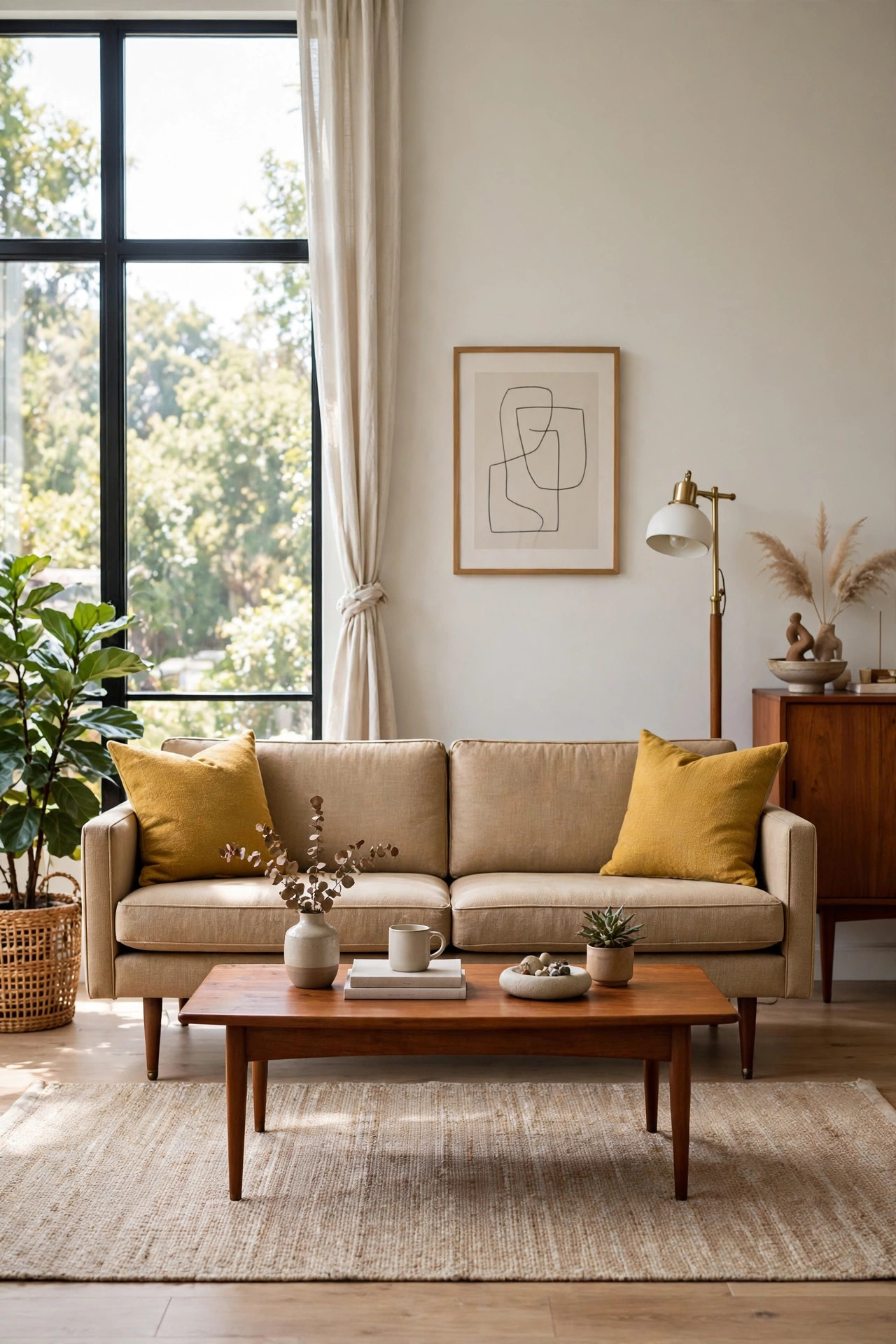
A low sofa changes the whole geometry of a room. When the seating sits closer to the floor, the ceiling feels taller, the windows feel bigger, and the entire space breathes. This is the signature trick of mid-century design. The horizontal line draws your eye across the room instead of up and down, which makes even a modest living room feel wide and calm.
Choose a sofa with slim cushions and tapered wooden legs so the base looks light. A warm beige or oatmeal fabric keeps it neutral enough to layer color on top. Two throw pillows in mustard or rust are all it takes to bring the vintage warmth forward. The sofa does the talking here, so keep everything around it simple and let that low, clean line carry the room.
2. The Teak Sideboard Revival
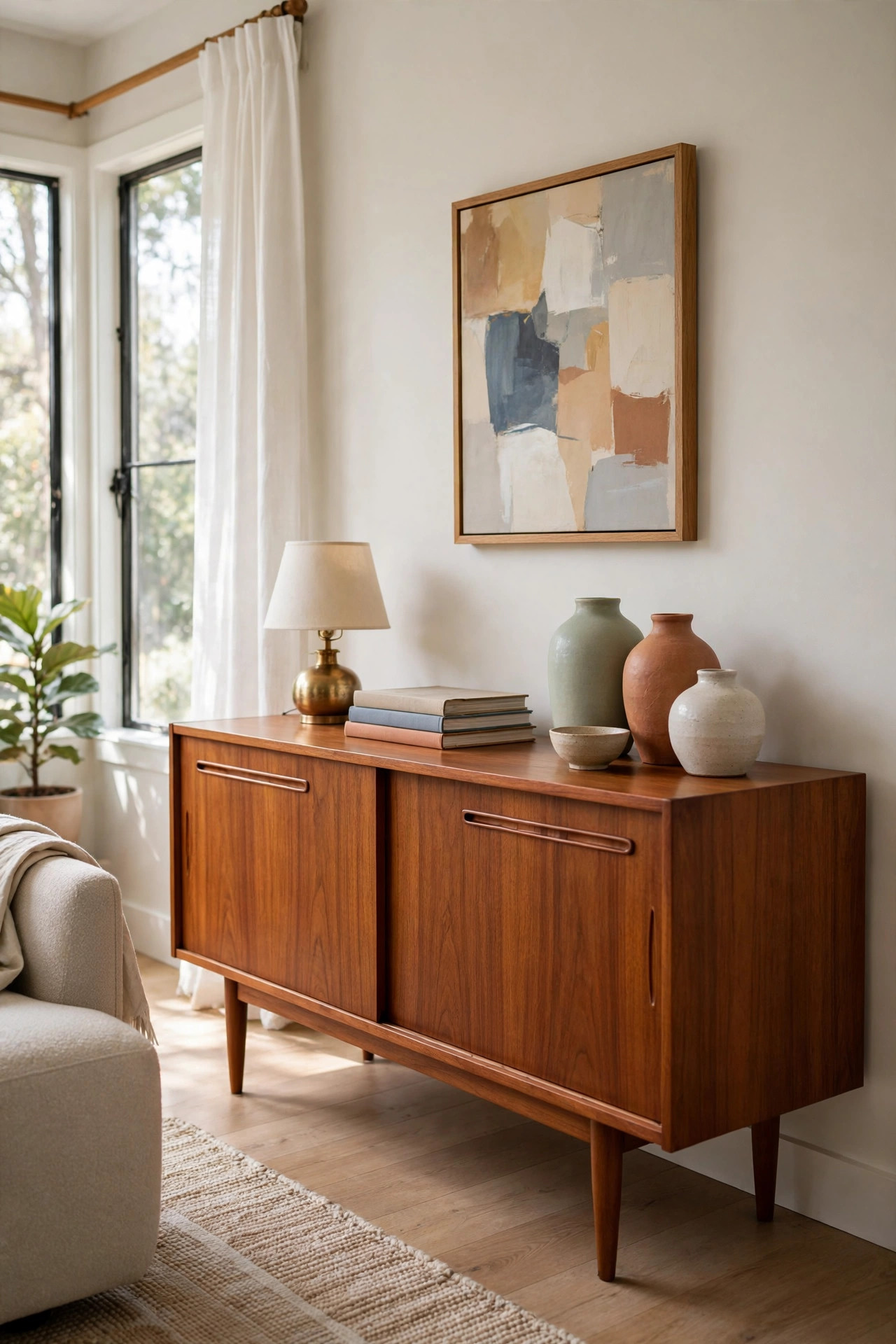
The teak sideboard might be the single most iconic piece of mid-century furniture, and it earns that status honestly. Its long, horizontal shape gives a wall purpose without shouting. Visually, it anchors the room the way a good bassline anchors a song, steady and rich underneath everything else.
Style it with intention, not clutter. Three to five objects are enough. A ceramic vase, a stack of art books, and a small lamp create a rhythm of heights that keeps the eye moving along the wood grain. Hanging one piece of abstract art above it completes the composition. The warm honey tones of teak do something no paint color can do, they add depth that makes the whole room feel layered and collected.
3. The Sputnik Chandelier Statement
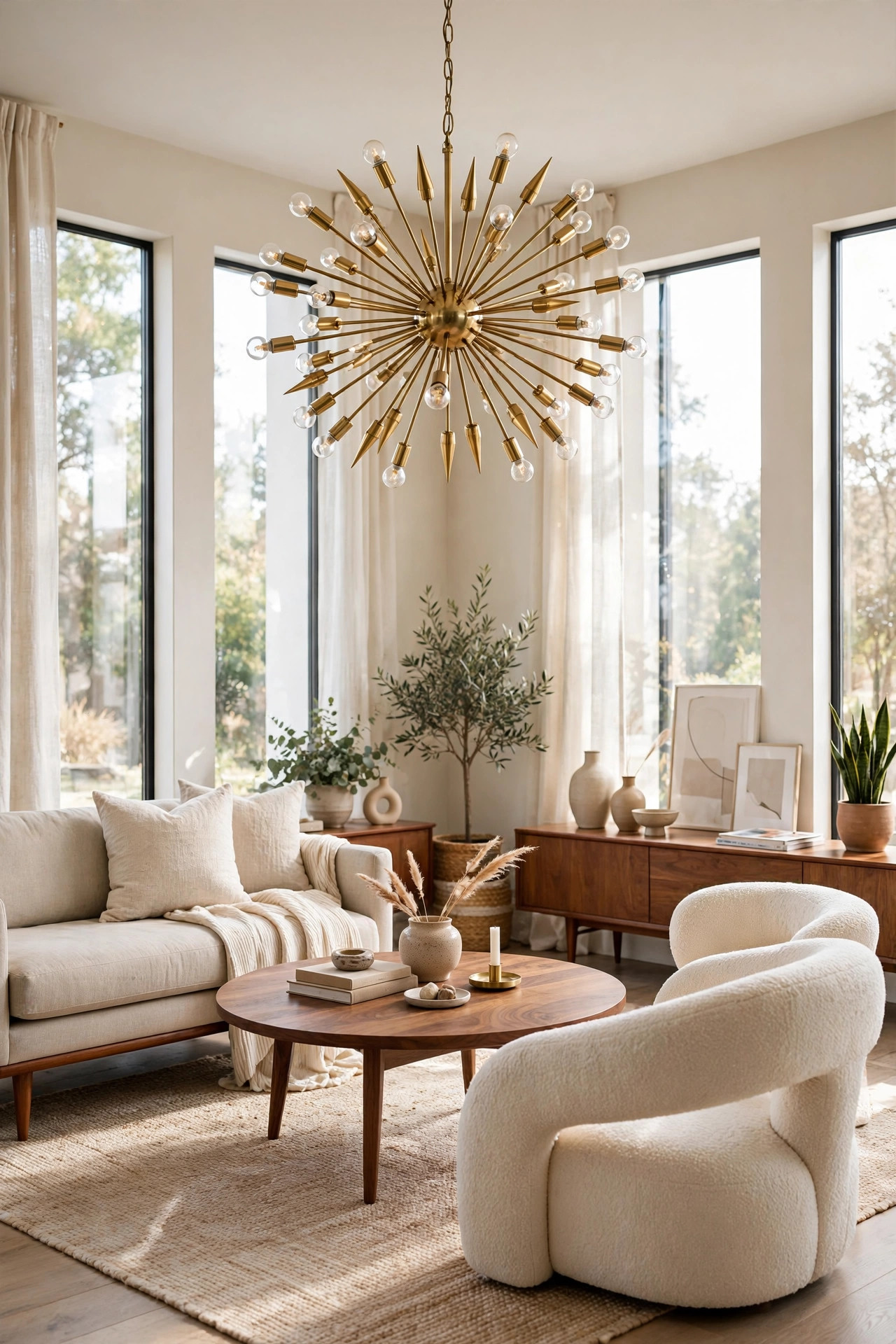
Every mid-century room needs one moment of drama, and a sputnik chandelier delivers it perfectly. Those radiating arms with brass tips pull the eye upward, which balances all the low furniture this style loves. It is a ceiling sculpture that doubles as lighting, and it instantly signals the era in a joyful way.
The reason it still feels fresh is scale. Hang it a little lower than you think, so it reads as part of the furniture grouping rather than a lonely ceiling fixture. Keep the bulbs warm and simple. When the light comes on, the chandelier casts soft patterns that make the whole room glow. Pair it with a round table or seating arrangement below so the starburst shape echoes in the room plan.
4. The Lounge Chair Corner
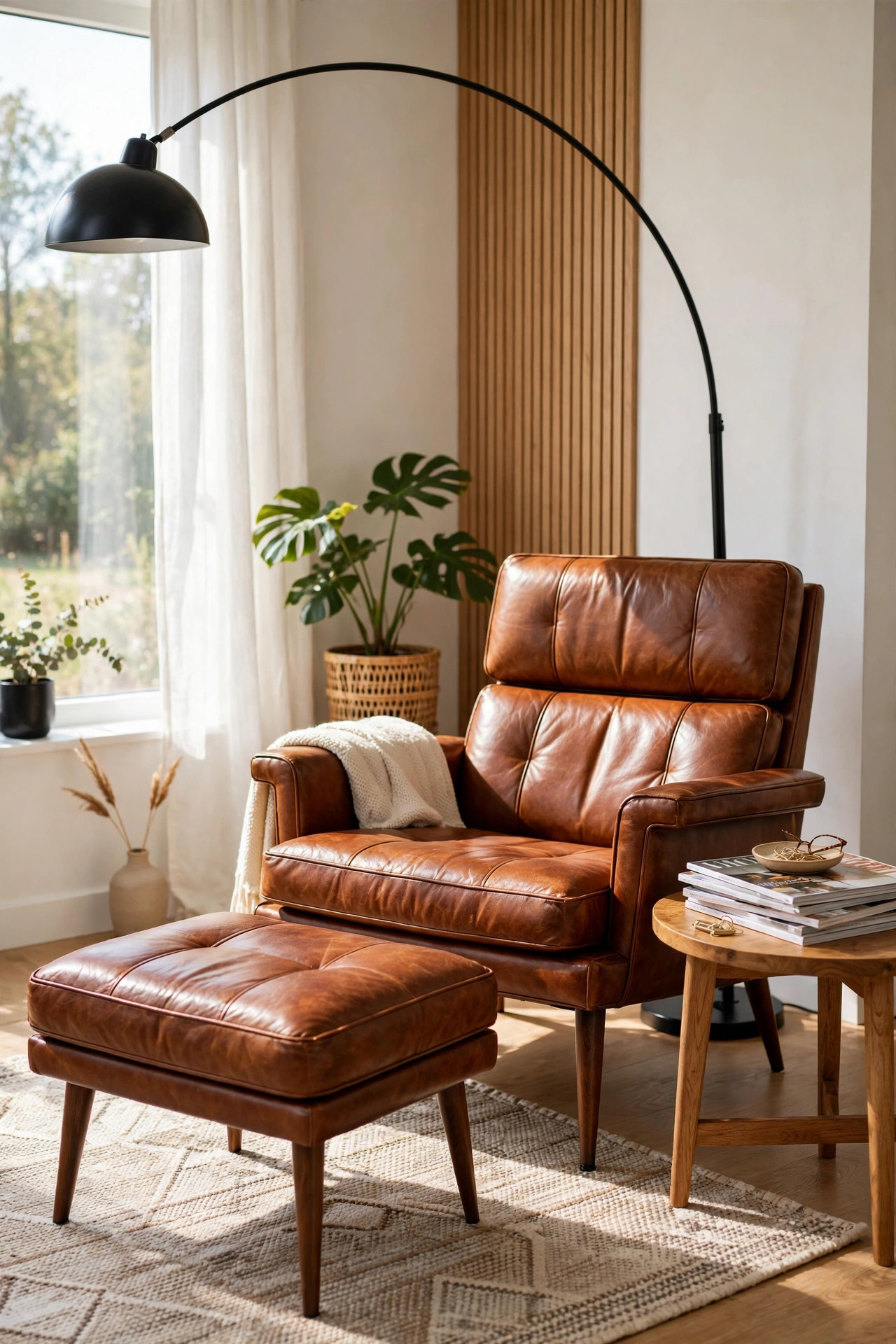
The classic leather lounge chair with its matching ottoman is not just furniture, it is a destination. Tucking one into a corner with a small side table and a floor lamp creates a reading nook that feels intentional rather than leftover. Visually, the sculpted shell shape of the chair gives the eye something to rest on, a quiet anchor in the corner of the room.
Cognac brown leather is the perfect choice because it deepens beautifully with age. The patina tells a story, which is exactly what keeps mid-century rooms from feeling like showrooms. Add a folded throw over the ottoman and a stack of magazines on the table. This corner will become the most fought over seat in the house, and it only needs about six square feet.
5. The Walnut Coffee Table Centerpiece
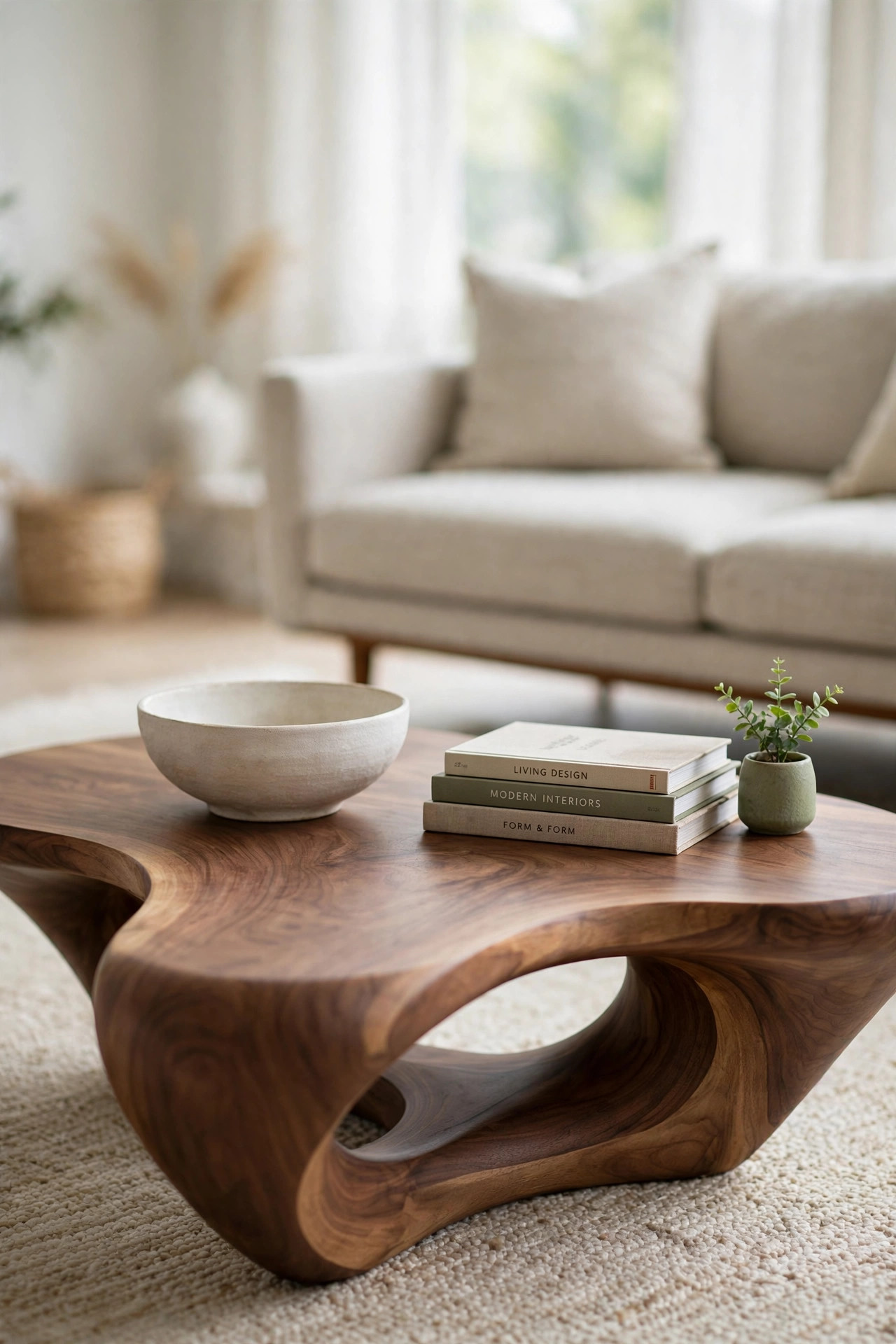
In mid-century design, the coffee table is the visual center of the room, not an afterthought. A walnut piece with an organic, sculptural shape brings the warmth of wood right into the middle of the seating arrangement. The dark grain creates contrast against light upholstery, and that contrast is what makes the whole composition snap into focus.
Style it lightly. One ceramic bowl, a small stack of two or three design books, and a tiny plant are plenty. The table itself is the decoration, so resist the urge to fill every inch. A sculptural base, whether curved wood or an angled pedestal, adds interest at floor level, which is where the eye naturally travels in a room full of low furniture.
6. The Geometric Rug Anchor
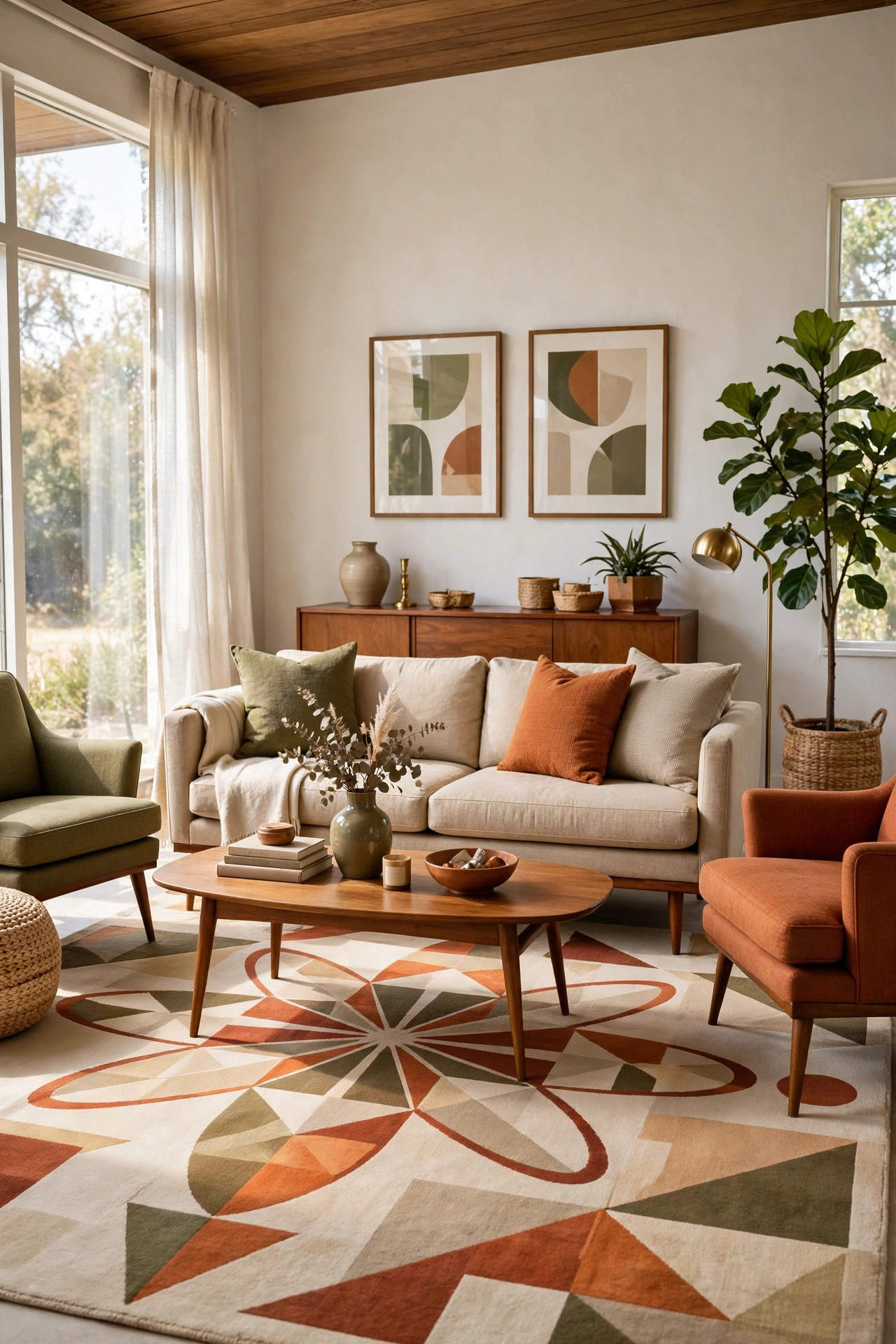
A geometric area rug in warm tones does two jobs at once. It defines the seating zone, telling the eye exactly where the conversation area begins and ends, and it introduces the atomic age patterns that are pure mid-century vocabulary. The rug is essentially the room’s artwork on the floor.
Choose a pattern with beige, rust, and olive if you want the classic palette. Make sure the front legs of your sofa and chairs sit on the rug, at least the front two inches, so the furniture feels connected rather than floating. The visual warmth of a patterned rug also balances all the wood and leather, keeping the room from feeling too hard or masculine.
7. The Sheer Linen Window Treatment
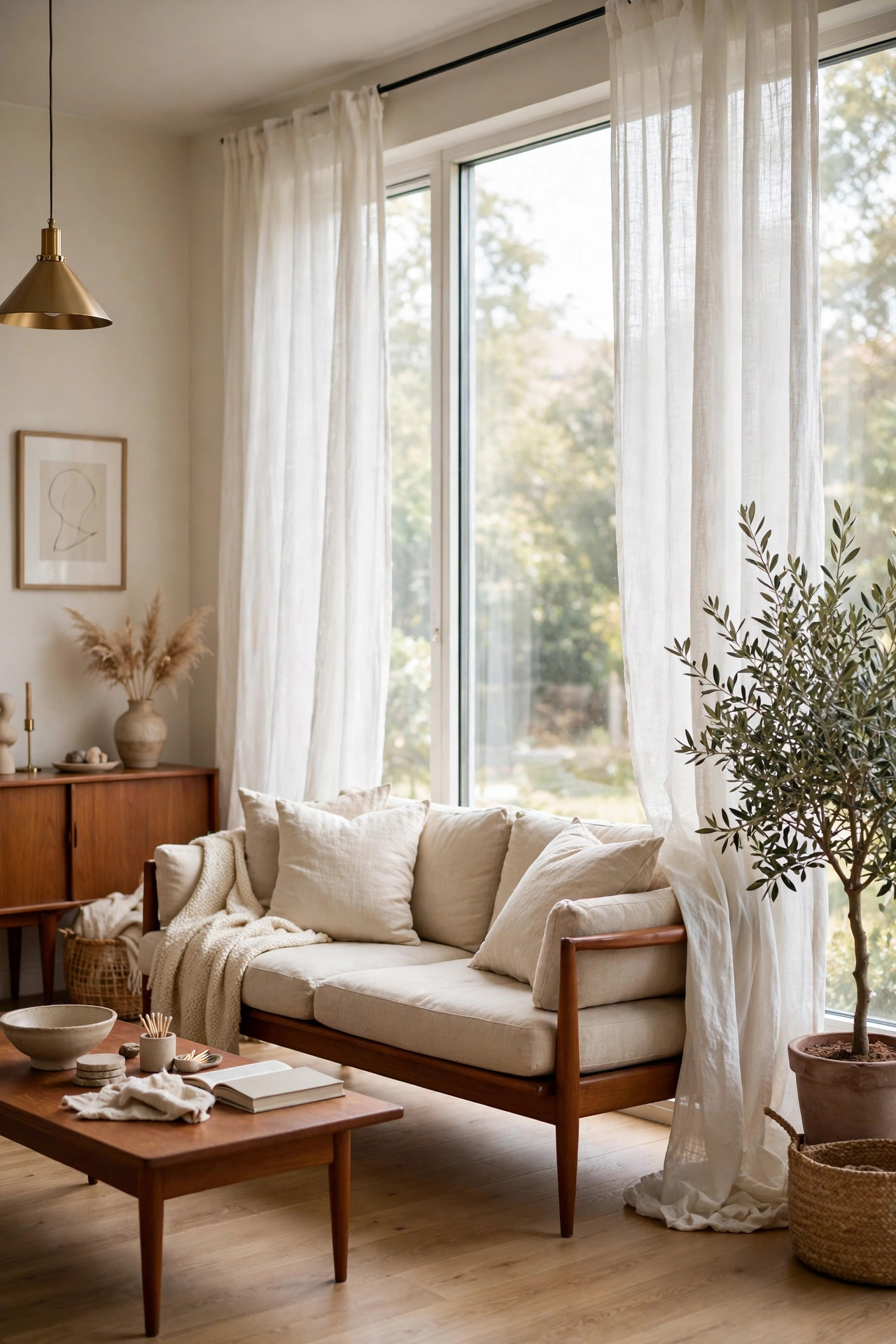
Mid-century homes were built around light, with walls of glass connecting inside and outside. Sheer linen curtains honor that idea perfectly. They soften the daylight without blocking it, creating a gentle glow that makes every piece of furniture look better. Heavy drapes would fight the airy philosophy of the style.
Hang the curtain rod close to the ceiling and let the linen fall all the way to the floor. This draws the eye upward and makes the window feel grand. White or natural linen keeps the palette calm. When the sun comes through, the fabric diffuses the light into something almost cinematic, and your walnut and brass pieces will pick up a warm, golden cast.
8. The Vinyl Console Comeback
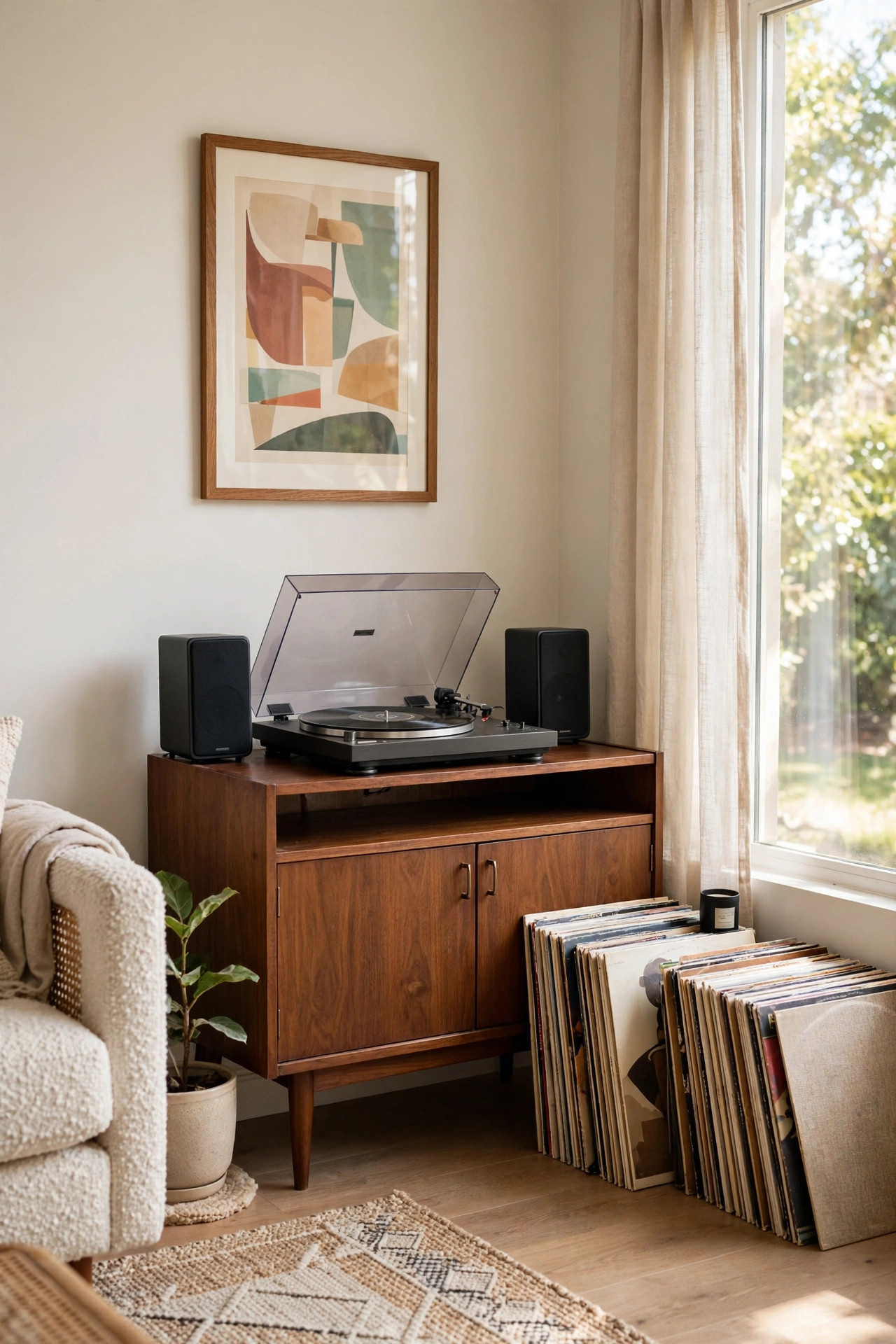
A walnut record console holding a turntable is the kind of detail that makes a room feel personal. Visually, it adds a horizontal band of warm wood at a different height than your sideboard, creating layers in the room. The leaning stack of vinyl sleeves introduces a casual, human element that keeps the space from feeling too styled.
This piece works because it is both furniture and hobby on display. Place it in a corner that needs warmth, not in the main sightline. A framed print above and small speakers on top complete the vignette. The slightly imperfect, lived in quality of records and sleeves is exactly the texture that modern mid-century rooms need to feel real.
9. The Curated Gallery Wall
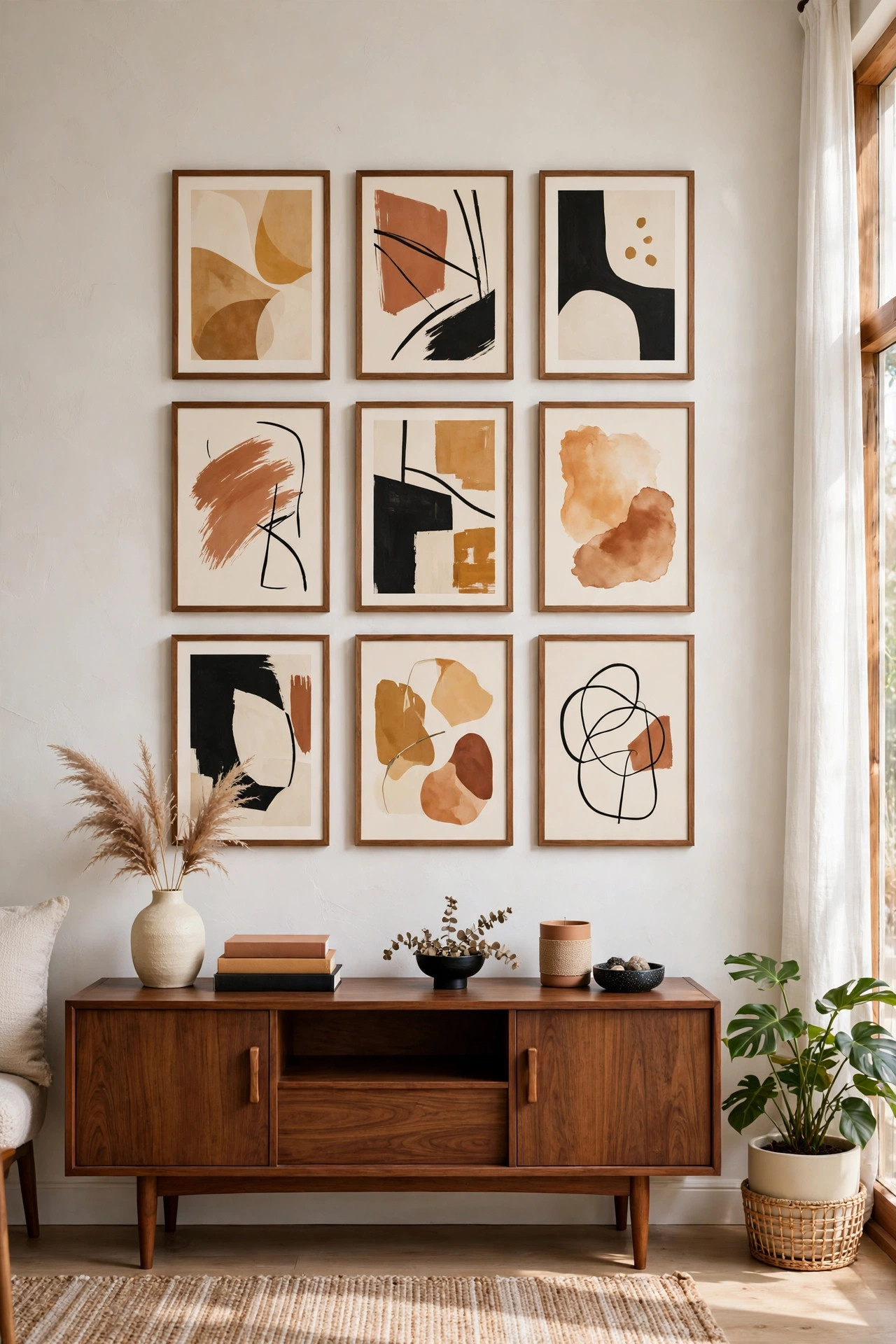
Abstract art is the natural companion of mid-century furniture, and a gallery wall above a low credenza is the classic way to show it. The key word is curated. A balanced arrangement in thin wood frames reads as one large composition rather than a clutter of small pictures. This is what separates a magazine look from a dorm room wall.
Stick to a palette of ochre, terracotta, black, and cream, and the art will echo your textiles and wood tones. Keep the spacing consistent, about two inches between frames. The grid of frames creates an architectural rhythm that contrasts beautifully with the organic shapes of the art itself. It fills a big wall without the weight of one giant canvas.
10. The Tapered-Leg Armchair Pair
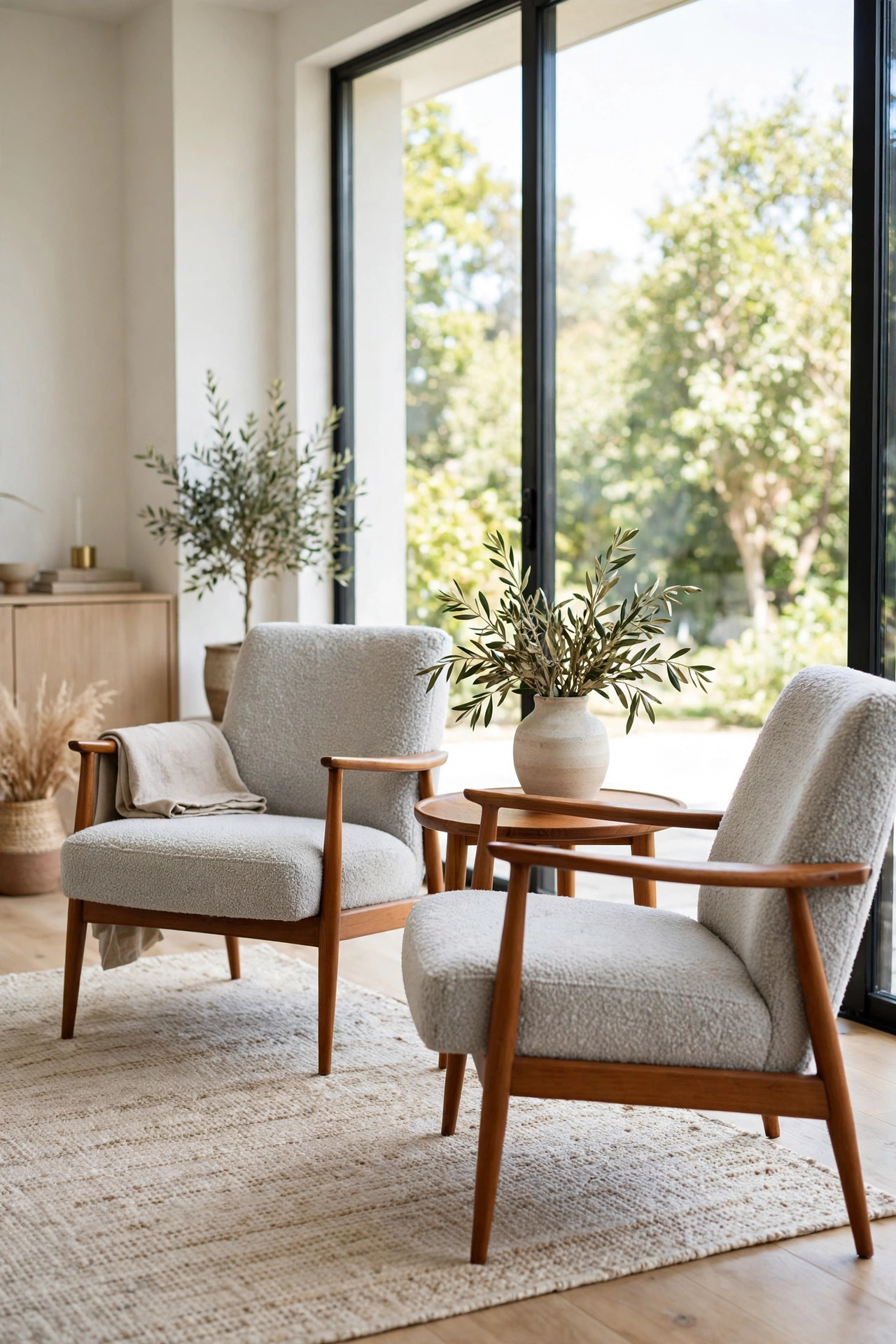
Two matching armchairs angled toward each other is one of the most reliable seating formulas in design. The tapered legs lift the chairs visually, so they take up less visual weight than their size suggests. This airiness is the whole point, the room feels furnished but never crowded.
Angle them slightly toward each other across a small round side table. That little triangle of furniture invites conversation, and the round table softens the straight lines of the chairs. Light grey bouclé or a textured weave adds a modern touch that keeps the vintage shapes feeling current. One small vase on the table finishes a grouping that works in any corner.
11. The Brass Arc Lamp Drama
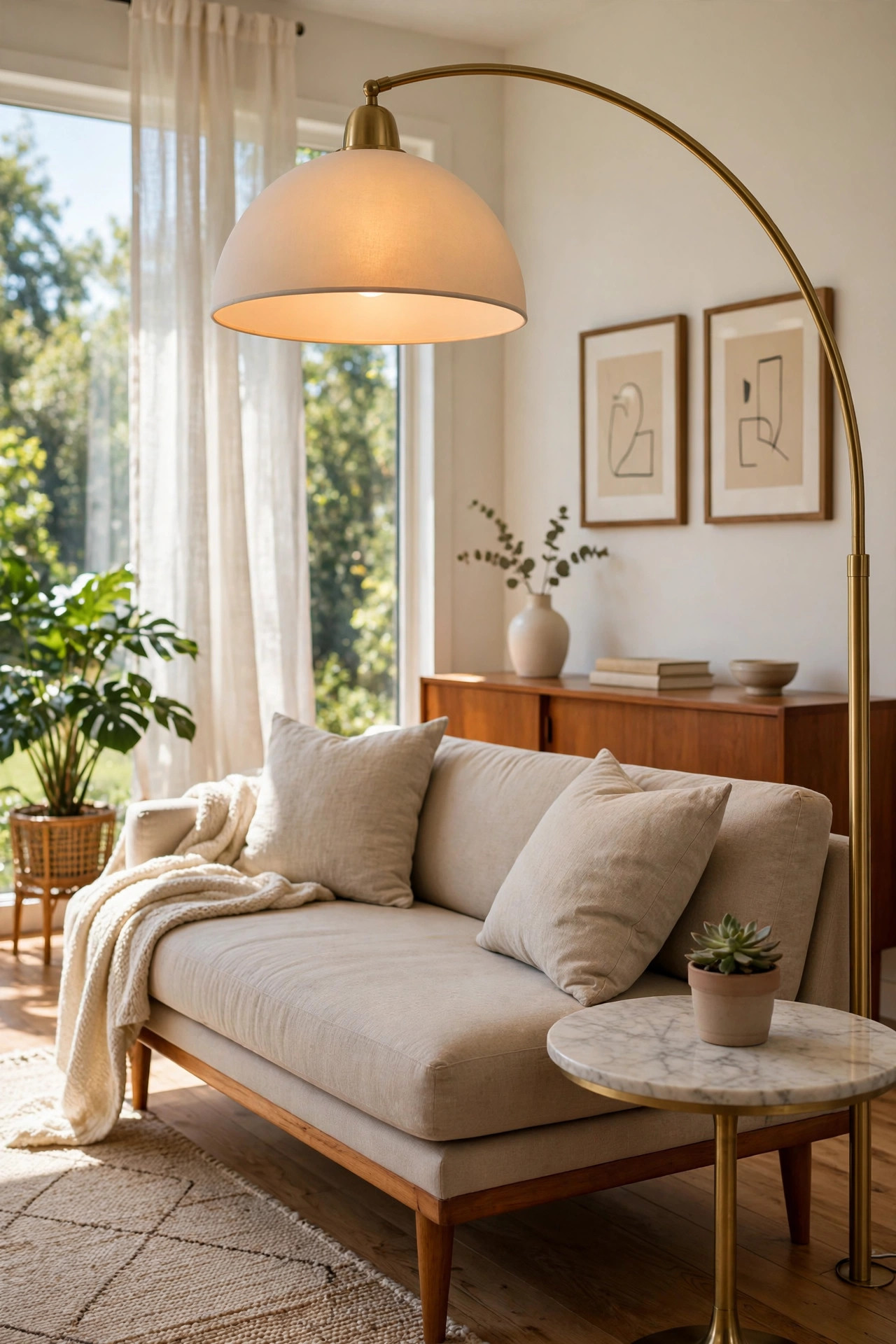
An arc floor lamp is pure theater, and mid-century rooms love a little theater. The sweeping curve draws a graceful line through the air, connecting the floor to the seating area in one elegant gesture. It solves a practical problem too, giving you overhead light exactly where you read without needing a ceiling fixture.
Brass is the right finish because it picks up the warm tones in your wood furniture. Let the dome shade hover over the arm of your sofa, and keep the base tucked beside it. The lamp becomes a sculptural element even when it is off. When it is on, the pool of warm light it casts makes the whole seating area feel intimate and inviting.
12. The Statement Plant Sculpture
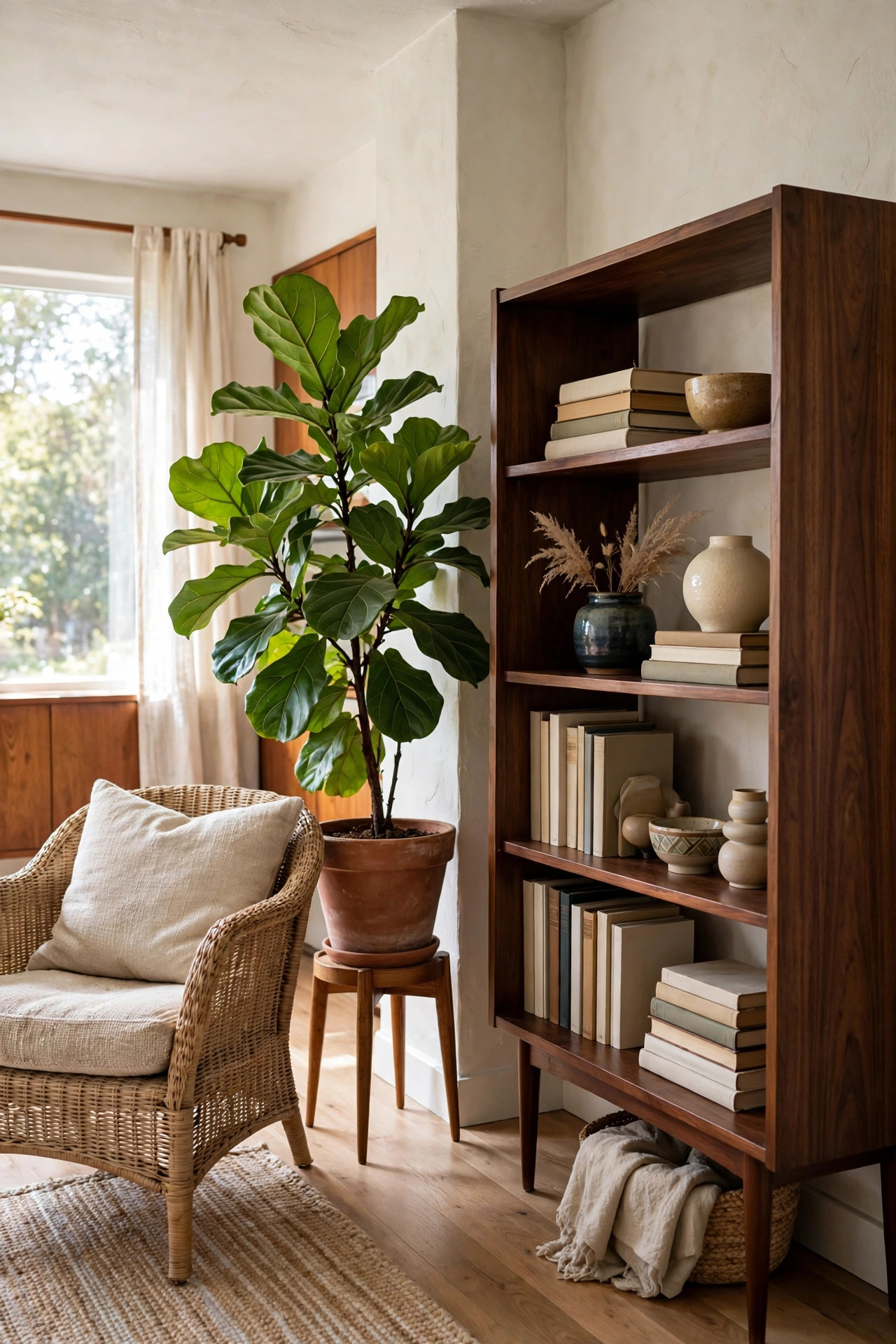
Mid-century designers loved bringing the outdoors in, and a large sculptural plant is the simplest way to do it. A fiddle leaf fig or an olive tree in a terracotta pot adds height, organic shape, and living green to a room full of straight lines and wood. The contrast between the soft, irregular leaves and the precise furniture is what makes the combination sing.
Place the plant where it can be a silhouette against the light, near a window or in an empty corner. Raise it on a simple wooden plant stand to give it presence. The pot matters too. Terracotta or a handmade ceramic keeps the palette warm and earthy, which is far better than a cold white planter for this style.
13. The Mustard and Olive Textile Palette
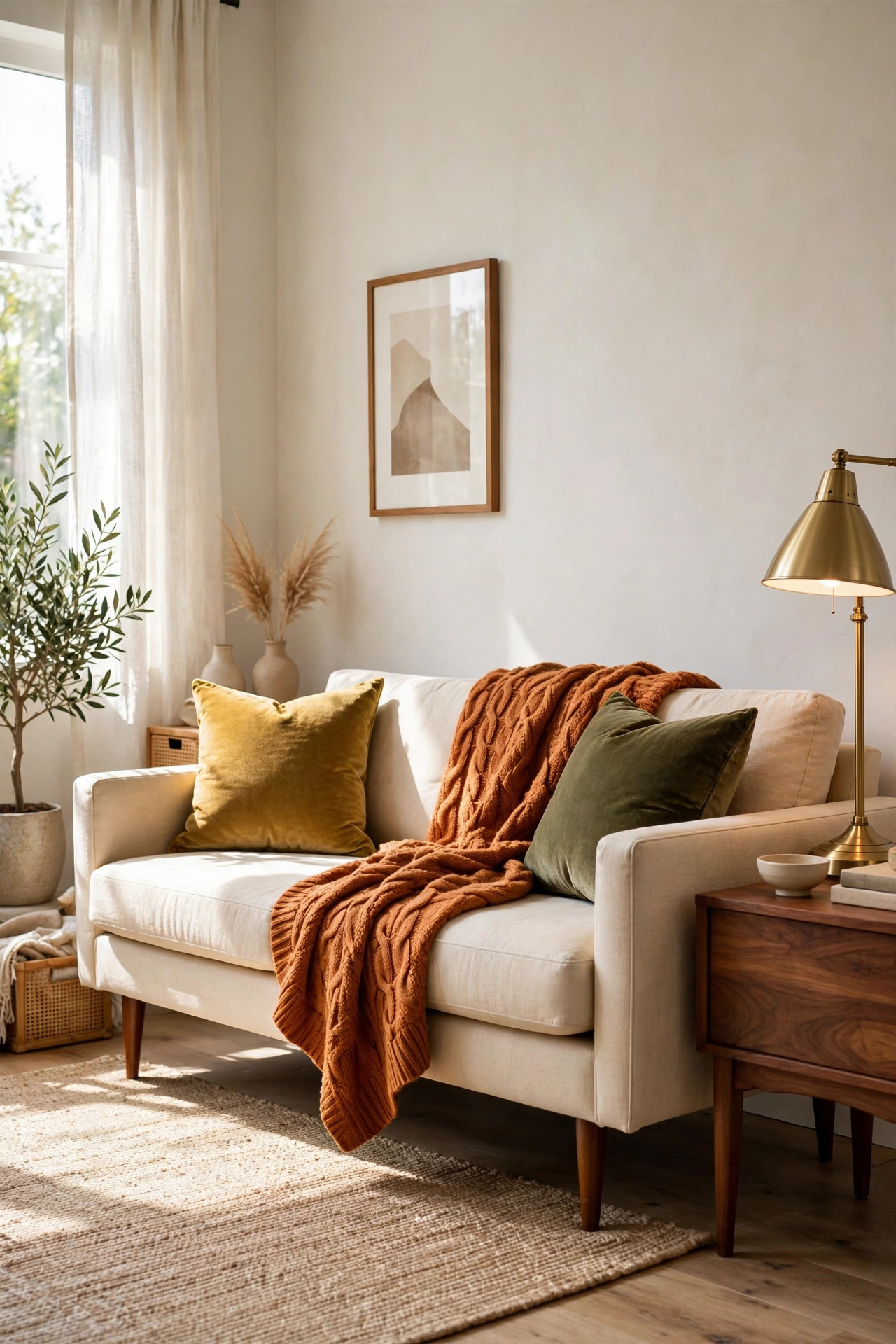
If mid-century modern has a color story, it is mustard, olive, and rust against warm neutrals. These textiles are where you add the color, because the furniture itself stays quiet. A cream sofa becomes a canvas, and the pillows and throws are the paint. This is the easiest idea on this list, and one of the most transformative.
The visual trick is restraint. Three pillows in two colors plus one textured throw is the formula. Mustard velvet catches the light beautifully, olive adds an earthy depth, and a rust knit throw brings warmth. Keep the sofa itself neutral so you can swap these accents with the seasons. The colors feel vintage and current at the same time, which is exactly the balance you want.
14. The Open Shelving Edit
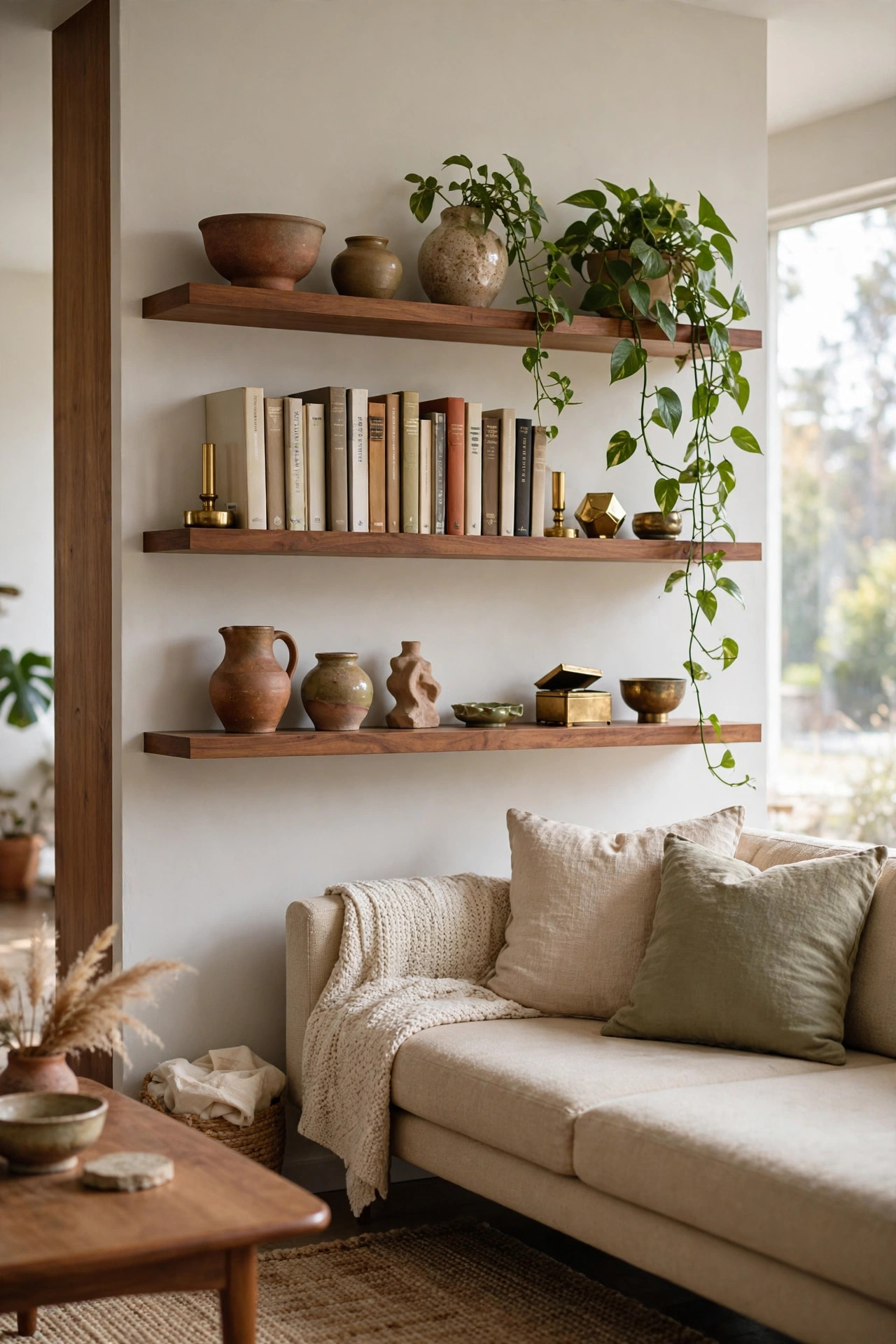
Open walnut shelves turn your everyday objects into a display, and the editing is everything. Group ceramics in earthy tones, stack books horizontally and vertically, and leave generous empty space between groupings. The eye needs that breathing room to appreciate each object, and the walnut shelf itself is part of the look.
Hang the shelves above your sofa or along a wall that needs interest. A trailing plant softens the straight shelf lines and adds movement. Brass bookends or a small sculptural object give the arrangement a jewelry-like accent. When the styling is edited rather than crowded, the shelves read as intentional design instead of storage.
15. The Sunburst Mirror Moment
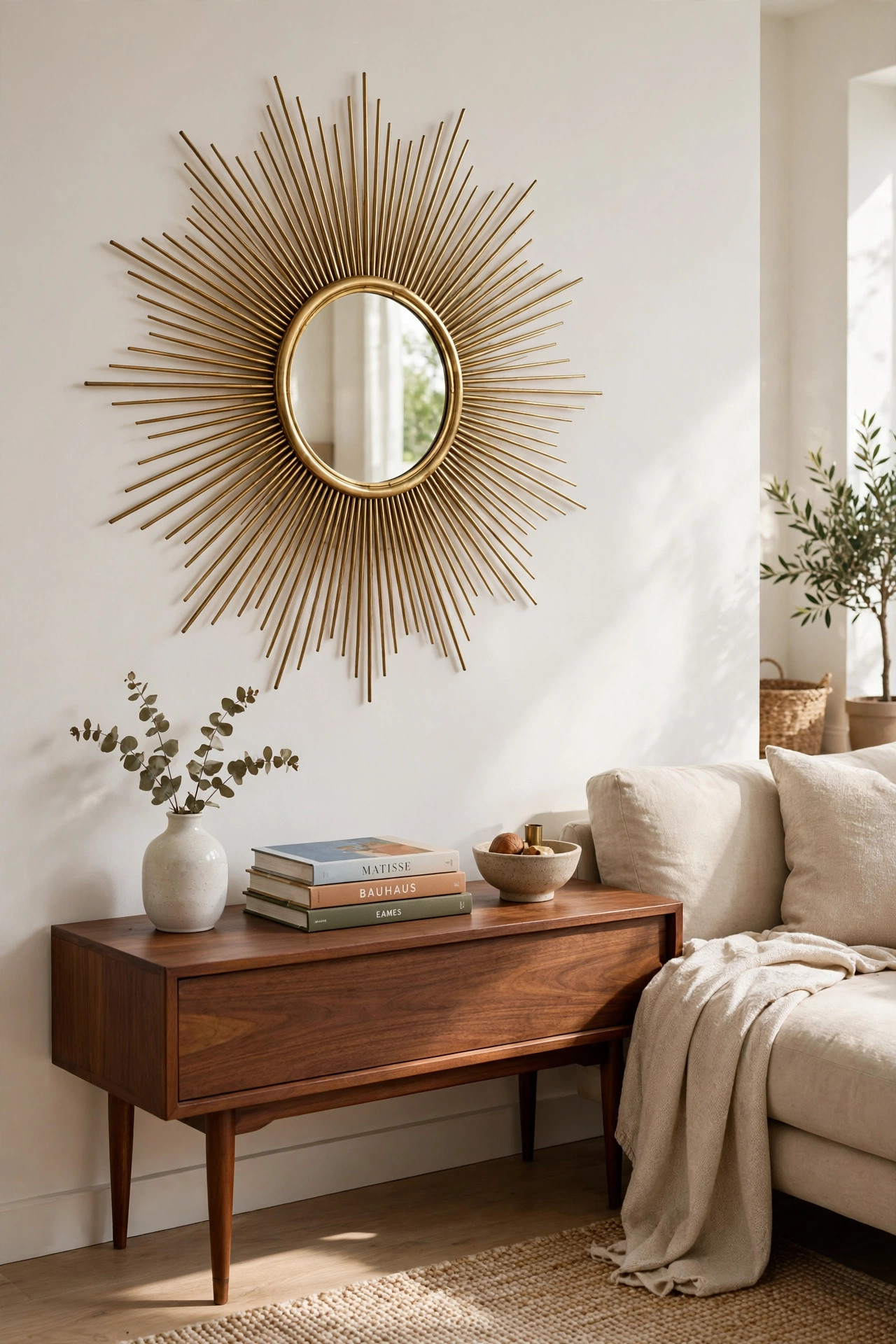
A brass sunburst mirror is the exclamation point of mid-century decor. Hung above a low console, it radiates energy across the wall and bounces light around the room. The circular center mirror reflects the opposite side of the room, which visually doubles your space and your daylight.
The reason it works so well is the contrast of shapes. The spiky, energetic rays play against the calm horizontal line of the console below. Keep the console styling minimal, a small vase and a stack of books, so the mirror stays the star. This is a piece that reads as pure mid-century but feels like a confident modern choice, which is why designers keep returning to it.
16. The Sculptural Table Vignette
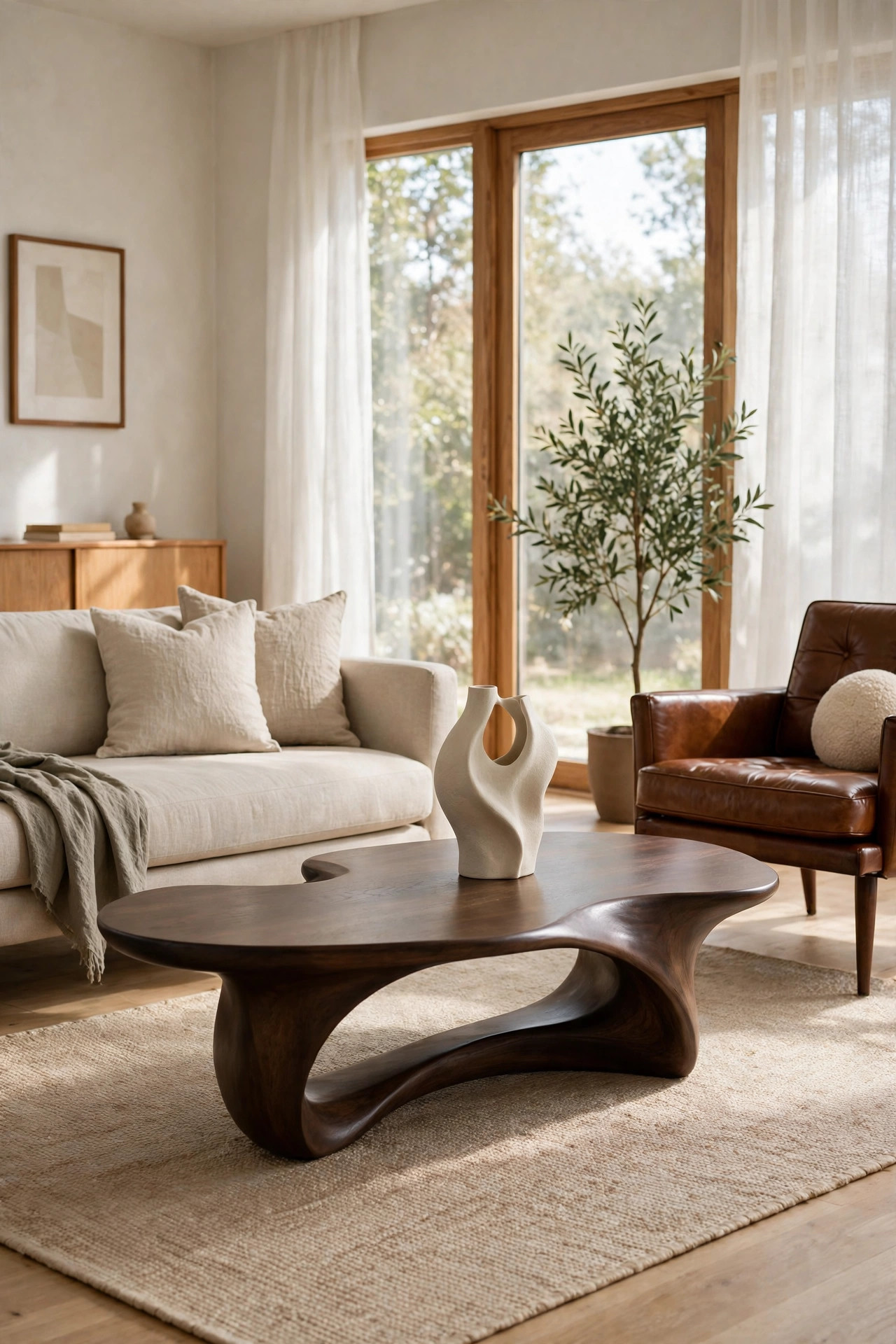
Some coffee tables are so sculptural that they need almost no styling at all. A dark wood table with a curved, organic base is a piece of art you can set a cup on. The bold silhouette creates a strong center of gravity for the seating area, and the dark finish grounds all the lighter upholstery around it.
With a table like this, one object is enough. A single ceramic vase with an interesting shape echoes the curves of the table and keeps the composition calm. This restraint is a very mid-century idea, the belief that one perfect thing beats five pretty things. Let the table’s form be the decoration, and the whole room will feel more expensive and more serene.
17. The Brick Fireplace Warmth
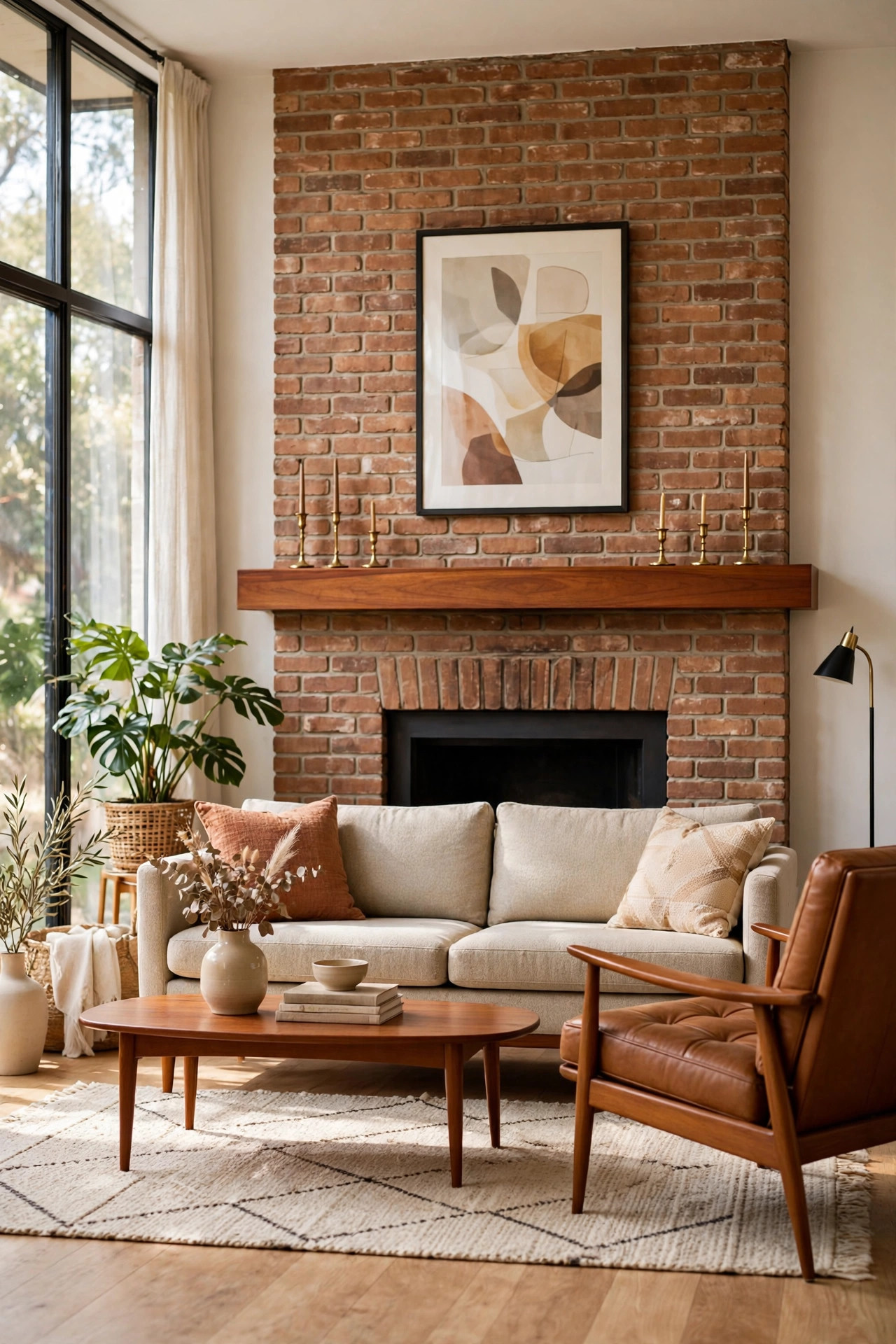
A brick fireplace with a long teak mantel is the warm heart that mid-century living rooms were designed around. The texture of the brick adds a raw, natural element that balances the smooth woods and fabrics. Visually, the fireplace creates a natural focal point, which gives your furniture arrangement an obvious center.
Style the mantel simply. Small brass candlesticks, one framed abstract print above, and nothing else. The brick is already doing plenty of visual work. Arrange your sofa and chairs to face it, and the room instantly feels gathered and cozy. In a style that can sometimes read as cool and graphic, the fireplace brings the warmth that makes it feel like home.
Mid-century modern endures because it was designed around how people actually live, with light, comfort, and honest materials at its core. The freshest rooms today are not museum recreations. They are warm, edited spaces where a teak sideboard sits comfortably next to a bouclé chair and a fiddle leaf fig.
Start with one or two ideas that speak to you. A low sofa, a sunburst mirror, or a new textile palette can shift a whole room. The beauty of this style is that it welcomes slow collecting. Add pieces you love, edit as you go, and let the room grow into something that feels unmistakably yours.
FAQs
What defines a mid century modern living room?
A mid century modern living room is defined by clean lines, low profile furniture, tapered wooden legs, warm woods like teak and walnut, and a mix of organic and geometric shapes. The style comes from the 1940s to 1960s and focuses on function, natural light, and honest materials. Think simple silhouettes, abstract art, and a warm neutral palette with mustard, olive, and rust accents.
Can I mix mid century modern with other styles?
Yes, and mixing is what keeps the style feeling fresh. Mid century pieces pair beautifully with modern minimalism, boho textiles, and even traditional elements. The key is to keep a consistent color palette so the different styles feel connected. One or two vintage pieces in a modern room often look better than a full period recreation.
What colors work best in a mid century modern living room?
Warm neutrals like beige, cream, and tan form the base, with accents of mustard yellow, olive green, burnt orange, and rust. Walnut and teak woods add natural brown tones, and brass brings a golden warmth. Black is useful in small doses for contrast, in frames, lamp details, or thin furniture legs.
Is mid century modern furniture comfortable for everyday use?
It can be very comfortable if you choose well. Look for sofas and chairs with good seat depth and quality cushions, since some vintage pieces were made for looks first. A low-slung sofa with deep cushions works well for lounging, and a classic lounge chair is famously comfortable. Always sit in a piece before buying if you can.
How do I keep a mid century modern room from looking dated?
Mix in current elements like textured bouclé fabric, sheer linen curtains, and contemporary abstract art. Keep the palette warm rather than stark, and avoid matching furniture sets. A few vintage statement pieces surrounded by newer, softer items will read as curated and modern instead of stuck in the past.
What is a budget friendly way to start a mid century modern living room?
Start with textiles and small pieces. Mustard and olive throw pillows, a geometric rug, and a sunburst mirror can transform a room for very little money. Thrift stores and online marketplaces are great sources for affordable teak side tables and lamps. Add one larger vintage investment piece, like a sideboard or lounge chair, when your budget allows.