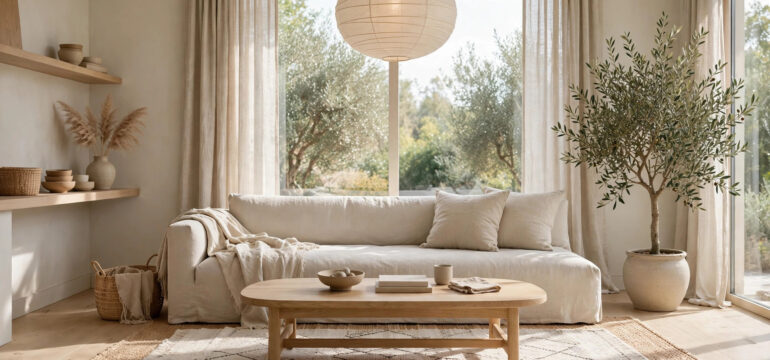
There is a reason Japandi keeps showing up in design magazines and on the prettiest Pinterest boards. It takes the clean calm of Japanese minimalism and mixes it with the warmth of Scandinavian coziness, and the result is a room that feels expensive without trying too hard. Nothing shouts for attention. Every piece looks like it was chosen on purpose, and the whole space seems to breathe. If your living room feels busy or a little tired, this style is the reset button you have been looking for.
The heart of Japandi is wabi-sabi, the Japanese idea that beauty lives in things that are simple, natural, and a little imperfect. A handmade clay vase with an uneven rim. A wooden table where you can see the grain. Linen curtains that wrinkle in the softest way. These small honest details are what make a room feel rich and collected instead of flat and store-bought. You do not need a big budget to get there. You need restraint, good materials, and a willingness to leave some empty space.
Below are twenty ideas that bring this look to life, one thoughtful layer at a time. Each one is practical and easy to try in a real home, whether you rent a small apartment or own a house with a big open living room. Start with the pieces that speak to you, add them slowly, and let the calm build. By the end, your living room will have that quiet, expensive feeling that never goes out of style.
1. Low-Profile Platform Sofa
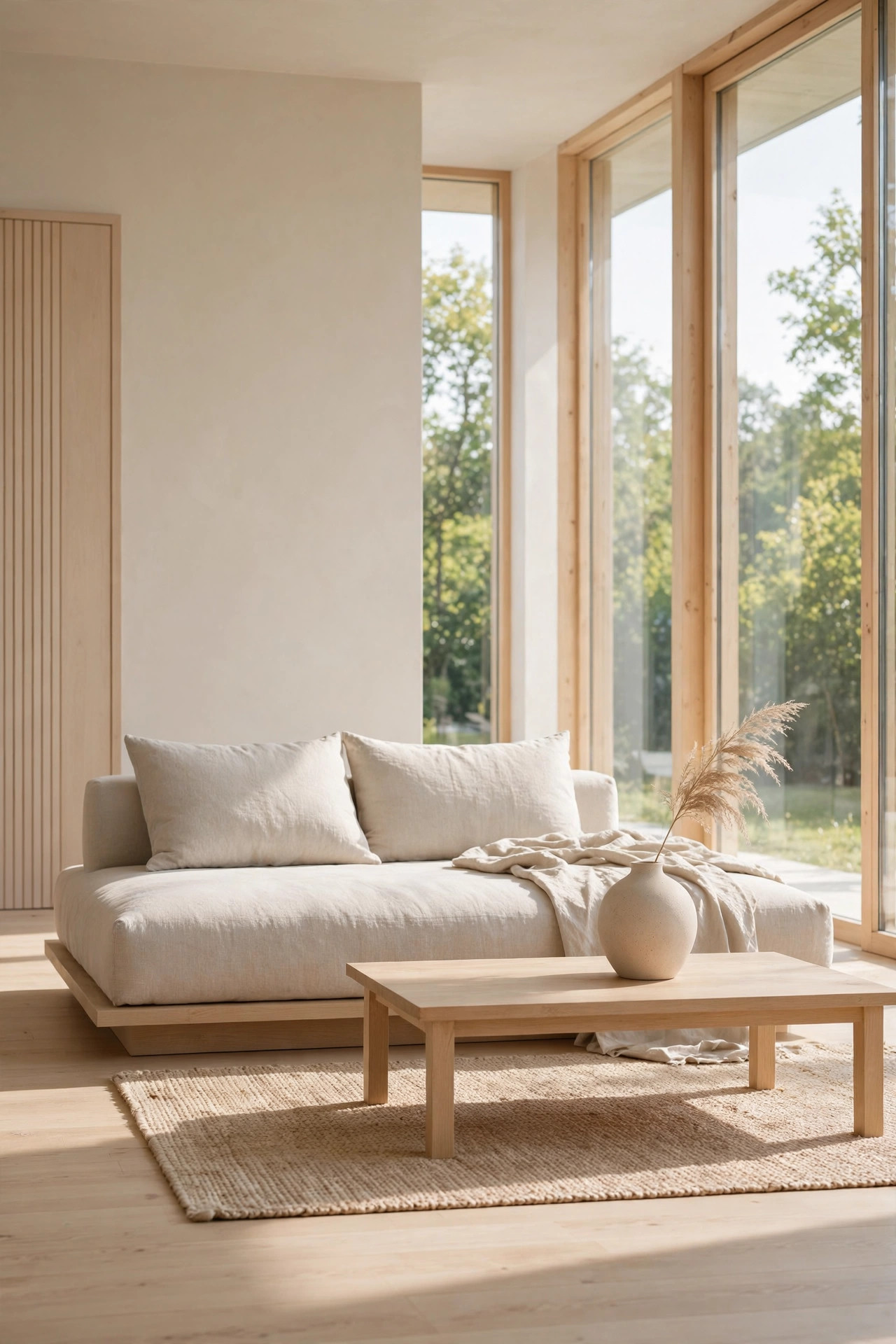
A low-profile sofa is the foundation of a true japandi living room, because it sets the whole mood of the space before anything else is added. Japanese interiors have always favored furniture that sits close to the floor, and there is a good reason for it. Low seating makes a room feel grounded and calm, and it opens up the sightlines so the space looks bigger and more peaceful. When your sofa hugs the floor, the ceiling feels taller and the whole room seems to slow down. Scandinavian design adds the comfort part, with deep soft cushions and warm fabrics that invite you to sink in. Look for a sofa with clean straight lines, short solid wood legs or no legs at all, and upholstery in a natural tone like oatmeal, warm gray, or soft beige. Avoid busy patterns, shiny fabrics, and oversized arms that eat up visual space. The best Japandi sofas look simple from across the room but feel wonderful when you sit down, which is exactly the quiet luxury this style is known for. When you shop, sit on the sofa for a good ten minutes before deciding, because a low seat changes how your knees and back feel compared to a standard height couch. Check that the seat depth lets you sit upright with your feet flat, since some very low designs can feel hard to get out of. Pair the sofa with a rug that extends well past its front edge, because the low line looks best when it sits fully grounded on soft texture. Keep the wall behind it simple, maybe one calm piece of art hung slightly lower than usual, so the whole arrangement feels connected and intentional rather than floating in an empty room.
Styling a low sofa the Japandi way is all about restraint and texture. Choose two or three throw pillows in natural fabrics like linen, cotton, or a soft wool blend, and keep the colors close to the sofa so the palette stays calm. A single textured throw folded over one arm adds warmth without clutter. Keep the coffee table low too, so the heights feel connected and the room keeps its relaxed horizontal flow. Leave some space around the sofa instead of pushing it against the wall, because breathing room is part of the look. If you already own a taller sofa and cannot replace it, you can fake the effect by choosing a low coffee table, a low rug, and low side tables nearby, which pulls the eye downward and creates the same grounded feeling. Add one handmade ceramic piece or a small wooden tray on the coffee table to finish the scene with a touch of craft. Fluff and rotate the cushions every week so they wear evenly and keep their welcoming shape. If you have pets, choose a washable slipcover in a natural fabric, because life with animals and light upholstery works much better when you can toss the cover in the wash. Change the throw with the seasons, using a lighter cotton in summer and a soft wool in winter, which keeps the sofa feeling fresh all year. Every few months, step back and look at the whole arrangement with fresh eyes, removing anything that drifted in and no longer belongs. A low sofa rewards this gentle attention by looking better and better, settling into your home like it was always meant to be there.
2. Light Oak Coffee Table
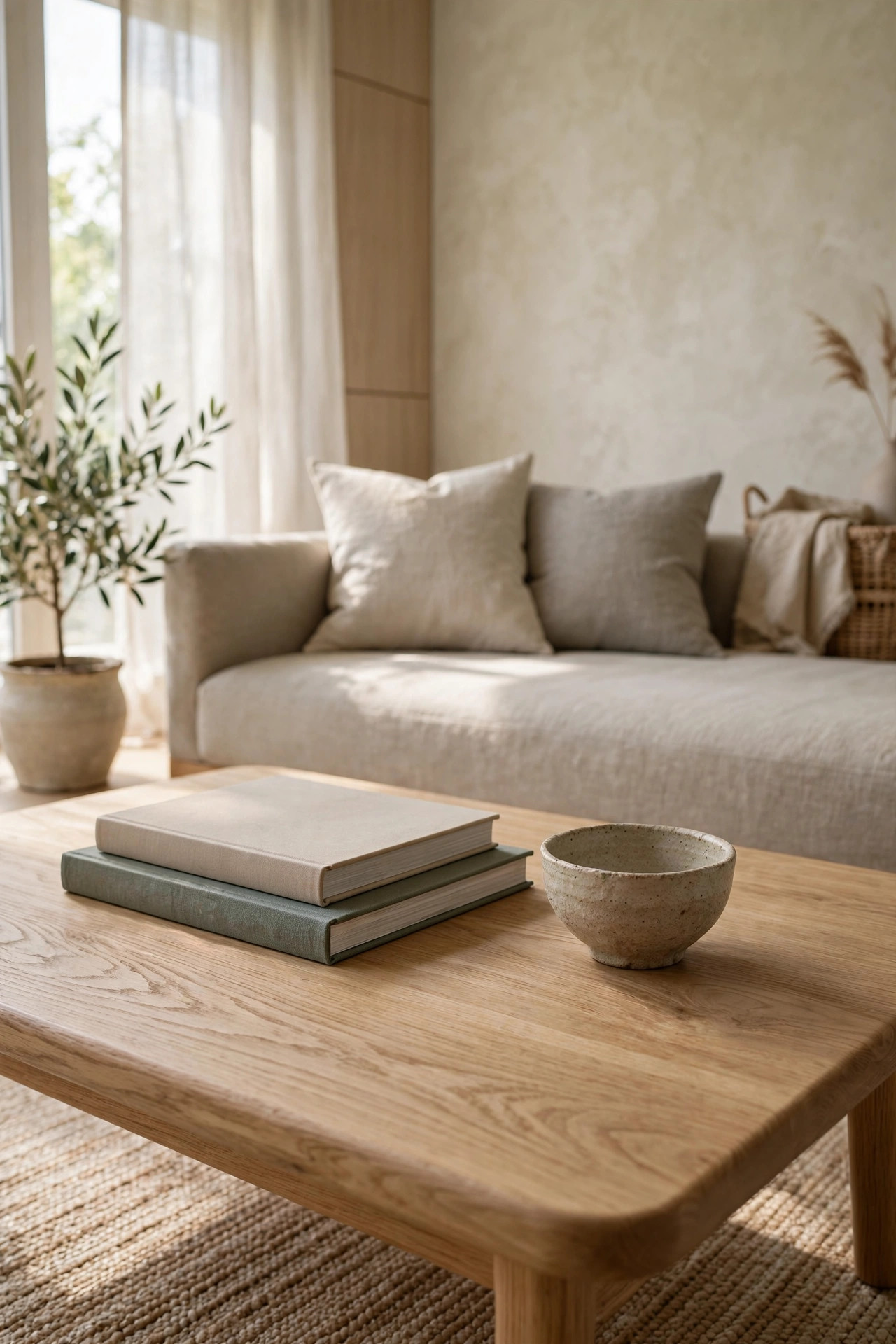
The coffee table is the quiet anchor of a japandi living room, and light oak is the perfect wood for the job. Oak has a soft golden tone that brightens the room without the cold feeling that darker woods can bring, and its visible grain adds natural pattern so you do not need extra decoration. In Japanese design, wood is honored for its honest character, and in Scandinavian homes, pale wood keeps long dark winters feeling light. A simple rectangular or softly rounded table with clean edges fits both traditions beautifully. Look for solid wood or a good quality veneer with a matte finish, because glossy surfaces fight the calm matte look that Japandi loves. The table should feel sturdy and well made, with joinery or details that show a craftsman cared about it. Keep the size in proportion to your sofa, roughly two thirds of its length, so the arrangement feels balanced and easy to walk around. Round or oval tables soften a room full of straight lines, so consider a gentle curve if your sofa and shelves are all very rectangular. Check the height carefully, because the ideal coffee table sits at roughly the same height as the sofa seat or an inch or two lower, which keeps the low Japandi profile intact. If you love the look but worry about scratches, choose a table with a hardwax oil finish, which resists marks and can be spot repaired without refinishing the whole top. Take time to feel the edges in the store, because softly rounded corners are kinder to shins and small children. A table that feels good to touch will be used and loved every day, which is exactly what honest furniture is for.
How you style the coffee table matters as much as the table itself. Japandi styling follows the rule of less, so choose three small items at most and give each one room to breathe. A low stack of two design or art books, a small handmade bowl, and a tiny green plant or a single stem in a bud vase is plenty. Trays are wonderful here because they gather small things into one calm shape and make the table easy to clear. Avoid candles in bright colors, plastic objects, or anything with a loud logo, since these break the quiet mood. Wipe the wood often and treat it with a natural oil once or twice a year to keep the grain rich and glowing. A well cared for oak table only looks better with age, developing a soft patina that tells the story of your home, and that living-in quality is exactly what wabi-sabi celebrates. Change the styling with the seasons to keep the table feeling alive, swapping a small pinecone or dried seed pod in autumn for fresh blossoms in spring. Keep a soft cloth in a nearby drawer so wiping the surface becomes a quick daily habit instead of a chore. If the table starts to look dry or pale, a thin coat of natural furniture oil rubbed in with the grain will bring back its warm glow in minutes. Avoid placing hot mugs directly on the wood, and use a small stone or wood coaster that matches the calm palette. These little rituals of care are part of the Japandi mindset, treating everyday objects with respect so they last for decades instead of ending up replaced every few years.
3. Wabi-Sabi Ceramic Vases
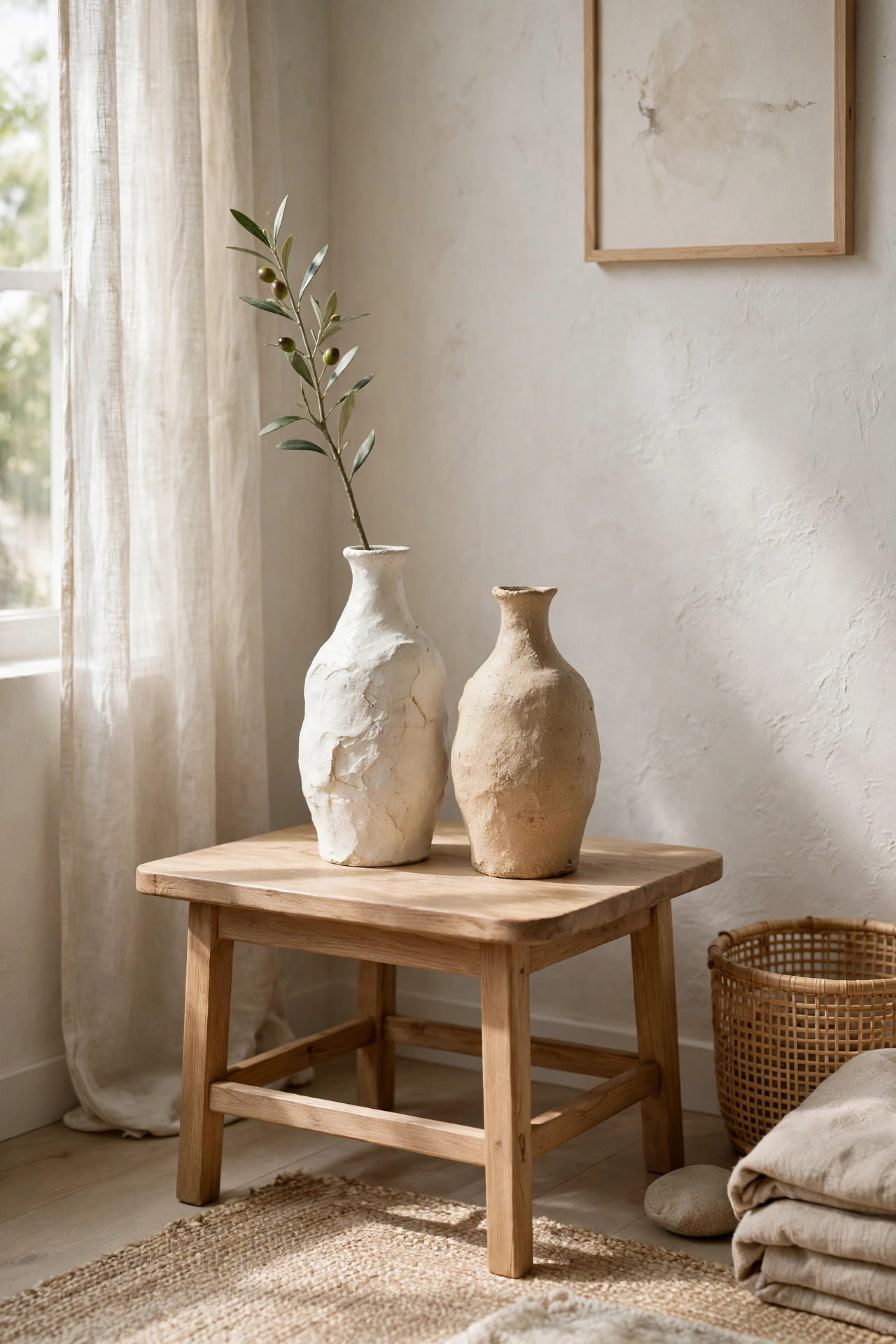
No japandi living room feels complete without handmade ceramics, because they carry the soul of wabi-sabi in their very shape. These are not perfect factory vases. They are clay pieces with slightly uneven rims, soft fingerprints in the glaze, and gentle color shifts that prove a human hand made them. That imperfection is the whole point. Wabi-sabi teaches that beauty is deeper when something is natural and one of a kind, and a handmade vase brings that philosophy right into your living room. Choose vases in earthy tones like warm white, soft gray, sandy beige, or muted clay, and look for matte or softly textured glazes rather than shiny ones. A mix of two or three different heights grouped together looks collected and artistic, while a single large statement vase can hold its own on a shelf or side table. Even empty, these pieces add quiet richness to the room. When you start collecting, begin with one medium vase that you truly love rather than buying a matched set, because a personal collection grows more beautifully than a store bought group. Hold each piece and notice its weight, since good handmade ceramics feel solid and balanced in the hand. Look for subtle details like a slightly flared lip, a soft matte glaze that shifts color in the light, or a tiny speckled texture from natural clay. These quiet qualities are what separate craft from mass production. Place new pieces next to your existing ones in the shop to see how the tones work together, aiming for a family of earthy shades that feel related without matching exactly.
Place your ceramics where the daylight can touch them, because natural light shows off their texture in the most beautiful way. A pair of small vases on a wooden side table, one tall vase in an empty corner, or a low bowl on the coffee table all work wonderfully. You can leave them empty to celebrate their form, or add a single branch, a few dried grasses, or one fresh stem. Fresh eucalyptus, pampas grass, or a simple olive branch all suit the Japandi palette and last a long time. Avoid filling every vase and avoid bright dyed flowers, which clash with the calm natural mood. When you shop, support local potters or small studios if you can, because a piece with a maker behind it brings a story into your home. Over time your small collection will grow into a personal gallery of craft, and each piece will remind you that the most expensive looking rooms are the ones filled with things made with care. Rotate your ceramics through the seasons to keep the display feeling fresh, bringing out warmer clay tones in autumn and cooler whites in spring. If a piece chips, consider the Japanese art of kintsugi, repairing it with gold, which turns damage into beauty and honors the object’s history. Wash handmade pieces by hand with mild soap and dry them fully before storing, because dishwashers and harsh detergents can dull delicate glazes. Keep vases out of strong afternoon sun if they hold dried arrangements, since harsh light can fade natural grasses over time. Most of all, use your beautiful pieces instead of saving them for special occasions, because everyday use is what gives handmade objects their warmth and meaning.
4. Natural Linen Curtains
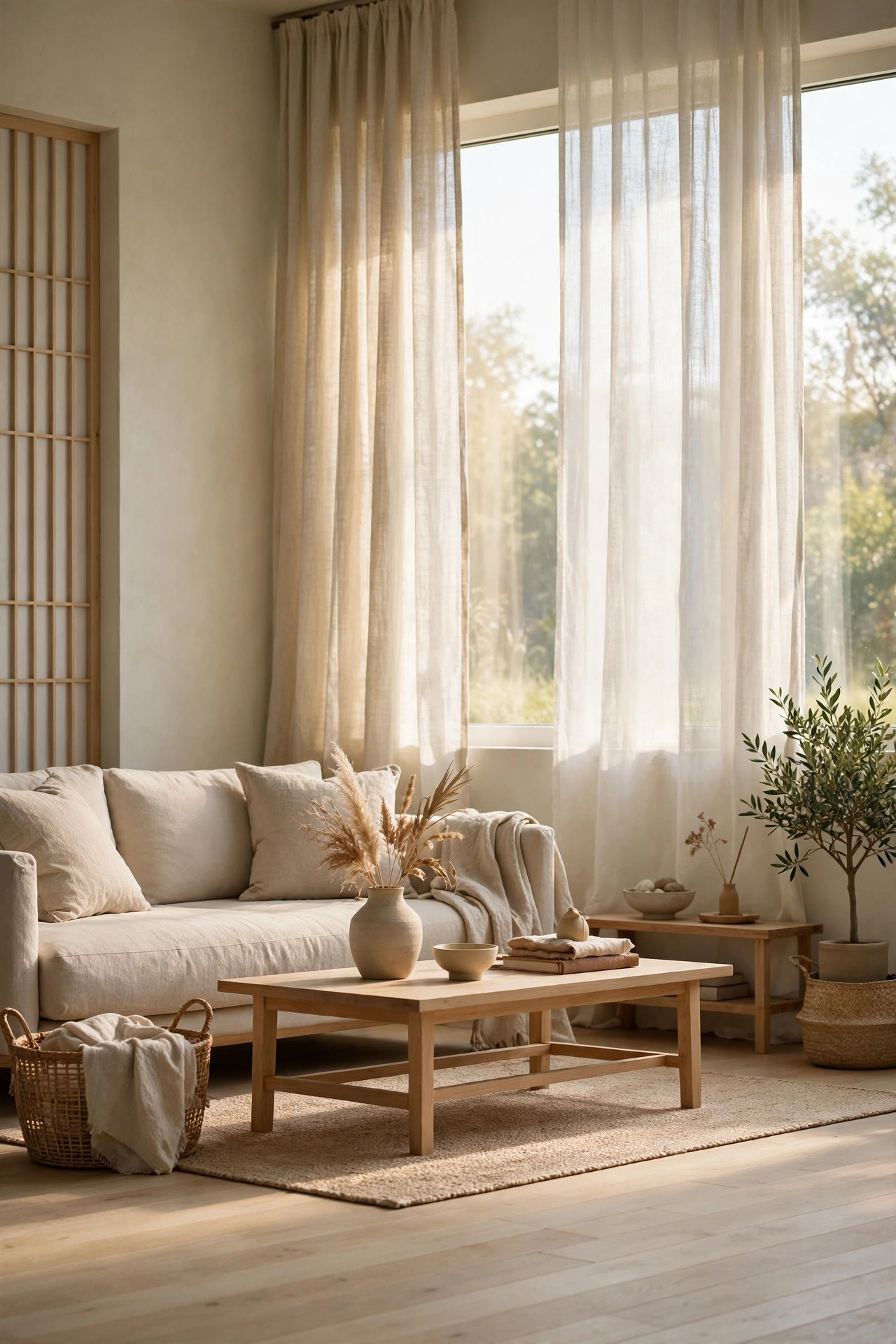
Curtains do more work in a japandi living room than most people realize, because they control the light and the light controls the mood. Natural linen curtains are the perfect choice, since linen filters sunlight into a soft warm glow that makes the whole room feel calm and expensive. The fabric has a beautiful loose weave and a gentle wrinkle that looks relaxed rather than messy, which fits the wabi-sabi love of natural imperfection. Choose curtains in warm white, flax, oatmeal, or a very light beige, and hang them high and wide so the window looks larger and the light spreads evenly. Linen panels should just kiss the floor or puddle slightly for a soft tailored look. Avoid heavy blackout fabrics, shiny polyester, and bold patterns, because they block the daylight and add visual noise that Japandi tries to remove. Measure your windows carefully before ordering, because linen panels should be one and a half to two times the width of the window for soft full folds. If you are renting, use a tension rod or removable hooks so you can take the look with you when you move. Choose a lining only if you need extra privacy, and pick an unbleached cotton lining that keeps the natural feeling instead of stiff white backing. The gentle texture of linen also helps soften street noise a little, which adds to the calm. When the panels arrive, hang them right away and let gravity do the work, because linen relaxes into beautiful drapes within a day or two.
Hanging linen curtains well is simple but it makes a big difference. Mount the rod several inches above the window frame and extend it well past the sides, so when the curtains are open they frame the window instead of covering it. Use simple rings or a plain rod in wood, matte black, or brushed brass for a quiet crafted detail. Linen wrinkles are part of its charm, so do not iron the panels flat. A light steam to remove shipping creases is enough, and after that let the fabric relax into its natural soft folds. Wash them gently and line dry when you can, because linen gets softer and more beautiful with every wash. If full linen feels too sheer for your street facing windows, layer a simple natural roller shade underneath for privacy while keeping the linen as the visible soft layer. The result is a window that glows like a paper lantern, and that gentle light is the signature of a calm Japandi space. In bedrooms, layer the linen over a simple blackout roller if you need darkness for sleep, keeping the linen as the soft visible layer during the day. Tiebacks in natural rope or leather add a crafted detail when you want to hold the panels open, but use them loosely so the fabric keeps its relaxed shape. If the panels get dusty, shake them outdoors and let fresh air revive the fibers instead of washing too often. Sunlight will gently fade linen over the years, and that soft sun kissed tone is part of its charm rather than a flaw. Enjoy how the light changes through the day, from bright morning glow to golden evening warmth, because linen curtains turn every hour into a slightly different beautiful painting.
5. Shoji-Style Room Divider
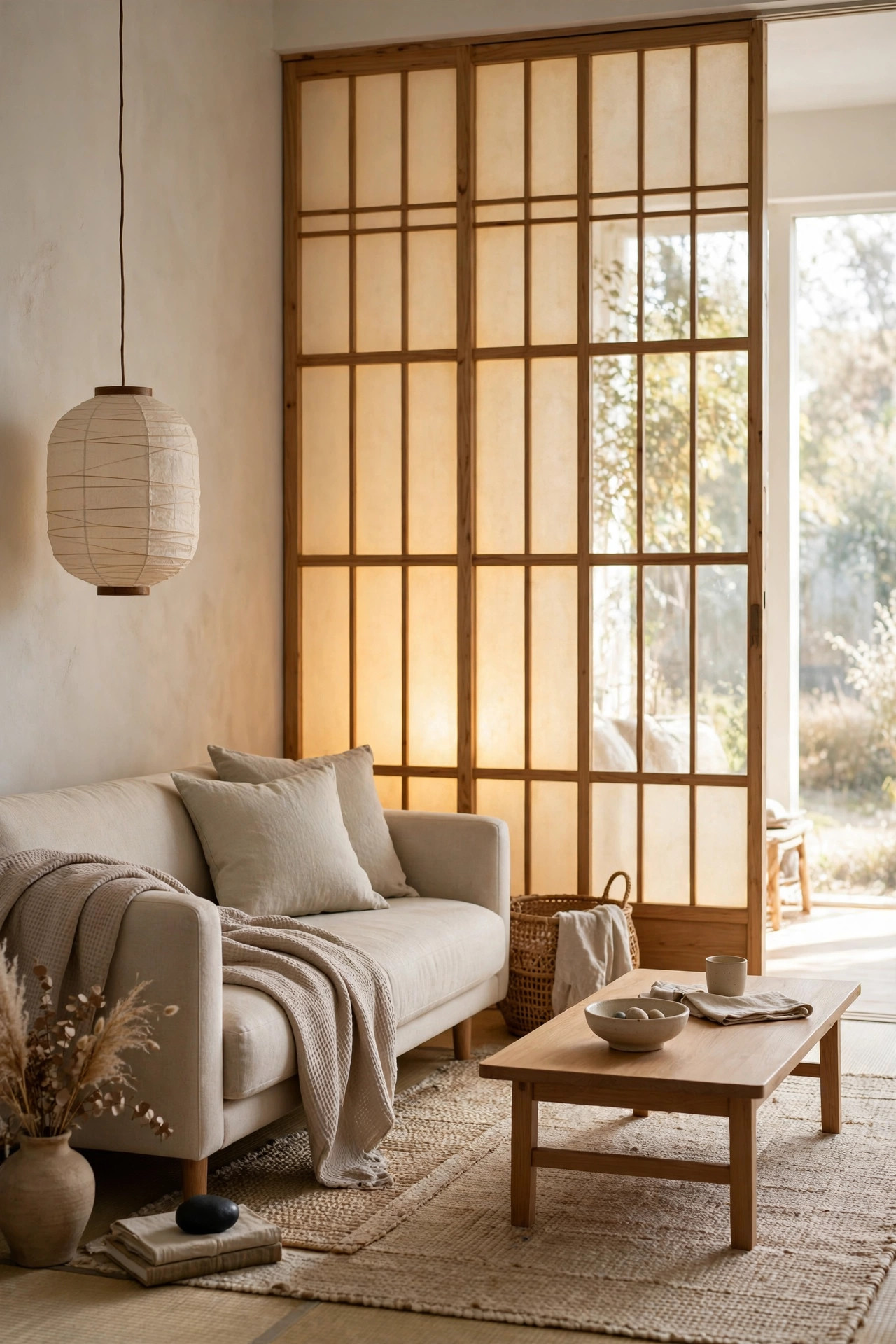
A shoji-style room divider brings instant Japanese soul to a living room while solving real everyday problems. These light wooden frames filled with soft translucent panels were made to divide space without blocking light, and they do the job beautifully in modern homes too. Use one to hide a messy corner, to create a small reading nook inside a large room, to soften the line between the living room and dining area, or simply as a piece of art against a plain wall. The grid pattern of the frame adds gentle geometry that feels orderly and calm, and the glowing panels diffuse light the way a paper lantern does. Look for dividers made of real wood like pine or oak with rice paper or fabric panels in warm white. Two or three panels give you flexibility to fold and angle the screen, while a single wide panel works as a simple decorative backdrop. Measure your space before buying, because screens come in many heights and a divider should relate to your furniture scale. A screen that stands a little taller than your sofa creates a nice backdrop, while a shorter one works as a gentle suggestion of separation. If you cannot find the perfect size, many makers offer custom heights for a small extra cost. Look for sturdy hinges that hold their position without wobbling, since a screen you adjust often needs good hardware. Natural wood tones like light pine or warm oak blend with most Japandi palettes, while darker walnut adds drama to rooms with lots of light walls.
Placing a shoji screen takes a little thought but the effect is worth it. Put it where it catches side light from a window so the panels glow softly during the day, and add a small floor lamp behind it in the evening for a warm lantern effect that feels magical. Keep the area around the screen uncluttered so its clean lines can shine, and avoid pushing heavy furniture right up against it. If you have an open plan space, angle the screen to suggest a separate zone without building a wall, which keeps the airy feeling Japandi loves. Dust the frame regularly with a soft cloth and keep the panels away from damp spots, since paper and fabric panels dislike moisture. For homes with kids or pets, choose a version with fabric panels instead of real rice paper, because fabric resists tears and still gives that soft glow. A shoji screen is one of those rare pieces that is both useful and beautiful, and it instantly makes a living room feel considered and serene. In a studio apartment, use the screen to separate the sleeping area from the living space, which makes one room feel like two calm zones. Behind the screen you can hide things like a laundry basket or a small desk without hurting the room’s peaceful look. At night, place a small warm lamp behind the panels and watch the screen glow like a giant lantern, which is pure magic. If the paper panels ever tear, replacement paper is inexpensive and easy to fit, so the screen can last for decades. Teach children to be gentle around it, treating it as a special piece rather than a toy. With a little care, your shoji screen will become one of those beloved pieces that moves with you from home to home.
6. Tatami-Inspired Area Rug
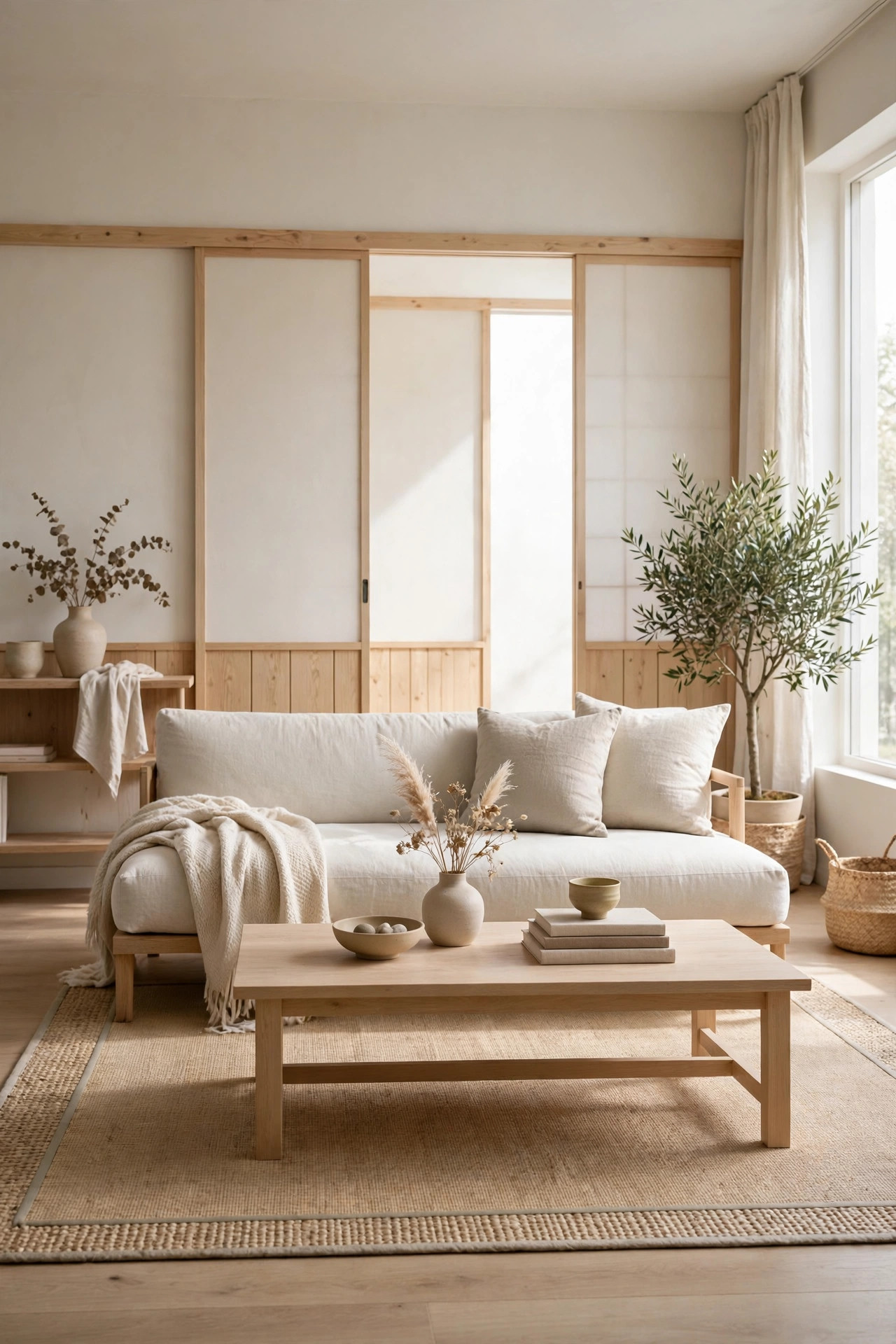
The floor sets the tone in Japanese inspired design, and a tatami-inspired rug brings that grounded peaceful feeling straight into a japandi living room. Real tatami mats are woven from rush grass and have a fresh grassy scent and a firm springy feel underfoot, but full tatami flooring is hard to install in most homes. A rug with a tatami look gives you the same calm effect in an easy portable form. Look for flat weave rugs in natural fibers like jute, sisal, or cotton with a tight simple weave and a warm straw or beige tone. The subtle grid texture of these rugs adds quiet pattern to the floor without shouting, which is exactly what Japandi wants. Choose a size large enough that the front legs of your sofa and chairs rest on it, because a rug that floats in the middle of the room looks lost and breaks the calm flow. Choose a rug with a tight flat weave if you have pets, because claws can snag looser weaves and pull the fibers. Natural fibers are wonderfully durable but they dislike standing water, so keep the rug away from plant pots that might leak and clean spills quickly with a dry cloth. If your room gets strong sun, rotate the rug twice a year to keep the color even, since natural fibers can fade gently in bright light. A good rug pad underneath adds cushioning and keeps the rug from creeping across wood floors. Feel the rug with bare feet before you buy if you can, because texture matters as much in Japandi design as color does.
Layering and placement turn a simple rug into a design statement. Center the rug under your main seating group so it gathers the furniture into one connected island of calm. If your floors are dark wood, a light natural rug creates a beautiful contrast that brightens the whole room. You can layer a smaller soft rug on top for extra comfort, like a low pile wool rug in cream over a flat jute base, which adds the Scandinavian coziness to the Japanese simplicity. Keep the rug clean by vacuuming gently without a beater bar and rotating it every few months so wear stays even. Avoid rugs with bold prints, bright colors, or high shine, since they fight the quiet natural palette. A tatami-inspired rug does something wonderful. It makes you want to sit on the floor, slow down, and enjoy the room, and that invitation to rest is the true spirit of Japandi living. For dining areas, choose a rug large enough that chairs stay on it even when pulled out, which usually means adding extra length on every side. In entryways, a small flat weave runner in the same natural family ties the whole home together. If someone in your home has allergies, natural fiber rugs are a smart choice because they do not trap dust the way deep pile synthetics can, and regular vacuuming keeps them fresh. Shake smaller rugs outdoors a few times a year to release deep dust. When the rug finally wears out after years of faithful service, natural fibers can be composted or recycled, which fits the Japandi respect for materials that return gently to the earth.
7. Handcrafted Wooden Side Table
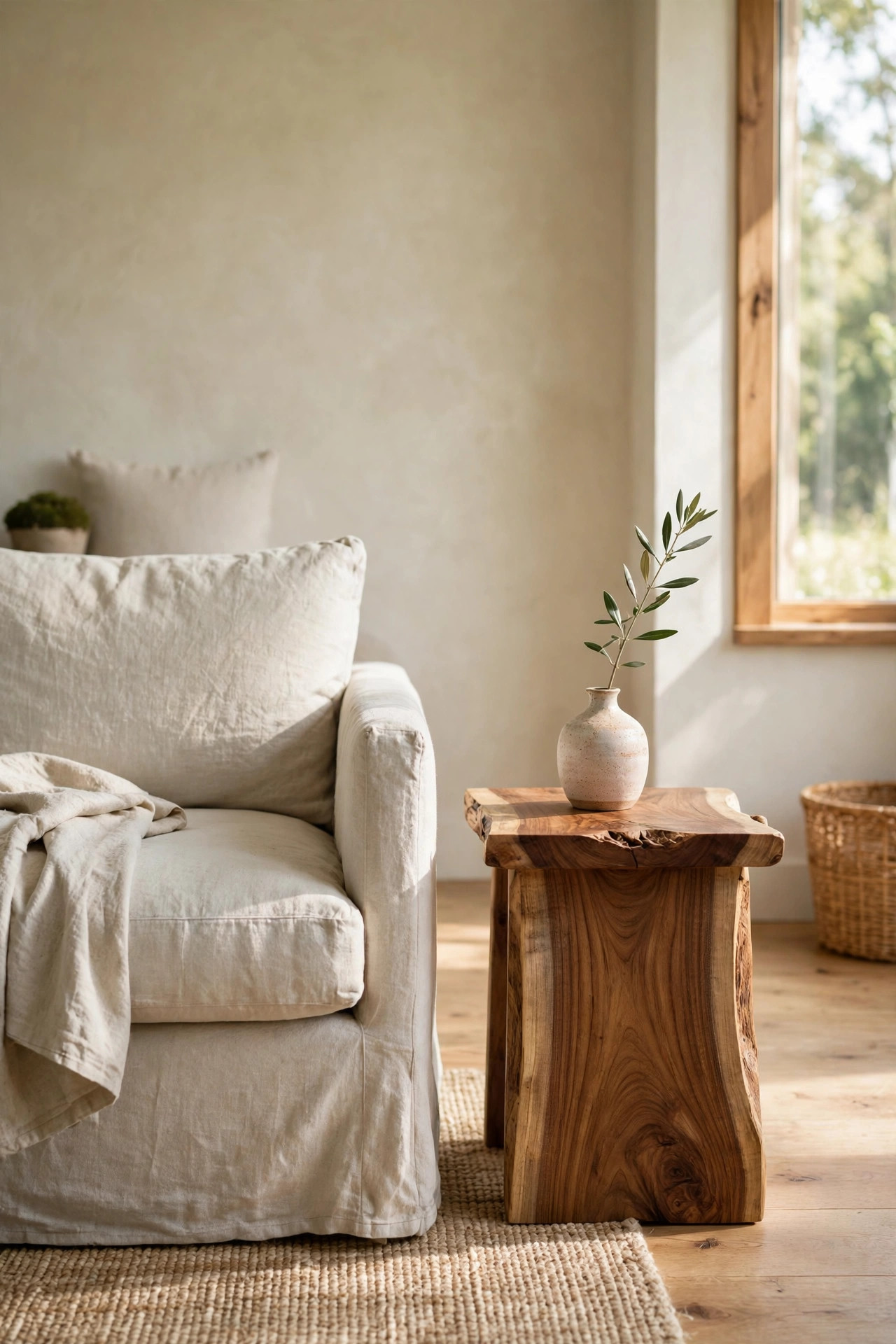
A handcrafted wooden side table is a small piece with a big job in a japandi living room. It holds your tea, your book, and your lamp, but it also holds the eye with its honest material and careful making. Japanese craft traditions treat wood with deep respect, shaping it to show off the grain rather than hiding it under thick paint or gloss. Scandinavian design loves the same honesty, favoring simple shapes that let the material speak. Look for a small round or square table in oak, walnut, ash, or acacia with visible joinery, softly rounded edges, and a matte natural finish. A hand turned or hand carved piece from a local woodworker is ideal, but good quality simple designs from honest brands work beautifully too. Keep the size modest so it tucks beside a chair or sofa without crowding the walkway. Round side tables are wonderful in tight spaces because they have no sharp corners and are easy to walk around. If your chair has wooden legs, try to match the wood tone of the table loosely, since related woods create harmony without needing to match exactly. Check that the table height sits within a couple of inches of your chair arm, because a table that is too tall or too short feels awkward to use. A slightly heavier base keeps the table stable if you tend to lean on it when standing up. Run your hand over the surface in the shop, because a silky smooth finish tells you the maker sanded with care and sealed it properly.
Styling a wooden side table follows the Japandi rule of one beautiful thing done well. Place a small ceramic vase with a single stem, a low stack of two books with a tiny handmade dish on top, or a simple candle in a stone holder. That is enough. The wood itself is the decoration, so let its grain and color be the star. If the table has a lower shelf, use it for one or two beautiful books or a folded throw, not for clutter. Care for the wood with a soft cloth and an occasional rub of natural oil or beeswax, which feeds the grain and keeps the surface glowing. Avoid placing wet glasses directly on the wood and use a small coaster or tray, because water rings tell a sad story instead of a beautiful one. Over the years your table will gain tiny marks and a deeper color, and that gentle aging is wabi-sabi at work, turning a simple table into a piece with a past. Use the table for your evening ritual, a warm cup of tea and a good book within arm’s reach, and the corner becomes a habit of calm. Keep a small cloth napkin or woven coaster on the table so you always have protection ready for warm cups. Once a year, give the wood a gentle cleaning and a fresh coat of oil or wax, which takes only minutes and keeps the surface glowing. If the table gets a small scratch, rub a walnut half over it, because the natural oils in the nut can hide light marks beautifully. Pass the table’s story on to guests who admire it, telling them where it came from and who made it. Furniture with a story becomes part of the family, and that emotional connection is the deepest kind of luxury.
8. Warm Neutral Wall Color
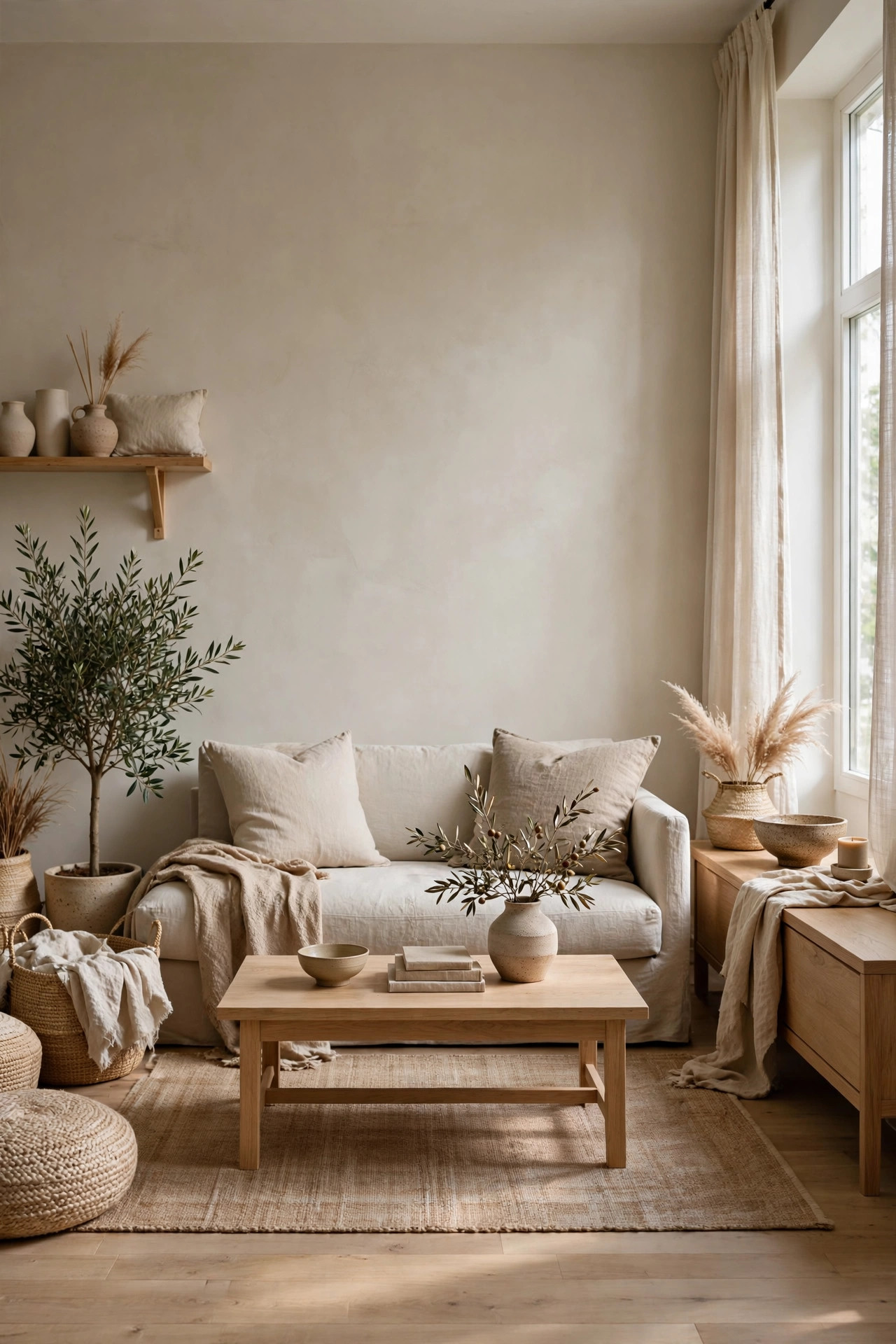
Wall color is the quiet background music of a japandi living room, and warm neutrals play it perfectly. Think soft warm white, gentle greige, pale oatmeal, or a whisper of clay. These colors wrap the room in calm without the cold stark feeling that pure white can bring, and they make natural wood, linen, and stone look their absolute best. Japanese interiors often use soft plaster-like tones that feel hand finished, while Scandinavian rooms favor warm whites that bounce light around during dark months. Together they create walls that glow gently instead of glaring. When you choose paint, look at the sample in your own light at different times of day, because a color that looks perfect in the store can turn pink or gray in your living room. Pick a shade with warm undertones and a matte or eggshell finish, since flat finishes feel softer and more natural than shiny ones. Test large swatches on the wall and live with them for at least two days before deciding, because paint changes dramatically from morning to evening light. Paint a board you can move around the room instead of painting directly on the wall, which lets you see the color near the sofa, by the window, and in the darkest corner. Ask the paint store for a matte sample pot, since the finish affects how the color reads. Warm neutrals with a hint of yellow or pink undertone feel coziest, while those leaning gray feel calmer and more modern. Trust your own eyes over trends, because you will live with this color every day.
Painting for the Japandi look is about restraint and quality. One warm neutral on all the walls keeps the room feeling seamless and calm, which makes the space look larger and more expensive. If you want a little depth, paint one wall a slightly deeper tone like warm taupe or soft clay, but keep it in the same family so the change feels gentle. Prepare the walls well with filling and sanding, because matte paint shows every bump and a smooth wall is part of the polished look. Use painter’s tape carefully and cut in clean lines at the ceiling for a crisp professional edge. Let the paint cure fully before you hang art or push furniture against it. Once the walls are done, notice how everything else in the room suddenly looks better. The wood glows warmer, the textiles look softer, and the daylight feels kinder. That quiet transformation is the power of the right neutral, and it costs less than almost any furniture piece. Do not forget the ceiling, because a warm white ceiling keeps the room feeling bright while pure white can look harsh against warm walls. Paint trim and doors in the same color as the walls but in a slightly higher sheen, which creates a subtle tailored detail without adding new color. If you are renting and cannot paint, achieve a similar warmth with large linen curtains, warm toned art, and soft lighting that bathes white walls in a golden glow. Touch up scuffs promptly with leftover paint stored in a sealed jar, because matte walls show marks and quick fixes keep them looking fresh. Stand back when you finish and notice how the room holds you, because the right warm neutral does not just cover walls, it changes how a home feels.
9. Minimalist Floor Lamp
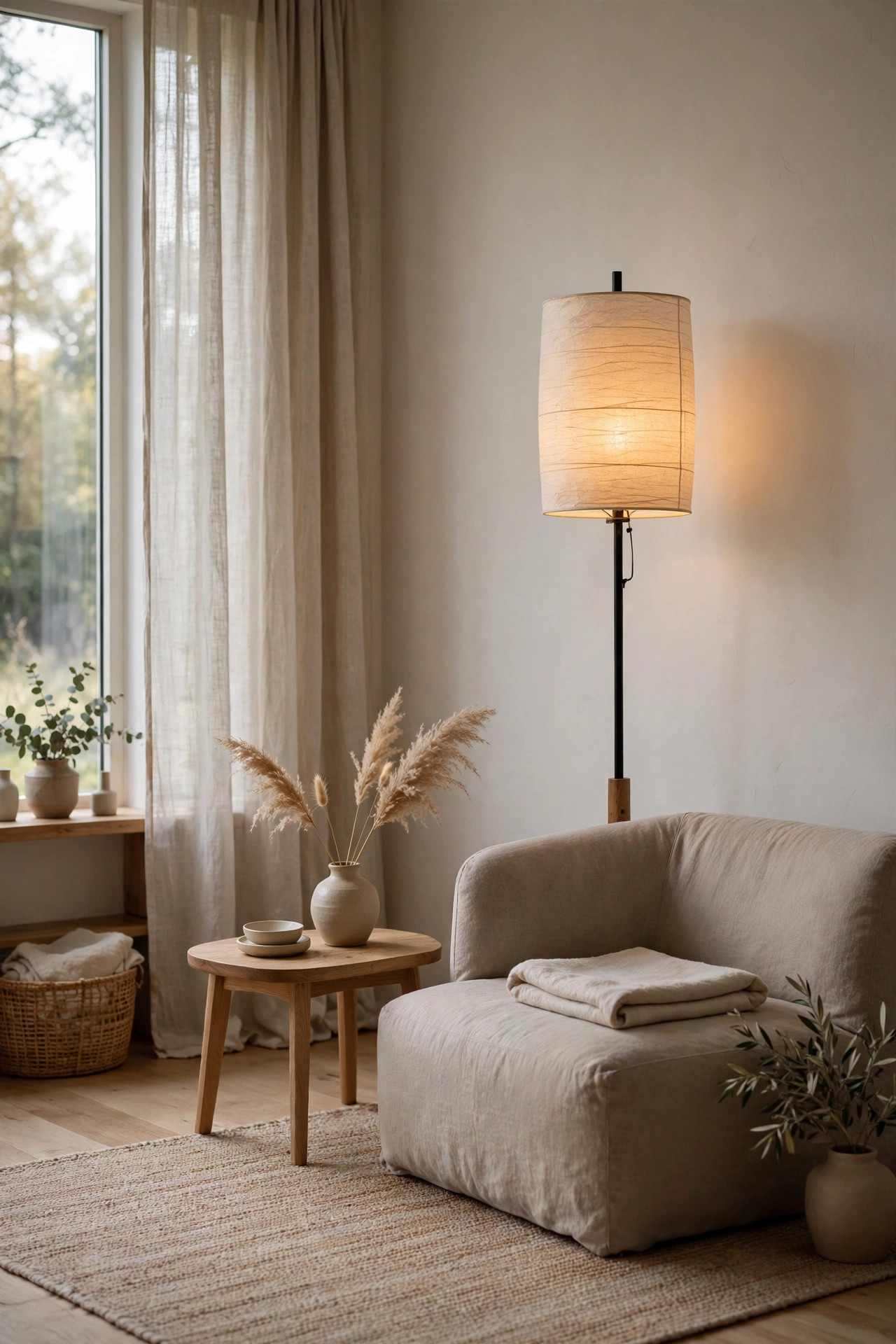
Light shapes the mood of a japandi living room more than almost anything else, and a minimalist floor lamp gives you beautiful light exactly where you need it. The best Japandi lamps have simple sculptural shapes, natural materials, and a warm glow that flatters everything in the room. Look for designs with a slim wooden or matte black stem, a paper or linen shade, or an arched arm that curves gracefully over a chair. Japanese paper lanterns on stands give the softest most flattering light imaginable, while Scandinavian designs add clever engineering and timeless shapes. Choose a lamp with a warm white bulb around 2700 kelvin, because cool blue light destroys the cozy calm you are building. A dimmer is a wonderful extra, letting you turn the brightness down in the evening for a candlelit feeling. Look for lamps with simple controls that are easy to reach, because a lamp you fumble with will not get used. Some beautiful designs hide the switch in the cord or use a foot pedal on the floor, which keeps the lamp’s clean lines unbroken. If you read a lot, choose a shade that directs light downward onto your book rather than scattering it everywhere. Check the maximum bulb wattage and choose an LED that gives warm bright light while staying cool and saving energy. A lamp with a heavy stable base will not tip if someone brushes past it, which matters in busy family rooms.
Placement makes a good lamp great. Put the floor lamp beside your favorite reading chair or at the dark end of the sofa to create a pool of warm light that invites you to sit down. Angle an arched lamp so the shade hangs over the coffee table, turning it into a glowing centerpiece at night. Keep cords tidy with simple clips or a cord cover in a matching color, because visible tangled cords break the calm order of the room. If your lamp has a paper shade, dust it gently and keep it away from radiators and damp walls. Pair the floor lamp with one or two small table lamps at different heights around the room, since layered light at multiple levels feels richer and more expensive than a single bright ceiling light. In fact, try to use your ceiling light less and let these smaller warm sources do the work. A japandi living room at night should feel like a quiet retreat, with soft glowing corners that make you want to stay a little longer. Try putting your lamps on a timer or smart plug so they glow on automatically as evening falls, which makes coming home feel welcoming every day. Clean the bulbs and shades every few months, because dust can dim the light more than you realize. If a corner still feels dark, add a small table lamp instead of a brighter bulb, since more sources of gentle light always beat one harsh source. Keep spare warm bulbs in a drawer so you never have to settle for a cold replacement in a pinch. Notice how different the room feels when only the lamps are on, with the ceiling light off and the corners glowing softly. That quiet evening mood is the soul of Japandi lighting, and it costs nothing extra once your lamps are in place.
10. Indoor Olive Tree
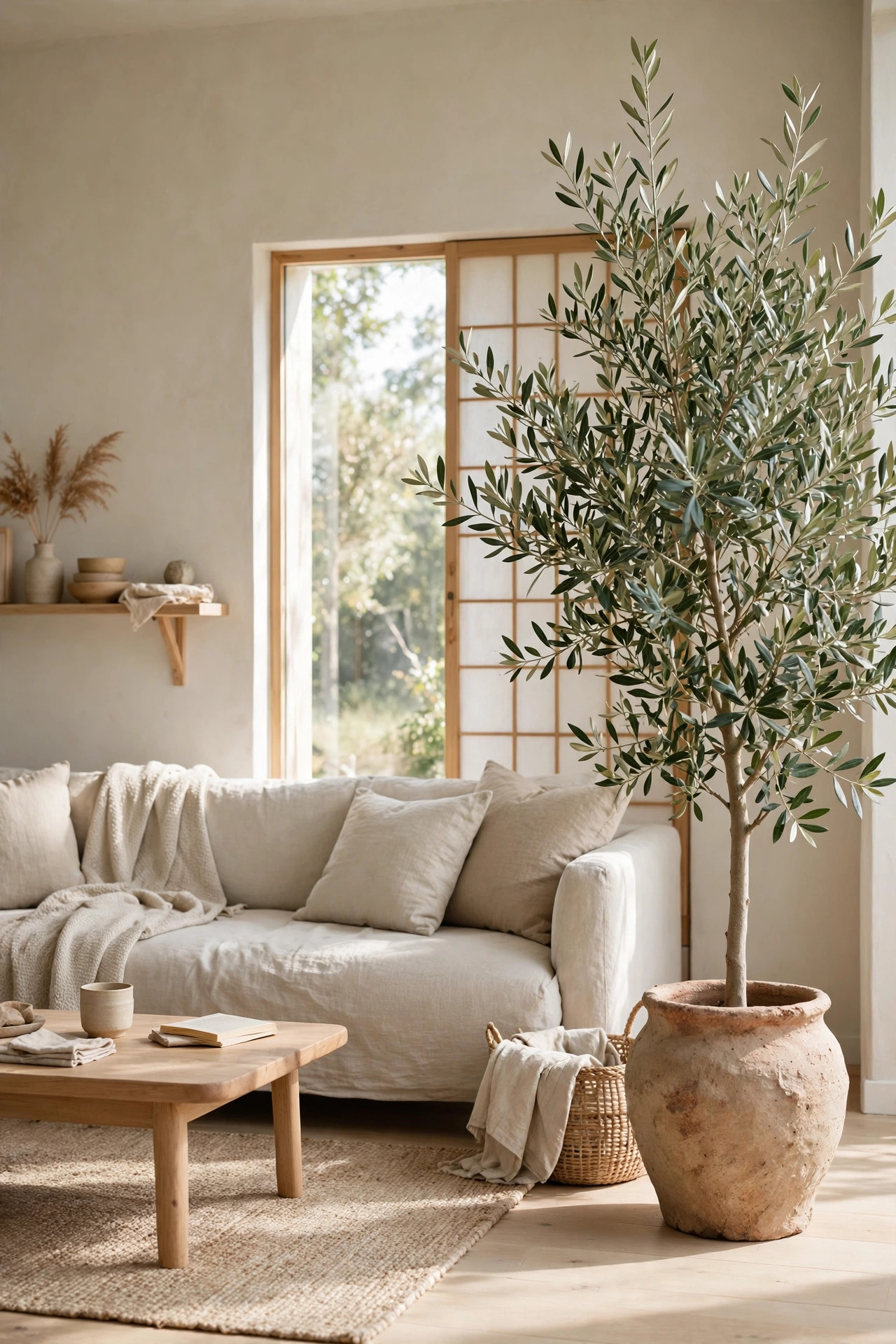
An indoor olive tree is the living sculpture that so many Japandi rooms seem to have, and it earns its place with grace. The olive tree has soft silvery green leaves, a gently twisting trunk, and an airy open shape that brings nature indoors without any fuss. It fits the Japandi love of natural living things perfectly, adding life and gentle movement to a room of wood and stone. Unlike fussy tropical plants, an olive tree looks calm and sculptural, almost like a piece of art that happens to be alive. Choose a tree that fits your space, from a small tabletop size to a tall statement tree in a beautiful pot. Look for healthy silvery leaves and a strong straight or gently curved trunk, and buy from a nursery that keeps its trees in good light. Start with a smaller tree if you are new to indoor plants, because a young olive is more forgiving while you learn its needs. Repot it into a slightly larger container when roots fill the pot, using a well draining citrus or Mediterranean plant mix. A layer of small stones on top of the soil looks beautiful and keeps the soil from splashing when you water. Keep the tree away from cold drafts and heating vents, which dry the leaves and stress the plant. If a few leaves drop when you first bring it home, do not worry, because olive trees often sulk during the move and recover once they settle.
Caring for an olive tree indoors is simpler than most people fear. Give it the brightest spot you have, ideally right beside a large window, because olive trees love sun and will drop leaves if the light is too dim. Water deeply when the top few inches of soil feel dry, then let it drain fully, since these Mediterranean trees hate wet feet. A pot with drainage holes and a simple ceramic or clay outer pot keeps the look natural and the roots happy. Turn the tree a quarter turn every few weeks so it grows evenly instead of leaning toward the window. Wipe the leaves gently with a damp cloth now and then to keep them glowing silvery green. In summer you can move the tree to a balcony or patio for a holiday in real sun, which it will love. An olive tree grows slowly, so it becomes a long term member of your home, quietly getting more beautiful every year, which is a very Japandi kind of joy. Feed your olive tree lightly with a balanced fertilizer during spring and summer, then let it rest through autumn and winter. Prune gently in early spring to keep its airy shape, removing any crossing branches and trimming long shoots. The pruned branches look beautiful in a vase, so nothing goes to waste. Watch for scale insects, which look like tiny brown bumps on the stems, and wipe them off with a damp cloth if they appear. If your tree outgrows its spot, prune the top to keep it compact rather than giving up on it. An olive tree can live for decades with basic care, becoming a true family heirloom. Imagine it still gracing your living room ten years from now, a little taller and more characterful, quietly marking the years of your life at home.
11. Stone and Wood Accent Pieces
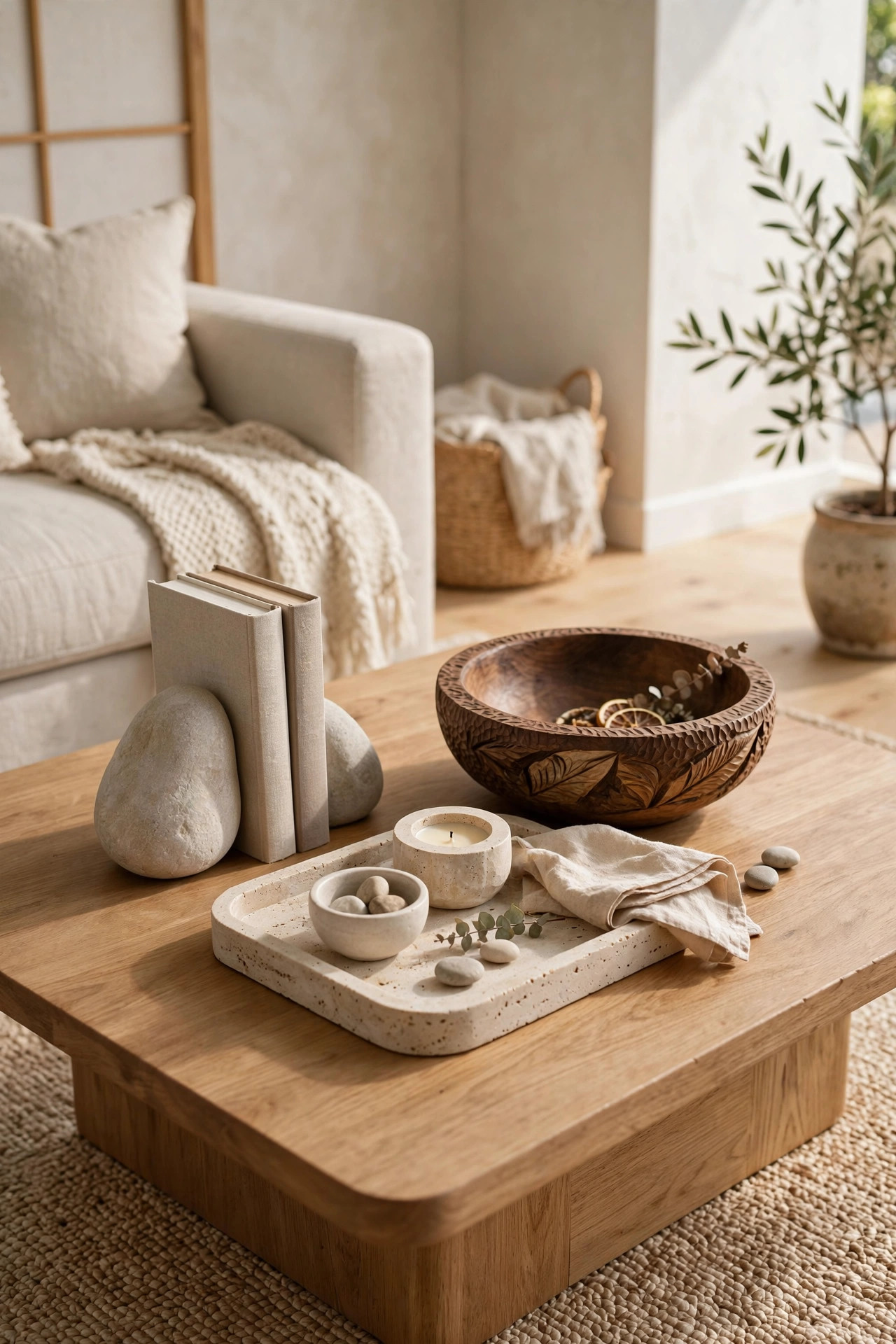
Small accents in stone and wood are the jewelry of a japandi living room, adding quiet richness without adding clutter. Think of a smooth river stone used as a bookend, a hand carved wooden bowl holding nothing at all, a travertine tray on the coffee table, or a small granite sculpture on the shelf. These natural materials bring the outdoors inside in the most honest way, and their weight and texture make a room feel grounded and real. Japanese design has always honored stone and wood as noble materials, while Scandinavian style loves their simple tactile beauty. Choose pieces with natural finishes and organic shapes rather than polished perfect forms, because a little roughness is what makes them feel alive. One or two well chosen accents have more impact than a whole shelf of small trinkets, so buy slowly and choose only what you truly love. Start your collection with one larger anchor piece, like a beautiful wooden bowl or a smooth stone sculpture, then add smaller companions over time. Flea markets, craft fairs, and travels are wonderful sources, because pieces with a story feel more special than anything ordered in bulk. Hold each piece and notice how it feels, since Japandi design values touch as much as sight. A stone that feels cool and smooth in the hand brings calm just by being picked up. Avoid resin copies that imitate stone or wood, because the eye can tell the difference and the honest material is the whole point.
Arranging these accents is an art of spacing and simplicity. Give each piece room to breathe by placing it with empty space around it, which makes even a small stone feel important. Group a wooden bowl and a stone object together on a tray for a beautiful contrast of warm and cool, rough and smooth. A tall wooden sculpture in an empty corner can hold the whole room the way a painting holds a wall. Avoid mixing too many different stones or woods in one spot, because the calm comes from a limited natural palette. Clean stone with a damp cloth and oil wooden pieces lightly once a year to keep them glowing. When friends ask where you found such interesting things, you will have a story to tell, because these pieces usually come from travels, local makers, or nature itself. That personal story is what makes a room feel collected and expensive rather than decorated, and it is a feeling no mass produced decor can copy. Change your accents with the seasons for a home that always feels fresh, bringing in a piece of driftwood in summer or a dark interesting stone in winter. If you have children, choose sturdy pieces without sharp edges and place delicate ones higher up until little hands grow gentler. Photograph arrangements you love before changing them, so you can recreate a favorite look later. When guests admire a piece, share where you found it, because these small stories turn decoration into conversation. Over the years your collection will become a map of your life, with each stone and bowl marking a place you visited or a maker you met. That personal history is what makes a room feel truly rich, far beyond what money alone can buy.
12. Cozy Boucle Accent Chair
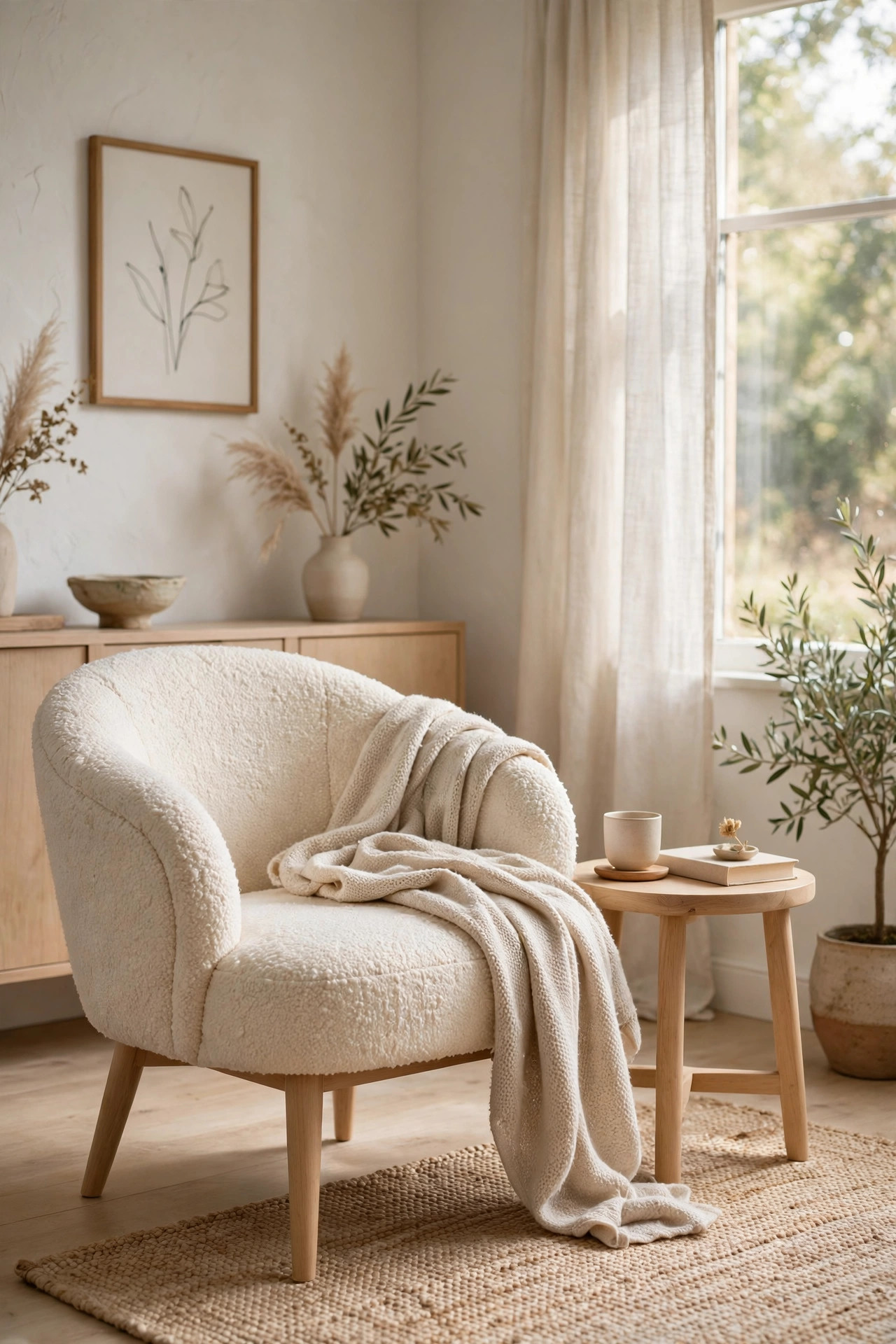
A boucle accent chair adds the soft Scandinavian hug that keeps a japandi living room from feeling too serious. Boucle is a nubby textured fabric made from looped yarn, and it looks like soft little clouds gathered into a chair. The texture catches the light beautifully and invites touch, which adds warmth to a room full of smooth wood and flat linen. In Japandi design, texture does the work that color and pattern do in other styles, so a tactile chair like this is doing important design work. Look for a chair with a simple curved shape, low rounded back, and solid wood legs in a light or medium tone. Cream, ivory, oatmeal, and soft white are the perfect boucle colors for this look. Avoid oversized bulky chairs and bright colored boucle, because scale and calm color are what keep the chair elegant instead of loud. Test the seat height before buying, because a chair that is too low can be hard to rise from, especially for older guests. Look for a frame made of solid wood rather than particle board, since the chair should last for many years. The best boucle has a tight even loop that resists snagging, so run your fingers across the fabric and check for loose threads. If you have cats, be aware that claws love nubby textures, so keep a throw over the seat or choose a tighter weave. A swivel base can make the chair more useful, letting it turn toward conversation or toward the window.
Placing your boucle chair well makes it the seat everyone fights over. Tuck it into a corner with a small side table and a floor lamp to create a reading spot, or angle it toward the sofa to complete a conversation circle. Drape a thin wool throw over one arm in a slightly deeper tone like camel or soft gray for a touch of contrast. Keep the floor under the chair clear so its pretty legs and curved shape can be seen, and resist the urge to pile it with pillows. One small lumbar pillow in linen is plenty. Boucle needs gentle care, so vacuum it with an upholstery attachment and blot spills quickly with a clean damp cloth instead of rubbing. A fabric protector sprayed on when the chair is new helps a lot. This chair proves the Japandi secret that comfort and minimalism are not opposites. A room can be calm and still feel wonderfully soft, and the boucle chair is where that softness lives. Pair the chair with a small round side table at just the right height for a book and a warm drink. In winter, add a soft wool throw in a deeper tone for extra coziness, then swap it for a light cotton throw when summer comes. Vacuum the boucle weekly with an upholstery brush to keep dust from settling into the loops. If the fabric pills, a gentle fabric shaver will restore its fresh look in minutes. Keep the chair out of strong direct sun to prevent uneven fading of the creamy color. This chair will likely become the most fought over seat in the house, so consider that a sign of success. Comfort that looks this good is rare, and it proves that calm rooms can still be the coziest rooms of all.
13. Open Low Bookshelf
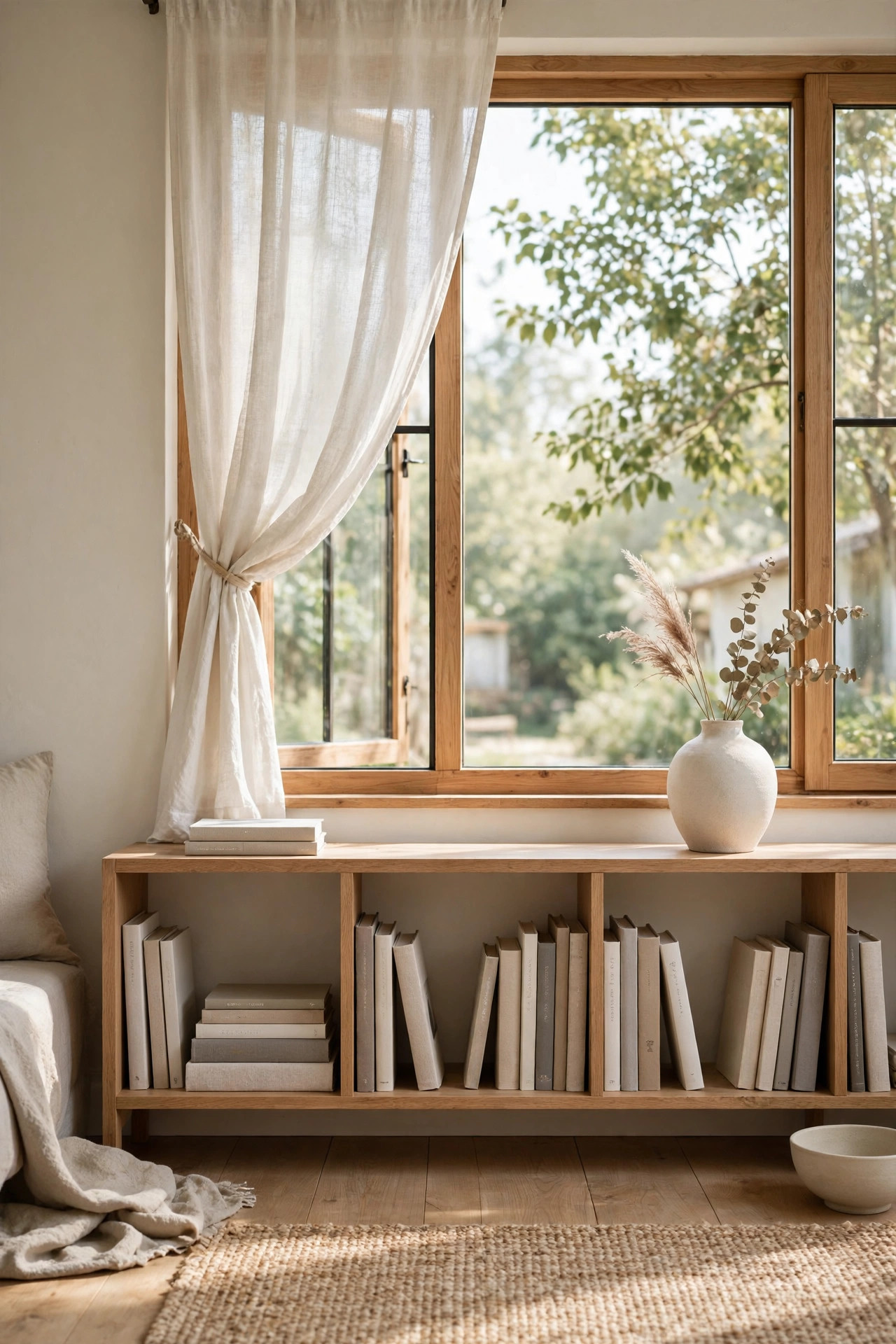
An open low bookshelf is storage that behaves like furniture art in a japandi living room. Instead of a tall bookcase that dominates the wall, a long low shelf sits quietly under a window or along a wall, holding books and beautiful objects at an easy reachable height. This low horizontal line echoes the grounded feeling of Japanese interiors and keeps the room feeling open and calm. Scandinavian design loves this kind of practical beauty too, where storage is simple, honest, and part of the room’s look. Choose a shelf in light oak, ash, or warm walnut with clean lines and sturdy construction. Open shelves without doors force you to be selective, which is a gift, because editing your belongings is the fastest way to a calmer room. Measure your space carefully and leave breathing room at both ends so the shelf looks placed with intention. Measure twice before buying, because a shelf that is too long will crowd the wall and one that is too short will look lost. Leave at least a foot of breathing room on each side so the piece feels placed with intention. Check the weight capacity if you own heavy art books, since low shelves can sag under too much weight. Solid wood shelves resist sagging better than hollow ones. If you place the shelf under a window, leave a small gap behind it for curtain movement and easy cleaning. A shelf with a slight lip on the back edge keeps books from tipping backward.
Styling a low bookshelf the Japandi way is about balance between books and empty space. Arrange books in small groups, some standing upright and some stacked flat, and leave generous gaps where the wood shows through. Those empty spots are not wasted space. They are the calm pauses that make the full spots look beautiful. Add one handmade ceramic, a small plant, or a framed print between the book groups, and keep every object simple and natural. Avoid cramming every inch and avoid colorful plastic items or busy souvenirs that break the quiet palette. Dust the shelves regularly since open storage shows dust, and rotate your display with the seasons for a fresh feeling. A small vase of spring branches or a bowl of autumn seed pods keeps the shelf feeling alive. This humble piece of furniture teaches the whole Japandi philosophy. Keep only what you love, give it space, and let simplicity be the decoration. Dedicate one section of the shelf to things you are currently enjoying, like the book you are reading and a small object from a recent walk. This living section changes often and keeps the shelf feeling personal. Keep a microfiber cloth nearby and dust weekly, because open shelves collect dust faster than closed cabinets. If the shelf starts to look crowded, remove three things before adding one new thing, which keeps the calm balance. In homes with toddlers, anchor the shelf to the wall even though it is low, because climbing children can tip anything. Enjoy the ritual of editing your shelf with the seasons, because this small regular practice trains your eye to see what truly matters.
14. Paper Lantern Pendant Light
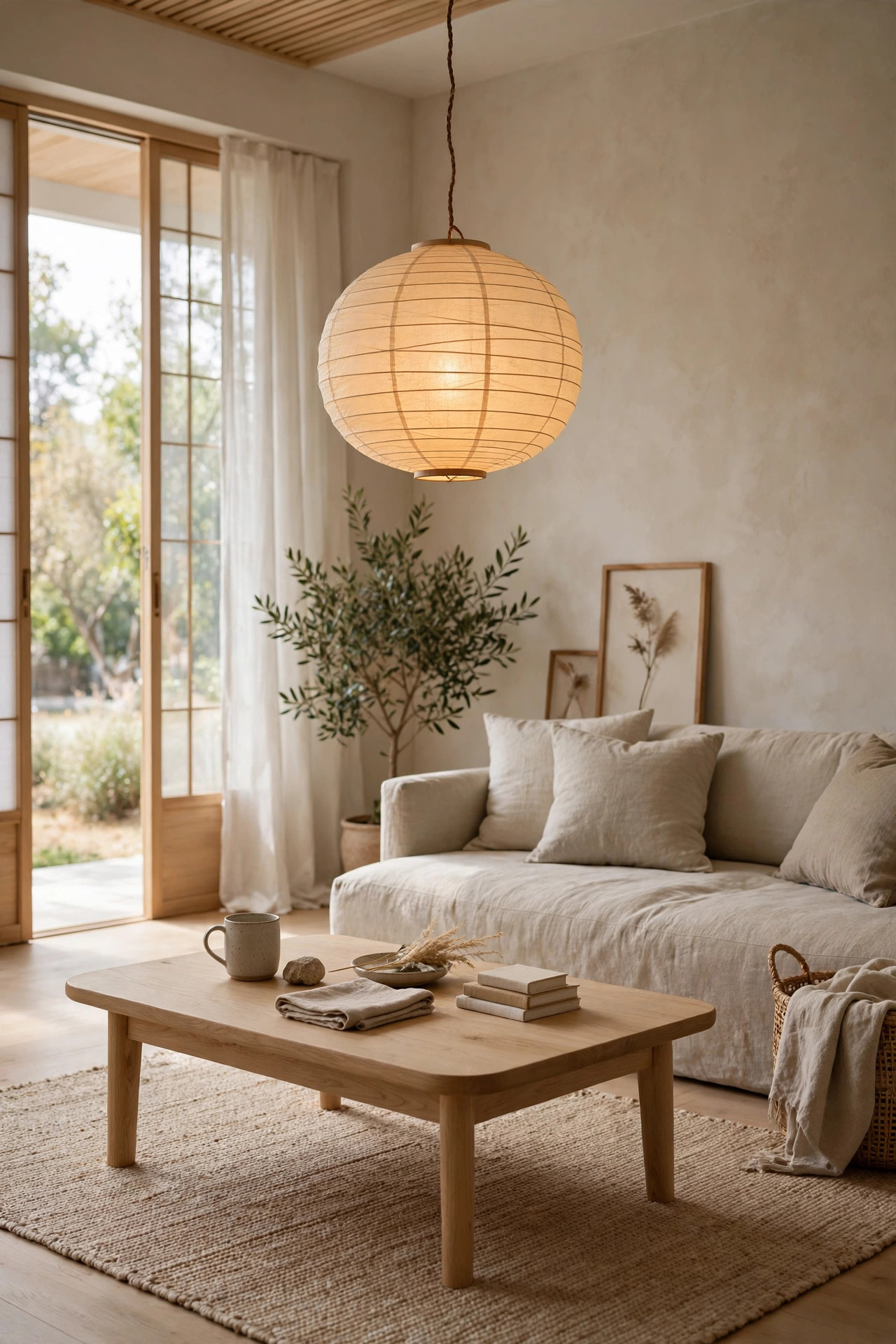
A paper lantern pendant light is the glowing heart of a japandi living room, filling the space with the softest most flattering light imaginable. These simple spheres and sculptural shapes made of rice paper or fabric have lit Japanese homes for centuries, and they bring that same gentle magic to modern rooms. The light shines through the paper in every direction, erasing harsh shadows and wrapping the room in a warm even glow that makes everyone look good and everything feel calm. Scandinavian designers fell in love with these lanterns too, creating their own versions with clever shapes and beautiful craftsmanship. Hang one large lantern as the centerpiece over the coffee table, or cluster two or three smaller ones at different heights in a corner. Choose warm white or natural paper tones and simple round or oval shapes for the most timeless look. Choose the right size by measuring your table, because a lantern that is too small will look lost and one that is too large will overwhelm. A good rule is to pick a diameter about half the width of the coffee table below it. If your ceilings are low, choose a flatter oval shape rather than a tall sphere. Check that the cord and ceiling canopy look neat, since Japandi style notices details like a messy cord. Many lanterns come with a simple white cord that blends into a light ceiling. A dimmer switch lets you adjust the mood from bright daytime to soft evening glow.
Hanging and caring for a paper lantern is easy and the effect is dramatic. Hang the lantern low enough to feel intimate, roughly at a height where the bottom sits well above head level when you stand but close enough to glow over the seating area. Use a warm bulb around 2700 kelvin and never a harsh daylight bulb, because the paper is meant to soften warm light. Keep the lantern away from kitchen steam and damp walls, since paper and moisture are not friends. Dust it gently with a soft dry cloth or a cool hairdryer on low, and it will stay fresh for years. If you worry about paper near bulbs, choose an LED bulb which stays cool and is perfectly safe. In the evening, turn off the bright ceiling lights and let the lantern be the star. The room will glow like a quiet temple, shadows will soften, and the whole space will feel peaceful and expensive. Few single changes transform a room’s mood this much for so little money. For extra magic, hang a second smaller lantern in a nearby corner at a different height, creating a constellation of soft light. Clean the paper gently every few months, because dust dulls the glow over time. If the lantern yellows after many years, replacement shades are usually inexpensive and easy to swap. Keep the lantern away from open windows on windy days if it swings, since banging against walls can tear the paper. Pair the pendant with small warm table lamps so the room has light at several heights. When guests visit in the evening, they will always comment on the beautiful light, because a glowing paper lantern makes everyone feel welcome. It is a small investment that pays back every single night in atmosphere and calm.
15. Layered Natural Fiber Rugs
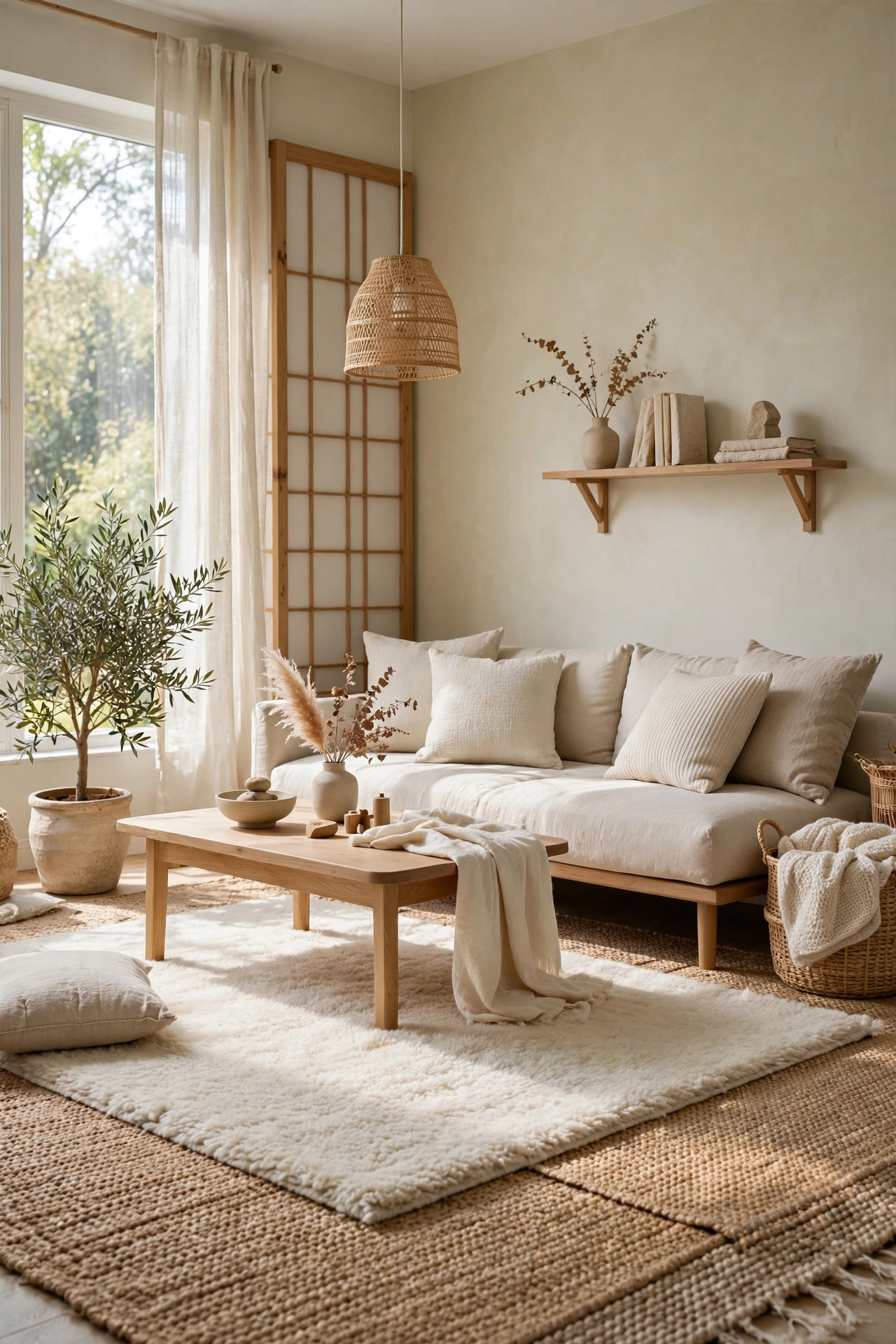
Layering natural fiber rugs is a stylist’s trick that adds instant depth and softness to a japandi living room. Start with a large flat weave base in jute or sisal, then lay a smaller softer rug on top in wool, cotton, or a low pile natural blend. The contrast between the rough open weave below and the soft dense texture above creates a rich layered feeling that looks collected and expensive. Japanese design loves the honesty of natural fibers, and Scandinavian style loves the cozy warmth that layering brings to long winters. Keep both rugs in the natural family, with tones like sand, oatmeal, cream, flax, and soft beige, so the layers blend instead of compete. A good rule is to make the top rug about two thirds the size of the base, centered or slightly angled for a relaxed collected feel. Stick to a maximum of two layers, because three rugs start to look messy and become a tripping hazard. Make sure the base rug is low and flat so doors can still open over it. If you have a rug that curls at the corners, reverse roll it overnight to flatten it out. Natural fiber rugs can shed at first, so vacuum often during the first month and the shedding will settle. Choose rug pads that are slightly smaller than the rug so no pad edges peek out. A pad also adds a little extra softness underfoot, which makes the layers feel even more luxurious.
Getting the layers right takes a little practice but the rules are simple. Use a rug pad under the base layer to prevent slipping and to protect your floors, and choose a pad made of natural felt if you can. Make sure the top rug lies flat without curling edges, because tripping hazards and curling corners ruin the calm look. Vacuum both layers gently and rotate the top rug now and then for even wear. Avoid synthetic shiny rugs and bold patterns in the mix, since they break the quiet natural harmony. This layering trick is also wonderfully practical. If the top rug gets stained, you can clean or replace just that piece instead of the whole arrangement. In summer you can remove the top layer for a lighter breezier floor, and in winter you can add it back for warmth. A layered rug tells guests that someone with a good eye lives here, and it makes bare feet very happy too. Try angling the top rug slightly instead of placing it perfectly straight, because a gentle angle looks relaxed and collected. In open plan spaces, use the layered rug to define the living zone and separate it from the dining area. If you move to a new home, the two rugs can work separately in different rooms, which makes them a flexible investment. Spot clean spills immediately with a dry cloth, and never soak natural fibers with water. For deep cleaning, take the rugs outside on a dry day and beat them gently the traditional way. This old fashioned care keeps natural fibers fresh for years. Layered rugs show that you understand texture, and texture is the secret language of Japandi style.
16. Muted Sage Throw Pillows
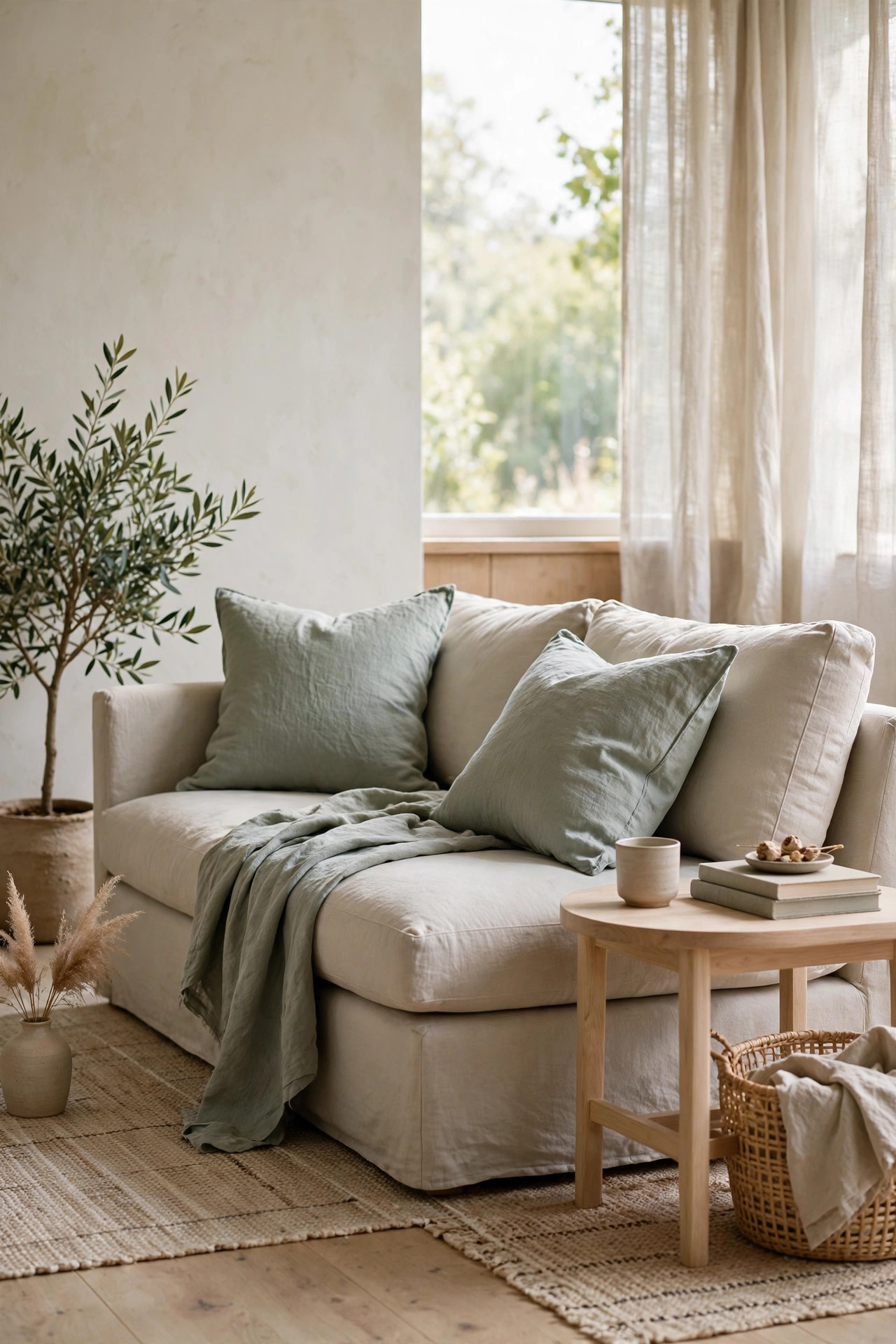
Muted sage throw pillows are the gentle touch of color that a japandi living room needs to feel alive. Sage is a soft grayish green that comes straight from nature, like eucalyptus leaves or dried herbs, and it sits beautifully with the warm woods and creamy neutrals of Japandi style. A little green connects the room to the plants and the outdoors, which is a core Japanese design idea, while the muted dusty tone keeps everything calm the Scandinavian way. Choose pillow covers in natural fabrics like washed linen, cotton, or a linen blend, because the slight texture of these fabrics makes the sage color look even softer and more expensive. Two or three pillows in slightly different sage tones look collected and natural, while mixing sage with cream and oatmeal pillows keeps the palette peaceful. Buy covers with hidden zippers so you can remove and wash them easily. Choose inserts one size larger than the cover for a plump luxurious look. If anyone in your home has allergies, look for hypoallergenic down alternative inserts that still feel soft. Mix two shades of sage, one slightly deeper and one lighter, for a natural collected feeling. Avoid matching the pillows exactly to anything else in the room, because Japandi style prefers harmony over perfect matching. A pillow that is a little different looks gathered over time rather than bought all at once.
Arranging sage pillows well is about relaxed order rather than stiff symmetry. Place the larger pillows at the back corners of the sofa and lean the smaller ones in front, slightly angled as if someone just settled in. The Japandi trick is the soft chop or gentle bend in the middle of the pillow, which makes it look inviting instead of flat and formal. Avoid bright lime greens, shiny satin fabrics, and busy prints, because they shout in a room that is meant to whisper. Wash the covers gently and line dry to keep the linen soft, and fluff the inserts daily with a quick shake so they stay plump. Good quality feather or recycled down alternative inserts hold their shape beautifully and feel luxurious. These quiet green pillows do something lovely. They make the whole room feel fresher and more connected to nature without adding any visual noise, and that is exactly the kind of thoughtful detail that makes a living room look designed by a professional. Rotate your pillows regularly so they wear evenly and the sun does not fade one side. In autumn, add one pillow in a warm clay tone alongside the sage for a seasonal touch, then return to the calm palette in spring. Store spare covers folded in a drawer rather than buying new pillows each season, which saves money and storage space. If a cover fades, a gentle tea bath can refresh linen beautifully. Teach the household to fluff pillows after use, making it a quick shared habit that keeps the sofa looking inviting. These small daily rituals are part of what makes a home feel cared for. Sage pillows may seem like a tiny detail, but they are the kind of detail that makes a room feel finished, like the right jewelry on a simple outfit.
17. Slim Black Metal Accents
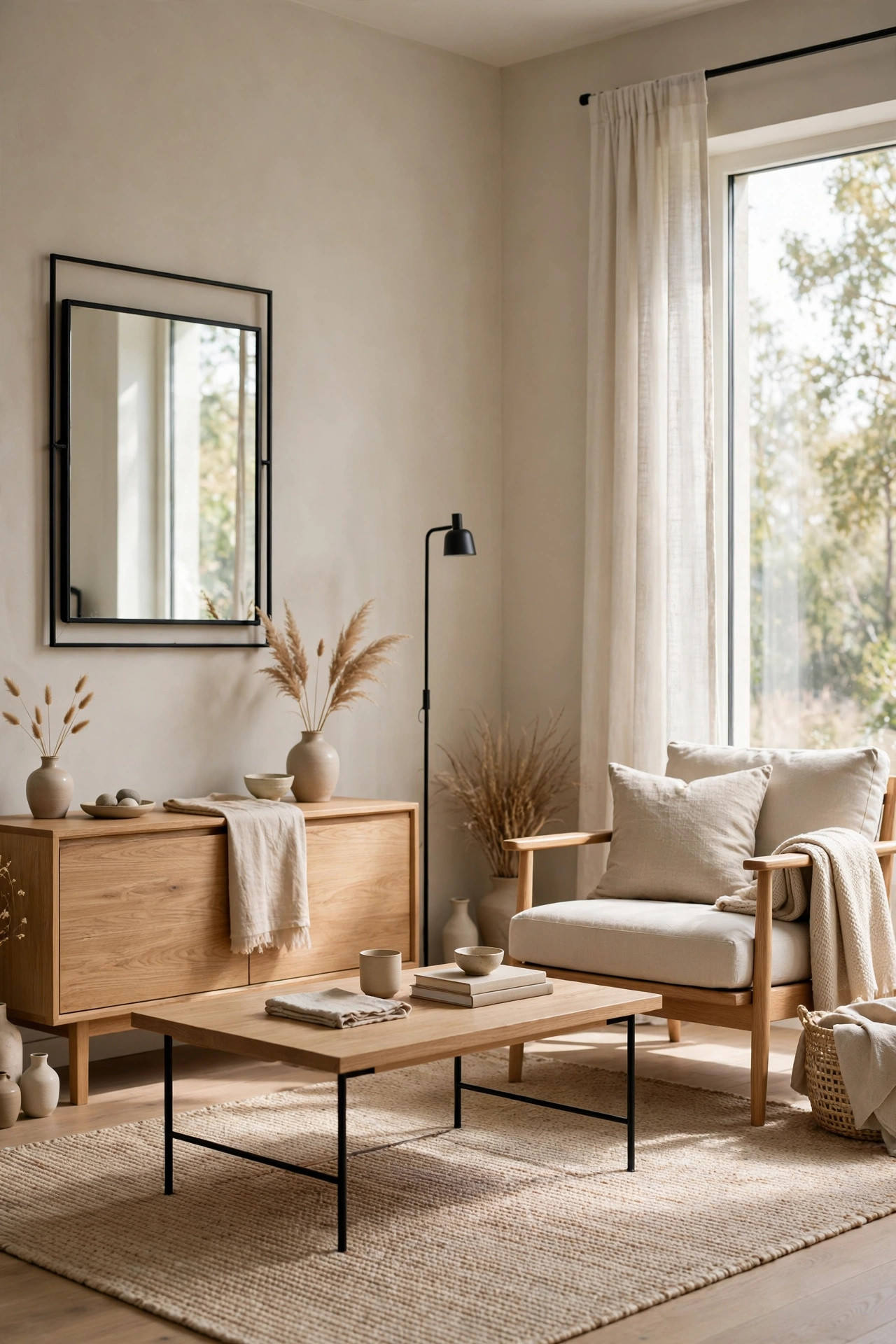
Slim black metal accents are the quiet punctuation marks that give a japandi living room its crisp modern edge. Think of thin black frames on a mirror, a slender floor lamp stem, delicate black legs on a side table, or simple black handles on a low cabinet. These thin dark lines draw the eye and define shapes the way ink defines a drawing, adding just enough contrast to keep the soft neutral room from feeling washed out. Japanese design has long used dark stained wood and black lacquer as grounding elements, while Scandinavian style uses black metal to add graphic clarity to pale rooms. The key word is slim. Chunky heavy black pieces feel industrial and harsh, but thin elegant lines feel refined and calm. Keep the black accents few and spread them around the room so the contrast feels balanced. Start with the largest black accent first, like a floor lamp or a mirror frame, then echo it with two smaller touches. This creates a visual triangle that guides the eye around the room. If you already have black window frames or a black fireplace, you may need fewer extra accents. Take a photo of your room and look at it on your phone, because a photo reveals whether the black touches feel balanced or random. Matte black spray paint can update existing metal pieces, but test it on a hidden spot first. Let each coat dry fully for a smooth professional finish.
Using black metal well is about restraint and repetition. Choose three to five small black touches and let them echo each other across the room, like a black lamp stem near the sofa, a thin black picture frame on the wall, and black legs on the coffee table. This repetition makes the look feel intentional instead of random. Matte black finishes work best because they absorb light softly, while glossy black can look harsh against matte wood and linen. Avoid mixing black metal with gold or chrome in the same room, since competing metals create visual noise that Japandi tries to remove. Dust black surfaces regularly because they show dust more than light finishes do. These slim dark lines do a subtle magic trick. They make the light woods look lighter, the white walls look brighter, and the whole room look sharper and more designed, all without adding a single extra color to your calm palette. Avoid placing black accents only on one side of the room, because lopsided contrast feels unsettling. Spread them so the eye travels naturally across the whole space. In very small rooms, use fewer and slimmer black touches so the contrast does not overwhelm. Clean black metal with a soft dry cloth, since harsh cleaners can damage matte finishes. If you tire of the look, black is easy to change, because small accents can be swapped without redoing the room. Notice how the black lines make your wood tones glow warmer by comparison. That interplay of dark and light is an old design trick, and in a Japandi room it adds just enough edge to keep the calm from feeling sleepy.
18. Curated Floating Shelves
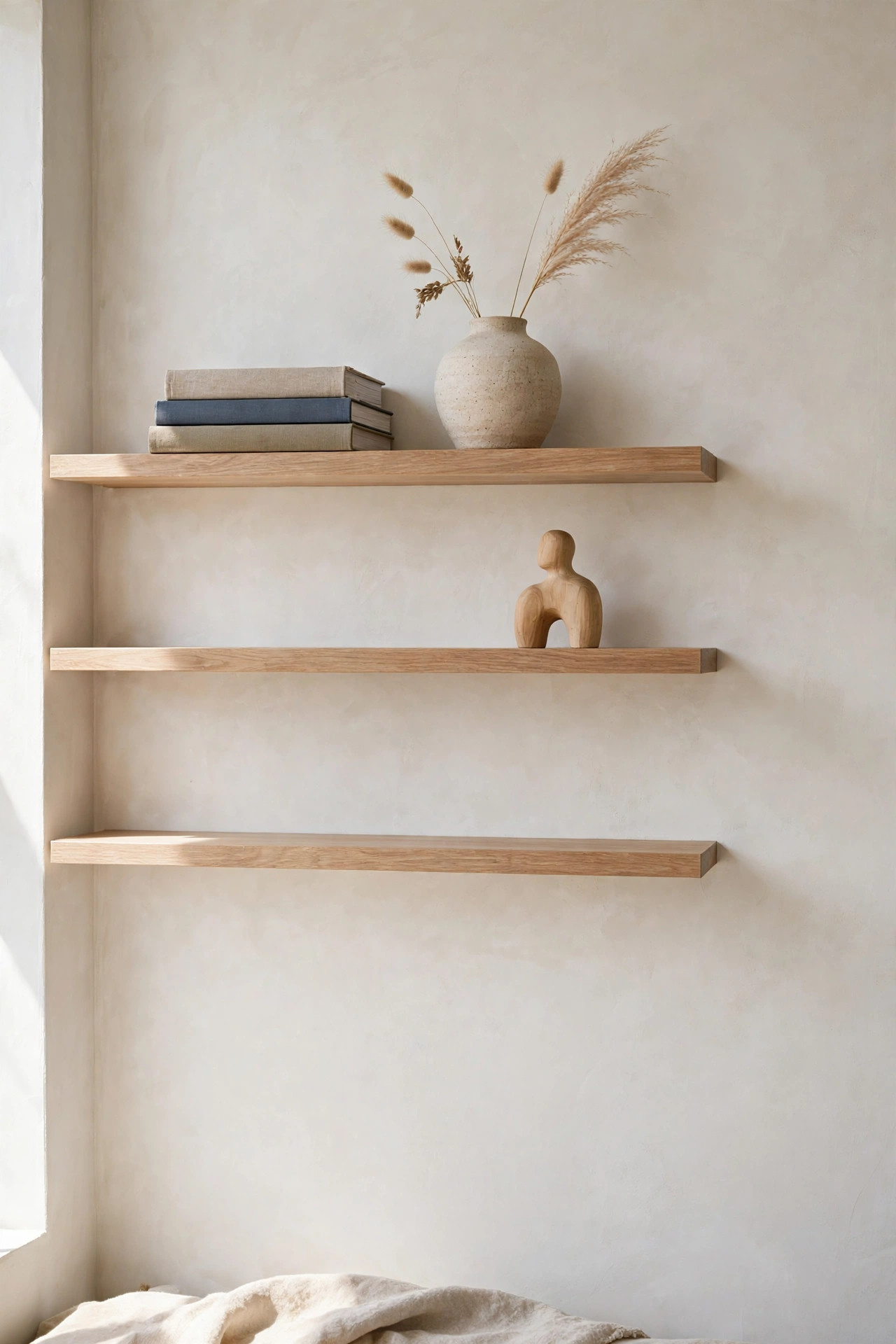
Curated floating shelves give a japandi living room display space that feels light as air. Because these shelves have no visible brackets, they seem to float against the wall, which keeps the room feeling open and uncluttered. They are perfect for showing a small collection of beautiful things at eye level without the visual weight of a bookcase. Japanese aesthetics love the idea of a single perfect object given an honored place, and floating shelves let you do exactly that. Choose shelves in light oak, warm walnut, or a soft white that matches your walls, and keep them thick enough to look substantial but simple enough to disappear. One long shelf or two short shelves is plenty. More than that starts to look busy, which is the opposite of the calm you are creating. Hang the lowest shelf at about eye level when seated, so the display feels connected to the living area. Use a level and measure carefully, because crooked floating shelves ruin the calm effect instantly. If your walls are plaster, use the right anchors, since these shelves must hold real weight safely. Leave enough space between shelves for tall vases, usually at least fifteen inches. A single shelf can be enough in a small room, while a large wall can handle two. Step back often while hanging to check the placement, because a shelf that looks right up close can feel wrong from the sofa.
Curating the shelves is where the magazine editor mindset really shines. Follow the rule of three groupings with breathing room between them, and mix heights and materials for gentle variety. A small stack of art books, a handmade vase with a single stem, and a tiny wooden sculpture make one beautiful grouping. Leave at least a third of each shelf empty, because the empty space is what makes the objects look precious. Avoid filling shelves edge to edge and avoid small colorful souvenirs that break the quiet palette. Secure the shelves properly into wall studs or with the right anchors, since floating shelves must be strong to be safe. Dust them often because eye level shelves show dust quickly. Step back and look at your shelves like a magazine photograph, removing one thing at a time until the arrangement feels calm and balanced. When it is right, you will know, because the shelf will look like a quiet little gallery that makes you smile every time you walk past. Give each shelf a simple theme, like natural objects on one and books with ceramics on the other. This gentle organization keeps the display feeling thoughtful. Avoid putting anything valuable or breakable where it could be knocked by a swinging door. If you have a collection you love, like small bowls or stones, a floating shelf is the perfect gallery for it. Change one object with each season to keep the shelves feeling alive without redoing everything. Photograph arrangements you love so you can remember what worked. The beauty of floating shelves is how easy they make editing, because lifting one object off and stepping back takes seconds. That ease encourages you to keep only what you love, which is the daily practice behind every calm beautiful room.
19. Chunky Knit Throw Blanket
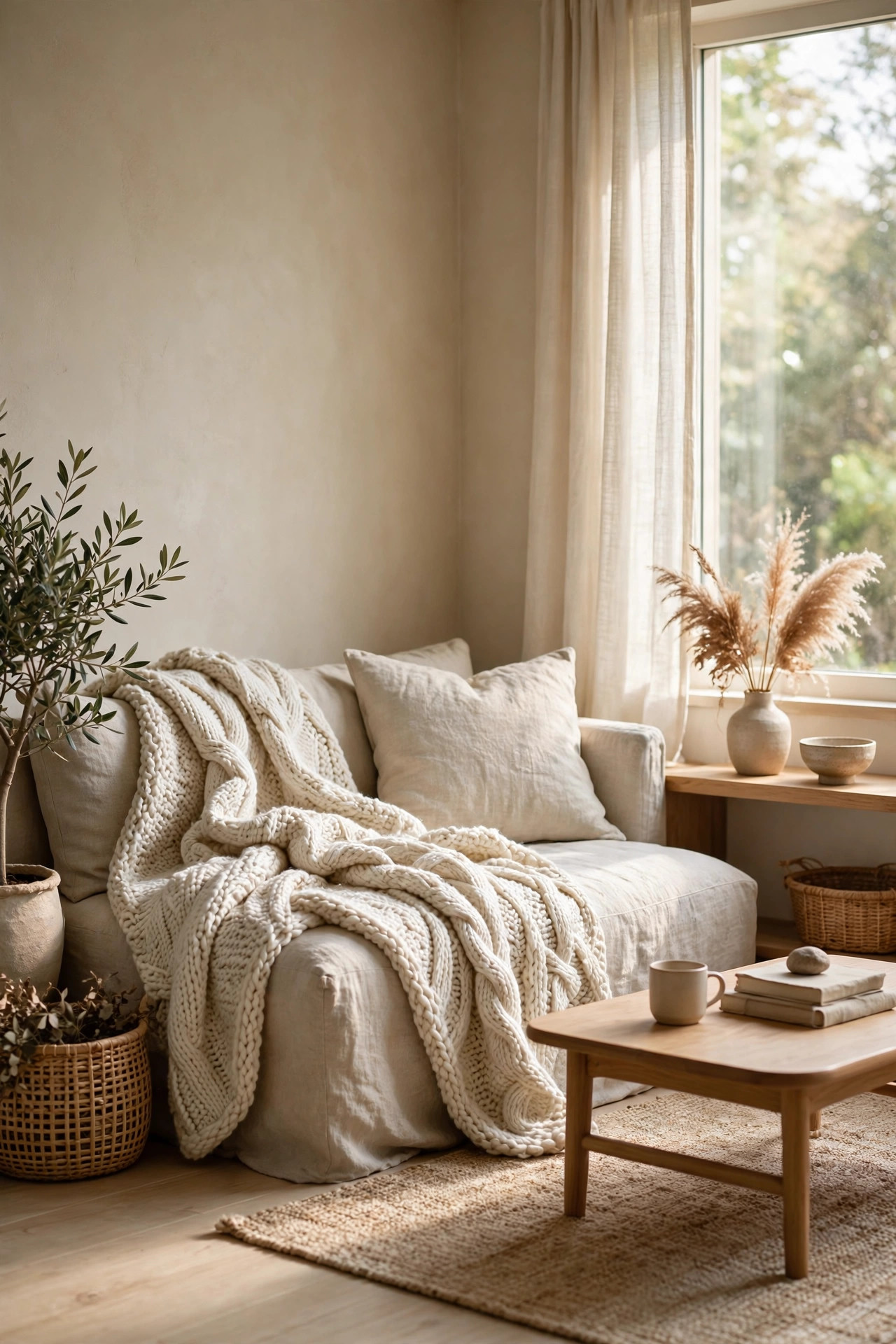
A chunky knit throw blanket is the cozy Scandinavian layer that makes a japandi living room feel like a hug. Those thick soft loops of yarn add wonderful texture to a sofa or chair, and their handmade look celebrates the craft that Japandi design honors. Choose a throw in a natural tone like cream, oatmeal, soft gray, or warm beige, and look for wool, cotton, or a soft recycled blend that feels good against the skin. The chunky knit catches light and shadow in a beautiful way, adding visual warmth without adding color or pattern. Drape it over the arm of the sofa, fold it neatly over the back of your boucle chair, or roll it into a large basket beside the seating area. One beautiful throw is enough. Two or three competing blankets start to look messy instead of cozy. Choose a throw large enough to actually use, because a tiny decorative throw that cannot cover your legs is just clutter. Look for tightly knitted loops that hold their shape, since loose knits stretch out quickly. Natural fibers like wool regulate temperature, keeping you warm in winter without overheating. If wool feels itchy to you, choose a soft cotton or bamboo blend instead. Check the weight in the store, because a good chunky throw should feel satisfyingly heavy. That weight is part of the comfort, like a gentle hug.
Caring for a knit throw keeps it beautiful for years. Read the label and wash gently by hand or on a delicate cycle, then dry flat so the knit keeps its shape instead of stretching. Fold it loosely rather than stuffing it, because tight folding crushes the lovely loops. Keep it away from anything with hooks or rough edges that could snag the yarn. If a snag happens, gently pull the loop back through with a crochet hook instead of cutting it. A good quality throw is worth the investment because cheap acrylic knits pill quickly and lose their soft look. This single cozy layer changes how a room feels at the end of the day. When the evening light turns golden and you pull that soft knit over your knees with a cup of tea, the room stops being just beautiful and becomes truly comforting, which is the deepest promise of Japandi style. Fold the throw in thirds lengthwise and drape it over the sofa arm for a neat tailored look. For a more relaxed feeling, toss it loosely over the back of a chair and let the folds fall naturally. Keep a large woven basket nearby as a home for the throw during warmer months. Wash the throw at the start of each season so it always feels fresh when you reach for it. If you make your own throw, even a simple knit becomes a family treasure with a story. A handmade blanket carries love in every loop, which is the most Japandi thing of all. Whether bought or made, this cozy layer turns a beautiful room into a beloved one.
20. Quiet Reading Corner
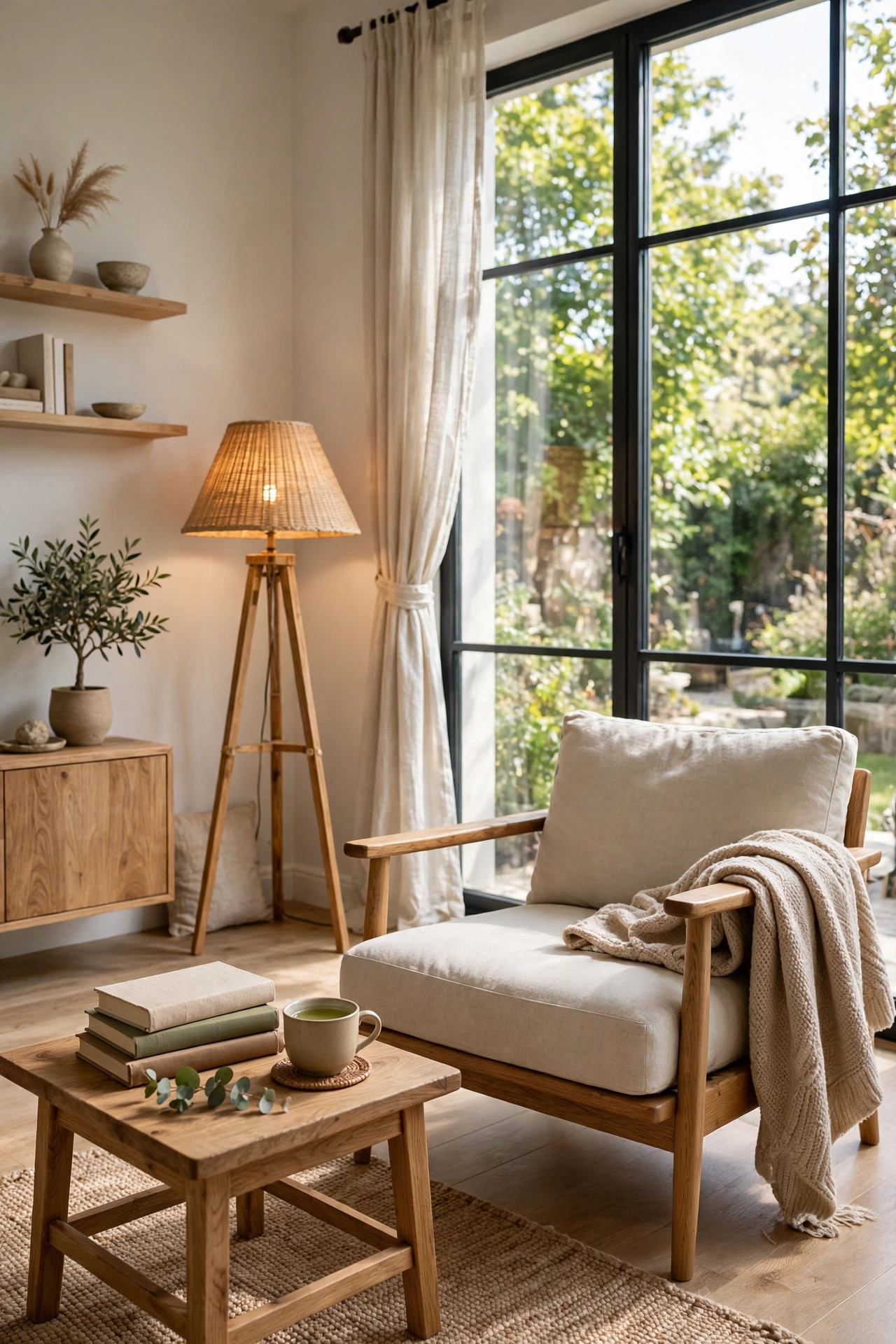
A quiet reading corner is the soulful finishing touch that makes a japandi living room feel personal and complete. Every calm home needs one small spot that belongs to slow moments, with a comfortable chair, good light, and a place for a warm drink. Japanese homes honor the idea of a personal retreat within shared space, and Scandinavian hygge celebrates exactly this kind of cozy corner. Choose the calmest corner of your living room, ideally near a window for natural daylight. Place a comfortable low chair with soft upholstery, add a small side table for tea and books, and stand a warm floor lamp nearby for evening reading. A soft rug under the chair defines the spot and makes it feel like its own little room within the room. Face the chair toward the window if you can, because natural light is the best reading light and the view gives your eyes a rest. Keep a small plant within sight, since greenery calms the mind during reading breaks. Choose a chair you can curl up in, with arms at a comfortable height for holding a book. A small footstool makes the corner even more inviting for long reading sessions. Make sure the lamp is positioned over your shoulder to avoid shadows on the page. Test the setup at night before finalizing, because evening is when you will use it most.
Styling the corner is about comfort and simplicity in equal measure. Add one textured throw and one small pillow to the chair, keep two or three favorite books on the side table instead of a whole library, and place a small plant nearby for living green calm. A woven basket beside the chair can hold the current book and a folded blanket, keeping everything tidy and within reach. Avoid screens, chargers, and work papers in this corner, because this spot is for rest and the glow of electronics breaks the peaceful spell. Keep the lighting warm and low in the evening so the corner glows like a lantern. This little retreat will quickly become the most loved seat in the house, the place where mornings start slowly and evenings wind down gently. A reading corner proves that Japandi is not just a look. It is a way of living that makes room for quiet, and that quiet is the true luxury. Keep a soft pencil and a small notebook on the side table for thoughts that come while reading. This turns the corner into a place of reflection, not just reading. Banish the phone from this spot, or at least keep it face down, so the corner stays a true retreat. Add a small clock if you like to time your reading, choosing one with a quiet tick or no sound at all. In the morning, this corner becomes a meditation spot with the sunrise, and in the evening it glows with lamplight. One small corner, used with intention every day, can change how a whole home feels. It reminds everyone who lives there that rest is not laziness but a necessary and beautiful part of life.
Conclusion
A japandi living room is not built in a single shopping trip. It grows slowly, one thoughtful piece at a time, as you learn to choose less and love what you keep. Start with the big calm moves like a low sofa, warm neutral walls, and natural light through linen curtains, then add the crafted details like handmade ceramics, a paper lantern, and a quiet reading corner. Each layer should earn its place by being beautiful, useful, or both.
The reward is a living room that feels calm the moment you walk in, a space that looks expensive because everything in it is honest and well made. Let the wood show its grain, let the linen wrinkle softly, and leave some empty space for the room to breathe. That quiet confidence never goes out of style, and your home will thank you for it every single day.
FAQs
What is a japandi living room?
A japandi living room blends Japanese minimalism with Scandinavian coziness. It uses low furniture, natural materials like wood, linen, and stone, a calm neutral palette, and very little clutter. The goal is a space that feels peaceful, warm, and quietly expensive, where every piece looks chosen with care and nothing feels fussy or overdone.
What colors work best in a japandi living room?
Warm neutrals are the foundation, including warm white, oatmeal, beige, soft gray, and greige. These are layered with natural wood tones and small touches of muted color like sage green, soft clay, or dusty blue. Bright bold colors are avoided, because the calm comes from a limited palette where textures do the interesting work instead of loud color.
Is Japandi style expensive to create?
It does not have to be. The style values simplicity, so you need fewer pieces than most styles, which saves money. Focus your budget on a few honest materials like a solid wood table or good linen curtains, and add affordable touches like handmade-look ceramics, natural fiber rugs, and plants. Buying slowly and choosing well matters more than spending a lot.
How is Japandi different from minimalism?
Minimalism can feel cold and stark, while Japandi adds warmth through natural materials, soft textures, and the Japanese idea of wabi-sabi, which finds beauty in imperfection. A Japandi room still has very little clutter, but it feels cozy and lived in thanks to wood grain, linen wrinkles, handmade ceramics, and warm light. It is minimalism with a human heart.
Can I make a small living room Japandi?
Yes, small rooms are actually perfect for Japandi. Low profile furniture keeps sightlines open so the space feels bigger, light colors bounce daylight around, and the rule of owning less means a small room never feels crowded. A low sofa, a light rug, linen curtains hung high and wide, and one good floor lamp can completely change a compact living room.
What should I avoid in a japandi living room?
Avoid clutter, bright synthetic colors, shiny plastic finishes, busy patterns, and oversized heavy furniture. Skip anything with loud logos or trendy fast decor that will look dated quickly. The style also avoids cold blue toned lighting, so use warm bulbs everywhere. When in doubt, remove one thing instead of adding one, because calm space is the true decoration.