Come on up the walkway and join me on the porch. This is the first thing guests see and the last thing you see when you leave each morning, so it deserves a little love. We are going to walk through it together, from the front door to the steps, and I will show you sixteen simple ideas that keep a porch looking fresh in spring, summer, fall, and winter. Nothing here needs a big budget or special skills. Just small changes you can make in an afternoon.
Start at the door with me. Notice how a wreath, a painted door, and a layered doormat set the whole mood before anyone steps inside. Then we will move to the seating area, where a rug, some pillows, and good lighting turn a plain porch into a place you actually want to sit. After that, look along the railings and up at the ceiling, because those spots are full of decorating chances most people miss. We will finish at the steps, where planters and seasonal touches greet everyone who walks up. Ready? Let us take the tour.
1. Seasonal Wreath Rotation
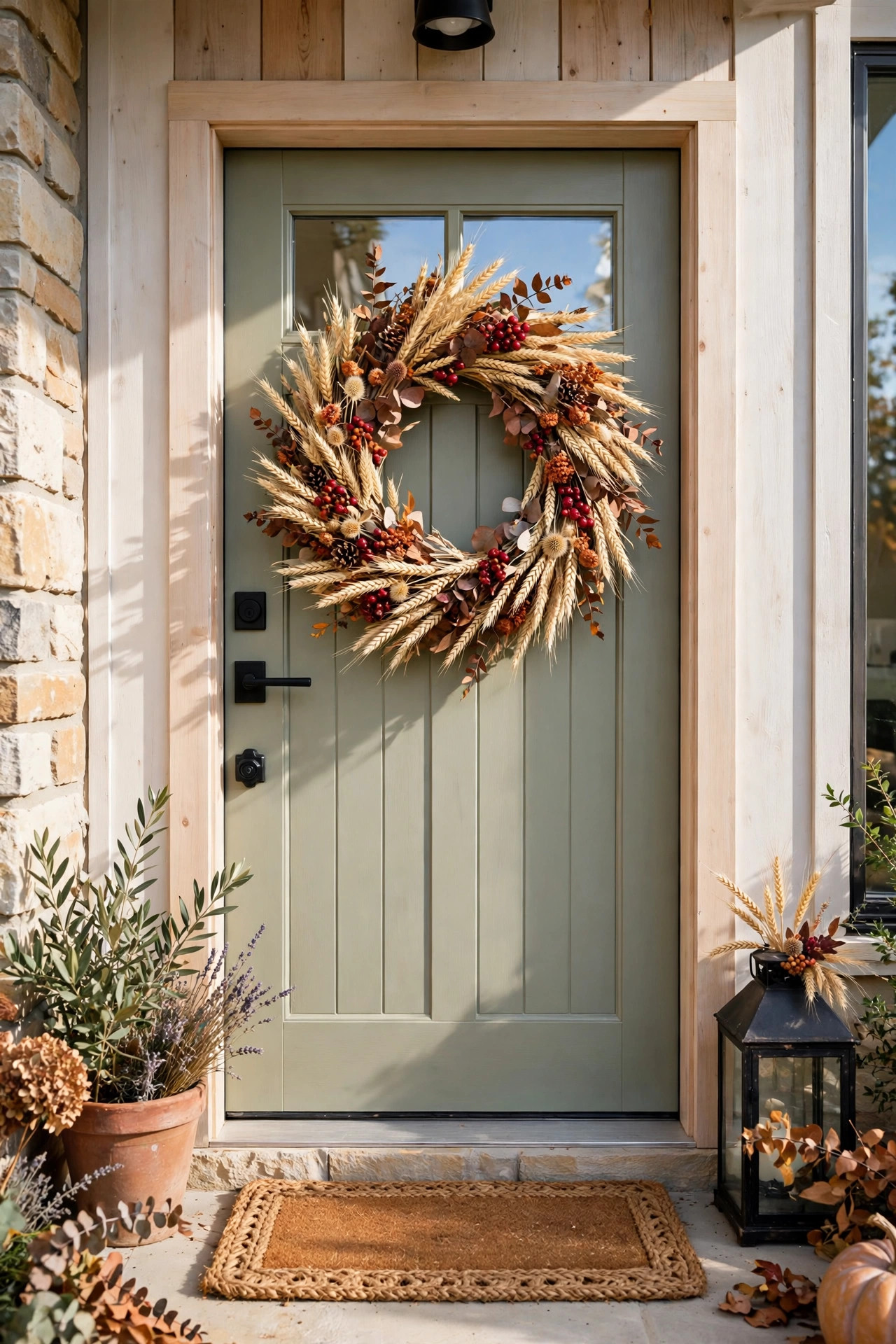
Stand right in front of the door and look at what hangs there. A wreath is the handshake of your porch, the first thing that says welcome. The trick is not owning one perfect wreath, it is owning four simple ones and swapping them with the seasons. A budding green wreath for spring, a bright floral one for summer, dried wheat and berries for fall, and pinecones and evergreen for winter. Each swap takes five minutes and makes the whole porch feel brand new. Guests notice it even if they cannot say why. It tells them someone cares about this house.
You do not need to spend a lot to build this rotation. Start with one grapevine wreath base and refresh it with seasonal picks from a craft store. In spring, tuck in faux tulips and a small bird nest. For summer, add sunflowers or lemons. Fall gets mini pumpkins and burlap ribbon, and winter gets frosted berries and a plaid bow. Store the off season pieces in a labeled bag so next year is easy. Hang the wreath with an over the door hook so you never put holes in the door. Four wreaths, one hook, and your door always looks dressed for the season. That is the whole secret.
2. Painted Front Door Pop
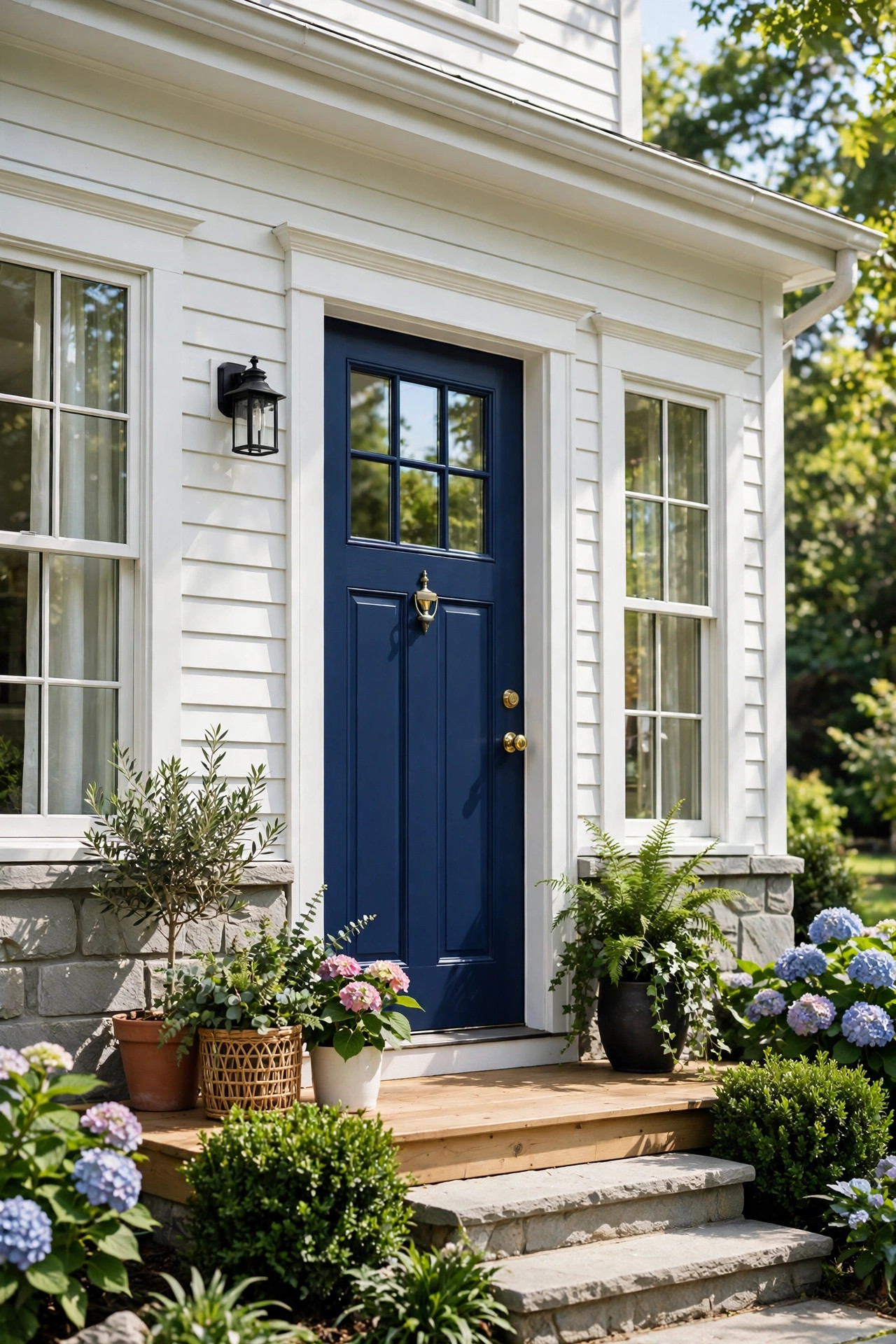
Now look at the door itself. A front door in a bold color does more for curb appeal than almost anything else you can do in a weekend. Deep navy, warm red, forest green, or even sunny yellow, the right color makes the whole porch glow. The door is the focal point of the entire entry, and when it has personality, everything around it looks better. Neighbors will slow down to look. Delivery drivers will remember your house. It is a small surface with a huge payoff, and paint is the cheapest makeover there is.
Picking the color is the fun part. Hold paint swatches against your siding and brick in morning and evening light, because colors shift through the day. A glossy or satin finish looks best on doors, since it bounces light and wipes clean. Plan for a full day: remove the hardware, clean the door well, sand lightly, and apply two thin coats. Do not forget the edges of the door, which show when it stands open. Once it dries, put the hardware back on and step back to the street. That pop of color will make you smile every time you pull into the driveway. One gallon of paint, one weekend, one brand new first impression.
3. Layered Doormats
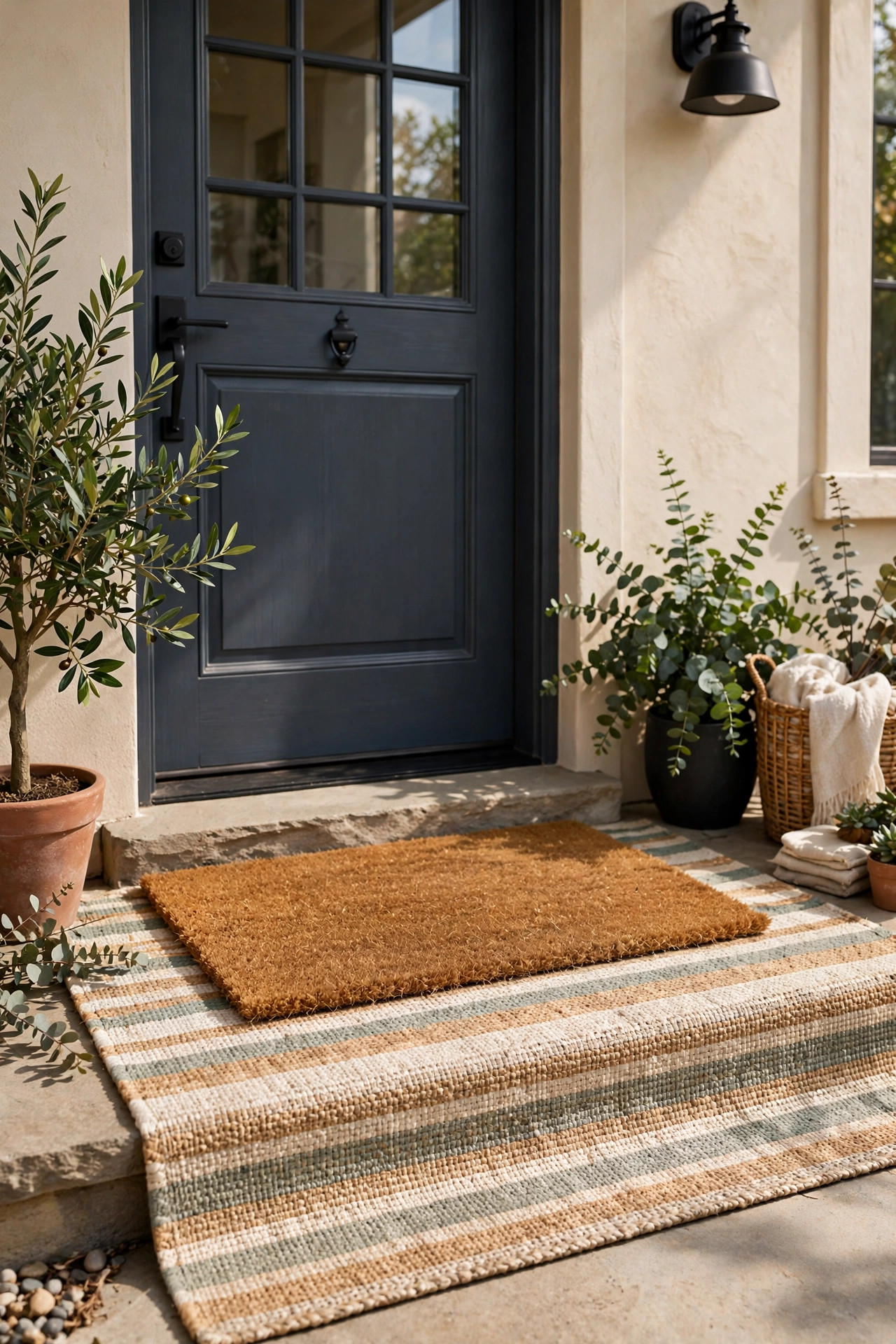
Look down at your feet. A single flat doormat is fine, but two layered mats look like something from a magazine. Put a larger patterned outdoor rug down first, maybe stripes, buffalo check, or a simple border design. Then layer a smaller coir doormat on top with a fun greeting or a plain monogram. The layers add texture and color right where guests stand, and the bigger rug catches more dirt before it reaches your floors. It is a tiny change that makes the entry feel styled instead of bare.
This trick works in every season because you only swap the top mat. Keep the larger base rug year round in a neutral pattern, then change the smaller mat for holidays or seasons. A pumpkin mat for fall, a snowflake for winter, a floral hello for spring. The base rug should be about twice the size of the top mat so a pretty border shows all around. Shake both mats out weekly so they keep working. When the coir mat wears out, replacing just that piece costs very little. Two mats, endless combinations, and the doorstep always looks finished. Guests will wipe their feet on something pretty instead of a worn out mat, and you will love how polished the entry feels every single day.
4. Porch Seating Nook
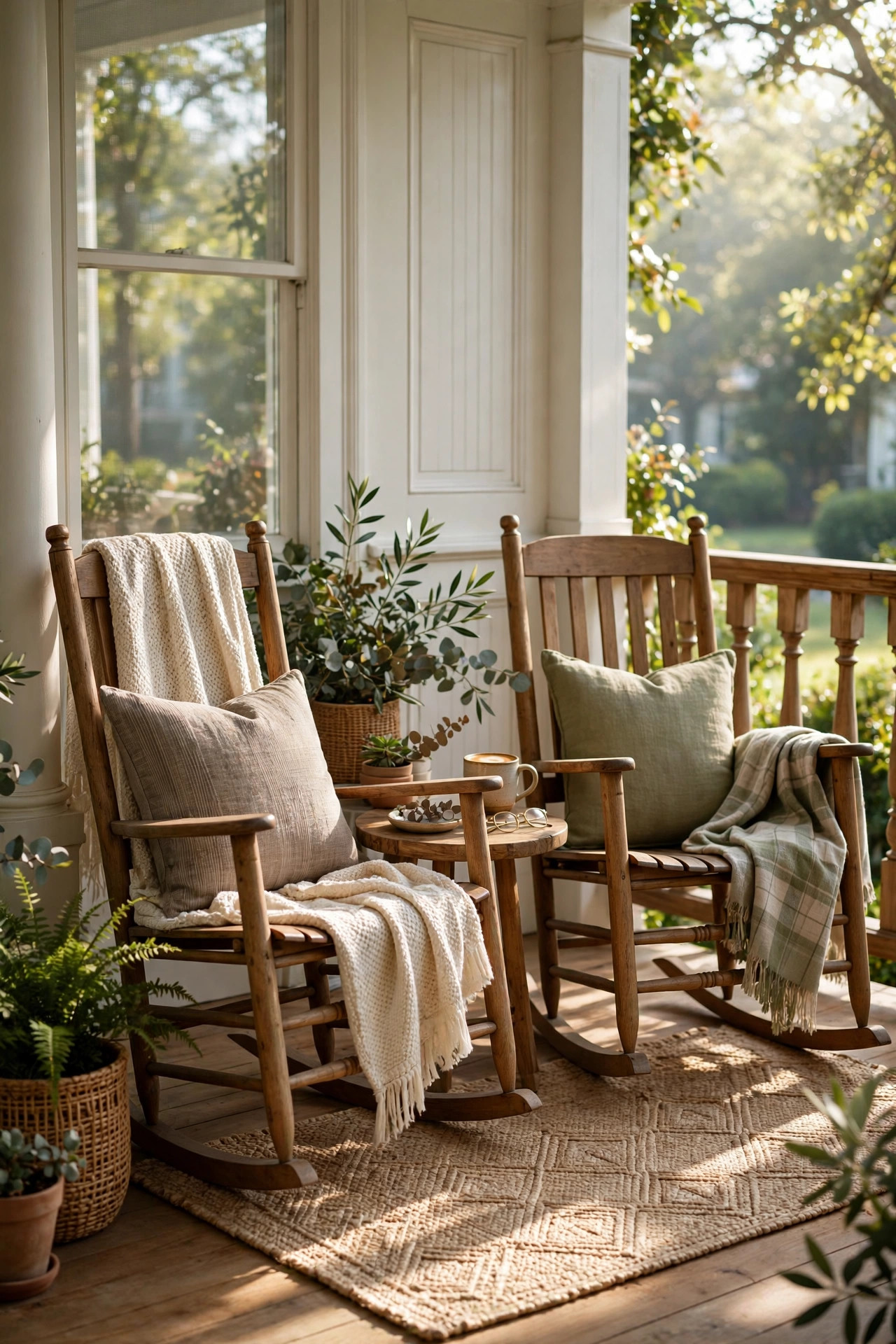
Step to the side now and picture where people actually sit. Every porch needs at least one real seat, not just decoration. Two rocking chairs, a small bench, or even one deep armchair with a side table turns the porch from a pass through into a destination. This is where morning coffee tastes better and evening talks stretch long. The seating does not need to match your indoor furniture. It just needs to be comfortable enough that someone chooses to sit down. A porch nobody sits on is a missed chance.
Start with what fits your space. A narrow porch holds two slim chairs and a tiny table between them. A wide porch can take a bench or a loveseat. Look for outdoor rated pieces in materials that handle rain, like metal, teak, or all weather wicker. Add a small side table for drinks, because nobody wants to hold a mug the whole time. Place the seats to face the street or the garden, wherever the view is nicest. Once the seats are there, you will use them more than you expect. That is the point. A porch with seating gets lived on, and a lived on porch always looks welcoming.
5. Outdoor Rug Anchor
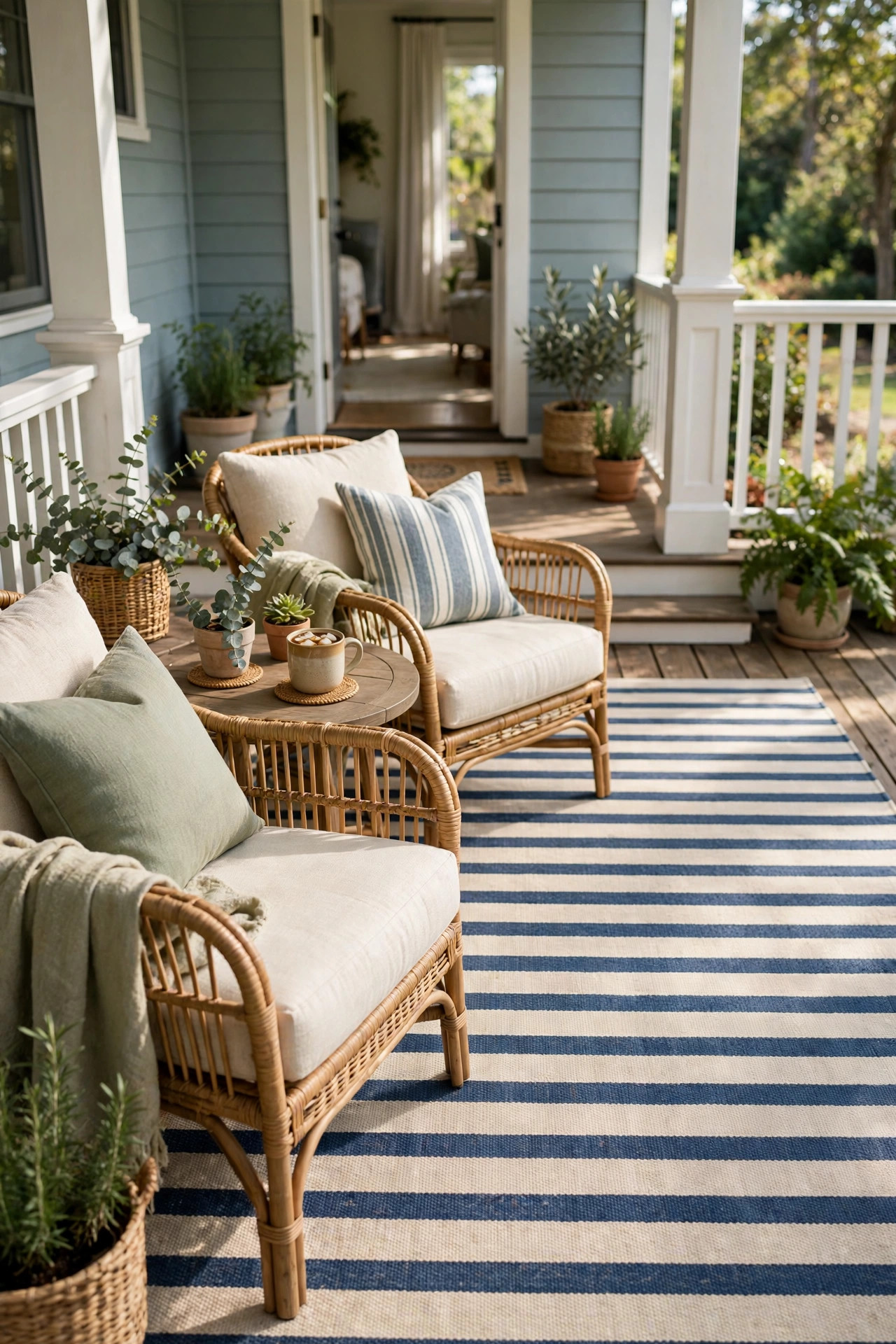
Glance at the floor of the seating area. A bare concrete or wood floor can feel cold and unfinished, but an outdoor rug warms it up instantly. The rug defines the sitting zone the way a rug defines a living room, pulling the chairs and table into one cozy group. It adds color and pattern underfoot, softens hard surfaces, and makes the porch feel like a real outdoor room instead of just a slab. Choose a flat weave rug made for outdoors so rain runs through and it dries fast. The difference one rug makes will surprise you.
Size matters more than pattern here. The rug should be big enough that the front legs of every seat rest on it, which visually connects the furniture. Leave a few inches of porch floor showing around the edges so it looks intentional. For patterns, stripes and simple geometrics hide dirt well and suit most houses. Hose the rug off once a month and let it dry in the sun. In winter, roll it up and store it so it lasts for years. A good outdoor rug costs less than one chair and does as much work as all of them. Anchor the space first, then everything else falls into place.
6. Swing or Hanging Chair
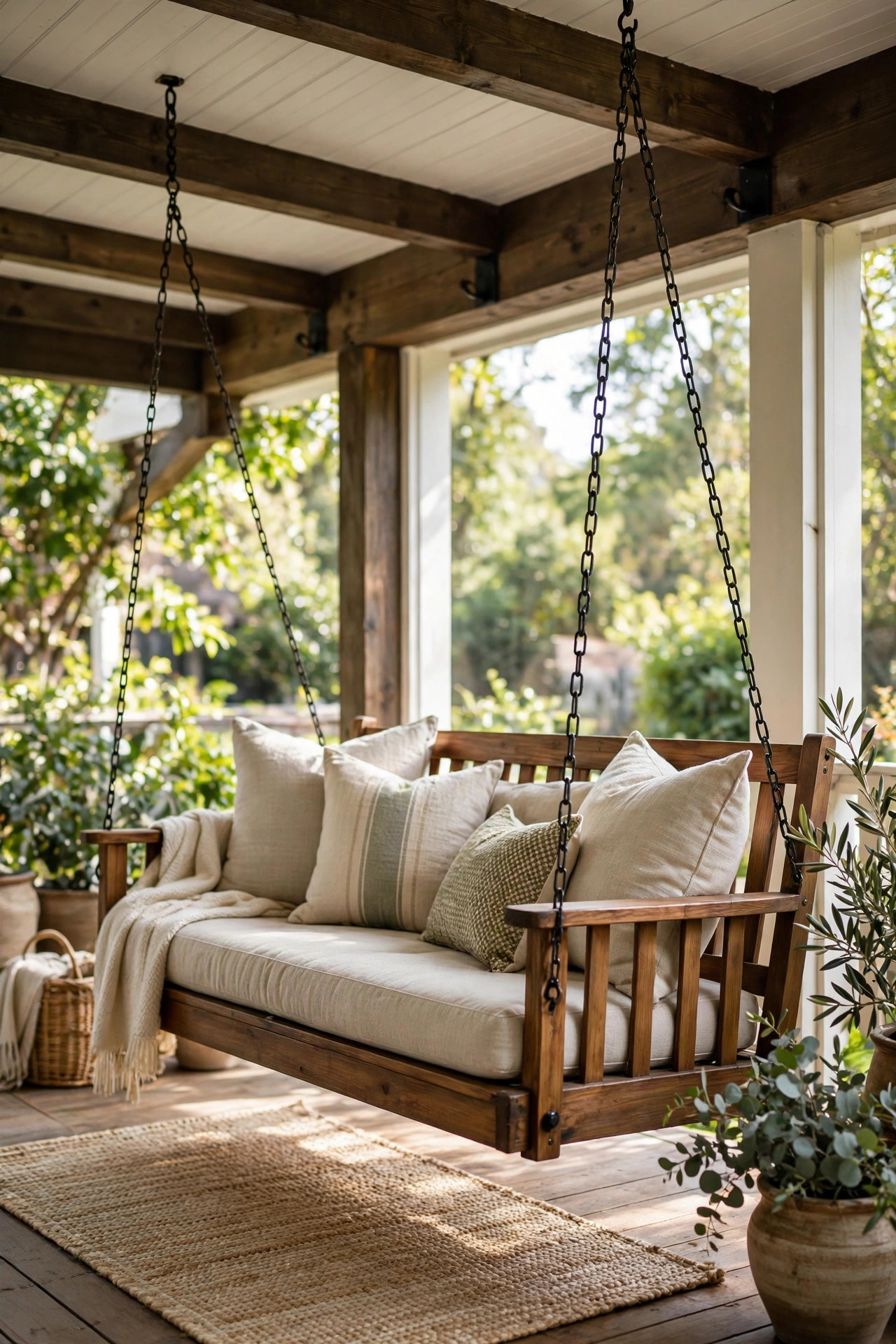
Look up at the porch ceiling near the seating area. If you have sturdy beams, a porch swing or a hanging chair might be the best thing you ever add. There is something about gentle motion that makes people relax on sight. A classic wooden swing with chains fits a traditional porch, while a round hanging egg chair suits a modern one. Either way, it becomes the seat everyone fights over. Kids love it, grandparents love it, and guests remember it. Motion turns sitting into an experience.
Before you buy, check that your ceiling can hold the weight. A swing needs to hang from a structural beam or joist, not just the ceiling boards. Use heavy duty hardware rated well above the expected load, and hang the swing so the seat sits about eighteen inches off the floor. Add outdoor cushions and a throw pillow for comfort. A small side table nearby holds the lemonade. If a full swing feels like too much, a single hanging chair needs only one anchor point. Test the hang with your full weight before you trust it. Once it is up, you will wonder why every porch does not have one. On warm evenings you will find yourself drifting there without thinking, and guests will ask where you found it before they even say hello.
7. Potted Plant Clusters
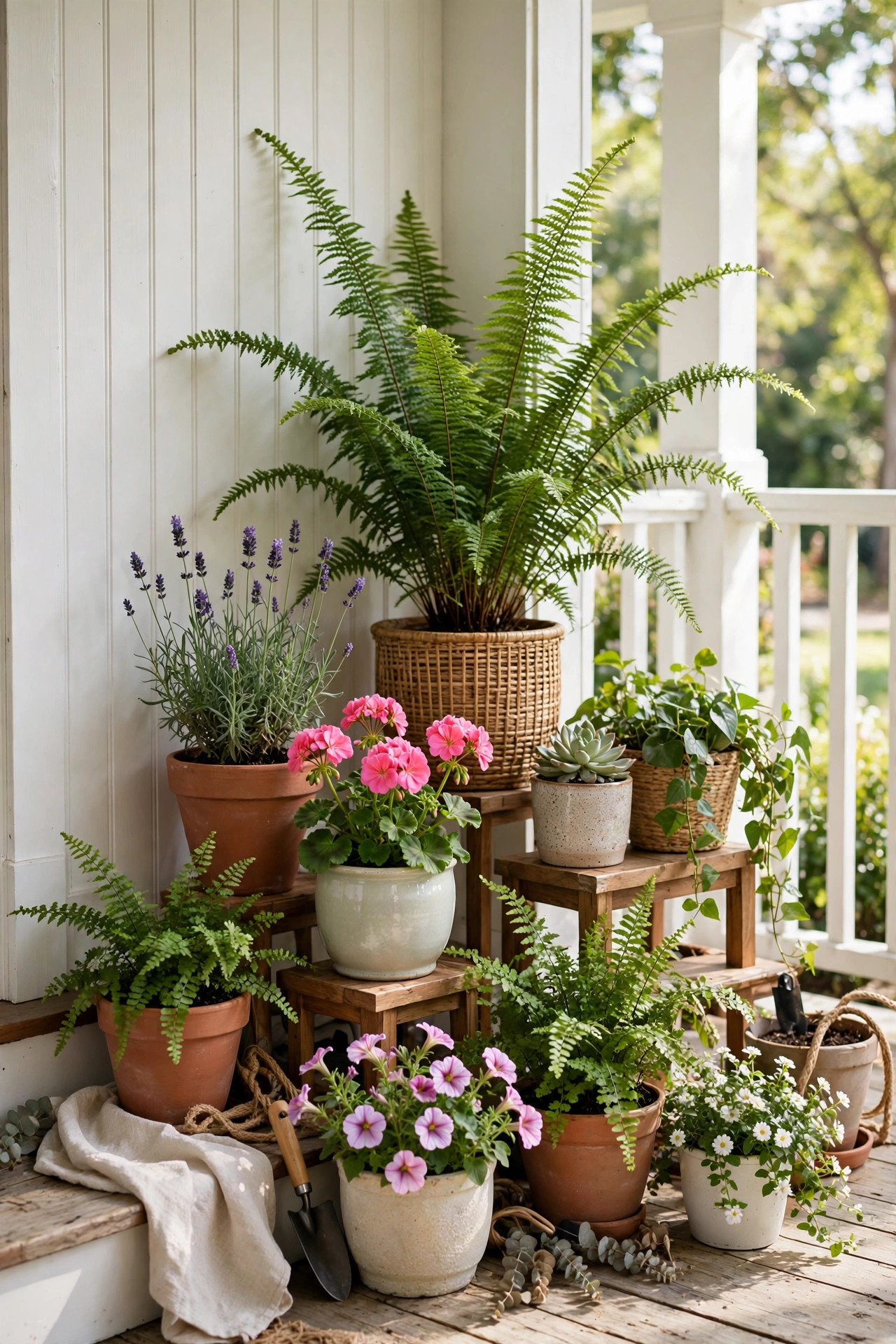
Walk to the corners of the porch and notice the empty spots. Corners beg for plants, and a cluster of pots fills them better than one lonely plant ever could. Group three or five pots of different heights together, tall in back, medium in the middle, small in front. The mix of heights looks natural and lush, like a little garden that grew there on its own. Use the same pot color or material so the group feels tied together even when the plants differ. Ferns, palms, and colorful annuals all thrive in pots on a porch.
The secret to good clusters is the thriller, filler, spiller recipe. Each group needs one tall thriller plant for height, a few fillers to bush it out, and one spiller that trails over the pot edge. Water pots more often than garden beds, since they dry out fast, and feed them lightly every couple of weeks in summer. Swap the annuals each season for fresh color while the thriller stays put. In fall, tuck in ornamental kale or mums. For winter, replace tender plants with evergreen cuttings. Corners that once sat empty become the greenest part of the porch. Plants make everything feel alive.
8. Window Box Blooms
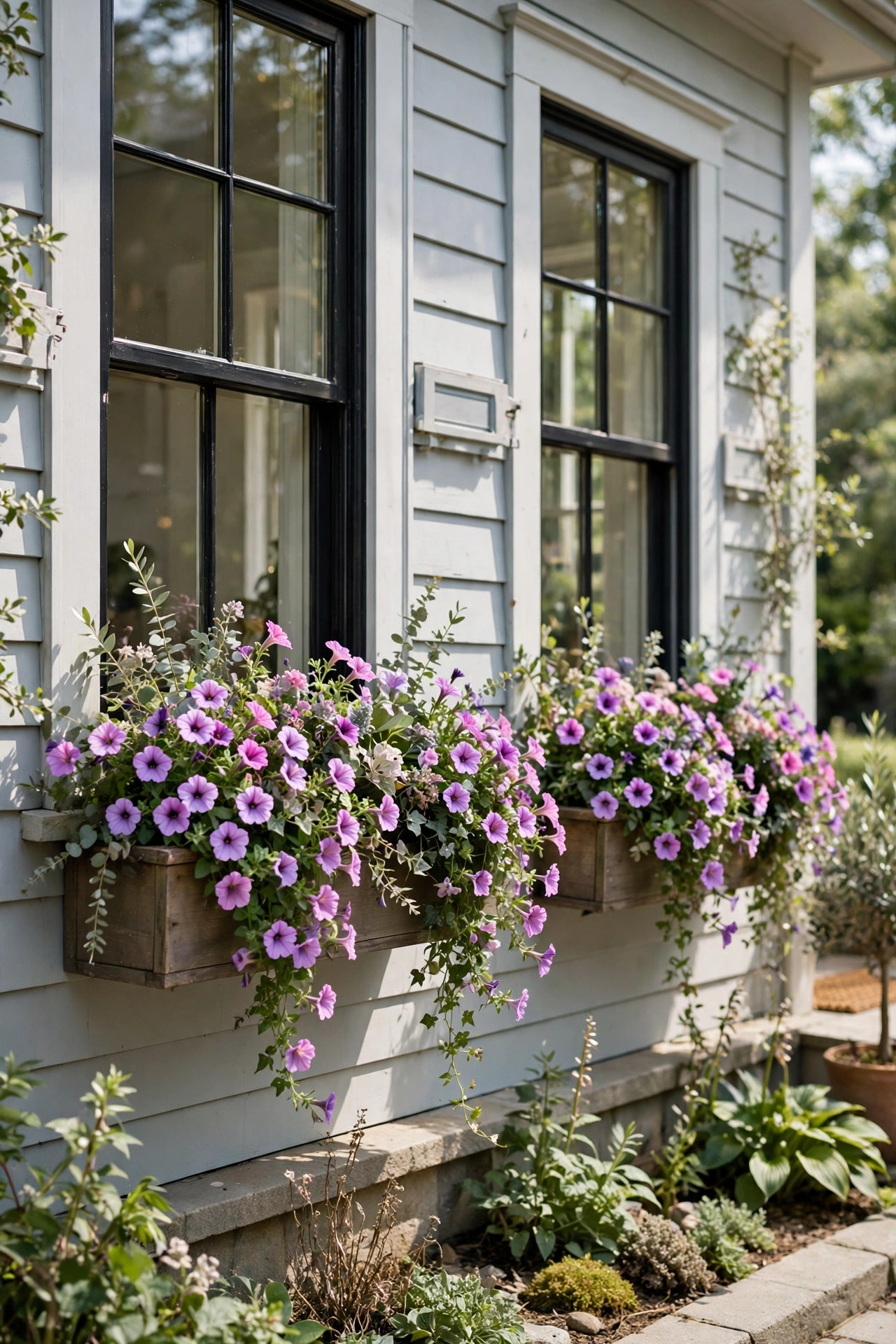
Shift your eyes to the windows facing the porch. Window boxes are jewelry for the house, small but mighty. A box of trailing petunias or bright geraniums under each front window adds color at eye level, right where guests look. From the street, they make the whole facade feel cared for. From the porch, they frame your view outward. The flowers change with the seasons, so the look never gets stale. Even a simple box of green ivy looks polished and intentional.
Mount the boxes securely to the wall or railing with proper brackets, since wet soil gets heavy. Line them with coconut fiber or plastic liners with drainage holes. For sun loving spots, use petunias, verbena, and sweet potato vine. For shade, try impatiens, begonias, and ferns. Water daily in hot weather, because boxes dry out quickly. Deadhead spent blooms once a week to keep new flowers coming. In late fall, swap summer flowers for pansies or ornamental cabbage. Come winter, fill the boxes with evergreen boughs and pinecones. Four seasons of flowers from two small boxes. That is decorating that works hard. Neighbors will stop to ask what you planted, and you will get to enjoy fresh color every time you walk out the door.
9. Lantern Lighting Lineup
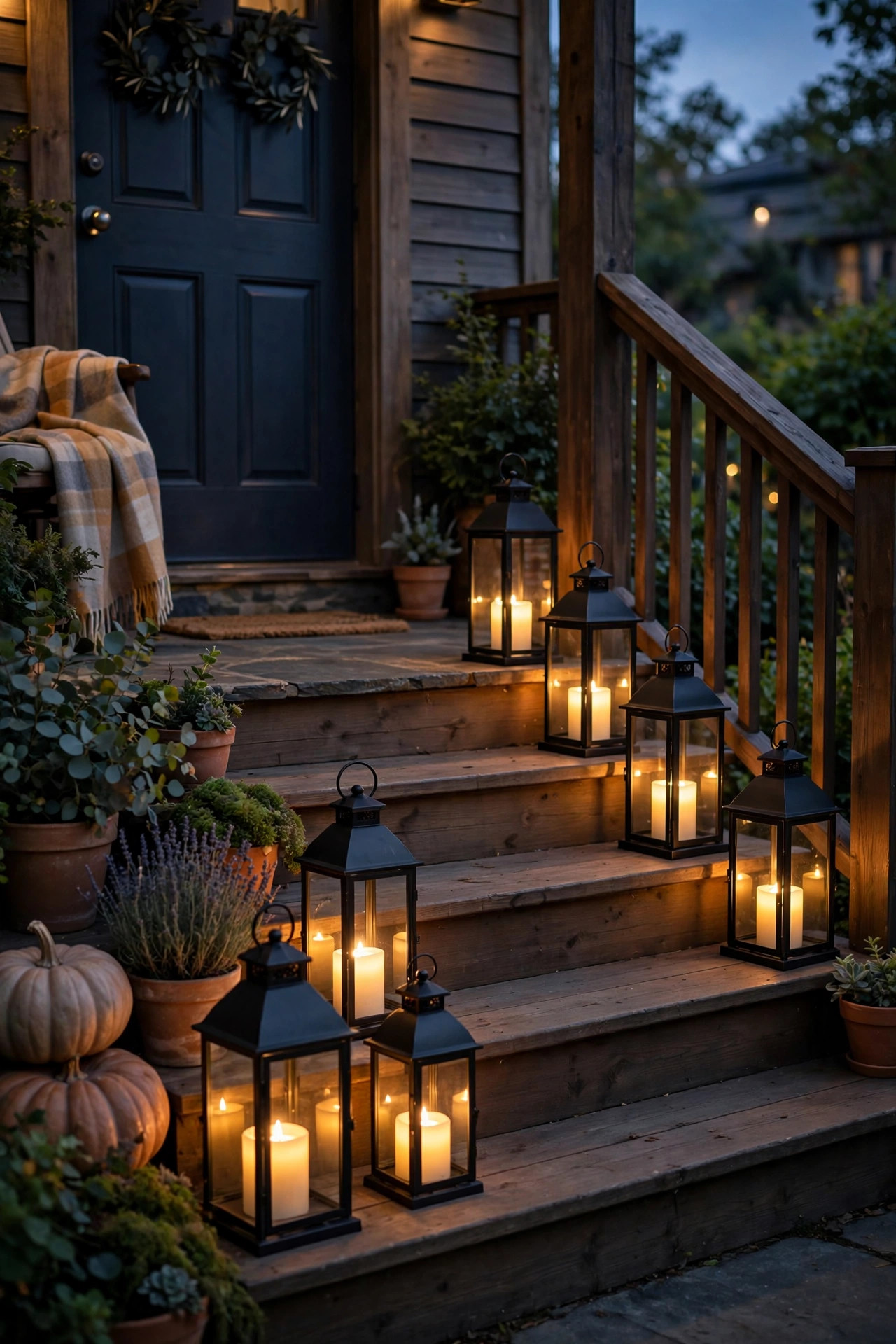
As evening comes, look at how the porch glows. A row of lanterns along the railing or steps gives the porch a warm, welcoming light that overhead bulbs cannot match. Lanterns flicker softly, pool light in pretty circles, and make the whole entry feel magical after dark. Line them up along the top step, cluster them by the door, or hang them from shepherd hooks in the yard. Real candles are lovely for parties, but flameless LED candles give the same glow every night with zero worry. Light is what turns a porch from daytime pretty to nighttime inviting.
Mix lantern sizes for the prettiest effect, tall ones at the ends and short ones in the middle, or a scattered cluster of different heights. Black metal lanterns suit almost every house style, while wood or rattan ones feel more relaxed. Put the lanterns where they will not get knocked over, against the house wall or in sturdy corners. Set them on a timer so they switch on at dusk by themselves. For holidays, swap plain candles for colored ones or add tiny string lights inside the lanterns. A porch that glows at night feels safe, loved, and impossible to walk past. Let there be light, and let it be warm.
10. String Lights Overhead
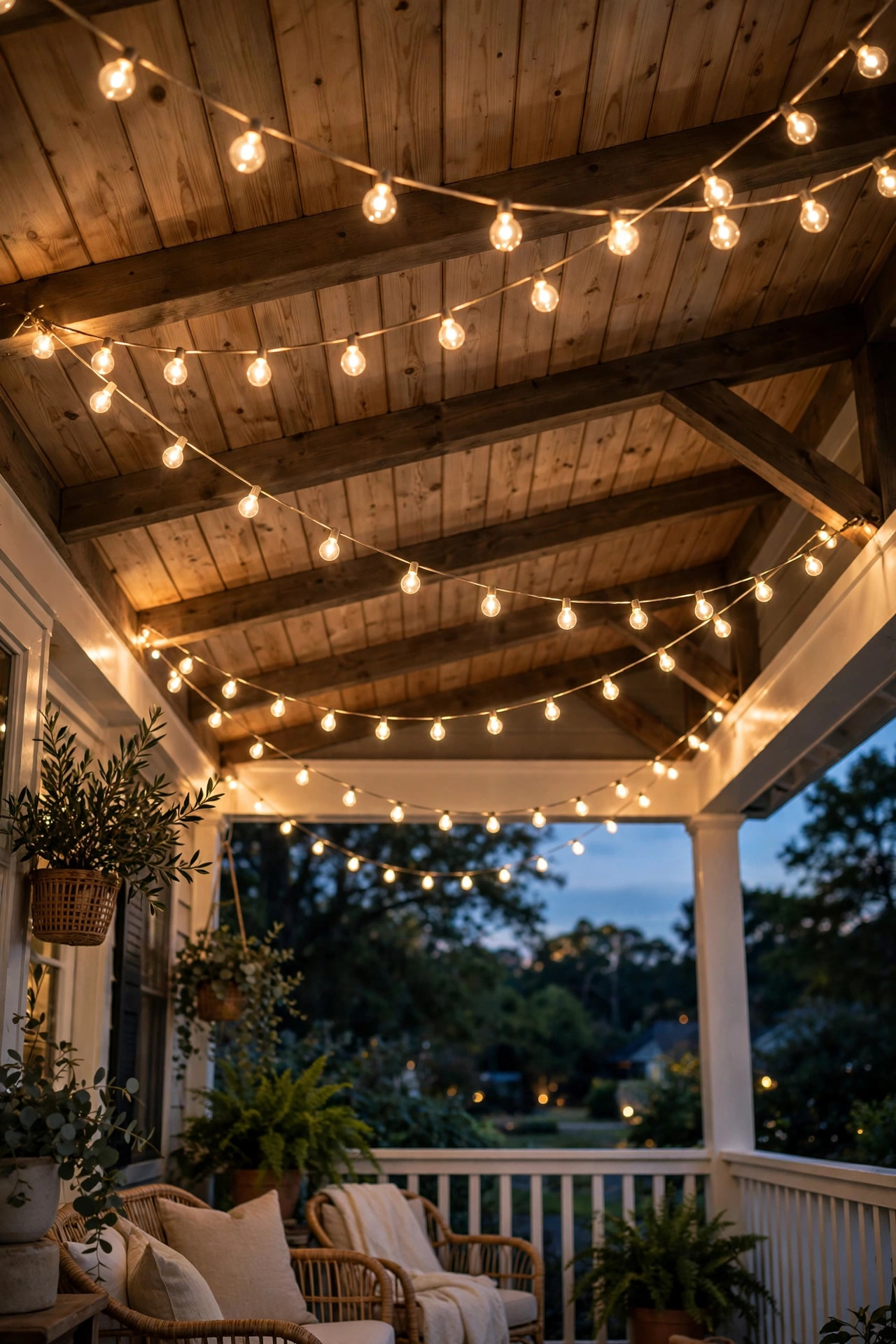
Now tilt your head up. The porch ceiling is a blank canvas, and string lights are the easiest art you can hang there. A few swooping strands of warm white lights turn an ordinary porch into an evening hideaway. They cast a soft glow that flatters everyone and everything, and they cost very little to run. Drape them in gentle swags from corner to corner, or run them in straight lines for a cleaner look. When the sun goes down, your porch becomes the prettiest spot on the block.
Use outdoor rated lights with sturdy wire, and hang them with small cup hooks screwed into the ceiling beams. Keep the strands high enough that tall guests will not bump their heads. Warm white bulbs look best, since cool white can feel harsh outdoors. A simple outdoor timer or smart plug turns them on at sunset automatically. For fall, you can leave the same lights up and add paper lanterns. At the holidays, swap in multicolor or twinkle strands. Take them down once a year to check for worn wires. String lights are the fastest way to make any porch feel festive. Hang them once and enjoy them all year. Every evening they will make you want to step outside just to sit under their glow for a while.
11. Seasonal Pillow Swap
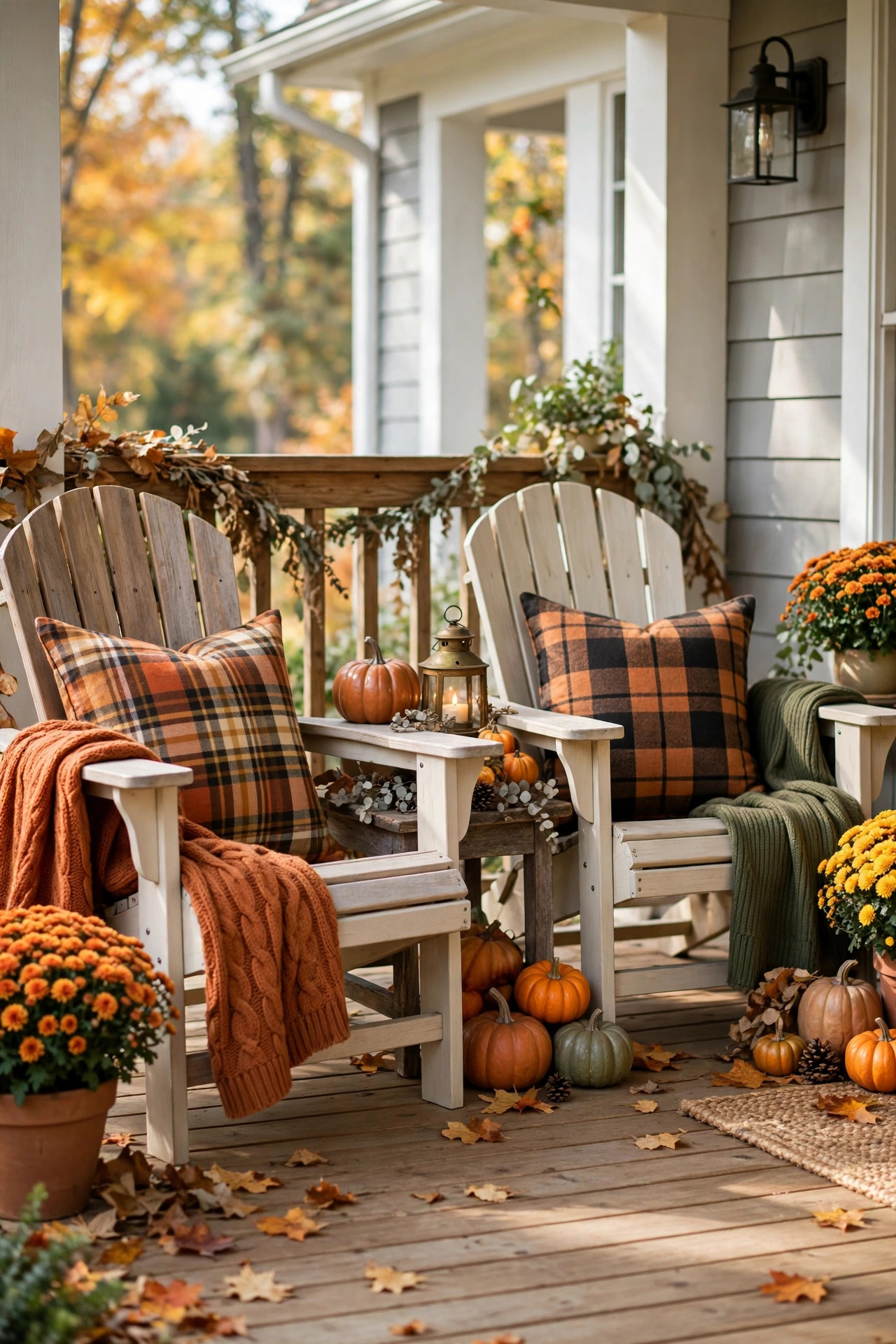
Settle back into the seating area and look at the pillows. Throw pillows are the quickest seasonal update on the whole porch. A set of pillow covers in spring florals, summer stripes, fall plaids, and winter knits lets you redecorate in minutes. You keep the same pillow inserts all year and just zip on new covers. The colors do all the talking. Guests will think you redecorated the whole porch, when all you did was swap fabric. It is the highest impact, lowest effort trick in this entire tour.
Buy good inserts once, in outdoor rated fill that resists moisture, then collect covers over time. Two or three covers per season is plenty. Store the off season covers in a labeled bin so the swap takes ten minutes. Mix one pattern with one solid so the chairs never look busy. In spring, try botanical prints. Summer loves navy stripes and coral. Fall wants plaid and mustard, and winter looks great in deep red and cream cable knit. Shake the pillows out when you swap them and spot clean as needed. New season, new pillows, same chairs. Nobody will guess how easy it was. Friends will ask if you bought new furniture, and you can just smile and enjoy the compliment.
12. Fall Mum Display
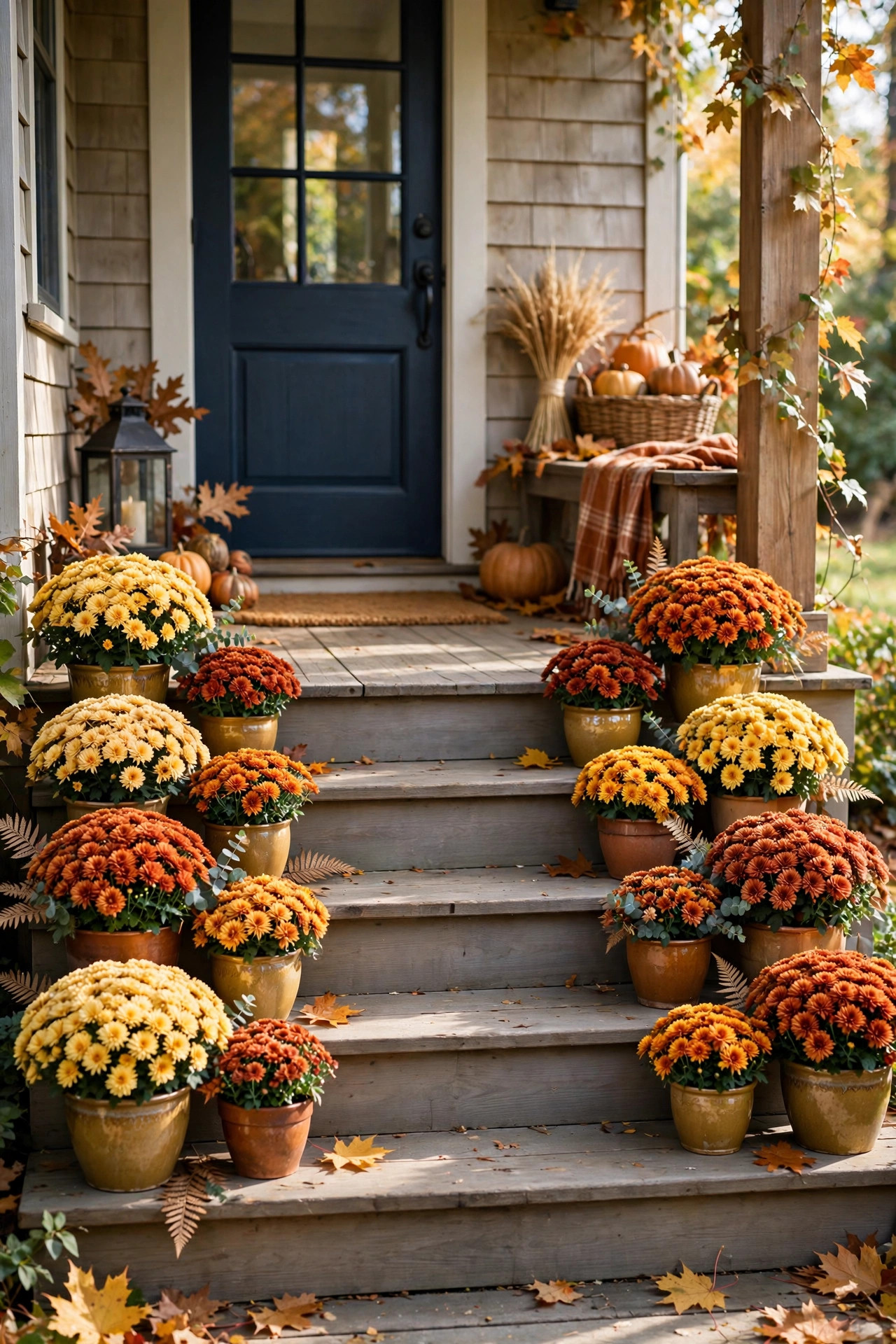
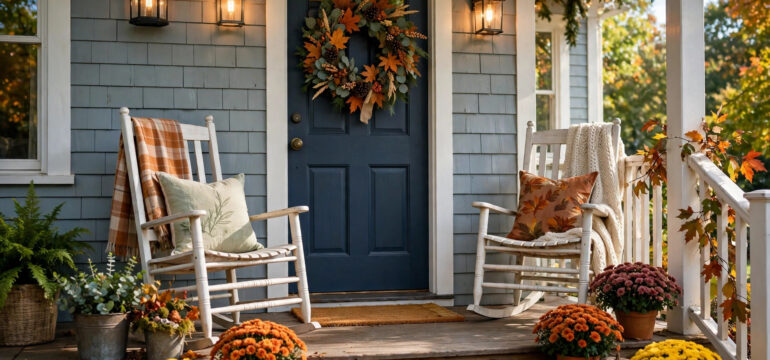
Walk down to the steps in autumn and you will see it everywhere, the mighty mum. Chrysanthemums are the undisputed flower of fall porches, and for good reason. Their round, full blooms come in gold, rust, burgundy, and purple, the exact colors of the season. A row of mums marching up the steps or flanking the door looks abundant and cheerful. They bloom for weeks with almost no care, which makes them perfect for busy people. Nothing says fall is here like a porch full of mums.
Buy them while the buds are still tight so the color lasts longer at your house. Choose pots in graduated sizes for a fuller look, big ones on the ground and smaller ones on the steps. Water them well, since mums in pots dry out fast, and pinch off spent blooms to encourage more. Pair them with pumpkins, gourds, and a bale of hay for the classic harvest look. When the blooms fade, tuck the pots into garden beds where they may return next year. For one season of glory, few plants beat the mum. Line the steps with them and watch the whole street smile. Your porch will look like the cover of a fall magazine with almost no effort at all.
13. Winter Evergreen Planters
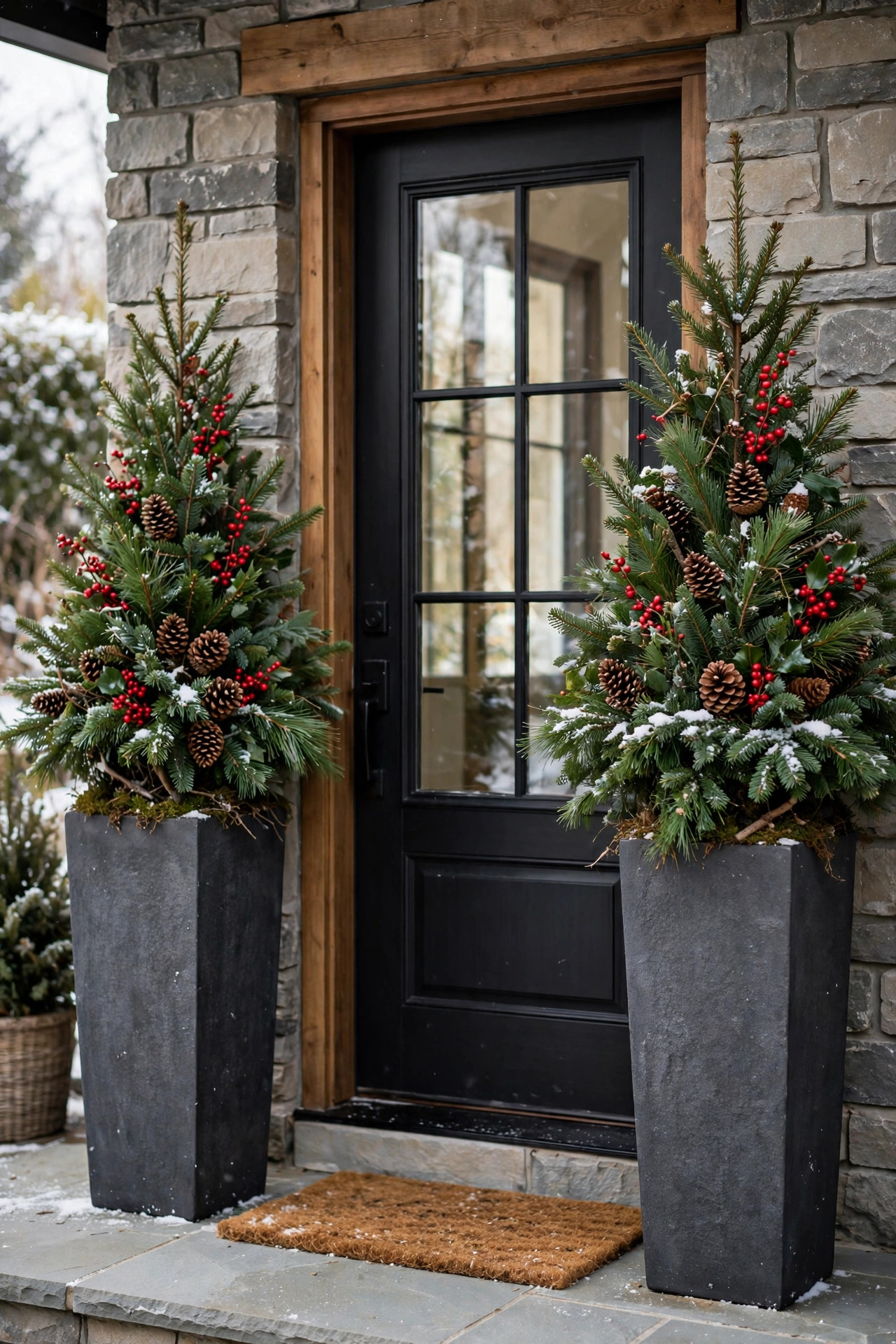
Come back in December and look at those same step planters. Winter does not mean the porch has to go bare. Fill your pots with cut evergreen boughs, pinecones, red berries, and birch branches for arrangements that look festive for months. These winter planters need no watering and never wilt, since everything in them is already cut and hardy. They bring green and texture to the grayest days. A pair of tall evergreen planters flanking the door looks grand and welcoming all winter long.
Build them like a bouquet, tall branches in the center, boughs fanning out around them, pinecones and berries tucked in last. Cedar, pine, and fir branches all work and smell wonderful. Add a big plaid or burlap bow for extra charm. Stick to a simple color scheme, green with red berries and natural pinecones never fails. These arrangements last from Thanksgiving through February if you keep them out of harsh wind. In spring, compost the greens and reuse the pots. Winter porches do not have to be empty porches. A little evergreen goes a long way. When everything else looks gray and bare, your doorway will still feel warm and full of life. It is the kind of welcome that makes coming home the best part of a cold day.
14. Spring Flower Pots
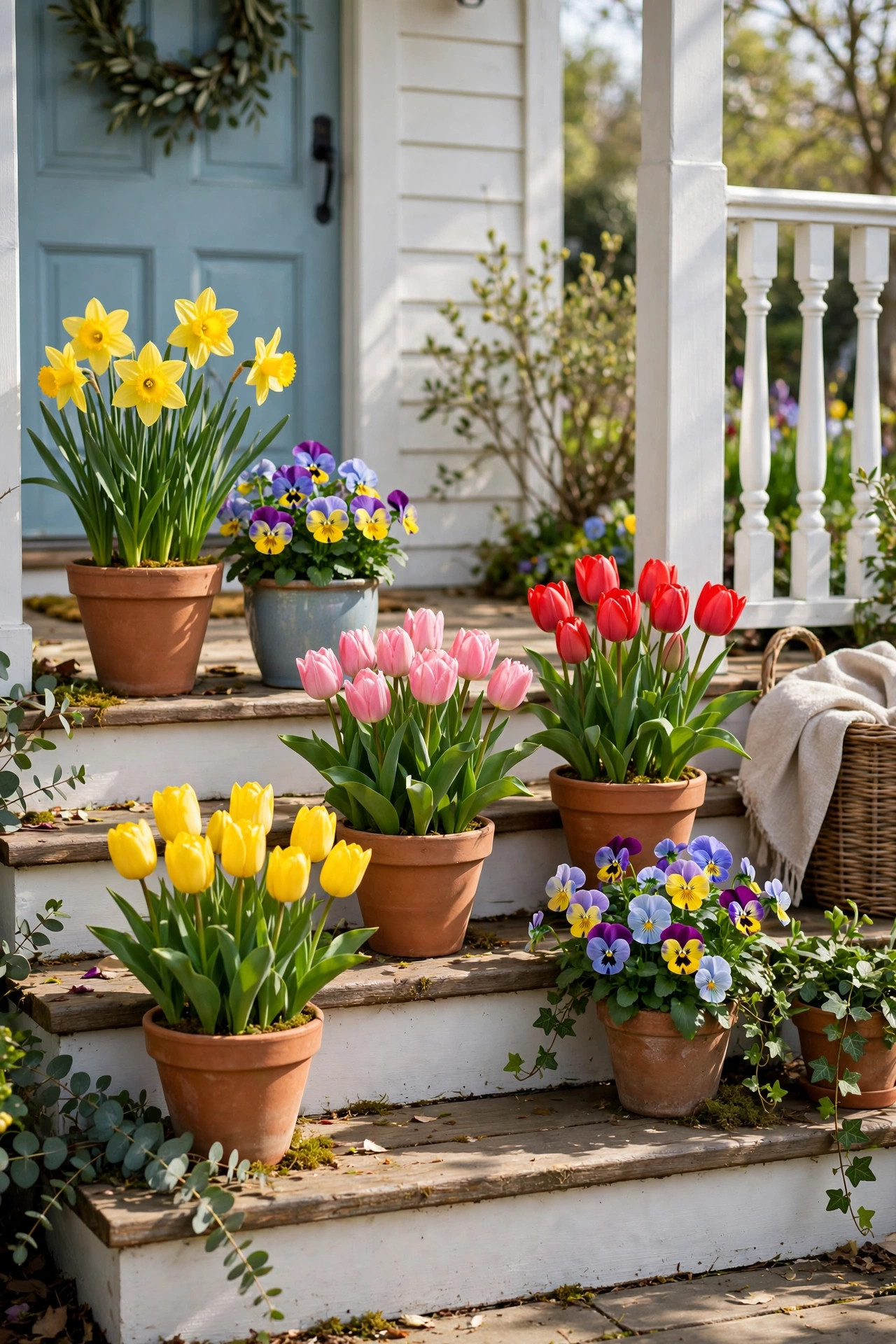
Now it is March, and the steps are waking up. Spring flower pots are pure joy after a long winter. Fill them with tulips, daffodils, hyacinths, and pansies in cheerful colors. These early bloomers laugh at chilly nights and burst into color weeks before summer flowers even think about it. A few pots of bright blooms by the door tell the whole neighborhood that spring has arrived at your house. The scent of hyacinths drifting across the porch is worth the effort alone.
Plant bulbs in fall for the earliest show, or buy pre grown pots in spring for instant color. Pansies handle frost well and bloom for months if you deadhead them. Group pots in odd numbers for the most natural look. As the tulips fade, replace them with summer annuals without changing the pots. Water spring pots regularly, since spring winds dry them out. Add a small watering can by the door as both a tool and a cute prop. Spring is short, so enjoy every bloom. Your porch becomes the happiest spot on the street. Passersby will slow down to admire the color, and you will feel proud every time you come home. That burst of spring color is the perfect reward after months of winter gray.
15. Summer Citrus Touches
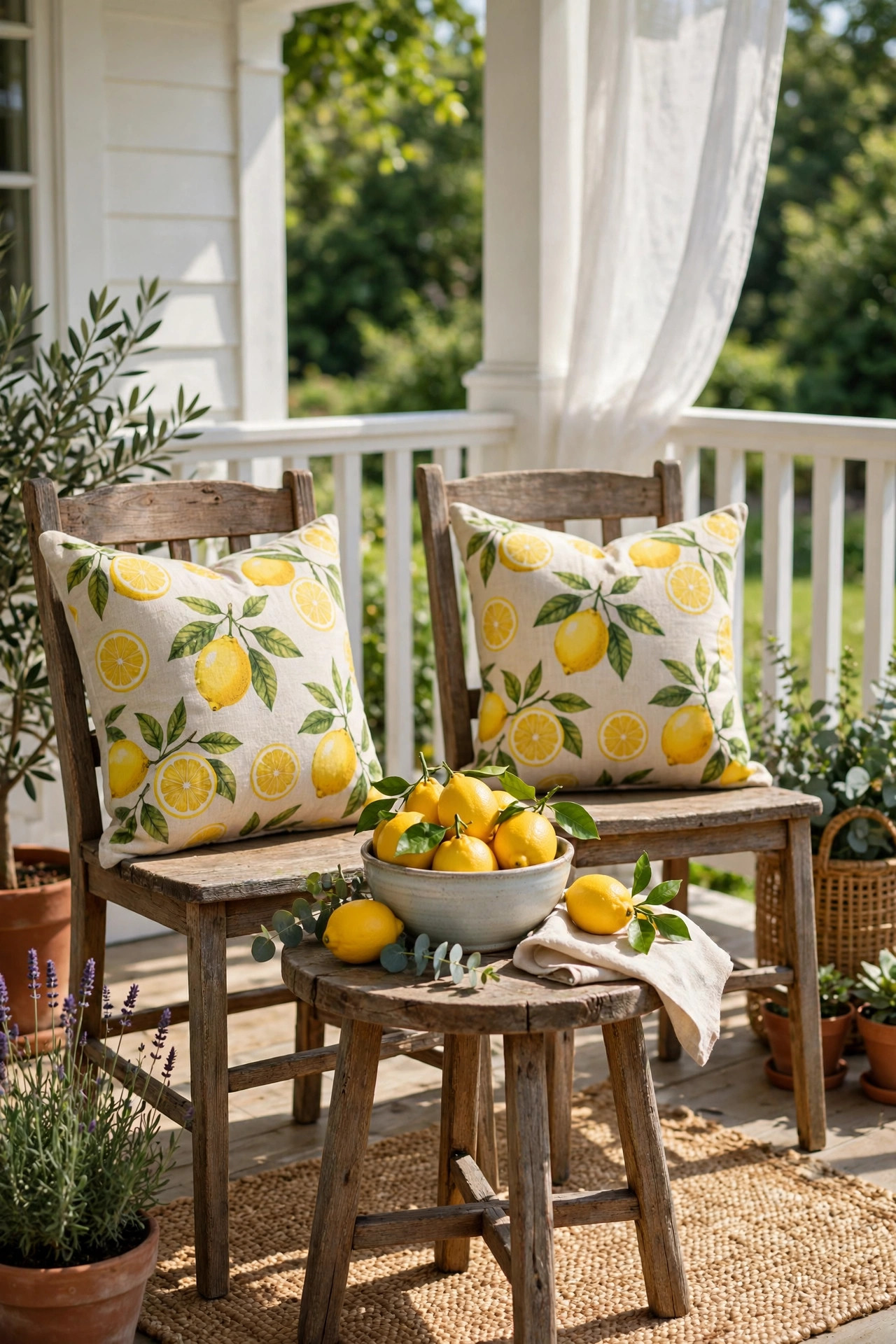
It is July now, and the porch needs something cool and fresh. Citrus decor brings instant summer energy, bright lemons and limes that look good enough to eat. A bowl of real lemons on the side table, a lemon wreath on the door, or citrus print pillows on the chairs all say summer in the sunniest way. Yellow pops beautifully against green plants and blue skies. It is cheerful without trying too hard. Citrus is summer in fruit form.
Start with a big bowl of lemons as a centerpiece, real ones you can actually use in drinks. Add a citrus themed doormat or a pair of lemon print pillows. A small potted lemon tree by the door is a showstopper if your climate allows, or bring it inside for winter. Keep the rest of the palette simple, white, green, and natural wood, so the yellow shines. At the end of summer, the lemons go into lemonade and the pillows get stored. Fresh, bright, and gone before it gets boring. That is how summer decorating should feel. Your porch will radiate sunshine even on cloudy days, and every guest will feel the cheerful mood the moment they arrive. It is a simple look that never fails to lift the spirit.
16. House Numbers and Mailbox Refresh
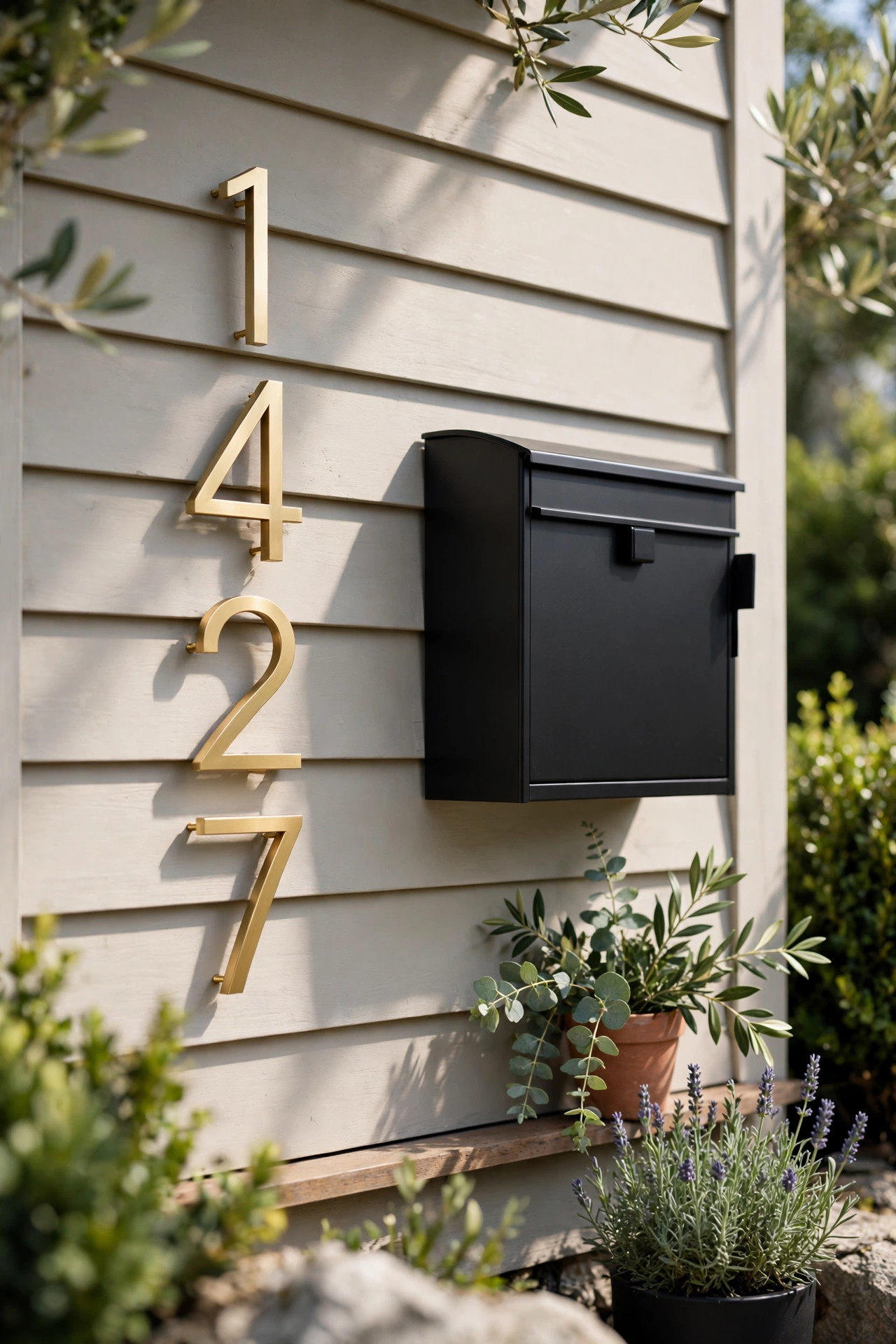
Before we head back inside, look at the small details. Crisp house numbers and a tidy mailbox are the finishing touches most porches miss. Faded numbers and a rusty mailbox drag down even the prettiest porch. New numbers in a modern font, mounted straight and centered, look sharp from the street. A fresh mailbox in a color that matches your door ties everything together. These details take an hour and cost very little, but they polish the whole entry.
Choose numbers large enough to read from the road, at least four inches tall, in a finish that contrasts with your house color. Brass on dark siding, black on light brick. Mount them with a simple template so they sit level. For the mailbox, a fresh coat of spray paint works wonders, or replace it outright for a bigger change. Add a small planter or a solar light beside the mailbox post. While you are at it, wipe down the porch light fixtures and replace any burnt bulbs. Details are what separate a nice porch from a finished one. End the tour here, at the mailbox, with everything in place. Take one last look back at the porch as you head inside, and enjoy how complete it all feels.
Conclusion
We have walked the whole porch together, from the wreath on the door to the mailbox at the curb. Sixteen ideas, four seasons, and not one of them needs a big budget or a contractor. The real secret is simply paying attention to this space through the year, swapping a wreath here, adding mums there, and keeping the lights glowing. Pick the three ideas that excited you most and start this weekend. Your porch is waiting to become your favorite room of the house, even though it has no walls.
FAQs
How do I decorate my front porch for each season without spending a lot?
Focus on swaps, not overhauls. Keep your big pieces like seating, rugs, and planters year round, and only change the small things: wreaths, pillows, doormats, and the plants in your pots. Store off season items in labeled bins so each changeover takes under an hour. Shopping end of season sales also stretches your budget far.
What are the best plants for a front porch?
It depends on your light. Sunny porches love geraniums, petunias, and citrus trees. Shady porches do well with ferns, impatiens, and begonias. For year round structure, use evergreens in planters. Always check how many hours of direct sun your porch gets before buying, since the wrong light is the top reason porch plants fail.
How can I make a small front porch look bigger?
Keep the palette light and the furniture scaled down. A small rug, two slim chairs, and vertical elements like tall planters draw the eye up and make the space feel larger. Avoid clutter, since every extra item shrinks a small porch. A mirror on the wall can also bounce light and add a sense of depth.
What kind of lighting works best on a front porch?
Layer it. A bright overhead light by the door for safety, warm string lights or lanterns for mood, and a small solar light along the steps for guidance. Warm white bulbs around 2700 kelvin feel welcoming. Timers or smart plugs mean the lights come on by themselves every evening.
How do I keep porch decor from blowing away?
Weight matters. Use heavy pots, add sandbags inside tall planters, and choose decor with some heft. Museum putty or outdoor mounting tape keeps smaller items in place. Bring lightweight pillows and wreaths inside before big storms. If your porch gets strong wind regularly, skip tall topiaries and hanging baskets that act like sails.
When should I switch my porch decor for the seasons?
A good rhythm is early March for spring, late May for summer, mid September for fall, and right after Thanksgiving for winter. You do not need to change everything each time. Even swapping just the wreath and the doormat signals the new season. Let the weather be your guide more than the calendar.