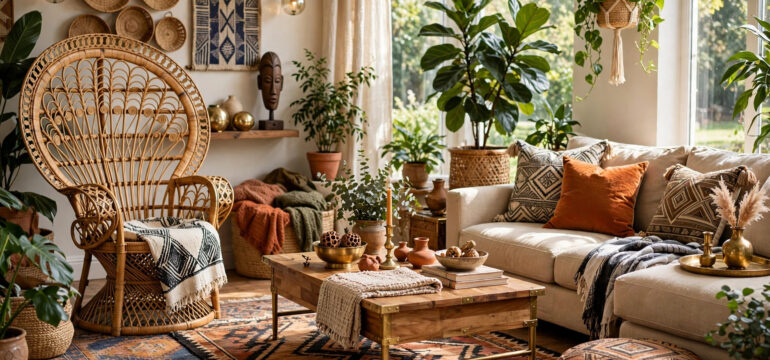
Afrohemian style is having a major moment, and it is easy to see why. It mixes the rich patterns and warm colors of African design with the free spirit of bohemian style. The result is a look that feels bold, joyful, and deeply personal. No two Afrohemian rooms look the same, and that is exactly the point. This is decorating with soul.
The look is built on layers. Think mudcloth throws over a rattan chair, brass bowls catching the afternoon light, and walls covered in art from around the world. It is maximalist in the best way, but every piece earns its place. Nothing here is random. Each object tells a story or carries a memory.
Below are 17 ideas to bring Afrohemian style into your own home. You do not need to redo a whole room. Start with one or two pieces, live with them for a while, and let the look grow. That is how the best Afrohemian spaces are made, slowly and with love.
1. Bold Mudcloth Throws
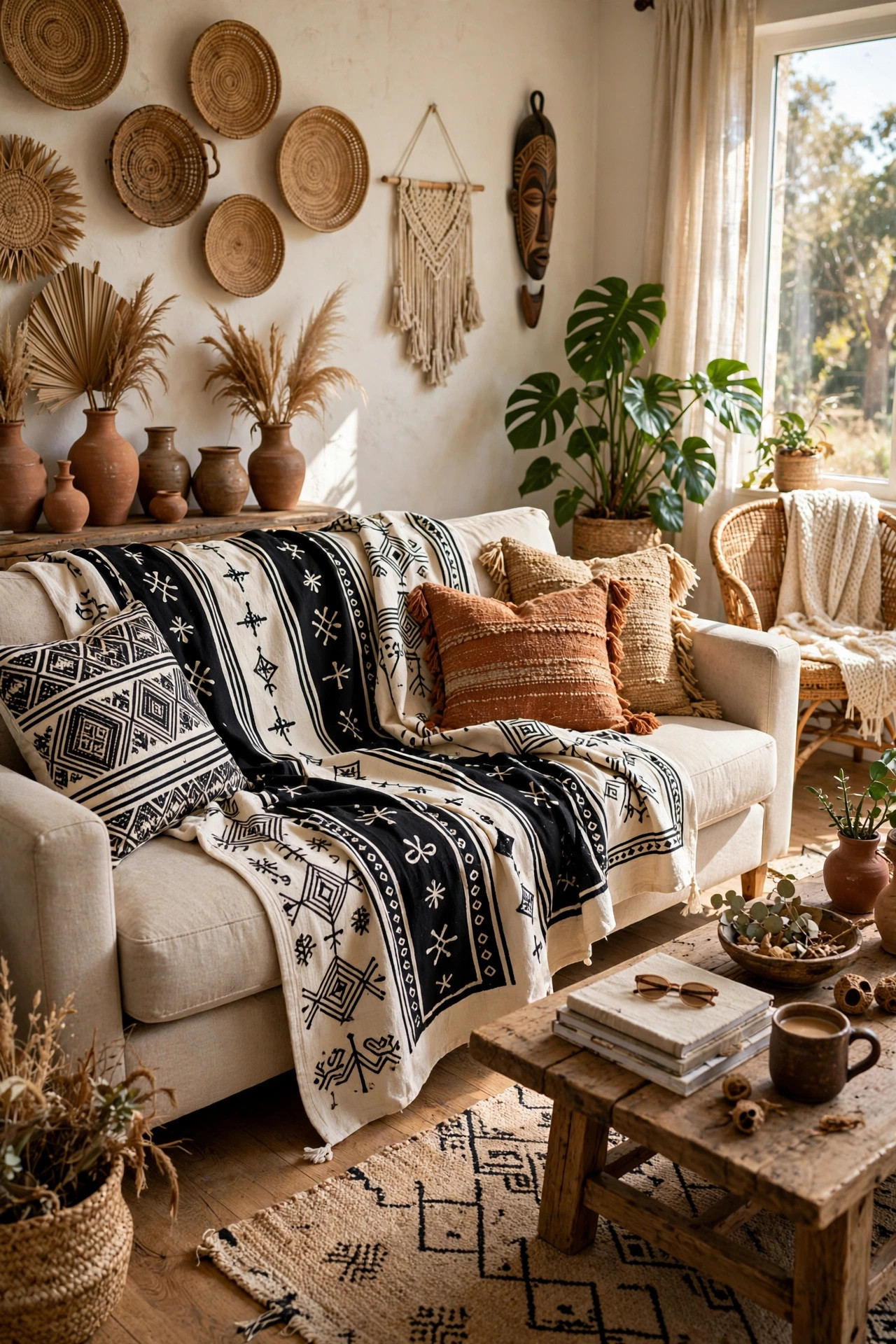
If there is one textile that defines the Afrohemian look, it is mudcloth. These handwoven cotton throws from Mali carry bold geometric patterns in black, white, and earthy browns. Draped over a sofa or folded at the foot of a bed, a mudcloth throw adds instant graphic punch. The patterns are never perfect, and that is the charm. Each one is made by hand, so the slight wobbles in the lines prove it is the real thing. In a neutral room, one mudcloth throw can carry the whole design. It gives the eye something strong to land on while the rest of the room stays calm. That balance is the secret of the look.
Shopping for mudcloth takes a little care, because the market is full of printed copies. Real mudcloth is made from hand spun cotton, dyed with fermented mud, and it has a slightly rough, nubby feel. Flip it over. On authentic pieces the pattern shows through on the back, while printed fakes look blank or faded underneath. Expect to pay more for the real thing, but one genuine throw beats three fake ones. It will last for years and only get softer. Style it casually, never folded into a perfect rectangle. The best Afrohemian rooms look collected, not staged, so let the throw fall where it falls.
2. Woven Seagrass Baskets
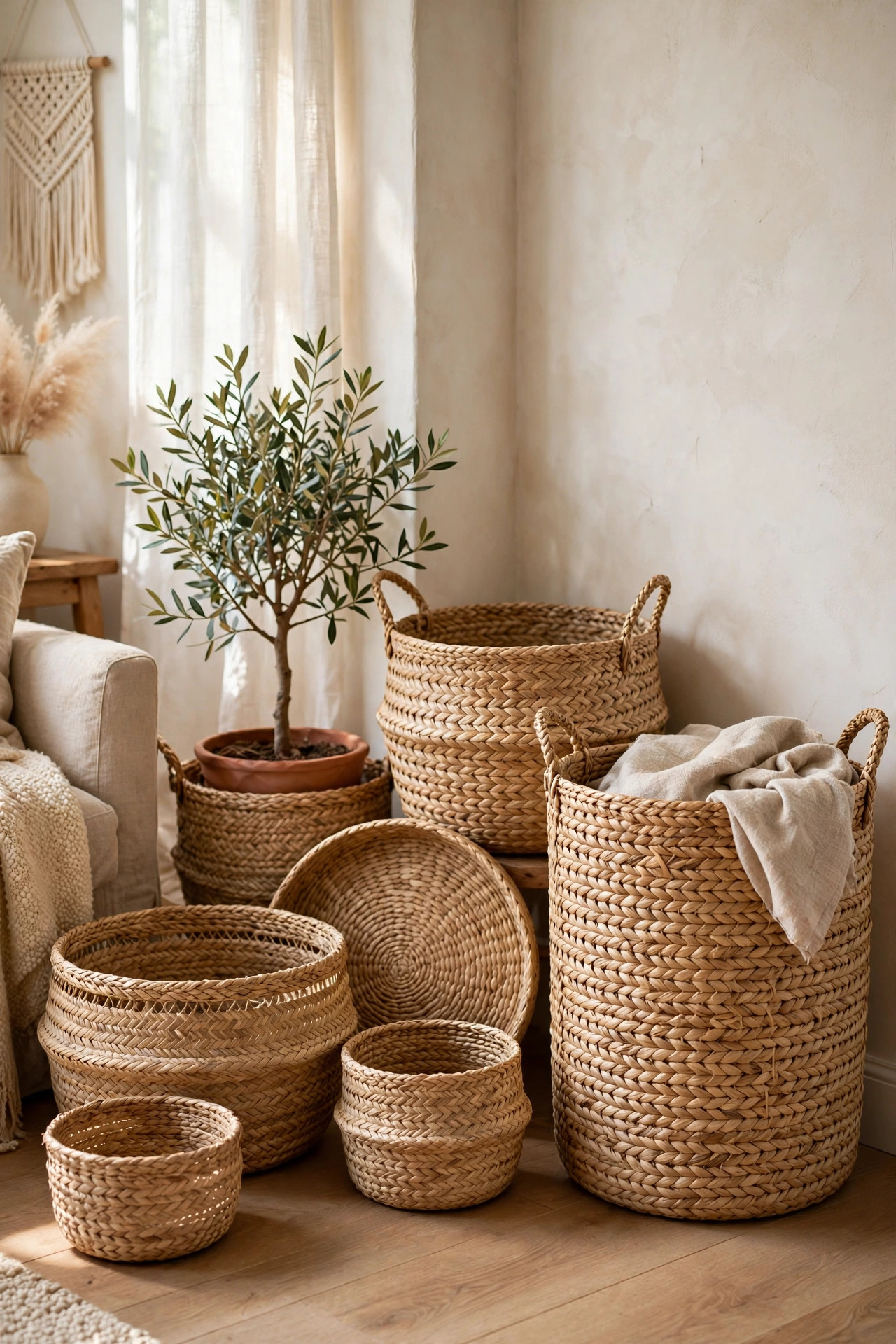
Every Afrohemian room needs baskets, and lots of them. Big seagrass baskets in the corner hold throw blankets. Flat woven bowls on the wall become art. A tall basket by the door catches umbrellas and tote bags. The natural honey color of seagrass warms up any space, and the handmade weave adds texture that flat surfaces cannot give. Baskets are the workhorses of this style. They store the clutter while looking beautiful doing it. That combination of pretty and practical is rare, so use it everywhere.
The trick is mixing sizes and shapes instead of buying a matching set. One oversized floor basket, a cluster of small bowls on a shelf, a lidded hamper in the corner. When the shapes vary, the collection looks gathered over time rather than bought in one trip. Hang flat baskets on the wall in a loose grouping for an instant focal point that costs very little. They work in every room, from the living room to the bathroom. If a basket starts to look tired, it is easy to replace without guilt, since good seagrass baskets are affordable. That low cost is part of their magic. Keep one beautiful basket empty on purpose, because negative space makes a collection look curated instead of cluttered.
3. Ankara Print Pillows
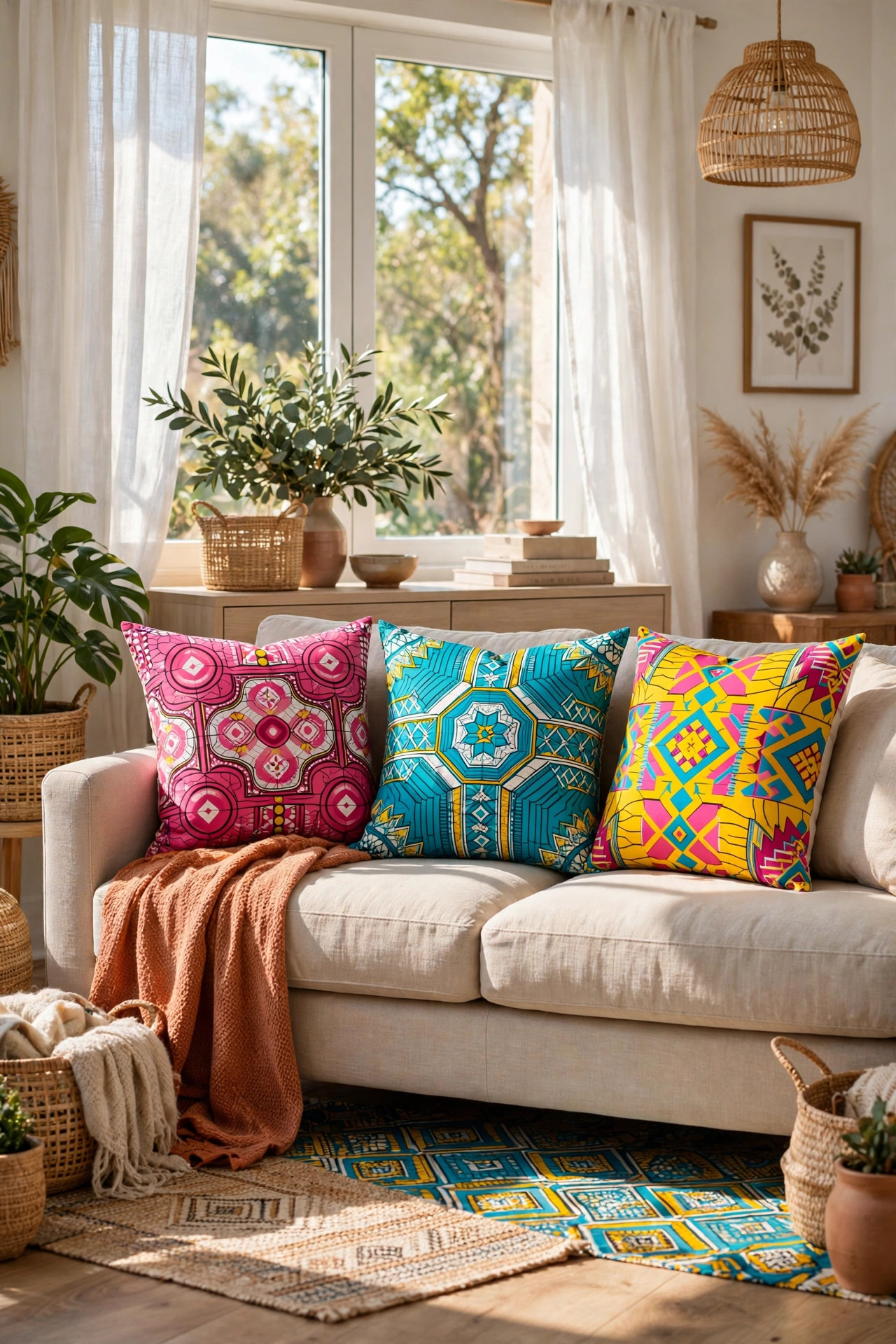
Ankara fabric is the confetti of Afrohemian design. These wax print cottons from West Africa come in colors that do not apologize, hot pink, turquoise, sunflower yellow, emerald green. A few Ankara pillows on a plain sofa will wake up the whole room. The prints are bold enough to stand alone, so you do not need many. Two or three pillows in different Ankara patterns are plenty. The clash is the point. In this style, mixing prints is not a mistake, it is the whole idea.
When mixing Ankara prints, keep one thing consistent so the look feels joyful instead of chaotic. That can be the background color, the scale of the print, or even just the pillow shape. For example, three pillows in totally different patterns all work if they share a warm gold background. Or mix wildly different colors but keep every pillow the same square size. That one thread of order lets the eye relax. Ankara pillow covers are easy to find from independent makers, and many are sewn from vintage fabric. Buying from small sellers also means your pillows will not look like everyone else’s. Wash the covers inside out in cold water so those fierce colors stay fierce for years.
4. Carved Wooden Mask Gallery
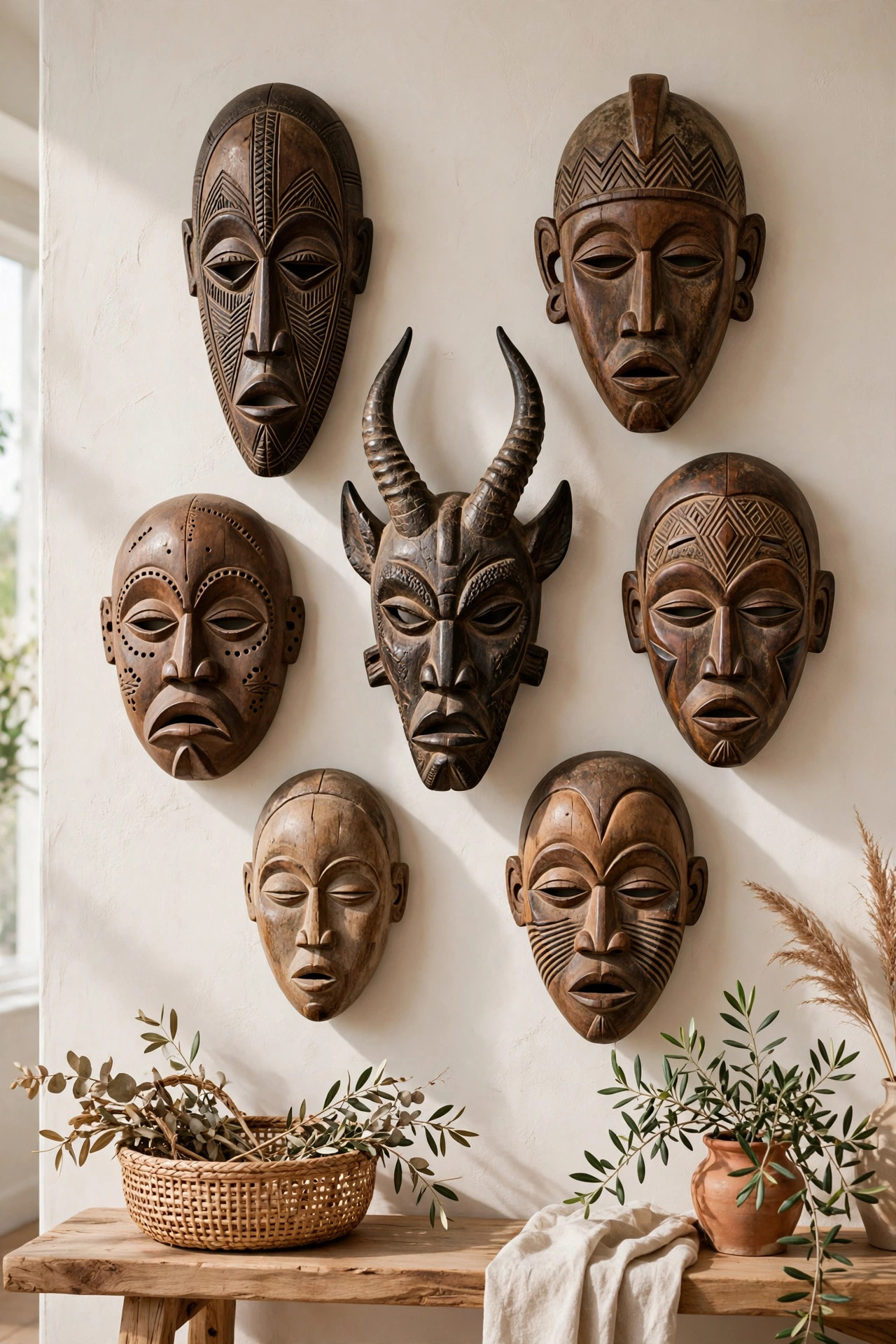
A wall of carved wooden masks is the most striking move in Afrohemian decorating. These sculptural pieces bring height, shadow, and history to a plain wall. Group three to seven masks together, mixing sizes and wood tones, and the wall becomes a gallery. The carvings catch light in a way flat art never does. Every ridge and groove throws a small shadow, so the wall feels alive. It is a bold choice, but in this style bold is the baseline.
Buy masks with respect for where they come from. Look for pieces made by living artisans rather than mass produced copies, and learn a little about the traditions behind them. Fair trade shops and artisan markets are good sources. When hanging, treat the masks like a gallery wall. Lay them out on the floor first and play with the arrangement until it feels balanced. Keep the wall color simple so the wood tones stand out. A warm white or soft clay wall lets dark carved wood glow. This is not decoration you rush. Take your time and the wall will reward you. Dust the carvings with a soft brush every few months, since their grooves love to collect it. A small step stool helps you reach the highest masks safely.
5. Rattan Peacock Chair Moment
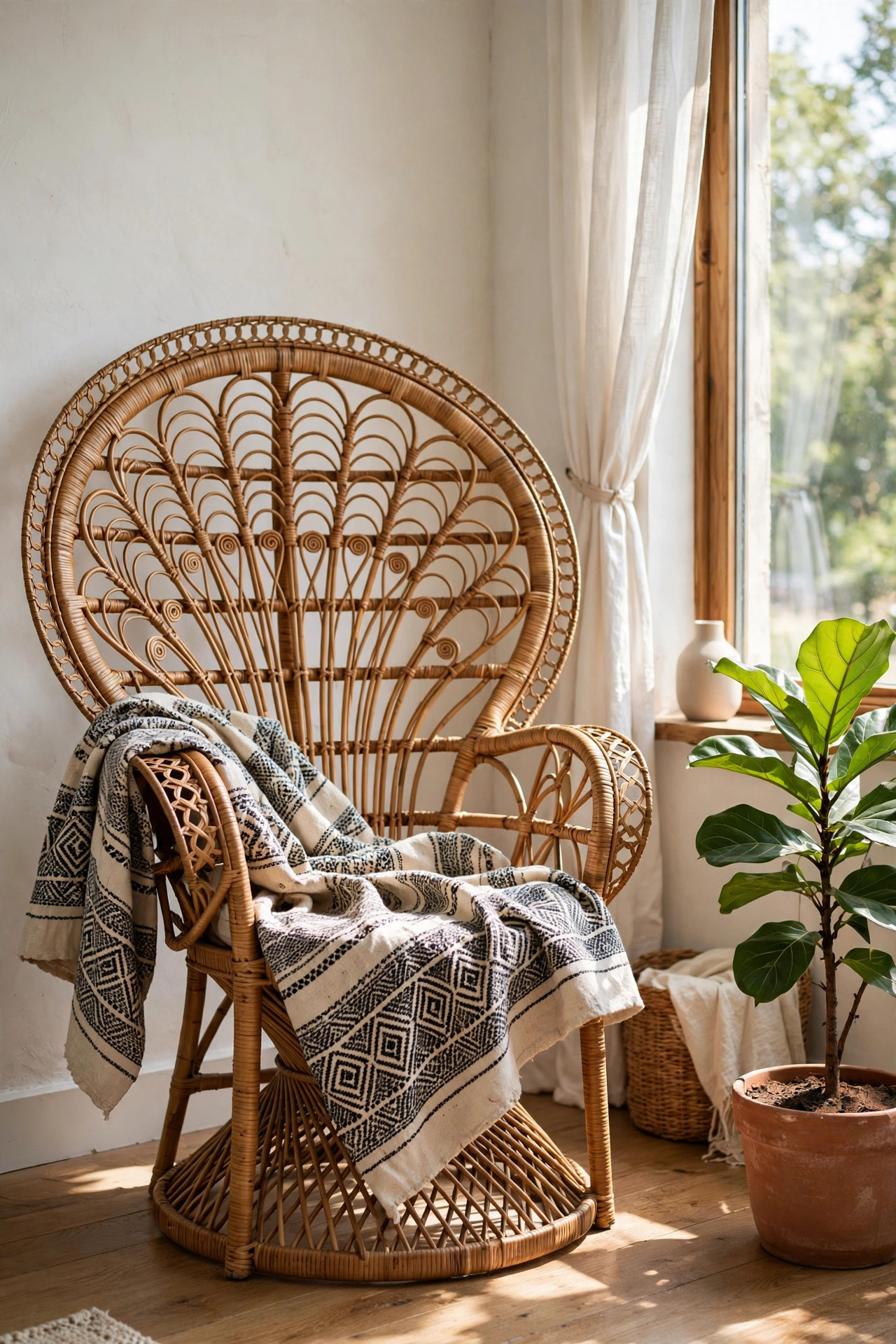
The peacock chair is the throne of Afrohemian style. With its tall fanning back and woven rattan body, it turns any corner into a moment. Place one by a window with a mudcloth throw over the arm and a plant beside it, and you have the most photographed corner in the house. The chair does not need much around it. Its silhouette is so strong that extra styling just gets in the way. Give it breathing room and let it be the star. Every Afrohemian room benefits from one piece with this kind of presence.
Vintage peacock chairs show up often at thrift stores and estate sales, usually for far less than new reproductions. Check that the rattan is tight and the frame is sturdy before you buy. A little wear is fine and even welcome, since this style loves patina. If the finish looks dry, rub in a little boiled linseed oil to bring back the glow. Style the chair simply. One throw, one pillow at most. The chair is already saying a lot, so the accessories should whisper. This is the seat everyone will fight over, so put it where the light is best. Tuck a small side table within arm’s reach and the corner becomes a reading spot too.
6. Layered Vintage Rugs
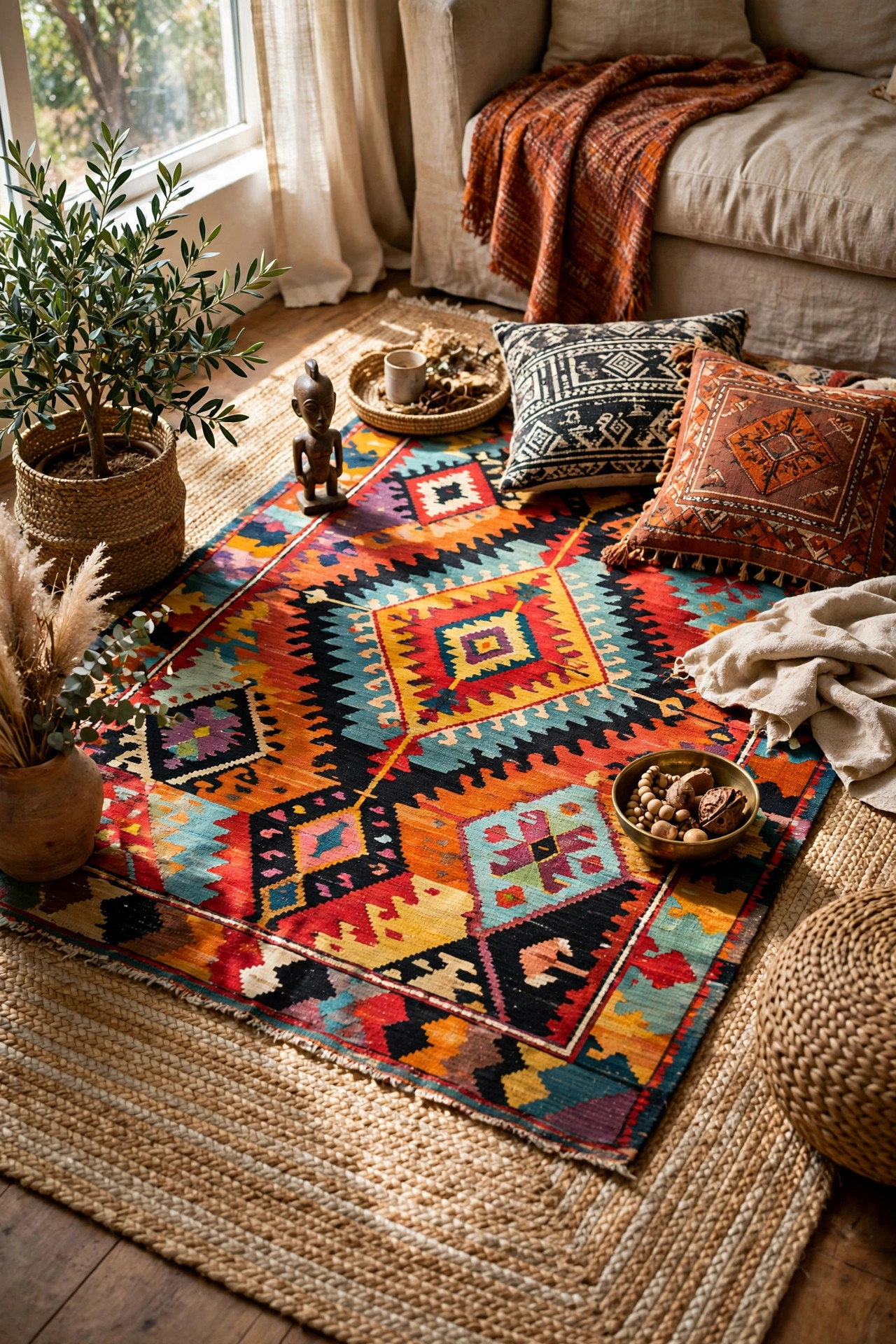
Bare floors have no place in Afrohemian design. The look calls for rugs, and then more rugs. Start with a large natural fiber rug like jute or sisal as the base. Then layer a smaller vintage rug on top, something with pattern and color, a faded Persian or a bold kilim. The bottom rug adds texture, the top rug adds the story. Together they make the floor feel rich and collected. This layering trick also solves the problem of rugs that are beautiful but too small. One small rug looks lost, but layered over jute it looks intentional.
When layering, let the top rug sit off center. A rug placed at a slight angle over the base looks relaxed and artistic, while a perfectly centered stack can look stiff. The two rugs should contrast in texture and tone. If the base is pale and nubby, the top can be dark and patterned. That contrast is what makes the eye happy. Vintage rugs do not need to be perfect. Worn spots and faded patches add character that new rugs cannot fake. Buy the best quality you can afford, since a good rug will outlive every other textile in the room. A rug pad underneath keeps the layers from sliding and adds softness underfoot.
7. Brass and Gold Accents
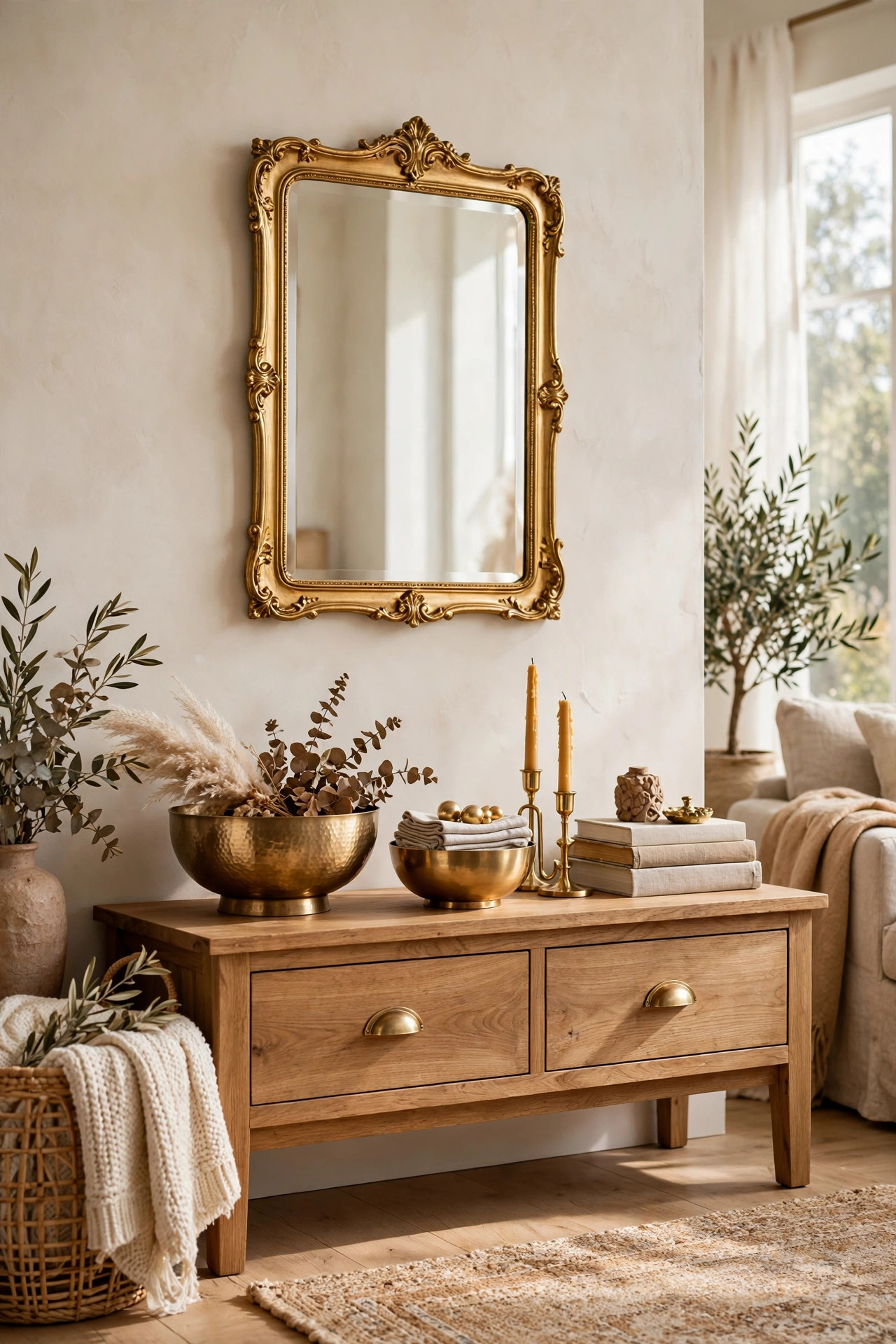
Warm metals are the jewelry of Afrohemian rooms. Brass bowls, gold framed mirrors, and aged bronze candlesticks catch the light and add a glow that cool metals never give. Scatter them through the room rather than grouping them all together. A brass tray on the coffee table, a gold mirror above the dresser, small brass bowls holding keys and jewelry. Each one is a little flash of warmth. Against the rich colors and dark woods of this style, brass practically glows. It is the finishing touch that makes everything else look more expensive.
Mixing metal finishes is welcome here, but keep brass and gold as the leaders. A little blackened bronze or copper can join in, while chrome and nickel should sit this one out. Their cool shine fights the warmth of the look. Vintage brass is easy to find and often cheaper than new. Thrift stores are full of brass candlesticks and bowls waiting for polish. Do not over polish them either. A soft glow beats a mirror shine in this style. Let the metal show a little age. That lived in finish is what separates a collected room from a showroom. Wipe brass with a dry cloth now and then, and it will keep its warm glow for decades.
8. Indoor Jungle Corners
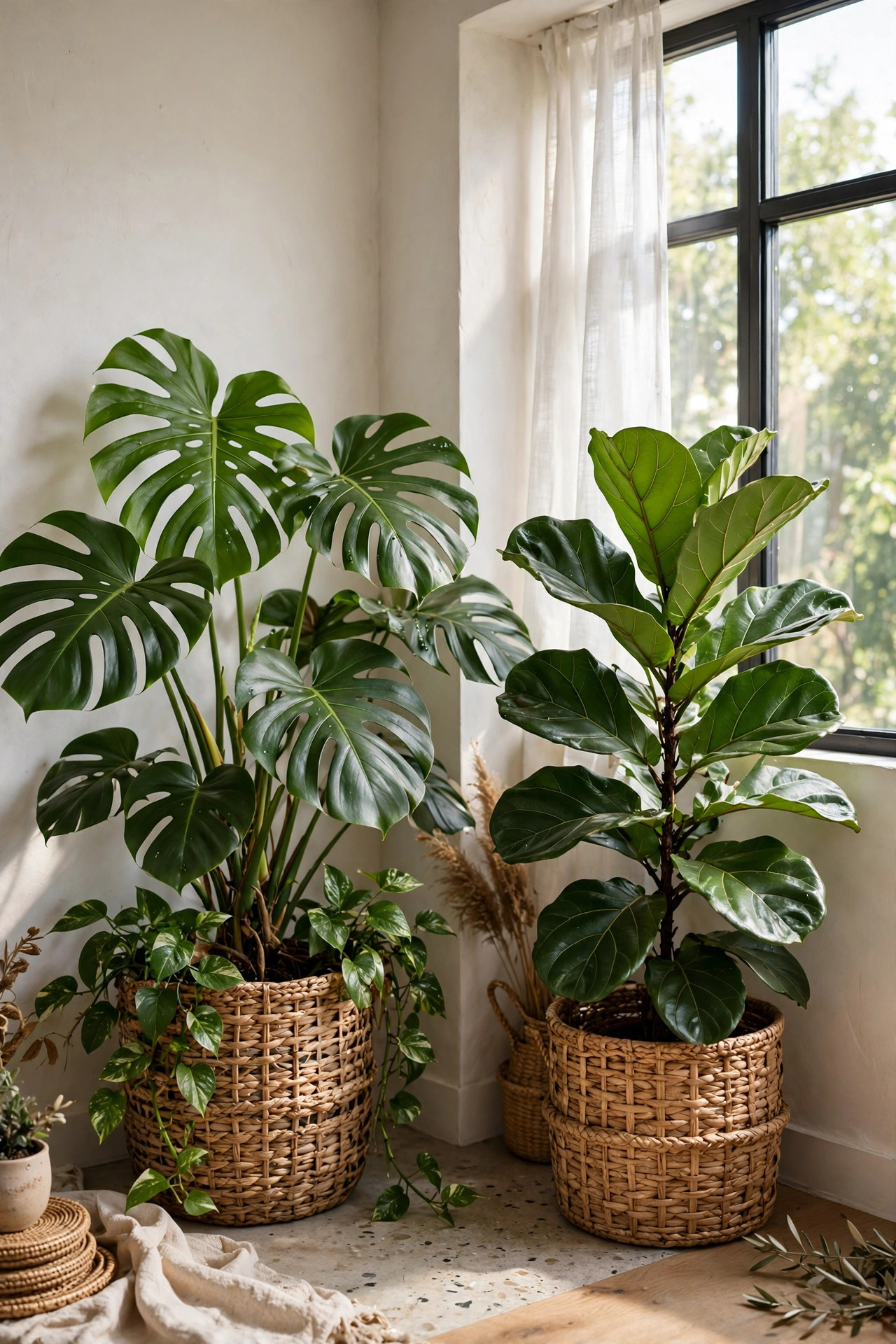
Plants are non negotiable in Afrohemian design. Big leafy plants like fiddle leaf figs, monsteras, and bird of paradise bring the outdoors in and soften all the bold pattern. Group them in a corner at different heights for a jungle effect. A tall plant in a woven basket, a medium one on a plant stand, a trailing pothos on a shelf above. The green cools down the hot colors and gives the eye a place to rest. Without plants, an Afrohemian room can feel heavy. With them, it breathes.
The pots matter as much as the plants. Skip plain plastic nursery pots and go for woven baskets, terracotta, or hand painted ceramics. A beautiful pot turns a ten dollar plant into a design moment. If your thumb is not green, start with forgiving plants. Snake plants, pothos, and ZZ plants survive low light and forgotten waterings. They still give you the lush look with almost no effort. Rotate your plants every few weeks so they grow evenly. A jungle corner takes a little tending, but the payoff is a room that feels alive every single day. Mist the leaves occasionally, since most jungle plants love a little extra humidity. Grouping plants together also raises the humidity around them naturally.
9. Handwoven Wall Hangings
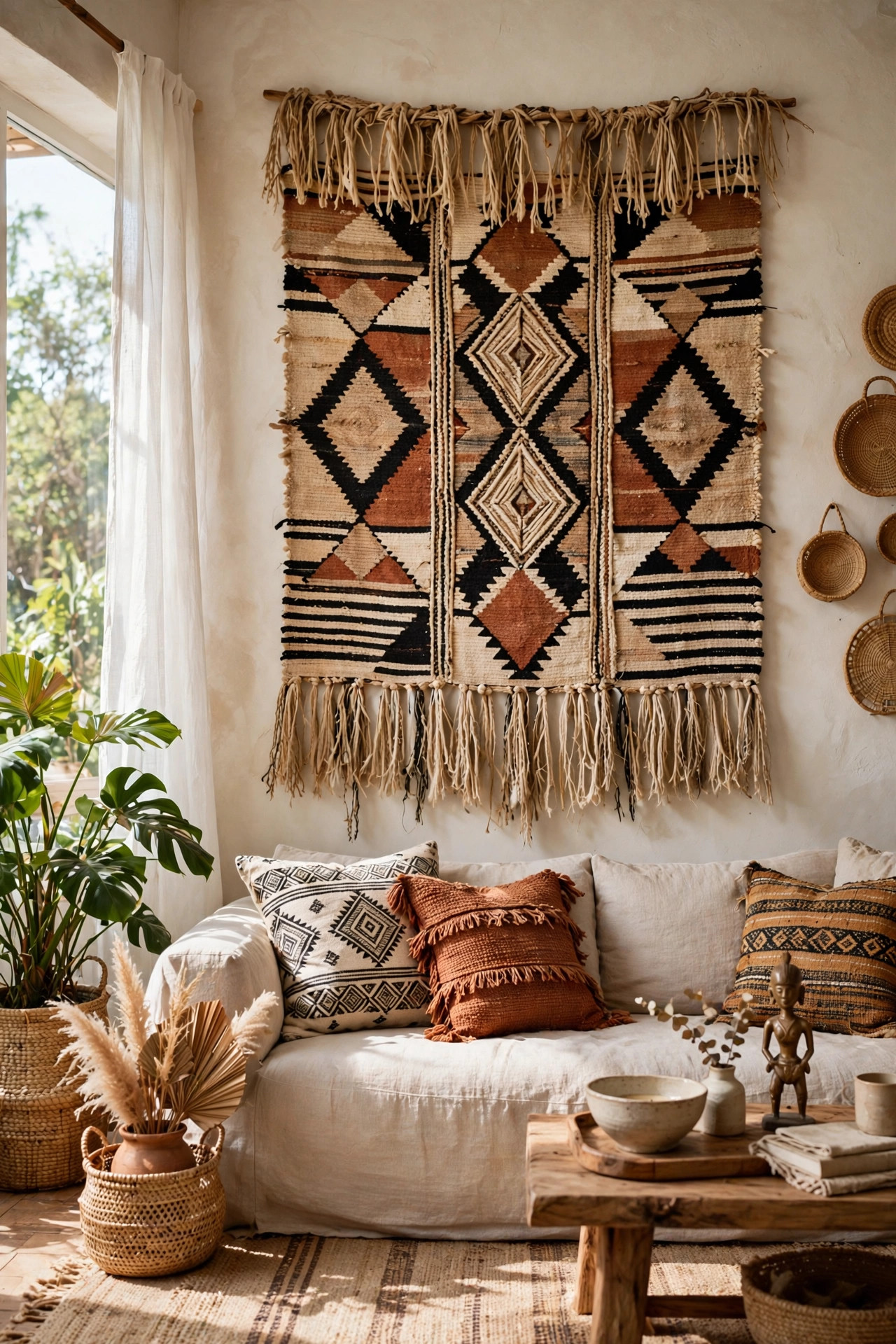
A large handwoven wall hanging can anchor a whole Afrohemian room. These textile pieces bring softness to walls in a way framed art cannot. The loose fibers and fringe catch light and move slightly with the air, so the wall never feels flat. Look for hangings with bold geometric patterns or rich earthy colors. They work beautifully above a sofa or a bed, filling the big empty space that one small frame never could. In this style, the wall hanging is not an accessory. It is a main event.
Scale is everything with wall hangings. A tiny weaving on a big wall looks lost and apologetic. Go bigger than you think you need. The hanging should fill at least two thirds of the wall space above the furniture. If handmade pieces are out of budget, there are good options from artisan cooperatives that keep prices fair. Hang it from a simple wooden dowel or a branch for a natural look. Keep the rest of that wall quiet. One strong textile needs no competition. Let it have the spotlight and the room will feel grounded and warm. Steam out wrinkles after hanging, and the fibers will fall beautifully within a day.
10. Terracotta Accent Wall
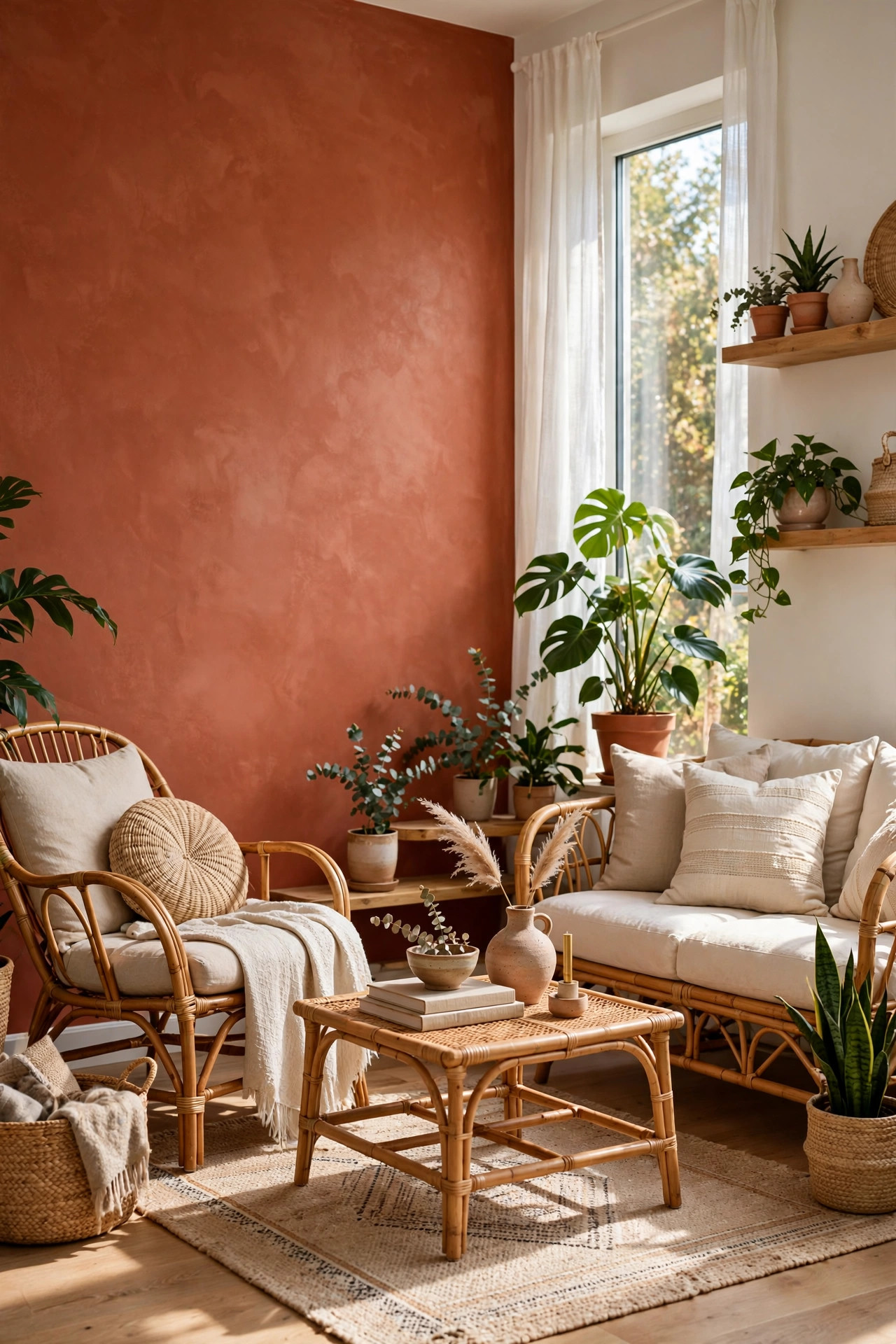
Color is the heartbeat of Afrohemian style, and a terracotta accent wall delivers it in one bold move. This warm clay shade glows in daylight and turns golden in the evening. It makes wood tones richer, brass warmer, and green plants more vivid. Everything in the room looks better against terracotta. It is the rare paint color that flatters both people and furniture. If your room feels flat, one wall of terracotta will fix it by the weekend. The change is dramatic but the cost is just a can of paint.
Choosing the right terracotta takes some testing. Paint large swatches and look at them morning and evening, since this color shifts a lot with light. Avoid shades that go orange or pink in daylight. The best terracottas stay earthy and warm in all lights. Pair the wall with the natural materials of the style, rattan, wood, woven textiles, and the room will feel sun baked and soulful. Keep the other walls warm white so the terracotta has room to shine. One bold wall is a statement. Four bold walls is a cave. Restraint makes the color sing. Touch up scuffs once a year and the wall will look freshly painted for a long time.
11. Low Floor Seating Nook
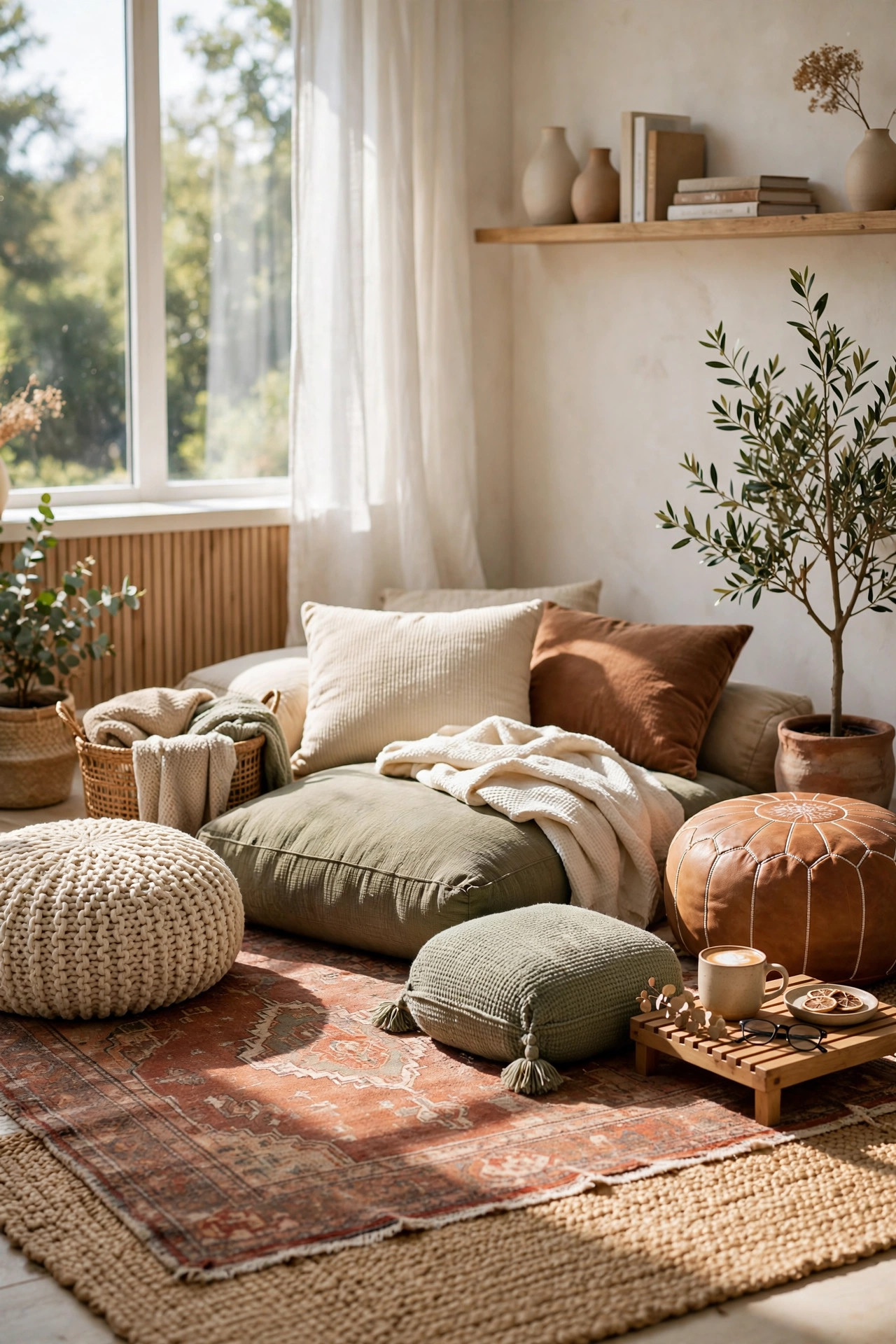
Afrohemian style loves a low, loungey corner made for long conversations. Build one with floor cushions, a low pouf, and a small rug layered over the main rug. Add a low wooden tray table for tea and the nook is complete. This kind of seating feels relaxed and welcoming in a way formal furniture never does. Guests sink in and stay awhile. It is the corner where the best talks happen, late at night with the lamps low. Every home needs one spot like this.
The key to comfort is layering the cushions. One flat cushion on a hard floor gets old fast. Stack two or three, mixing firm base cushions with soft throw pillows behind the back. A folded quilt adds one more soft layer. Keep a basket of extra throws nearby for chilly evenings. The nook should feel abundant, not sparse. Pile it high. This is also a smart move for small spaces, since floor seating takes up less visual room than bulky chairs. When friends come over, pull the cushions into a circle. Instant gathering, no extra furniture required. Store the cushions in a big basket when guests leave, and the corner resets in minutes. A washable rug underneath makes crumb duty after snack nights easy.
12. Beaded Chandelier Glow
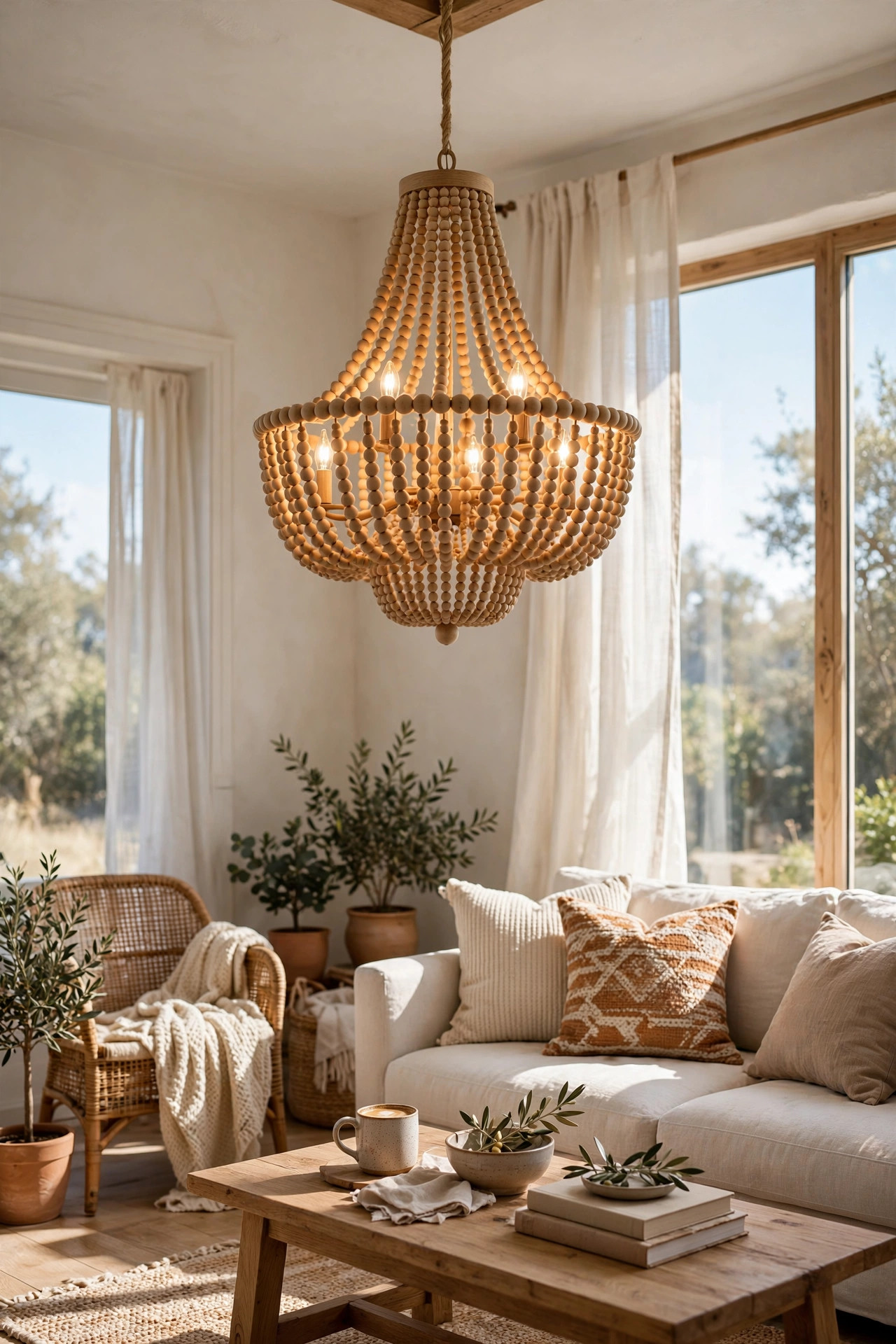
Lighting sets the mood in Afrohemian rooms, and a beaded chandelier sets it beautifully. These fixtures, made from wood beads, glass beads, or natural seeds, cast a warm dappled light that feels like evening in a courtyard. The beads break the light into soft patterns on the walls and ceiling. No other fixture gives this effect. A beaded chandelier turns an ordinary dining table or reading corner into something magical after dark. It is jewelry for the ceiling.
Hang the chandelier low enough to enjoy, about thirty inches above a dining table or in the center of a seating area. The beads need to be at eye level to show their texture. Choose natural materials over plastic beads, since wood and glass glow while plastic just shines. Many beautiful options come from artisan makers, and each one is slightly different. Pair the chandelier with warm bulbs, never cool white. Cool light kills the mood this fixture is made for. One beaded chandelier can carry the whole evening atmosphere of a room. Let it. Dust the beads with a microfiber cloth twice a year to keep the light sparkling. Check the hanging hardware yearly, since beaded fixtures can be heavier than they look.
13. Global Art Gallery Wall
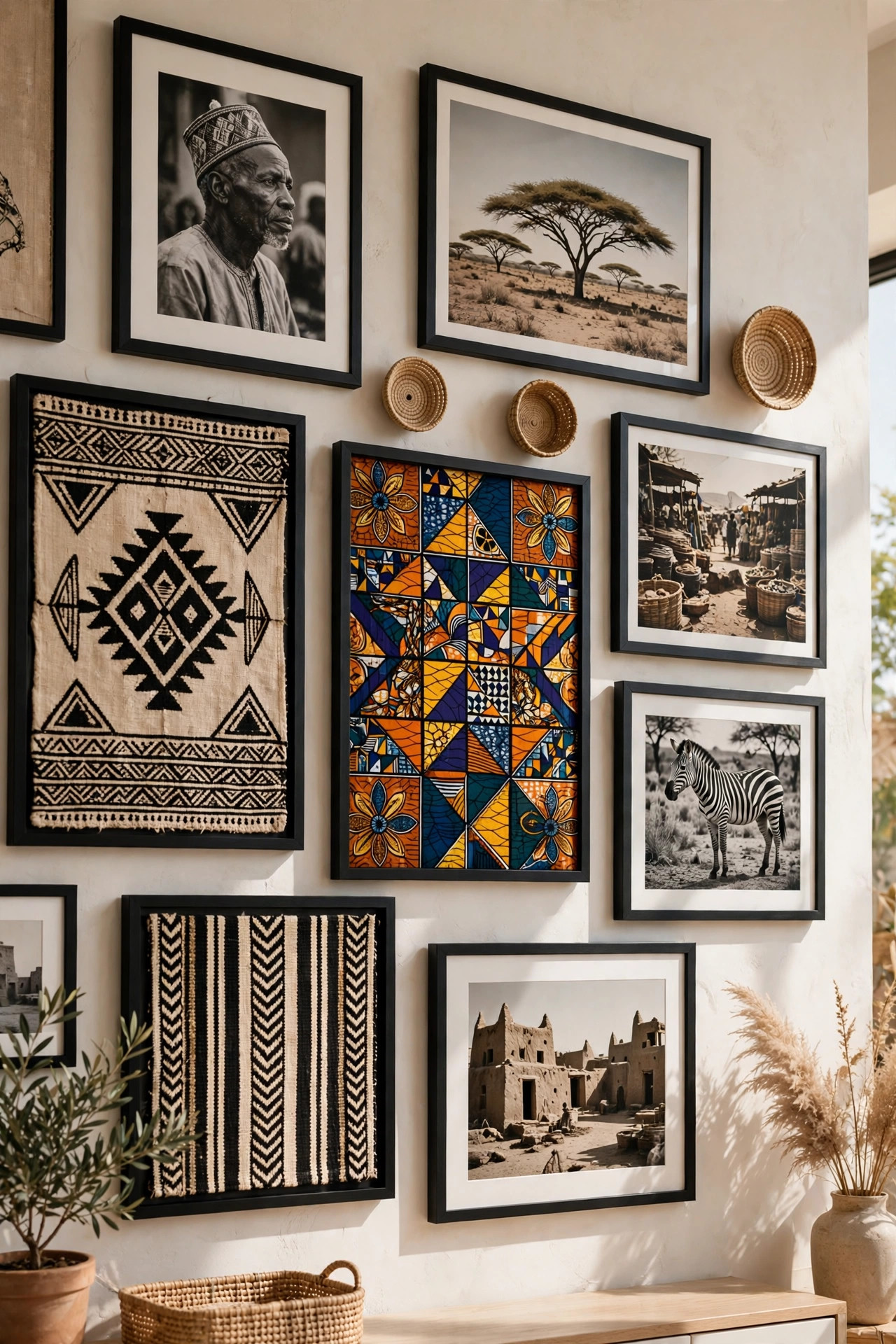
An Afrohemian gallery wall is a passport in frames. Mix art from different cultures and eras, a West African textile fragment, a vintage travel poster, a black and white family photo, a small carved panel. The mix is what makes it sing. A gallery wall of all matching prints looks like a hotel. A wall of collected pieces looks like a life. That is the difference this style is chasing. Every piece should mean something to you, even if it is just that you loved it at first sight.
The frames are where you create order from the happy chaos. Use one frame style throughout, thin black frames or natural wood, and let the art itself vary wildly. Consistent frames make even the wildest mix feel intentional. Lay the arrangement on the floor first and live with it for a day before you hang anything. Start with the biggest piece slightly off center and build outward. Leave a little breathing room between frames. Crowded walls feel anxious, while spaced walls feel confident. This wall will grow over time, and that is exactly as it should be. Photograph the final layout, since the camera reveals gaps your eyes might miss. You can also try the arrangement digitally before lifting a single hammer.
14. Natural Fiber Poufs
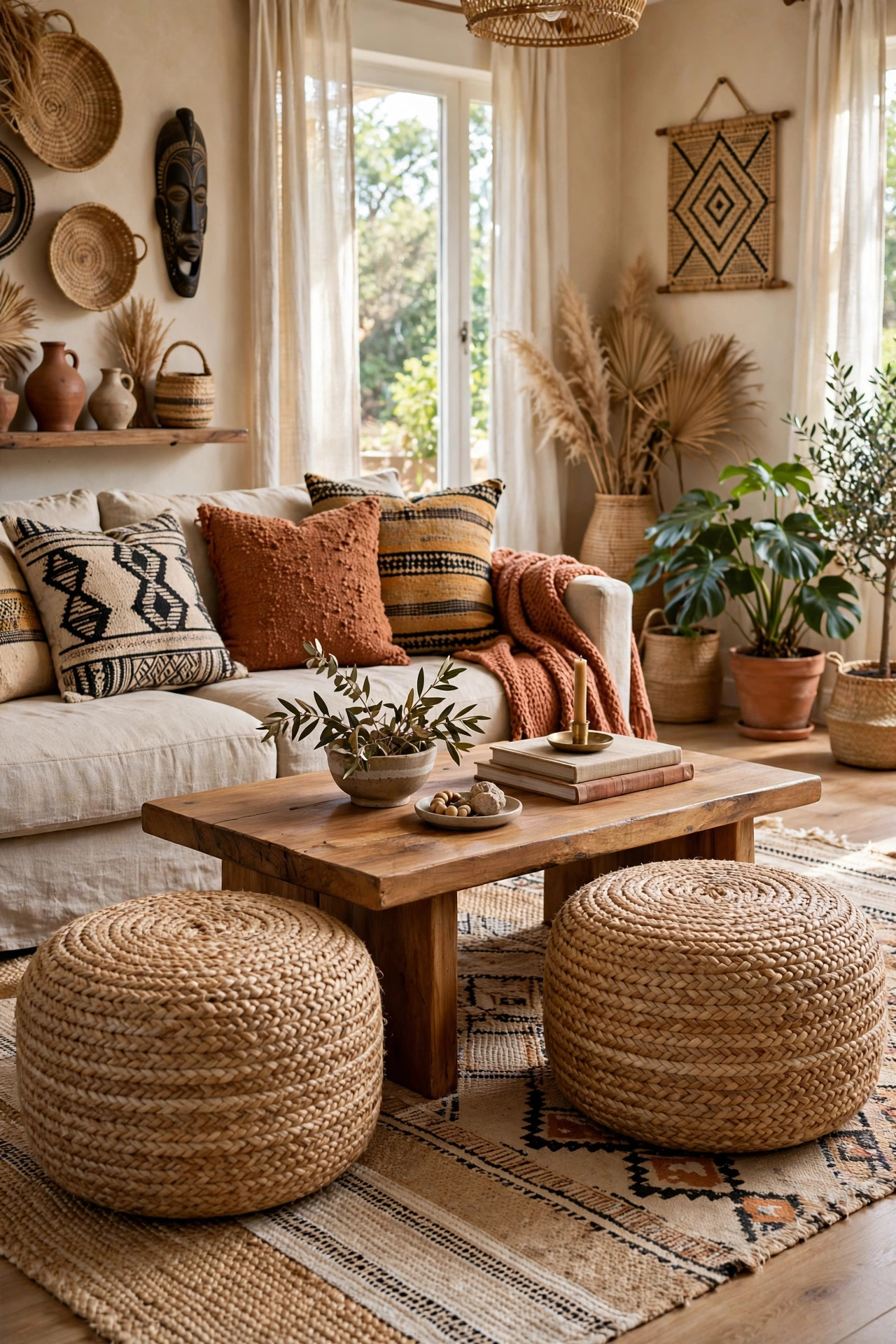
Poufs are the hardest working seats in Afrohemian design. Woven from jute, seagrass, or braided cotton, they add texture at floor level where rooms often go flat. Use them as extra seats, footrests, or even side tables with a tray on top. They are light enough for kids to drag around and tough enough to survive it. A pair of poufs flanking a coffee table balances the room beautifully. They fill the awkward empty space that makes seating areas feel unfinished. Small piece, big job.
Choose poufs with interesting weave patterns rather than plain ones. Braided, tasseled, or two tone designs add the visual richness this style demands. Natural fibers age gracefully, developing a soft patina instead of looking worn out. If a pouf loses its shape, most have zippers so you can restuff them in minutes. Keep the palette in the earthy family, honey, caramel, and sand tones that blend with everything. These neutrals let the bolder textiles take the spotlight. Poufs prove that in Afrohemian style, even the most practical pieces get to be beautiful. A quick vacuum with the brush attachment keeps the fibers fresh and dust free. Fluff them by hand afterward so they sit plump and inviting again.
15. Styled Open Shelving
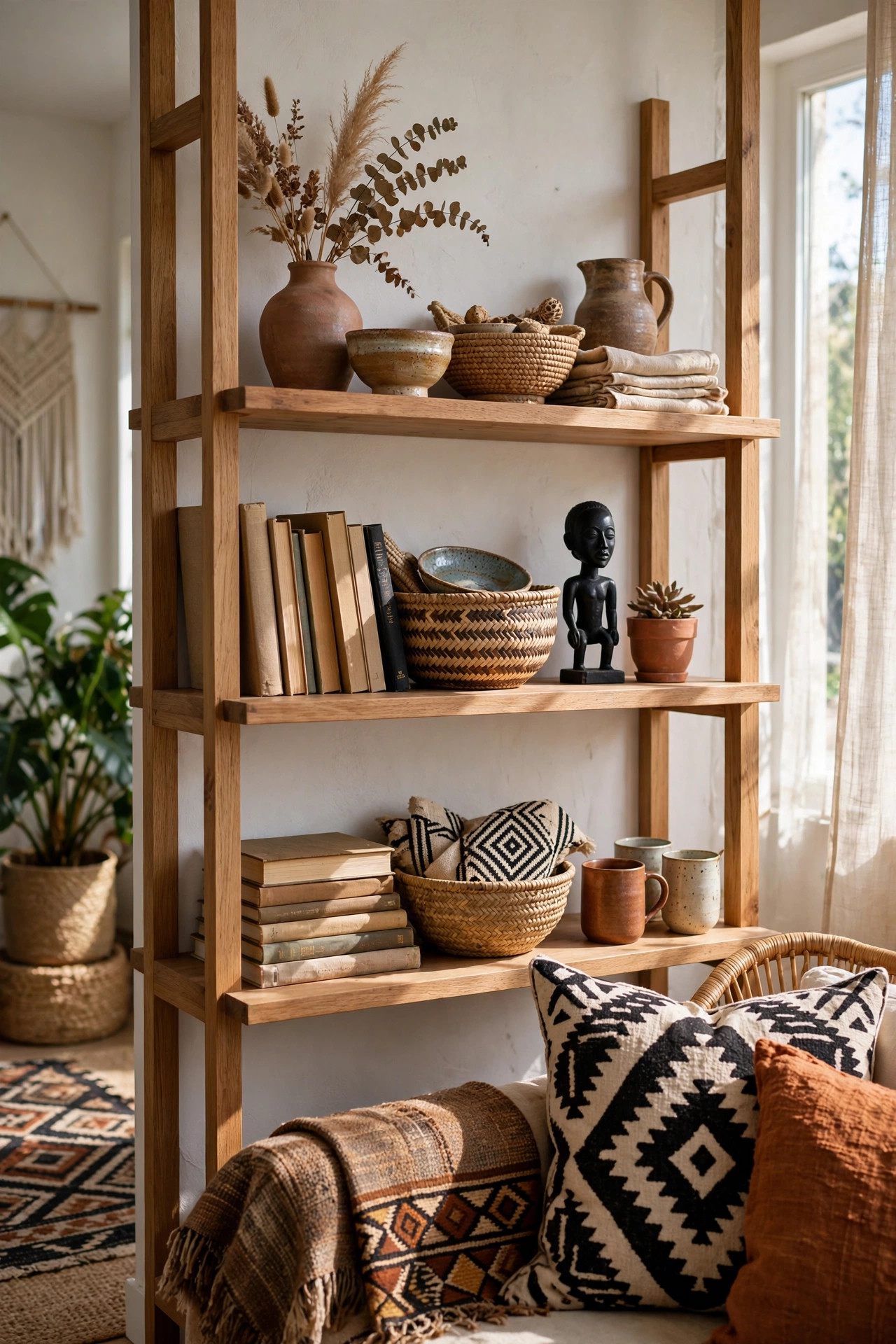
Open shelves are the display case of Afrohemian style. A set of wooden shelves styled with ceramics, woven bowls, small sculptures, and stacked books becomes a portrait of the homeowner. The styling rule here is abundance with breathing room. Group objects in odd numbers, vary the heights, and leave some empty space so each piece can be seen. A shelf crammed edge to edge looks like storage. A shelf with rhythm looks like a gallery. That difference is all in the spacing.
Rotate the display with the seasons to keep it feeling alive. Swap in fresh pieces, move a vase from one shelf to another, add something new from a market trip. The shelves should evolve, never sit frozen. Mix materials freely, rough clay next to smooth brass, dark wood beside pale stone. That contrast of textures is the signature of the look. Keep everyday items off these shelves. They are for the beautiful things, the pieces with stories. When guests ask about an object, and they will, you get to tell its story. That is the whole point. Dust the shelves monthly, because styled displays show dust faster than closed cabinets. A feather duster reaches between objects without moving everything around.
16. Painted Wooden Stool Accents
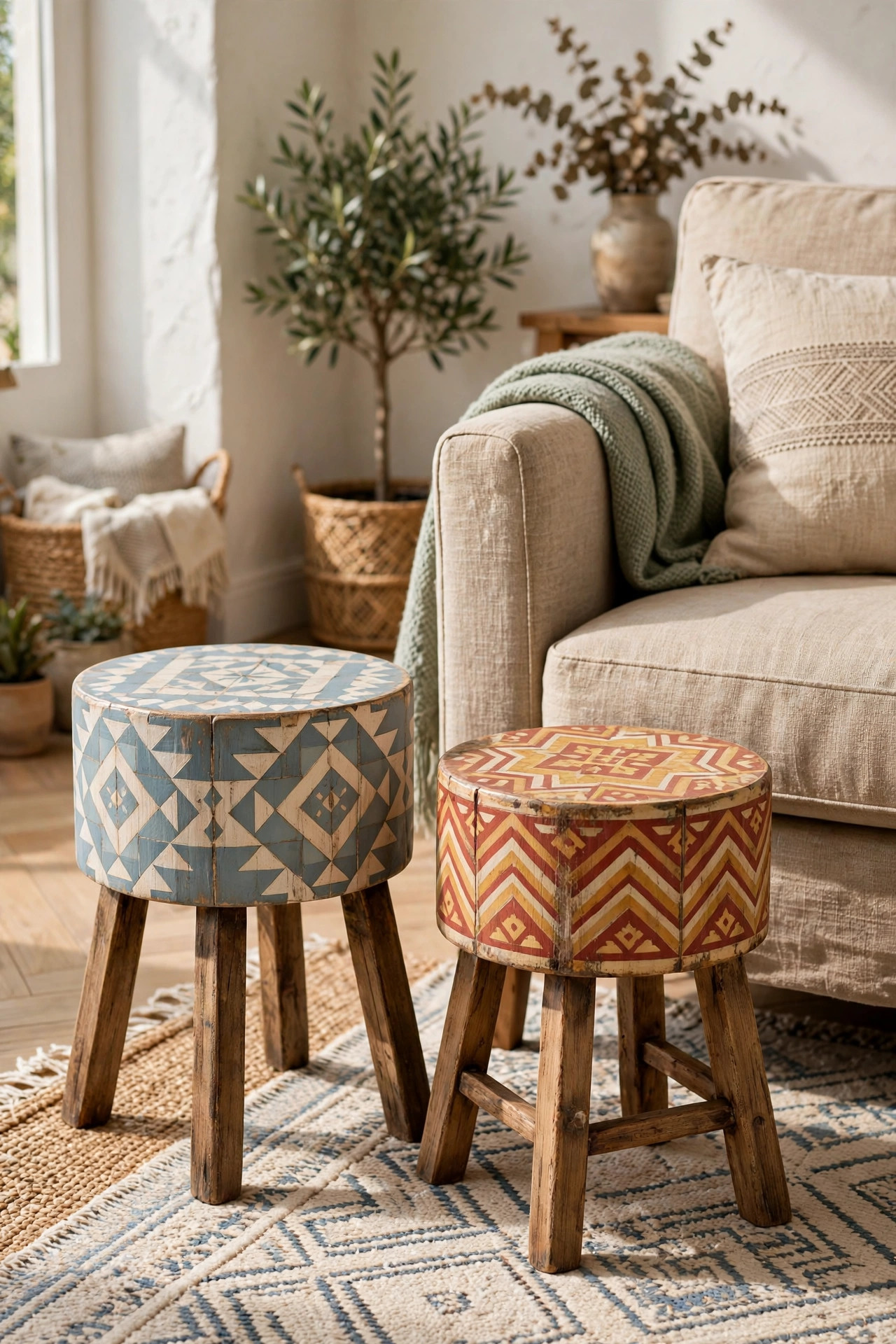
A hand painted wooden stool is small, but in Afrohemian rooms it punches above its weight. These stools work as side tables, plant stands, or extra seats, and the painted patterns turn a useful object into art. Look for stools painted in bold geometrics or tribal inspired motifs. One beside an armchair holds a cup of tea. A pair flanking a doorway frames the entrance. Their small size means you can tuck them anywhere a room needs a lift. Never underestimate the little pieces.
If you cannot find a painted stool you love, make one. A plain wooden stool, some acrylic paint, and a free afternoon are all it takes. Simple dot and line patterns look authentically handmade, which is the whole charm. Seal the finished stool with clear wax so the paint survives daily use. Place painted stools where they will be seen and touched, since their beauty is in the details. This is also a wonderful first project for anyone nervous about bold color. It is small, cheap, and easy to repaint if you change your mind. A second coat of wax each year keeps the paint bright through daily bumps. Touch up chips right away so moisture never reaches the bare wood.
17. Draped Fabric Canopy Corner
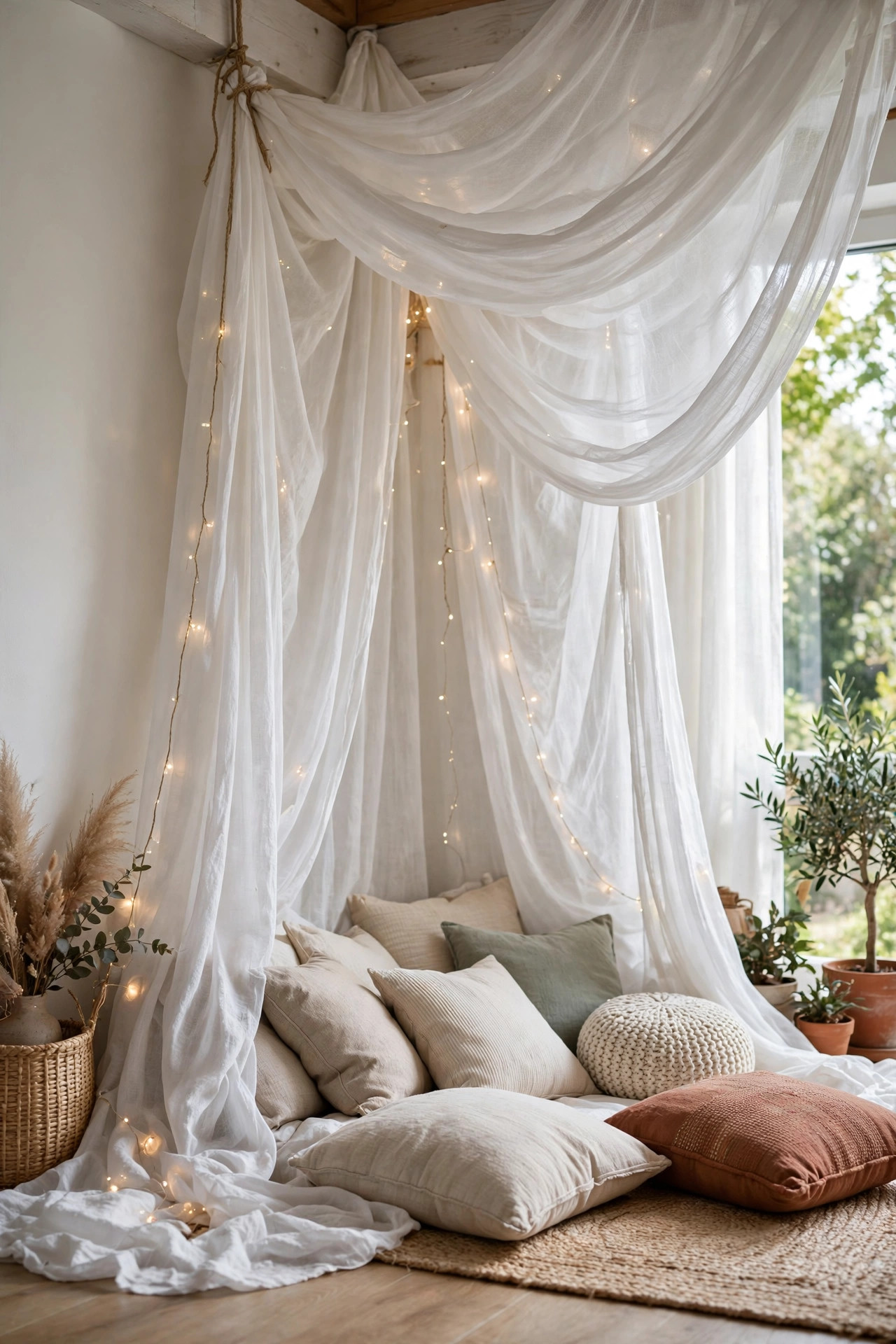
For the ultimate Afrohemian moment, drape fabric over one corner of the room to make a canopy. A length of lightweight cotton or sheer linen, hung from the ceiling and allowed to fall softly, creates a tent like retreat. Add floor cushions underneath and a few string lights, and the corner becomes pure magic. It feels like a market stall in Marrakech or a beach tent at dusk. This is the most romantic idea on the list, and it costs almost nothing. A few yards of fabric and some imagination are the whole budget.
The fabric should be light enough to move with the air. Heavy fabric looks stiff and feels oppressive overhead. Sheer white or warm earth tones work best, since they glow when light passes through. Hang it from a ceiling hook or a simple wooden frame, letting it drape naturally rather than pulling it tight. Perfection ruins the effect. Underneath, keep the styling simple, cushions, a small rug, maybe a low table. The canopy is the star. This corner will become the most loved spot in the house, the place everyone drifts toward when the evening winds down. Wash the fabric once a season so it stays fresh and keeps draping softly.
Conclusion
Afrohemian style is not about following rules. It is about collecting what you love and letting color, pattern, and texture do the talking. Start with one idea from this list, live with it, and add more as you find pieces that speak to you. The best rooms in this style are never finished. They grow, just like the people who live in them.
FAQs
What is Afrohemian decor?
Afrohemian decor blends African design elements with bohemian style. It features bold patterns like mudcloth and Ankara prints, rich earthy colors, natural materials like rattan and seagrass, global art, and lots of plants. The look is warm, colorful, and deeply personal.
What colors work best in Afrohemian style?
Warm earthy tones are the foundation, terracotta, ochre, clay, and warm browns. These pair with rich jewel tones like emerald, sapphire, and ruby, plus hits of black and cream for contrast. The palette should feel sun baked and vibrant, never cold or gray.
Is Afrohemian decor expensive?
It does not have to be. Thrift stores, flea markets, and artisan cooperatives are full of affordable pieces like baskets, brass items, and vintage textiles. Many elements, like painted stools and gallery walls, are easy DIY projects. One quality statement piece beats a room of cheap copies.
How do I mix patterns without it looking messy?
Keep one element consistent while everything else varies. Use the same frame style on a gallery wall, or keep pillow sizes the same while mixing prints. A consistent background color across textiles also helps. That one thread of order lets bold mixes feel joyful instead of chaotic.
Can Afrohemian style work in a small space?
Yes, it works beautifully in small rooms. Use the vertical space with wall hangings and gallery walls, choose low floor seating that takes up less visual room, and let one bold piece carry the design. Small spaces actually suit the layered, collected feel of this style.
Where can I buy authentic Afrohemian pieces?
Look for fair trade shops, artisan markets, and independent makers online. For textiles like mudcloth, check that the pattern shows through on the back to confirm it is handwoven, not printed. Buying from artisans supports the makers and guarantees pieces with real character.