
Walk into most living rooms and you can spot the moment the TV got hung up. It is usually a black rectangle stuck in the middle of a blank wall, with cords dangling down like nobody planned for it to be there. That is because, most of the time, nobody did plan for it. The TV gets mounted after everything else is decorated, and it ends up looking like a last-minute addition instead of part of the room. The good news is that fixing this does not require a full renovation. A little planning around texture, shelving, or color can turn that plain wall into the actual focal point of the room. Here are eighteen ways to design a TV wall so it looks like it was meant to be there all along, with real details on materials and setup so you can start planning your own version today.
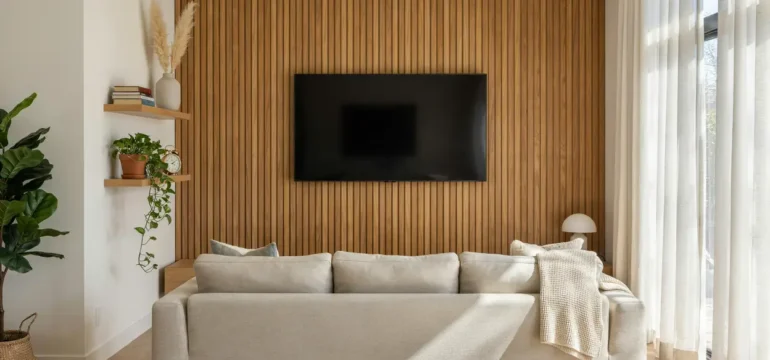
1. Wood Slat Backdrop
Vertical wood slats behind the TV instantly add warmth and texture to what is usually a flat, empty wall. You can build this with simple pine or poplar boards cut to the same length and spaced evenly apart, mounted directly onto the wall behind where the TV will hang. Stain the wood in a natural or warm walnut tone to add richness, or paint the slats a dark charcoal color for a more modern, moody look that makes the TV screen blend in rather than stand out.
This idea works in almost any living room style, from modern farmhouse to mid-century, since wood slats pair well with both leather and fabric furniture. Leave enough space between each slat to create a subtle shadow line, which adds depth even in flat photographs. Run the wood paneling from floor to ceiling for the most dramatic effect, or stop it at a lower height if you want a more subtle accent behind the television. Either way, this backdrop makes the wall feel finished and intentional.
2. Floating Shelves Around
Adding floating shelves on either side of the TV turns a blank wall into a functional display area without cluttering the space below. Mount two or three shelves per side at staggered heights, using simple L-bracket floating shelves in wood or painted MDF. Style each shelf with a mix of books, small plants, and a few decorative objects, keeping some open space between items so the shelves do not look overcrowded.
This setup works especially well in living rooms where storage is limited, since the shelves give you a spot for books and decor that would otherwise sit on the floor. Keep the shelf lengths shorter than the width of the TV so the whole arrangement feels balanced and centered. Choose a color scheme of two or three tones for the items on display, since a random mix of bright colors can make the wall feel busy. This idea photographs beautifully with soft, indirect lighting placed on one of the middle shelves.
3. Gallery Wall Mix
Surrounding the TV with a curated gallery of framed art and photos is one of the best ways to make the screen feel like just another piece of the display, rather than the main event. Choose frames in a mix of sizes but keep the frame colors consistent, either all black, all wood tone, or all white, so the arrangement feels cohesive even with different art styles inside. Arrange the frames in a loose grid around the TV, leaving even spacing of two to three inches between each piece.
This idea works particularly well in living rooms with personality, since you can mix in family photos, prints, and small mirrors for variety. Treat the TV screen itself as one more rectangle in the grid rather than the centerpiece, which helps it visually disappear into the arrangement when turned off. Lay all the frames out on the floor first to plan the spacing before hammering any nails, since this saves you from extra holes in the wall later.
4. Board and Batten
Board and batten paneling behind the TV adds classic, architectural detail to a plain wall using simple flat trim boards arranged in a grid or vertical pattern. Install the vertical battens first, spacing them evenly across the wall, then paint the entire panel and wall behind the TV in one solid color for a seamless, built-in look. White or soft gray battens against a matching wall color give a clean, timeless feel that works in both traditional and modern homes.
This idea is a great weekend project since it only requires trim boards, wood glue, and paint. Keep the batten spacing consistent on both sides of the TV so the pattern reads as balanced and symmetrical in photos. For a bolder look, paint the battens and wall in a deep navy, forest green, or charcoal color to create contrast with white trim elsewhere in the room. This treatment makes the TV look like it was built into the wall design from the very start.
5. Stone Accent Wall
A stone or faux stone accent wall behind the TV brings texture and a slightly rustic, cabin-like feel to a living room. Use thin stone veneer panels or faux stone panels, which install much like tile and are far lighter and easier to handle than real stone. Cover the wall from floor to ceiling, or stop partway up if you want a more subtle accent, then mount the TV directly onto the stone surface using a heavy-duty wall mount rated for the extra weight.
This idea works especially well in living rooms with a fireplace nearby, since the stone ties the two features together into one cohesive design. Choose a lighter gray or tan stone for a softer, more neutral look, or a darker charcoal stone for more drama and contrast against the TV screen. Add a wood mantel shelf below the TV if you want to soften the stone texture with a warmer material. This combination photographs beautifully in natural light, especially in the late afternoon.
6. Built-In Wall Unit
A full built-in wall unit around the TV gives the space a custom, high-end look that feels like it was part of the original home design. Build or install cabinetry on either side of the TV, extending from floor to ceiling, with a mix of open shelving up top and closed cabinets below for hidden storage. Paint the entire unit and surrounding wall the same color so the TV nook blends seamlessly into the woodwork instead of standing out separately.
This idea works best in living rooms with enough wall space to accommodate the full unit, typically at least eight to ten feet wide. Use the closed cabinets below for media equipment, remotes, and clutter, keeping only a few styled objects on the open shelves above. Adding trim details like crown molding at the top ties the whole unit into the rest of the room’s architecture. This is a bigger project than most on this list, but it delivers the most polished, magazine-style result.
7. Hidden TV Panel
A sliding or hinged wood panel that covers the TV when it is not in use keeps the wall looking clean and intentional, since the screen disappears completely from view. Build a simple wood panel, matching the wall’s trim or paneling style, mounted on a track or hinge system so it slides or swings open when you want to watch something. Choose a wood finish or paint color that matches the surrounding wall so the panel blends in rather than standing out as an obvious cover.
This idea works particularly well in living rooms where the TV wall is also the main focal point for guests, since hiding the screen keeps the room feeling more like a living space than a media room. Add a small pull handle or a recessed groove to make opening the panel easy without hardware sticking out. This setup takes more planning and carpentry skill than most ideas here, but it results in a wall that looks intentional whether the TV is showing or completely hidden away.
8. Symmetrical Shelving Frame
Building a symmetrical shelving frame directly around the TV, rather than just beside it, creates a built-in look without the cost of full cabinetry. Install a simple wood frame around all four sides of the TV, then add small shelves along the top and bottom sections, keeping the design perfectly symmetrical on the left and right. Paint the frame the same color as the wall for a seamless, integrated look, or choose a contrasting wood tone for more visual interest.
This idea works well in smaller living rooms where a full built-in unit would feel too heavy for the space. Style the top and side shelves with a few books, a small plant, and one or two decorative objects, keeping the styling light so the frame does not compete with the TV itself. Keep the shelf depth shallow, around six to eight inches, so the frame does not stick out too far from the wall. This treatment makes the TV look like it was designed into the wall from day one.
9. Textured Plaster Wall
A textured plaster or limewash finish behind the TV adds subtle depth and a handmade feel to an otherwise flat wall. Apply a Venetian plaster or limewash product directly over the drywall, using a trowel to create soft, organic texture across the surface. Choose a warm, earthy tone like sand, clay, or soft terracotta, since these colors pair well with both wood and black TV frames.
This idea works especially well in living rooms with a more organic, modern style, since the texture catches light differently throughout the day and adds visual interest even without any additional decor. Keep the rest of the wall trim simple, without extra molding or paneling, so the plaster texture remains the main feature. This finish takes a bit more skill to apply than paint, but many home improvement stores sell easy-to-use plaster kits designed for beginners. The result is a wall that feels intentional and textured, not just painted and forgotten.
10. Bold Paint Block
Painting a large rectangular color block directly behind the TV is one of the simplest and most affordable ways to make the wall look designed on purpose. Choose a bold color, like deep green, navy, or terracotta, and paint a clean rectangle centered behind where the TV will hang, extending a foot or two beyond the TV’s edges on all sides. Use painter’s tape to get crisp, straight lines, since sloppy edges will make the block look accidental rather than intentional.
This idea works in almost any living room, regardless of style, since it only requires paint and a free weekend afternoon. The color block acts like a piece of art on its own, giving the eye something to focus on even when the TV is turned off. Keep the rest of the wall in a neutral color so the block stands out clearly. This is one of the easiest ideas on this list to try immediately, since most people already have leftover paint or can grab a sample size from the hardware store.
11. Wallpaper Statement Wall
Wallpapering the wall behind the TV with a bold pattern or texture turns a plain surface into a design feature that competes for attention with the screen itself, in a good way. Choose a wallpaper with a subtle texture, like grasscloth, or a bold pattern, like a large floral or geometric print, depending on the overall style of your living room. Cover the full wall from corner to corner for the most dramatic effect, extending well beyond the edges of the TV.
This idea works particularly well in living rooms that could use more personality, since wallpaper adds instant pattern and color without needing extra decor. Peel-and-stick wallpaper options make this an easy weekend project, even for beginners, since there is no need for wallpaper paste or professional installation. Choose a paper with some texture or subtle sheen if you want it to look sophisticated rather than flat. This treatment makes the TV wall the most interesting spot in the entire room.
12. Floating Console Below
A floating media console mounted directly below the TV keeps the wall looking clean and modern, since there are no legs touching the floor to break up the visual line. Choose a simple wood or matte-finish console, mounted at a comfortable height below the TV, with enough clearance to plug in cords and media equipment. Style the top of the console with a small tray, a plant, and one or two decorative objects, keeping the surface mostly clear.
This idea works especially well in smaller living rooms, since the floating design makes the floor space feel more open and less cluttered. Choose a console with closed drawers or cabinets to hide remotes, cords, and media boxes out of sight. Add a small rug underneath the seating area facing the TV to ground the space, since the floating console alone can sometimes make a room feel a bit bare below. This treatment gives the wall a clean, modern, gallery-like feel.
13. Fireplace and TV Combo
Placing the TV above a fireplace, surrounded by a matching mantel and surround material, creates one strong, unified focal point instead of two competing ones. Choose a fireplace surround material, like tile, stone, or painted wood, that extends up and around where the TV will hang, so the whole area reads as one connected design element rather than two separate features stacked on top of each other. Add a simple wood mantel shelf between the fireplace and the TV to visually separate the two without breaking the overall design.
This idea works best in living rooms where the fireplace is already the natural gathering spot, since combining it with the TV keeps everyone’s attention in one direction. Choose a heat-resistant TV mount if the fireplace is a working, wood-burning or gas unit, and check local safety guidelines for mounting height above an active fireplace. Style the mantel with a few candles, small frames, or a piece of greenery to soften the hard lines of the fireplace and screen together.
14. Vertical Wood Panels
Wide vertical wood panels installed behind the TV, spaced with visible reveals between each board, create a clean, architectural backdrop that feels more substantial than simple slats. Use wider boards, around six to eight inches each, with a half-inch gap between panels, mounted directly to the wall from floor to ceiling or stopped at a set height above the TV. Choose a natural wood stain to highlight the grain, or paint the panels a soft, matte color that matches the rest of the room’s trim.
This idea works well in living rooms with higher ceilings, since the vertical lines draw the eye upward and make the room feel taller. Keep the panel width consistent across the entire wall for a clean, uniform look, and make sure the TV mount is secured into a stud or added blocking behind the panels for safety. This treatment gives the wall a warm, textured backdrop that makes the TV look like part of the architecture rather than an accessory bolted onto a blank surface.
15. Open Shelving Ladder
A tall, ladder-style shelving unit placed beside the TV, rather than mounted directly on the wall, adds height and storage without requiring any wall modifications. Choose a freestanding wood or metal ladder shelf with four or five tiers, positioned right next to the TV console so the top shelves rise above the height of the screen. Style each tier with a mix of books, small plants, and a few framed photos, keeping the heaviest items on the lower shelves for stability.
This idea works especially well in rental homes or apartments where drilling into walls is not an option, since the whole unit can be moved without leaving any marks behind. Choose a shelf finish that matches your other furniture, like a warm wood tone or a matte black metal frame, so it feels like part of the room rather than an add-on. This setup also gives you flexibility to rearrange the styling seasonally, since nothing is permanently mounted to the wall behind the TV.
16. Art Frame TV Cover
Using a TV frame designed to display artwork when the screen is off is a clever way to make the TV disappear into the room’s decor entirely. Choose a frame-style TV or a magnetic frame accessory that fits over your existing television, matching the frame finish to your other picture frames in the room, whether that is a simple black, white, or wood tone. Hang the framed TV at the same height and style as you would a piece of art, ideally as part of a small gallery arrangement with real framed pieces nearby.
This idea works particularly well in more formal or traditional living rooms, since it keeps the room feeling like a gallery rather than a media room even when the television is off. Choose artwork options for the screen that complement your existing decor, like botanical prints or simple line drawings, so the transition between art mode and TV mode feels seamless. This treatment is one of the more expensive options here, but it fully solves the problem of a black screen dominating the room.
17. Niche Wall Cutout
Building a recessed niche into the wall for the TV creates a built-in look without the TV sticking out from the surface at all. This requires opening up the wall between the studs, framing out a shallow box, and finishing the inside with drywall or a contrasting material like wood or tile before mounting the TV flush inside the recess. Paint the inside of the niche a different color or finish than the surrounding wall to make the recessed area stand out as an intentional design feature.
This idea works best during a renovation or new construction phase, since it requires more construction work than most ideas on this list, but the payoff is a TV that looks fully integrated into the architecture of the room. Add small recessed lighting inside the niche for a soft glow around the edges of the screen when it is turned on. This treatment is one of the most polished options here, giving the wall a seamless, custom-built appearance that most guests will not even register as a TV mount.
18. Mixed Material Wall
Combining two or three different materials on the TV wall, like wood paneling on the bottom half and a bold paint color on top, adds depth and richness without needing a full renovation. Install wood paneling or shiplap up to chair-rail height across the wall, then paint the upper portion, where the TV will hang, in a deep, moody color like charcoal or forest green. This combination grounds the room while still giving the TV area its own distinct, intentional backdrop.
This idea works in almost any living room style, since mixing materials is a classic design trick that adds texture without overwhelming the space. Choose a wood tone for the paneling that complements your existing furniture, then pick a paint color that has enough contrast to make the upper section feel like a deliberate design choice rather than an afterthought. Add a simple piece of trim where the two materials meet to create a clean transition line. This treatment gives the wall a layered, custom look using only paint and basic paneling materials.
A TV wall does not need a big budget to look finished. Pick one idea that fits your current setup, spend an afternoon on it, and you will notice the whole room feels more pulled together the next time you sit down to watch something.
FAQs
How do I hide TV cords on a media wall?
Running the cords through the wall using an in-wall cord kit is the cleanest option, or you can use a paintable cord cover that matches the wall color if drilling into the wall is not possible.
What is the best height to mount a TV?
The center of the screen should sit around eye level when seated, which is usually about forty two to forty eight inches from the floor in most living rooms.
Do I need an electrician to add outlets behind the TV?
For a new outlet placed behind the mounted TV, it is best to hire a licensed electrician, since this involves working inside the wall near existing wiring.
Can renters try any of these TV wall ideas?
Yes, ideas like the open shelving ladder, floating console, and peel-and-stick wallpaper work well for renters since they do not require permanent changes to the wall.
How do I choose a color for a TV accent wall?
Pick a color that already appears somewhere else in the room, like a pillow or a piece of art, so the accent wall feels connected to the rest of the space rather than random.