
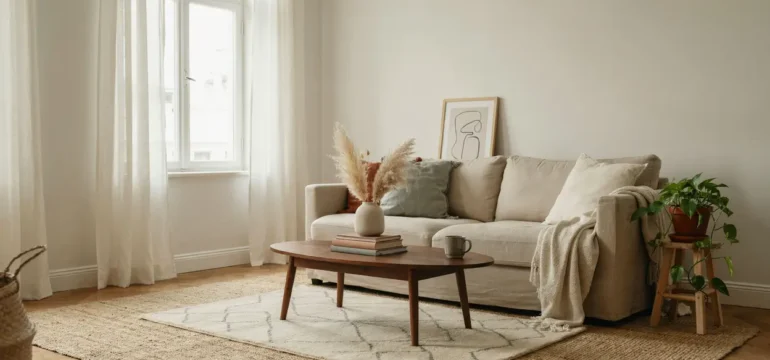
My neighbor once told me her living room felt cold even with a rug down, and when I walked in I saw the problem right away. One flat rug, sitting alone in the middle of the room, just was not doing enough work. The floor still felt bare around the edges, and the whole space lacked warmth. Once we added a second rug underneath hers, everything changed. The room felt finished, layered, and much more inviting. Layering rugs is one of those small changes that makes a huge difference, but a lot of people get nervous about doing it wrong. The truth is, there are simple rules that make it almost impossible to mess up. Below are twelve ways to layer rugs in different rooms of your home, with real details on materials, sizes, and placement so you can try them out this weekend.
1. Jute Base, Wool Top
A jute rug on the bottom and a smaller wool rug on top is one of the easiest combinations to get right, and it works in almost any living room style. The jute layer gives you that natural, woven texture along the edges, while the wool piece on top adds softness where your feet actually land. Lay the jute rug so it stretches close to the walls or under the front legs of your sofa, then center a smaller wool or cotton rug over it, leaving about twelve to eighteen inches of jute showing on all sides.
This combo photographs beautifully because the two textures create visual depth without clashing. Choose a jute rug in a natural tan color and pick a wool rug in a solid neutral or a simple pattern, like stripes or a faded medallion. Keep the wool rug’s edges straight and parallel to the jute rug so the layers look intentional rather than accidental. This setup works especially well in living rooms with wood floors, since the jute grounds the space and the wool softens the whole area underfoot.
2. Vintage Rug Layer
Placing a worn, vintage-style rug over a plain, larger rug is a favorite trick among decorators because it adds instant character to a room. Start with a large, low-pile rug in a solid neutral color as your base, then place a smaller vintage or Persian-style rug on top, slightly off-center or angled toward a seating area. The faded colors and busy pattern of the vintage piece stand out more when they have a plain background to rest on.
This idea works great in living rooms, home offices, or reading corners where you want a lived-in, collected look. Look for vintage rugs with muted reds, blues, or rust tones, since these colors tend to blend with most furniture. Keep the base rug large enough that at least a foot of it shows around the vintage layer on every side. Avoid centering the vintage rug perfectly in the middle of the room. Instead, shift it toward a chair or a coffee table so it feels like part of a real conversation area, not just a decoration.
3. Round Over Square
Placing a round rug on top of a square or rectangular rug is a simple way to soften a room that feels too boxy or angular. This works especially well in dining rooms, breakfast nooks, or small sitting areas where furniture lines are already straight and sharp. Choose a large rectangular jute or flatweave rug as the base, then add a smaller round rug made of wool, cotton, or even a woven natural fiber, right in the center or slightly toward one side.
The round shape breaks up the straight lines of the base rug and draws the eye toward the center of the room, which is great around a round dining table or a circular ottoman. Keep the colors simple so the shapes do the visual work rather than competing patterns. A neutral base with a round rug in a warm color, like rust, mustard, or deep green, gives the space a cozy focal point. This pairing also works nicely in a bedroom, layered under a small accent chair near a window.
4. Sheepskin Accent Layer
A sheepskin or faux fur rug thrown over a larger flatweave rug adds a soft, touchable layer that instantly makes a corner feel more comfortable. This idea is perfect for reading nooks, next to a fireplace, or draped near an armchair where people actually sit and relax. Lay down a flatweave or jute rug as your base across the floor, then place one or two sheepskins at an angle near the chair legs or in front of the seating spot.
The trick to making this look styled instead of messy is to keep the sheepskin slightly rumpled rather than perfectly flat, since a little texture makes it look natural. White or cream sheepskins work with almost any base rug color, but a black or gray sheepskin can add contrast against a lighter jute rug. This layering idea photographs especially well in the golden light of late afternoon, when the fur catches shadows and looks extra cozy. It is also one of the fastest ideas on this list, since you can set it up in under five minutes.
5. Layered Rugs in Bedroom
Bedrooms benefit a lot from rug layering because bare floors near the bed can feel cold first thing in the morning. Start with a large area rug that extends at least eighteen inches beyond each side of the bed, then layer a smaller runner or accent rug right at the foot of the bed, perpendicular to the large rug underneath. This gives your feet a soft landing spot exactly where you step out of bed each day.
Choose a neutral, low-pile rug as the base so it does not compete with your bedding, then pick something with more texture or pattern for the top layer, like a striped runner or a woven wool piece. This combination works in almost any bedroom style, from farmhouse to modern minimalist. Keep the top rug centered at the foot of the bed rather than pushed to one side, since this keeps the whole layout looking balanced and easy to photograph from the doorway. It also adds a nice visual break between the bed and the rest of the room.
6. Hallway Rug Stacking
Long, narrow hallways often get ignored when it comes to decor, but stacking two runners on top of each other can turn a plain hallway into something worth noticing. Choose a wider, flatweave runner as your base that spans most of the hallway width, then layer a slightly narrower patterned runner directly on top, centered along the length of the hall. This creates a framed border effect that draws the eye down the hallway instead of making it feel like a leftover space.
This idea works particularly well in hallways with hardwood or tile floors, since the layered runners add warmth and reduce noise from footsteps. Pick a base runner in jute or a solid neutral, then choose a top runner with a simple geometric or striped pattern for contrast. Keep both runners the same length if possible, since mismatched lengths at the ends can look unfinished in photos. This setup also works well near an entryway, giving guests a soft, styled path from the front door into the main living space.
7. Layered Rugs Under Coffee Table
Placing two rugs under a coffee table, one larger and one smaller, is a subtle way to add depth to a living room without overwhelming the space. Lay the larger rug so all four legs of your sofa and chairs sit on it, then add a smaller rug, roughly two-thirds the size, centered under the coffee table itself. This creates a natural focal point right where people gather to talk, eat snacks, or put their feet up.
Choose a plain or lightly textured rug for the base, then pick something with more pattern or color for the smaller top layer, since this area gets the most visual attention in the room. A jute base with a colorful kilim rug on top is a popular combination that works in both modern and traditional spaces. Keep the coffee table legs resting fully on the top rug so the layering does not look accidental. This idea photographs especially well from a slightly elevated angle, showing off both rug layers around the table.
8. Mixed Pattern Layering
Combining two different patterns in a layered rug setup takes a little more confidence, but the payoff is a living room that feels curated and full of personality. Choose one rug with a bold, larger-scale pattern as your base, then layer a smaller rug with a simpler, smaller-scale pattern on top, making sure the two share at least one matching color. This shared color is what keeps the combination looking planned instead of chaotic.
For example, a large striped rug in navy and cream pairs nicely with a smaller diamond-patterned rug that also includes navy accents. Keep the overall color palette to two or three shades so the patterns do not fight for attention. This layering style works best in living rooms or family rooms with simple, solid-colored furniture, since the rugs become the main visual interest in the space. If you are trying this for the first time, start with patterns that use the same color family before moving on to bolder contrasts.
9. Layered Rugs by Reading Nook
A small reading corner becomes far more inviting when the floor underneath gets a little extra attention. Start with a soft, medium-sized rug under the chair and ottoman, then layer a smaller accent rug angled slightly in front, right where your feet would rest while reading. This creates a defined little zone that feels separate from the rest of the room, even without walls or furniture dividers.
Pick a rug with a plush texture, like wool or a chunky knit, for the base, since comfort matters most in a spot meant for relaxing. The top layer can be thinner and more decorative, such as a small woven rug with fringe or a simple geometric pattern. Add a floor lamp and a stack of books nearby to complete the scene, since these little details make the corner feel lived in and ready for a photo. This idea works well near a window, where natural light highlights the texture of both rug layers throughout the day.
10. Kitchen Rug Layering
Kitchens are practical spaces, but that does not mean the floor has to look plain. Layering a thin, washable rug over a larger flatweave rug in front of the sink or stove adds comfort underfoot and a bit of style at the same time. Choose a durable, low-pile rug as the base that covers a wider stretch of floor, then add a smaller, patterned kitchen mat directly in front of the area where you stand most, like the sink.
Look for materials that are easy to clean, such as cotton or a flatweave synthetic blend, since kitchen floors deal with spills and foot traffic every day. A striped or checkered top layer over a solid neutral base gives the kitchen a fresh, cheerful look without much effort. Keep both rugs low profile so they do not create a tripping hazard near cabinets or appliances. This layering idea also works well in front of a kitchen island, giving the space a cozy, finished feeling.
11. Layered Rugs on Stairs Landing
A stair landing often gets skipped when decorating, but it is actually a great spot for a small rug layering moment. Place a simple, low-pile rug across the landing floor first, then add a smaller round or square accent rug on top, positioned where people naturally pause at the top or bottom of the stairs. This little detail makes the landing feel like a real part of the home instead of just a passage between floors.
Choose a durable, tightly woven rug for the base since this area gets regular foot traffic, then pick a top rug with more personality, like a bold color or a fun pattern, since landings are often small enough to handle a stronger design choice. Keep the top rug simple in shape so it does not create tripping hazards near the stairs. This idea works especially well when paired with a small console table or a piece of wall art nearby, making the landing feel like an intentional stop rather than an empty corner.
12. Layered Outdoor Rugs
Rug layering is not just for indoor rooms, it works beautifully on covered patios, porches, and outdoor sitting areas too. Start with a large, weather-resistant outdoor rug as your base, then layer a smaller accent rug on top near the seating area, such as under a coffee table or between two outdoor chairs. This combination adds warmth to what is often a hard, plain surface like concrete or wood decking.
Choose polypropylene or other weatherproof materials for both layers, since these hold up against sun, rain, and outdoor humidity far better than natural fibers. A striped or geometric pattern on the base pairs nicely with a solid-colored accent rug on top, or you can flip the combination depending on your outdoor furniture. This idea photographs especially well in the early evening, when string lights or a lantern add a soft glow over the layered rugs. It is a simple way to make an outdoor space feel just as finished as an indoor room.
Rug layering does not need to be complicated. Pick one idea from this list, try it in a room you walk through every day, and see how much warmer the space feels by the end of the week.
FAQs
Do rug pads matter when layering rugs?
Yes, a thin rug pad between the layers keeps the top rug from sliding around and also protects your floors from wear underneath.
How much of the bottom rug should show?
A good rule is to leave twelve to eighteen inches of the base rug visible around the edges of the top rug, so both layers get noticed.
Can I layer rugs of the same material?
You can, but mixing textures, like a flat jute base with a soft wool top, usually creates more visual interest and depth in a room.
Is rug layering only for large rooms?
No, layering works in small spaces too, as long as you scale the rug sizes down and keep the color palette simple so the room does not feel crowded.
What is the easiest layering combination for beginners?
A jute or flatweave base with a solid-colored wool or cotton rug on top is the simplest combination to start with, since it is nearly impossible to get wrong.