
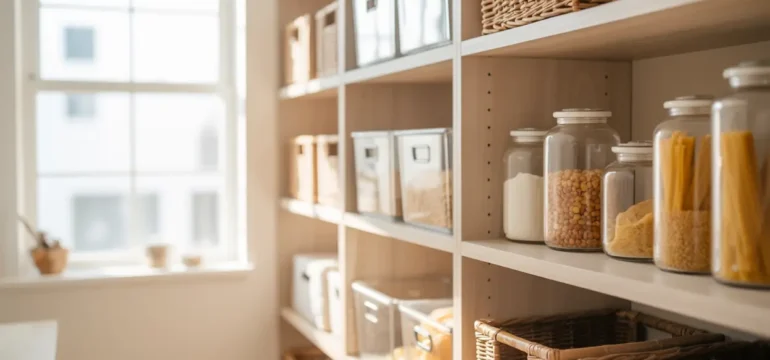
Not everyone has a huge walk-in pantry with room to spare, and honestly, most of us are working with a single narrow closet or a couple of cabinet shelves squeezed next to the fridge. That is exactly why this list exists. Every idea here is built for pantries that are small, awkward, or just badly used, the kind where boxes get shoved in sideways and you buy a third jar of cumin because you cannot see the two you already own. A good pantry makeover is not about square footage. It is about using the space you already have more smartly, with shelving, containers, and layout choices that make everything visible and easy to reach. None of these 13 ideas require knocking down a wall. Most take an afternoon, a trip to a home store, and a little patience while you sort through what is actually in there. Let’s get your pantry working for you instead of against you.
1. Clear Bin Zones
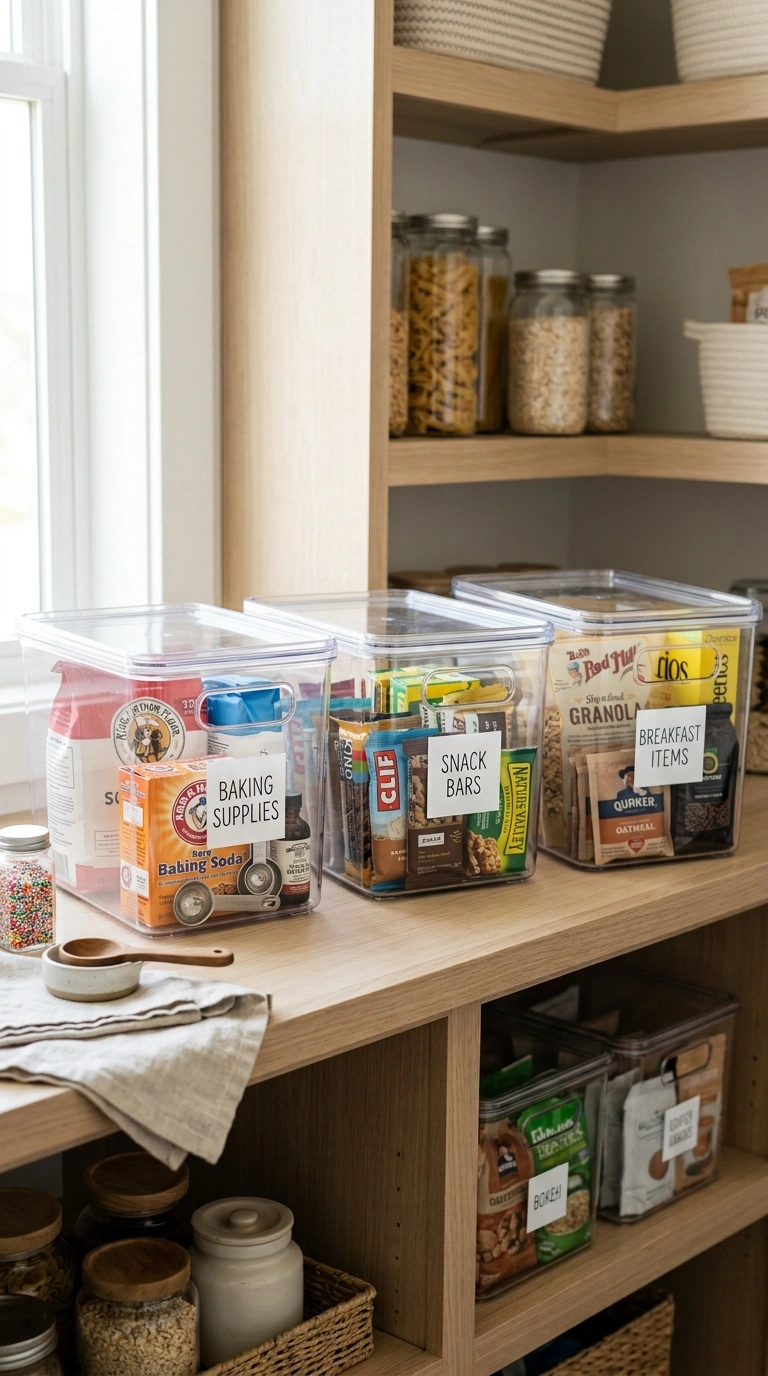
Grouping loose items into clear bins by category is one of the fastest ways to make a small pantry feel organized instead of chaotic. Use one bin for baking supplies, another for snack bars, and another for breakfast items, so each bin becomes its own mini section instead of everything blending into one shelf of clutter. Clear plastic works best here since you can see contents without lifting a single lid.
Measure your shelf depth before buying bins so they slide in and out easily without getting stuck on the shelf above. Label each bin with a simple tag on the front so family members can put things back in the right spot without guessing. This idea takes about an hour if you are sorting from scratch, and it works in pantries of any size, from a single closet to a full walk-in. The visual result is a pantry that looks like it has a system, because it finally does.
2. Wire Basket Shelves
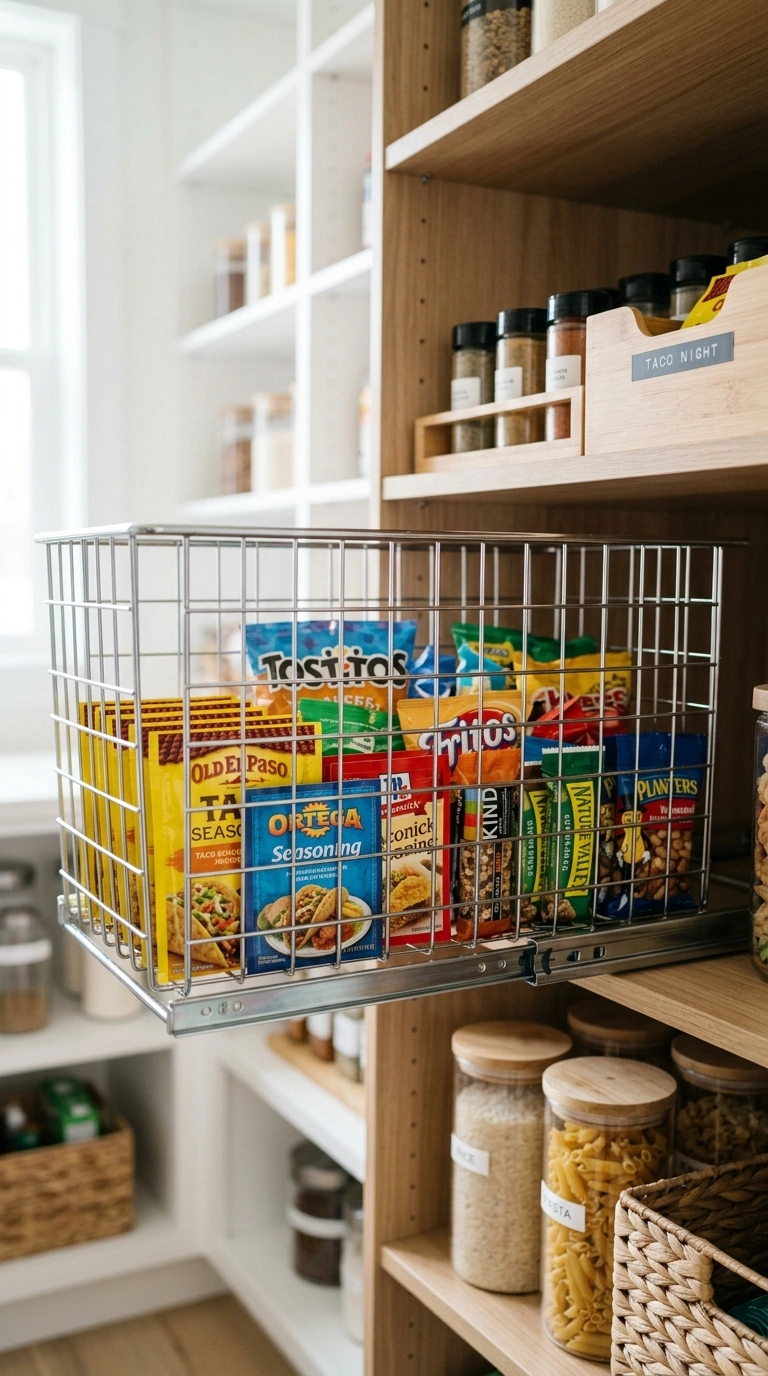
Wire baskets that slide onto existing shelves add an extra layer of storage without any construction, which makes them perfect for renters or anyone who wants a quick upgrade. They work especially well for items that tend to roll or tip over, like packets of taco seasoning or small snack bags, since the wire sides keep everything contained in one spot.
Choose baskets with a front lip lower than the sides so you can see and grab items without lifting the whole basket out. Group them by meal type, one for pasta night ingredients and another for taco night, so meal prep becomes faster since everything you need is already grouped together. This project takes under thirty minutes to set up since most baskets simply slide onto the shelf edge. It is one of the easiest upgrades on this list, and it turns flat, wasted shelf space into organized, contained storage instantly.
3. Labeled Glass Jars
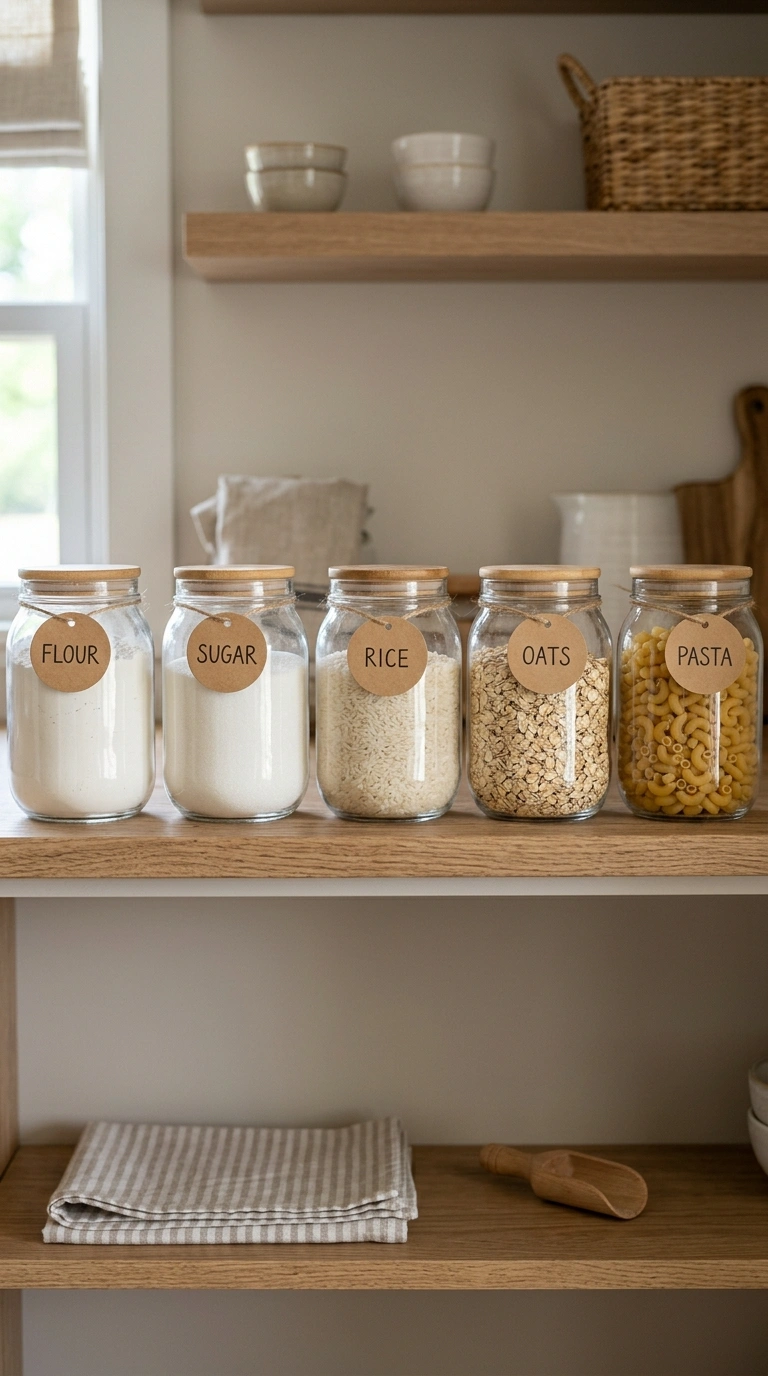
Swapping bags and boxes for matching glass jars is the single most requested pantry upgrade, and for good reason. It makes a shelf of mismatched packaging look like one cohesive, calm collection, while also keeping food fresher for longer thanks to airtight seals. This works best for dry goods like flour, sugar, rice, pasta, oats, and baking mixes that would otherwise sit in bulky bags.
Choose jars in one consistent shape and size where possible so they stack and line up neatly on the shelf. Add a label to each lid or the front of the jar using a marker or printed sticker, and keep a small note of expiration dates on the bottom if you want to track freshness. This project takes a couple of hours since you are transferring food from original packaging, but it is worth doing gradually over a weekend. The payoff is a pantry shelf that looks intentional every time you open the door.
4. Lazy Susan Shelf
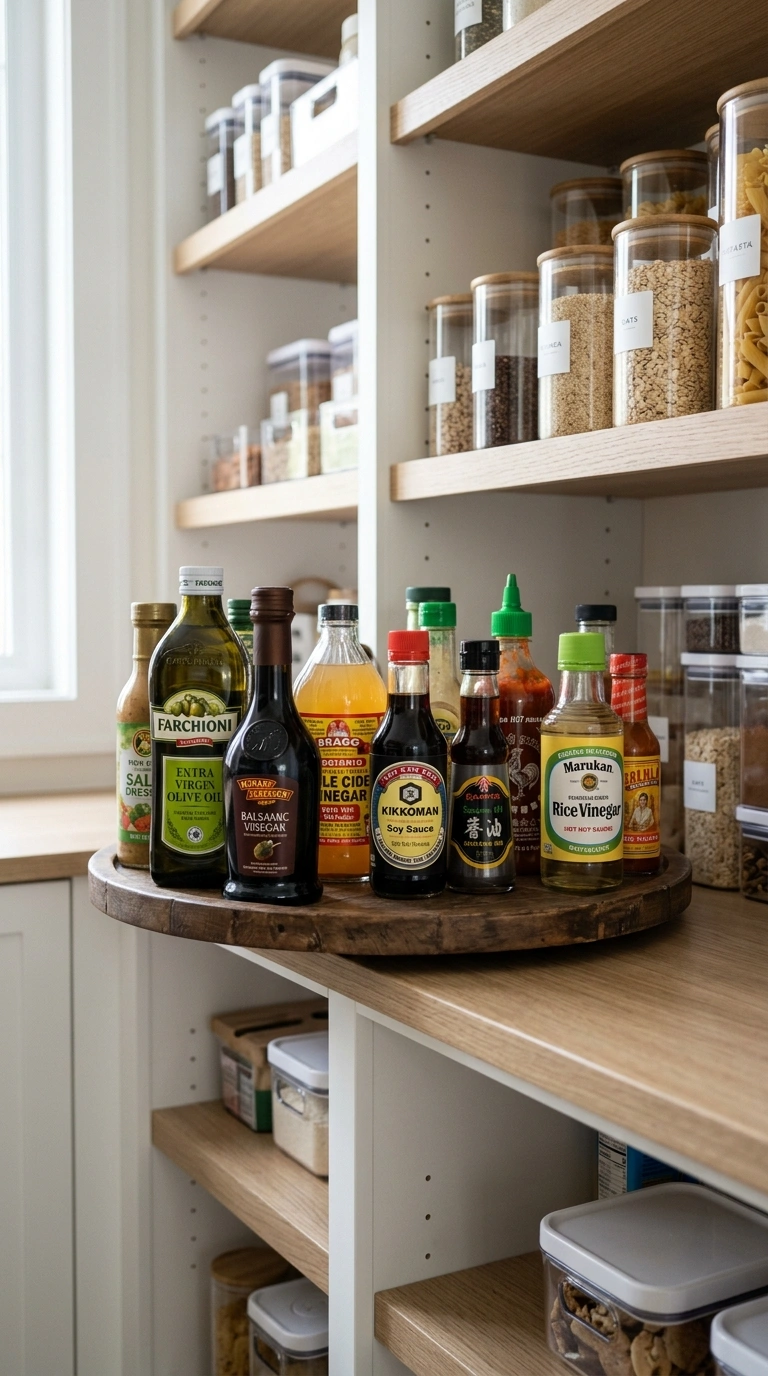
A rotating lazy susan on a pantry shelf solves the classic problem of items getting lost behind taller bottles or boxes. Instead of pushing things around blindly, you simply spin the tray to bring what you need to the front. This works especially well for oils, vinegars, sauces, and small jars that tend to get buried in a deep pantry shelf.
Place taller bottles toward the center of the turntable so they do not block your view of the shorter items around the edges. A two-tier turntable can double this benefit if your shelf has enough vertical clearance. Setup takes only a couple of minutes since the turntable just sits on the shelf with no tools required. It works particularly well in deep pantry shelves where the back few inches usually become a forgotten zone, turning that dead space into something you actually use every week.
5. Door-Mounted Racks
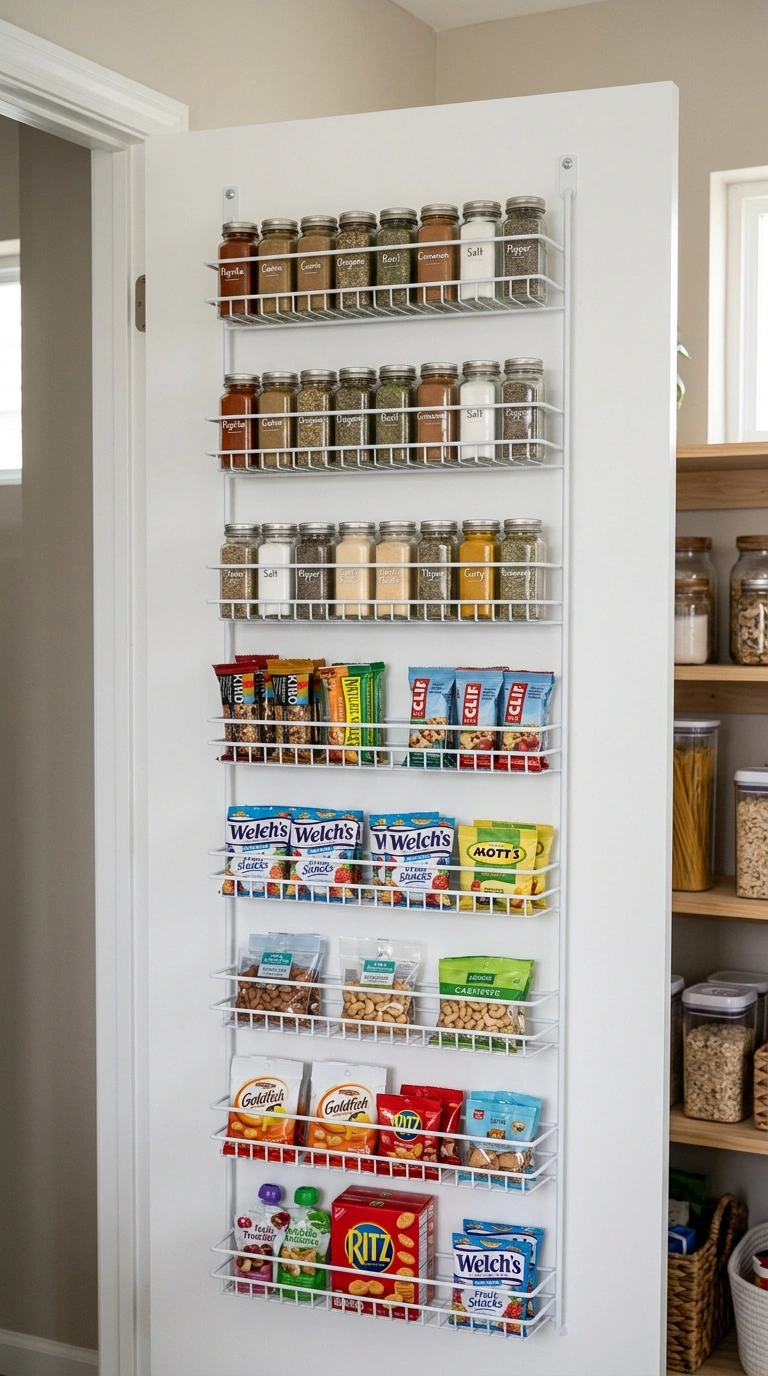
The back of a pantry door is one of the most overlooked storage spots in the whole kitchen. An over-the-door rack, whether it is a wire shelving unit or a set of clear pocket organizers, adds several inches of usable storage without touching a single existing shelf. This is ideal for spice jars, snack packets, or small condiment bottles that do not need deep shelf space.
Measure the door and rack together before buying to make sure the door can still close fully once the rack is loaded. Use the rack for items you reach for often, like snack bars or seasoning packets, since it is right at eye level when the door opens. This project takes about twenty minutes to install using the hooks that typically come with these racks. It is one of the best space-saving ideas for small pantries since it adds real storage using space that was previously doing nothing at all.
6. Stackable Storage Bins
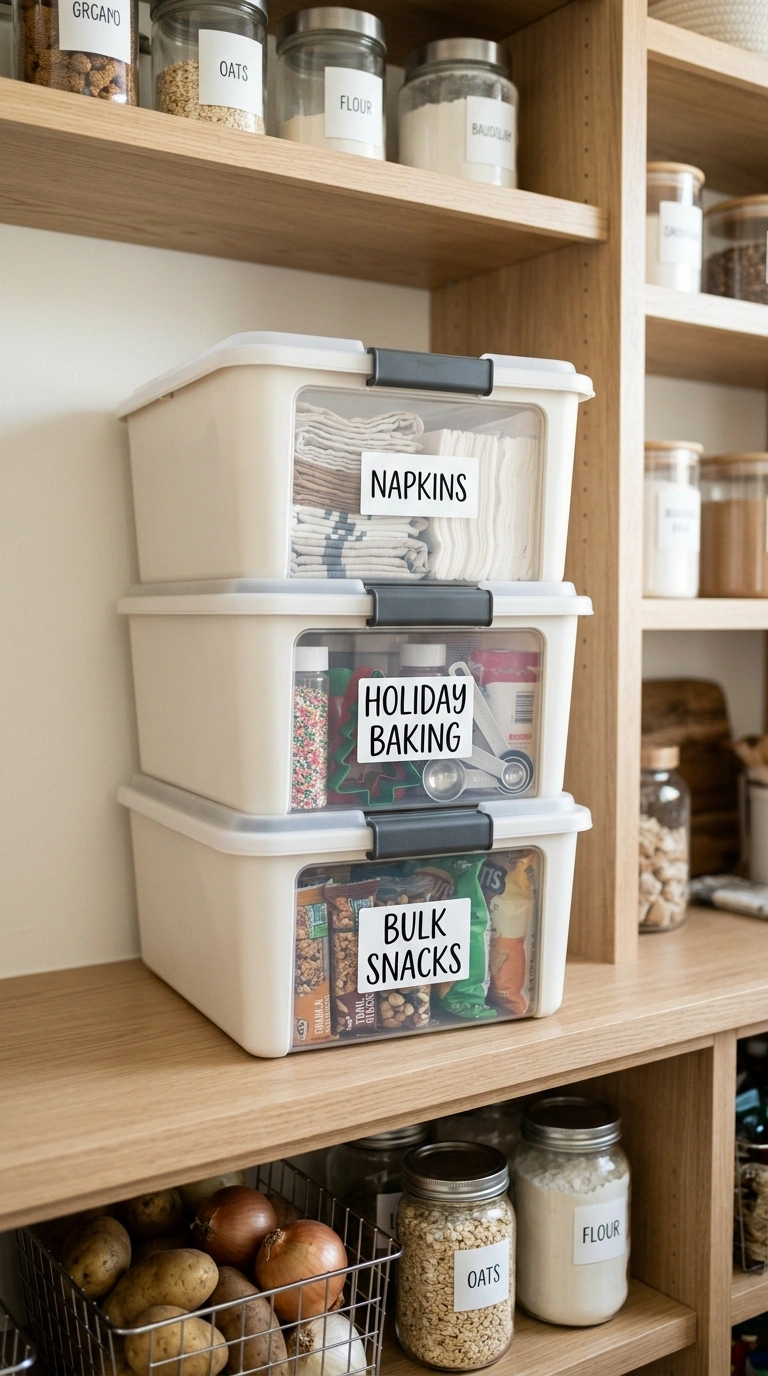
Stackable bins with lids let you build storage upward instead of spreading everything across a single shelf, which matters a lot in a small pantry. They work well for bulkier or less frequently used items, like extra napkins, holiday baking supplies, or bulk snack purchases, since you can stack several bins on top of each other and just label the front of each one.
Choose bins with the same footprint so they stack securely without wobbling, and keep the bins you access often on the bottom of the stack to avoid having to lift several down every time. Label each one clearly since stacked bins hide their contents from a side view. This idea takes about an hour to set up if you are reorganizing an existing shelf, and it is especially useful for pantries with high ceilings or tall shelving, since it makes use of vertical space that would otherwise sit empty above your other items.
7. Tiered Can Shelf
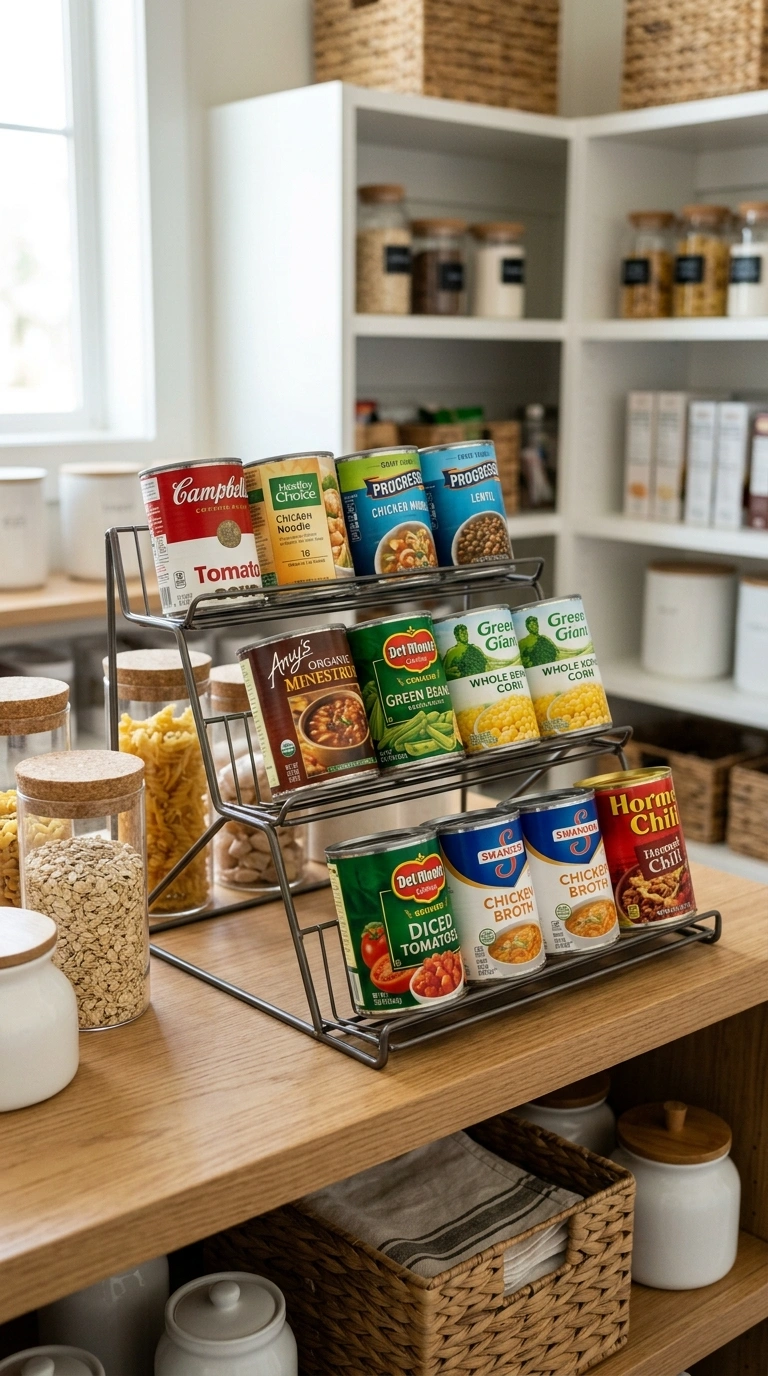
A stepped or tiered shelf insert designed for canned goods lets every can sit at a slight angle so you can see labels from above instead of just the front row. This is especially helpful in a small pantry where cans tend to get stacked two or three deep, hiding everything behind the front layer. Place the insert on a lower shelf near eye level for the easiest access.
Sort cans by type, vegetables on one row and soups on another, so you are scanning a small, organized section instead of the entire shelf when you need one item. Choose a metal or bamboo insert depending on the rest of your pantry’s finishes. This idea takes only a few minutes to set up since most inserts just rest on the shelf, and it prevents the common problem of cans getting pushed to the back and forgotten until well past their best-by date.
8. Wicker Basket Rows
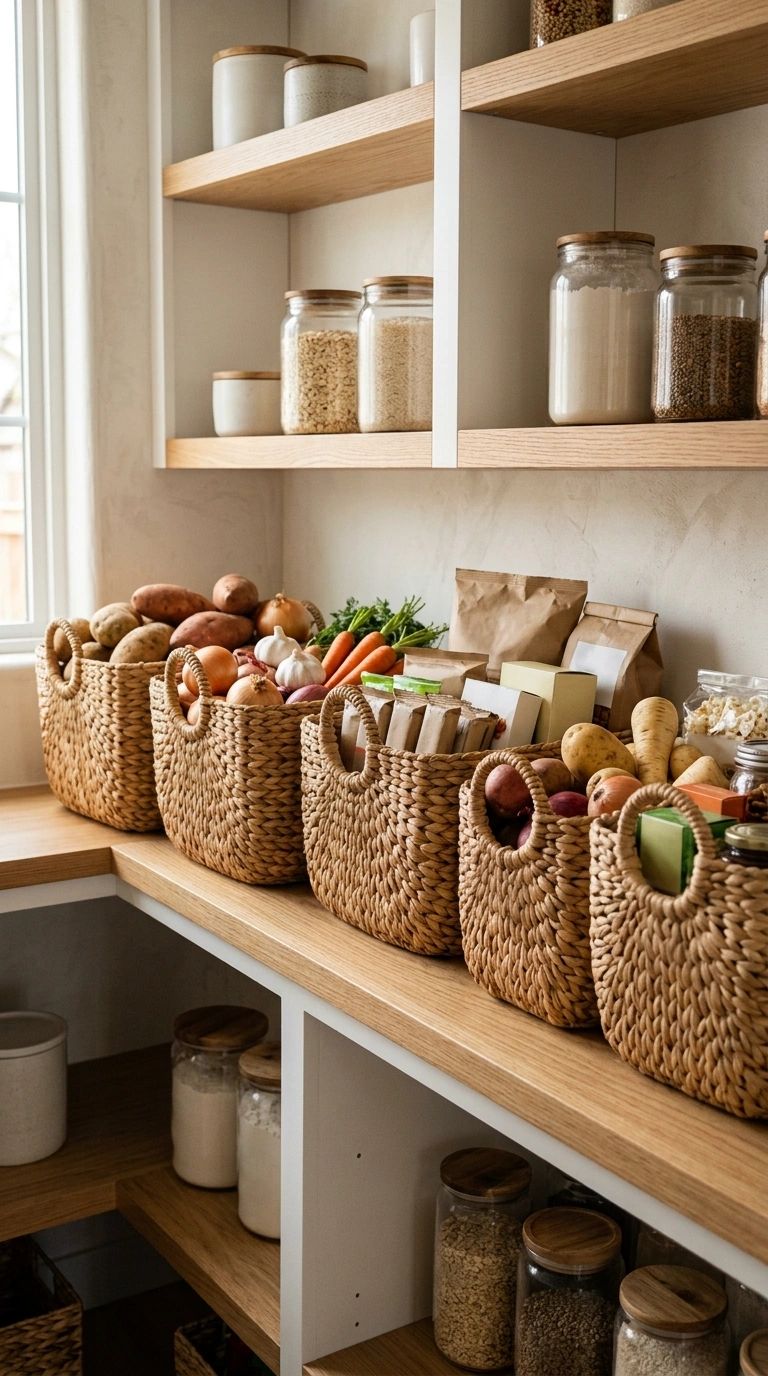
A row of matching wicker or woven baskets across an open shelf gives a small pantry a warm, textured look while also hiding less attractive packaging like bagged snacks or bulk cereal boxes. This works especially well on the top or bottom shelf of a pantry, areas that are harder to keep tidy since they often become a catch-all.
Assign each basket a clear category, root vegetables in one, kids’ snacks in another, and add a wooden or fabric tag to the front so everyone in the house knows where things belong. Choose baskets with handles if they will be pulled in and out often, since handles make lifting a full basket much easier. This project takes under an hour and works in pantries of any style, though it looks especially good in farmhouse or cottage-style kitchens where the natural texture of the baskets complements wood tones and warm lighting.
Also read: 19 Cottagecore Kitchen Ideas Full of Cozy Vintage Charm
9. Chalkboard Label Tags
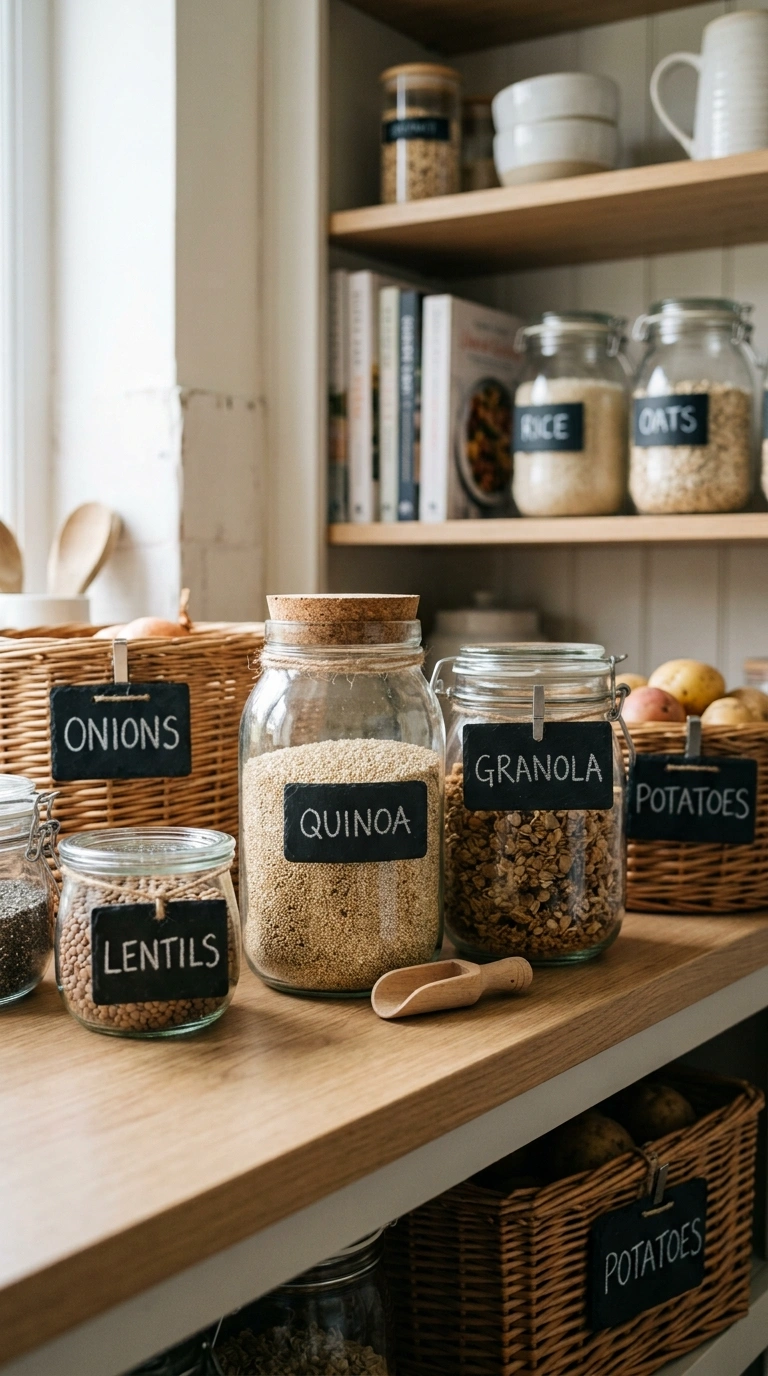
Small chalkboard labels clipped or adhered to bins, jars, and baskets add a charming, cohesive look to a pantry makeover while staying flexible if you change what is stored where. Unlike printed labels, chalkboard tags can be wiped clean and rewritten in seconds, which is useful in a pantry where contents shift with the seasons or with new recipes you are trying.
Use a fine-tip chalk marker for the neatest handwriting, and keep the wording short, just the item name, so the label is easy to read at a glance. Place tags at the same height across all your containers for a clean, lined-up look rather than scattered placement. This idea costs very little and takes less than an hour for an entire pantry. It is a small detail, but it is often the finishing touch that makes a pantry look like it belongs in a magazine rather than just a functional storage space.
10. Vertical Wrap Storage
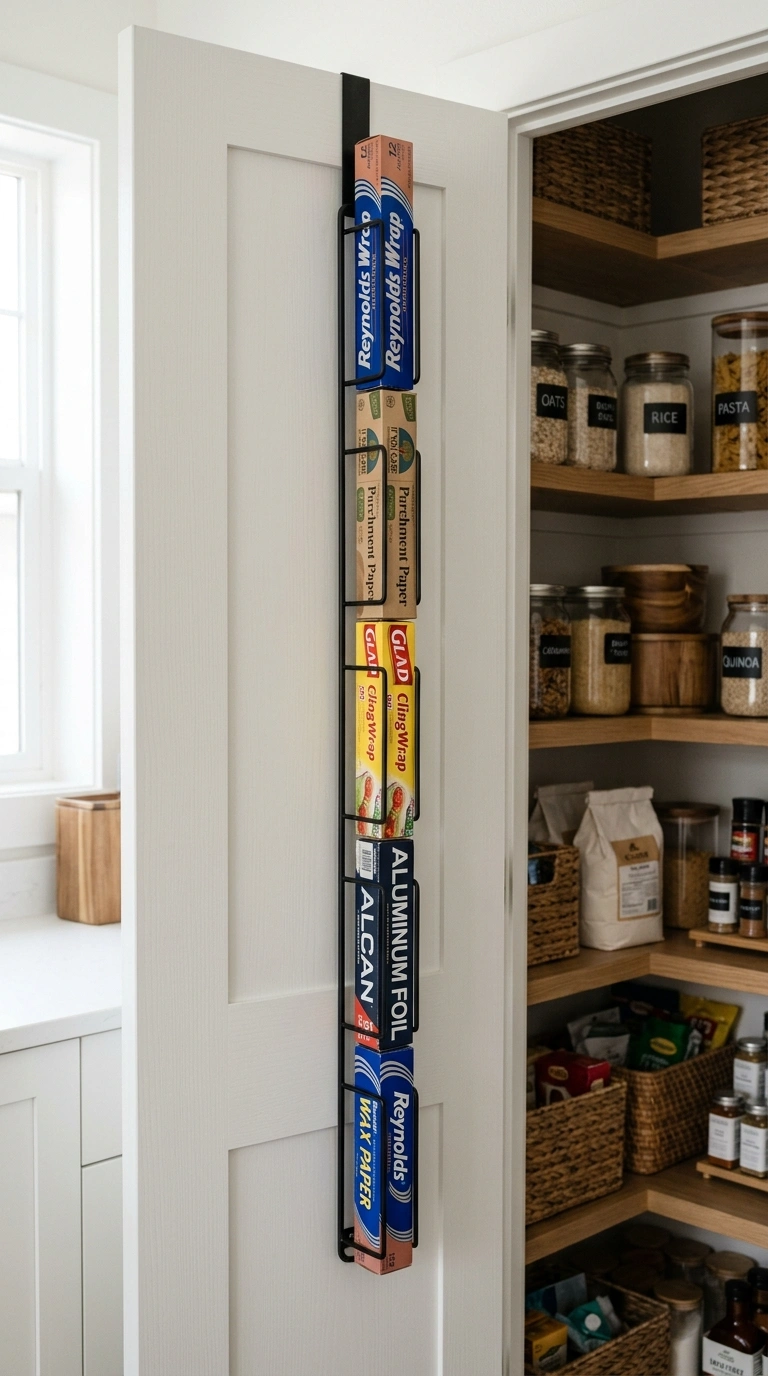
Rolls of foil, parchment paper, and plastic wrap are awkward to store flat since they roll around and take up more space than they should. A vertical organizer, either a narrow slotted rack or a simple tension rod mounted inside a cabinet, keeps these rolls upright and easy to grab by the end without digging through a drawer or shelf.
Mount the rack on the inside of a pantry door or a narrow gap between shelves where flat items would not fit anyway. Arrange rolls by size, tallest in the back if space allows, and keep a small pair of scissors nearby if your rolls do not have a built-in cutter. This project takes about fifteen minutes and is one of the best ways to reclaim shelf space that rolling items usually waste. It also stops the annoying moment of a roll unraveling loose in a drawer.
11. Snack Basket Station
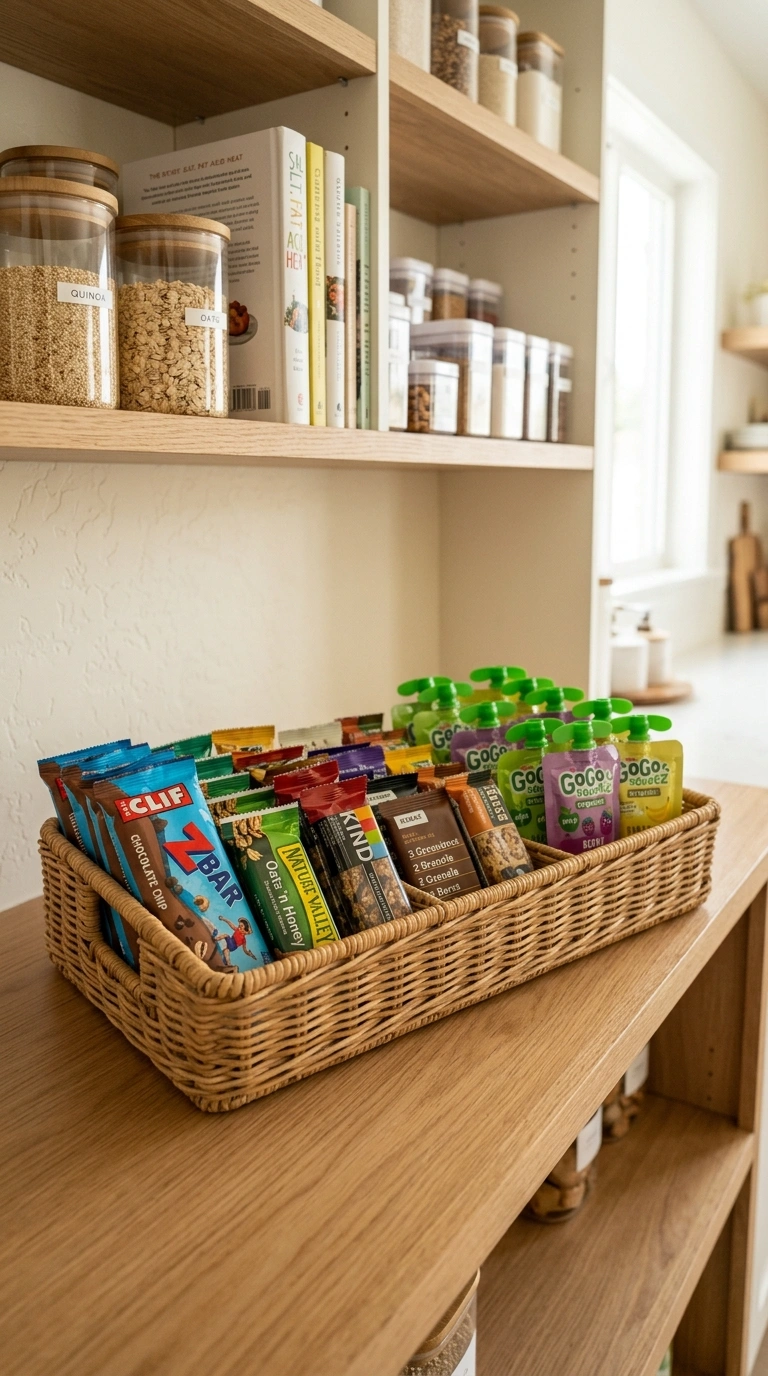
A single lower-shelf basket dedicated entirely to kids’ snacks or grab-and-go items creates an independent zone where family members can help themselves without disturbing the rest of the pantry’s organization. This works best on the bottom shelf, low enough for kids to reach without needing a step stool or your help every time.
Fill the basket with individually portioned snacks, granola bars, fruit pouches, or pre-bagged crackers, and swap contents weekly based on what needs restocking. Choose a sturdy basket with a wide opening so kids can see and grab items easily. This idea takes about ten minutes to set up and makes a noticeable difference in daily pantry traffic, since it keeps little hands out of the more fragile or breakable items on higher shelves while still giving them independence.
12. Freestanding Shelf Unit
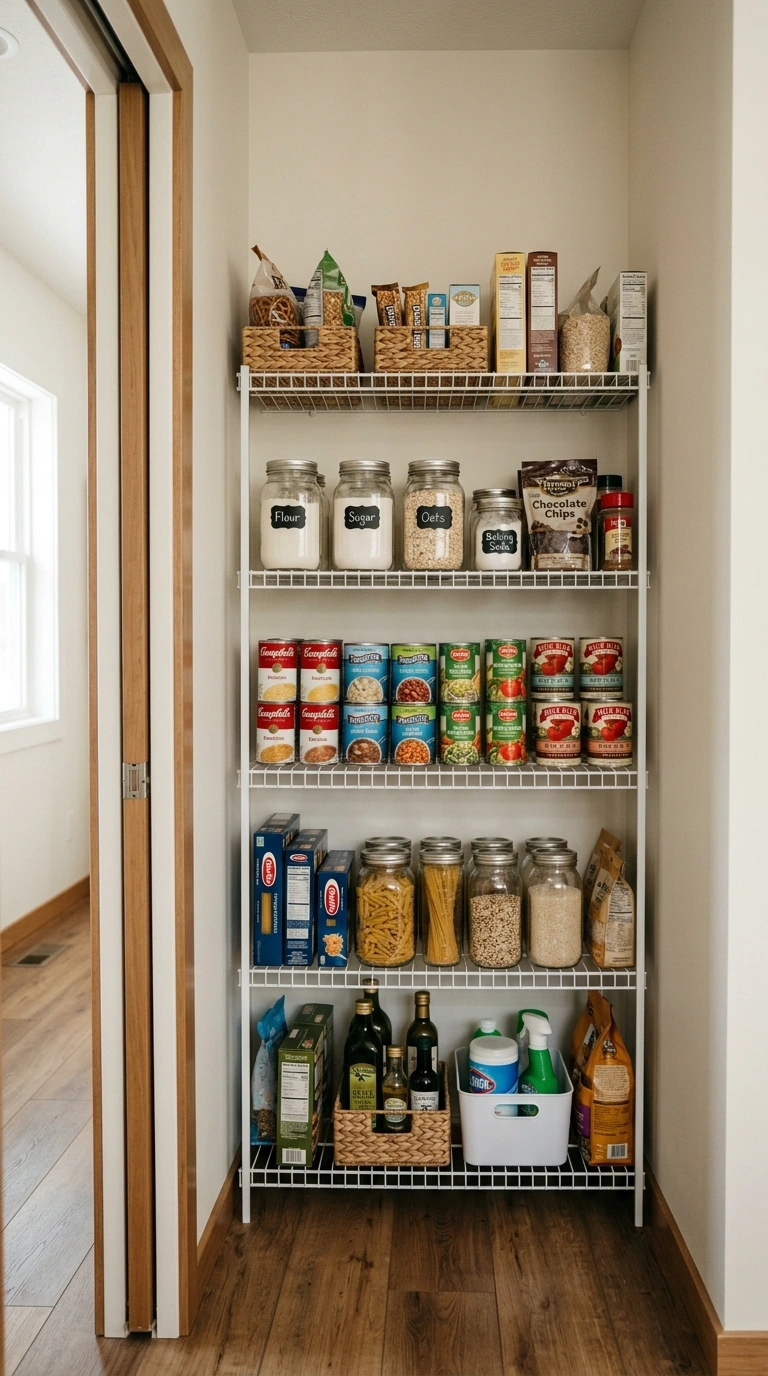
If your pantry space is a bare closet with only one or two shelves, adding a freestanding wire or wood shelving unit inside can multiply your storage without any wall drilling. These units come in narrow widths specifically designed for tight closets, and most can be assembled in under an hour with basic tools or none at all.
Position the unit against the back wall of the closet, then organize each shelf by category, canned goods on one level, snacks on another, and baking supplies up top where they are used less often. Leave a little breathing room between items rather than packing shelves edge to edge, since tightly packed shelves make it hard to see what you actually have. This is one of the higher-effort ideas on this list, but it is also one of the most transformative for a genuinely small or awkward pantry space.
Also read: White Oak Kitchen Ideas Full of Warmth and Character
13. Rolling Pantry Cart
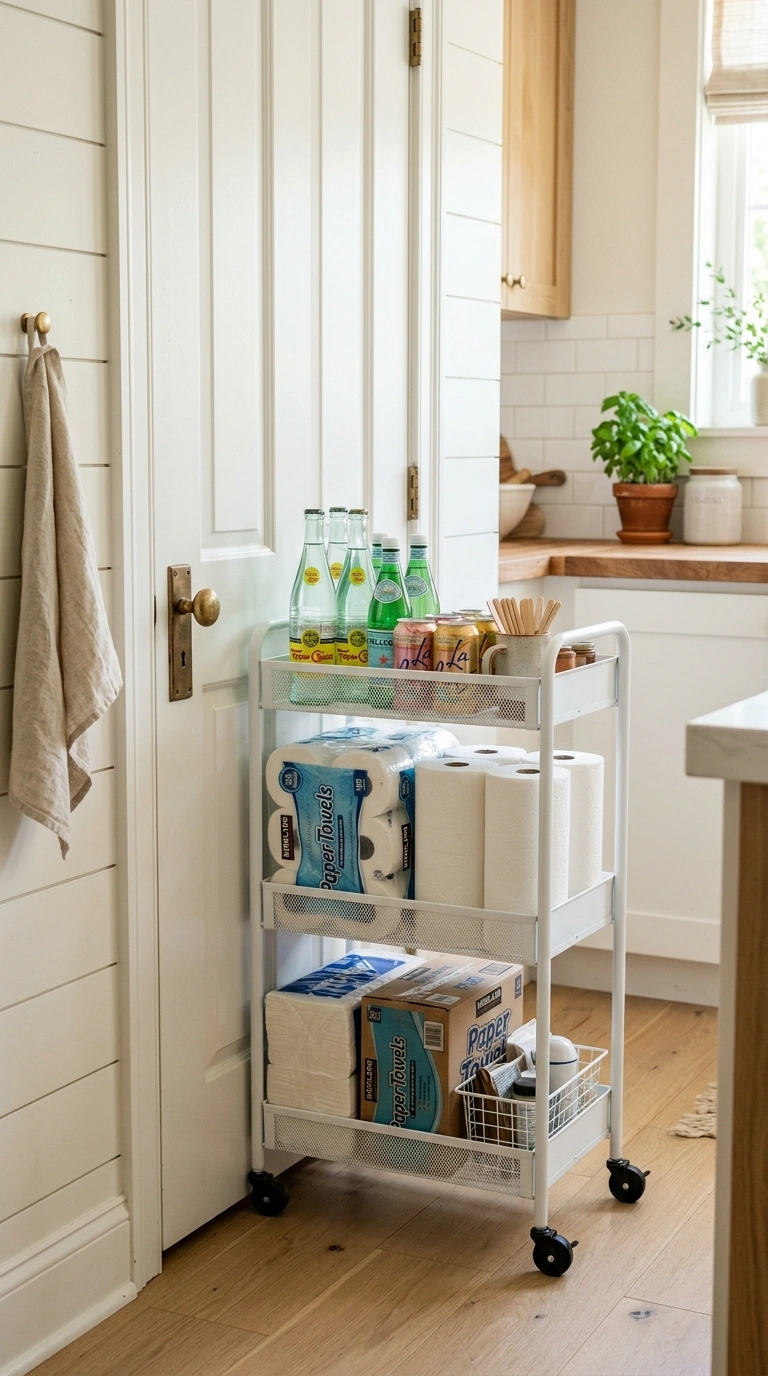
When a pantry closet simply cannot hold everything, a slim rolling cart placed just outside the door or tucked into a nearby corner becomes valuable overflow storage. These carts work well for bulk items, extra paper products, or beverages that do not fit inside the main pantry shelves, and the wheels make it easy to move the cart out of the way when needed.
Choose a narrow cart, ideally under twelve inches wide, so it fits into gaps beside the fridge or at the end of a counter run without blocking walkways. Use the top tier for items you grab often and the bottom for bulkier or backup supplies. This idea takes only a few minutes to set up since most carts arrive ready to roll. It is especially useful for smaller homes and apartments where a single pantry closet just cannot hold a growing grocery list.
Also read: 18 Moody Blue Kitchen Ideas for a Bold, Dramatic Refresh
FAQs
How small is too small for a pantry makeover?
There is no minimum size. Even a single cabinet shelf benefits from bins, labels, and better grouping, so do not wait for a bigger space to get started.
Do I need to buy new shelving to make a real difference?
Not always. Simple additions like bins, baskets, and turntables can transform a pantry using the shelving you already have.
What is the best way to keep a pantry organized long term?
Do a quick five-minute tidy every week and a fuller check every few months, tossing expired items and re-sorting anything that has drifted out of place.
Should I organize by category or by how often I use things?
A mix works best. Group by category first, then place your most-used items at eye level and less-used ones higher or lower on the shelves.
A small pantry does not have to feel like a losing battle. With a few bins, some labels, and a little bit of vertical thinking, even the tightest closet can work harder for you. Start with just one shelf this week, and let the rest of the makeover happen gradually as you find what actually fits your routine.