
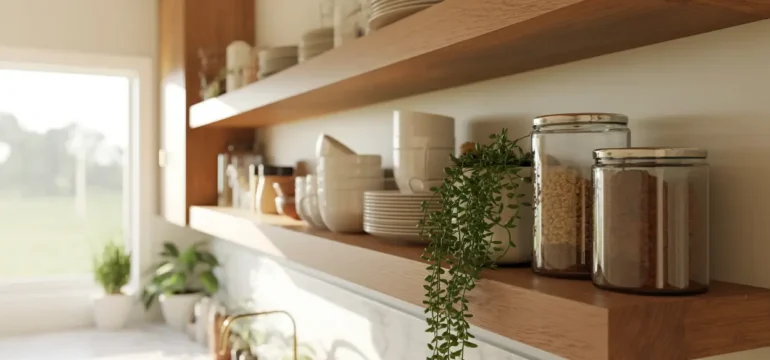
Open shelves get a bad reputation because so many of them end up looking cluttered within a month. But when they are styled right, open shelving can make a kitchen feel lighter, more personal, and honestly more expensive than it is. The trick is not about buying fancier dishes. It is about how you group things, how much breathing room you leave between items, and which materials you choose for the shelves themselves. Some kitchens use open shelving for everything, and others mix it with a few closed cabinets to hide the less pretty stuff. Both approaches can look great. Below are fifteen ways real kitchens use open shelving without it turning into a dust-collecting mess, along with what to put on them and where to hang them for the best effect.
1. Floating Wood Shelves
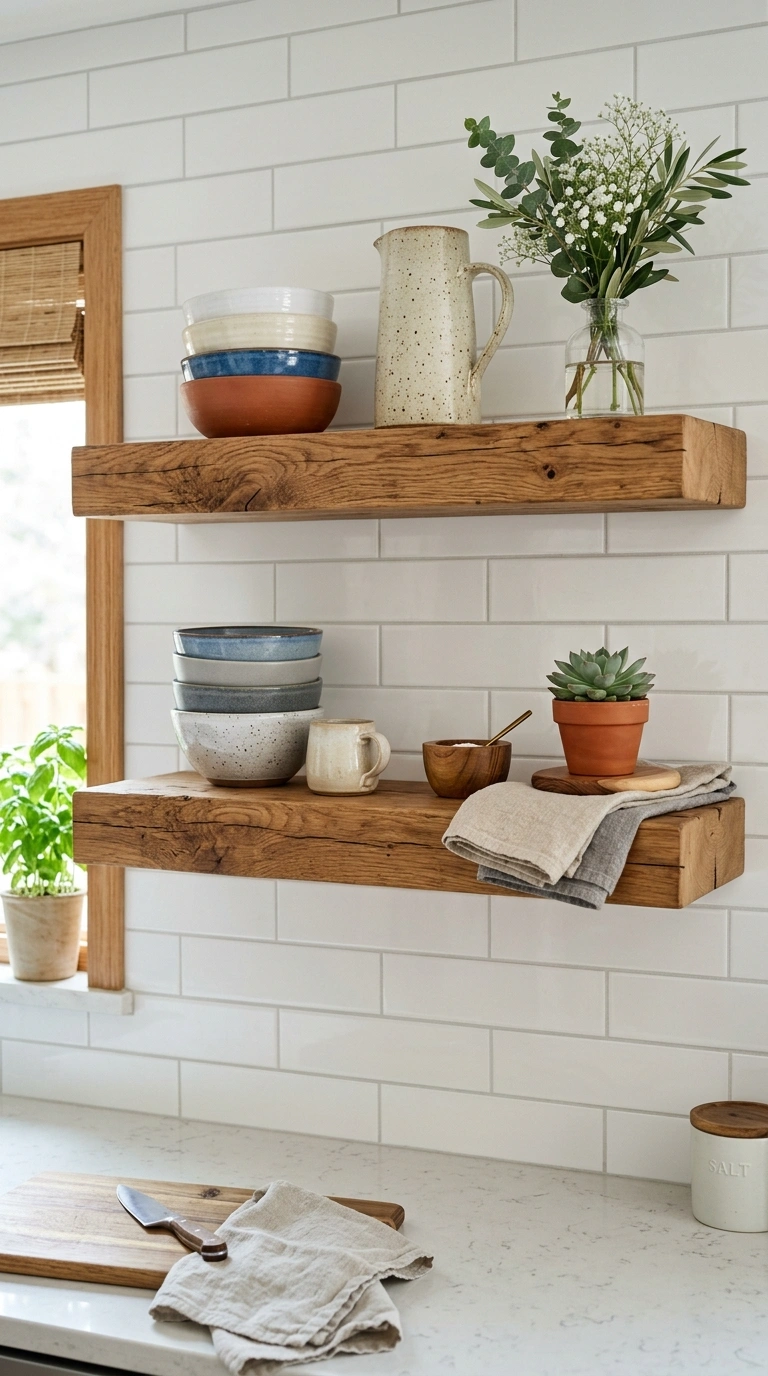
Simple wood shelves mounted with hidden brackets are the most common version of open shelving, and for good reason. They fit almost any kitchen style, from farmhouse to modern, and a natural wood tone adds warmth to a kitchen that might otherwise feel cold with all white cabinets. Choose a thick board, at least an inch and a half, so the shelf does not look flimsy once it is loaded with dishes.
Mount these shelves where upper cabinets would normally go, usually above the counter near the sink or stove. Keep the spacing between shelves generous, around twelve to fourteen inches, so taller items like pitchers or cookbooks fit without crowding. Style each shelf with a mix of heights, a stack of bowls next to a single tall vase, rather than lining everything up the same size. This small trick is what keeps floating wood shelves looking curated instead of just functional.
Also read: White Oak Kitchen Ideas Full of Warmth and Character
2. Black Iron Brackets
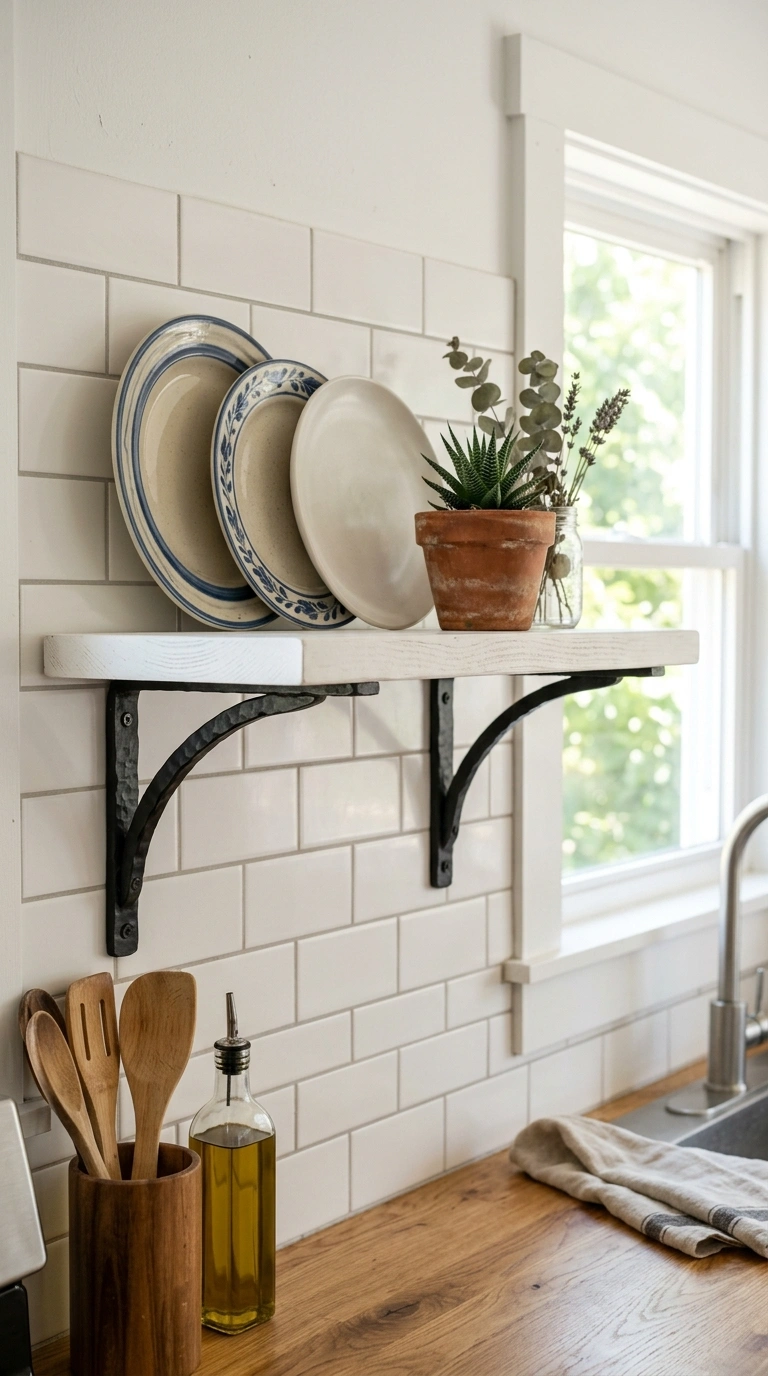
Exposed black iron brackets under a wood or white shelf add a bit of industrial character to a kitchen that might otherwise feel plain. The brackets themselves become part of the design, so choose ones with a simple L-shape or a decorative scroll pattern depending on your kitchen’s overall style.
This idea works especially well in kitchens with black hardware elsewhere, like faucet fixtures or cabinet pulls, so the brackets tie the whole room together. Mount the shelf securely into wall studs since the visible hardware means people will notice right away if it looks uneven or wobbly. Keep the shelf itself simply styled, a few plates leaned against the wall and a small plant, so the black brackets stay the visual anchor rather than getting lost under too many objects.
3. Corner Open Shelves
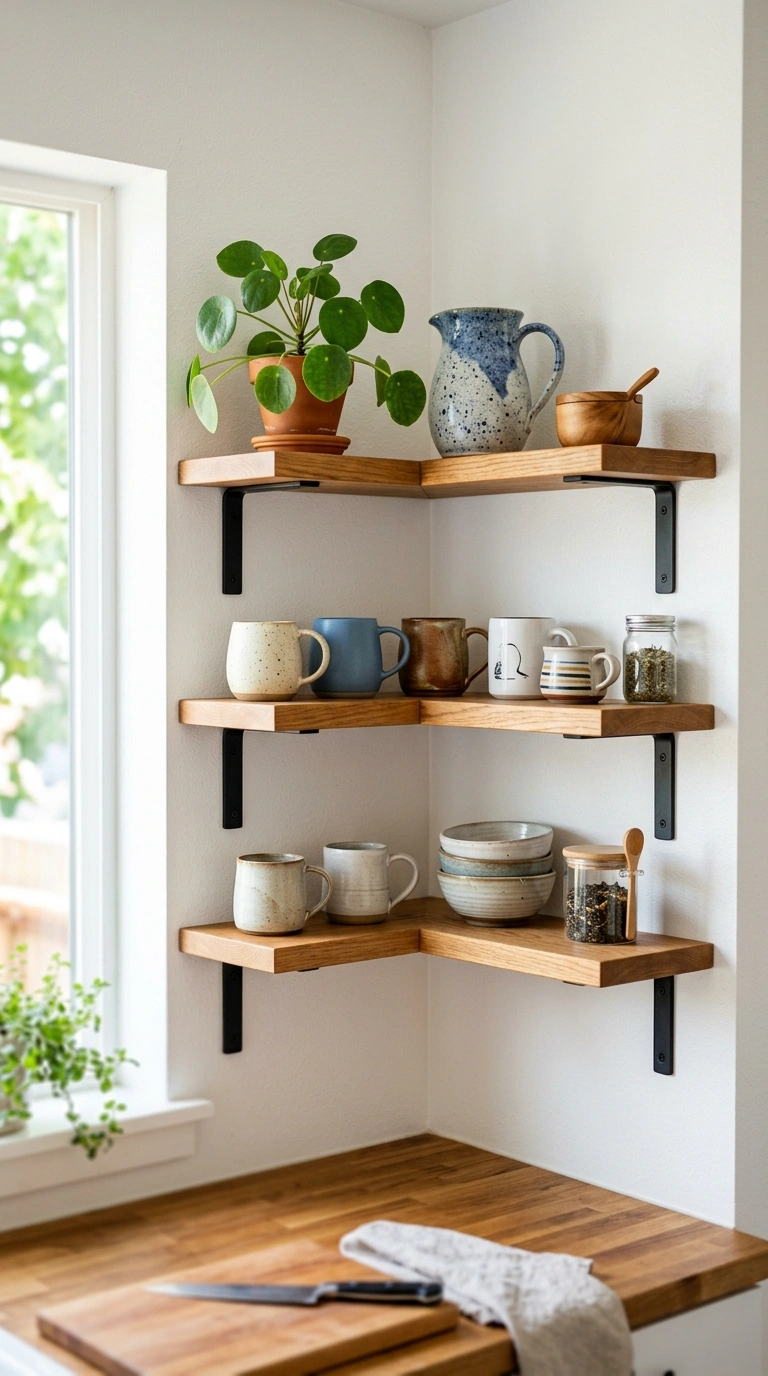
A corner that a cabinet cannot fully reach is one of the best spots for a small run of open shelves. Mounted at an angle across the corner, these shelves catch light from two directions and make an awkward space feel purposeful instead of wasted. Wood or painted MDF both work, depending on whether you want a natural or a color-matched look.
This idea suits kitchens with an L-shaped layout where cabinets stop short of a true corner. Use the lowest shelf for everyday mugs, the middle for small plants or cookbooks, and the top for something decorative like a single piece of pottery. Because corner shelves are visible from two angles, keep both sides balanced so it looks intentional no matter which way someone walks into the room. This tiny addition often becomes a favorite little display spot in the whole kitchen.
4. Glass Jar Display
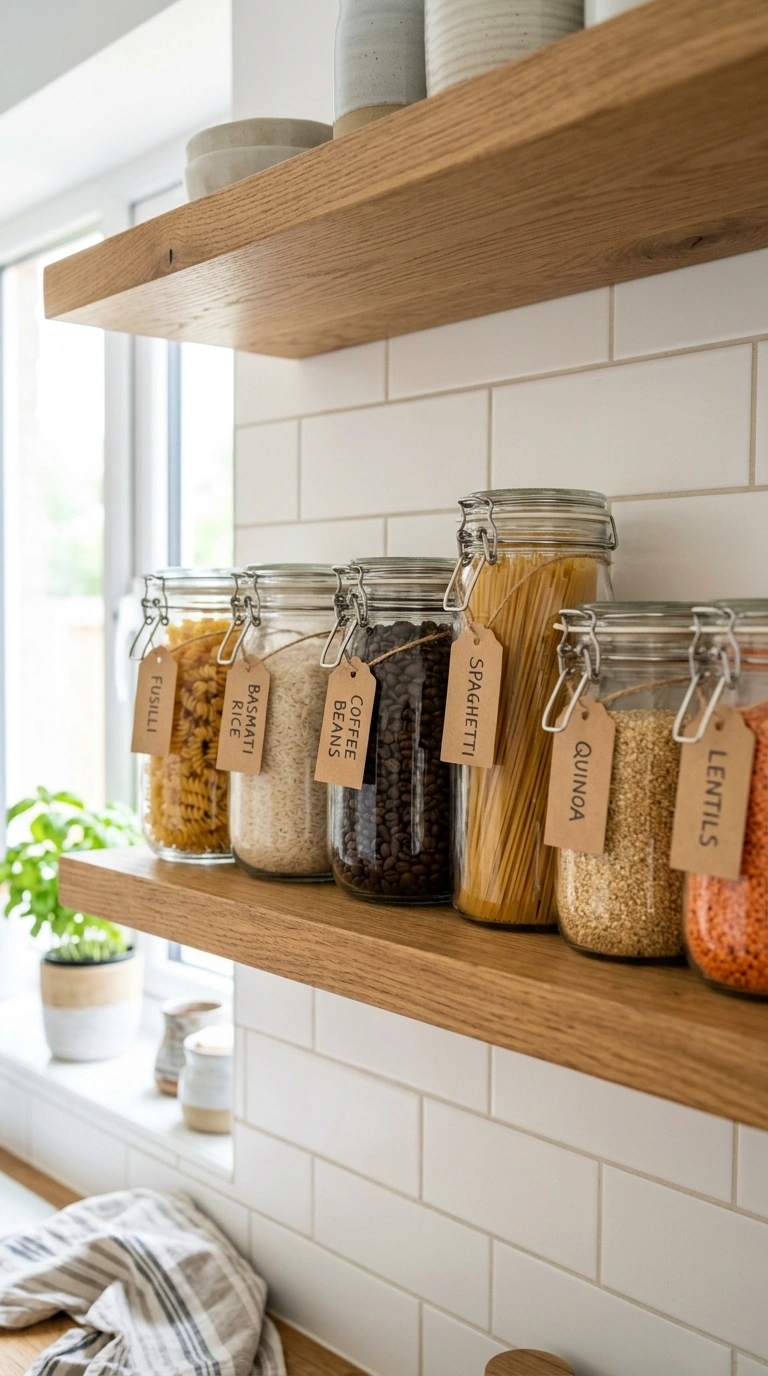
Instead of hiding dry goods in a cabinet, open shelving lets you display them right on the wall using matching glass jars. Pasta, rice, flour, and coffee beans all look surprisingly good lined up in clear, uniform containers with simple wood or metal lids. This idea works best on a shelf close to the counter where you actually reach for these items during cooking.
Group jars by size, tallest in the back and shortest in front, so every label stays visible. Stick to two or three jar shapes instead of a random mix, since matching containers are what make this look tidy rather than cluttered. Add a small chalkboard label or a simple sticker to each jar so guests and family members can find things quickly. Because the jars are sealed, this idea also keeps dry goods fresher than an open bag ever could.
5. Mixed Metal Shelving
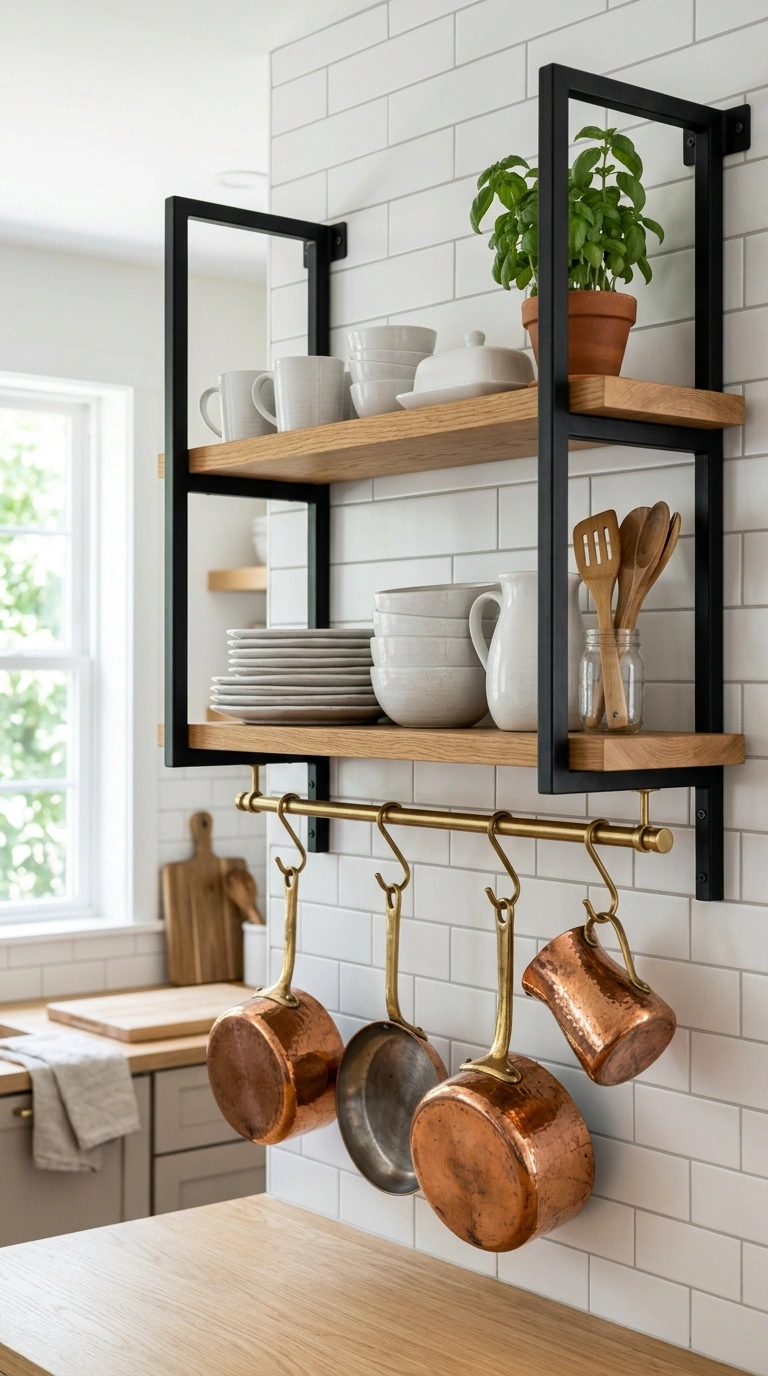
Combining two metal finishes, like a matte black shelf frame with brass hardware or hooks, gives open shelving a more collected, lived-in look than an all-matching setup. This idea works well in kitchens that already mix metals elsewhere, such as a brass faucet paired with black cabinet pulls.
Mount the shelving unit on an open wall near the stove or a coffee station, and use the mixed metals as an excuse to display a small collection of copper pots or brass canisters. Keep the color palette of your dishes simple, mostly white or cream, so the metal tones stand out instead of competing with busy patterns. Because mixed metal finishes read as more expensive and intentional, this is a good idea for anyone who wants their open shelving to look like it came together over time rather than all at once.
6. Above Sink Shelf
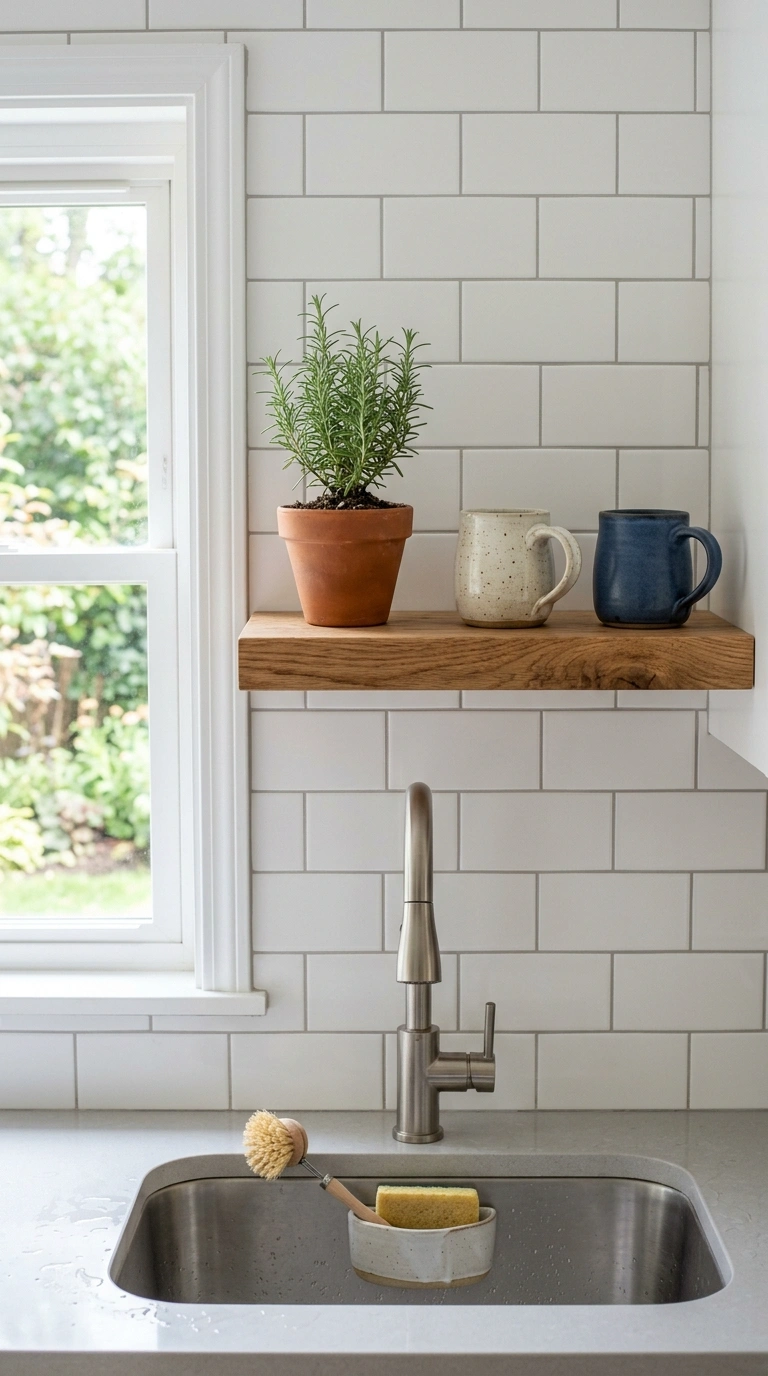
A single shelf mounted above the kitchen sink, in the spot where a cabinet might otherwise hang, works well for lightweight, frequently used items. This spot gets natural light if there is a window nearby, making it a great place to display a small plant, a few mugs, or a bar of dish soap in a nice dispenser.
Keep this shelf lightly styled since it sits so close to water and steam from the sink. Avoid anything that needs to stay perfectly dry, and choose ceramic or glass items that can handle occasional splashes. A small potted herb, like basil or mint, does especially well here if the window gives it enough light. Because this shelf is right at eye level while washing dishes, keeping it simple and useful matters more than making it decorative.
7. Ladder Shelf Unit
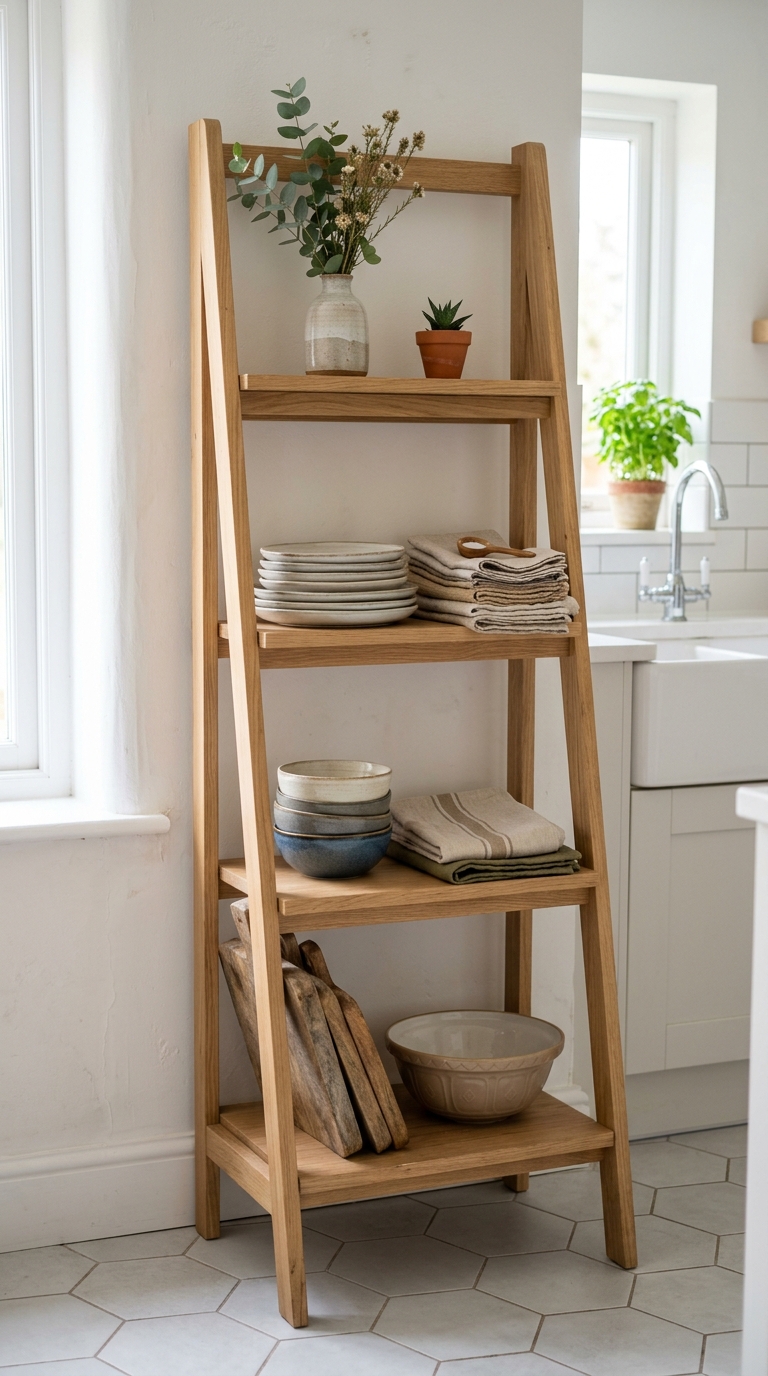
A freestanding ladder shelf, leaned against an open wall rather than mounted, adds open storage to a kitchen without any drilling at all. These units usually have three to five graduated shelves and work well in a dining nook or a stretch of kitchen wall that has no cabinets.
This idea is one of the easiest to try since it requires no installation and can be moved if you change your mind about the layout. Use the bottom shelves for heavier items like a stack of plates or a small appliance, and the top for lighter decor like a vase or a stack of linen napkins. Because the ladder shape narrows toward the top, this naturally encourages fewer items on the higher shelves, which keeps the whole unit from looking overloaded.
8. Full Wall Shelving
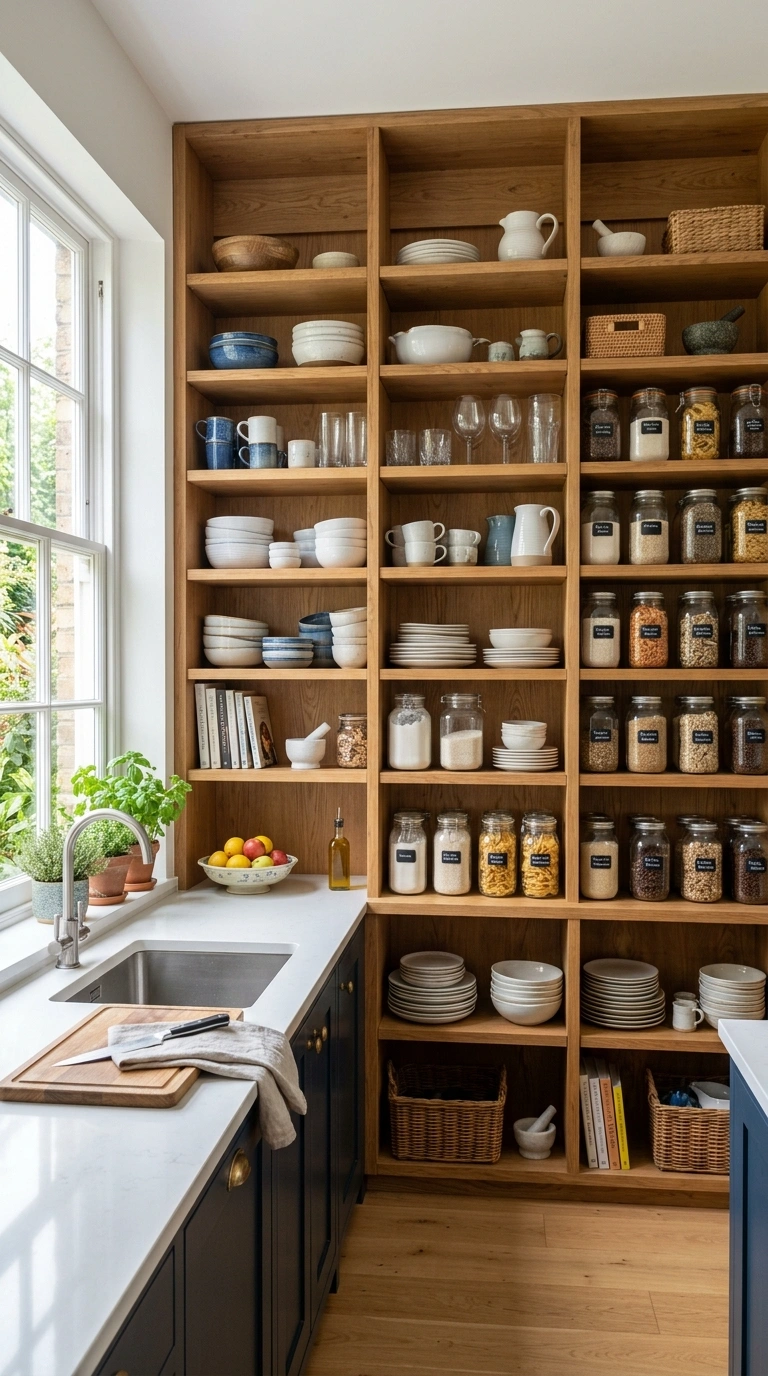
For kitchens that want to skip upper cabinets entirely, a full wall of open shelves from counter to ceiling creates a dramatic, all-storage feature wall. This works best in kitchens with good natural light, since an all-open wall can feel heavy if the room is already dim.
Use the lower shelves for everyday dishes within easy reach, and reserve the top shelves for items used less often, like serving platters or a stand mixer. Keep the shelf material consistent from top to bottom, matching wood tones or matching brackets, so the whole wall reads as one cohesive feature rather than a random stack of shelves. Because this idea removes so much closed storage, pair it with a full pantry or a hidden cabinet elsewhere in the kitchen to store the less attractive essentials.
9. Marble Shelf Accent
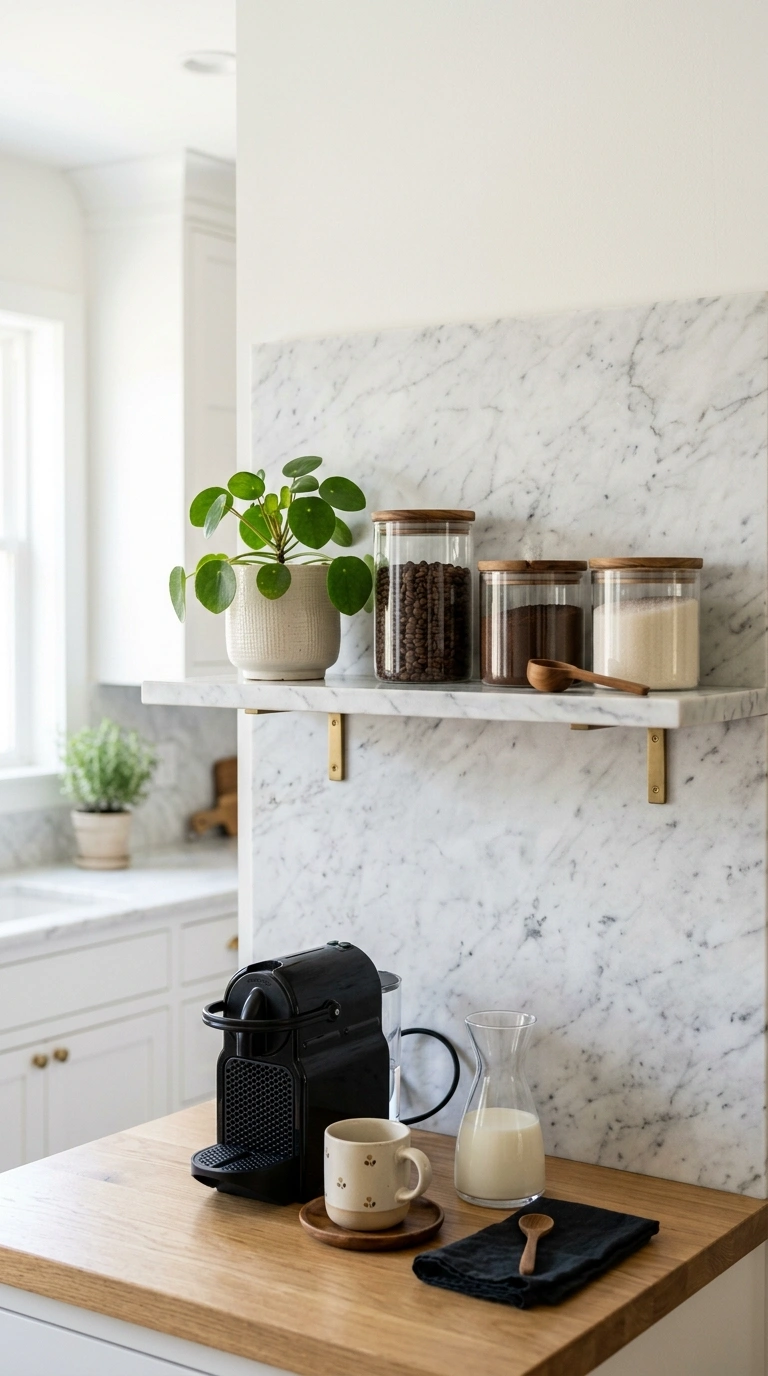
A single shelf cut from real or faux marble adds a touch of texture that wood or metal cannot match. Because marble is heavier than other materials, this idea works best as one accent shelf rather than an entire wall, often placed above a coffee station or a small display area.
Mount the shelf with brackets rated for extra weight, and keep the styling minimal, a few glass jars, a small plant, or a stack of two or three cookbooks. The natural veining in the marble already adds visual interest, so resist the urge to fill every inch of space. This idea works especially well in kitchens with marble countertops or a marble backsplash, since it ties the materials together without needing a full remodel.
10. Copper Pot Display
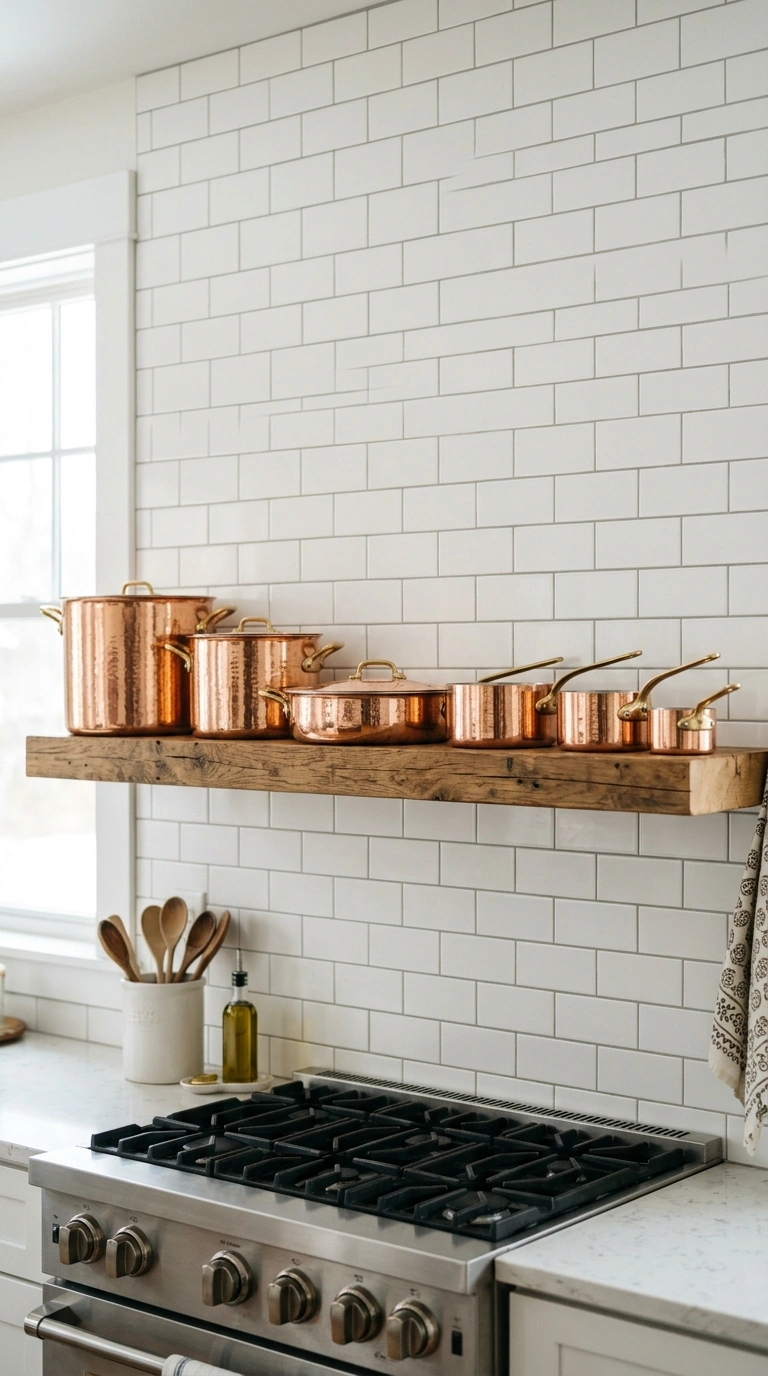
Instead of tucking copper cookware into a cabinet, open shelves let you display it as part of the kitchen’s look. Copper pots and pans develop a warm patina over time, and grouped together on a shelf, they add color and shine that plain dishware cannot match.
Place this display on a shelf near the stove for practical reach, or slightly higher if the pots are more for looks than daily use. Arrange them by size, largest at the back or bottom, so smaller pieces do not get hidden behind bigger ones. A light polish every few months keeps the copper looking rich instead of dull. This idea works particularly well in kitchens with warm wood tones or brass hardware, since the copper ties right into that same color family.
11. Open Shelf Lighting
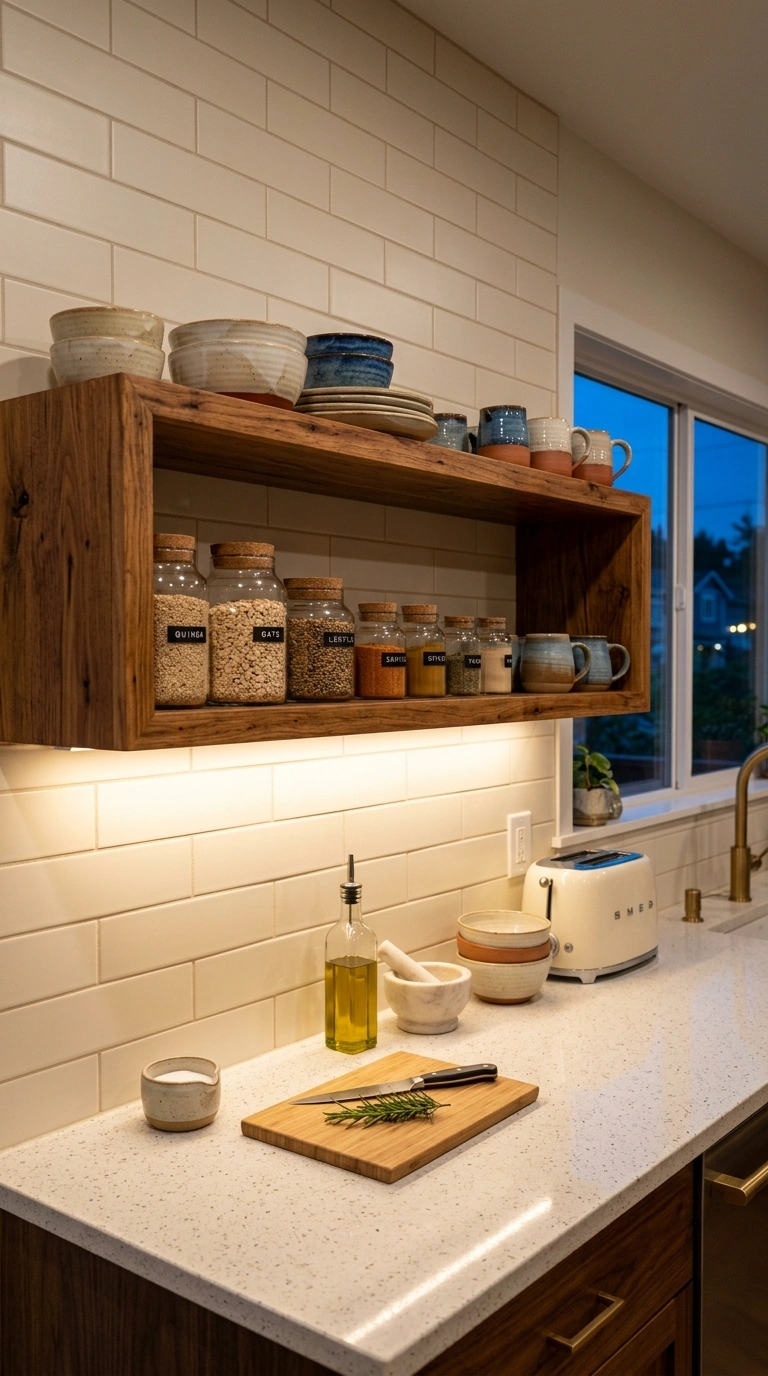
Adding a thin strip of LED lighting under each open shelf turns basic storage into a lit display, especially useful in a kitchen that does not get much natural light. This idea works well above a counter or a coffee station where you want the shelf contents to stand out at night.
Choose warm white lighting rather than cool white, since warm tones flatter both wood shelves and the dishes sitting on them. Run the light strip along the front edge under each shelf so it washes down over the items below rather than shining straight out. This idea pairs especially well with glass jars or clear glassware, since the light catches and reflects through them for a soft glow. Even a small lighting upgrade like this can make open shelving feel like a real design feature instead of just storage.
12. Woven Basket Shelves
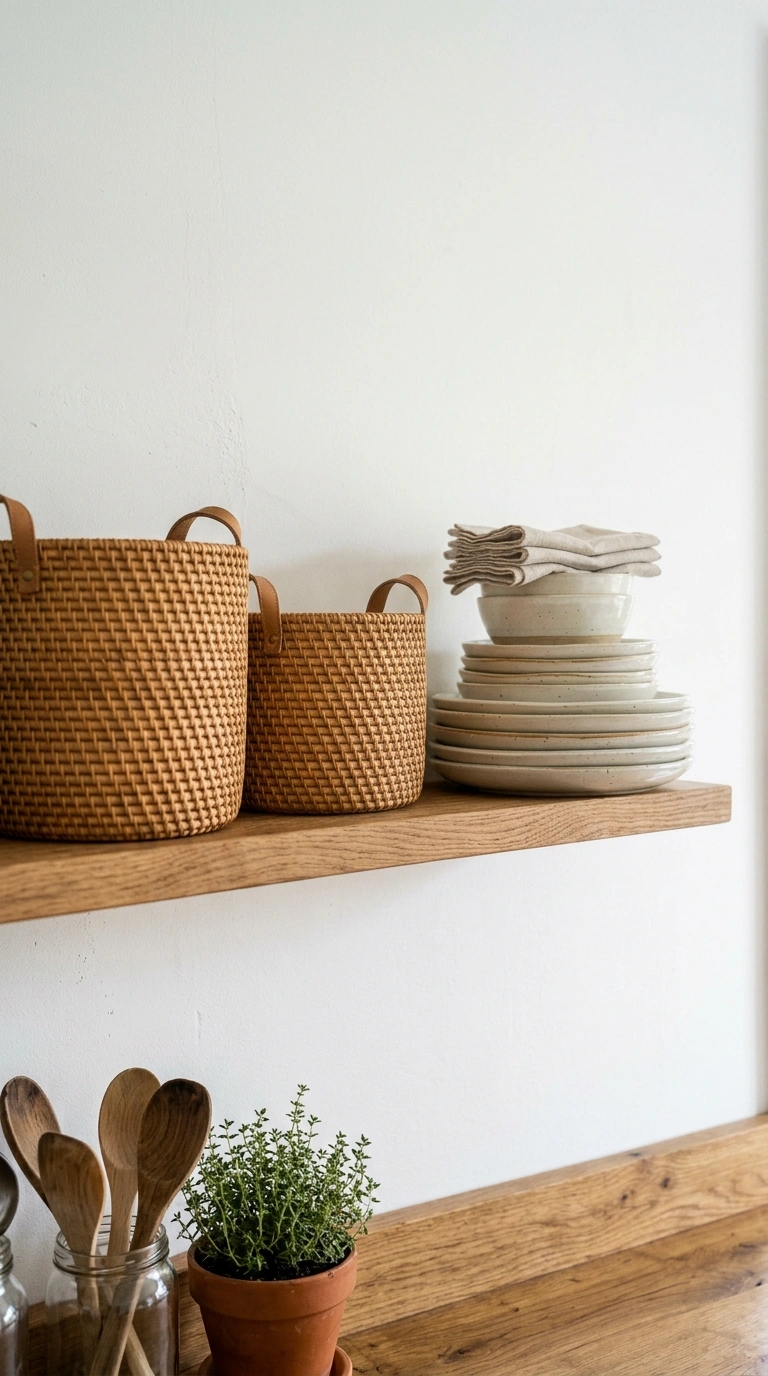
Not every item on an open shelf needs to be fully visible. Woven baskets placed on a shelf hide smaller, less attractive items like snack bags or spare kitchen towels while still keeping the overall look warm and textured. Rattan or seagrass baskets add a natural touch that pairs well with both modern and farmhouse kitchens.
Use one or two baskets per shelf rather than filling every open spot, so the shelf still shows some of its wood or metal frame. Label each basket loosely with a small tag if the contents are not obvious from the outside. This idea is especially useful for renters or small households who want the open look of shelving without every single item on display. Woven texture also softens a kitchen that leans heavily on hard surfaces like tile and stone.
Also read: 19 Cottagecore Kitchen Ideas Full of Cozy Vintage Charm
13. Plants On Shelves
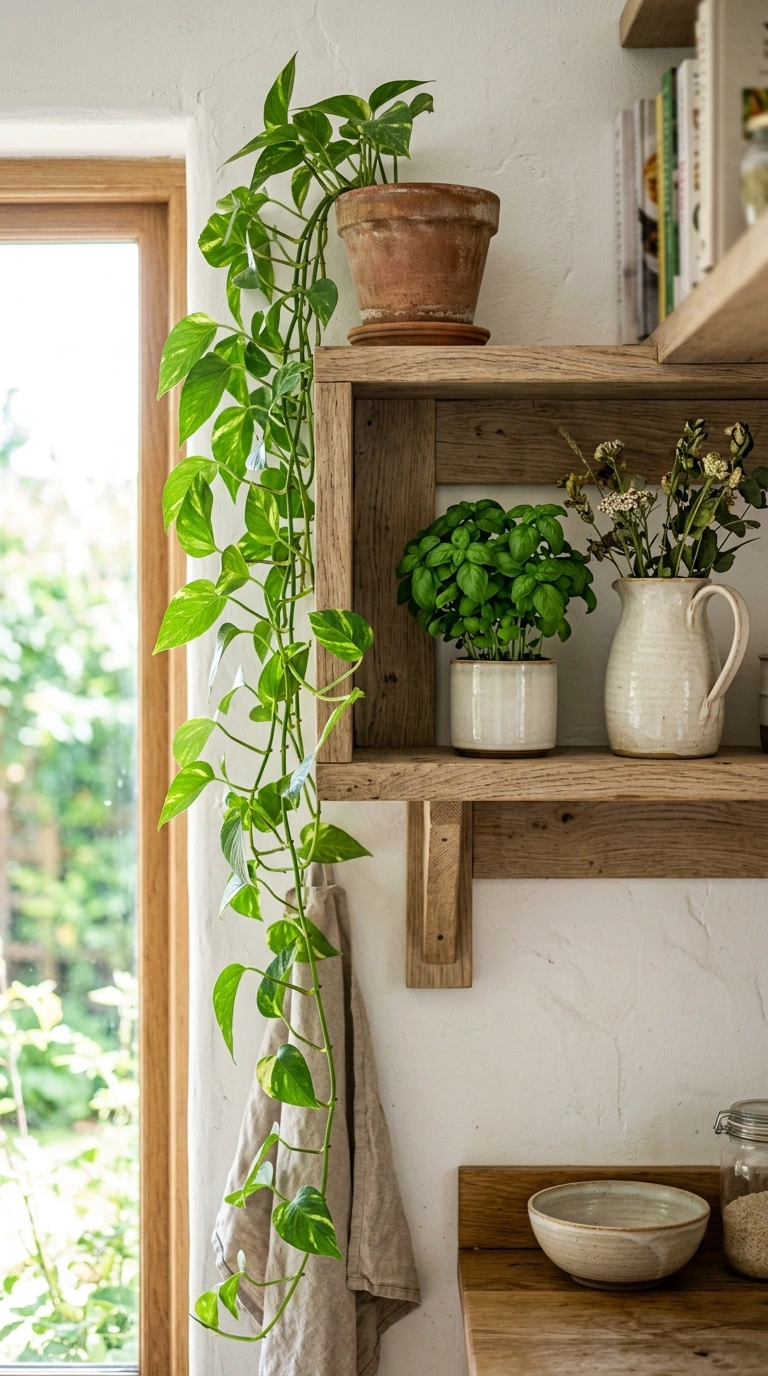
A small plant or two on an open shelf brings color and life into a kitchen in a way that dishes and jars cannot. Trailing plants like pothos work well on a higher shelf where the vines can hang down along the wall, while a small potted herb suits a lower shelf closer to where you cook.
Choose a spot with at least some natural light, since most kitchens do not get the strongest sun exposure compared to other rooms. Group the plant with one or two other items, like a small cookbook or a ceramic pitcher, rather than placing it alone on an otherwise empty shelf. Water on a set schedule since kitchen plants are easy to forget when they are just part of the background. A few plants spread across open shelving instantly make the space feel less sterile.
14. Symmetrical Shelf Styling
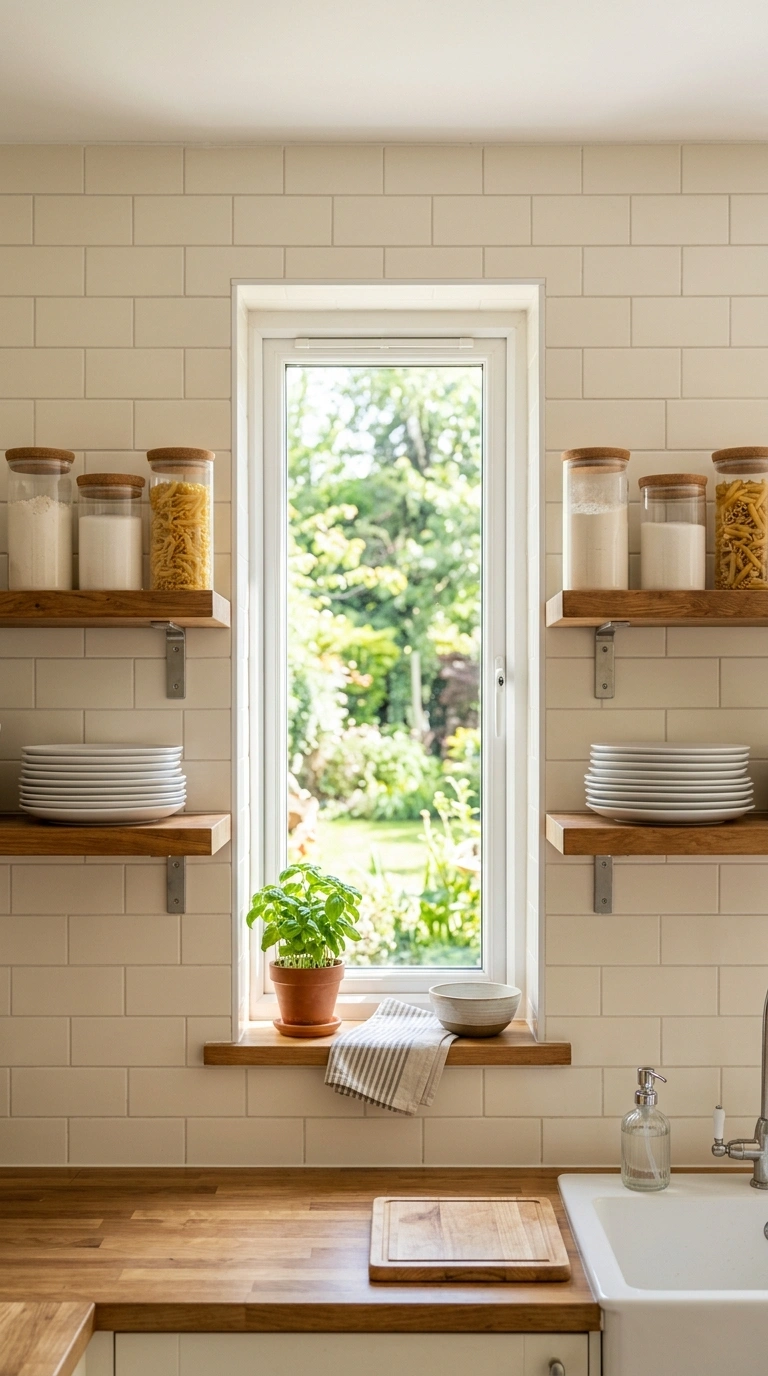
Instead of a casual, mixed arrangement, some kitchens use open shelves in a mirrored, symmetrical layout, matching stacks of plates on either side of a central item like a clock or a piece of art. This approach suits kitchens with a more classic or traditional style rather than a relaxed farmhouse look.
Use two identical shelves flanking a window, a range hood, or a piece of wall art, and style each side with the same items in the same arrangement. This symmetry works best with simple, matching dishware, like all-white plates or the same set of glass canisters, rather than a mix of collected pieces. Because the eye naturally notices when symmetry is off by even a little, take a step back and check both sides from across the room before calling it finished.
15. Rustic Beam Shelves
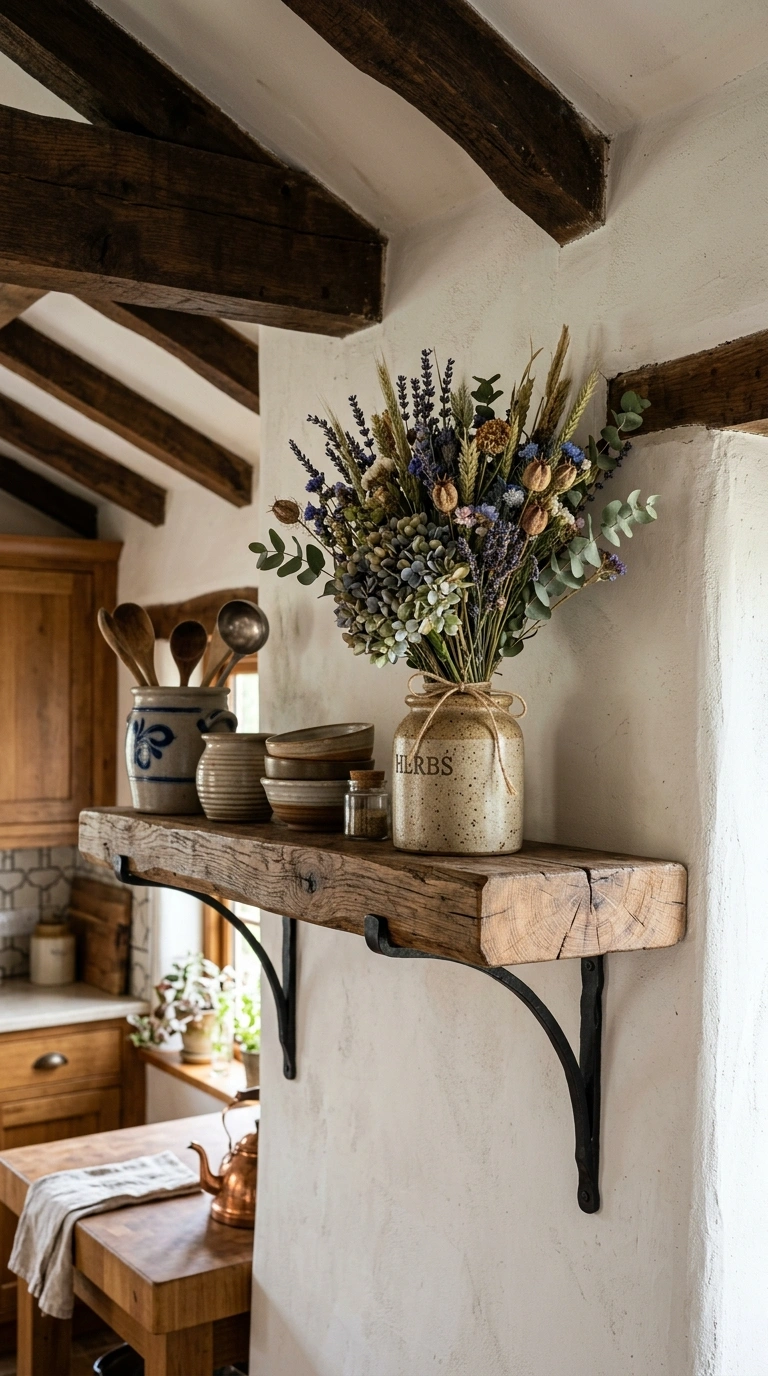
Thick wood shelves, cut to look like reclaimed barn beams, add serious character to a kitchen that leans toward a farmhouse or rustic style. These shelves are noticeably thicker than standard floating shelves, often three to four inches deep, and the rough-cut edges are usually left unfinished or lightly sanded.
Mount these shelves with heavy-duty brackets, either exposed iron ones for a more industrial look or hidden brackets if you want the beam to appear to float. Style them with heavier, more rustic pieces, wood cutting boards, stoneware crocks, or dried flower bunches, since delicate glass items can look out of place against the rough wood texture. This idea works especially well in kitchens with exposed ceiling beams or wood floors, since the shelf material echoes what is already in the room.
Also read: 18 Moody Blue Kitchen Ideas for a Bold, Dramatic Refresh
FAQs
Do open shelves make a kitchen look messy?
Not if they are styled with a little restraint. Grouping items by height, using a limited color palette, and leaving some empty space between groups keeps open shelves looking tidy.
What is the best material for open kitchen shelves?
Solid wood is the most popular choice because it fits almost any kitchen style, but marble, metal, and painted wood all work well depending on the overall look you want.
Do open shelves need more cleaning than cabinets?
Yes, items on open shelves collect dust faster since they are not enclosed. A quick wipe every couple of weeks keeps them looking fresh.
Can I mix open shelves with regular cabinets?
Absolutely. Many kitchens use open shelving for a few display items and keep closed cabinets for everyday dishes and less attractive essentials.
Open shelving is not about showing off every dish you own. It is about picking a few things worth looking at and giving them room to breathe. Start with one shelf, style it with restraint, and let the rest of the kitchen follow that same lead.