
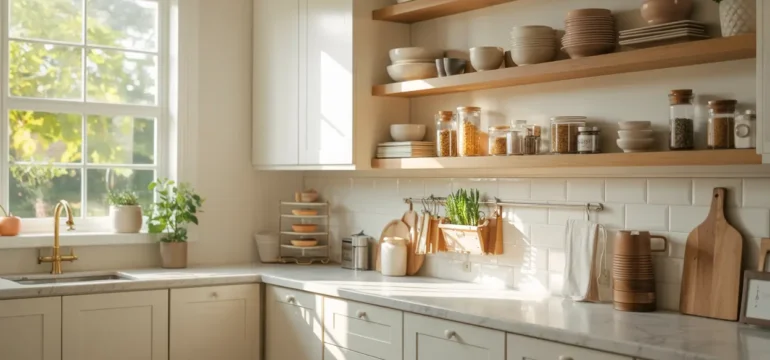
If your kitchen feels like it shrinks a little more every year, you are not imagining it. Between gadgets, groceries, and the pots you swear you use, a small kitchen fills up fast. The good news is that most of the fix is not about buying a bigger house. It is about using the space you already have in smarter ways. Walls, doors, corners, and even the toe-kick under your cabinets can all hold more than you think. In this list, you will find twenty one storage ideas that real small kitchens actually use, not just show off in photos. Some take an afternoon, some take twenty minutes, and none of them require knocking down a wall. Pick a few that fit your kitchen and your budget, and start there.
1. Vertical Wall Racks
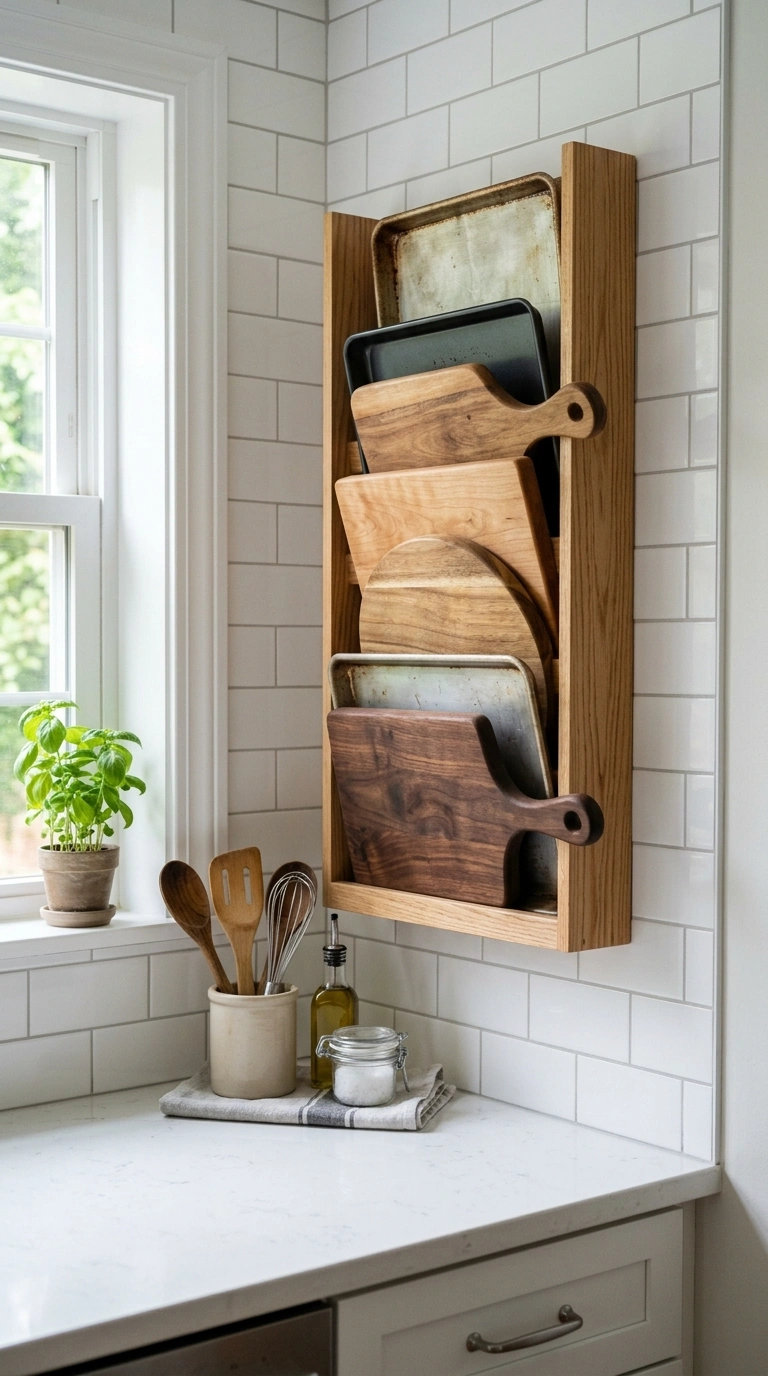
When counter space runs out, the wall is still wide open. A vertical wall rack made of wood or black metal can hold cutting boards, baking sheets, and trays standing up instead of stacked flat where they get buried. Mount it on any open stretch of wall near the stove or prep area, using screws into studs so it can hold real weight. Slim shelves with divided slots work best because they keep each item from sliding into the next one.
This idea works especially well in galley kitchens where cabinet space is limited on both sides. Choose a rack that matches your cabinet finish for a built-in look, or go with raw wood for a warmer, farmhouse feel. Once it is up, group items by size so the tallest trays sit in the back slot. You can hang it the same day you buy it, and you will notice the extra counter space immediately.
2. Under-Sink Bins
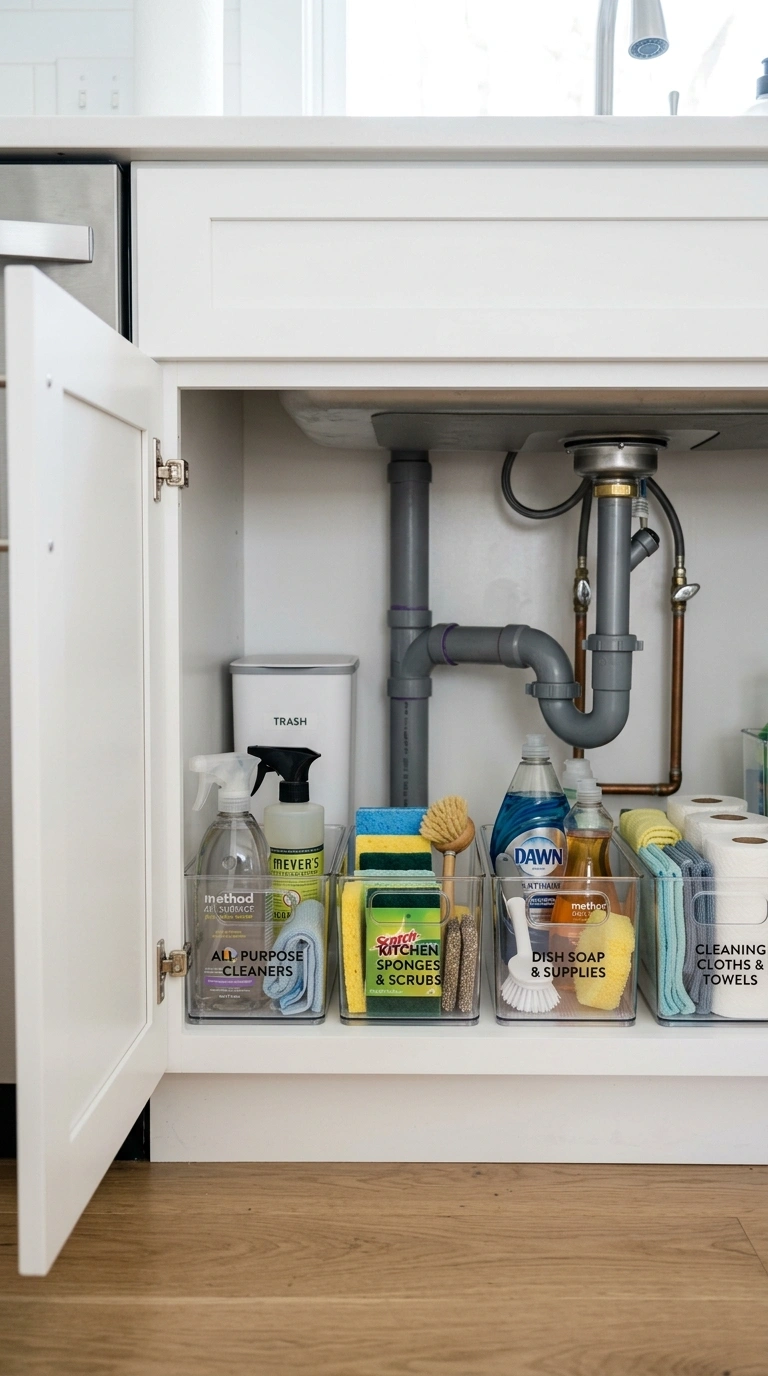
The area under the sink is usually a tangle of cleaning bottles and stray sponges. Clear plastic bins or pull-out baskets turn that mess into an organized zone in under an hour. Measure the width around your pipes first, then pick bins that slide in on either side. Label each one, cleaning supplies, trash bags, dish soap refills, so everything has a home.
This works in any kitchen, but it makes the biggest difference in small ones where under-sink storage is often the only extra space available. Add a small tension rod above the bins to hang spray bottles by their trigger handles, freeing up even more room below. Wipe down the cabinet floor first so you are not just organizing around old spills. Once the bins are in place, this cabinet becomes one of the easiest spots in the kitchen to keep tidy.
3. Pull-Out Pantry
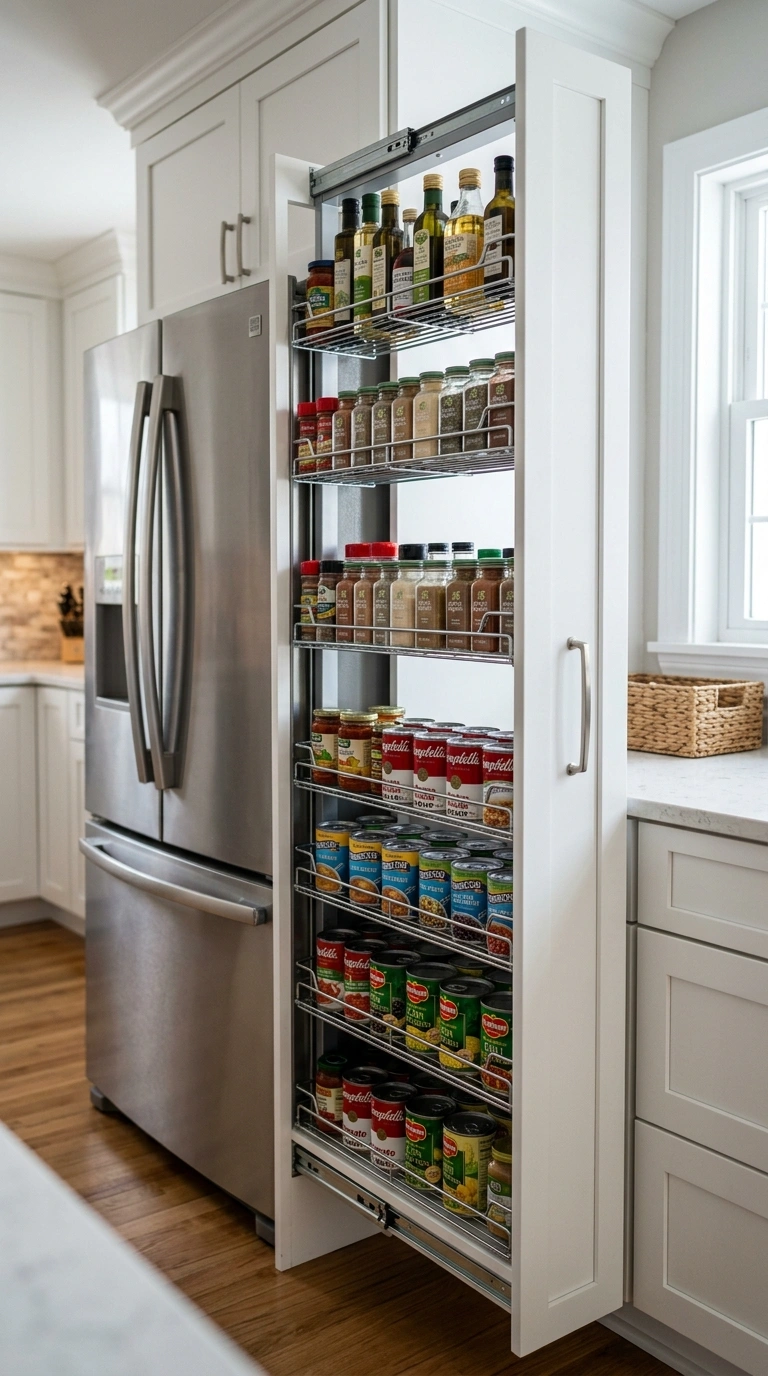
A narrow gap between the fridge and the wall is often wasted space, but a slim pull-out pantry can turn that gap into serious storage. These units are usually eight to twelve inches wide and roll out on tracks, holding canned goods, spice jars, and snack boxes on both sides. Many hardware stores sell ready-made versions that need no real installation, just enough clearance to slide the unit into place.
This idea is perfect for small kitchens where a full pantry closet is not possible. Look for a pull-out with adjustable shelves so you can fit taller bottles on one level and shorter jars on another. Add a couple of small bins inside for loose items like tea bags or spice packets so nothing rolls around when you pull it open. Once it is in, this narrow strip becomes one of the most useful spots in the whole kitchen.
4. Magnetic Knife Strip
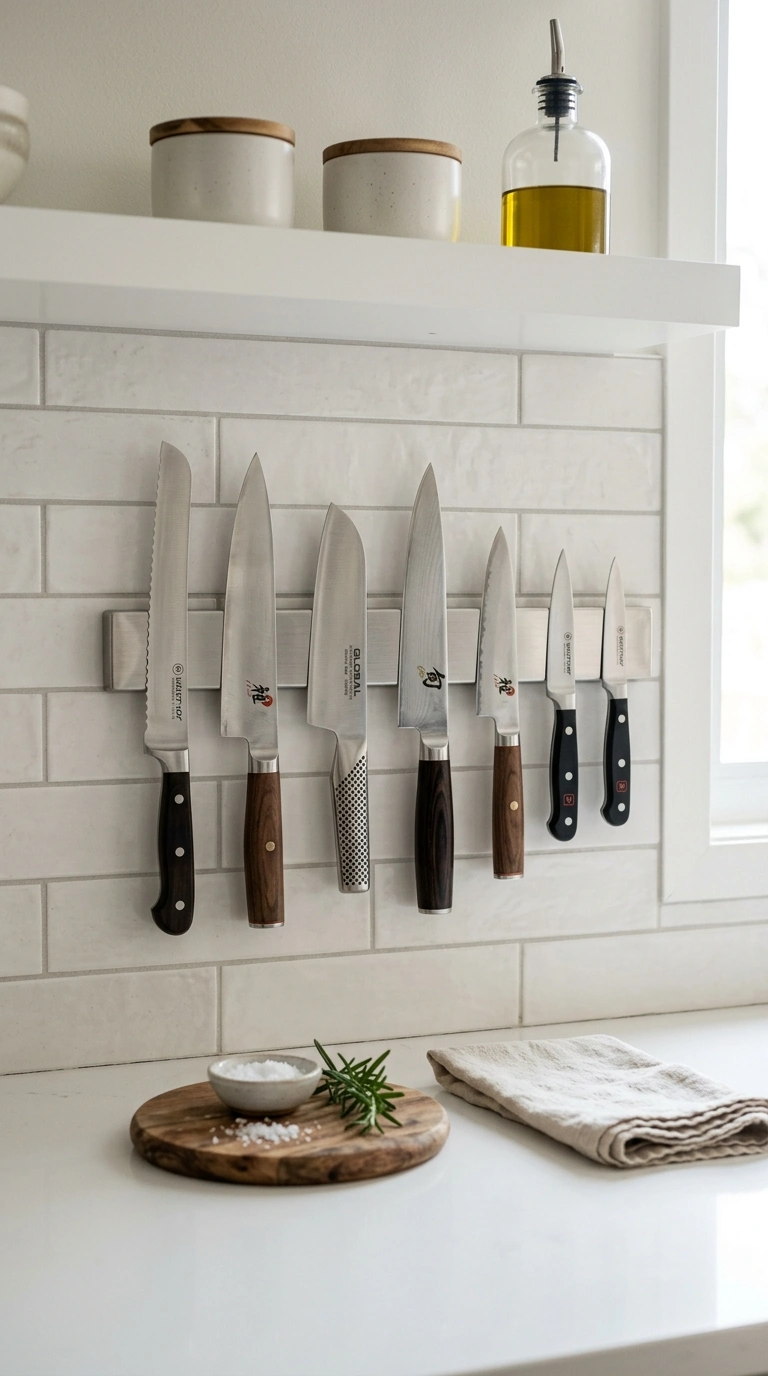
Knife blocks take up valuable counter space that a small kitchen cannot spare. A magnetic strip mounted on the wall above the counter or backsplash holds knives in plain sight while keeping the counter clear. Choose a strip in brushed steel or black to match your hardware, and mount it at a height where the blades sit above the counter edge, out of reach of small hands if needed.
This idea works anywhere near the main prep area, but avoid placing it directly above the sink where water splashes can cause rust over time. Arrange the knives from largest to smallest for an easy, tidy look, and consider adding a second short strip nearby for scissors or metal spatulas. Because the blades stay visible and dry between uses, this method actually helps knives stay sharper than tucking them away in a drawer.
5. Corner Lazy Susan
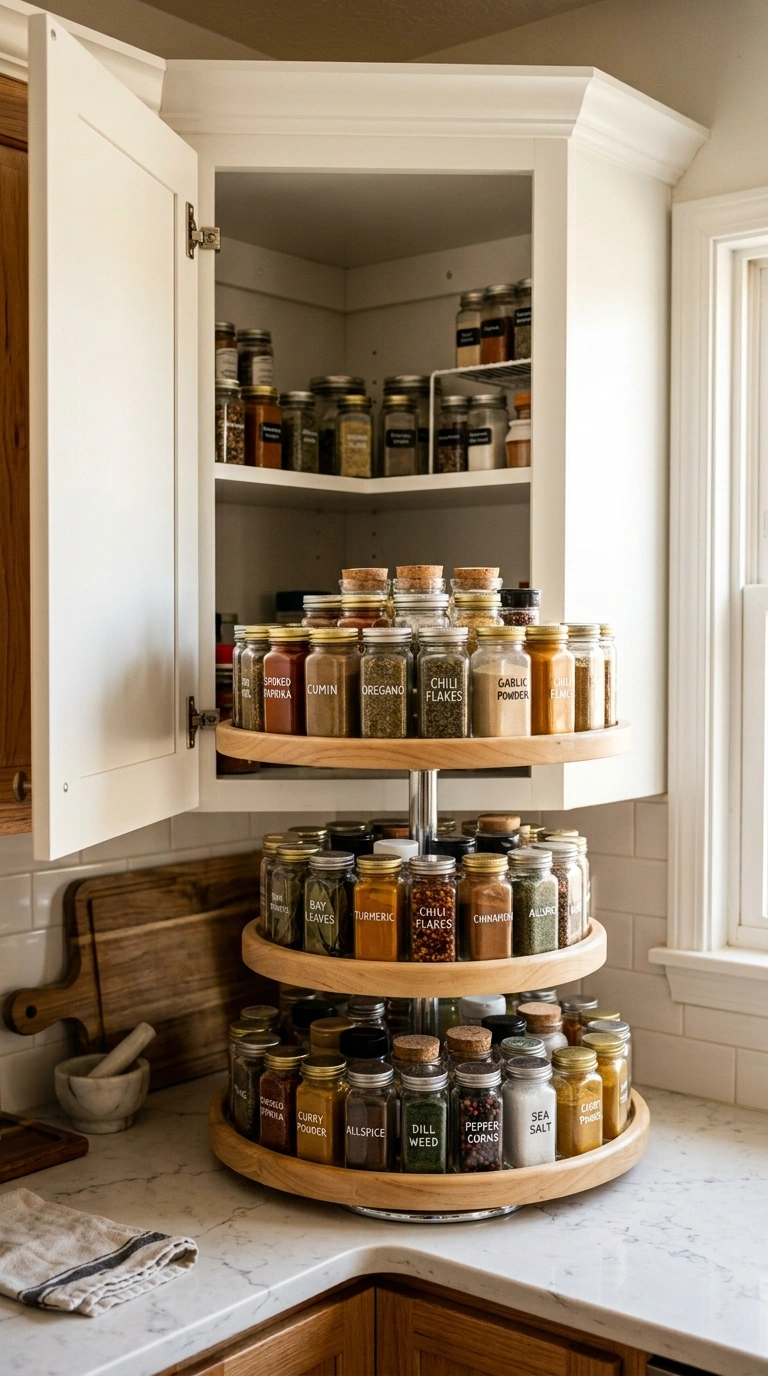
Corner cabinets are notorious for swallowing items whole. A lazy susan turntable solves this by letting you spin everything into view instead of digging blindly into the back. Round two-tier turntables work well for spices and small jars, while larger flat ones suit pots and mixing bowls. Most slide right onto existing cabinet shelves without any tools.
This idea is one of the simplest upgrades for any small kitchen with an awkward corner cabinet. Group similar items on each tier, oils and vinegars on one level, baking supplies on another, so a quick spin brings exactly what you need to the front. Avoid overloading the outer edge, since heavy items can throw off the spin. Once it is set up, that corner cabinet stops being the place where things go to disappear.
6. Hanging Pot Rail
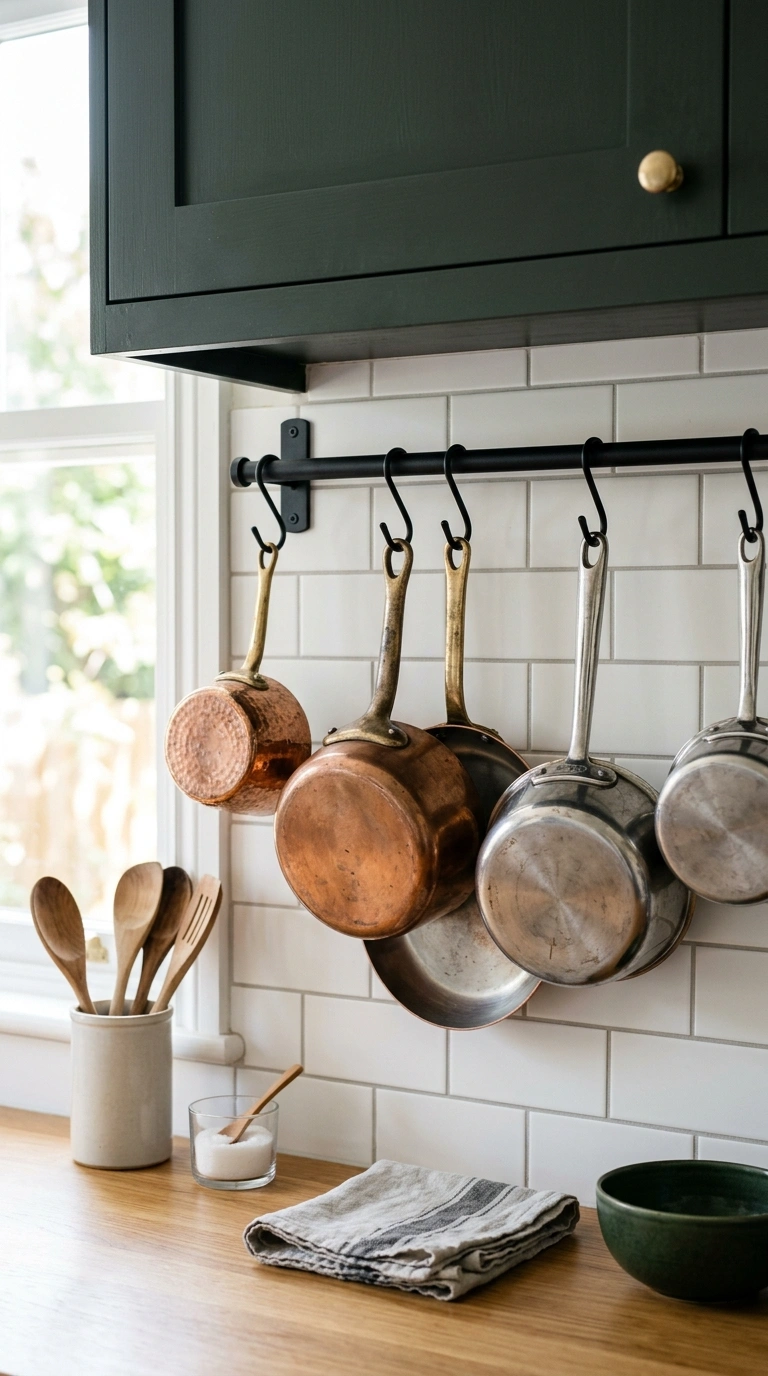
If your cabinets are stuffed with pots and pans, a hanging rail mounted below an upper cabinet or on an open wall can clear that space fast. Use S-hooks to hang pots by their handles, arranging them by size so the largest ones sit lower and do not block your view of the smaller ones above.
This idea suits kitchens with at least a little wall height to spare, and it turns everyday cookware into part of the decor. Choose a black or brass rail depending on your other hardware finishes, and mount it into studs since cast iron pans are heavier than they look. Leave a little space between each hook so pots do not knock into each other when you grab one. This single change can free up an entire lower cabinet.
7. Toe-Kick Drawers
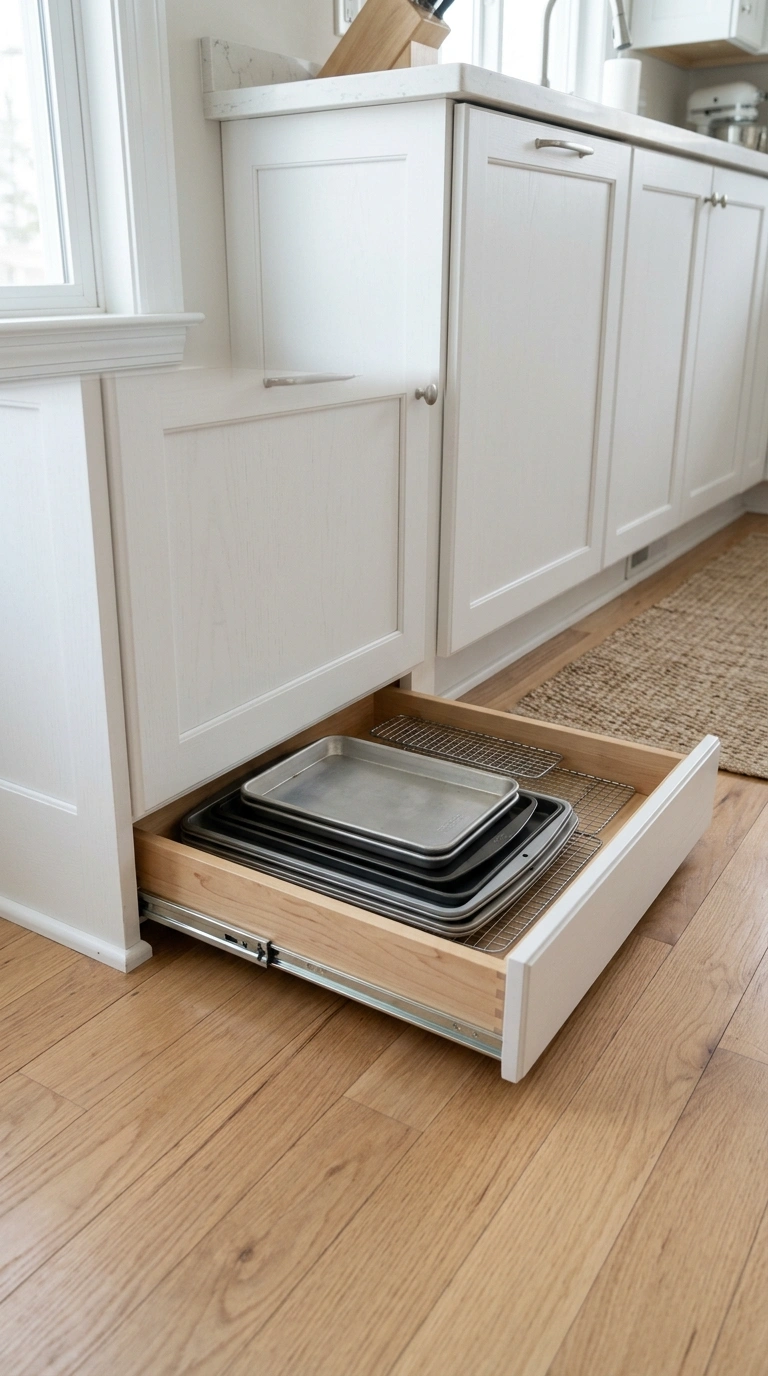
The empty gap under your lower cabinets, right at floor level, is almost always wasted space. A toe-kick drawer turns that strip into a shallow storage spot for flat items like baking sheets, cutting boards, or extra napkins. Some are custom built by a cabinet installer, while ready-made toe-kick drawer kits can be added to existing cabinets with basic tools.
This idea is especially good for small kitchens where every inch counts and cabinet fronts already look full. Because the drawer sits so low, it works best for lightweight, flat items rather than heavy cookware. Add a simple pull tab or finger groove so it opens easily without hardware sticking out and catching on socks or mop heads. Once it is installed, this once-forgotten strip becomes real, usable storage.
8. Door-Back Storage
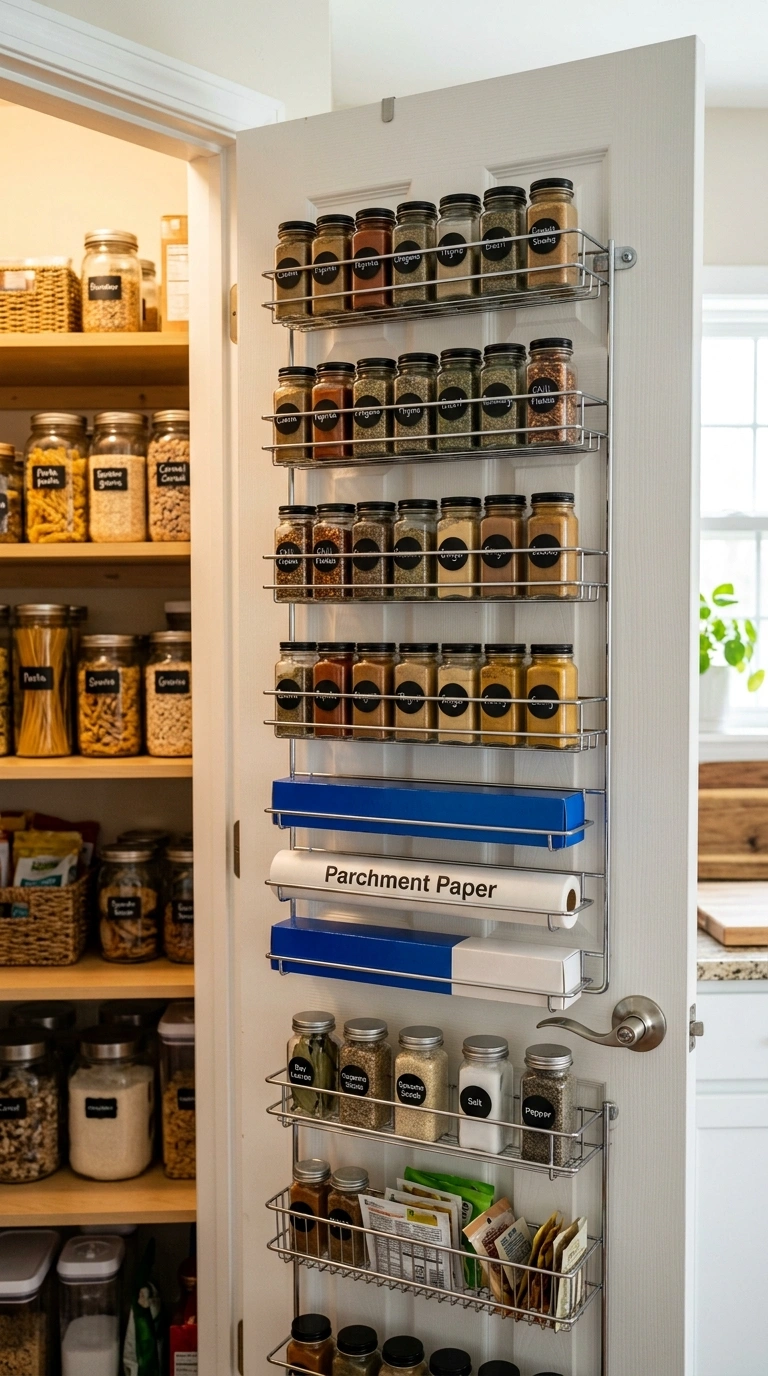
The inside of a cabinet or pantry door is one of the most overlooked spots in any kitchen. Over-the-door racks or mounted wire baskets can hold spice jars, foil rolls, cutting boards, or cleaning supplies without taking up a single inch of shelf space. Most attach with adhesive hooks or a few small screws, no drilling into the door itself required for lighter versions.
This works especially well on pantry doors, under-sink cabinet doors, and even the inside of a broom closet. Measure the door depth first so the rack does not bump into shelves when the door closes. Keep heavier items lower on the rack so the door is not pulling awkwardly at the hinges. This is one of the fastest ways to add storage without touching a single existing shelf.
9. Stacked Wire Baskets
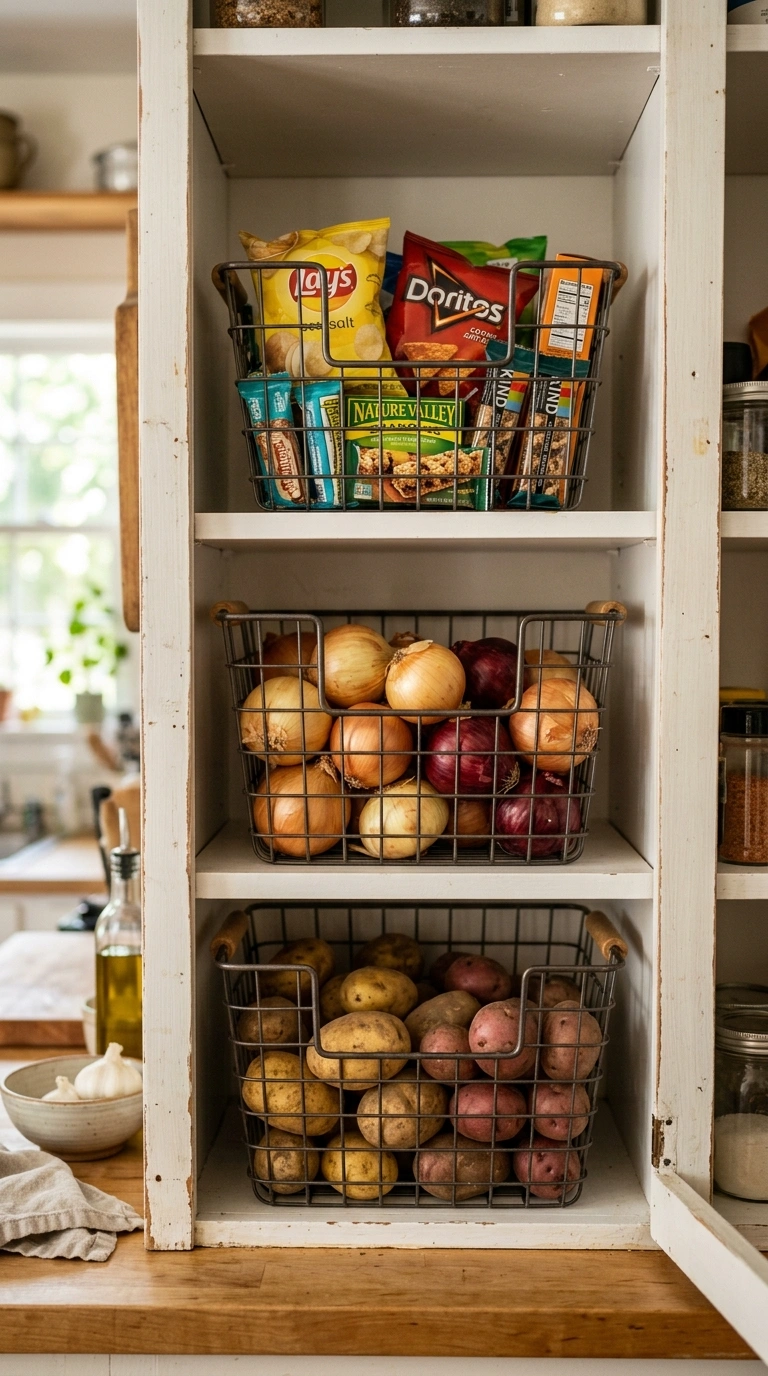
Open wire baskets stacked two or three high inside a cabinet or pantry create instant, visible storage for produce, snacks, or packaged goods. Look for baskets with sturdy metal frames and rounded edges so they stack evenly without wobbling. Wood or black metal frames fit most kitchen styles, from farmhouse to modern.
This idea is ideal for small kitchens without a walk-in pantry, since stacked baskets make the most of vertical cabinet space. Store heavier produce like potatoes and onions on the bottom basket and lighter snacks or bread up top. Label each basket if you are sharing the kitchen with a family, so everyone knows exactly where things belong. Because the baskets are open, you can see what is running low at a glance instead of digging through bags.
Also read: 19 Cottagecore Kitchen Ideas Full of Cozy Vintage Charm
10. Rolling Kitchen Cart
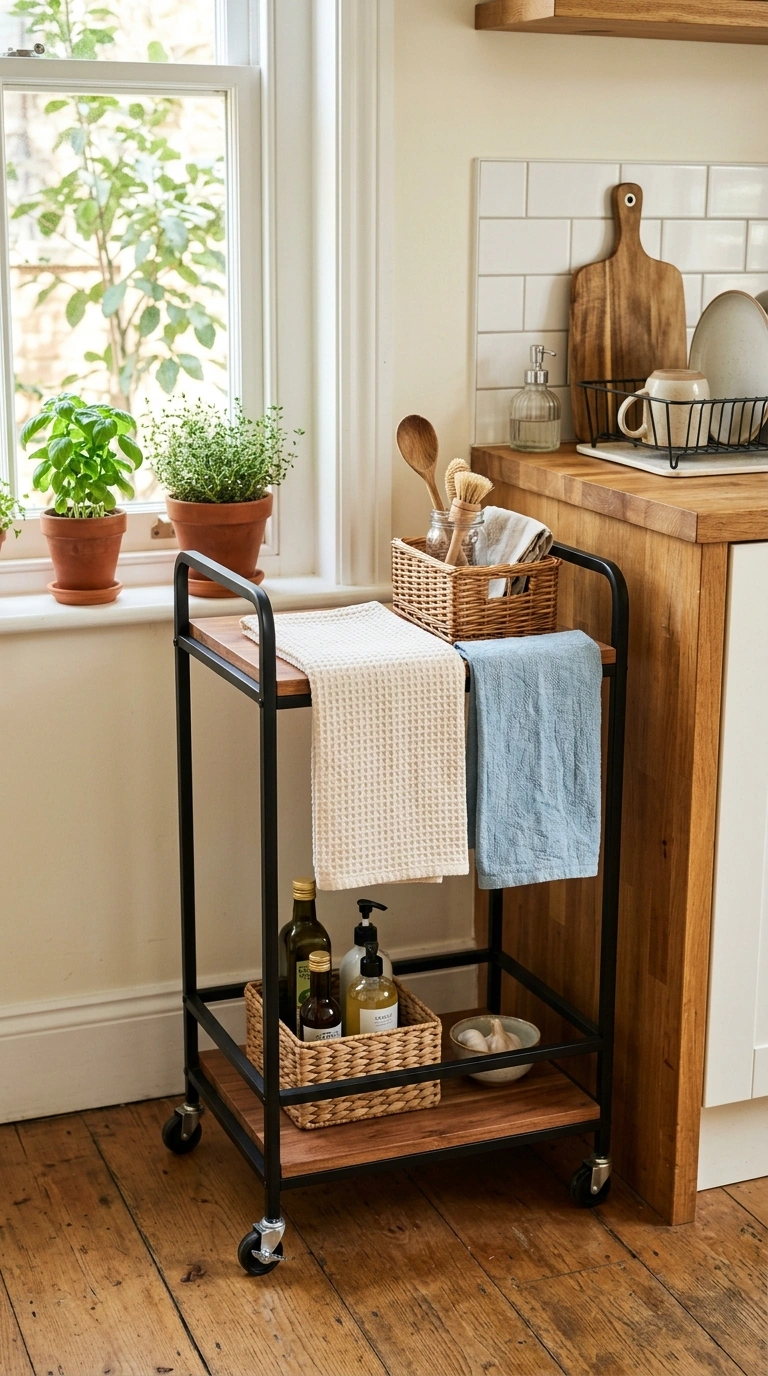
A slim rolling cart adds counter space and storage without becoming a permanent fixture. Choose one with two or three shelves, ideally in wood or metal to match your kitchen’s finishes, and pick a narrow model that can slide into a gap between the counter and a wall when it is not needed.
This idea is one of the most flexible on this list because the cart can move wherever it is needed most, as extra prep space during cooking or as a coffee station the rest of the day. Add a small basket or drawer insert on one shelf for towels or utensils. Lock the wheels when the cart is parked so it does not roll away during use. A good cart often becomes the most-used piece of furniture in a small kitchen.
11. Ceiling Pot Rack
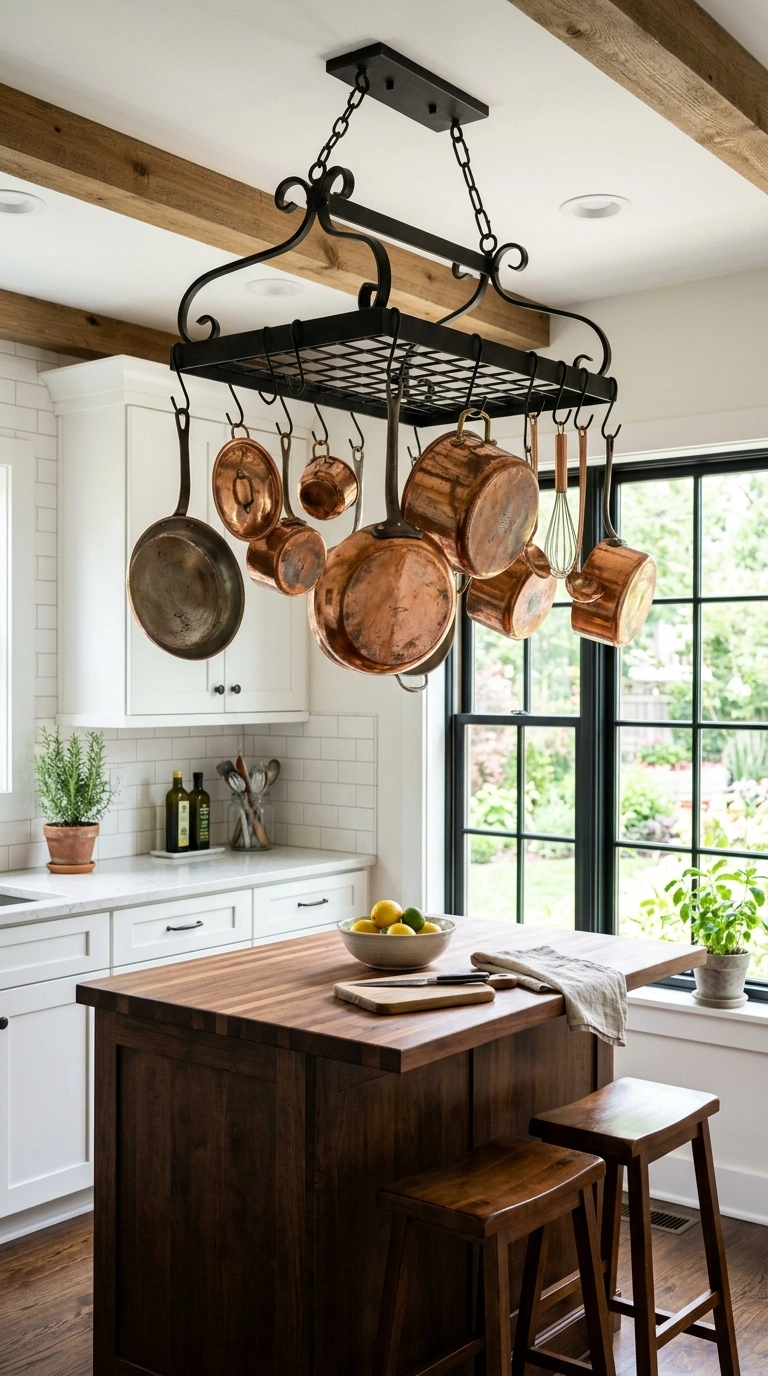
For kitchens with a little extra ceiling height, a hanging pot rack over an island or open counter area frees up an enormous amount of cabinet space. Choose a rack in wrought iron or brushed steel, and hang it using ceiling hooks anchored into a joist, not just drywall, since cast iron cookware adds up in weight quickly.
This idea works best above an island or a section of counter that is not directly under a light fixture. Hang the heaviest pots closest to the center for balance, and use S-hooks so pieces can be added or removed easily. Keep the rack at a height where an average adult can reach items without ducking, usually around seventy inches from the floor. Beyond the storage benefit, a well-arranged pot rack becomes a real focal point in the room.
12. Tiered Shelf Organizers
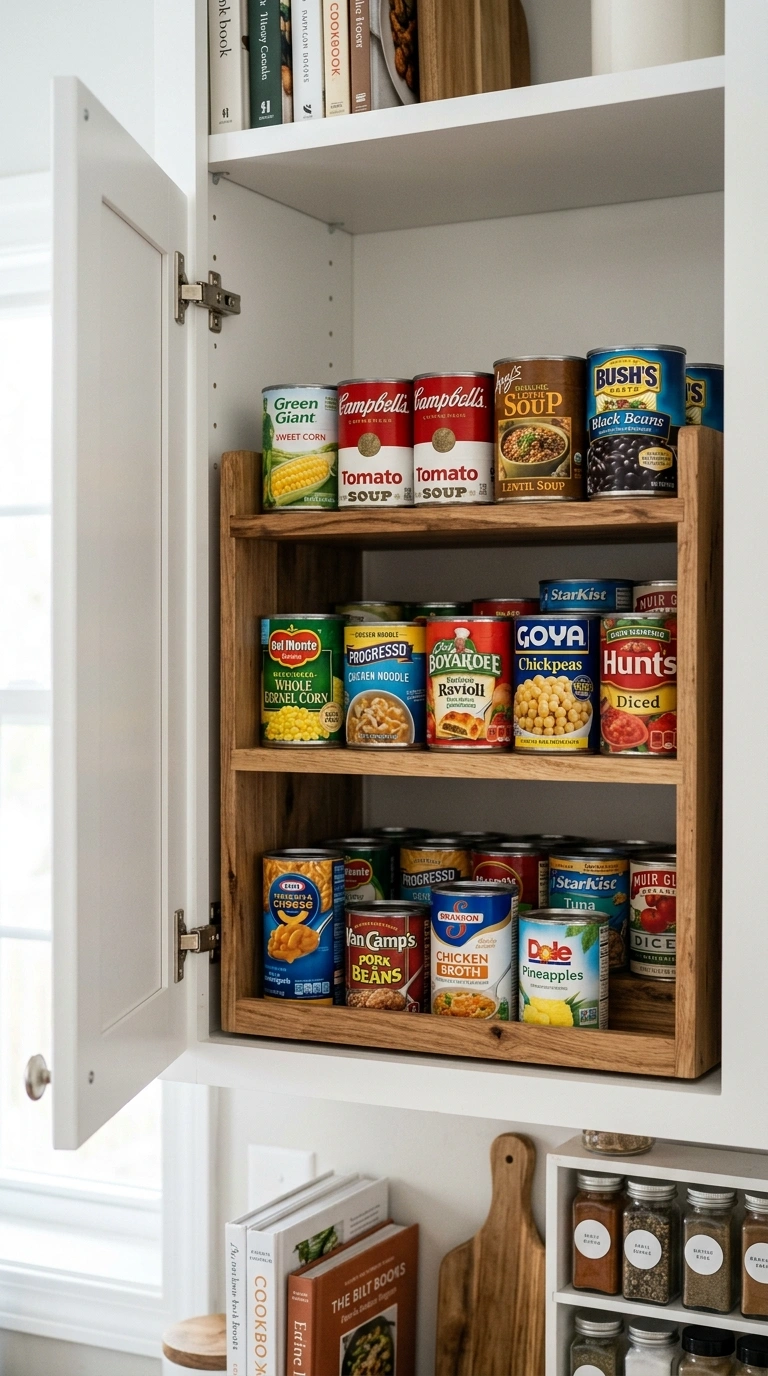
Inside a standard cabinet, a lot of space above each stack of plates or bowls goes unused. Tiered shelf organizers, small metal or wood risers that create a step effect, let you stack two levels of items in the same cabinet without one blocking the other. They come in various widths to match spice cabinets, plate cabinets, or can storage.
This idea is one of the cheapest and quickest fixes for a cluttered small kitchen. Use one tier for canned goods so labels stay visible from the front, and another in the spice cabinet so small jars in the back are not hidden behind taller ones. Because these organizers sit right on your existing shelves, there is no installation at all, just place and load. Most people notice a real difference in five minutes.
13. Drawer Dividers
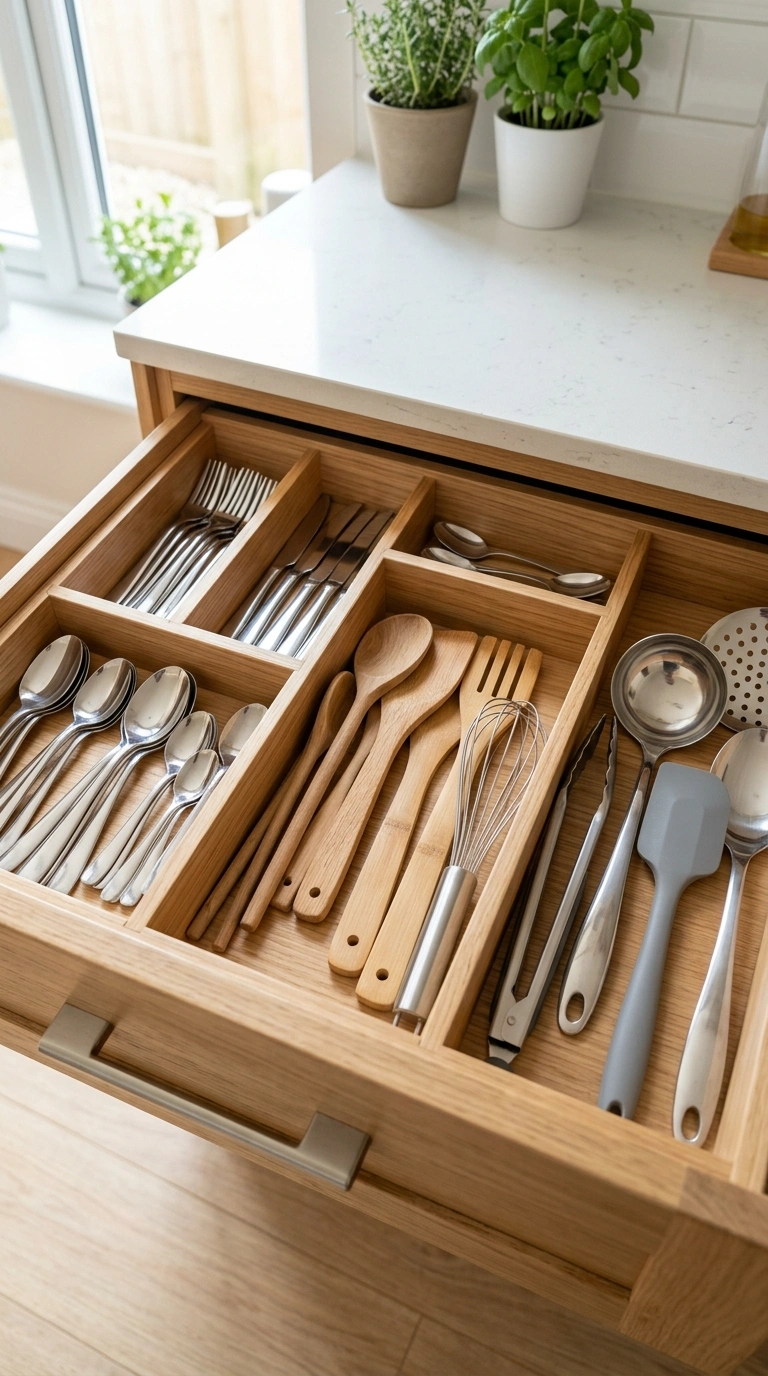
A junk drawer is not really junk if everything inside has its own slot. Adjustable drawer dividers split a single drawer into several neat sections for utensils, gadgets, and loose kitchen tools. Bamboo and plastic versions both work well, and adjustable ones can expand or shrink to fit drawers of different widths.
This idea fits every kitchen, but it matters most in a small one where every drawer needs to do double duty. Group items by how often you use them, everyday spoons and spatulas in the front sections, rarely used gadgets in the back. Measure your drawer’s inside width before buying so the dividers fit snugly without shifting every time the drawer opens. A well-divided drawer takes minutes to set up and stays organized for months without much upkeep.
14. Floating Corner Shelf
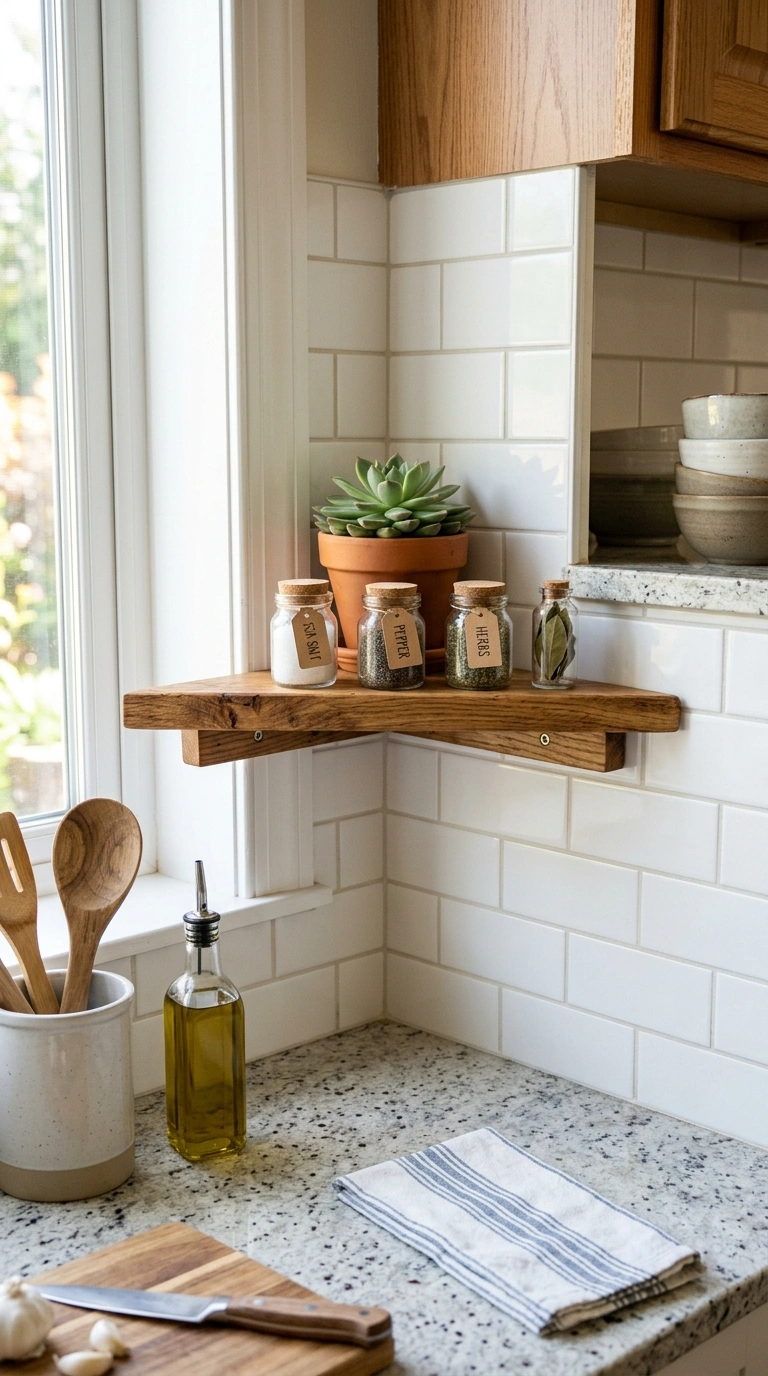
Corners above the counter, especially near a window or in an awkward angle where cabinets do not reach, are perfect spots for a small floating shelf. A single triangular or curved shelf mounted with hidden brackets can hold a few jars, a small plant, or a stack of bowls without eating into walking space.
This idea works well in kitchens where cabinets stop short of a corner, leaving blank wall behind the counter. Choose a shelf in a light wood tone to keep the corner from feeling heavy, and keep the items on it to just a few pieces so it does not become another clutter zone. Anchor the shelf securely since even small decor items add weight over time. This tiny addition can make an awkward corner feel intentional instead of empty.
15. Wall-Mounted Spice Rack
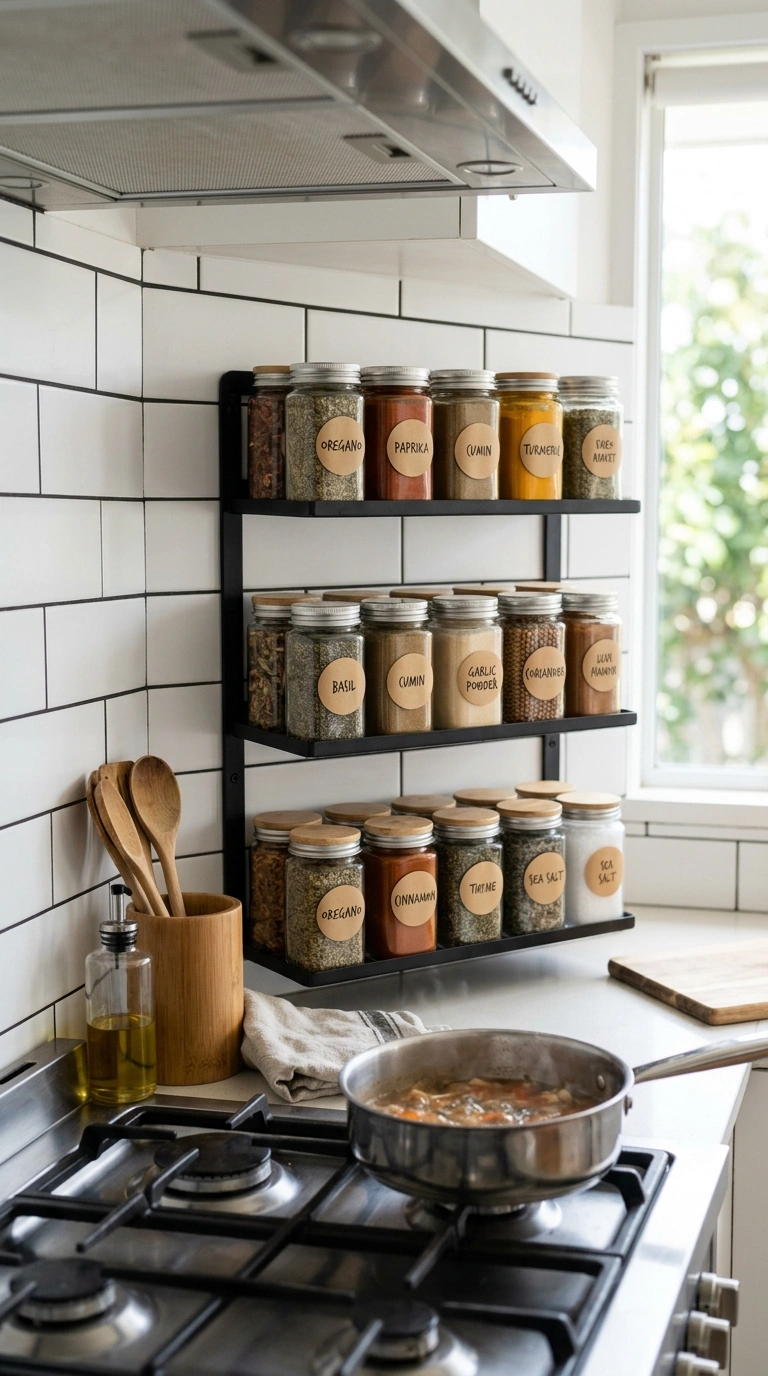
Spice jars scattered across a cabinet shelf are hard to find and easy to knock over. A wall-mounted spice rack, whether a single shelf or a tiered metal rack, keeps every jar visible and within reach right next to the stove. Choose a rack with a lip along the front edge so jars do not slide off during cooking.
This idea is best placed on the wall beside the stove or on the inside of a nearby cabinet door for a hidden version. Arrange jars alphabetically or by how often you use them, with everyday spices like salt and pepper at eye level. Use matching jars if you want a clean, uniform look, or keep original packaging for a more casual feel. Either way, this rack turns a cluttered drawer into a quick-grab station.
16. Open Cube Shelving
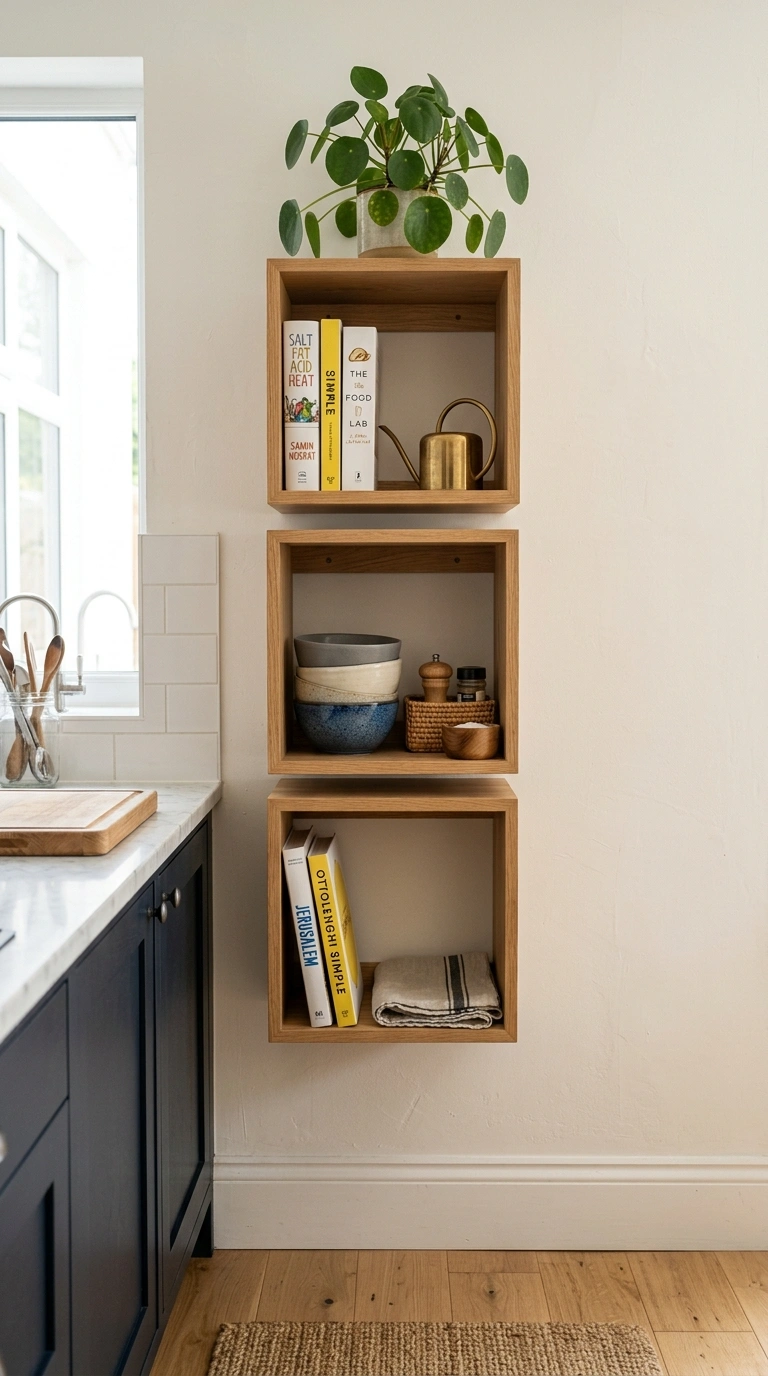
A small stack of open cube shelves, two or three squares wide, gives a small kitchen extra storage without the bulk of a full cabinet. Place it against any open wall, in a dining nook, or beside the fridge where a full-size cabinet would not fit. Wood cubes in a light or medium stain fit most kitchen styles.
This idea works especially well when a kitchen needs a little more storage but has no room for a large piece of furniture. Use one cube for cookbooks, another for bowls and mugs, and leave one open for a small plant or a stack of folded towels. Keep the styling simple so the shelves read as storage first, decor second. Because the unit is freestanding, it can move to a new spot if your layout changes later.
Also read: White Oak Kitchen Ideas Full of Warmth and Character
17. Under-Cabinet Baskets
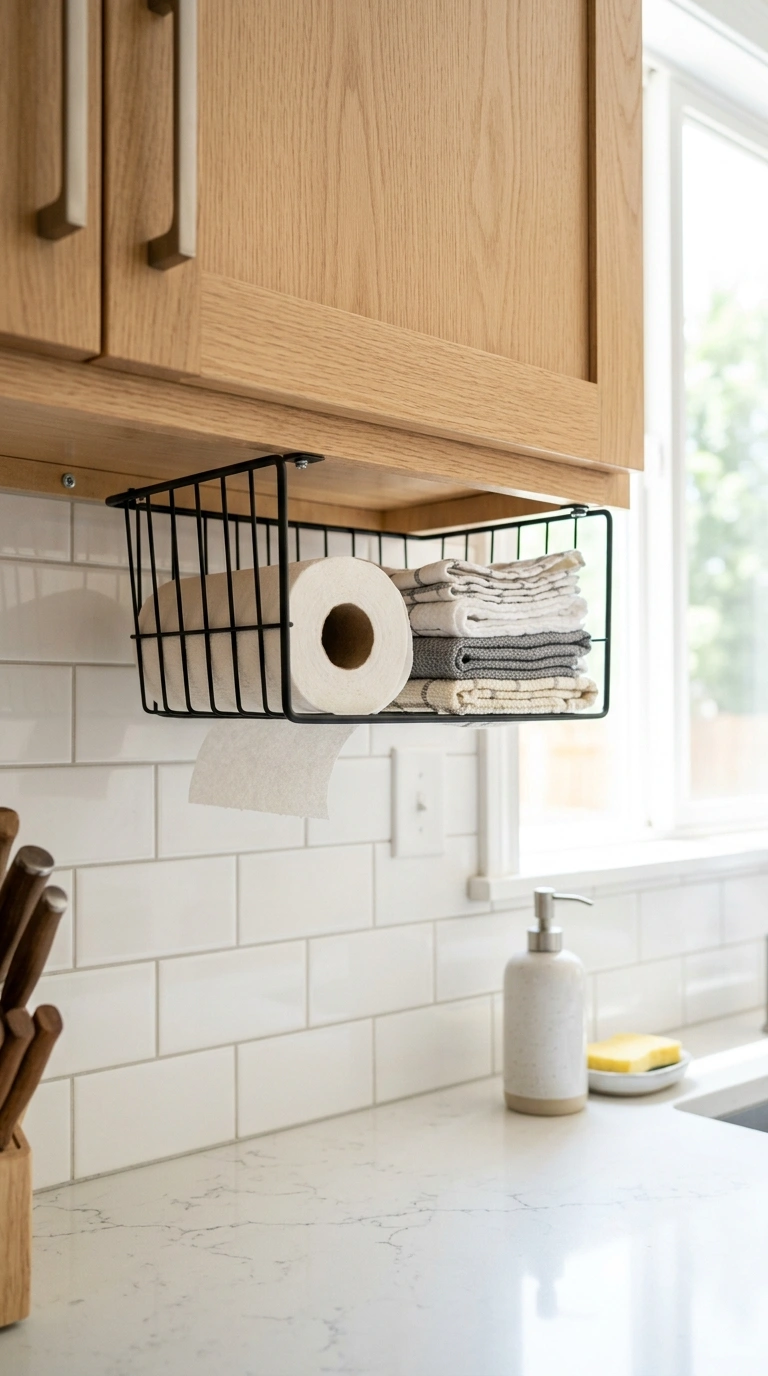
The strip of space just under your upper cabinets, above the counter, often sits completely empty. Small wire baskets that slide onto the underside of a cabinet shelf can hold paper towel rolls, mail, or extra dish towels without touching the counter at all. Most attach with simple screws directly into the cabinet’s underside.
This idea is one of the easiest wins for a small kitchen because it uses air space that would otherwise go to waste. Keep the basket shallow so it does not block your head while working at the counter below. A single basket near the sink for towels, or one near the stove for pot holders, keeps daily tools within arm’s reach. Because it is mounted above the counter, this storage never competes with what is happening at counter level.
18. Clear Stackable Bins
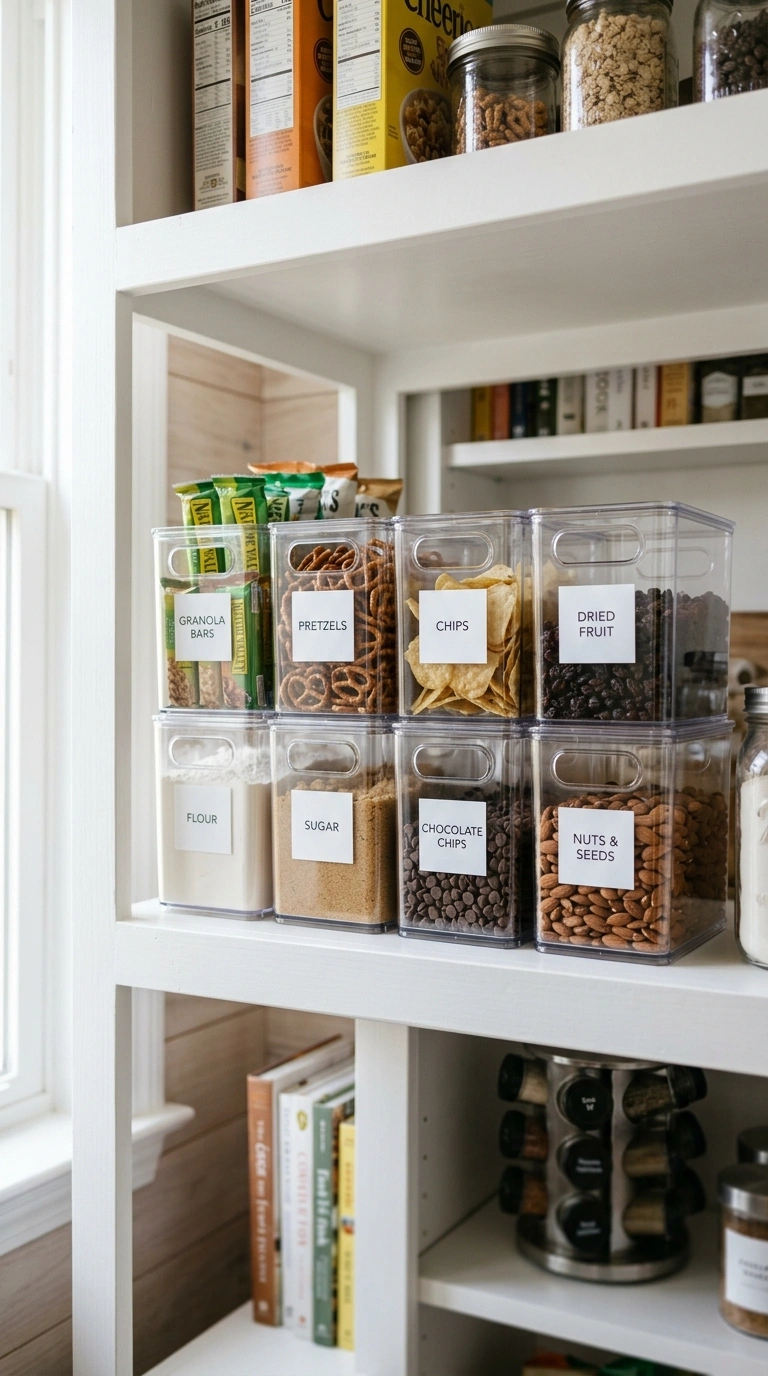
Cabinets filled with mismatched boxes and bags are hard to search through quickly. Clear stackable bins let you see contents at a glance while keeping everything squared off and easy to stack two or three high. Use them in the pantry for snacks, in the fridge for produce, or in a cabinet for baking supplies.
This idea makes the biggest difference in a small pantry or cabinet where space is tight and every inch needs to be used efficiently. Choose bins with the same footprint so they stack evenly without wasted gaps between them. Label each bin with a simple tag so family members can put things back in the right spot. Because the bins are clear, this system also makes it obvious when something is running low, saving a wasted trip to the store.
19. Fold-Down Table
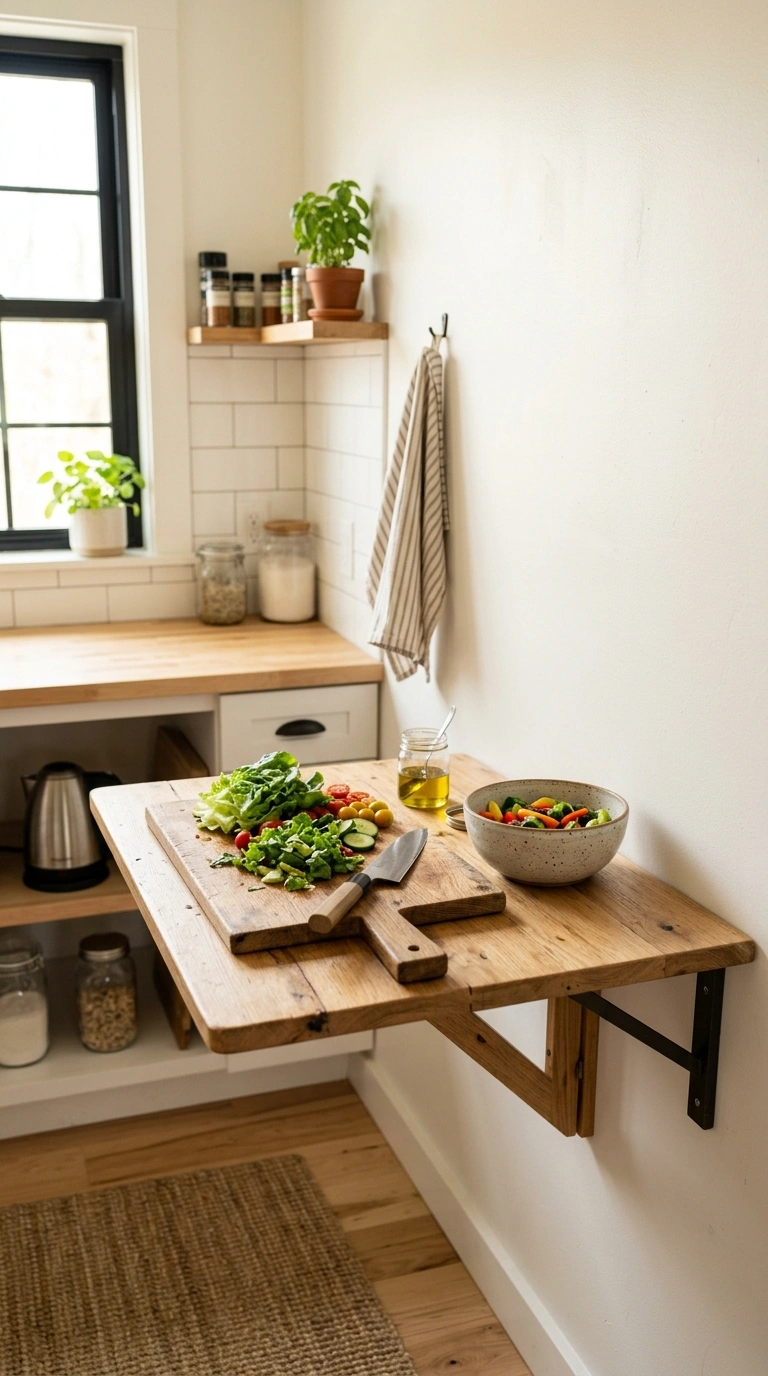
A small kitchen often skips a proper prep table simply because there is no floor space to spare. A fold-down table, hinged to the wall and lowered only when needed, solves this by disappearing flat against the wall the rest of the time. Choose a sturdy wood top with simple folding brackets rated for kitchen use.
This idea works well in narrow kitchens or against a blank wall near the stove where a permanent table would block the walkway. Use the table as extra prep space while cooking, then fold it down to free up the floor for a coffee break or dinner for two. Add a small hook or shelf below it for cutting boards when it is folded away. This single piece can add real function to a kitchen that otherwise feels too tight to work in.
20. Baker’s Rack
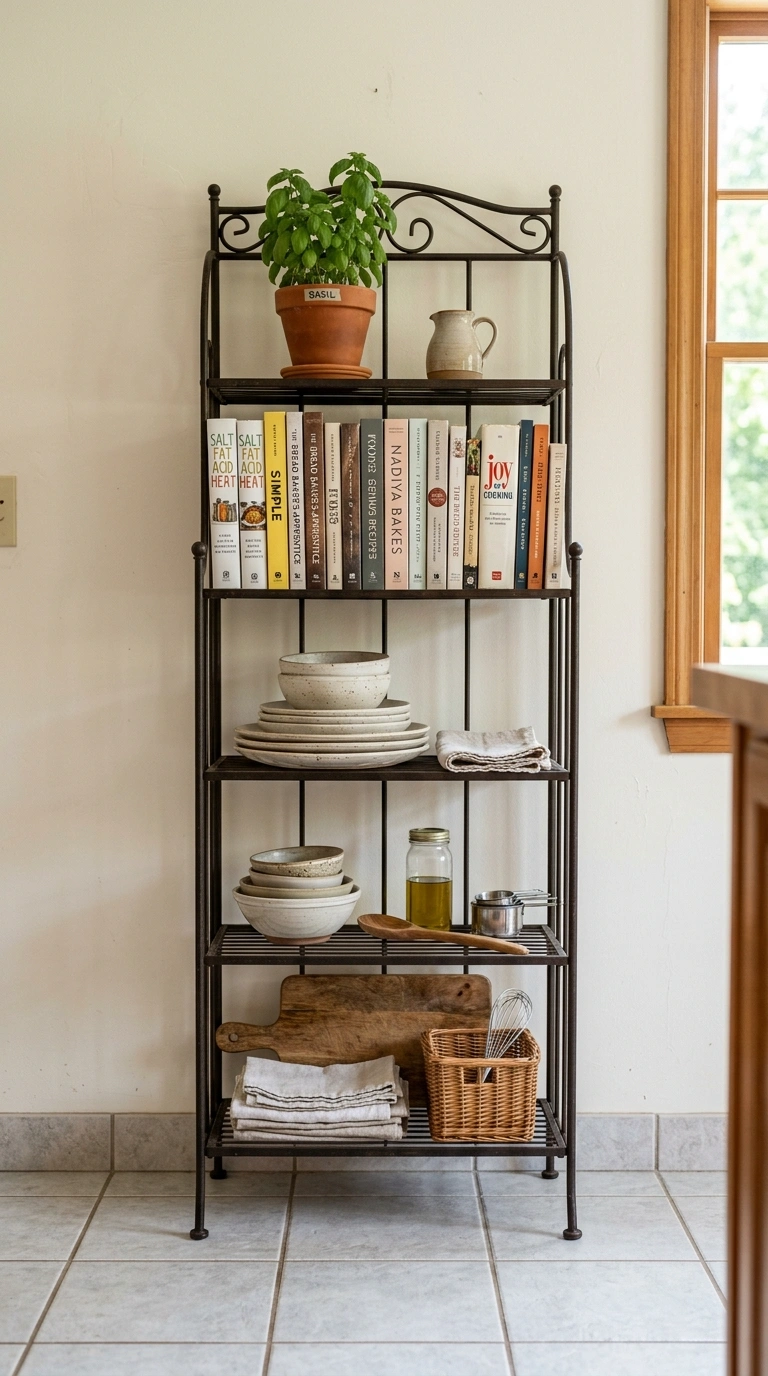
A slim baker’s rack, usually made of wire or wrought iron with two or three open shelves, adds vertical storage to a kitchen without needing built-in cabinets. Place it against an open wall or in a dining area just outside the kitchen to hold small appliances, cookbooks, or serving dishes.
This idea suits kitchens that need extra storage but cannot fit another full-size cabinet. Use the bottom shelf for heavier items like a stand mixer, the middle for everyday dishes, and the top for a small plant or a stack of cloth napkins. Because most racks are open on all sides, keep the styling simple so the piece looks tidy rather than crowded. A baker’s rack can often replace the need for an extra cabinet entirely.
21. Peg Board Wall
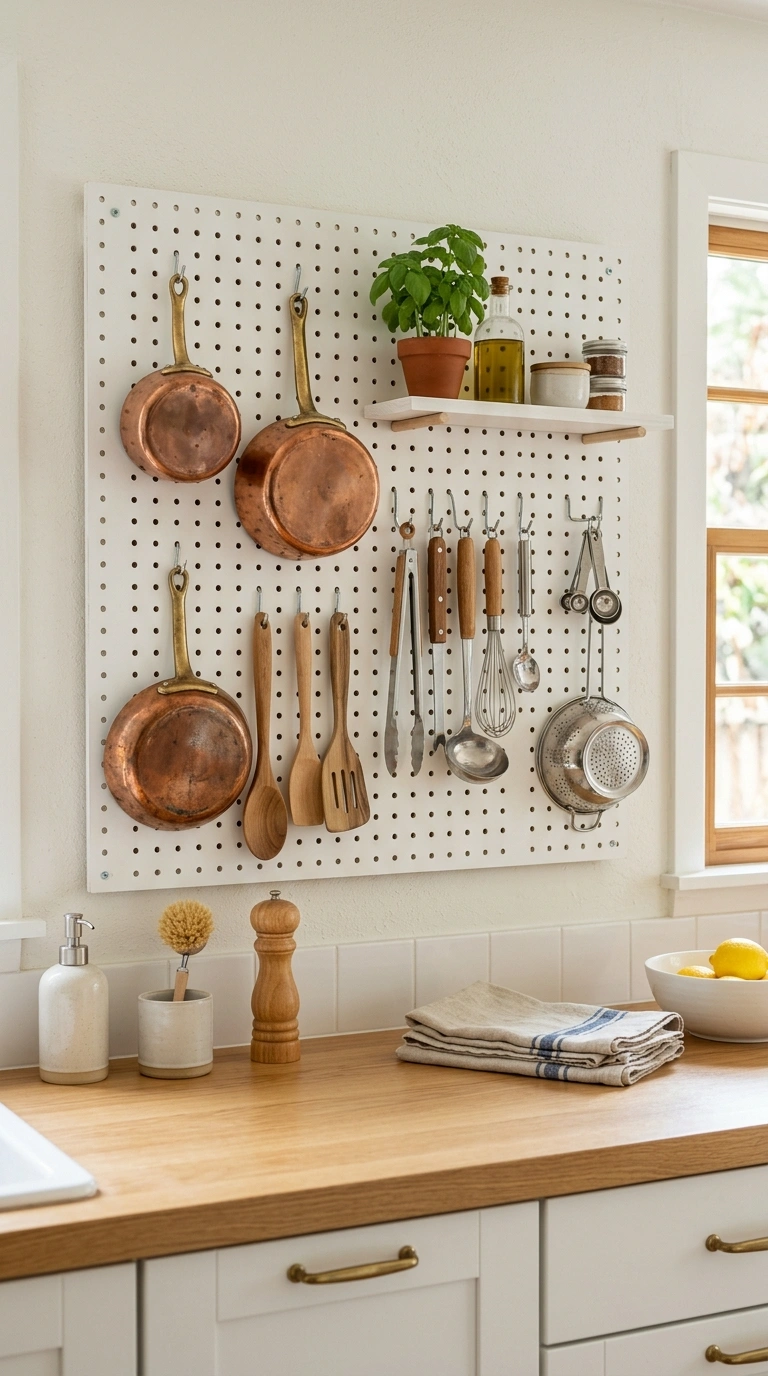
A pegboard mounted on an open section of wall turns a blank surface into fully customizable storage. Hooks, small shelves, and baskets can be moved around anytime your needs change, holding everything from pots and utensils to oven mitts and measuring cups. Paint the board to match your wall color for a built-in look, or leave it raw wood for contrast.
This idea works in almost any small kitchen, especially one with a stretch of wall near the stove or sink that has nothing on it. Start with just a few hooks for your most-used tools, then add more as you figure out what else needs a spot. Because everything hangs in plain sight, a pegboard also makes it easy to see what needs washing or putting away. It is one of the few storage ideas that keeps changing shape as your kitchen habits do.
Small kitchens do not need more square footage to feel bigger. They need storage that actually matches how you cook and live day to day. Try one or two ideas from this list this weekend, and see how much lighter your counters feel by Monday.
Also read: 18 Moody Blue Kitchen Ideas for a Bold, Dramatic Refresh
FAQs
What is the cheapest way to add storage to a small kitchen?
Drawer dividers, tiered shelf organizers, and stacked wire baskets are the least expensive options, and most cost under twenty dollars while making an immediate difference.
Do I need to hire someone to install these ideas?
Most of these ideas, like bins, racks, and dividers, need no professional help. A few, like toe-kick drawers or a ceiling pot rack, are easier with a friend or a handy family member.
Which idea gives the most storage for the least effort?
A pull-out pantry or stacked wire baskets tend to add the most usable space for the amount of work involved.
Will these ideas work in a rented kitchen?
Yes, many of these ideas use adhesive hooks, freestanding racks, or removable bins that leave no permanent marks, which makes them safe for rentals.