
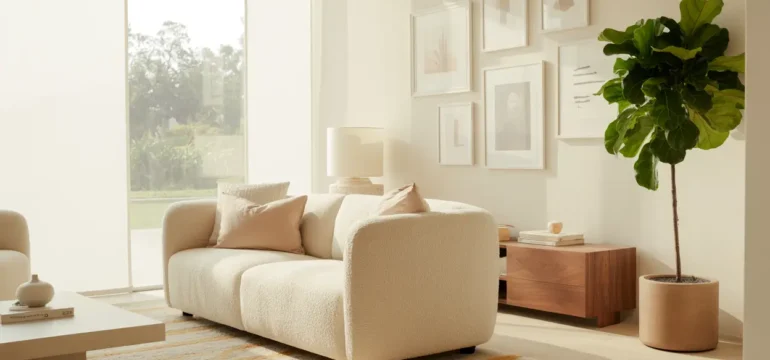
I used to think a neutral living room meant a boring living room, all beige and empty and a little cold. Then I visited a friend’s apartment that used almost no color at all, just cream, tan, a bit of black, and a handful of plants, and it was the calmest room I had ever sat in. Nothing was loud, nothing competed for attention, and somehow it still felt full and finished. That trip changed how I think about my own space. A neutral, minimalist living room is not about having less personality, it is about letting texture, plants, and a few good pieces do the talking instead of a busy color palette. These 23 ideas will help you build that same kind of calm, put together room in your own home, one simple change at a time.
1. Neutral Boucle Sofa
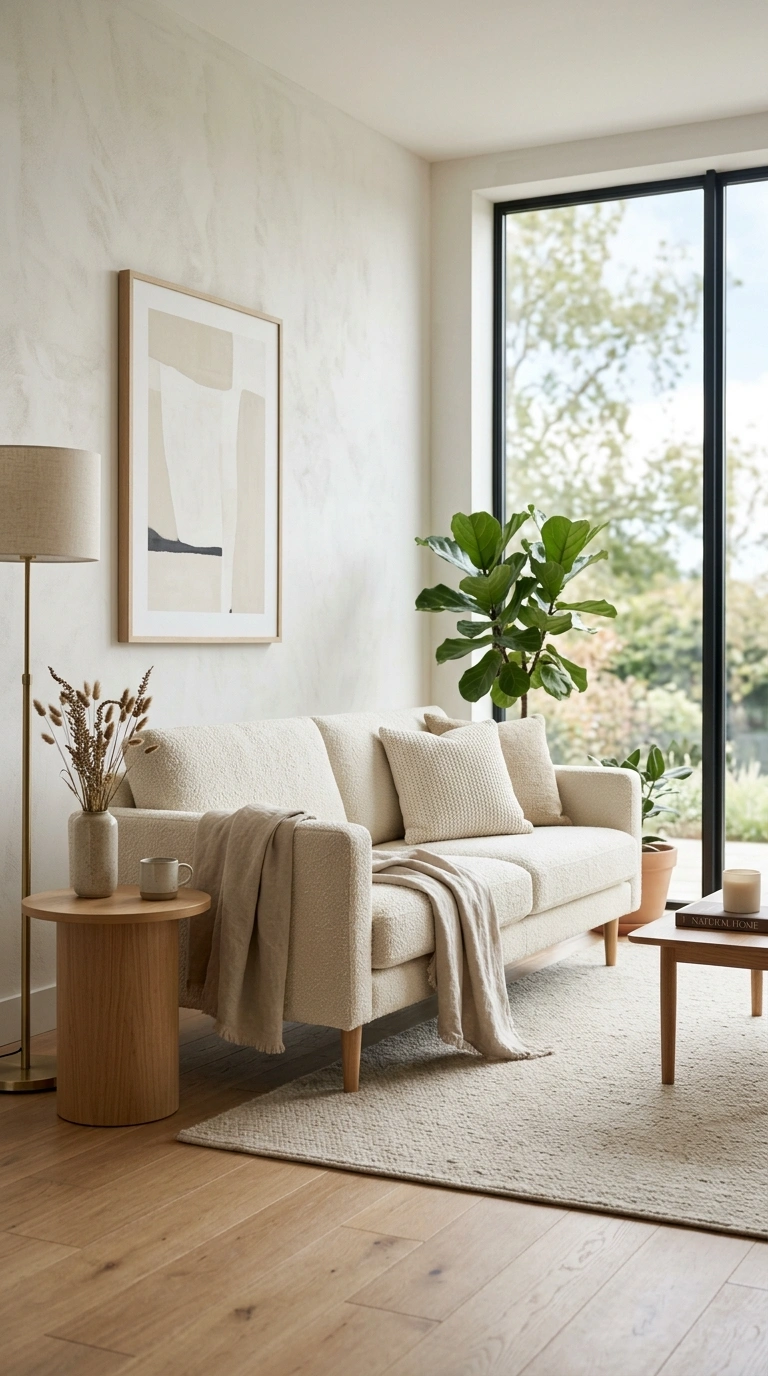
A boucle fabric sofa in cream, oatmeal, or light gray is one of the easiest ways to set a calm, neutral tone for the whole room. The nubby, looped texture of boucle catches light in a soft way, giving the piece visual interest even without any pattern or bold color.
Place the sofa as the anchor of the room, facing the main focal point like a window, fireplace, or television. Pair it with simple wood or metal legs rather than a skirted base, since exposed legs keep the piece feeling light and modern rather than heavy. A boucle sofa also tends to hide small wrinkles and texture variations well, so it keeps looking soft and inviting even with daily use. Keep the rest of the room’s fabrics simple so the sofa’s texture remains the star of the space.
2. Layered Area Rugs
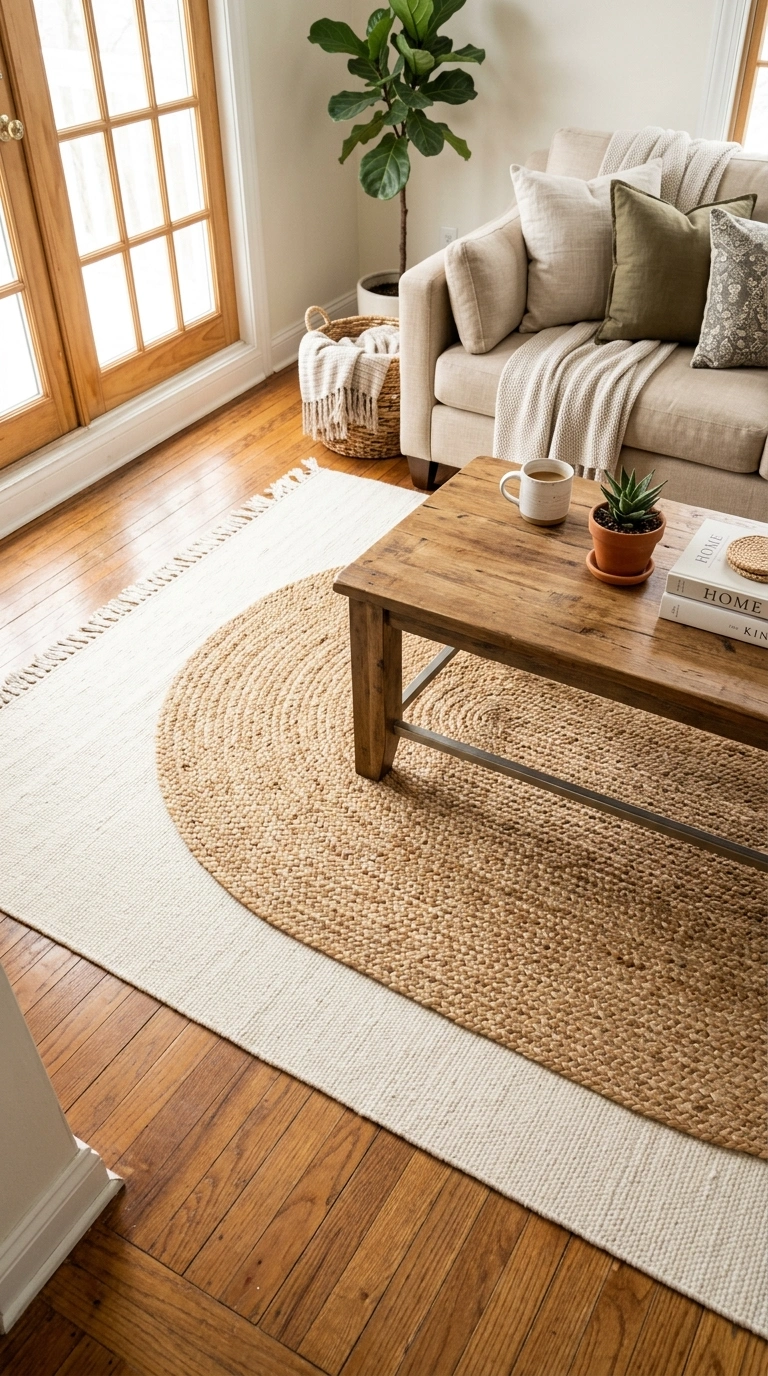
Layering a smaller textured rug, like a wool or jute weave, over a large flat weave rug in a neutral tone adds depth to a living room floor without introducing new color. Place the larger rug under the full seating area, then add the smaller rug slightly off center under the coffee table.
Choose rugs in close but not identical shades, like a warm white base with a slightly darker tan layer on top, so the layers read as intentional rather than mismatched. This trick works especially well in rooms with hardwood or light colored flooring, since it grounds the seating area and adds a bit of texture underfoot. Vacuum the top rug regularly and rotate it every few months so wear happens evenly across the surface.
3. Fiddle Leaf Fig
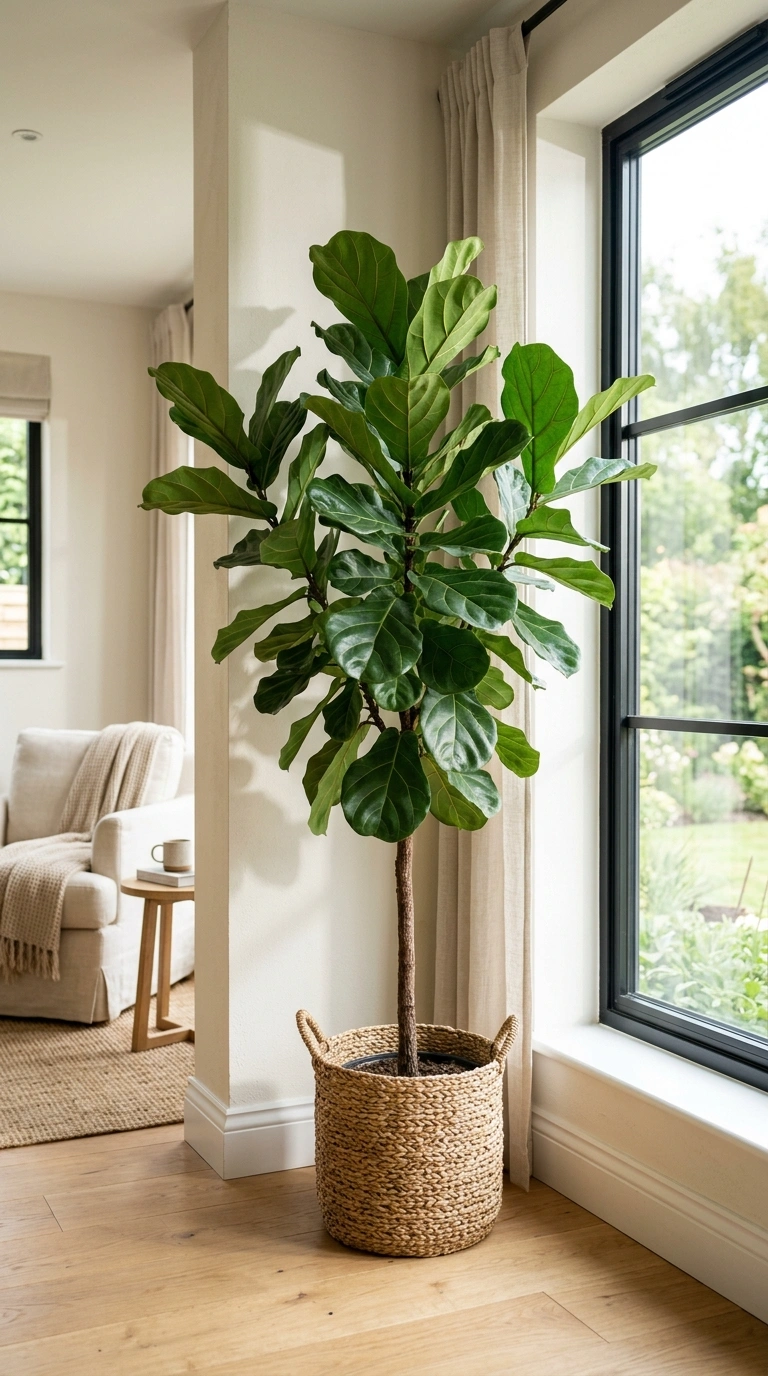
A tall fiddle leaf fig in the corner of a living room brings height and a soft green color into a space that might otherwise be all neutral tones. The large, glossy leaves catch light beautifully near a window, and the plant’s height helps balance out low furniture like a boucle sofa or a slim media console.
Place the plant in a simple woven or ceramic pot in a neutral tone so it blends with the rest of the room rather than becoming a separate style statement. Rotate the pot every couple of weeks so the plant grows evenly toward the light instead of leaning to one side. Wipe the large leaves occasionally with a damp cloth to keep them glossy and free of dust, which also helps the plant photograph well for your Pinterest boards or your own memory of the room.
4. Minimalist Gallery Wall
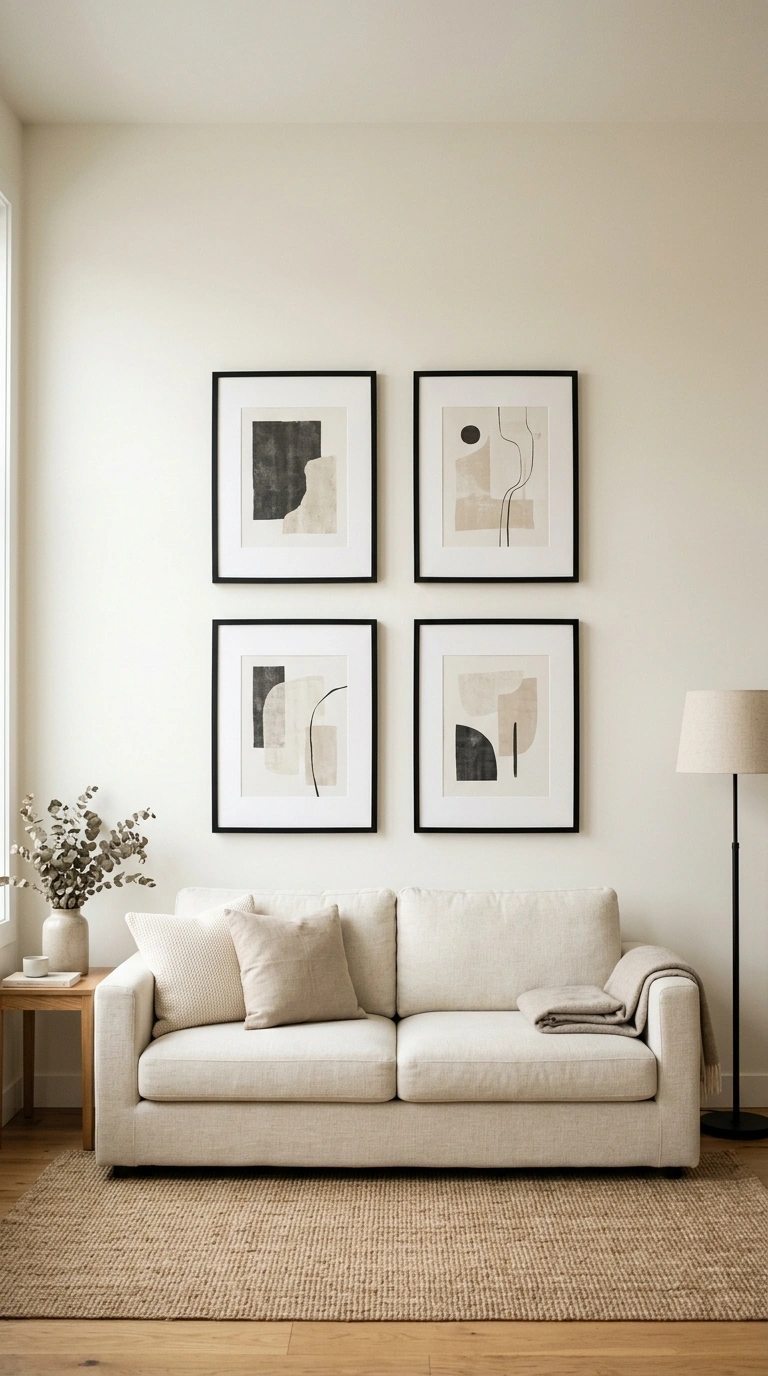
A gallery wall does not need to be busy or colorful to make an impact. Choose three to five frames in a matching neutral finish, like matte black or natural wood, and fill them with simple black and white photography, line art, or abstract prints in cream and tan tones.
Leave more space between each frame than feels natural at first, since generous spacing is what keeps a gallery wall feeling calm rather than cluttered. Arrange the frames in a simple grid or a loose, slightly staggered line rather than a complicated shape. Hang the wall above the sofa or console table at a height where the bottom frame sits roughly eight inches above the furniture below it. This idea adds personality to a neutral room without introducing any color that competes with the rest of the space.
5. Woven Pouf Ottoman
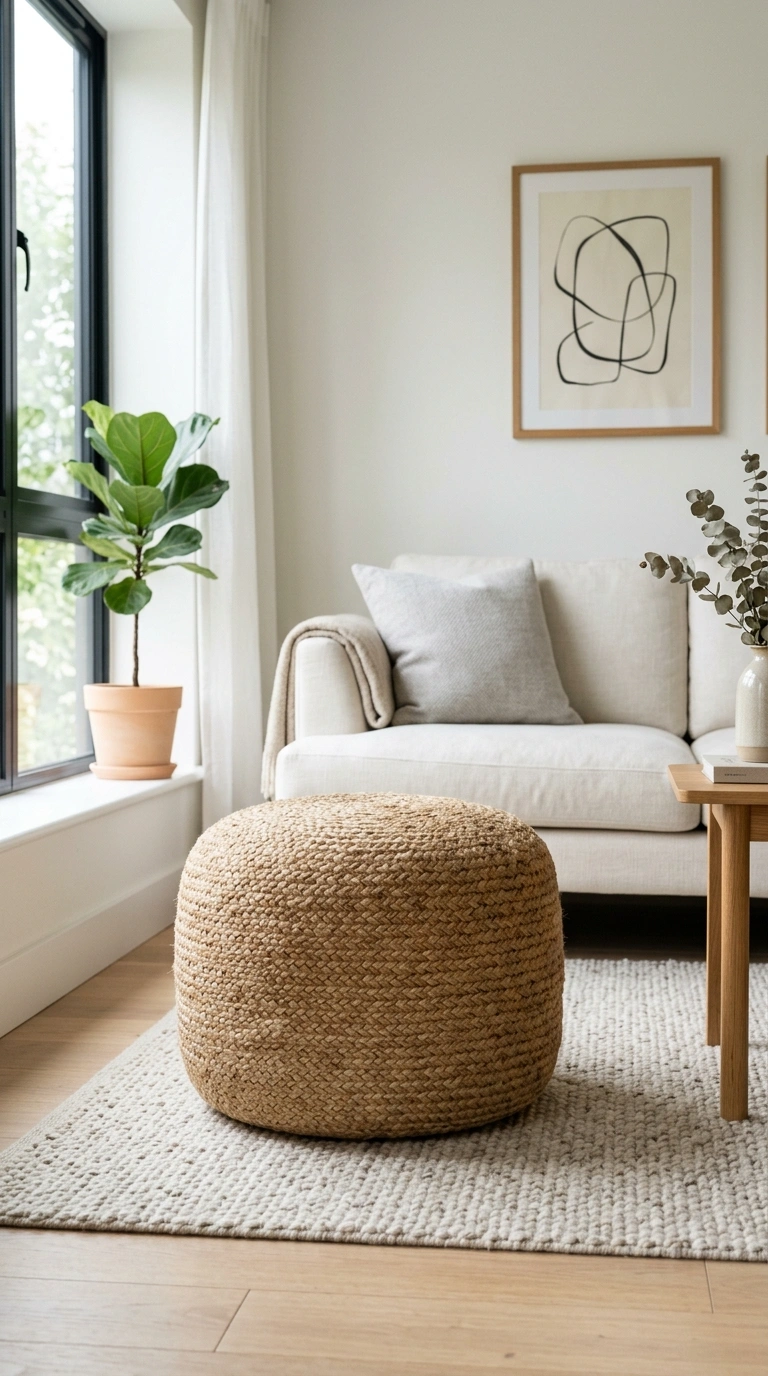
A round, woven pouf ottoman in a natural fiber like jute or rattan works as extra seating, a footrest, or a small side table when topped with a tray. Its texture adds warmth to a neutral living room without adding pattern or color, keeping the minimalist feel intact.
Place it near the sofa or in front of an accent chair, close enough to prop your feet up but far enough that it does not block walking paths. The lightweight design makes it easy to move around the room depending on how many people are gathered, which is especially useful in smaller living rooms where flexible seating matters. Choose a pouf with visible stitching or a herringbone weave pattern for a bit of extra texture that still reads as calm and understated.
6. Sculptural Floor Lamp
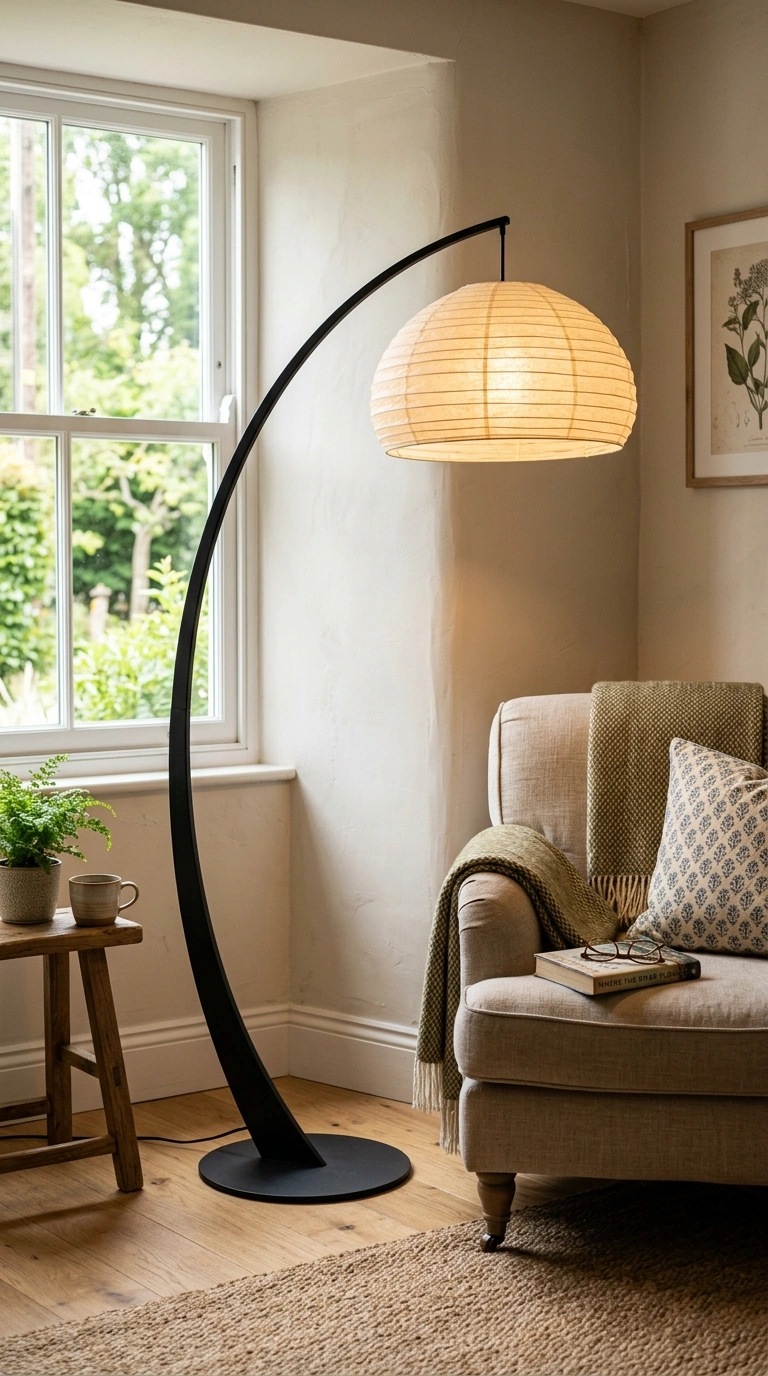
A floor lamp with an interesting, sculptural shape, like an arched neck or a curved wood base, adds both light and visual interest to a corner that might otherwise feel empty. Choose a finish in matte black, warm brass, or natural wood to keep it in line with a neutral color palette.
Place the lamp behind a reading chair or beside the sofa where it can provide soft, ambient light in the evening. A linen or paper shade in a warm white tone gives off a softer glow than a stark white plastic shade. This kind of lamp doubles as a piece of art in the room, filling vertical space and drawing the eye upward, which helps balance out lower furniture pieces like a sofa or coffee table in a minimalist layout.
7. Linen Throw Pillows
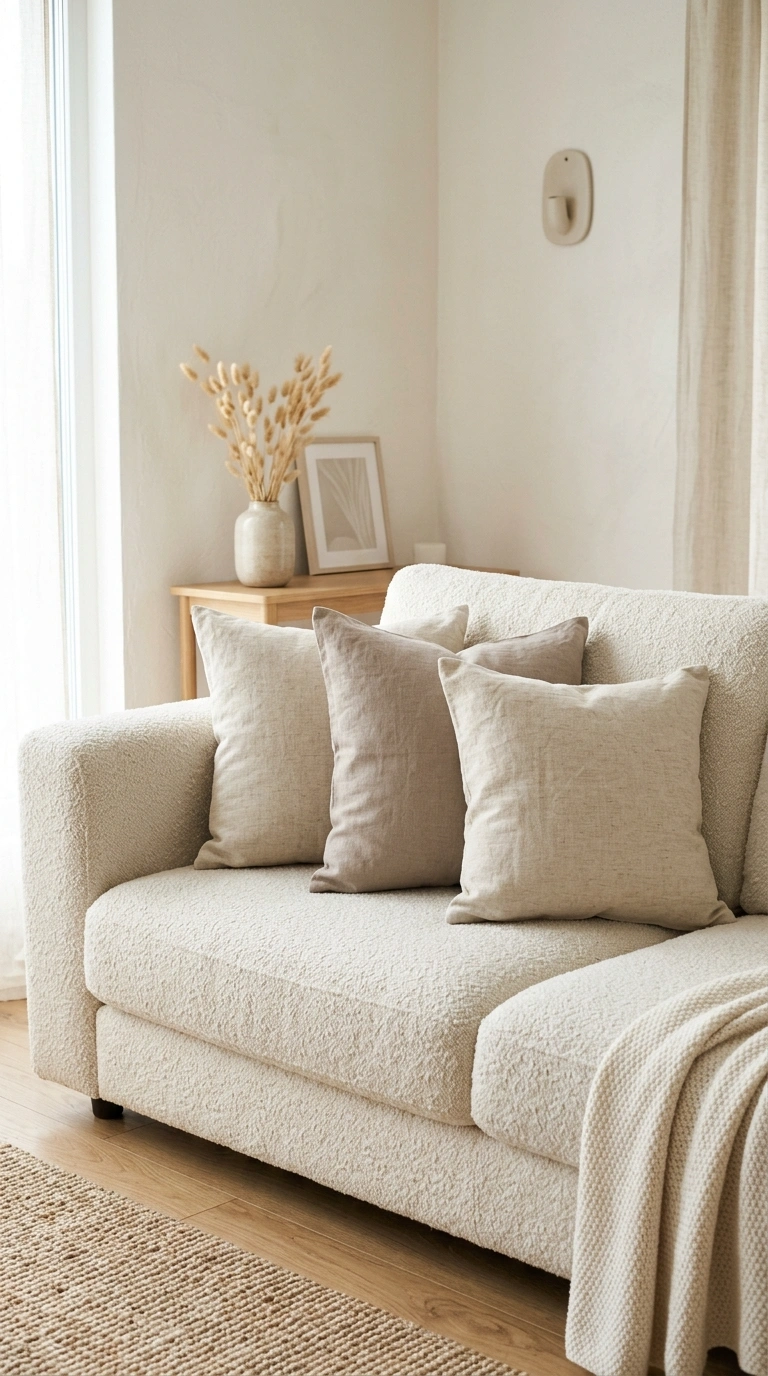
Simple linen throw pillows in soft neutral tones, like oatmeal, ivory, and light taupe, add texture and comfort to a sofa without introducing pattern or bright color. Choose two or three different pillow sizes and mix a couple of solid linen covers with one textured knit or woven cover for variety.
Keep the color palette tight, staying within a few shades of the same neutral family, so the pillows feel cohesive rather than randomly picked. Fluff and reposition the pillows regularly, propping them at a slight angle rather than perfectly straight up, since a slightly relaxed arrangement looks more natural and lived in. This is one of the most affordable updates on this list and one of the easiest to change seasonally if you want a slightly different texture mix throughout the year.
8. Statement Coffee Table
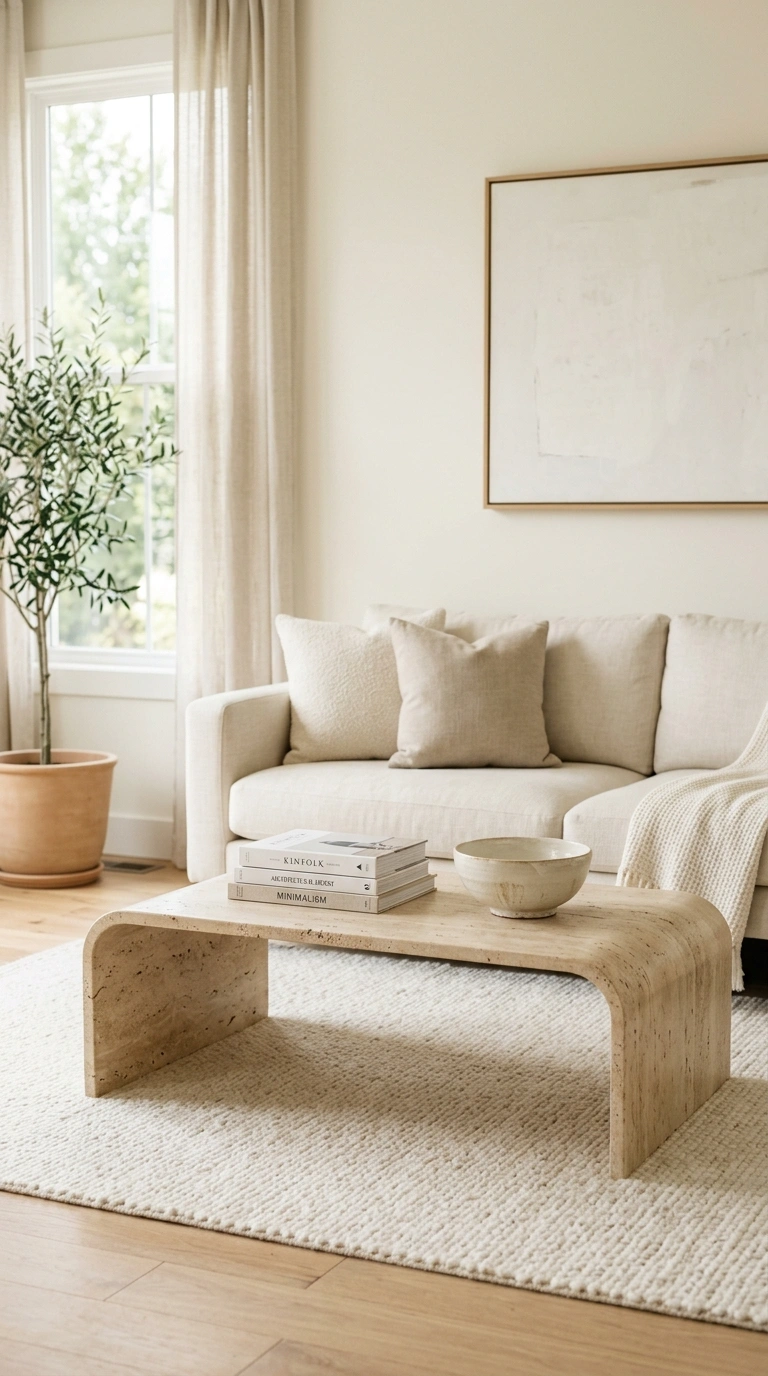
A coffee table with an interesting shape, like a curved organic edge, a stone top, or a sculptural base, becomes a natural focal point in a neutral living room where color is not doing that job. Choose a material like travertine, light marble, or natural wood to keep the piece feeling calm and grounded.
Style the top simply, with one stack of books, a small ceramic bowl, and maybe one small plant, leaving plenty of open surface visible. Too many objects on a statement table distract from its shape, which is really the point of choosing an interesting piece in the first place. Place it low to the ground and slightly closer to the sofa than you might expect, since easy reach matters more in daily life than a large gap for visual spacing.
9. Trailing Pothos Shelf
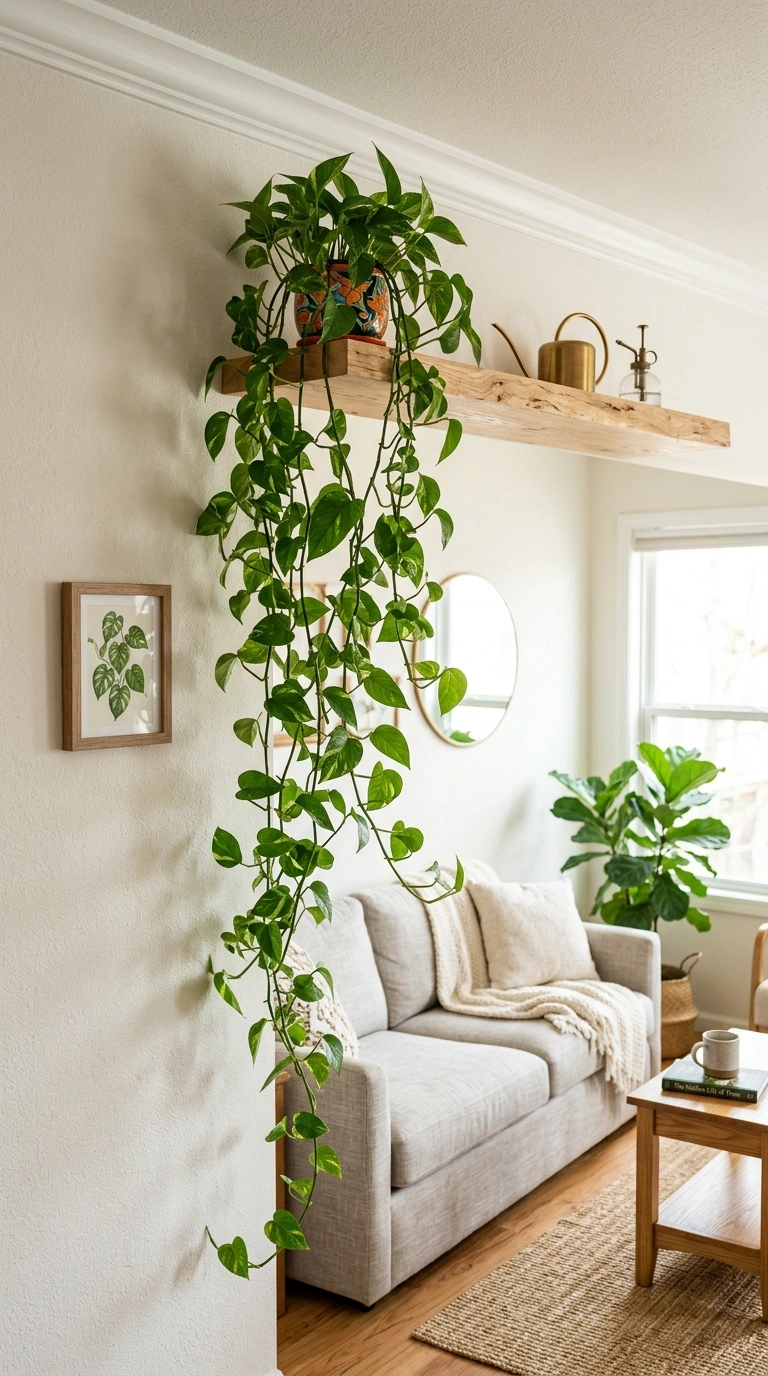
A trailing pothos plant on a high shelf or bookcase lets its vines cascade down naturally, adding movement and a soft green color to a wall that might otherwise feel flat. Pothos is also one of the easiest houseplants to keep alive, which makes it a low stress way to add greenery to a minimalist room.
Place the pot on the top shelf of an open bookcase or a floating shelf near the ceiling, and let the vines hang freely rather than training them along the shelf edge. Pair the plant with one or two other simple objects, like a ceramic vase or a small stack of books, keeping the rest of the shelf open and uncluttered. Trim the vines occasionally to keep the shape looking intentional rather than overgrown.
10. Textured Ceramic Vases
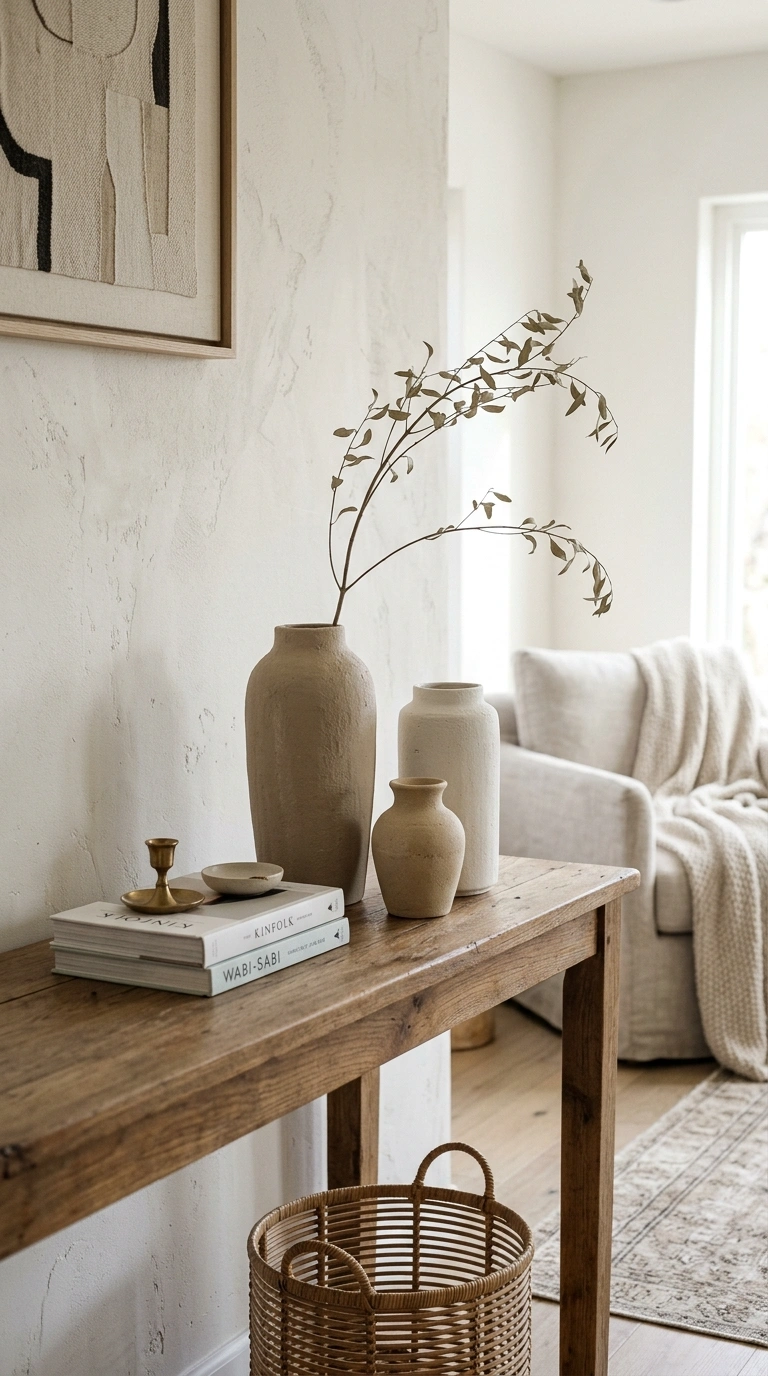
A grouping of ceramic vases in varying heights and slightly different neutral glazes, some matte, some with a subtle texture, adds visual interest to a shelf, console table, or mantel without introducing color. Choose vases with organic, slightly irregular shapes rather than perfectly uniform ones for a more handmade feel.
Group them in odd numbers, like three or five, and vary the heights so your eye moves naturally across the display. Leave one or two vases empty and add a single dried branch or a few stems of pampas grass to another for a bit of softness. This kind of vignette works well on a console table behind the sofa or on a mantel, filling the space with texture and shape instead of color, which keeps the minimalist feel of the room intact.
11. Low Profile Seating
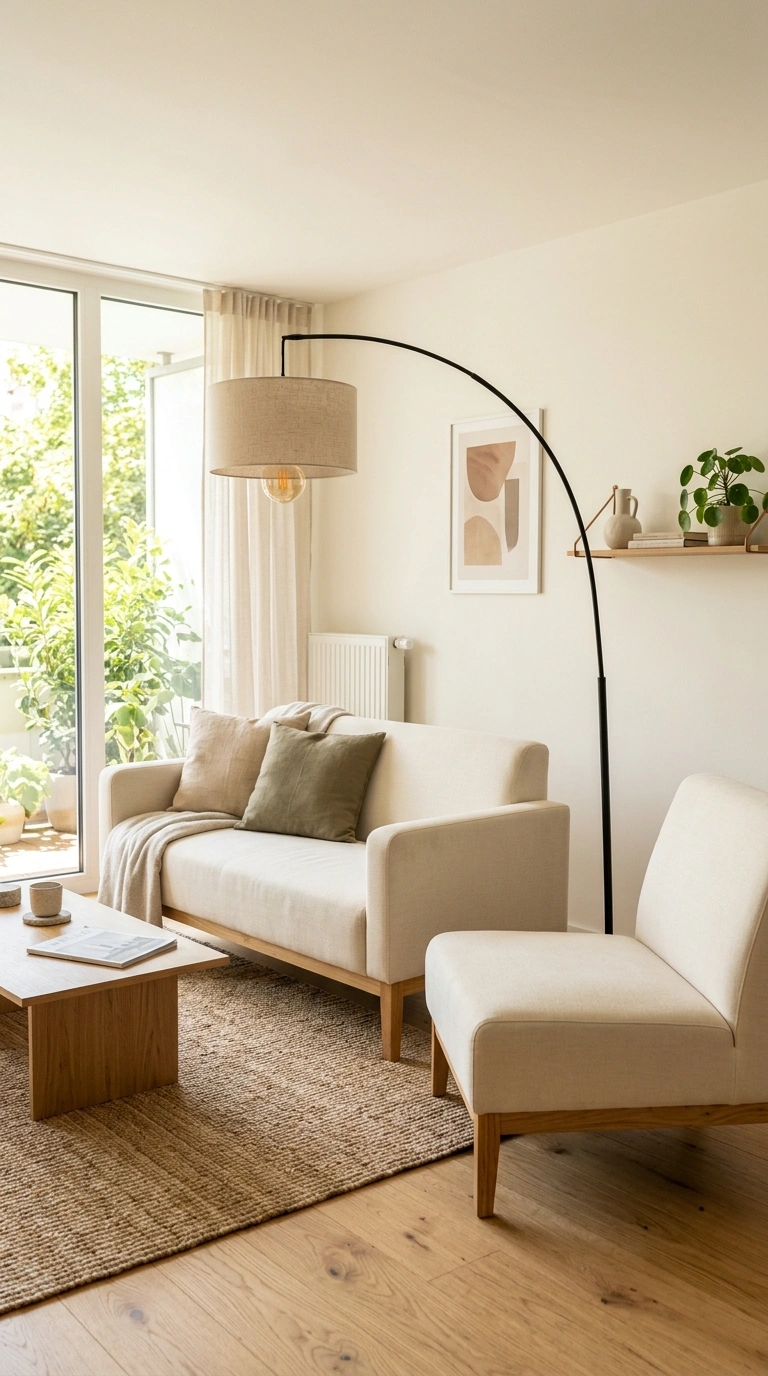
Choosing sofas and chairs with a lower overall profile, meaning a lower back and seat height, gives a living room a more open, airy feeling, especially in smaller spaces. Low furniture also tends to read as more modern and minimalist compared to tall, overstuffed pieces.
Pair low seating with a slightly taller floor lamp or a tall plant nearby to balance out the height in the room, since an entire room of low furniture can start to feel flat without any vertical elements. Choose upholstery in a neutral tone and a simple silhouette, avoiding rolled arms or heavy skirting, since clean lines are what make low profile furniture feel intentional rather than accidental. This approach works especially well in open floor plan living rooms where sightlines matter.
12. Natural Wood Accents
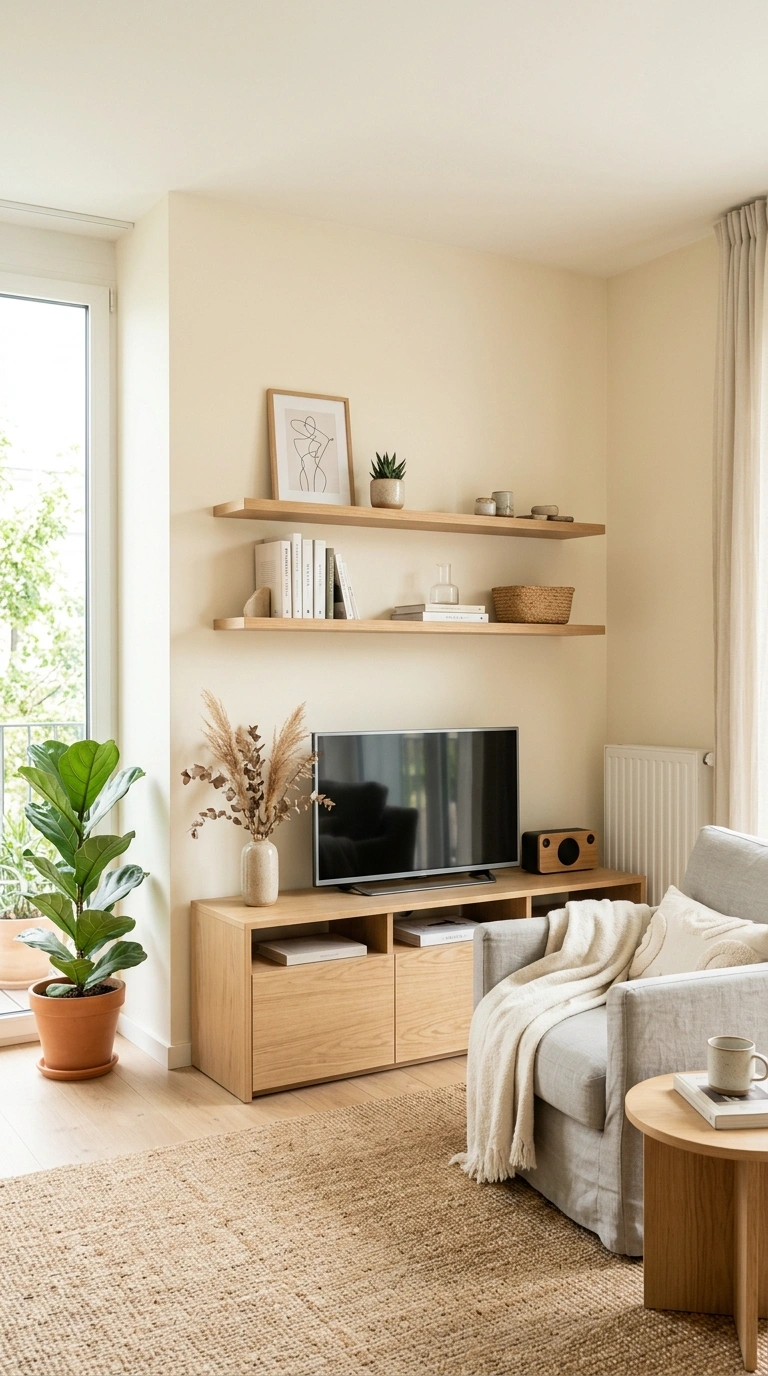
Bringing in natural wood through a media console, a coffee table, or simple floating shelves adds warmth to an otherwise all neutral color palette. Choose a light to medium wood tone, like oak or ash, which pairs well with cream, white, and gray without feeling too dark or heavy.
Keep the wood pieces simple in shape, favoring clean lines over ornate detailing, so they fit naturally into a minimalist room. Mixing two or three wood tones is fine as long as they share similar undertones, either all warm or all cool, since clashing undertones can make a room feel unplanned. A wood accent also helps ground a room full of soft textiles like boucle and linen, adding a bit of structure to balance out all the softness.
13. Sheer Window Curtains
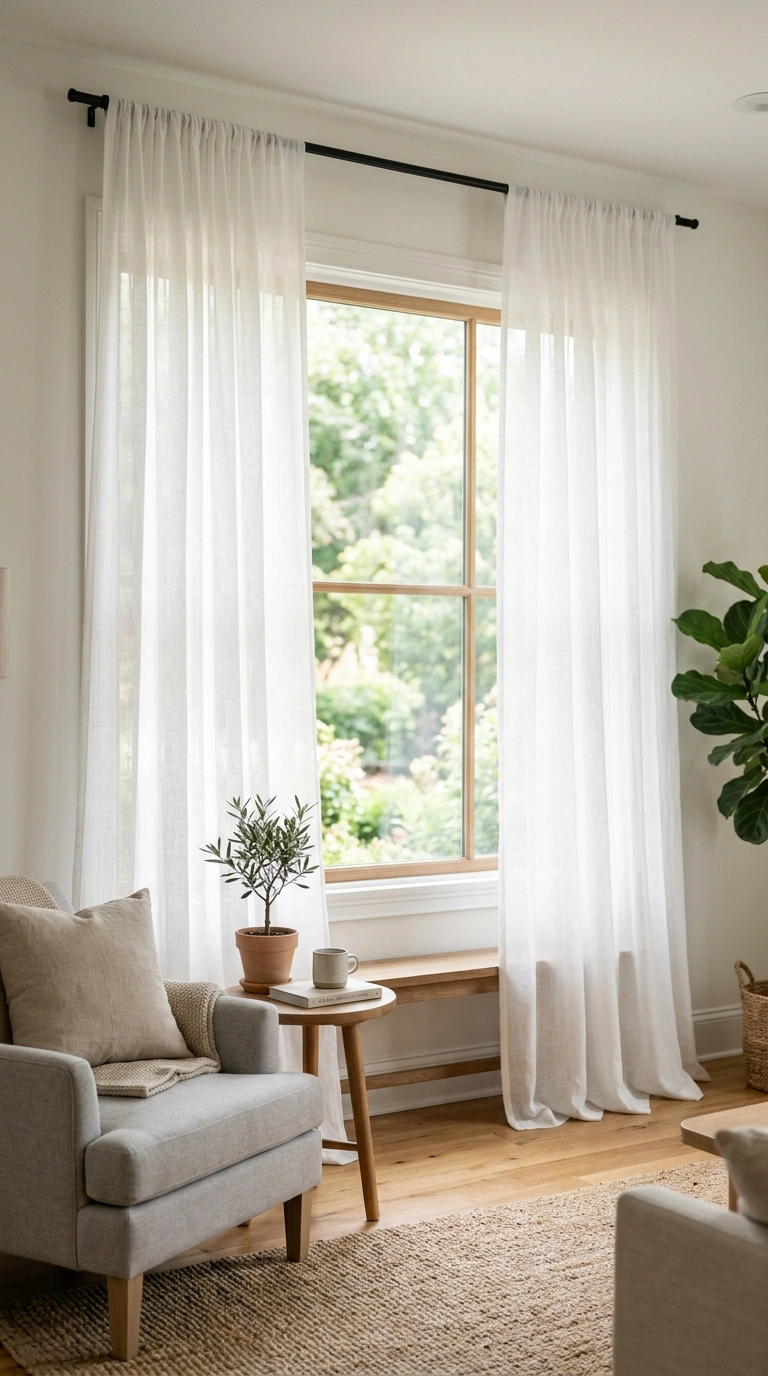
Sheer curtains in a soft white or natural linen tone let light filter softly into a living room while still giving the windows a finished, styled look. Hang the curtain rod slightly wider and higher than the window frame itself, which makes the window appear larger and the ceiling feel taller.
Choose a lightweight fabric that moves gently with airflow, since a bit of movement adds life to an otherwise very still, neutral room. Let the curtains puddle slightly at the floor or hang just above it, rather than stopping short, for a softer, more finished look. Sheer curtains work especially well in minimalist rooms because they add texture and softness without introducing any pattern or bold color, keeping the calm feeling of the space intact throughout the day.
14. Minimalist Media Console
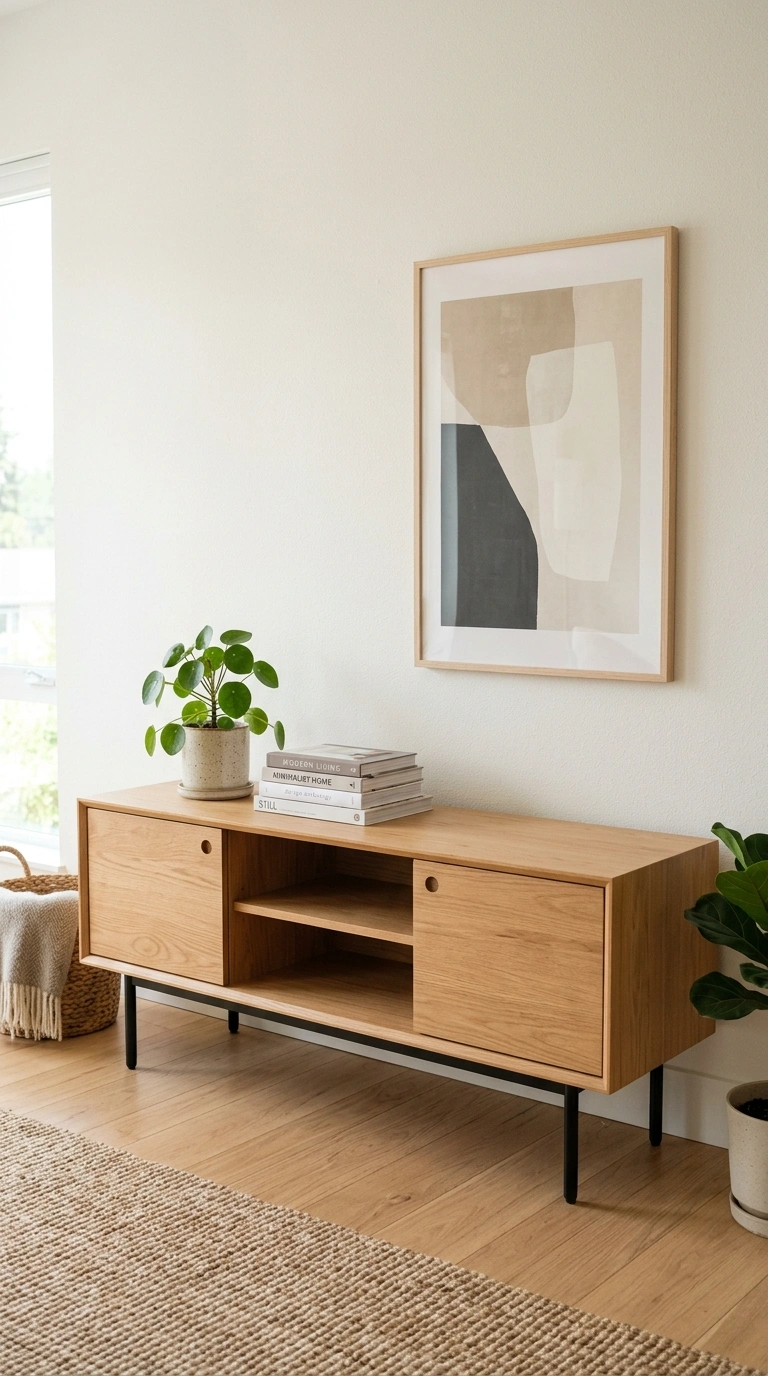
A low, simple media console in natural wood or a matte finish keeps a television from becoming the visual center of a living room. Choose a design with clean lines, minimal hardware, and either open shelving or simple flat front doors, avoiding anything too ornate or busy.
Style the top of the console with a small plant, a stack of books, and maybe one small sculptural object, leaving plenty of open surface around the television itself. Keep cords tucked behind the console or bundled with a simple cord clip so the area stays looking tidy. A console with slightly raised legs, rather than one that sits flush on the floor, also helps the piece feel lighter and less bulky in the overall room, which matters a lot in a minimalist layout.
15. Potted Palm Corner
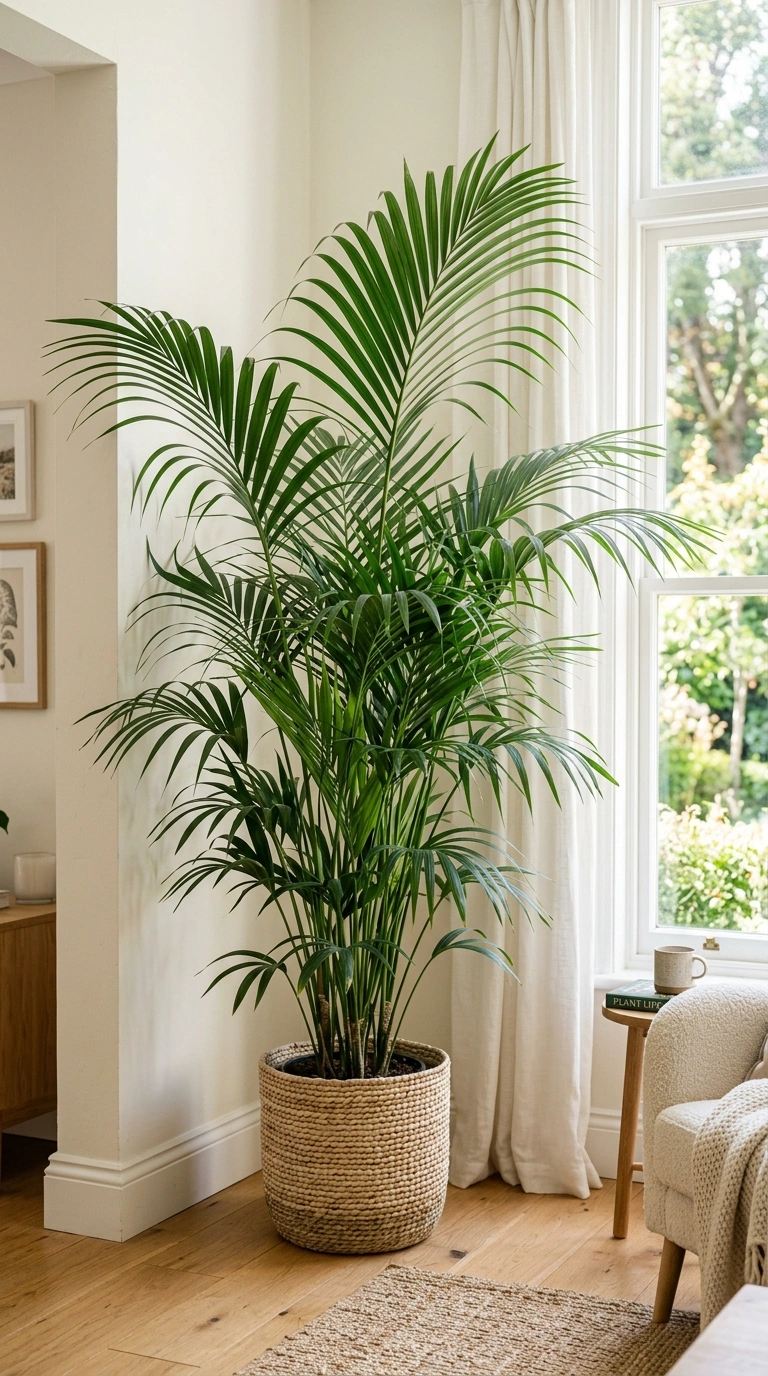
A large potted palm, like a kentia or areca palm, fills an empty corner with soft, feathery greenery that adds life to a neutral living room without any bold color. The airy shape of palm fronds feels lighter than broader leafed plants, which works well in rooms with a lot of open floor space.
Place the palm near a window where it can get bright, indirect light, and choose a simple woven or ceramic pot in a neutral tone to keep the focus on the plant itself. Palms also help soften hard architectural corners, like where two walls meet, giving the room a slightly more organic feel. Water on a consistent schedule and mist the leaves occasionally, since palms tend to prefer a bit of humidity, especially in drier indoor air during colder months.
16. Neutral Wall Paint
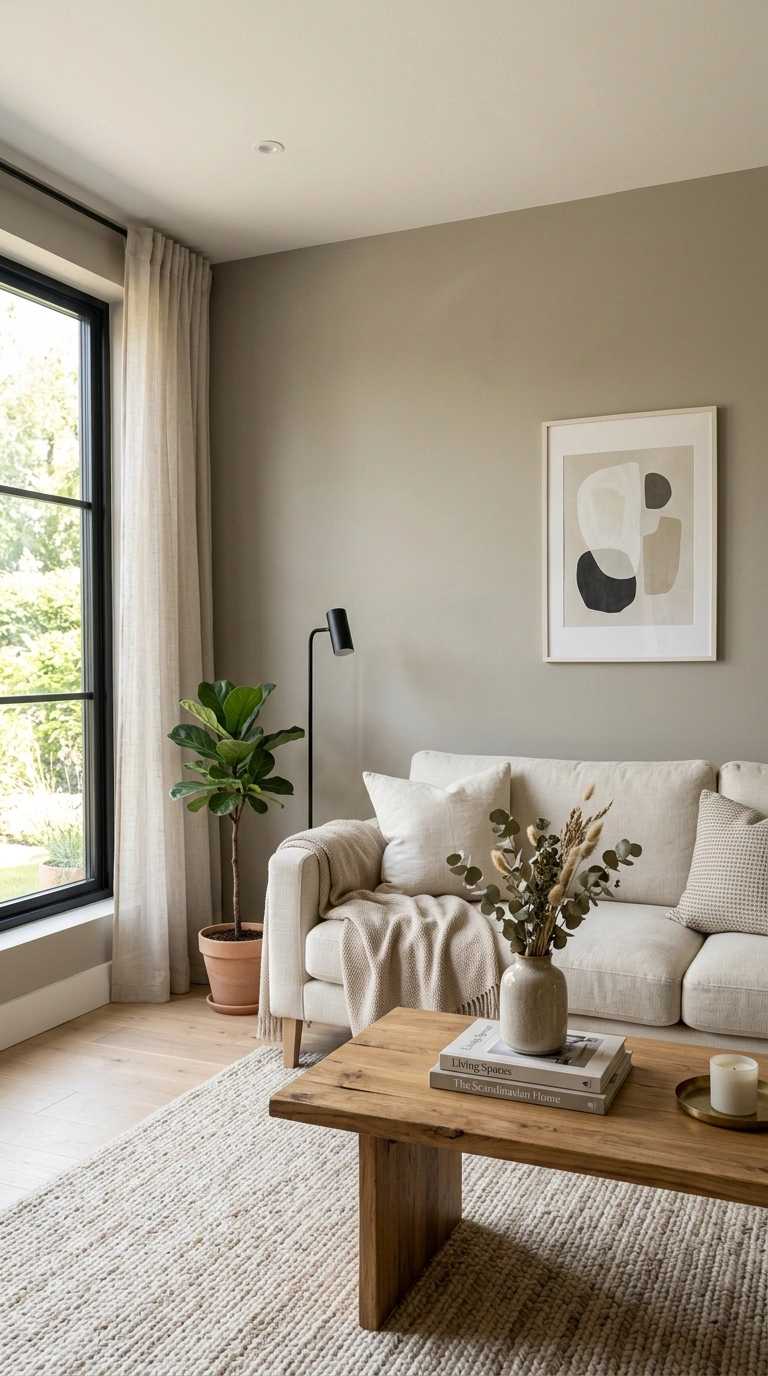
Choosing a warm, soft neutral wall color, like a light greige, warm white, or soft oatmeal tone, sets the foundation for the rest of a minimalist living room. Avoid stark white walls if you want the room to feel warm rather than clinical, since undertones matter more than most people expect.
Test a few paint swatches directly on your wall and observe them at different times of day before committing, since natural light changes how a neutral color reads throughout the day. Keep trim and ceiling in a slightly lighter or matching tone rather than bright white, which helps the walls feel seamless rather than boxed in by contrasting trim. This quiet backdrop is what allows texture, from boucle to wood to woven baskets, to become the real visual interest in the room instead of competing with a busy wall color.
17. Woven Basket Storage
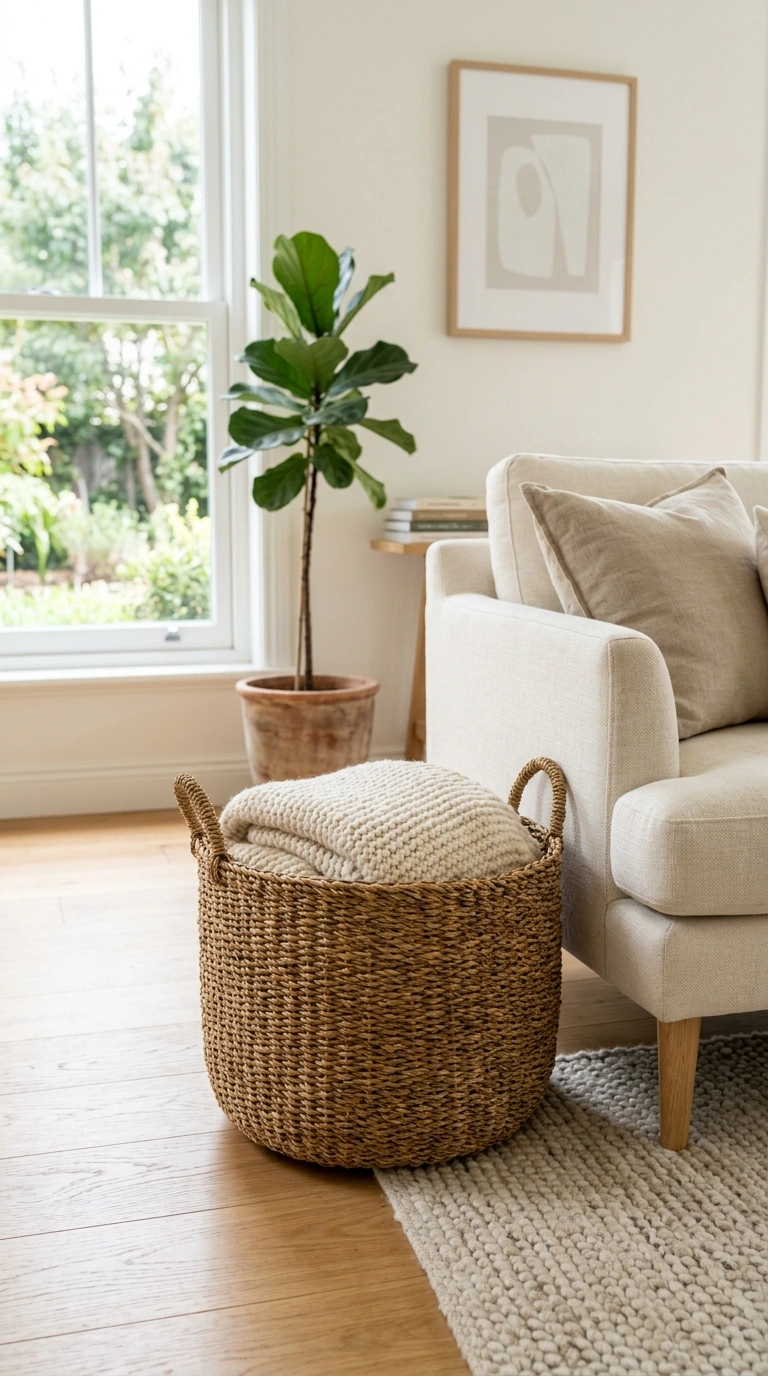
A large woven basket placed beside the sofa or under a console table gives you a stylish spot to store blankets, magazines, or remote controls, keeping the room tidy without needing a closed cabinet. Choose a basket in a natural fiber like seagrass or water hyacinth for the most texture.
Pick a basket with a slightly wider opening if you plan to store bulky blankets, since a narrow basket makes them hard to pull out easily. A second, smaller basket on a shelf can hold smaller items like coasters or a spare charger, keeping everyday clutter out of sight but still easy to reach. Baskets add exactly the kind of texture a minimalist neutral room needs, softening what could otherwise feel like a very hard edged, furniture only space.
18. Glass Coffee Table
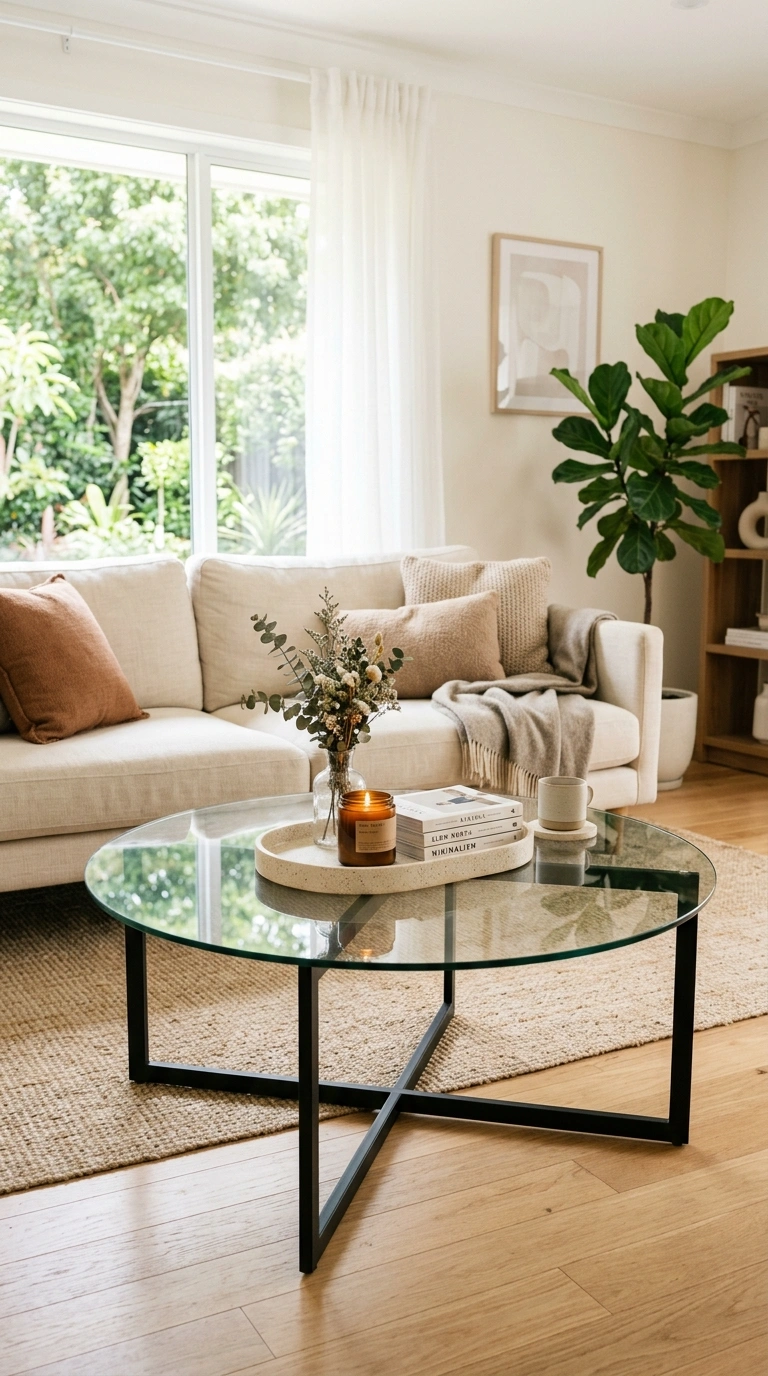
A glass top coffee table with a simple metal or wood base keeps a living room feeling open and light, especially in smaller spaces where a bulky wood table might feel heavy. The transparency lets the rug or floor underneath show through, which visually expands the room.
Choose a base in matte black or brass for a bit of contrast against an otherwise all neutral palette, or a natural wood base for a softer, more organic look. Style the top with a low tray holding a candle and a small stack of books, keeping the arrangement simple so the glass surface stays visually clear rather than crowded. This kind of table works especially well paired with a boucle sofa and a woven rug, balancing softness with a bit of sleek, modern structure.
19. Monstera Plant Corner
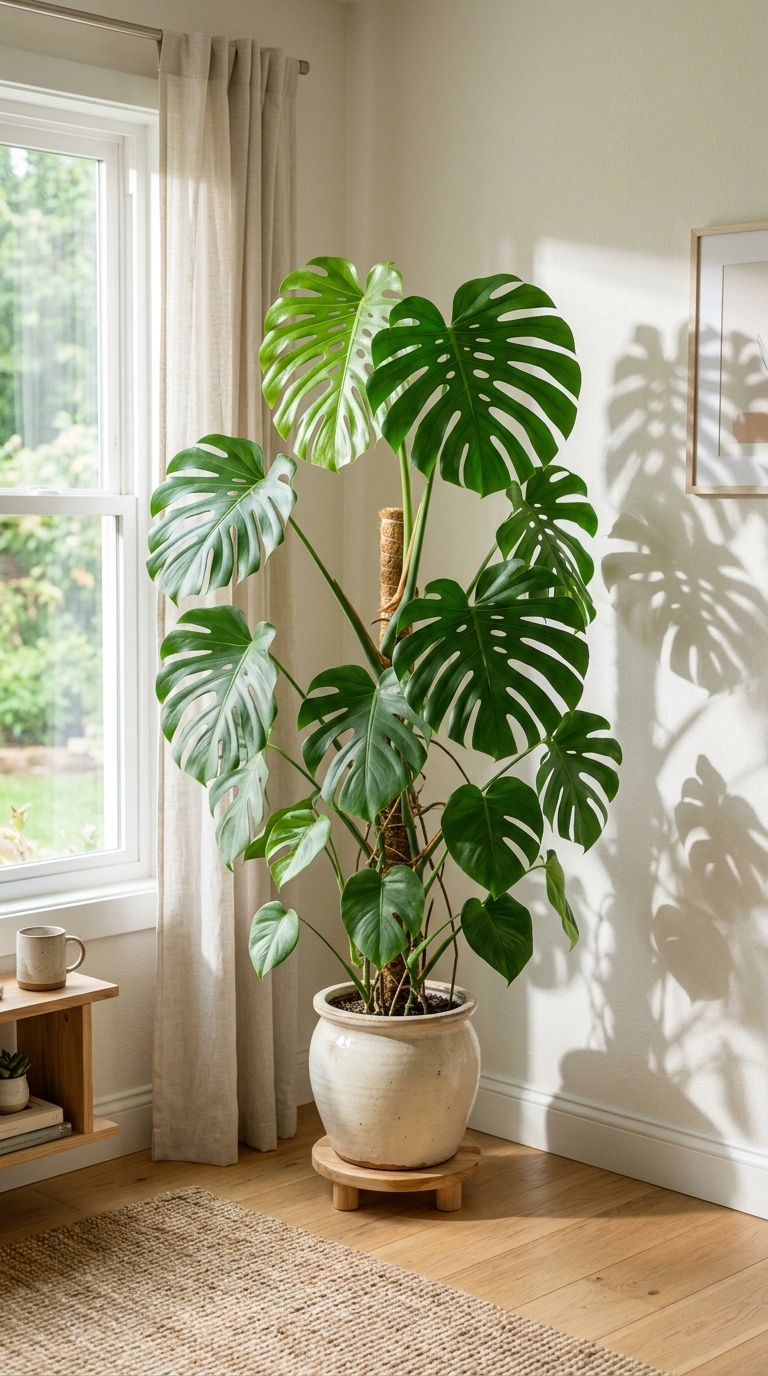
A monstera plant, known for its large, uniquely split leaves, adds a bold organic shape to a living room without introducing any color outside the green and neutral palette. Its leaves create natural shadow patterns on the wall behind it when placed near a window with good afternoon light.
Choose a simple, tall ceramic or woven pot, and place the plant where it has room to spread out a bit, since monstera leaves can get quite large as the plant matures. A moss pole in the center of the pot helps support the plant as it grows taller and encourages larger leaf splits over time. This plant works especially well as a single statement piece in a corner, rather than grouped with other plants, letting its dramatic leaf shape stand out against a calm, neutral wall.
20. Cozy Reading Nook
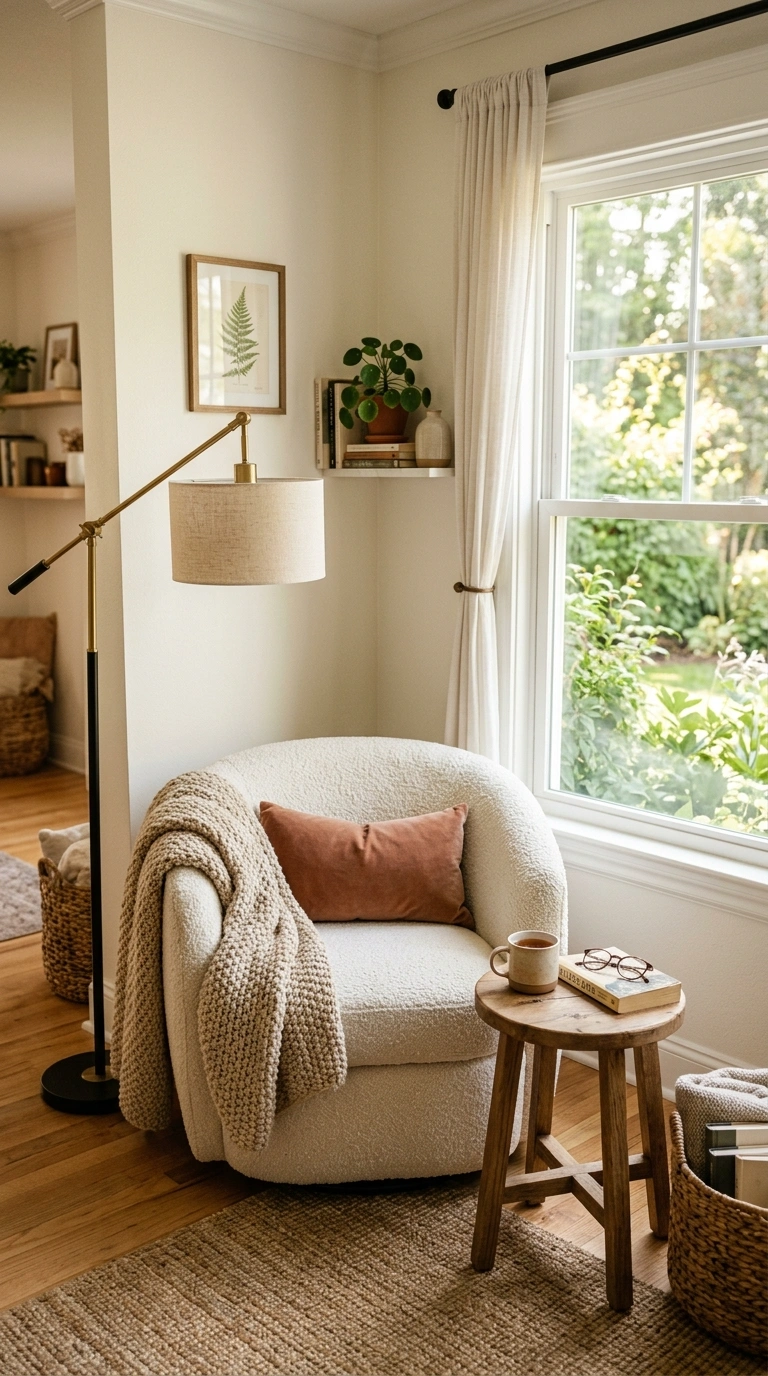
A single accent chair paired with a small side table and a floor lamp, tucked into a corner near a window, creates a reading nook that adds function and personality to a minimalist living room. Choose a chair with a bit of texture, like boucle or linen, in a neutral tone that fits the rest of the room.
Add a small woven basket beside the chair for current books or magazines, and drape a soft knit throw over the arm for both texture and practical warmth on cooler evenings. Keep the side table simple, just enough surface for a mug and a lamp, so the whole corner stays uncluttered. This kind of nook gives a neutral living room a personal touch, offering a quiet spot within an otherwise open, shared space.
21. Matte Black Fixtures
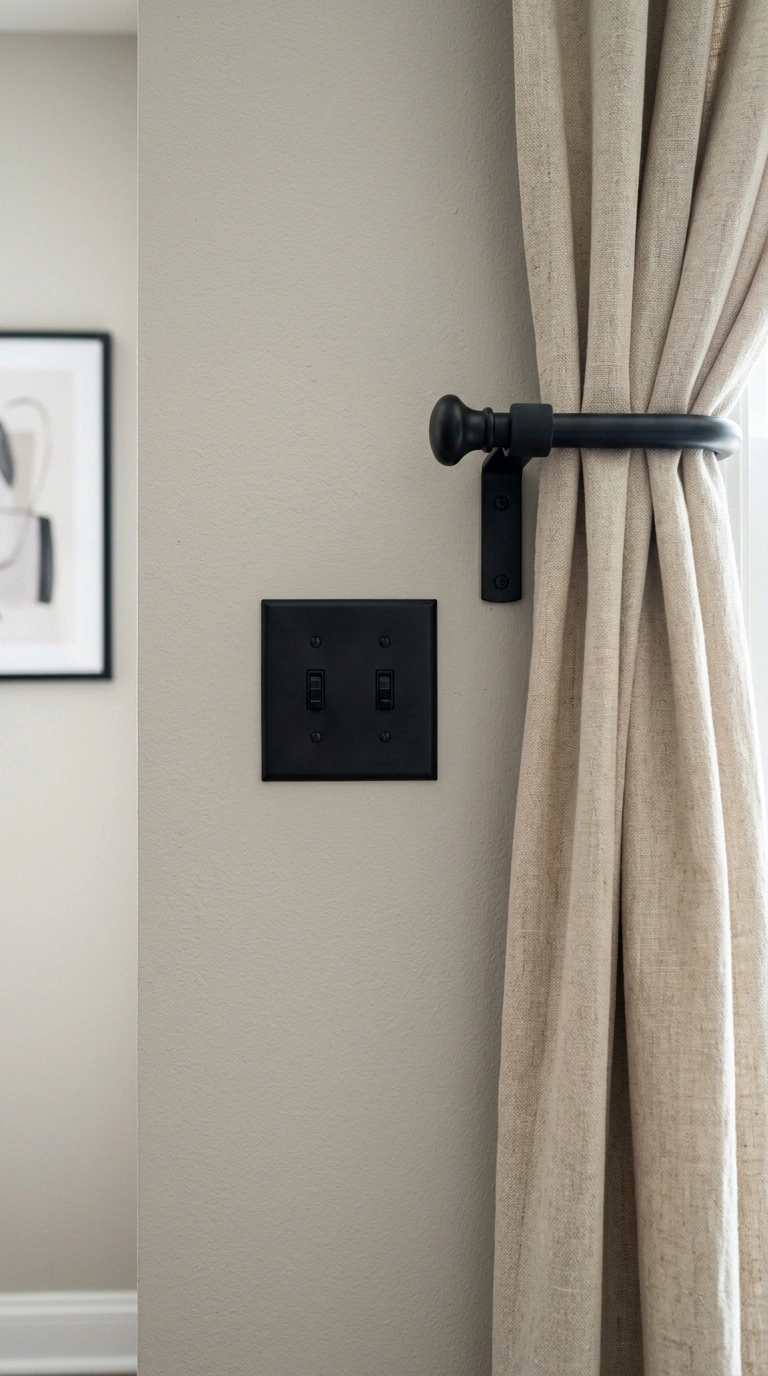
Swapping shiny brass or chrome hardware, light switches, and outlet covers for a matte black finish adds subtle contrast to an otherwise all neutral living room. This small detail grounds the space and gives it a slightly more modern, intentional feel without adding any color.
Apply this same finish to door hinges, curtain rods, and picture frame hardware for a cohesive look throughout the room. Matte finishes also tend to hide fingerprints and dust better than glossy ones, which is a practical bonus in a high traffic living space. Keep the black accents used consistently, rather than scattered randomly, so they read as a deliberate design choice tying the room together instead of a handful of unrelated dark spots throughout the space.
22. Layered Throw Blankets
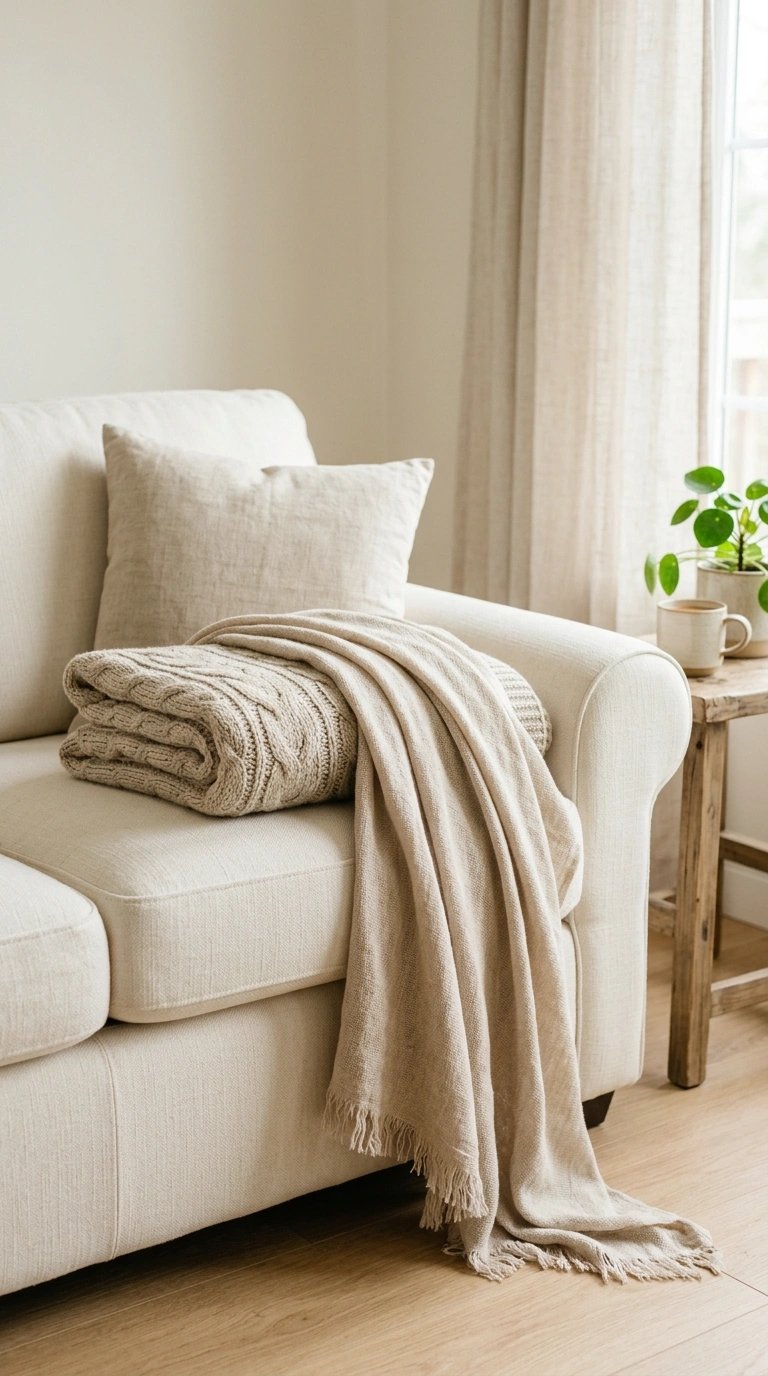
Draping two or three throw blankets in slightly different neutral tones and textures over the back or arm of a sofa adds both warmth and visual interest. Mix a chunky knit blanket with a smoother woven one, keeping the color palette within the same soft neutral family.
Fold one blanket neatly and drape the other more loosely for a bit of natural variation, since perfectly matched, perfectly folded blankets can start to feel a little stiff and staged. Place the blankets where they are easy to grab and use, not just for looks, since a well used living room always feels more inviting than one that looks untouched. This simple layering trick softens the hard edges of a sofa and adds texture that photographs beautifully in natural light.
23. Boucle Accent Chair
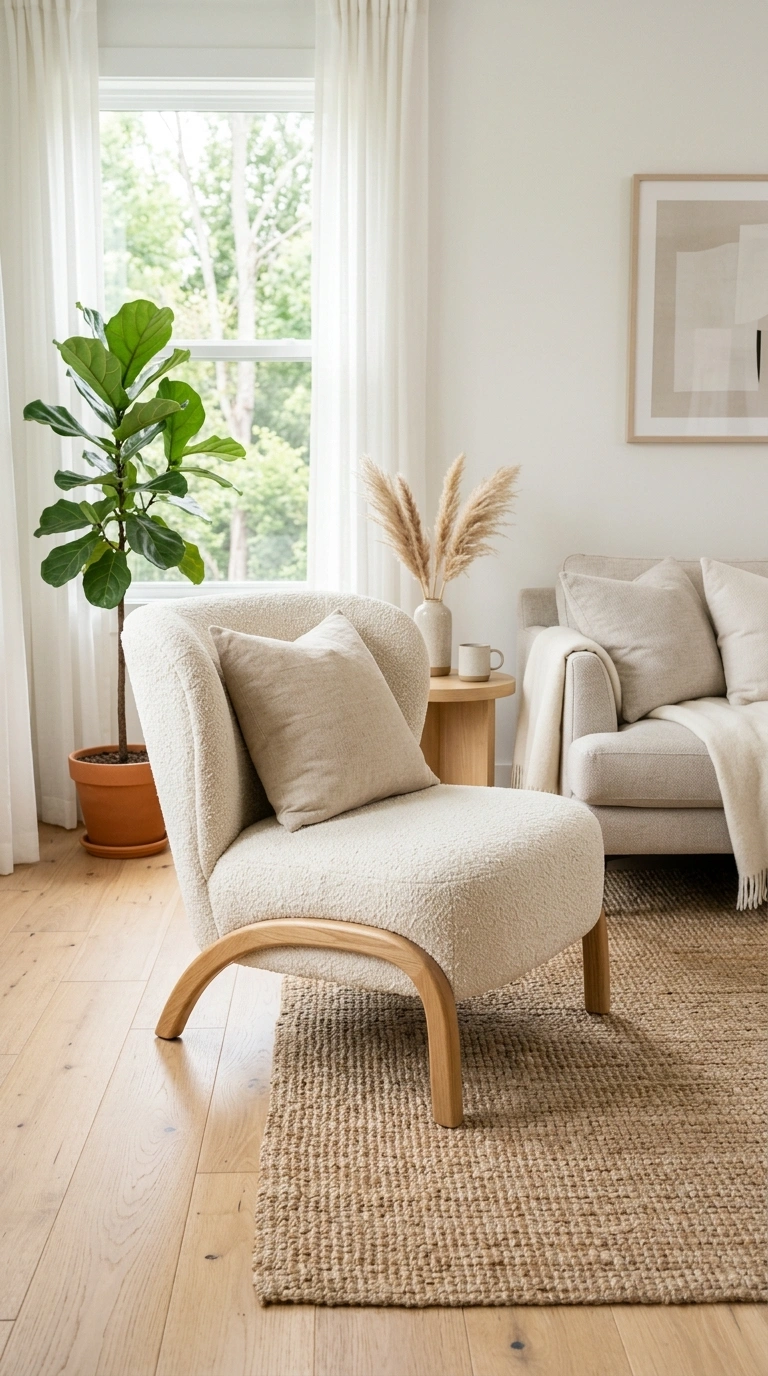
A single boucle accent chair in cream or light gray, placed at an angle to the sofa, adds an extra seat and a bit of texture without disrupting the room’s neutral color scheme. Choose a chair with simple curved lines and exposed wood or metal legs for a modern, minimalist silhouette.
Position the chair to create a natural conversation area with the sofa rather than lining it straight across, since a slight angle makes the layout feel more relaxed and intentional. Add one small pillow in a complementary neutral tone if the chair feels bare on its own. This piece works especially well as a reading spot or an extra seat for guests, and its soft, nubby texture pairs beautifully with the other natural materials used throughout the rest of the room.
FAQs
Is an all neutral living room boring?
No. Texture, from boucle to wood to woven baskets, along with greenery, gives a neutral room plenty of visual interest without needing bold color.
What plants work best in a minimalist living room?
Fiddle leaf figs, monstera, pothos, and palms all work well since their natural green tones and simple shapes fit easily into a neutral, calm color palette.
How do I keep a neutral room from feeling flat?
Layer different textures, like a woven rug under a smooth sofa, and vary the height of objects in the room using tall plants, floor lamps, and low furniture together.
Do I need matching furniture for a minimalist look?
No. Minimalist rooms actually look better with pieces that share a similar tone and simple shape rather than a fully matched furniture set.
A calm living room is not about doing less, it is about choosing each piece with a little more care. Start with one or two ideas from this list, live with them for a while, and add the rest as you go. The room will come together naturally, the same way mine did.