
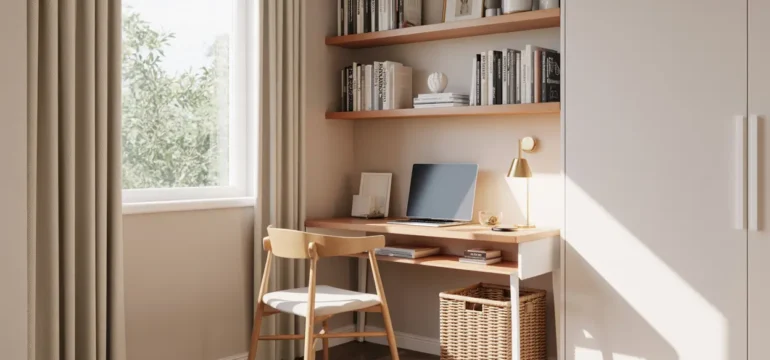
I work out of a converted closet that is barely wide enough to fit a desk and a chair, and for the first year it looked like a storage room with a laptop shoved inside. It took a handful of small changes, not a renovation, to make it feel like an actual office I wanted to sit in every day. A small workspace has one advantage a big one does not, every single item in it gets noticed, so small decor choices carry a lot of weight. The twenty ideas below are all things you can add to a tight office corner or a spare room without knocking down a wall or spending a paycheck. Each one either adds function, adds calm, or adds a bit of personality, and most of them do all three at once.
1. Floating Wall Shelves
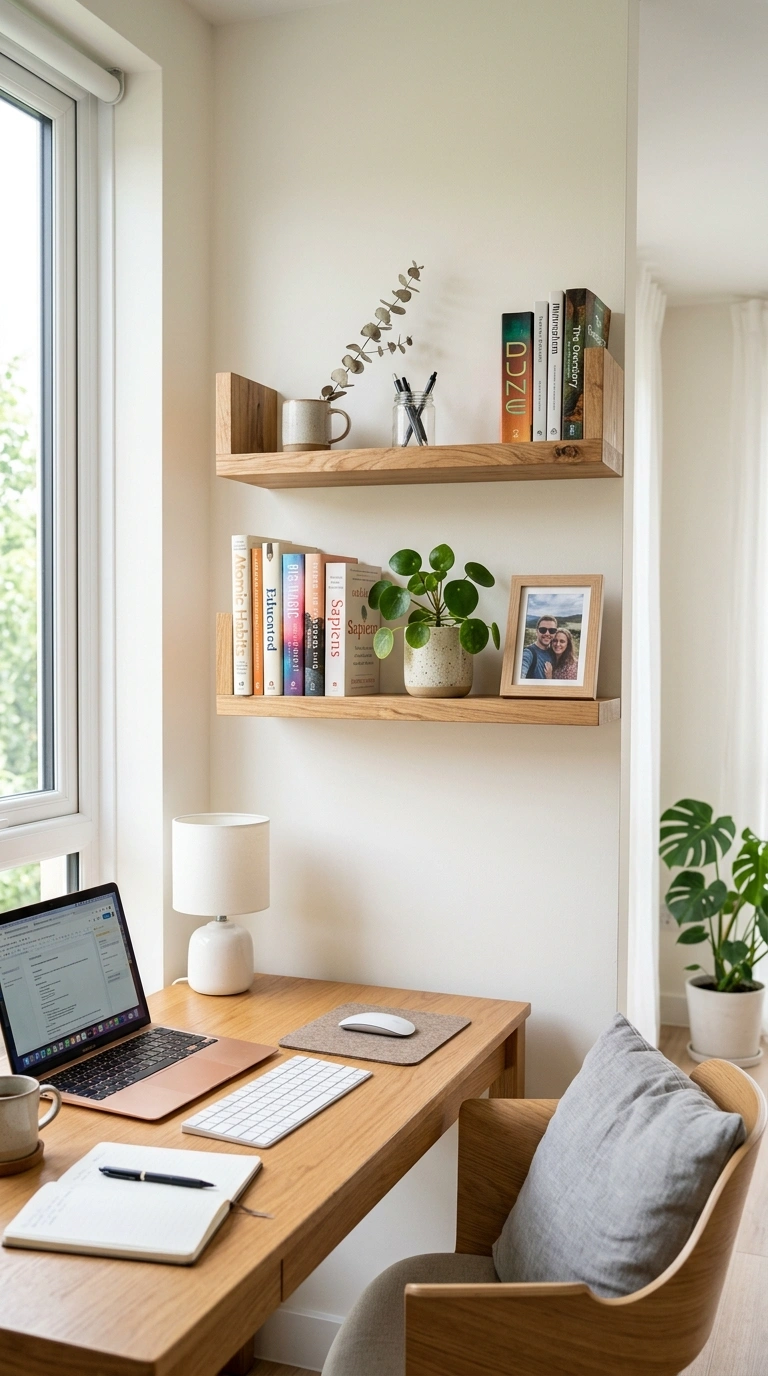
Floating shelves mounted above your desk give you storage without eating into your floor space, which matters most in a small office. Install two or three shelves at staggered heights on the wall directly behind or beside your desk, using simple L-bracket or floating shelf hardware rated for the weight of books and decor you plan to display. Paint the brackets to match your wall color if you want them to disappear visually.
Style the shelves with a mix of practical and decorative items, a few books stacked flat with a small plant on top, a framed photo, and a labeled box for supplies. Leave a bit of open space on each shelf rather than filling every inch, since a cluttered shelf reads as messy no matter how small the room is. This setup keeps reference materials within reach while keeping your actual desktop clear for work.
2. Cork Board Wall
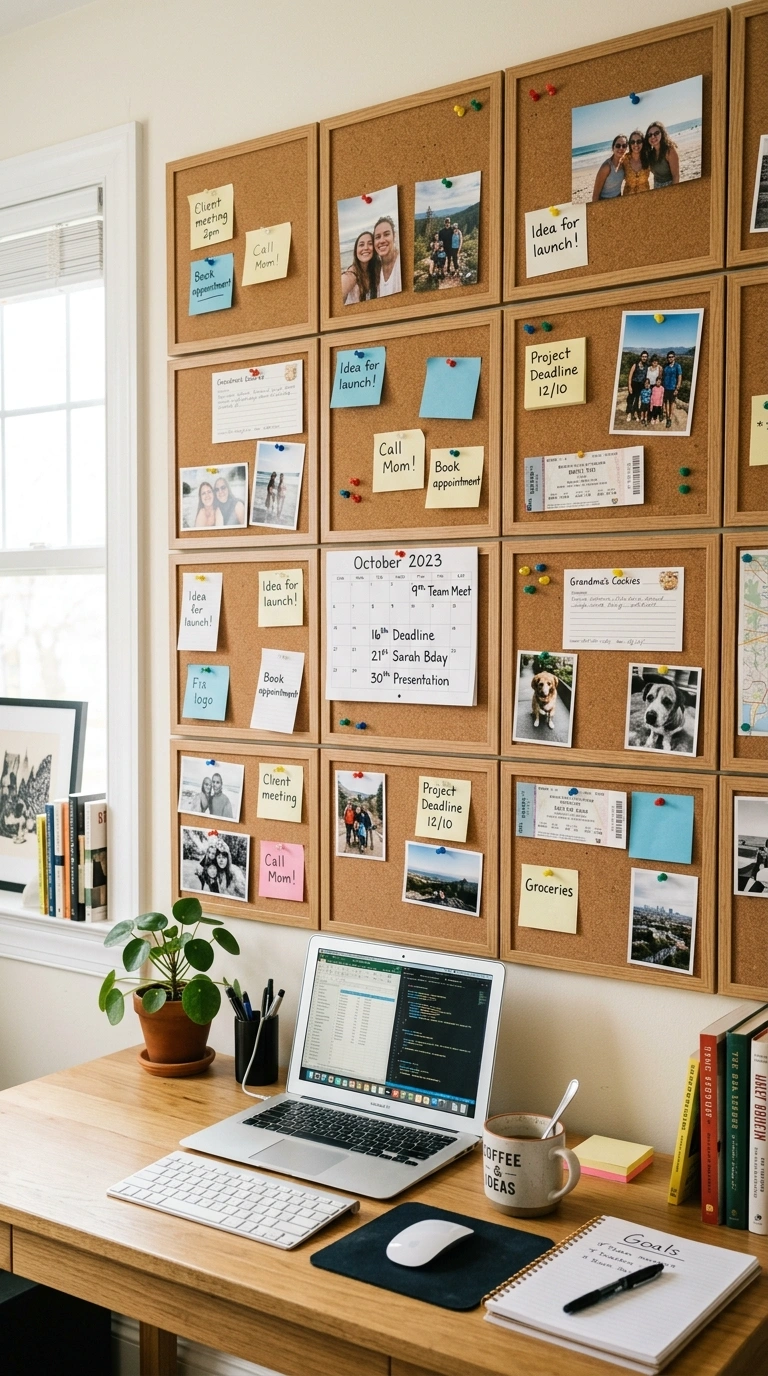
A cork board, or several cork tiles arranged together, gives you a spot to pin notes, reminders, and inspiration without covering your walls in tape marks. Cover a section of wall near your desk with cork tiles, which are inexpensive and simple to mount with adhesive strips, then frame the edge with a thin strip of wood trim for a more finished, less bulletin-board look.
Pin up your current project notes, a calendar page, or a few postcards and photos that make the space feel like yours. Group pins loosely rather than scattering them randomly, leaving a small visible border of cork around the edges so the display feels intentional. Swap items out regularly so the board stays useful and current instead of turning into a pile of outdated sticky notes nobody looks at anymore.
3. Small Corner Desk
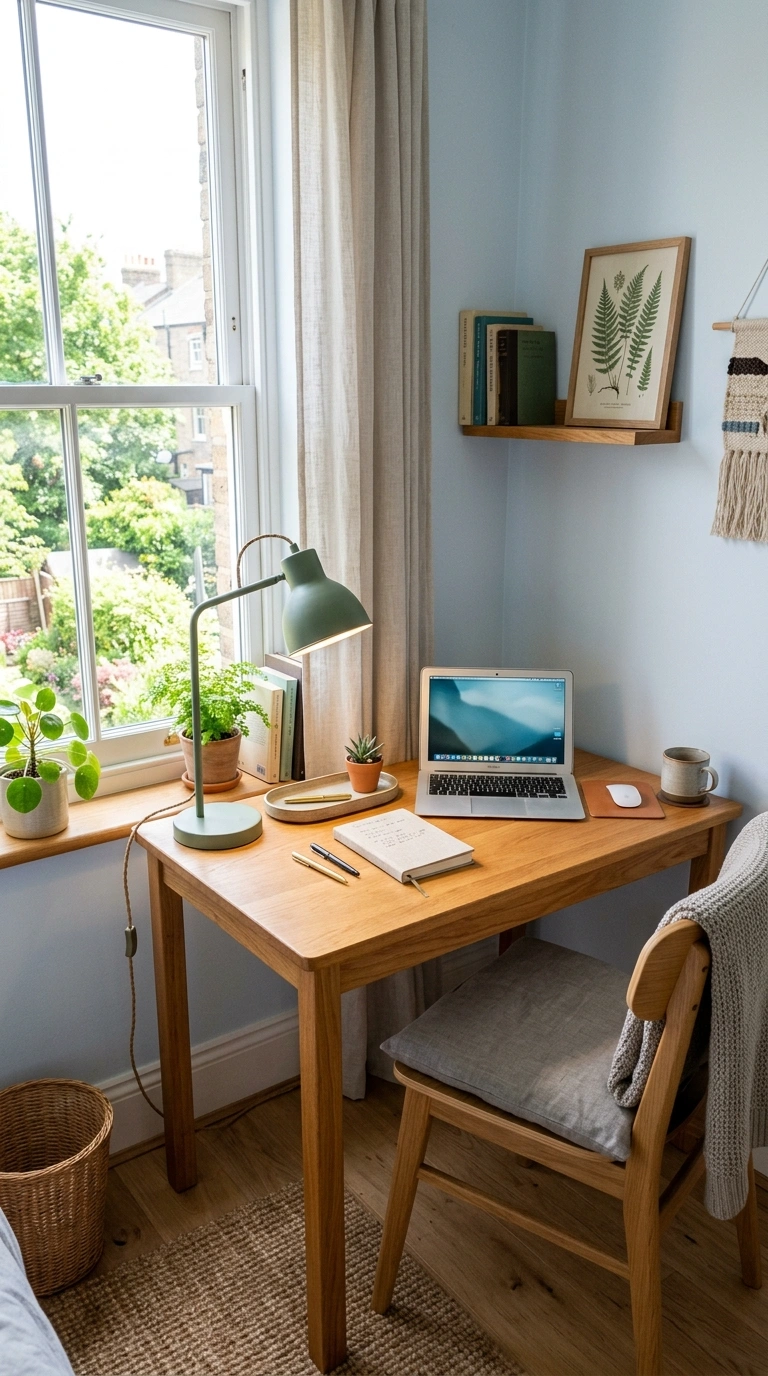
A corner desk makes use of what is usually wasted space in a small room, tucking your work area into a spot that would otherwise sit empty. Look for a compact L-shaped or single corner desk that fits the exact dimensions of your room, leaving enough space behind the chair to push back and stand comfortably. Position it so natural light from a window falls across the desk rather than directly behind your screen, which causes glare.
Keep the desk surface itself fairly clear, with just a lamp, a small tray for pens, and your computer, so the corner does not feel cramped despite the tight fit. A corner placement also frees up the rest of the room for a small bookshelf, a reading chair, or simply more open floor space, which makes a tiny office feel less like a closet and more like an actual room.
4. Woven Storage Baskets
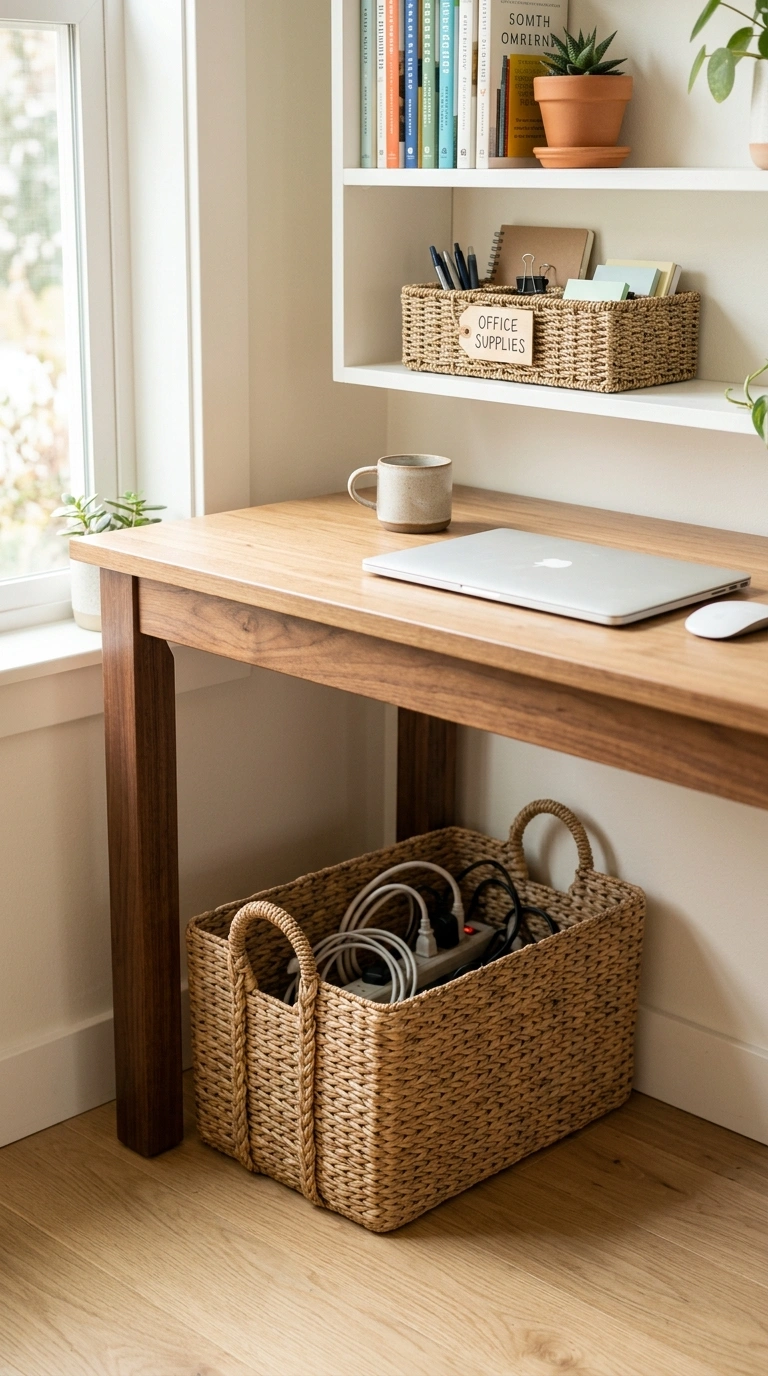
Woven baskets tucked under your desk or on a nearby shelf hide away cables, files, and supplies while adding warmth and texture to an otherwise hard-edged office setup. Choose baskets in a natural fiber like seagrass or rattan, which soften the look of metal desk legs and plastic organizers. Label each basket with a small tag so you always know what is inside without needing to dig through them.
Slide one basket under the desk for loose cables and chargers, and use a second, smaller one on a shelf for stationery or mail that needs sorting. This keeps surfaces clear while still giving you a place to stash everyday items instead of a drawer that becomes a junk pile. The natural texture also breaks up an all-white or all-gray office palette, adding a bit of visual warmth to the room.
5. Desktop Plant Trio
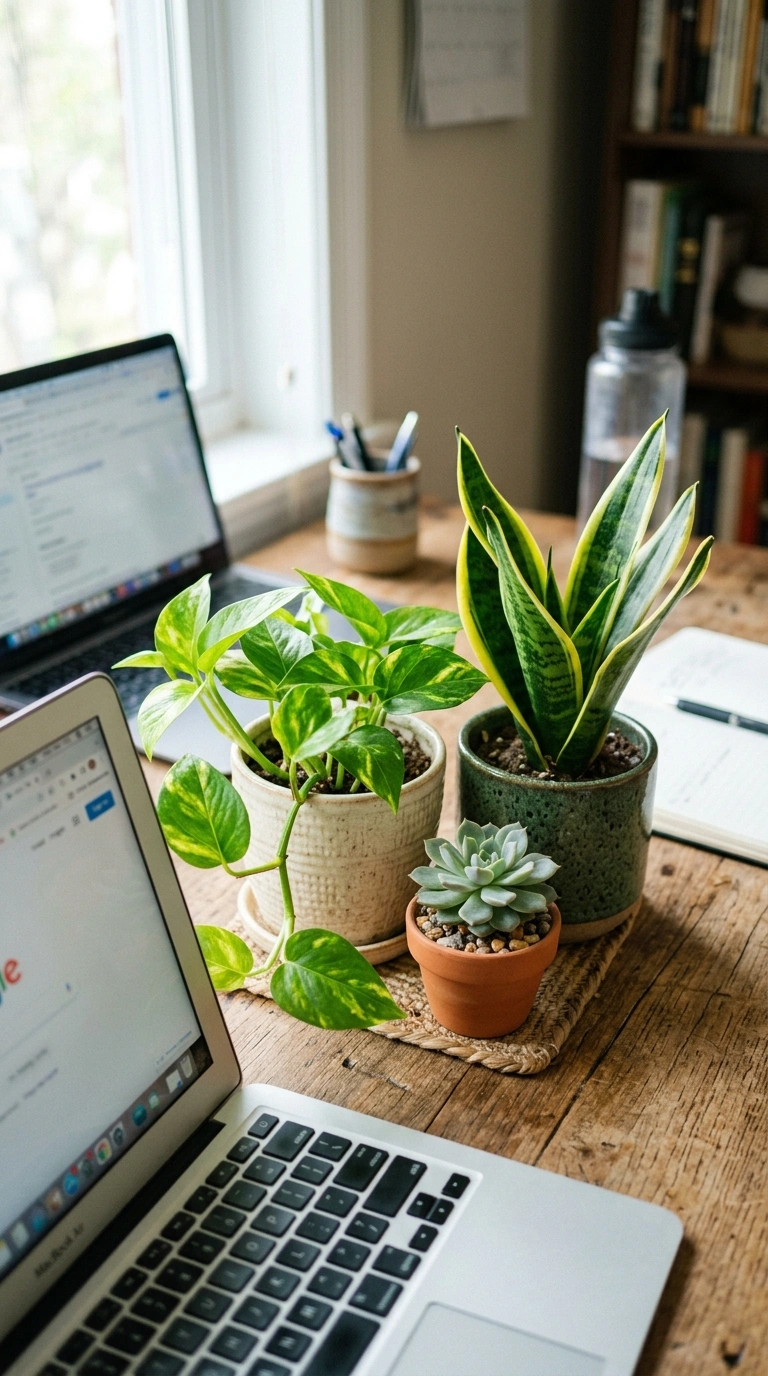
A small cluster of three plants on or near your desk adds life to the room without demanding much space or care. Choose low-maintenance options like a pothos, a small succulent, and a snake plant, which tolerate a range of light conditions common in home offices. Vary the pot heights slightly using a small stand or stacked books under one pot, so the trio has some visual rhythm instead of sitting in a flat, even row.
Position them where you can see them from your desk chair, since studies on workspace design consistently point to greenery helping people feel calmer while working. Wipe the leaves occasionally to keep them looking fresh, and rotate the pots toward the light source every week or so if your window light only hits from one direction, keeping the plants growing evenly instead of leaning toward the glass.
6. Gallery Wall Frames
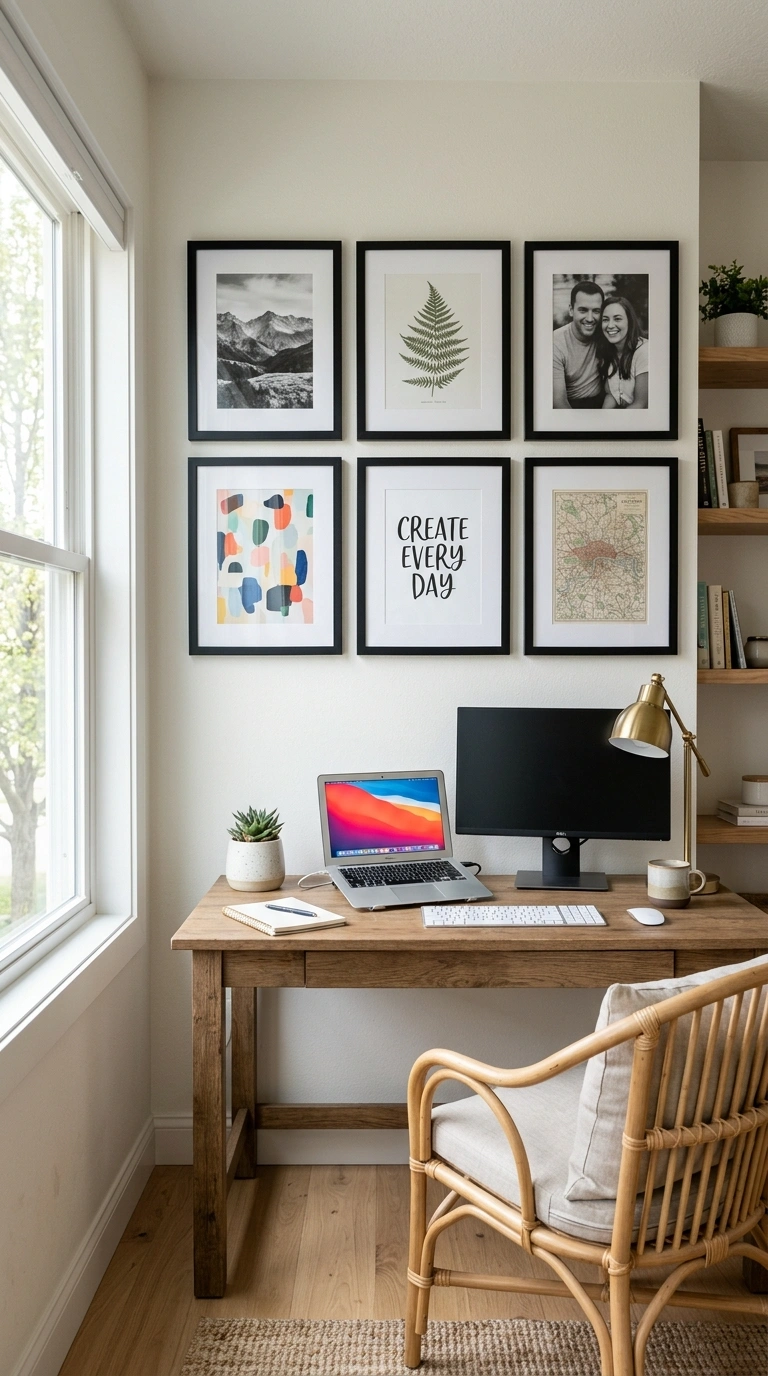
A small gallery wall above your desk or on the wall you face while working turns blank space into something worth looking at during a mental break. Choose four to six frames in a mix of sizes but a single matching color, black, white, or natural wood, so the variety in artwork still reads as one cohesive grouping. Mix in a print, a photo, a certificate, or even a piece of fabric in a frame for texture.
Lay the frames out on the floor first to plan the spacing before hammering any nails, keeping about two to three inches between each frame for a tight, gallery-style cluster. Keep the content professional if this is a workspace clients or coworkers might see over video calls, favoring calm prints, maps, or botanical art over anything too busy or personal, which keeps the wall polished rather than cluttered.
7. Task Lamp Upgrade
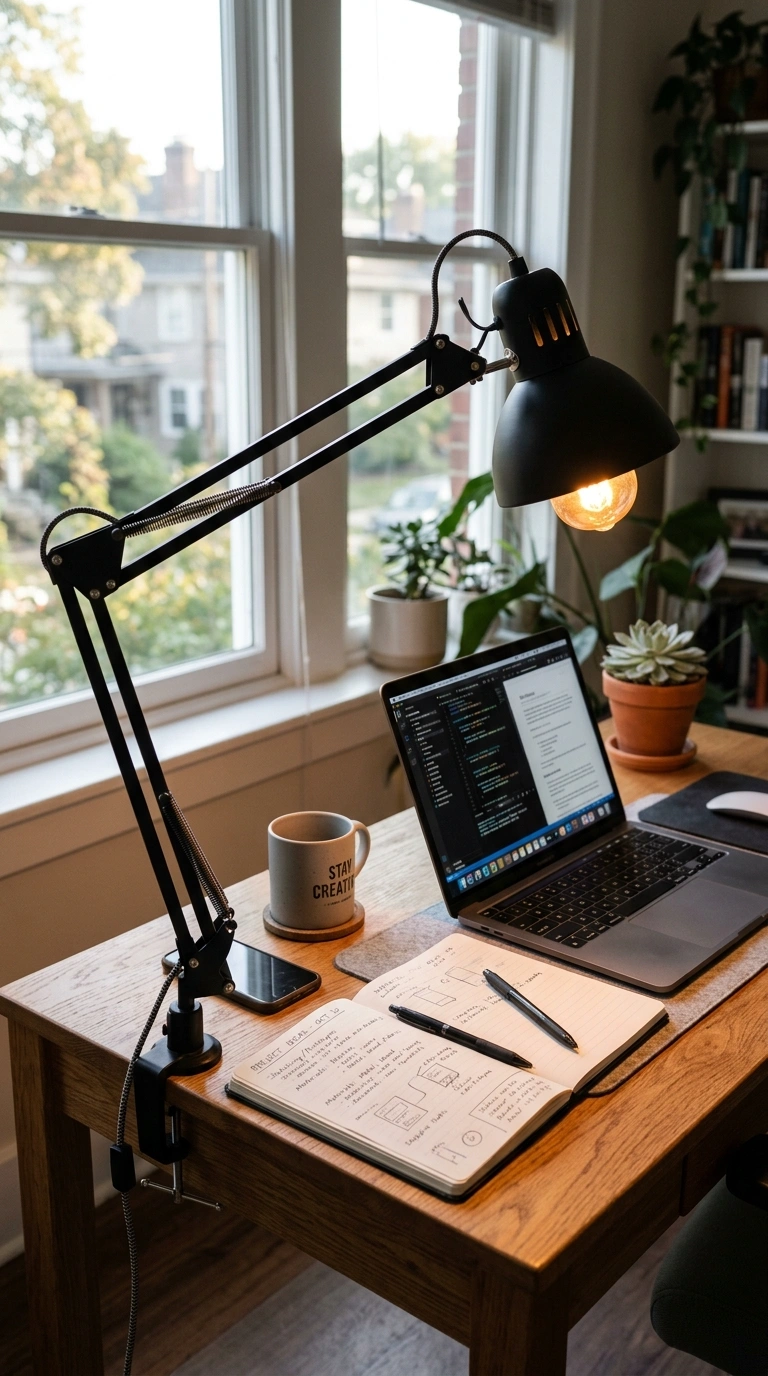
Swapping a plain desk lamp for one with better style and adjustable lighting changes both the function and the look of a small office instantly. Look for a lamp with an articulating arm so you can direct light exactly where you need it, paired with a warm bulb that is easier on the eyes during long work sessions than a harsh white one. Choose a finish, brass, matte black, or white, that matches your other desk accessories.
Position the lamp so it lights your work surface without casting a shadow from your writing hand or creating glare on your screen. A well-chosen lamp also acts as a design anchor for the whole desk area, tying together your other decor choices. Turn off overhead lighting and rely on the lamp during focused work blocks, which tends to feel calmer and more focused than bright overhead office lighting.
8. Rolling File Cart
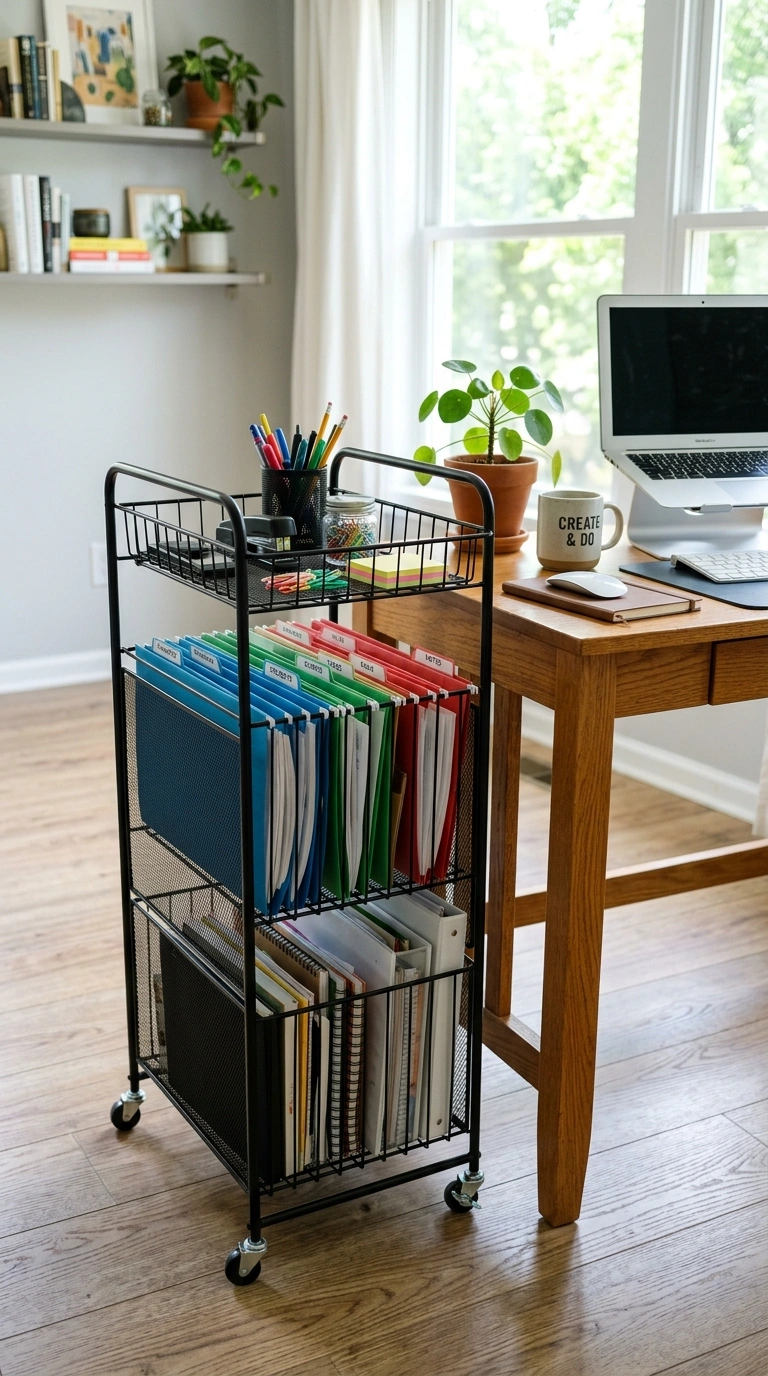
A slim rolling file cart solves storage problems in an office too small for a filing cabinet, and it tucks neatly beside or under your desk when not in use. Choose a cart with two or three tiers, using the top for items you reach for daily and the lower tiers for files and supplies you need less often. Wire baskets or fabric bins on the cart keep loose papers contained instead of sliding around.
Because it rolls, you can pull the cart out for easy access during a busy work session and push it back against the wall the rest of the time, which is especially handy in a room too tight for fixed furniture. Label the bins clearly so filing stays simple, and pick a cart finish that matches your desk so it reads as a deliberate piece of furniture rather than a leftover office supply.
9. Cozy Reading Chair
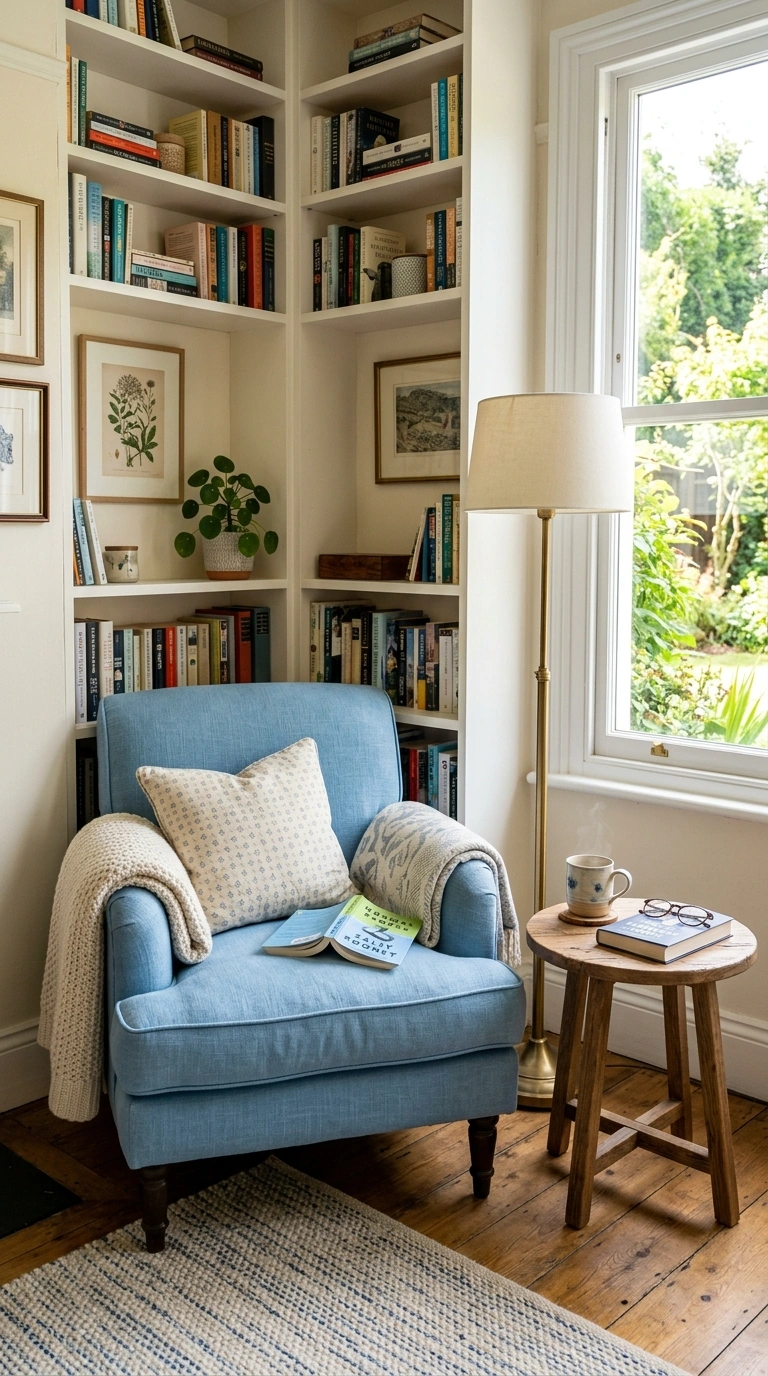
A single small armchair tucked into a corner of your office gives you a second spot to work from, away from the desk, which helps a small room feel more like a real space rather than a single-function box. Choose a compact chair with a slim profile so it does not overwhelm the room, and pick an upholstery color that contrasts gently with your desk area for visual interest.
Add a small side table and a floor lamp beside the chair so it functions as a proper reading or thinking nook, useful for phone calls, sketching ideas, or simply stepping away from the screen for a few minutes. This second seating spot also makes the office feel welcoming to a guest or coworker who stops by, rather than offering only a stiff desk chair as the sole seating option in the room.
10. Layered Area Rug
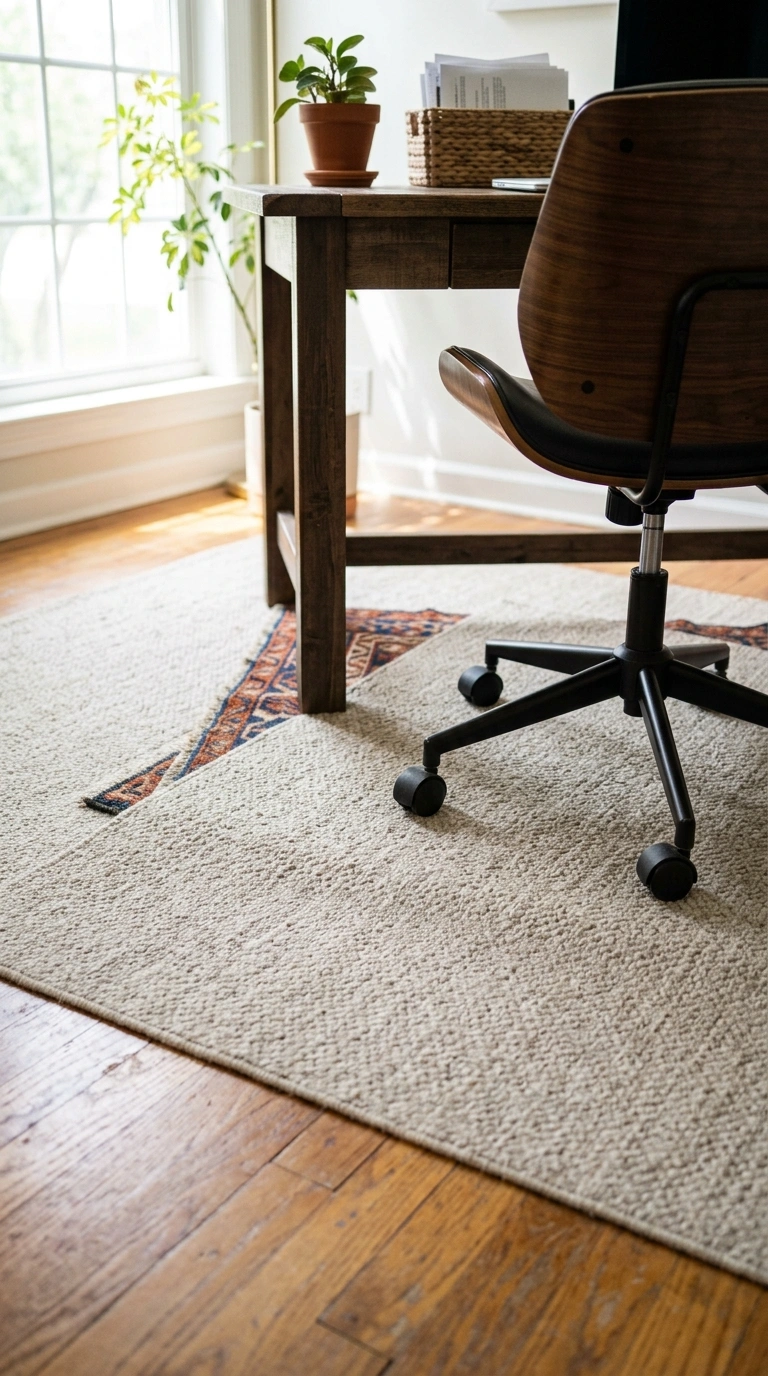
A rug under your desk chair and rolling castors protects the floor while adding warmth and color to a small office that might otherwise feel cold or sterile. Choose a low-pile rug so your chair rolls smoothly across it, and size it generously enough that the chair stays on the rug even when pushed back or rolled to the side while reaching for a shelf.
Pick a pattern or color that grounds the room and ties your other decor choices together, a rug is often the easiest way to introduce a bold color into an office without it feeling overwhelming. If the room already has flooring you like, a smaller accent rug layered just under the desk chair adds a defined, cozy zone without covering the whole floor, which works especially well in a shared or multi-use room.
11. Pegboard Organizer
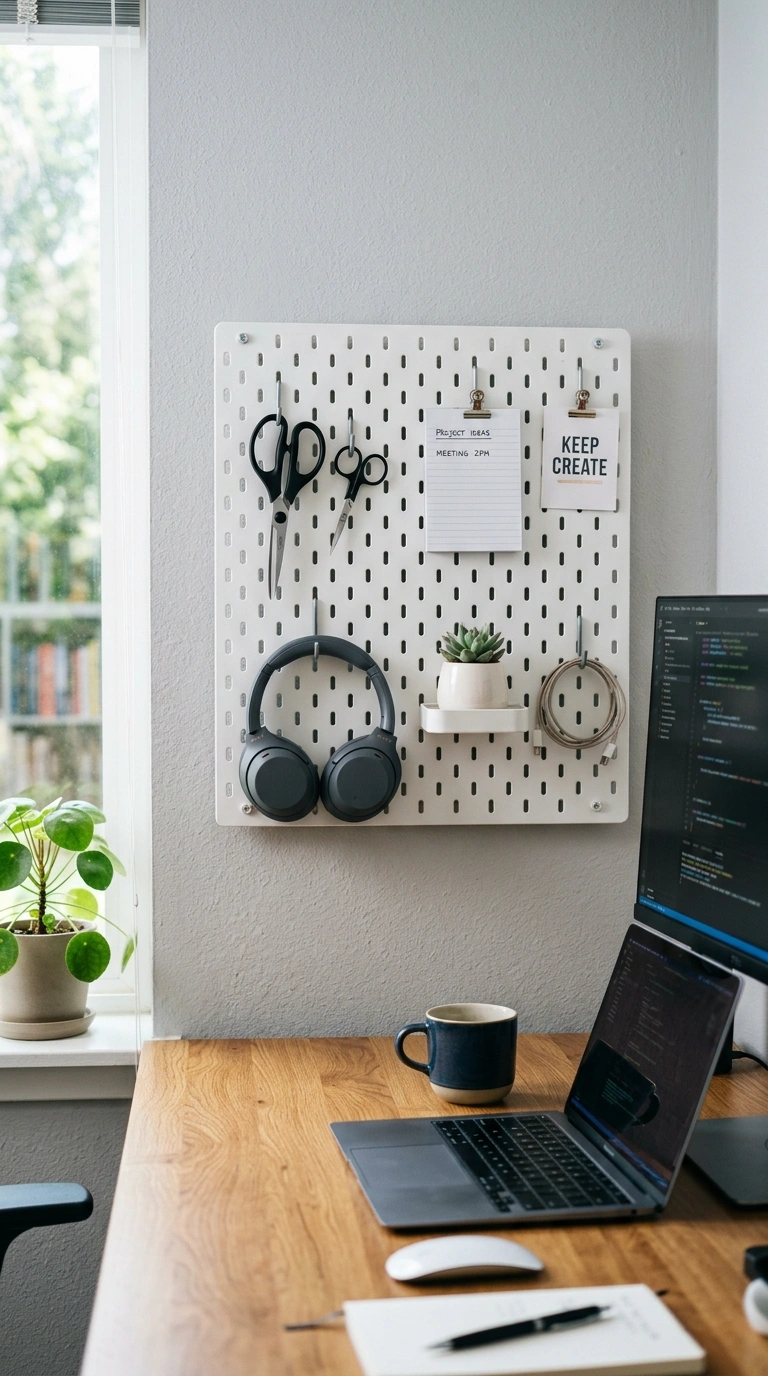
A pegboard mounted on the wall above or beside your desk turns vertical space into flexible storage for tools, supplies, and small decor pieces. Paint the board a color that matches your wall for a seamless look, or choose a contrasting shade to make it a design feature on its own. Add hooks, small shelves, and baskets to the pegboard holes, rearranging them anytime your storage needs change without any new holes in the wall.
Use it to hang scissors, tape, headphones, or a small clock, keeping everyday tools visible and within arm’s reach instead of buried in a drawer. A pegboard also gives you room to clip in a small planter or a piece of art alongside the practical items, blending function and decor on the same wall. This flexibility makes it especially useful in a small office where needs change often.
12. Bookend Display Shelf
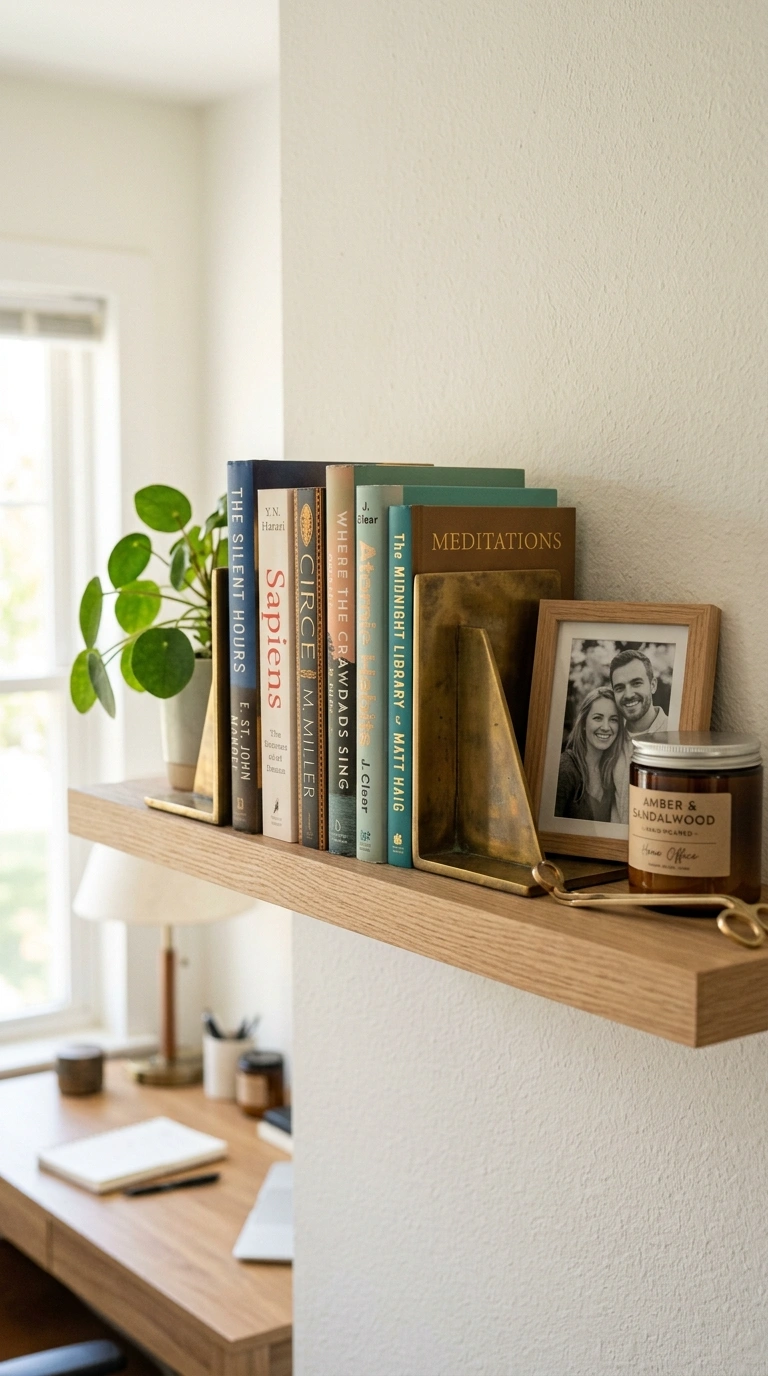
A single narrow shelf styled with a few favorite books held upright by a pair of sturdy bookends adds a personal, professional touch to a small office wall. Choose bookends in a material that matches your other metal or wood accents, brass, marble, or simple painted wood, so the display feels coordinated with the rest of the room. Group five to seven books by height rather than alphabetically for a cleaner visual line.
Add one small object next to the books, a framed photo, a candle, or a small plant, to break up the row without crowding it. This kind of small vignette works well at eye level near your desk, giving you something pleasant to glance at during a pause in your work. Keep the rest of the shelf uncluttered so the few items you do display actually stand out.
13. Motivational Wall Art
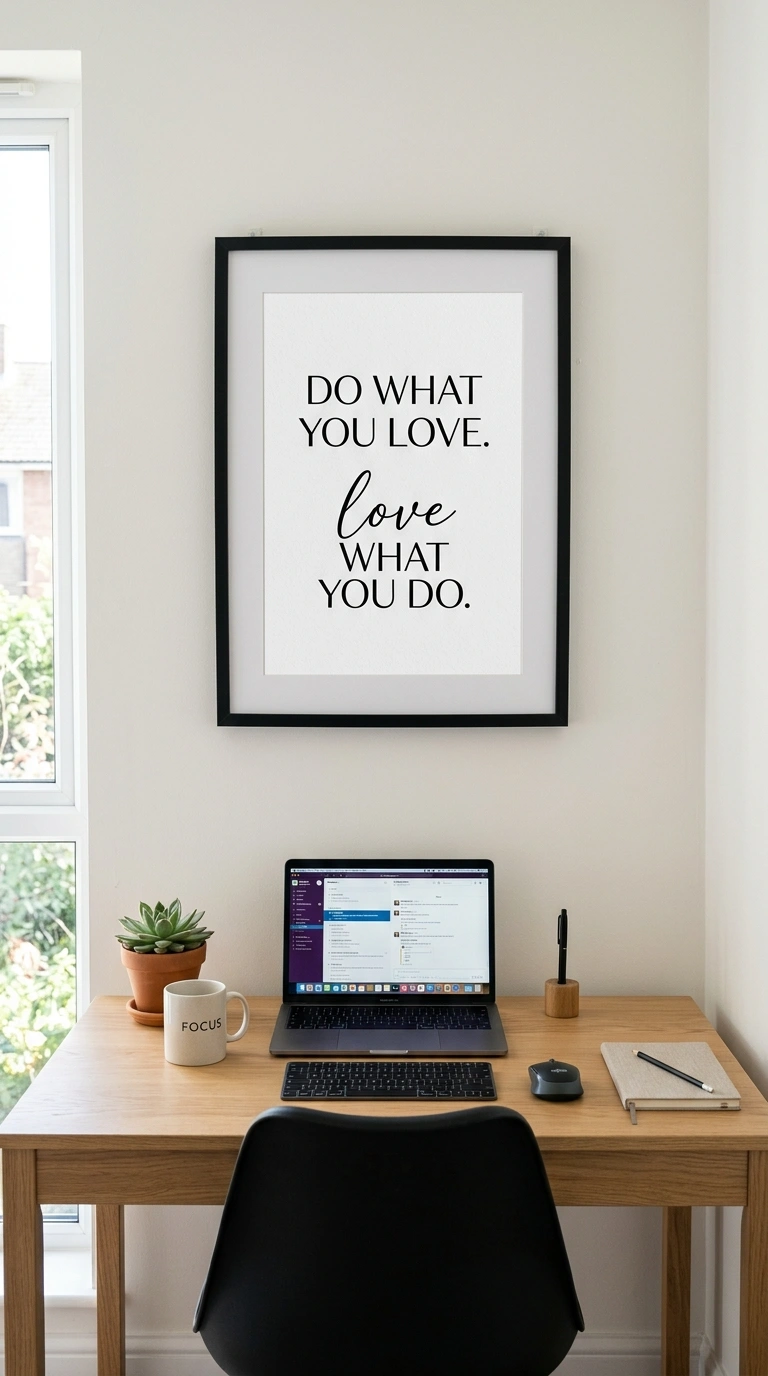
A single piece of wall art with a short phrase or quote you actually connect with can set the tone for your whole workday without feeling cheesy, as long as you choose something simple rather than an overly loud slogan print. Look for a framed print in a clean typeface on a plain background, or print and frame your own favorite quote for a personal touch that costs almost nothing.
Hang it directly in your line of sight from your desk chair, since the point is to see it regularly, not just once when you walk in. Keep the rest of the wall around it fairly simple so the piece has room to stand out rather than competing with other art. This idea works particularly well in a home office used for focused, solo work, where a quiet visual reminder can help reset your mindset during a long day.
14. Chair Cushion Swap
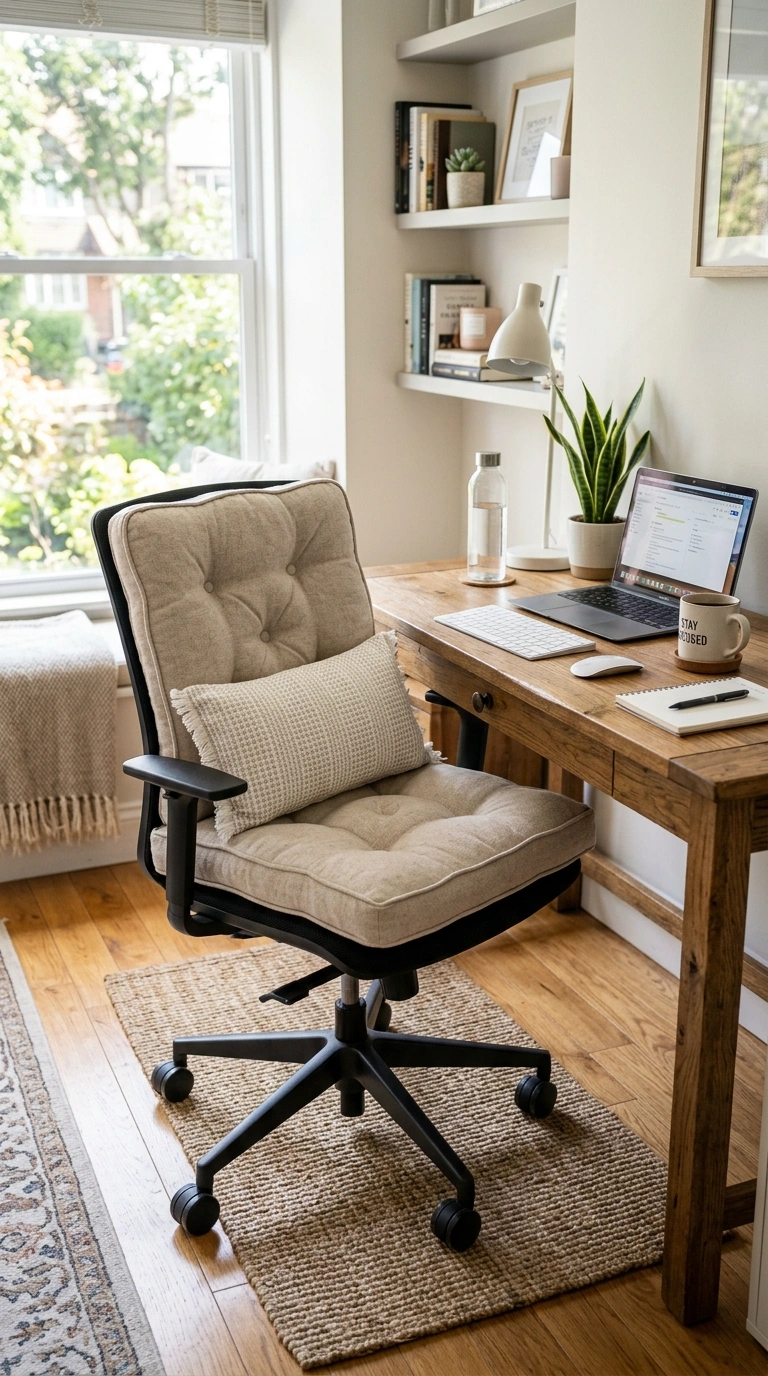
If your office chair came with a plain, hard seat, swapping in a fitted cushion is one of the fastest ways to make your workspace more comfortable and more stylish at the same time. Choose a cushion in a durable fabric that ties into your existing color scheme, tufted or piped seams add a slightly more polished, tailored look compared to a plain foam pad. Secure it with ties so it does not slide during the day.
This small swap makes long work sessions more comfortable, which genuinely affects how productive and focused you feel by the afternoon. Add a matching lumbar pillow if your chair back could use extra support, positioning it just above your lower back. Even a basic office chair looks and feels far more considered once it has a proper cushion instead of the plain seat it likely came with originally.
15. Desk Tray Organizer
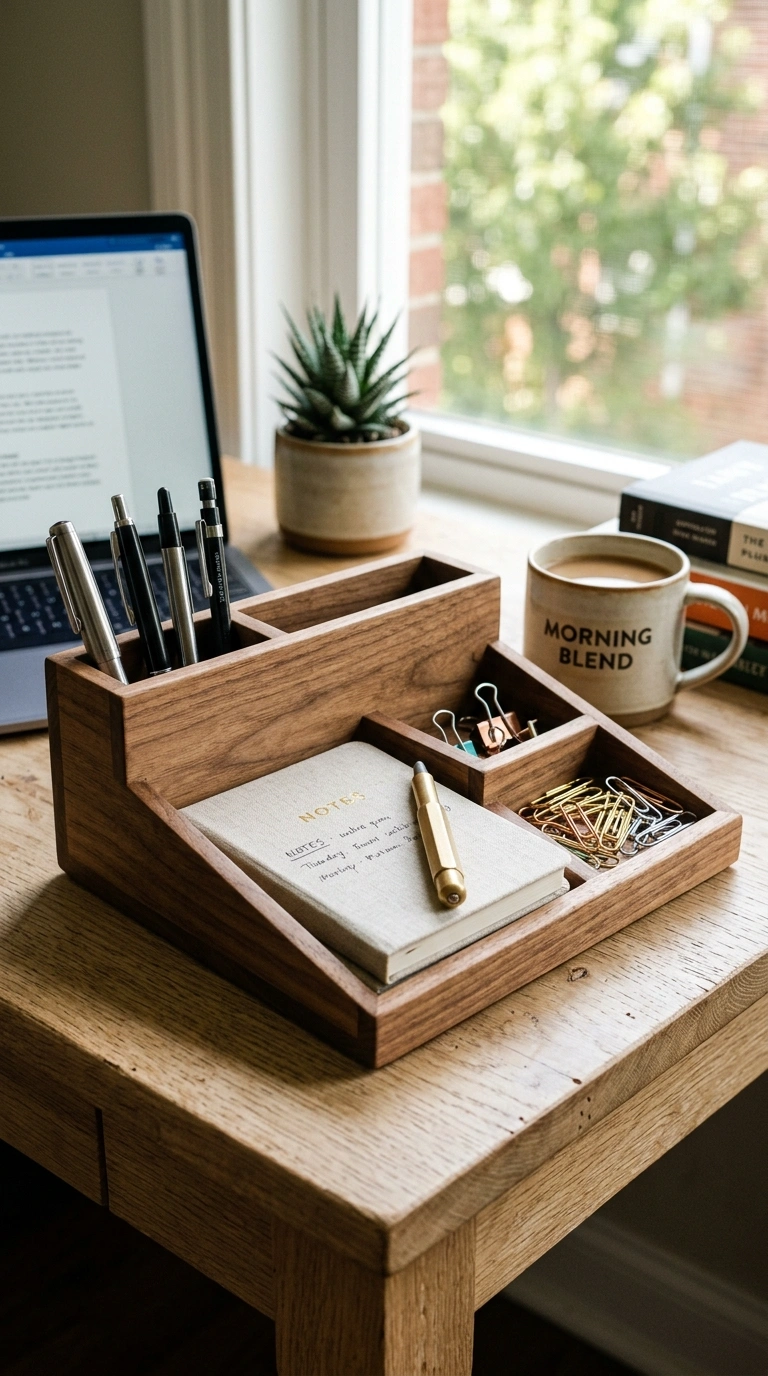
A shallow tray placed on one corner of your desk gives loose items like pens, sticky notes, and paper clips a defined home instead of drifting across your work surface throughout the day. Choose a tray in wood, marble, or a simple matte metal that matches your other desk accessories, and keep only your most frequently used items inside it rather than letting it become a catch-all for everything.
Group items by type within the tray, pens on one side, small notepads on the other, so you can grab what you need without digging around. This tiny bit of structure makes a noticeable difference in how organized a small desk feels, since visual clutter tends to feel worse in a small room than a large one. Empty and reset the tray at the end of each week to keep it from slowly filling up again.
16. Curtain Room Divider
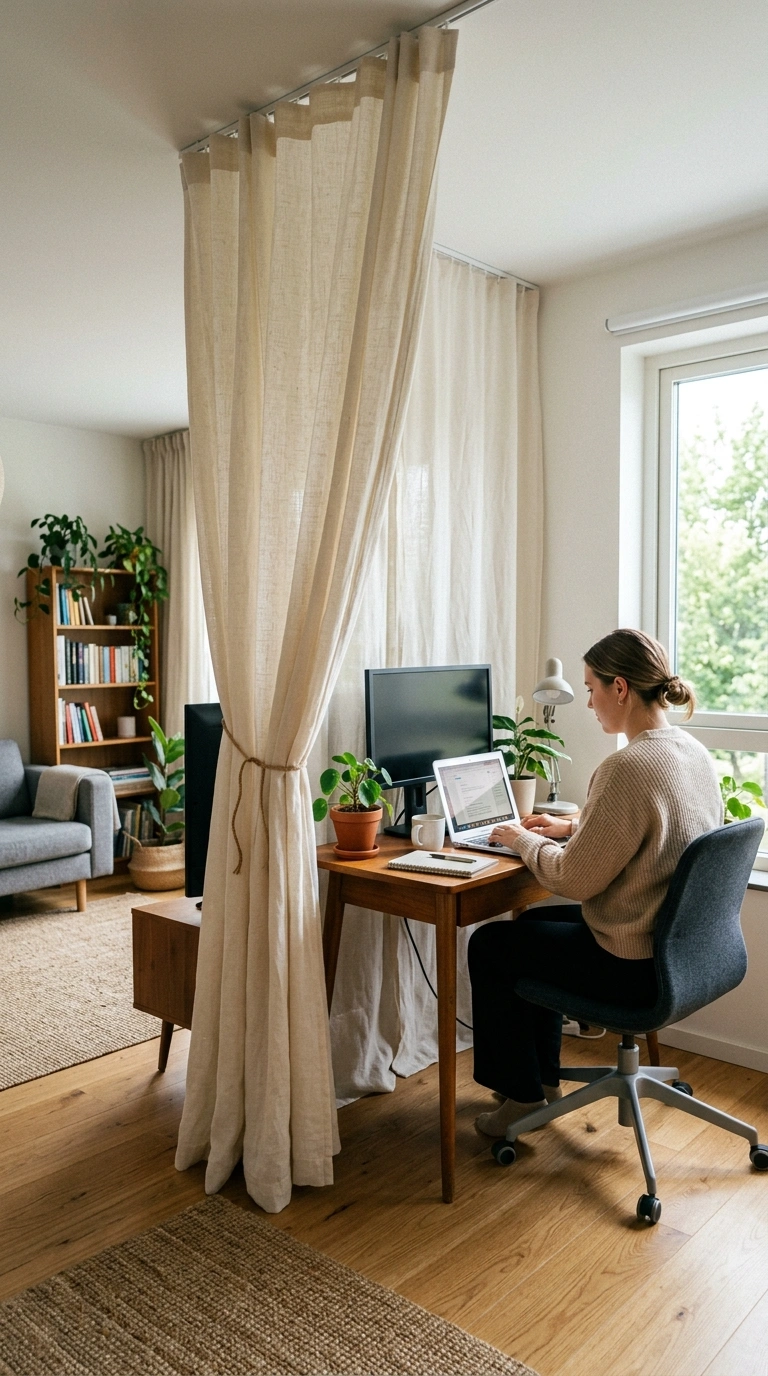
If your office shares space with another room, a simple curtain on a tension rod or ceiling track creates a visual boundary without the cost or permanence of a wall. Choose a fabric that is slightly heavier than a standard curtain panel for better sound dampening, and pick a color that complements both sides of the shared room so the divider reads as intentional decor rather than a temporary fix.
Close the curtain during work hours to signal focus time, both to yourself and to anyone else in the house, then open it fully when the office is not in use to let the room breathe and feel larger again. This idea works especially well for a home office tucked into a corner of a bedroom or living room, giving you a sense of separation even without any construction involved.
17. Mini Coffee Station
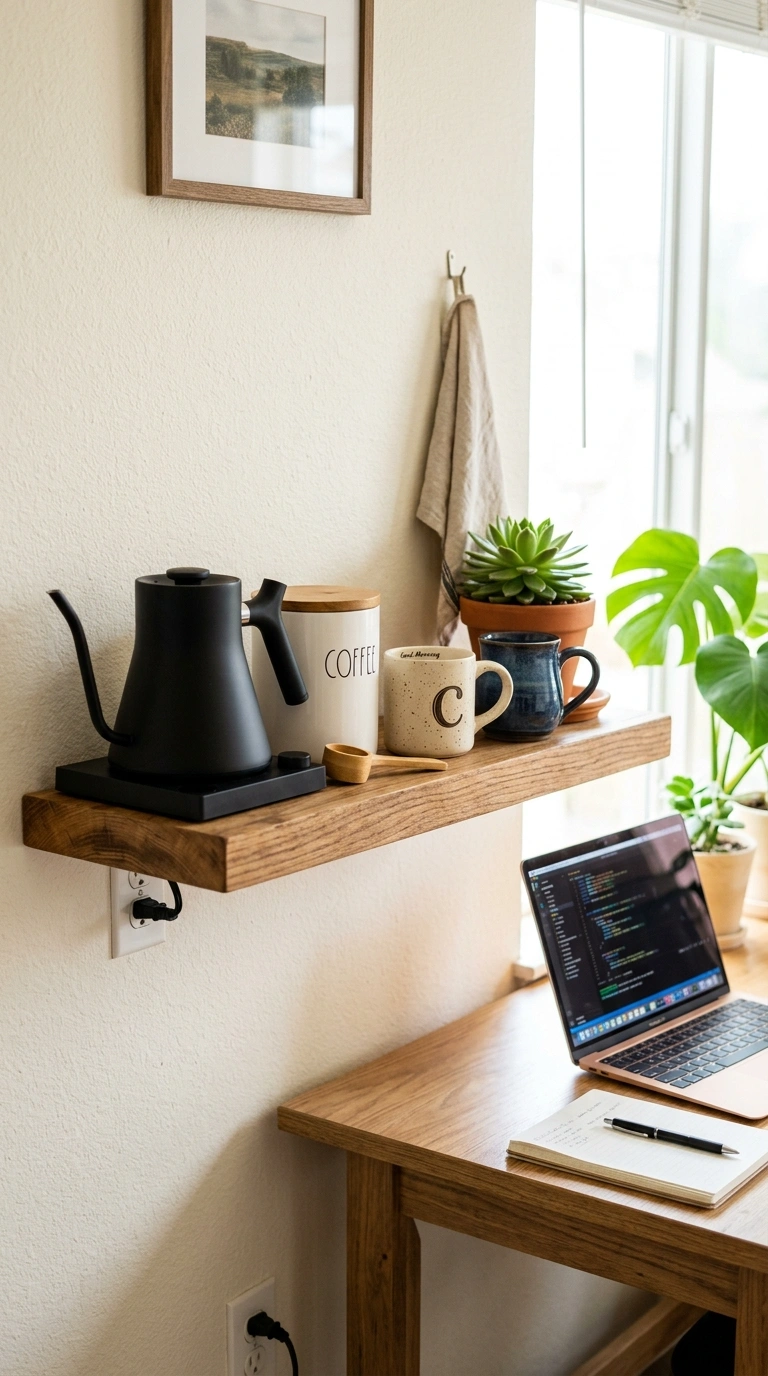
A small coffee or tea station on a narrow shelf or cart near your desk means you never have to leave the room to refuel during a long work session. Set out a compact electric kettle, a couple of favorite mugs, and a small canister of coffee or tea bags on a tray, keeping the whole setup contained to one corner so it does not spread across your work surface.
Add a small plant or a scented candle nearby to make the corner feel a bit more like a ritual spot than just a supply shelf. This little station also gives your office a second focal point besides the desk, something that makes the room feel multi-purpose and considered rather than purely functional. Keep it stocked and tidy, wiping up any spills right away so it stays a pleasant corner rather than a sticky mess.
18. Wall Calendar Station
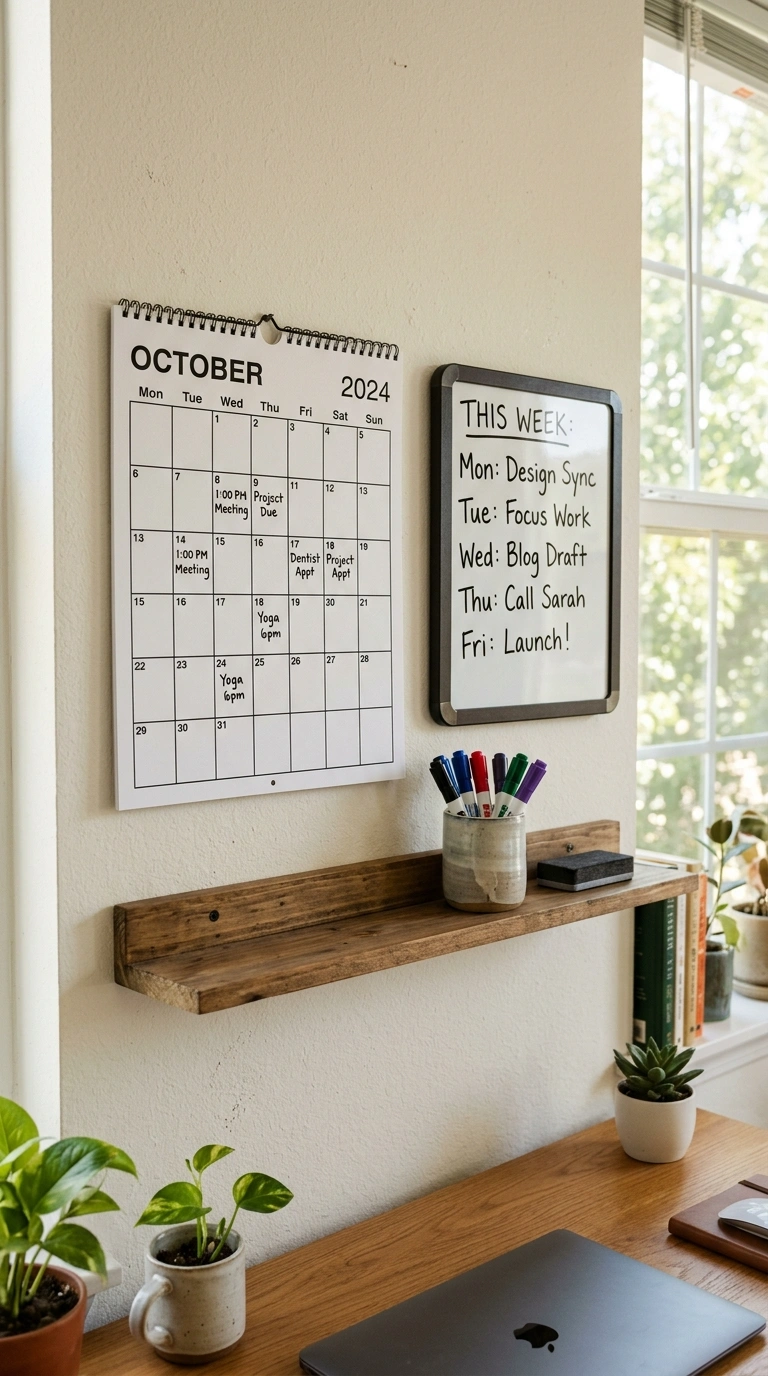
A wall-mounted calendar paired with a small whiteboard or note pad gives you a visual planning spot separate from your digital calendar, which many people find easier to glance at throughout the day. Choose a calendar design that matches your office palette, a simple grid in black and white tends to look the most professional if the room doubles as a video call background.
Mount it at eye level near your desk, along with a small cup or tray holding a couple of dry erase markers, so updating it takes seconds rather than becoming its own chore. Use the whiteboard section for quick daily notes or a running to-do list, wiping it clean each evening. This combination keeps your most immediate tasks visible without cluttering your actual desktop with sticky notes and loose paper reminders.
19. Under Desk Storage
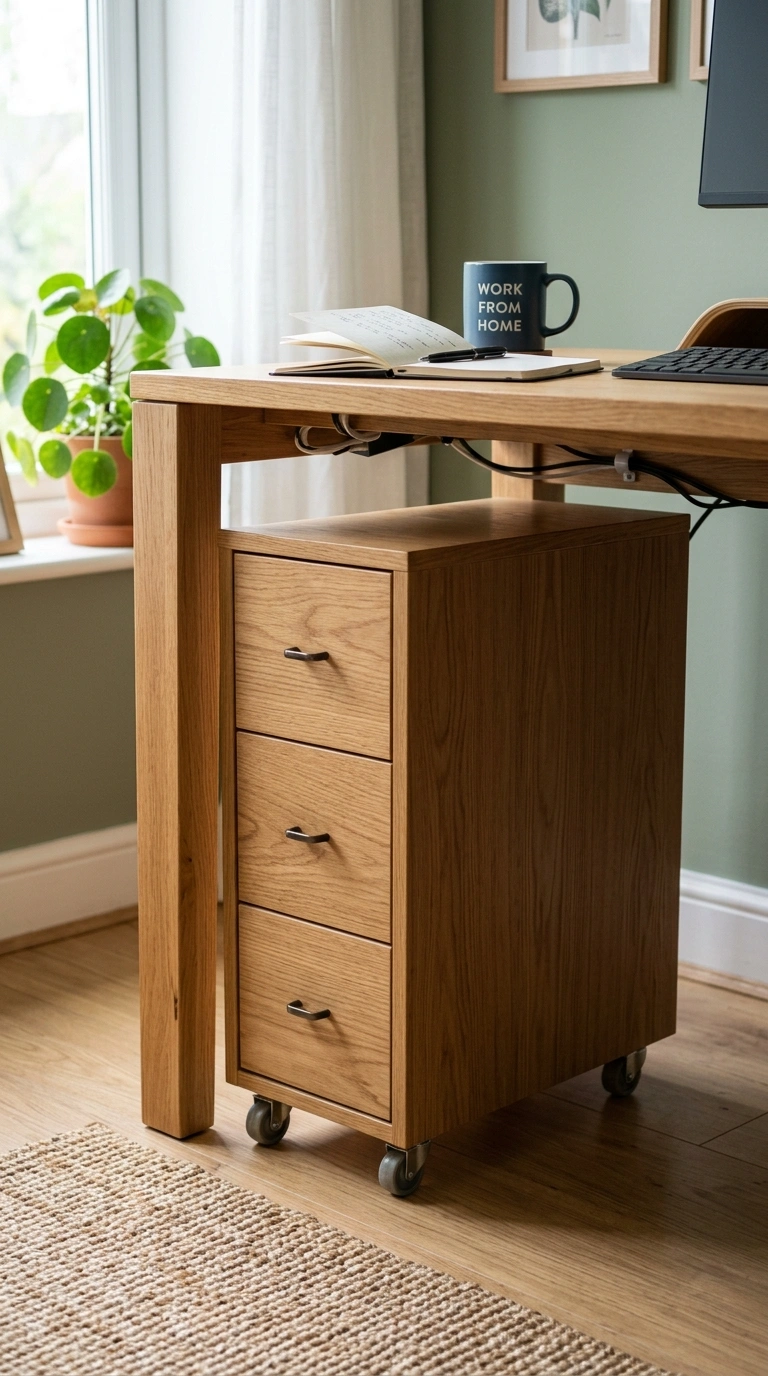
The space under your desk is often wasted in a small office, but a slim rolling drawer unit or a stack of matching bins fits neatly into that gap and adds real storage without taking up any additional floor space. Measure the height and depth under your desk carefully before buying, since even a couple of extra inches can mean the difference between a unit that fits and one that does not.
Use the drawers for supplies you need occasionally but do not want on display, extra notebooks, chargers, or reference documents. Choose a finish that matches your desk so the unit reads as a built-in piece rather than an obvious add-on. This is one of the most effective ways to add storage to a genuinely tiny office, since it uses a space that would otherwise sit completely empty all day.
20. Window Seat Nook
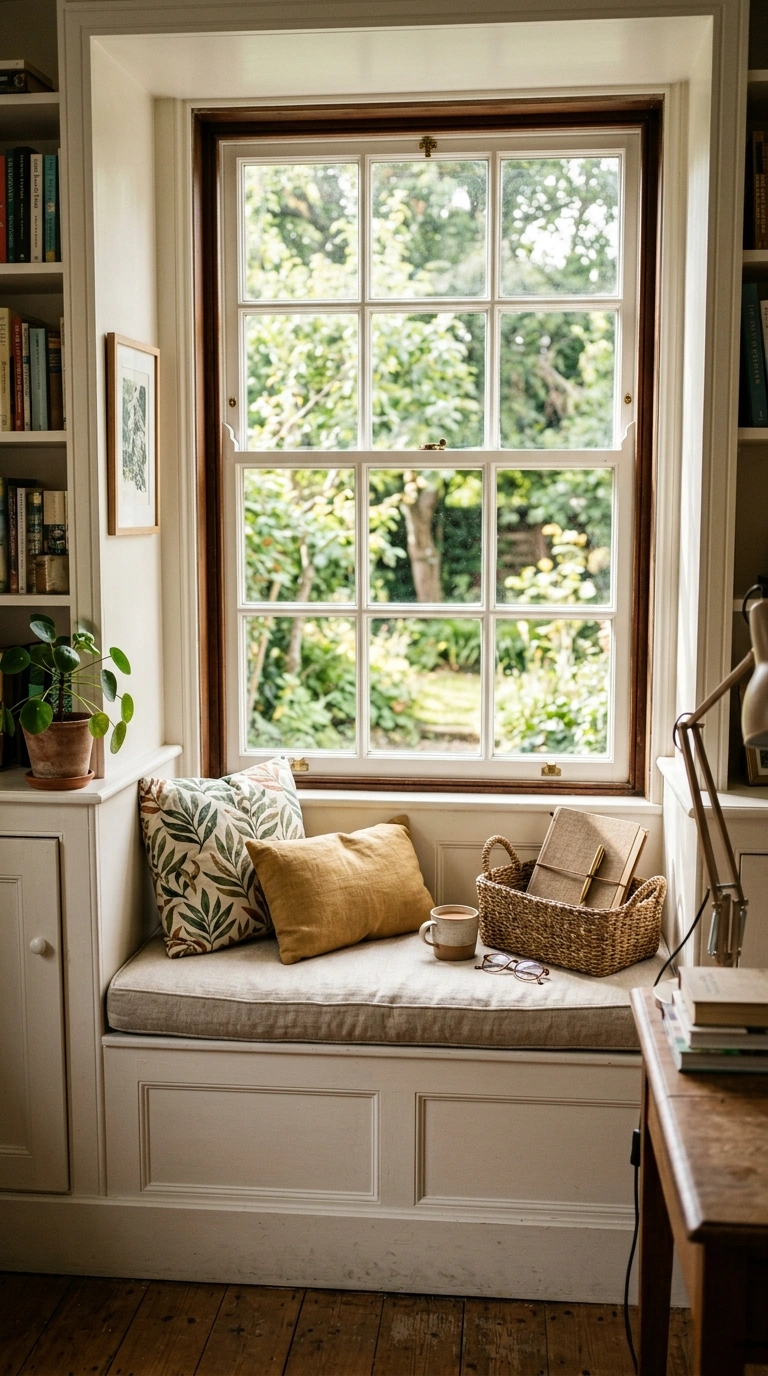
If your office has a window with a deep sill or a built-in ledge, turning it into a small cushioned nook gives you an alternate work or thinking spot beyond your desk chair. Add a fitted cushion cut to the size of the ledge, along with one or two small pillows, so the space is comfortable enough to sit in for a few minutes at a time between tasks.
Use this nook for phone calls, quiet reading, or simply staring outside for a moment during a mental break, which matters more in a small office than people expect, since there is rarely anywhere else in the room to go. Keep a small basket beside it holding a notebook or a favorite book, so the spot has a clear purpose rather than becoming another surface that collects clutter over time.
Final Thoughts
A small office does not need to feel small once it has a few decor choices working in its favor. Pick two or three ideas from this list that fit your space and your work style, and build from there over time. The goal is a room that helps you focus and feels good to sit in, not a space packed with every idea at once.
FAQs
How do I decorate a small office without making it feel cluttered?
Choose a few pieces that each serve a purpose, storage, lighting, or a personal touch, rather than adding decor just to fill space. Keep surfaces mostly clear and let one or two focal points, like a gallery wall or a rug, do most of the visual work.
What colors make a small office feel bigger?
Light, neutral wall colors reflect more light and make a small room feel more open. Adding one deeper accent color through a rug, chair, or artwork keeps the space from feeling flat while still staying visually calm overall.
Is it worth adding plants to a small home office?
Yes, even one or two low-maintenance plants like a pothos or snake plant add life to the room and have been linked to lower stress and better focus during work, without taking up much space at all.
How can I make my small office look professional for video calls?
Keep the wall behind your desk simple and tidy, favoring a clean shelf, a single piece of art, or a plain painted wall over a busy or overly personal background, and make sure your task lighting faces you rather than the camera.
What is the best way to organize a desk in a small office?
Use a tray for daily items, baskets or a rolling cart for less frequent supplies, and keep only what you use every day on the actual desktop. Under desk storage handles the rest without taking up floor space in the room.