
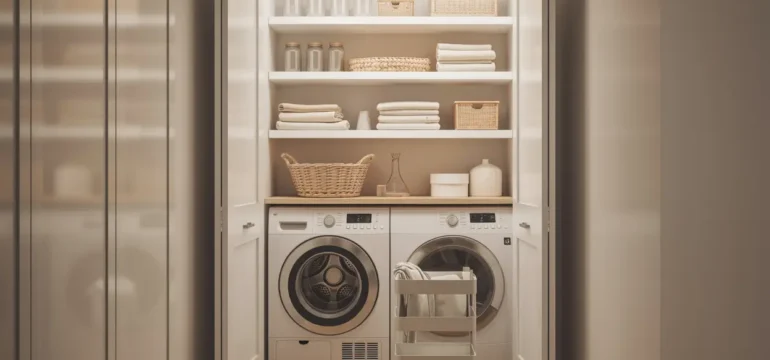
The first laundry closet I ever used was about as wide as a coat closet. It held a stacked washer and dryer, one wire shelf, and a jug of detergent that leaned on everything. Every load felt like a puzzle. If your space looks like that, you are not stuck with it. A narrow closet can hold a lot when you use the walls, the door, and the small gaps around the machines. These laundry closet storage ideas use simple things like baskets, shelves, rods, and hooks that you can find at any home store. Most take an afternoon or less. Pick two or three that fit your closet, start there, and add more once you see what works for your own laundry routine.
1. Shelf Above Washer
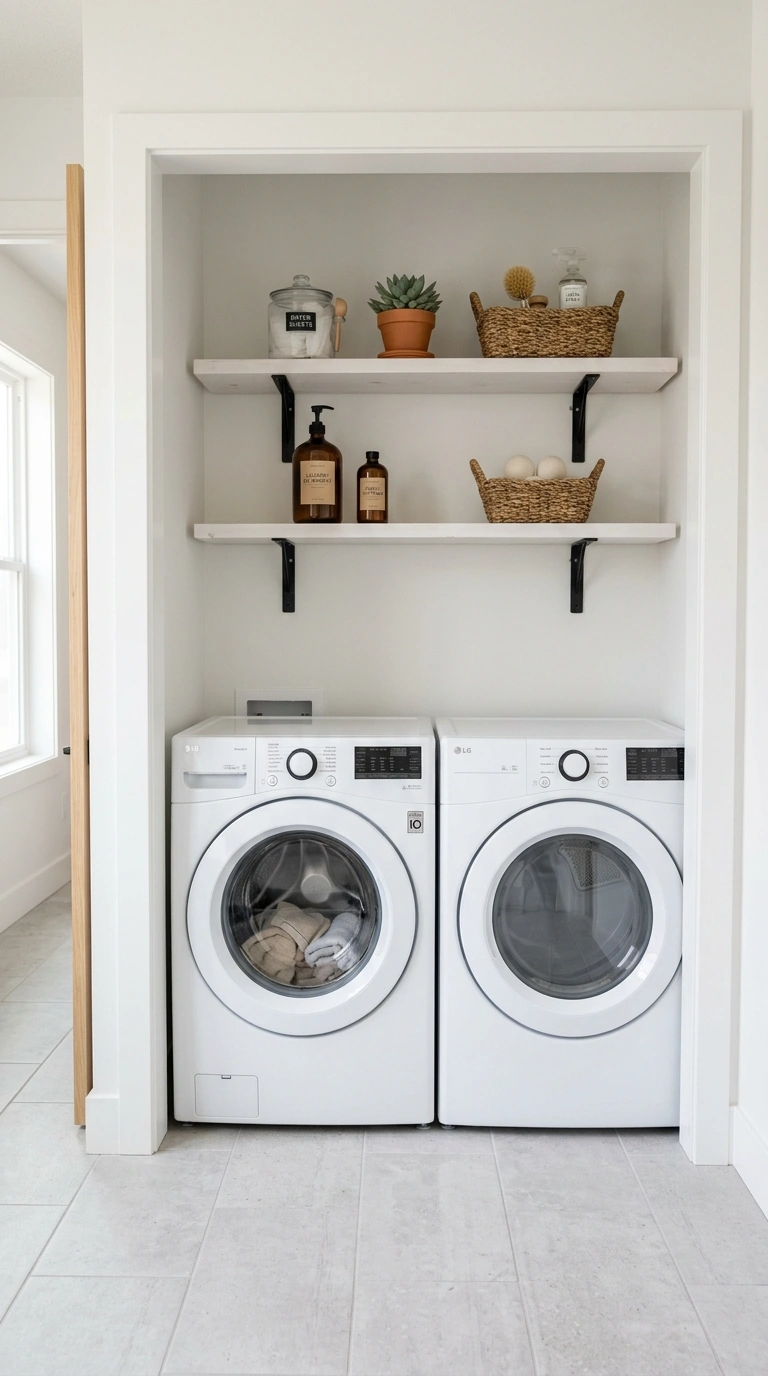
The wall right above your machines is the easiest place to gain storage in a laundry closet. Mount one or two sturdy shelves about twelve to eighteen inches over the top of the washer and dryer, so the lid and door still open freely. White painted boards on metal brackets look clean and hold heavy jugs of detergent. Keep the depth near ten inches so the shelf does not crowd a narrow space. Place the lowest shelf where you can reach it without a stool, and save the higher one for backups.
Style the shelf so it looks calm. Put the everyday items in front, like detergent, a lidded jar of dryer sheets, and a stain stick. A small basket can catch loose things such as lint brushes and clothespins. If there is room, add one little plant or a framed print at the end. Before drilling, find the studs or use strong wall anchors, because laundry products weigh more than they look. A quick wipe during your weekly load keeps the shelf dust free and tidy.
2. Slim Rolling Cart
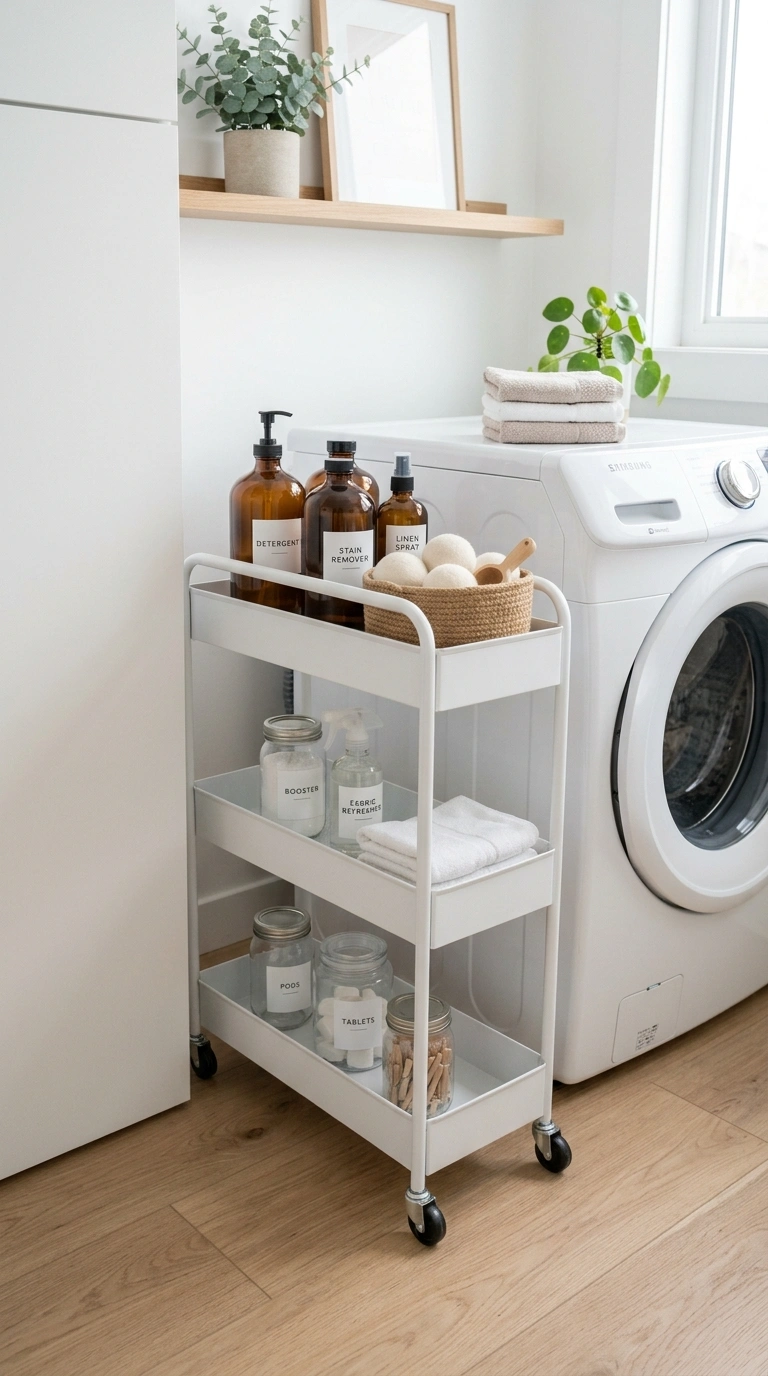
A slim rolling cart is a great fit for the skinny gap beside a washer or at the end of a closet. Look for a three tier cart about six to eight inches wide, in white or black metal, with wheels that lock. Slide it out when you need something and tuck it back when you are done. It works well because it uses a space most people leave empty and forget about, and it never needs a single hole in the wall.
Fill each tier with a purpose. The top can hold the detergent and fabric softener you use every week. The middle tier fits stain removers, dryer balls, and a small tray for lost socks. Use the bottom for heavier bottles or a basket of cleaning cloths. Add a paper tag to the front edge of each tier so everyone knows where things go. If your floor is uneven, pick wheels with a soft rubber edge so the cart rolls smoothly. Pull it out once a month to wipe it clean.
3. Over Door Rack
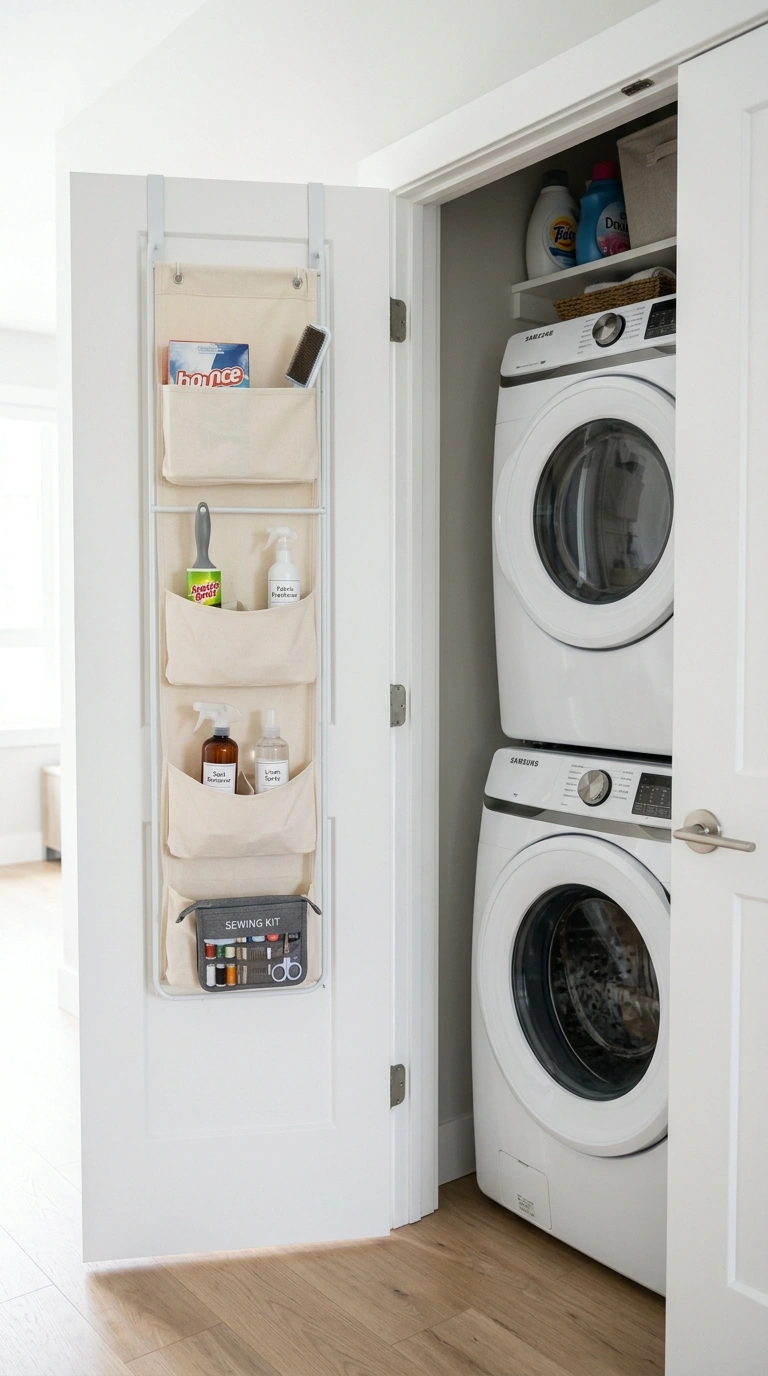
The back of the closet door is space most of us never use. An over the door rack with three or four shallow pockets or wire baskets can hold a surprising amount of small laundry items. Hang it on the inside of a hinged or bifold door, and check that the door still closes fully before you fill it. A white or light wood finish keeps it looking fresh when the door is open, and a fabric organizer works well if you want a softer look.
Give each pocket a job. Use one for dryer sheets and lint rollers, one for stain sticks and small spray bottles, and one for spare buttons, a mini sewing kit, and safety pins. Keep heavy items low so the door does not swing open on its own. If your door has a narrow top edge, pick a rack with padded hooks so the paint does not chip. Sort through the pockets every few months and toss anything empty, since small bottles multiply fast.
4. Tension Rod Bar
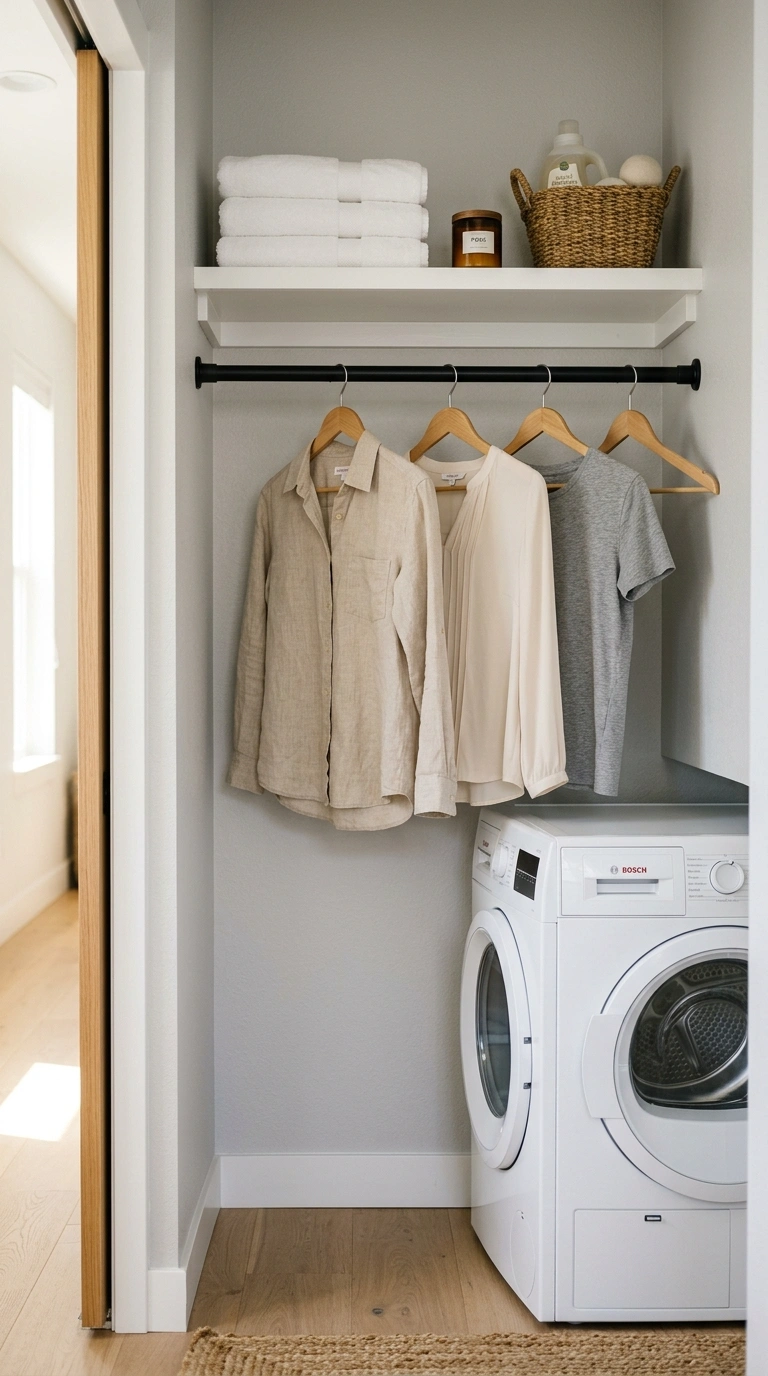
A tension rod is one of the cheapest tricks for a tiny laundry closet, and it needs no drilling. Wedge a sturdy rod between the side walls at about eye level, above the machines. Use it to hang delicate tops, work shirts, or freshly dried pieces on plain wood or slim velvet hangers. Pick a rod rated for heavier loads and test it with a few hangers before you trust it. Matching hangers make the whole corner look tidy every time you open the door.
You can also add a second, smaller rod under a shelf to hang spray bottles by their triggers, or to hold a few S hooks for mesh laundry bags. Keep the main rod a few inches below the ceiling so you have a clear view of the shelf above. If the rod slips, wipe the wall and the rubber ends with a dry cloth, then twist it tighter. A quick hang and go spot like this saves you from piling clothes on top of the dryer.
5. Narrow Tower Shelves
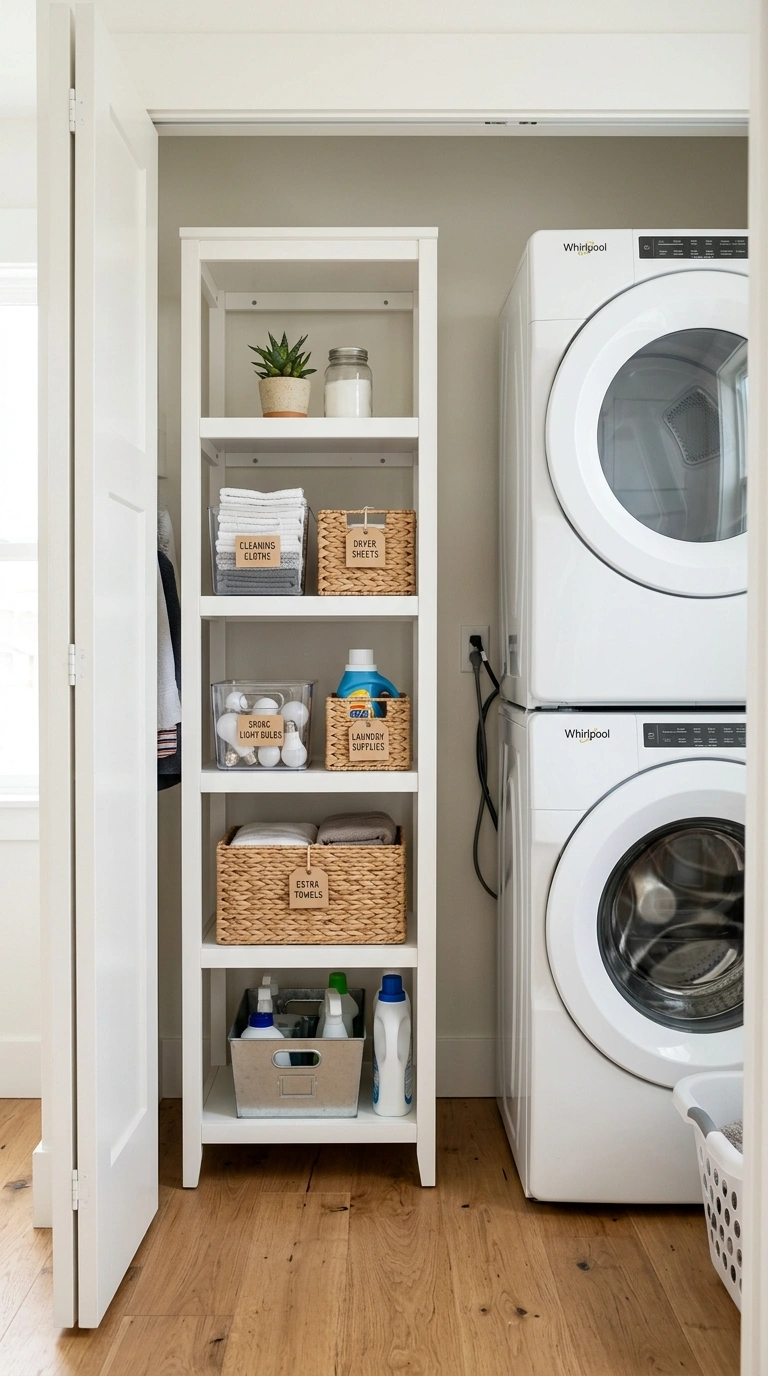
If your closet has even ten inches of floor space beside the machines, a narrow tower shelf can add a lot of storage. Choose a tall, slim unit in white, light wood, or black metal, about ten inches wide and four or five shelves high. It stands upright against the side wall, so it uses vertical space instead of floor space. Measure the width twice, including any baseboards, before you buy, because a half inch can make the difference.
Use clear or woven bins on each shelf, sorted by type. One bin can hold cleaning cloths, another can hold dryer sheets and wool balls, and another can hold spare bulbs and batteries for the room. Put the things you grab daily on the middle shelves and keep light items up high. Add a small label to the front of each bin so anyone in the house can put things back. Secure the tower to the wall with the safety strap that comes with most units.
6. Wall Hook Rail
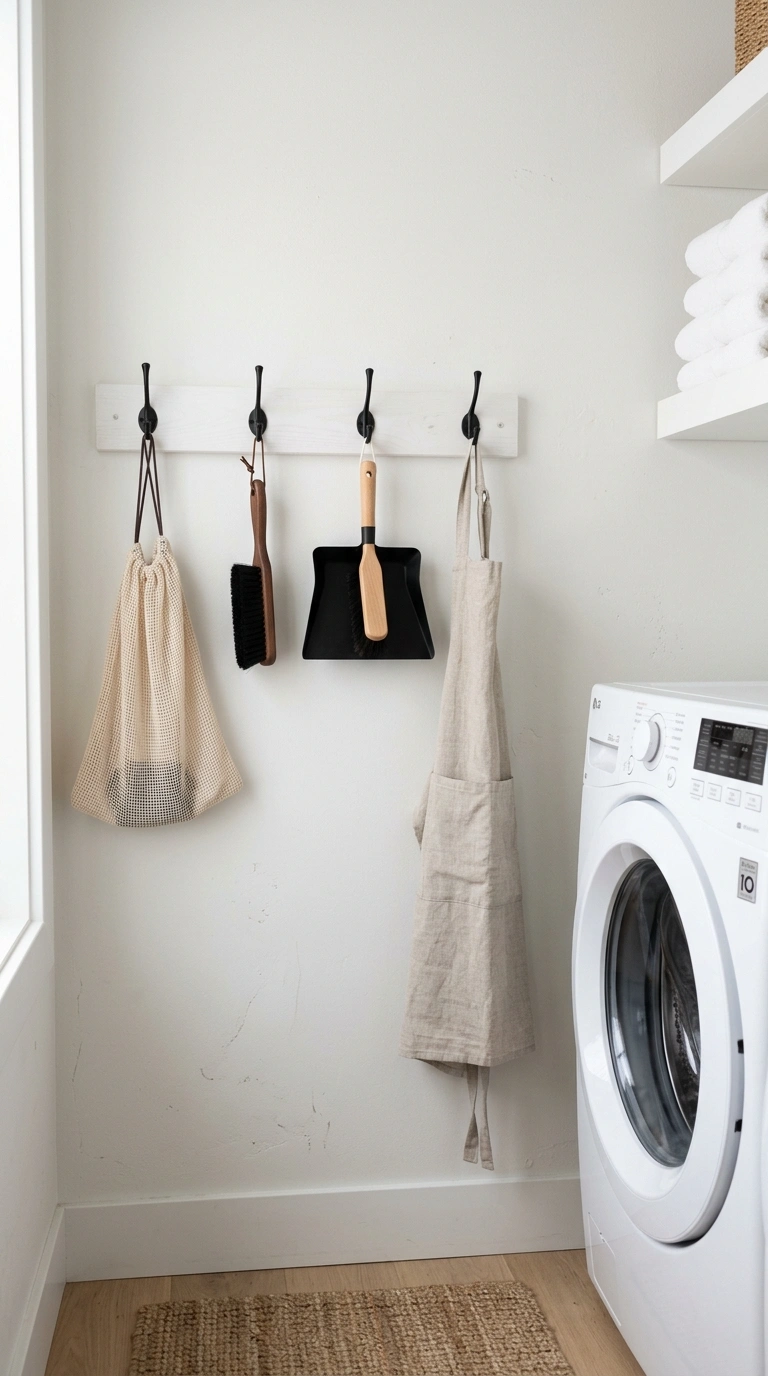
A simple wall rail with hooks is a quiet workhorse in a small laundry closet. Screw a wood rail to the side wall at about shoulder height, and add three or four black or brass hooks. Use them for a lint brush, a small dustpan, a mesh laundry bag, a spare apron, or a drying rack that folds flat. Because hooks use the wall and not the floor, your closet keeps its open standing space, which matters a lot when the room is only a few feet wide.
Paint the rail the same color as the wall so it blends in, or stain it a warm wood for a bit of contrast. Space the hooks about five inches apart so bulky items do not overlap. Keep the heaviest things on the hooks closest to a wall stud. A small basket with a hook on the back can hang there too, giving you a spot for the loose change and receipts you find in pockets. Check the screws after a month, since hooks can loosen with use.
7. Glass Jar Station
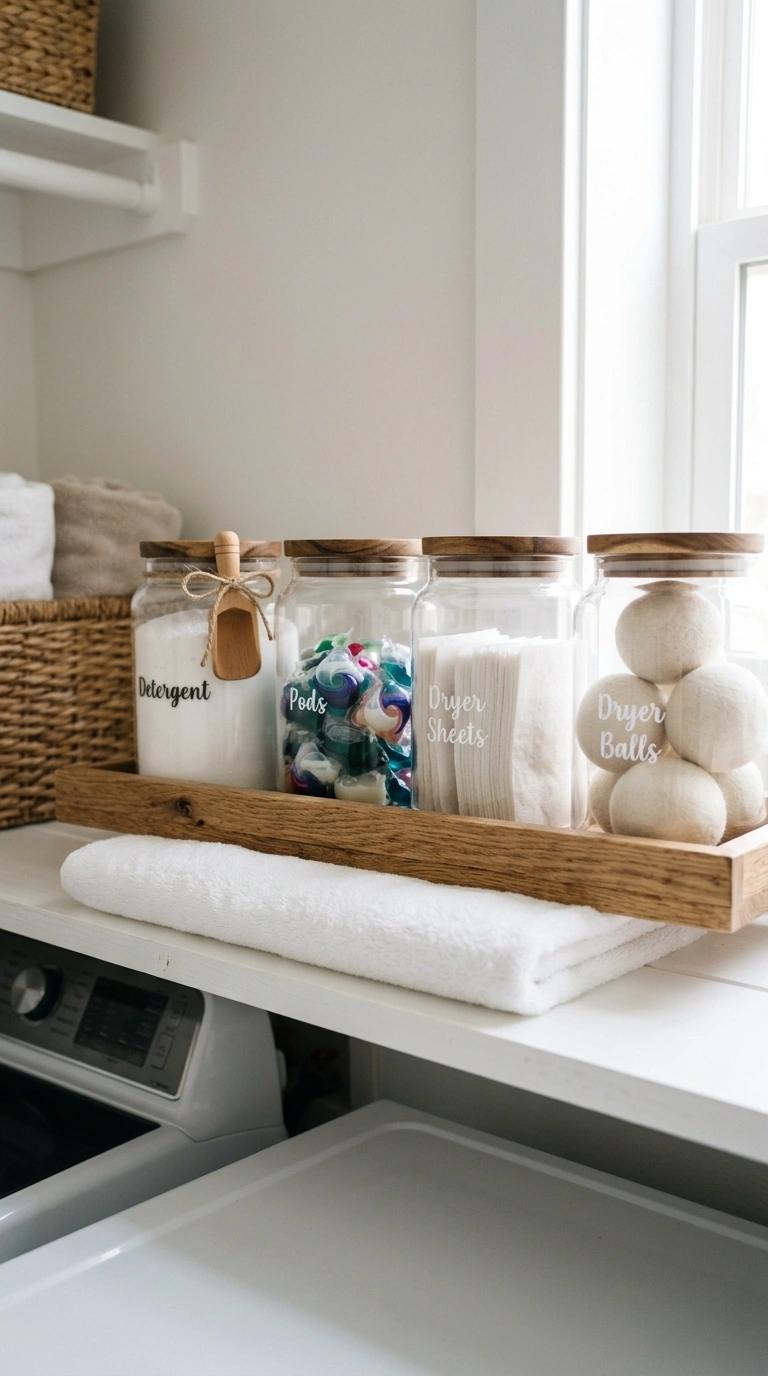
Glass jars make laundry supplies look prettier and keep them neat. Line up three or four large jars with lids on a shelf or a small tray inside the closet. Fill them with powder detergent, pods, dryer sheets, and wool dryer balls. Use a wide mouth jar so you can scoop easily, and choose a size that fits the depth of your shelf. Clear glass with a simple metal or wood lid works with almost any style.
Add a small scoop tied to the jar with twine, and a paper label written in dark pen. Place a folded hand towel under the jars so drips from the scoop do not stain the shelf. Only pour in what fits, and keep the original box tucked away, since some products list safety details you will want to see later. Wash and dry the jars fully before refilling so powder does not clump. Keep the set at eye level so it becomes part of your routine.
8. Simple Curtain Cover
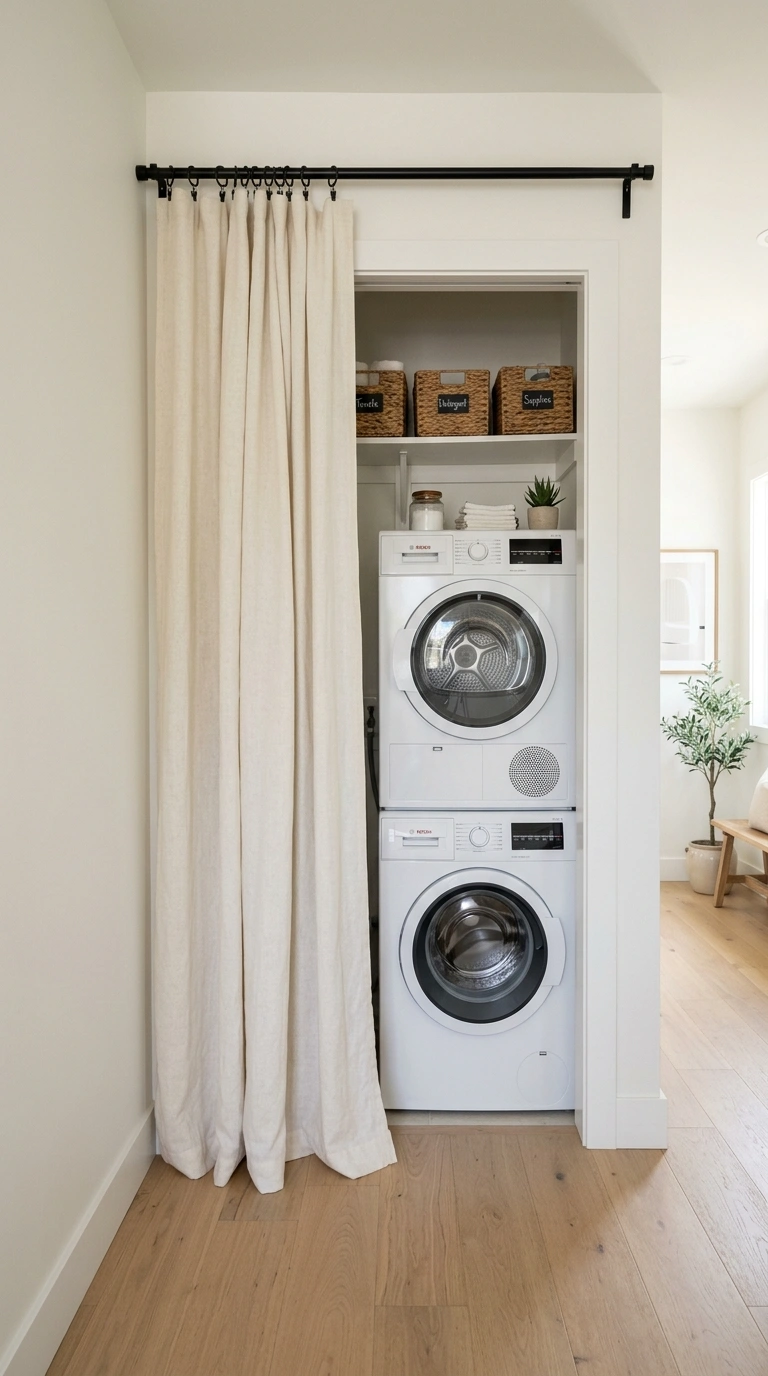
If your laundry closet has no doors, or has doors that are awkward or broken, a simple curtain can cover it in minutes. Hang a tension rod or a curtain rod inside the frame and use a linen, cotton, or light canvas panel in white, oatmeal, or soft gray. The fabric hides the machines and shelves and adds a soft texture to the hallway or kitchen nearby. It also skips the floor space that a swinging door needs, which helps in tight rooms.
Choose a curtain that ends just above the floor, since a puddle of fabric will catch lint. Use clip rings so you can slide it open with one hand while carrying a basket. Wash the panel now and then so it stays fresh, and iron out wrinkles if you want a crisp look. If you want a little style, pick a curtain with a thin stripe or a small print, and keep the shelves behind it simple so the whole thing looks calm and not busy.
9. Pull Out Hamper
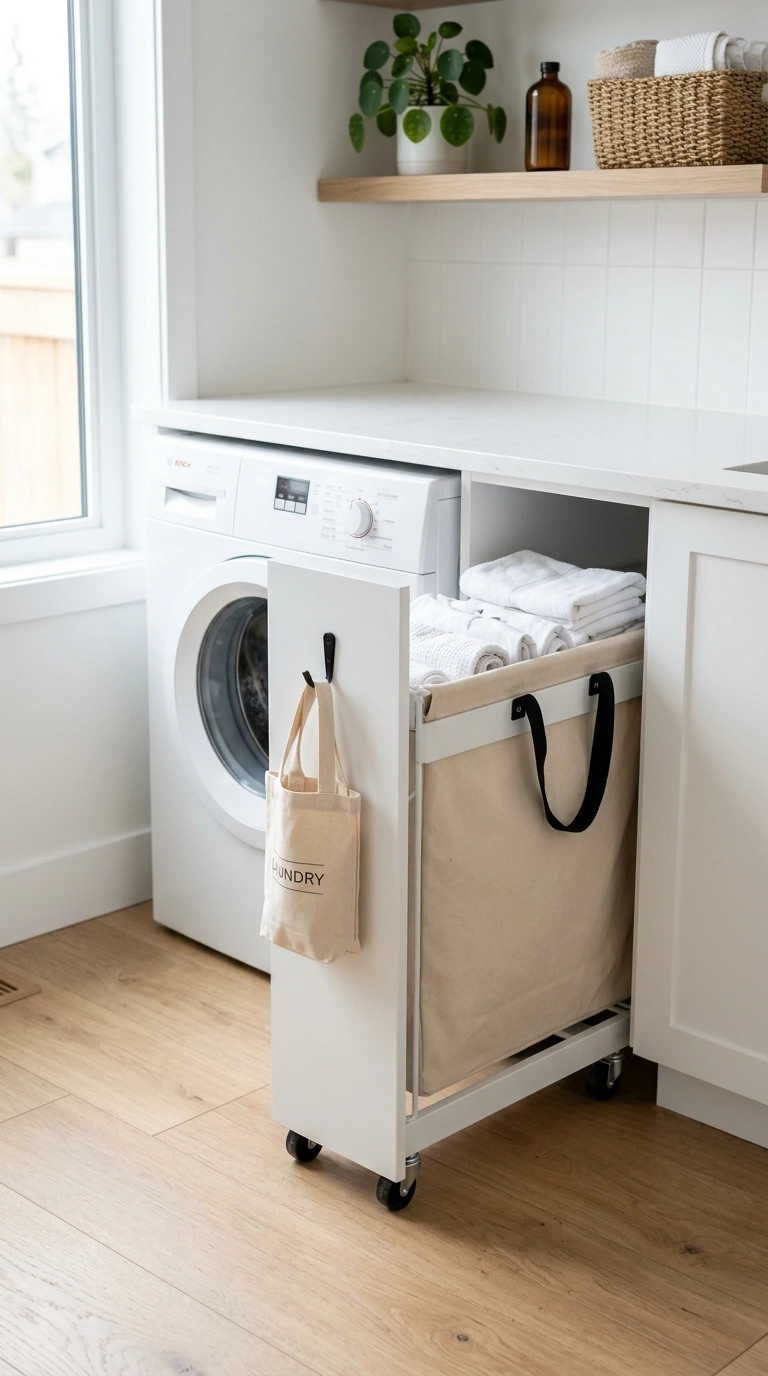
A slim pull out hamper can turn a bit of wasted floor into a helpful sorting station. Fit it in the gap beside the washer, or under a counter if your closet has one. Choose a metal frame on wheels or slides with a removable canvas bag, and pick a width that matches your gap. Sort whites, darks, and towels into separate sections so laundry day starts with less work. When it is pushed in, all you see is a clean front panel.
Keep the bag light colored so you can spot stray items, and wash it every month or so. If the hamper sits close to the washer, leave a finger width of space so the vibration does not knock it around. Place a small hook on the side of the frame for a lint brush or a tote. If the bag feels rough on delicate items, line it with a cotton pillowcase. A hamper with wheels also means you can carry the load straight to the machine.
10. Hanging Ironing Board
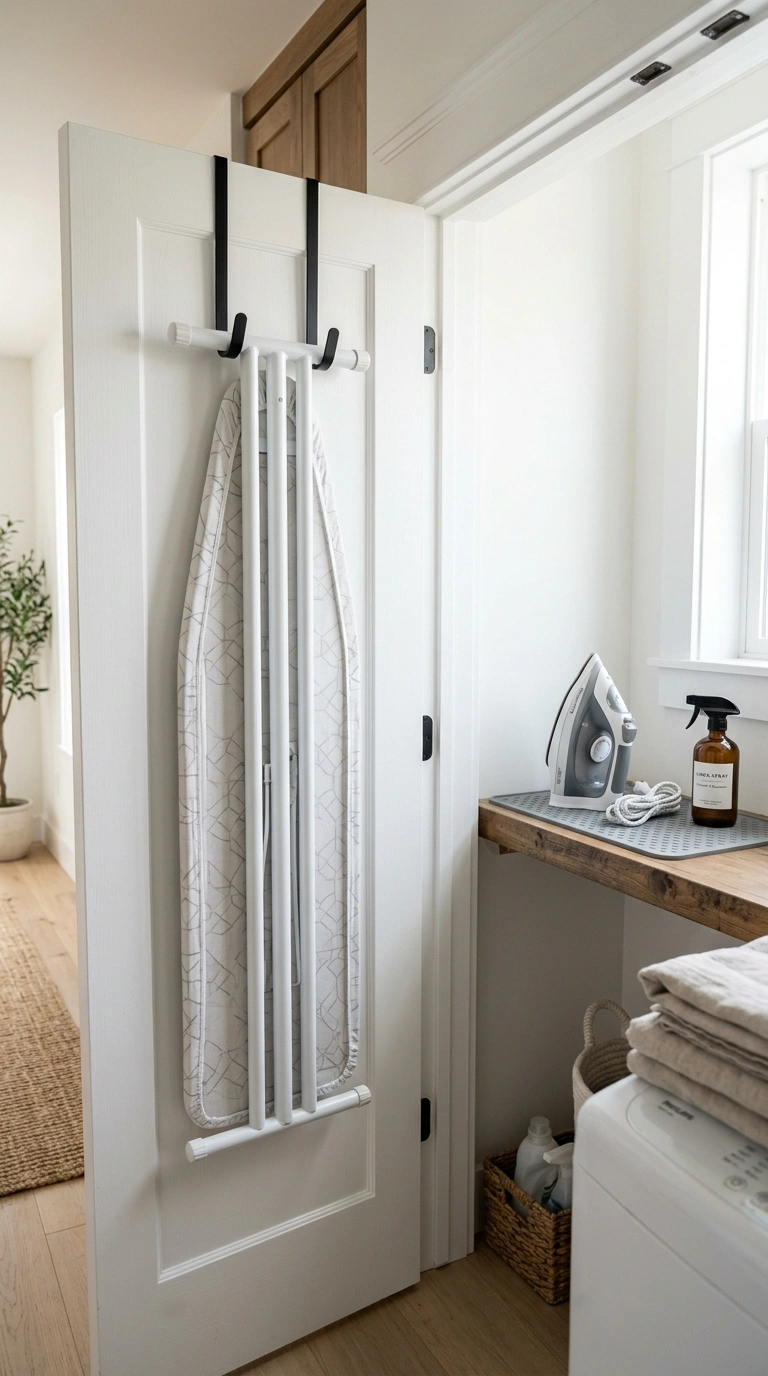
A full size ironing board rarely fits in a small closet, but a slim one can hang flat on the wall or the back of the door. Look for a wall mount that holds the board upright, or use two strong hooks for a tabletop board. Choose a white or gray cover that keeps the closet light and clean. It stays flat and out of the way, and you can pull it down in a few seconds when a shirt needs a quick press.
Mount the hooks at about waist height so the board is easy to grab, and keep them clear of any shelf edges. Store a small iron on a shelf just above or beside it, sitting on a heat safe silicone mat. Wrap the cord loosely so it does not tangle. Make sure the mount is anchored into a stud or held with heavy duty anchors, because a falling board is a surprise nobody wants. A small spray bottle hung nearby completes the little press corner.
11. High Shelf Baskets
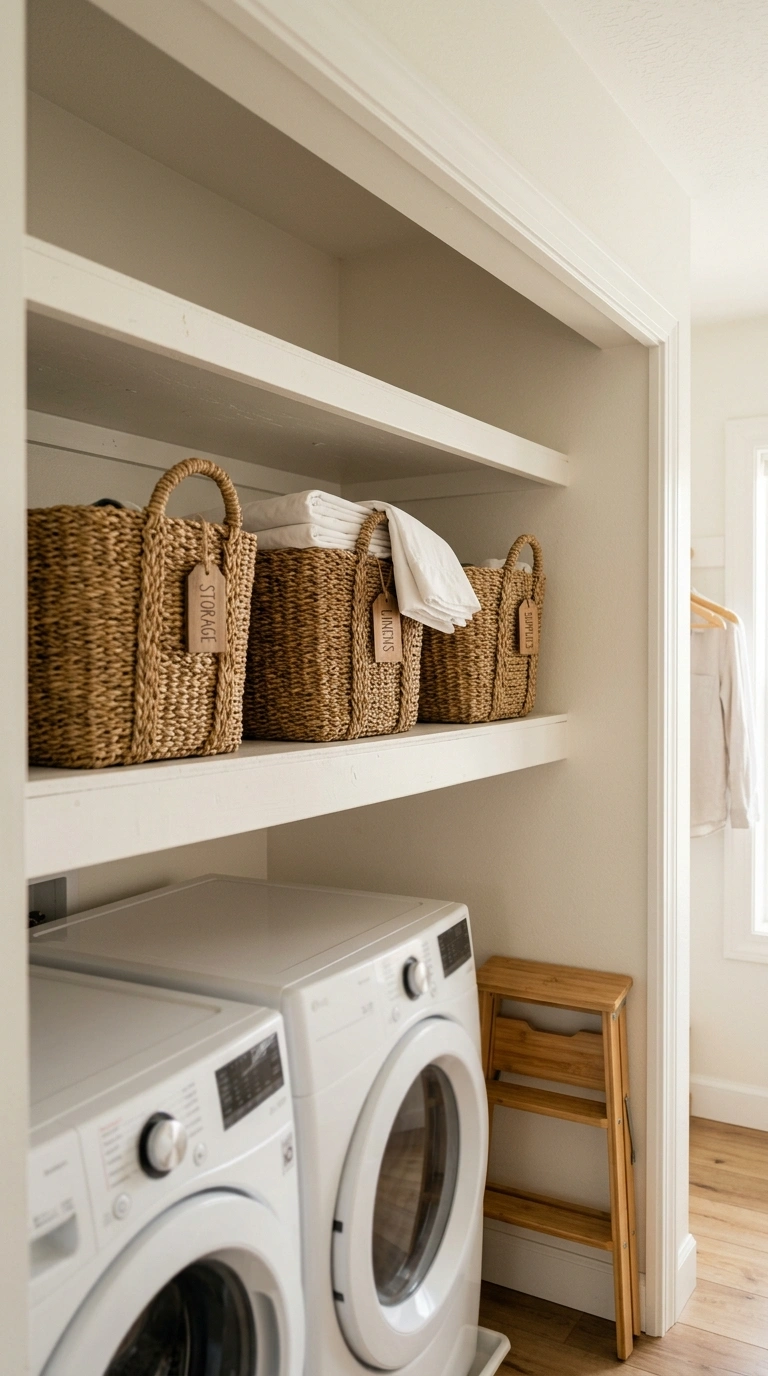
The top of a laundry closet is often empty, and it is a perfect home for things you use only now and then. Place two or three large woven baskets on a high shelf, all in the same color and texture, such as natural seagrass or white rope. Use them for spare sheets, seasonal towels, extra cleaning supplies, or gift wrap. The baskets make the shelf look tidy and let you tuck away items that would otherwise look messy.
Pick baskets with handles so you can pull them down easily. Keep only lightweight things up high, and store heavy bottles low. Add a simple tag to each basket so you know what is inside without climbing a stool. If the shelf is deep, line up two smaller baskets in front and one large one in back. Keep a small step stool folded next to the machines so reaching the top shelf never feels like a chore. Once a season, swap what is inside.
FAQs
How can I add storage to a small laundry closet without drilling?
Tension rods, over the door racks, rolling carts, and narrow tower shelves all work without any holes in the wall. If you choose a tall tower, use the safety strap that comes with it and attach it to a stud so it stays steady.
How high should a shelf be above the washer?
Most people mount the first shelf twelve to eighteen inches above the top of the machines. That leaves room to open a lid or load a basket while still keeping your supplies within easy reach.
How do I keep a stackable washer and dryer closet tidy?
Give every item one spot and use labeled bins so it is easy to put things back. Keep everyday products at hand height and store the extras up high in baskets.
Is it safe to pour detergent into glass jars?
It is fine for most powders and pods as long as the jar is clean and dry. Keep the original package or write down the brand and directions, and store the jars where children cannot reach them.
Final Thoughts
A tiny laundry closet does not have to feel like a struggle. Start with the wall above the machines, add one or two of the other ideas, and see how it feels after a week of real laundry. Small changes add up faster than you think. Once everything has a place, the closet is easier to keep neat, and that small corner of your home works a lot harder for you.