Most of us want the same thing for the people we love, and for ourselves down the road. We want to step into the bathroom and not think twice about it. No tight grip on the sink, no careful shuffle across wet tile, no worry sitting in the back of the mind.
The trouble is that safety upgrades have a bad reputation. People think of cold hospital rails, big contractor bills, and a room that stops feeling like home. So the project sits on the to do list for years.
It does not have to go that way. The best accessible bathroom ideas for seniors on a budget are small, cheap, and good looking. A sturdy bar, a better mat, a brighter bulb. Most take an afternoon and basic tools, and none of them need a full remodel.
Here are 20 updates that make the room safer, easier, and still pretty. Start with one or two, then build from there.
1. Add a Grab Bar at the Shower Entry
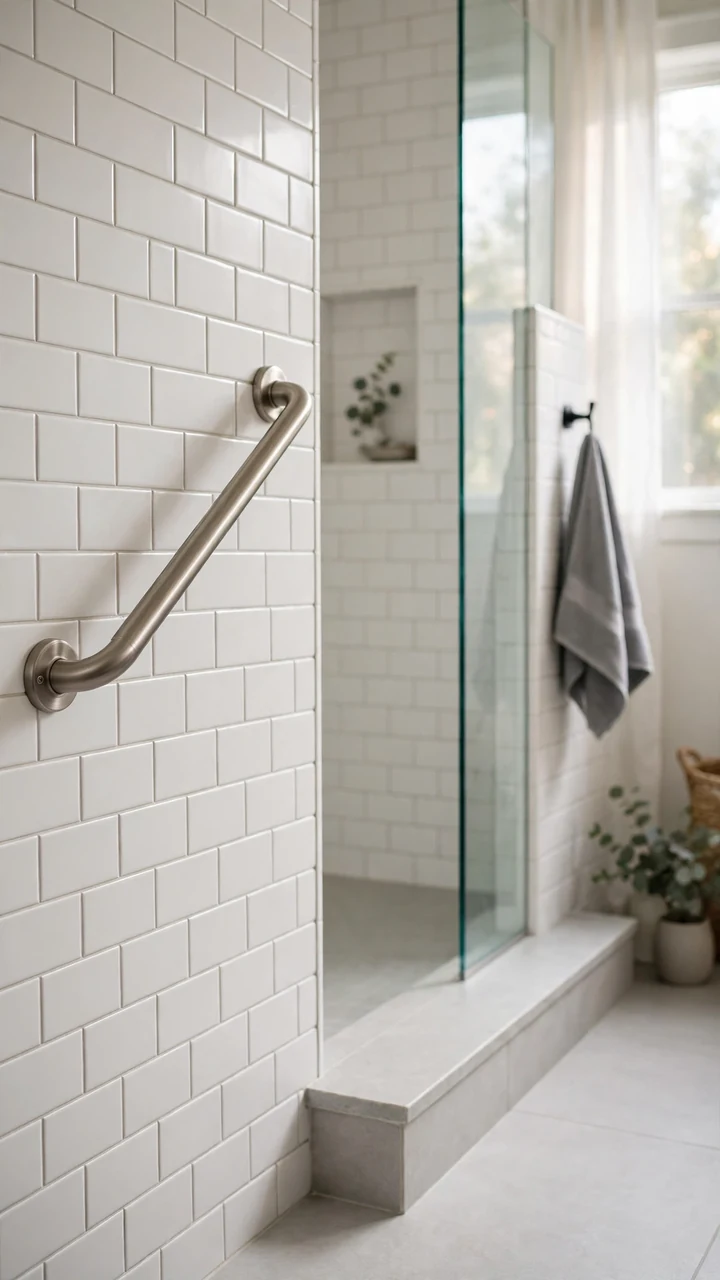
Your hand needs something solid to find the second you reach the shower.
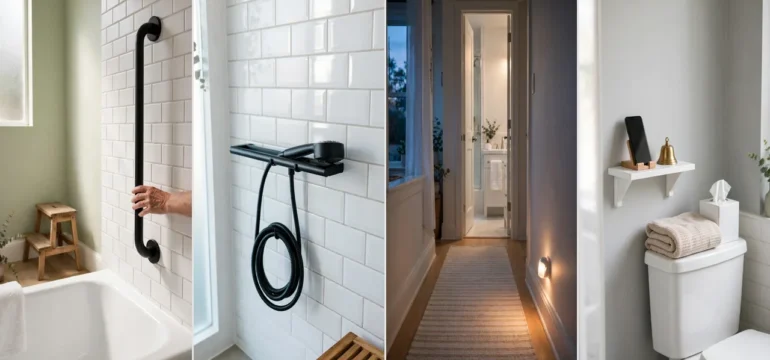
Mount a grab bar on the wall right beside the entry, around waist to chest height, so you can steady yourself while you step over the edge. A brushed nickel or matte black bar that matches your faucet looks like a towel bar, not a hospital rail. The one rule that matters is that it goes into a wall stud or uses heavy duty anchors made for that bar. Suction cup bars can slip, so skip them.
Before you drill:
- Stand at the entry and notice where your hand naturally reaches
- Use a stud finder to mark the spot
- Choose a bar with a textured grip
2. Put a Vertical Bar Beside the Tub
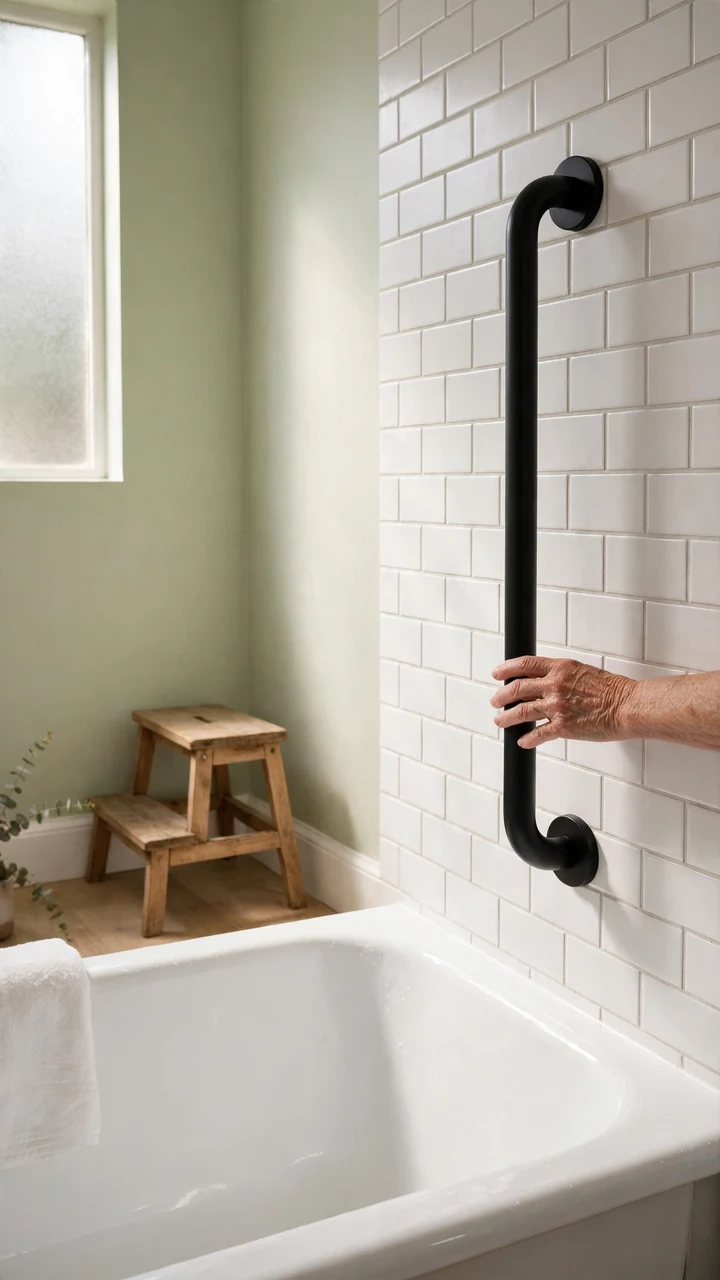
Most people grab the towel bar when they climb out of the tub. It feels solid right up until the day it is not.
Install a vertical grab bar on the wall at the outer edge of the tub instead. Straight up and down works well because your hand can slide along it as you rise. A bar around two feet long gives you room to move your grip.
On tile walls, use a masonry bit and anchors made for tile. A strip of painter’s tape over the spot keeps the drill from skating.
This one helps most with tubs that have a high side wall.
⚠️ Watch Out
A towel bar, a soap dish, or a suction cup bar should never hold your weight. If the wall behind your bar has no stud, use heavy duty anchors rated for the bar, or ask a handyman to check the spot first.
3. Use a Rubber-Backed Bath Mat
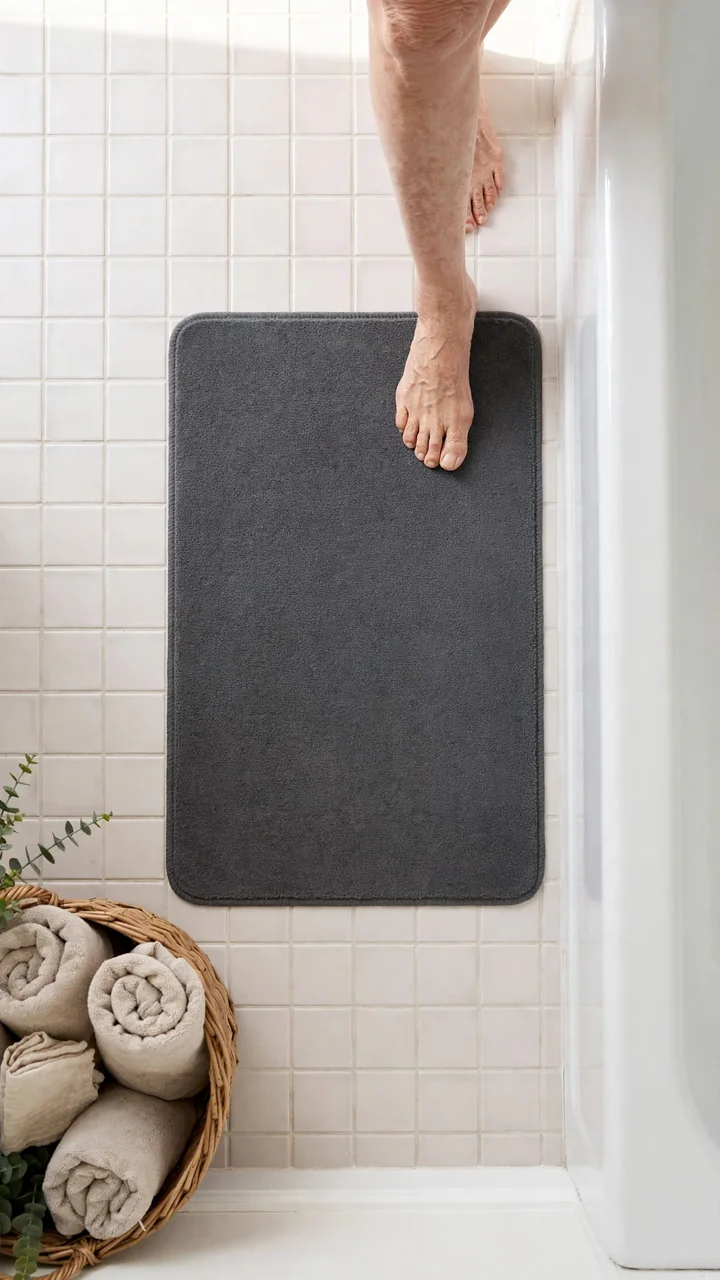
The fluffy mat by the tub does the opposite of its job. Corners curl, the backing slides, and a thick pile catches a shuffling foot.
Swap it for a flat mat with a rubber or gel backing. Warm gray or charcoal hides splashes and still looks tidy. Cotton or microfiber with a short pile also dries faster than thick shag.
Check three things before you buy:
- Press a corner down and it stays flat
- The backing grips even when it is damp
- The mat is no thicker than your pinky
A low mat also rolls more easily under a cane tip or walker wheels.
A thick cotton mat with curled corners that slides a little every time someone steps on it.
A flat charcoal mat with a rubber back that stays put, lies flat, and dries faster between showers.
4. Bring in a Shower Seat
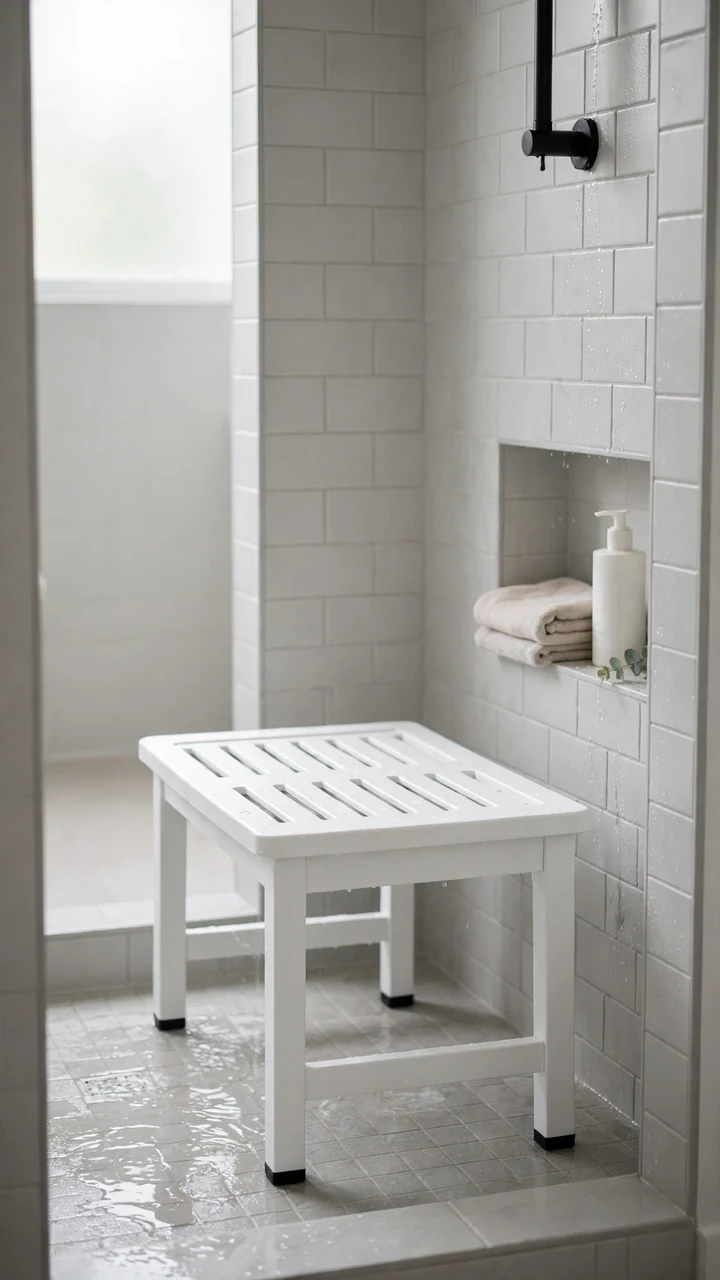
Sitting down to wash is not giving up. It is how a lot of people keep showering on their own.
Two budget friendly picks:
- A freestanding bench with rubber feet and drain slots, in white or a teak look finish
- A fold down wall seat that tucks away when someone else uses the shower
Pick the one that fits your space. Benches go in a walk in shower or across a tub. A fold down seat needs to be mounted into studs, so treat it like a grab bar.
If balance feels shaky, look for a seat with a back and arms.
Check before you buy
5. Switch to a Handheld Showerhead
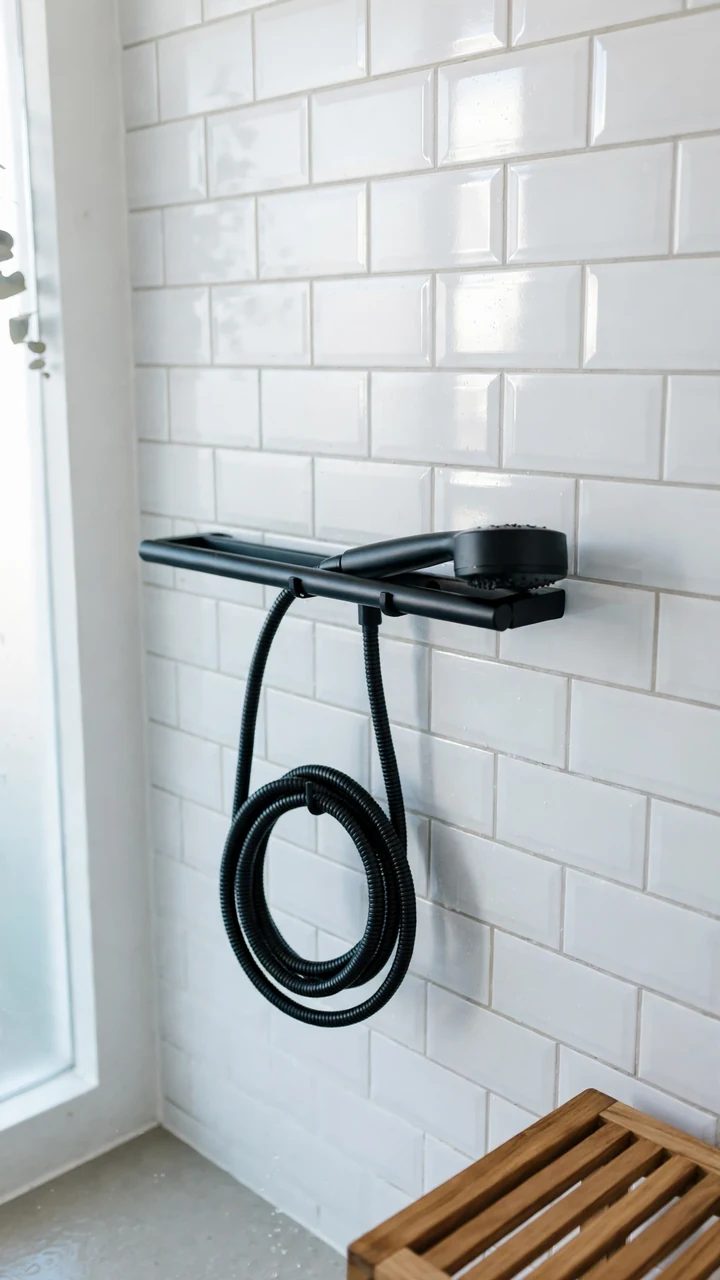
Standing and twisting under a fixed showerhead is hard on shoulders and balance. Sitting under one means cold water on your knees and a wet face.
A handheld showerhead on a slide bar fixes both. Slide it low for seated showers and high for standing. Most screw onto the existing shower arm, so there is no plumbing work.
Look for a hose long enough to reach the seat and a head with an on and off button near the handle. Matte black or brushed nickel looks sharp against white tile.
Pick a soft spray setting, not a pounding one.
6. Swap Faucet Knobs for Lever Handles
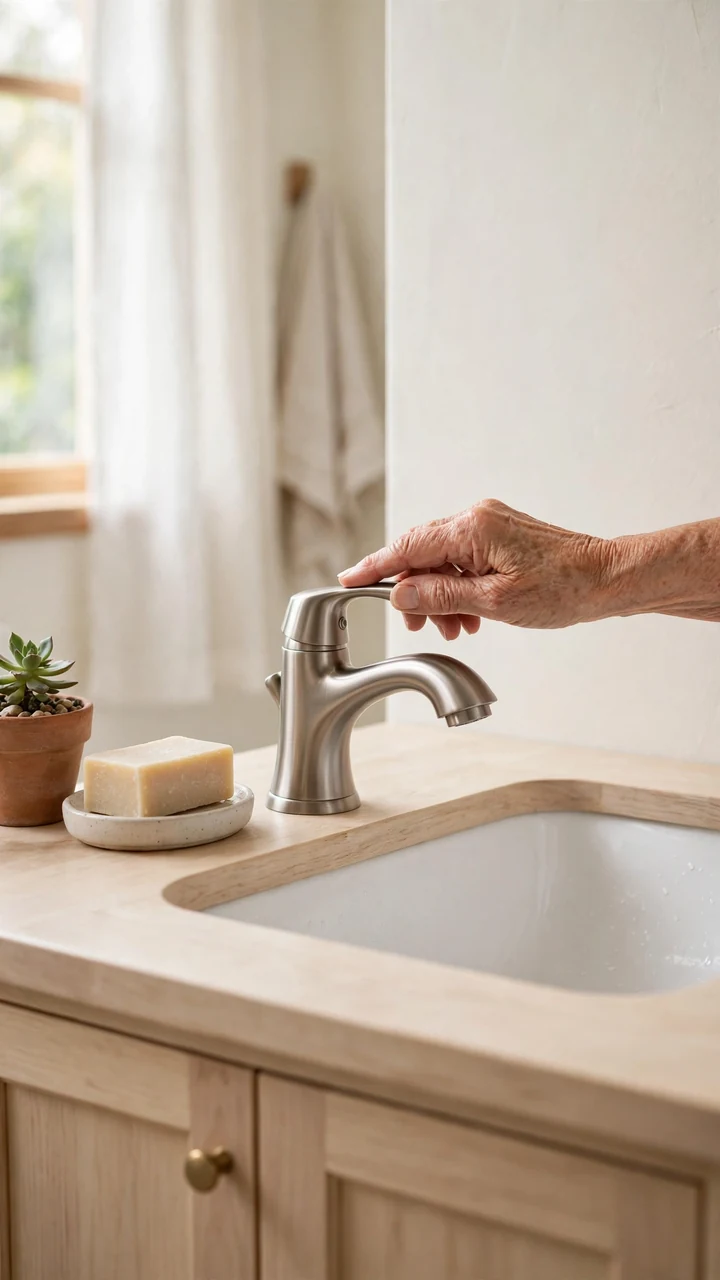
A round knob asks for a firm grip and a twist. A lever only asks for a push.
Swap your faucet knobs for lever handles and the sink gets easier right away, especially with soapy or stiff hands. Many faucets sell replacement handles in the same finish, so you may not need a whole new faucet. If yours does not, a basic lever faucet is one of the cheaper updates on this list. Brushed nickel, chrome, or matte black will match most hardware.
Lever handles also work with a wrist or an elbow, which helps when your hands are full of towels.
| Round knob | Lever handle |
|---|---|
| Needs a tight grip and a wrist twist | Works with a palm, wrist, or elbow |
| Slippery when hands are soapy | Easy to push even when wet |
| Hard to tell how far it is turned | The lever angle shows hot or cold at a glance |
7. Raise the Toilet Seat
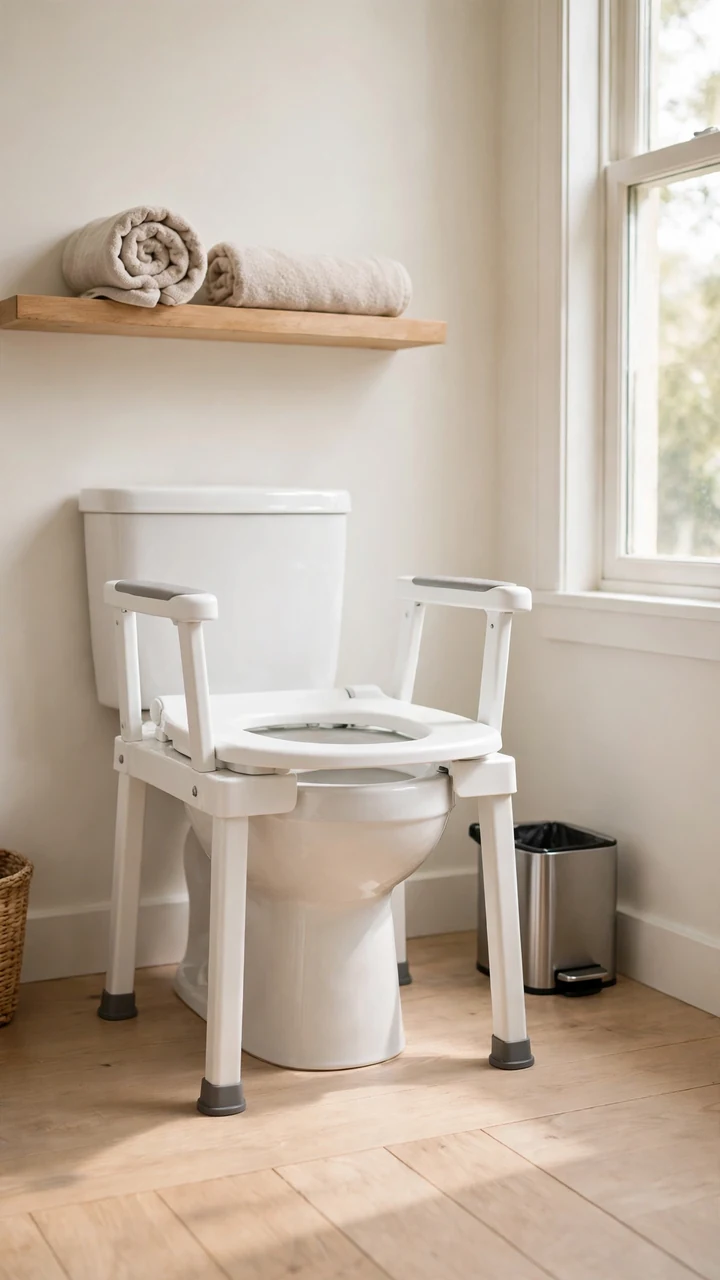
Check how far you drop when you sit down. That drop is the hard part.
A raised toilet seat that locks onto the bowl shortens the distance and gives you a higher spot to push up from. Clamp on and bolt on models usually cost less than replacing the toilet. Measure your bowl first, since round and elongated bowls need different sizes. A white seat blends in and wipes clean easily.
Side arms help too. A frame that sits around the toilet gives both hands something to press on. Look for rubber feet so it stays put on the floor.
This one helps most when standing up from low seats feels like work.
Pick a seat that locks onto the bowl
Measure round or elongated before you buy
A seat that shifts when you lean on it
Arms with no rubber feet on a slick floor
8. Pick a Contrast Color Toilet Seat
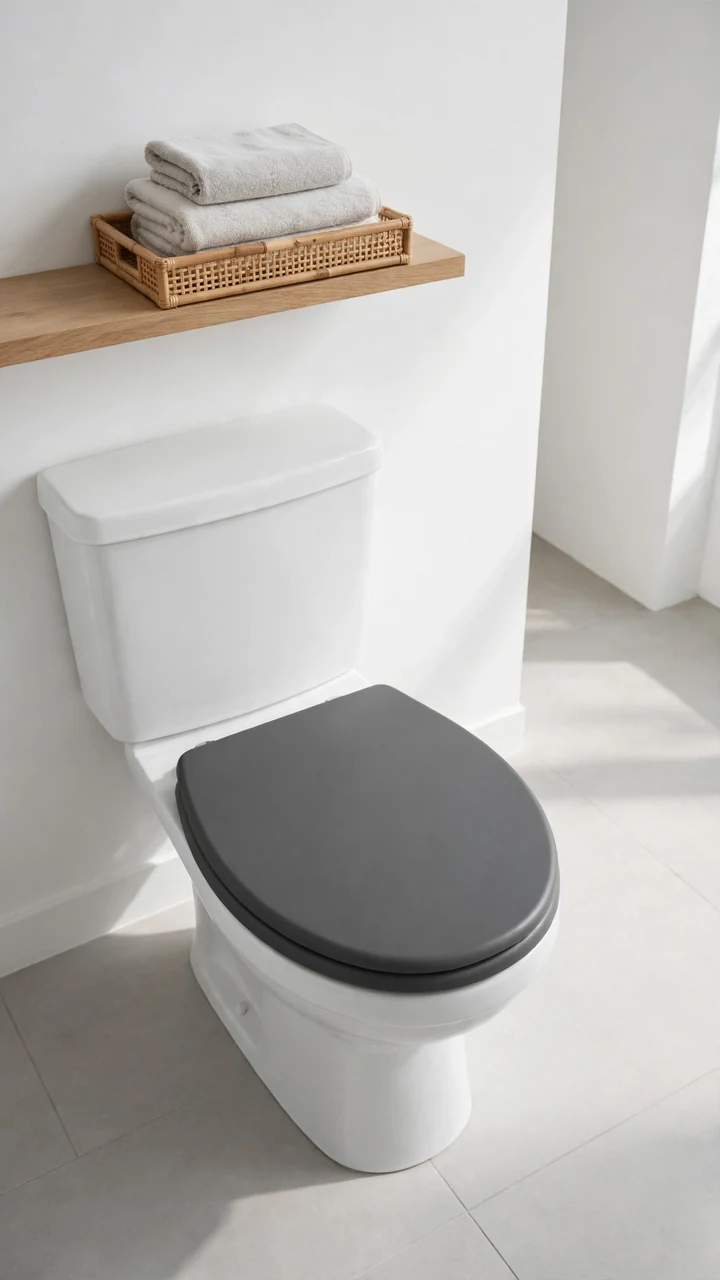
White on white looks clean, but it also lets the toilet blend into the floor and walls.
A seat in a darker shade gives your eyes a clear edge to find. Charcoal, navy, and deep gray all look tidy and hide marks. It is a cheap swap that takes about as long as loosening two bolts. Tired eyes at night and low vision make this one matter more than it sounds.
Match the seat shape to your bowl, round or elongated, before you order.
Spots where contrast helps
- ▸A dark seat on a white toilet bowl
- ▸A dark grab bar against a light wall
- ▸A dark bath mat on a pale floor
- ▸A bold towel on a light towel bar
9. Add Motion Sensor Night Lights
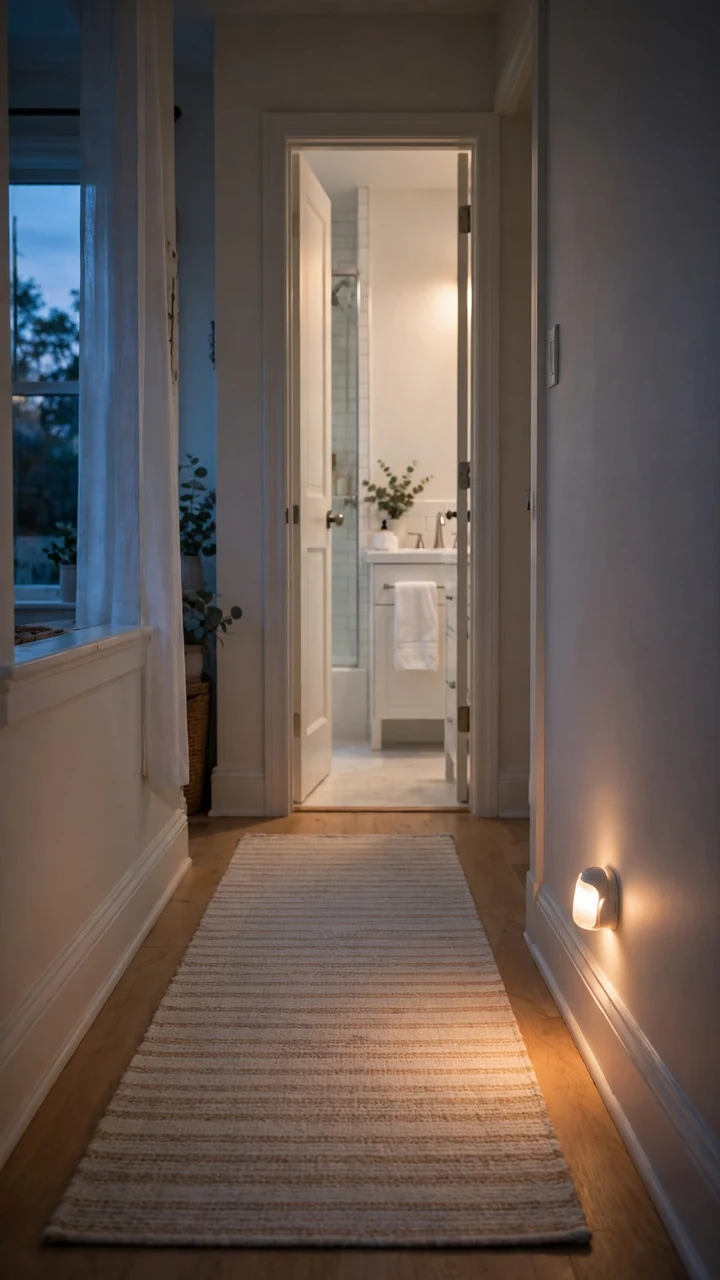
The walk from bed to bathroom in the dark is where a lot of us feel along the wall and hope.
Plug in a few motion sensor night lights and the path lights itself. No switches, no fumbling. Mount them low, near outlets, so the light falls on the floor. Battery powered stick on lights cover spots without an outlet.
Good places to put them:
- Just outside the bedroom door
- Halfway down the hall
- Inside the bathroom, near the toilet
Choose warm white, so the light guides you without waking you fully.
Light the whole path from bed to toilet, not just the bathroom.
10. Use Brighter Bulbs at the Vanity
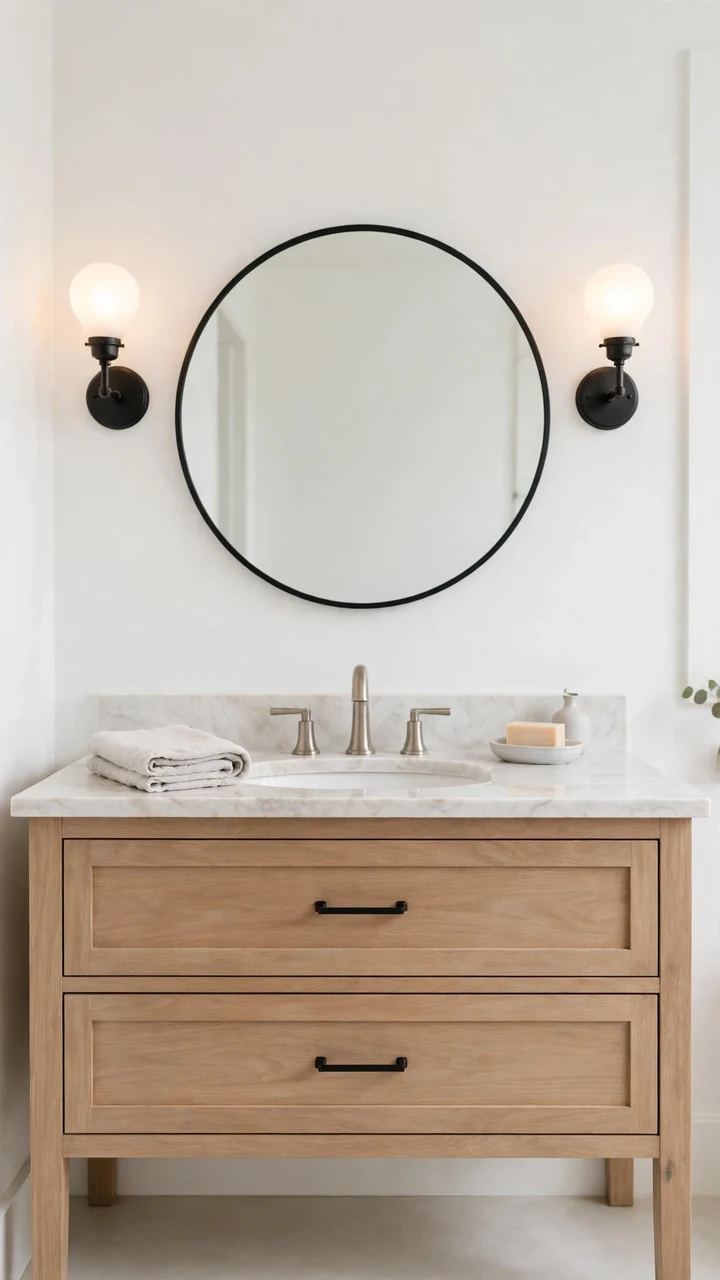
A dull yellow bulb over the mirror makes the whole room look like dusk.
Swap in LED bulbs labeled soft white or warm white. They give more light without feeling harsh, and they last a long time. Light on both sides of the mirror is kinder than one fixture above, because it softens shadows on your face. With only one fixture, a plug in sconce on each side is an easy budget fix.
Better light helps you read labels and spot the edge of the tub.
Before you swap the bulbs
11. Turn Down the Water Heater
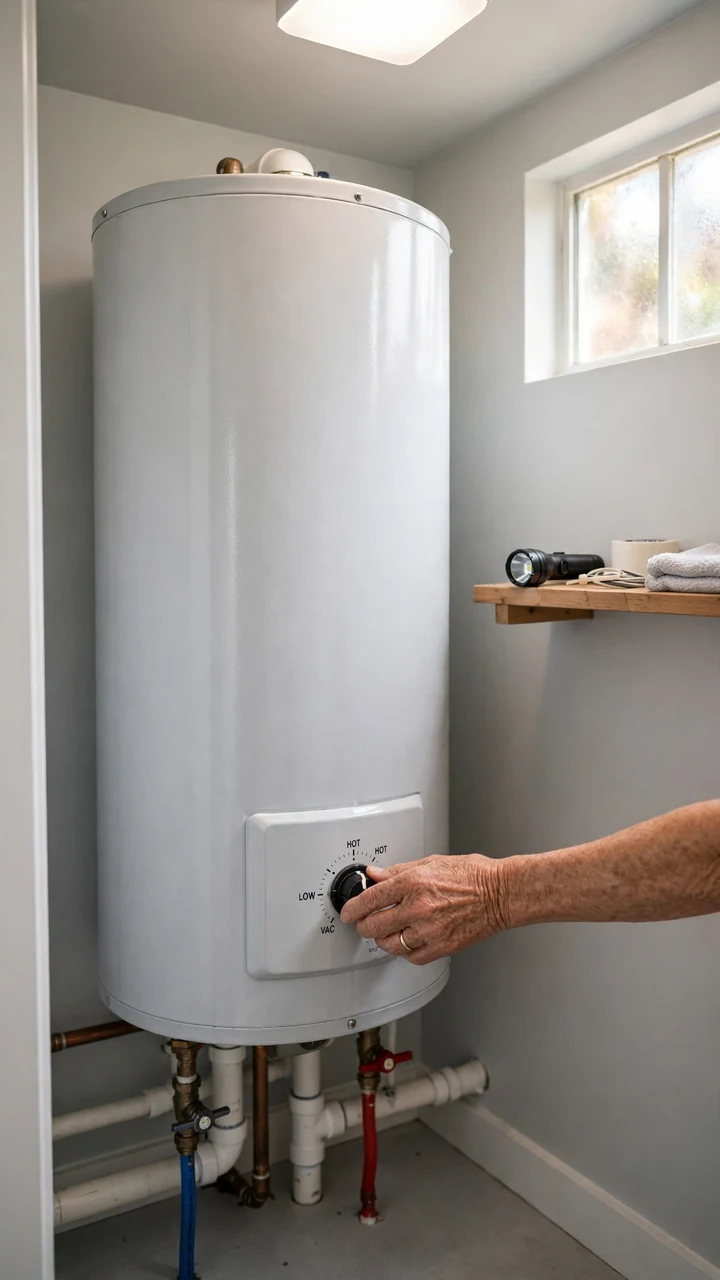
Hotter water does not get you cleaner. It just burns faster.
Many water heaters are set higher than they need to be. Turning the dial down lowers the risk of a scald, which matters when reflexes are slower or skin is more delicate. Many safety groups suggest around 120 degrees Fahrenheit, but check your heater’s manual for the right setting. For extra protection, add an anti-scald fitting. These screw onto the showerhead or tub spout and cut off the flow if the water gets too hot.
If you are unsure how to change the setting, ask a plumber.
12. Hang a Shelf at Waist Height
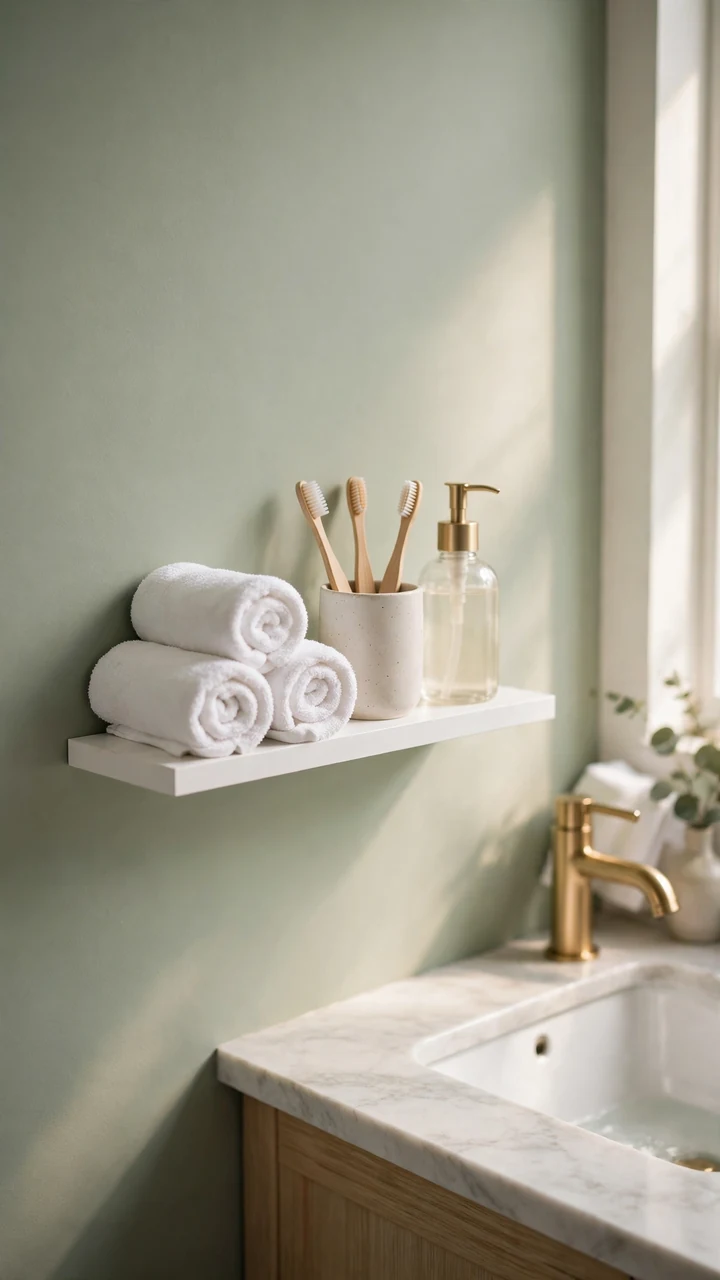
Move the things you use every day to the spot where you do not have to bend or stretch.
A narrow open shelf at waist height keeps towels, a toothbrush cup, hand soap, and lotion in easy reach. White painted wood or a simple metal shelf looks clean and light on the wall. Open shelves also let you see what you have at a glance, so nothing hides in a dark corner.
Mount the shelf into studs or use heavy duty anchors. Stacks of towels weigh more than they look.
Keep heavier items on the lowest shelf.
Stand where you use the sink and note where your hand lands without bending or stretching.
Find a stud with a stud finder and mark the spot at that height.
Hang the shelf level, then place daily items on it and leave room to grab each one.
13. Add Pull-Out Bins Under the Sink
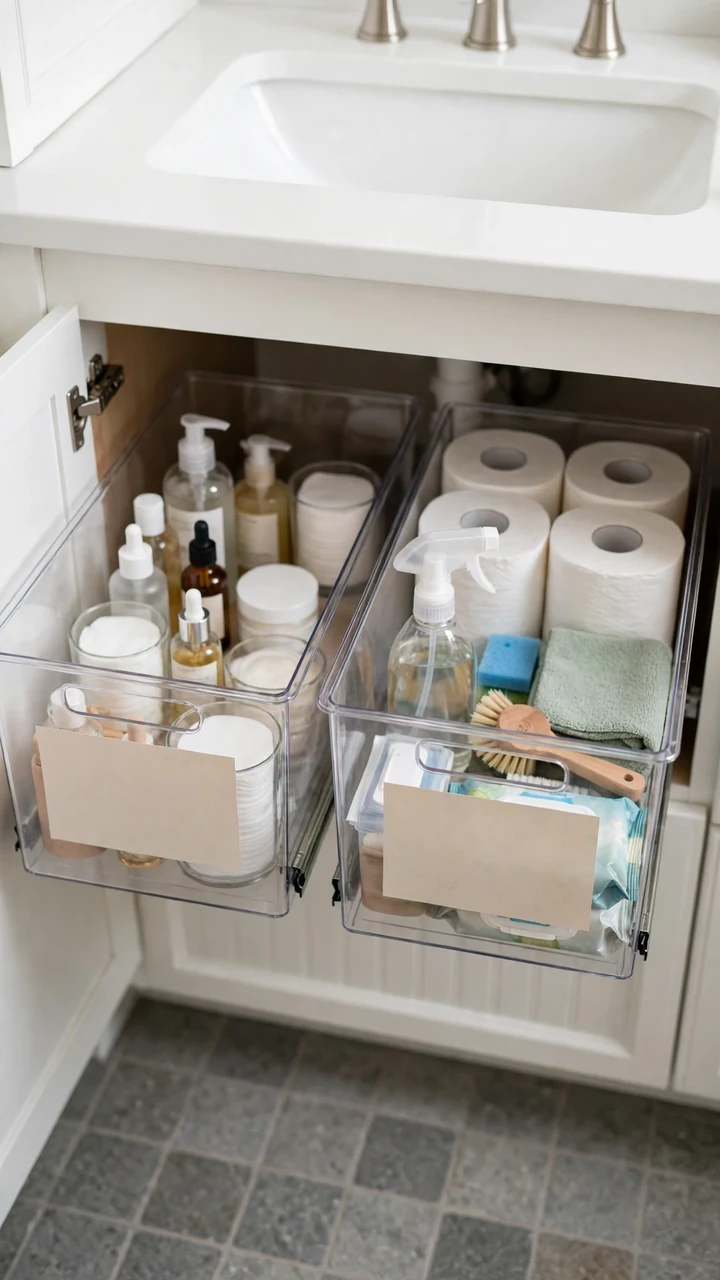
Reaching into the back of a sink cabinet means bending, kneeling, and guessing where the soap went.
Slide in clear bins or a two tier pull-out organizer, and the back of the cabinet comes to you. Group things by use. One bin for daily skin care, one for cleaning supplies, one for spare toilet paper. Clear plastic lets you see inside. Handles let you pull with a fingertip.
Put the heaviest or most used bin in front.
Add a large print label to each bin so you are not reading small text on a bottle.
14. Change Cabinet Knobs to Big Pulls
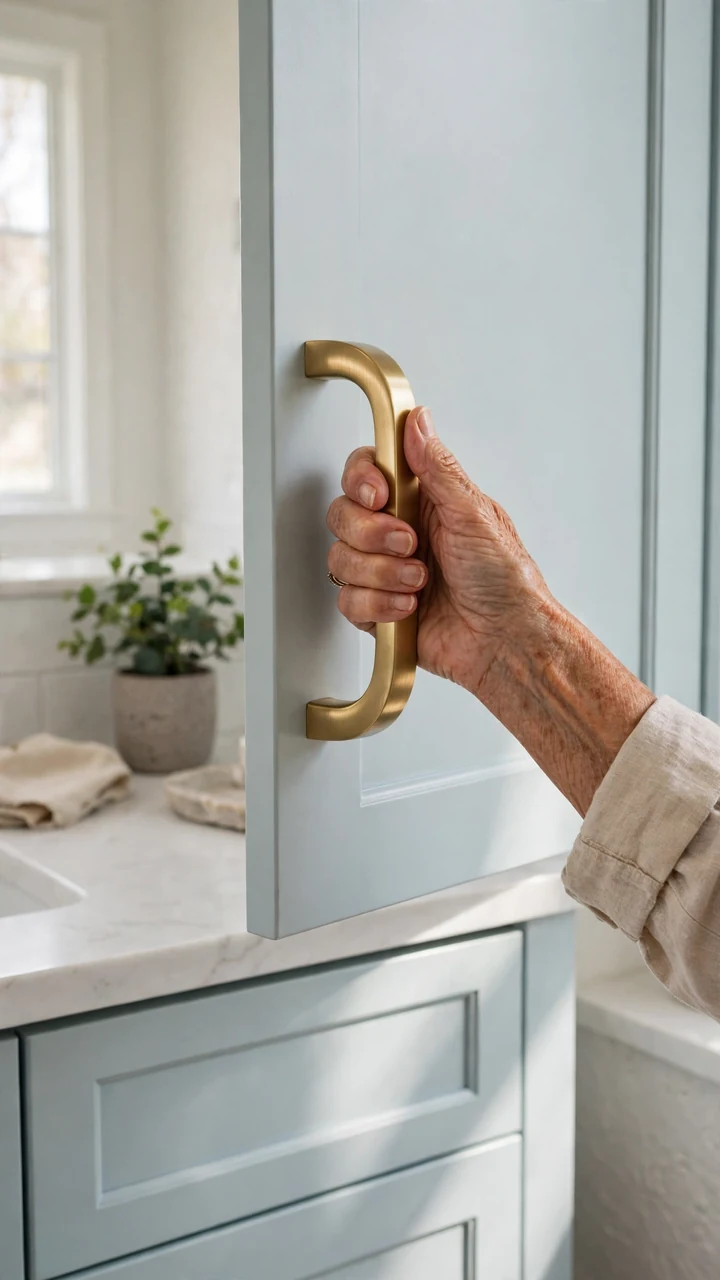
Here is a simple rule. If you cannot hook a finger around it, it is too small.
Tiny round knobs ask for a pinch grip, which gets harder with stiff joints. Large D-shaped pulls let you use your whole hand or just hook two fingers. Brushed nickel, black, or brass pulls dress up plain cabinets for a few dollars each.
Measure the distance between your screw holes before you shop, from center to center. Match it and the new pull goes right into the old holes, with no drilling and no patching.
Pick a pull that contrasts with the cabinet door so you can spot it quickly.
| Small round knob | Large D-pull |
|---|---|
| Needs a pinch grip | Fits a whole hand or two fingers |
| Blends into the door | Easy to see in a contrast finish |
| One screw, can twist loose | Two screws, holds firm |
15. Hang a Weighted Shower Curtain
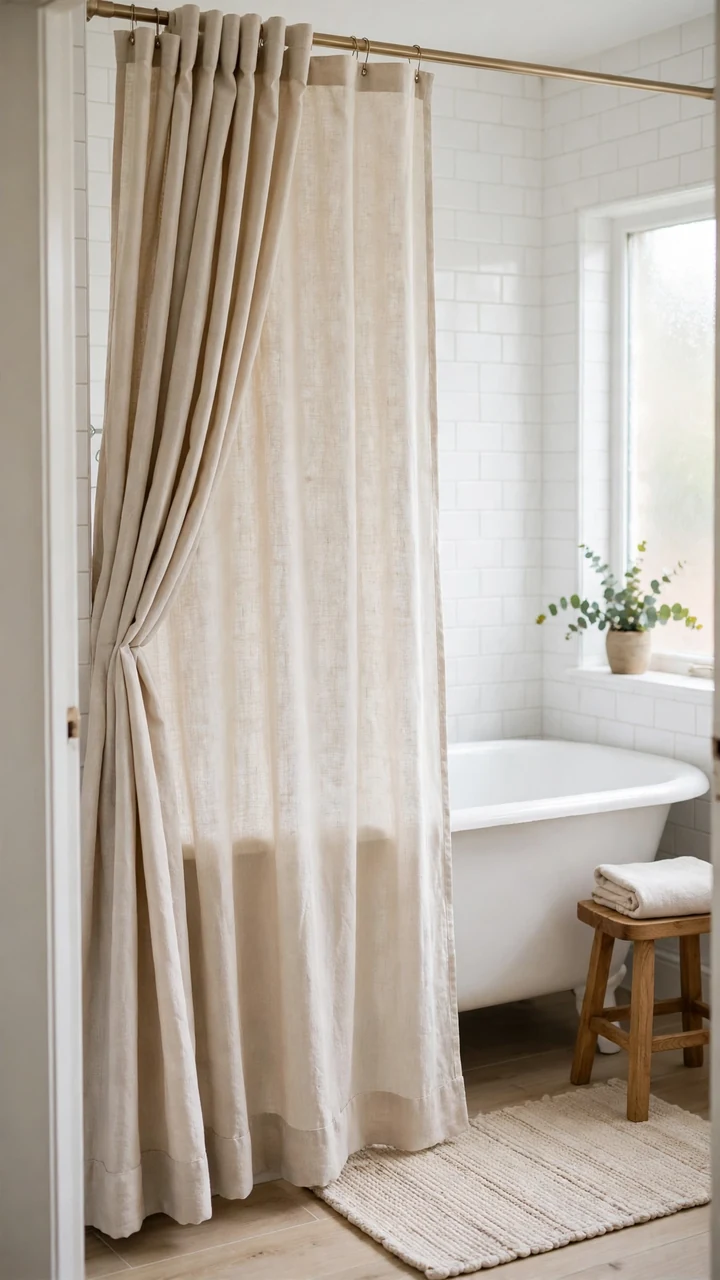
A heavy glass door on a track asks you to push, step over a rail, and hope it does not stick.
A soft curtain on a rod gets rid of the track and the weight. Pick a fabric curtain with a weighted hem, and the bottom stays down instead of clinging to your legs. A light color keeps the shower bright, while a dark one hides soap marks.
Never lean on or grab the curtain or rod for balance. That is the job of your grab bar.
Glass is heavy and sharp. Ask someone to help take the old door down.
A heavy sliding glass door with a track to step over and a handle that is hard to reach.
A light fabric curtain with a weighted hem that pushes aside with one hand and leaves a clear opening.
16. Smooth Out the Shower Threshold
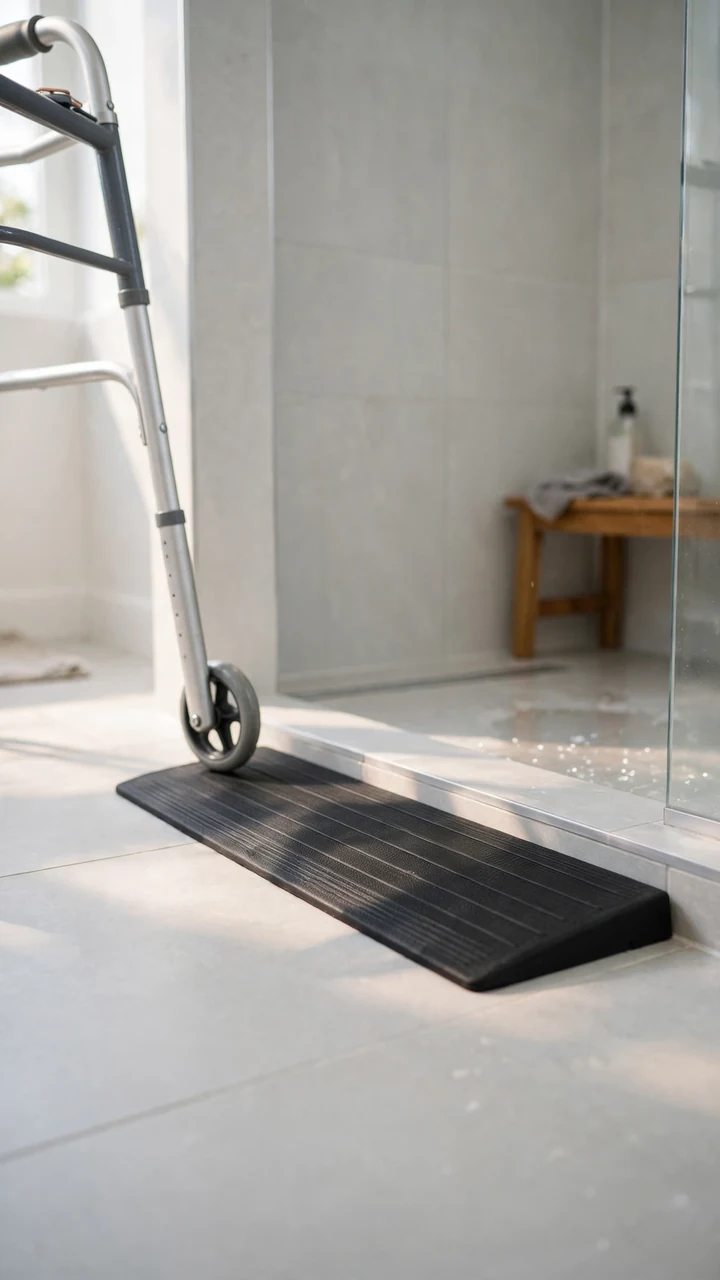
A raised lip at the shower or tub edge is easy to miss and easy to trip on.
A rubber threshold ramp fills the gap between the floor and the lip. It sits flat, grips the floor, and turns a step into a gentle slope. Most are cheap and need no tools, just an adhesive backing or their own weight. A dark gray or black ramp also shows you exactly where the edge is.
Walkers and canes roll over a slope much more easily than a step.
Check that the ramp is firmly in place before every use. A ramp that slides is worse than no ramp.
💡 Quick Tip
Wipe the floor clean and dry before you stick a ramp down. Dust and soap film keep adhesive from holding. Press along the whole length for a few seconds, and check the edges every few weeks.
17. Mark Edges With Contrast Tape
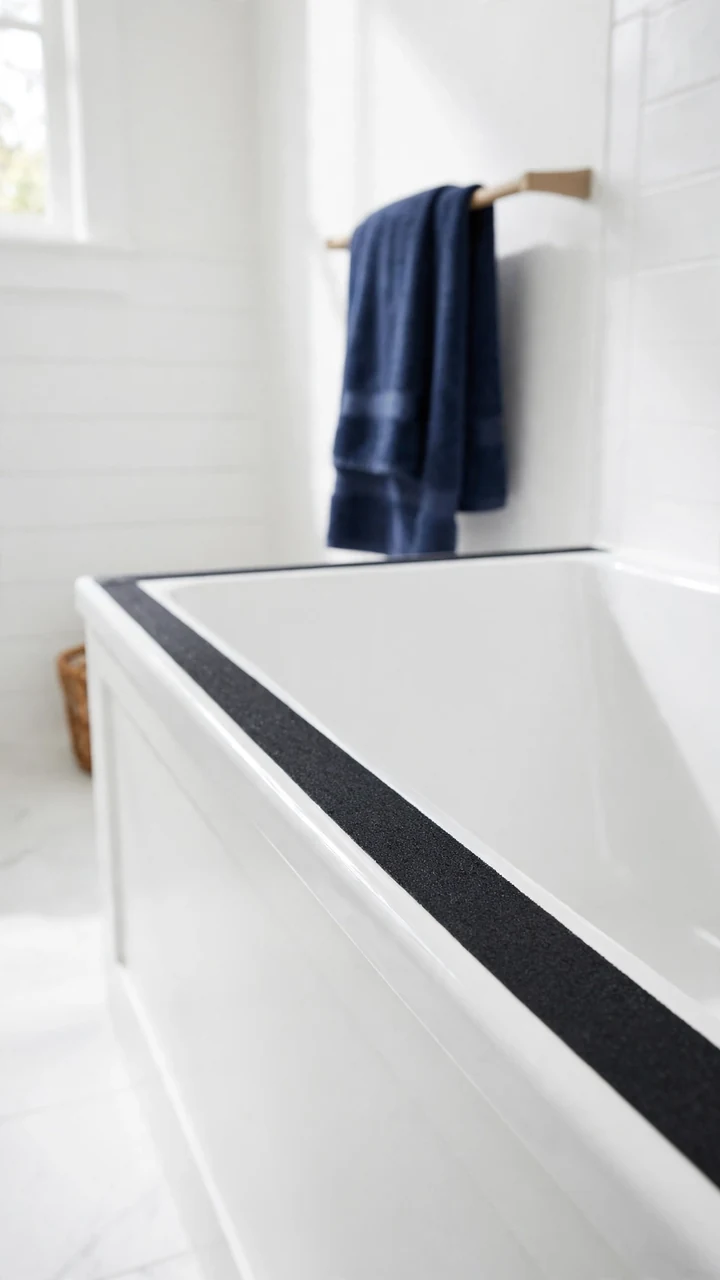
A white tub on a white floor against a white wall looks calm. It also hides every edge.
Add a strip of contrast tape along the places your feet need to find. Anti-slip tape in black or a bold color works on the tub rim, the shower curb, and the edge of any step. Pick a color that clearly stands out from the surface behind it.
Where to use it:
- The outer edge of the tub
- The lip of a shower curb
- The step up into the bathroom
Towels count too. A navy towel on a light bar is easy to spot and easy to grab.
If you can see the edge, you can plan the step.
18. Lower or Tilt the Mirror
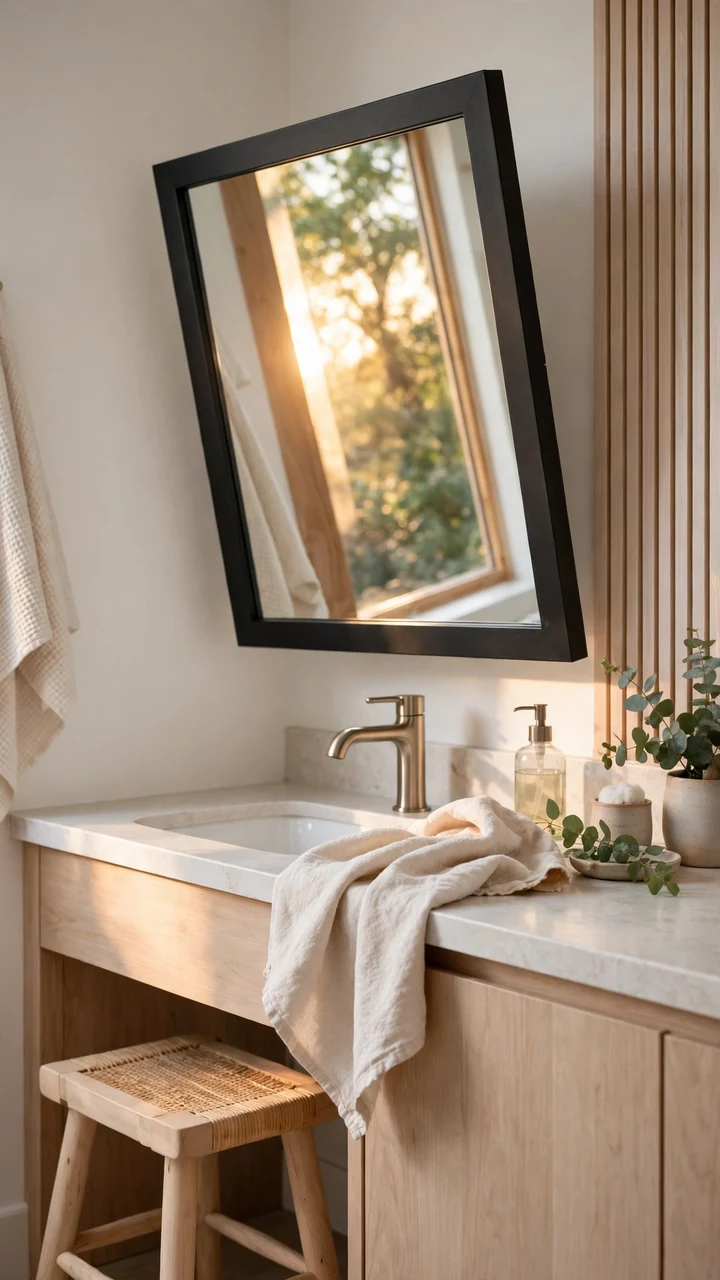
Standing at the sink gets tiring, and a mirror hung for a standing person shows a seated one nothing but the ceiling.
Move the mirror down a few inches, or tilt it so it faces slightly toward the floor. A tilt mount costs little and screws onto the wall behind the mirror. If you would rather not drill, a small second mirror at seated height on the vanity works too.
A framed mirror in matte black, wood, or white also adds a finished look.
Hang it so the center sits at about the eye level of the person who uses it most.
Test before you drill
19. Keep a Phone and Bell Within Reach
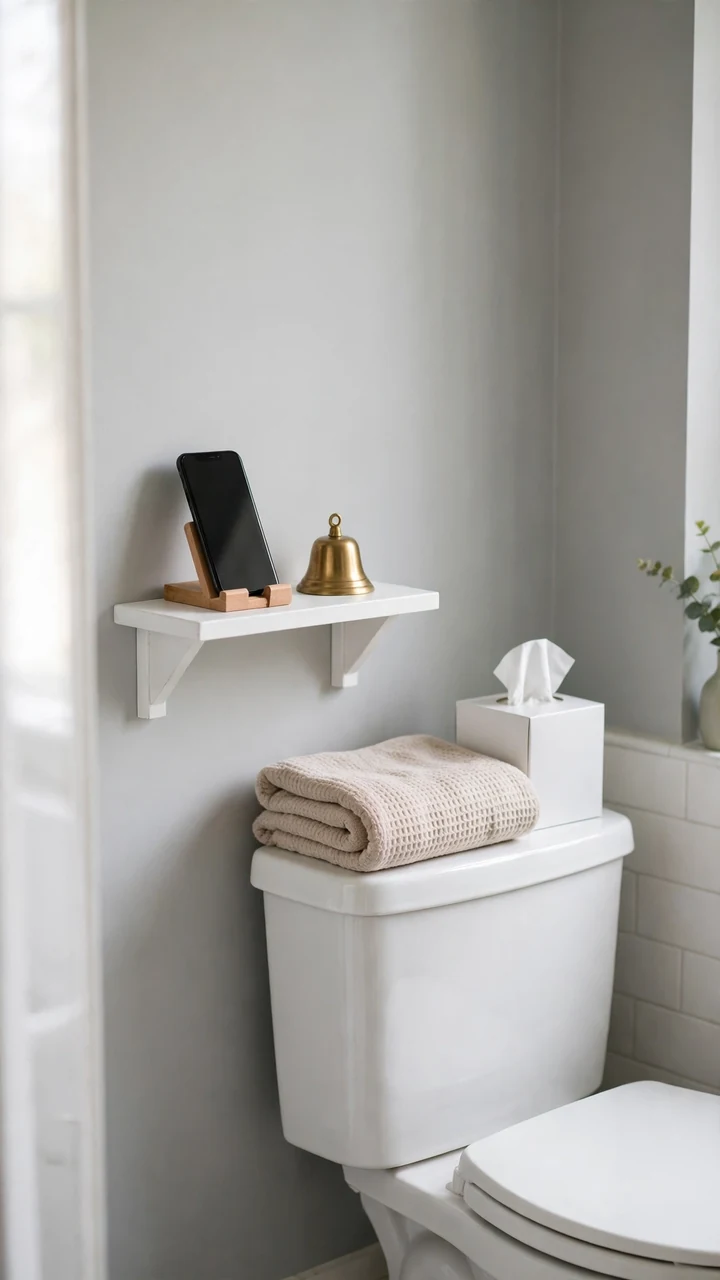
A phone in the bedroom does nothing if something goes wrong in the bathroom.
Set a small shelf or a ledge near the toilet or tub where a phone can sit at seated reach. Keep it away from the water. A small bell or a wearable alert button gives a second way to call for help if a phone is not handy. Tell the person you live with, or a family member, when you plan to shower, so someone is listening.
None of this costs much, and it makes a hard moment less scary.
Test the bell or button with a family member so you know it works.
Put the phone on a shelf you can reach while seated
Tell someone when you plan to shower
Leaving the phone in another room
Placing it on the tub edge where it can fall in
20. Stick Treads on the Tub Floor
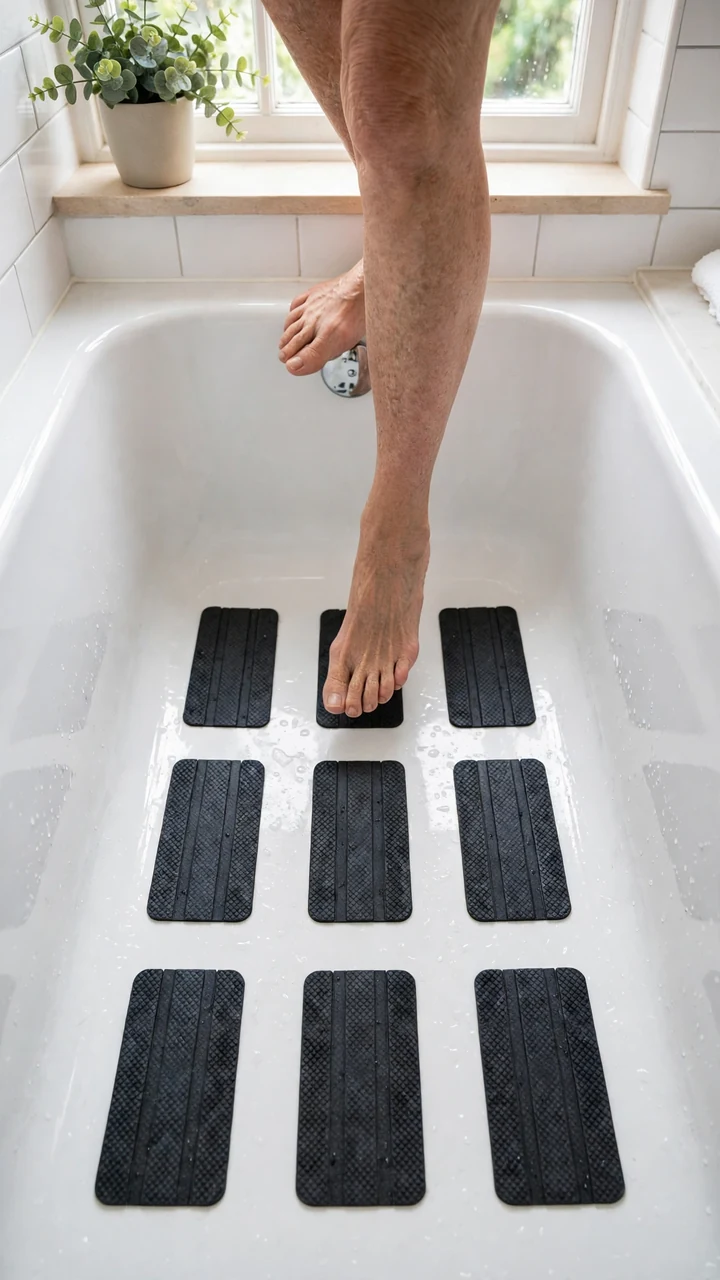
Tubs are smooth because smooth is easy to clean. Smooth is also slick.
Adhesive treads are small textured strips or decals that you press onto the tub floor. They stay put better than a loose mat, and they do not curl or trap water underneath. Clear ones blend in, while dark ones show up clearly against a white tub. Space them evenly across the area where you stand.
They are a cheap, quick finish for the part of the bathroom where grip matters most.
Replace them when the edges start to lift or the texture wears down.
Clean the tub floor well and let it dry fully.
Lay the treads out without peeling to check the spacing.
Peel one strip at a time and press it down from the center out.
Wait the time listed on the package before you run water.
Conclusion
A safer bathroom does not have to look like a care facility or cost a month of savings. A bar that holds, a mat that grips, a light that comes on by itself. Small changes like these add up, and they help people stay comfortable in the home they know.
Start with whatever worries you most. For many families that is the shower, so a grab bar and a better mat make a good first afternoon. Add the rest one at a time as the budget allows. That is the whole idea behind accessible bathroom ideas for seniors on a budget.
Start here this weekend
Save this list to your bathroom or home safety board, so it is ready the next time you want to make the room easier for someone you love.