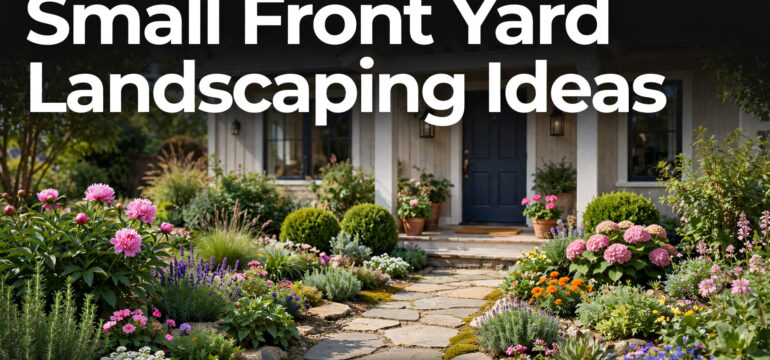
Let me tell you about the spring I decided my tiny front yard needed a makeover. I got so excited at the nursery sale that I bought way too many plants, squeezed them all into one small bed, and told myself they would just work it out. Three weeks later it looked like a plant traffic jam, half of them were leaning sideways fighting for sun, and I had to dig up and give away a whole wheelbarrow of poor choices. So learn from my mess. You do not need a lot of plants or a lot of money. You need a plan and a free weekend.
These 25 small front yard landscaping ideas are the ones I actually reach for now. Every single one works in a small space, most of them cost less than a pizza night, and you can do them yourself with basic tools. Nothing fancy here, just honest projects that make a real difference when people pull up to your house. Grab your gloves. You will be surprised how far one Saturday can take you.
1. Curved Bed Edge With a Simple Trench
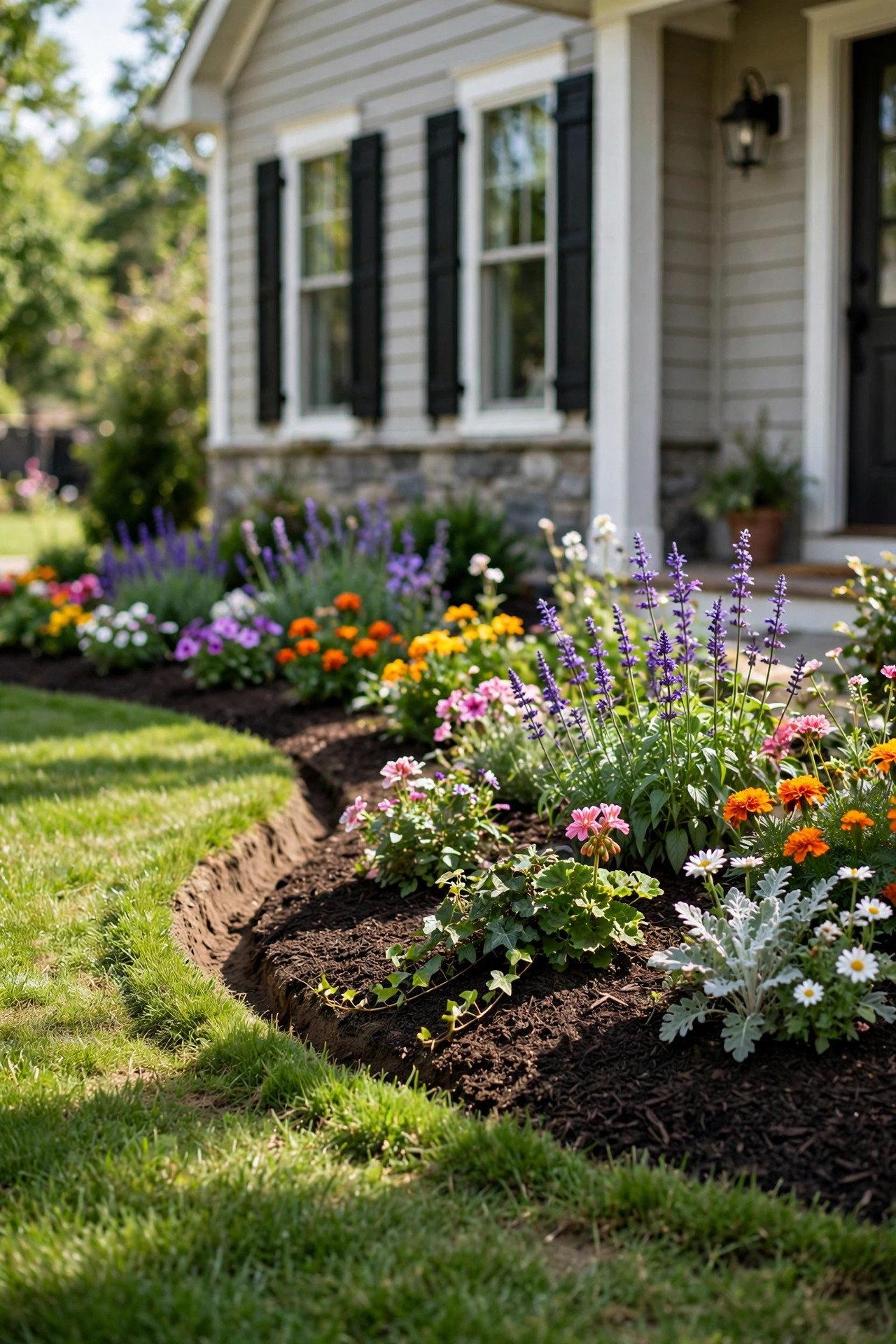
A straight bed edge is fine, but a gentle curve makes a small yard look bigger and softer. I learned this trick from a neighbor who has the prettiest yard on our street. She laid a garden hose on the grass in a lazy S shape, stepped back to check it from the street, and then cut along the hose line. That curved edge alone made her whole yard look like someone designed it.
To do it, press a flat spade into the soil along your curve and wiggle it to make a V shaped trench about four inches deep. Pull out the cut sod and toss it in the compost. This costs you nothing but an hour of work, and the trench keeps mulch from spilling onto the lawn every time it rains. Keep the curve smooth and simple. Wiggly lines look messy from the curb.
2. Mulch Refresh in One Afternoon
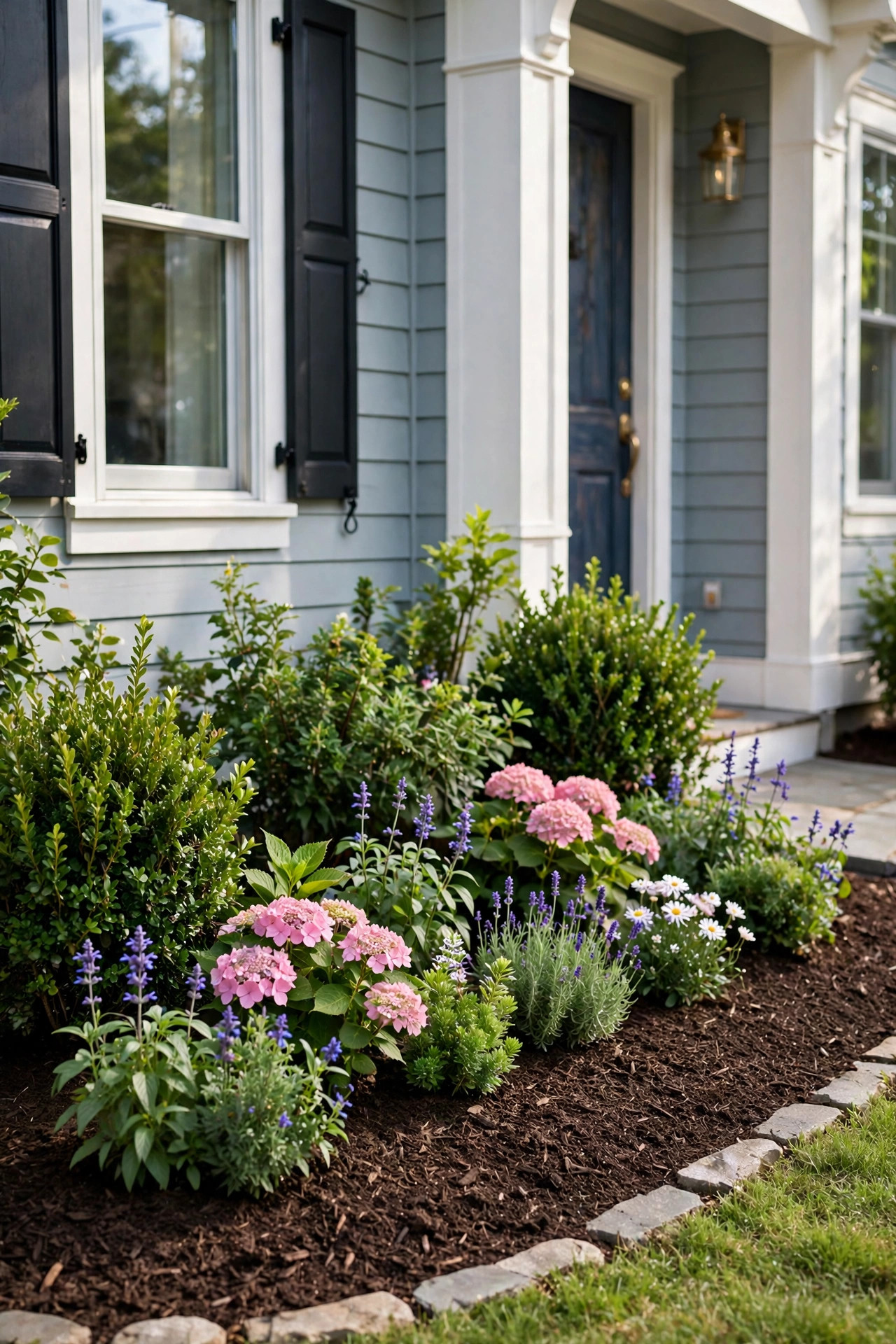
Nothing wakes up tired flower beds like fresh mulch. It covers bare spots, makes the colors of your flowers pop, and keeps weeds down so you are not out there pulling them every weekend. I used to skip mulching because it sounded like a big job, then I timed myself and finished my whole front in under two hours.
Pull the weeds first, then spread mulch about three inches deep, keeping it a few inches away from plant stems so nothing rots. For a small yard you only need a few bags, and hardware stores run mulch sales every spring where a bag costs less than a coffee. If you have a truck or a friend with one, buying a scoop from a garden center is even cheaper per bag. Your beds will look brand new.
3. Solar Path Lights Along the Walkway
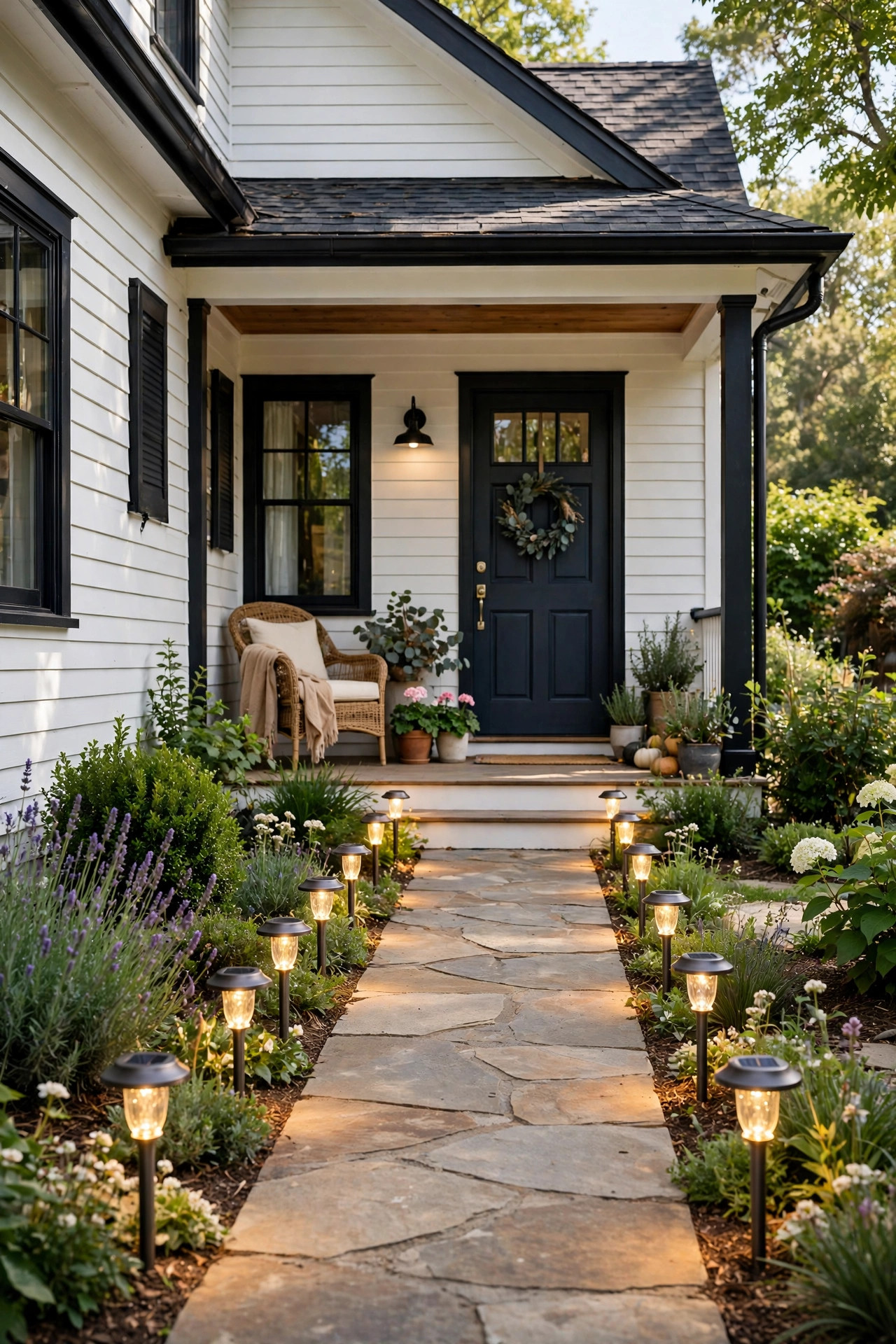
I added solar lights to my walkway last summer and now my house looks welcoming even after dark. During the day they are small and tidy, and at night they give off a warm glow that makes the path easy to follow. Guests always comment on them, and I did not have to touch a single wire.
Push the stakes into the soil along your walkway, about six to eight feet apart, and make sure the little solar panel on top gets full sun during the day. Warm white lights look classy. The cool blue ones can look a little harsh in front of a house. A set of eight usually costs less than twenty dollars and lasts for years. If one stops working, just swap in a new one.
4. Two Matching Planters by the Door
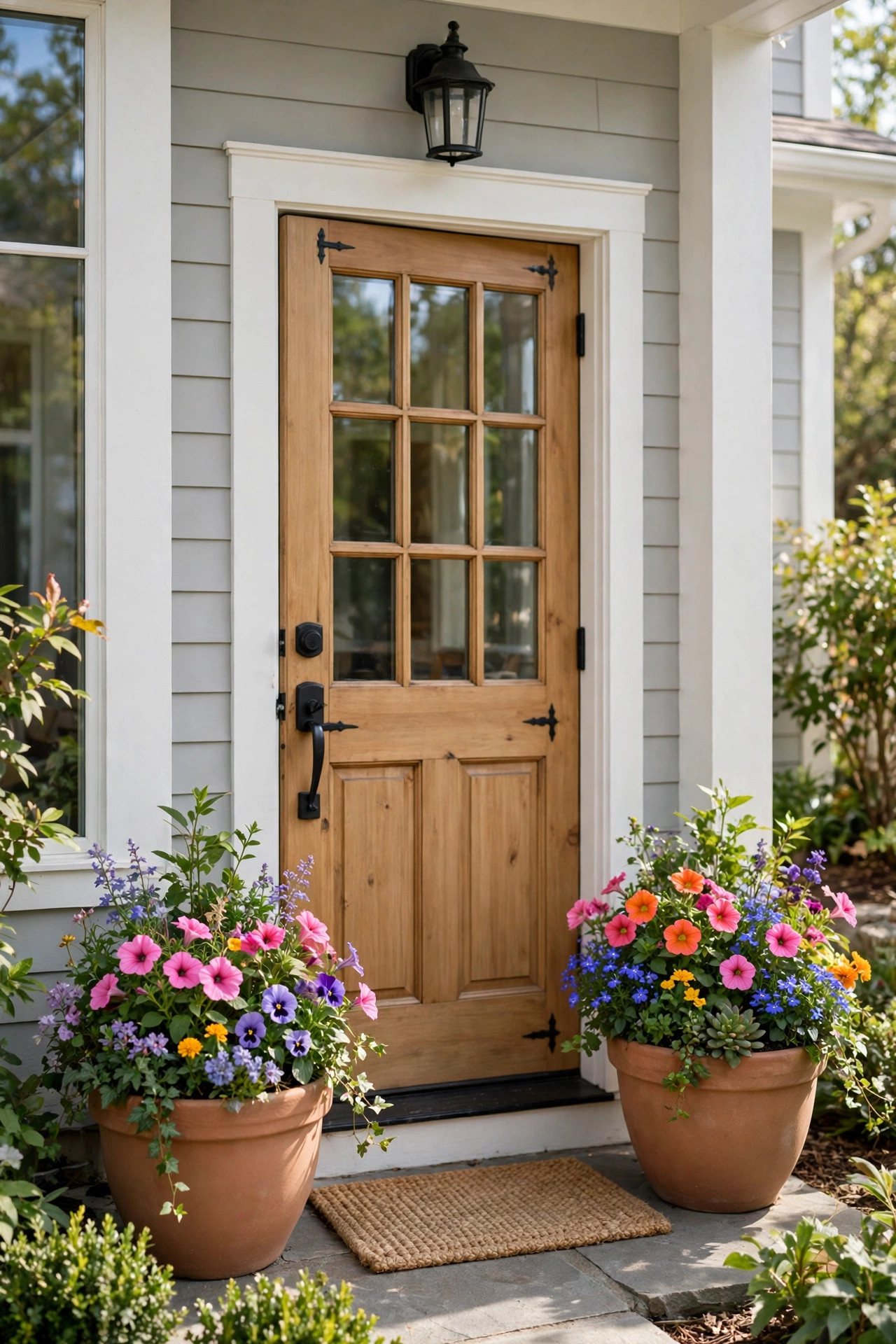
This is the oldest trick in the book and it works every single time. Two matching pots, one on each side of the front door, instantly make your entry look cared for. It is like earrings for your house. My sister did this with two cheap pots from a discount store and her whole porch looked fancier overnight.
Pick pots that are at least sixteen inches wide so they look grown up and not lost by the door. Put the same plant in both for that neat symmetrical look. Petunias and geraniums are cheap and bloom all season. Tip from a friend: check thrift stores for matching pots first. You can spray paint mismatched ones the same color for about five dollars and nobody will ever know.
5. Low Boxwood Hedge Border
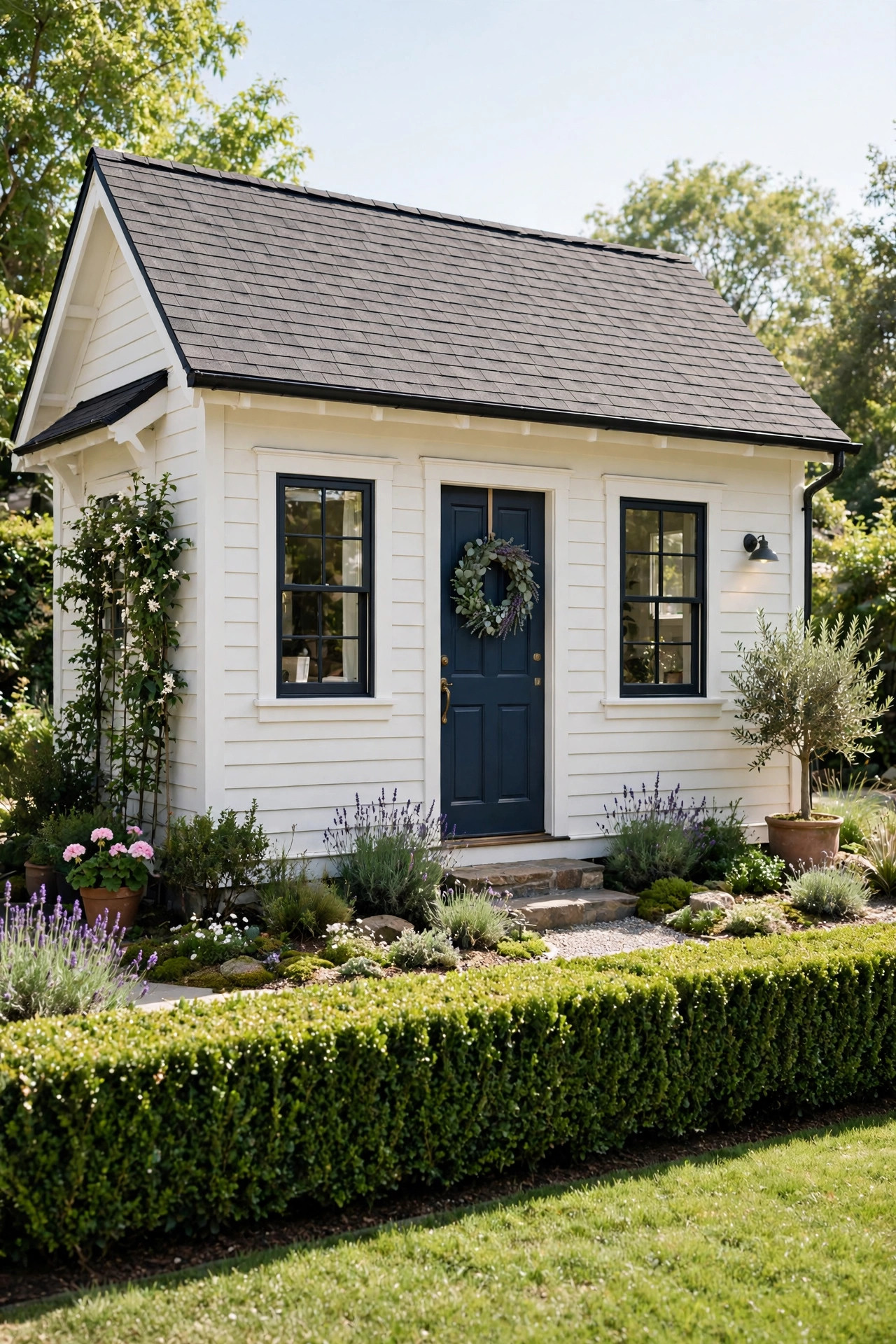
A low hedge along the front of the house or the walkway gives your yard a finished look that never goes out of style. Boxwoods stay green all year, which is a blessing in winter when everything else looks tired. They also make a great backdrop that makes your flowers stand out in summer.
Plant small boxwoods about twelve inches apart in spring and give them a good drink. Dwarf varieties stay short on their own, so you are not signing up for constant trimming. Shape them with hand shears twice a year, once in spring and once in midsummer. They are slow growers, so buy them a little bigger than you think if you want instant impact.
6. Gravel Patch With Stepping Stones
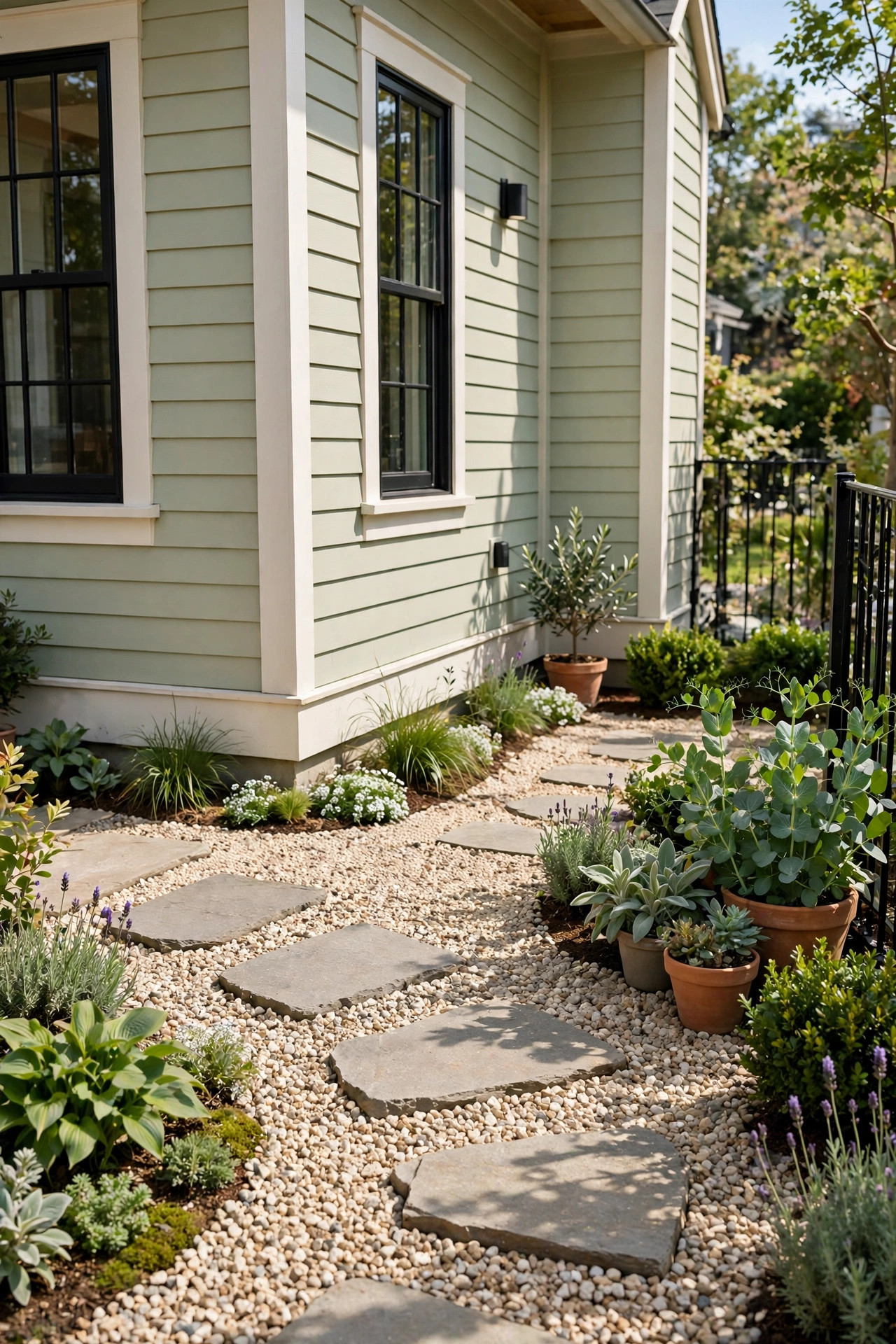
If you have a bare corner where grass refuses to grow, stop fighting it. Turn it into a gravel patch with stepping stones and it becomes a feature instead of an eyesore. I had a muddy spot by my gate that drove me crazy every time it rained. Now it is the cutest little path area and I get compliments on it.
Lay down landscape fabric first so weeds cannot push through, then spread about two inches of pea gravel. Set flat stepping stones on top and wiggle them down so they sit level. A bag of pea gravel covers a few square feet and costs just a few dollars. Rake the gravel smooth once a month and it always looks tidy. This project is perfect for a Saturday morning.
7. Paint the Front Door a Fresh Color
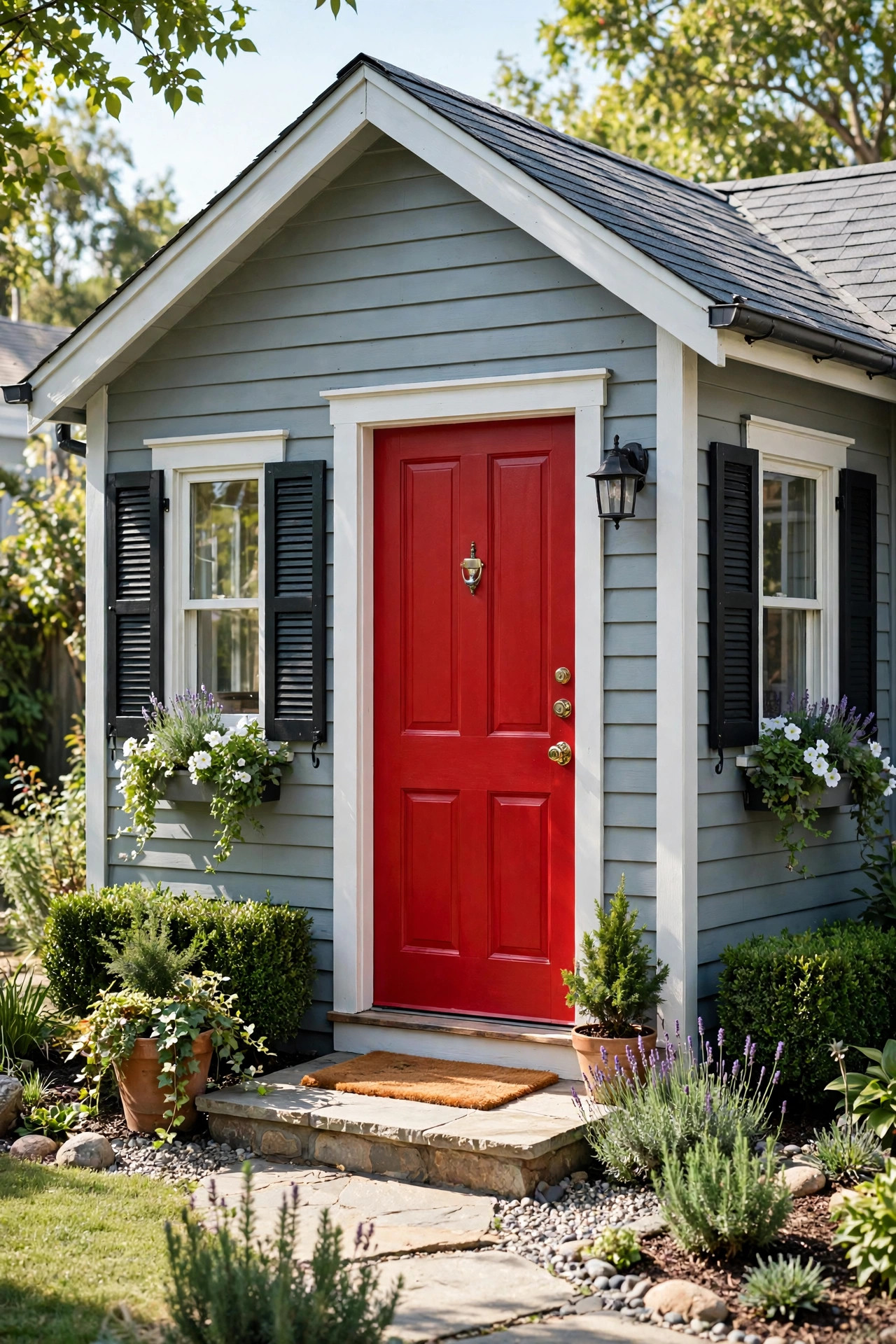
Want the biggest change for the least money? Paint your front door. A fresh coat of color takes a tired entry from blah to beautiful in one afternoon. I painted mine a deep navy and the whole house suddenly looked more expensive. Neighbors I barely knew stopped to ask about the color.
One quart of exterior paint is plenty for a door, and a quart costs less than a pizza delivery. Sand the door lightly, wipe it clean, and put on a coat of primer if you are going from light to dark. Use a small foam roller for smooth coats and a brush for the edges. Pick a color that makes you smile every time you come home. That is the whole point.
8. Window Boxes With Trailing Plants
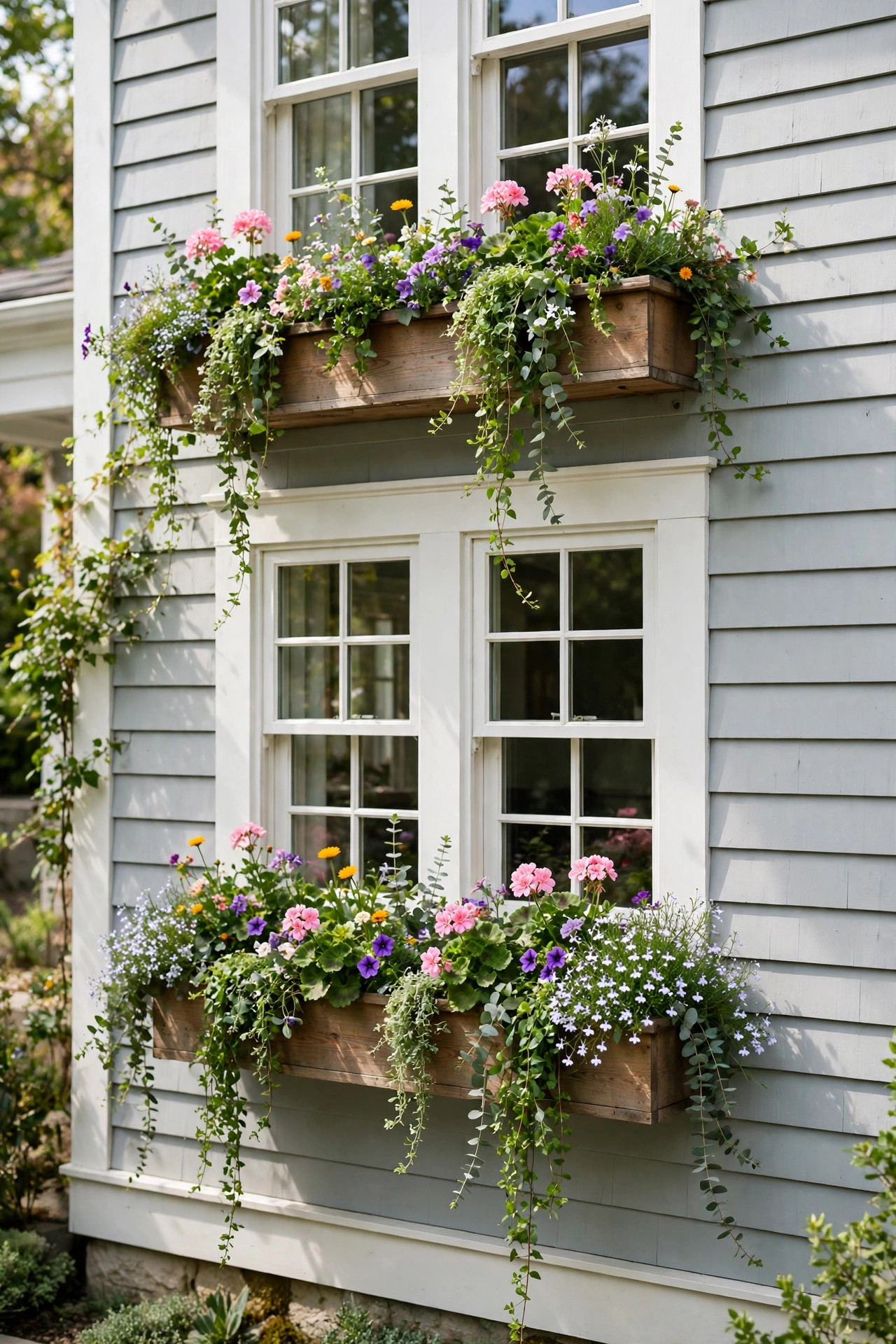
Window boxes are like flower arrangements for your house, and trailing plants make them look lush and full fast. Sweet potato vine, ivy, and trailing petunias spill over the edge in the prettiest way. My front windows used to look plain and flat. Now they are the first thing people notice.
Mount sturdy brackets under the window and set in a box with a coco liner or a plastic insert. Fill with good potting soil and pack the plants in close so they look full from day one. Water them every morning in summer because small boxes dry out fast. A little liquid fertilizer every two weeks keeps the blooms coming until fall.
9. Layered Plant Heights That Look Full
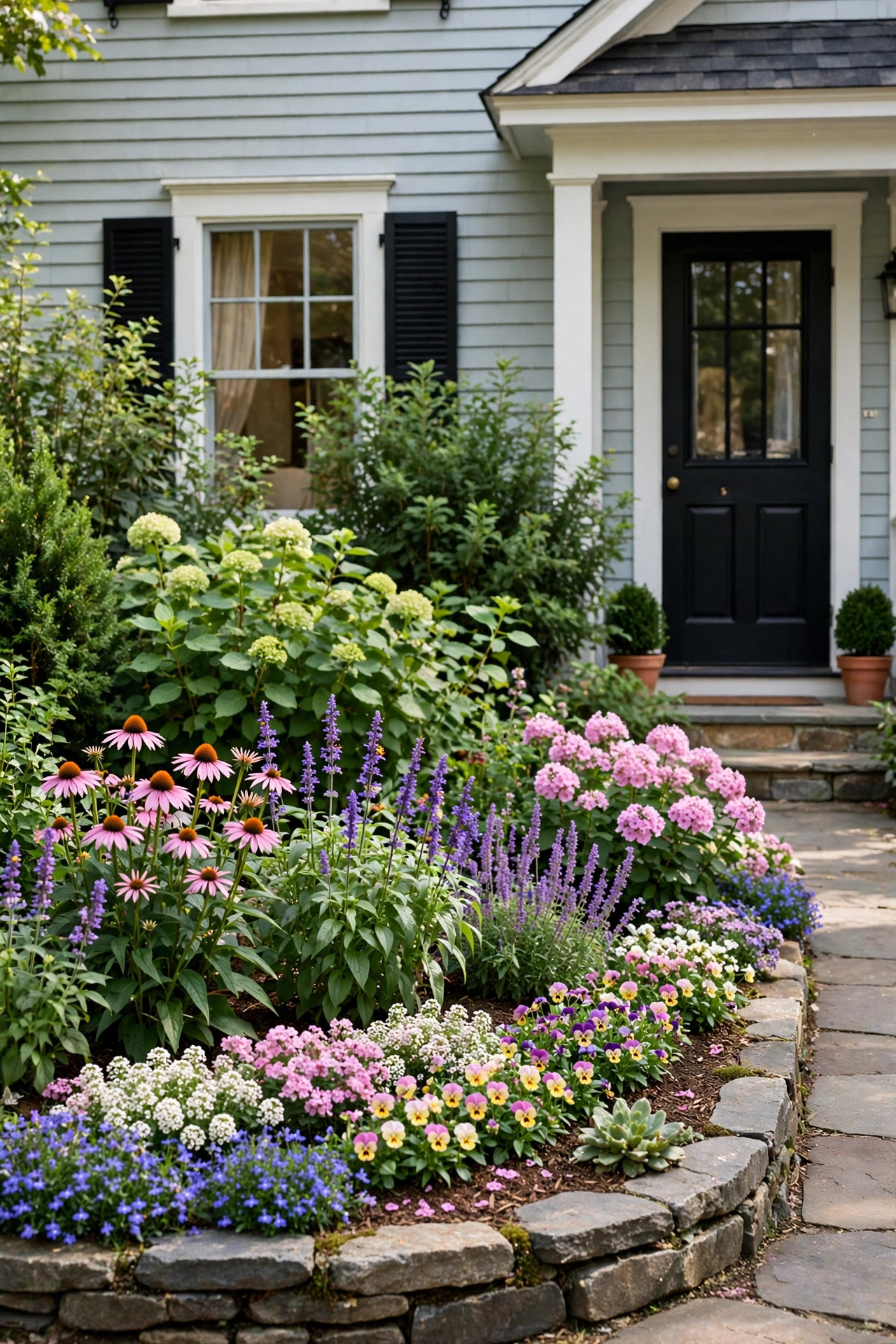
The secret to a flower bed that looks full instead of sparse is layering. Tall plants go in the back, medium ones in the middle, and short ones up front, like a choir standing in rows. When I first planted my bed I put everything in one row and it looked so thin. Rearranging by height changed everything.
Before you buy, read the plant tags and check the mature height, not just how tall it is in the pot. Place your tallest picks at the back near the house, then step down toward the front. Leave a little room for growth so nothing crowds out its neighbor. This one habit makes even cheap plants look like a designer planted them.
10. Native Plants That Need Less Water
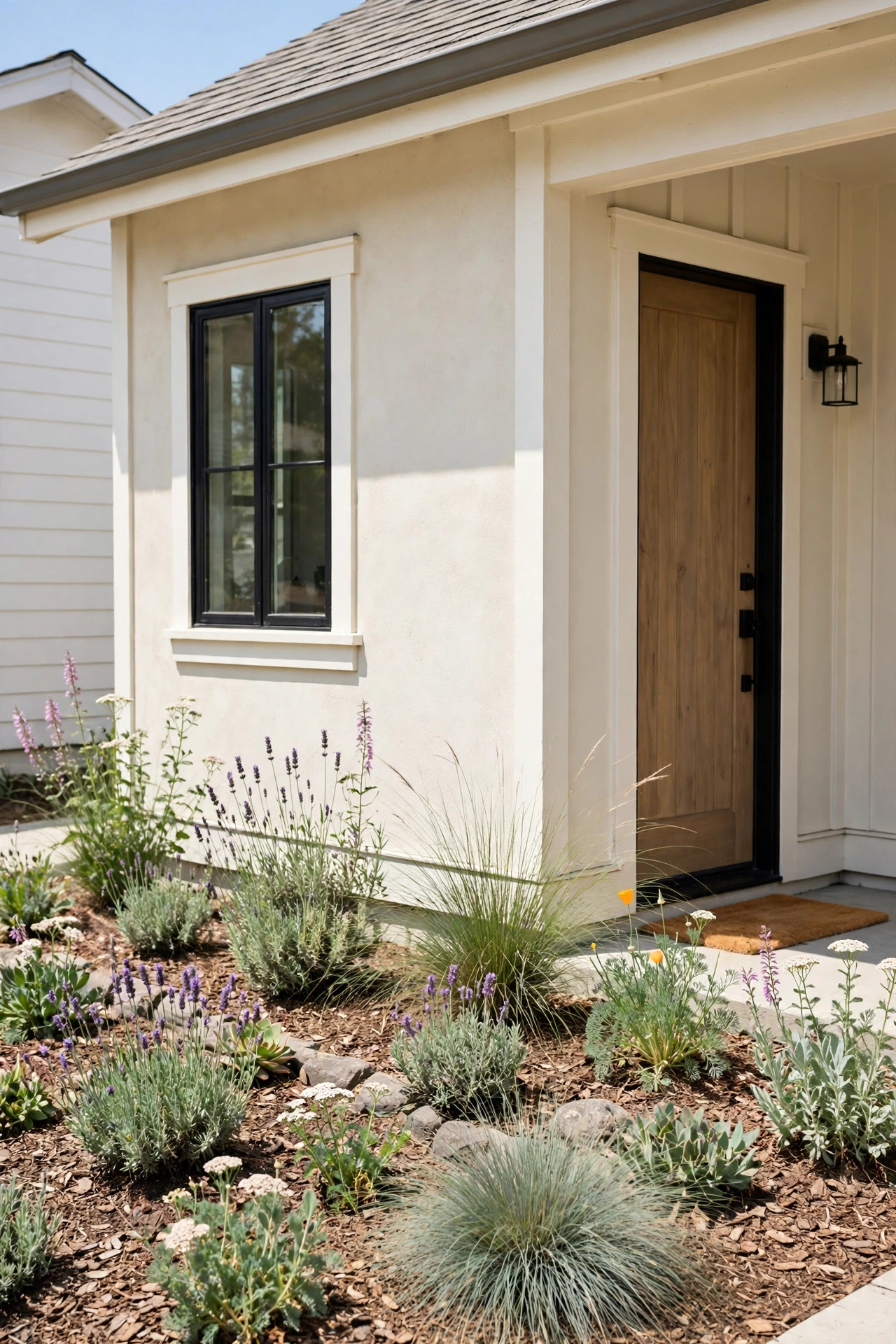
Here is a secret the garden centers do not advertise loudly: plants that grow wild in your area are the easiest things you will ever grow. They are used to your soil, your weather, and your rain patterns. I replaced my thirsty fussier plants with natives and my water bill dropped while my yard looked better.
Ask your local nursery which plants are native to your area, or check your state extension website for a free list. Water them well the first year so the roots settle in, then mostly leave them alone. Native plants also bring butterflies and bees, which is a lovely bonus. You will spend less time and money on replacements too.
11. Small Ornamental Tree as a Focal Point
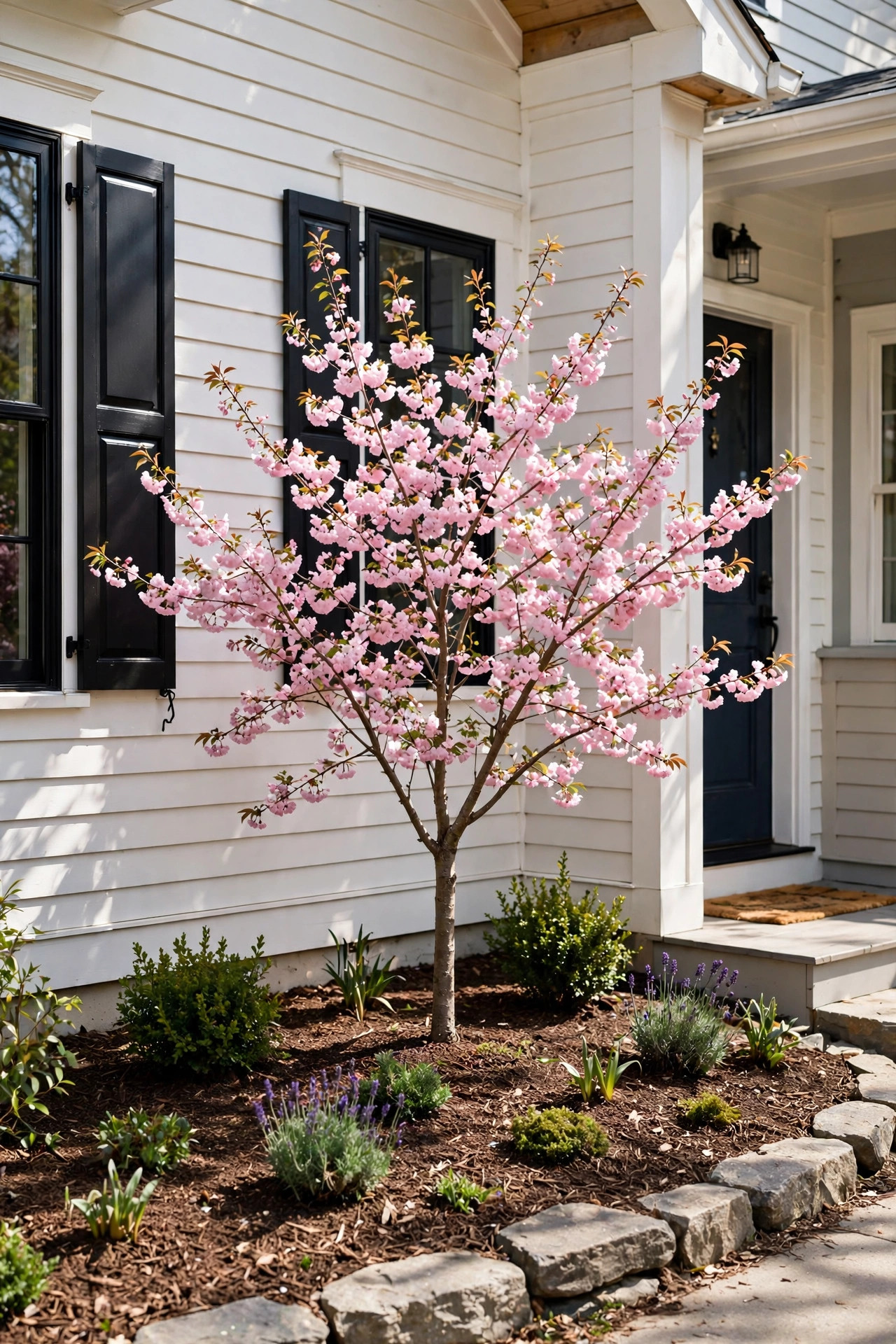
Every front yard needs one star, and a small ornamental tree is perfect for the job. A dogwood, Japanese maple, or crepe myrtle gives you height, seasonal color, and something pretty to look at from the window. Mine blooms in spring and I swear it makes the whole yard feel more finished.
Dig the hole twice as wide as the pot but no deeper, and set the tree so the top of the root ball sits level with the ground. Water it deeply once a week the first summer. Make a flat donut of mulch around it, never a volcano piled against the trunk. Fall is the best time to plant, and many nurseries discount trees in autumn.
12. Ground Cover Instead of Patchy Grass
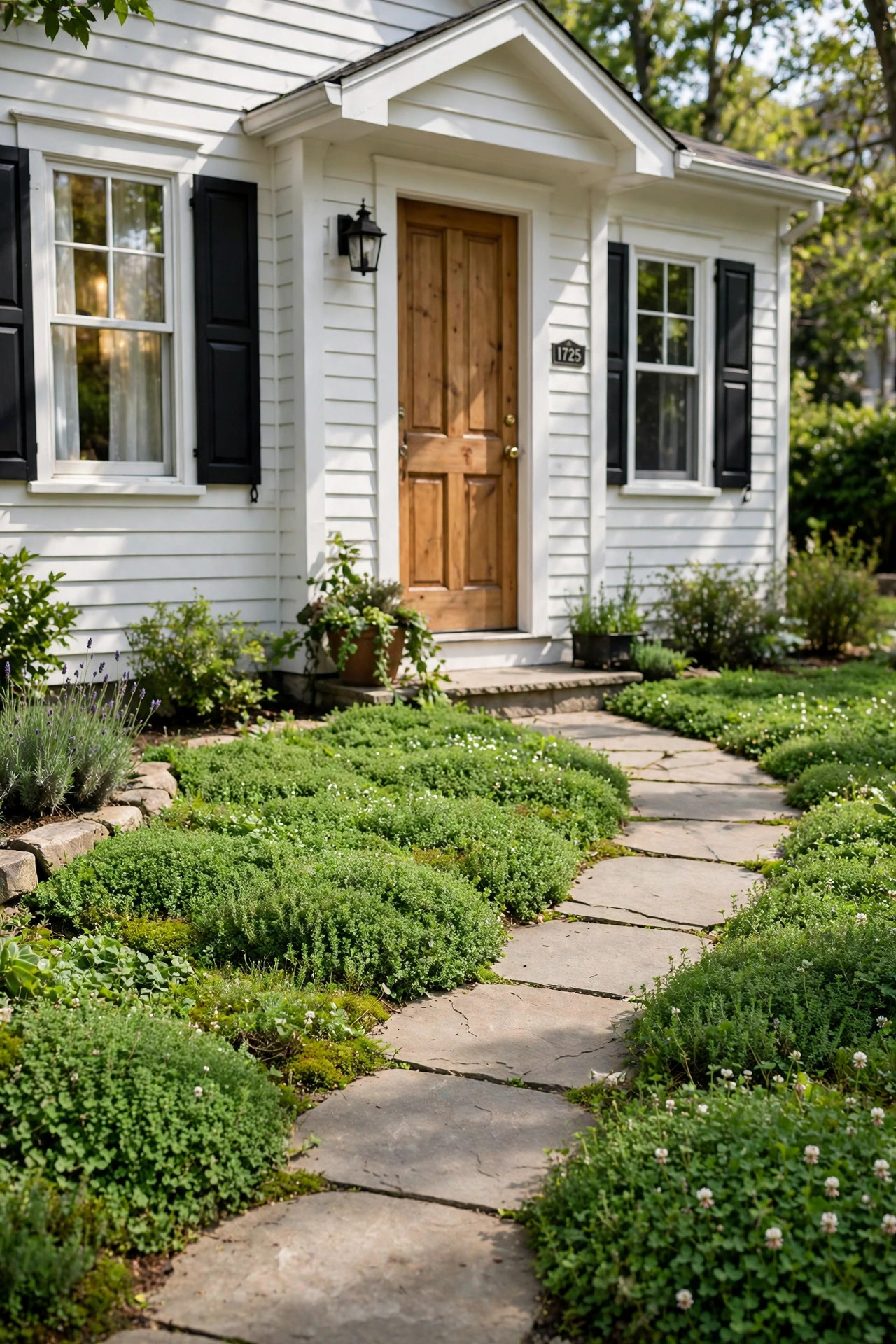
If you have a shady spot or a thin patch where grass keeps dying, stop reseeding it. Plant ground cover instead. Creeping thyme, clover, and sedum spread on their own, stay low, and look green with almost no work. My side strip used to be a muddy mess. Now it is a soft carpet of green.
Buy small plugs or flats and space them a few inches apart. They will knit together by next season. Water them until they settle in, then relax. Most ground covers never need mowing, which is my favorite part. Creeping thyme even smells wonderful when you step on it. It costs about the same as a bag of grass seed but lasts for years.
13. Rock Border Around the Flower Beds
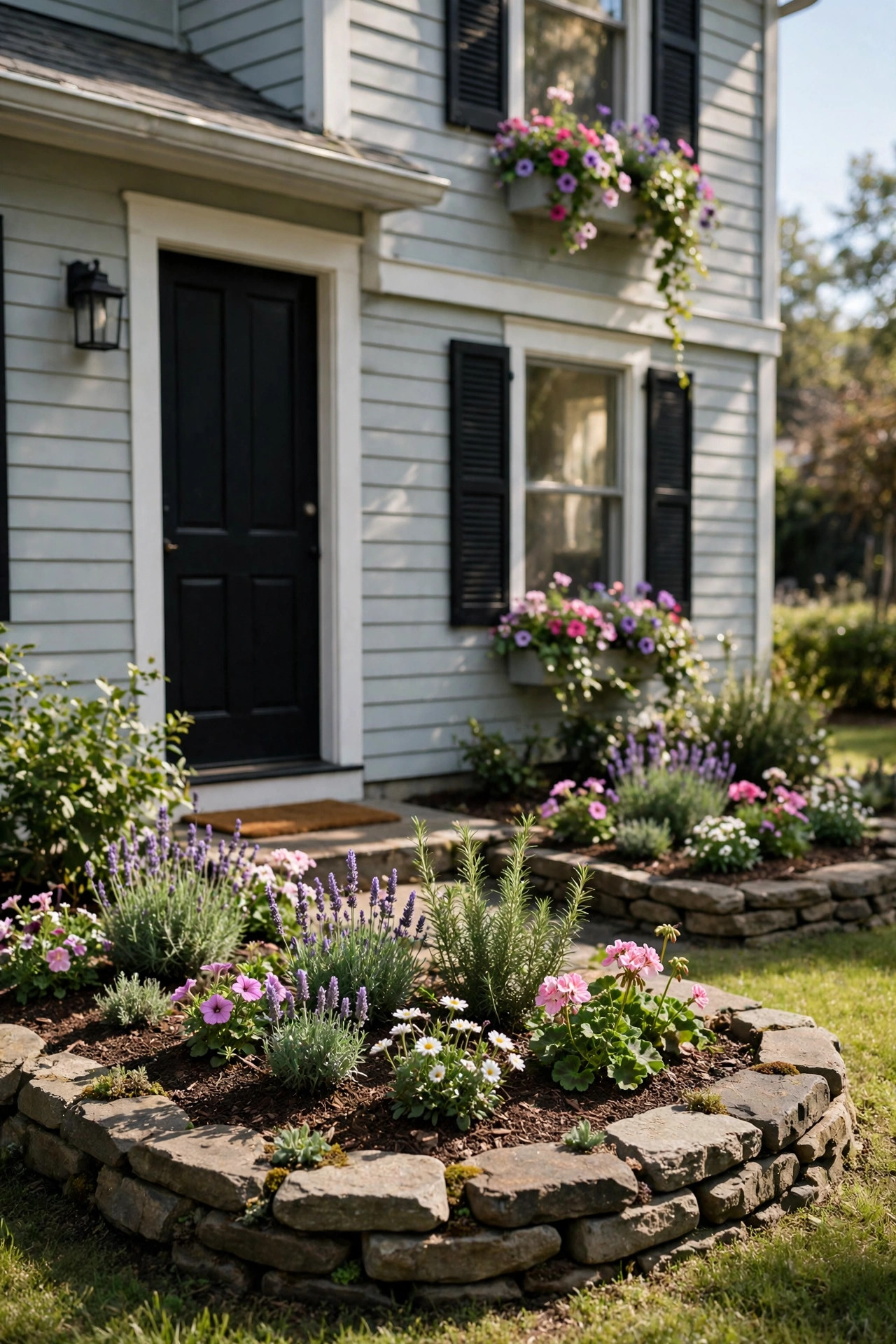
A rock border gives your flower beds a natural, finished edge that looks great with any style of house. It keeps mulch where it belongs and stops the mower from chewing up your plants. I used fieldstones I found on a friend’s farm and my beds looked like a magazine photo.
Dig a shallow channel where the border will go so the rocks sit steady and do not roll. Nestle each stone in with the flat side down, overlapping slightly. You can buy bags of river rock at the home store, but ask around first. Friends with rocky yards are usually thrilled to give stones away. Free is my favorite price.
14. Hanging Baskets on Porch Hooks
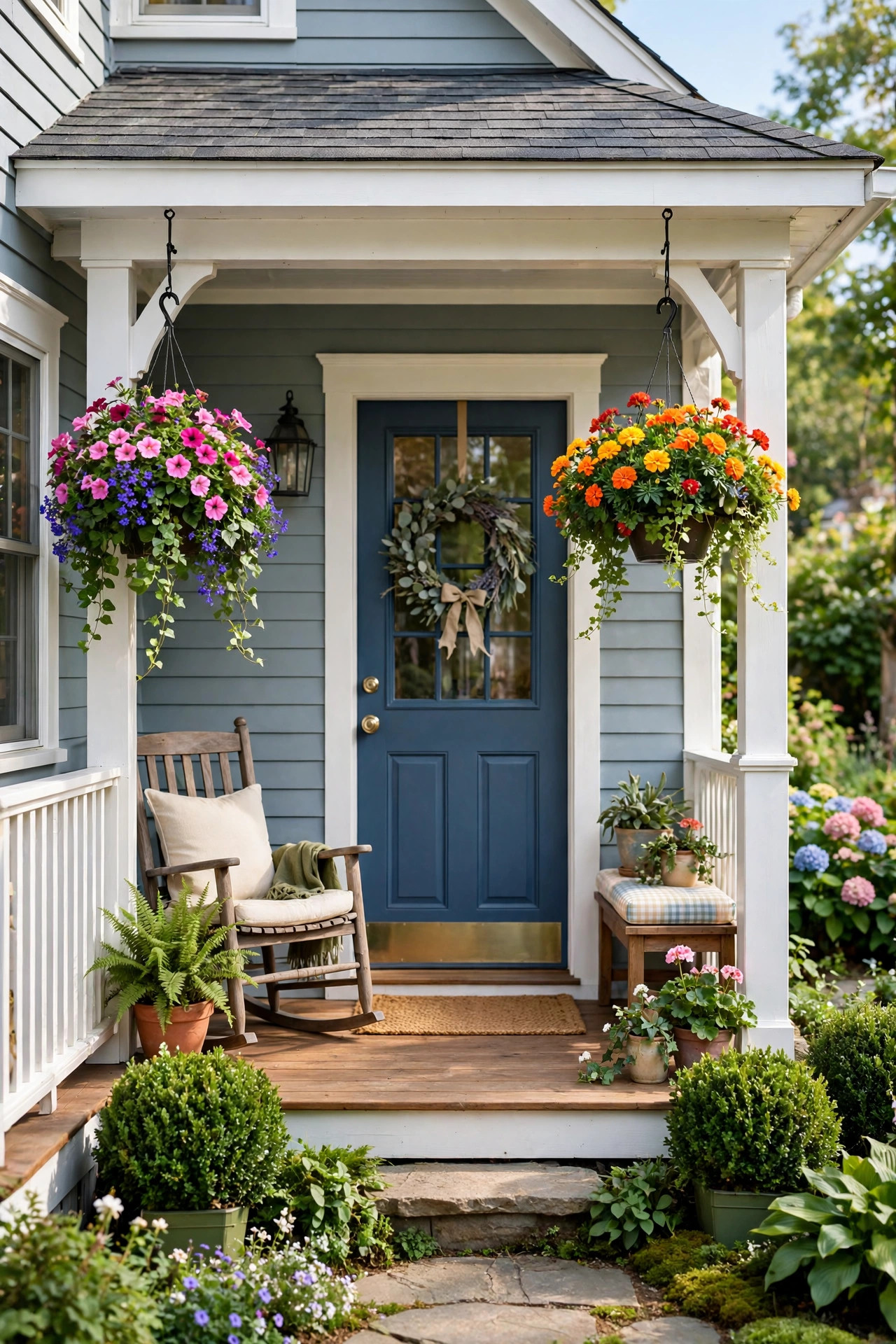
Hanging baskets are instant color with almost no planning. You buy them already planted, hang them up, and your porch looks like you hired someone. I keep two on my porch every summer and they are the happiest thing in my yard. Ferns and trailing flowers both do wonderfully.
Screw sturdy hooks into a beam or use a shepherd’s hook in the ground by the steps. In summer, hanging baskets dry out fast, so water them every single day and give them liquid fertilizer once a week. Coco liners breathe well and look natural. Turn the basket a quarter turn each week so it grows evenly on all sides.
15. House Numbers Styled With a Planter
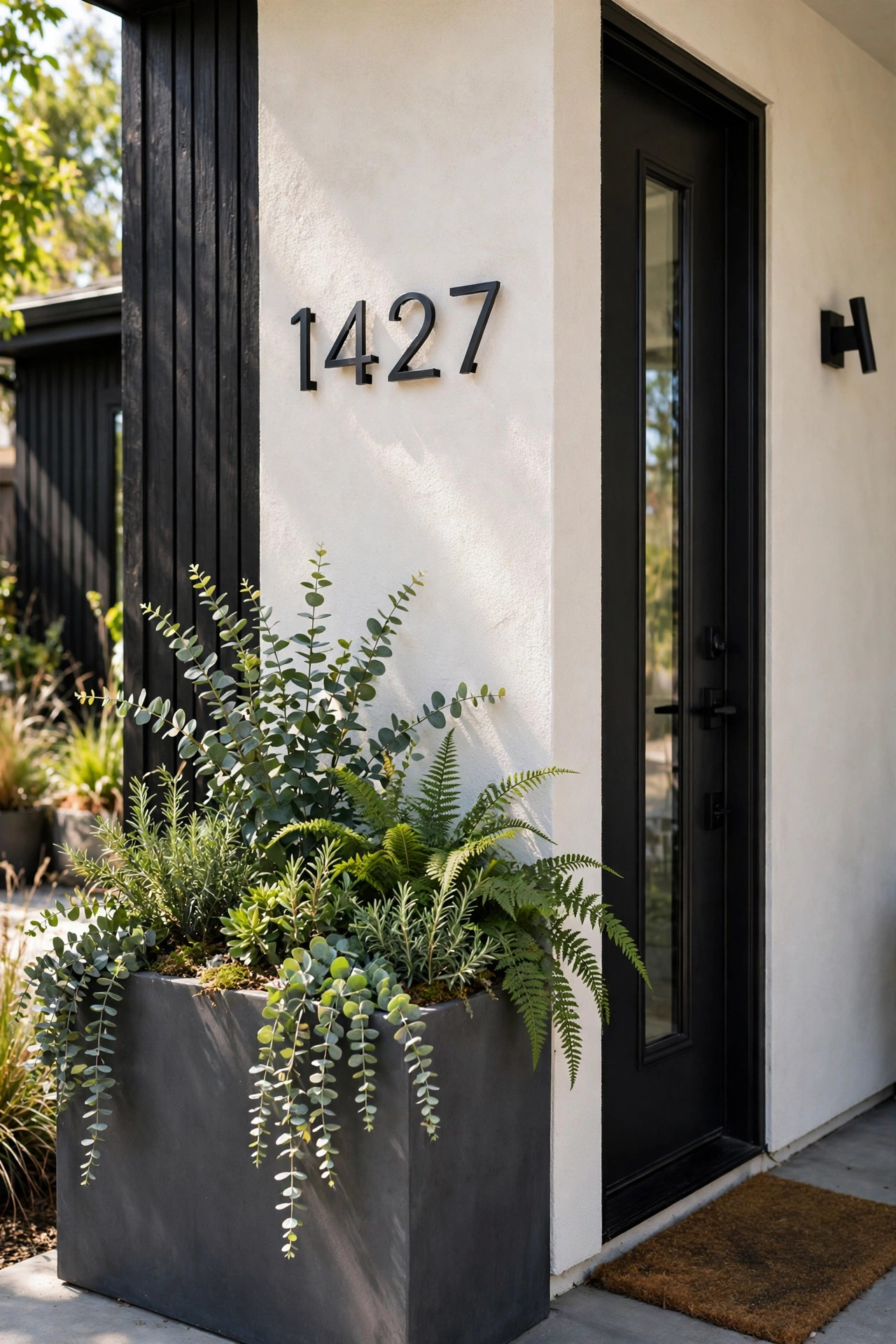
House numbers are one of those small details that make a house look sharp or sloppy. Big, clean numbers that you can read from the street say this house is loved. I mounted mine on a dark wooden board with a planter underneath and delivery drivers stopped getting lost.
Pick numbers at least four inches tall in a style that matches your house. Mount them on a back board, a plaque, or straight on the trim by the door. Add a small solar spotlight above them so they glow at night. Set a planter with something green right below to pull it all together. The whole project costs less than thirty dollars.
16. Fresh Mailbox Post With Flowers
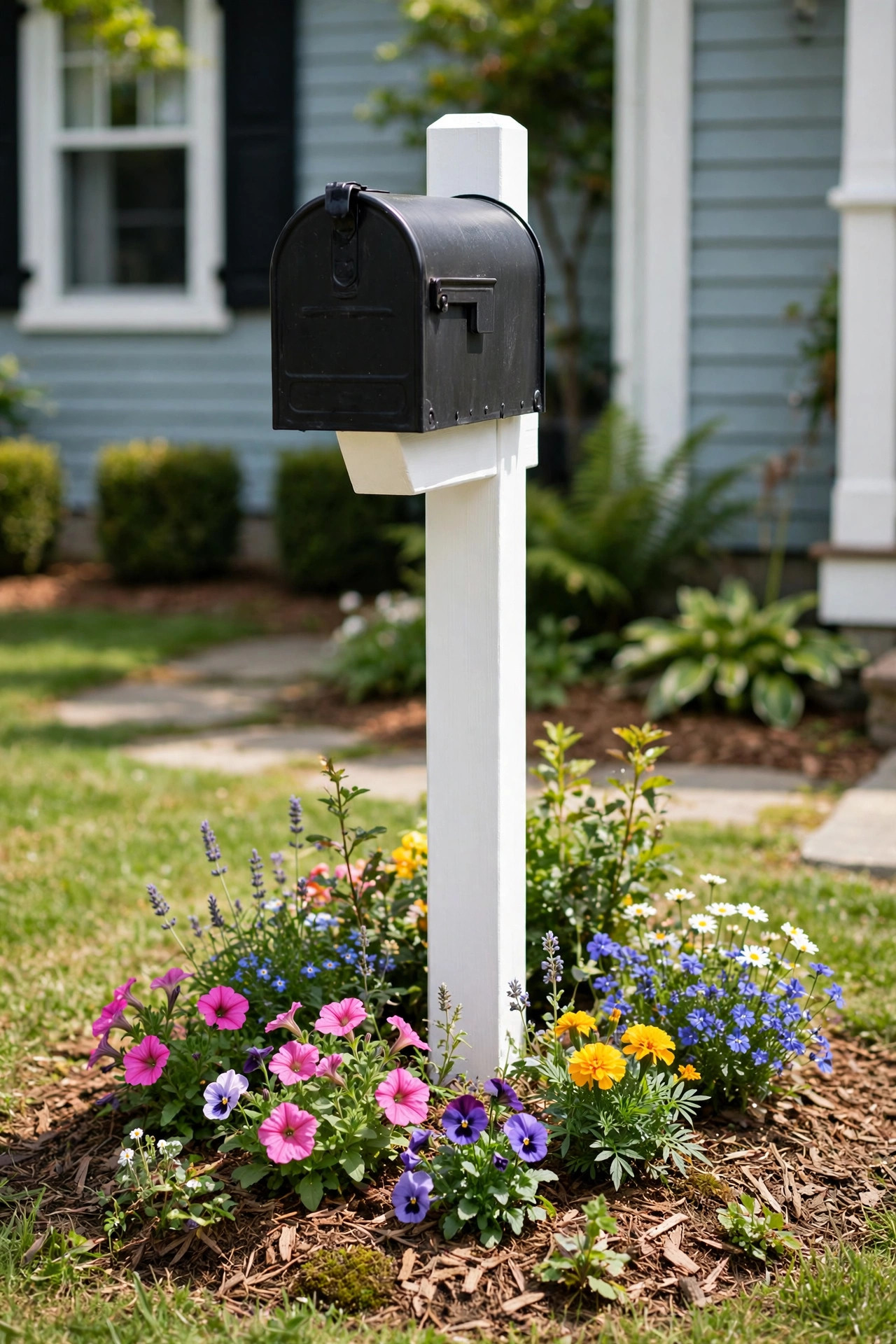
Your mailbox is the first thing visitors see up close, so give it some love. A fresh coat of paint on the post and a ring of flowers around the base turns a plain mailbox into a little garden moment. I painted mine the same color as my shutters and planted cheerful marigolds around it.
Check your local rules for mailbox height and placement before you move anything. Sand the post, paint it with exterior paint, and add a mulch ring about a foot wide at the base. Plant low flowers like marigolds or alyssum that will not block the mail carrier’s reach. Water them in well. It takes one afternoon and looks adorable.
17. Edge the Lawn With a Half Moon Edger
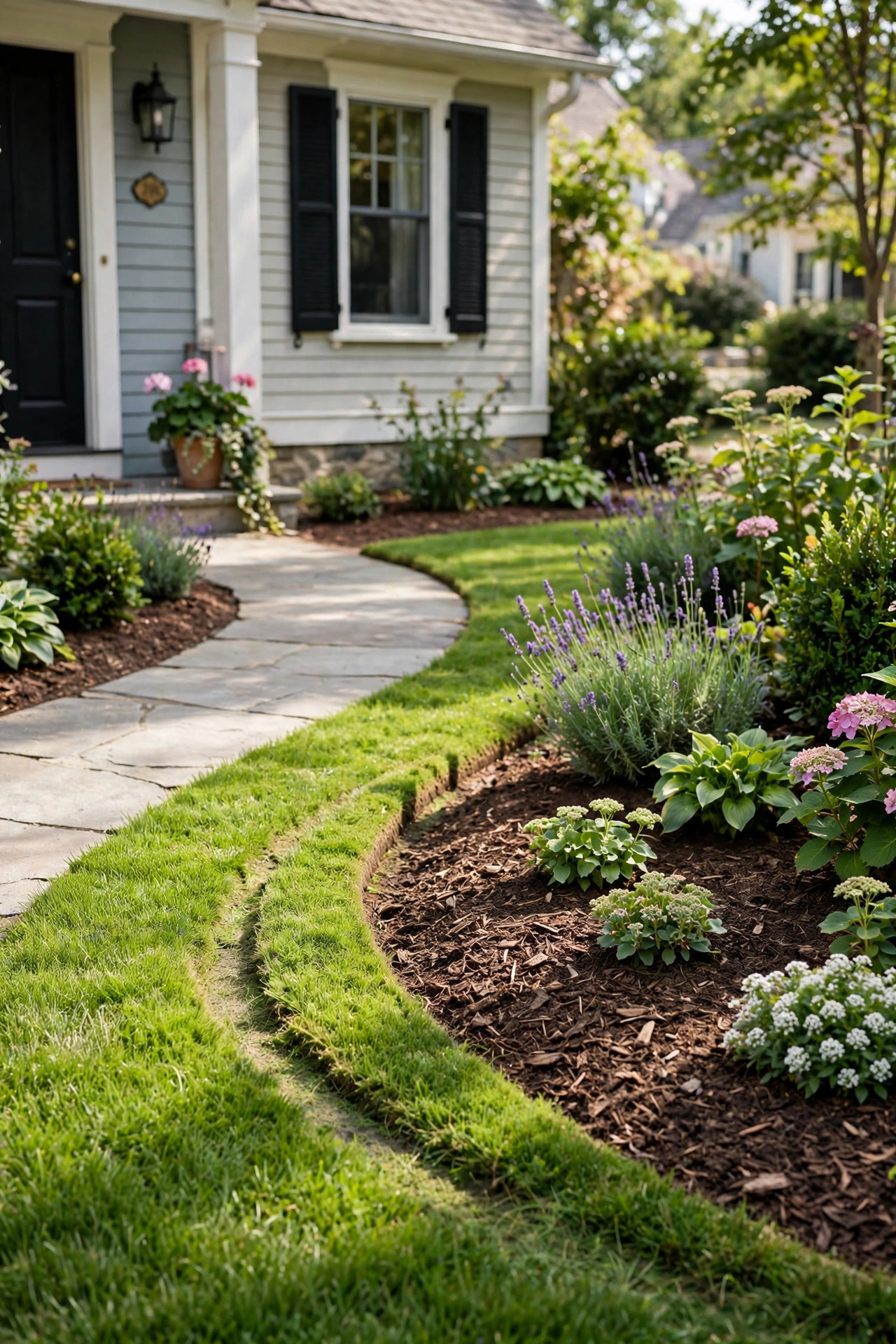
A crisp edge between the lawn and the beds is the fastest way to make a yard look professionally kept. It is the difference between tidy and just okay. I edge my lawn every spring and the before and after is honestly shocking for such a simple job.
Do this when the soil is damp after rain so the tool slides in easily. Stand the half moon edger on your line, step on it with your foot, and rock it back and forth to cut a clean slice. Work your way along the whole bed, then pull out the cut strips of grass. It takes about an hour for a small yard and costs nothing if you borrow the tool.
18. Container Herb Garden by the Steps
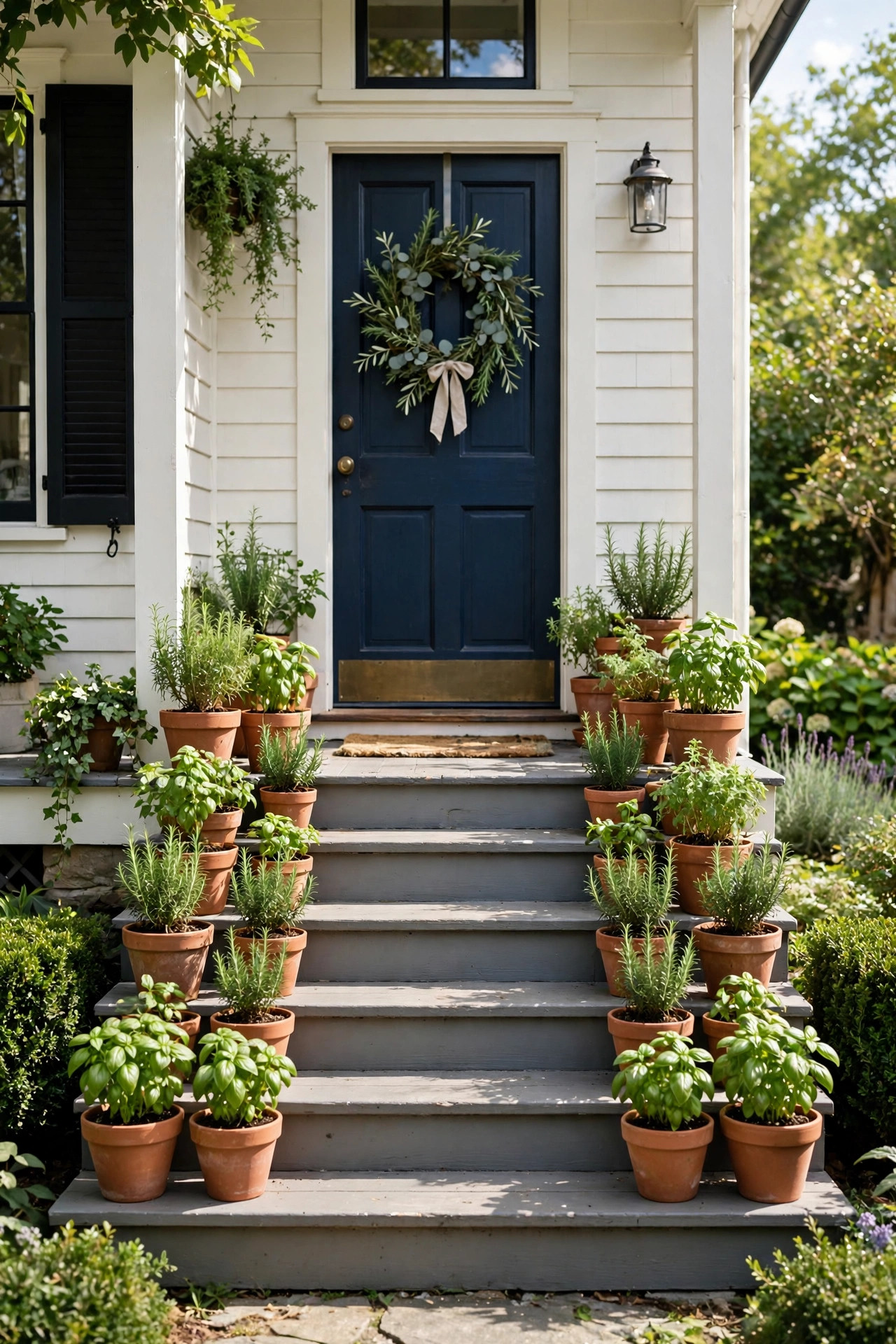
Herbs by the front steps are pretty, smell amazing when you brush past them, and you can snip them for dinner. Basil, rosemary, thyme, and parsley all do great in pots. I started with three pots and now I barely buy herbs at the store in summer.
Use pots with drainage holes and good potting soil. Give mint its own pot because it spreads like crazy and will bully the other herbs. Set the pots where they get at least six hours of sun. Snip them often because regular cutting makes them grow bushier. Water when the top inch of soil feels dry. Fresh herbs steps from your kitchen are such a joy.
19. Short Picket Fence Section
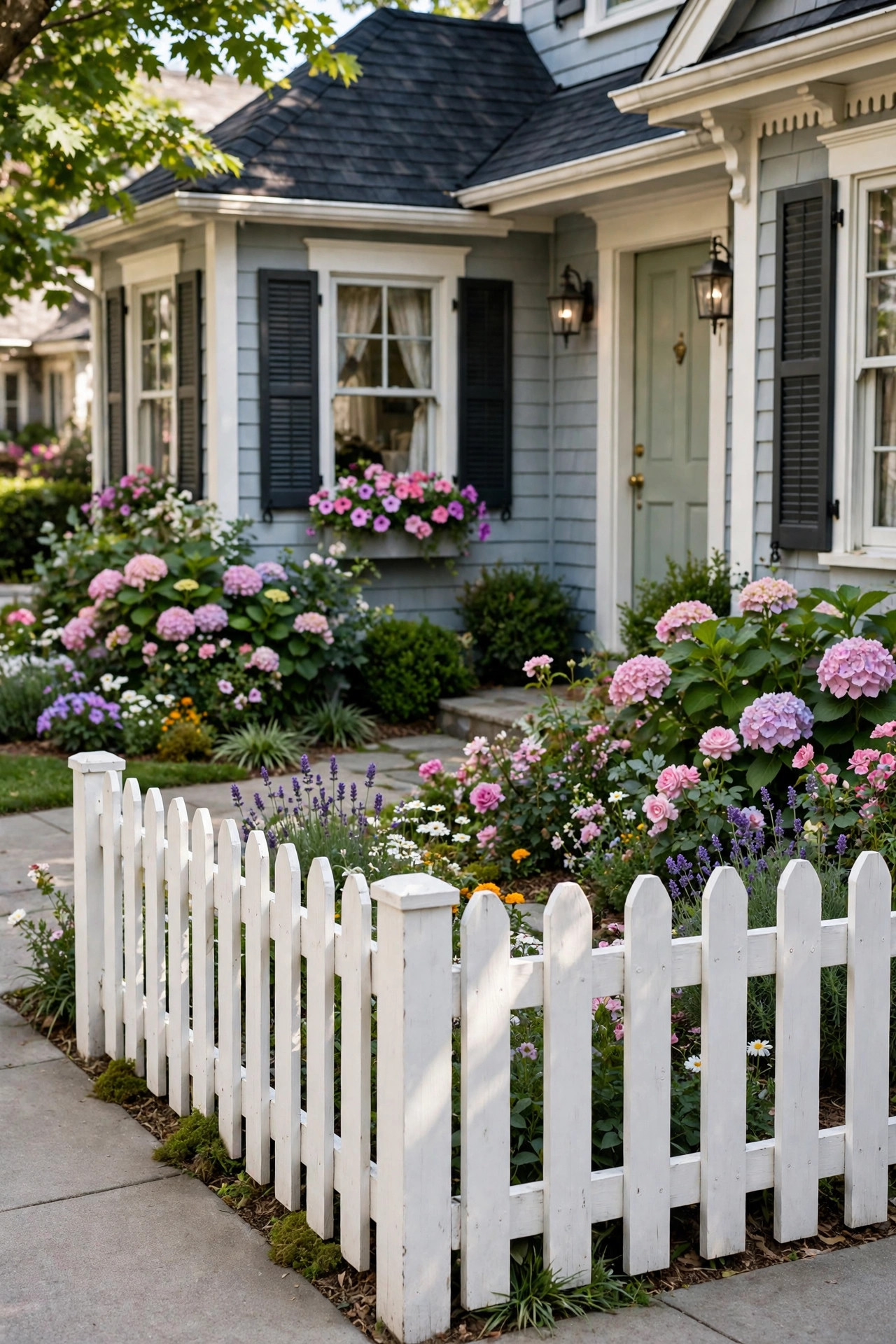
You do not need a whole fence to get that charming cottage look. A short picket fence section along the sidewalk or around a flower bed adds so much character. It frames the yard and makes everything inside it look more intentional. I put in one short run and it completely changed the feel of my front.
Home stores sell pre-made picket panels that make this easy. Set two or three posts in concrete, let it harden overnight, then attach the panels with screws. Paint everything white for the classic look, or leave natural wood for a rustic feel. One short section takes a weekend and costs far less than fencing the whole yard.
20. Outdoor Rug on the Porch
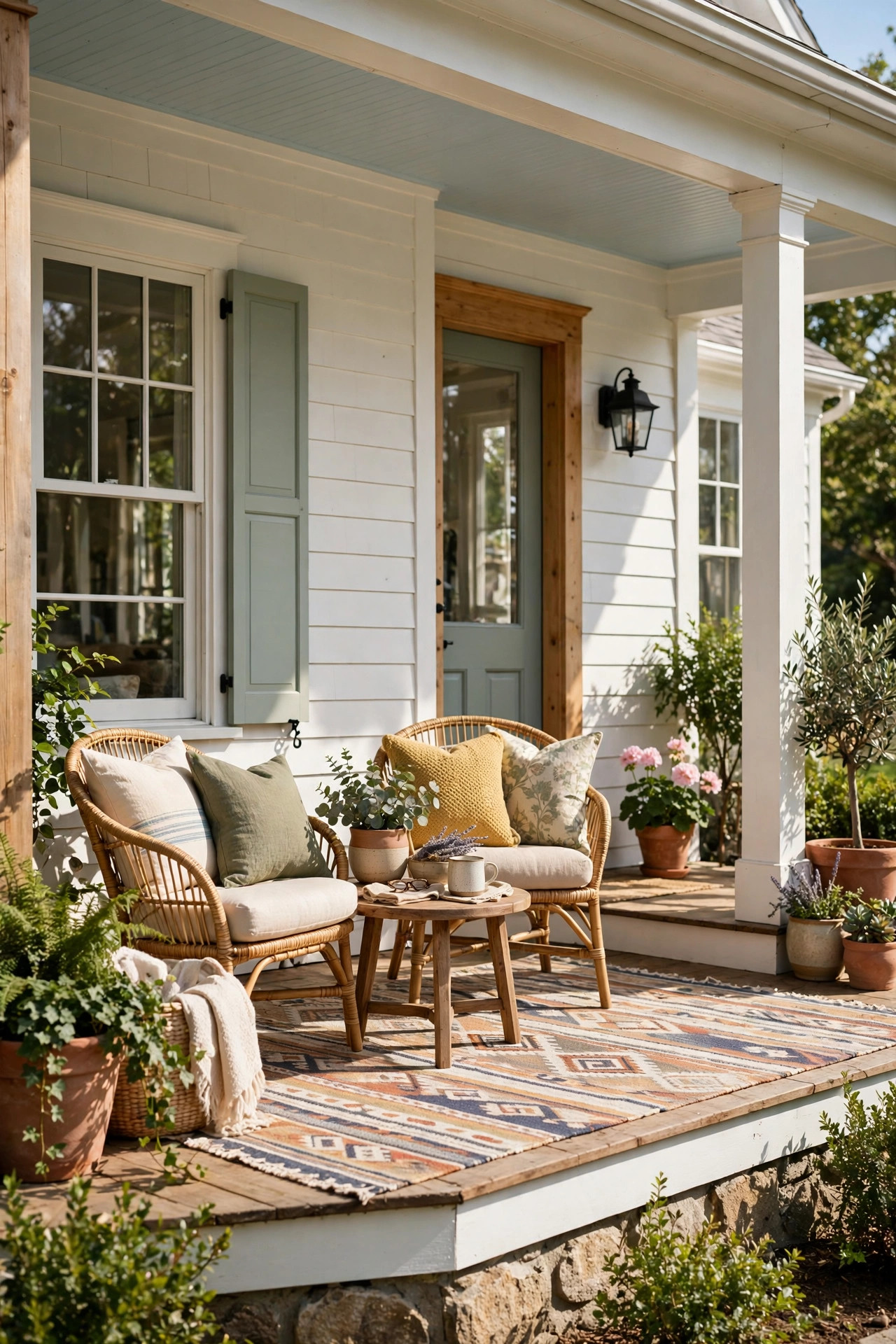
An outdoor rug turns a plain porch into an outdoor room. It adds color and pattern, defines your sitting area, and makes the whole entry feel warmer. I bought one last year and my porch finally felt finished. It is the easiest decorating move you can make outside.
Measure your porch first so the rug fits nicely under your chairs with a little border around it. Look for polypropylene rugs because they handle rain and sun without fading or mildewing. Sweep under the rug every week or so because dirt and leaves collect there. Hose it off a few times a season and it will look great for years.
21. String Lights Over the Entry Path
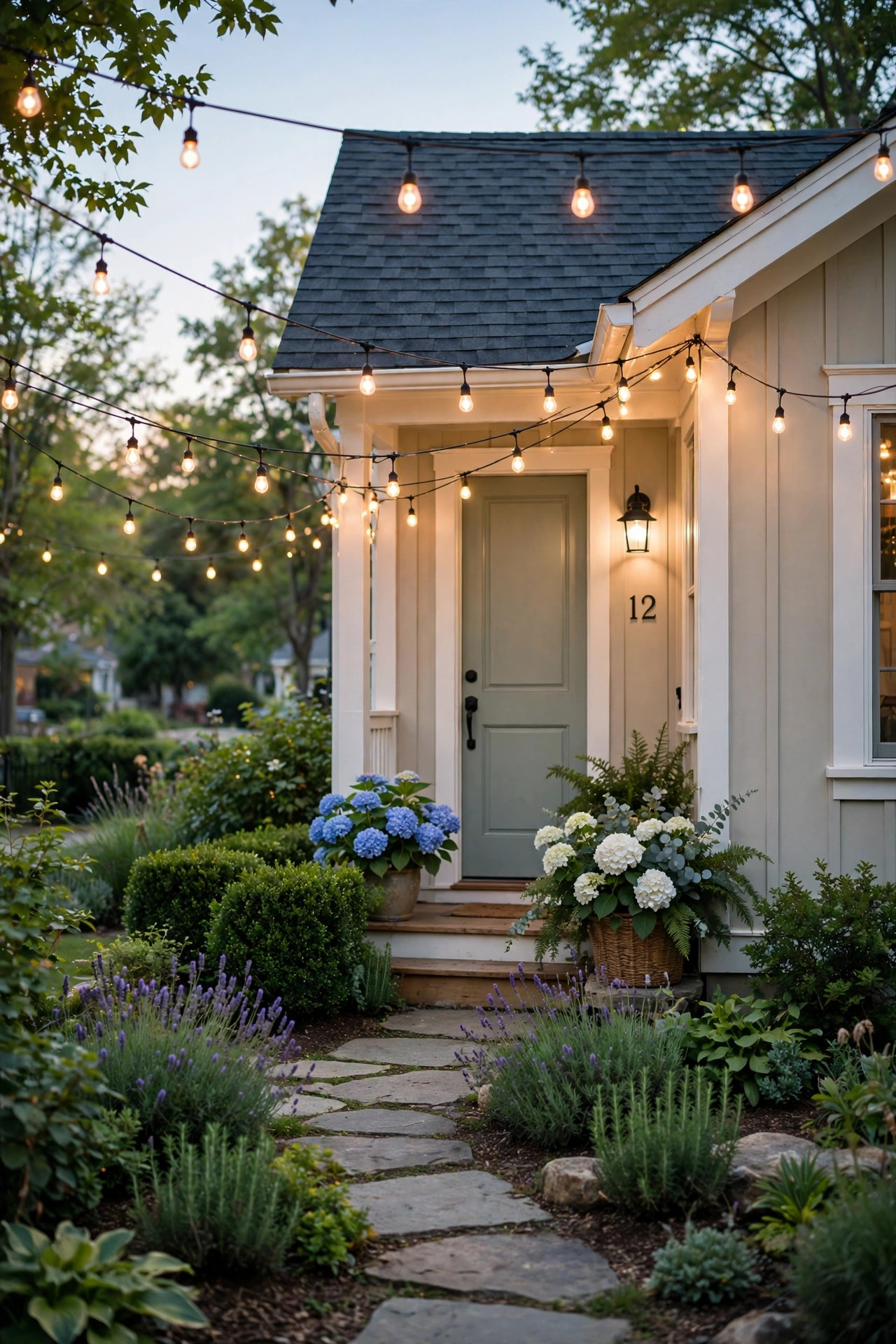
String lights make any evening feel a little magical. Draped over the entry path, they guide visitors to your door and make the whole front of the house glow. I hung mine for a party and liked them so much I never took them down. Now summer nights on the porch are my favorite time.
Hang them from shepherd’s hooks along the path, or string them between the porch posts and a fence. Keep them high enough that tall guests can walk under without ducking. Warm white bulbs look cozy. Cool white can feel a little stark. Solar string lights work well if you have no outlet nearby. Take them down in harsh winter weather to make them last longer.
22. Repainted Shutters to Match the Door
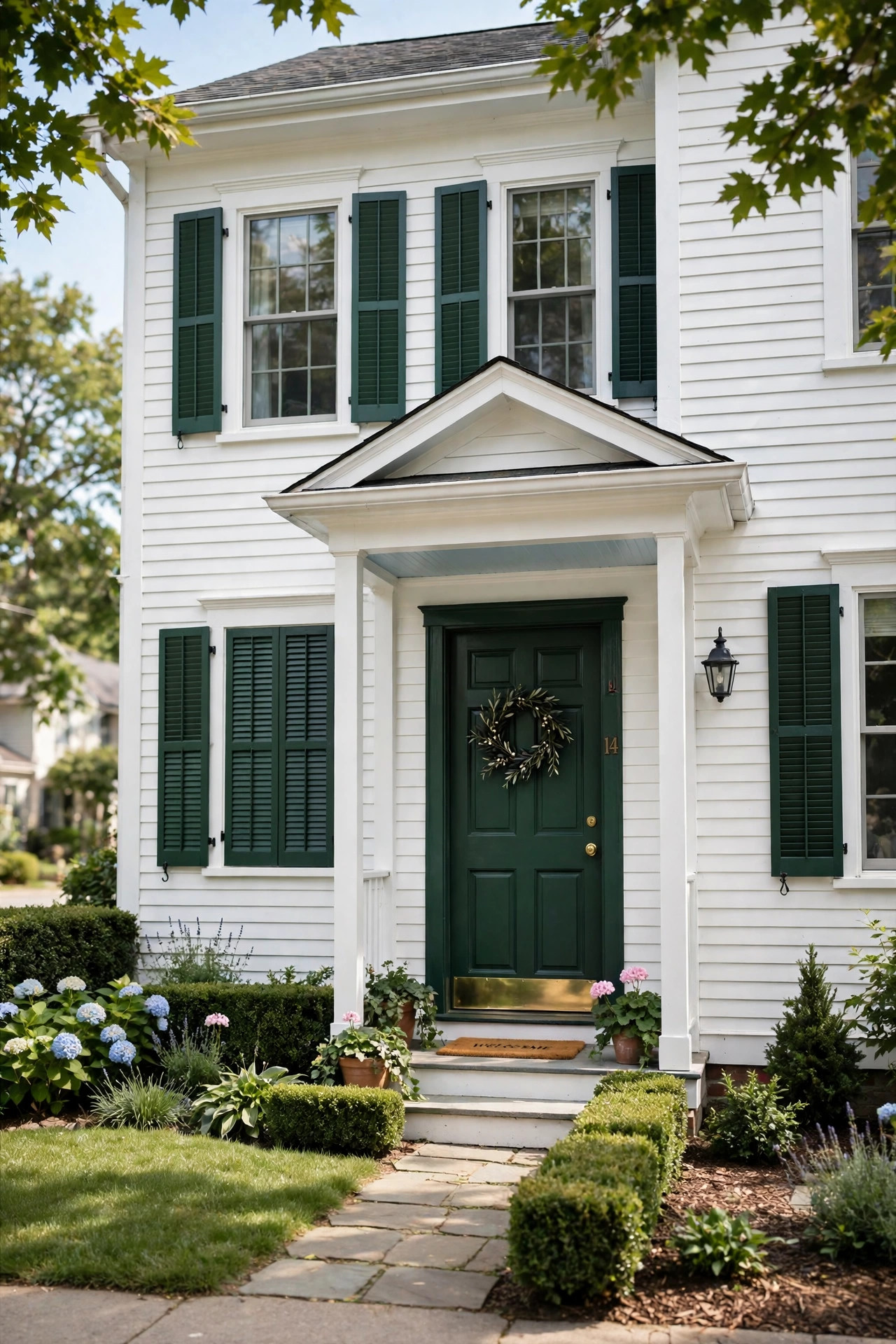
Matching your shutters to your front door pulls the whole front of the house together. It is one of those changes that looks small but makes everything feel more polished. My shutters were faded gray and my door was navy. Once they matched, the house looked like it got a full makeover.
Take the shutters down and lay them on sawhorses in the garage or driveway. Scrub them clean, let them dry, and spray them with exterior paint for a smooth finish. Spray paint made for outdoor use covers well with two light coats. Check with your HOA first if you have one, since some neighborhoods limit color choices. Hang them back up and step back to admire your work.
23. Birdbath as a Centerpiece
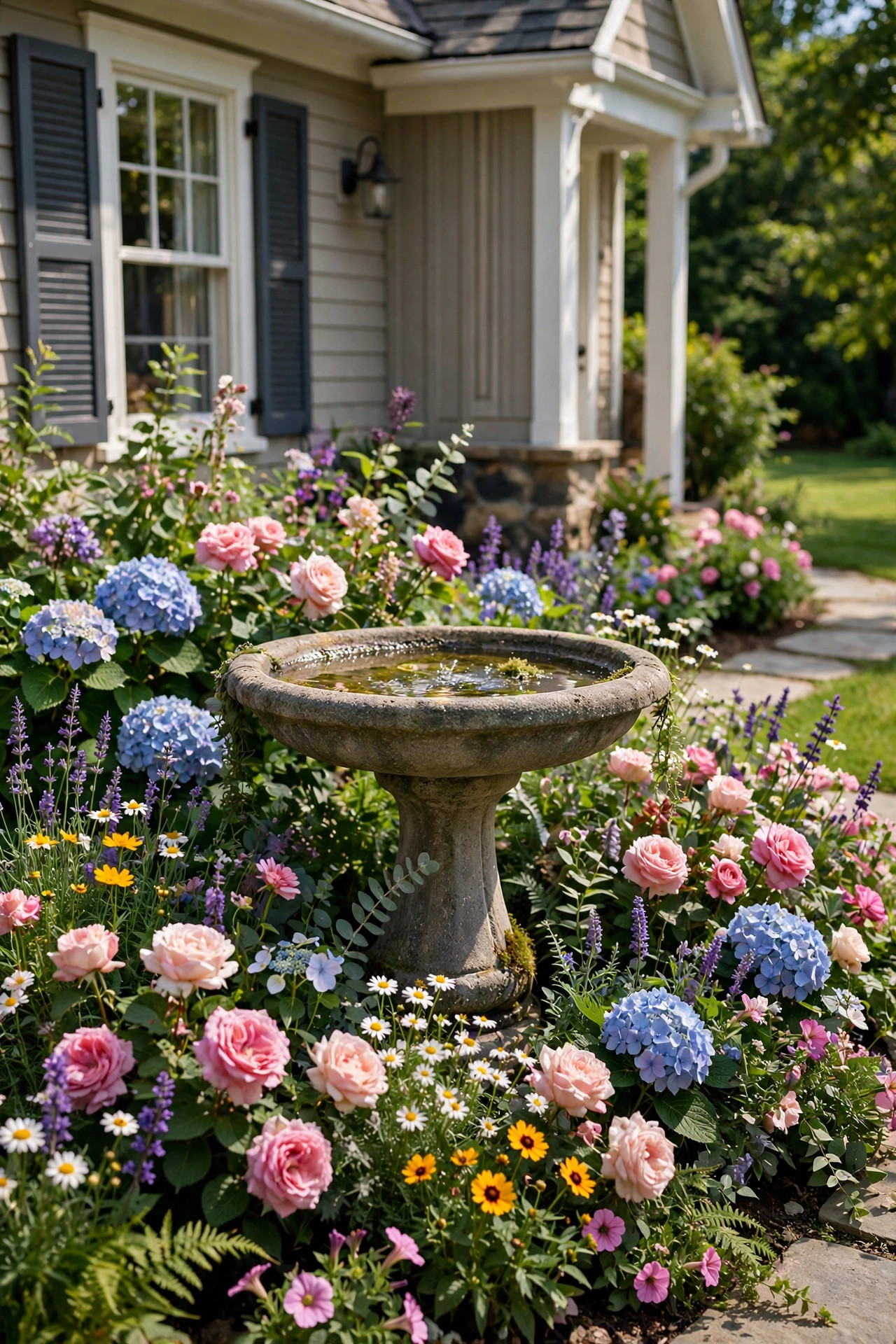
A birdbath in the middle of a flower bed gives your eye somewhere to land and gives the birds a reason to visit. There is something so peaceful about watching birds splash around on a quiet morning. Mine sits in the center of my main bed and the whole arrangement revolves around it.
Set the birdbath level on firm ground in a bed, not in the middle of the lawn where the mower has to dodge it. Fill it with fresh water and change it weekly to keep it clean. In winter, empty it so freezing water does not crack it. Add a few flat stones at the edge so small birds can perch. You will have visitors within days.
24. Seasonal Wreath on the Front Door
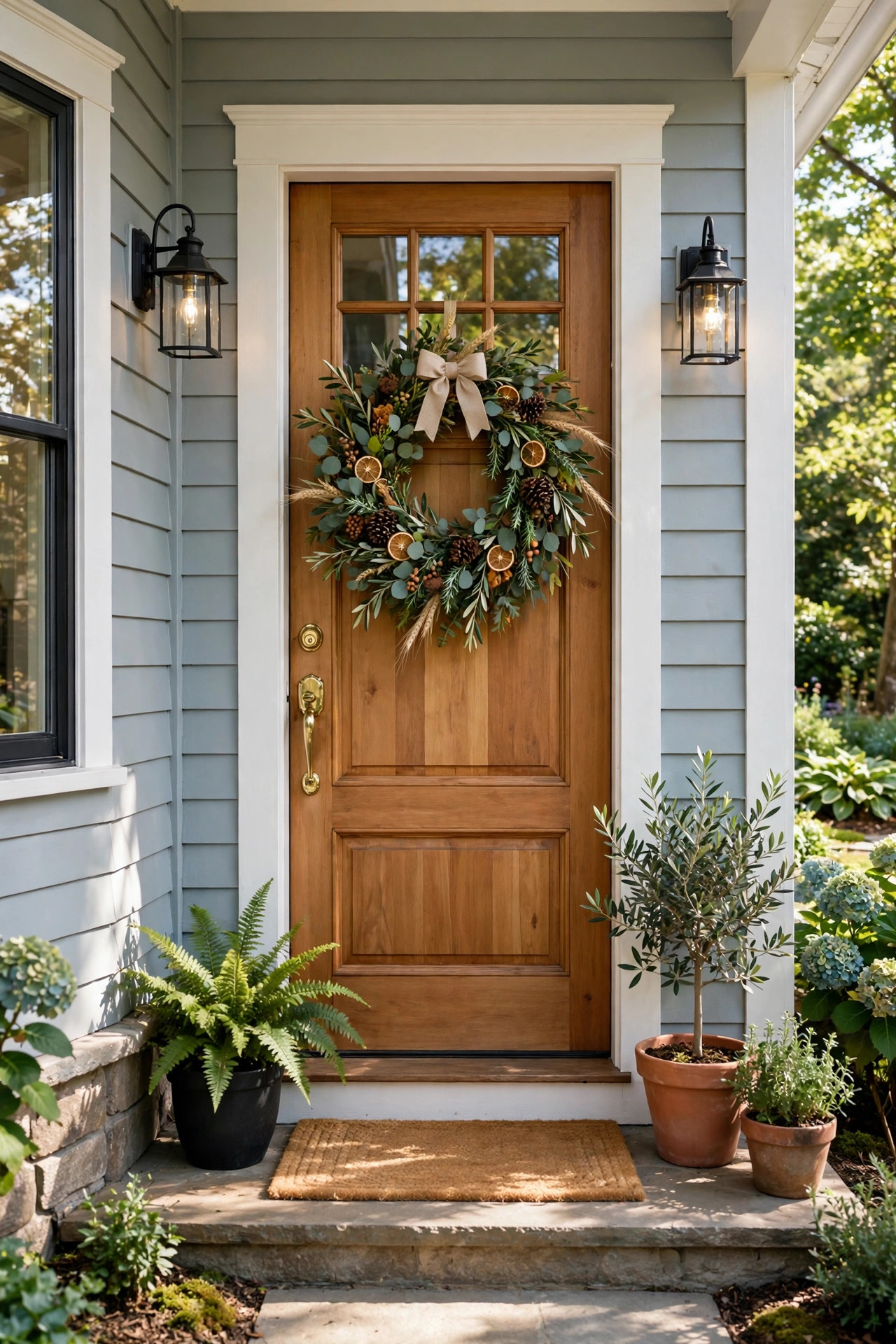
A wreath is the cheapest way to make your front door look festive all year. Swap it with the seasons and your entry always feels fresh without any real work. I keep four simple ones and changing them takes about two minutes. It is my favorite lazy decorating trick.
Start with a grapevine or foam base and add seasonal touches like faux flowers, leaves, or a pretty ribbon. Store wreaths flat in a bag so they keep their shape. A new ribbon each season makes the same base look brand new. Hang it with an over the door hook so you do not damage the door. This one costs almost nothing and the impact is huge.
25. Power Wash the Walkway and Driveway
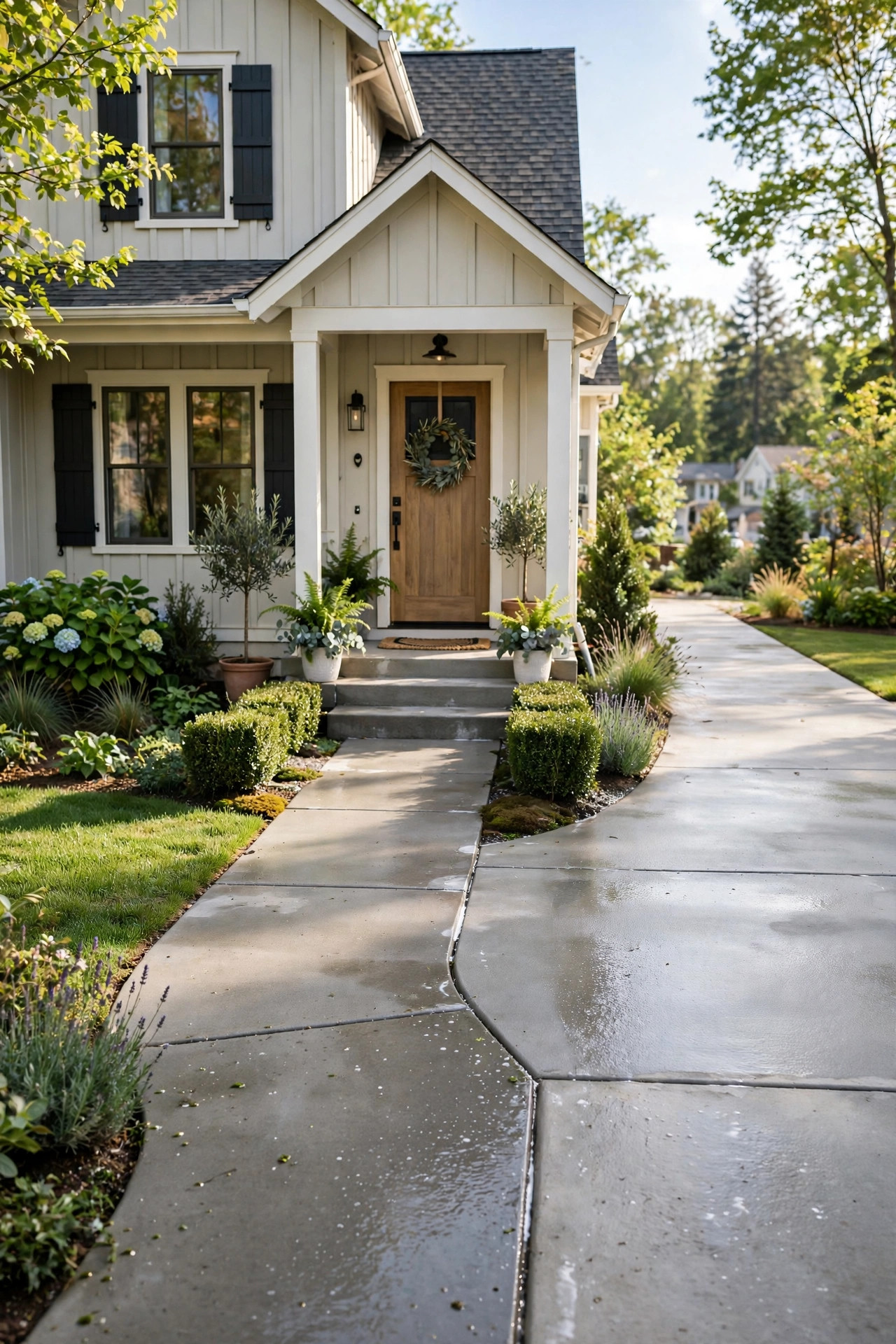
You will not believe how different your yard looks after a good power wash. Years of dirt, moss, and grime disappear and the concrete looks almost new. When I washed my walkway for the first time, I kept stopping to stare because it looked like a different house. It might be the most satisfying project on this list.
You can rent a power washer for about fifty dollars a day, or borrow one from a neighbor. Start at the far end and work toward the street so you are not walking on wet concrete. Keep the nozzle moving and hold it at an angle so you do not gouge the surface. Watch out for loose mortar between bricks. An hour of washing can add years of freshness to your curb appeal.
You do not need to do all 25 of these. Honestly, please do not try. Pick one that made you smile while reading and do it this weekend. One fresh mulch bed or a newly painted door will lift your whole front yard, and finishing one small project will make you want to try another. That is how pretty yards happen, one Saturday at a time.
Start small and start this weekend. The best front yard is not the one with the biggest budget, it is the one where somebody cared enough to begin. I will be cheering for you from my porch.
FAQs
How much does small front yard landscaping cost?
Most of the ideas in this list cost between ten and fifty dollars. A bag of mulch, a quart of paint, or a set of solar lights are all cheap weekend projects. The priciest ones here are a small ornamental tree or a short picket fence section, which can run fifty to a couple hundred dollars. Start with the free projects like edging and trenching, then add the bigger ones one at a time.
What plants are best for a small front yard?
Stick with compact and dwarf varieties that stay small on their own. Boxwoods, dwarf hydrangeas, and ornamental grasses are all safe picks that do not need constant trimming. Native plants are even better because they are used to your weather and need less water and care. Always read the plant tag and check the mature size before you buy, so nothing outgrows its spot in two years.
How can I make a small front yard look bigger?
Curved bed edges, layered plant heights, and light colored flowers all help a small yard feel larger. Keep the design simple and avoid cluttering the space with too many different things. A clear focal point like a small tree or a birdbath draws the eye and gives the yard a sense of order. Clean edges and fresh mulch make everything look neat, and neat always reads as bigger.
Can I do front yard landscaping myself?
Absolutely. Every idea in this list is a DIY project that needs only basic tools like a shovel, a spade, and maybe a paintbrush. None of them require special skills or heavy equipment, except possibly a rented power washer. Start with one small project to build your confidence. Once you see the difference one afternoon of work makes, you will be ready for the next one.
How do I keep my front yard low maintenance?
Choose native plants, ground covers, and dwarf shrubs that mostly take care of themselves. A thick layer of mulch stops weeds and holds moisture so you water less. Drip irrigation or soaker hoses on a timer handle watering while you are busy. Avoid fussy plants that need constant pruning or deadheading. A low maintenance yard is all about smart plant choices up front.
When is the best time to start landscaping a small front yard?
Fall is the best time to plant trees, shrubs, and perennials because the cooler weather helps roots settle in before winter. Spring is perfect for refreshing mulch, painting, and adding annual flowers. You can edge beds, wash walkways, and hang lights any time the weather is pleasant. If you only get one weekend, pick spring for instant color or fall for the best planting results.