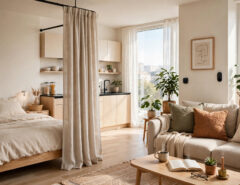
Right now, the best playrooms are borrowing a page from good design. Parents are tired of the all-or-nothing cycle, where the room is either photo ready or a full toy explosion, and designers have noticed. The new thinking treats the playroom like a small studio apartment: every activity gets a zone, everything has a home, and the room can reset in minutes. Containment is the aesthetic. Clean lines, soft color, and clever storage are doing the heavy lifting so that play stays playful and the mess never takes over.
The ideas below are built on that shift. Each one is a small design move that looks good and works hard, the kind of detail you would spot in a styled family home shoot. You do not need a big room or a big budget. You need systems that children actually follow and that look intentional enough to keep out in the open.
1. Zone the Room Into Activity Pods
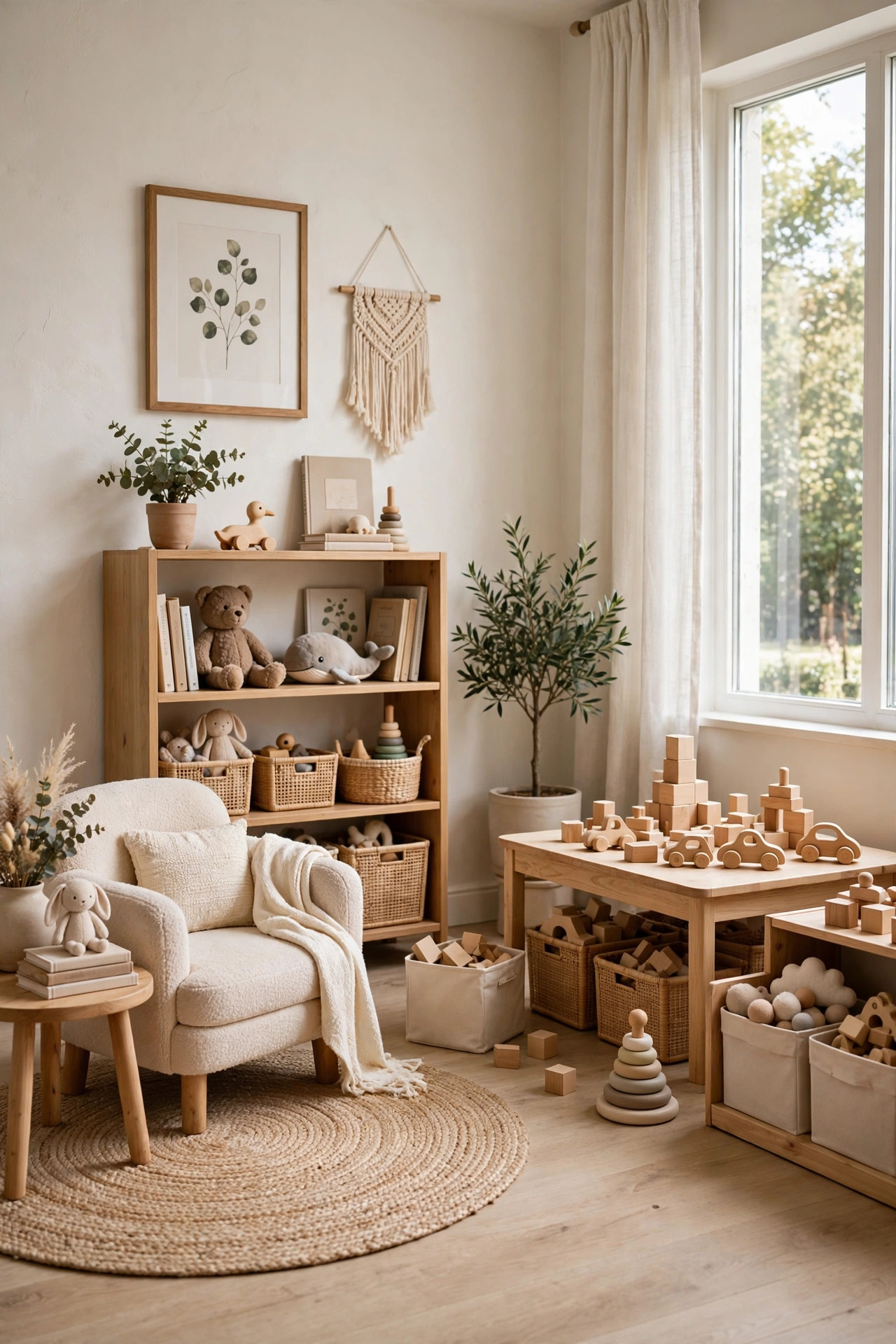
The strongest playrooms right now are designed in pods, not as one big open floor. A reading pod, a building pod, an art pod. Each zone holds only what belongs there, so the mess has a natural boundary. When toys drift across the room, it reads as a zone out of balance, not as chaos.
Use rugs, low bookcases, or a simple change in flooring to draw the lines. A round rug under a reading chair says this corner is for books. A low table with block storage says building happens here. Kids understand this layout instantly because it matches how they already play: they pick an activity and settle into it.
2. Low Open Shelving as the Backbone
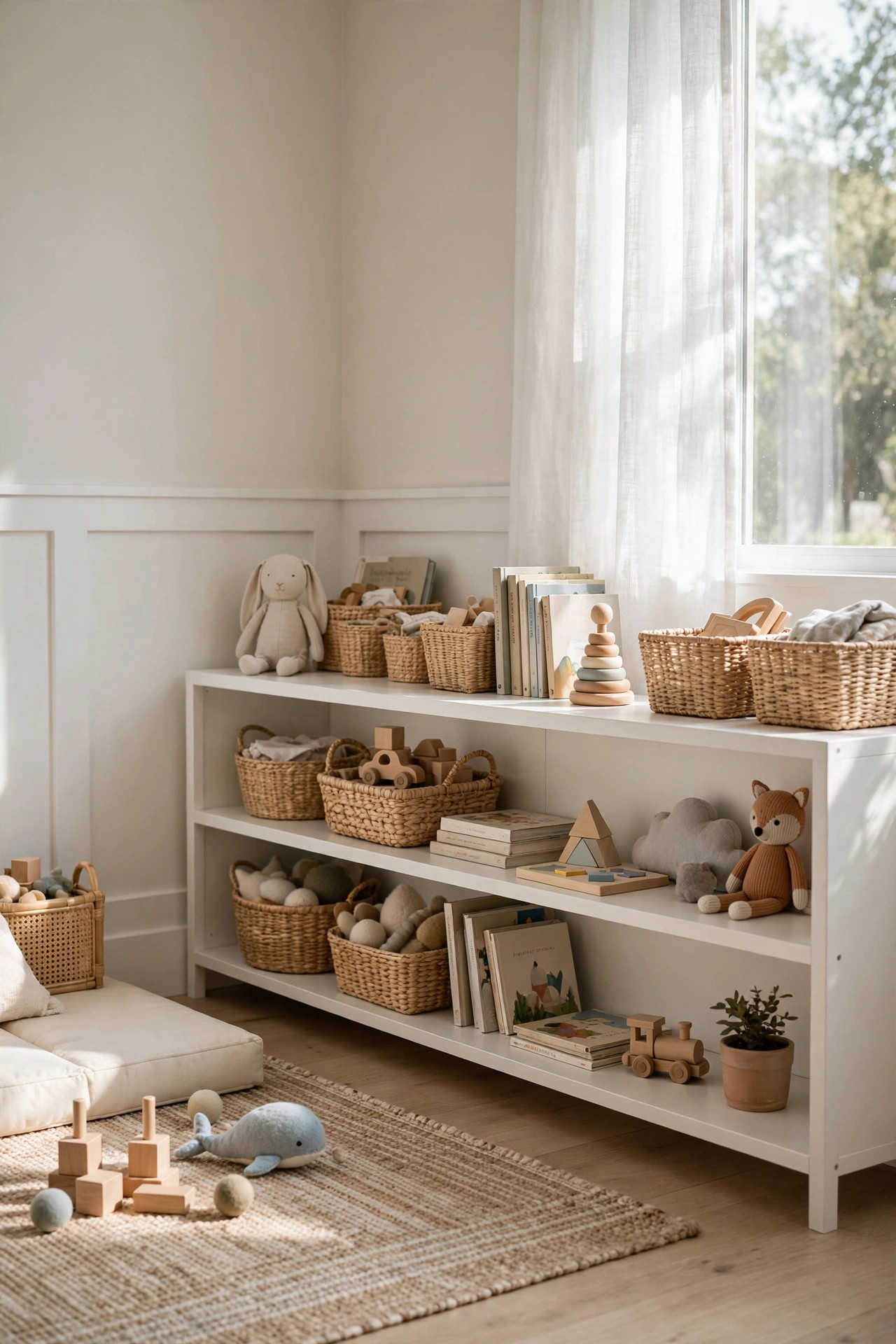
Open shelving at child height is the backbone of every tidy playroom you see in design magazines. It displays toys like a curated shelf instead of hiding them in a deep toy box where everything gets dumped and forgotten. When children can see their options, they choose one thing instead of pulling out five.
Keep the shelves edited. Four to six items per shelf is plenty, and rotate the rest. The visual calm of open shelving is the whole point, so resist the urge to fill every inch. A little white space on a shelf is what separates a playroom from a storage room.
3. Labeled Bins That Kids Can Read
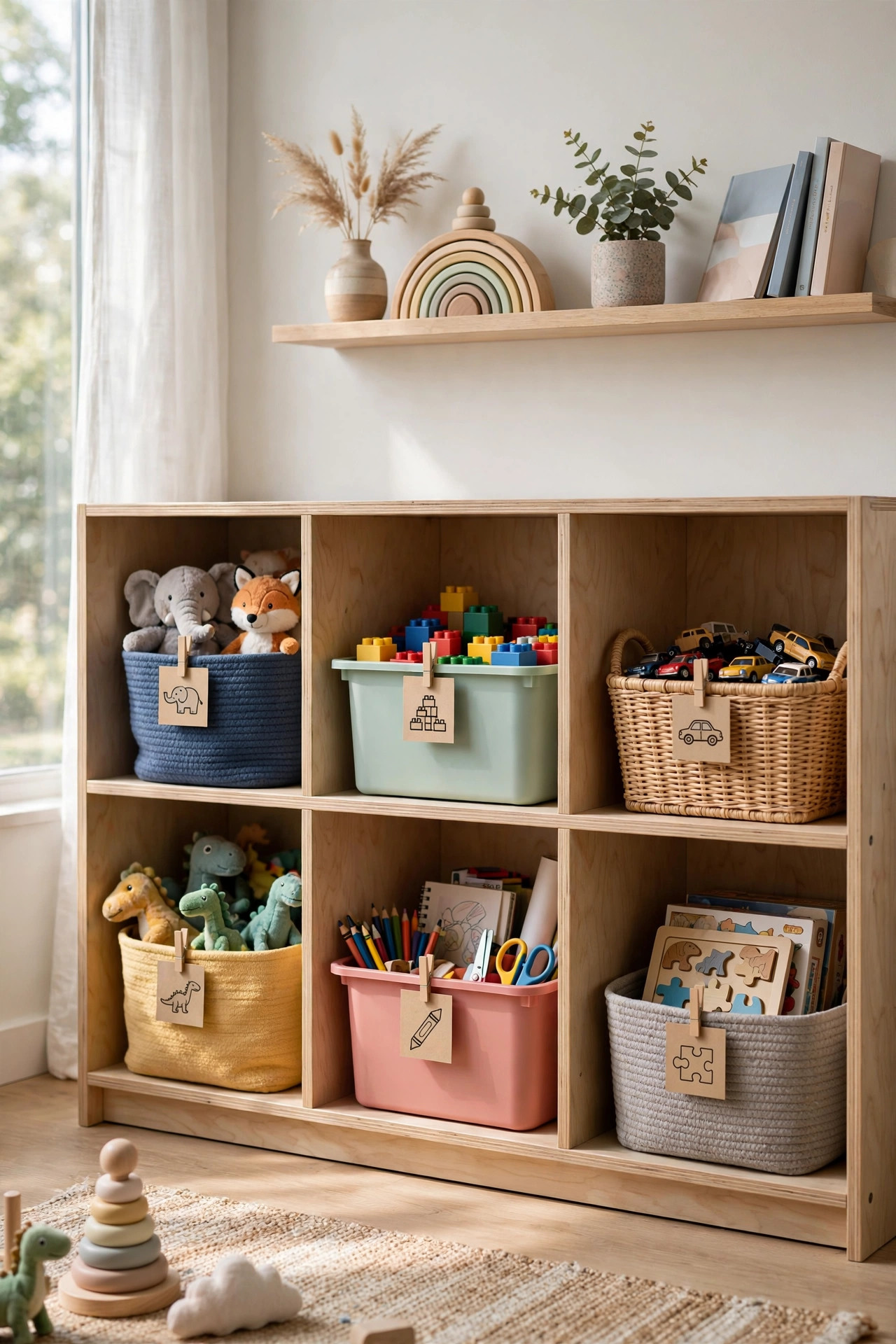
Labels are the difference between storage and a system. In the most successful playrooms, every bin tells a child exactly where things live, with picture labels for young kids and words for readers. When the bin says cars or puzzles, putting toys away becomes a sorting game instead of a chore.
Match the bin color to the zone it serves. Art supplies live in the bins near the art table, building toys live near the building area. This small link between label and location is what keeps the system running on busy days when nobody has the energy to enforce the rules.
4. A Rolling Cart for Art Supplies
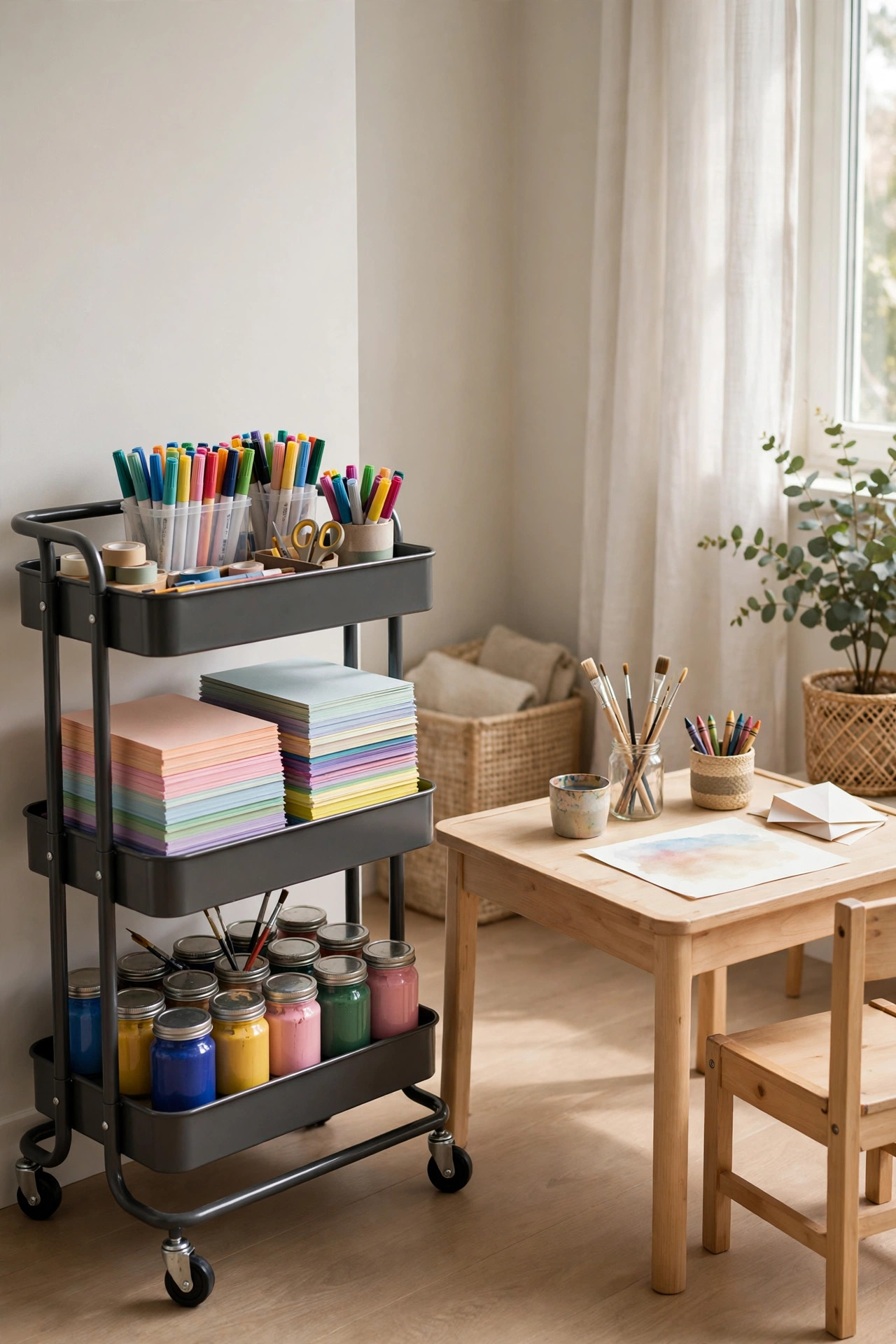
Art is the messiest category in any playroom, and a rolling cart is its best answer. Three tiers hold markers, paper, stickers, and paint supplies in one compact footprint. When art time starts, the cart rolls out. When it ends, everything rolls back to its parking spot against the wall.
The design payoff is real. Instead of a craft table permanently buried under supplies, you get a clean surface that can serve other purposes between art sessions. Choose a cart in a color that fits your decor, and it reads as intentional furniture rather than a supply closet on wheels.
5. Hidden Storage Behind Closed Doors
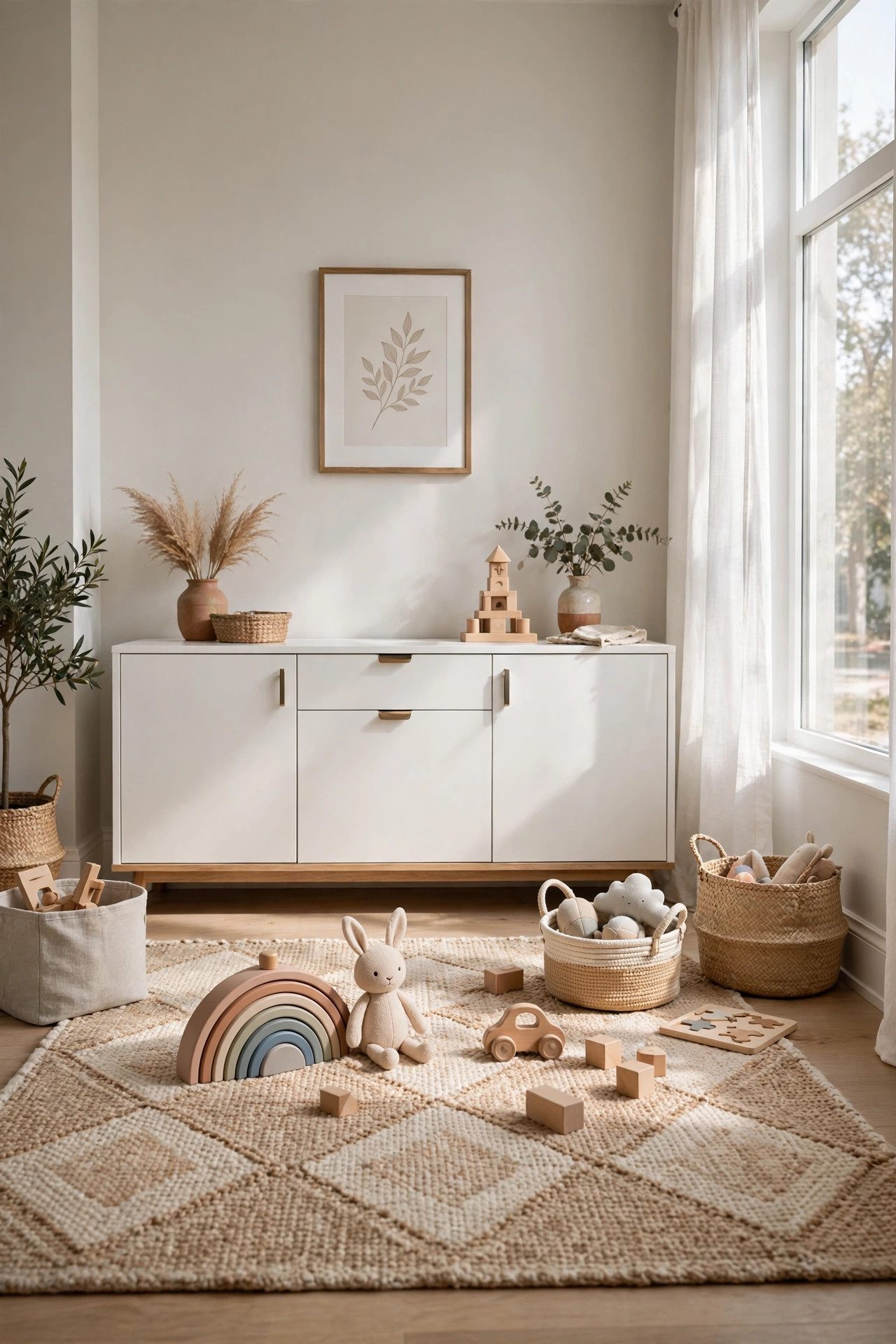
Every calm playroom needs some closed storage, and this is where the less photogenic supplies go. Spare craft paper, board game boxes, the extra sets of markers. Closed doors and drawers keep the visual noise down so the open shelves and styled corners can shine.
Use one low credenza or a pair of storage benches with doors for this job. The rule is simple: if it does not look good on display, it lives behind a door. This single decision does more for the room’s look than almost any other, and it gives you a place to sweep things during surprise visitors.
6. The Ten-Minute Toy Rotation
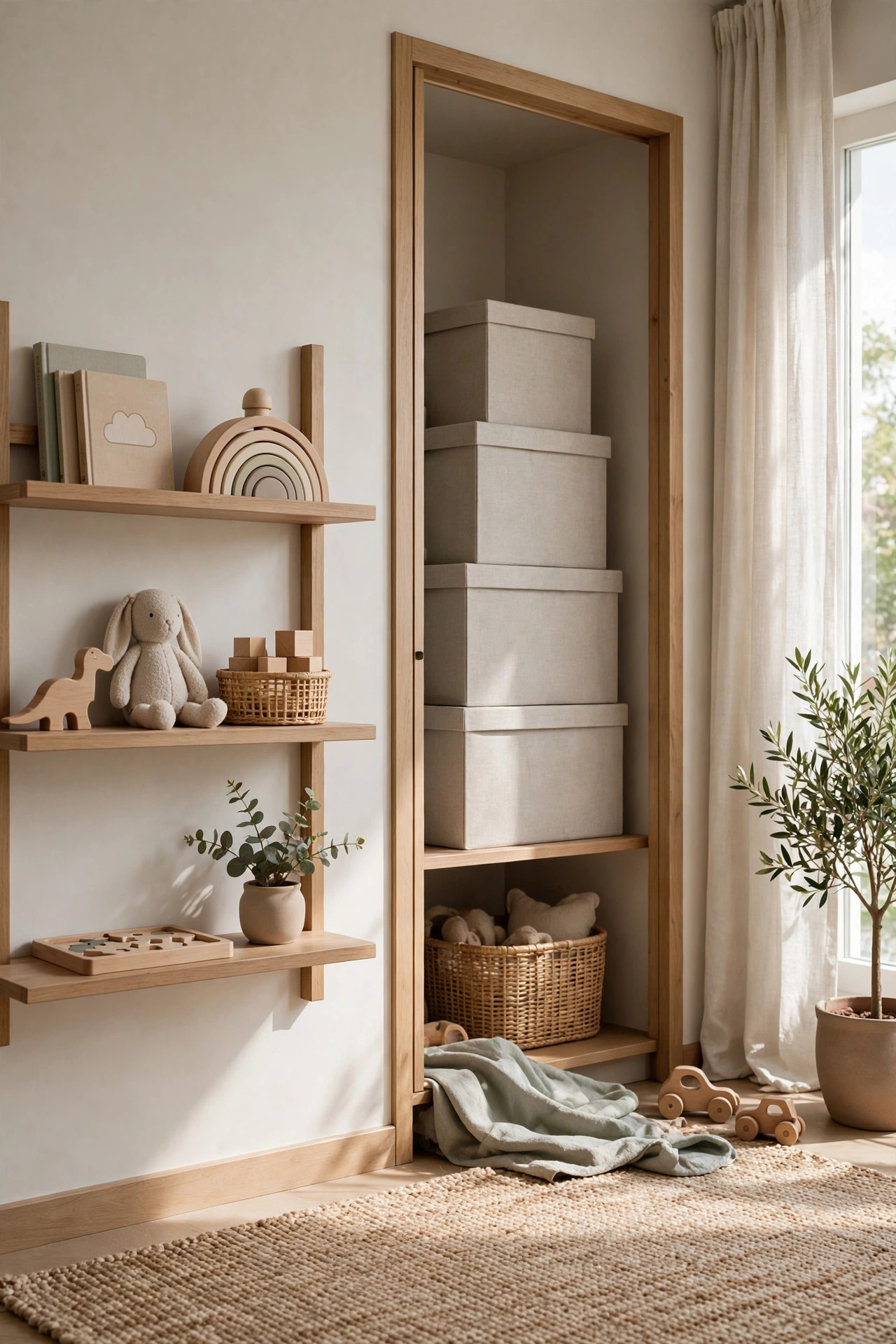
Toy rotation is the trend that keeps coming up in parenting and design circles, and it works because it solves two problems at once. Fewer toys out means less mess and more focused play. Children play more deeply with five choices than with fifty, and the room resets in minutes.
Store the rest in labeled boxes in a closet or garage, and swap sets every week or two. The old toys feel new again when they return, which means less asking for new purchases. Build the rotation into your system with a small basket that holds the current week’s selection, and the tidy look maintains itself.
7. Wall-Mounted Book Ledges
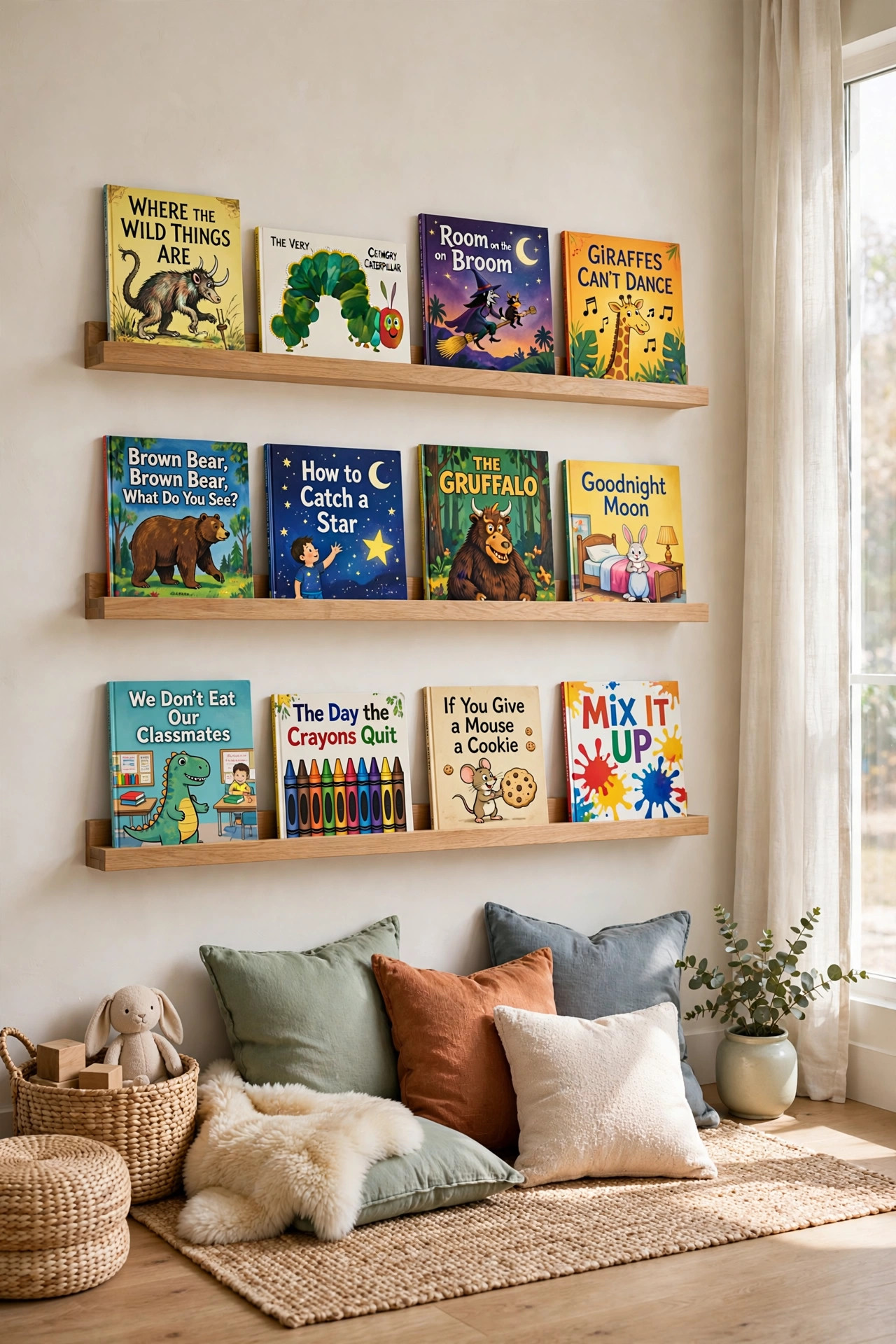
Books are the fastest clutter maker in a playroom, and book ledges are the prettiest fix. Shallow wall-mounted ledges display covers facing out, which turns the book collection into wall art and makes it easy for small hands to choose and return titles. No more leaning tower of picture books.
Mount ledges at your child’s eye level along one wall, and keep the collection tight. A full ledge looks styled, a crammed one looks cluttered. When new books arrive, old ones go to the donation basket. The wall stays a feature instead of becoming another pile.
8. A Soft Rug That Defines Play Space
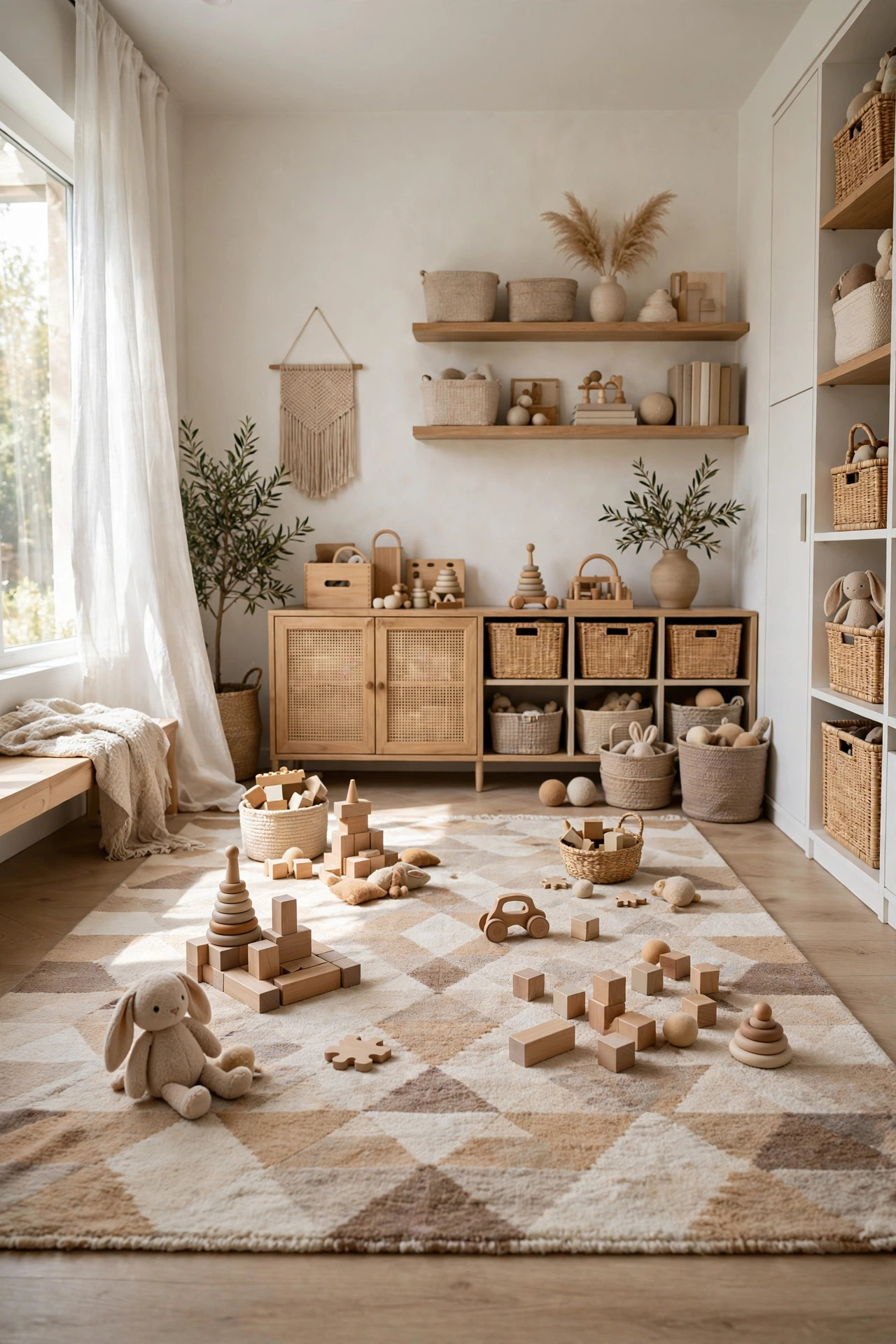
A good rug does more for mess containment than almost any storage product. It draws a visible circle where play happens, and somehow toys stay closer to home when they have a defined patch of floor. The rug also softens the look of the whole room and makes it feel finished.
Choose a low pile rug that is easy to vacuum and forgiving of spills. Patterned rugs in warm neutrals hide a surprising amount while looking polished. When the room gets out of hand, the rule is simple: everything on the rug goes back to its zone, and the reset takes five minutes.
9. Clear Jars for Small Pieces
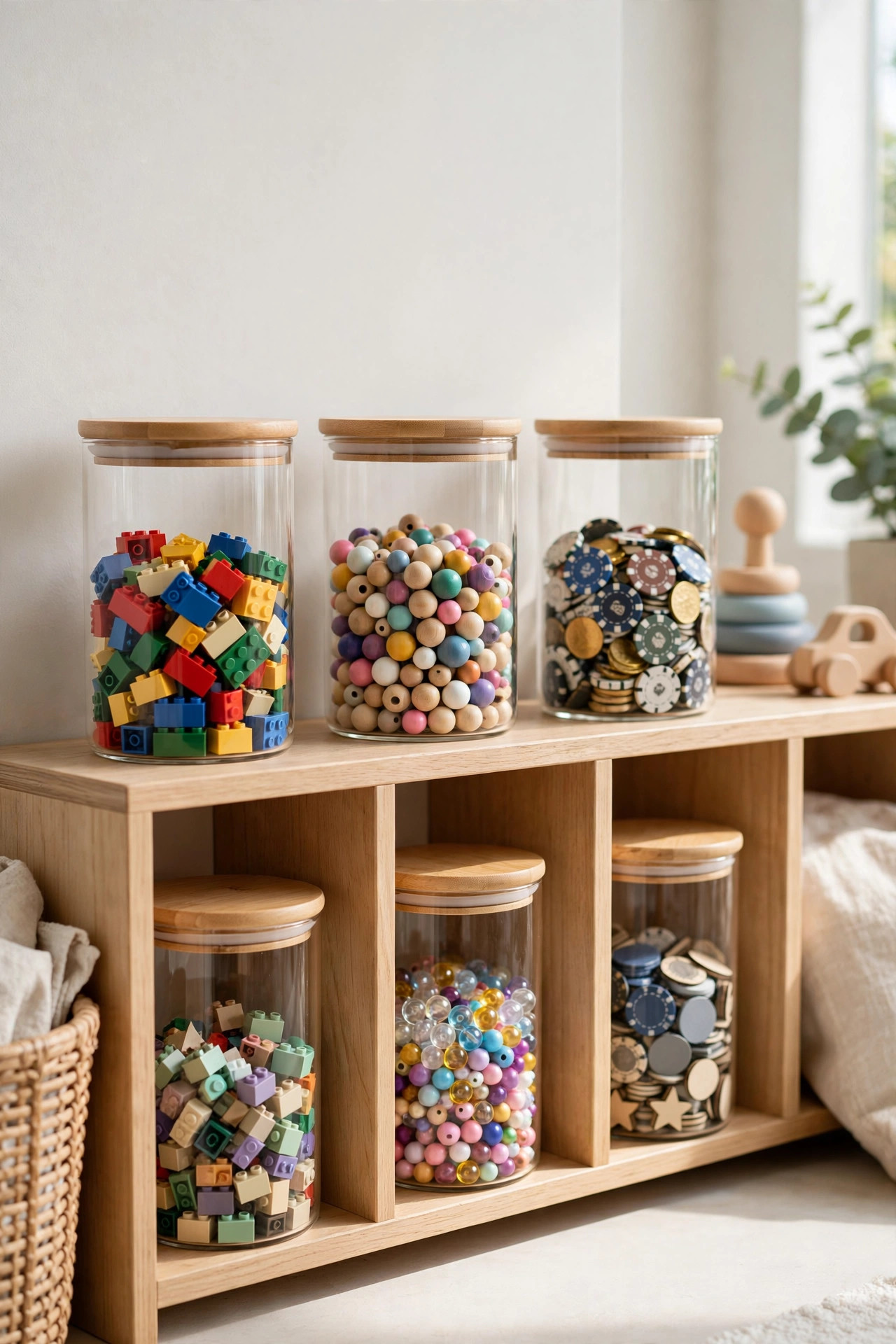
Small pieces are the true enemy of a tidy playroom. Lego bricks, beads, game tokens, doll shoes. Clear jars with lids turn these tiny troublemakers into a visual feature. Children can see what is inside without dumping everything out, and the uniform look of matching jars reads as styled storage.
Line the jars on a low shelf or in a cubby, grouped by color or type. The transparency does the organizing work for you, and kids genuinely enjoy dropping pieces back into the right jar. It feels like a game because it is one, and the floor stays clear of the pieces that hurt to step on.
10. A Dress-Up Corner With Hooks and Mirrors
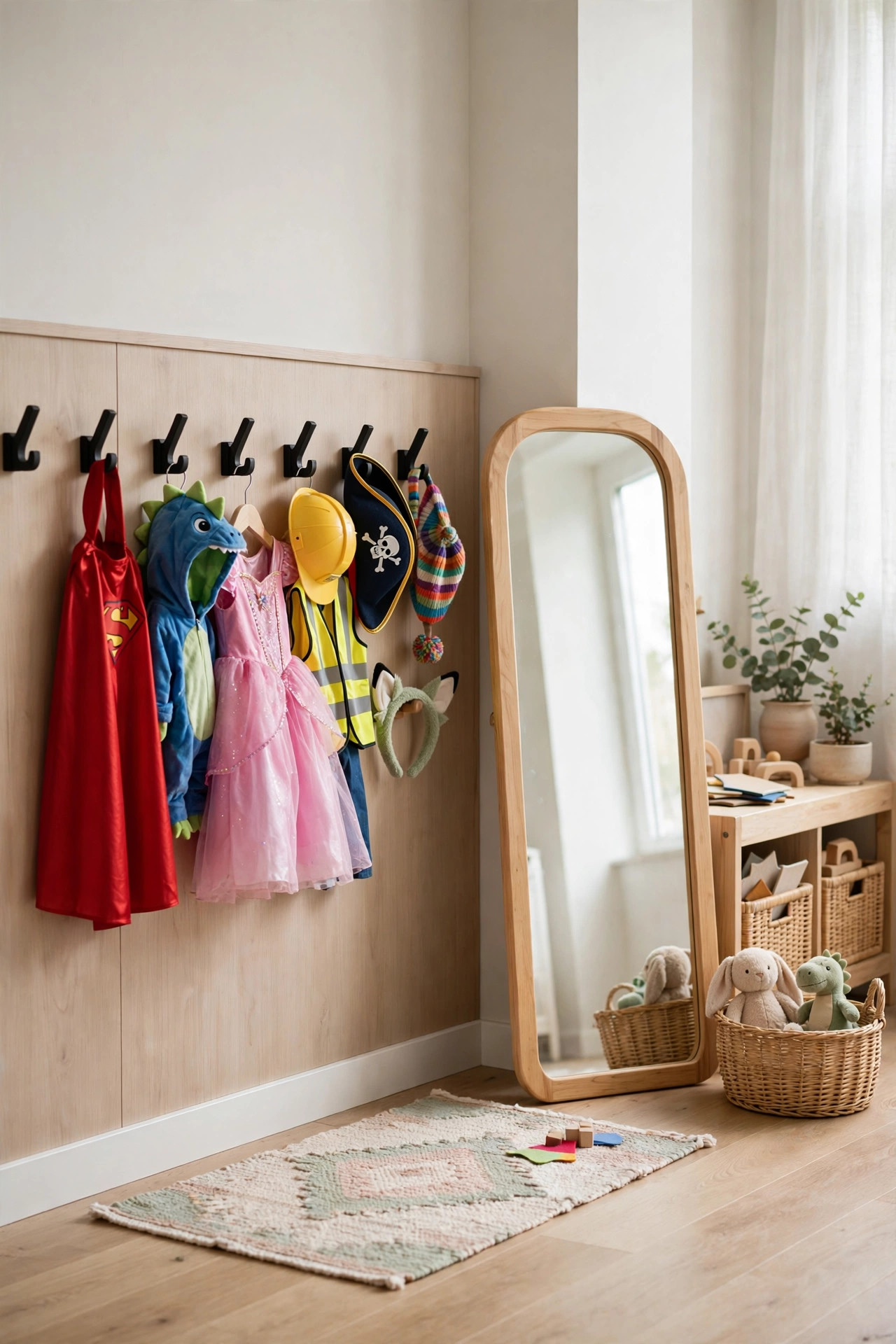
Dress up clothes are a special category of mess because they are bulky and they tangle. A dedicated corner with low hooks and a child safe mirror gives costumes a real home and turns the area into a proper little boutique. Hanging beats folding for play clothes every time.
Use sturdy hooks at child height and keep the collection small enough that every piece gets worn. A full length mirror makes the corner feel like a real dressing room and encourages kids to hang things back up so they can see the full effect. The corner photographs beautifully too, which never hurts.
11. Fold-Away Tables for Big Projects
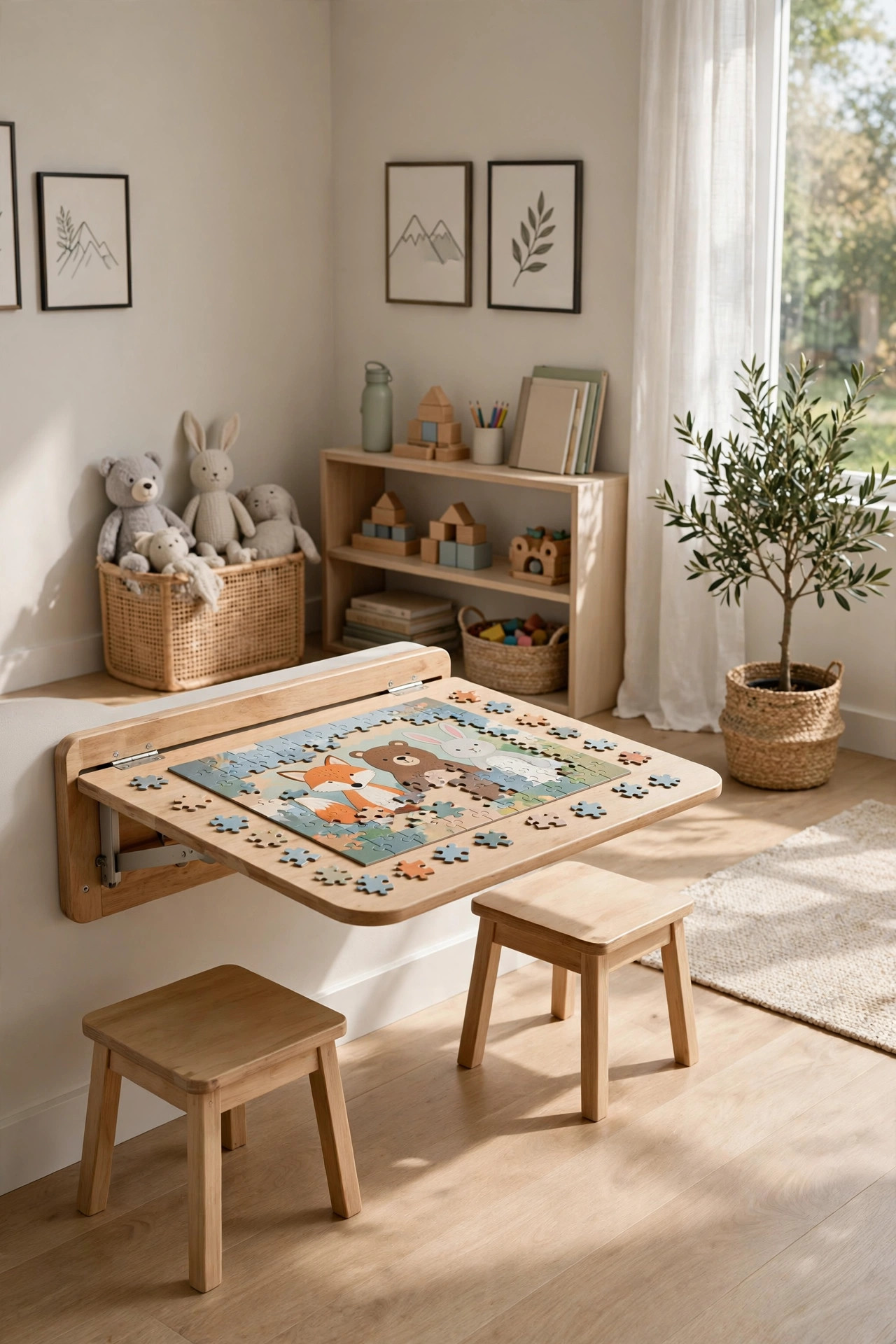
Big projects need big surfaces, but a permanent craft table dominates a small playroom. A fold away table gives you the best of both worlds. Open it for puzzles, painting, and building sessions, then fold it flat against the wall when the project is done or when guests arrive.
Pair the table with folding stools that tuck into the same footprint. The room instantly doubles its open floor space for active play, and nothing about the setup says temporary. Wall mounted drop leaf tables are especially elegant here because they disappear completely when closed.
12. Cube Storage That Doubles as Seating
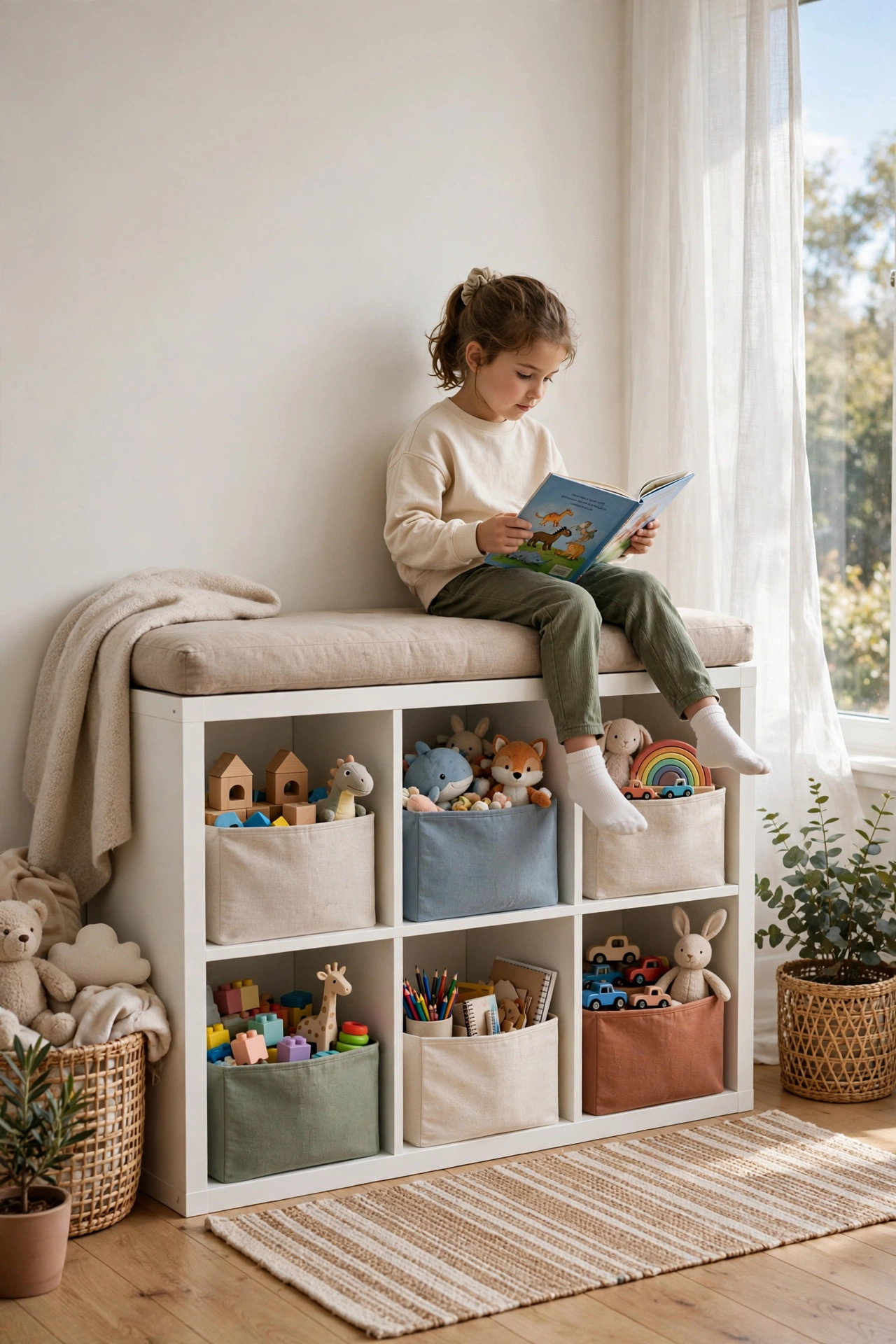
Storage cubes with a cushioned top are the hardest working furniture in the modern playroom. They hold toys in fabric bins, provide extra seating for reading time, and line up along a wall like a built in bench. One piece of furniture, three jobs.
Choose a unit with at least six cubes so the storage is genuinely useful, and top it with a cushion in a washable fabric. Kids pull up here to read, to chat, and to sort toys, which means the cubes stay in use instead of becoming dead storage. The bench silhouette keeps the room looking calm and finished.
13. A Toy Library Shelf With Checkout Baskets
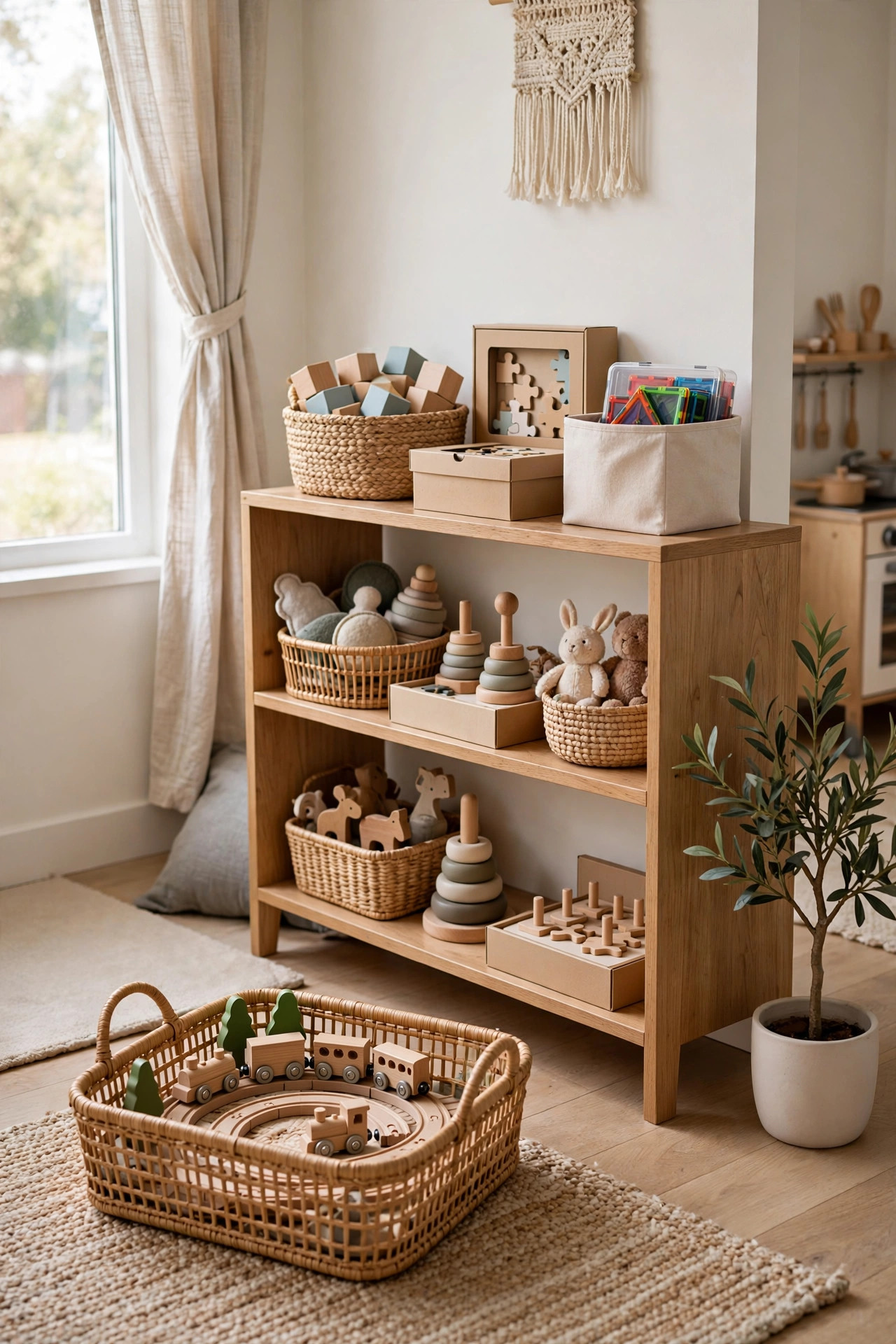
Borrowing from real libraries is one of the freshest ideas in playroom design right now. A dedicated shelf holds the special toys, the ones that cause the biggest messes, and children check them out in a basket, play, and return them before choosing another. The basket is the genius part because it defines the play boundary.
This system works beautifully for toys with many pieces like train sets, building kits, and craft boxes. One set out at a time means one set to clean up. Kids take to the library idea quickly because it makes the toys feel important, and important things get put away with care.
14. Magnetic Boards for Displaying Art
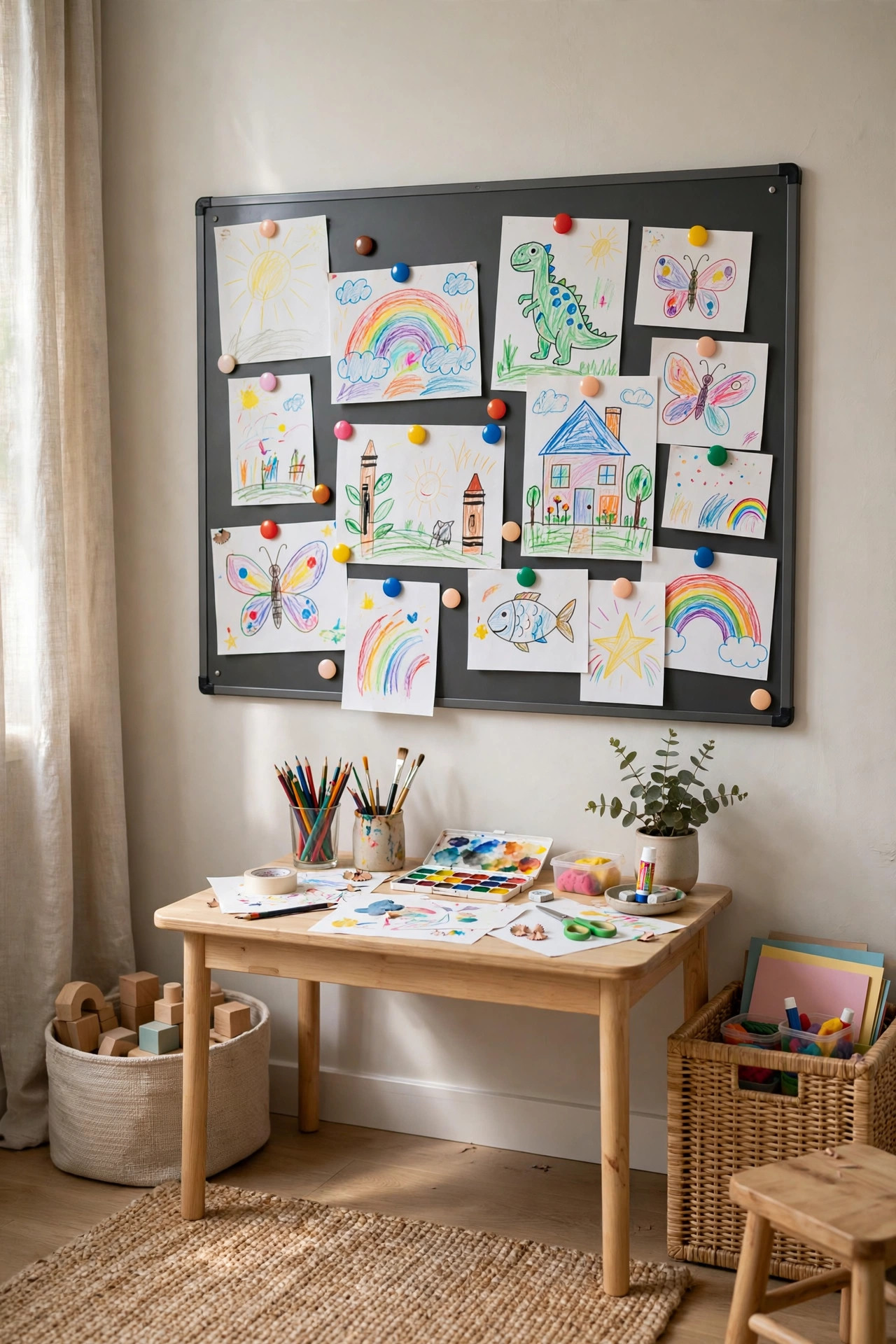
Children’s art deserves better than the refrigerator door, and it definitely deserves better than a pile. A magnetic board or a simple picture rail gives finished artwork a gallery home and keeps works in progress off the tables and floors. Rotating the display is part of the fun.
Mount the board at child height so kids can hang their own pieces. When the board fills up, photograph the favorites and recycle the rest together, which teaches a gentle lesson about letting go. The display adds color and personality to the room while solving one of its messiest problems.
15. Floor-Level Baskets for Quick Tidy-Ups
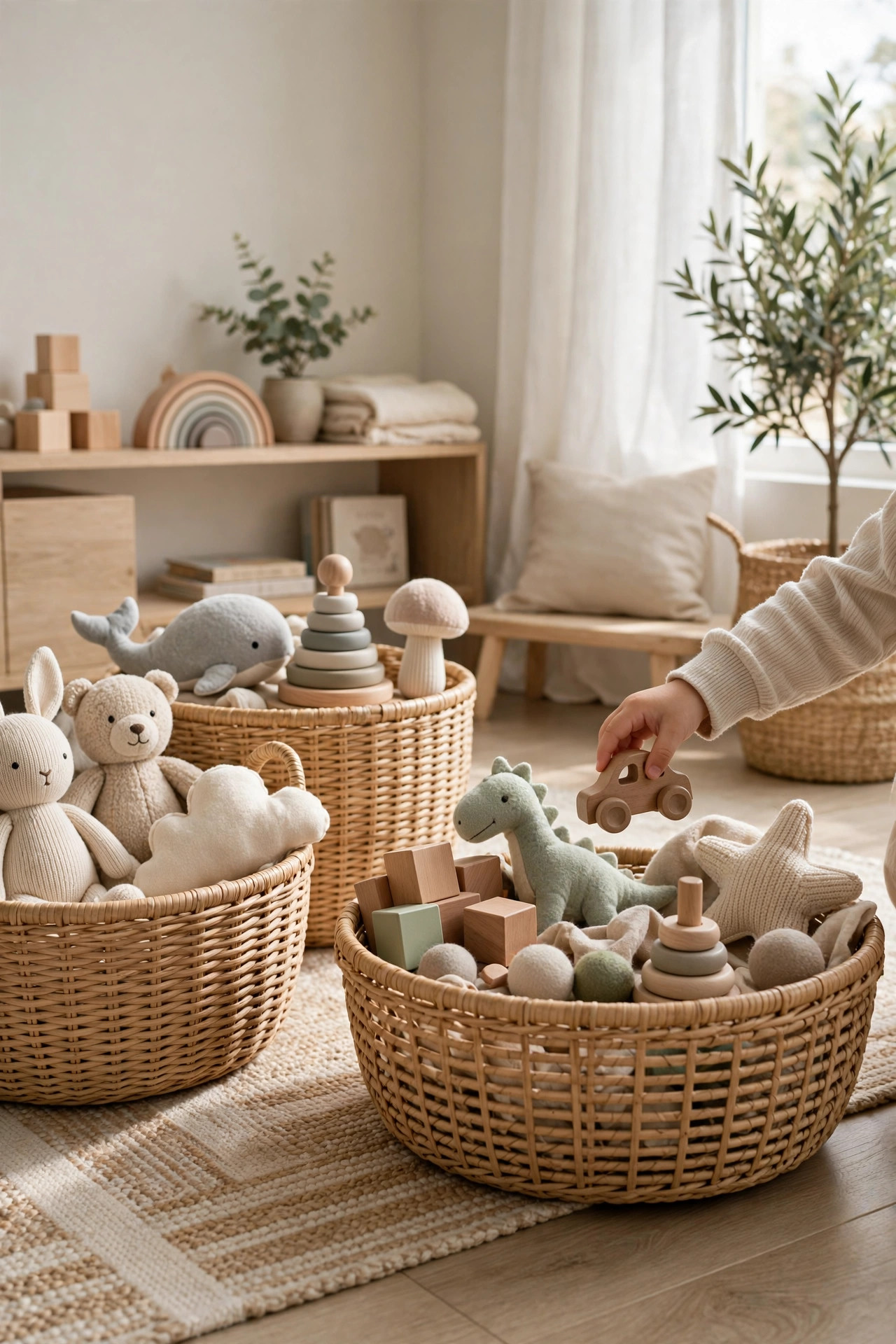
Sometimes you do not need a system, you need a basket. Big floor level baskets placed around the room are the fastest reset tool a playroom can have. At the end of the day, everything gets tossed into the nearest basket and sorted properly later, which is a routine even tired parents can manage.
Choose baskets that look good enough to leave out, because they will be out. Woven textures and soft neutrals blend into any decor. The real magic is that children as young as two can do the toss, so the habit starts early and the room never reaches full disaster mode.
16. A Donation Bin That Never Overflows
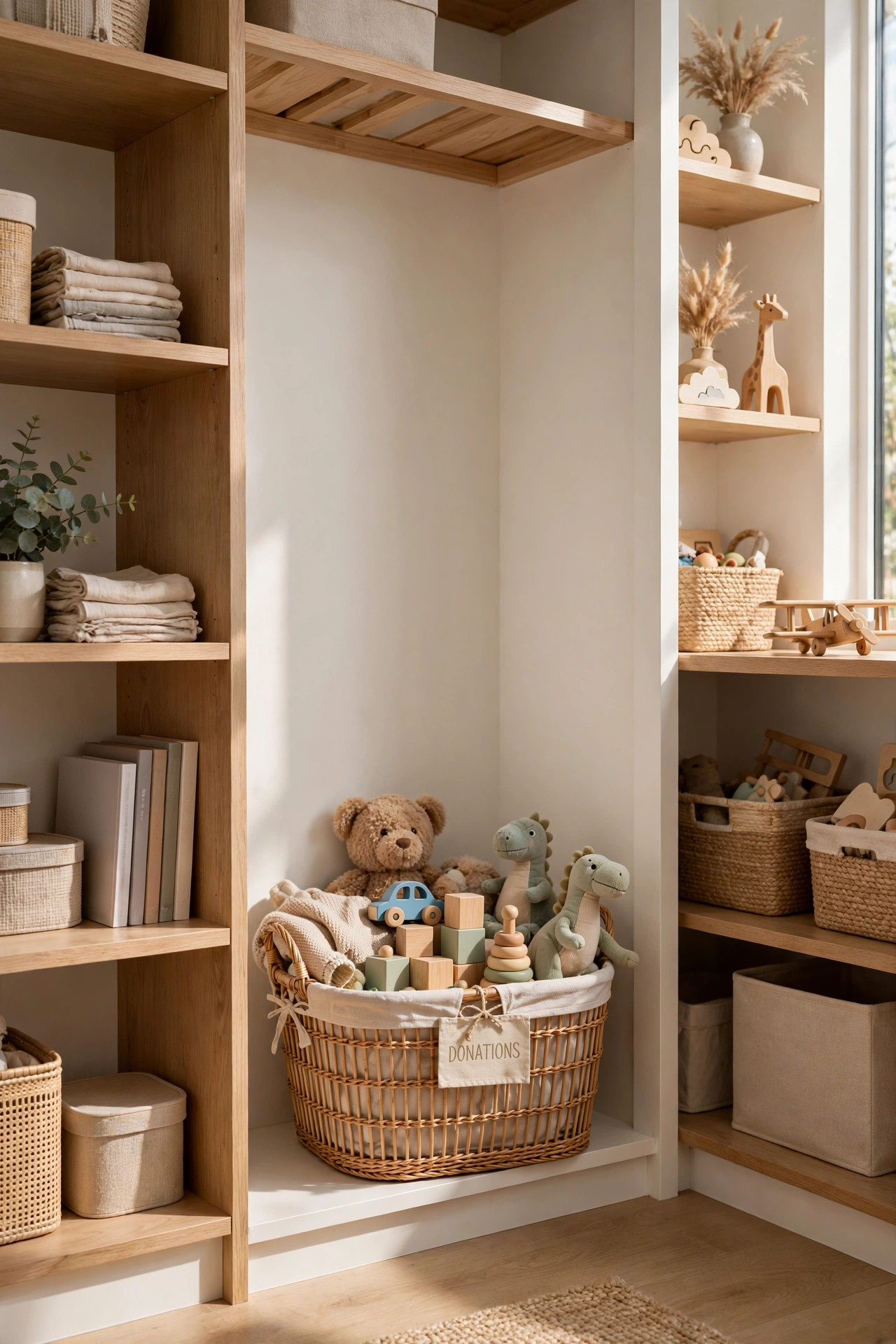
The final piece of lasting playroom order is a graceful exit for outgrown toys. A dedicated donation bin in the closet or corner means broken and babyish toys leave the room instead of drifting back onto the shelves. When the bin fills, it goes out the door and the room breathes again.
Make it a family habit with a seasonal rhythm. Kids who help choose donations learn generosity and feel ownership over their space. The bin also stops the slow creep that undoes every other system here. New toys come in, old ones go out, and the playroom stays at exactly the size of calm you designed for.
Playroom design is moving toward something genuinely better than the old hide everything approach. The rooms that work now are the ones that respect how children actually play: visibly, expansively, and with their whole bodies. Containment is not about saying no to mess. It is about giving play a beautiful shape and a fast path back to calm.
Start with one idea that fits your room and your child. Add another when the first one sticks. Within a few weeks you will have a playroom that looks like the ones you save, and more importantly, one that resets itself faster than you expected. That is the real design win: a room that works as hard as your family does.
FAQs
What are the best playroom organization ideas for small rooms?
Zone the room into activity pods and use vertical storage to make the most of limited floor space. Wall mounted book ledges, a fold away table, and low cube storage with bins keep everything contained without crowding the room. Keep the toy count low with rotation so a small space never feels overwhelmed.
How do I keep toys from spreading all over the house?
Give every toy a clear home inside the playroom and make cleanup part of the play routine. Floor level baskets near the door catch stray toys before they migrate, and a checkout basket system for big sets keeps one project contained at a time. Consistency matters more than any single product.
What is toy rotation and how does it work?
Toy rotation means keeping only a small selection of toys available while storing the rest, then swapping sets every week or two. Fewer toys out leads to deeper play and much faster cleanups. Store the extras in labeled boxes and let returned toys feel fresh again.
How can I organize art supplies in a playroom?
A rolling cart is the most practical solution because it moves art supplies to the table and back to storage in seconds. Use the tiers to separate markers, paper, and paints, and park the cart against the wall when art time is over. A magnetic board nearby gives finished pieces a display home.
At what age should kids start helping tidy the playroom?
Children as young as two can toss toys into a big floor basket, which makes basket cleanups a great first habit. Preschoolers can sort labeled bins with picture labels, and school age kids can manage the toy library checkout on their own. Start simple and let the responsibility grow with them.
How often should I declutter the playroom?
A quick reset each evening keeps the room livable, while a deeper declutter each season keeps the collection right sized. Use a donation bin year round so outgrown toys leave as soon as they are done. If cleanup starts taking longer than ten minutes, it is time to rotate or donate.