
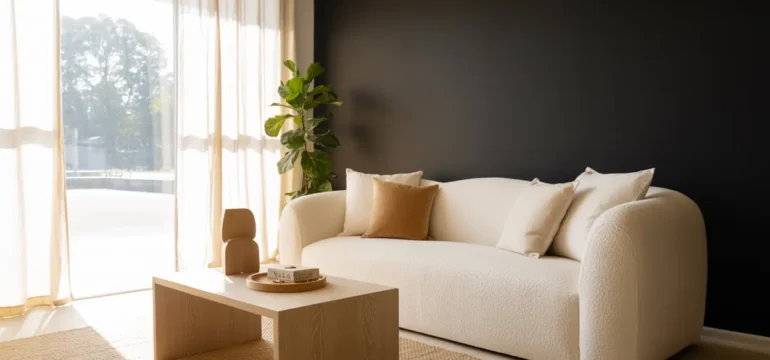
A black wall can sound bold, but it does not have to make a room feel dark or heavy. The right wall, finish, lighting, and furniture can make black feel warm, calm, and surprisingly inviting. A black accent wall also gives simple rooms more shape because it creates a strong background for wood, cream, white, brass, and soft fabrics. You do not need to repaint the whole room to get the look. One carefully chosen wall is often enough. From cozy bedrooms to modern living rooms, these ideas show how to use black in ways that still feel comfortable for everyday life. If you have been thinking about trying a dark wall, these real-room ideas can help you choose a style that fits your home.
1. Matte Black Bedroom Wall
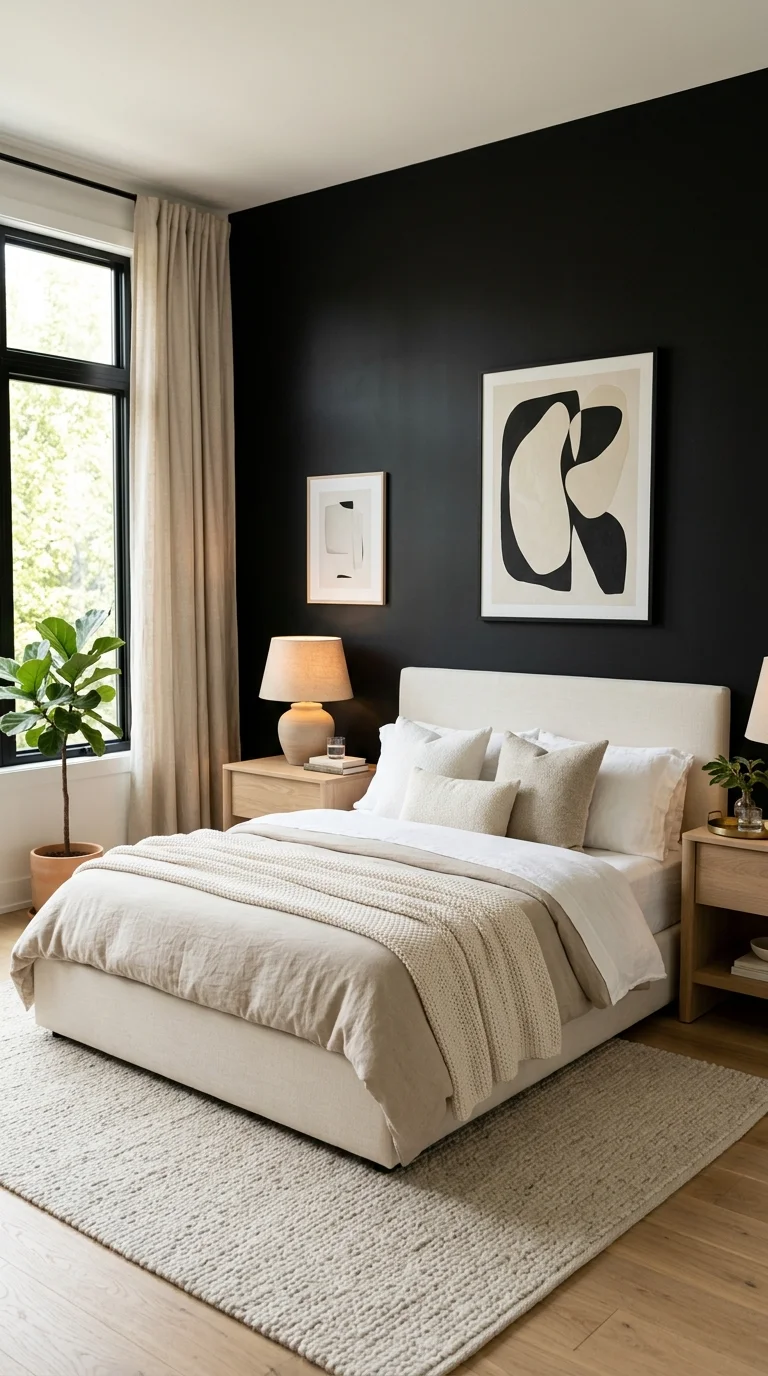
Paint the wall behind the bed in a soft matte black to create a cozy bedroom backdrop. Keep the other walls warm white or light beige so the dark wall has room to stand out without taking over the room. A simple upholstered bed, cream bedding, and light wood nightstands work especially well here. Add two warm bedside lamps to keep the room comfortable at night.
For a softer finish, choose washable matte interior paint and use a quality roller for an even surface. Hang one large framed print above the bed instead of filling the wall with small decorations. Natural wood, linen curtains, and a textured rug help balance the strong black color. This setup works well in a medium or large bedroom, but it can also suit a smaller room when the rest of the furnishings stay light and simple.
2. Black Living Room Wall
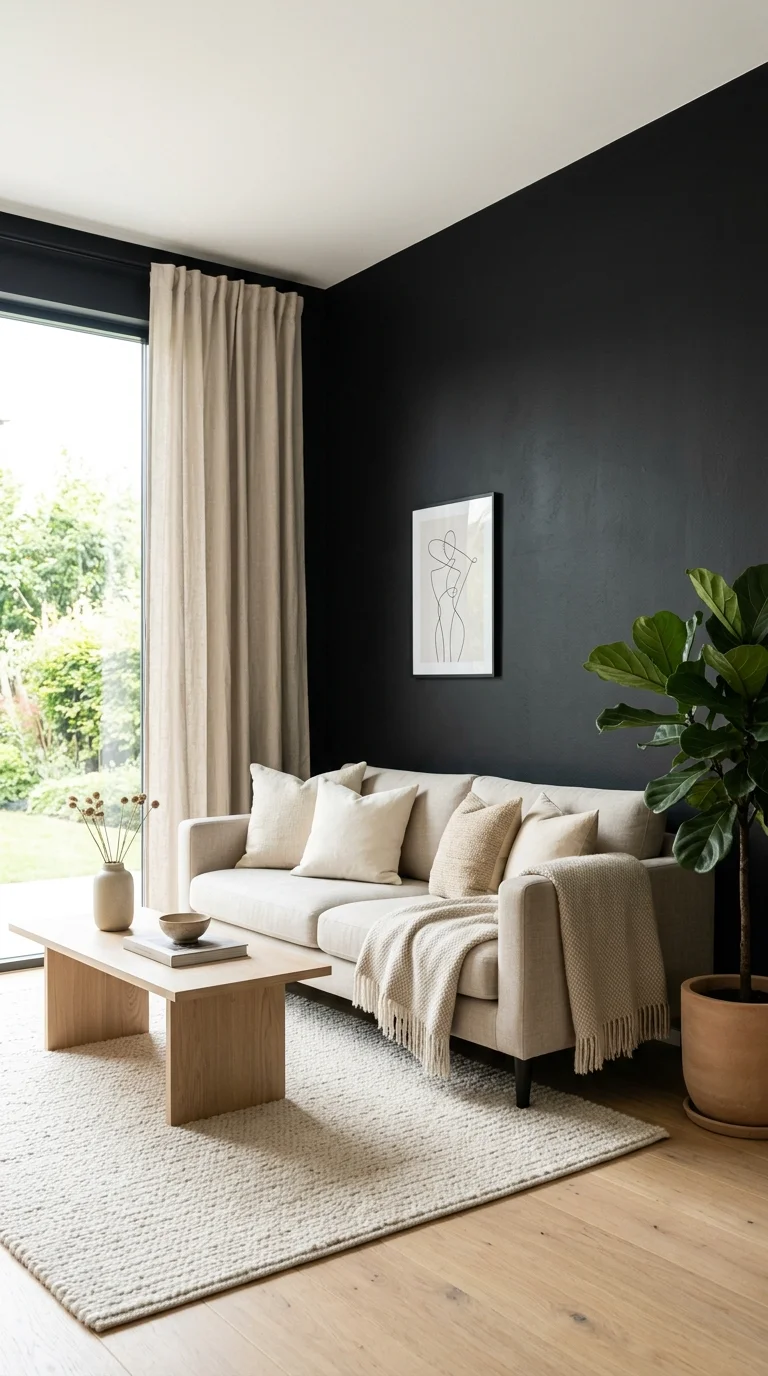
A black accent wall behind the sofa can give a plain living room a strong focal point. Use it as the background for a light sofa, natural wood coffee table, and cream rug. The contrast makes the furniture look more defined while keeping the room relaxed. A large window nearby is helpful because daylight keeps the dark wall from feeling closed in.
Choose a low-sheen or matte black paint for a modern look that does not reflect too much light. Add a tall floor lamp, a few ceramic pieces, and one large piece of artwork to the wall. Avoid placing too many dark items against the black surface because they can disappear visually. This idea is especially useful when the living room has simple furniture that needs one strong feature to make the layout feel finished.
3. Black Wall With Wood
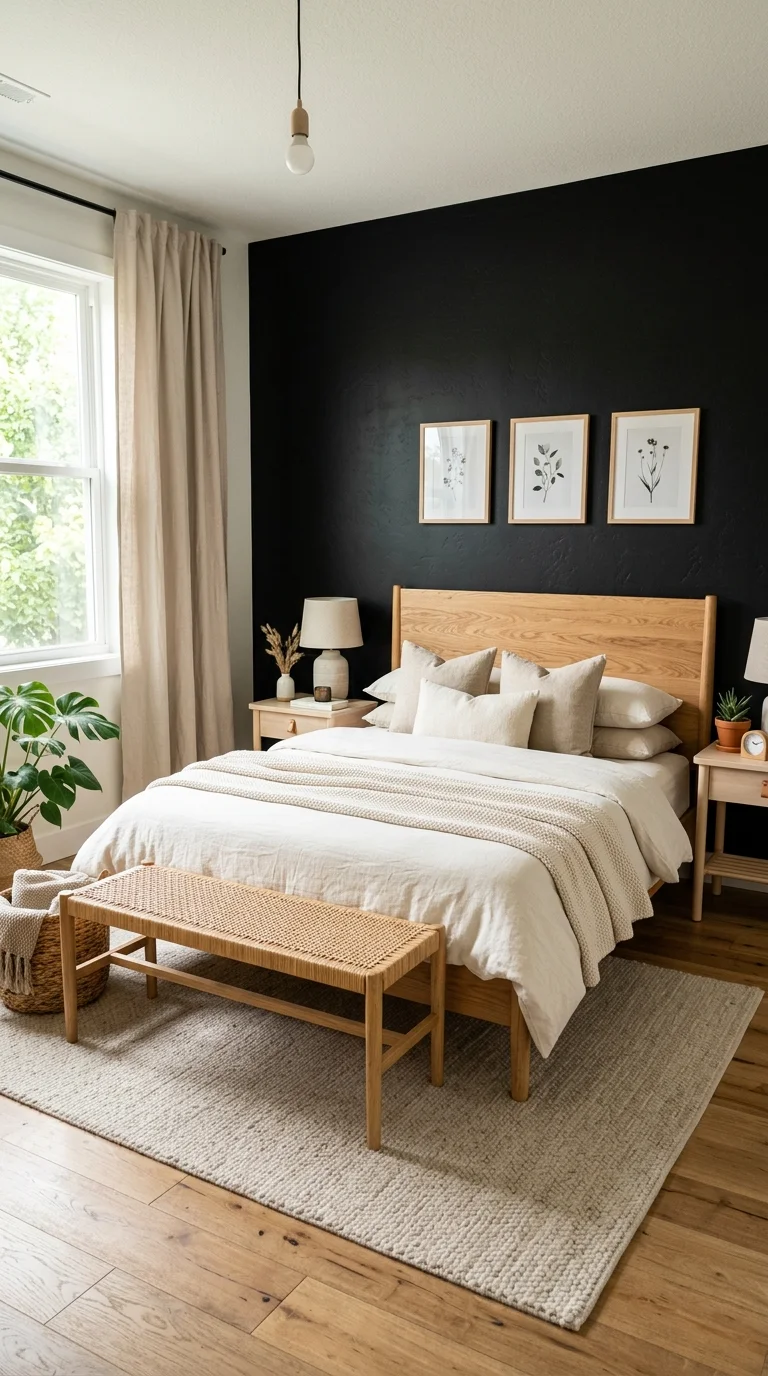
Pair a black wall with warm wood furniture for a balanced, comfortable look. In a bedroom, paint the wall behind the bed black and place a light oak headboard or wood bed frame against it. The natural grain gives the dark wall warmth and keeps the room from looking too formal. White bedding and beige curtains can add another soft layer.
This combination works well because wood brings a natural color and texture into the room. Use a medium or light wood tone for stronger contrast, especially if the room has limited daylight. A woven bench at the foot of the bed, a jute-style rug, and simple bedside lamps can finish the scene. Keep the accessories useful and uncluttered so the black and wood pairing stays easy to live with.
4. Black Fireplace Wall
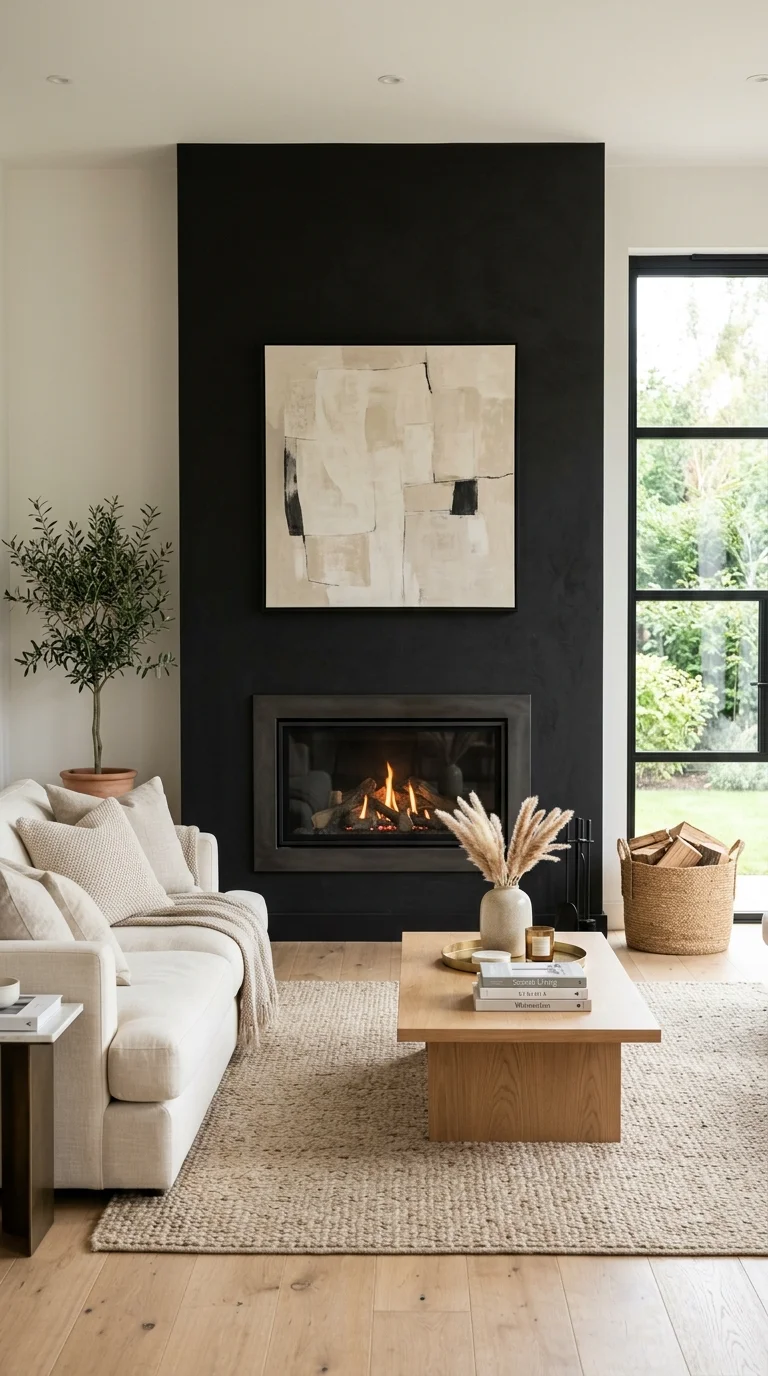
A black fireplace wall can make the fireplace feel like the natural center of a living room. Paint the wall around the fireplace in a deep matte black, then keep the mantel simple with a mirror, ceramic vase, or small framed artwork. A light sofa and pale rug can soften the darker background.
If the fireplace has stone, brick, or tile, test the paint color beside those materials before covering the wall. Warm lighting is useful here because it brings out the cozy side of black. Add a wood coffee table or woven basket nearby for natural texture. This look works especially well in open living spaces where the fireplace already has architectural importance. The black wall simply gives that feature a cleaner, more defined setting.
5. Black Dining Room Wall
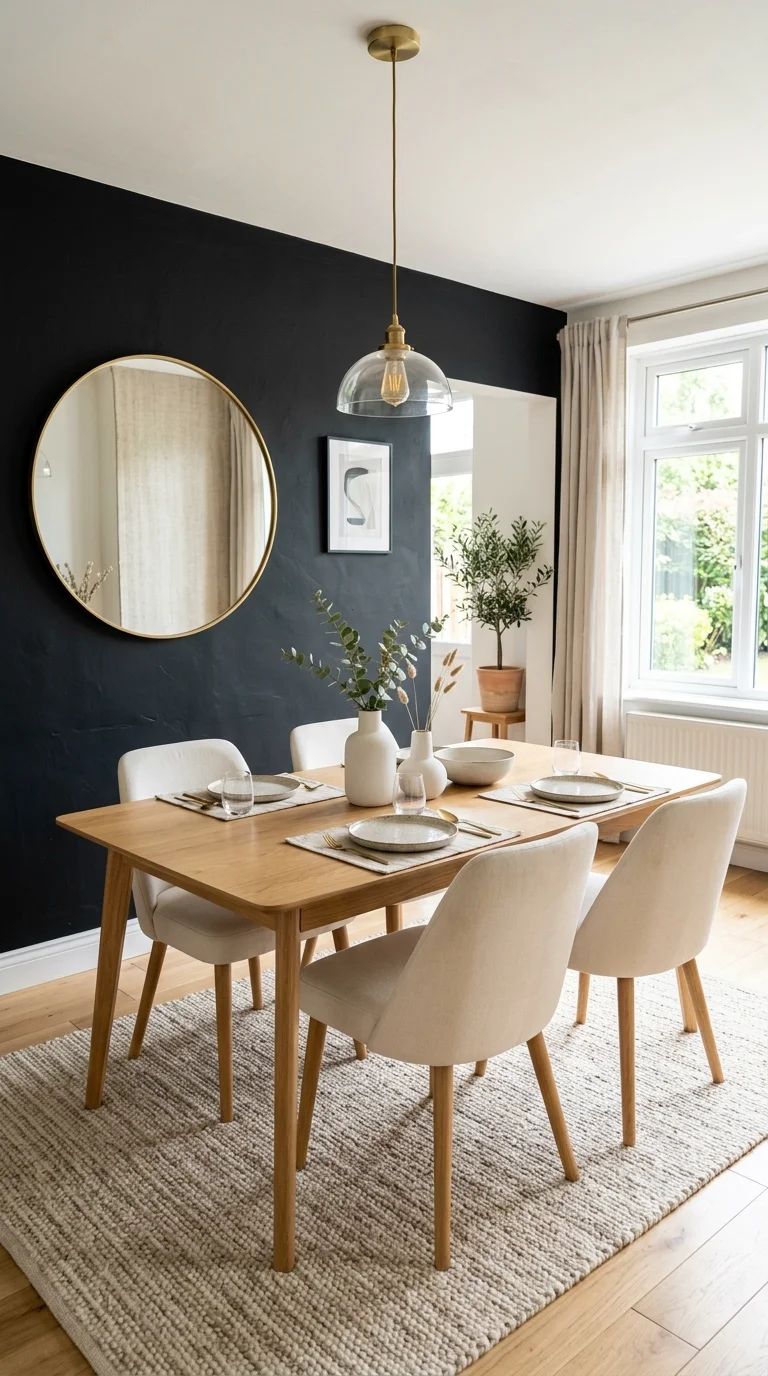
A black wall behind the dining table can make an everyday eating area feel more finished. Choose the wall with the table centered against it, then pair the dark background with a light wood table and simple upholstered chairs. A large round mirror can reflect daylight and keep the wall from looking flat.
For lighting, use a pendant with a warm bulb above the table. Brass, aged gold, or natural wood details can add gentle contrast without making the room feel busy. If you rent, consider a removable dark wallpaper with a subtle texture. Keep artwork large and simple so it reads clearly against the black. This idea works particularly well in dining rooms with white trim because the crisp border around the dark wall creates a clean, classic frame.
6. Black Wall With Gallery
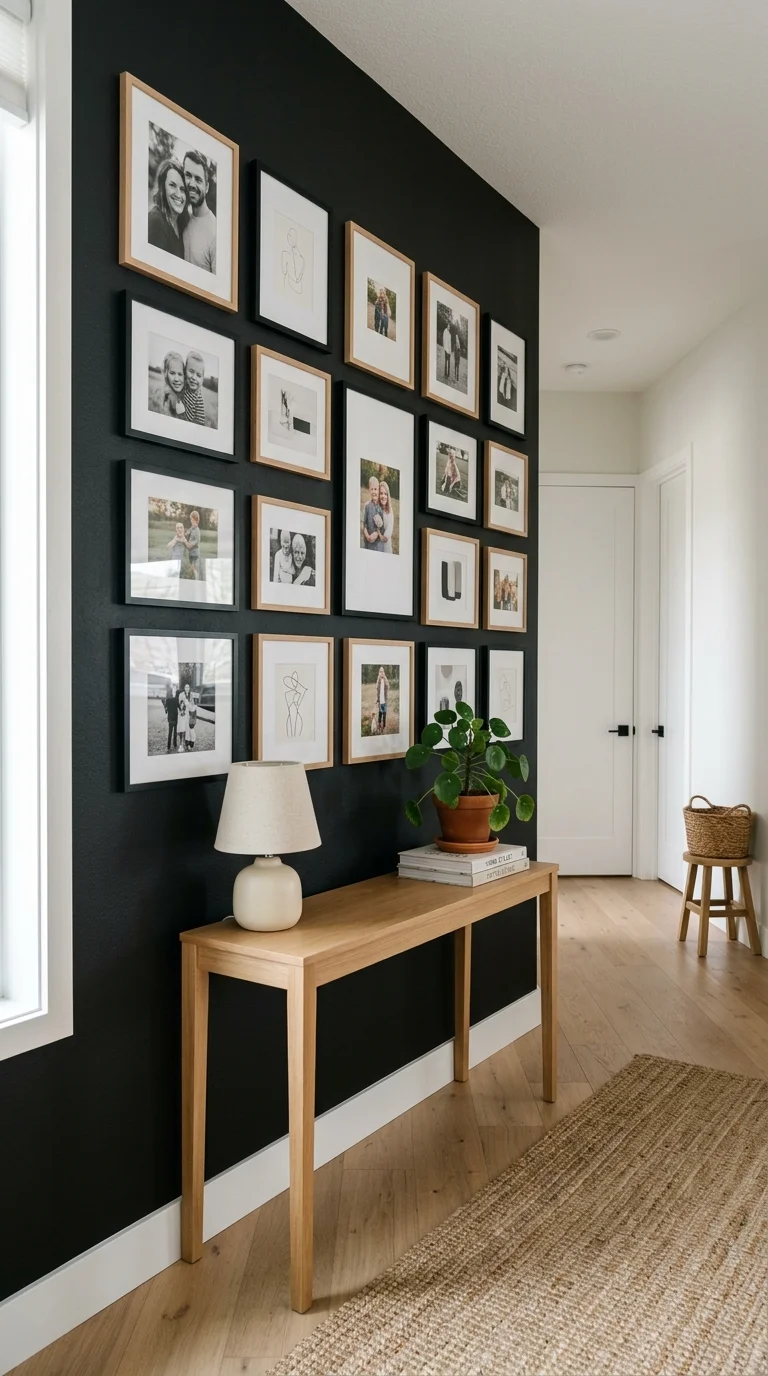
A black gallery wall can give family photos and artwork a strong, modern background. Paint one wall in a soft black and arrange frames in a clean grid or loose rectangular grouping. White mats inside the frames help the artwork remain bright against the dark paint.
Choose frames in one or two finishes, such as natural wood and thin black metal, rather than mixing many styles. A slim console table beneath the gallery can hold a lamp and a few simple objects. This setup works well in hallways, living rooms, and stair landing areas where a blank wall needs visual interest. Before hanging anything, lay the frames on the floor to check spacing. Keeping the arrangement balanced will make the black wall feel intentional instead of crowded.
7. Black Wall With Plants
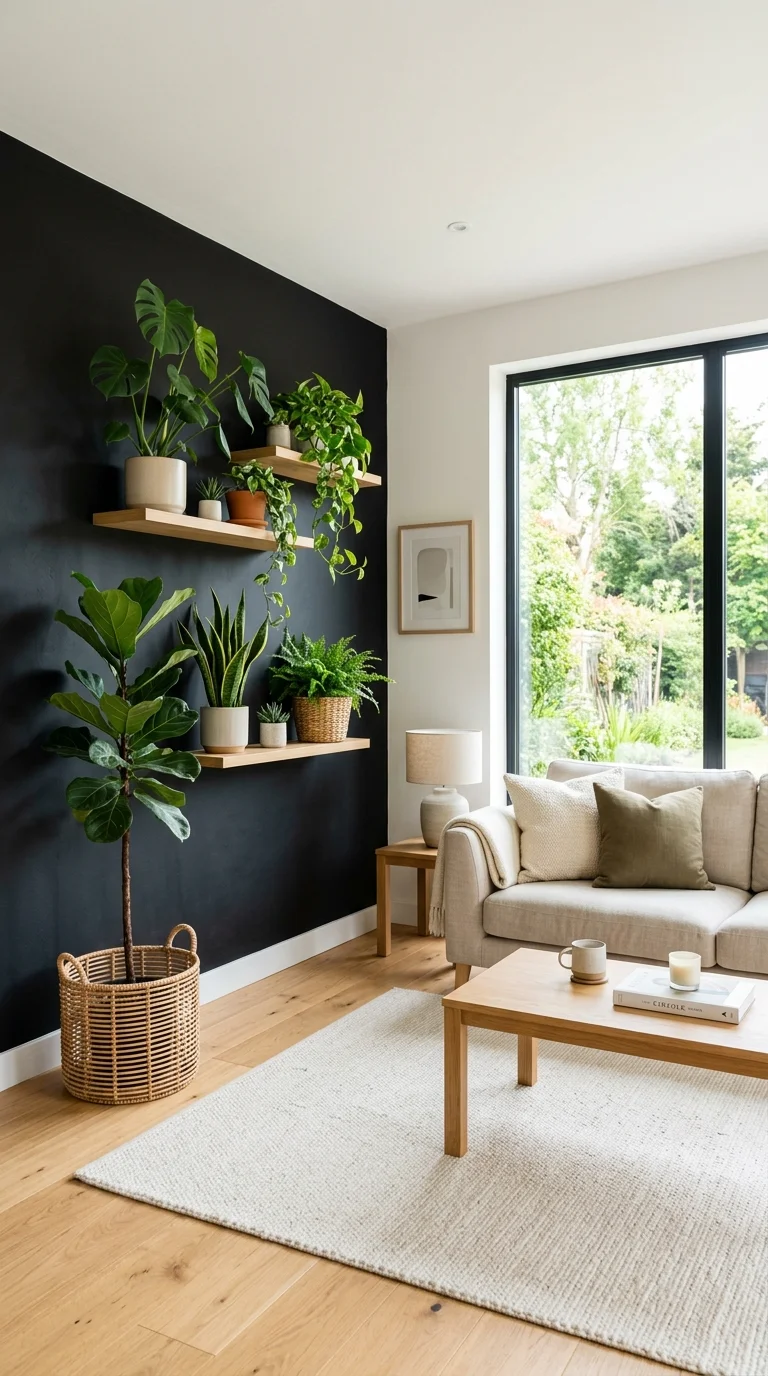
Black paint creates a rich background for green houseplants. Use a black accent wall in a bright living room and place plants in woven baskets, stone pots, or simple ceramic planters in front of it. The green leaves stand out clearly, especially when daylight enters from a nearby window.
Choose plants that already suit the light level in your room rather than buying plants only for appearance. A tall floor plant can fill an empty corner, while smaller plants can sit on a wood console. Keep the rest of the furniture neutral so the black wall and greenery remain the main visual features. This idea is a good choice for people who like natural interiors but want something stronger than an all-white backdrop. The combination feels earthy without needing many decorations.
8. Black Wall In Entryway
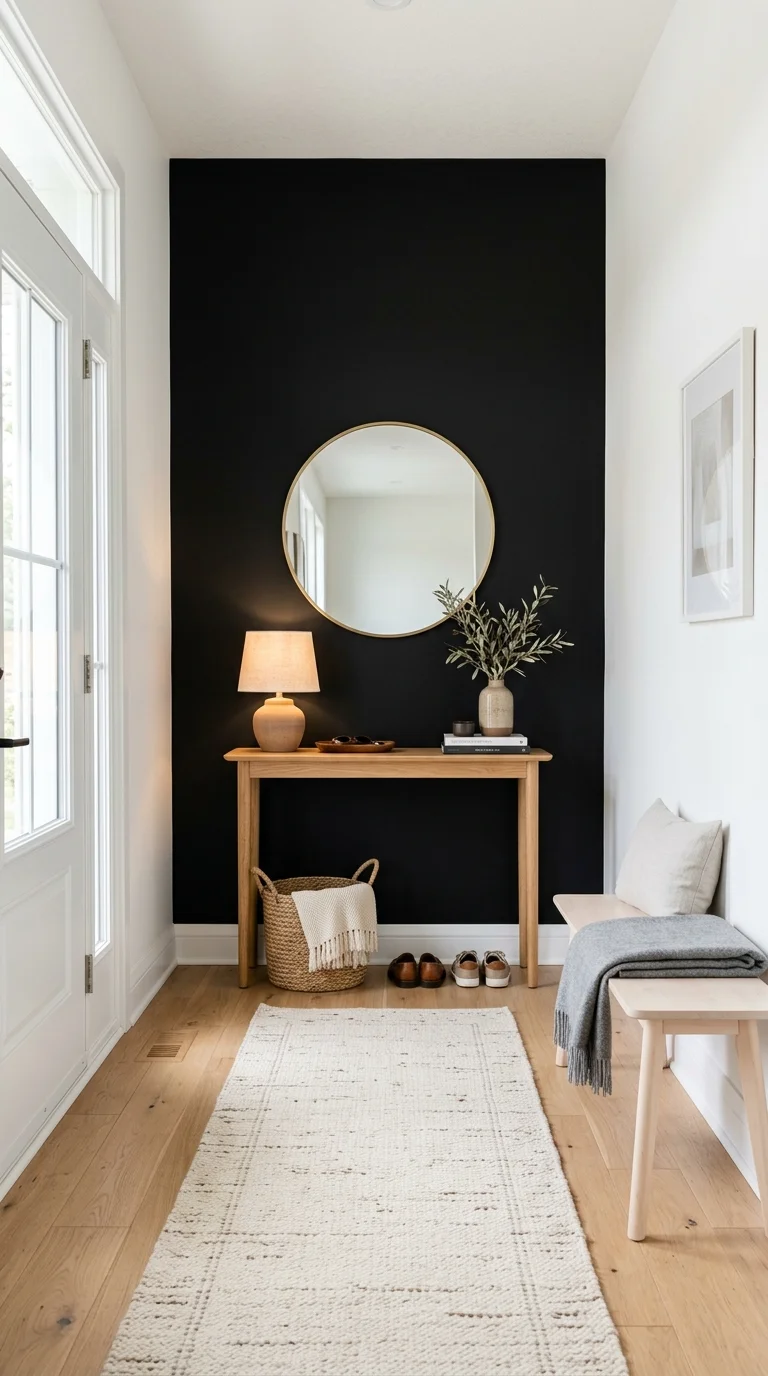
A black entryway wall can make a small entrance feel polished without requiring much furniture. Paint the wall behind a narrow console or bench black, then add a round mirror above it. A light wood bench, woven basket, and small table lamp can keep the area welcoming.
Because entryways often have limited space, choose slim furniture that leaves a clear walking path. A washable matte paint is useful in busy homes where walls can pick up marks. Add one small hook rail if you need everyday storage, but avoid filling the wall with too many objects. A light floor and nearby white walls will help the black section feel like a designed feature instead of making the whole entrance appear smaller.
9. Black Kitchen Feature Wall
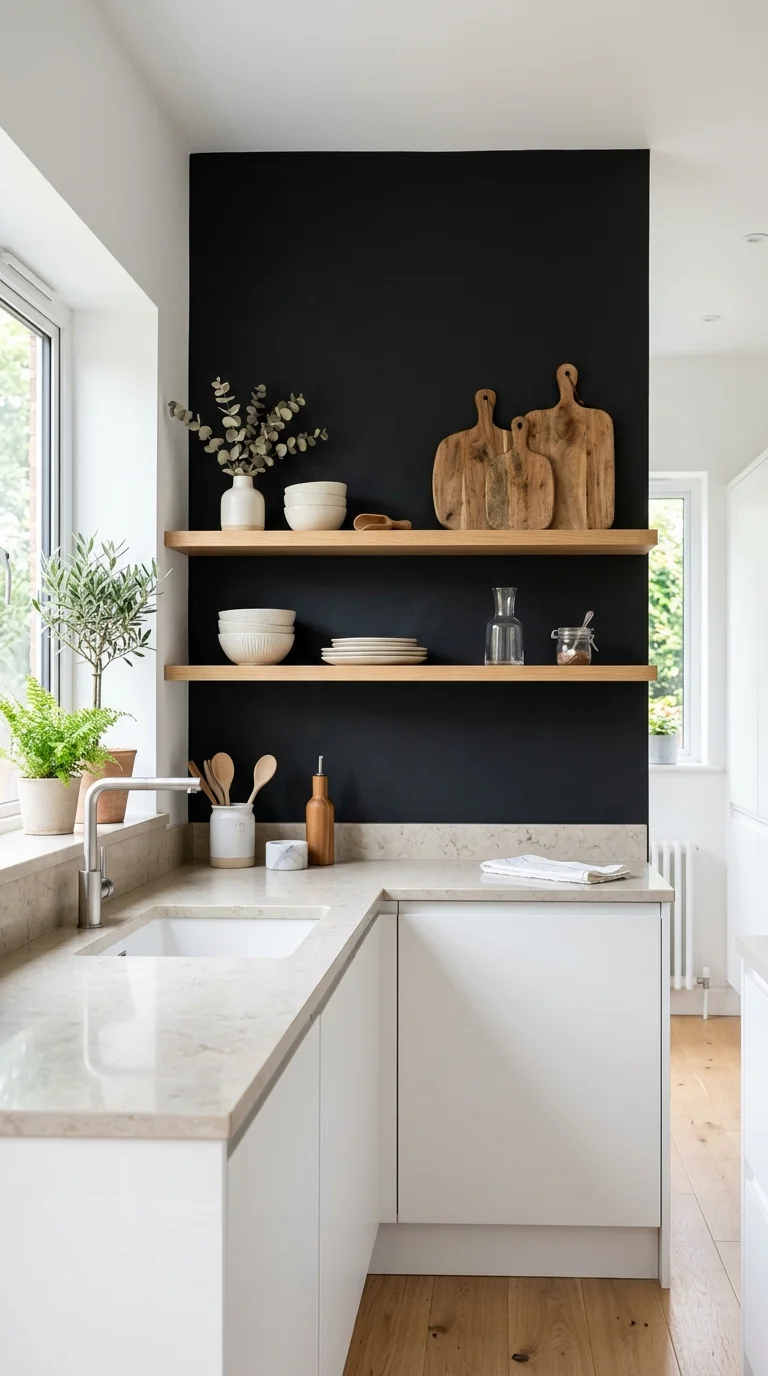
Use black on one kitchen wall to create a bold background for open shelves, artwork, or a dining nook. Matte black works especially well with light cabinets, pale countertops, and warm wood shelves. The dark wall can also make simple white dishes and wooden boards look more decorative.
Choose a durable kitchen paint if the wall is near cooking areas, and use washable finishes where needed. Keep shelves lightly styled with everyday pieces instead of filling every inch. If the kitchen already has dark cabinets, use black only on a smaller wall so the room does not become visually heavy. This idea works best when there is plenty of daylight and a mix of light surfaces nearby.
10. Black Home Office Wall
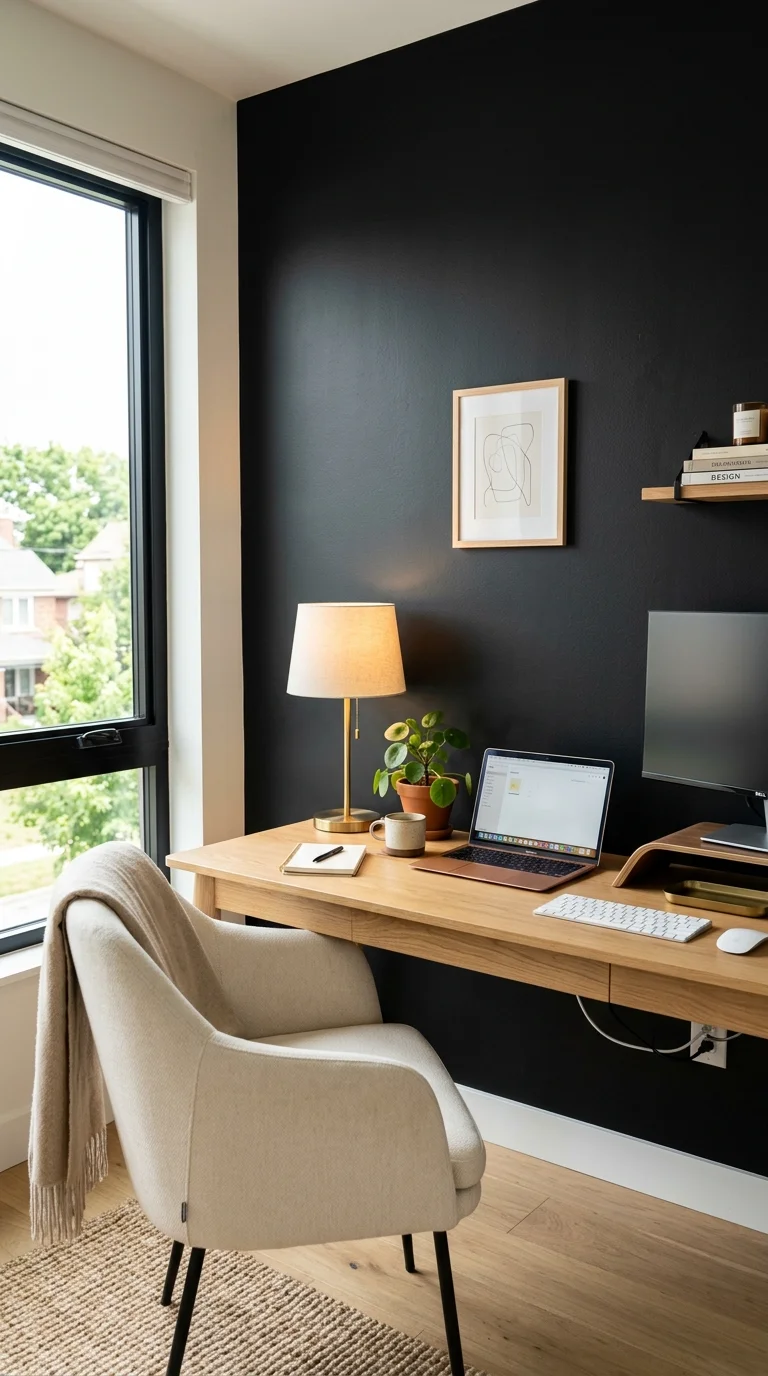
A black wall behind a desk can give a home office a focused, tidy appearance. Place a light wood desk against the dark wall and add a cream desk chair, warm lamp, and one or two framed prints. The dark background also makes shelves and small office objects easier to see.
Use a matte finish to reduce glare if you work near a window. Keep the desk surface fairly clear so the wall remains the main feature. A cork board, floating wood shelf, or simple pinboard can add function without covering the whole wall. This setup suits both dedicated offices and small work corners in bedrooms or living rooms. The key is to pair the dark wall with enough daylight and light-colored furniture.
11. Black Wall With Paneling
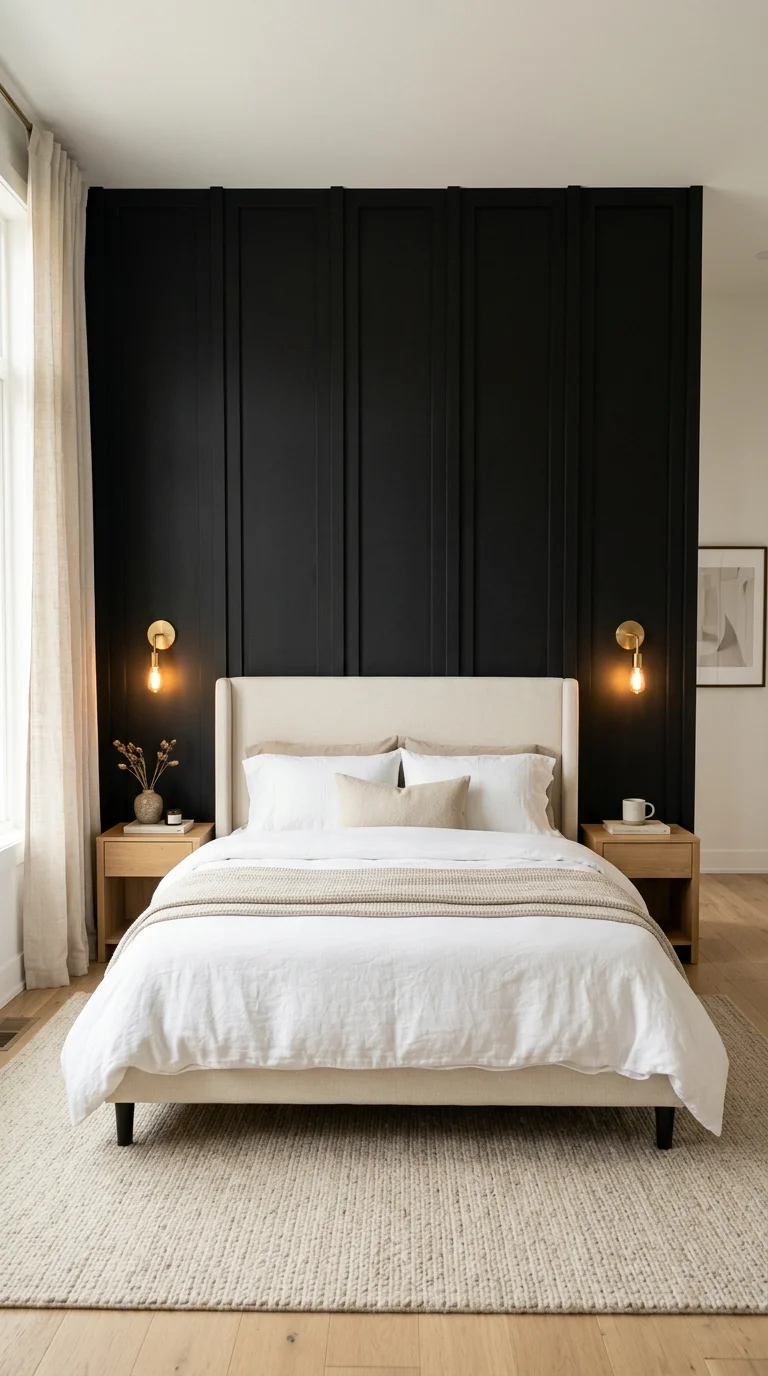
Black wall paneling adds texture to a dark accent wall without needing bright colors. Use simple vertical or square molding on the wall behind a sofa or bed, then paint the entire surface in the same matte black shade. The raised details catch natural light and create gentle shadows.
Keep the furniture simple so the paneling remains visible. In a bedroom, cream bedding and brass bedside lamps work well. In a living room, try a beige sofa and light oak coffee table. If you are adding molding yourself, measure the wall carefully before buying materials and keep the spacing even. The finished wall can look custom without requiring complicated decoration.
12. Black Wall Behind TV
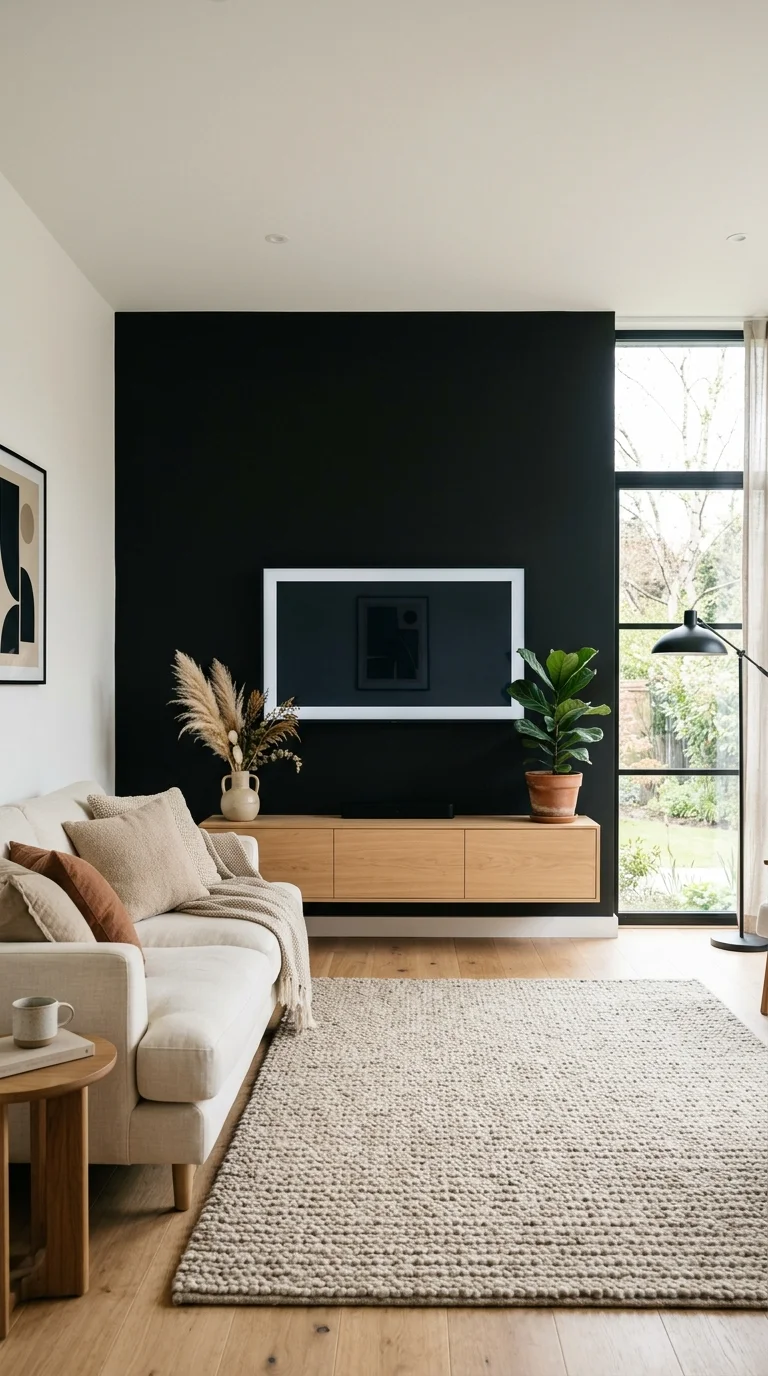
A black accent wall can help a television blend into the room instead of standing out. Paint the wall behind a wall-mounted TV black and place a light wood media console underneath. The screen naturally becomes less noticeable against the dark background when it is switched off.
Add a few simple objects to the console, such as a ceramic vase, small plant, or stack of books. Hide visible cables whenever possible for a cleaner finish. Keep the wall around the television fairly open because too many decorations can compete with the screen. This idea works especially well in modern living rooms where the TV is already the main functional feature and the goal is to make the whole wall look more intentional.
13. Black Reading Nook
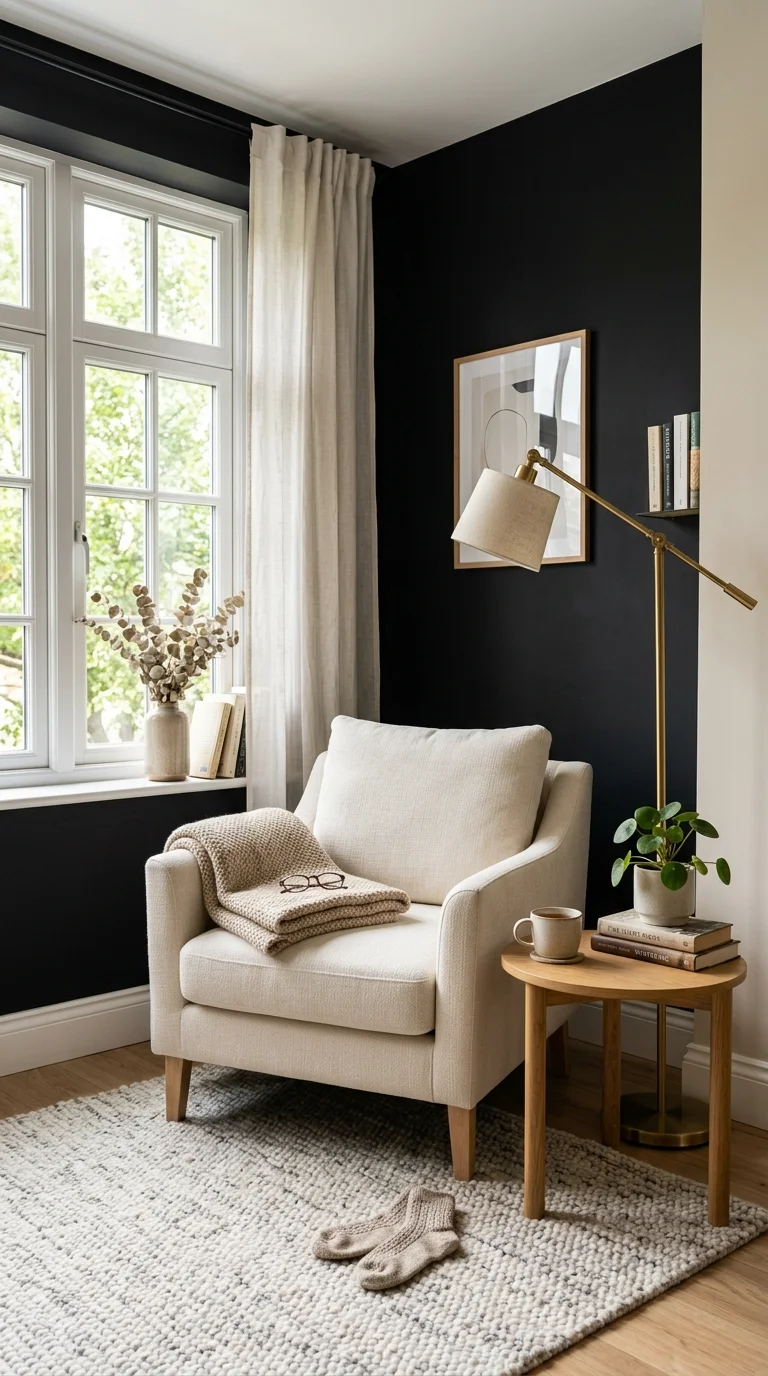
Turn a small reading corner into a cozy feature with a black wall behind a comfortable chair. A deep cream or tan armchair creates a soft contrast, while a wood side table and warm floor lamp add practical comfort. Place a small bookcase nearby if space allows.
The black background makes the reading chair feel like a separate zone without needing a room divider. Use a soft rug under the chair to make the corner feel finished. Keep the lighting warm and position the chair near a window for daytime reading. This idea is useful in living rooms, bedrooms, or unused corners that need a clear purpose. A few well-chosen objects are enough to make the area feel complete.
14. Black Wall With Brass
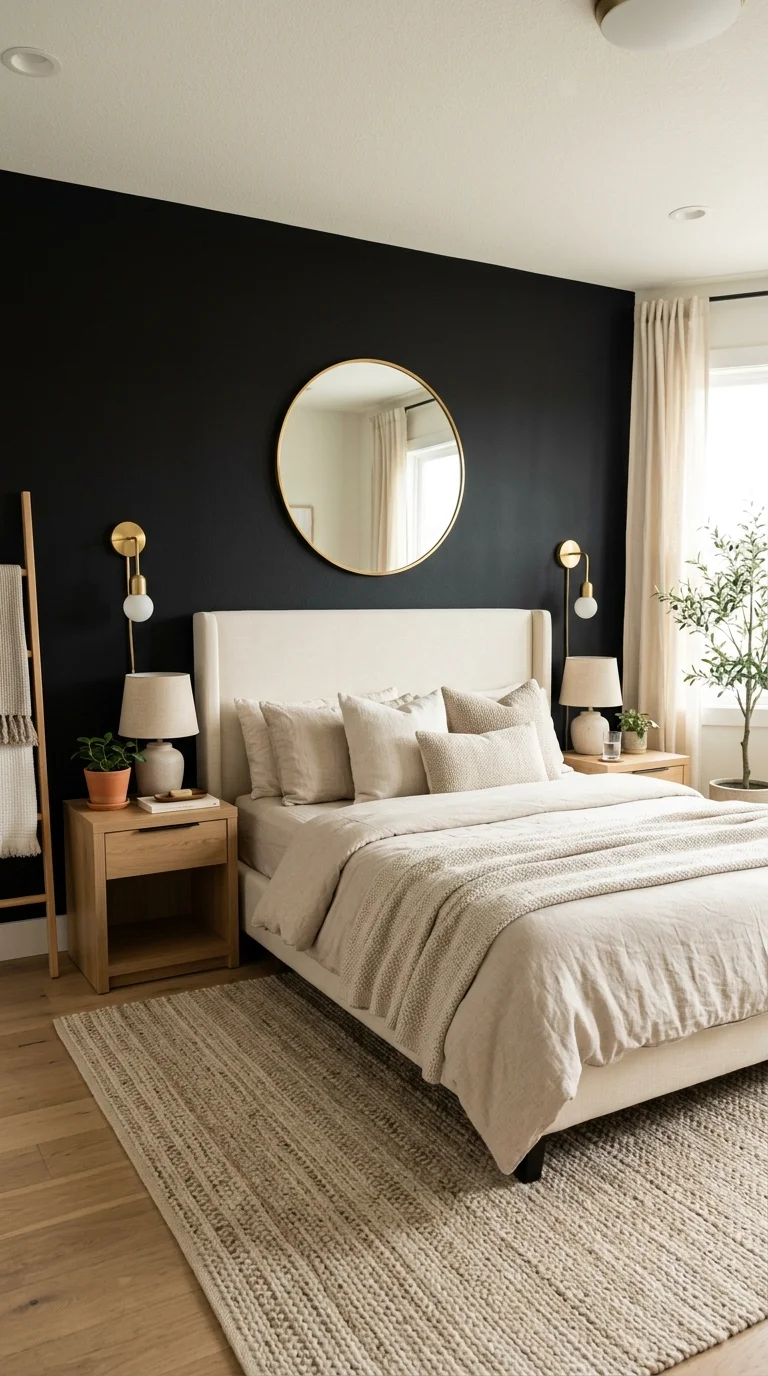
Black and brass make a strong pairing in bedrooms and dining rooms. Paint one wall matte black, then add brass wall sconces, a brass-framed mirror, or small metallic picture frames. The warm metal adds light against the dark surface without making the room feel overly decorated.
Balance the combination with cream, beige, or soft gray fabrics. In a bedroom, use neutral bedding and a wood nightstand to keep the look comfortable. In a dining room, try a warm wood table and simple linen curtains. Avoid using brass on every surface. A few repeated touches are enough to create a connected look while allowing the black wall to remain the main feature.
15. Black Wall With White Trim
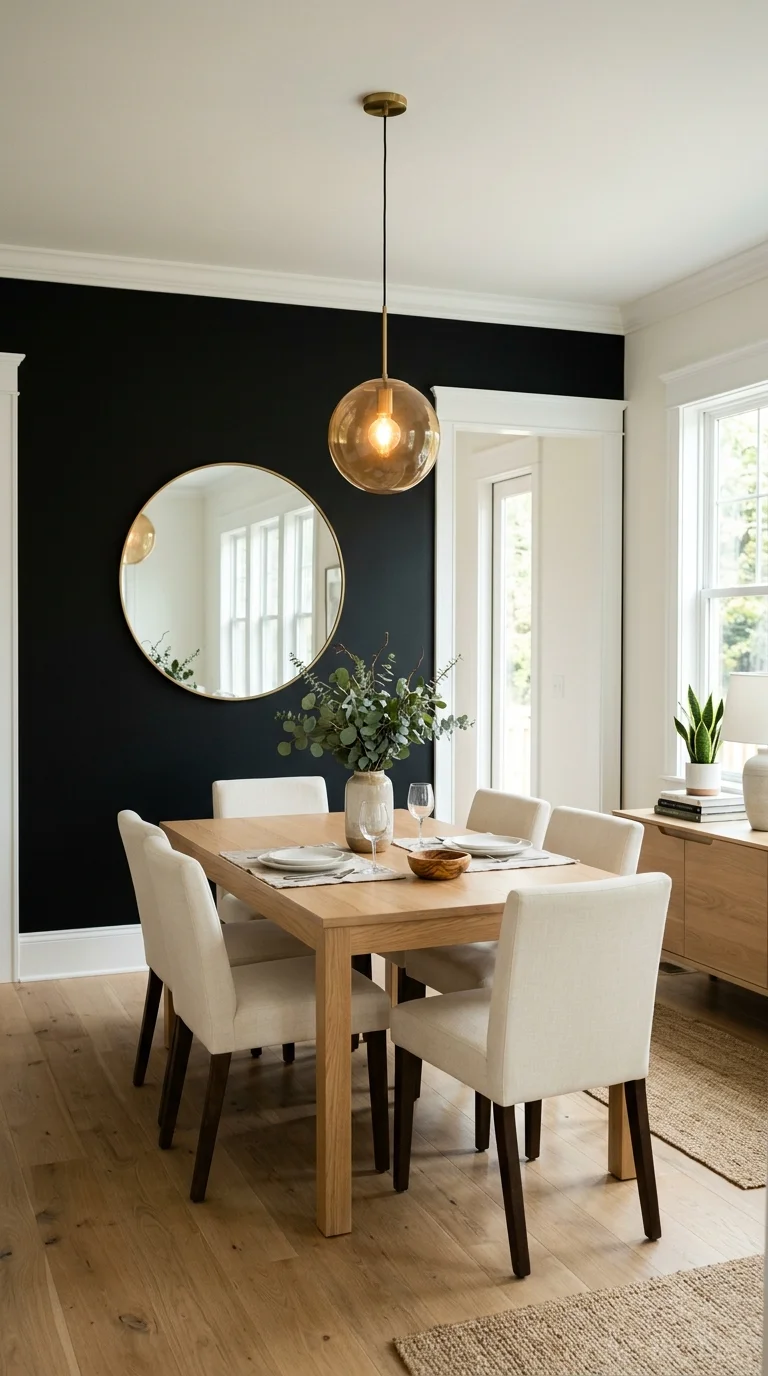
A black wall framed by crisp white trim has a clean, classic appearance. Paint one full wall black while leaving the baseboards, door frames, and ceiling trim white. This contrast is especially attractive in older homes with detailed molding.
Keep the furniture light so the dark wall does not dominate the room. A cream sofa, pale wood table, and simple artwork can soften the strong color difference. If your trim is not bright white, use a soft warm white that works with the existing paint. This approach is easy to photograph because the sharp border creates a clear visual frame. It also gives black paint a more traditional feel than a completely modern room would.
16. Black Wall In Small Bedroom
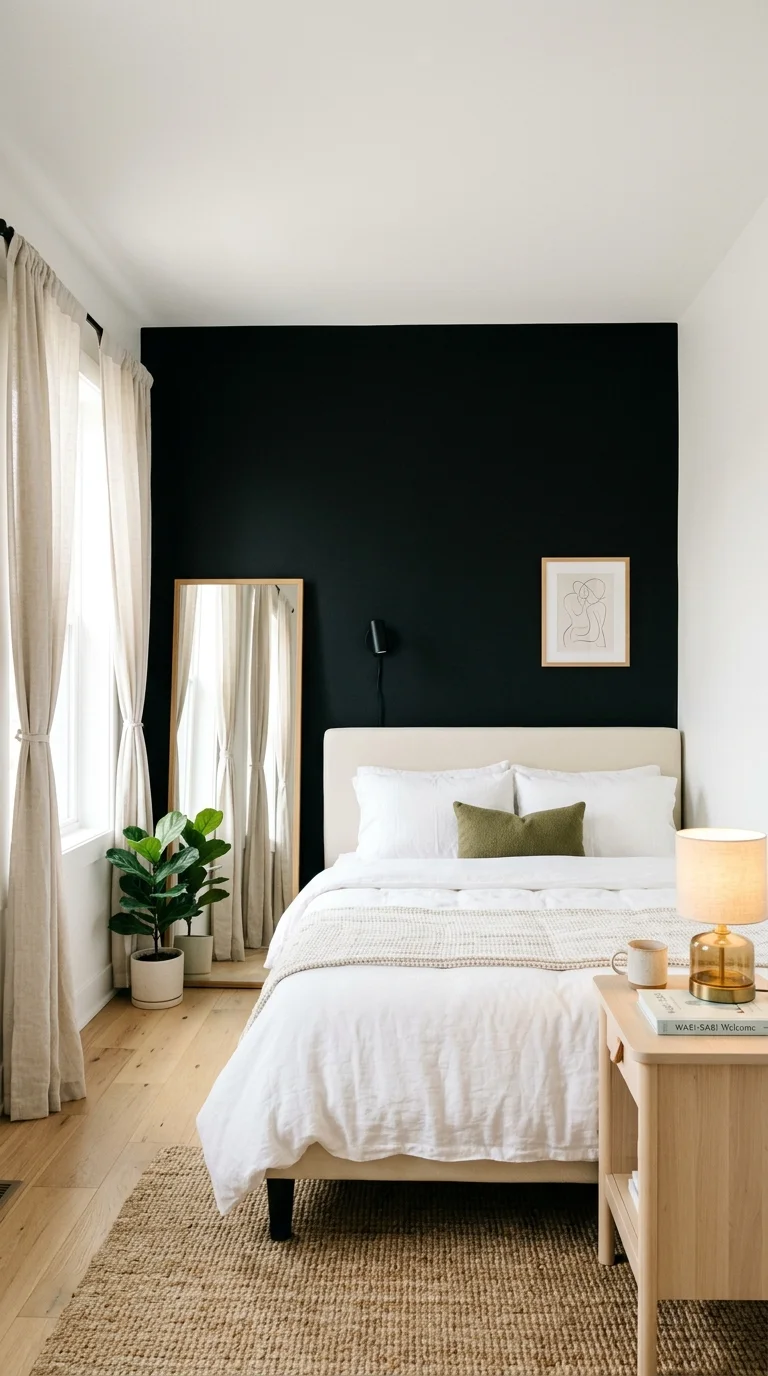
A small bedroom can handle a black accent wall when the other surfaces stay bright. Paint the wall behind the bed black and keep the ceiling, side walls, bedding, and curtains light. A low bed frame can help the room feel open while a large mirror reflects daylight.
Avoid using heavy dark furniture on the same wall because it can make the area feel crowded. Instead, choose light oak, white, or natural woven pieces. Use two small lamps for balanced lighting at night. If you are unsure about the color, paint a sample section first and look at it in both morning and evening light. This makes it easier to judge how the black will behave in your actual room.
17. Black Wall With Beige Sofa
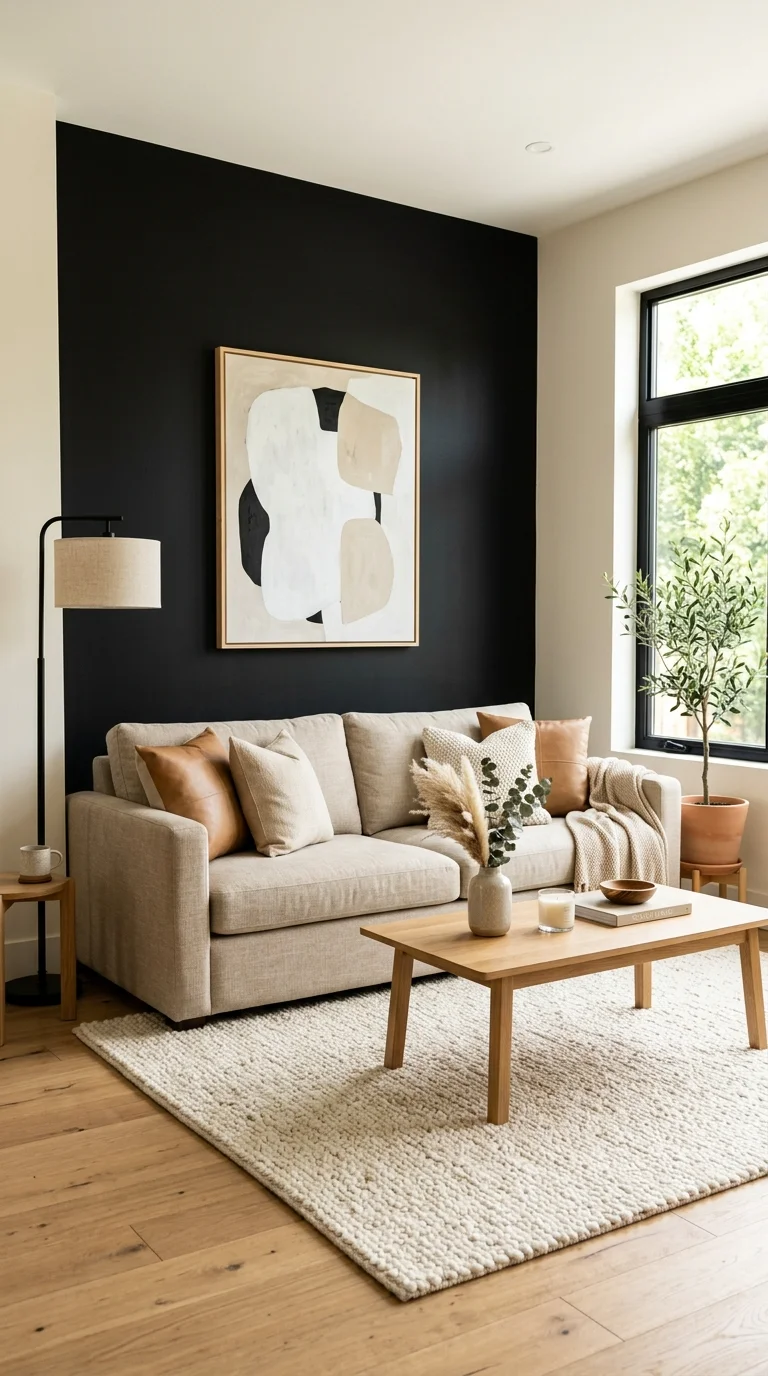
A beige sofa placed against a black accent wall creates an easy, warm contrast. Choose a simple sofa with textured upholstery, then add a light wood coffee table and cream rug. The combination works well in living rooms that already have neutral flooring and natural daylight.
Add pillows in cream, tan, and muted brown instead of introducing many colors. A large piece of artwork can sit above the sofa, or you can leave the wall mostly open for a cleaner look. Choose a washable wall paint if the sofa area gets heavy daily use. This style is practical because the furniture remains neutral and flexible, while the black wall provides the visual interest.
18. Black Wall With Open Shelves
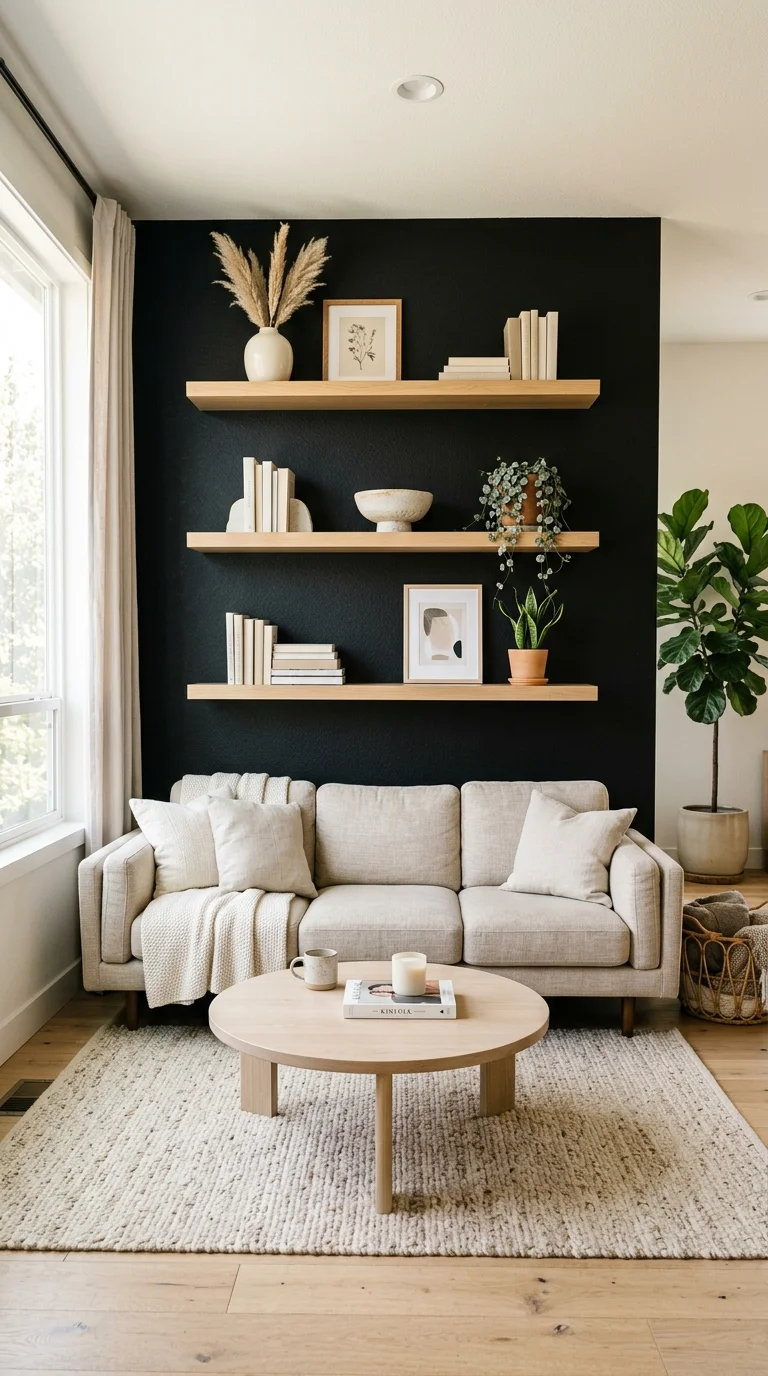
Open wood shelves look especially clear against a black wall. Install two or three sturdy shelves on a black accent wall and style them with books, pottery, framed photos, and small plants. Use light or medium wood shelves for contrast.
Keep enough empty space between objects so the shelves do not look overloaded. If you are using the shelves in a kitchen, choose materials that are easy to wipe clean. In a living room, make sure the shelf depth fits the wall and does not interfere with nearby furniture. The dark background helps each item stand out, so you can use fewer accessories and still create an attractive display.
19. Black Wall With Soft Lighting
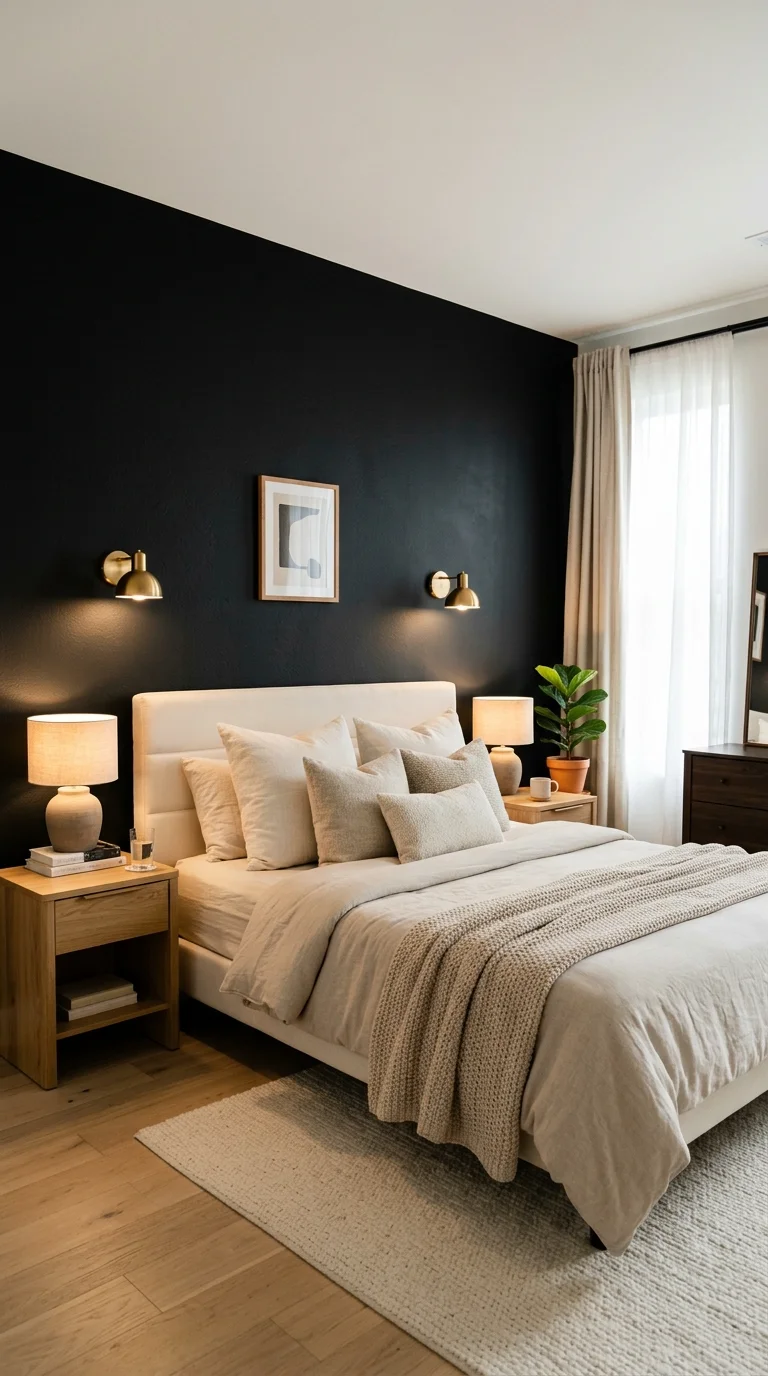
A black accent wall can look completely different at night when it is paired with warm layered lighting. Use wall sconces, table lamps, or a floor lamp near the black wall to create gentle pools of light. In a bedroom, place matching lamps on both sides of the bed for a calm, balanced scene.
Choose warm white bulbs rather than very cool lighting, especially if the room already uses cream and wood tones. Keep lampshades light so they provide visible contrast against the dark wall. During the day, natural daylight should still be the main light source. This setup is useful when you want the black wall to feel cozy in the evening rather than dramatic or stark.
20. Black Wall With Cream Decor
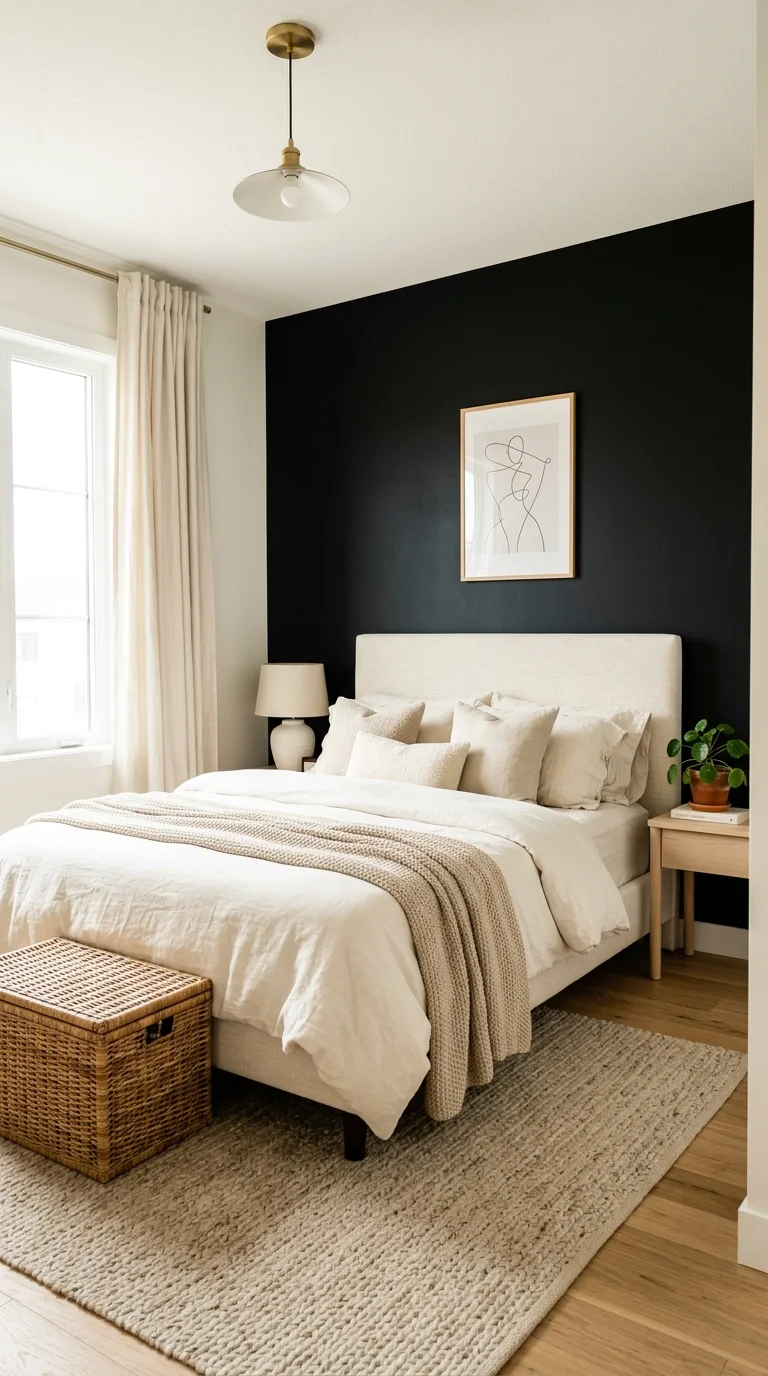
Cream furniture and soft textiles can make a black accent wall feel surprisingly gentle. Paint the wall behind a sofa or bed black, then layer cream upholstery, linen curtains, a textured rug, and pale wood pieces in front of it. The contrast is strong, but the warm neutrals keep the room comfortable.
Use different textures instead of many colors. A boucle chair, woven basket, linen cushion, or wool-style rug can add depth while staying within the same neutral palette. This idea works well for modern bedrooms and living rooms where you want a dark feature without a moody overall look. Keep the surrounding walls light and let daylight reach the black wall whenever possible.
FAQs
Is black a good color for an accent wall?
Yes. Black can work very well as an accent when the other walls, furniture, and flooring provide enough light contrast. Matte finishes are often easier to style because they reduce glare.
Which room is best for a black accent wall?
Bedrooms and living rooms are popular choices, but dining rooms, offices, entryways, and kitchens can also work. The best wall is usually one that already has a clear feature, such as a bed, sofa, fireplace, or desk.
What colors go well with a black wall?
Cream, white, beige, warm wood, muted green, brass, and soft gray all pair well with black. Natural textures can make the combination feel less severe.
Does a black wall make a room look smaller?
It can, especially when the room has little daylight and many dark furnishings. Keeping the ceiling and nearby walls light, using mirrors, and choosing lighter furniture can help the room feel more open.
Conclusion
A black accent wall does not have to make a room feel dramatic. With light furniture, warm wood, natural textures, and good lighting, it can become a comfortable focal point. Start with one wall and let the rest of the room stay simple.