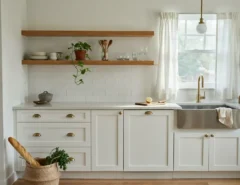
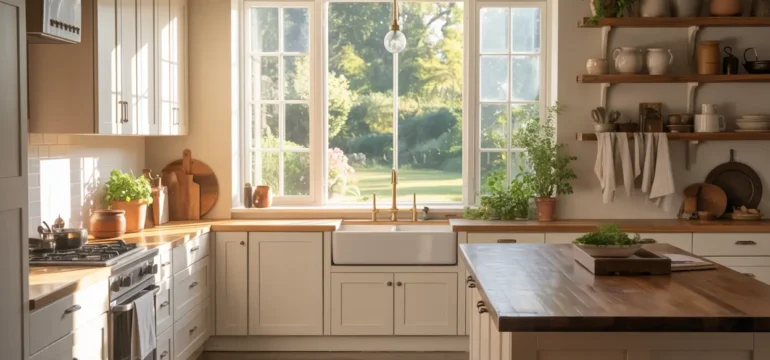
I get asked a lot why farmhouse kitchens have not faded out like so many other trends, and honestly, I think it comes down to comfort. This style was never about looking perfect, it was about a kitchen that could handle muddy boots, flour everywhere, and a big pot of soup on the stove all at once. The kitchens that hold up best years later are the ones built on a few honest materials, wood, white paint, black metal, and simple stone, rather than anything trendy or flashy. Below are fourteen pieces of that puzzle, the kind you can borrow one at a time or all together, depending on how far along your kitchen already is. None of these require a full gut renovation. Some are a single afternoon project, others are a shopping trip away. Pick whichever fits your kitchen and your weekend best.
1. An Apron Front Sink
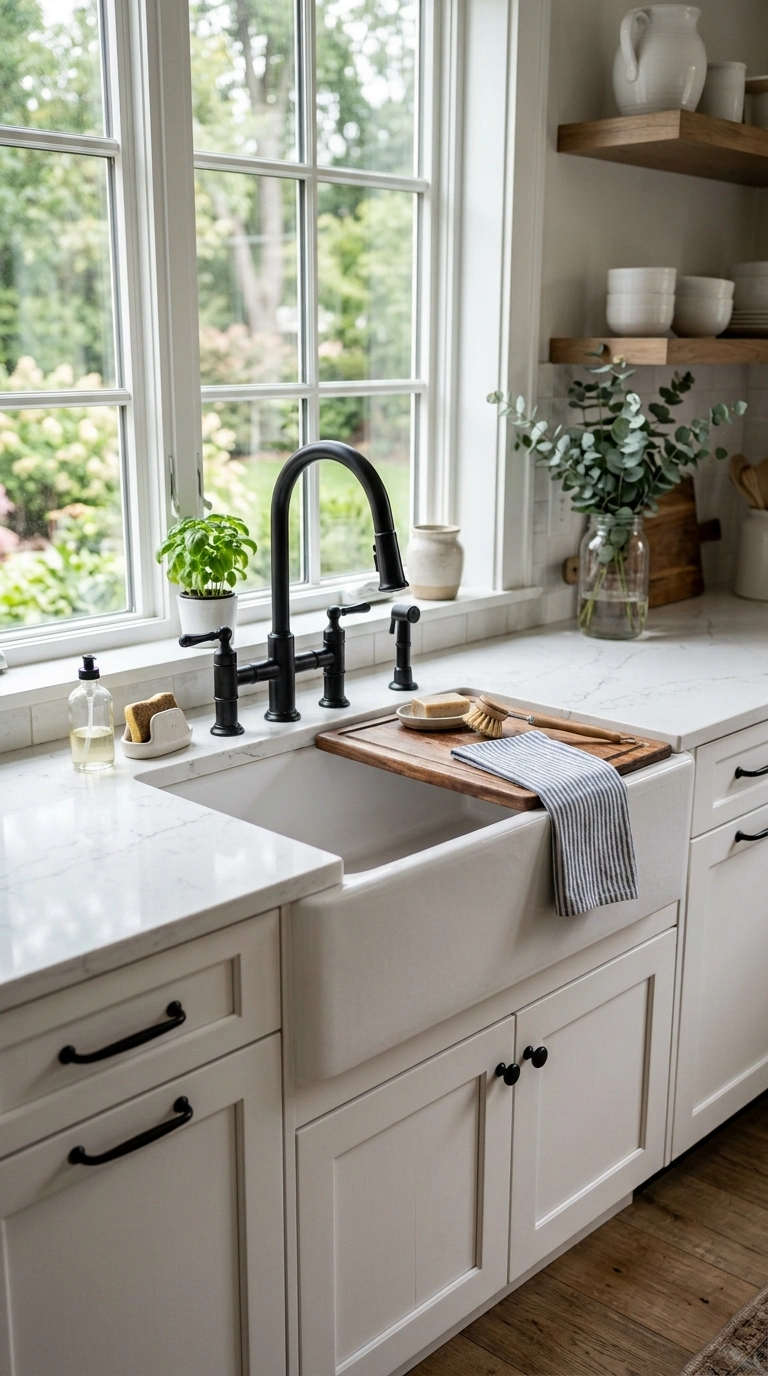
A deep apron front sink, sometimes called a farmhouse sink, sits with its front face exposed rather than tucked behind a cabinet door, and it has become the single most recognizable feature of this style. Choose a fireclay or enamel finish in white for the most classic look, though black and stainless versions work well in more modern farmhouse spaces. The exposed front usually spans thirty to thirty three inches, so measure your existing cabinet opening carefully before ordering, since retrofitting an apron sink often means adjusting the base cabinet too.
This sink style is loved because it is deep enough to fit large stock pots and baking sheets without them hanging over the edge, which matters if you cook or bake often. Pair it with a tall gooseneck faucet in matte black or brass so the hardware has enough height to clear the deep basin comfortably. A wood cutting board that fits across the top of the sink adds extra prep space and looks right at home with the farmhouse aesthetic. This single swap often becomes the visual anchor of the whole kitchen, even before any other changes are made.
2. Open Wood Shelving
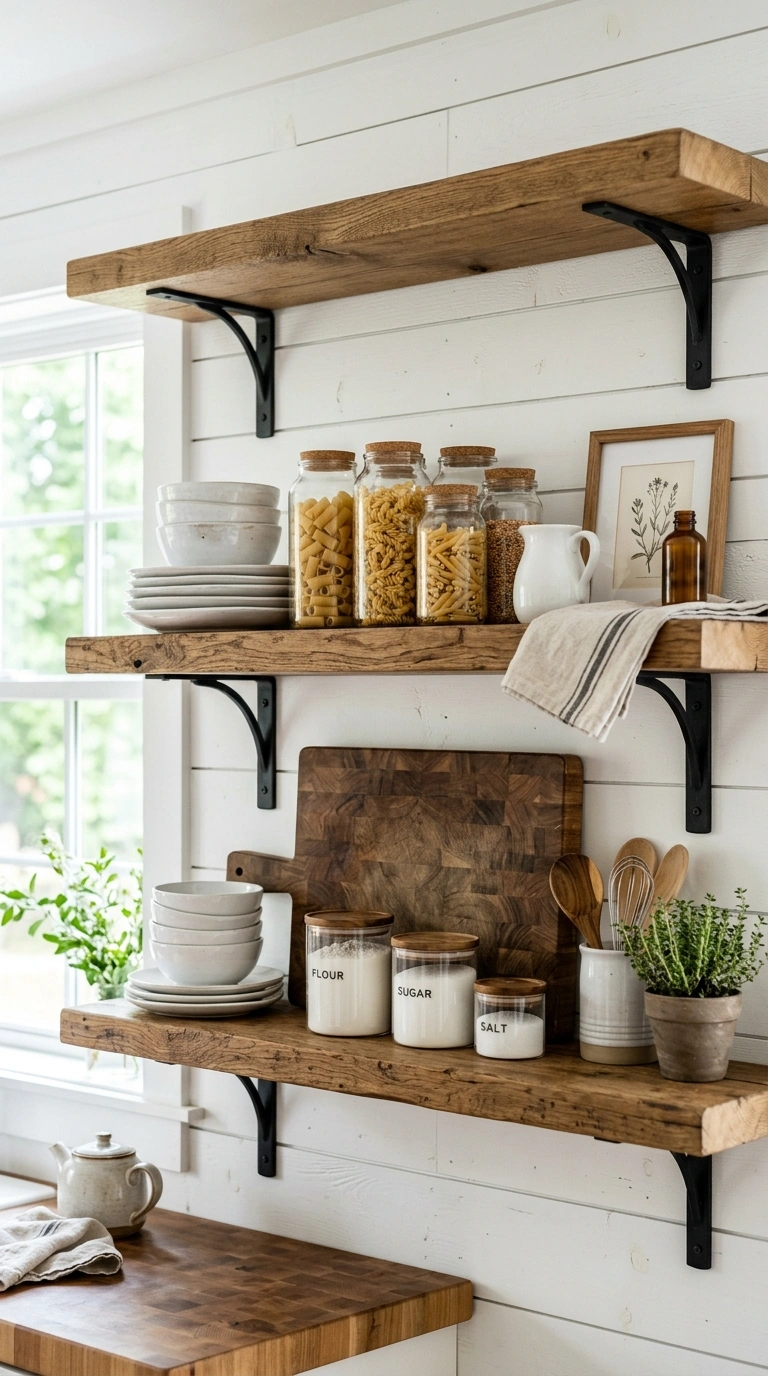
Removing a run of upper cabinets and replacing them with simple wood shelves is one of the most defining choices in a farmhouse kitchen. Choose thick, solid wood boards, at least one and a half inches deep, mounted on simple black metal brackets for a look that feels both sturdy and warm. Keep the shelves at a comfortable reaching height, usually fifteen to eighteen inches above the counter, so everyday dishes stay easy to grab.
Style the shelves with a mix of stacked white dishes, a few glass jars filled with pasta or flour, and one or two wood cutting boards leaned upright for texture. Leave a little breathing room between grouped items rather than filling every inch, since open shelving looks best when it still feels a bit airy. This is a great option if you already have dishes and glassware you love and want to actually see and use, rather than hiding them behind cabinet doors. Wipe the shelves down weekly, since open storage does collect a bit more dust than closed cabinets.
3. Shiplap Accent Wall
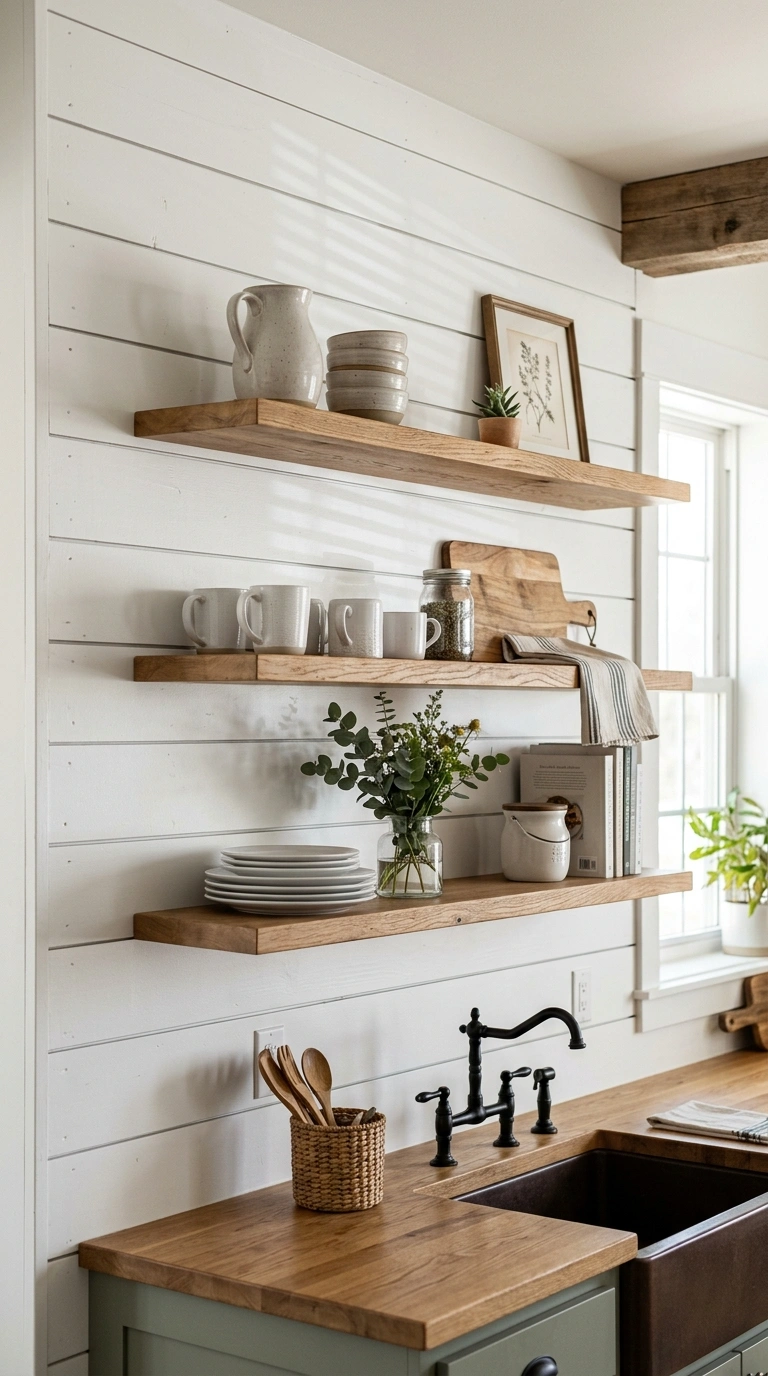
A wall of shiplap, those long horizontal wood boards with a small gap between each row, brings texture and a handmade feel to a farmhouse kitchen without changing the layout at all. Choose a matte white paint for the most classic look, though a soft sage or warm greige also works beautifully if you want a bit more color in the room. Install it behind open shelving, around a range hood, or as a full accent wall on one side of the kitchen for the biggest visual impact.
This texture catches light beautifully throughout the day, casting soft shadow lines that flat drywall simply cannot create. It also gives you a natural backdrop for hanging a few pieces, like a wood spoon collection, a small clock, or a simple wreath, without needing to patch a lot of nail holes later. Shiplap panels are sold in easy to install kits at most home improvement stores, which makes this a manageable weekend project for most homeowners. This is one of the most requested details when people describe wanting a farmhouse kitchen, and it photographs beautifully in natural light.
4. A Butcher Block Island Top
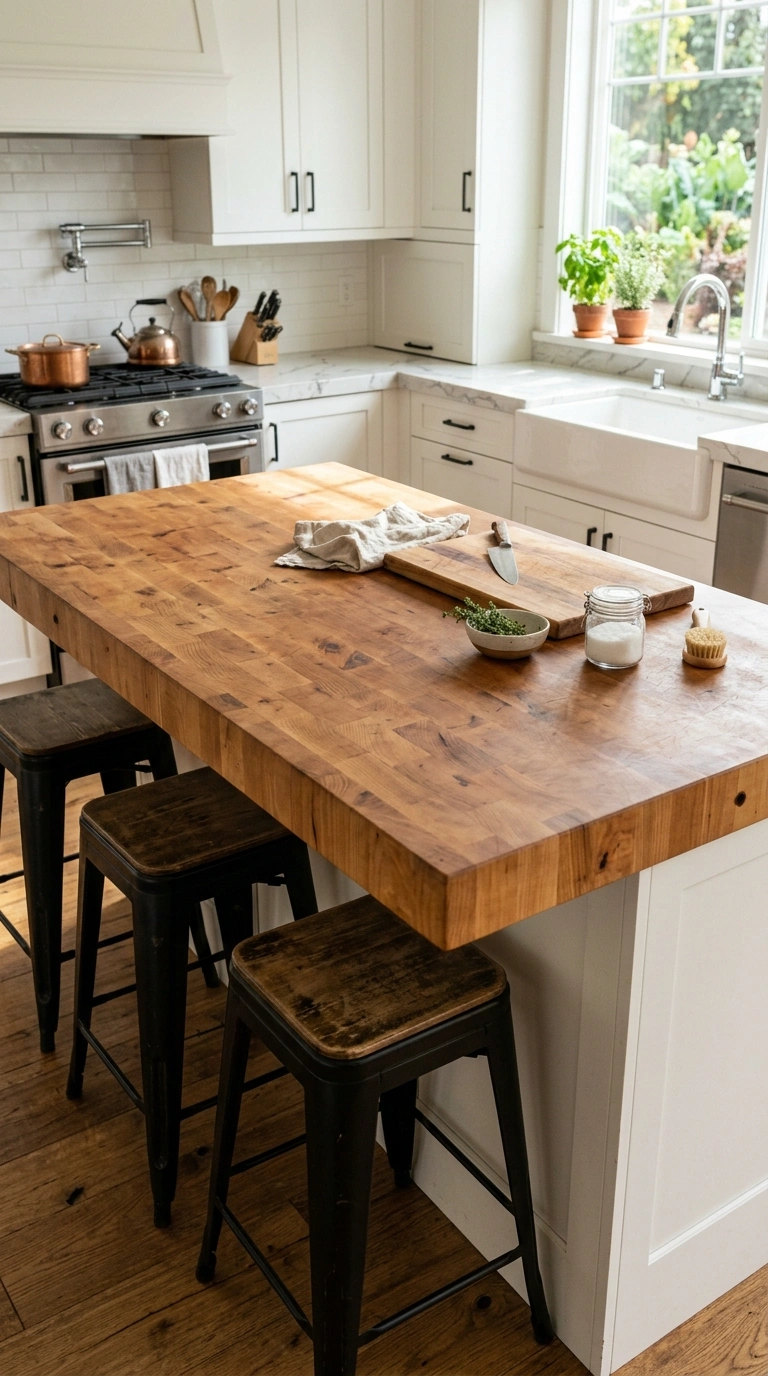
Topping your kitchen island with a thick butcher block counter, rather than stone or quartz, adds warmth and a sense of craftsmanship that farmhouse kitchens are known for. Choose a hardwood like maple or walnut in at least a one and a half inch thickness so the surface can handle years of daily use. Seal the wood with a food safe mineral oil every month or two to keep it from drying out and to protect against water damage near the sink or stove.
This countertop choice works especially well on an island since it contrasts nicely against stone or quartz counters elsewhere in the kitchen, giving the whole room a layered, collected feel rather than one flat material throughout. Use the surface directly for cutting and prep work, since butcher block is designed to take knife marks gracefully over time, developing a patina that only looks better with age. Pair it with black metal stools and simple pendant lighting overhead to keep the rest of the island understated so the wood tone can be the star. This single choice often becomes the warmest, most touched surface in the entire kitchen.
Also read: White Oak Kitchen Ideas Full of Warmth and Character
5. Black Metal Hardware
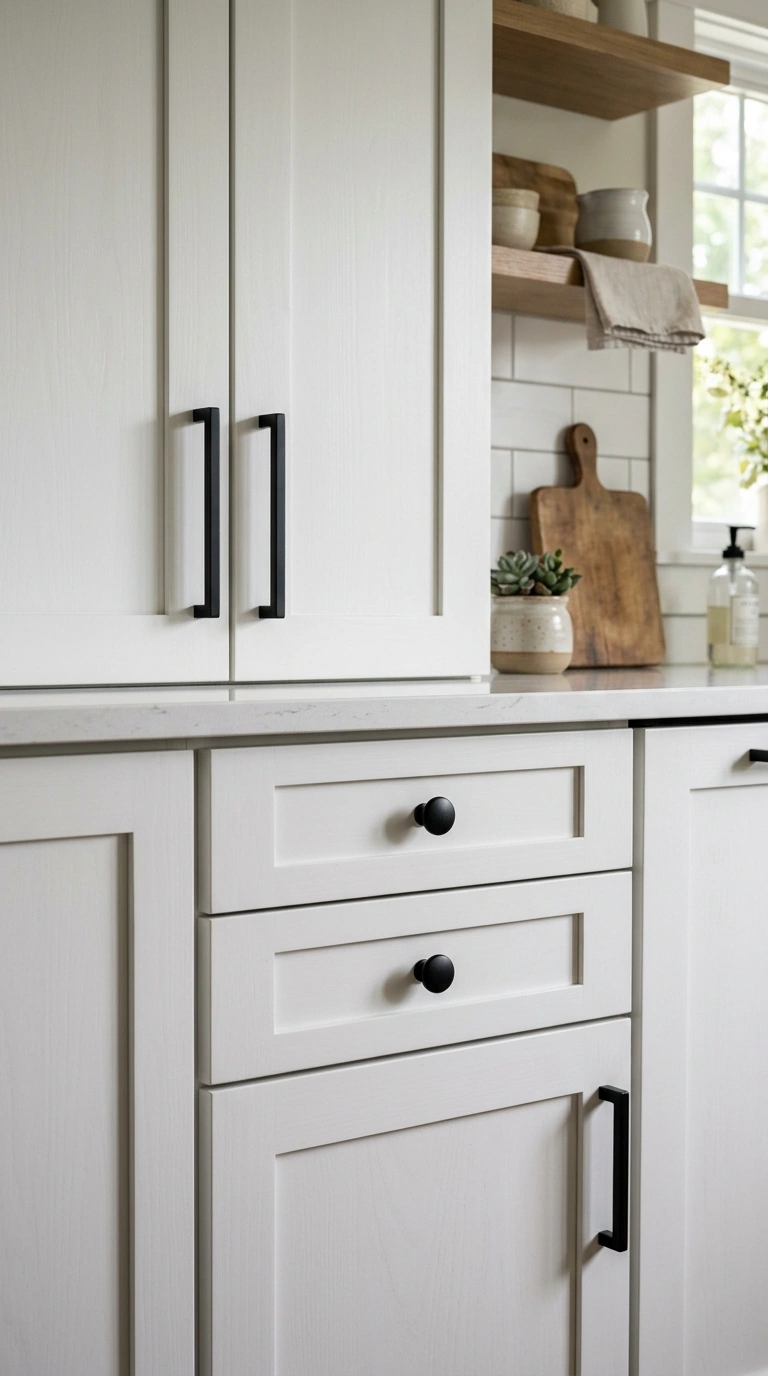
Swapping out brushed nickel or brass cabinet pulls for simple matte black bar pulls and knobs is one of the fastest, most affordable ways to shift a kitchen toward farmhouse style. Choose a simple bar pull for drawers and a round or bin style knob for cabinet doors, keeping the shapes basic rather than ornate. Matte black works with almost any cabinet color, from crisp white to soft sage green to natural wood tones, which makes it one of the most flexible choices on this list.
This update usually takes a single weekend, since it only requires a screwdriver and, in some cases, a template to drill new holes if your old hardware spacing does not match. Extend the same black finish to your faucet, cabinet hinges, and even light fixtures so the whole kitchen feels cohesive rather than having several competing metal tones. This is one of the lowest cost projects on this entire list, often under one hundred dollars for a full kitchen, yet it makes a dramatic difference in how finished the space feels. Many home stylists consider hardware the jewelry of a kitchen, and black metal is the classic farmhouse choice.
6. A Vintage Style Range
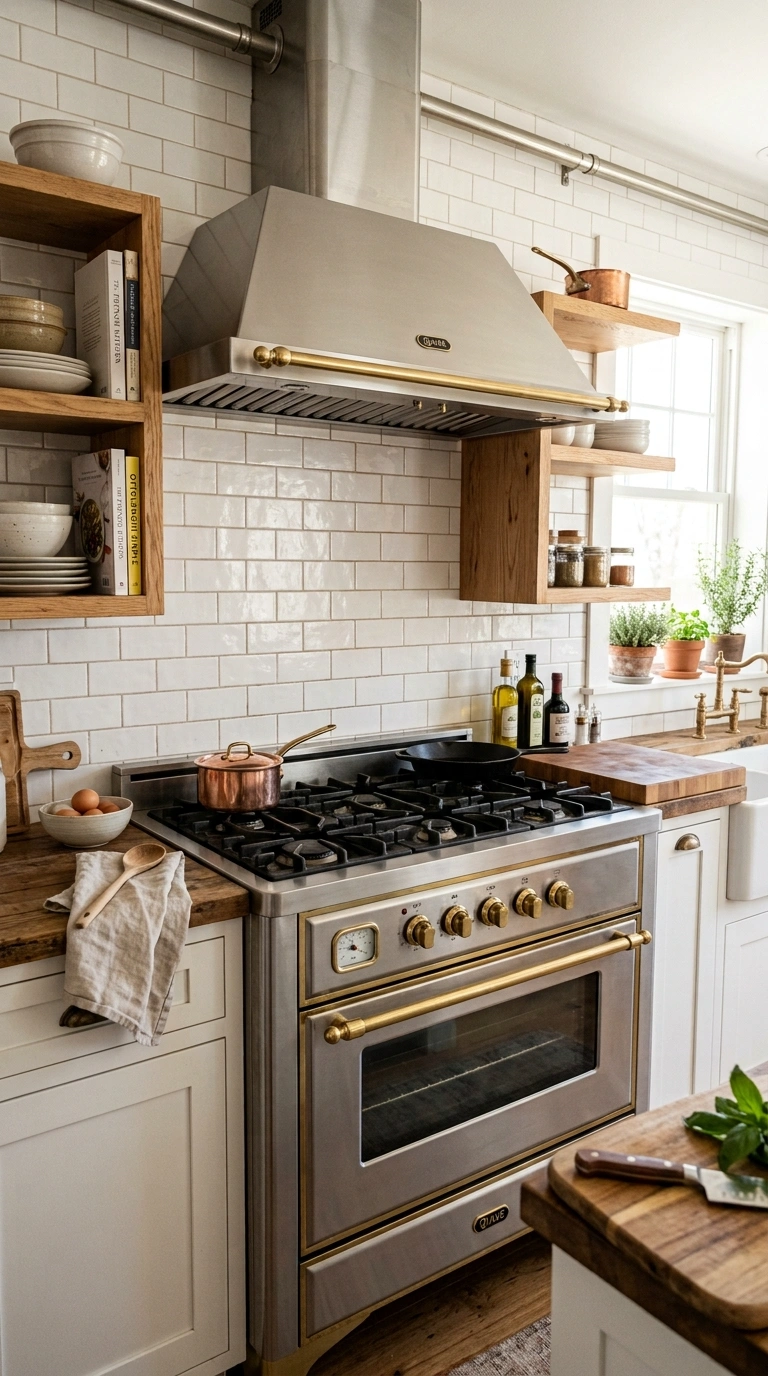
A large range with a stainless steel finish, brass accents, and a classic knob layout brings a sense of old world craftsmanship to the center of a farmhouse kitchen. Choose a range with at least five or six burners if you cook often, since farmhouse kitchens are traditionally built around the idea of cooking big meals for a full table. Look for a model with a simple, clean control panel rather than a busy digital display, since this keeps the vintage character intact.
Position the range as the visual centerpiece of the kitchen, flanked by open shelving or a small amount of counter space on either side for setting down hot pans. A range hood in matching stainless steel or a custom wood surround above it completes the look and adds real function by clearing steam and smoke while cooking. This is a bigger investment than most items on this list, but it tends to be the piece that guests comment on first when they walk into a farmhouse kitchen. Keep the surrounding counters clear so the range itself has room to be the star of that wall.
7. Glass Front Cabinets
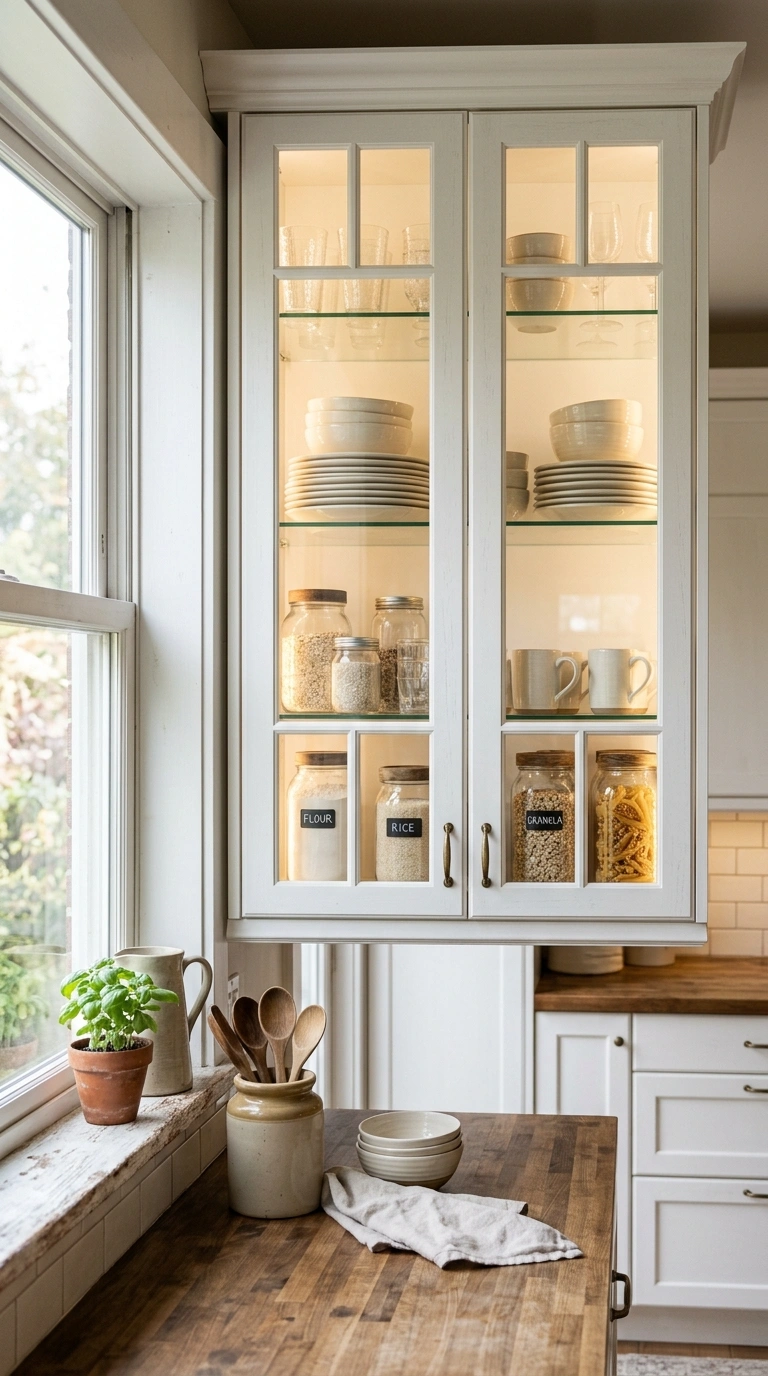
Swapping a few solid cabinet doors for glass front versions lets you display your favorite dishware while still keeping most of your storage behind closed doors. Choose simple, clear glass panes set in a plain wood frame rather than anything with heavy pattern or texture, since farmhouse style favors simplicity. Place these near your open shelving or above your sink so the display feels connected to the rest of your styled areas rather than randomly placed.
Style the inside with white or cream dishware stacked neatly, along with a few glass jars or a small collection of vintage tea cups for interest. Add a small interior light strip if your cabinets are on the darker side of the kitchen, since this makes the display glow softly in the evening and adds a warm, welcoming feel. This is a great middle ground option if full open shelving feels like too much exposure, since it gives you the pretty display effect while still keeping dust mostly out. Glass front cabinets pair beautifully with black metal hardware and a white or cream cabinet color for the most classic farmhouse combination.
8. A Farmhouse Style Dining Table
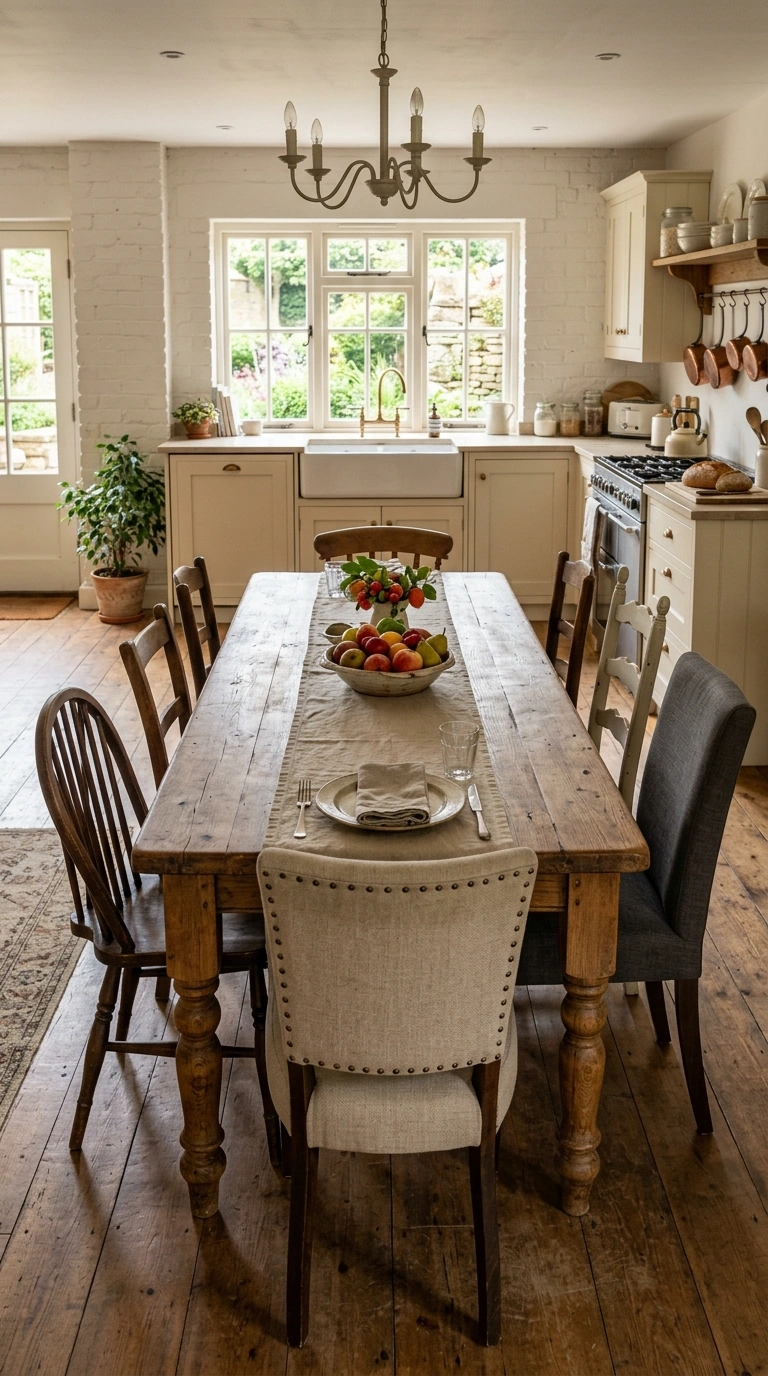
Placing a long wood table with turned or trestle style legs near the kitchen, rather than in a separate formal dining room, keeps the farmhouse feel consistent throughout the whole space. Choose a table with a distressed or lightly worn wood finish, since a bit of imperfection actually fits the farmhouse aesthetic better than a flawless, glossy surface. Pair it with a mismatched set of chairs, some wood and some upholstered, for a collected over time look rather than a matched dining set.
This table works especially well if your kitchen has an open layout, since it becomes a natural extension of the cooking and prep space rather than a separate formal room. A simple runner down the center, topped with a low bowl of seasonal fruit or a few candles, keeps the table styled for everyday use while still looking pulled together for guests. Bench seating on one side is a popular farmhouse choice too, since it fits more people at the table and has a relaxed, casual feel. This is the kind of table meant for spilled flour and homework at the same time, not one you have to protect from daily life.
9. A Wood Beam Ceiling Detail
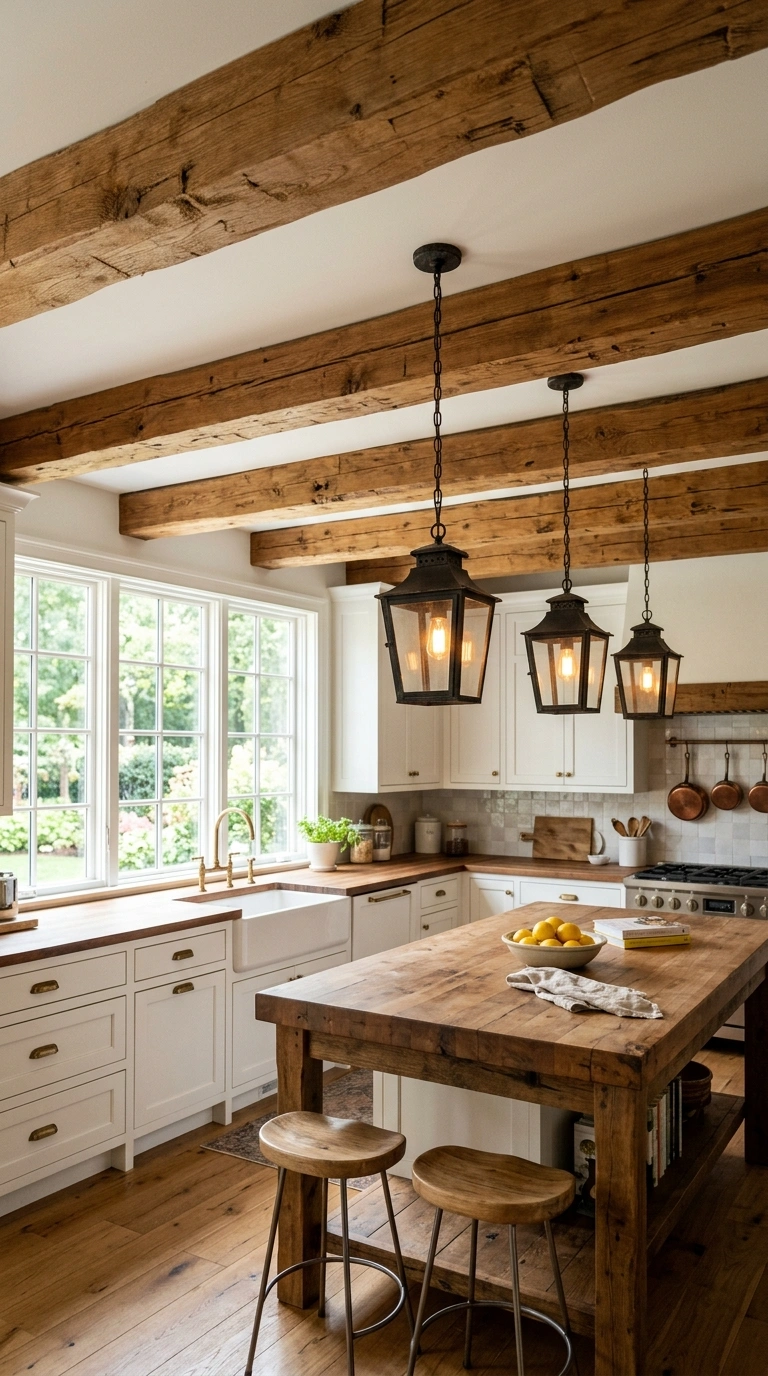
Adding exposed wood beams across the ceiling of a farmhouse kitchen brings architectural interest and a sense of age, even in a newer build. Choose faux wood beams if a full structural install is not possible, since many modern versions are lightweight and look nearly identical to solid reclaimed wood once installed and stained. Space the beams evenly across the ceiling, usually two to three feet apart, running perpendicular to the length of the room for the most balanced look.
Stain the beams a warm brown or weathered gray tone that complements your cabinets and flooring, since this detail should feel connected to the rest of the wood tones already in the room. This addition works especially well in kitchens with higher ceilings, since the beams help bring the scale of the room down to a more human, cozy level. Pair the beams with simple pendant or lantern style lighting hung between them for a layered lighting effect. This is a bigger project than most on this list, but it delivers one of the most dramatic transformations for anyone building or fully renovating a farmhouse kitchen.
10. Open Crate or Basket Storage
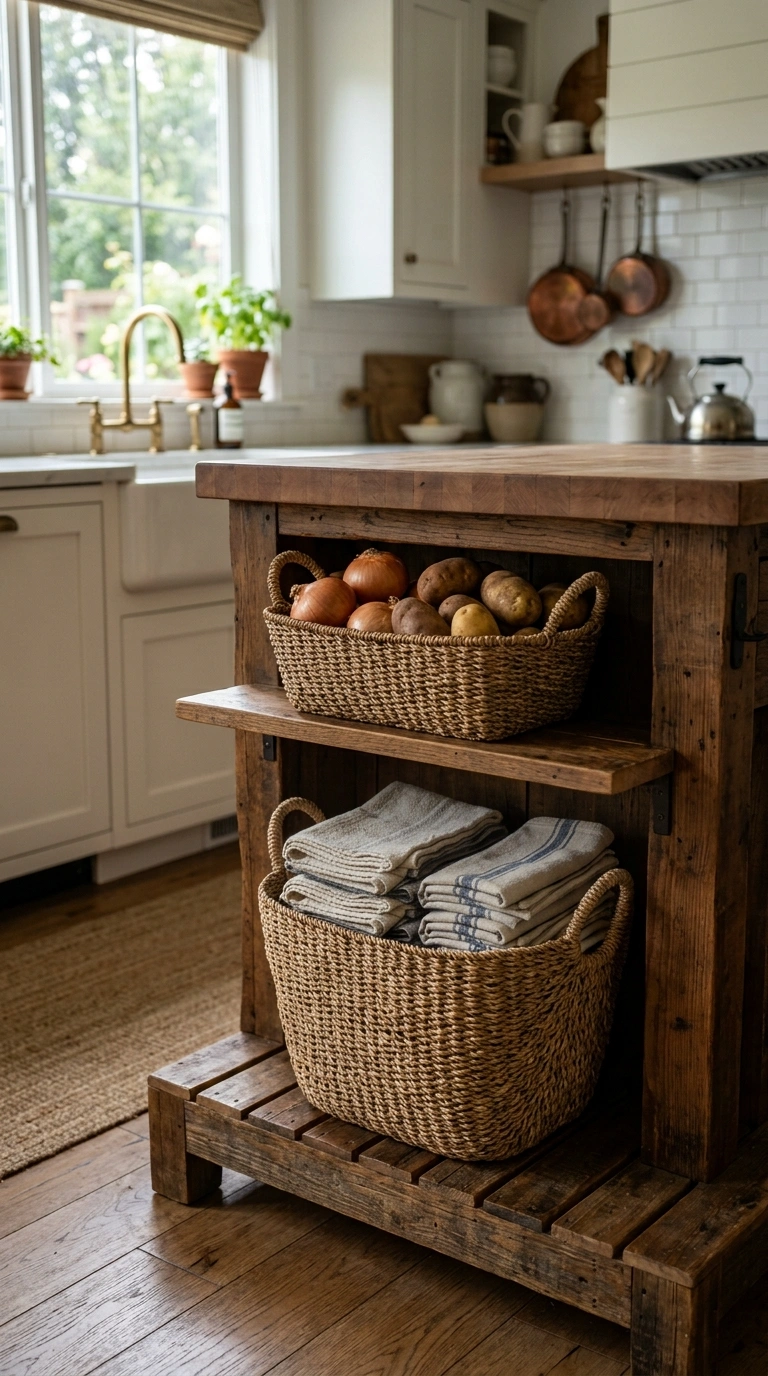
Woven baskets or wooden crates tucked onto open shelves or beneath a kitchen island give you flexible storage for produce, linens, or extra dishware while adding natural texture to the space. Choose baskets in a natural, undyed material like seagrass or rattan, since the neutral tone works with almost any farmhouse color palette. Use different basket sizes for different purposes, a shallow one for onions and potatoes, a deeper one for stashing extra dish towels.
This storage method solves a real problem in farmhouse kitchens, since open shelving alone can start to look cluttered once you add in less attractive items like extra rolls of paper towels or cleaning supplies. Tucking those items into baskets keeps the open shelving looking curated while still giving you practical storage. Label a few of the baskets with a simple wood tag or painted stencil if you want an extra farmhouse touch, since handwritten labels feel personal and homemade. This is one of the most budget friendly ideas on the list, since baskets can often be found secondhand or at low cost from most home stores.
Also read: 19 Cottagecore Kitchen Ideas Full of Cozy Vintage Charm
11. A Farmhouse Style Range Hood
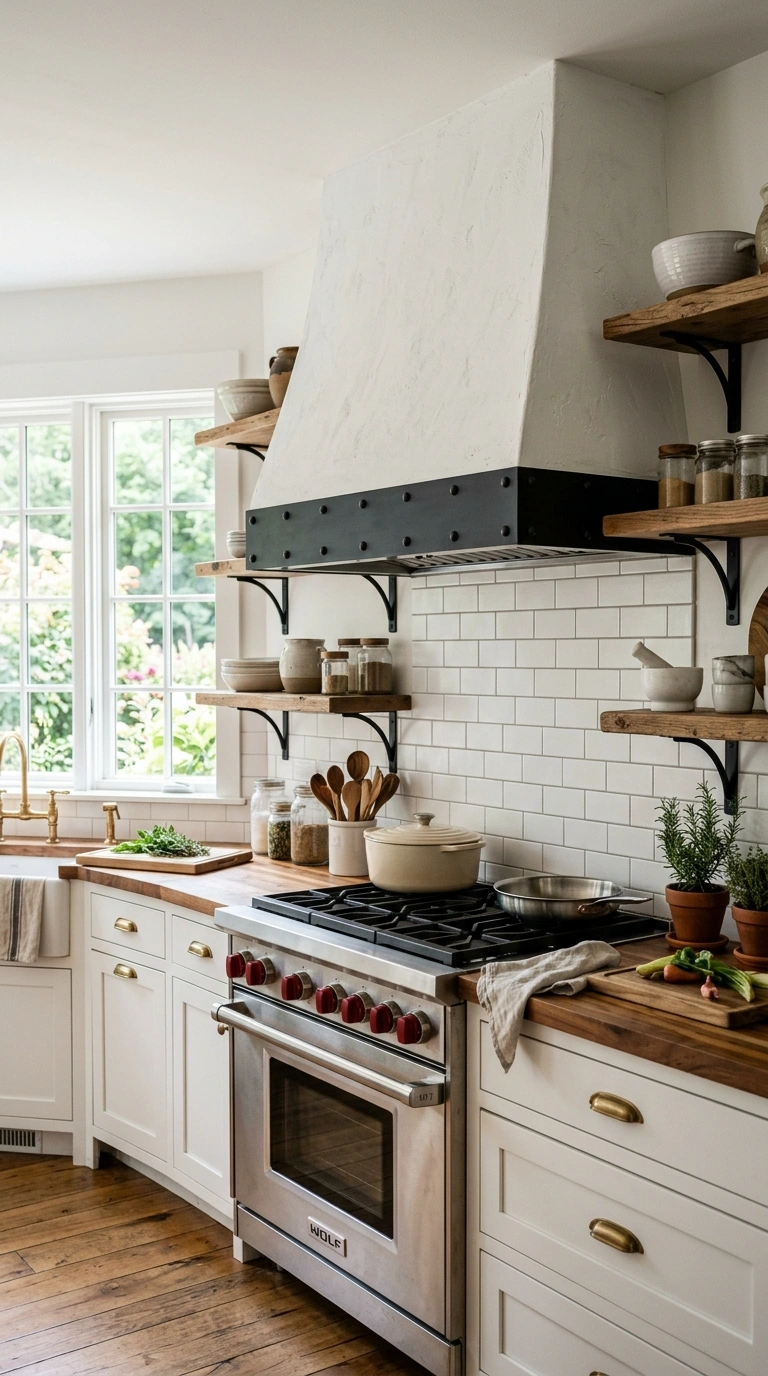
A custom range hood built from wood paneling or plaster, rather than a plain stainless steel box, becomes a real architectural feature above your stove. Choose a simple, boxy shape with clean lines, then finish it in the same white paint as your cabinets or a contrasting stained wood tone for extra warmth. Add a small strip of black metal trim along the bottom edge for a subtle detail that ties it to your other hardware finishes.
This feature works as a natural focal point in the kitchen, drawing the eye upward and giving the stove wall a finished, custom feel rather than a builder grade look. Pair it with open shelving or a small tile detail on either side to fill out the wall without competing for attention. A shaped or corbelled bottom edge on the hood is a popular farmhouse detail that adds a bit of old world charm without much extra cost. This is a project best done alongside a range replacement, since matching the hood size and shape to your specific stove gives the cleanest, most intentional result.
12. A Farmhouse Sink Window
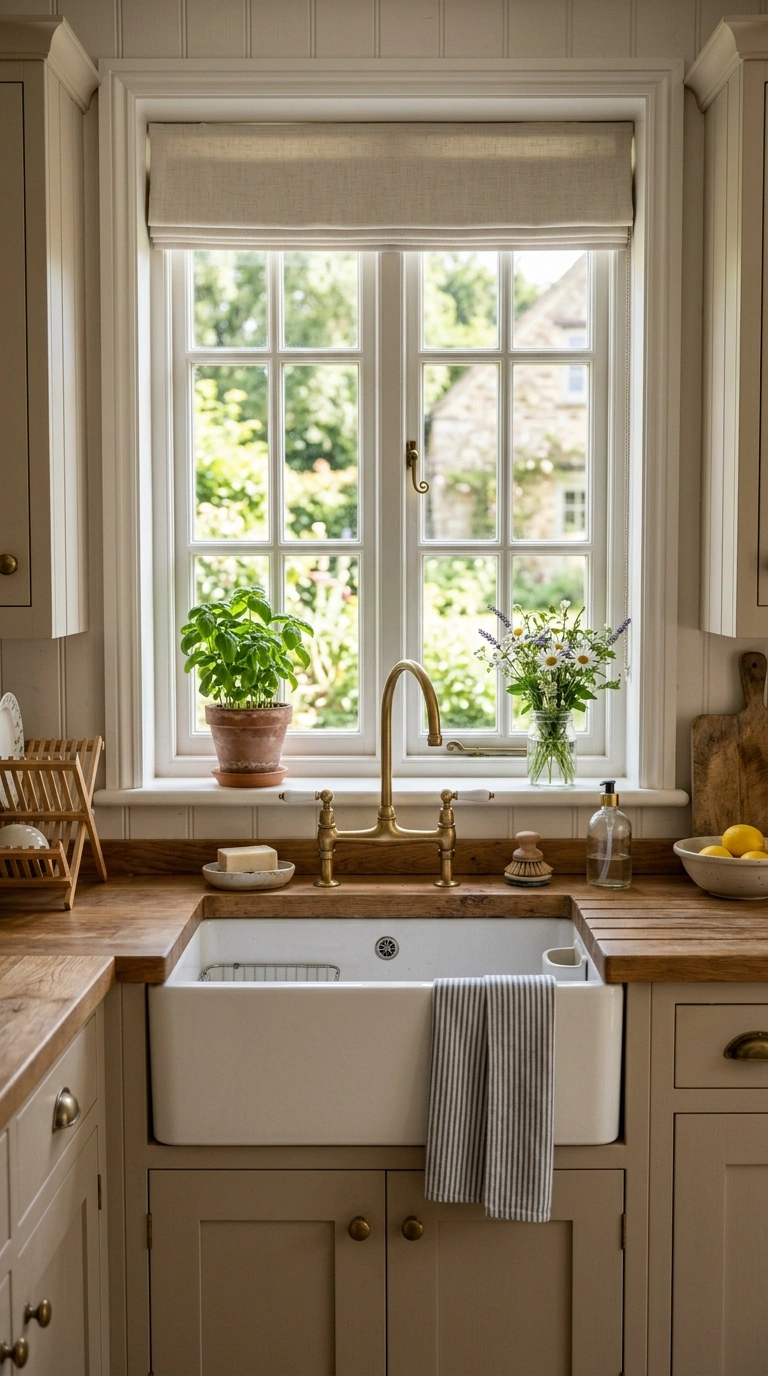
Positioning your kitchen sink directly beneath a window, ideally one with a view of a yard or garden, is a small layout choice that makes a big difference in how a farmhouse kitchen feels day to day. Choose a simple white framed window without heavy curtains, since farmhouse style favors natural light and an unobstructed view over heavy window treatments. A small shelf or ledge along the windowsill gives you a spot for a few potted herbs or a small vase.
This layout choice turns the least favorite kitchen chore, washing dishes, into a much more pleasant few minutes with a view to look at instead of a blank wall. If you are renovating or building, this is worth prioritizing early in the planning process, since plumbing and window placement need to be coordinated together. For those not doing a full renovation, even swapping in a lighter curtain or removing a heavy blind can bring more of this feeling into an existing layout. This detail is subtle, but it is one that people who grew up in farmhouse kitchens often remember most fondly.
13. Two Tone Cabinet Colors
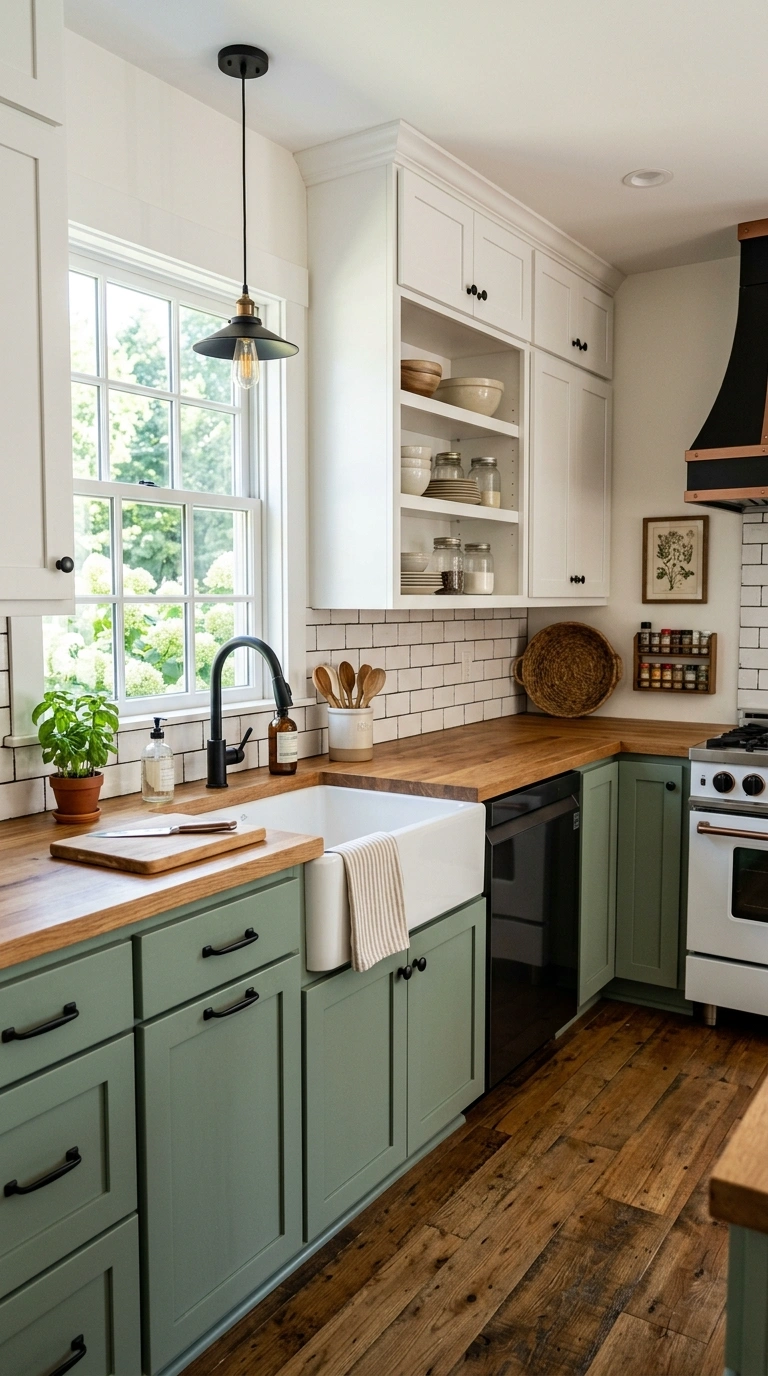
Painting your lower cabinets a soft color, like sage green, navy, or warm gray, while keeping your upper cabinets or open shelving a classic white, adds depth and interest to a farmhouse kitchen without overwhelming the space. Choose a color with a bit of warmth or gray undertone rather than anything too bright or saturated, since farmhouse palettes tend to stay soft and muted. Keep the same white or cream tone on your ceiling and trim so the two cabinet colors have a clean, consistent frame around them.
This approach works especially well if you want some color in your kitchen but are hesitant to commit to a fully colored cabinet scheme. The lower cabinets take the visual weight of the color since they are used and touched more often, while the lighter uppers keep the room feeling bright and spacious. Pair the two tone cabinets with a neutral stone or butcher block counter so the color has a calm surface to sit against rather than competing with a busy countertop pattern. This is a popular update for anyone repainting existing cabinets rather than replacing them entirely, since it only requires painting half the kitchen.
Also read: 18 Moody Blue Kitchen Ideas for a Bold, Dramatic Refresh
14. A Wall of Vintage Plates
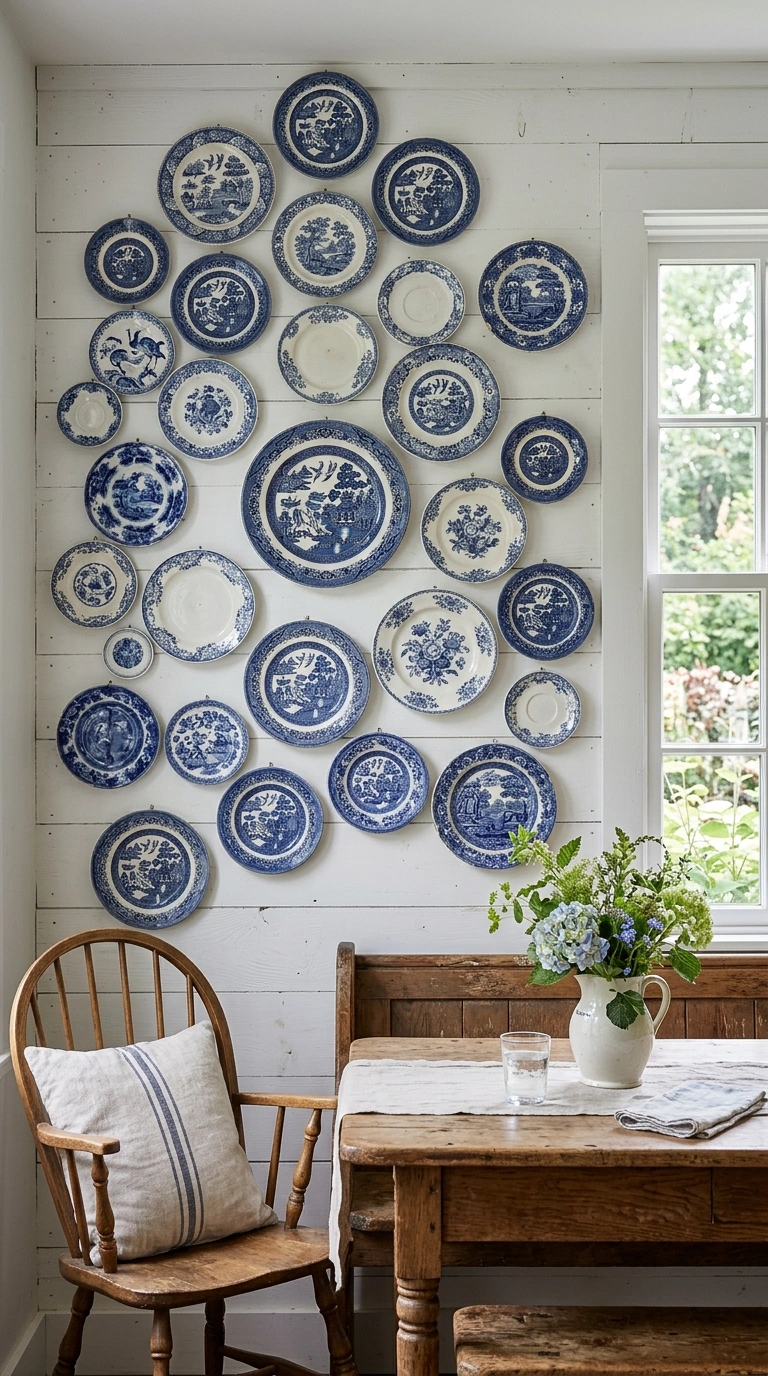
Hanging a collection of vintage or antique plates on a section of open wall near the kitchen table or dining area adds color and personality that feels collected over years rather than bought all at once. Choose plates in a mix of sizes and patterns, but keep them within a similar color family, like blues and whites or soft florals, so the wall reads as intentional rather than random. Use simple wire plate hangers on the back of each plate so they sit flush against the wall.
This detail is especially fitting in farmhouse kitchens because it feels like something passed down through a family rather than a single trip to a store. Start with a small grouping of five or six plates and add to it slowly over time, since farmhouse style has always celebrated collections built gradually rather than purchased all at once. Arrange the plates in a loose, organic pattern rather than a strict grid for the most natural, farmhouse feel. This wall becomes a real conversation piece and a warm final touch in a kitchen already built around comfort and history.
Frequently Asked Questions
What makes a kitchen feel like a true farmhouse style?
A farmhouse kitchen usually combines natural materials like wood and stone, simple white or soft colored cabinets, black or brass hardware, and a few vintage or collected pieces rather than everything matching perfectly.
Is a farmhouse kitchen expensive to create?
Not necessarily. Small changes like hardware, a runner, open baskets, or paint color can bring in the farmhouse look without a full renovation, while bigger investments like an apron sink or range are optional additions over time.
Do farmhouse kitchens need an apron front sink?
An apron sink is one of the most recognizable features of the style, but it is not required. A classic white or stainless sink with the right faucet and hardware can still feel farmhouse without a full sink replacement.
What colors work best in a farmhouse kitchen?
Soft, muted tones like white, cream, sage green, navy, and warm gray are the most common choices, often paired with black or brass metal accents for contrast.
Can a farmhouse kitchen work in a modern home?
Yes, many homes blend farmhouse details, like open shelving or a butcher block island, with more modern lines and finishes elsewhere, creating a style often called modern farmhouse.