
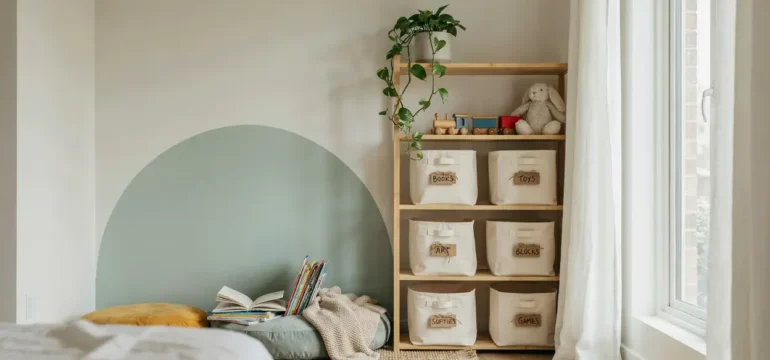
If you have ever stepped on a stray block in the middle of the night, you already understand why storage in a kid’s room matters more than decorating. Cute does not mean much if the floor is covered in toys by dinner time. I have talked to a lot of parents over the years, and the ones with tidy kid rooms are usually not the ones who nag the most about cleaning up. They are the ones who set up storage kids can actually reach and understand on their own. That is the idea behind this whole list. Every one of these seventeen storage ideas follows one simple rule: if a kid cannot put something away in about ten seconds, it will end up on the floor instead. These are real setups pulled from real family homes, not perfectly staged nurseries, so you can copy them even with a busy, lived in household.
1. Labeled Bin System
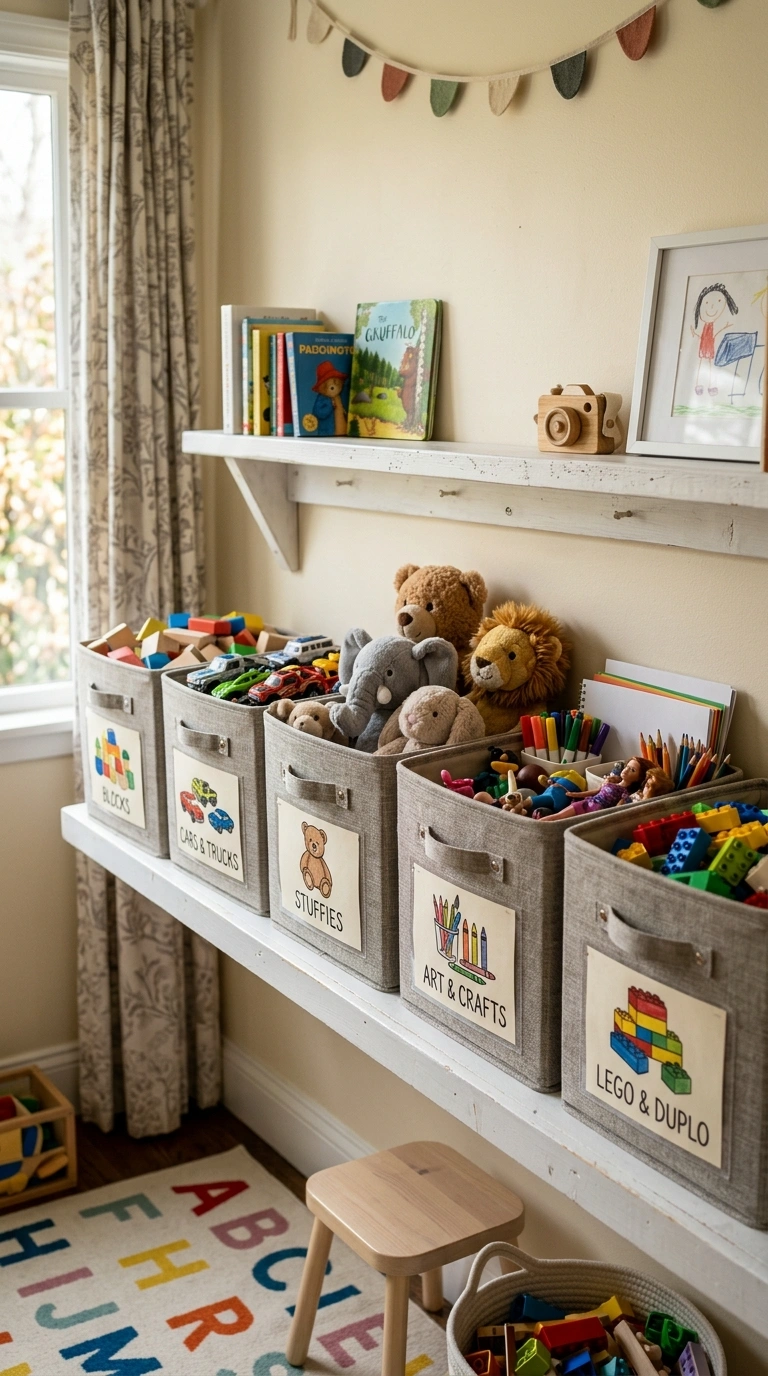
A row of matching bins with a picture or word label on the front turns cleanup into something a young child can actually manage alone. Use fabric or plastic bins that are open on top, since kids are far more likely to toss something into an open bin than to remember to put a lid back on. Group similar toys together, one bin for blocks, one for stuffed animals, one for cars, and keep each bin small enough that it does not become a dumping ground for everything.
Place these bins on a low shelf that your child can reach without help, since storage that requires an adult to lift something down rarely gets used consistently. For kids who cannot read yet, a simple picture cut from a magazine or a printed photo of the toy works just as well as a written word. Involve your child in choosing which bin holds what, since they are more likely to remember and follow a system they helped create themselves.
2. Under Bed Drawers
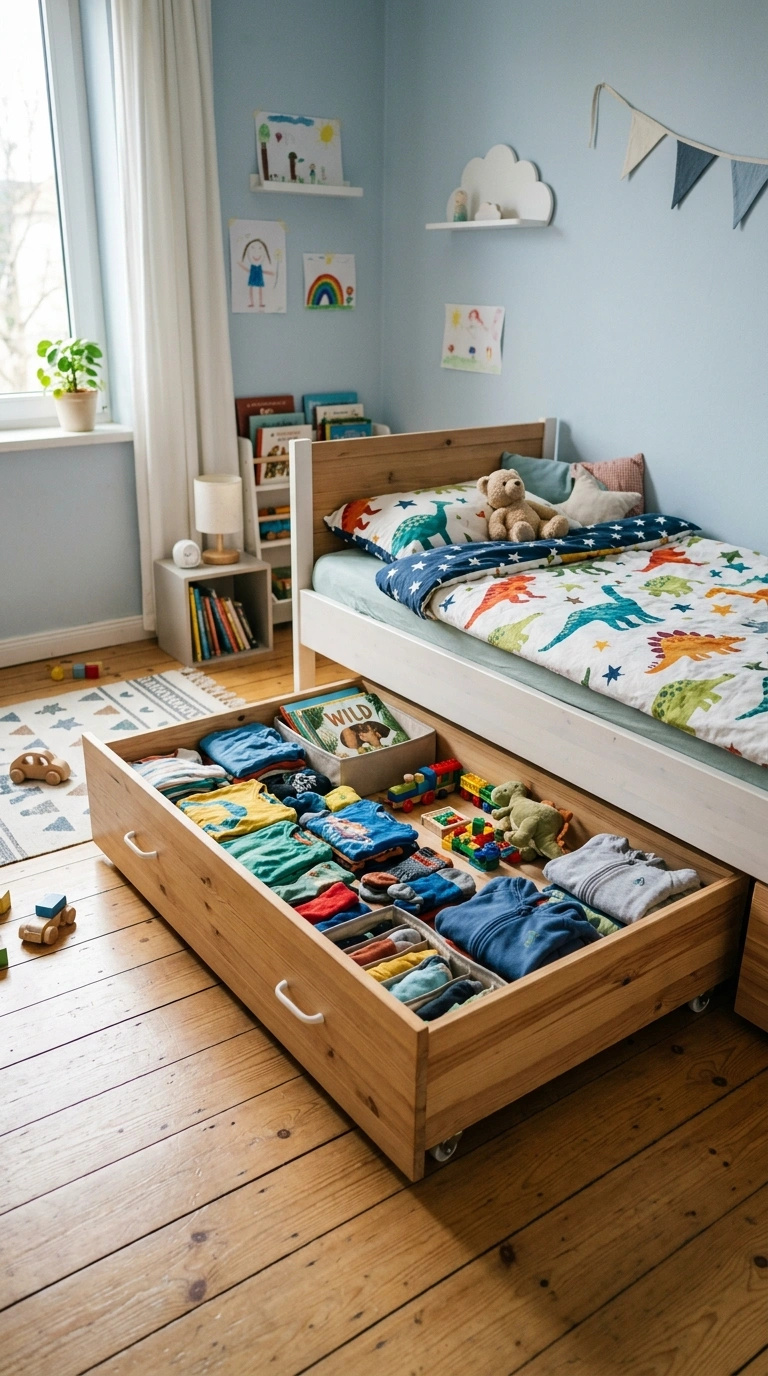
The space under a bed is often the most wasted storage area in a kid’s room, and rolling drawers or bins on wheels make that space genuinely usable. Choose flat, wide drawers designed specifically to slide under a bed frame, and use them for items that do not need daily access, like off season clothes, extra bedding, or larger toys that only come out occasionally. Clear plastic drawers let you see what is inside without opening each one.
For younger kids, keep one under bed drawer for items they use often, like puzzles or art supplies, and make sure the drawer has a handle or rope pull so they can slide it out themselves without adult help. Label the front of each drawer the same way you would a bin on a shelf. This setup works particularly well in smaller bedrooms where floor space for extra furniture is limited.
3. Open Cube Shelving
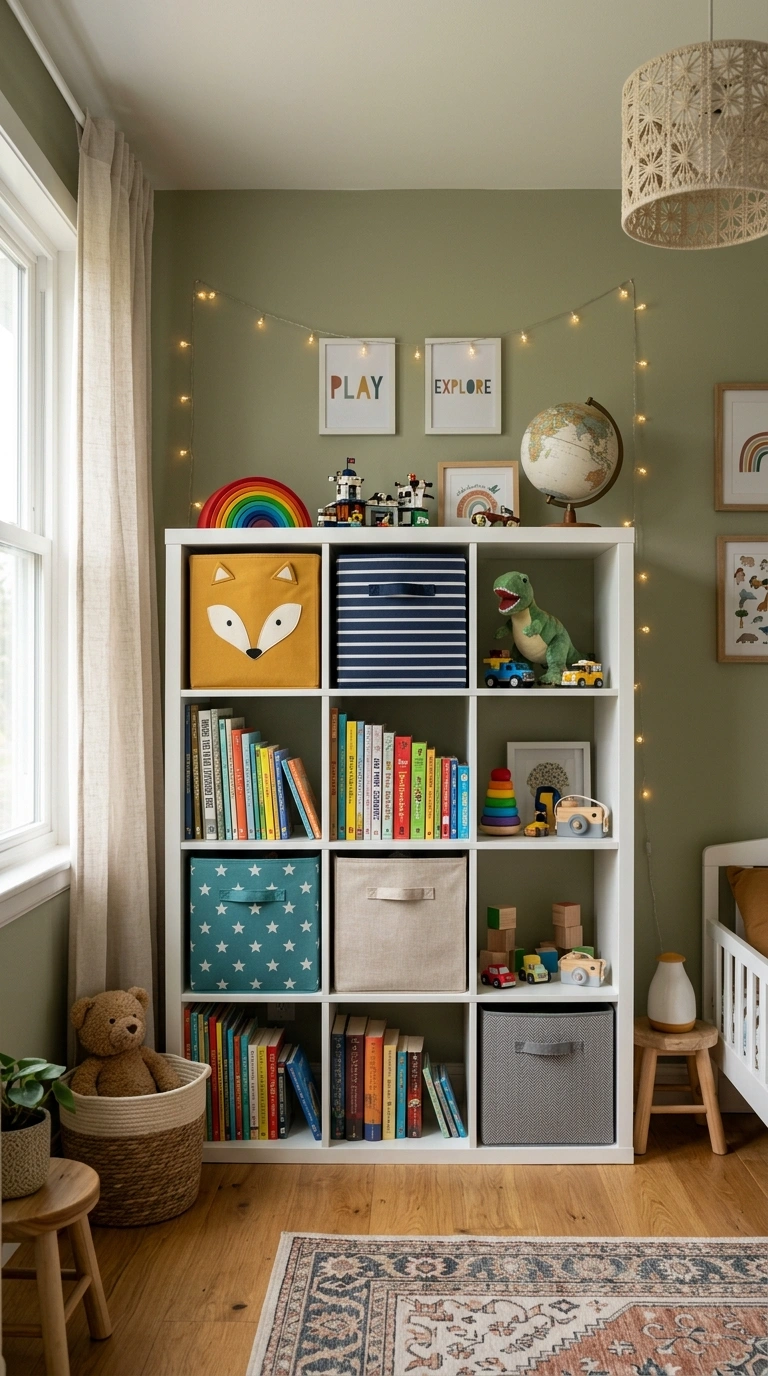
A cube style shelving unit gives you flexible storage that grows with your child, since the same unit can hold baby items now and books or games later. Choose a unit with sturdy square openings sized to fit standard fabric storage cubes, and mix a few open cubes with a few filled by cube bins for variety. Anchor the shelf to the wall with the included hardware, since this type of furniture can tip if a child climbs on it.
Keep the bottom two rows for toys your child uses daily and reserve the top rows for items that need adult supervision, like puzzles with small pieces or supplies for a younger sibling. This kind of shelving also works well as a light room divider in a shared bedroom, since it provides storage on both sides while still allowing some sound and light to pass through the open squares.
4. Wall Mounted Bookshelf
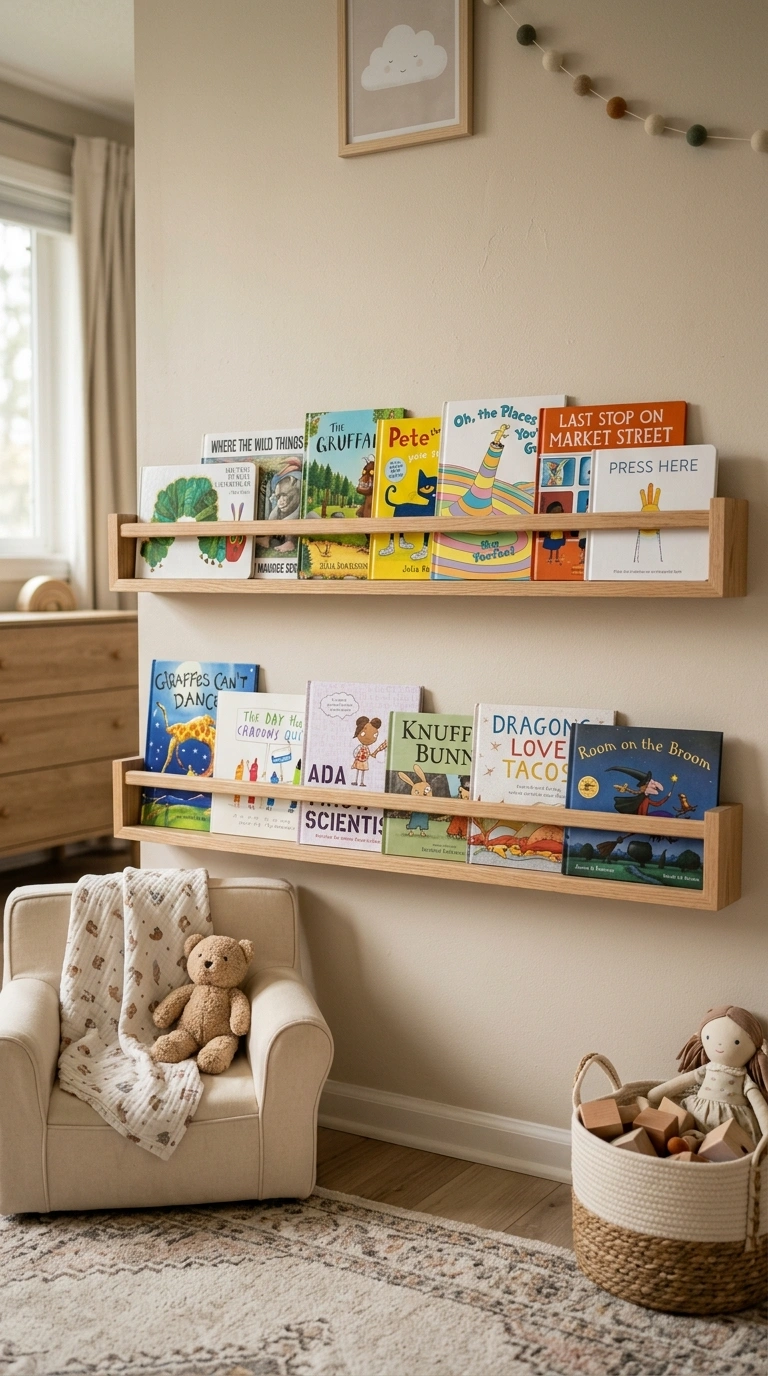
A wall mounted shelf with a small lip along the bottom edge displays books with their covers facing out, which makes it much easier for young kids to choose a book on their own. Install these shelves at two different heights, a lower row within easy reach for younger children and a slightly higher row for books that need more supervision or are read together at bedtime. Wood or painted MDF shelves both work well and can be found in most home stores.
Rotate the books on display every few weeks so the same five titles are not always sitting out, which keeps kids interested in reading a wider variety over time. Keep the shelf from becoming overcrowded, since a shelf packed edge to edge makes it hard to pull one book out without knocking others down. A single row of eight to ten books per shelf is usually the right amount.
5. Rolling Toy Cart
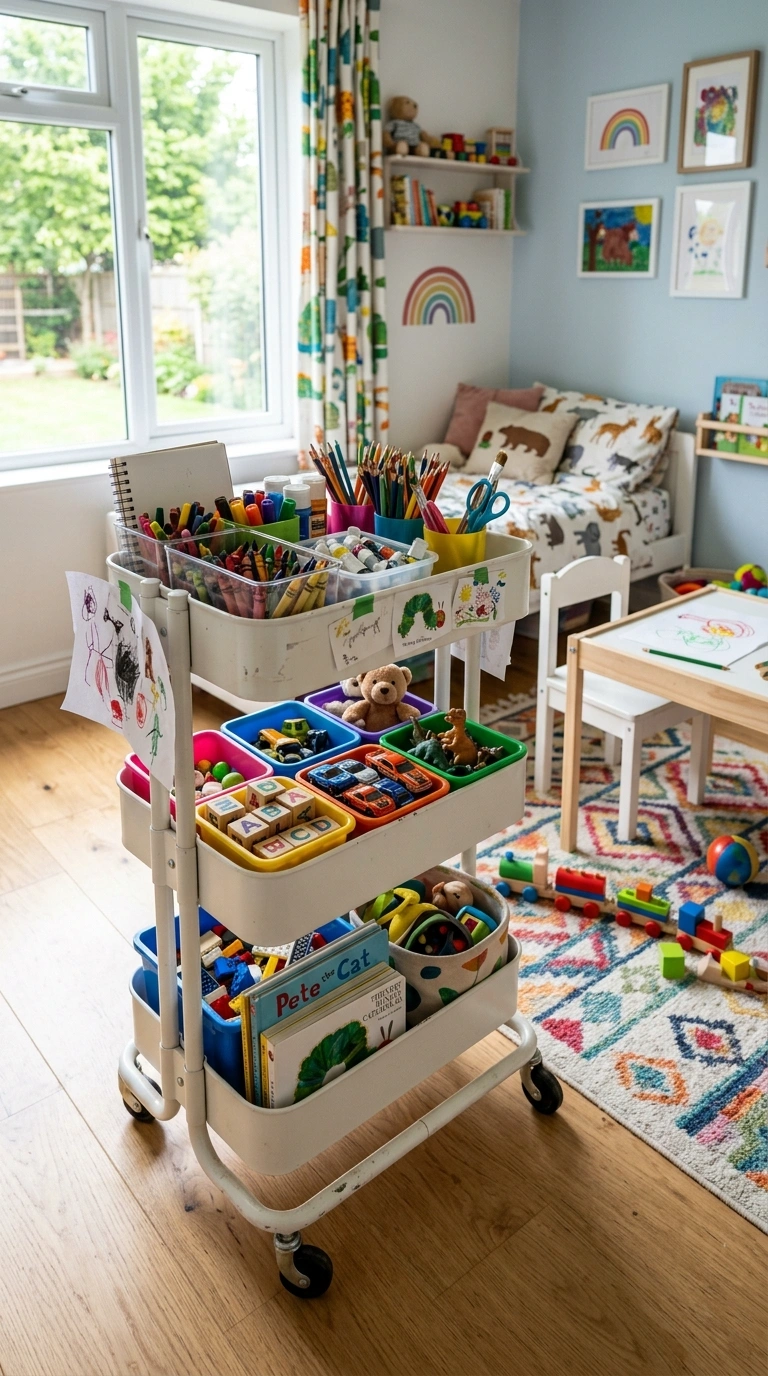
A multi tier rolling cart gives you portable storage that can move from the bedroom to the living room and back without much effort. Choose a cart with two or three tiers of open bins or trays, and use it for toys that get used in short bursts throughout the day, like art supplies, building blocks, or a current favorite toy set. The wheels make it easy for even a young child to pull the cart to wherever they are playing.
At the end of the day, rolling the cart back into the bedroom or a closet takes just a few seconds and keeps the main living areas from becoming permanently cluttered with toys. This works especially well for families without a dedicated playroom, since the cart essentially creates a portable play station. Keep heavier items on the bottom tier so the cart does not tip when it is being pulled across the room.
6. Closet Shelf Dividers
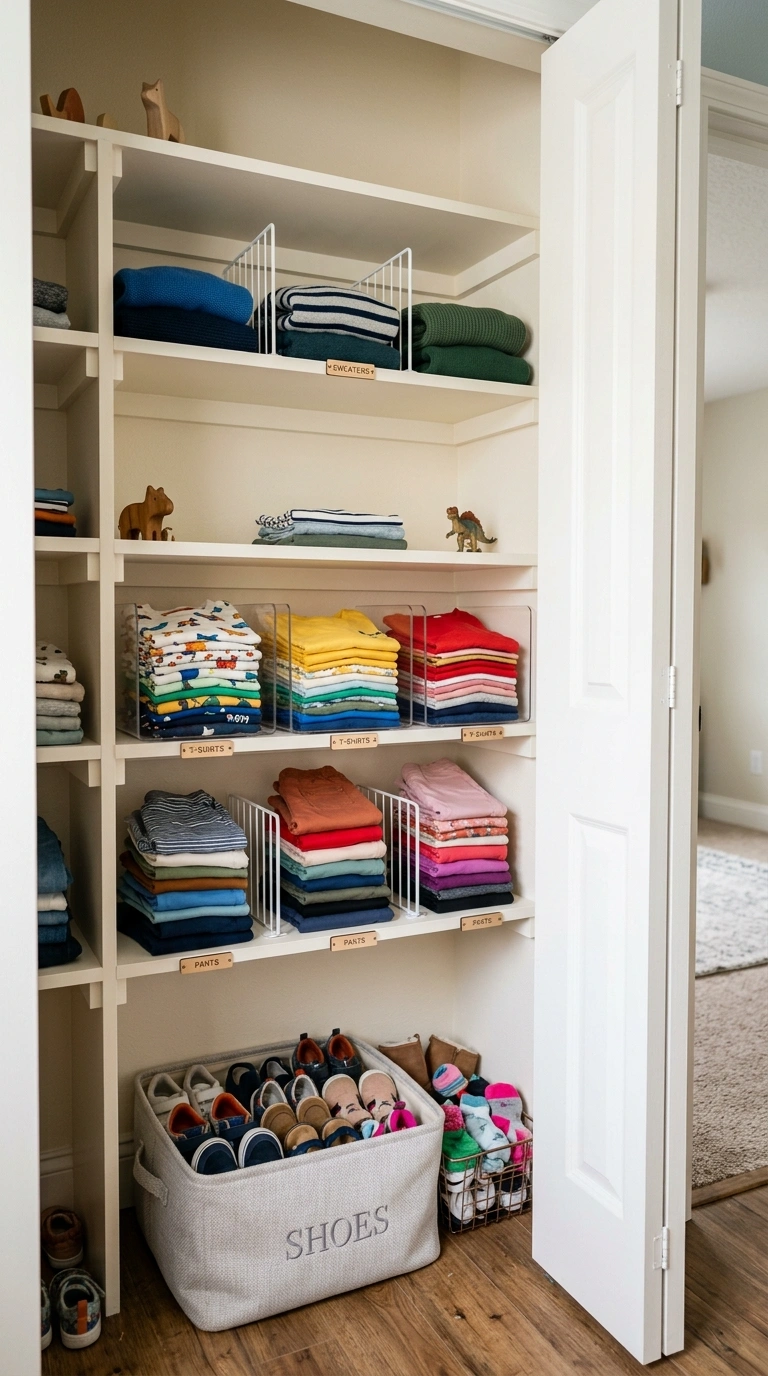
Adding shelf dividers inside a closet turns one wide, unorganized shelf into several smaller, defined sections for folded clothes, shoes, or toy bins. Simple bookend style dividers or a shelf divider kit can be installed in minutes without any tools, and they keep stacks of folded clothes from toppling over into each other every time your child grabs something from the pile. This is a particularly good project for shared closets between two kids.
Assign one section of the closet to each type of item, with folded shirts in one divided space, pants in another, and a bin for shoes on the closet floor. For younger kids, place the sections they use most often, like pajamas or everyday clothes, at a height they can reach without climbing. This small project usually costs very little and can be finished during a single afternoon.
7. Hanging Fabric Baskets
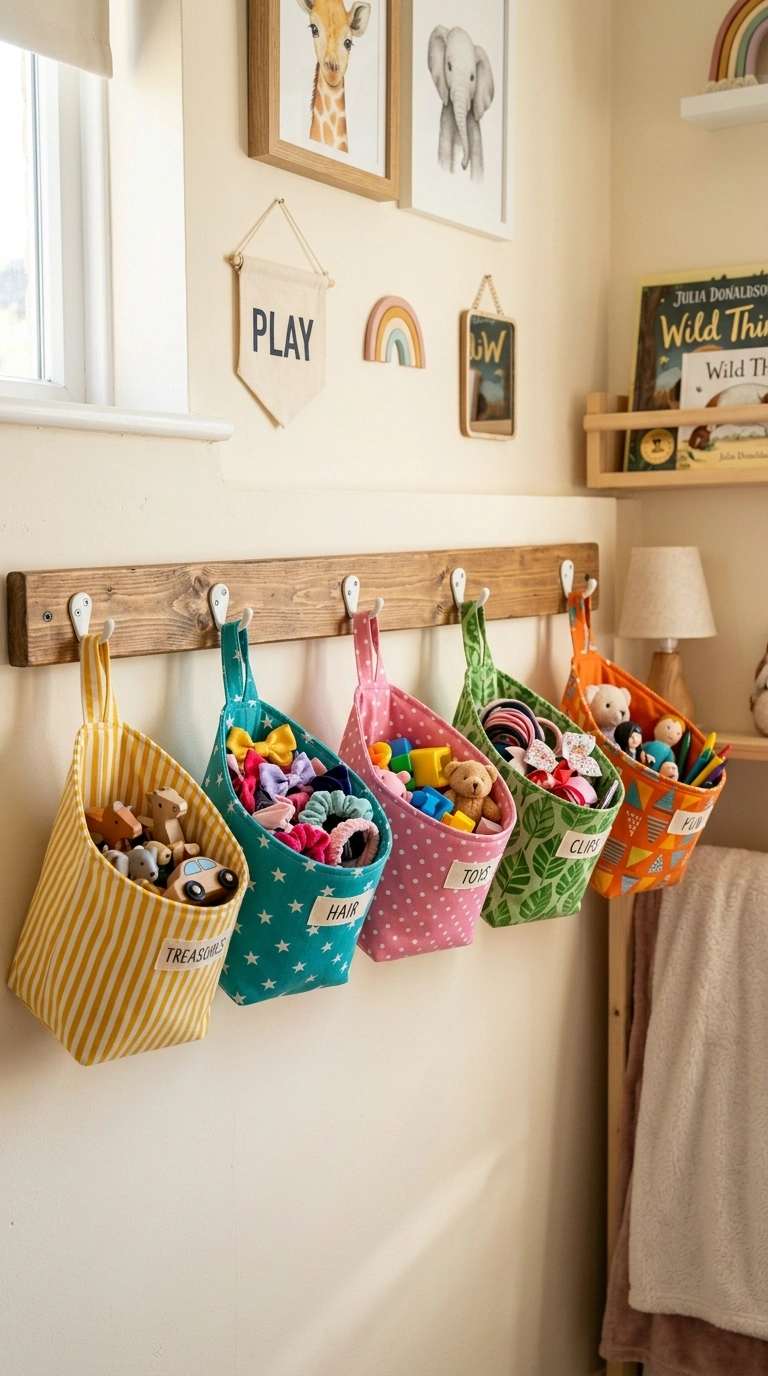
Fabric baskets that hang from hooks on the wall or the side of a closet make use of vertical space that would otherwise sit empty. These work especially well for smaller, lighter items like hair accessories, socks, small stuffed animals, or art supplies. Choose baskets with a sturdy fabric or canvas material and a reinforced opening so they hold their shape even when not completely full.
Hang a row of two or three baskets at a height your child can reach comfortably, and use a different color or pattern for each one so it is easy to remember what goes where without reading a label. This idea is particularly useful in small bedrooms or shared rooms where floor and shelf space for bins is already limited. Hanging baskets also add a soft, textured look to a plain wall while doing real organizational work.
8. Bench With Storage
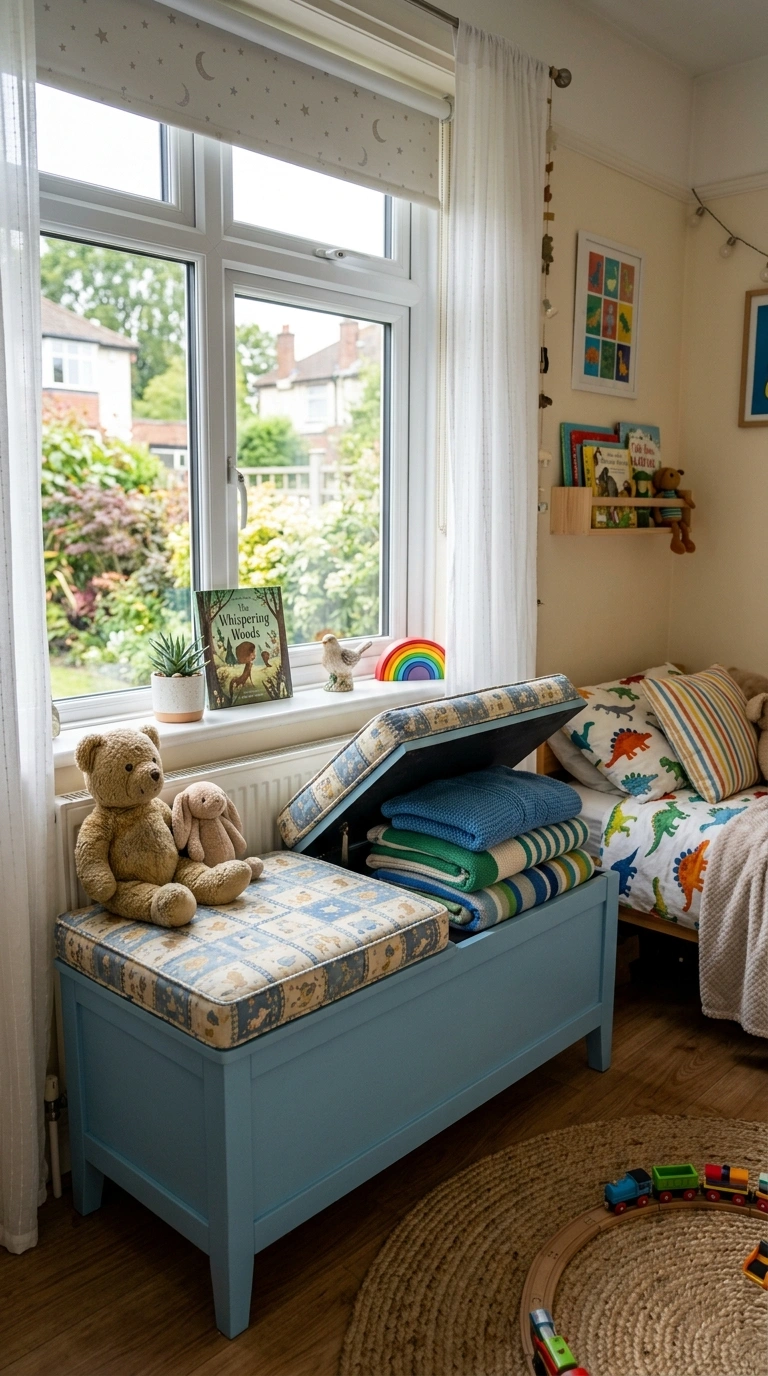
A storage bench placed at the end of a bed or under a window gives kids a spot to sit while getting dressed and a place to stash items out of sight. Choose a bench with a lift up lid or with bins that slide out from underneath, and use the inside for bulkier items like extra blankets, out of season clothing, or larger toys that do not fit neatly on a shelf.
Add a cushion on top so the bench functions as actual seating, not just a storage box that gets ignored. This piece works especially well under a window, where it takes advantage of an area that often goes unused otherwise. For younger children, look for a bench with a safety hinge on the lid so it cannot slam shut on small fingers while they are looking for something inside.
9. Floating Wall Shelves
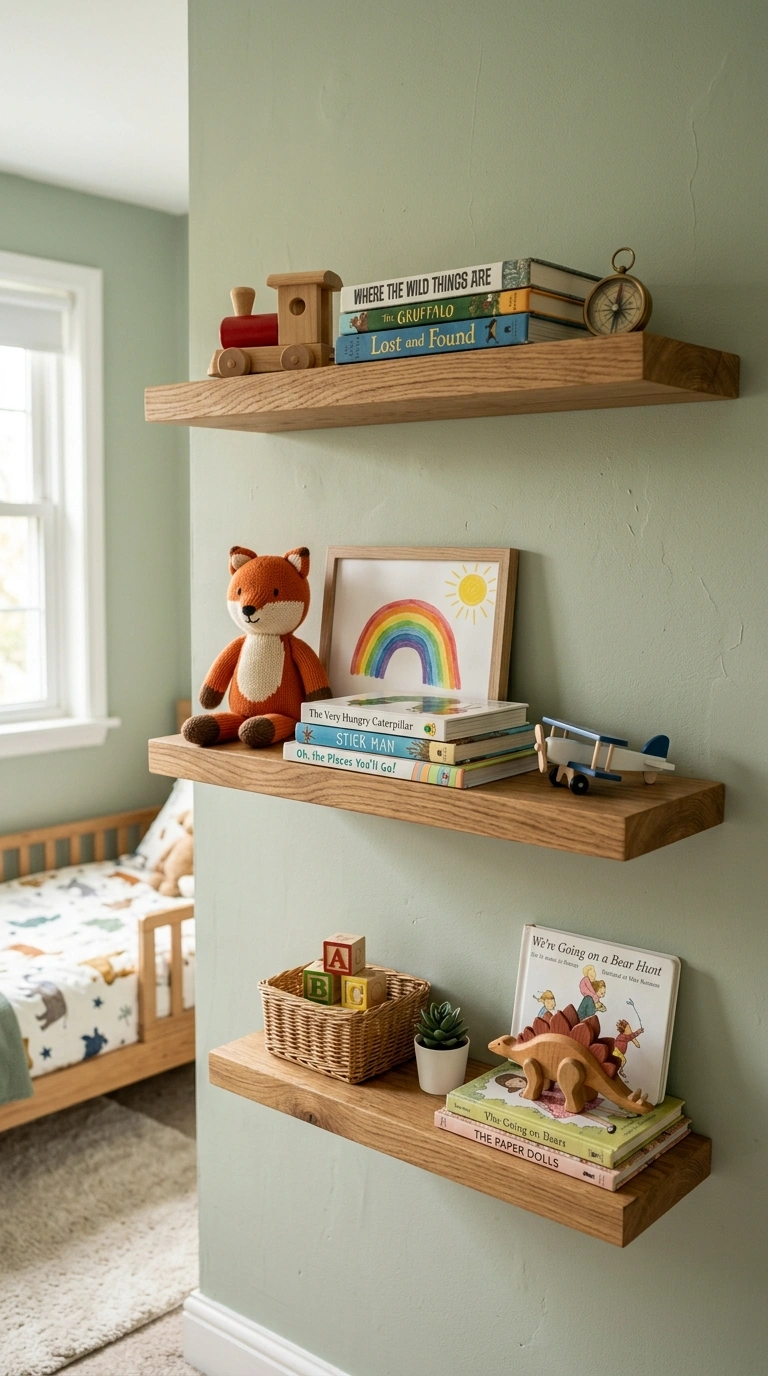
A few floating shelves mounted at varying heights along one wall create a simple display and storage spot for a rotating collection of favorite toys, books, or small keepsakes. Unlike a bulky bookshelf, floating shelves take up no floor space at all, which makes them a good option for smaller bedrooms where every square foot matters. Choose sturdy wood shelves rated to hold at least a few pounds, since kids often add more items than expected.
Keep the items on each shelf to a small, curated group rather than filling every inch, since an overcrowded floating shelf can look cluttered and also risks toys falling off. Rotate what is displayed every so often based on what your child is currently interested in, whether that is a set of dinosaurs, a favorite book, or a small collection of rocks. Mount shelves securely into wall studs, especially in a room where kids may lean or pull on them.
10. Pegboard Organization Wall
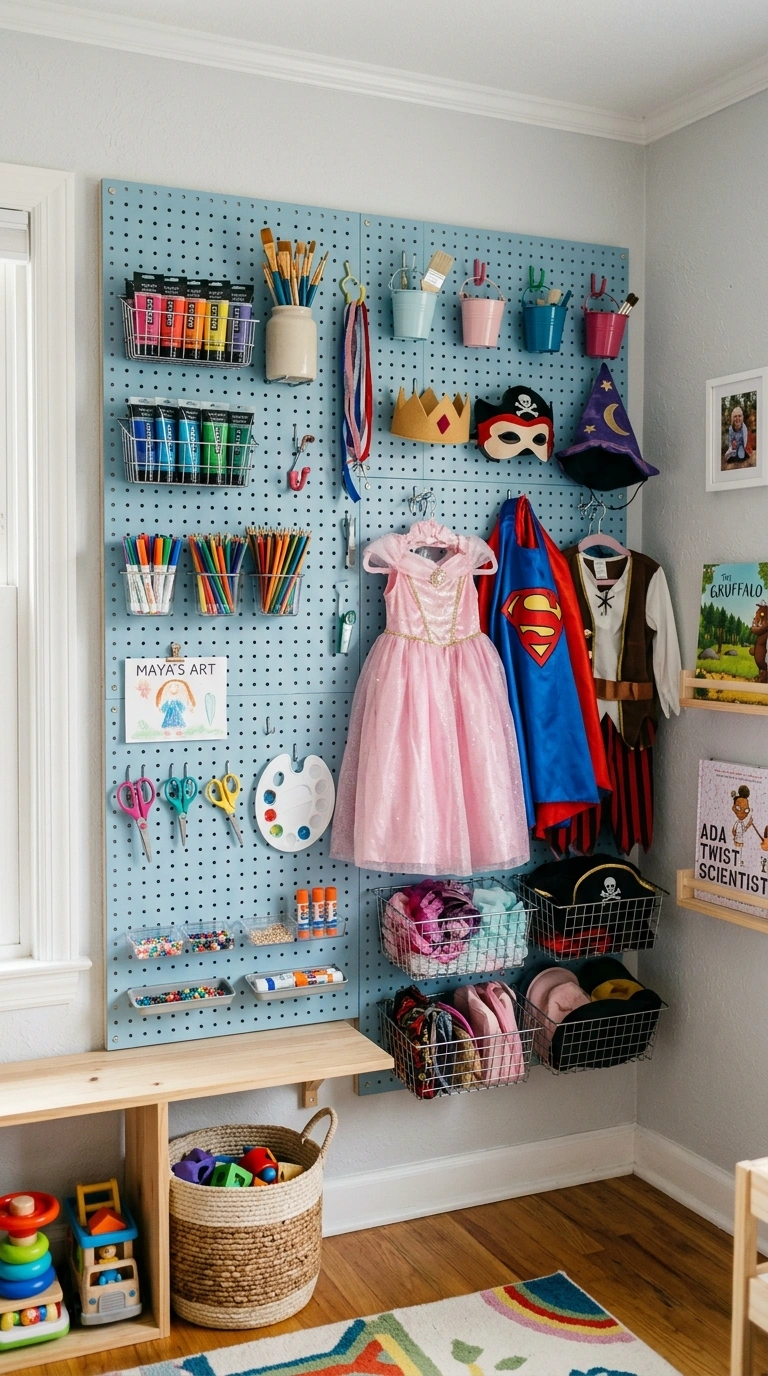
A pegboard mounted on one wall gives you a fully customizable storage system using hooks, small shelves, and baskets that can be rearranged as your child’s needs change. This works particularly well for dress up costumes, dance gear, sports equipment, or art supplies that do not fit neatly into drawers or bins. Paint the pegboard a fun color or leave it a plain neutral, depending on the rest of the room’s style.
Add a mix of hooks for hanging items and small pegboard baskets or shelves for things that need to sit rather than hang. Since the holes are spaced evenly across the whole board, you can move accessories around anytime without leaving extra holes in the wall the way you would with individually mounted hooks. This is a great option for older kids who like having a say in how their own space is organized.
11. Stackable Storage Bins
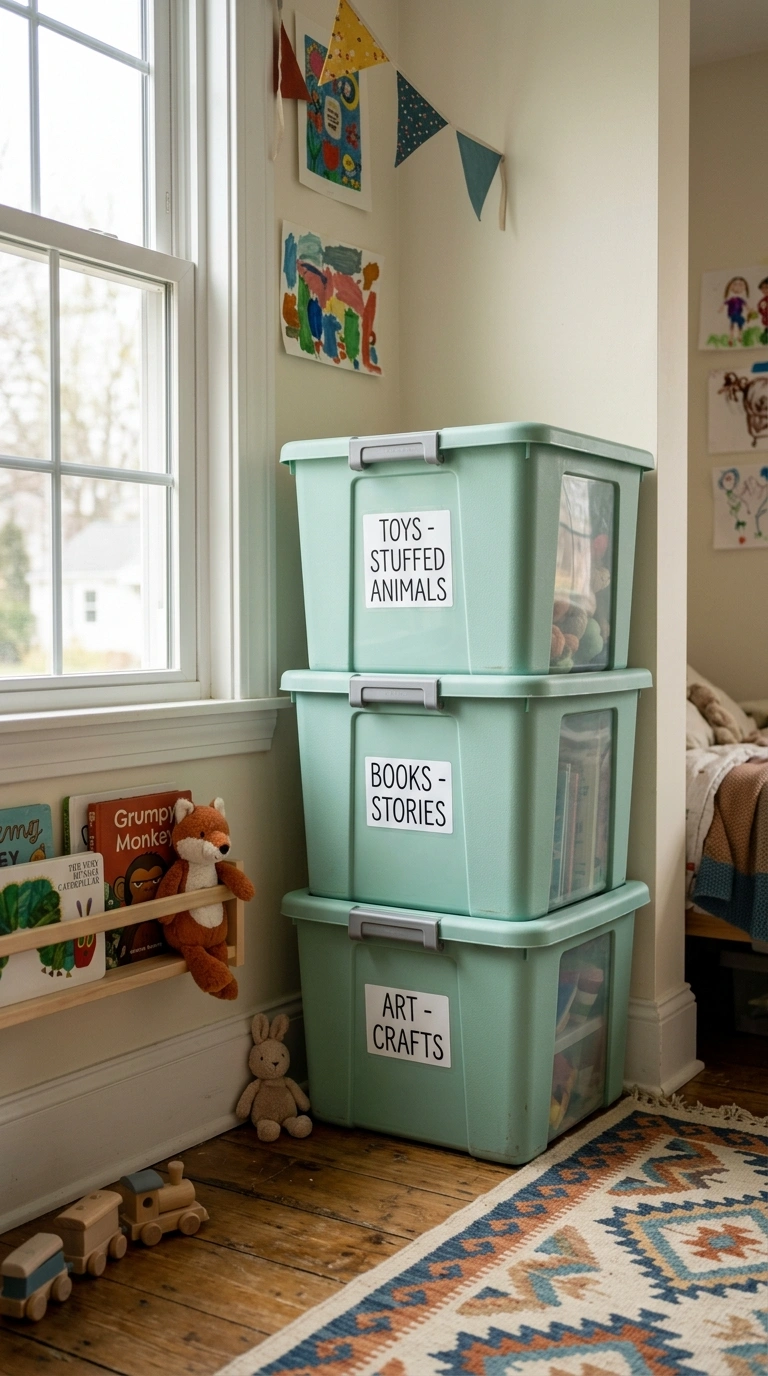
Uniform stackable bins that lock together let you build storage vertically in a corner or closet without needing a shelving unit at all. Choose bins in a solid, matching color for a cleaner look, or mix a few bright colors if your child prefers a more playful room. Label each bin on the short end so labels are visible even when bins are stacked three or four high.
This system works especially well for organizing seasonal items, like swimsuits in summer and heavy sweaters in winter, since bins near the bottom of the stack can hold things used less often. For everyday toys, keep the stack to just two or three bins high so a child can reach the top one without needing a step stool. Clear bins make it easiest to see contents at a glance without needing to check every label.
12. Window Seat Storage
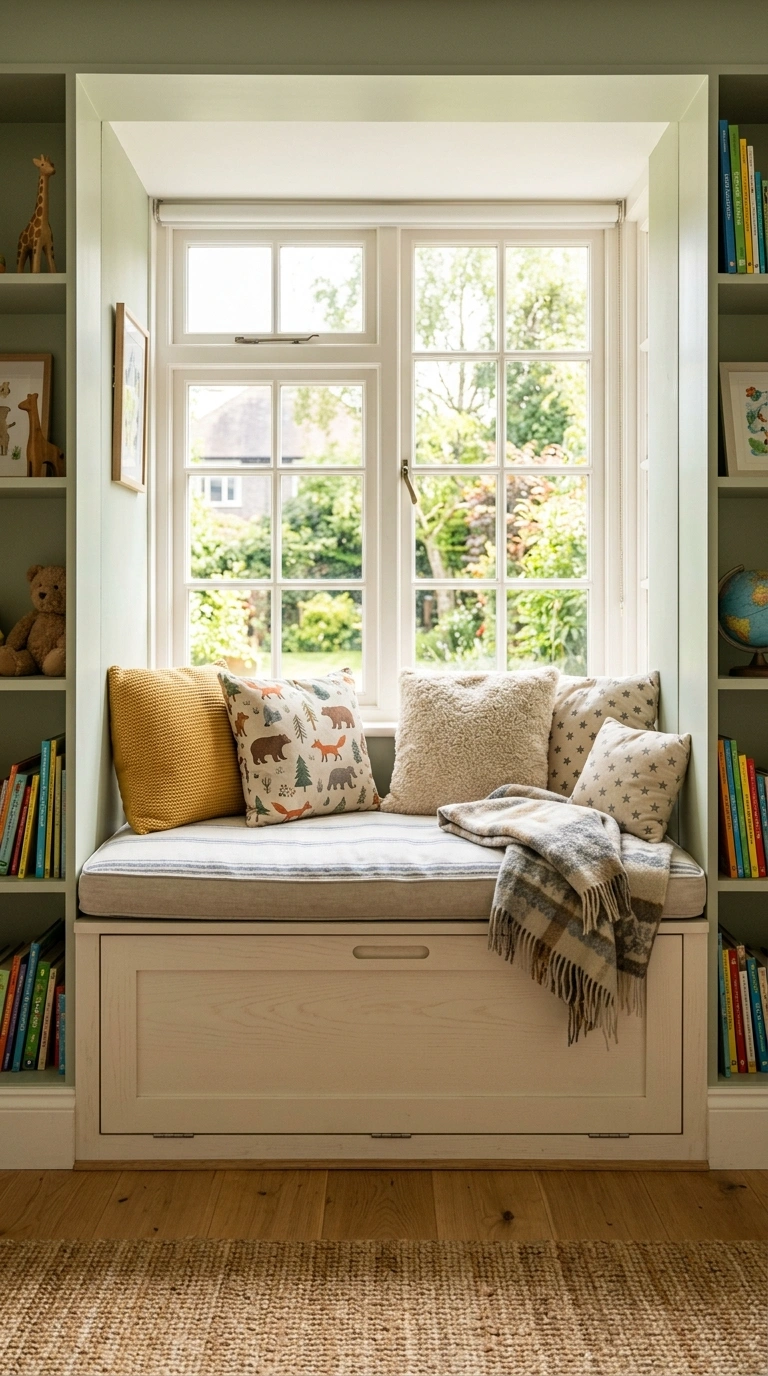
If your child’s bedroom has a window with a deep enough sill or an alcove, building or buying a bench that doubles as a window seat with storage underneath makes excellent use of space that is otherwise wasted. The seat itself becomes a reading spot or a place to sit while looking outside, while the storage compartment underneath holds books, blankets, or bins of toys out of the way of the main floor.
Add a cushion and a few throw pillows to make the seat inviting, and choose a lid that lifts easily so your child can access the storage inside without help. This idea works particularly well in older homes with deeper window sills, though a simple built or purchased bench can be placed under any window with enough width. It turns an unused corner into both a cozy spot and functional storage at the same time.
Also read: 17 Teen Bedroom Ideas That Feel Grown-Up
13. Corner Shelf Unit
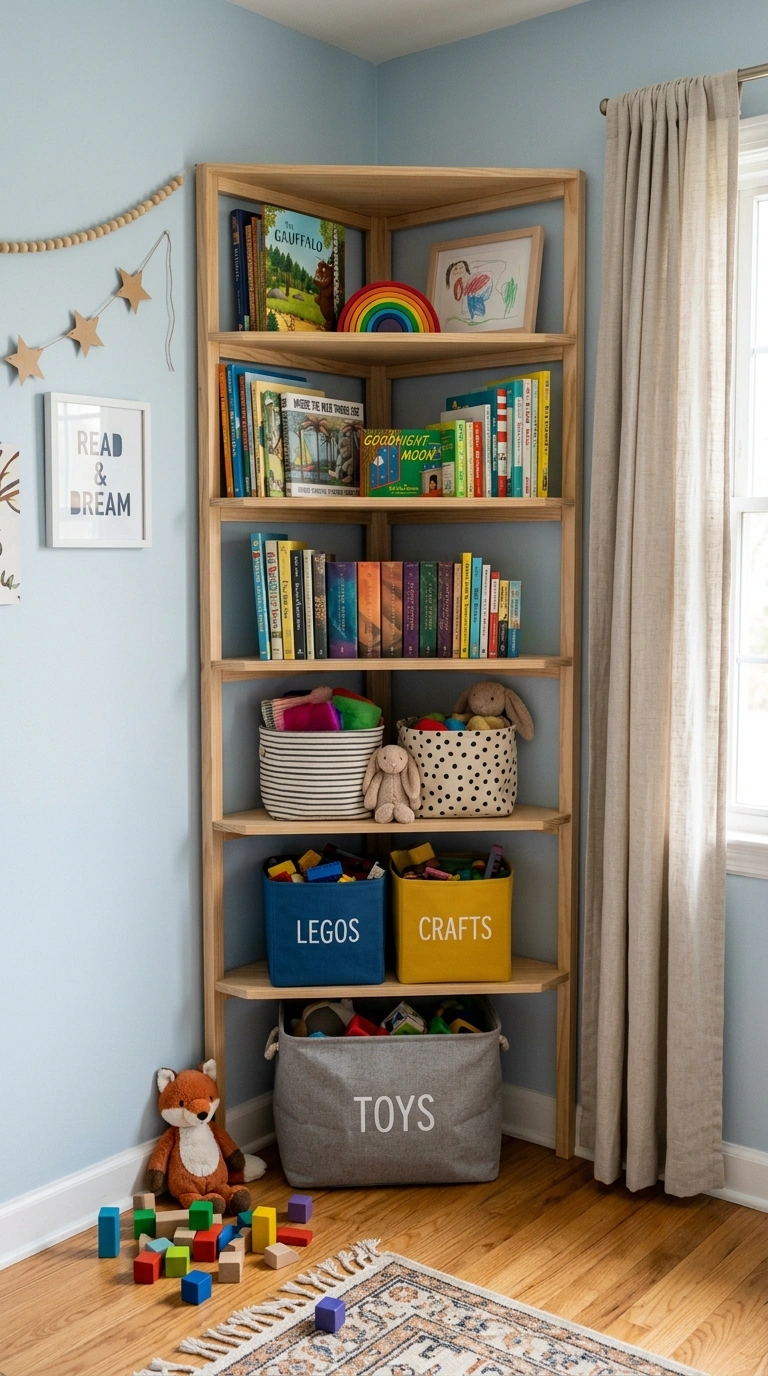
A tall, narrow shelving unit designed to fit into a corner makes use of a space that is often left completely empty in a typical bedroom layout. Choose a unit with adjustable shelves so you can change the spacing as your child’s storage needs shift from bulky baby items to smaller toys and books over time. Because corner units are narrow, they work well even in bedrooms that are already tight on floor space.
Use the lower shelves for bins your child accesses daily and the top shelves for items that are decorative or need adult supervision to reach. Securing the unit to the wall is especially important for corner shelving, since its shape and height make it more prone to tipping if a child tries to climb it. A small reading lamp clipped to the side of the unit adds function without needing an extra side table.
14. Toy Chest Bench
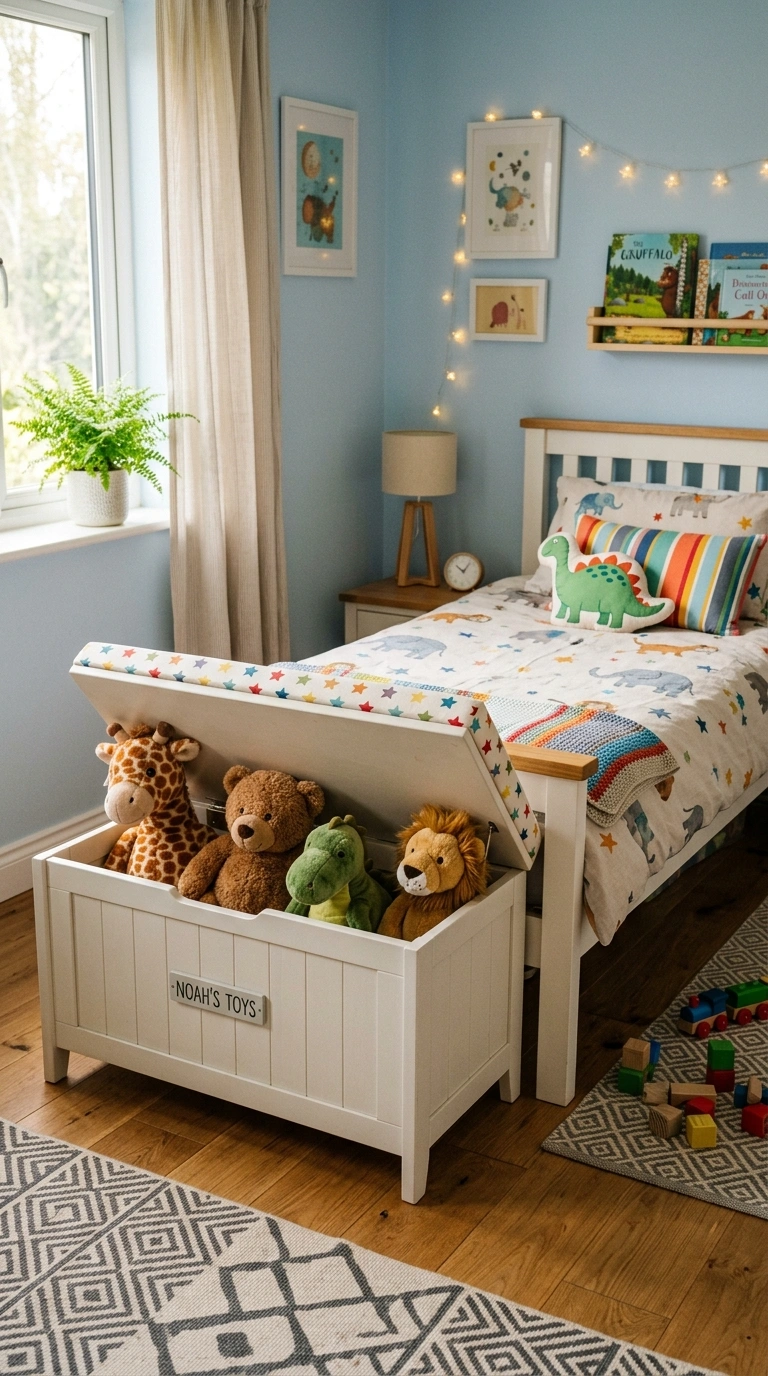
A traditional toy chest, updated with a cushioned top, gives kids one large, easy to access space for bigger toys while also functioning as extra seating in the room. Choose a chest with a soft close hinge so the lid cannot slam shut, and add a fitted cushion on top so it can double as a bench near a play area or at the foot of the bed. This works well for oversized items like stuffed animals, dress up bins, or large building sets that do not fit neatly into smaller bins.
Because a toy chest tends to become one large pile rather than an organized system, consider using a few large fabric bins inside the chest to create loose categories rather than letting everything mix together. Keep the chest in a spot where the lid can open fully without hitting a wall or bed frame. This piece works best for toys that get pulled out in a big batch rather than one at a time.
15. Hook Rack Wall
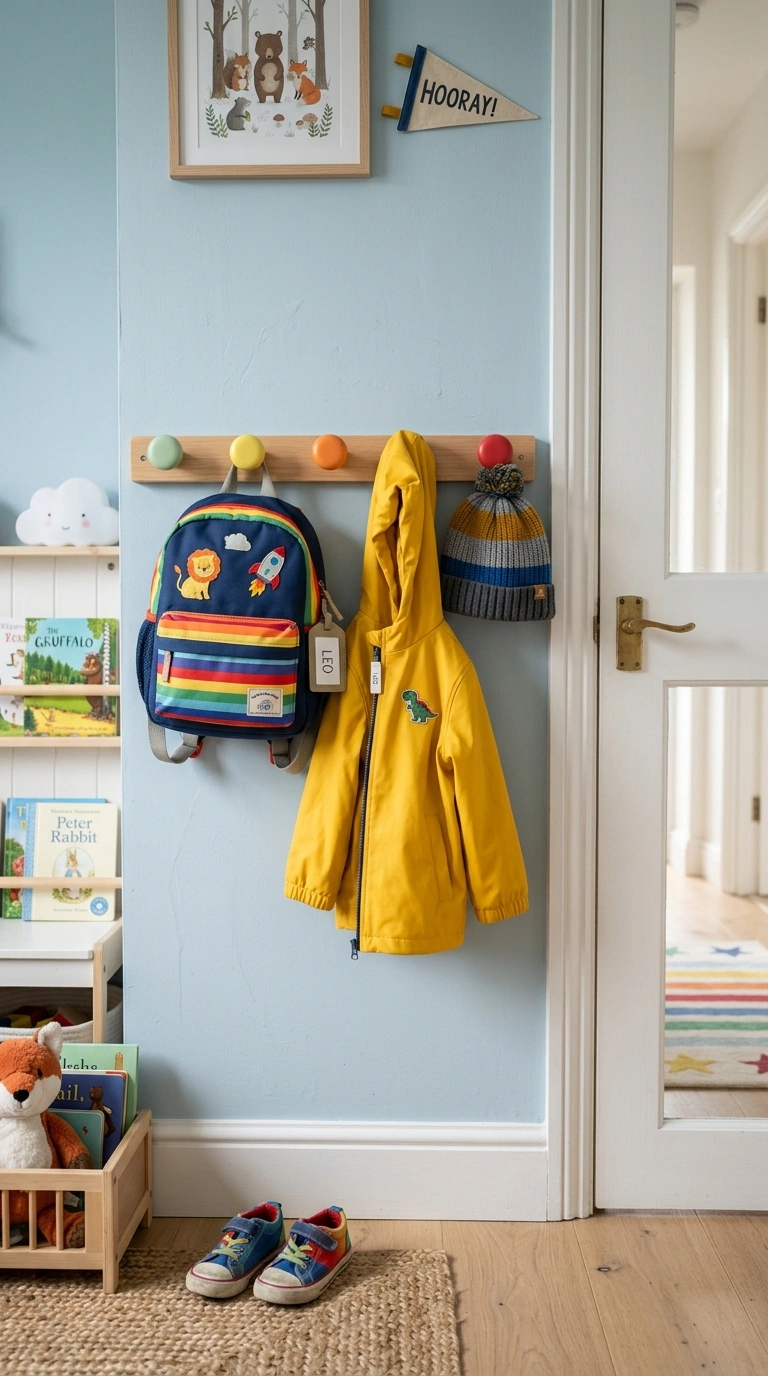
A row of hooks mounted at child height along one wall makes hanging up items nearly effortless, which is exactly why it tends to work better than a closet rod that is too high to reach. Use this setup near the bedroom door for backpacks, jackets, and hats, or near the bed for pajamas and a favorite stuffed animal. Choose rounded, kid safe hooks rather than sharp metal ones, especially in a younger child’s room.
Space the hooks evenly and mount them at a height your child can reach without stretching, usually somewhere between three and four feet off the ground depending on their age. Label each hook with a small tag if multiple kids share the wall, so each child has a designated spot for their own things. This simple addition often solves the daily backpack and jacket pile up better than any bin or drawer system.
16. Bookcase Room Divider
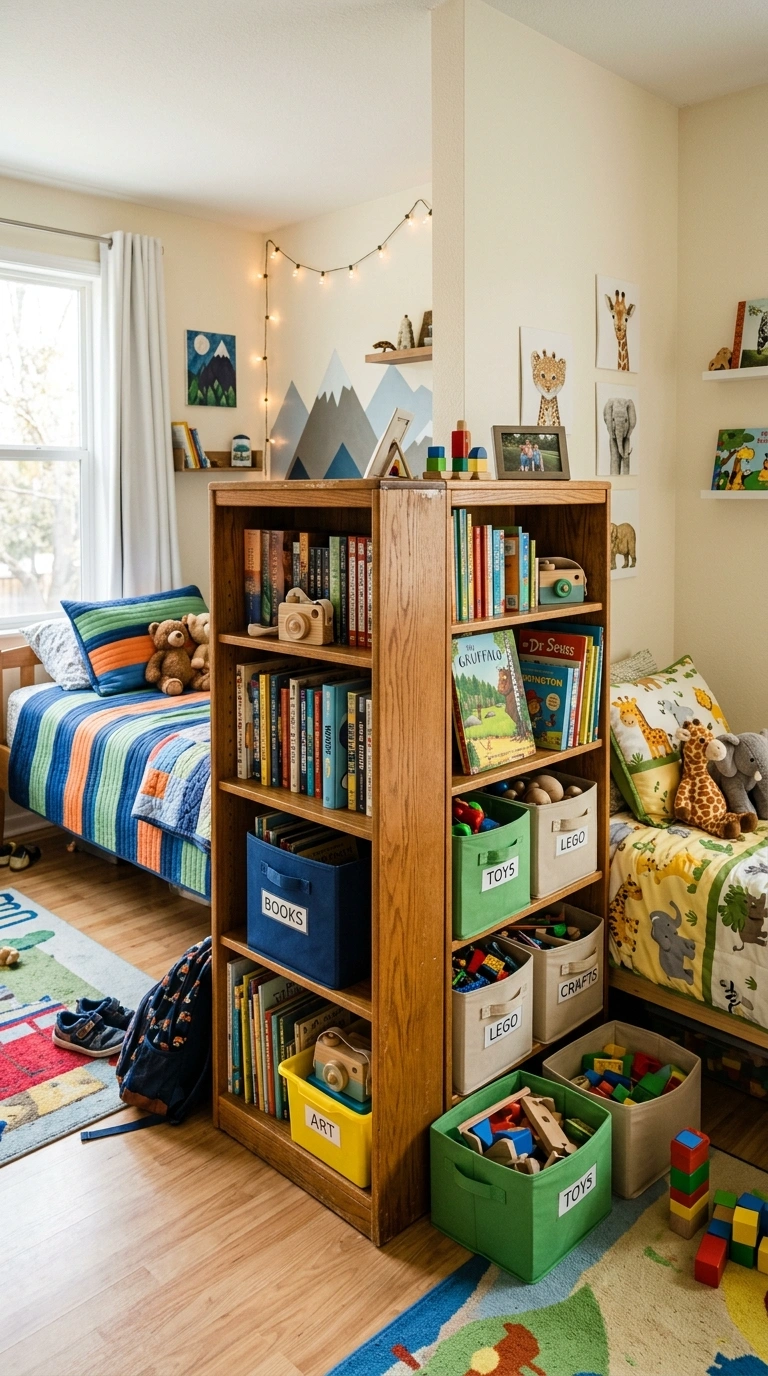
In a shared bedroom, a bookcase placed perpendicular to the wall can divide the room into two distinct areas while also providing storage on both sides. Choose a unit that is not too tall, so light and air can still move through the room, and fill it with a mix of books, bins, and a few personal items belonging to each child. This setup gives both kids a sense of their own space without needing a full wall built between them.
Style each side of the bookcase slightly differently to reflect each child’s own taste, whether that means different colored bins or different items on display. Anchor the bookcase securely to the floor or wall, since a freestanding unit used as a divider needs to be especially stable in a room where kids are moving around it constantly. This idea works particularly well in bedrooms where two kids share a space but want some sense of separation.
Also read: Kids Room Decor Ideas They Will Love for Years to Come
17. Multi Bin Cart
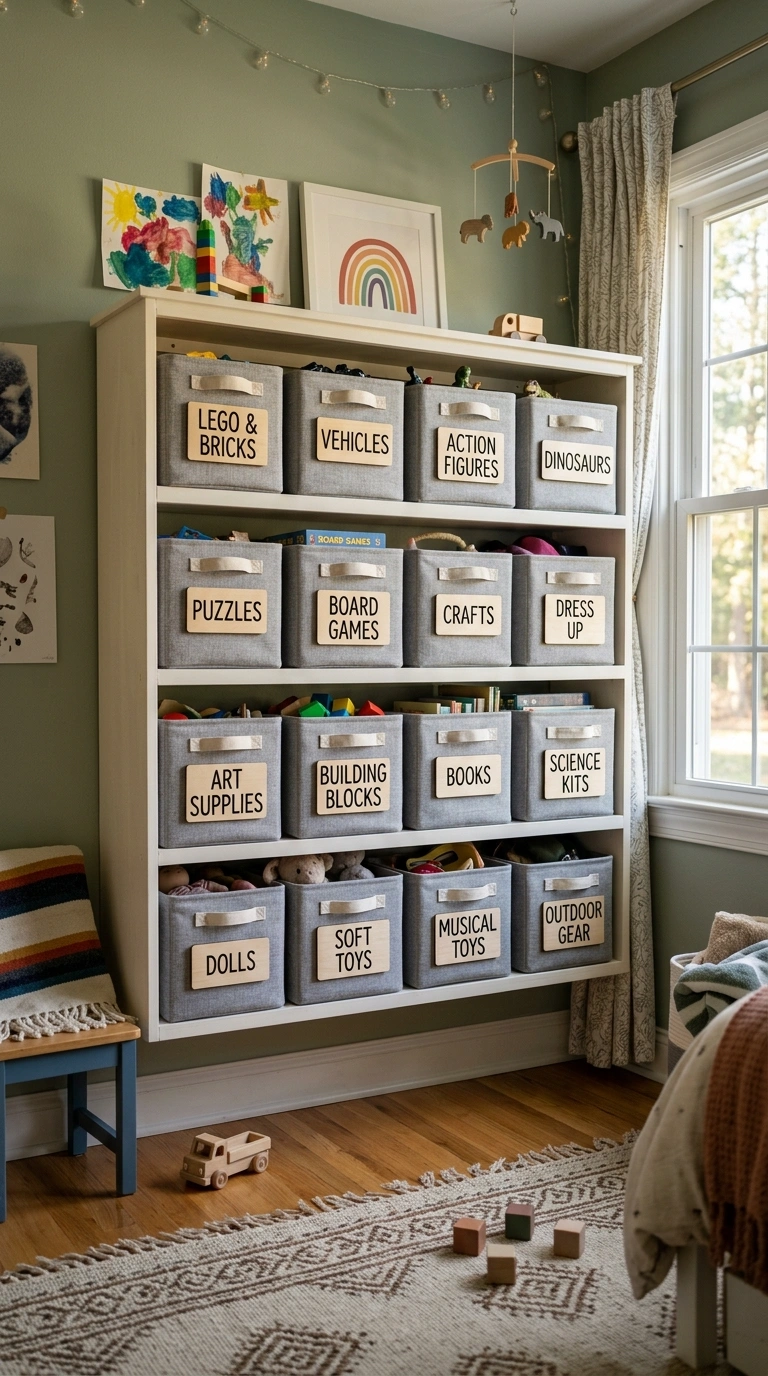
A wide cart or shelf unit with multiple same size bins across several rows gives you one central storage spot for a large variety of toy categories at once. Unlike a rolling cart meant to move around the house, this piece is designed to stay in one place, usually against a wall or inside a closet, functioning almost like a toy library. Choose fabric bins in a uniform color for a calmer look, or mix colors for a more playful feel.
Assign one bin per toy category, such as cars, dolls, blocks, or craft supplies, and keep a printed or drawn label on the front of each one. This system works especially well for families with more than one child sharing toys, since everyone can find and return items to the same predictable spot. Because the bins pull straight out, cleanup becomes a quick sorting task rather than a search through one giant pile.
Also read: Sage Green Bedroom Ideas That Feel Calm and Cozy
These seventeen ideas all come down to the same basic principle, storage only works if a kid can actually use it without help. Start with just one or two changes, like adding labels to bins you already own or clearing out under the bed, and build from there as you see what actually gets used day to day.
Also read: 16 Playroom Ideas That Keep the Mess Contained
FAQs
What is the best storage solution for a small kids bedroom?
Look for storage that uses vertical space and space that is already wasted, like under the bed or in closet corners. Under bed drawers, floating shelves, and tall corner units all add storage without taking up floor space.
How do I get kids to actually put toys away?
Use open bins instead of ones with lids, keep storage at a height they can reach on their own, and label everything with pictures or simple words. Systems that are easy to use get used more consistently than ones that require perfection.
What storage works best for a shared kids bedroom?
A bookcase used as a room divider, a rolling cart for each child, or individually labeled bins on a shared shelf all work well. Giving each child their own defined space helps reduce mixing and mess.
Should storage bins be open or have lids?
Open bins work better for toys kids use every day, since there is nothing extra to open or close. Lidded bins are more useful for items stored on high shelves or used only occasionally.
How high should shelves be for young kids?
The lowest, most used shelf should sit somewhere between a child’s knee and chest height so they can reach it without help. Anything higher should be reserved for items that need adult supervision.