
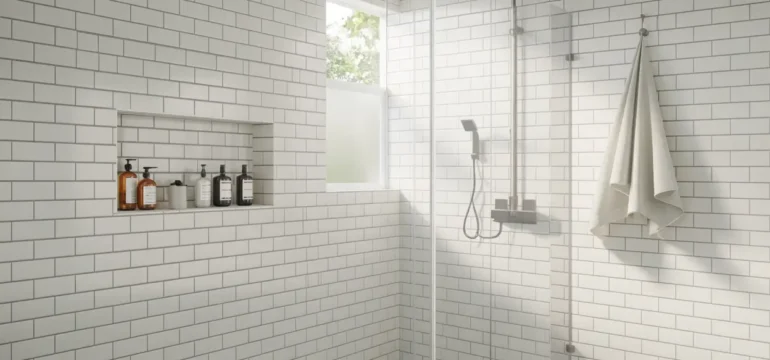
I used to think a small shower meant I had to settle. My first apartment had a shower stall so tight I could touch both walls with my elbows out. It felt like a box, not a place to relax. Then I started paying attention to how other people made their small showers actually look good, and it changed everything I thought I knew. It turns out size has very little to do with style. A small shower can feel open, bright, and even a little fancy if you make a few smart choices with tile, glass, and light. Below are 21 ideas that work in real small bathrooms, not just in magazine photos. Pick a few that fit your space and your budget, and you will be surprised how different your shower feels.
1. Glass Corner Shower
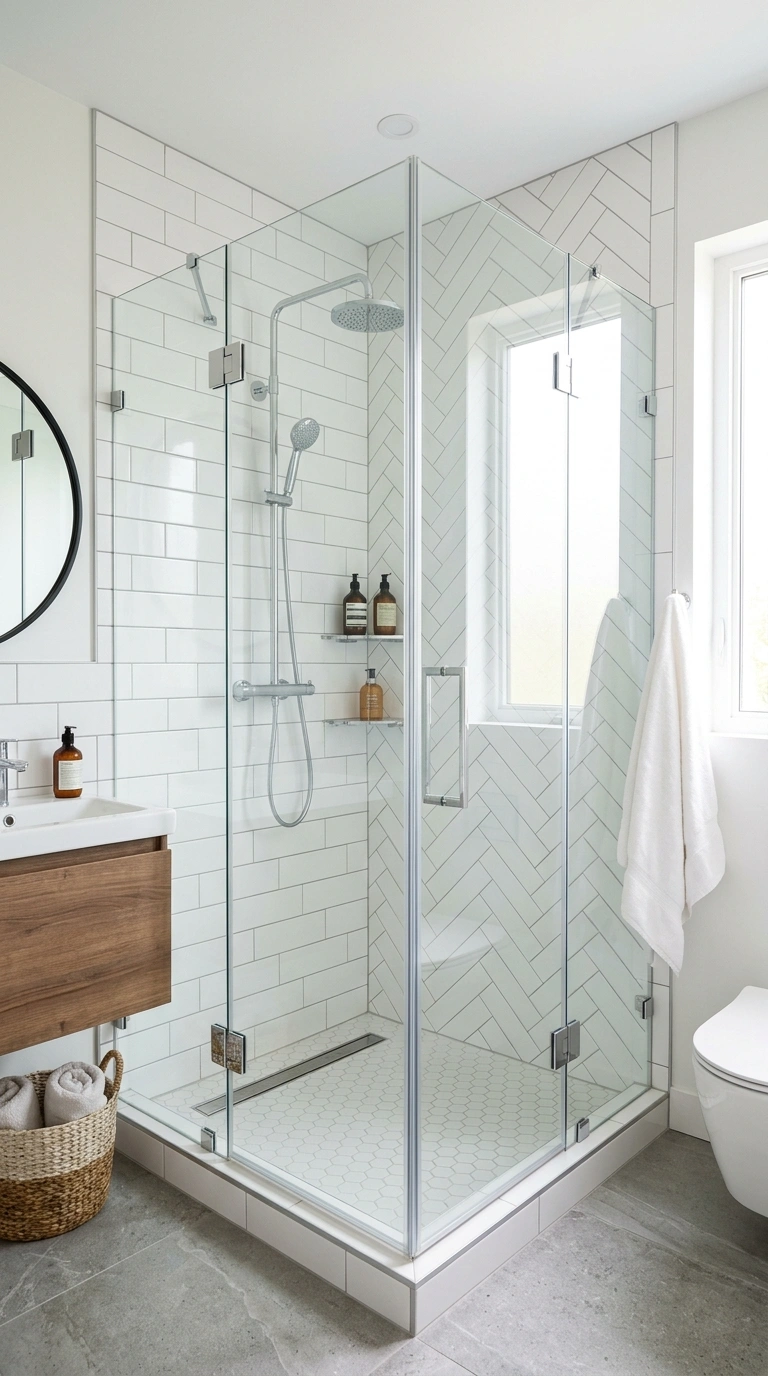
A corner shower with clear glass panels is one of the easiest ways to make a small bathroom feel bigger right away. Because you can see straight through the glass to the tile and walls behind it, your eye reads the whole room as one open space instead of two separate boxes. This works especially well in bathrooms where the shower sits in a true corner, since the glass only needs two sides instead of a full enclosure.
Use clear glass instead of frosted or textured glass if privacy is not a big concern, since clear glass lets in the most light. Keep the hardware simple, either a slim silver frame or a completely frameless edge. If you already have a corner shower with a solid door or curtain, swapping it for glass panels is a project you can often finish in a single weekend with a local glass company.
2. Subway Tile Walls
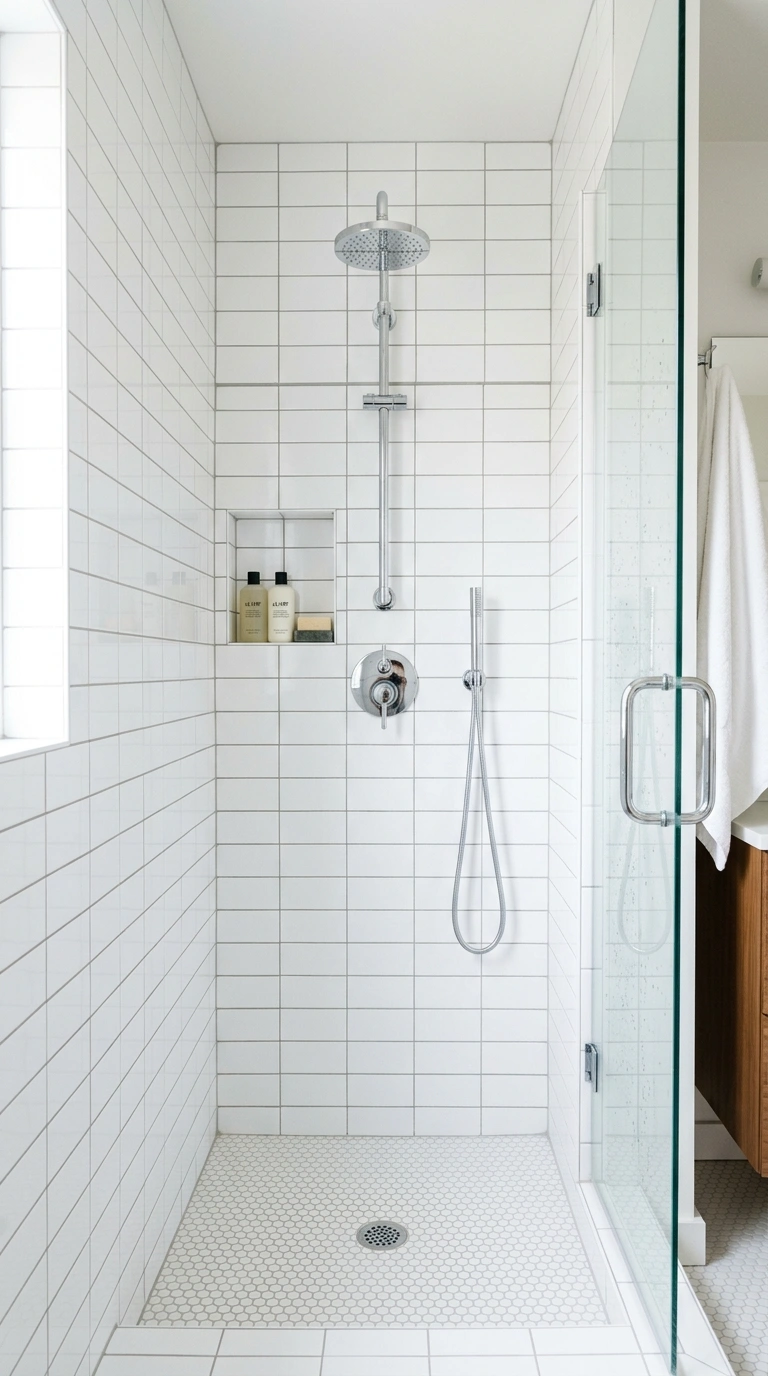
Subway tile has stayed popular for so long because it works in almost any small shower, no matter the style of your bathroom. The rectangular shape and light color reflect light well, which helps a tight shower stall feel less closed in. It also has a timeless look, so you will not feel the urge to redo it again in five years when trends shift.
Use a classic white or soft cream subway tile if you want the shower to feel calm and bright. Lay the tile in a simple stacked pattern instead of the traditional brick pattern if you want a more modern look. Keep the grout close in color to the tile itself, since a big contrast in grout color can actually make a small shower look busier and smaller. This is a project a confident DIYer can tackle, though hiring a tile setter is worth it if you want clean, straight lines.
3. Built-In Niche
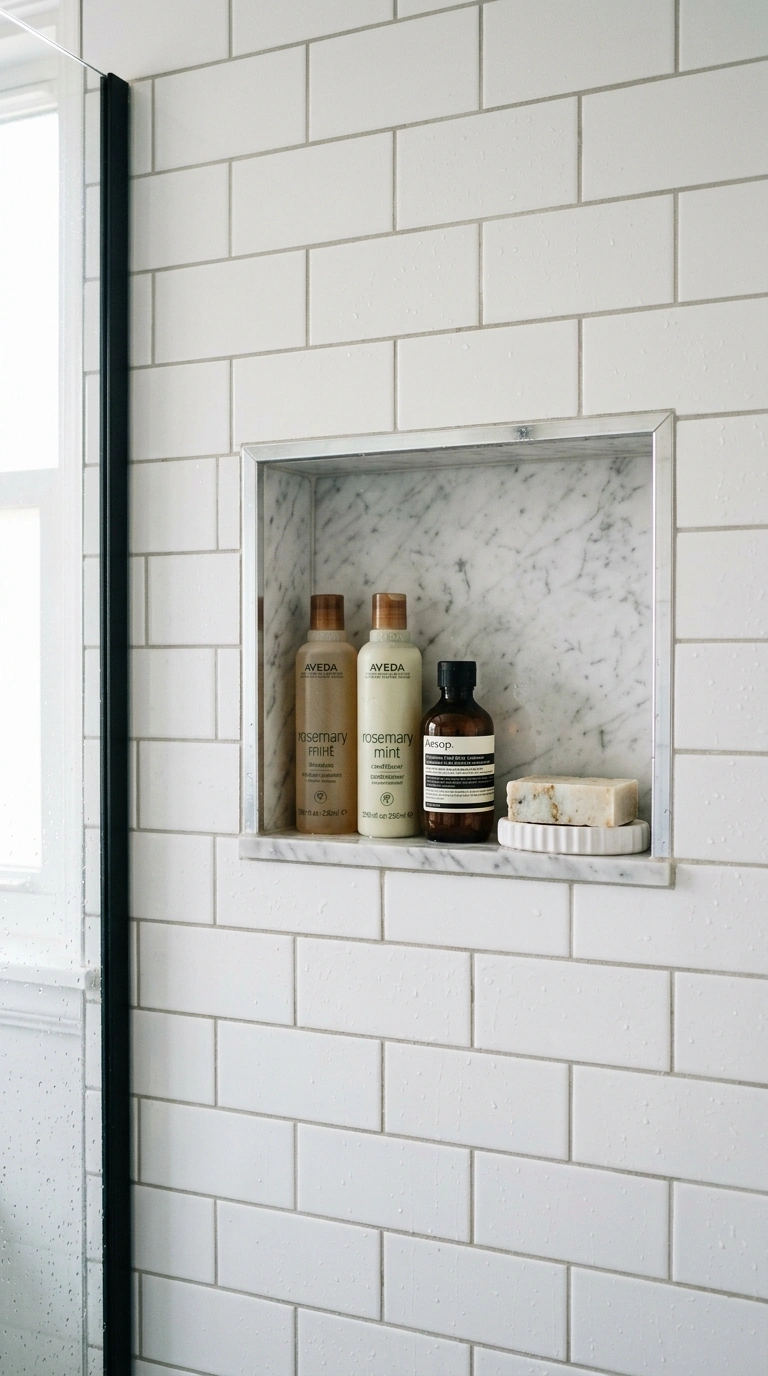
A recessed niche built right into the shower wall gives you storage without taking up any floor space, which matters a lot in a small shower. Instead of balancing bottles on a corner shelf or a hanging caddy, everything sits flush inside the wall, keeping the whole space feeling clean and open.
Plan the niche during a remodel if possible, since it needs to be built into the wall framing before tile goes up. Line the inside of the niche with a small accent tile, like a marble look or a soft color, to give it a little personality against plain shower walls. Keep the shelf just deep enough to hold your everyday bottles, since a niche that is too deep will collect clutter. If you are not remodeling, some tile companies sell prefabricated niche inserts that fit into existing wall cavities with less demolition.
4. Frameless Glass Door
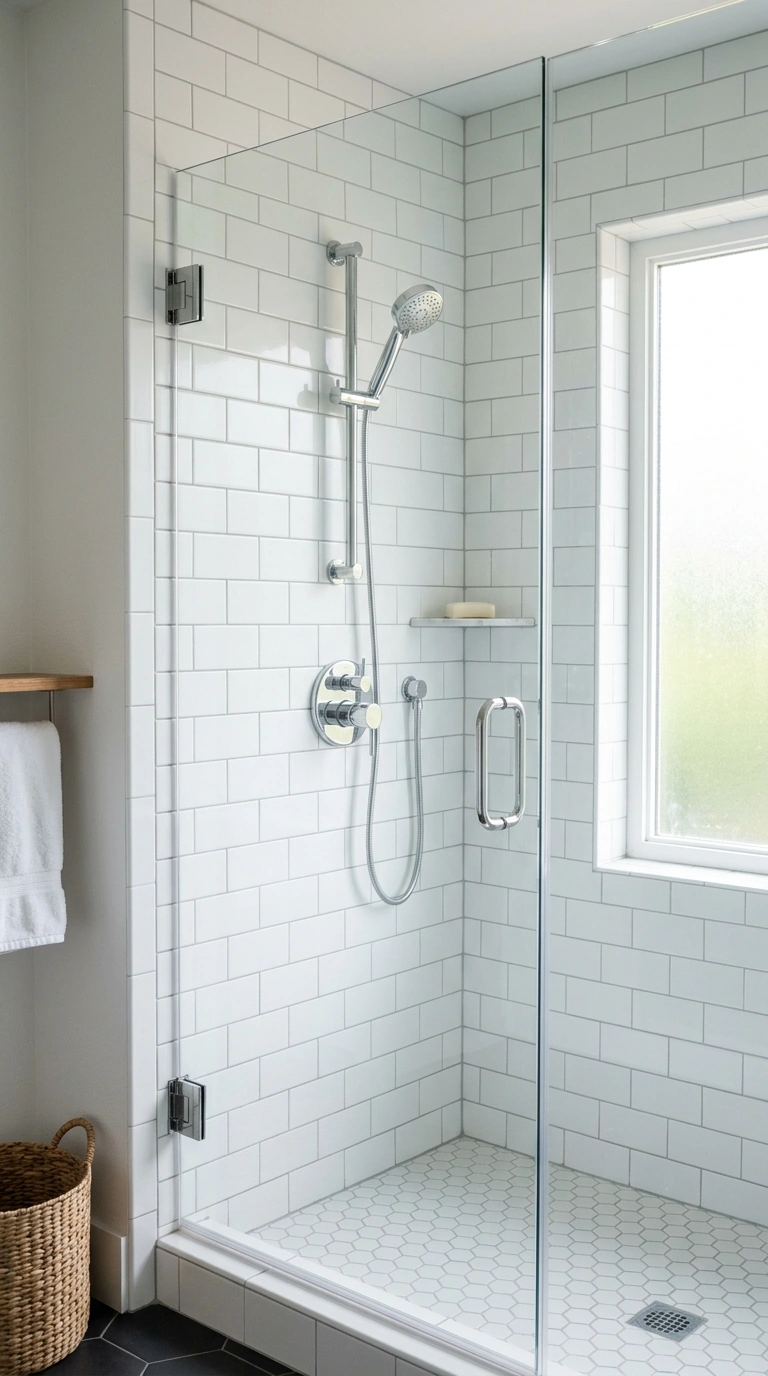
A frameless glass shower door skips the metal trim you see on older shower enclosures, and that small change makes a real difference in how open a small shower feels. Without the bulky frame breaking up your sightline, the glass almost disappears, letting the eye travel straight through to the tile and fixtures behind it.
This upgrade works in nearly any small shower shape, whether it is a corner stall, an alcove, or a narrow rectangle. Pair the frameless door with polished chrome or matte black hardware depending on the rest of your bathroom fixtures. Keep the glass spotless with a daily squeegee, since frameless glass shows water spots more than framed glass with a busier pattern to hide them. This is usually a project best left to a glass installer, since the door needs to be measured precisely for a tight seal.
5. Pebble Tile Floor
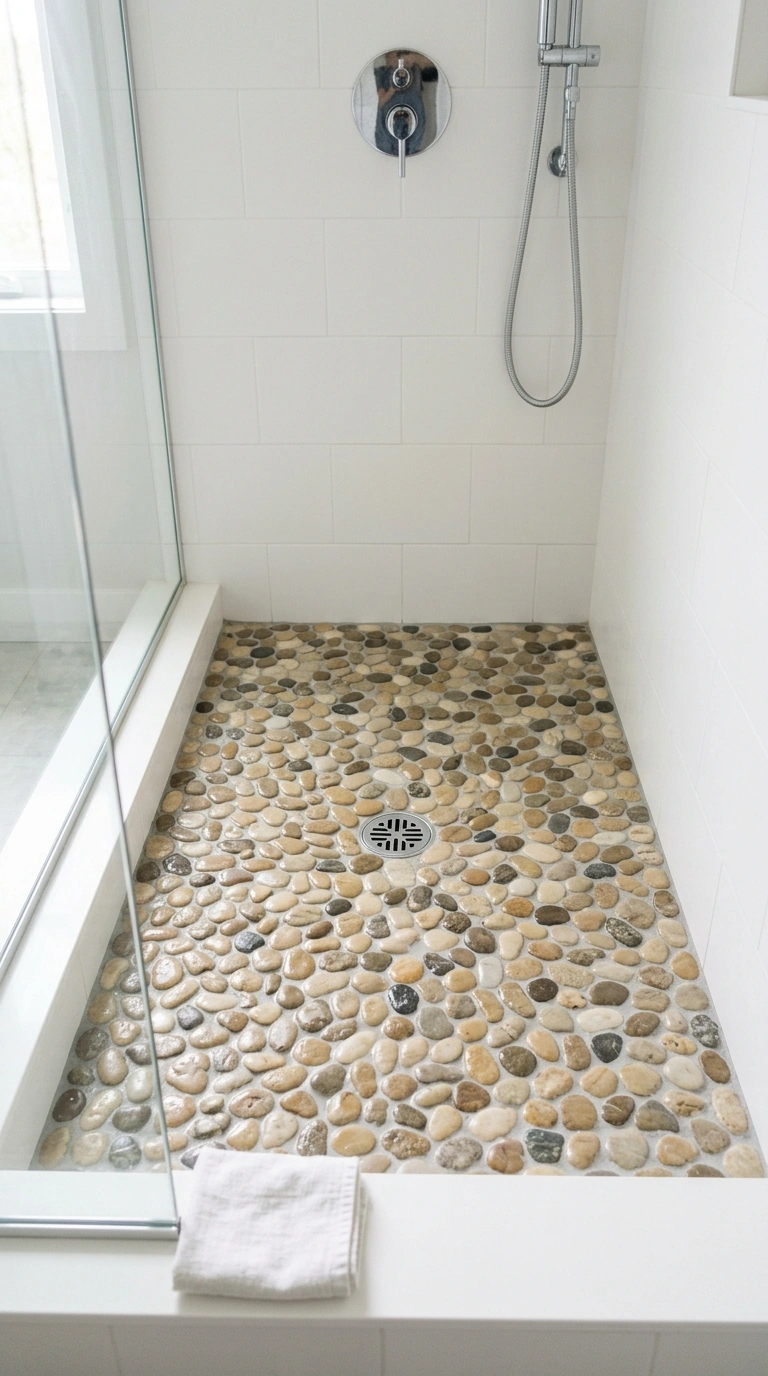
A pebble tile floor brings texture and a natural, spa-like feeling into a small shower without taking up any extra space. The rounded stones create a gentle massage under your feet, and the varied color of natural pebbles adds visual interest to a part of the shower that is often overlooked.
Choose a pebble tile in warm tan or gray tones to keep the overall look calm rather than busy. Seal the tile well after installation, since pebble tile has more grout lines than flat tile and needs extra protection from water and soap buildup. Pair this floor with plain wall tile so the pebbles stay the star of the show instead of competing with a busy wall pattern. This project is doable for an experienced DIYer, though the extra grout work does take more time than flat tile.
6. Hexagon Tile Accent
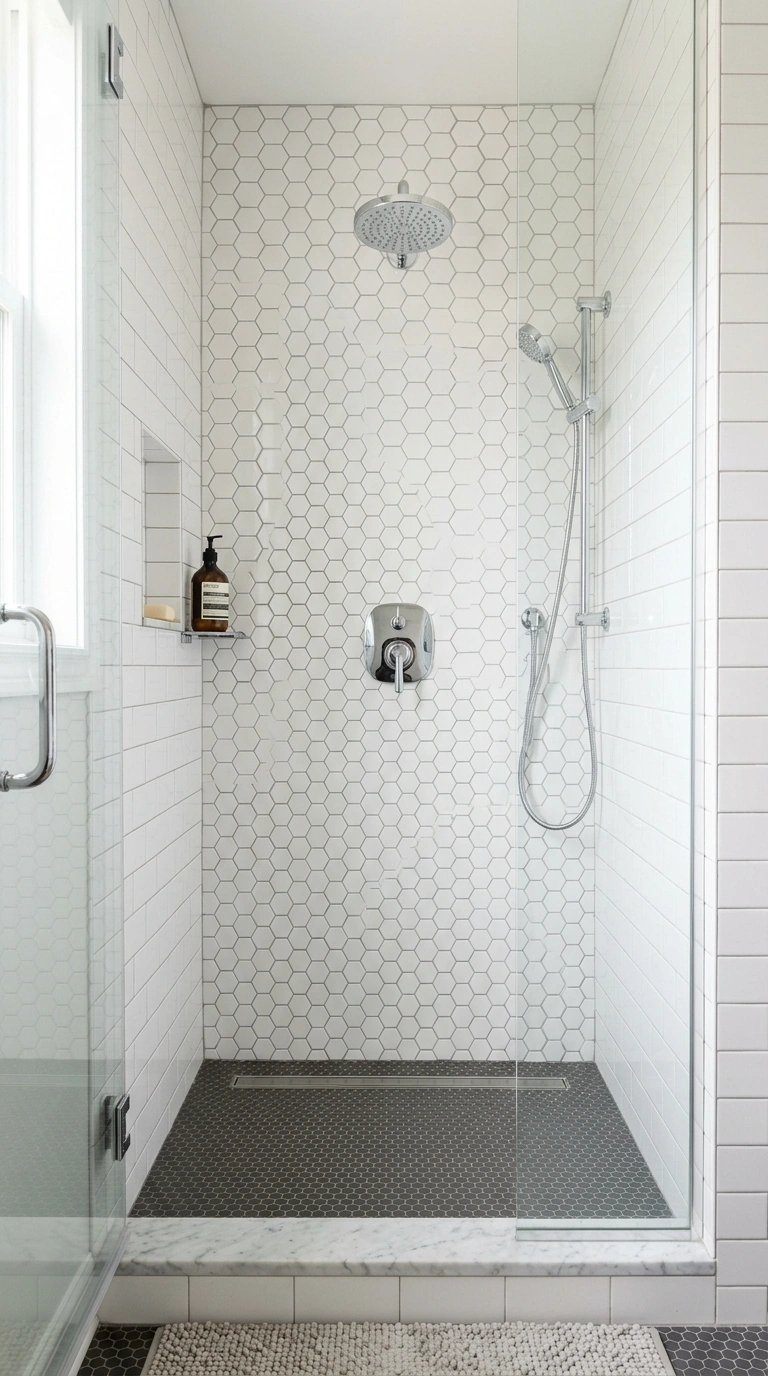
A hexagon tile accent wall or floor section adds a modern geometric touch to a small shower without overwhelming the space, as long as you use it sparingly. The honeycomb shape draws the eye in a fun way and works well as a floor tile or as a single accent wall inside the shower.
Stick to a small hexagon size, around one to two inches across, since a larger hexagon can look out of scale in a tight shower. Choose a neutral color like white, gray, or soft green if you want the pattern to read as elegant rather than loud. Use hexagon tile on the shower floor and keep the walls plain, or flip it and use hexagon tile on one wall while keeping the floor simple. Either way, letting the hexagon shape be the main statement keeps the small shower looking put together instead of cluttered.
7. Matte Black Fixtures
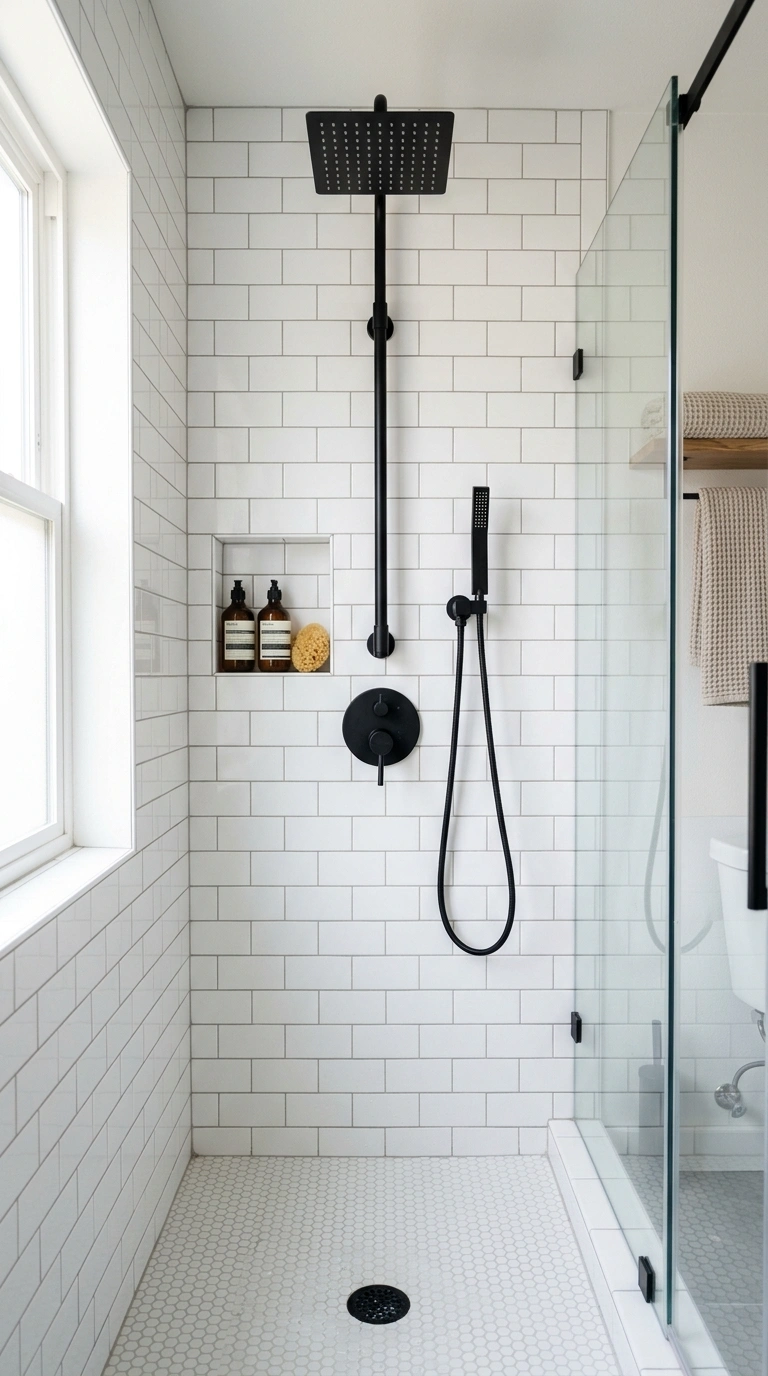
Matte black shower fixtures, including the showerhead, handle, and any exposed pipes, add a bold contrast against light tile that makes a small shower feel more like a designed space than an afterthought. The dark color draws the eye and gives the shower a clear focal point.
This idea works especially well against white subway tile, light gray tile, or any pale wall color, since the contrast is what makes the black fixtures stand out. Swap out your current fixtures for matte black versions, which are widely available at most home improvement stores and do not require a full remodel. Keep the rest of your bathroom hardware, like towel bars and cabinet pulls, in the same matte black finish so the whole room feels connected rather than like the shower and the rest of the bathroom belong to two different designs.
8. Vertical Tile Stripes
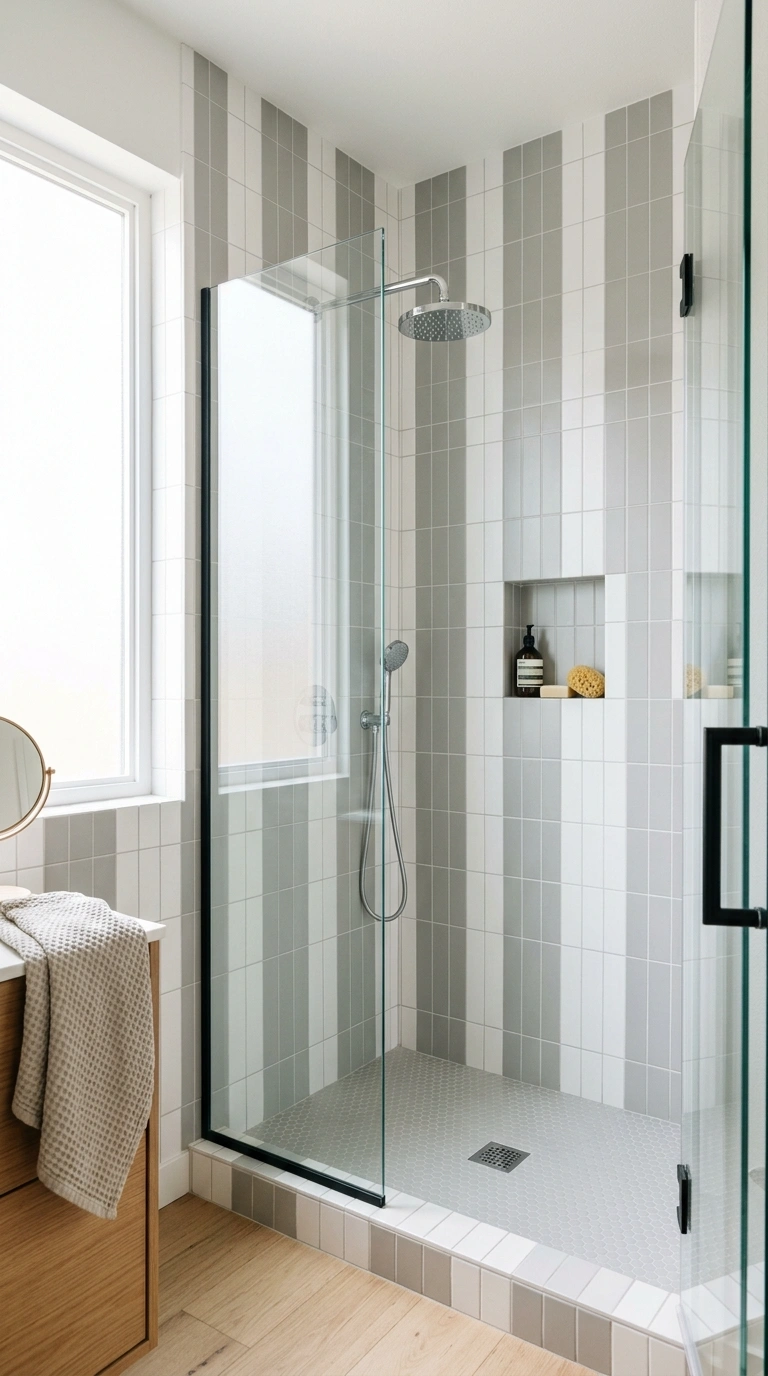
Running tile in vertical stripes up the shower wall is a simple trick that tricks the eye into seeing more height than the room actually has. Taller ceilings make any room, including a small shower, feel more spacious and less boxed in.
Use two tile colors in alternating vertical stripes, or run a single tile in a vertical stack pattern instead of the usual horizontal brick layout. Keep the stripe width consistent, somewhere between four and eight inches, so the pattern reads as intentional rather than random. This works especially well in showers with lower ceilings, since the vertical lines pull the eye upward. A tile installer familiar with pattern layouts can help you plan the spacing before any tile goes on the wall, since the math needs to work out evenly across the full height.
9. Curbless Walk-In
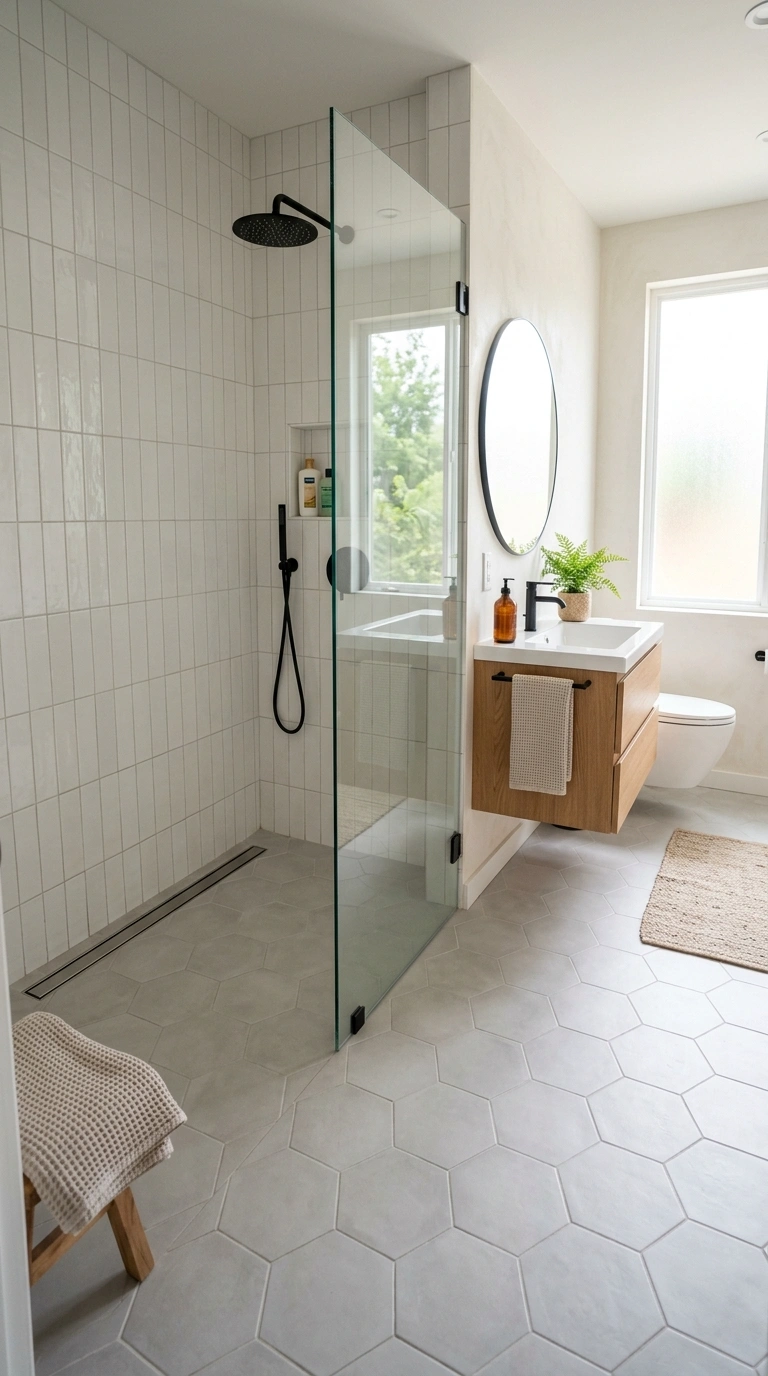
A curbless walk-in shower removes the small step or lip you normally step over to enter the shower, and this open design makes a small bathroom feel much larger since there is no visual break between the shower floor and the rest of the bathroom floor.
This idea requires more planning than most on this list, since the shower floor needs a slight slope built into it so water drains properly without a curb to contain it. It works best during a full bathroom remodel rather than a quick update. Pair a curbless shower with a linear drain along one wall instead of a center drain, since linear drains blend more smoothly into a curbless design. This upgrade also makes the bathroom easier to use for anyone with mobility concerns, which is worth thinking about even if that is not your main goal right now.
10. Rainfall Showerhead
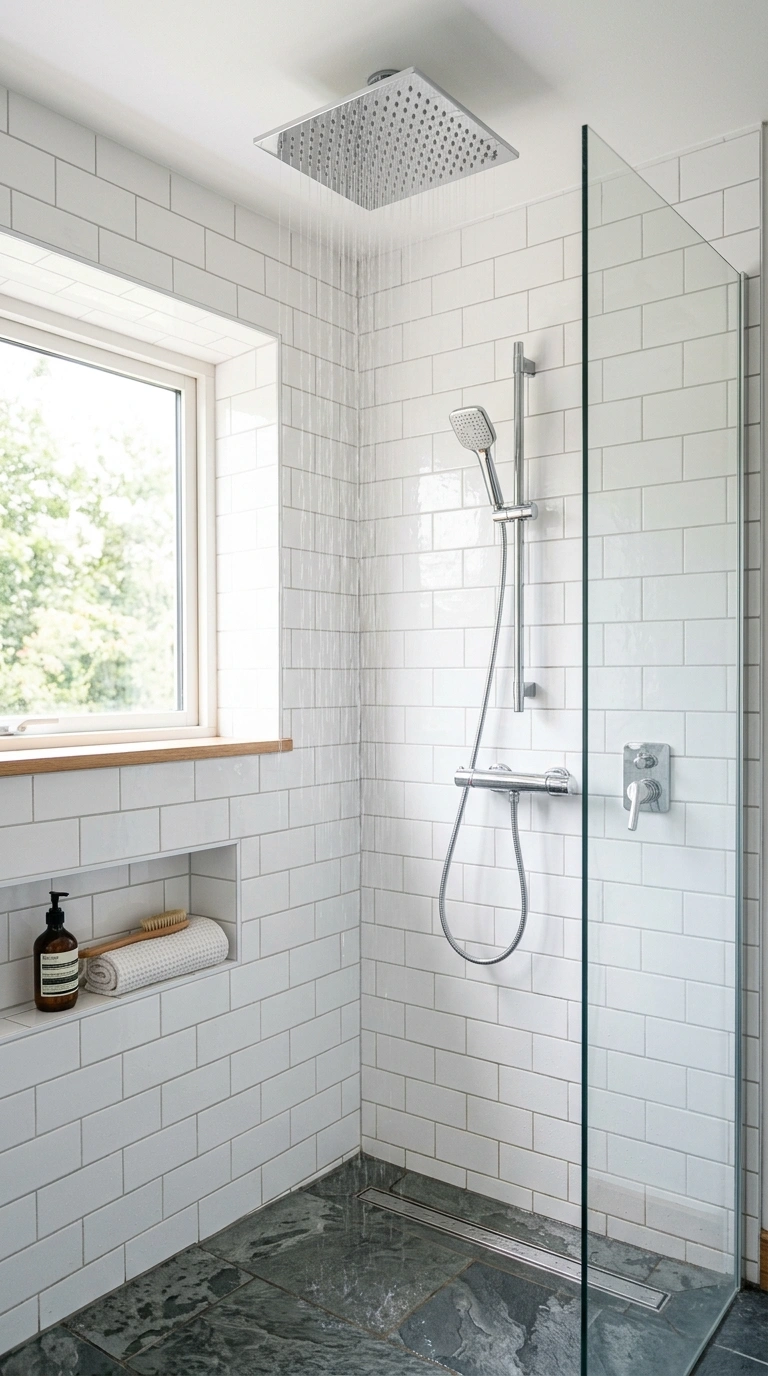
A rainfall showerhead mounted directly overhead changes the whole feel of a small shower, turning a basic wash into something closer to a spa visit. Because the water falls straight down instead of at an angle, it also feels less cramped, since you are not ducking around a showerhead that points into a tight corner.
Choose a showerhead with a wide, flat design, usually round or square, mounted flush or close to the ceiling. This works in almost any small shower as long as the plumbing can be adjusted to route water up and over instead of out from the wall. Pair it with a simple handheld wand on a slide bar for rinsing and cleaning, since a rainfall head alone can make washing your hair or rinsing soap off a little slower. Many rainfall kits are sold as full sets, making this an approachable weekend project for a handy homeowner.
11. Wood-Look Tile
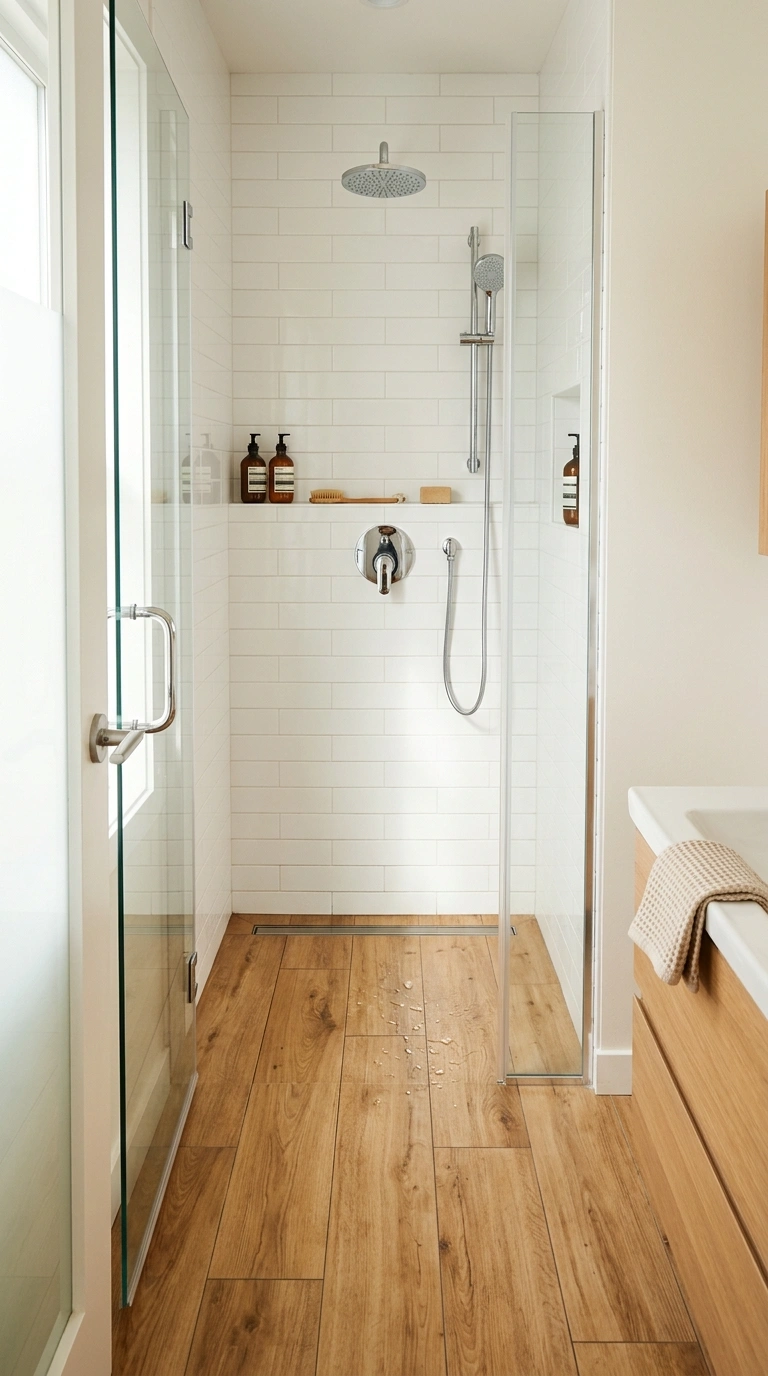
Wood-look porcelain tile brings warmth into a small shower without the maintenance problems of real wood, which does not hold up well in constant water exposure. The soft, natural color and grain pattern make a shower feel cozy instead of cold and clinical.
Use a wood-look tile on the shower floor paired with plain white or light gray walls, letting the wood tone be the main character in the space. Choose a plank shape that runs the length of the shower floor rather than a short, choppy cut, since longer planks make the floor look more expensive and less busy. This tile installs the same way as any porcelain tile, so a tile contractor can typically complete a small shower floor in a single day, plus drying time before the grout is sealed.
12. Corner Teak Bench
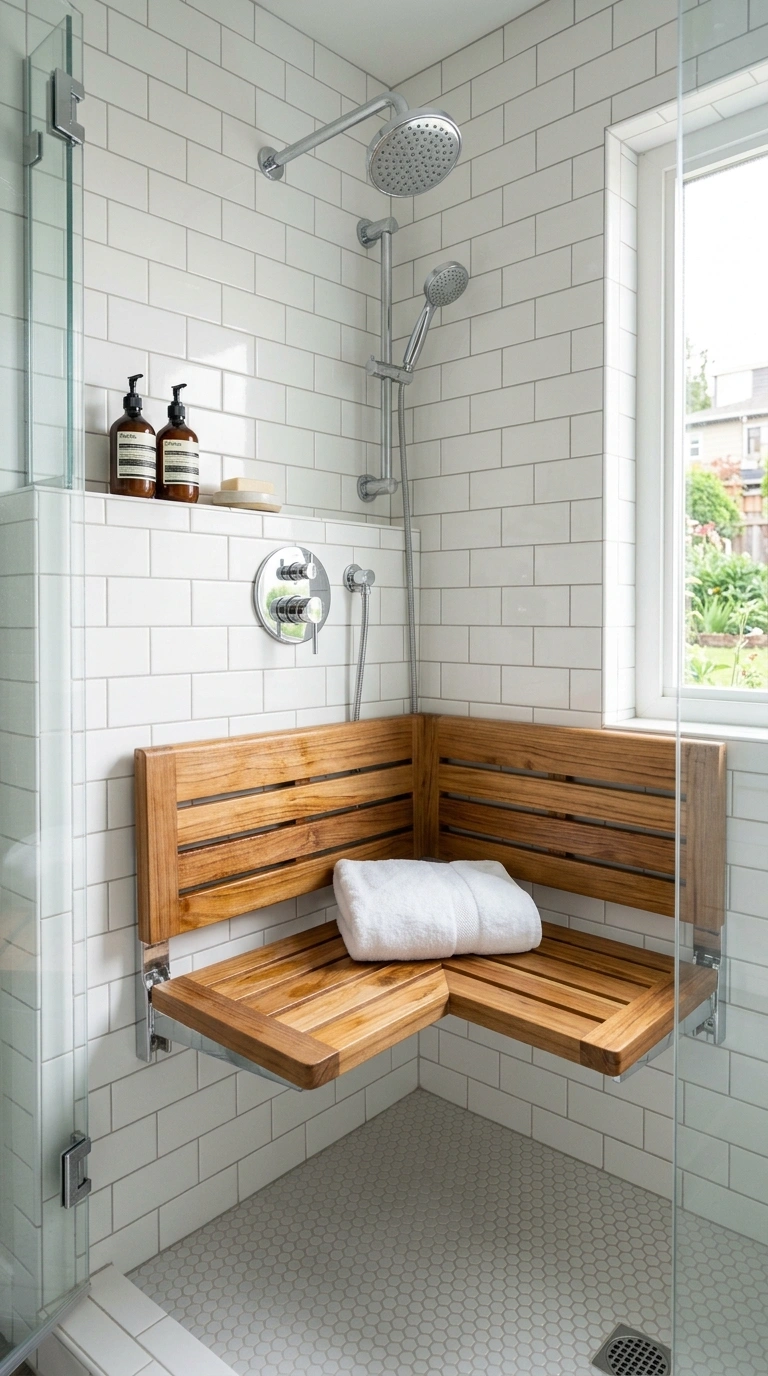
A small fold-down or fixed corner bench made from teak wood gives you a place to sit, rest a foot while shaving, or set down soap and a razor, all without eating into your shower’s floor space the way a full bench would. Teak holds up well to constant water because of its natural oils, so it will not warp or rot the way other woods might.
Mount the bench in an unused corner of the shower, ideally one that does not interfere with the water spray or the door swing. Choose a teak bench with slatted wood, since the gaps let water drain through instead of pooling on top. This is a simple add-on project, since most teak shower benches can be wall mounted with basic tools in under an hour, no plumbing or tile work required.
13. Half-Wall Divider
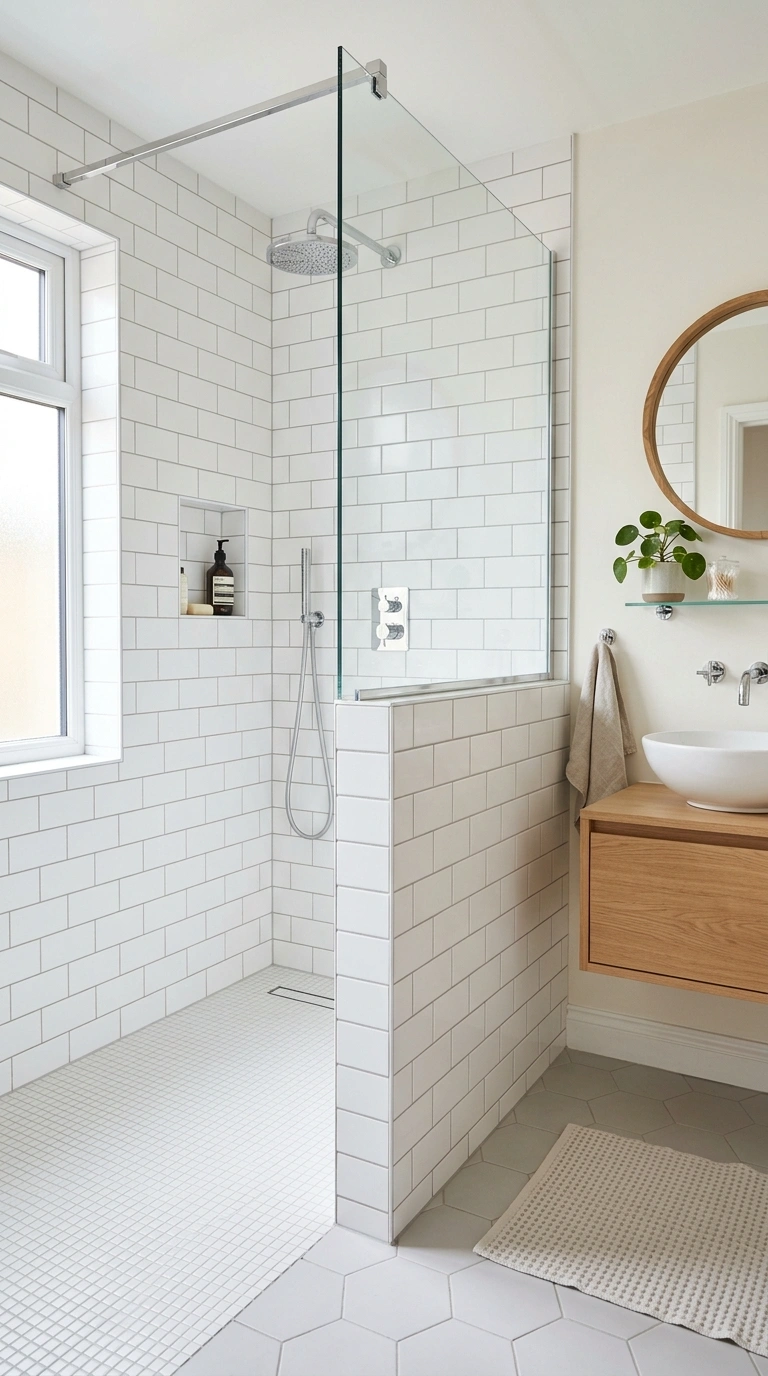
A half wall, topped with a short piece of glass, separates the shower from the rest of the bathroom without closing it in completely the way a full glass enclosure or a shower curtain would. This works especially well in small bathrooms where a full glass box would feel heavy or make the room feel chopped up.
Build the wall to about waist height, then top it with a matching piece of tempered glass to keep water contained while keeping the sightline open above it. Tile the half wall to match the shower walls so it reads as one connected surface instead of a separate structure. This layout works well for a walk-in shower with no door at all, since the half wall does most of the job of keeping water where it belongs. Plan this as part of a larger remodel, since it involves both framing and plumbing work.
14. Marble-Look Tile
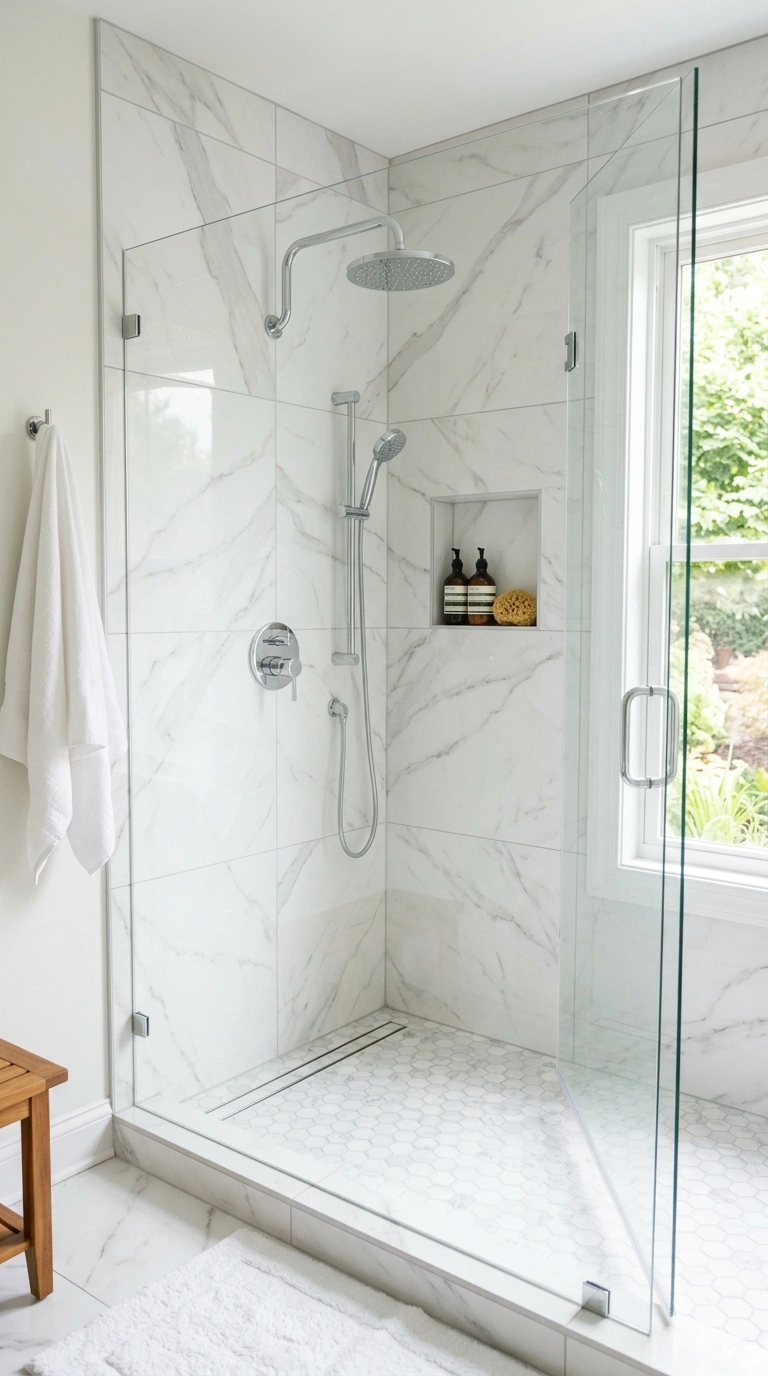
Marble-look porcelain tile gives a small shower an upscale feel without the cost or upkeep of real marble, which stains easily and needs regular sealing. The soft veining in the tile pattern adds visual interest to plain shower walls while still keeping the overall look calm and light.
Choose a large-format marble-look tile, ideally at least twelve by twenty-four inches, since fewer grout lines make the surface look more like a single slab of stone. Stick to white or soft gray veining rather than bold, dark marble patterns, which can make a small shower feel heavier and more closed in. Pair the tile with simple chrome or brushed nickel fixtures so the marble pattern stays the focus. A tile professional can usually install large-format tile more evenly than a first-time DIYer, since bigger tiles are harder to level by hand.
Also read: Walk-In Shower Ideas Without a Tub
15. Recessed Niche Lighting
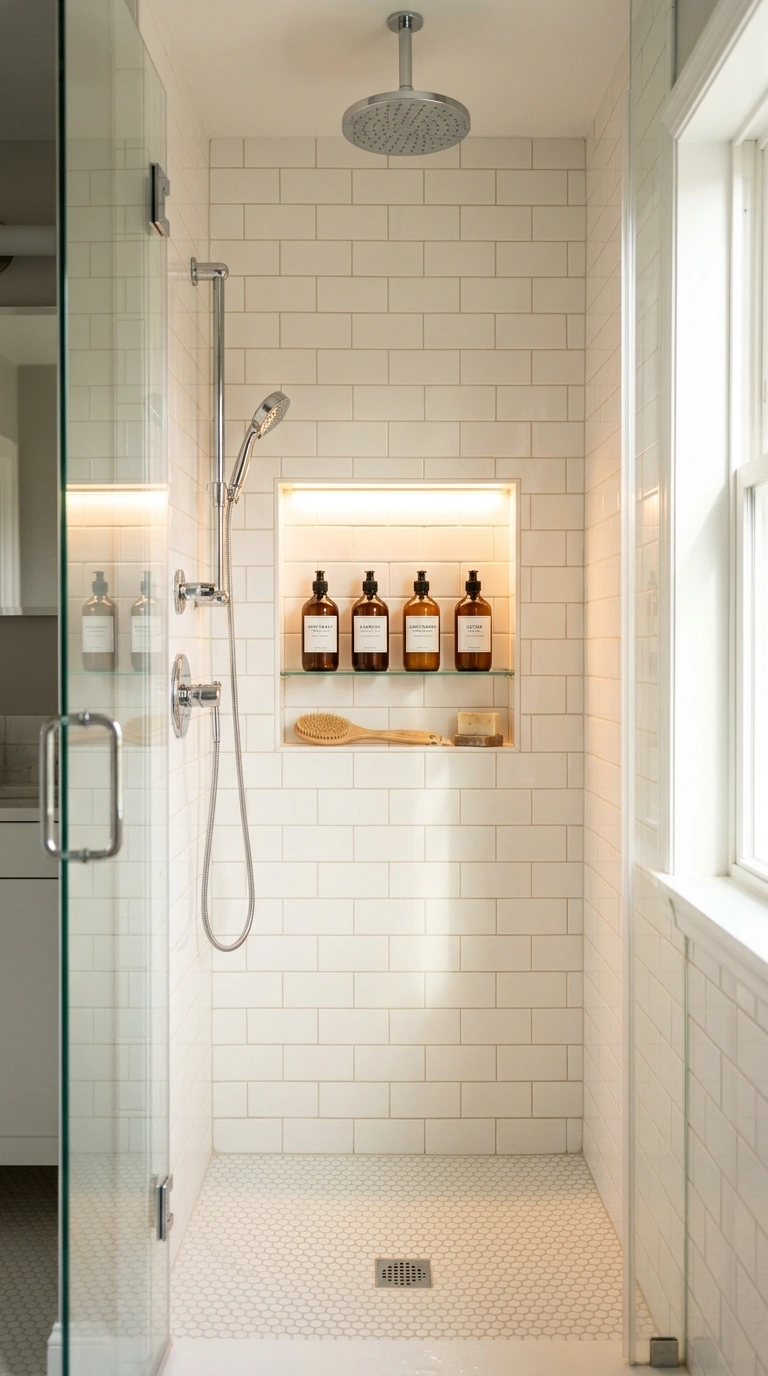
Adding a small waterproof light fixture inside a shower niche or along the ceiling above the shower gives the space a soft glow that regular overhead bathroom lighting often misses. This extra light makes tile colors and textures show up more clearly and gives the whole shower a more finished, intentional feel.
Use a rated wet-location LED fixture, since standard light fixtures are not built to handle direct water exposure. Place the light inside a niche to highlight bottles and tile, or install a small recessed can light directly above the shower for even, soft lighting across the whole space. This project does involve electrical work, so it is best handled by a licensed electrician, especially if new wiring needs to be run to the shower area. The payoff is a shower that feels noticeably brighter and more polished once the light is in place.
16. Handheld Shower Wand
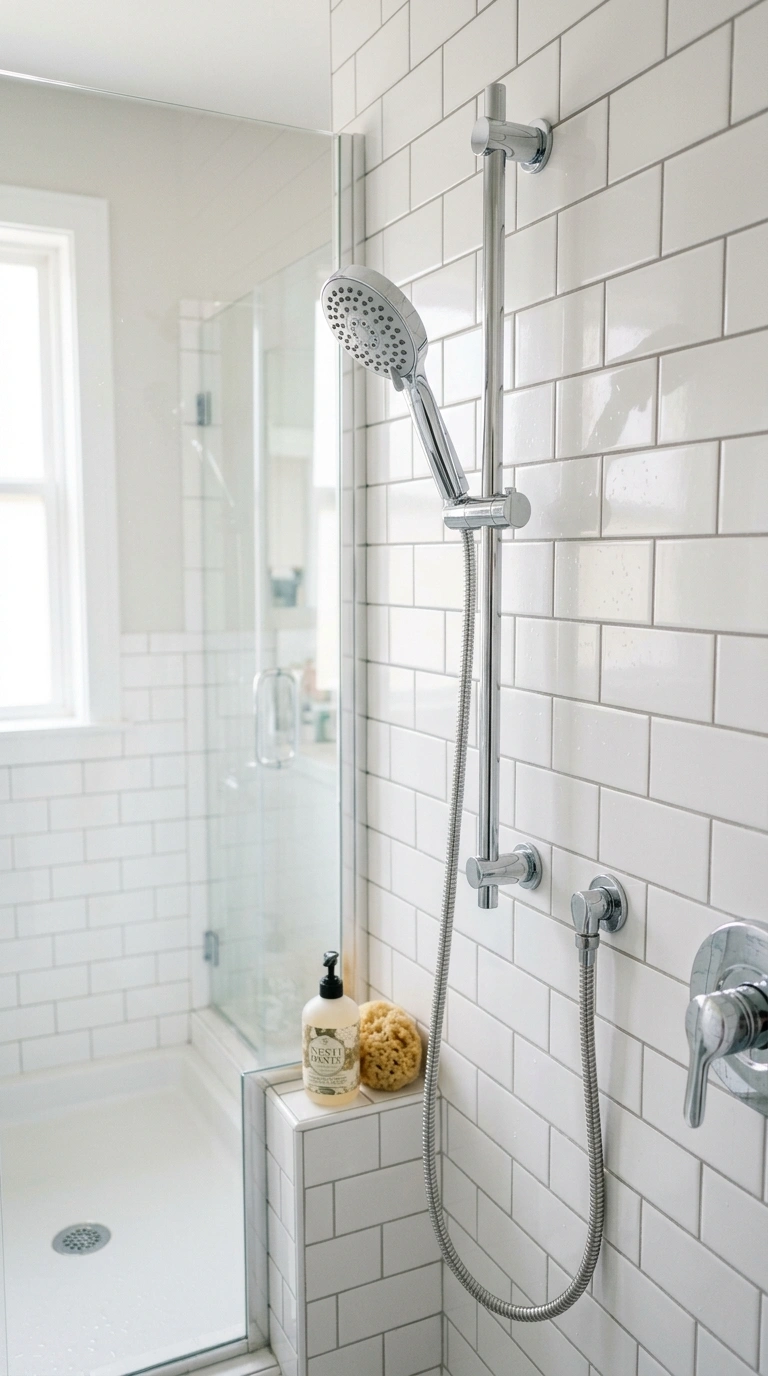
A handheld shower wand on a sliding bar gives you flexibility that a fixed showerhead cannot, which matters a lot in a small shower where every inch of comfort counts. You can adjust the height for different family members, direct the water exactly where you want it, and use it to rinse the shower walls and floor during cleaning.
Choose a wand with a slide bar that moves up and down a vertical track, so each person in the house can set their own height without adjusting the whole fixture. Pair the handheld wand with a fixed showerhead above it for the best of both worlds, letting you switch between the two depending on your mood. This is one of the more affordable upgrades on this list, since most handheld shower kits install directly onto existing plumbing without needing a plumber.
17. Bold Grout Lines
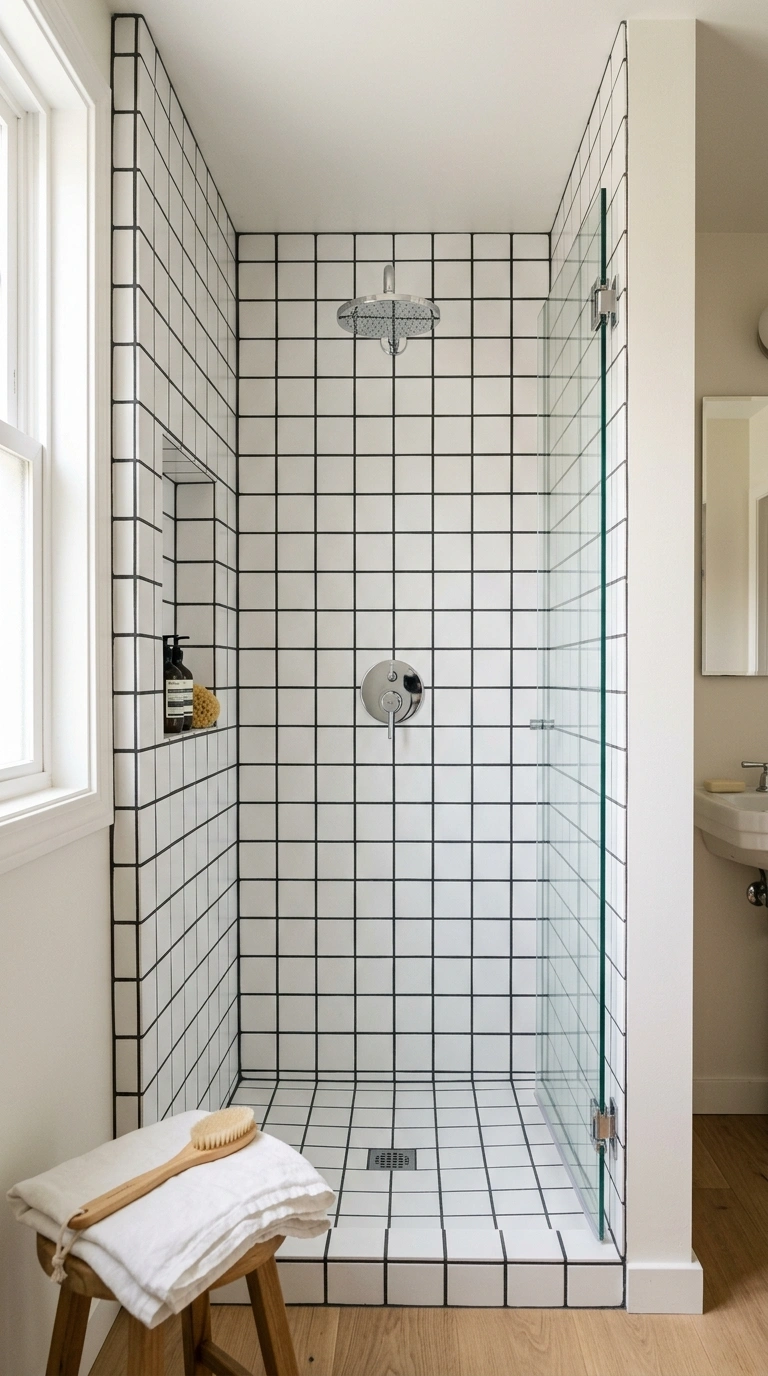
Using a dark grout against light tile is a small design choice that adds a graphic, modern edge to a small shower. Instead of trying to hide the grout lines by matching them to the tile, this idea makes them part of the design, giving plain white or cream tile a crisp, defined pattern.
This works best with simple tile shapes, like subway tile or square tile, since the grid pattern created by dark grout can look busy on more complicated tile shapes. Choose a charcoal or black grout paired with white tile for the strongest contrast, or a soft gray grout for a more subtle version of the same idea. If you already have light tile installed, some grout can be recolored with a grout stain instead of removing and replacing the tile entirely, which saves both time and money.
18. Mosaic Border Tile
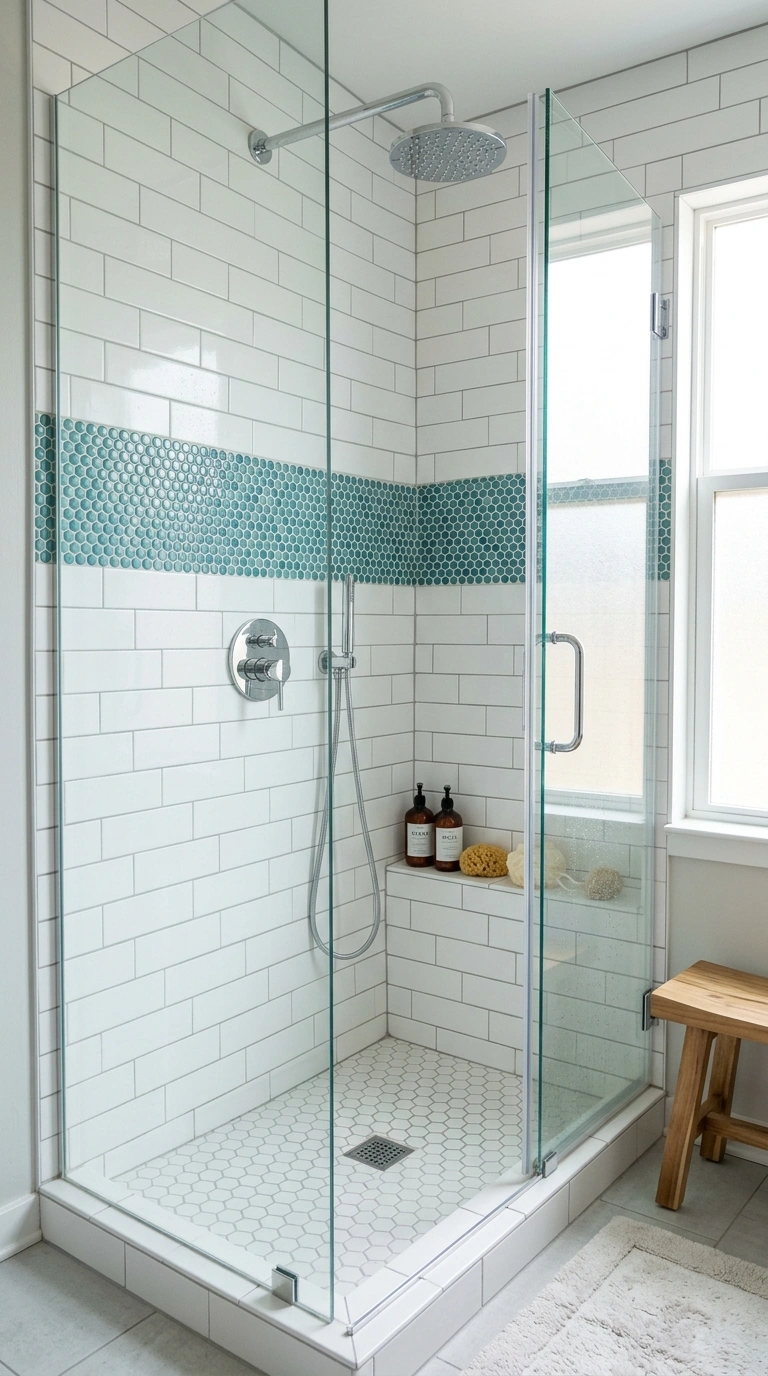
A thin strip of mosaic tile running around the shower, either at eye level or near the top of the walls, adds a decorative detail without covering the whole shower in a busy pattern. This border acts almost like a piece of jewelry for the shower, drawing the eye without overwhelming the space.
Choose a mosaic tile with small pieces, such as a penny round or a tiny square mosaic, in colors that pick up on one or two other elements in your bathroom, like a blue-green mix or a warm gold tone. Keep the border to a single row or a narrow band, no more than a few inches tall, so it stays a subtle detail rather than the main event. This is a great project for adding personality to an existing shower during a smaller tile refresh, since you can often add a mosaic border without redoing the entire wall.
Also read: Black Bathroom Ideas That Feel Luxe, Not Dark
19. Sliding Glass Door
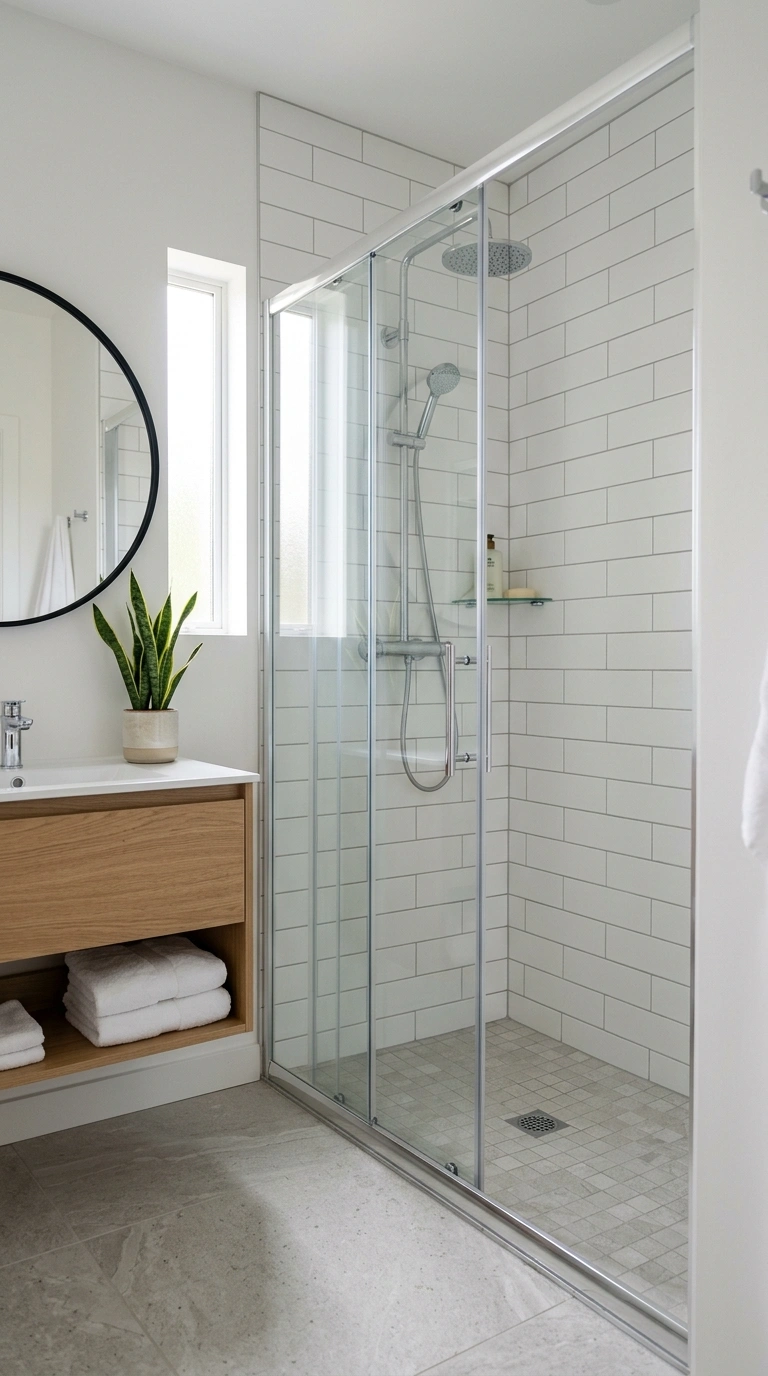
A sliding glass shower door works well in small bathrooms where a swinging door would need more clearance than the room can spare. Because the door slides along a track instead of swinging outward, you can fit a sliding door into a tighter footprint without bumping into a vanity or toilet every time you open it.
Choose a two-panel sliding door for a narrow shower opening, or a single sliding panel paired with a fixed glass panel for a wider opening. Look for a track design with a low profile and easy-to-clean groove, since sliding door tracks can collect soap scum and water if they are not wiped down regularly. This is a straightforward swap if you already have a shower enclosure and just want to update the door style, since most sliding door kits are designed to fit standard shower openings.
20. Skylight Above Shower
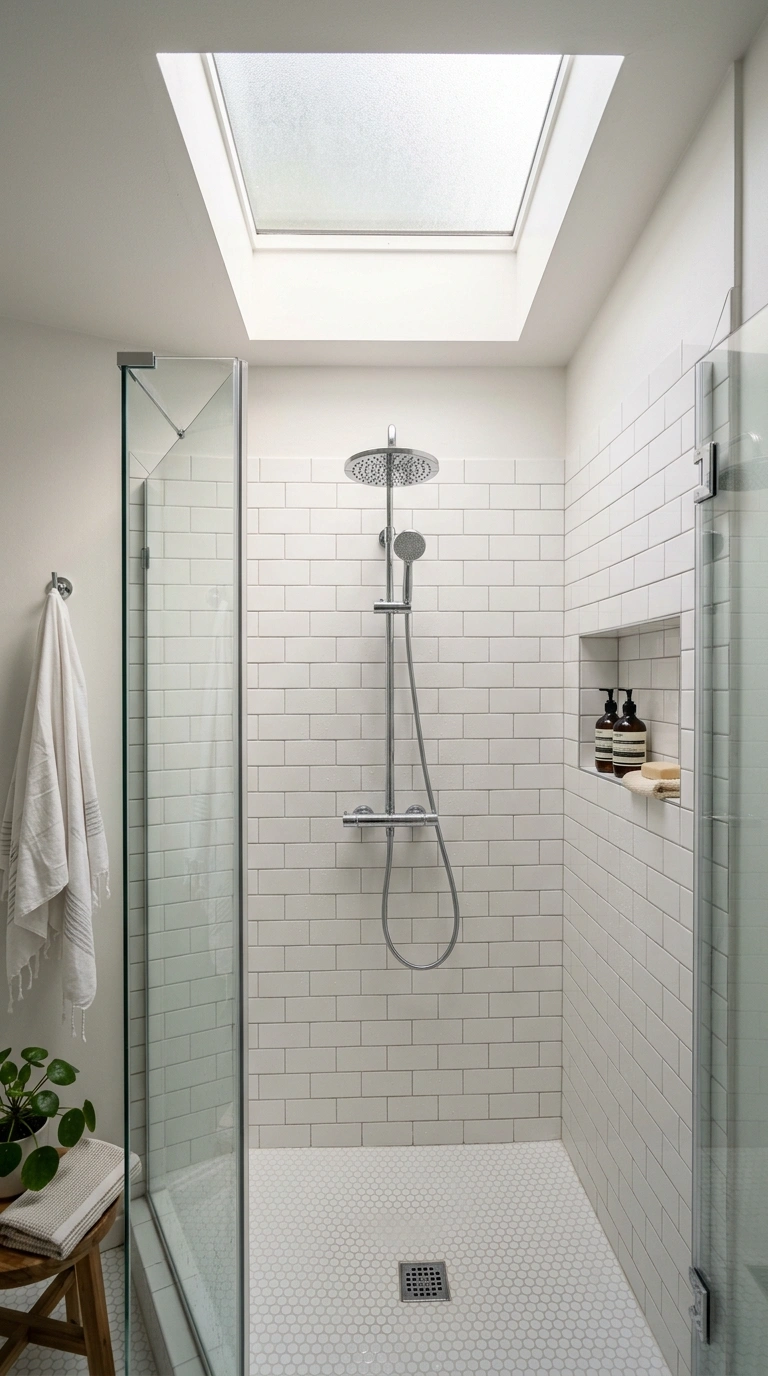
A small skylight installed directly above the shower brings in natural daylight that no artificial light fixture can quite match, and it makes even a tiny shower feel connected to the outdoors. Morning light pouring down from above turns a routine shower into a genuinely pleasant part of the day.
This upgrade only works if your shower sits directly under a roofline, so it is best suited for a one-story home or a top-floor bathroom. Choose a frosted or textured skylight glass for privacy, since a clear skylight can let in more visibility than most people want in a shower. This is a bigger project involving roof work, so hiring a licensed contractor is important to make sure the skylight is properly flashed and sealed against leaks.
21. Ceiling-Mount Showerhead
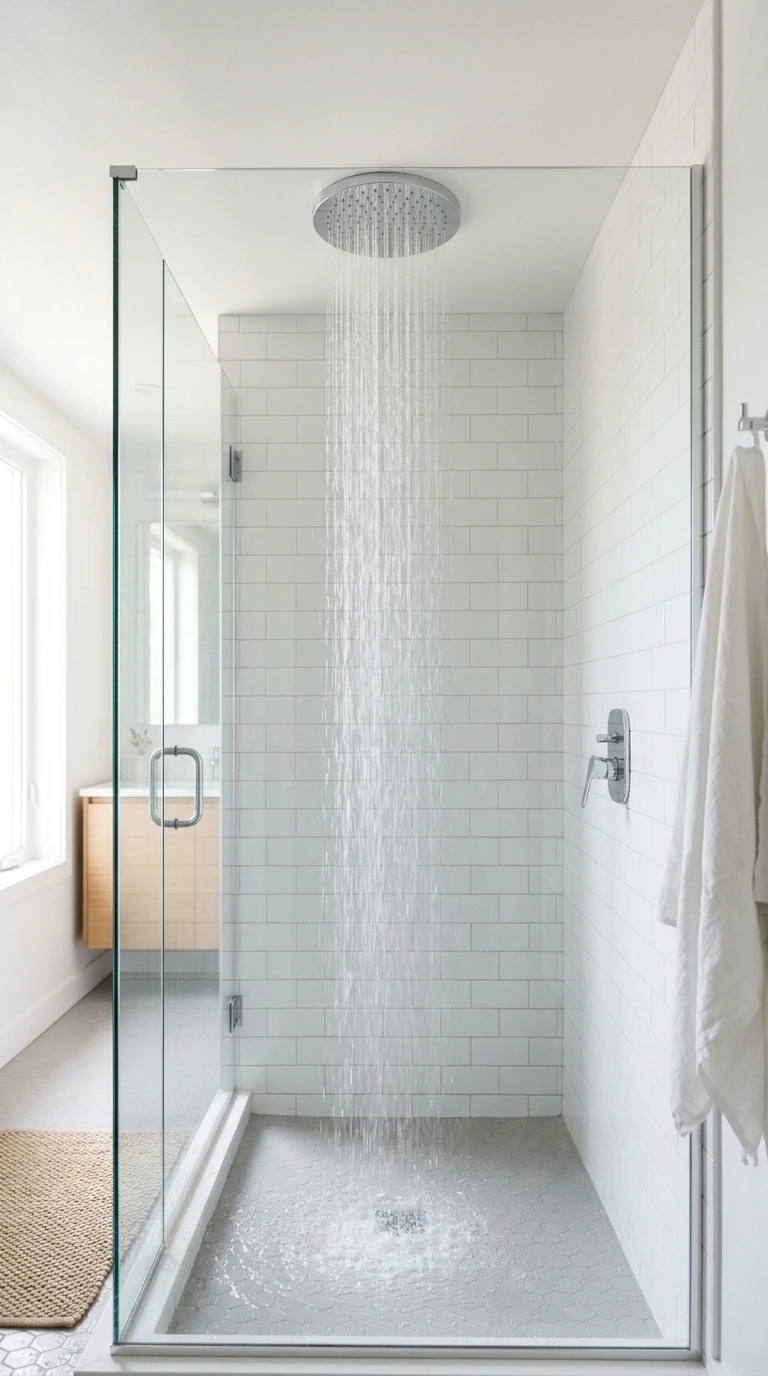
Mounting the showerhead directly into the ceiling rather than out from the wall clears up visual space in a small shower, since there is no arm or pipe jutting out at eye level. The water falls straight down from above, similar to a rainfall showerhead, but the ceiling mount takes this idea one step further by removing the wall arm entirely.
This works best in a small shower with a standard ceiling height, since the plumbing needs to be routed up through the ceiling instead of through the wall. Choose a round or square ceiling-mount head in a finish that matches your other bathroom fixtures. Because this involves rerouting plumbing, it is best planned during a bathroom remodel rather than as a standalone weekend project, and a licensed plumber should handle the pipe work to avoid any leaks inside the ceiling.
A small shower does not have to feel like a compromise. Once you start layering in a few of these ideas, whether it is a change in tile, a new showerhead, or better lighting, the whole space starts to feel like it was designed on purpose. Start with one or two updates that fit your budget, and let the rest come later.
Also read: 23 Bathroom DIY Ideas That Look Way Harder Than They Are
Frequently Asked Questions
What makes a small shower feel bigger without a full remodel?
Simple swaps like a frameless glass door, lighter grout, or a handheld shower wand can open up the space without any construction work.
Is a curbless shower worth it in a small bathroom?
Yes, if you are already remodeling. It removes visual clutter and makes the floor feel continuous, though it does require careful planning for drainage.
Is a curbless shower worth it in a small bathroom?
Yes, if you are already remodeling. It removes visual clutter and makes the floor feel continuous, though it does require careful planning for drainage.
What tile size works best for a small shower?
Larger tiles, like twelve by twenty-four inch pieces, tend to make a small shower feel less busy because there are fewer grout lines breaking up the surface.
Should I choose light or dark tile for a small shower?
Light tile reflects more light and usually makes a small space feel more open, though dark accents used sparingly can still work well as contrast.
Can I add a niche to an existing shower without a full remodel?
It is possible with prefabricated niche inserts, though a built-in niche during a remodel usually gives a cleaner, more custom result.