
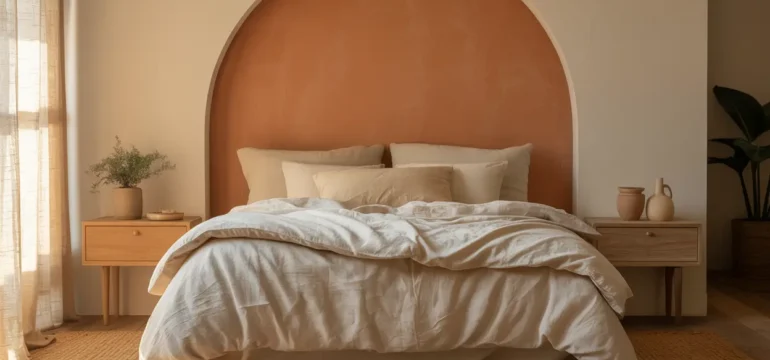
Picking a bedroom color is one of those decisions that feels bigger than it actually is. A lot of people default to plain white or gray because it seems safe, but those cool tones can end up making a bedroom feel a little flat or even chilly, especially at night. Warmer colors, on the other hand, tend to make a room feel like a place you actually want to relax in. This does not mean loud or bright colors either. Most of the shades on this list are soft, muted, and easy to live with, the kind you see in cozy boutique hotels and warm, lived in homes. Some work best as a full wall color, while others are better saved for an accent wall, bedding, or a few pillows. As you go through this list, think about the natural light your bedroom gets, since that will change how warm or dark a color reads on your actual walls. Test a small swatch before committing to the whole room.
1. Warm Terracotta Walls
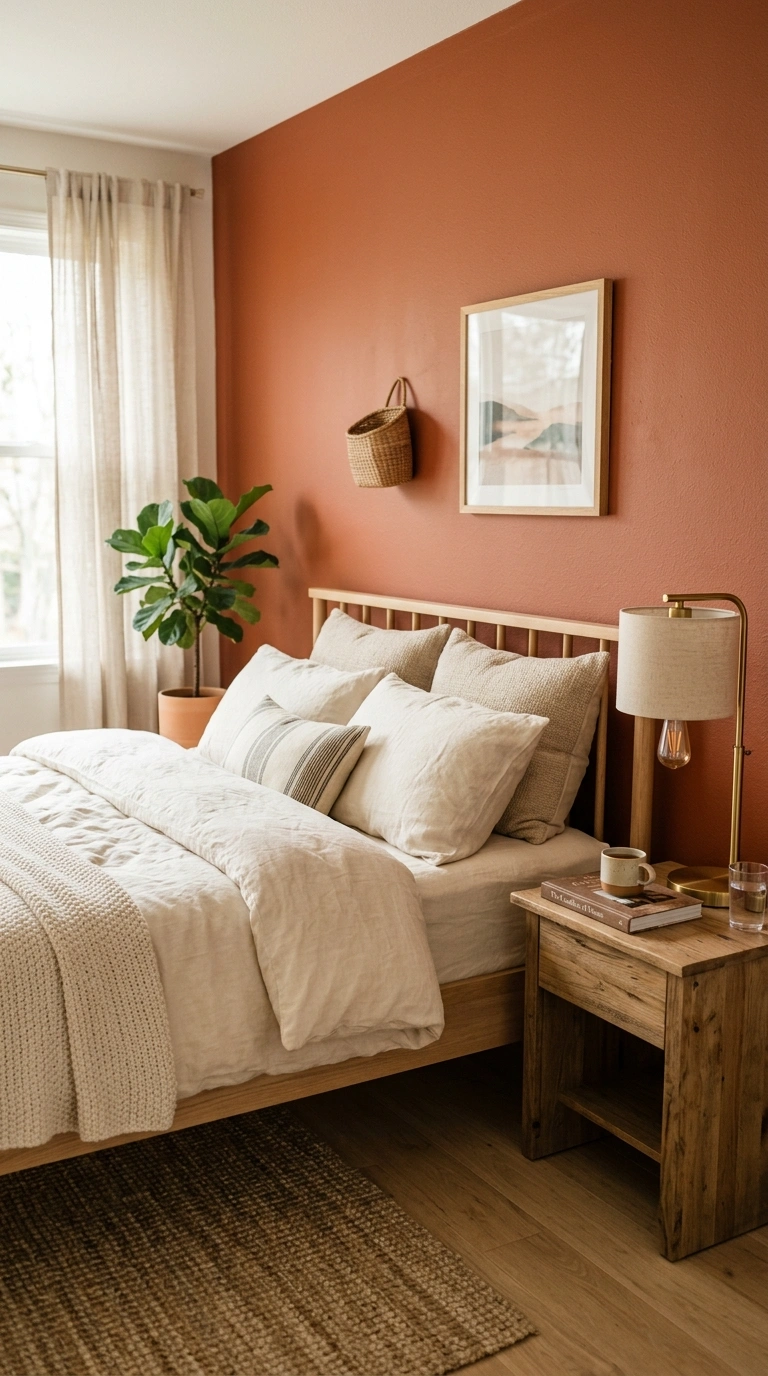
Terracotta is a warm, earthy orange red that brings an instant cozy feeling to a bedroom without being loud. It works especially well as a full wall color in a room with plenty of natural light, since the warmth of the shade softens as the light shifts throughout the day. Pair it with cream bedding, natural wood furniture, and simple black or rattan light fixtures to keep the look balanced and modern rather than overly rustic. If a full room of terracotta feels like too much, try it just on the wall behind the headboard, then keep the other three walls a soft cream or white to let that one wall stand out. Add a few woven textures, like a jute rug or a linen throw pillow, to round out the earthy feel. This color pairs beautifully with brass or gold hardware on dressers and nightstands, giving the whole room a warm, sunbaked feeling that photographs especially well in the late afternoon.
2. Soft Sage Green
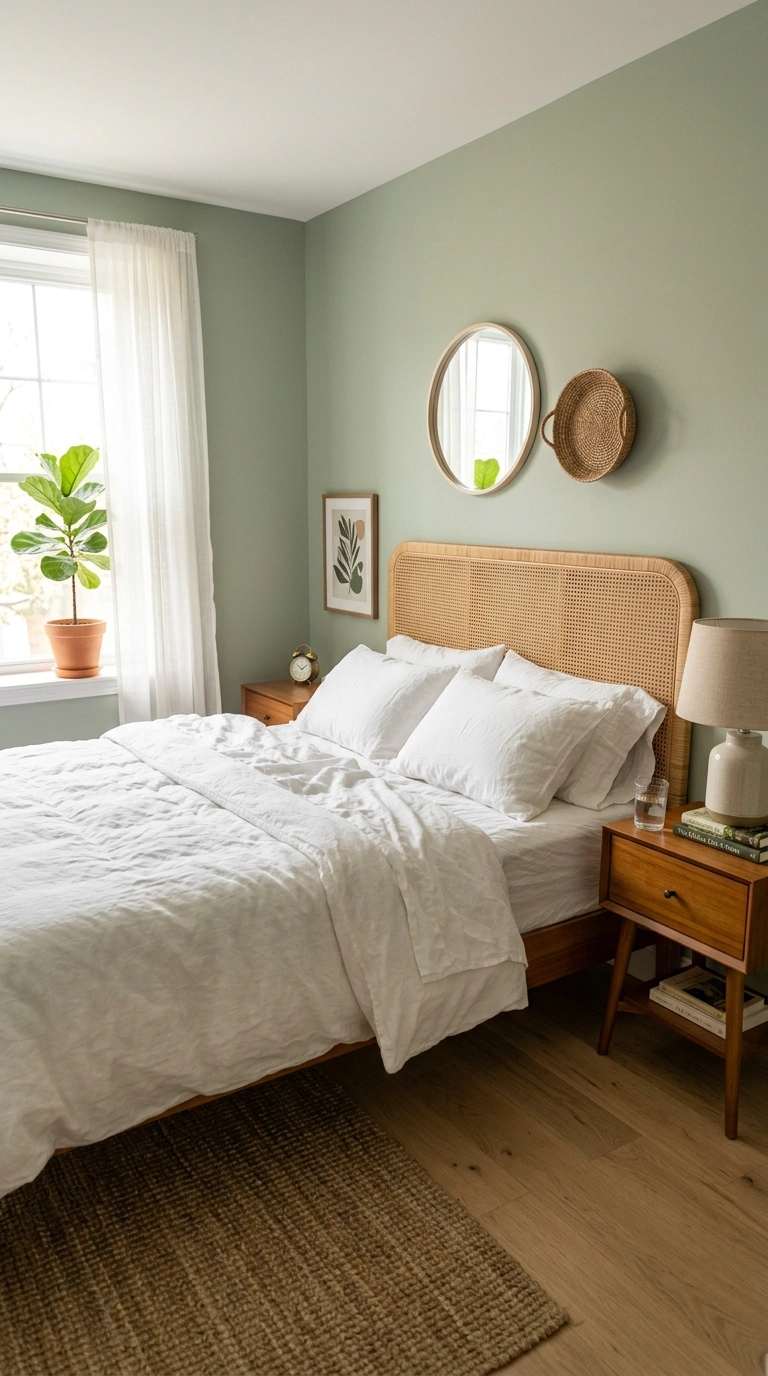
Sage green has become one of the most popular bedroom colors because it manages to feel both calming and warm at the same time, unlike cooler greens that can read a bit sterile. It works well on all four walls in a bedroom, especially paired with warm wood furniture, linen bedding, and brass or matte black accents. This color also plays nicely with natural materials like rattan headboards or woven pendant lights, which help keep the room feeling grounded and organic rather than trendy for a moment and then dated. If you are nervous about committing to a full room, sage works just as well painted only on the ceiling or as a half wall treatment with a chair rail. Add deeper green or terracotta accent pillows to bring in some contrast without straying from the overall warm, earthy palette. Sage tends to look best with soft, warm toned lighting rather than bright white bulbs, which keeps the green from reading too cool at night.
3. Creamy Buttermilk Tones
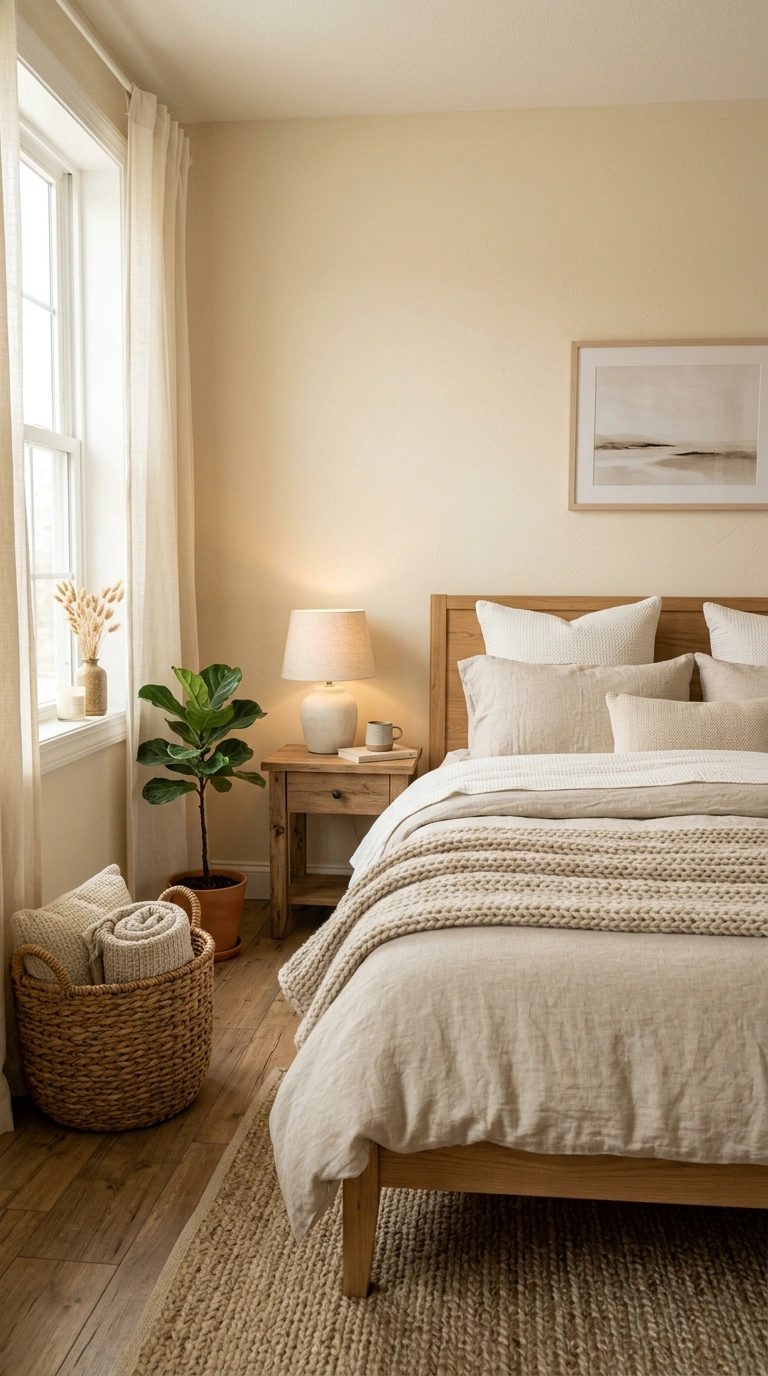
A warm buttermilk or creamy off white is a gentle way to bring softness into a bedroom without the starkness of pure white. This shade works on every wall and acts almost like a blank canvas, letting your bedding, art, and furniture bring in more color and personality. Because it has a slight yellow undertone, it tends to glow nicely in both morning and evening light instead of looking flat or gray. Pair buttermilk walls with warm wood furniture, woven baskets, and layered neutral bedding in ivory, oatmeal, and soft brown tones for a cozy, collected look. This color is also a smart choice if you rent your space and cannot commit to a bold wall color, since it still feels warmer and more finished than standard builder white. Add a few brass or wood framed pieces of art and a soft area rug to finish the room without needing any bold color decisions elsewhere.
4. Deep Chocolate Brown
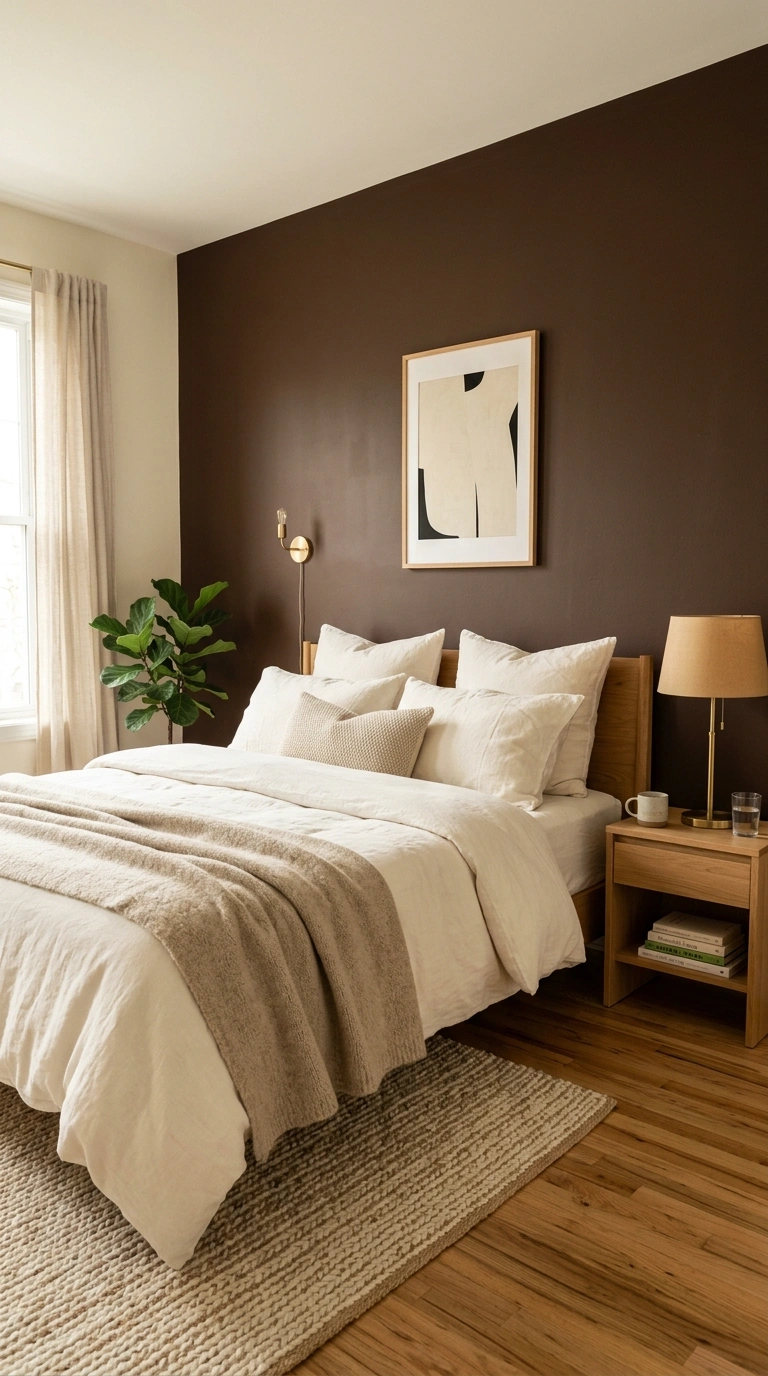
Chocolate brown might sound like a bold choice, but used the right way it creates one of the coziest, most enveloping bedroom feelings you can get. Rather than painting all four walls, try it on just the wall behind the bed, or go with a deep brown headboard and bedding paired with lighter walls for a more approachable version. This color pairs beautifully with warm cream or ivory bedding, brass lighting, and natural wood floors, all of which keep the space from feeling too dark or heavy. In a room with good natural light, a full chocolate brown wall can feel surprisingly warm and grounding rather than gloomy. Add texture through a bouclé chair, a linen throw, or a woven wall hanging to keep the room feeling soft rather than stark. This color works especially well in primary bedrooms where you want the space to feel like a calm, private retreat away from the rest of the house.
5. Dusty Rose Accents
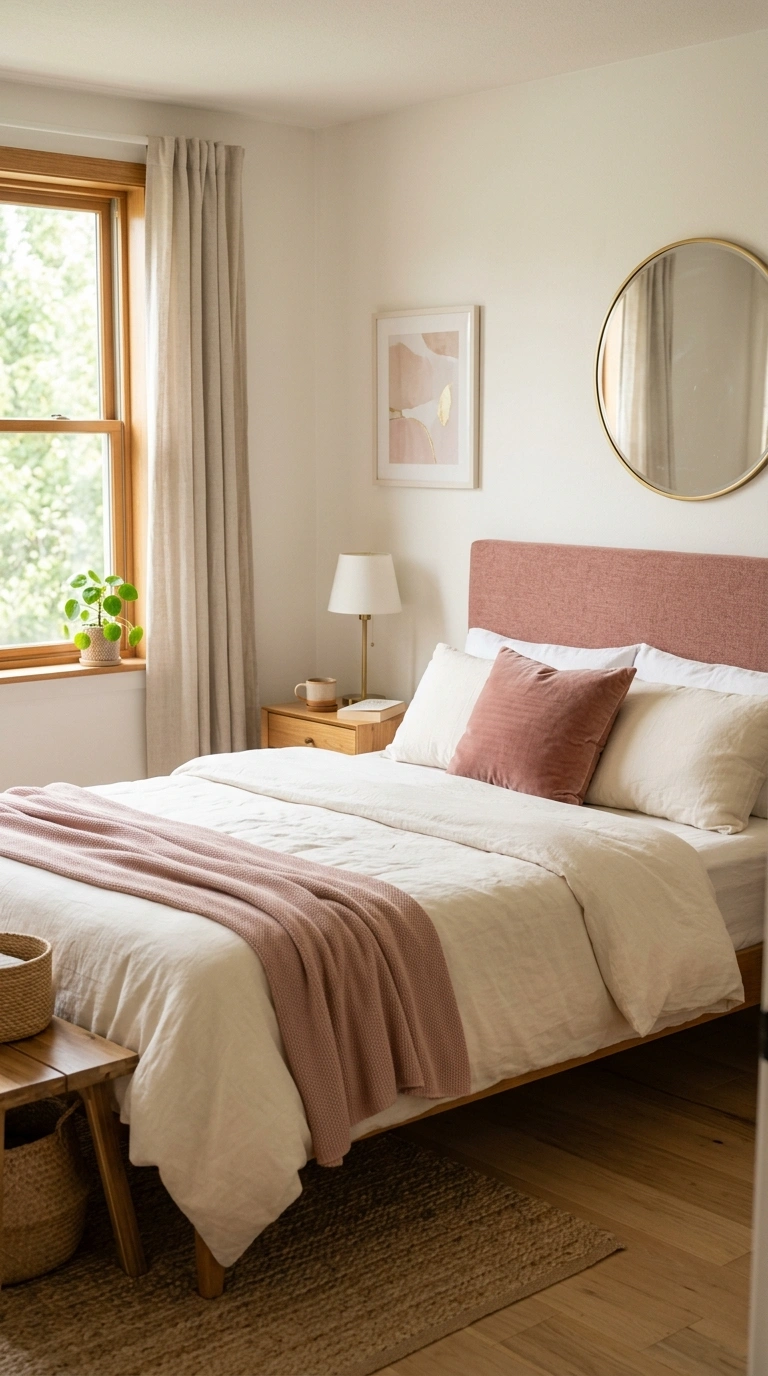
Dusty rose is a muted, grown up version of pink that feels warm and soft without being overly sweet or feminine. It works best as an accent color, whether that is a single accent wall, a set of pillows, or a soft throw blanket layered over neutral bedding. Paired with warm white walls and natural wood furniture, dusty rose adds just enough color to make a bedroom feel inviting without overwhelming the space. This shade also pairs surprisingly well with deeper greens or warm browns if you want to build out a fuller color palette over time. A dusty rose headboard, whether upholstered in velvet or linen, can become the focal point of the room while everything else stays simple and neutral. Because the color leans muted rather than bright, it tends to work in bedrooms with both warm and cooler natural light, making it a fairly flexible choice for most homes.
6. Warm Charcoal Gray
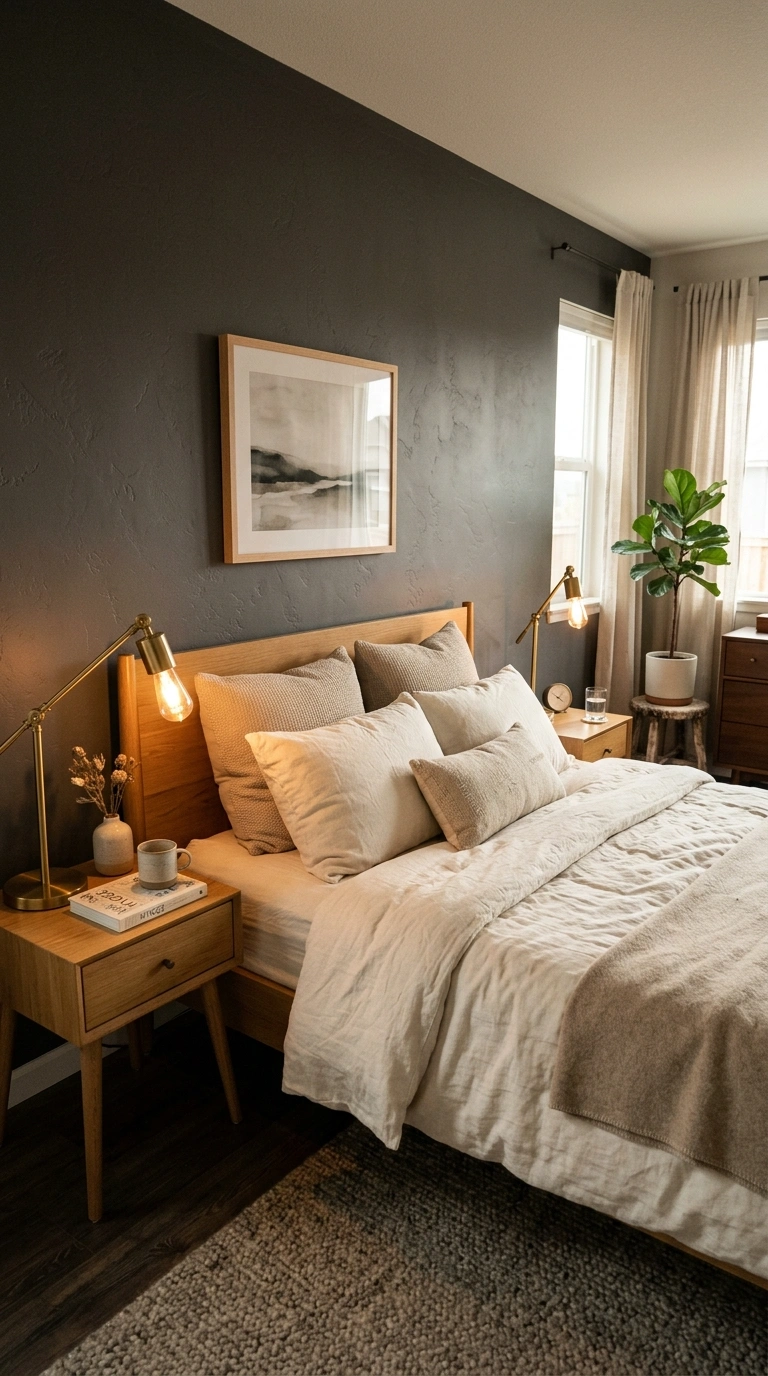
Not all gray has to feel cold. A warm charcoal gray, meaning one with brown or beige undertones rather than blue, can create a moody, cozy bedroom feeling, especially at night. This works well as a full wall treatment in a primary bedroom, paired with warm wood furniture, cream or oatmeal bedding, and brass or matte black lighting to keep the contrast feeling intentional. Warm charcoal also makes colors like terracotta, mustard, or deep green really pop when used as accent pieces, so it is a great base if you like to switch out throw pillows or artwork seasonally. In smaller bedrooms, try this color only on the wall behind the bed rather than the whole room, so the space still feels open. Layered lighting, like a bedside lamp with a warm bulb, is especially important with charcoal walls, since it keeps the room from feeling too dark or flat once the sun goes down.
7. Honey Beige Palette
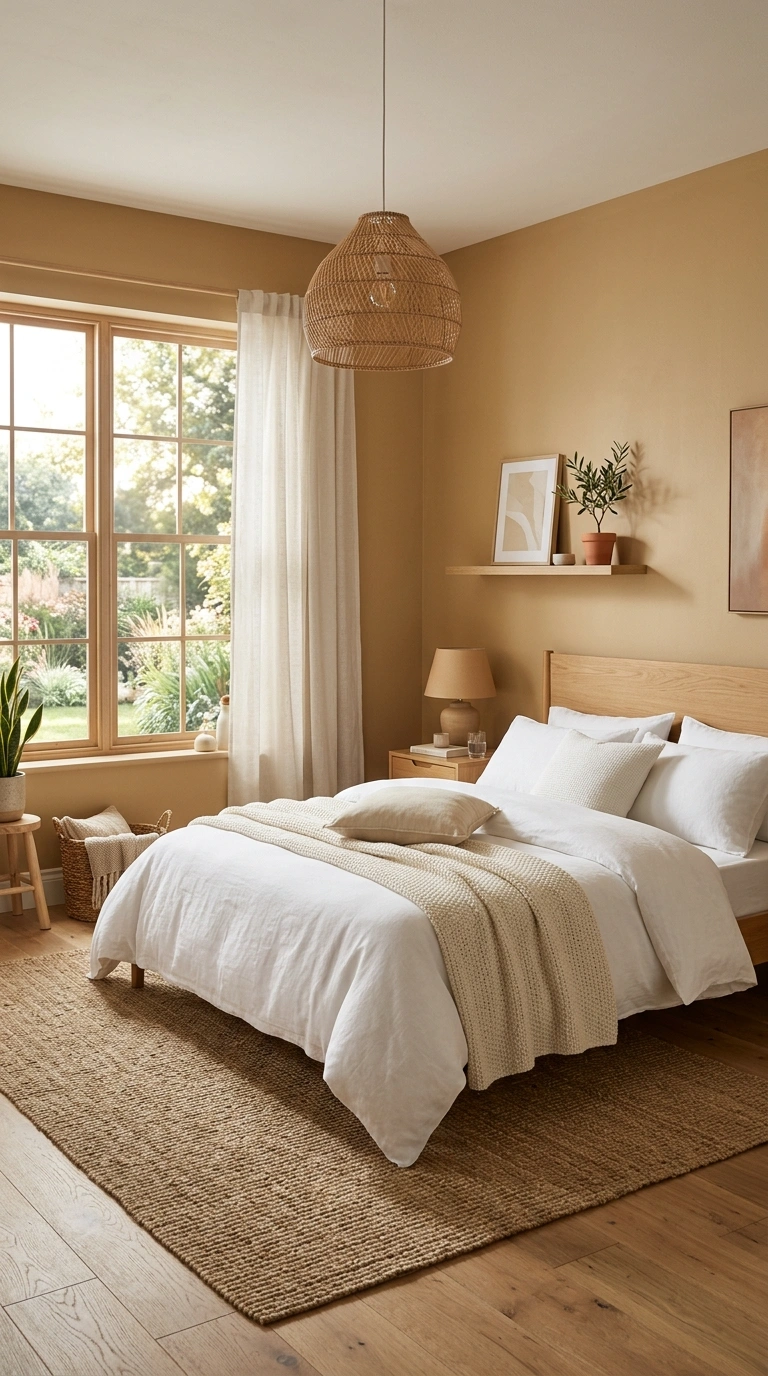
Honey beige sits somewhere between tan and gold, and it brings a soft, sunlit warmth to a bedroom even on cloudy days. This color works beautifully across all four walls, creating a calm backdrop for both light and dark furniture. Pair it with white or ivory bedding, woven textures like a jute rug or rattan lamp, and warm metal accents in brass or gold for a look that feels both modern and comfortable. Honey beige also tends to photograph really well, since it catches light softly rather than looking flat like some cooler beiges can. If you want a bit more depth, add a slightly darker honey or caramel accent wall behind the headboard while keeping the rest of the room lighter. This palette works especially well in bedrooms with large windows, since natural light brings out the warmth in the color throughout the day without needing much extra styling.
8. Muted Clay Red
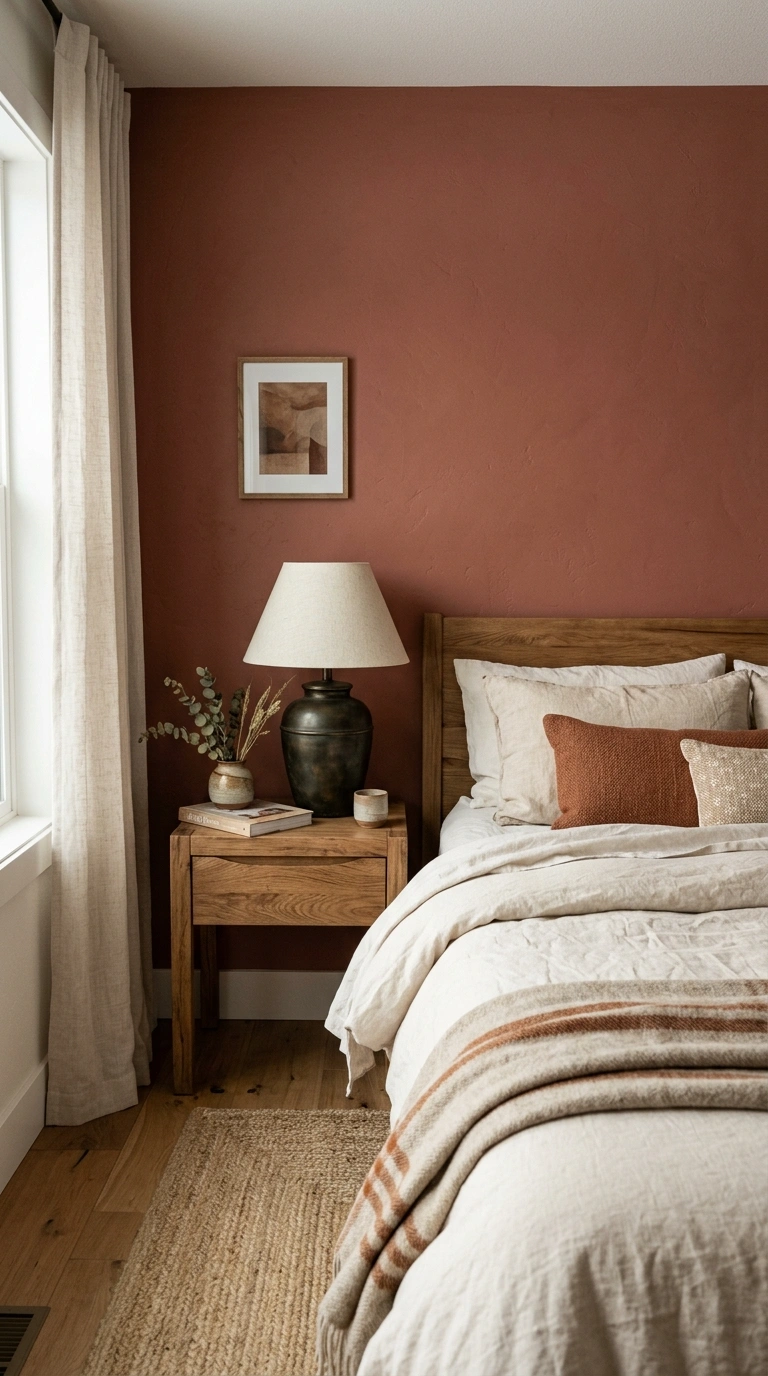
A muted clay red, softer and more brownish than a true red, brings warmth and a bit of drama to a bedroom without feeling overwhelming. This color works especially well as an accent wall behind the bed, paired with cream or oatmeal bedding and simple wood furniture to keep the rest of the room calm. Because clay red leans earthy rather than bright, it tends to feel more grounded and less like a bold design statement, making it easier to live with long term. Add brass or aged bronze hardware on nightstands and dressers to complement the warmth of the wall color. A woven or leather accent chair in the corner can help tie the earthy palette together without adding too much visual weight. This color works particularly well in bedrooms that get warm afternoon light, since the glow brings out the richness of the shade in a way that overhead lighting alone cannot match.
9. Warm Olive Green
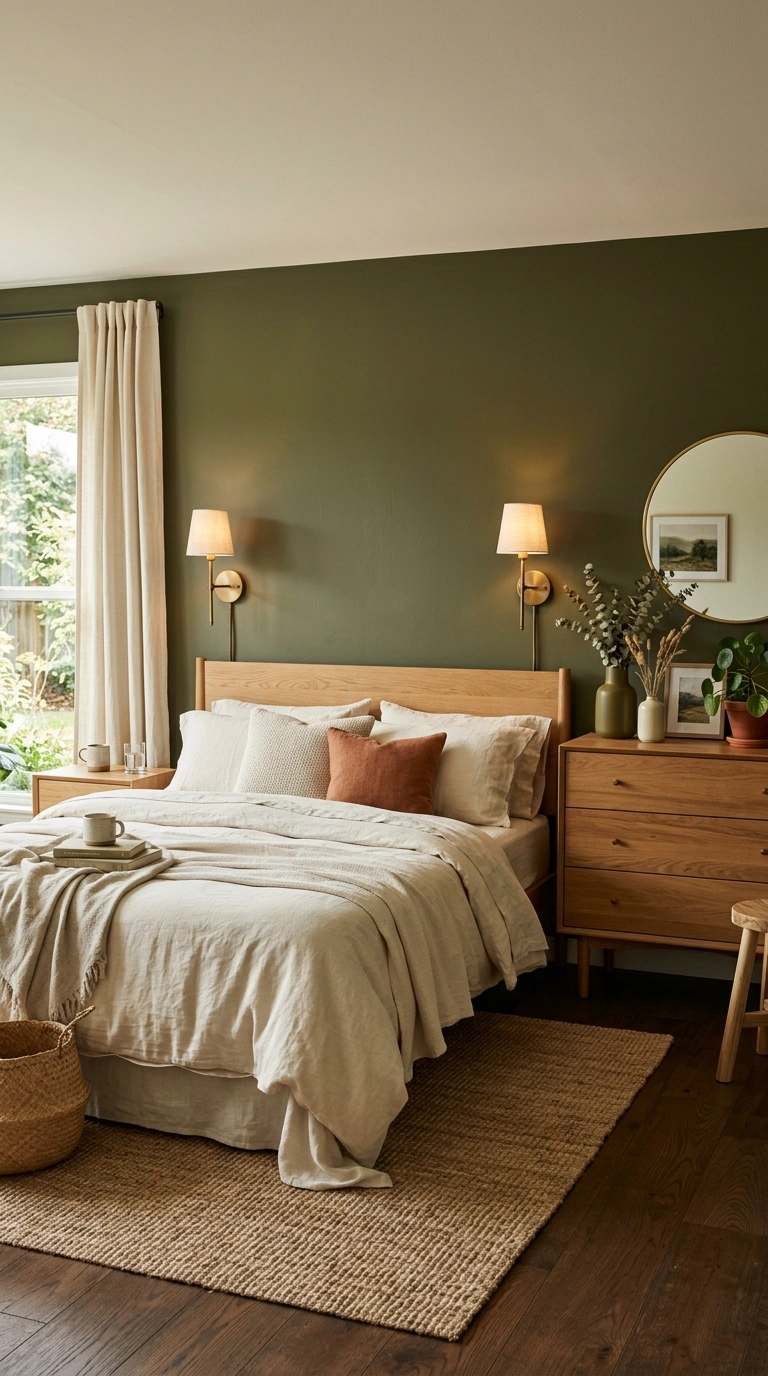
Olive green has a slightly yellow, earthy undertone that makes it feel much warmer than a typical forest green, which is why it works so well in bedrooms aiming for a cozy, modern look. It pairs beautifully with warm wood tones, cream linens, and brass lighting fixtures, creating a palette that feels pulled together without being matchy. This color can be used on all four walls in a bedroom with good natural light, or saved for just the headboard wall if you want a more subtle approach. Olive also works well painted on furniture, like an old dresser or nightstand, if you are not ready to commit to a full wall. Adding a few rust or terracotta accent pieces alongside olive green creates a warm, autumn inspired palette that still feels current. This shade tends to look best with warm toned lighting in the evening, which keeps the green from reading too muted or gray after dark.
10. Soft Camel Tones
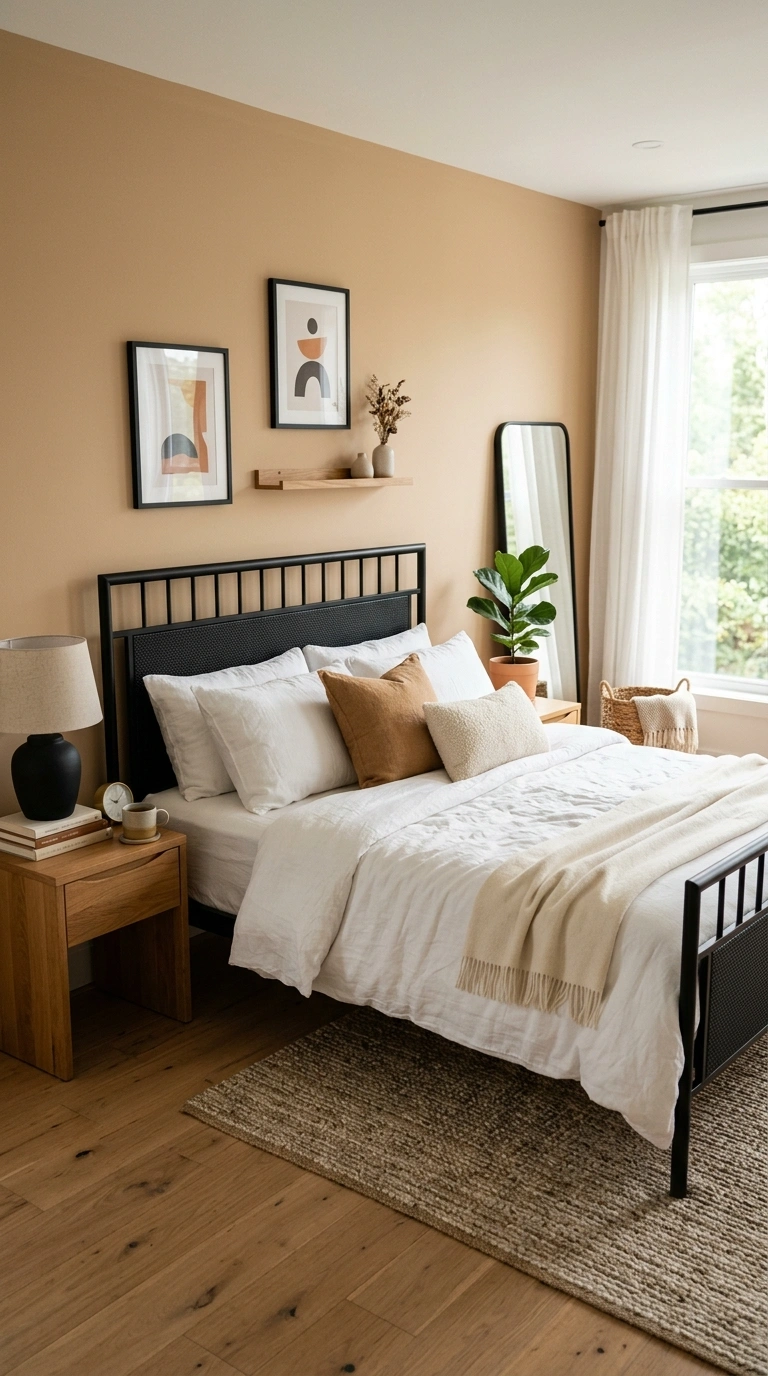
Camel, a warm tan with hints of caramel, is one of the most versatile colors you can choose for a modern bedroom. It works well as a wall color, a bedding choice, or even as the main color of an upholstered headboard, and it pairs easily with almost any accent color you might want to add later. On the walls, camel creates a soft, warm backdrop that makes a room feel instantly more inviting than a plain white or gray. Pair it with white bedding and black accents for a more modern look, or with cream and brass for something softer and more classic. This color also works especially well in bedrooms with darker wood floors, since the warm tones complement each other naturally. If you are decorating on a budget, even a single camel colored throw blanket or set of curtains can bring some of this warmth into an existing neutral room without a full repaint.
11. Warm Taupe Walls
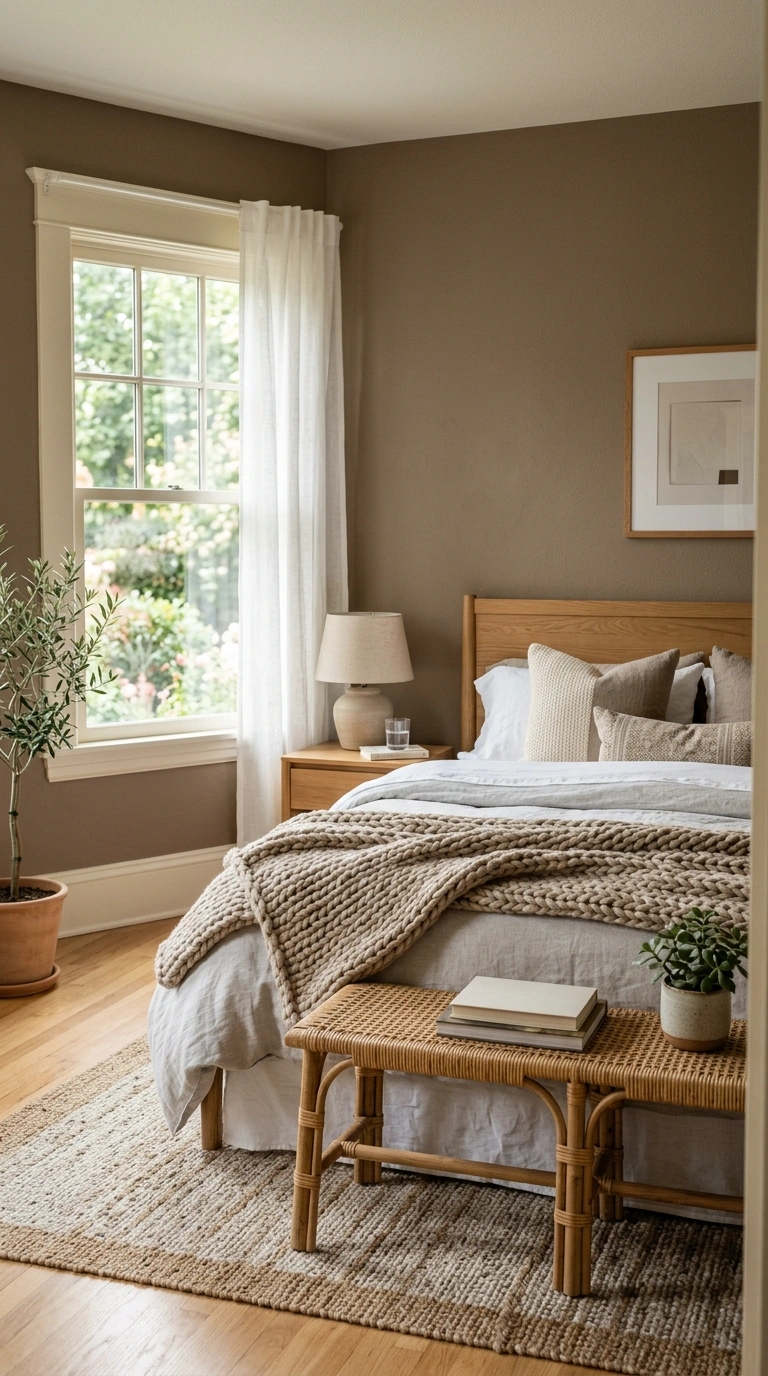
Warm taupe sits between beige and gray, and it is one of the most forgiving colors you can choose for a bedroom because it works with almost any furniture style or wood tone. Unlike cooler grays, warm taupe has enough brown undertone to keep a room feeling cozy rather than sterile, especially in rooms with lower natural light. This color looks great on all four walls, paired with white or ivory trim, and gives you a lot of flexibility for choosing accent colors down the road, whether that is navy, terracotta, or sage green. A taupe bedroom also tends to photograph really well, since it reads as neutral without looking washed out or boring. Layer in different textures, like a chunky knit throw, a linen duvet, and a woven bench at the foot of the bed, to keep the room from feeling flat despite the simple wall color. This is a safe but still stylish choice if you are unsure about committing to something bolder.
12. Burnt Orange Accent
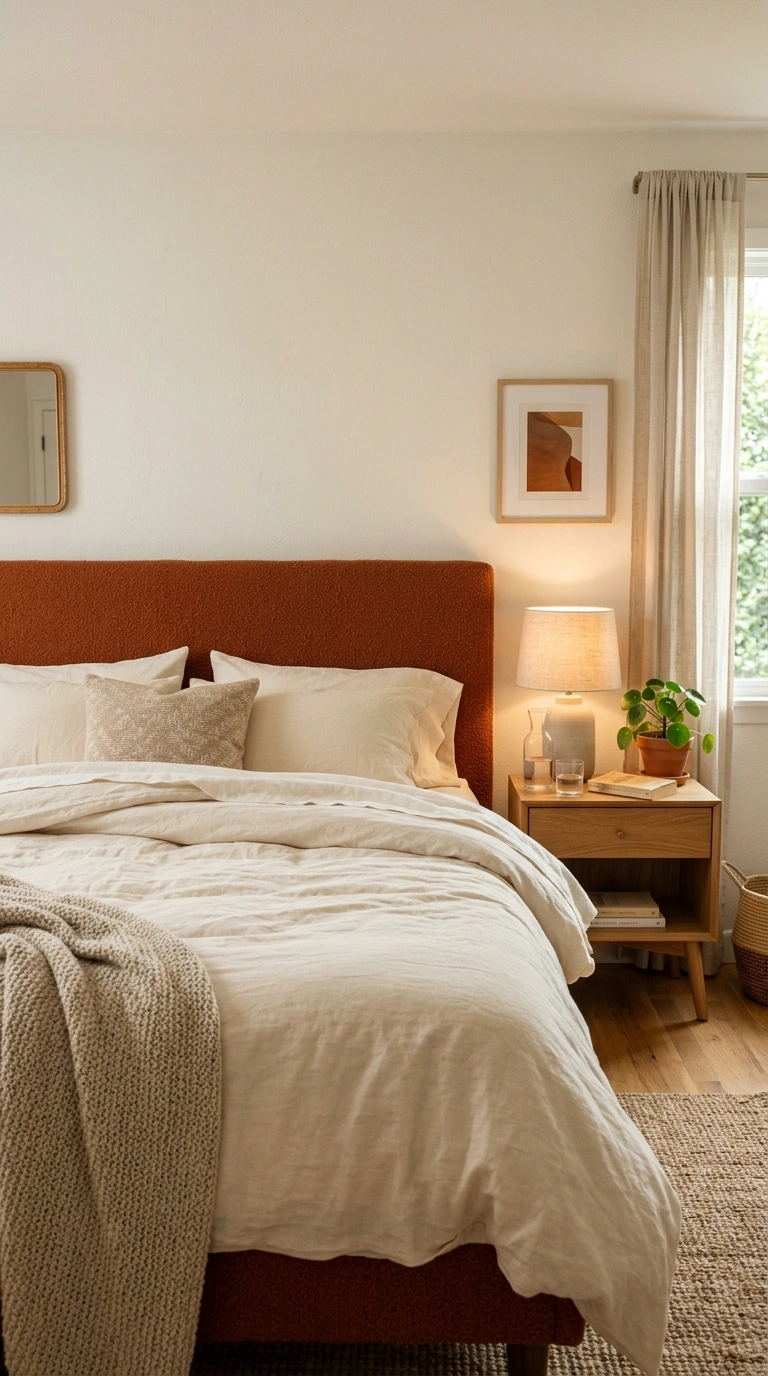
Burnt orange is bold, but used carefully it adds a warm, energetic touch to a modern bedroom without taking over the whole space. This color works best as an accent, whether that is one wall, a set of curtains, or a few throw pillows layered over neutral bedding. Paired with warm white or cream walls and natural wood furniture, burnt orange feels intentional and grounded rather than overwhelming. This shade also pairs nicely with deep green or navy accents if you want to build a slightly bolder, more layered color scheme over time. A burnt orange headboard, especially in a boucle or velvet fabric, can become a real focal point in an otherwise simple, neutral room. Because this color has so much warmth, it tends to look especially good in the early morning and late afternoon light, making it a great choice for bedrooms with east or west facing windows.
13. Deep Forest Green
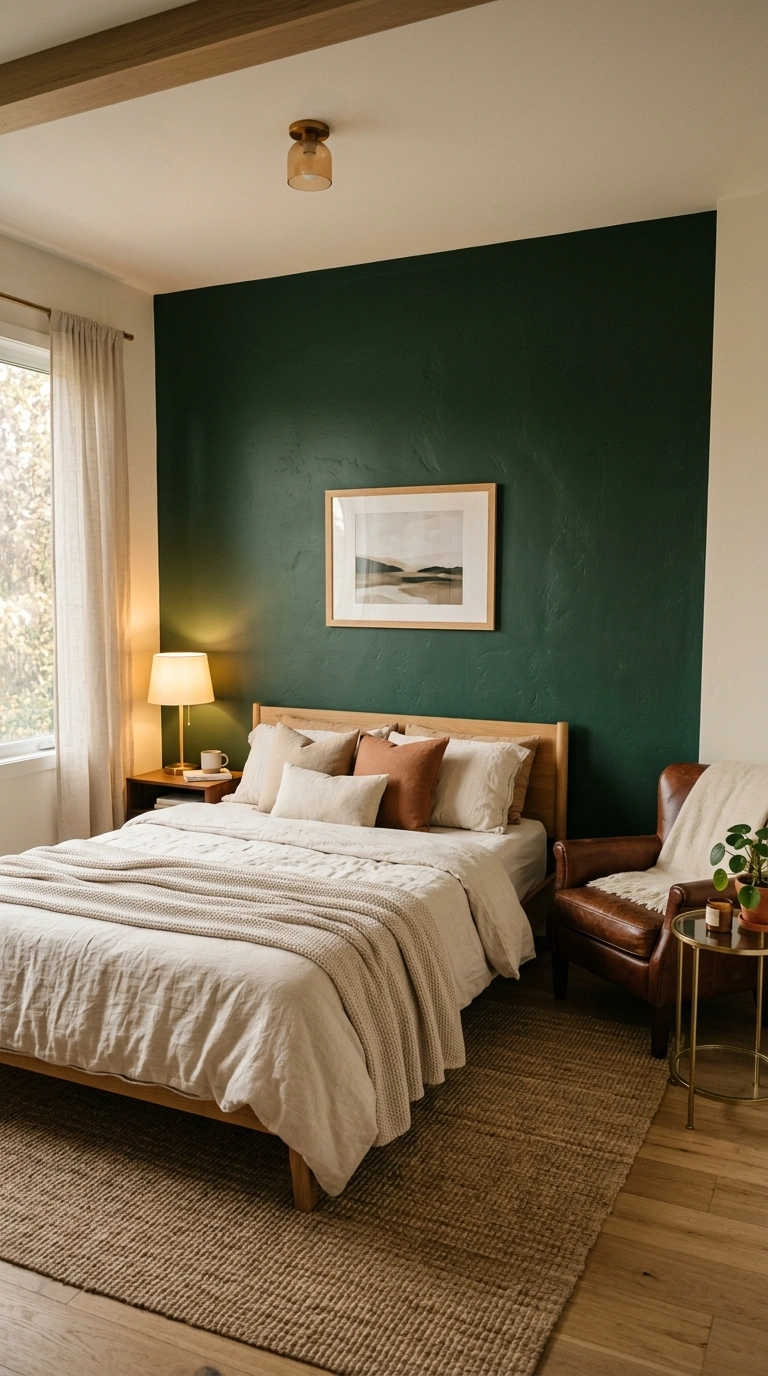
Deep forest green creates a rich, cocoon like feeling in a bedroom, especially when paired with warm wood furniture and soft, layered lighting. This color works well as a full wall treatment in bedrooms with good natural light, or as a single accent wall behind the bed in smaller or darker rooms. Pair forest green with cream or oatmeal bedding, brass hardware, and a few leather or wood accents to keep the space feeling warm rather than cold or overly dramatic. This shade also pairs beautifully with warm metallics like brass or aged gold, which help reflect light back into the room and keep the deep green from feeling too heavy. A velvet or boucle accent chair in a warm neutral tone can help soften the look even further. Forest green bedrooms tend to feel especially cozy in the evening, once lamps and warm bulbs are turned on instead of overhead lighting.
14. Warm Blush Pink
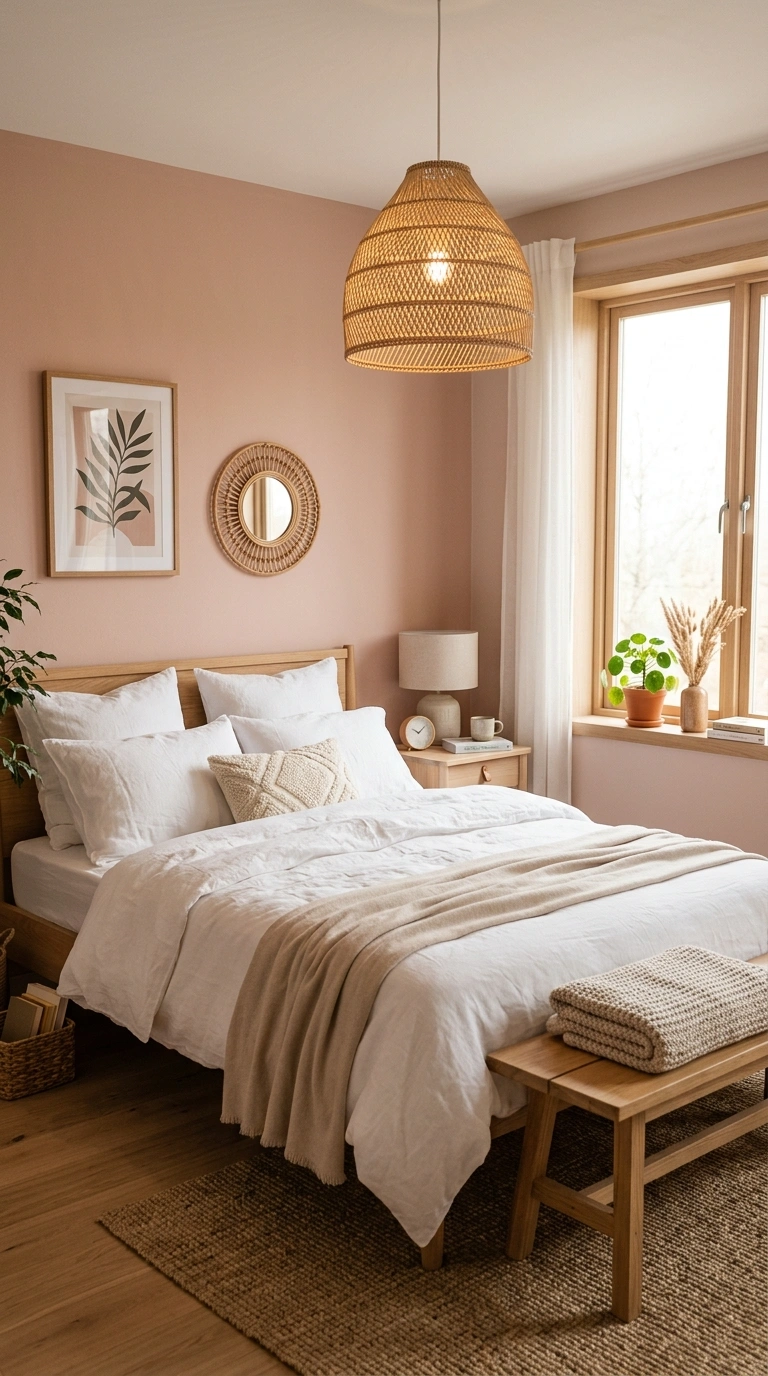
Warm blush pink, leaning more peach than cool pink, brings a soft, welcoming feeling to a bedroom without being overly girly or bright. This color works beautifully on all four walls in a room with plenty of natural light, paired with white or cream bedding and simple wood or rattan furniture. Blush pink also pairs surprisingly well with warm browns and terracotta accents, creating a soft but grounded color palette that still feels modern. If a full room of blush pink feels like too much, try it just on the ceiling or as an accent wall behind the headboard, keeping the rest of the room neutral. Brass or gold hardware on nightstands and lighting fixtures complements this shade especially well, adding a bit of warmth and shine without competing with the wall color. This palette tends to work best in bedrooms with soft, diffused natural light rather than very bright, direct sun, which can sometimes wash out lighter pink tones.
Also read: Sage Green Bedroom Ideas That Feel Calm and Cozy
15. Toasted Almond Walls
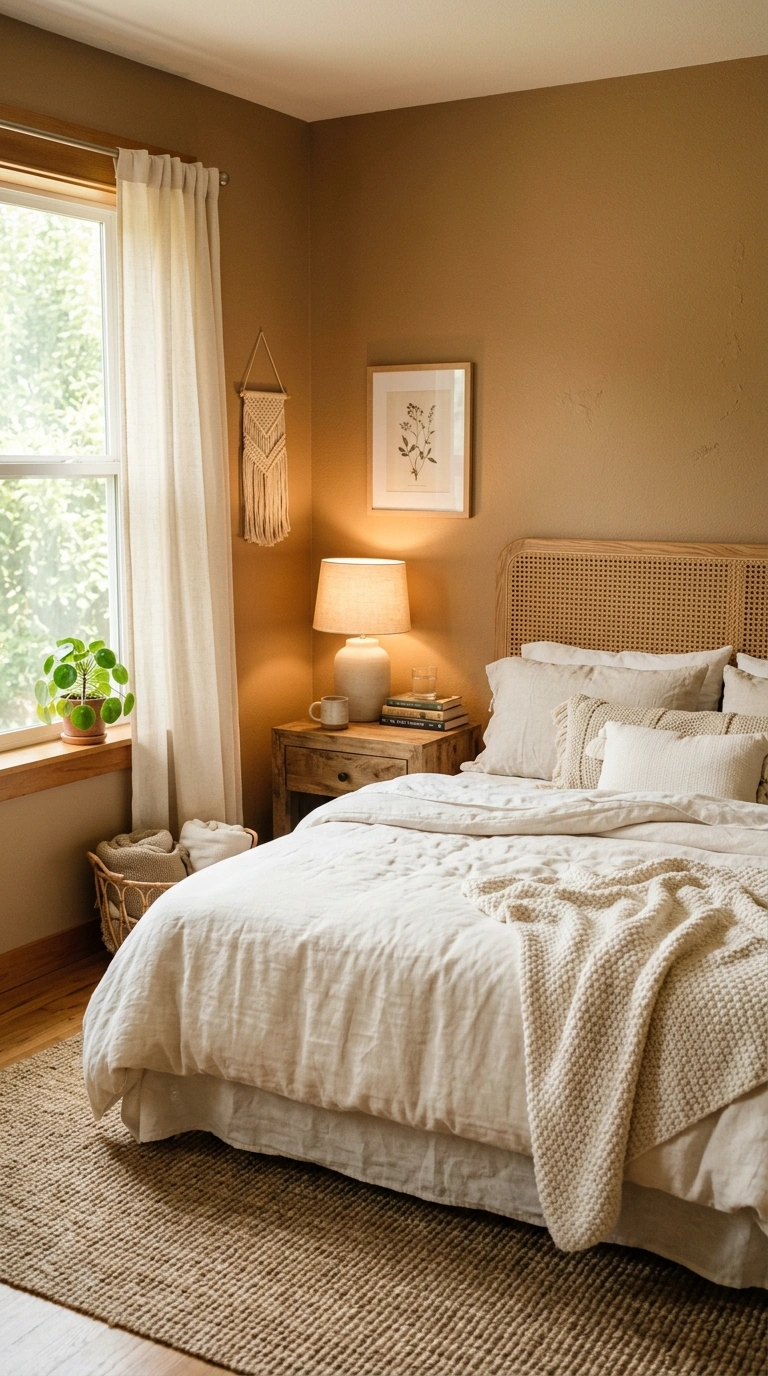
Toasted almond is a warm, slightly darker neutral that sits between beige and light brown, and it brings a subtle richness to a bedroom without feeling as bold as a true brown or terracotta. This color works well across all four walls, creating a soft, warm backdrop for both light and dark furniture pieces. Pair it with ivory or white bedding, natural wood nightstands, and simple black or brass lighting to keep the room feeling calm and put together. Toasted almond also tends to work well in bedrooms with limited natural light, since the warm undertone keeps the space from feeling flat or gray even on cloudy days. Add texture through a woven headboard, a chunky knit throw blanket, or a jute rug to round out the earthy, cozy feeling. This color pairs especially well with sage green or dusty blue accents if you want to bring in a secondary color down the road.
16. Rich Burgundy Accent
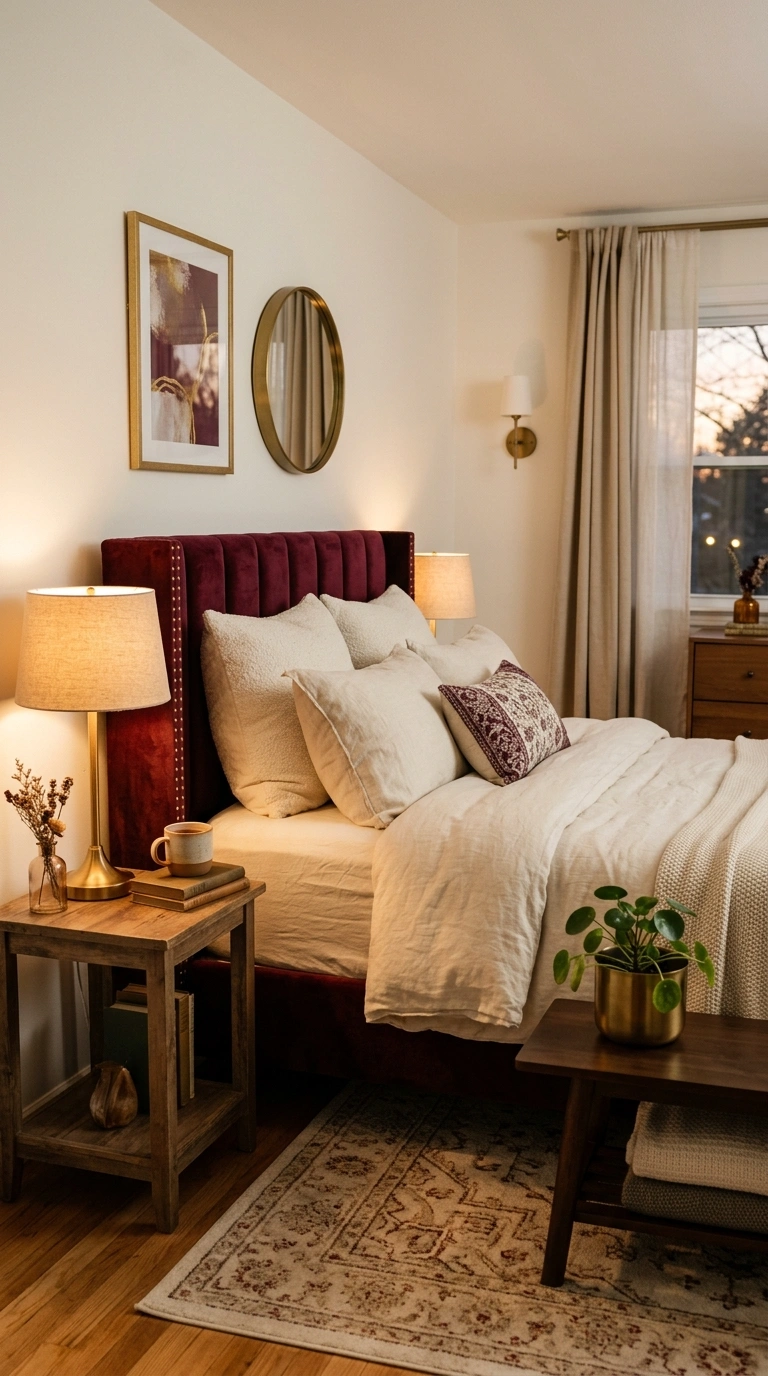
Burgundy brings a warm, moody richness to a bedroom that feels both modern and a little bit luxurious. This color works best as an accent, whether that is a single wall behind the bed, a set of curtains, or an upholstered headboard, since a full room of burgundy can feel heavy in smaller spaces. Paired with warm white or cream walls, natural wood furniture, and brass lighting, burgundy adds depth without overwhelming the room. This shade also pairs beautifully with deep green or warm taupe accents if you want to build out a fuller, more layered color palette. A velvet burgundy headboard or a few burgundy throw pillows can instantly make an otherwise neutral bedroom feel more intentional and finished. This color tends to look especially rich in the evening under warm lamp light, making it a great choice for anyone who wants their bedroom to feel a little more dramatic and cozy after dark.
17. Warm Mustard Yellow
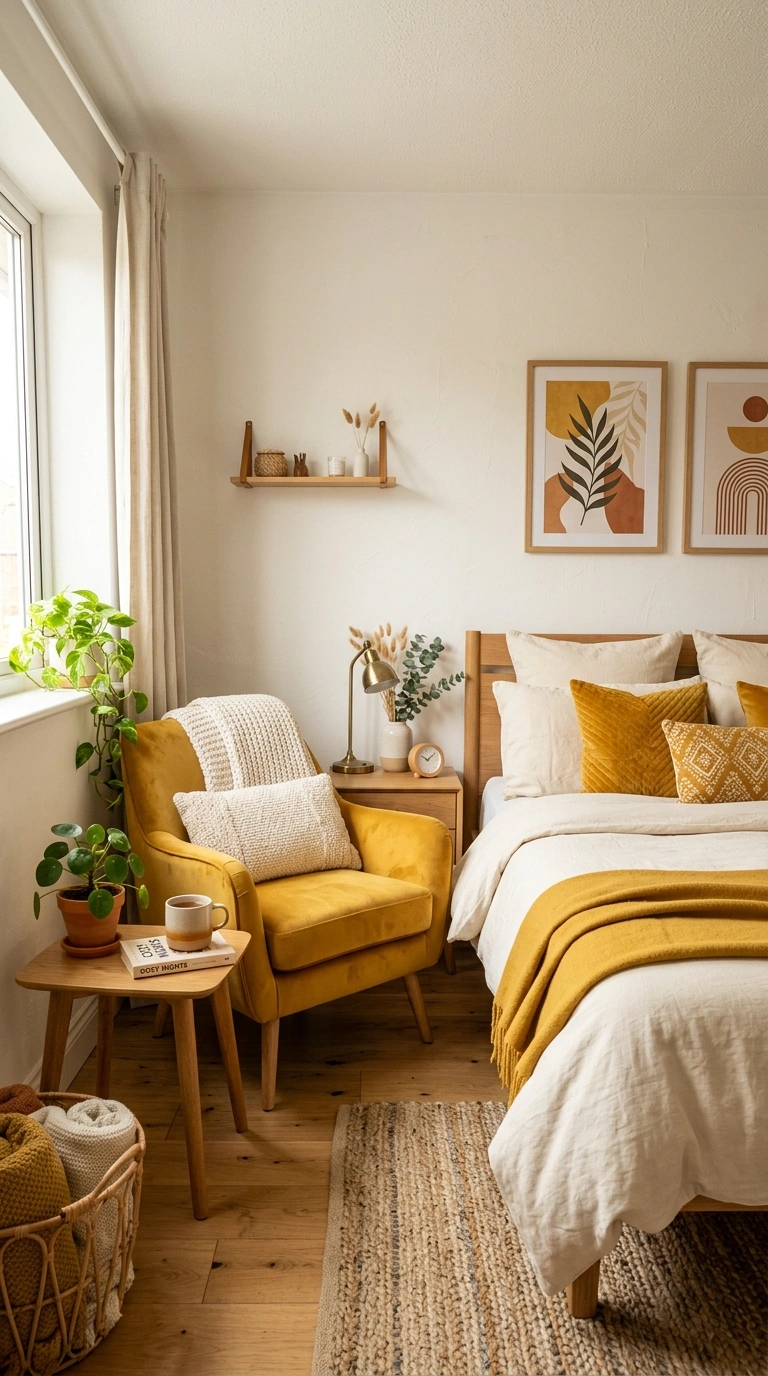
Warm mustard yellow brings a cheerful but still grown up warmth to a modern bedroom, especially when used as an accent rather than covering every wall. This color works well as a single accent wall, a set of curtains, or a few throw pillows layered over neutral or cream bedding. Paired with warm white walls and natural wood furniture, mustard adds a pop of color without feeling overly bright or busy. This shade also pairs nicely with deep green or navy accents, creating a slightly bolder, more layered color scheme for those who want more than just neutrals. A mustard colored accent chair in the corner of the room can help tie the color into the space without needing a full wall commitment. Because mustard has so much warmth, it tends to glow nicely under both natural daylight and warm evening lamp light, making the room feel cozy at almost any time of day.
Also read: Kids Room Decor Ideas They Will Love for Years to Come
18. Soft Caramel Neutral
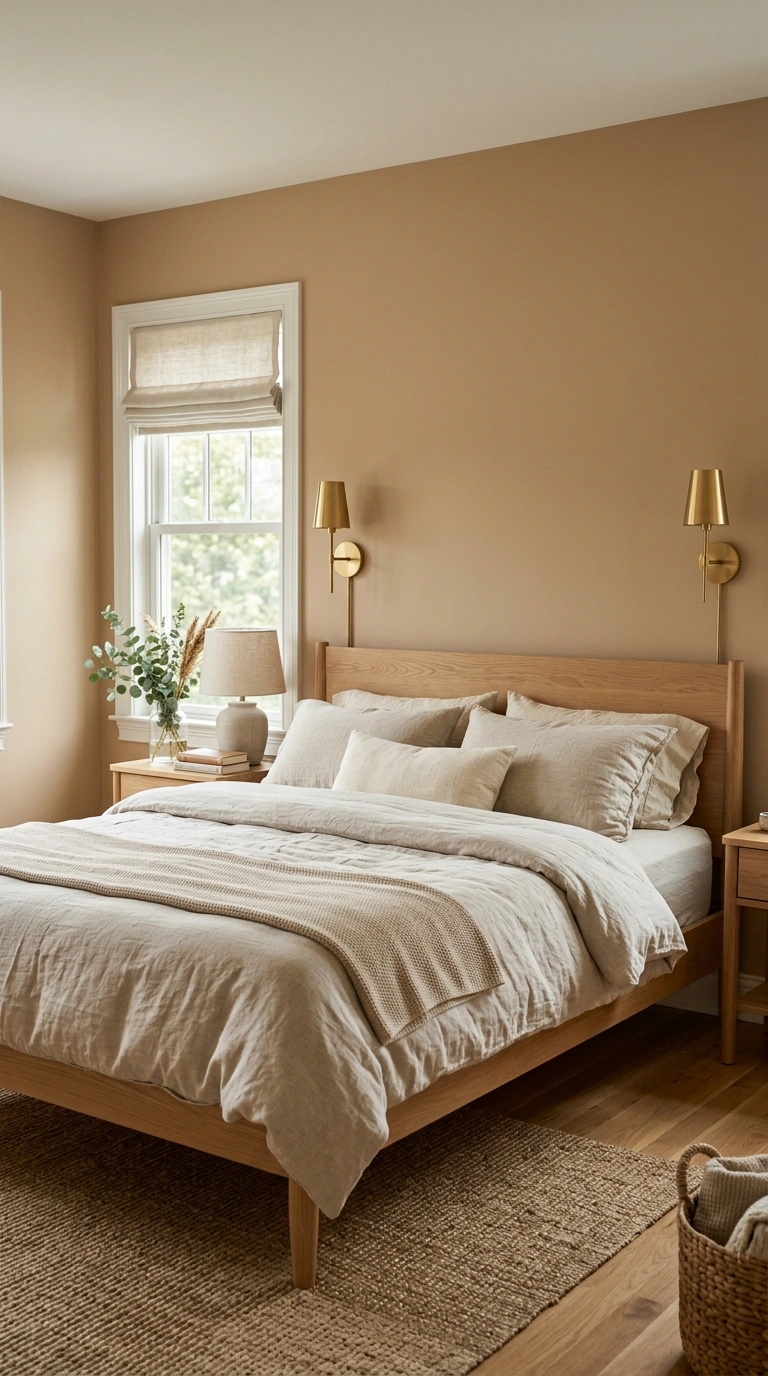
Soft caramel is a warm, golden neutral that works beautifully as a full wall color in a modern bedroom, especially for anyone who wants warmth without committing to a bold or unusual shade. This color pairs well with both light and dark wood furniture, along with white, cream, or oatmeal bedding, creating a soft and inviting backdrop for the rest of the room. Caramel walls also make brass and gold hardware really shine, since the warm undertones complement each other naturally. If you want to add a bit more depth, try a slightly darker caramel or honey tone on the ceiling for a cozy, wrapped in feeling. This palette works especially well in bedrooms with large windows, since natural light brings out the warmth in the color throughout the day. A soft caramel bedroom tends to feel calm and grounded, making it a solid choice for anyone who struggles to relax in a room that feels too stark or cold.
19. Warm Greige Palette
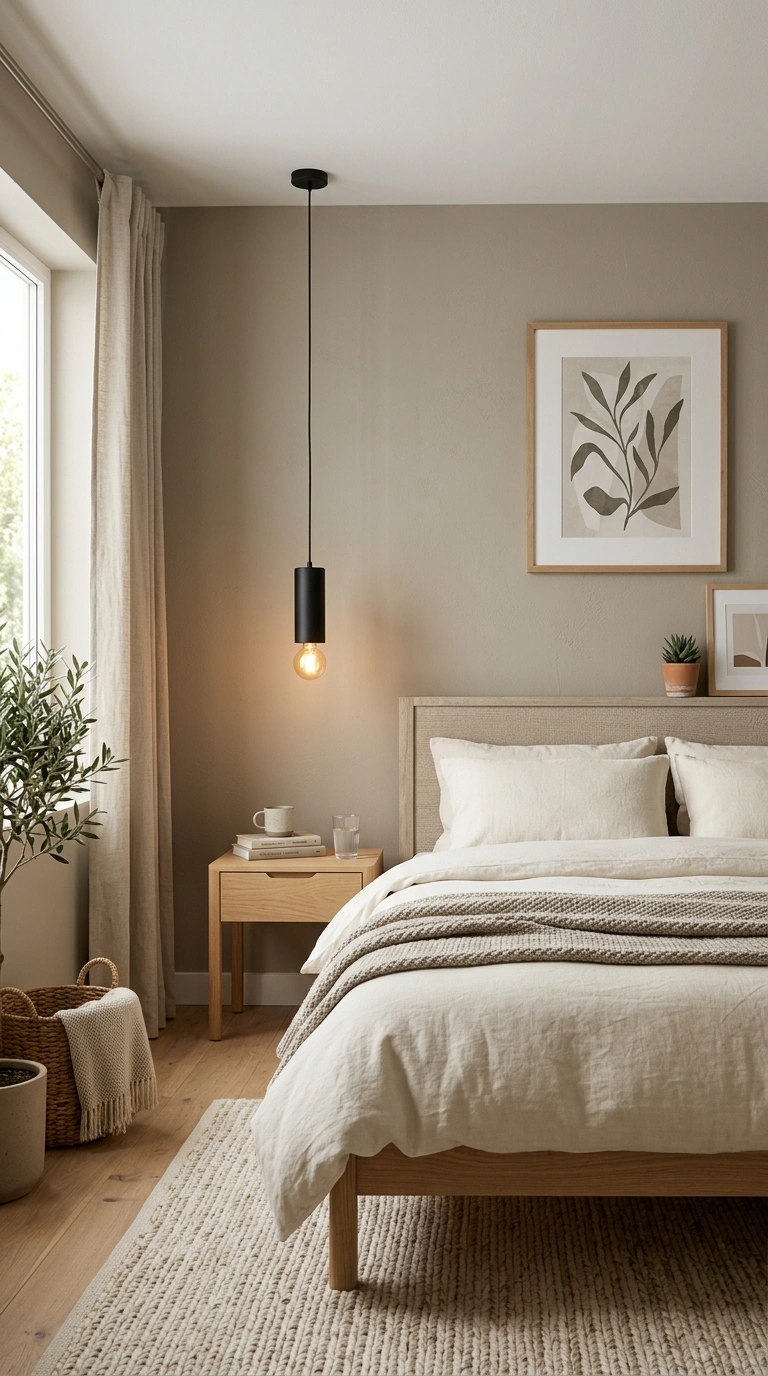
Warm greige, a blend of gray and beige with more brown undertone than blue, is one of the most popular modern bedroom colors because it strikes a balance between warm and neutral. This color works on all four walls and pairs easily with almost any furniture style, whether your nightstands are dark walnut or light oak. Pair warm greige walls with ivory or white bedding and brass or matte black lighting to keep the room feeling current without being trendy in a way that will feel dated quickly. This shade also gives you a lot of freedom with accent colors later on, since greige works well with everything from sage green to terracotta to navy. A warm greige bedroom tends to photograph beautifully in natural light, since it reads as soft and warm rather than flat or gray. This is a great choice for anyone who wants a modern, calming bedroom without taking too much of a risk on a bold color.
20. Deep Navy Contrast
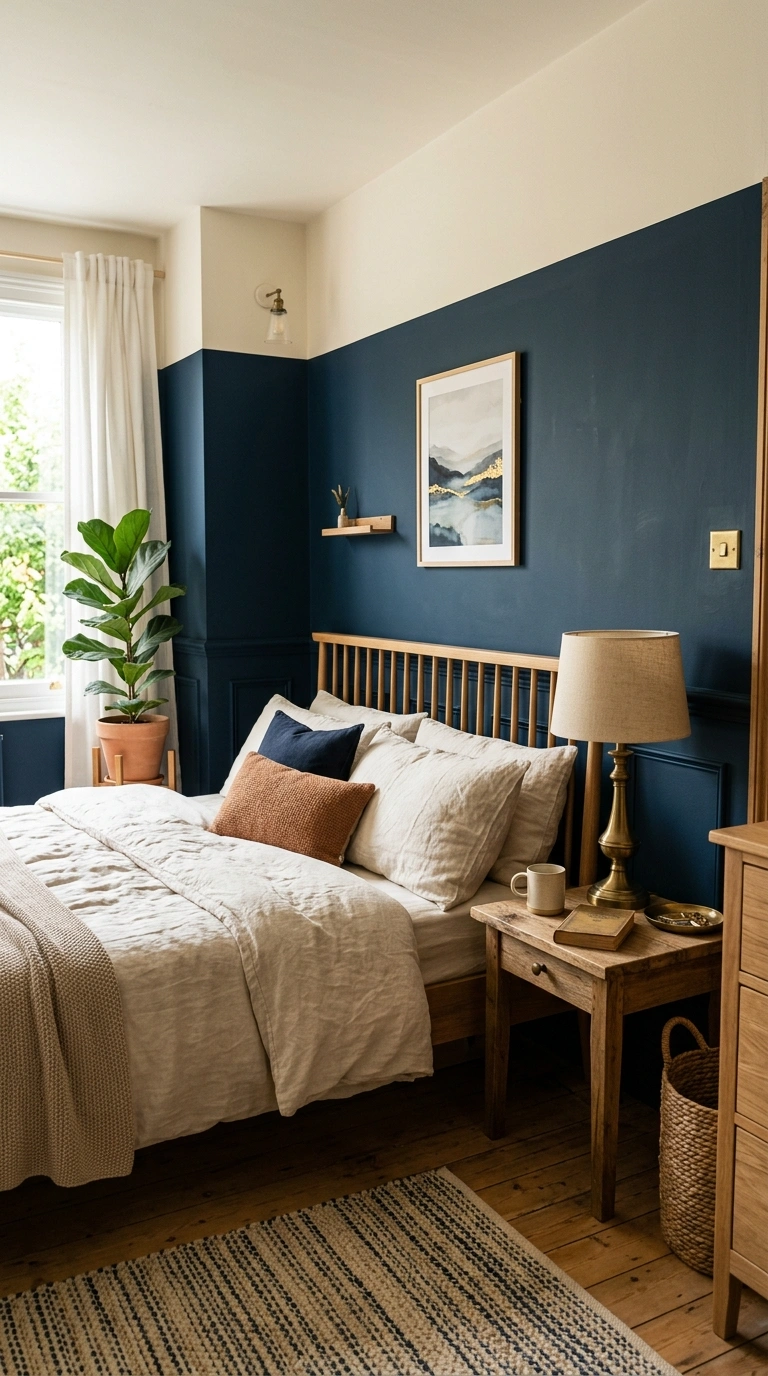
While navy leans cooler than most colors on this list, a deep, warm leaning navy can still create a cozy, enveloping bedroom feeling, especially when paired with warm metallics and natural wood tones. This color works best as an accent wall behind the bed or on a lower half wall paired with a warm white above, rather than covering the entire room in most cases. Pair navy with cream or ivory bedding, brass hardware, and warm wood nightstands to keep the room from feeling too cold or corporate. A navy headboard in a boucle or linen fabric can also bring in this color without needing a full wall commitment. This shade works especially well in bedrooms that get plenty of natural light during the day, since the deep color can otherwise feel a bit dark in rooms with limited windows. Warm lamp lighting in the evening helps keep a navy bedroom feeling cozy rather than stark after the sun goes down.
21. Warm Cinnamon Brown
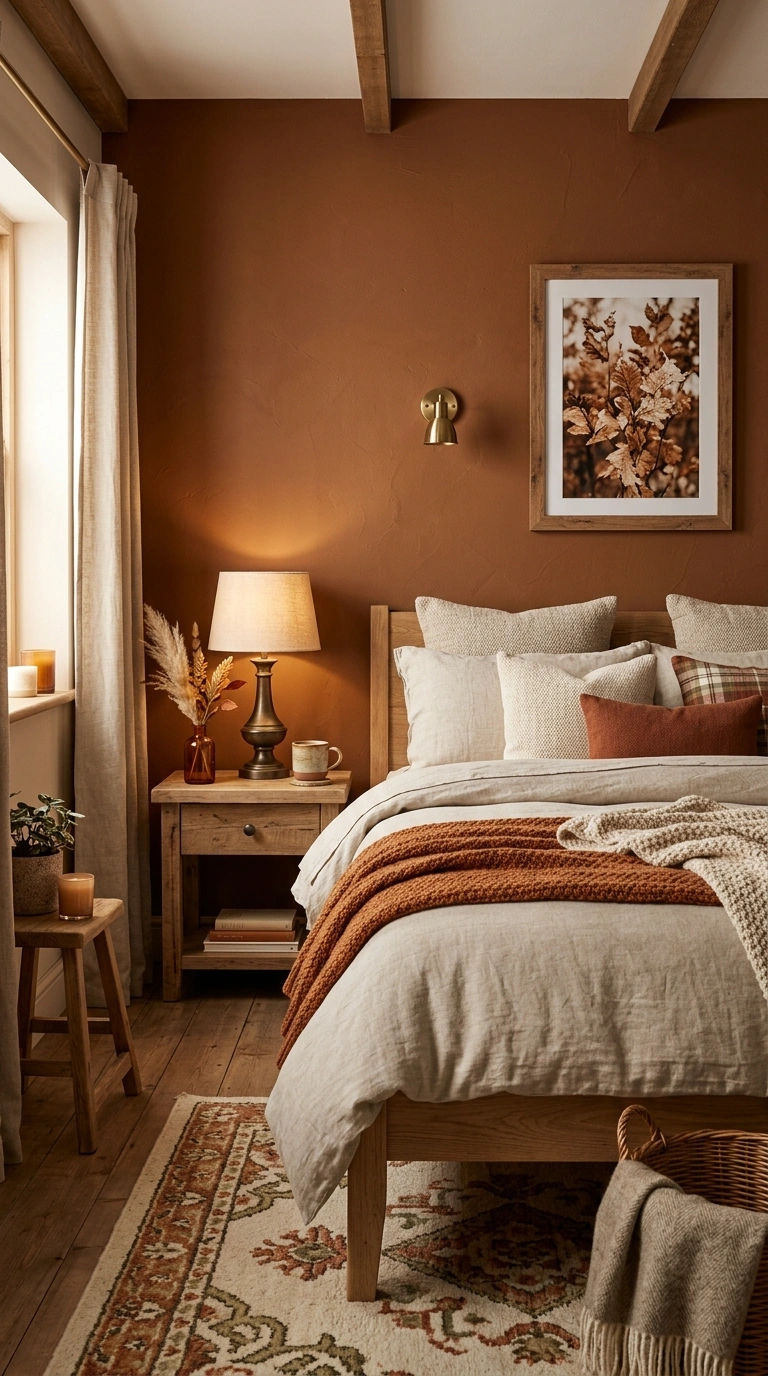
Warm cinnamon brown, a reddish brown with plenty of warmth, brings a rich, cozy feeling to a bedroom that works especially well heading into the cooler months. This color can be used as a full wall treatment in bedrooms with good natural light, or as a single accent wall paired with warm white on the remaining walls. Pair cinnamon brown with cream or oatmeal bedding, brass or aged bronze lighting, and natural wood furniture to keep the room feeling warm and grounded rather than dark. This shade also pairs beautifully with sage green or dusty rose accents if you want to build out a fuller, layered color palette over time. A cinnamon colored accent chair or a set of curtains in this tone can bring warmth into the room without needing to repaint every wall. This color tends to feel especially cozy in the evening, when warm lamp light brings out the richness of the reddish brown undertone.
Also read: 17 Teen Bedroom Ideas That Feel Grown-Up
Frequently Asked Questions
What is the most popular warm bedroom color right now?
Sage green and warm terracotta are two of the most requested colors right now, since both feel modern but still cozy and easy to live with long term.
Do warm colors make a small bedroom feel smaller?
Not necessarily. Warm neutrals like camel, taupe, and honey beige can actually make a small bedroom feel cozier rather than cramped, especially with good lighting.
Should I paint all four walls or just one accent wall?
This depends on how bold the color is. Softer neutrals like beige or taupe work well on all four walls, while bolder shades like burgundy or mustard are usually better as a single accent wall.
How do I know if a color will look too dark in my room?
Test a sample on the wall and check it at different times of day, since natural light changes how warm or dark a color reads from morning to evening.